Home Blog Page 811

Trade wars threaten Asia-Pacific sovereign ratings

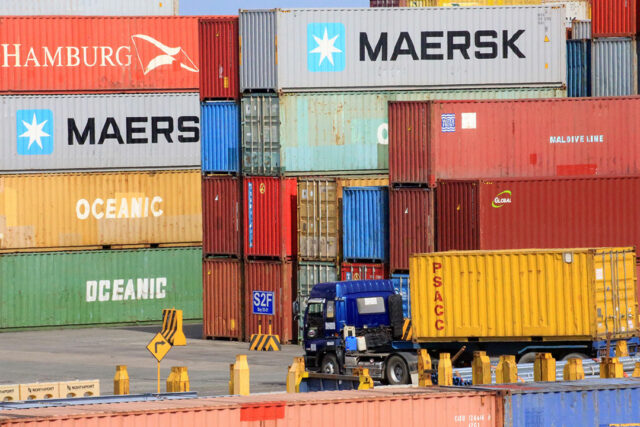
Container vans are seen at the North Port in Manila. — PHILIPPINE STAR/EDD GUMBAN

By Luisa Maria Jacinta C. Jocson, Senior Reporter

TRADE WARS and geopolitical risks could threaten Asian economies’ credit rating, including the Philippines, S&P Global Ratings said.

“Tariffs and wars pose increased risks to Asia-Pacific sovereign ratings,” it said in a report.

“International trade frictions and military conflicts grow as threats to Asia-Pacific sovereign creditworthiness in 2025.”

Asia-Pacific sovereigns had been seeing a “positive momentum” but now face considerable risks, it said.

“These risks affect sovereign credit metrics most directly through the external and fiscal channels.”

“Economies that report current account deficits or where surpluses are small — including India, Indonesia, and the Philippines — may experience slipping external support for their sovereign ratings.”

S&P said that most of the sovereign ratings in the region are investment grade and range between “BBB” and “BBB+.”

Currently, three out of 21 sovereign outlooks remain positive, namely, the Philippines, India and Mongolia.

In November, the debt watcher affirmed its “BBB+” long-term credit rating for the Philippines, which is a notch below the “A” level grade targeted by the government. It also kept its “A-2” short-term rating for the country.

S&P Global had raised its rating outlook to “positive” from “stable.” A positive outlook means the Philippines’ credit rating could be raised over the next two years if improvements are sustained.

The credit rater said that restrictive tariff policies continue to weigh on economies in the region.

“It is uncertain whether the Trump administration could conclude trade negotiations with many countries by the end of July,” it said.

The Philippines was slapped with a 20% reciprocal tariff by the United States, higher than the 17% previously proposed. The government has said it is seeking to negotiate better terms with the US.

“S&P Global Ratings believes there is a high degree of unpredictability around policy implementation by the US administration and possible responses — specifically with regard to tariffs — and the potential effect on economies, supply chains, and credit conditions around the world.”

It also cited the persistence of geopolitical conflict as a key risk, citing the South China Sea, Taiwan Straits, and North Korea.

“However, recent events show that an increase in tension can happen. And, if not carefully handled, errors in judgment could lead to escalations that no party intended.”

These escalating geopolitical tensions could affect prices, as Asia-Pacific economies may have to pay more for energy and related imports, it said.

The Asia-Pacific region could also face further fiscal deteriorations if these risks materialize, S&P said.

“Government finances will weaken as economic performances falter. Government revenue will be dragged down, especially where exporters are important taxpayers, such as in Korea, Taiwan, and Japan.”

Analysts likewise said that these global uncertainties could be a hindrance to the Philippines’ goal of securing an “A” rating.

“These global and regional risks could hinder the Philippines’ march toward an ‘A’ rating, especially if they amplify external or fiscal weaknesses,” Leonardo A. Lanzona, an economics professor at the Ateneo de Manila University, said in an e-mail.

The government is targeting to reach “A”rating status by 2028. The Philippines holds an “A” rating with Japan-based Rating and Investment Information, Inc. (R&I) and Japan Credit Rating Agency (JCR).

However, it has yet to secure a top investment rating from the big three debt watchers. Aside from its “BBB+” rating from S&P Global Ratings, it also holds a “BBB” rating from Fitch Ratings and “Baa2” from Moody’s Ratings.

“In particular, the Philippines traditionally runs current account deficits, meaning it imports more than it exports, and relies on remittances, BPO (business process outsourcing) revenues, and foreign capital to finance that gap,” Mr. Lanzona said, but noted these inflows may become volatile amid global uncertainty.

However, Mr. Lanzona said that if the government can manage inflation, exercise fiscal discipline and deepen capital markets, meeting the “A” rating goal remains within reach.

First Gen’s P50-B gas deal with Prime Infra nears completion

FIRST GEN CORP.

LOPEZ-LED First Gen Corp. is moving forward with the sale of its gas assets to Razon-led Prime Infrastructure Capital, Inc. (Prime Infra) following the signing of a share purchase agreement.

Under the deal, Prime Infra will acquire a 60% stake in First Gen’s subsidiaries that hold its gas-fired power assets. The agreement formalizes a strategic partnership between the two companies and follows a term sheet signed on May 30.

Prime Infra will pay P50 billion for the 60% stake upon closing of the transaction, according to earlier disclosures. The final amount is subject to adjustments and conditions agreed by both parties.

Once completed, the transaction will give Prime Infra a controlling interest in First Gen’s gas-fired power plants in Batangas: the 1,000-megawatt (MW) Santa Rita, 500-MW San Lorenzo, 450-MW San Gabriel, and 97-MW Avion plants.

These plants are all currently supplied by the Malampaya gas field, which is operated by Prime Energy Resources Development B.V., a unit of the Razon group.

The acquisition also includes the proposed 1,200-MW Santa Maria power plant and an interim offshore liquefied natural gas (LNG) terminal.

First Gen will retain a 40% stake in the gas plants to ensure “proper continuity and stability of its gas operating plants.”

For the LNG terminal, First Gen and Japan’s Tokyo Gas will each hold a 20% stake, while Prime Infra will own the remaining 60%.

The company said it is entitled to receive additional earnout payments if certain conditions are met.

The transaction is subject to the approval of the Philippine Competition Commission and other closing conditions. Both companies said they aim to complete the deal “soon.”

Following the acquisition, First Gen is expected to have more financial capacity to expand its renewable energy portfolio.

“We have always believed that natural gas is the most practical fuel to transition ourselves to a future of renewable energy,” First Gen Chairman and Chief Executive Officer Federico R. Lopez said in a statement last month.

“Our continued presence in LNG underlines our view of its important role in maintaining the country’s energy security and at the same time enabling the adoption of more renewable energy,” he added.

First Gen has an installed capacity of 3,668 MW, accounting for about 18% of the Philippines’ gross power generation. The company aims to expand its capacity to 13 gigawatts by 2030.

Prime Infra is the infrastructure arm of the Razon group, with business interests in power generation, water utilities, and waste management. — Sheldeen Joy Talavera

MPTC’s Vietnam unit keen on four road projects

ASHLEY ERIKA O. JOSE

HO CHI MINH, Vietnam — Vietnam-based CII Bridges and Roads Investments Joint Stock Co. (CII B&R) is keen to pursue four additional toll road projects as part of the company’s expansion plans.

In a roundtable discussion, CII’s Director of Capital Management Le Trung Hieu said the infrastructure company is now working to expand its toll road initiatives and is considering bidding for four infrastructure projects valued at a combined $1.65 billion.

These projects, all scheduled for bidding in 2025, include the construction of Thu Thiem Bridge 4 in Ho Chi Minh City at $232 million; the upgrade and expansion of National Highway 22 in Ho Chi Minh City at $401 million; the upgrade and expansion of the north-south corridor (Nguyen Huu Tho Road) from Nguyen Van Linh to the Ben Luc-Long Thanh Expressway at $381 million; and the construction of a road project along NH51 from the Vung Tau intersection to the Vo Nguyen Giap intersection with the Bien Hoa-Vung Tau Expressway at $635 million.

Metro Pacific Tollways Corp. (MPTC) holds a 45% stake in CII B&R. The company also said it is targeting the start of expansion work on the nearly $1.6-billion Ho Chi Minh City-Trung Luong-My Thuan Expressway by September this year.

The project is expected to span about 96 kilometers of expressway linking Ho Chi Minh City to My Thuan via Trung Luong, according to the company, which cited the toll road as a key infrastructure project aimed at improving transport connectivity across southern Vietnam.

Metro Pacific Investments Corp. is one of the three key Philippine subsidiaries of Hong Kong-based First Pacific Co. Ltd., alongside Philex Mining Corp. and PLDT Inc.

Hastings Holdings, Inc., a unit of the PLDT Beneficial Trust Fund subsidiary MediaQuest Holdings, Inc., holds a majority interest in BusinessWorld through the Philippine Star Group, which it controls. — Ashley Erika O. Jose

CLI, Japan’s NTT start P9.2-B residential towers in Cebu

THE WAVE TOWERS — CEBU LANDMASTERS, INC.

LISTED real estate developer Cebu Landmasters, Inc. (CLI) and Japan’s NTT Urban Development Asia (NTT UD Asia) have launched the P9.2-billion The Wave Towers premium residential project at Cebu IT Park.

The Wave Towers is a two-tower residential development by CLI NUD Ventures, the joint venture between CLI and NTT UD Asia.

The project will offer studio, one-bedroom, two-bedroom, and three-bedroom units, CLI said in a regulatory filing on Wednesday.

The first tower, the 40-story Nagomi Tower, will feature 709 premium units with minimalist, Japanese-inspired aesthetics and quality interiors, according to the company.

The Wave Towers will offer two floors of curated amenities. On the sixth-floor amenity deck, features include a pool complex with a sauna and spa, a fitness center, a Japanese garden, a children’s play area, and a game room.

On the 37th floor, the Sky Amenity Deck will offer a lounge library, a wellness gym, and an open-air sky deck.

The project will also include retail spaces on the ground and podium levels. It will be equipped with wide corridors, five elevators, and full backup power.

CLI has also opened The Wave Towers showroom, where customers can view the project’s features and model units.

NTT UD Asia is the real estate unit of the Japan-listed telecommunications company NTT Group, which has a footprint in New York, London, Boston, Melbourne, and Tokyo. It develops commercial properties such as office buildings, residences, and other mixed-use developments across Southeast Asia.

CLI, meanwhile, has nearly 130 projects across 18 cities in the Visayas and Mindanao.

CLI shares were unchanged at P2.55 per share on Wednesday. — Revin Mikhael D. Ochave

8×8 looks to boost PHL presence as customer experience space evolves

STOCK PHOTO | Image by Bethany Drouin from Pixabay

By Beatriz Marie D. Cruz, Reporter

CLOUD-BASED communications solutions provider 8×8, Inc. is looking to strengthen its presence in the Philippine market as increasing cyber threats drive the need for stronger customer experience (CX) and authentication tools.

“While the presence and penetration of CX tools is growing, the Philippine market is becoming more and more lucrative for attackers because it’s linked directly to financial assets,” Igor Mostovoy, product director of communications platform as a service (CPaaS) at 8×8, Inc., told BusinessWorld in a virtual interview.

“We do see a tremendous shift in terms of enterprises looking for security solutions, but also with the Philippine government looking to strengthen security standards across the country.”

8×8 provides a cloud-based infrastructure and platform using application programming interfaces (API) that integrates real-time communications capabilities like short message services  (SMS) and messaging apps into organizations’ applications, websites and workflows.

It helps with functions like authentication and fraud prevention, marketing and communications, and customer support.

8×8 is also looking to further expand its presence in the country through sectors like financial technology, banking, and insurance as these industries shift from traditional to omnichannel messaging formats.

“From the CX point of view, that means that customers are also becoming more sophisticated when it comes to CX tools. Before, you could just blast an SMS campaign, but now we are evolving towards behavioral targeting to enable more targeted campaigns,” Mr. Mostovoy said.

Last year, the company announced a partnership with US-based software company Descope to seamlessly integrate the latter’s drag-and-drop customer identity and access management platform into 8×8’s CPaaS API.

With Descope’s no-code and low-code visual workflows solution, 8×8 can help customize user journeys and build personalized onboarding experiences.

It can also help customers adopt modern login processes like social logins, passkeys, one-time passwords (OTPs), and magic links.

“If you look at breaches that happened recently in the Philippines and elsewhere, almost 99% of the breaches begin with a weak password that an attacker uses to gain initial access and they laterally move in the organization,” Descope Co-founder Dan Sarel told BusinessWorld.

“I cannot stress enough: the defense against attacks starts with real and strong authentication,” he said. “You can spend millions of dollars on lots of firewalls and IPS (intrusion prevention system), but if you don’t know who the user on the other side really is, all these defenses are worthless.”

About 84.5% of Philippine organizations experienced cybersecurity breaches in 2024 due to gaps in third-party cyber risk management, according to cyber defense company BlueVoyant.

Margarita’s son takes over

AMADO FORÉS and his wife Carmela Fortuna Forés at his late mother’s restaurant Lusso at The Podium.

AMADO FORÉS, the only child of the late Filipino culinary icon Margarita Forés, who died earlier this year, told gathered guests at a press conference on July 10 his plans for his mother’s restaurants.

In a speech at his mother’s restaurant Lusso at the Podium, Mr. Forés said, “With the full support of my family, my mom’s original brands Lusso, Grace Park, Margarita Florals, and Cibo will now come together under AF Hospitality.” AF Hospitality is Mr. Forés’ own venture, which includes his own brands Ramen Ron, a mano, and Steak & Frice. The junior Forés launched his own brands in 2019, starting with a mano. In 2024, that brand won the 12th spot on the list of 50 Best Pizzerias in Asia-Pacific, and No. 96 out of the 100 Best Pizzerias in the World. Earlier this year, the brand moved up to No. 9 in the Asia-Pacific list.

It will be remembered that the senior Ms. Forés had died in February (https://tinyurl.com/2s3exdt6) while in the midst of opening Margarita, a restaurant in Ayala Triangle, and planning her son’s wedding to Carmela Fortuna (a grand wedding planned at the family’s Araneta Coliseum had been scrapped in favor of a smaller wedding at the Araneta family’s Cubao home).

“We’ve thoughtfully decided not to move forward with Margarita, the restaurant originally planned for Ayala Triangle. This opens up exciting opportunities to bring her vision in more meaningful and creative ways,” he said. As he said this, his microphone malfunctioned, prompting him to say, “I think my mom turned off my mic,” which was greeted by giggles.

“This was not a decision we made lightly. It comes from a place of deep responsibility and even deeper love. These brands are more than just businesses, they are living expressions of who my mother was and what she stood for.”

CHANGING ROLES
Mr. Forés announced other developments: Cibo Executive Chef Jorge Mendez will be taking on a new role as director of research and development; former Chief Operating Officer (COO) Edgar Allan Caper is now managing director, and his cousin Mercedes, former marketing and research and development director, will now sit as Cibo’s new COO. It’s an added responsibility, for Margarita Signature Caterer will now be under the management of Cibo.

The new Mrs. Forés, Carmela (now managing director at AF Hospitality), gave updates on the brands under AF Hospitality. The newlyweds will travel to Naples in September for the World’s 100 Top Pizza Awards. She announced expansions and new plans: there will be developments under Grace Park (after its feature on Netflix’s show Somebody Feed Phil), and Lusso’s original Greenbelt 5 location will see an expansion. Margarita Florals will have a new website, while her husband’s restaurants, Ramen Ron and Steak & Frice, will open new locations.

Meanwhile, Mercedes Forés announced a Japanese concept opening in August called Makanai. Developed with Mr. Mendez, it will open at West Gallery BGC.

“My mom believed that food could bring people together, and it’s in that spirit that we carry her work forward, and it will always begin and end with love,” said Mr. Forés. — Joseph L. Garcia

Co-led Keepers buys 50% of SULÀ maker Cervia Global

LUCIO L. CO-LED liquor distribution company The Keepers Holdings, Inc. (Keepers) is acquiring 50% of local liquor producer Cervia Global Trading, Inc. for P40 million as it expands into the premium local spirits market.

Keepers is buying 125,000 shares in Cervia Global at P320 per share, it said in a regulatory filing on Wednesday.

Cervia Global is the maker of Filipino liqueur brand “SULÀ.” It has business interests in the production of premium local alcoholic beverages, particularly liqueurs, using Philippine-grown raw materials for distribution to both domestic and international markets.

“The acquisition of a 50% stake in Cervia Global Trading, Inc. gives Keepers a strategic entry point into the premium local spirits market, while also positioning the company for growth in international markets,” Keepers said.

Keepers is buying Cervia Global shares held by Caesar R. Certeza, Mark Daniel L. Rivera, Vernon A. Carandang, and Margherita Y. Rauto.

“The amount of consideration was based on the revenue potential of Cervia Global,” Keepers said.

Keepers is the liquor distribution subsidiary of Co-led retail holding company Cosco Capital, Inc.

The company’s board previously approved the incorporation of a subsidiary to establish a chain of retail outlets for alcoholic beverages and related products.

For the first quarter, Keepers saw a 14.3% increase in net income to P690 million. Consolidated revenue grew by 20.9% to P4.06 billion on higher sales volume driven by the brandy segment.

Keepers is the distributor of various global liquor brands such as Johnnie Walker, Chivas Regal, Glenfiddich, Suntory, Jinro, Jose Cuervo, Jim Beam, Penfolds, Red Bull, Alfonso, and many others.

Shares in Keepers were unchanged at P2.57 per share on Wednesday. — Revin Mikhael D. Ochave

Google optimistic on PHL AI adoption

REUTERS

GOOGLE is bullish about the growth of artificial intelligence (AI) in the Philippines amid increasing adoption of AI-powered tools.

“The Philippines is unique given that the English-speaking population is quite high. The fact that Google has a number of products that will come first to the Philippines because of English presents an opportunity for leadership in this area,” Google Southeast Asia and South Asia Frontier Vice-President Sapna Chadha said in a press briefing last week.

“Southeast Asia is rapidly transforming into a global AI hub… driven by a young, mobile-first AI population, and very strong AI adoption,” she said, noting that the investment in AI-ready infrastructure is also growing.

The company recently launched AI-powered marketing tools for Google Marketing Live, which is designed to help marketers and businesses create content and with performance optimization.

According to a Cisco report published in 2023, only 17% of organizations in the Philippines are ready to utilize and deploy AI, with most of expressing concerns about the impact of not adopting these technologies. It said almost all or about 97% of businesses recognized the urgency of adopting AI technologies, but adoption has been slower in the past years.

“For years, we’ve been at the forefront of AI-driven advertising. As consumer journeys become more complex — and resources more limited — we’re equipping marketers with our most advanced models yet: more intelligent, more agentic, and more personalized. That means faster creating, wider reach, sharper insights, and better results,” Ms. Chadha said.

According to Microsoft’s 2025 Work Trend Index report, about 89% of Philippine leaders said they are confident about having AI agents as digital team members to expand the capacity of their workforce. It also said that 80% of company leaders in the Philippines considering adding AI-focused roles. — A.E.O. Jose

Is the 2022 Bordeaux vintage any good?

WHEN Vinexpo Asia returned to Singapore this year, the buzz wasn’t as palpable as it was in 2023. In 2023, Singapore hosted its first Vinexpo Asia, but it came after a five-year hiatus, COVID and all, succeeding a previous Vinexpo Asia held in Hong Kong in 2018. However, since 2023, Vinexpo Asia was made into an annual event, alternating between Hong Kong, where it was held last year, and back to Singapore. Next year is already on the calendar as Vinexpo Asia returns to Hong Kong from May 26 to 28 at the Hong Kong Convention and Exhibition Center (HKCEC).

While Vinexpo has maintained its reputation as a premier wine platform for trade, this year’s edition felt noticeably more compact compared to its 2023 staging. There might be a bit of wine trade fatigue as holding Vinexpo three years in a row in Asia seemed too much.

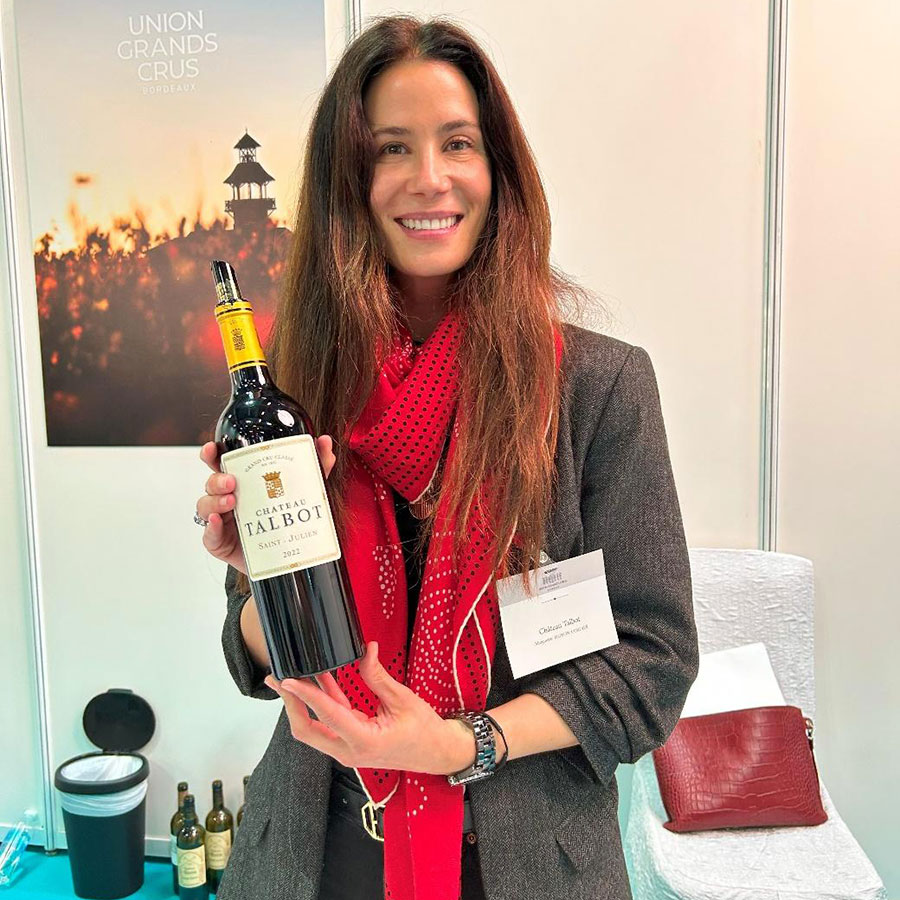
But to me, one of the highlights remained the Union des Grand Crus in Bordeaux (UGCB)’s annual vintage tasting — this year the featured vintage is the legend-in-the-making 2022. The number of chateaux was significantly down, from over 75 representatives at last year’s Hong Kong Vinexpo, to around 55 this year.

THE 2022 VINTAGE
After the relatively cooler 2021 vintage, Bordeaux bounced back with what I firmly believe is the best vintage of the last decade (at the very least), considering some great vintages already existed in 2015, 2016, and 2018. The wines from 2022 are nothing short of spectacular, showcasing depth, balance, and a brilliance that is rare even for this storied region.

If 2021 was a cooler, more classical year, 2022 is its sun-drenched, opulent counterpart. The growing season was marked by ideal conditions — ample sunshine, timely rainfall, hot and very dry weather. This allowed for perfect ripening across all grape varieties, with harvest done two to three weeks earlier than usual, resulting in wines with concentrated fruit, silky tannins, and a freshness that keeps them vibrant despite their power. Alcohol levels are slightly higher than in 2021 (averaging 13.5% to 14.5%), but the wines never feel heavy, thanks to their impeccable balance.

In Pessac-Leognan, both reds and whites shone brightly, with the whites displaying stunning acidity and minerality, while the reds offered layers of dark fruit complexity. In Medoc, the reds were uniformly excellent, with each subregion, from Pauillac to Margaux, expressing its unique terroir with precision and flair.

CUSTOMARY TASTING NOTES
Again, like before, none of the 1st growths were present. For this year’s tasting, I focused on two of Bordeaux’s most iconic appellations from the left bank: Pessac-Leognan and Medoc. I tasted every single bottle presented in the Pessac-Leognan and Medoc areas, that included Grand Cru and Non-Grand Cru. Last year, I only tasted Medoc wines, 30 wines from 30 chateaux — all reds. This year, despite being a smaller ensemble, I ended up tasting 44 wines from 38 chateaux, including six whites. Because of lack of time, I missed out on tasting the right bank wines from Saint-Emilion and Pomerol.

I chose 10 wines which I felt stood out slightly more than the others. Given how good this 2022 vintage is, and how many amazing wines I tasted at this UGCB vintage tasting, this was an extremely tough list to make. Here they are in alphabetical order:

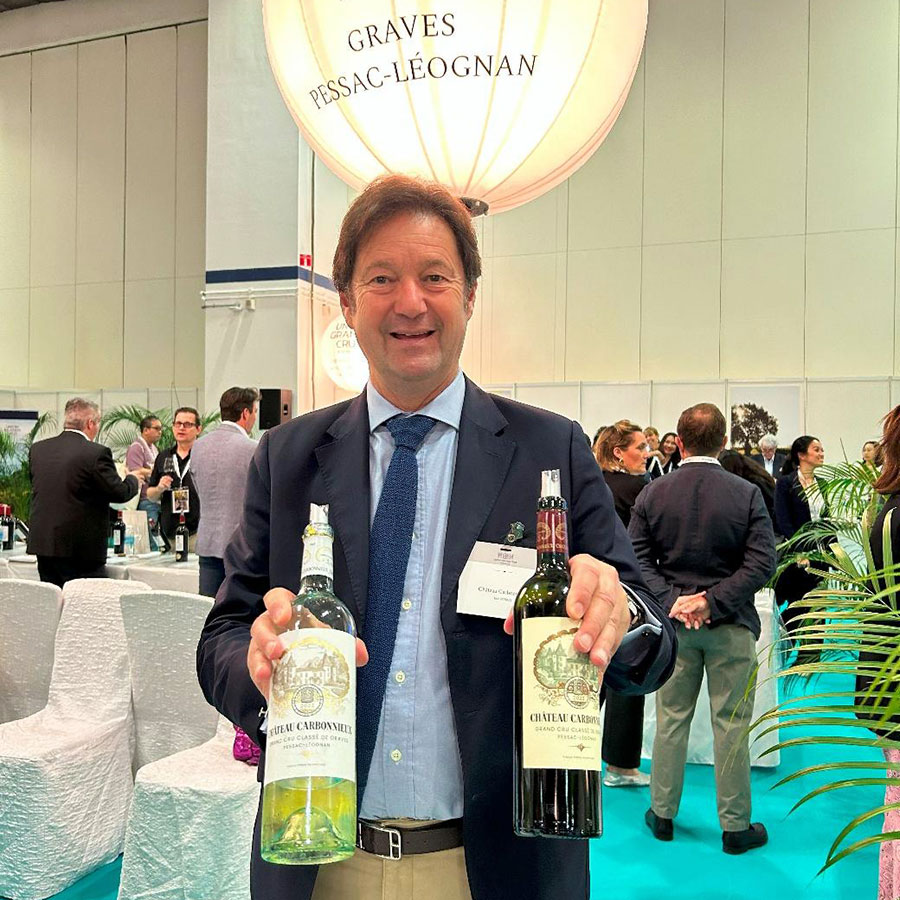
1. Chateau Carbonnieux, Cru Classe, Pessac-Leognan (Blanc). Made with 65% Sauvignon Blanc and 35% Semillon. Tasting Notes: “white peach, lychee, super vibrant, yet concentrated, racy on the mouthfeel, but balanced with fruit power, nice mineral lingering finish; Carbonnieux also has a Red Cru Classe wine, which is also amazing, but I like their white more for this vintage.”

2. Chateau d’Armailhac, Grand Cru 5th Growth, Pauillac (Rouge). Made with 59% Cabernet Sauvignon, Merlot 23%, 16% Cabernet Franc, and 2% Petit Verdot. Tasting Notes: “expressive nose of black berries, sweet cedary notes, peppercorn and other spices; on the palate the tannins are luscious and bitter-sweet, and the flavors are deep and relentless, ending in a huge bold round finish; may be the most impressive d’Armailhac I have encountered.”

3. Chateau Giscours, Grand Cru 3rd Growth, Margaux (Rouge). Made with 64% Cabernet Sauvignon, 30% Merlot, 3% Cabernet Franc, and 3% Petit Verdot. Tasting Notes: “more complex nose with violets, red roses, and black fruits; full-bodied, with firm yet silky tannins, flavorful, deep and long on the finish; I had more recently tried Giscours 2012, 2016, and 2018, all quite nice, but I feel this is its best yet from my recollection.”

4. Chateau Gruaud Larose, Grand Cru 2nd Growth, Saint-Julien (Rouge). Made with 83% Cabernet Sauvignon, 14% Merlot, and 3% Cabernet Franc. Tasting Notes: “powerful and bold, with so many flavors ranging from over-ripe berries to figs and licorice, notes of vanilla and complementary oak enhancement, long and flavorful, with coffee-latte finish; the 2022 is special to the winery as it marked their first vintage after they got certified as an organic winery – and to commemorate this, the 2022 has a special label that featured storks instead of lions in their logo.”

5. Chateau Lynch-Bages, Grand Cru 5th Growth, Pauillac (Rouge). Made with 66% Cabernet Sauvignon, 28% Merlot, 3% Cabernet Franc, and 3% Petit Verdot. Tasting Notes: “fruit bomb, with all its high fruit qualities and not its jammy-ness, good acidity to balance the power, cigar box, horse saddle, dried fruits, full-bodied, chewable tannins and long choco-mint finish; Lynch-Bages is the only Chateau I returned to my list from the 2021 vintage I reviewed last year in Hong Kong.”

6. Chateau Malartic-Lagraviere, Cru Classe, Pessac-Leognan (Blanc). Made with 79% Sauvignon Blanc and 21% Semillon. Tasting Notes: “more subtle and elegant nose, from white petals to cantaloupe and keeps opening up further, on the palate it is creamy and dense, the acid is racy, showing fresh citrus and a nice crisp finish; Chateau Malartic-Lagraviere is another estate with Cru Classe in both their White and Red, but I thoroughly enjoyed this white, the best white Bordeaux of the tasting in my opinion.”

7. Chateau Pichon Baron, Grand Cru 2nd Growth, Pauillac (Rouge). Made with 80% Cabernet Sauvignon and 20% Merlot. Tasting Notes: “very opulent nose from ripe cherries to dried red fruits, toffee, sweet oak, tobacco leaves, peppercorn, thick and viscous on the palate, with chewy tannins, and delicious lingering bitter-sweet taste; truly a wine to marvel at in its youth, but should further improve with aging.”

8. Chateau Smith Haut Lafitte, Non-Cru, Pessac-Leognan (Blanc). Made with 90% Sauvignon Blanc, 5% Sauvignon Gris, and 5% Semillon. Tasting Notes: “lovely fragrance of pineapple, dragon fruit and zesty citrus intertwined with sweet oak, rich and creamy on the palate, with a long cantaloupe-like finish; this white wine is non-Cru while its red counterpart is a Cru Classe; I still often gravitate towards their white over their red, but for 2022, both were exceptional, I just happened to like other reds more than the ir version.”

9. Chateau Talbot, Grand Cru 4th Growth, Saint-Julien (Rouge). Made with 68% Cabernet Sauvignon, 28% Merlot, and 4% Petit Verdot. Tasting Notes: “nicely complex on the nose, herbal notes interlaced with over-ripe black currant, cedary, viscous texture, with firm yet silky tannins, long and densely flavorful at the end.”

10. Domaine de Chevalier, Cru Classe, Pessac-Leognan (Rouge). Made with 65% Cabernet Sauvignon, 30% Merlot, 3% Petit Verdot, and 2% Cabernet Franc. Tasting Notes: “alluring nose, with fresh red fruits and nice oak, tannins are silky and sweet, and a lot of flavor depth from first whiff to the lingering finish; Domaine de Chevalier is one of only six wineries in Pessac-Leognan with Cru Classe in both White and Red; their white has always been a huge Pessac-Leognan favorite but for this 2022, I really appreciated their red version more.” Note that the 2022 vintage is Domaine de Chevalier’s 40th year under the ownership of the Bernard Family, and it features a special commemorative label with a galloping horse design.

FINAL THOUGHTS
The 2022 vintage is a triumph for Bordeaux, offering wines of unparalleled quality and charm. While prices may reflect the hype, these wines are worth every peso — whether for immediate enjoyment or long-term cellaring. If you’re looking for a vintage to celebrate, 2022 is it. And to go back to the original question if this Bordeaux 2022 vintage is any good, well the answer is a resounding YES.


Sherwin Lao is the first Filipino wine writer member of both the Bordeaux-based Federation Internationale des Journalists et Ecrivains du Vin et des Spiritueux (FIJEV) and the UK-based Circle of Wine Writers (CWW). For comments, inquiries, wine event coverage, wine consultancy, and other wine-related concerns, e-mail the author at wineprotege@gmail.com, or check his wine training website https://thewinetrainingcamp.wordpress.com/services/.


India and ASEAN are growing apart. Blame tariffs

STOCK PHOTO | Images by starline and www.slon.pics from Freepik

By Mihir Sharma

IT’S STILL FAR from clear what President Donald Trump’s tariffs will eventually look like. But the pressures they will put on stable trading relationships — even those that don’t directly involve the US — are already visible. Ties between India and the 10-member Association of Southeast Asian Nations (ASEAN) are already fraying: They’re being pushed into different camps, and the free trade agreement they signed in 2010 could become an unexpected victim of the turmoil.

Trump might be the immediate cause of this rift, but, as always, China’s massive manufacturing overcapacity is at the heart of the problem. Even if no country knows what rates they or others will face, everyone can be reasonably certain that the mainland’s tariffs will be the highest of all. Unfortunately, this also means that there’s a big incentive to help Beijing game the system enough that we all trust each other less.

Many Asian countries are reasonably pleased at the thought that duties on their exports will be lower than on those out of China: They’ve all been searching for a way to regain a sliver of competitiveness, and this might help. But the same nations are also a little scared. They fear a flood of underpriced Chinese goods, once meant for the US, will inundate their fledgling manufacturing sectors.

In fact, that’s already happening to an extent, and policymakers are responding. Vietnam has introduced  anti-dumping tariffs on certain kinds of Chinese steel; Indonesia has banned direct-shipping e-commerce apps like Temu.

But, for some, there’s also the tempting possibility that China’s overcapacity can be turned from an enemy into an ally. Any country that remains integrated both with China and those that are putting up tariff walls could, if it wanted, become a location for the trans-shipment of goods. Instead of paying the higher China levies, importers would pay lower ones imposed on the third country — and share a bit of the take with local partners.

Tariff arbitrage could become as profitable in the future as interest rate arbitrage is today. The more countries that impose anti-dumping duties on China, the more money the successful trans-shipper would make. The US, for one, is already very concerned that parts of ASEAN might take this route — which is why Trump’s trade deal with Vietnam included a clause that any goods suspected of being trans-shipped would pay double tariffs.

For countries like India, it’s an even greater fear. India’s commerce minister caused a bit of a stir recently when he described ASEAN as “China’s B-team.” That was certainly impolitic. But, perhaps, not entirely unjustified.

New Delhi has been trying to update its free trade agreement with ASEAN for a while. Its particular focus has been to tighten rules-of-origin requirements — the way in which you ensure that a free trade agreement only benefits local producers in both countries, not those shipping goods that originate elsewhere.

Indian officials feel that ASEAN has been going slow on these discussions. Meanwhile, news broke in May that the bloc had expanded the scope of its parallel FTA with China. They achieved that in double-quick time — negotiations only started in November 2022 — which raised a few eyebrows in New Delhi.

Some in India, clearly including its commerce minister, now seem to think that tariff-free trade with Southeast Asia is the same as opening your market to China. That isn’t true — or, at any rate, not yet. But the fact is that member states simply aren’t doing enough to reassure their other trading partners, including India.

It would be a nightmare for most countries, including India, if closed-off blocs were to replace today’s open trading system. Yet Trump’s actions, when combined with China’s overcapacity, are taking us there. Any country that wants to trade with both sides of the divide — which, clearly, many in Southeast Asia would prefer — will also need to be able to be very transparent about the goods it is exporting, and how much value has been added domestically. In other words, it’s ASEAN’s move: They will have to step up and give most of their trading partners, not just India and the US, a clearer view into their supply chains.

The US is clearly worried that some countries will evade its tariffs. Those concerns will be shared, especially by India. New Delhi seems to believe that, if world trade blocs form, then ASEAN has already chosen its side — and it won’t be the one India picks. Trade is impossible without trust, and these two partners will have to work to rebuild it.

BLOOMBERG OPINION

ATI rolls out P120-M electric fleet at Manila South Harbor

ASIAN TERMINALS, INC.

LISTED Asian Terminals, Inc. (ATI) is investing up to P120 million to deploy internal transfer vehicles at Manila South Harbor as part of its transition to clean energy-powered landside operations.

“This is a significant leap not only for ATI and DP World, but also for the Philippines as we continue to work with our partner and local authorities to further power economic growth for the country. We are proud to align this new chapter to our sustainability journey by investing in next-generation terminal equipment that operates on clean energy with zero emissions,” ATI Chairman Glen C. Hilton said in a media release on Wednesday.

The company, together with its partner DP World, a multinational logistics company, has unveiled 15 electric internal transfer vehicles to facilitate the transportation of containers between vessels and yards.

The company said this move is also aligned with DP World’s global decarbonization roadmap, which aims to reduce carbon emissions by 42% by 2030 and to achieve net-zero operations by 2050.

In March, ATI expanded its capacity at Manila South Harbor with the commissioning of two additional ship-to-shore (STS) cranes, aimed at improving handling capacity and operational efficiency.

These complement the terminal’s existing fleet of 11 STS cranes, rubber-tired gantries, and other cargo-handling equipment, aligned with its ongoing modernization efforts.

At the local bourse on Wednesday, shares of the company closed 15 centavos higher, or 0.57%, to end at P26.40 apiece. — Ashley Erika O. Jose

Empowering agri value chains: LANDBANK rolls out AGRISENSO plus in Western Visayas

LANDBANK empowered over 1,500 farmers from across Iloilo with the launch of the AGRISENSO Plus Lending Program in Western Visayas on July 11, 2025 at the Pototan Coliseum in Pototan.

POTOTAN, ILOILO In its continued push to strengthen agri-based communities and ensure food security, LANDBANK launched the AGRISENSO Plus Lending Program in Western Visayas, bringing accessible financing and other support to small farmers, fishers, and agri-enterprises in the region.

The launch event on July 11, 2025 at the Pototan Coliseum in this municipality, dubbed as the “rice granary of Panay,” marked the sixth rollout of the Program nationwide and the first in Western Visayas.

Over 1,500 farmers and agrarian reform beneficiaries (ARBs) attended the event, underscoring the growing demand for affordable financing and holistic support across the agriculture value chain.

LANDBANK President and CEO Lynette V. Ortiz led the event, as joined by Department of Agriculture (DA) Undersecretary Asis G. Perez, Philippine Crop Insurance Corp. (PCIC) President Atty. Jovy C. Bernabe, Agricultural Credit Policy Council (ACPC) OIC-Executive Director Ma. Cristina G. Lopez, Pototan Mayor Rafael Enrique P. Lazaro, and LANDBANK Executive Vice-Presidents Leila C. Martin and Allan V. Bornas, and Senior Vice-President Atty. Roderick P. Sacro.

“With AGRISENSO Plus, LANDBANK is bringing more than just credit, we are building linkages, capacity, and opportunities to transform agri-livelihoods into viable enterprises that can compete and grow. This is especially crucial in Western Visayas which is as a key pillar of our national food supply,” said LANDBANK President and CEO Ortiz.

Inclusive financing and more

The AGRISENSO Plus Lending Program is LANDBANK’s comprehensive value chain-based financing initiative, developed in partnership with the DA, Department of Agrarian Reform (DAR), ACPC, and various private sector partners.

The Program offers a fixed interest rate of 4.0% per annum for small farmers, fishers, and ARBs, with competitive rates for their associations and organizations, micro, small, and medium enterprises (MSMEs), large enterprises, anchor firms, and agriculture graduates.

Under the AGRISENSO Plus Program, eligible borrowers benefit from simplified documentation requirements, free life and credit life insurance, and expanded access to financing and technical support across a wide range of agricultural activities.

The Program also connects borrowers to market opportunities through partnerships with anchor firms, namely Kita Agritech Corporation, Sarisuki Stores, Inc., TAO Foods Company, Inc., Yovel East Research and Development, Inc., and Unified Tillers Agriculture Cooperative (UTAC).

AGRISENSO Plus is reinforced by the LANDBANK ASCEND (Agri-Fishery Support through Capability Enhancement for Nationwide Development) Program, a capacity-building component that provides farmers and fishers with training on digital financial literacy, sustainable agriculture, and enterprise development.

AGRISENSO Plus Card

As part of the holistic approach of the AGRISENSO Plus Program, LANDBANK also introduced the AGRISENSO Plus Card, a specially designed savings account for farmers, fishers, and ARBs.

The account can be opened easily through the LANDBANK Mobile Banking App, with no initial deposit or maintaining balance required. Cardholders can conveniently pay bills, shop online, make cardless withdrawals, enjoy free fund transfers to other LANDBANK accounts, and receive remittances from abroad.

Expanding reach and deepening impact

As of May 2025, LANDBANK has extended a total of P1.16 billion in loans through AGRISENSO Plus, directly benefiting 6,853 borrowers and advancing growth across the agriculture sector.

The rollout of the LANDBANK AGRISENSO Plus in Iloilo follows successful launches in Pampanga, Cagayan, Isabela, Batanes, and Bukidnon that engaged more than 5,000 farmers across Luzon and Mindanao.

LANDBANK remains steadfast in its mandate to advance countryside development by scaling up inclusive and sustainable financing for the agri value chain — empowering small producers, driving productivity, and helping lay the groundwork for a more food-secure Philippines.


Spotlight is BusinessWorld’s sponsored section that allows advertisers to amplify their brand and connect with BusinessWorld’s audience by publishing their stories on the BusinessWorld Web site. For more information, send an email to online@bworldonline.com.

Join us on Viber at https://bit.ly/3hv6bLA to get more updates and subscribe to BusinessWorld’s titles and get exclusive content through www.bworld-x.com.