Home Blog Page 8096

Q1 PEZA investment approvals rise 54%

REUTERS

By Jenina P. Ibañez, Reporter

INVESTMENT PLEDGES approved by the Philippine Economic Zone Authority (PEZA) increased by almost 54% in the first quarter after coming off a low base last year.

PEZA in a report on Wednesday said that investments went up 53.87% to P25.382 billion based on 57 newly approved projects.

The investment promotion agency saw approved investments slide by nearly 30% in the first quarter of 2020, after its board failed to meet during the initial strict lockdown aimed at containing the coronavirus disease 2019 (COVID-19) pandemic.

The investments approved so far this year could generate around 5,601 jobs.

Among the 57 projects, 43 will be in Luzon, while 10 will be in Visayas and 4 will be in Mindanao.

For those registered as business enterprises, 22 are export projects, while 15 are for information technology and seven are for facilities. Three of the projects are for logistics, while there is one project each for utilities and tourism.

The remaining eight projects are for economic zone development.

PEZA in mid-April found that 90% of its companies continued to operate amid the renewed lockdown restrictions. The manufacturing sector is 94% operational, while outsourcing operations are at 84%.

Exports of companies registered at ecozones increased by almost 16% to $14.93 billion in the first three months of 2021.

“Employment in ecozones has also increased to 2.94% which is equivalent to 1.58 million workers compared to 1.53 million workers a year ago,” the agency said.

PEZA Director-General Charito B. Plaza said that ecozones continue to operate while upholding health protocols.

“With the approval of new projects and increase in the investments and exports in the first quarter of 2021, this proves that PEZA is unfaltering in keeping the Philippine economy afloat and being on top of its game in performing its mandate, mobilizing the country’s investment competitiveness, and creating employment opportunities for many Filipinos,” she said.

Ms. Plaza had said that PEZA approved a P1.5-billion Israeli-Filipino investment to manufacture COVID-19 oral vaccines in the Philippines.

The Savepoint Biotech, Inc. and the Israeli state funded MIGAL Galilee Research Institute partnership will put up manufacturing operations in the Pampanga Economic Zone that would supply medical products to Asia, she said.

Investment approvals from the Board of Investments — which accounts for the bulk of planned projects registered with investment promotion agencies — went up by 66% to P138 billion in the first quarter.

Gov’t eyes credit rating system for LGUs by 2022

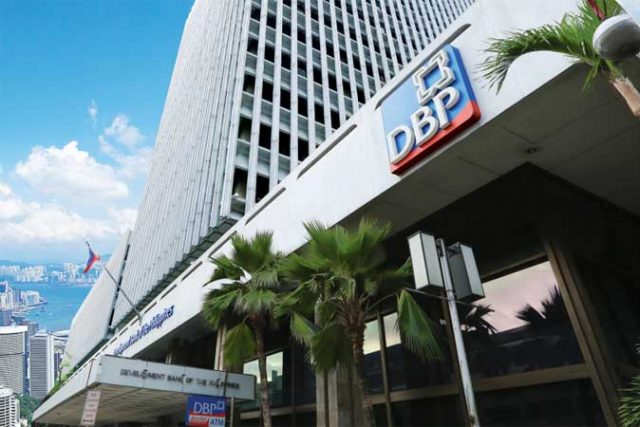
COURTESY OF DBP FACEBOOK PAGE

THE GOVERNMENT is working on establishing a credit rating system for local government units (LGUs) by next year, as part of efforts to encourage them to issue bonds to raise funds for development projects.

State-run lender Development Bank of the Philippines (DBP) said in a statement on Wednesday that it is working with the Department of Finance, state regulators and multilateral banks to set up the proposed LGU credit rating organization. It will be similar to how credit rating agencies rate the viability of investments in countries and companies in the global debt market.

“DBP would establish a viable risk model that is flexible, pragmatic and forward-looking,” DBP President and Chief Executive Officer Emmanuel G. Herbosa said.

In an e-mailed response to questions, a DBP representative said they plan to launch the system by 2022 but declined to disclose other details.

Mr. Herbosa in the statement said the system aims to provide the bond market with credible risk indicators in assessing LGU bonds, along with ample data of their past issuances. It could also help boost confidence in the debt papers issued by LGUs and eventually improve the risk appetite of investors, he said.

“We expect a significant increase in development initiatives nationwide once the LGU Bond Market has gained firm footing as it accords a substitute mode of financing,” he added.

The DBP chief also believes that the credit rating system can help LGUs diversify their funding sources based on their needs, financial maturity, and the capacity to generate revenues.

Latest data showed the Bureau of Local Government Finance (BLGF) issued 50 certificates of net debt service ceiling and borrowing capacity to LGUs in April, covering P10.658 billion of total loans against their overall borrowing capacity of P23.962 billion.

Last month’s total was more than double the P4.479 billion that the local government borrowed in April 2020.

From January to April, LGUs borrowed P38.526 billion through 155 certificates issued, as against their total capacity of P92.44 billion. This climbed by 110% from P18.3 billion it logged in the same period last year.

Mr. Herbosa said local governments can tap the bond market as a stable source of finances for its infrastructure and social development projects to lessen heavy reliance on their budgets from the National Government through the internal revenue allotment (IRA).

Once all LGUs are rated, he said the state-run bank can assist them with marketing efforts and extend strategic support.

“We shall continue to explore innovative and sustainable financing solutions so that communities can continue to recover and rebuild from the crippling effects of the public health crisis,” the DBP official added.

Late last year, Finance Secretary Carlos G. Dominguez III told local governments to maximize their borrowings in order to finance programs and projects, and boost the local economy. As of 2019, the majority of the local units still have 80% available borrowing capacity, and 63% of cities and municipalities do not have existing debt, based on official data.

Sought for comment, the BLGF, Union of Local Authorities of the Philippines, and the leagues of provincial, city and municipal treasurers did not respond to queries at the deadline time.

Last year, the DBP established a P1-billion interest rate subsidy program for the loans taken out by LGUs to help them finance their relief programs and recovery measures. — B.M.Laforga

PHL economy will struggle to recover — Fitch Solutions

PHILIPPINE STAR/ MICHAEL VARCAS
The Philiwppine economy shrank by 4.2% in the first quarter, the fifth consecutive quarter of decline since the pandemic began. — PHILIPPINE STAR/ MICHAEL VARCAS

THE PHILIPPINE ECONOMY will likely “struggle to recover” this year amid a “third wave” of coronavirus disease 2019 (COVID-19) infections, renewed lockdown restrictions in the capital region, and a snail-paced vaccination program, Fitch Solutions said.

Think tank Fitch Solutions, in a note on Wednesday, trimmed its Philippine gross domestic product (GDP) growth projection to 5.3% this year, from an earlier 5.8% forecast.

“We at Fitch Solutions believe the Philippines economy will continue to struggle amid its difficulties controlling the spread of COVID-19 and normalizing economic activity. The Philippines has been battling a rampant third wave of COVID-19 cases, which looks set to delay the economic recovery further,” the note read.

The think tank also cut its 2022 GDP growth forecast for the Philippines to 6.5%, from the previous 8.2% projection.

Fitch Solutions said the country’s overall economic output in nominal terms will remain 11.5% lower than its pre-crisis trend level by 2025.

Following the steeper-than-expected 4.2% slump in the first quarter, Fitch Solutions said the extended lockdowns in Metro Manila and its adjacent provinces will “weigh substantially” on the second-quarter GDP and further stall the economy’s recovery.

“The Philippines is highly vulnerable to lockdowns given its significant dependence on domestic activity for growth. Constraints on domestic activity are likely to be in place through the rest of 2021, but given the recent outbreak, we now expect these to be more stringent than we had previously assumed,” Fitch Solutions said.

Growth in household consumption will be slower at 4% from its previous forecast of a 4.5% expansion, it noted. Savings among Filipino families will remain elevated during the prolonged crisis and tight labor market.

High inflation and a slowdown in the manufacturing sector could further weigh on household consumption, but it may find support from a rebound in remittance inflows as the global economy recovers.

Muted household spending will be partially offset by the expected 7% growth in government spending, Fitch Solutions said. Meanwhile, weak domestic demand will drag investments as capital formation is now only seen growing by 10% this year from 14% previously.

“We continue to expect public sector support to spark a rebound in investment activity but the disruptions from lockdowns and weakened business sentiment will hamper policymakers’ efforts,” the think tank said.

Meanwhile, net exports could also be a drag this year due to higher prices of international goods and the expected rebound in imports.

The Development Budget Coordination Committee (DBCC) is set to meet on May 18 to review current growth targets and other macroeconomic assumptions, according to the Budget department.

The interagency body set a 6.5-7.5% growth target for 2021 in its previous meeting in December, and a higher goal of an 8-10% expansion in 2022.

Economic managers had said this year’s growth will likely be slower than the initial target because of the impact of the extended lockdowns.

In a related development, Asian Development Bank (ADB) Economist Shu Tian said in a webinar on Wednesday that developing Asian economies should aim for a “green” and sustainable economic recovery, as countries like the Philippines are highly vulnerable to the risks of climate change.

Ms. Tian said the Asia-Pacific region will need to invest at least $1.5 trillion each year in sustainable development goal-related investments to achieve the targets by 2030. This represents to 4-5% of the region’s GDP.

Developing economies can mobilize resources through green and social bond issuances by both the public and private sectors, she said. — B.M.Laforga

Duterte orders gov’t agencies to identify savings

PRESIDENTIAL PHOTO/ JOEY DALUMPINES

PRESIDENT Rodrigo R. Duterte has directed all agencies under the Executive department to identify savings from their 2020 budgets.

In Administrative Order No. 41, the President ordered agencies to identify portions or balances of their released appropriations under the 2020 General Appropriations Act “that may be declared as savings.”

The Department of Budget and Management (DBM) shall receive the reports of agencies on their compliance with the order within 15 days. The DBM shall then recommend to the President the amount that can be declared as savings, budget items that need to be augmented, and excess funds that can be used to provide cash aid for low-income families.

“The impact of the COVID-19 (coronavirus disease 2019) pandemic and the increasing cases of COVID-19 infection call for intensified government-wide response and recovery measures, including various forms of socioeconomic relief and assistance to those affected by the imposition of stricter levels of community quarantine,” Mr. Duterte said.

Savings are defined as portions or balances of any released appropriations that have not been obligated “as a result of the completion, discontinuance, or abandonment of a program, activity, or project.”

Savings also include funds that have not been obligated “as a result of the implementation of measures resulting in improved systems and efficiencies, enabling the agency to meet and deliver its goals at a lesser cost.”

To recall, the validity of the 2020 national budget was extended until Dec. 31, 2021 under Republic Act. No. 11520.

Lawmakers have proposed additional assistance programs for vulnerable sectors, but has received a lukewarm response from the Palace.

At least three committees at the House of Representatives have approved the proposed Bayanihan to Arise as One Act or Bayanihan III, which sets aside about P405.6 billion to assist various sectors affected by the pandemic.

Marikina Representative Stella Luz A. Quimbo, one of the bill’s proponents, said the measure could be funded by savings from the 2020 and 2021 national budgets as well as the excess capital and more dividends from government-owned and -controlled corporations. She also urged the government to implement austerity measures in order to afford the stimulus measure.

Presidential Spokesperson Herminio “Harry” L. Roque, Jr. had said the government needs to allow previous economic packages to run their course first before entertaining the possibility of a multibillion stimulus package. — Kyle Aristophere T. Atienza

Jollibee swings to profitability, moves to cut debt

JOLLIBEE Foods Corp. (JFC) generated P153 million in net attributable income despite lower sales in the first quarter, it said on Wednesday, as it bounced back from the P1.68-billion loss recorded in the same period last year.

The fast-food giant recorded a 12% revenue fall to P34.68 billion from P39.43 billion. It finished the quarter with an operating income of P1.49 billion, a reversal of last year’s P1.17-billion loss.

“Our profit and cash flows recovered strongly versus a year ago reflecting the successful execution of our business transformation program,” Jollibee Chief Executive Officer Ernesto Tanmantiong said in a statement on Wednesday.

The company launched a business transformation program in May last year to rationalize the company’s operations, which resulted in the permanent closure of 486 nonprofitable stores worldwide and four commissaries in the Philippines on top of other cost-saving initiatives.

Jollibee also said it implemented selling price adjustments in the fourth quarter last year and in the first quarter this year to offset the impact of higher inflation.

System-wide sales for the quarter went down by 13.4% to P47.78 billion from P55.15 million year on year.

“While we still face significant challenges in the Philippines due to continued restrictions related to the pandemic, our Philippine business provided the most profit contribution among all our regions in the world,” Mr. Tanmantiong said.

The company’s international business accounted for 41.1% of the first-quarter’s global system-wide sales for the quarter, while sales at home contributed 58.9%.

However, sales from the Philippines declined by 21.3%, while sales from the company’s international business improved by 1.3%.

“In the month of March 2021, our sales in China, North America (Philippine brands), EMEAA (Europe, Middle East and Asia) and SuperFoods mainly in Vietnam were already equal to or slightly higher than those in March 2019,” Mr. Tanmantiong added.

Global same-store sales in the January-to-March period decreased by 14.7%, with same-store sales at home declining by 26.1% as businesses abroad improved by 7.5%.

“Lower sales per store in the Philippines were caused by continued high level of restrictions to control the coronavirus [disease 2019] (COVID-19) pandemic particularly in Metro Manila and nearby provinces,” Jollibee said.

The company permanently closed 76 stores during the January-to-March period: 18 stores were shuttered in the Philippines and 58 abroad.

Despite this, it launched 19 new stores in the Philippines in the first quarter. It also added 12 new stores in China, eight in North America, and one in the EMEAA region.

In a separate statement, Jollibee said it is planning to issue preferred shares and is eyeing to buy back up to $250 million of its US-dollar perpetual bonds via a cash tender offer within this year.

The issuance of the peso preferred shares is still subject to the approval of the company’s shareholders and the approval of the Securities and Exchange Commission. 

“JFC’s objective in this plan is to restructure its financial obligations in order to strengthen its balance sheet, spread the maturity of its financial obligations and reduce its foreign exchange risks,” the company said. 

“This is also part of its action steps to reduce its debt and financing cost as its businesses in different parts of the world recover from the severe impact of the pandemic,” it added.

Jollibee said it will apply for the shelf registration of up to P20 billion cumulative, non-voting, non-participating perpetual preferred shares this year.

It will be sourced from a reclassification of existing authorized and unissued common shares. The company said this will not adjust the total number of its authorized shares in its equity and neither will it affect its current cash dividend policy and implementation.

The first issuance will consist of eight million preferred shares to be issued this year worth P8 billion, with an oversubscription option of four million preferred shares worth P4 billion.

It said the initial tranche will be issued in up to two subseries “and may have [stepped] up dividend rates if they are not redeemed within three years or five years.”

Aside from buying back some of its US-dollar perpetual bonds, the company said it is also eyeing to reduce other financial obligations through bank loans this year.

On Wednesday, Jollibee shares at the local bourse shaved off 2.63% or P4.60 to close at P170.40 each. — Keren Concepcion G. Valmonte

PAL says ‘comprehensive restructuring’ plan going on amid Chapter 11 news

FACEBOOK.COM/PHILIPPINEAIRLINES

FLAG carrier Philippine Airlines (PAL) assured the public on Tuesday that its operations will not be affected by its ongoing “comprehensive restructuring.”

The statement was issued on Tuesday in response to a request for comment on a report posted on FlightGlobal, an aviation news and information website, that the airline had informed its lessors of a plan to file for Chapter 11 bankruptcy protection in the United States by the end of the month.

“Philippine Airlines management and stakeholders continue to work on a comprehensive restructuring plan that will enable PAL to emerge financially stronger from the current global crisis,” the flag carrier said in a statement sent via Viber on Tuesday evening by its spokesperson, Cielo C. Villaluna.

“As the work is ongoing, we will make the necessary disclosures at the proper time, once details are finalized,” PAL added.

The company also said that any restructuring will have no effect on its flights or operations.

The flag carrier is increasing its international and domestic flights “as the market recovers with easing restrictions,” it noted.

“We continue to operate repatriation flights and transport COVID-19 vaccines to and throughout the Philippines, as part of the global effort to combat the pandemic.”

In November last year, the Finance department said the flag carrier was planning to seek court protection from creditors as it was working on a debt restructuring plan.

Local airlines have been pushing for the relaxation of travel restrictions to gradually restore air travel demand amid the global health crisis.

Aviation think tank Center for Asia Pacific Aviation (CAPA) has said airline revenues are expected to be “close to catastrophic” in the first half of the year.

CAPA expects business travel to be at “as much as 50% of previous levels” in the second half of 2021.

PAL Holdings, Inc., the listed operator of the flag carrier, has not yet released its 2020 annual report and its report for the quarter ended on March 31.

To recall, PAL’s total revenues for the first nine months of 2020 stood at P45.29 billion, down 61.6% from the previous year’s P117.85 billion.

Its net loss to parent equity holders hit P28.85 billion, or more than three times the P8.49 billion recorded in 2019.

PAL Holdings shares closed 0.86% higher at P5.86 apiece on Wednesday. — Arjay L. Balinbin

Yields on term deposits drop on GDP data ahead of BSP review

BW FILE PHOTO

YIELDS ON the central bank’s term deposits declined on Wednesday following the release of the first-quarter gross domestic product (GDP) data and ahead of the Monetary Board’s policy review where it was expected to keep benchmark rates steady.

Tenders for the term deposit facility (TDF) of the Bangko Sentral ng Pilipiinas (BSP) amounted to P528.647 billion on Wednesday, higher than the P520-billion offer, but lower than the P583.062 billion in bids seen last week.

Broken down, demand for the seven-day term deposits reached P160.199 billion, surpassing the P150 billion auctioned off by the BSP and the P157.385 billion in tenders logged in the previous auction.

Accepted rates were from 1.7% to 1.745%, slightly narrower than the 1.7% to 1.7499% range logged a week ago. This caused the average rate of the one-week papers to inch down by 0.61 basis point (bp) to 1.7253% from 1.7314% previously.

Meanwhile, the two-week papers attracted tenders worth P368.448 billion, lower than the P370-billion offer as well as the P425.677 billion seen on May 5.

Lenders asked for yields ranging from 1.68% to 2.1999%, a wider range compared with the 1.7% to 1.76% band seen last week. With this, the 14-day paper’s average rate dropped by 0.94 bp to 1.7392% from 1.7486% previously.

For the 29th consecutive week, the central bank did not auction off 28-day papers to give way to its weekly offerings of bills with the same tenor.

Term deposits and the BSP’s short-term securities are used by the central bank to gather excess liquidity in the financial system and guide market rates.

The lower yields fetched for the term deposits on Wednesday reflected the market’s reaction to first-quarter Philippine GDP data released on Tuesday, Rizal Commercial Banking Corp. (RCBC) Chief Economist Michael L. Ricafort said in a text message.

The economy contracted more than expected in the first three months of 2021, extending the recession to five straight quarters as the pandemic dragged on, data from the Philippine Statistics Authority showed.

GDP fell by an annual 4.2% in the quarter ending March, worse than the median estimate of a 2.6% decline in a BusinessWorld poll last week.

This marked five consecutive quarters of GDP decline, marking the longest recession since the Marcos era when economic output shrank for nine consecutive quarters from the fourth quarter of 1983 to the fourth quarter of 1985.

Mr. Ricafort added that the decline in TDF yields also came ahead of the central bank’s policy meeting later on Wednesday.

A BusinessWorld poll last week showed 15 out of 17 analysts expected the central bank to keep the overnight reverse repurchase rate at 2% as the BSP continues to support the economy, even with inflation still beyond its 2-4% annual target.

Inflation stood at 4.5% for the second straight month in April mainly due to higher food prices particularly of meat products. — L.W.T. Noble

Cebu Air shareholders approve long-term incentive plan for employees

SHAREHOLDERS of Cebu Air, Inc., the listed operator of budget carrier Cebu Pacific, approved on Wednesday the company’s long-term incentive plan for its employees, partly aimed at attracting and retaining key talents.

Majority of the shareholders voted to approve the plan during the company’s annual stockholders’ meeting on Wednesday morning.

“The plan is being established with the following objectives in mind: first, to foster ownership mentality among senior management; second, to drive performance and value creation; and third, to attract, retain and motivate key talents,” Cebu Air Corporate Secretary Anne Romadine P. Tieng said at the meeting.

Under the incentive plan, eligible employees may be granted either restricted stock units or stock options.

“Any plans of restricted stock units and stock options will be subject to an award agreement, which will contain the terms and conditions of the award,” Ms. Tieng said.

Cebu Air’s corporate governance committee will be tasked to administer the plan.

The company’s board of directors approved the plan on March 29 this year.

Cebu Air has said it would allocate up to a total of 2% of its issued and outstanding common shares to be granted to “eligible employees.”

The company has reported a net loss attributable to equity holders of P7.3 billion in the first quarter, compared with a net loss of P1.18 billion in the same period last year.

It has also announced the completion of its “business transformation fund-raising plan raising a total of P40.5 billion ($845 million) in three tranches” to face the coronavirus pandemic.

Cebu Air shares closed 0.31% lower at P48.15 apiece on Wednesday. — Arjay L. Balinbin

Shakey’s to receive P1.25-billion investment from Gokongwei firm

SHAKEYSPIZZA.PH

SHAKEY’S Pizza Asia Ventures, Inc. (SPAVI) said on Wednesday it is set to receive a P1.25-billion investment from Gokongwei-led JE Holdings, Inc., which will become one of its stakeholders.

SPAVI said in a regulatory filing that JE Holdings, a private investment firm of the Gokongwei family, will infuse the amount in exchange for 152.44 million new primary shares equivalent to around 9% ownership stake.

“This equates to a purchase price of P8.20 per share — a 10% premium over the company’s latest stock price and 14.6% higher than the latest 45-day volume weighted average,” SPAVI said in the disclosure.

“JE Holdings’ entry comes at a time of recovery in both SPAVI’s sales and profitability coming from lows experienced during the height of COVID-19-related lockdowns,” it added.

SPAVI said Lance Y. Gokongwei, JE Holdings chairman and president, will also be up for election as a member of the company’s board of directors during its stockholders’ meeting in July.

Vicente L. Gregorio, SPAVI president and chief executive officer, said the company remains optimistic in its long-term prospects and is looking forward to the entry of the Gokongwei family.

“We believe that we are in a relatively good position financially, and with the added benefit of a new strategic investor, we plan to make the most of both the fresh round of capital and the various synergies that come along with partnering with the Gokongwei group of companies,” Mr. Gregorio said.

“While our current balance sheet remains healthy, I look forward to further strengthening our financial position, with the new capital giving us additional flexibility at a time when many organic and inorganic opportunities have started to open up,” SPAVI Chairman Christopher T. Po said.

Separately, SPAVI announced in a separate regulatory filing on Wednesday that recorded a first-quarter net income of P29 million, lower by 75% from its P114-million after-tax income a year earlier.

The company’s net revenues fell 30% to P1.28 billion from P1.84 billion, while its earnings before interest, taxes, depreciation, and amortization (EBITDA) declined 31% to P240 million.

SPAVI’s system-wide sales for the first quarter reached P1.7 billion, a 28% decline from P2.31 billion in 2020.

“Though sales were down 28% year on year, this recovery rate nonetheless represents a 500-basis point improvement versus that of the previous quarter,” the company said in the disclosure.

SPAVI said dine-in sales fell in the first quarter due to the seasonality aspect of the restaurant industry, together with fears of stricter quarantine protocols and more contagious variants of the coronavirus disease 2019 (COVID-19).

Amid lower dine-in sales, the company said its delivery and carryout sales posted double-digit year-on-year growth and carried the business during the period.

Mr. Gregorio said the ongoing pandemic still heavily affects the restaurant sector, with consumers choosing to stay at home or experiencing difficulties due to the country’s economic situation.

“The latter part of this quarter also saw the re-imposition of stricter measures to curtail dine-in, disrupting the part of our business which was experiencing a relatively good trajectory before then,” he said.

During the first quarter, SPAVI said it opened eight net new stores as part of its goal to open a net of 30 new stores this year, excluding ghost kitchens or delivery support.

“These new branches will follow a smaller format and will be geared to service both in-store and out-of-store consumption in response to guests’ emerging needs for fast, convenient, and safe dining experiences,” the company said.

On Wednesday, shares of SPAVI at the stock exchange improved 6.3% or 47 centavos to end at P7.93 apiece. — Revin Mikhael D. Ochave

LANDBANK lets clients open digital accounts via mobile app

BW FILE PHOTO

STATE-RUN Land Bank of the Philippines (LANDBANK) launched on Wednesday its digital on-boarding system (DOBS) mobile application to allow its clients to open digital savings accounts without needing to visit its physical branches.

LANDBANK said applicants are required to fill out an application form and upload a photo of a valid identification card through the mobile app to open a digital ATM savings account, it said in a statement on Wednesday.

The digital account can be used for cardless withdrawals via the mobile app, fund transfers and bills payments.

It said the time to open an account was effectively reduced to 10-15 minutes since clients no longer need to go to a physical branch to complete the process.

To upgrade the bank account to a regular LANDBANK Visa debit card, however, clients still have to visit a branch to request for a physical card.

“The DOBS Mobile underscores LANDBANK’s continued commitment to provide accessible, convenient, and safe digital solutions. Our digital banking initiatives remain centered on balancing service delivery while ensuring the health and safety of our clients which is of utmost priority,” LANDBANK Branch Banking Sector Head, Executive Vice-President Julio D. Climaco, Jr. said.

The DOBS was introduced by LANDBANK in December 2018 as the first online bank portal in the country. As of April 30, there were 1.53 million accounts opened through the bank’s website.

LANDBANK’s net income went down by 7.57% to P17.1 billion in 2020 from P18.5 billion in the previous year.

SEC greenlights Ayala Corp.’s P30-B debt program

THE Securities and Exchange Commission (SEC) has given the go signal for Ayala Corp.’s P30-billion debt securities program.

“In its meeting on May 11, the commission en banc resolved to render effective the registration statement of Ayala, subject to the company’s compliance with certain remaining requirements,” the corporate regulator said in a statement on Wednesday.

The listed conglomerate has set P6 billion for the first tranche of the program consisting of three-year bonds due in 2024 and five-year bonds due in 2026, with an oversubscription of up to P4 billion.

The bonds will be listed and traded on the Philippine Dealing & Exchange Corp.

Around P9.88 billion of net proceeds is expected from the first tranche of the P30-billion debt securities program should the oversubscription option be exercised.

According to the company’s prospectus filed with the SEC at the end of March, majority of the proceeds will be used to pay for its short-term loans and it will partially be used to fund the company’s capital expenditures.

Ayala Corp. assigned BPI Capital Corp. as the transaction’s issue manager, joint lead underwriter, and bookrunner.

BDO Capital & Investment Corp., China Bank Capital Corp., First Metro Investment Corp., and SB Capital Investment Corp. were also tapped as joint lead underwriters and bookrunners.

RECYCLING INITIATIVES
Meanwhile, the company’s real estate arm Ayala Land, Inc. said it was able to recycle 28 metric tons of plastic waste into eco-products last year.

Ayala Land collaborated with Green Antz Builders, which converted the dry plastic waste to construction materials like bricks, pavers, and casts.

“The cycle involves collecting clean and dry plastics at designated drop-offs and transporting them to eco-hubs, which are recycling facilities where the plastics are shredded and incorporated into concrete products developed by Green Antz,” Anna Maria Gonzales, sustainability manager of Ayala Land, said in a statement.

Dry plastic waste products were collected from its properties and communities and Ayala Land said these were recycled into eco-materials as part of the company’s “circular waste management” initiative.

As a result, the converted plastic waste materials are now used in Ayala Land’s estates and sites as pathways, fences, and sidewalks.

Ayala Land said the total plastics it was able to recycle in 2020 may be compared with how much dry plastic waste may be collected from its two largest malls in a regular year.

“Processing and using these eco-products effectively prevented clean and dry plastics from Greenbelt and Glorietta from ending up in dumpsites,” Ms. Gonzales said.

Shares of Ayala Corp. at the local bourse went down by 1.76% or P13 on Wednesday to close at P727 each, while Ayala Land stocks slipped by 0.93% or 30 centavos to finish at P31.95 apiece. — Keren Concepcion G. Valmonte

Florals in Spring? Groundbreaking 

Yes, if we’re talking about drinks

WHILE the heat of summer blazes on in the Philippines, Don Papa Rum flexes its global reach by coming out with a spring campaign called “Sweet Sugarlandia Spring.”

 In a Zoom conference on May 10, the Bleeding Heart Rum Company showed off its glossy spring campaign photos shot by Steve Tirona. These were taken at the historic Dawnridge House, seen in the Netflix series Ratched, and known as one of America’s best-designed homes, thanks to its previous ownership by designer Tony Duquette.

 “Spring is not necessarily a Filipino concept,” said Monica Llamas Garcia, Director of Communications for Bleeding Heart Rum Co., Don Papa’s parent company. “How many seasons do we have here? What do they say, two? Hot, and hotter?”

 But the Philippines is not the only place where the brand is available. Ms. Garcia notes that since its founding in 2012, Don Papa is now present in about 30 countries, its reach spanning from South Africa, North America, to New Zealand. “The whole spirit of Don Papa is all about inclusivity. We look at the seasons of the entire world.”

 “The idea of spring is all about the idea of rebirth, and looking forward to better things ahead,” she said. The spring campaign is part of an ongoing series (“Winter” was launched last December), and the slant towards temperate seasons (and the accompanying culture) is not incidental. More campaigns based on the seasons are set to be launched later this year (as is a new Don Papa expression).

 The campaign is also accompanied by cocktails (of course). The brand relied on its US Brand Ambassador, Tomas delos Reyes, for two tipples: Botanica Obscura (Don Papa Rum, lemon juice, hibiscus syrup, bitters) and Avalon Awakens (Don Papa Rum, pineapple juice, lime juice, velvet falernum, ube syrup). 

“You usually think of spring cocktails as shaken, and bright, airy,” he said during the Zoom call. “The main element and inspiration came from many years of experiencing the turn of winter to spring in New York City. It’s really just energy popping in the air.”

These cocktails will be available soon through Run Rabbit Run’s cocktail delivery service.

“I kind of wanted to present them like exotic flowers.” — Joseph L. Garcia

ADVERTISEMENT
ADVERTISEMENT