
GMA Network, Inc. announces schedule of annual stockholders’ meeting

THE NATIONAL GOVERNMENT’S total debt service bill increased more than fivefold from a year ago to P268.41 billion in March as principal payments surged, data from the Bureau of the Treasury (BTr) showed.
The March debt service bill was significantly higher than the P49.29 billion recorded in the same month in 2020.
BTr data showed amortization payments made up 82.2% of the total, and the rest went to interest payments.
Principal payments spiked by 3,478% to P220.75 billion in March from just P6.17 billion a year ago.
Broken down, P202.96 billion was paid to domestic lenders while payments to foreign creditors grew by 188% from a year ago to P17.79 billion.
The government did not settle any principal payments for its local debt in March 2020.
Interest payments likewise rose by 10.6% to P47.67 billion in March from P43.12 billion a year earlier.
This consisted of P39.23 billion in payments for domestic debt, up by 15% year on year, and P8.44 billion for foreign obligations, down by 4%.
For the first quarter, the government’s debt service bill increased by 53.4% to P521.51 billion from P339.98 billion in the same period last year.
The quarter’s total accounted for 41.4% of the programmed P1.26-trillion debt service bill for the entire year.
Principal payments, which accounted for three-fourths of the total, surged by 80% to P395.65 billion. Of which, P252.85 billion went to pay off local debt and the remaining P142.8 billion went to settle external debt.
For the first three months of 2021, interest payments grew by 24% to P125.86 billion from P119.88 billion. This made up of P90.6 billion in interest paid for domestic debt and P35.24 billion for foreign loans.
The government’s overall borrowings reached P1.4 trillion in the first quarter, up by 44.45% year on year.
The Institute of International Finance (IIF) warned last week that debt service will likely become a “greater burden” for many emerging economies including the Philippines amid high spending and low state revenues.
IIF data showed the share of government interest expense over their overall revenues will increase the most in the Philippines among 15 emerging markets studied. The ratio is projected to jump by nearly six percentage points in 2021-2022 from the level in 2018-2019.
Interest payments by the government accounted for 13.3% of state revenues in 2020, up from 11.5% in 2019 and the highest in four years or since 2016’s ratio of 13.9%, based on latest data from the Treasury. — Beatrice M. Laforga


By Luz Wendy T. Noble, Reporter
SLUGGISH BANK LENDING is expected to continue in the next few months, with improvements likely seen by late 2021 if the pandemic-related restrictions are further eased in the Philippines, according to analysts from credit rating firms.
Despite the liquidity boost and record low policy rates, lending has been muted in recent months as banks tightened credit standards amid uncertainty over the health crisis.
“Credit demand is likely to remain weak in the second quarter as well and could pick up in the second half of 2021. Credit off-take will primarily depend on lifting of restrictions in Manila and National Capital Region,” S&P Global Ratings analyst Nikita Anand said in an e-mail to BusinessWorld.
Strict lockdown measures have been eased in NCR and adjacent provinces, which are now under a general community quarantine (GCQ) but “with heightened restrictions” until May 31. This as the number of reported coronavirus disease 2019 (COVID-19) cases has gone down.
Bank lending declined for the third straight month in February, despite the Bangko Sentral ng Pilipinas’ (BSP) measures to incentivize lending and to infuse liquidity worth P2 trillion to the financial system.
“If you look at the liquidity injection of the BSP in the past year, it has been instrumental in supporting market function. What we’ve seen is that much of this liquidity has been absorbed back into the various facilities of the BSP,” BSP Deputy Governor Francisco G. Dakila, Jr. said at the monetary policy briefing on Wednesday.
“Once the economy starts recovering due to the control of the spread of the virus and the relaxation of restrictions, then we can see that liquidity will not then be a factor constraining growth,” he added, assuring “liquidity is already there.”
Joyce Ong, an analyst at the Financial Institutions Group of Moody’s Investors Service, expects lending to remain sluggish in the next few months before picking up pace later in the year.
“Lending will likely remain muted in the next few months, as businesses halt expansion plans due to the ongoing social-distancing measures and a resurgence in infection rates,” Ms. Ong said in an e-mail.
“Banks will remain cautious in lending to SME (small and medium enterprises) and retail borrowers due to their elevated default risk, because these borrowers tend to have less cash buffers to withstand prolonged financial stress,” she added.
In February, loans for production activities fell by 3.2%. Borrowings from consumers also dropped 9.9%.
“In times of greater uncertainty, lag in the transmission of monetary policy can be expected to be longer. Therefore, the implication of that is that monetary stimulus will be applied on a longer time period than what would have been in more normal times,” Mr. Dakila said on Wednesday.
More business activities are expected to resume with NCR now under a more relaxed GCQ.
S&P’s Ms. Anand said this may spur bank lending moving forward.
“As the economic activity picks up, capital expenditure and working capital requirements from corporate sector should increase. Ramp up of key infrastructure projects could also provide an upside,” she said.
She, however, warned that recurring waves of COVID-19 infections and a slow vaccination rollout could continue to hinder economic and credit growth.
For her part, Ms. Ong said a resumption of some kind of “state of normalcy in the Philippines” in terms of both business and consumer activities could help drive a gradual recovery in lending by the end of the year.
The economy shrank for the fifth consecutive quarter by 4.2% in the January to March period. Household spending continued to decline by 4.8% while capital formation slid by 18.3%.

THE ANTI-RED TAPE Authority (ARTA) is aiming to reach the Philippines’ highest score yet in the next global Doing Business report, its top official said.
The World Bank’s annual Doing Business report assesses countries’ competitiveness by measuring regulations that enhance and constrain business activity. Countries with fewer regulations will have a higher ranking on the Doing Business index, which will then boost their attractiveness to foreign investors.
The Philippines rose to 95th place from 124th place among 190 economies in the latest report released in 2019 after improving its overall score to 62.8 points from 60.9 points, although it was seventh among 10 Southeast Asian Nations.
“We are hoping that the Philippines will have its highest ever EODB (Ease of Doing Business) score in the history since the survey started,” ARTA Director-General Jeremiah B. Belgica said in a mobile message on Saturday.
Although starting a business became easier after the country abolished the minimum capital requirement for domestic companies and made dealing with construction permits easier, the report showed that the country still needed to improve enforcing contracts, trading across borders, and registering property.
“We continue to work on and improve the ‘starting a business’ sector,” Mr. Belgica said. The rollout of a central business portal, he said, would aid in these efforts.
In a recent joint memorandum circular issued by ARTA and other government agencies, all local government units have to set up the electronic business one-stop shop or automate their business processing and licensing systems by June 17.
Local governments that have fully put up an online business registration service must cut the number of steps to one. Business registration must be processed within three business days, while the number of signatories on permits must be reduced to three people.
The Philippines continues to be plagued with red tape issues during the pandemic. ARTA recently issued a show-cause order to the Food and Drug Authority for alleged delays in processing 600 drug applications.
The World Bank faced recent criticism over reported irregularities regarding data changes in the 2018 and 2020 versions of its flagship report. It paused the release of the latest edition and noted corrections would be incorporated in the upcoming report.
ARTA also called for a review of the methodology of the report, raising concerns about the data collection method. The Doing Business survey team, Mr. Belgica said, should select respondents that are familiar with the processes or regulations being assessed.
The World Bank report measures competitiveness of economies in doing business using several indicators: starting a business, employing workers, dealing with construction permits, getting electricity, registering property, getting credit, protecting minority investors, paying taxes, trading across borders, enforcing contracts and resolving insolvency.
In 2019, the Philippines created the ARTA, one of the offshoots of an Ease of Doing Business Act that President Rodrigo R. Duterte signed in the year prior. — Jenina P. Ibañez


MOTORISTS USING the North Luzon Expressway (NLEX) will pay higher toll fees starting Tuesday (May 18), the tollway operator said over the weekend.
NLEX Corp. said in a statement the toll increase will take effect at 12:01 a.m. on May 18.
An additional P2 for Class 1 vehicles or ordinary cars (value-added tax included) using the open system, where a flat rate is charged, will be collected.
Quezon City, Caloocan City, Valenzuela City, Malabon City, Navotas City, Meycauayan City and Marilao, Bulacan are all part of the open system.
The closed system is between Bocaue, Bulacan and Mabalacat City, Pampanga, according to the company.
“For the entire NLEX journey end to end, Class 1 vehicles will pay an additional P6,” the company added.
For Class 2 vehicles like buses and small trucks, an additional P3 will be collected in the NLEX open system, while an additional P4 will be collected for large trucks or Class 3 vehicles.
“In summary, motorists traveling end-to-end between Metro Manila and Mabalacat City, Pampanga will be charged an additional P6, P14, and P16, respectively, depending on their vehicle class,” the company said.
NLEX Corp. also said the increase is part of the “approved” periodic adjustments due in 2012 and 2014.
The TRB (Toll Regulatory Board) and NLEX agreed to implement the increase on a staggered basis to cushion the impact of the adjustments,” it noted.
NLEX Corp. announced last week that it was testing an automatic license plate recognition system at its 25 toll lanes in Valenzuela City, partly to identify erring motorists who use cashless lanes without radio-frequency identification (RFID) stickers or with insufficient load balance.
The company continues to keep its toll barriers up at Mindanao, Karuhatan, and Paso de Blas toll plazas.
Among its ongoing projects are the NLEX Connector Road, an eight-kilometer toll road linking the tail of NLEX Harbor Link Segment 10 at C3 Road in Caloocan City to Polytechnic University of the Philippines in Sta. Mesa, Manila, and the Candaba Viaduct upgrade, which aims to ensure the bridge’s long-term serviceability.
NLEX Corp. is part of Metro Pacific Tollways Corp., the tollways unit of Metro Pacific Investments Corp. (MPIC). MPIC is one of three key Philippine units of Hong Kong-based First Pacific Co. Ltd., the others being Philex Mining Corp. and PLDT, Inc.
Hastings Holdings, Inc., a unit of PLDT Beneficial Trust Fund subsidiary MediaQuest Holdings, Inc., has a majority stake in BusinessWorld through the Philippine Star Group, which it controls. — Arjay L. Balinbin

IT’S a sobering thought that after our bones have been ground to dust, there’s going to be a piece of immortal plastic to replace one of us, remaining on earth until who-knows-when. To tackle this issue of the virtual immortality of plastic, Procter & Gamble (P&G) Philippines announced at a sustainability summit on May 6 the various steps it has been taking to reduce its own plastic use, as well as its ambitions for plastics in the future.
Anna Legarda, Commuinications Director of P&G Philippines, unveiled the company’s sustainability development goals program called Ambition 2030. “The goal is to be 100% recyclable, reusable, by 2030,” she said.
Why 2030? Ms. Legarda explained that the company — one of the world’s biggest manufacturers (among its many brands are Charmin, Crest, Downy, Febreze, Gillette, Head and Shoulders, Olay, Oral-B, Pampers, Pantene, Tide, Vicks, and Whisper) — is the intricacies of the packaging. “In itself, the packaging of any product, not just sachets, serves different vectors of functionality,” she said. Sachets are a particular concern due to the difficulty in recycling them, and they are frequently visible to the naked eye — and in documentaries as particularly bright colored liter on coastlines.
Ms. Legarda adds, “Plastic in itself as a material isn’t bad — I just want to put that out there.
“It’s when it becomes waste… that’s when it becomes a problem.”
The factors that she cites for some of their practices in packaging include safety, quality, efficacy, scalability, and cost. She gives dishwashing liquid as an example: it’s dressed up in multiple layers of plastic to ensure its safety and efficacy throughout its life cycle. “Products have a certain promise and a claim, and they can deliver these when… they are preserved or well-packaged. If you alter a bit in the packaging, their efficacy and stability… can be compromised,” she said.
There have been some advances already though: for starters, the new bottles of Herbal Essences shampoo are now made with 25% post-consumer resin (recycled plastic). The boxes of Safeguard soap have been stripped of their plastic film overwrap, since they found out those can be substituted with recycled cartons. As well, their Cabuyao, Laguna plant has a goal of having zero manufacturing waste. Ms. Legarda says that the company globally pours about $2.5 billion into research and development — “Twice more than our next competitor. ”
A company release said, “To further offset the unrecoverable emissions, the company is supporting natural climate solutions that help conserve, protect and restore forests with global partners such as Conservation International and its recently launched P&G Forests for Good program. Beyond helping in P&G’s net zero emissions goal, Forests for Good aims to actively protect nature, beginning with 12 pilot programs in 12 months across its Asia Pacific, Middle East, and Africa (AMA) region, by planting trees that help improve local ecosystems. The Philippines is one of the pilot countries supporting this natural climate solution and will help forestation efforts in the Sierra Madre Mountain Range. To establish its P&G Philippines Forest for Good, P&G entrusted each employee with trees, planted on their behalf by farmers in the Sierra Madre mountain range. Employees can name their tree, virtually travel to see it up close, check on it and learn more about it as it grows, and learn more about the farmer who planted it.”
“All of these things, we have to consider, because we’re trying to be accountable for it,” she said. “We’re very, very aware that anything that messes with our consumers will affect the whole brand, the whole company. We’re trying very, very hard to do it.” — J.L. Garcia

By Virginia Postrel
VEGAN silk and leather, mine-free diamonds, bioengineered perfumes: Lab-grown products with ethical appeal could be the future of luxury. Exemplified by the announcement the other week that giant jeweler Pandora A/S will no longer use mined diamonds in its products, the emergence of these high-tech luxury goods represents a significant cultural shift.
Since the first Earth Day a half-century ago, large industries have grown from the widespread conviction that “natural” foods, fibers, cosmetics and other products are better for people and the planet. It’s an attitude that dates back to the 18th– and 19th-century Romantics, who rejected industrialism in favor of sublime landscapes and rural nostalgia: What’s given is good; what’s made is suspicious, especially if it’s of recent origin.
That assumption is beginning to reverse, as entrepreneurs and consumers turn to cutting-edge artifice in search of more environmentally friendly, less ethically fraught materials. Substances grown in fermentation vats or built up atom by atom are replacing those wrenched from the earth, stripped from plants and animals or implicated in human suffering.
With their ethical appeal, these high-tech materials raise an interesting possibility. Maybe some ethical standards are themselves a form of luxury, at least until innovations make them less expensive. Democratizing diamonds, then, has the potential to produce not just cheaper bling but new mores about mining and energy use. Growing meat or silk or leather in a vat could make the “natural” alternatives someday seem repugnant.
Some new materials, such as Impossible Meat’s popular vegan burgers or the leather substitutes from companies including Modern Meadow, Bolt Threads and Ecovative Designs, are alternatives to traditional products. (Bolt also makes a bioengineered vegan silk, but not yet in commercial quantities.) Others are the real thing, produced in a new way.
Take those lab-grown diamonds. They are chemically, structurally and optically identical to the natural variety — a fact that irks mined-diamond purveyors no end. (They know what cultured pearls did to the price of those gemstones.) But even Anglo American Plc.’s De Beers, whose chief executive has called lab-grown stones “not real,” has started its own division selling lab-made stones as lower-priced fashion jewelry.
Although synthetic industrial diamonds have been around since the 1950s, producing gem-quality diamonds is a recent phenomenon. It builds on technology that was originally developed to make computer chips and thin-film solar cells, but is much more challenging.
The semiconductor industry uses a process known as atomic layer deposition to build films around a hundred atoms thick. To get a diamond crystal large enough for jewelry, however, producers have to build up 10 billion layers.
“If something goes wrong in layer 1,000, it’s not going to self-correct,” said Martin Roscheisen, the founder and chief executive of San Francisco-based Diamond Foundry, Inc., in an interview. “You have to grow to 10 billion layers without things going wrong.” Now in its eighth generation, the company’s plasma reactor has an energy density 100 times that used in the semiconductor industry.
Diamond Foundry’s stones sell for an average of $282 a rough carat, more than twice the De Beers average of $133 for its mined versions. Yet at retail, lab-grown stones are much cheaper. The reason for the paradox is simple. Mined diamonds come in a hodgepodge of size and quality, with the small, flawed and discolored ones bringing down the average price. Lab-grown stones are all high-quality to begin with. But they’re less aggressively priced, making them cheaper to the consumer. (Both types go through the same cutting and polishing processes.)
Although every lab-grown stone is slightly different, they are all fairly large (about five carats before cutting and polishing) with good color. That consistency is also why even a plasma reactor takes significantly less energy for each gem-quality carat than a mining operation — a selling point to environmentally oriented customers. In announcing its plans to go mine-free, Pandora emphasized the appeal of both lower prices and environmental sustainability to its customer base.
The new luxury materials are grown, not extracted. It’s a much gentler-sounding process.
“A lot of luxuries and wonderful products are things that we squeeze out of natural things,” said Christina Agapakis, the creative director of Boston-based Ginkgo Bioworks, in an interview. “There will be a tiny amount of these molecules that make a beautiful fragrance in plants. We cut down the whole forest to extract them.” Ginkgo Bioworks instead bioengineers yeast to produce the right molecules. The goal, Ms. Agapakis said, is “a truly generative” process. “If you want a little more, you grow more,” she said. No killing animals or chopping down trees. But the molecules themselves are the same.
At least for now. Today, the company mostly replaces existing materials, from collagen for cosmetics to patchouli for perfume. In the future, biologists could invent new substances or recover old ones. Ms. Agapakis spearheaded a project in which company scientists worked with an artist and a fragrance expert to create possible scents of extinct flowers, starting with DNA sequences from samples stored at Harvard University.
Bioengineered molecules and lab-grown diamonds lack the provenance of traditional luxuries, but they aren’t fakes. Both chemical analyses and human senses deem them authentic. Once they’re in the world, telling the difference requires a paper trail.
“This is the fragrance of memory, my own and everyone else’s. This is the smell we have loved for thousands of years, that has beguiled the generations, the people I know and love, my grandmother,” Sudeep Agarwala, a yeast geneticist and program director at Ginkgo Bioworks, writes of agarwood, whose scent he hopes to create in yeast. He wonders, “Will the scent I create in yeast be real?” If it conjures those memories, it will be. — Bloomberg

LIVESTREAM shopping company Shoppertainment Live, Inc. said live shopping for e-commerce brands is on the rise in the Philippines, with Filipino consumers becoming more receptive to the new form of shopping amid the pandemic crisis.
“It takes 30 days to create a habit, and it’s been over a year [since the pandemic began] and people are still watching,” Shoppertainment Live Chief Executive Officer Hiyasmin Neri-Soyao told BusinessWorld in a recent online interview. “The average watching duration is still increasing, so I think live shopping is now part of the marketing mix.”
Shoppertainment Live combines shopping and entertainment to sell products on e-commerce platforms such as Lazada and Shoppee, as well as social media platforms like Facebook.
“We use celebrities. We’ve done a lot of activations with micro and macro influencers,” Ms. Neri-Soyao said.
“Actually, we had 200% growth year on year, and we’ve seen a lot of increase in demand for livestreams,” she added.
She noted that livestream shopping has been booming in China, and she sees potential for this industry in the Philippines.
“In China, this is a multibillion-dollar industry that really helps boost e-commerce conversion rates. There, they’ve been selling like $20-million worth of products for one hour,” she said.
In the Philippines, however, livestreaming is not yet the biggest driver in terms of e-commerce sales conversion.
“The role of the livestream right now is being part of the e-commerce marketing of our brands and stores,” Ms. Neri-Soyao said. “But we’ve seen a 2% to 10% increase in conversion rate for an hour stream.”
“The biggest benefit of a livestream shopping campaign is [the ability to convert] viewers into store followers, because these store followers are the ones who would see your promos and new products right away, and they are the ones who would be notified by the platforms right away,” she added. — Arjay L. Balinbin





By Zsarlene B. Chua
Skin Care
Product Review
Good Molecules’
Pineapple Exfoliating Powder
Good Molecules’
Niacinamide Serum
Good Molecules’
Hyaluronic Acid Serum
Good Molecules’
Caffeine Energizing Hydrogel Eye Patches
I’M sure at this point everyone is feeling the searing heat that is the Philippine summer. If you are like this writer, the heat and humidity is absolutely wrecking my skin (also, allergies) and it’s usually this time of year when I make adjustments to my skincare routine — favoring lighter, easily absorbed products to keep my skin taken care of without being too heavy and sticky.
In the last two months, I have been using products from the San Francisco-based skincare brand Good Molecules, which prides itself for having skincare that works at a fair price because “the world has enough products that don’t work and cost too much,” according to the brand’s website. And its products fit my summer routine because they are lightweight.
The brand is distributed locally by Painted Ladies Cosmetics.
I was given four Good Molecules products for review but before I give the low-down of what I thought about them, I would like to remind you, dear reader, that skincare is very personal: what may work for me, may not work for you and what my skin needs may not be the same for you. And before you use any product, please do a patch test first on the inside of your arm to see if the product may cause allergic reactions. And please always use sunscreen (even indoors).
(I currently have normal-dry skin.)
Reminders done, here’s my review:
PINEAPPLE EXFOLIATING POWDER
(P1,000/60g BeautyMNL)
https://beautymnl.com/products/56955-pineapple-exfoliating-powder
The Pineapple Exfoliating Powder is a water-activated exfoliant that is said to gently buff away dead skin cells and dullness thanks to its pineapple, papaya, and kiwi extracts.
Okay, first off, this product got me excited when I got it because it was novel and I’ve never used a powder exfoliant before. The packaging is cute, with the plastic amber bottle and the top fastened well enough to ensure that even if you leave the product in the bathroom, water will not enter.
Using it though, took a bit of trial and error because the directions say to pour a teaspoon of the powder on to one’s palm and add a few drops of water and turn it into paste before lightly putting it on the skin, then wash it off. It took me several tries to find a method which makes me spill the powder less and I realized it was better (for me) to put the powder on wet palms first, then add water.
Note that I used this after cleansing my face with a gentle hydrating face wash from Hada Labo (P385 for 100 g). Upon application, the paste was a bit rough — not St. Ives-rub-your-skin-raw rough, but it has texture. It didn’t irritate my skin and I didn’t leave it on long either as I still suffer from trauma over a bad peeling gel ripping my skin off.
After washing it off, I was thankful it didn’t feel like it dried out my skin so that’s already a point in my book.
I kept using this powder twice a week (please don’t use exfoliants every day) and, honestly, this was an average product for me. It comes down to preferences though as I prefer having my exfoliants in serum form like my Beaublends AHA Serum (P250 for 30 ml) because I waste less water by not having to keep washing my face.
Do note that it has 3-0 ethyl ascorbic acid which means this may make your skin more sensitive to sunlight, so a sunscreen is a must (but really, sunscreen is a must every day).
Will I buy this? I’m not sure because it is more expensive than the exfoliating serum I currently use.
GOOD MOLECULES NIACINAMIDE SERUM
(P375/30 ml BeautyMNL)
https://beautymnl.com/products/56951-niacinamide-serum
I have been into niacinamide serums lately, as are many skincare brands, because it improves uneven skin tone and large pores, and reduces moisture loss, resulting in a better hydrated skin. And while I have been loving my Miju Glow Niacinamide serum (P190/30ml), I am still open to other options and this Good Molecules Niacinamide serum is a good one. And the price is also quite affordable.
First off, the Good Molecules packaging is great and for serums, they went for a frosted plastic bottle with a tight enough stopper to prevent spills and a long enough dropper to get all the goodness out. I love that their products are clumsy person-proof because I have, on occasion, wasted good products on my floor.
But enough about my lack of motor and coordination skills, this niacinamide serum is great! It has no fragrance and the texture is light and is absorbed really well and quickly into the skin making it perfect for these hot summer months.
I have been using it for two months every night and I am enjoying it. Combined with the powder exfoliant, I am seeing a bit of glow to my skin and my skin dullness has lessened.
Will I buy this? Yes.
HYALURONIC ACID SERUM
(P375/30ml BeautyMNL
https://beautymnl.com/products/68455-hyaluronic-acid-serum
Much like the Niacinamide serum, the Hyaluronic Acid serum is also a reasonably priced, attractively packaged product. As a person with normal to dry skin, hyaluronic acid is a lifesaver because it keeps the skin hydrated (it is a humectant so it draws moisture from the environment into the skin) and not feeling tight.
The thing I learned about hyaluronic acid is that it only works after using toner or while the skin is reasonably damp because if applied on dry skin, the acid just sucks the moisture from your skin and dries it out, something nobody wants.
Like the Niacinamide serum, the Hyaluronic acid has no fragrance which is perfect for people sensitive or who may be allergic to essential oils and other fragrance oil. It has a thick-but-not-to-thick texture such that it doesn’t feel like you’re applying water to your face, making for a better experience.
I use this in the morning before my Vitamin C Serum from Ellana Minerals (P995/50ml) and the combination really works for me. Vitamin C is for brightening which is what I’m all about right now: hydration and glow.
Will I be buying this? Yes, together with the Niacinamide serum.
CAFFEINE ENERGIZING HYDROGEL EYE PATCHES
(P1,125/60 patches BeautyMNL)
https://beautymnl.com/products/68450-caffeine-energizing-hydrogel-eye-patches
The last Good Molecules product I have been trying out is the Caffeine Energizing Hydrogel Eye Patches.
The patches come in a cute plastic jar protected by a cover and a seal to prevent the patches from drying out. The seal has a spatula to scoop the patches out for sanitation purposes. Each patch is immersed in a serum that has hyaluronic acid, niacinamide, and caffeine (for brightness) and they are stacked on top of each other in two piles.
First off, despite having a spatula, taking the patches out is still a chore as they do tend to stick together. Instructions also say that the patches should be applied on dry under the eyes, but since it contains hyaluronic acid, I still opted to use toner first before the eye gel. Then waited 10 minutes for it to work its magic.
I have never been a fan of eye patches because it takes too much time in the morning when you need to de-puff your eyes after a bad sleep. I mostly just opt to use my AHC The Pure Real Eye Cream for Face (P995/30ml) to hydrate under my eyes.
But when I do use it at night twice a week, I kind of enjoy the experience because it’s like putting on a face mask. My mother also enjoys the experience. The patches are gel so it’s cooling and relaxing.
I also use the patches on my forehead and around my nose — kind of like an actual face mask because these are the parts of my face that I think need a little bit more TLC.
It does hydrate and does soften the dryness and dark circles, but these are also things I get from my usual eye cream. And getting the patches separated is annoying.
In all, this is a cute product but I don’t think it really fits my routine like the Pineapple exfoliant — though I think many people will love this product if only for the experience. It’s like spa day.
I can’t really complain about the price since I buy a P1,000 eye cream, but I do think I get more mileage from eye creams than eye patches.
Will I buy this? I don’t think so, but I’ll enjoy it until the jar is empty.
Good Molecules is available on BeautyMNL, and other e-commerce websites.

REVOLUTION Precrafted Philippines, Inc. said it is working on settling its obligations with suppliers, contractors, and clients “after a series of constructive discussions in the last few months.”
The startup company, along with subsidiaries Resurgent Corp. and Renegade Branding Concepts, said it has also reached “amicable resolutions” even with those who have filed a complaint with the National Bureau of Investigation.
“Revolution [Precrafted] previously committed to honor all legitimate contractual obligations from the very beginning, and this is what we have done and continue to do as we work on the remaining accounts,” Revolution Precrafted Chief Executive Officer Jose Roberto “Robbie” R. Antonio said in a statement.
Several suppliers and contractors filed complaints against Revolution Precrafted after finding issues with their contracts for real estate projects, where they said they had to pay for 10% of the contract value to be tagged as preferred suppliers.
The issue led to the resignation of Mr. Antonio from his posts as co-managing director and member of the board of directors of Century Properties Group, Inc. in February to allow him to resolve the complaints against Revolution Precrafted and its subsidiaries.
Revolution Precrafted said most complaints were “civil and contractual in nature.”
The prefabricated home construction company previously pointed to the coronavirus disease 2019 (COVID-19) pandemic for having “activated force majeure stipulations” in its deals. The clauses free parties from fulfilling obligations should unforeseen events, which would render them unable to do their responsibilities as stated, occur.
“It has been challenging with the pandemic, but we were able to resolve the issues together and we are pleased with the positive outcome,” Clarence de Guzman, who partnered with Revolution Precrafted as a preferred supplier, said.
For deals wherein it was the supplier of homes, Revolution Precrafted said it entered two settlement agreements with two developers to allow them to hire different contractors to continue with the projects.
Mr. Antonio’s embattled startup also completed 45 homes in another project and the developer is now looking for other contractors to complete the remaining homes.
“As to the few remaining claimants, the company intends to fully comply with its obligations, subject to such obligations being legitimate, fair, and in adherence to the terms of the original contract that the counterparties signed with Revolution [Precrafted],” the company said.
It is advising homebuyers to contact their property developers “as per Revolution’s agreement with partner developers.”
“The company wants to point out that due to the economic downturn, certain third parties owe Revolution [Precrafted] for homes it has delivered, and Revolution [Precrafted] will exert its rights to collect what it is owed as well,” the company said.
Revolution Precrafted said it is undergoing “a business review,” with its operations dependent on the recovery of the market it will serve.
“Our intention is to have a constructive, positive way forward for both the company and its stakeholders,” Mr. Antonio said. — Keren Concepcion G. Valmonte



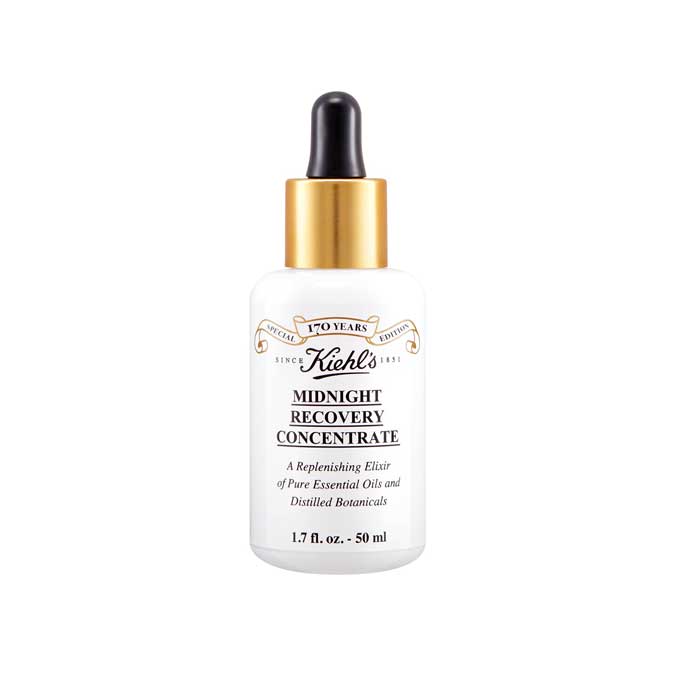
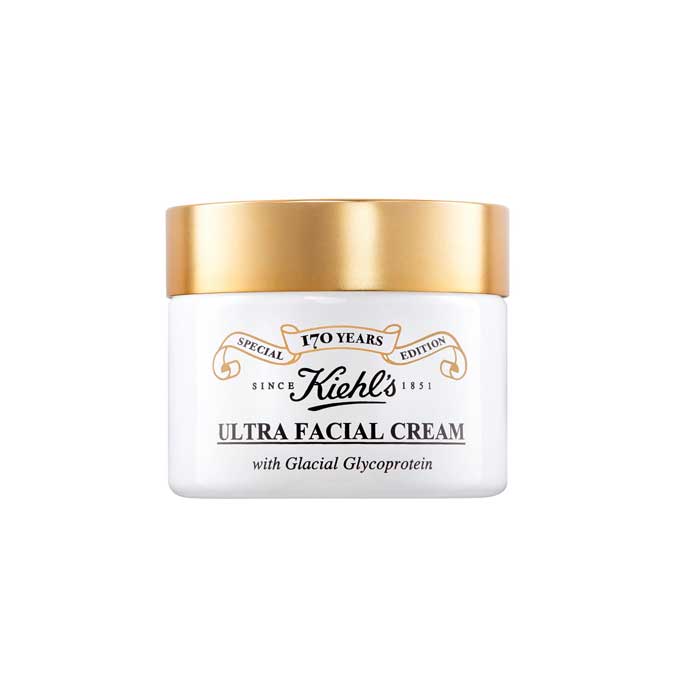
A CULT New York brand that is 170 years old, Kiehl’s was bought by L’Oréal in 2000, and the world hasn’t been the same since. Coveted celebrity secrets (Carolyn Bessette Kennedy reportedly adored their Creme with Silk Groom, among others) can now appear on bedside tables around the world — including yours, if you play your cards right on May 27.
To celebrate 170 years in beauty, the brand will be releasing the Limited Edition Heritage Collection, featuring some of its former products given new life for the 170th anniversary. These include Heritage French Rosewater Toner from the 1960s (230ml, P2,250), Essence Oils in Love-Luring, Fortune Seeking and Jinx-Removing from the Roaring ‘20s (10ml, P1,700), and Glycerin Scented and Unscented Soaps (140g, P950).
The brand also unveiled the gold and white packaging of its bestsellers for the Anniversary Commemorative Collection at a press conference last week. These includes the Calendula Herbal Extract Toner, Ultra Facial Cream, Midnight Recovery Concentrate, and Creamy Eye Treatment with Avocado.
Camille Cannella, Vice-President of Global Education and Customer Experience for Kiehl’s, talked about how the company has managed to last 170 years. “It’s about help,” she said. “No matter what the trends, we go back to healthier skin.”
“I think of myself as being in the people business: learning and growing with people and sharing stories. These are the things that have propelled Kiehl’s through the years,” she said during the press conference.
LAZADA SALE
May 27 is when it holds its Lazada Super Brand Day, with savings offered on favorite serums and other beauty products. For pre-orders, one can get a leatherette pouch with 14ml of its Ultra Facial Cream if sets are ordered beforehand until May 26, 11 p.m. The sets include the Clear Skin Set, Glowy Skin Set (with the cult favorite Midnight Recovery Concentrate), the Young Skin Set, and the Fresh and Blemish-Free Complete Skin Set. Most of the sets’ prices will be slashed (for example, the Young Skin Set, with the Line-Reducing Concentrate, will be sold at P4,900 from its original P6,450). — JLG

OUR VERITABLE pandemic tango is continuing with another relaxation of the quarantine controls. As we go to press, President Rodrigo Duterte, with guidance from the Inter-Agency Task Force on Emerging Infectious Diseases (or, simply, IATF) has declared that the so-called NCR Plus will again revert to GCQ (general community quarantine) “with heightened restrictions” until the end of the month. The rest of the Philippines, with some exceptions, remains under the looser MGCQ (modified general community quarantine) restrictions. If you’ve been regularly following the news, you should know that whatever officials decide on would be contentious.
On one hand, a segment of the population has long been lobbying for the government to open businesses and allow more people to return to work and establishments to increase capacity. On the other are medical frontliners overwhelmed and distressed by the rate of infection and even deaths that had been threatening to overwhelm our country’s health system — obviously struggling amid a less-than-stellar rollout of COVID-19 vaccines.
Whatever side you’re on, one thing is clear: People displaced and affected by restrictions cannot sustainably survive, even with well-intentioned community pantries, if government fails to offer neither livelihood alternatives nor adequate ayuda (help or assistance). Even a cursory inspection of the nearest mall will show the direct, tangible consequences of restrictions. How many of your favorite restaurants or shops have shuttered permanently? Do you even remember how it was like to eat popcorn and kick back inside a movie house?
At a recent online event staged by Melbourne-headquartered Pentana Solutions which specializes in “the development and supply of automotive software tailored to the needs of dealerships,” Philippine Automotive Dealers Association President Willy Tee Ten delivered a talk entitled “The State of the Local Automotive Industry.”
Mr. Tee Ten, who also heads the Autohub Group of Companies handling no less than 20 automotive brands, spoke about how Philippine auto sales started to trend upward from 2012 (with some 152,000 units sold) to the “spectacular year” of 2017 and its 426,000 vehicles delivered.
The executive, of course, qualified that the 2017 spike was due in part to the impending implementation of the Tax Reform for Acceleration and Inclusion (TRAIN) Law in 2018 — effectively jacking up the SRPs of many automobiles on account of higher excise tax. In a way, a percentage of the otherwise fully organic growth was artificial — and it ate up on the performance of 2018. Year 2019 saw an industry suffused with hope once more and, indeed, the numbers trended up anew to reach 416,628 units.
Then 2020 happened.
Last year’s 40% drop in sales, though distressing, was thoroughly expected, and the woeful 248,171 total could have really been much worse. But that’s all said and done, and 2021 is supposed to be, according to industry executives, a “recovery year.”
From a low base, of course, it should be easy to register a spike, but you get the point. The two things that can negatively impact this intent stand out most clearly: The aforementioned quarantine restrictions — which directly impact auto operations, as well as the lives of the people who should be buying cars; and the so-called safeguard measure (RA 8800), which basically imposes a P70,000 bond on imported passenger vehicles and P110,000 for imported light commercial vehicles. We have yet to see if this measure will stick, but many have understandably pulled back on acquiring new vehicles during this challenging time.
Mr. Tee Ten said, “People would still love to buy cars, but buying conditions are very erratic.”
He correctly noted that many businesses have been impacted, resulting in “postponed purchases,” if at all. “It’s either they hold on to funds, or there are no funds to begin with,” he quipped.
CONCERNS AND TRENDS
Adding to the maelstrom of worries is, of course, something that deals with the pandemic. “The biggest concern of Filipinos now is when we’ll be vaccinated,” declared the executive. “The only way for us to recover is for everyone to be safe in the streets, and that means being vaccinated.”
It’s hard to argue with that observation as we look on with obvious envy at states which have more efficiently rolled out vaccines and have quickly, though deliberately, gotten back on the saddle.
Mobility will always be a concern, of course, and these days when public transportation has been severely limited for obvious reasons are pushing people to acquire their own set of wheels — even if the vehicle isn’t exactly what they were aspiring to park in their garage.
The expansion of the two-wheel business, in particular, has not been entirely surprising, said Mr. Tee Ten — whose group handles iconic moto brands such as Vespa and Triumph. Let’s also add e-scooters, bicycles, and second-hand vehicles into the mix — a direct reflection perhaps of how people are solving transportation woes for themselves.
The recent spate of cases hasn’t helped either, which Mr. Tee Ten described as “horribly high in the last few months.” He added, “We hope that this second lockdown will reduce the number of cases, as Filipinos are suffering terribly when it comes to the economy.”
PIVOTING
“We’re still optimistic that things will change,” declared the executive with a grin, addressing attendees from various countries. But like many companies, Autohub didn’t twiddle its thumbs while waiting for things to go back to a semblance of normalcy.
Mr. Tee Ten enumerated the digital pivots that the company and its brands have made. There are the online, so-called “virtual showrooms” that have leveled up on the offerings and functionality of the traditional, largely static websites of yore.
Paper brochures have given way to QR codes, and business cards have been made irrelevant by social media accounts. These days, it’s normal to see your suki sales consultant on Facebook or Instagram. Companies, added Mr. Tee Ten, are doing prospecting through vloggers. Meetings are, as you’d expect now done online; same thing with the training of staff.
“These days, Wi-Fi is one of the most important infrastructures,” he declared.
Even after-sales service is doing the digital dance. Customer relations management is migrating to mobile apps and such, and it’s no longer uncommon to hear of car companies offering pickup and delivery services for customers needing PMS on their vehicles. Technicians and required tools and equipment are deployed through service “caravans.”
The vehicles which do enter the limited-capacity casa service bays now not only receive the complimentary car wash but some anti-bacterial cleaning and sanitation.
Speaking of casas, once a ubiquitous, fixed part of the showroom experience, car accessories and lifestyle items are also finding their way onto online selling platforms like Lazada or Shopee, revealed Mr. Tee Ten, for safer, contactless transactions.
The campaign for a paperless office has also been given a huge leg up by the pandemic. Autohub’s service forms, as well as surveys, can be accomplished online. Feedback is now solicited through aforementioned social media platforms, and even vehicle insurance can be renewed online.
MARKETING
Perhaps most obvious to anyone since last year: Your favorite auto brands are now, more than ever, digital-savvy like you.
Product launches are being done online (and often live). I can personally attest to the fact that Zoom and Facebook launches are now de rigueur for any brand (not just auto marques). As mentioned, physical information sheets and collaterals are giving way to product videos and social media. Mr. Tee Ten said that traditional “car ambassadors” are being supplanted with “brand influencers.” As the fight for the finite online eyeballs ensues and escalates, companies are becoming even more creative and savvy. Physical billboards and streamers are being replaced with web banners, animated posts, or made-for-YouTube content. Podcasts or online interviews, rather than face-to-face or traditional interviews, are rapidly becoming standard fare.
While test drives are still happening in a more limited and careful fashion, companies are also offering to bring the units to the prospective customer’s location. How’s that for service?
With a smile, Willy Tee Ten shared that even giveaways have started to reflect the times. “The usual novelty items are being replaced by so-called ‘pandemic freebies’ — sanitizers, face masks, face shields, and even vitamins.”
The brick-and-mortar facilities are still in place, of course, and there will always be (at least for now) a reason for their being — primarily as a tangible showcase and, maybe more importantly, an after-sales service revenue stream.
If you haven’t been to a dealership during the time of the pandemic, it might just surprise you when you enter one these days. Mr. Tee Ten said expect to see frequent sanitation/disinfecting of all areas, rubbing alcohol and sanitizers at the entrance and restrooms (which now have been retrofitted with swing doors for hands-free operation). Add this to the familiar temperature check and sanitizing shoe mat before entry, online declaration forms for contact tracing, and social distancing — and you get an idea of how much things are changing.
You’ll also see much less people at the dealership, as some are working from home to promote social distancing, while perhaps reflecting tough times for many companies.
All these changes are the hoops companies have jump through to, well, make sure that one blessed day, we’ll all emerge unscathed at the other end of this long, long tunnel.
