Home Blog Page 8076

Bataan to host site for planned new sports training center

PSC officials, including Chairman William Ramirez, and local executives of the province of Bataan, led by Governor Albert Garcia, pose for photo after the ceremonial signing of the deed of donation of the land where the planned Philippine Sports Training Center will rise.  The signing took place at The Oriental Bataan in Mariveles. (PSC)

Bataan will become a host site for national athletes after the Philippine Sports Commission and the province formalized on Tuesday the donation of land where the planned Philippine Sports Training Center (PSTC) will rise.

PSC Chairman William Ramirez received the deed of donation from Bataan Provincial Governor Albert Raymond Garcia, and expressed his gratitude, seeing it as going a long way in augmenting further sports development in the country.

“I am so happy and excited about this newly forged partnership with the Provincial Government of Bataan. This will give our national athletes a new home as they continue to bring pride and honor to our country,” said Mr. Ramirez during the ceremonial signing and turnover rites held in Mariveles.

The Provincial Government of Bataan donated six lots to the PSC with a land area of around 250,000 square meters situated in the Municipality of Bagac. One provision of the deed of donation states that the infrastructure shall be constructed and completed by Dec. 31, 2025, subject to extension upon agreement by the parties.

The PSC weighed its options for the PSTC before accepting the offer of Bataan, citing its strategic location and historical significance with the area figuring in the heroic “laying down of lives” for flag and country, mirroring the sacrifices that athletes give to achieve their goals.

The construction of the PSTC is being made possible under Republic Act 11214. The law was signed by President Rodrigo R. Duterte in February 2019.

The center seeks “to promote and develop sports in the country, to achieve excellence in international sports competitions, to ensure success in the country’s quest to achieve competitiveness in the Olympic Games and to promote international amity among nations.”

The amount of P3.5 billion is appropriated by the law for the construction of the infrastructure and shall be included in the annual General Appropriations Act. The said amount is necessary to carry out other provisions of the Act, particularly for the maintenance, operation, and management of the PSTC.

Also present in the ceremonial signing and turnover rites were Senator Bong Go, chairman of the Senate Committee on Youth and Sports; PSC Commissioners Ramon Fernandez, Arnold Agustin, Celia Kiram, and Philippine Sports Institute National Training Director Marc Velasco.

Joining Mr. Garcia in representing the provincial government were Second District of Bataan Representative Jose Enrique Garcia III, Municipal Mayor Maria Angela Garcia and Engr. Emmanuel Pineda. – Michael Angelo S. Murillo

MLB roundup: Mets’ Kevin Pillar OK after hit in face by pitch

TOMAS Nido had three hits and scored two runs to help the New York Mets defeat the host Atlanta Braves (3-1) on Monday and halt a three-game losing streak.

The game featured a frightening incident, when the Mets’ Kevin Pillar was hit in the face by a 94 mph fastball from Jacob Webb in the seventh inning. Pillar appeared to be struck on the bridge of his nose. He immediately went to the ground and blood was flowing freely as trainers rushed to get towels on the injury.

After the game, Mets manager Luis Rojas said Pillar was undergoing a CT scan at a hospital, and Pillar tweeted, “I’m doing fine.”

Sean Reid-Foley (1-0) got the win for his three scoreless innings in relief. Edwin Diaz picked up his sixth save. Max Fried (1-2) went six-plus innings, allowing one run, two walks and eight strikeouts. Atlanta’s run came on Austin Riley’s homer in the eighth.

RANGERS 5, YANKEES 2

Jordan Lyles pitched six solid innings and Adolis Garcia and Willie Calhoun hit solo homers off Gerrit Cole as Texas defeated New York in Arlington, Texas.

Lyles (2-3) helped the Rangers end a six-game losing streak by allowing one run on six hits. He struck out six, walked one and threw 85 pitches to lower his ERA from 6.63 to 5.93. Garcia and Calhoun homered off Cole (5-2) by connecting on 0-2 pitches.

Gio Urshela hit an RBI single in the first inning, and Luke Voit launched his first home run of the season for the Yankees in the eighth.

WHITE SOX 16, TWINS 4

Nick Madrigal, Leury Garcia and Yermin Mercedes each had three hits to lead Chicago’s offensive onslaught during a victory over Minnesota in Minneapolis.

Even with three-time All-Star Jose Abreu ruled out for the series due to left ankle inflammation, the White Sox recorded season highs in runs and hits (18) to win their ninth game in their past 11.

Madrigal hit his first career home run, a leadoff shot in the third inning, and Danny Mendick socked a grand slam in the fifth. The spiraling Twins lost for the 10th time in their past 12 games.

GIANTS 6, REDS 3

Wilmer Flores, Mike Yastrzemski and Mauricio Dubon homered and Logan Webb scattered six hits over six shutout innings to lead visiting San Francisco past Cincinnati in the opener of a four-game series.

Webb (3-3) fanned four, walked one and escaped a bases-loaded jam in the second inning. He threw just 86 pitches and induced two ground-ball double plays in an efficient night of work.

Reds right-hander Sonny Gray (0-3) struggled from the start, yielding five hits, four runs — three earned — over five innings, striking out a season-low three and walking two. He surrendered homers to Flores and Yastrzemski.

CUBS 7, NATIONALS 3

Jason Heyward, Willson Contreras and Javier Baez smacked home runs against former teammate Jon Lester to power host Chicago to a victory over Washington.

Lester received numerous standing ovations from Cubs fans, including when he exited the game after 5 1/3 innings. Lester (0-2) hadn’t yielded a home run in his first three starts with the Nationals, but the three were among eight hits he allowed on Monday.

Josh Bell led the Nationals with two of the team’s six hits. — Reuters

Tokyo doctors call for cancelation of Olympic Games due to COVID-19

TOKYO — A top medical organization has thrown its weight behind calls to cancel the Tokyo Olympics saying hospitals are already overwhelmed as the country battles a spike in coronavirus infections less than three months from the start of the Games.

The Tokyo Medical Practitioners Association representing about 6,000 primary care doctors said hospitals in the Games host city “have their hands full and have almost no spare capacity” amid a surge in infections.

“We strongly request that the authorities convince the IOC (International Olympic Committee) that holding the Olympics is difficult and obtain its decision to cancel the Games,” the association said in a May 14 open letter to Prime Minister Yoshihide Suga which was posted to its website on Monday.

A jump in infections has stoked alarm amid a shortage of medical staff and hospital beds in some areas of the Japanese capital, promoting the government to extend a third state of emergency in Tokyo and several other prefectures until May 31.

“The medical institutions dealing with COVID-19 have their hands full and have almost no spare capacity,” the medical association said in its letter.

Doctors would soon face the added difficulty of dealing with heat exhaustion patients during the summer months and if the Olympics contributed to a rise in deaths, “Japan will bear the maximum responsibility”, it added.

Other health experts and medical groups have voiced their concerns about the Olympics, while an online petition calling for the Games to be canceled was signed by hundreds of thousands of people.

Overall, Japan has avoided an explosive spread of the virus experienced by other nations, but the government has come under sharp criticism for its sluggish vaccination roll out.

Only about 3.5% of its population of about 126 million has been vaccinated, according to a Reuters tracker.

Underscoring the challenges with the vaccinations, booking systems for mass inoculation sites being launched in Tokyo and Osaka — which started accepting bookings on Monday — were marred by technical glitches.

But Suga says Japan can host “a safe and secure Olympics” while following appropriate coronavirus disease 2019 (COVID-19) containment measures.

Preparations for the July 23-Aug. 8 Games are progressing under tight COVID-19 protocols, such as an athletics test event featuring 420 athletes in early May.

The Games have already been postponed once due to the pandemic.

With cases surging across much of Asia, the World Economic Forum on Monday canceled its annual meeting of the global elite due to be held in Singapore in August.

Under the state of emergency in parts of Japan, bars, restaurants, karaoke parlors and other places serving alcohol will remain closed, although large commercial facilities can reopen under shorter hours. Hard-hit Tokyo and Osaka will continue to keep these larger facilities closed.

The number of cases nationwide dropped to 3,680 on Monday, the lowest level since April 26, according to public broadcaster NHK, but the number of heavy infections hit a record high of 1,235, the health ministry said on Tuesday. — Reuters

Boxing-Arbitrator rules Fury must face Wilder, jeopardizing Joshua fight — reports

A BIG money heavyweight fight between British champion Tyson Fury and compatriot Anthony Joshua was thrown into doubt on Monday after an American arbitrator ordered Fury to face American Deontay Wilder, according to media reports.

The highly anticipated third bout between Fury and Wilder was pushed back last year due to the COVID-19 pandemic.

The Briton stopped Wilder in the seventh round of their February 2020 match to remain undefeated through 31 fights.

After months of arbitration between the two, Judge Daniel Weinstein has ruled that the pair must have their rematch before Sept. 15, the Daily Star reported.

Attempts to reach Weinstein were not successful.

The ruling jeopardizes a long-awaited title showdown between Fury and Joshua, the world’s top two heavyweights, which was announced last week for Aug. 14 in Saudi Arabia. — Reuters

Challenging odds

No matter what happens from here on, the Lakers will look back to that fateful match in the middle of March. They were rolling then, owners of a four-outing streak that gave them two times as many wins as losses. And then acknowledged leader LeBron James suffered a freak injury in the second quarter. The high right ankle sprain ruined his Sunday and plenty more days after; so severe was its negative effect on his fitness that it sidelined him for 27 of their last 31 games, during which time they went 14-17 and limped to seventh place in the Western Conference.

The good news is that James appears ready and locked in, the scare he experienced in the Lakers’ finale the other day notwithstanding. In the fourth quarter of an ultimately meaningless victory against the Pelicans, he stepped on the foot of Nickeil Alexander-Walker and seemed to have aggravated his injury. Out he immediately went, and fans expected the worst. He’s no longer a spring chicken, after all; to the contrary, he’s an old 36 coming off the worst injury of his 20-year career. As things turned out, there was little reason to worry. As he noted in the aftermath, “I’ll be fine.”

For the Lakers to walk the talk, James will need to be more than fine. No eventual champions have come from as low a seeding as seventh, and they’ll just as likely implode as cap an unprecedented run for the hardware. Which is to say his contributions on and off the court are critical to their success. And if they’re exuding confidence that borders on the unrealistic, it’s because he knows how to win, period. And the competition knows, too; it’s why the Clippers shied away from the opportunity to improve their standing to third, and why the Nuggets put up no resistance against the Blazers, who secured the sixth spot as a result.

Will the Lakers defy the odds and manage to retain the Larry O’Brien Trophy? Only time will tell. One thing’s sure in any case; they’re complete and cocksure. If they lose, it won’t be because they beat themselves. Not with James locked in, and not with those around him following his lead.


Anthony L. Cuaycong has been writing Courtside since BusinessWorld introduced a Sports section in 1994. He is a consultant on strategic planning, operations and Human Resources management, corporate communications, and business development.

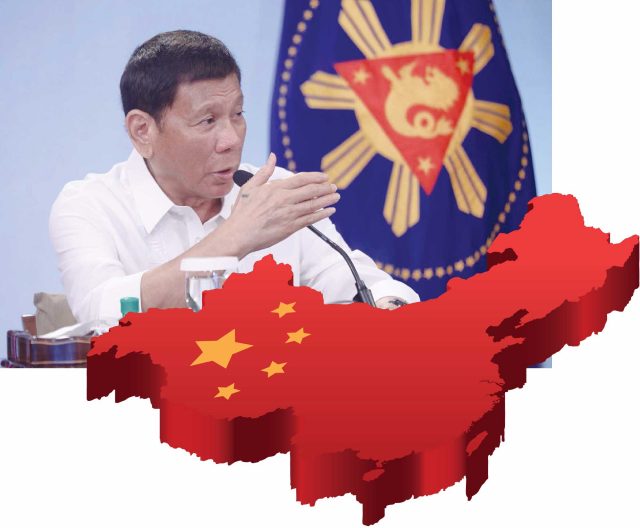
The folly of the Duterte Administration’s appeasement policy on China and the Belt and Road Initiatives

PCOO.GOV.PH AND FREEPIK

The Belt and Road Initiative (BRI) origin could be traced back to October 2014 when President Xi Jinping, speaking before the Indonesian Parliament, proposed the formation of a China-ASEAN community with a common destiny to provide a new blueprint for a new Maritime Silk Road. He also suggested the creation of an Asian Infrastructure Investment Bank (AIIB) to finance China-ASEAN infrastructure connectivity especially the ports facilities along the route. By launching these new initiatives, the Chinese leader put forth a new agenda for China-ASEAN relations involving the familiar themes of closer economic, social, diplomatic, and security ties without compromising the South China Sea issue. As a tool of economic statecraft, the BRI enables China to use its massive financial resources, networks, and human interchanges to establish more comprehensive trade and diplomatic relations with countries in Europe and Asia. It also facilitates China’s utilization of existing regional organizations to the greatest extent possible for negotiations, coordination, and enhanced connectivity.

China clarified its goal to promote economic development via the Maritime Silk Road, which begins from its coastal provinces through the South China Sea to the South Pacific. Relevant to the South China Sea dispute, the BRI has greatly stabilized China’s bilateral relations with Southeast Asian countries. Many of these countries lack technological expertise and stable financial institutions to raise the capital needed to fund their long-term development projects. Through the BRI, China is poised to make huge investments in Southeast Asian infrastructure, including railways, highways, seaports, power plants, and digital communication network facilities.

LURED BY THE BRIS
At the onset of his term in June 2016, President Rodrigo Duterte and his economic advisers were aware that the Philippines had not fared well in competing with its more prosperous Southeast Asian neighbors for foreign investments primarily because of the country’s lack of infrastructure. Potentially, Chinese public investments for infrastructure development projects would be forthcoming if Philippine-China relations — severely strained during the previous administration — were improved considerably. Then ad interim Foreign Affairs Secretary Perfecto Yasay echoed the administration’s position on the South China Sea dispute as he declared, “that the relationship between the two countries (China and the Philippines) was not limited to the maritime dispute. There were other areas of concern in such fields as investment, trade, and tourism and discussing them could open the doors for talks on the maritime issues.”

With the benefit of hindsight, the historical first meeting between President Xi Jinping and President Duterte could have offered expansive opportunities to enhance bilateral operations. While coordination and cooperation to build infrastructure were the manifest motives, the two leaders have two different, but intersecting intentions hinged on their individual agendas. For President Xi Jinping, the Philippines’ inclusion within the BRI framework places the whole archipelago in the clutches of China’s grandiose expansionist agenda. For President Duterte, the BRI projects would bolster his infrastructure agenda alongside the consolidation of his power in government. Either way, the interests of the Philippine people and the importance of railways, urban rail transit, highways, ports, and other facilities are leveraged.

THE FOLLY OF APPEASING CHINA
So far, no substantial results have come out of the administration’s appeasement policy as it is not clear how the BRI fund can be tapped. The Philippines was not a party when China unveiled the initiative in 2015 because of the tension over the South China Sea dispute. China excluded the Philippines from the web of six economic corridors linking China with neighboring sub-regions. By the time the Philippines became a BRI participant in 2017, the initiative suffered major setbacks due to cancellations.

Former Philippine National Economic Development Authority Secretary-General Ernesto M. Pernia publicly admitted the slow inflow of Chinese ODA because of the two countries’ very strict screening process in scrutinizing loan agreements and implementation of contracts. In late 2019, he also argued that part of the issue is unfamiliarity. The Philippines is “not used to Chinese ODA as we are with other partner [countries] like Japan and South Korea.” The Nomura Research Institute observed delays in the implementation of the BRI-funded projects caused not only by technical issues but also because of domestic political struggles, developments related to the South China Sea dispute, and the forthcoming change in Philippine regime in 2022.

Associated with the BRI is China’s predatory financing. Philippine experience manifests the growing impact of corrosive capital as exemplified in the four case studies undertaken by the Stratbase ADR Institute in partnership with the Center for International Private Enterprise (CIPE). According to the study, “defective consultation process in both CRPIP and NCWS-KDP projects” were a concern, “where project construction started ahead of the completion of the consultation process in violation of the Indigenous People’s Rights Act of 1997.”

Further, in the case of DITO Telecommunity, “it is not an ODA, but Duterte offered China to become the third telecom player.” The study also found that “For the Safe Philippines Project, bidding was open exclusively for Chinese contractors.” In its entirety, the study concluded that “transparency issues are recurring in all four case studies involving Chinese investments in the Philippines.”

As the country prepares to choose its new leaders in the 2022 national elections, the serious repercussions and accountability for these follies must be exposed to the people.


Dr. Renato De Castro is a Trustee and Convenor of the National Security and East Asian Affairs Program, Stratbase ADR Institute.

Saving capitalism from profit obsession

FREEPIK

(Part 4)

As a long-time professor in a business school, Dr. Jordi Canals made sure that the idea of corporate purpose is fleshed out in some very concrete business cases that he presents in his article.* The first case is that of Ingka, the retail business of Ikea, the largest furniture maker and retailer company in the world that will soon have a very big presence in the Philippines, starting the third or fourth quarter of 2021. Ikea is one of the most advanced companies in the world in terms of environmental impact and inclusiveness. The CEO and Deputy CEO of Ingka were proud of this, but wanted the company to do an even better job by introducing corporate purpose into the heart of the strategic decision-making of Ingka. Ikea was founded in 1943 by Ingvar Kamprad in the south of Sweden. It was a mail-order business that sold pencils, postcards, and similar merchandise. Kamprad soon entered into the furniture manufacturing market and quickly explored innovative solutions such as furniture design, self-assembly, and advertising in order to differentiate its products from competitors. In 1951, Ikea published its first furniture catalogue and in 1953 opened a showroom where customers could experience products before ordering them. In the early 1960s, Kamprad’s sense of innovation disrupted the furniture industry in Sweden and other European countries.

Kamprad had strong values and considered a sense of mission and corporate culture as key drivers of a successful organization. In 1976, he published the booklet, The Testament of a Furniture Dealer, in which he summarized Ikea’s mission: “to create a better everyday life for the many.” He highlighted certain core values that had to guide the company’s operations. These values were so enduring that they were still present in 2020 and were aimed at guiding all managerial decision making. To grow Ikea without losing the core values, he devised a unique governance and ownership structure. In 1977, he divided the ownership of Ikea into two companies: Ingka, which included the retail business and Inter Ika, which included the management of the Ikea concept, the brand, and the franchise system. He also set up two foundations as the only shareholders of the two companies: the Interco Foundation, the owner of Inter Ikea; and the Stichting Ingka Foundation, the owner of Ingka.

The mission of Ikea’s founder permeated the firm’s culture and values, helped educate managers and the employees about these values and was present in many decisions. The Deputy CEO of Ingka observed: “Kamrad’s view was a bold, big vision and aspiration, and helped inspire thousands of people at Ikea. It created an emotional link with the company. The challenge was how to continue developing the business and build a more structural connection between purpose and the whole company and its operations, in particular, once the founder had passed away. Since 2018, we had been trying to find ways to articulate purpose better and make it better integrated throughout the company’s activities. We were trying to be more specific on how being a purposeful company would be reflected in a variety of contexts and operations.”

The top management team developed a series of questions to articulate Ingka’s purpose around Kamprad’s vision and assess the strength of the firm’s purpose. The first question was: Is the notion of purpose well-articulated? The second: Does this notion of purpose inspire our people? The third: Is purpose integrated in Ingka’s strategy and operations? The fourth: Do our people and customers recognize our purpose? There was a feeling that a company with close to 200,000 employees around the world could do much more in terms of explaining the many new initiatives that were born out of a sense of purpose. The management team was also aware that having a living purpose meant involving and training people better. The year 2020 was one of culture and values at Ingka. With this goal in mind, senior managers tried to connect the company’s eight corporate values with purpose.

As an example, cost-consciousness was one of those values. A traditional understanding of this value was to improve economic performance and profitability. The new approach of connecting this value with purpose required an additional process of helping Ingka’s employees understand that being more cost efficient, beyond profitability, would also further the goal of offering lower prices and therefore improving affordability for customers. With this in mind, in 2019, Ingka managers worked to involve 23,000 employees around the world in contributing cost-reduction ideas. Some 23,000 employees around the world contributed 5,000 ideas of which 1,000 were selected and finally reduced to 25 ideas that were applied and deployed without additional management decision. It was estimated that these suggestions resulted in cost savings of 25 million euros.

Another example of connecting corporate purpose and marketing strategy was a deep reflection on corporate growth and furniture sales. Should it be the goal of Ikea to pursue constant growth by fostering unlimited consumption of furniture? This led to a reflection on new business models, including selling second-hand furniture, renting furniture, and offering furniture repair services. A key question was how far Ingka should diverge from its current focus on furniture and basic elements for homes. Was it sensible to move away from this concept? Still related to marketing, should Ingka use data to sell more to current customers? Also, while it was considered acceptable to use data to get to now customers better, was it ethical to try to offer them goods or services that might fit their profiles? These last two questions are very relevant as data analysis has become a most important tool of business in the digital world. Ingka management have been among the first to probe into the ethical dimensions of big data. Here again is an example of a concern that is not directly related to profit maximization during these times when “data is gold.”

Ingka started the transformation around purpose with the founder’s vision still very much present in the life of the company. To be an effective tool for organizational change, purpose needs to be credible and become embedded in the firm’s strategy, corporate culture, people’s development and reward systems. The value and impact of purpose stand out as unique factors in companies’ governance and management models. This business case centered on Ingka shows that introducing corporate purpose at the heart of a company is a long-term commitment, takes strong determination, requires excellent management, and requires constant renewal. Corporate purpose can become a powerful engine in the transformation process of a company. Given the pressure that the pandemic has exerted on practically all businesses to re-examine their objectives, strategies, and policies as they face the “New Reality,” the concept of corporate purpose has come at a very opportune time.

Examining the Vision and Mission statements of some of the leading business conglomerates which are PLCs, such as San Miguel Corp., Ayala Corp., and DMCI Corp., one can already discern the seeds of corporate purpose being at the center of strategy, policies, and business model. All three companies — San Miguel, Ayala, and DMCI — started, like Ikea and Ingka, as modest business operations with objectives already beyond profit maximization. In their present forms as large business conglomerates, they have clearly embraced environmental, social and governance (ESG) goals and more. For example, the vision of San Miguel Corp. is stated as follows: “Guided by a strong sense of social, environmental and economic responsibility, our business all leads to efforts to deliver on national goals, setting the pace of progress of the Philippines.” Its mission statement is as follows: “To provide goods and vital services well within the reach of every Filipino, making everyday life a celebration.” It is no wonder that from selling consumer goods like beer and soft drinks, SMC has become one of the largest investors in power plants and public infrastructure, contributing significantly to the welfare of the traveling public with its massive investments in skyways and in the medium term through its very ambitious Bulacan-based international airport. SMC’s statements of mission and vision are extraordinarily broad and can easily be converted into a statement of corporate purpose.

The same can be said of Ayala Corp. that too had modest beginnings when its founders established it 1834. Corporate purpose is already clearly embedded in its present-day Mission and Vision statements. Its Mission: “Anchored on values of integrity, long-term vision, empowering leadership, and with a strong commitment to national development, Ayala fulfils its mission to ensure long-term profitability and value creation. Ayala creates synergy as it builds mutually beneficial partnerships and alliances with those who share its philosophies and values.” Its Vision: “We will be the most relevant, innovative and enduring Philippines-based business group, enabling shared value and prosperity for the many stakeholders we service.” The ESG dimensions in its corporate purpose are clearly manifested in its being a major investor in renewable energy in the Philippines and elsewhere. It has also demonstrated a commitment to inclusive growth by being a pioneer in embedding socialized housing into its residential real estate investments. Recent news report in the midst of the pandemic has heralded that Ayala Corp. is already positioning itself in the country’s post-pandemic recovery which its management reckons to happen by mid-2023. The business group is scaling up its involvement in increasingly relevant areas such as healthcare, logistics, and renewable energy, all sectors with very significant impact on the welfare of the Filipino people.

The third example of a PLC that has already articulated corporate purpose is DMCI, one of the largest construction and engineering companies in the Philippines. Its Vision statement is as follows: “We are the leading integrated engineering and management conglomerate in the Philippines. Through our investments, we are able to do the following: 1.) deliver exceptional shareholder value; 2.) motivate and provide employees with opportunities and just reward to achieve their full potential; 3.) cultivate progress in remote areas, unserved markets and growth industries; 4.) integrate sustainable development with superior business results through principled contracting and innovative engineering.” Its Mission statement is as follows: “To invest in engineering and construction-related businesses that bring real benefits to people and the country.” I have personal knowledge of how this business group, led by its founder, the late David M. Consunji, truly cultivated progress in some of the most remote areas of Mindanao and elsewhere through investments in agribusiness, real estate, and power generation.

As we shall discuss in the last part of this series, these three companies— among others — have already a clear statement of corporate purpose that goes beyond the traditional mission and vision statements of most businesses in the past. It would now be incumbent on their boards of directors, in tandem with the CEO and top management, to connect their respective purposes with strategy, strategic plans, and decisions as well as implementation, especially in the post-pandemic era. A positive impact of corporate purpose is how it nurtures and improves the quality of strategy discussions. Dr. Canals in his pioneering paper on “The Role of Corporate Purpose in Corporate Governance: A Framework for Boards of Directors and Senior Managers” offers some practical guidelines for this very important task of the board of directors. and top management.

To be continued.

*“The Role of Corporate Purpose in Corporate Governance: A Framework for Boards of Directors and Senior Managers”


Bernardo M. Villegas has a Ph.D. in Economics from Harvard, is Professor Emeritus at the University of Asia and the Pacific, and a Visiting Professor at the IESE Business School in Barcelona, Spain. He was a  member of the 1986 Constitutional Commission.

bernardo.villegas@uap.asia

Getting real to tackle the climate crisis

IN 1962, former South Korean President Park Chung-hee said, “if you can see factories fuming out gas, it is a sign of advent success.” It was a metaphor for industrialization. The dominant business model at that time delivered private profits, while creating public losses in the form of externalities, mainly environmental degradation. The same trend happened everywhere across the globe. That was the zeitgeist of the 20th century, so it is futile to dwell on the past. People did not know what was wrong with it, because the whole system that ignored negative spillovers encouraged reckless economic development without knowing how it drove us into danger zones close to “planetary boundaries.”

Several decades later, however, we received a guilty verdict. The scientific consensus was clear on anthropogenic climate change. The setback was more than expected — climate change with catastrophic effects, and is now exacerbated by the unprecedented COVID-19 pandemic, which was also triggered by human disregard for planetary boundaries. Now we have a strong reason to fix our planet and build back better. One priority action is to reach net zero emissions by 2050, which is based on the scientific consensus from the Intergovernmental Panel on Climate Change.

NET ZERO 2050 REQUIRES SYSTEMIC CHANGE
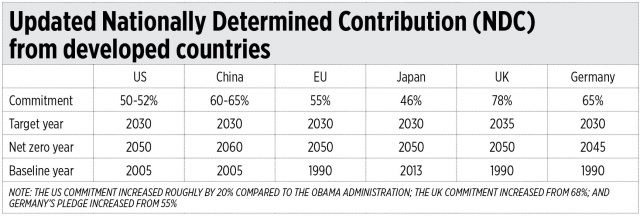
On April 23, US President Joseph Biden called up the world leaders to talk about this issue. Acknowledging the longstanding criticism on their deviation, the United States returned, not simply to the negotiation table but with an ambitious plan — 50%-52% greenhouse gas (GHG) emissions reduction by 2030 compared to 2005 levels. A few countries welcomed the US by unveiling more ambitious plans by 2030, as can be seen in the Table. To keep the momentum for successful negotiations towards the Glasgow Climate Conference (COP 26), the Partnership for Green Growth (P4G) Seoul Summit meeting later this month will also be held, along with growing international expectation of additional ambitious commitment from countries, including the host country.

The year 2030 is an important milestone given the urgency, since global net anthropogenic CO2 emissions should decline by 45% from 2010 levels by 2030 to reach net zero around 2050. Bill Gates, in his recent book, How to Avoid a Climate Disaster, however, warned that reductions by 2030 done the wrong way might prevent us from ever getting to net zero. He pointed out that replacing coal-fired power plants with other gas-fired power facilities for the sake of meeting the 2030 timeline will indeed reduce our emissions by 2030. However, any gas power plants built at this time will continue to be in operation come 2050 emitting out toxic gases. So, we need to realize that the net zero race towards 2050 is not just about near-term political or environmental rhetoric. Instead, it is about the systemic transformation of the economy for the long term.

For governments, after setting the targets, the next step is to develop concrete policies to realize them. Using the climate rhetoric on one hand while doing business as usual on the other is contradictory. Every sector in the economy must take bold steps forward, especially the high-polluting sectors such as energy, waste, agriculture, transport, and building, among others.

NET ZERO IMPLICATIONS FOR THE BUSINESS SECTOR
Alignment to net zero is not the realm of the public sector alone. Systemic problems like the climate crisis require systemic solutions, to which the private sector has a lot to offer as they account for two-thirds of the global economic system. Addressing the climate challenge requires us to change the way we produce, consume, commute, eat, and even interact with each other — and this is a race against time.

Paul Polman, a former CEO of Unilever said, “business cannot succeed in societies that fail.” Some industries have been leading this race. Most of car manufacturers are going electric. In its recent report, Technavio, a global market research firm, said the global electric vehicle battery market is expected to grow by $37.69 billion, exhibiting a compound annual growth rate of over 18% during 2021-2025. Solar power has been growing rapidly for the last few years in the US, China, and globally, boosted by continuously dropping prices breaking new records. From an optimist’s standpoint, there is an expectation that solar and wind energy could replace fossil fuels entirely by 2050, according to a new report by Carbon Tracker.

In the meantime, traditional industries are facing pressure to reduce emissions from their supply chains. GHG emissions in industry are generally categorized into three scopes by the widely used international accounting tool, the GHG Protocol. Scope 1 covers direct emissions from controlled sources of a business, while Scope 2 covers indirect emissions such as the generation of purchased electricity, cooling, and heating consumed by the reporting company. Scope 3 includes all other indirect emissions that occur in a company’s value chain — which still requires efforts to develop a methodology.

Recently, for instance, Indonesian ride-hailing giant Gojek announced their sustainability plan to make every car and motorcycle on their platform an electric vehicle by 2030. The company is also looking into reducing their emissions across their supply chain. Microsoft declared in early 2020 that they will be carbon negative by 2030, and by 2050 they will remove from the environment all the carbon the company has emitted either directly or by electrical consumption since 1975. Apple is committed to be carbon neutral across its entire business, manufacturing supply chain, and product life cycle by 2030. This implies that there are available clean technologies that can be applied to reduce emissions across the Scopes, such as retrofits, energy efficiency, and the like, and more solutions are being developed.

This trend will spread over the several industries. Soon leading companies will be voluntarily assessed (and ultimately regulated) on where the emission hotspots are in their own supply chain. They will identify which suppliers are a fit with their sustainability actions and which are laggards. This will naturally create a cascading effect among the supplier companies — in most cases micro, small, and medium enterprises (MSMEs).

Getting sustainability embedded in the heart of core business operations is no longer an ethical question, but more about the issue of survival and raison d’être in a transforming market that affords more value to sustainability, not just as part of corporate social responsibility but as a mainstream business proposition. The rise of the B Corporations — certified businesses that meet the highest standards of verified social and environmental performance to balance profit and purpose — and impact /ESG investment are good examples.

TOWARDS GENUINE GREEN INVESTING
In the race towards net zero, many companies have expressed their commitment. As of April 2021, over 2,000 businesses joined the UN Race to Zero campaign, which mobilizes the largest alliance of cities, businesses, and academic institutions committed towards the 2050 goal. However, these commitments have yet to be translated into genuine climate action.

Big banks committed to net zero continue financing the fossil fuel industry in 2020, even more than they did in 2016 and 2017. BlackRock, the world’s biggest investment fund manager, operating assets of $8.7 trillion (as of December 2020), committed to support net zero and pressure others to do so — but its “Carbon Transition Readiness” fund includes fossil fuel giants. Carbon offset commitments from companies sound good in theory, but it is uncertain whether those plans and their associated accounting are robustly monitored and evaluated.

On the other hand, achieving net zero requires an enabling environment for businesses to thrive amid the painful tradeoff of the green economy transition. Government support in the form of subsidies, regulations, incentives, and the like towards clean industry can enable the transition. On top of that, a crucial strategy to accelerate the transition is strengthening the entrepreneurial ecosystem, specifically focusing on green startups as their values are well aligned with the net zero vision and the Sustainable Development Goals (SDGs).

Now, about the Philippines. The Government of the Philippines submitted the country’s Nationally Determined Contribution (NDC) on April 15, promising to cut its GHG emissions down by 75% from 2020 to 2030 compared to the business-as-usual scenario of the same time period, focusing on agriculture, waste, industry, transport, and energy sectors. Of the 75% target, 72.29% is conditional dependent on support from developed countries.

To jump on the net zero race while recovering from the pandemic, it seems even more important for the public and private sectors in the Philippines to work together with international development partners to proactively originate climate projects that generate transformative impacts, effectively mobilize international climate finance (e.g., the Green Climate Fund), and implement those projects on the ground with well targeted beneficiaries.

The vision of the world in 2050 is not the same as how our leaders foresaw the future in the 1960s. The future we want for our generation and the next is that of a healthy and resilient planet, which can only be realized by staying genuine to our commitment. It is time to get real.

This op-ed does not necessarily represent the opinion of any organization, but is a personal opinion of the author.


Juhern Kim is the Country Representative to the Philippines of Global Green Growth Institute (GGGI).


Image rights in the Influencer Era

STORIES-FREEPIK

Over the past decade, we have seen the democratization of content creation as social media outfits like Facebook, YouTube, Instagram, and Twitter provide artists, vloggers, influencers, and content creators platforms to express themselves and build personal brands. Accordingly, as more and more consumers began seeking authenticity in the products and services they purchase, the advertising industry gravitated towards collaborating with content creators in marketing brands, giving birth to the era of influencer marketing.

Influencer marketing is said to be more relatable as it reaches consumers on a more personal level. Nowadays, brands sponsor content creators in order to be featured in the latter’s channels and gain access to their audience. An example is in the beauty products sector where we see manufacturers collaborate with influencers in the creation, formulation, and marketing of co-branded beauty products. As social media pervades modern society, trends such as influencer marketing serve as the next step in the evolution and amplification of word-of-mouth marketing.

With the growing use of influencer marketing, the notion of the identity, image or personality of a person as a property right continues to be cemented. As such, it has become more important to guarantee the protection of persons engaged in these activities. Without a robust legal framework, such individuals may be exposed to exploitation while consumers themselves might fall victim to deceptive marketing schemes. In the United States, the personality or identity of an individual is generally protected against unauthorized appropriations under the Right of Publicity Doctrine. As McCarthy and Schechter put it, the right of publicity is the inherent right of every human being to control the commercial use of his or her identity.

The right of publicity does not only pertain to the name of a person as it covers the whole identity or likeness of an individual — his appearance, voice, nickname, and the like. This right was coined in 1953 by the US Second Circuit Court in its decision in the case of Haelan Laboratories, Inc. vs. Topps Chewing Gum. In upholding the primacy of the contract for the exclusive use of the photograph of a certain ballplayer, the court emphasized that a person has a right in the publicity value of his photo which authorizes him to grant the exclusive privilege to publish his picture. The court characterized the right of publicity as a property which can be used as a basis for an action for damages resulting from the unlicensed use of an individual’s persona.

Our legal system is aware of the need to safeguard the commercial interest of an individual over his personality. The Supreme Court had the opportunity to touch on this in the case of Fredco Manufacturing Corporation vs. President and Fellows of Harvard College. In affirming the cancellation of the trademark registration of Fredco for the mark “Harvard,” the Court emphasized that Section 4(a) of R.A. No. 166, which prohibits the registration, as a trademark, of a matter which may falsely suggest a connection with persons or institutions, is “intended to protect the right of publicity of famous individuals and institutions from commercial exploitations of their goodwill by others.” This prohibition was carried over into Section 123.1 of R.A. No. 8293, the Intellectual Property (IP) Code, which further strengthened the protection accorded to the personality of an individual.

The IP Code also substantially retained the prohibition in Section 169.1 (previously Section 30 of R.A. No. 166) which bars a person from using in commerce any “word, term, name, symbol, or device, or any combination thereof, or any false designation of origin, false or misleading description of fact, or false or misleading representation of fact, that: (a) is likely to cause confusion, or to cause mistake, or to deceive as to the affiliation, connection, or association of such person with another person, or as to the origin, sponsorship, or approval of his or her goods, services, or commercial activities by another person x x x.”

Through these provisions, the IP Code seeks to prevent a party from riding on the goodwill established by a person through his name or likeness. Corollarily, the public also benefits from these provisions as they sanction instances where parties attempt to create an impression that an individual, whose name or persona was appropriated, supports or is associated with, the products or business of such parties when no such association actually exists.

This article is for general informational and educational purposes only and not offered as, and does not constitute, legal advice or legal opinion.


Francis L. Geronimo is an Associate of the Intellectual Property Department of the Angara Abello Concepcion Regala & Cruz Law Offices (ACCRALAW).

flgeronimo@accralaw.com

8830-0000

Israel-Gaza violence shows few signs of slowing as global diplomacy ramps up

REUTERS
SMOKE AND FLAMES are seen following an Israeli air strike on a building, amid a flare-up of Israeli-Palestinian fighting, in Gaza City, May 18. — REUTERS

GAZA/TEL AVIV — More than a week of fighting between Israel and Hamas showed few signs of abating on Tuesday despite intense US and global diplomacy to stop the region’s fiercest hostilities in years.

The Israeli military said late on Monday that Hamas and other Palestinian groups had fired about 3,350 rockets from Gaza — 200 of them on Monday alone — and that Israeli air and artillery strikes had killed at least 130 militants.

Gaza health officials put the Palestinian death toll at 212, including 61 children and 36 women, since hostilities began last week. Ten people have been killed in Israel, including two children.

Amid seemingly fruitless diplomatic efforts to stop the violence, the top US military officer, Army General Mark Milley, warned that the violence could spread.

“My assessment is that you risk broader destabilization and you risk a whole series of negative consequences if the fighting continues,” Mr. Milley, chairman of the Joint Chiefs of Staff, told reporters before landing in Brussels on Monday for talks with NATO allies. “It’s in no one’s interest to continue fighting.”

Israeli air strikes on the Palestinian enclave continued overnight. Soon after dawn, missiles struck two buildings in Gaza City, sending plumes of thick smoke into the air.

Militants in the Strip fired rockets early on Tuesday that set off sirens in southern Israeli cities, sending thousands running for bomb shelters.

There were no immediate reports of injuries on either side.

The overnight rocket fire from Gaza appeared to be less than in previous nights. There was a six-hour lull in rocket fire overnight before they again began being launched at dawn, according to rocket siren information from the Israeli military.

A Reuters correspondent also reported a lull in overnight rocket fire from Gaza, an enclave home to two million Palestinians.

DIPLOMATIC EFFORTS
US President Joseph R. Biden expressed his support for a ceasefire during a call with Israeli Prime Minister Benjamin Netanyahu on Monday, the White House said in a statement.

But Mr. Netanyahu told Israelis earlier that strikes against militant sites and leaders in Gaza would carry on.

“The directive is to continue to strike at terror targets,” he said in a televised speech, after meeting with military and intelligence chiefs. “We will continue to act as necessary to restore peace and security to all residents of Israel.” 

The armed wing of Hamas promised more rockets in return: “The criminal Zionist enemy intensified its bombing of homes and residential apartments in the recent hours, and therefore, we warn the enemy that if it did not stop that immediately, we would resume rocketing Tel Aviv,” said spokesman Abu Ubaida.

US Secretary of State Antony Blinken urged all sides to protect civilians.

Although stressing that Israel had the right to defend itself, Mr. Blinken said he had not seen any evidence from Israel about its suggestion that Hamas was operating out of a building housing media outlets — including the US-based Associated Press — which was destroyed in an Israeli missile strike at the weekend.

Hamas denied having offices in the building. “These are false allegations and an attempt to justify the crime of targeting a civilian tower,” said Hamas spokesman Fawzi Barhoum.

Egypt and U.N. mediators also stepped up diplomatic efforts, while the U.N. General Assembly will meet to discuss the violence on Thursday.

The Biden administration approved the potential sale of $735 million in precision-guided weapons to Israel, and congressional sources said on Monday that US lawmakers were not expected to object to the deal.

Hamas began its rocket assault last Monday after weeks of tensions over a court case to evict several Palestinian families in East Jerusalem, and in retaliation for Israeli police clashes with Palestinians near the city’s al-Aqsa Mosque, Islam’s third-holiest site, during the Muslim holy month of Ramadan.

The hostilities between Israel and Hamas-controled Gaza have been accompanied by an uptick of violence in the West Bank, where the Palestinians have limited self-rule.

Israel’s president has warned that tension between Jewish and Arab Israelis could devolve into “civil war.” — Reuters

World’s coffee at risk amid Brazil drought

FREEPIK

BRAZIL, the world’s biggest exporter of coffee, sugar and orange juice, just had a rainy season that brought hardly any rain.

Soils are parched and river levels are low in the nation’s Center-South region, a powerhouse of agricultural output. The drought is so severe that farmers are worried they’ll run out of the water reserves that help keep crops alive over the next several months, the country’s dry season.

Mauricio Pinheiro, 59, started irrigating his arabica-coffee crops in March, two months earlier than normal, after his 53-hectare (131-acre) plantation got less than half of the rain it needed. He’s using so much water for the plants that there isn’t enough left for his home. In order to keep the showers and faucets running, he’s had to search for another well.

“My irrigation reservoir is drying up now — that usually happens in August,” said Mr. Pinheiro, who lives in Pedregulho in the Alta Mogiana region, in Sao Paulo state. “I’m really concerned about running out of water in the coming months.”

The prospect of withering orange trees and coffee plants is coming at a time when agricultural crops are rallying to multiyear highs, which has fanned fears of food inflation. Higher food costs may exacerbate hunger, a problem around the globe that the Covid-19 pandemic has made more acute. Coffee and raw-sugar contracts on the ICE Futures exchange in New York have already touched four-year highs.

If even irrigated areas can’t get enough water, Brazil’s coffee and orange output may decline for a second year in a row. Brazil’s current orange crop shrunk 31% from the previous season, the most in 33 years, and production of arabica coffee, the high-end kind used by chains like Starbucks Corp., is also dropping sharply.

Rainfall was disastrously low for many areas in Sao Paulo and Minas Gerais from January to April, said John Corbett, Chief Executive Officer at aWhere, Inc. The worst hit areas received less than half of normal precipitation, at a critical time when coffee plants need moisture for the beans to grow. It is also a period when the soil stores water to cope with the dry season.

That came on top of adverse drier-than-normal conditions in some parts last year, notably in Sao Paulo and Parana, said Paul Markert, meteorologist for Maxar Technologies, Inc. in Maryland.

While a dry spell is typical for this time of year in Brazil, it’s expected to last longer than usual, adding to concerns. Regular rains will return to the region between October and November, instead of September, said Celso Oliveira, a meteorologist at Somar Meteorologia.

About 30% of Brazil’s orange crop and 15% of arabica coffee fields are irrigated.

“The levels of rivers and lakes has been very concerning,” said Regis Ricco, director at Minas Gerais-based RR Consultoria Rural.

Francisco Sergio de Assis, a coffee grower in Monte Carmelo, a municipality in the Cerrado region of Minas Gerais, started irrigating his fields a month early, and doesn’t think his water reservoirs will last if it doesn’t rain by September.

The situation is becoming critical for orange groves. Emerson Fachini, an orange farmer who cultivates 45 hectares in Palestina municipality in Sao Paulo state, said he’s had irrigation systems turned on for most of the time since January.

“Water reservoirs are drying up, depleted just ahead of the dry season,” Gilberto Tozatti, of Sao Paulo-based GCONCI-Group Citrus Consulting, said by phone. “The situation is affecting most of Sao Paulo state and still harming next season’s crop.” — Bloomberg

New York lifts mask rules for the vaccinated

REUTERS

NEW YORK — New York state this week will drop face mask requirements in most public spaces for people vaccinated against coronavirus disease 2019 (COVID-19), conforming with the latest US Centers for Disease Control and Prevention guidance, Governor Andrew Cuomo said on Monday.

In California, Governor Gavin Newsom said his state would keep its mask order in place for another month, despite the CDC’s new recommendations.

Mr. Cuomo and Mr. Newsom, both Democrats, have drawn criticism for their handling of the coronavirus pandemic. Newsom faces a Republican-led recall election.

New Jersey Governor Phil Murphy, also a Democrat, said he would lift mask restrictions outdoors but keep in place a mandate to wear them indoors. Mr. Murphy said schools would be required to provide full-time, in-person classroom instruction again in the fall.

On Saturday, the CDC said students in schools across the United States wear masks for the 2020-2021 academic year because not all will be inoculated.

New York will still order public transportation riders to wear face coverings and mandate them in schools and some other communal settings, Mr. Cuomo said, adding: “Unvaccinated people should continue to wear a mask.”

Mr. Cuomo said New York health officials decided to lift the mask order after reviewing the CDC’s new guidance. Some 52 percent of New York adults have been fully inoculated and 61.8 percent had received at least one shot as of Monday.

Mr. Cuomo, speaking to reporters at Radio City Music Hall, said it would be up to each business or venue how they should determine vaccination status

“I’m sure when people are coming into Radio City Music Hall, they are going to ask, ‘I’m sitting next to someone. I don’t know who they are. Are you sure they were vaccinated?’” he said. “That’s why it’s on the operator’s best interest to say ‘Yes! They had a card and they were checked when they walked in the door.’”

The three-term governor said he expected that some New Yorkers might keep wearing masks as a precaution after this week’s rule change.

Mr. Cuomo, 63, has resisted calls to resign in the face of probes by the state attorney general and legislature over accusations of sexual harassment, his office’s reporting of nursing home deaths and his use of staff members and resources in the writing of a book on his handling of the pandemic. — Reuters

ADVERTISEMENT
ADVERTISEMENT