Home Blog Page 8067

Hospitals in tight financial spot due to unpaid PhilHealth claims, says group

THE PHILIPPINE Hospital Association on Wednesday said members are in a tight financial spot due to unpaid claims from the Philippine Health Insurance Corp. (PhilHealth) for coronavirus patients since the start of the pandemic.

“This is now causing severe financial distress to private hospitals as well as the government hospitals,” the association’s president, Jaime A. Almora, told a Senate economic affairs committee hearing on the status of government measures for industries hit hard by the pandemic.

Mr. Almora did not give an estimated total amount of the receivables from PhilHealth, but he cited one hospital with a P1.2 billion claim, while others ranging between P50 million to P700 million.

The group has 1,986 member hospitals, both government-run and private.

He said PhilHealth has only been paying for claims on non-coronavirus cases.

He noted that the number of non-coronavirus patients has decreased by as much as 50% to 70%, which means a reduction in the income of hospitals.

“They (hospitals) have to dig into their savings, and they have to borrow from the bank. Some hospitals who have called already informed me that they have borrowed from the bank for their operating budget,” Mr. Almora said.

Following a meeting with PhilHealth President Dante A. Gierran on April 5, the hospital group’s head said the agency came out with a circular on the debit-credit payment mechanism, which covers 60% of claims under evaluation.

The scheme covers private hospitals in Metro Manila and the surrounding provinces of Bulacan, Cavite, Laguna, and Rizal, which were placed under stricter lockdown due to a surge in coronavirus cases.

Mr. Almora said some hospitals have already applied for the scheme and received some amount “which they consider small.”

Senator Maria Imelda Josefa R. Marcos, chair of the committee, said they can ask PhilHealth officials to attend in upcoming hearings. — Vann Marlo M. Villegas


UNFPA report highlights Filipino women’s need for better access to reproductive health services 

POPCOM.GOV.PH

FILIPINO women and girls are among the world’s female population with restricted power, rights, and choices over their own body, the 2021 State of the World Population report of the United Nations Population Fund (UNFPA) showed.

“The annual report documents the realities of issues and concerns surrounding ways and means of upholding bodily autonomy. Here in the country, the probability of bodily autonomy being compromised is more pronounced among our teenagers, especially those who have undergone pregnancies at a very young age,” said Undersecretary Juan Antonio Perez III, executive director of the Philippine Commission on Population and Development (POPCOM).   

The report, titled My Body Is My Own: Claiming the Right to Autonomy and Self-Determination, underscores the link between women’s power to control their own bodies and other dimensions of their lives.

“Data shows that in recent years, Filipino women, on average, give birth to one child more than they intend,” and that “there has been an increasing trend in the number of adolescent pregnancies, particularly among women aged 10 to 14 years old,” said National Economic and Development Authority Undersecretary Jose Miguel R. De La Rosa.

POPCOM reported that the Philippines has one of the highest adolescent birth rates within the Association of Southeast Asian Nations (ASEAN), “with 47 births per 1,000 women aged 15-19 per year.”

This number is higher than the 33.5 average annual adolescent birth rates in the ASEAN region and the global average of 44.

“Adolescent pregnancies are often not a result of a deliberate choice but a result of restrictive policies, sex without consent, harmful social norms, and lack of information,” POPCOM said in a statement.

Mr. De La Rosa acknowledged that government agencies must strengthen policies and programs for Filipino women’s rights to bodily autonomy and ensure access to reproductive health services.

“Our goal is to provide every Filipino with full access to sexual and reproductive health care services and comprehensive sexuality education, so that they can make informed decisions and exercise their freedom over their own bodies,” he said. — Bianca Angelica D. Añago

Charter changes could hurdle House by next week 

@REPRUFUS

THE PROPOSED amendments to certain provisions of the Constitution could be approved by the House of Representatives by next week, according to Cagayan de Oro City Rep. Rufus B. Rodriguez.

In a virtual briefing on Wednesday, he said lawmakers are committed to speedy deliberations of Resolution of Both Houses No. 2 in the plenary and “wrap it up by next week.”

The resolution seeks to insert the phrase “unless otherwise provided by law” in what are deemed “restrictive” economic provisions of the Constitution to open more sectors to foreign investments.

“When we go back to normalcy, we would want the business sector to be really up and about and be able to receive foreign investments. When we have more foreign investments then we have more employment to our people and more taxes to our government,” he said.

Mr. Rodriguez also said that even with just nine days left before the Congress’ sine die adjournment, the House will ensure the passage of the third Bayanihan bill, which will provide for a P405.6-billion economic stimulus fund if legislated.

“I am willing to stay on until midnight for the deliberation of this bill. We have to have additional support to our people especially because the pandemic is still ongoing and raging,” he said. — Gillian M. Cortez

P5.2B spent so far for COVID-19 facilities

PHILSTAR

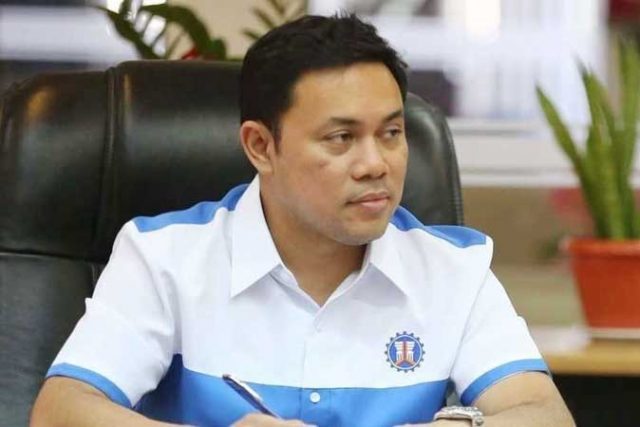
THE GOVERNMENT has so far spent P5.2 billion for the construction of modular hospitals and isolation facilities in response to the coronavirus disease 2019 (COVID-19) pandemic, Public Works Secretary Mark A. Villar said.

Mr. Villar said they have established about 25,000 beds for COVID-19 patients and healthcare workers.

“At the latest, by next month we will have an additional 300 beds…mostly in the National Capital Region,” he told ABS-CBN News Channel.

The government is aiming to set up a total of 27,300 beds by the end of the year.

“In terms of quarantine facilities, there is a significant improvement from last month, but nevertheless we still continue to aggressively build so that we have sufficient buffer in case there is another surge,” he said.

The Palace earlier said the use rates of facilities for COVID-19 patients in the Philippines were now below critical levels.

Occupancy was at 57% for intensive care unit beds and about 44% for isolation beds as of May 18, according to the Health department. About 48% of ward beds were in use. — Kyle Aristophere T. Atienza

Ban on light trucks along EDSA, Shaw Boulevard resumes May 24

MMDA FILE PHOTO

LIGHT trucks, or those with a gross capacity of up to 4,500 kilograms, will again be banned from traversing EDSA and Shaw Boulevard starting May 24, according to the Metropolitan Manila Development Authority (MMDA).

The ban along EDSA will be in effect from 5 a.m. to 9 p.m. daily except Sundays. It covers the stretch between Magallanes in Makati City and North Avenue in Quezon City.

Along Shaw Boulevard, the ban is from 6 a.m. to 10 a.m. and from 5 p.m. to 10 p.m., also from Monday to Saturday.

The ban is automatically lifted on declared holidays.

MMDA said violators will face a fine of P2,000.

Lima Water moves on to phase 2 of supply network digitalization 

LIMA WATER Corp., which serves the 700-hectare Lima Estate in Batangas, is entering the second phase of its digitalization project that aims to manage its water supply network more efficiently.

The water provider said in a statement on Wednesday that it is now in the next stage of its project, which includes network integration for real-time leakage detection and consumption monitoring.   

“Once fully integrated, the smart water network is projected to lead to even better operational efficiency and savings in terms of deep well operation, auto adjustment of transfer pumps and non-revenue water management, aligned with its sustainability objectives,” the company said.   

Lima Water started the digitalization project last year and it said the pilot program resulted in 30% savings in its operational budget for repairs, reduced fuel consumption for daily monitoring operations, and “significantly improved” response time during equipment failure.

Lima Water also announced that it will work on data science and artificial intelligence initiatives with Aboitiz Data Innovation, a business unit of the Aboitiz Group, to achieve improved efficiency and processes for its operations.   

“The synergies that can be created through the application of data science and artificial intelligence will create smarter, more reliable and more predictable systems that in turn will benefit our customers,” Aboitiz Data Innovation Managing Director David R. Hardoon said. — Revin Mikhael D. Ochave   

Police medical reserve teams tapped for vaccination

PNP

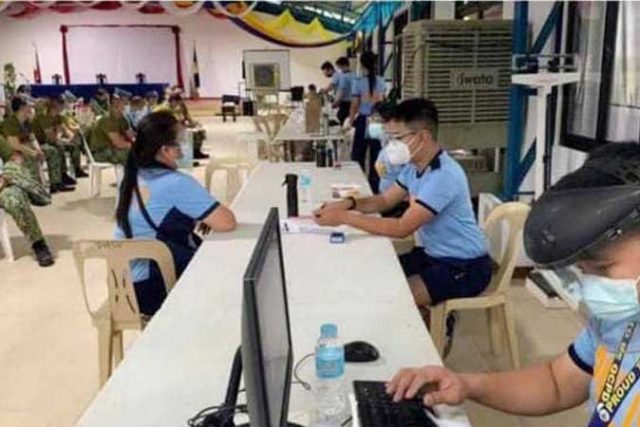
MEMBERS of the police’s Medical Reserve Force were deployed Wednesday to help in administering COVID-19 vaccines in three Quezon City vaccination sites to prevent long lines and crowding.

“They will help in the vaccination to speed up the process and avoid having too many people in the vaccination sites,” Police chief Guillermo Lorenzo T. Eleazar said in a statement in Filipino.

He cited an incident earlier this week in Parañaque, another city within the capital region, where residents lined up at a vaccination site within a shopping mall even if they were not scheduled to receive a dose.   

“We will continue to coordinate and assess the situation with the Department of Health and our LGUs (local government units) on which vaccination centers need augmentation,” he said.

The Philippine National Police-Medical Reserve Force, composed of officers with undergraduate courses related to health services and medicine, was formed in April 2020 to assist in the coronavirus disease 2019 (COVID-19) response program.

They have since been serving in quarantine and swabbing facilities.

The police said their medical and dental unit in the capital region will also undergo orientation to help in the inoculation.

Peso weakens as gov’t cuts growth targets

BW FILE PHOTO

THE PESO declined against the dollar on Wednesday as the government cut its growth target for this year and next, as the fresh spike in coronavirus disease 2019 (COVID-19) cases and the reimposition of strict restrictions cloud recovery prospects.

The local unit closed at P47.875 versus the dollar on Wednesday, dropping by seven centavos from Tuesday’s finish of P47.805, data from the Banker’s Association of the Philippines’ website showed.

The peso opened the session at P47.81 against the dollar. It dropped to as low as P47.894, while its intraday best was logged at P47.77 versus the greenback.

Dollars traded went up to $947.25 million on Wednesday from $925.20 million the day before.

Rizal Commercial Banking Corp. Chief Economist Michael L. Ricafort said the Development Budget Coordination Committee’s (DBCC) decision to slash the country’s growth outlook caused the peso to weaken versus the dollar on Wednesday.

In its 179th meeting on Tuesday, the DBCC downgraded its gross domestic product (GDP) growth target to 6-7% from the 6.5-7.5% outlook in December 2020. However, this would still be an improvement from the record 9.6% contraction logged in 2020.

“The emerging GDP growth projection is slightly adjusted to 6-7% from 6.5-7.5% in view of the emergence of new COVID-19 variants and the reimposition of enhanced community quarantine in the National Capital Region Plus area during the second quarter of the year,” the DBCC said in a joint statement.

Economic managers expect the economy to return to its pre-crisis level next year, with GDP seen to grow by 7-9%, lower than the previous target of 8-10%. The economy’s expansion is seen to slow to 6-7% in 2023 and 2024.

Mr. Ricafort added that the peso was also affected by the recent weakness in the local stock market, as well as global inflation concerns.

For Thursday, a trader said the market will watch out for the release of the minutes of the US central bank’s latest policy review.

“The local currency might move based on policy cues from the US Federal Reserve policy meeting minutes due to be released overnight as global investors will be looking for the US central bank’s assessment about the recent elevated US inflation reports,” the trader said.

Mr. Ricafort gave a forecast range of P47.82 to P 47.92 per dollar, while the trader expects the peso to move between P47.80 and P48.

PSE index inches higher on last-minute buying

BW FILE PHOTO

THE benchmark index inched up after a volatile session on Wednesday due to last-minute bargain hunting as trading volume was muted due to the lack of fresh catalysts.

The Philippine Stock Exchange index (PSEi) inched up by 0.97 point or 0.01% to close at 6,245.71 on Wednesday, while the all shares index gained 5.51 points or 0.14% to end at 3,852.90.

“The market fluctuated between gains and losses for the session and ended less than a point higher amid lack of catalysts,” AB Capital Securities, Inc. Junior Equity Analyst Lance U. Soledad said in a Viber message.

Meanwhile, Philstocks Financial, Inc. Research Associate Claire T. Alviar said the market eked out a small gain due to bargain hunting.

“The local bourse was again saved by the last-minute bargain hunting… The improving COVID-19 (coronavirus disease 2019) pandemic situation in Greater Manila provides optimism in the market,” Ms. Alviar said in a separate Viber message.

Timson Securities, Inc. Trader Darren Blaine T. Pangan said trading volume remained lower than average yesterday “due to the lack of catalysts in the local scene.”

Value turnover decreased to P4.83 billion on Wednesday with 1.56 billion issues traded, from the P6.19 billion with 2.63 billion shares that switched hands on Tuesday.

Coronavirus infections rose by 4,700 on Wednesday to bring the total to 1.159 million, based on data from the Department of Health.

This was lower than the average daily count seen in previous weeks and was also a stark improvement from the 10,000 cases seen almost every day in March, which had prompted the government to put parts of the country back under tighter restrictions.

President Rodrigo R. Duterte approved the recommendation of an interagency task force to place National Capital Region and the provinces of Bulacan, Cavite, Laguna, and Rizal under a general community quarantine with heightened restrictions from May 15 to 31.

Meanwhile, active cases stood at 49,951 as of Wednesday from 52,291 on the previous day, while deaths were at 19,507. Recovered patients totaled 1.09 million.

Most sectoral indices declined on Wednesday except for industrials, which improved by 103.84 points or 1.22% to end at 8,583.82, and financials, which went up by 0.6 point or 0.04% to 1,380.18.

Meanwhile, property dropped by 17.18 points or 0.57% to 2,996.59; mining and oil declined by 42.15 points or 0.45% to end at 9,141.66; services went down by 2.88 points or 0.19% to finish at 1,461.27; and holding firms lost 5.54 points or 0.08% to 6,219.23.

Advancers trumped decliners, 115 versus 82, while 47 names closed unchanged.

Net foreign selling went down to P457.83 million on Wednesday from the P549.72 million in net outflows logged the previous trading day.

“We expect the index to range trade for now with immediate support at 6,200 and resistance at 6,400,” AB Capital Securities’ Mr. Soledad said. — K.C.G. Valmonte

Lifting of open-pit mining freeze being readied in draft IRR

THE Mines and Geosciences Bureau (MGB) said the draft implementing rules and regulations (IRR) of Executive Order (EO) No. 130 includes a repealing clause that would lift the open-pit mining ban implemented in 2017.

MGB Director Wilfredo G. Moncano said during the first session of the two-day consultative meetings for the EO’s IRR Wednesday that the repealing clause will lift the four-year ban on open pit mining.

The first session of the MGB’s two-day consultative meetings involved mining companies.

“One of the administrative orders mentioned in the repealing clause of the draft IRR includes Department of Environment and Natural Resources Order (DAO) 2017-10 that was issued by the late former Environment Secretary Regina Paz L. Lopez,” Mr. Moncano said.   

“That DAO is covered by the repealing clause meaning that… the open pit mining ban will be lifted through this IRR,” he added.

Ms. Lopez implemented the open pit mining ban in 2017, citing the adverse effects of the mining method on the environment.

The mining industry has continued to press for the restoration of open-pit mining, noting its efficiency and its acceptance as a mining practice worldwide.

The Chamber of Mines of the Philippines has said that the ban needs to go to allow the industry to achieve its full potential.

Anti-mining groups such as Alyansa Tigil Mina said the open-pit mining method creates permanent changes in the land and disturbs waterways and livelihoods.

On April 14, President Rodrigo R. Duterte signed EO 130, which lifted the nine-year moratorium on new mineral agreements and authorized a review of current mining deals for potential renegotiation.

The MGB has said that some P21 billion in revenue can be generated by the 100 mining projects in the pipeline, adding that the potential funds will aid the economic recovery following the downturn caused by the pandemic.   

Josephine V. Sescon, MGB Policy and Technical Working Group head, said during the meeting that the repealing clause of EO 130’s draft IRR also covers Section 23-A of DAO 2010-21 that provides for the conversion of exploration permits to mineral agreements and other existing orders that are inconsistent with the EO.

Other features of the draft IRR include recommendations to declare as mineral reservations areas covered by mineral agreements, except for holders of mineral agreements (metallic) with mineral processing plants; the strict implementation of mine and environment safety rules including the use of technology; and research on acid mine drainage.

The MGB is set to hold the second session Thursday (May 20). It will involve representatives from the academe and non-government organizations.

In 2020, the MGB reported that the value of metallic mining output improved 1.13% to P132.21 billion, of which nickel ore and its by-products accounted for 51.8% or P68.48 billion; gold 36% or P47.60 billion; copper 11.25% or P14.88 billion; and silver, chromite, and iron P1.26 billion.  — Revin Mikhael D. Ochave

Electronic registrations for national ID top 1M

ABOUT 1.053 million registrants have completed the first phase of electronic registration for the national ID, formally known as the Philippine Identification System (PhilSys), after two weeks, the Philippine Statistics Authority (PSA) said Wednesday.

The PSA said the online registrants signed up between April 30, the digital portal’s launch, and May 17.

Meanwhile, 103,935 Philippine Identification (PhilID) cards have been distributed to those who completed the three-step registration as of May 15, it said. The cards were delivered by the Philippine Postal Corp.

“We remain optimistic that we can register 50 to 70 million Filipinos to the PhilSys this year,” PSA Undersecretary Dennis S. Mapa said in the statement.

“We are grateful for the patience and trust of Filipinos who registered, even though we encountered technical difficulties when we started the pilot,” Mr. Mapa added.

The agency said those who already got their IDs should keep the letter that came with the PhilID somewhere safe since it contains confidential information such as a unique identification number permanently assigned to a registrant, known as the PhilSys Number or PSN.

“To protect the permanent PSN when transacting, registrants are highly encouraged to use the PhilSys Card Number (PCN), the public version of the PSN which is printed in front of the PhilID,” it said.

Mr. Mapa said the agency will team up with various other entities to streamline transactions between the government and the private sector.

“We are looking into ramping up our card production and delivery services in the coming weeks so that more Filipinos will be able to enjoy the benefits of registering with the PhilSys,” he said.

By 2022, the PSA expects to register the bulk of the population.

Republic Act 11055, signed in 2018, created PhilSys to serve as a single identification system for all citizens, doing away with the need to present multiple government-issued IDs. — Beatrice M. Laforga

House panel approves bill calling for 30-year infrastructure plan

PHILIPPINE STAR/ MICHAEL VARCAS

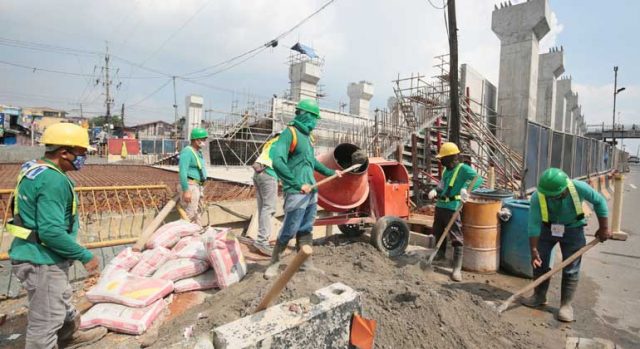
THE HOUSE Committee on Public Works and Highways approved a bill that will require infrastructure programs to be planned for 30 years in advance to minimize disruptions caused by changes in government.

In a hearing Wednesday, the panel approved House Bill 8151, a proposed law to adopt a 30-year National Infrastructure Program.

“There is a motion to approve, subject to amendments,” the committee’s chairman, Romblon Rep. Eleandro Jesus F. Madrona, said during the hearing.

The bill was sponsored by its author, CWS Party-list Rep. Romeo S. Momo, who said if passed, it will ensure the continuity of big-ticket projects when governments change.

“This 30-year infrastructure program will rationalize and interconnect in a seamless manner our six-year medium term and yearly infrastructure programs… the 30-year program will ensure continuity in the development and implementation of infrastructure projects across administrations regardless of changes in national leadership,” he said.

The bill is intended to provide a blueprint for the construction sector, investors, and other stakeholders, providing guidance on the direction of public construction over the next 30 years. — Gillian M. Cortez

ADVERTISEMENT
ADVERTISEMENT