Home Blog Page 7971

Shares drop on virus concerns, lack of new leads

REUTERS

STOCKS started the week in the red as concerns over the country’s coronavirus disease 2019 (COVID-19) situation affected investor sentiment on top of the absence of fresh catalysts.

The Philippine Stock Exchange index (PSEi) declined by 32.42 points or 0.47% to close at 6,763.92 on Monday, while the broader all shares index lost 8.97 points or 0.21% to end at 4,099.62.

Philstocks Financial, Inc. Senior Research Analyst Japhet Louis O. Tantiangco said in a Viber message that the index declined “as coronavirus worries took over investor sentiment.”

“The market fell today on lackluster trading as investors await fresh catalysts,” AB Capital Securities, Inc. Junior Equity Analyst Lance U. Soledad said in a separate Viber message on Monday.

Meanwhile, AAA Southeast Equities, Inc. Research Head Christopher John Mangun attributed the PSEi’s decline to lower trading volume.

“The PSEi ended slightly lower on low trading volumes as investors try to get a feel of the sentiment which is typical for the first trading day of the week,” Mr. Mangun said via e-mail. “This tells us that investors are beginning to turn cautious again, similar to what we are seeing in stock markets abroad.”

Value turnover decreased to P4.19 billion with 1.86 billion shares traded on Monday, from the P5.92 billion with 1.54 billion issues that switched hands on Friday.

Meanwhile, the Health department reported 6,539 new coronavirus cases on Monday, which brought the country’s total number of infections to 1,276,004.

Majority of sectoral indices closed in the red on Monday except for mining and oil, which went up by 48.68 points or 0.51% to 9,505.19, and industrials, which gained 7.05 points or 0.07% to finish at 9,098.72.

Meanwhile, property went down by 23.09 points or 0.68% to 3,328.92; financials declined by 8.80 points or 0.6% to 1,445.05; holding firms shed 34.74 points or 0.5% to 6,819.69; and services inched down by 1.79 points or 0.11% to 1,525.79.

Advancers narrowly beat decliners, 102 against 100, while 60 names closed unchanged.

Foreigners turned sellers with P96.13 million in net outflows logged on Monday versus the P1.07 billion in net purchases recorded on Friday.

Philstocks Financial’s Mr. Tantiangco said a rise in the number COVID-19 cases will cause the market to decline further.

He added that investors will take cues from the country’s April Labor Force Survey to be released on Tuesday, June 8.

“Bad figures are anticipated given that April was the time the National Capital Region Plus was placed under relatively stringent quarantine measures,” Mr. Tantiangco said, referring to Metro Manila and its nearby provinces of Bulacan, Cavite, Laguna, and Rizal.

AB Capital Securities’ Mr. Soledad expects the index to trade sideways, placing immediate support at 6,700 and resistance at 6,840.

“The PSEi may still continue lower and test a stronger support level as investors take profits,” AAA Southeast Equities’ Mr. Mangun added. — Keren Concepcion G. Valmonte

Philippines starts labor force mass vaccination

PHILIPPINE STAR/ MIGUEL DE GUZMAN

By Kyle Aristophere T. Atienza and Vann Marlo M. Villegas, Reporters

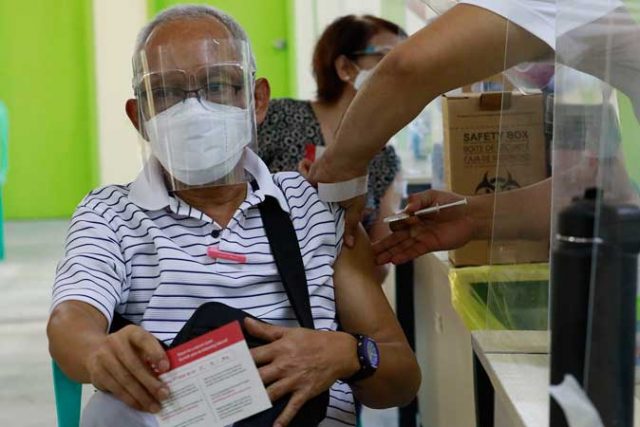
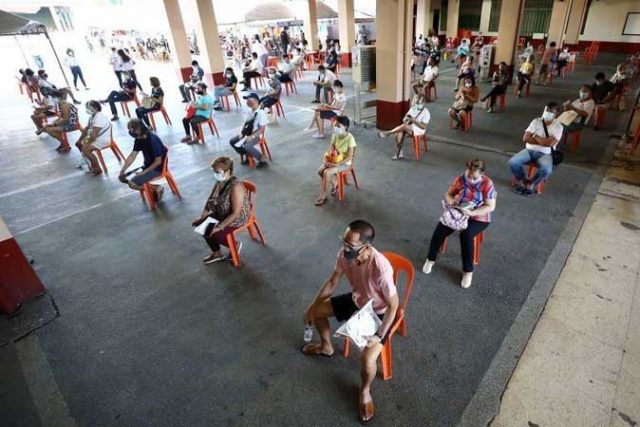
THE PHILIPPINES started immunizing its labor force against the coronavirus on Monday as government seeks to further reopen its economy after imposing one of the strictest and longest lockdowns in the world.

President Rodrigo R. Duterte said the vaccination of essential workers in the private and public sectors is a “major milestone” in the fight against the pandemic.

“With the start of our mass vaccination, the A4 priority category — workers in both public and private sectors — will have an added layer of protection against the disease,” he said in a taped message during the symbolic vaccination of some workers near the capital.

The inoculation of private workers, government employees, and informal sectors workers is being carried out first in Metro Manila and other key economic hubs due to limited supply. Health authorities have said people aged 45 years and up would be prioritized.

“It is very important that we use the vaccines to reduce the deaths by prioritizing this group,” World Health Organization country representative Rabindra Abeyasinghe told a news briefing after the program, noting that people in this age group were likely to die once they get infected. 

The Philippines aims to inoculate at least 500,000 people daily in Metro Manila, Rizal, Bulacan, Cavite, Laguna, Metro Cebu, and Metro Davao to achieve herd immunity by Nov. 27.

The Department of Health (DoH) reported 6,539 coronavirus infections on Monday, bringing the total to 1.28 million.

The death toll rose by 71 to 21,969, while recoveries increased by 6,969 to 1.2 million, it said in a bulletin.

There were 58,854 active cases, 1.3% of which were critical, 93.4% were mild, 2.4% did not show symptoms, 1.7% were severe and 1.16% were moderate.

It said 13 duplicates had been removed from the tally, 10 of which were tagged as recoveries. Twenty-one recoveries were reclassified as deaths. Seven laboratories failed to submit data on June 5, the agency said.

About 12.9 million Filipinos have been tested for the coronavirus as of June 4, according to DoH’s tracker website.

The coronavirus has sickened about 174.1 million and killed 3.7 million people worldwide, according to the Worldometers website, citing various sources including data from the World Health Organization.

About 157.1 million people have recovered, it said.

Meanwhile, Health Undersecretary Maria Rosario S. Vergeire said mass gatherings remained prohibited.

“We urge the public to stay home and go out only when needed to prevent the transmission of COVID-19 (coronavirus disease 2019),” she told an online news briefing, adding that local governments should enforce health protocols.

Vaccine czar Carlito G. Galvez, Jr. said the Philippine seeks to breach this week the six-million mark in its coronavirus vaccination program. The country would receive more than 10 million doses of coronavirus vaccines this month, he told a separate online news briefing.

The government would take delivery this month of about 100,000 more doses of Sputnik V vaccines from Russia and 5.5 million doses of CoronaVac from China, he said.

About 2.8 million doses of the vaccine made by Pfizer, Inc. and about 2 million doses of the vaccine made by AstraZeneca Plc, which were obtained under a global initiative for equal access, would also arrive this month.

About 250,000 doses of the vaccine made by Moderna, Inc. are also expected to arrive this month, he added.

Mr. Galvez said more than 5.9 million coronavirus vaccines have been given out as of Sunday, about 1.5 million of which were second shots.

The Philippines, which began its vaccination on March 1, aims to inoculate as many as 70 million Filipinos this year to achieve herd immunity.

About 22 million essential workers are expected to be vaccinated, the Department of Health (DoH) said.

The vaccination would be held in phases, Ms. Vergeire said, citing Mr. Galvez. The vaccination of so-called economic frontliners workers would start in Metro Manila, Bulacan, Cavite, Rizal, Laguna, Pampanga, Batangas, Metro Cebu and Metro Davao, she said.

There were about 12 million people under the category in prioritized areas, she added.

Eligible workers include private sector workers who physically go to work, state employees including those who work in in government-owned and -controlled companies and local government units, informal sector and self-employed workers who physically report to work.

Under a DoH memo, workers aged 40 to 50 years old, then to 18 to 39 years old would be prioritized when vaccine supply is limited.

They will be simultaneously vaccinated alongside healthcare workers, senior citizens and seriously ill people.

Duterte not barred by law from running for VP, says spokesman

PCOO

THE LAW does not bar President Rodrigo R. Duterte from running for vice president next year, according to the presidential palace, after critics said this would be anti-democracy.

“There is absolutely no ban for a President to run for vice president,” presidential spokesman Herminio L. Roque, Jr. told a televised news briefing on Monday.

Political analysts and constitutional experts have said the push for Mr. Duterte, who is barred by law from running for reelection, to run for vice president violates the spirit of the 1987 Charter.

The late President Corazon C. Aquino oversaw the drafting of the basic law that limited the powers of the presidency and re-established the bicameral Congress, which her predecessor, the late dictator Ferdinand E. Marcos, abolished.

Mr. Marcos and his family were forced into exile in the US after he was ousted by a popular street uprising in 1986.

“If you can show me a provision which bars the President from running for the position of vice president, then of course, the president will honor that,” Mr. Roque said. “But there is no literal provision that states that principle.”

The ruling PDP-Laban party last week passed a resolution urging Mr. Duterte to run for vice president at next year’s elections. It also allowed him to choose his running mate.

The Palace on Monday maintained that President Rodrigo R. Duterte is not barred by the post-dictatorship Constitution from running for the country’s second highest position.

This, after political observers said that Mr. Duterte’s potential vice-presidential bid would violate the spirit of the 34-year old Charter, which was made after hundreds of thousands of Filipinos toppled the dictator during the 1986 People Power EDSA Revolution.

“There is absolutely no ban for a president to run for vice president,” Mr. Roque told a televised news briefing.

“If you can show me a provision which bars the President to run for the position of Vice President then of course the President will honor that prohibition,” he said. “But as it is, there is no literal provision on the Constitution that states that principle.”

The ruling Partido Demokratiko Pilipino–Lakas ng Bayan (PDP-Laban) earlier passed a resolution urging its chairperson, Mr. Duterte, to run for vice president.

Constitutional experts said a potential Duterte vice presidency would circumvent a constitutional provision that says a sitting president “shall not be eligible for any reelection.”

“The word ‘any’ antecedently refers to the two previously mentioned public positions, namely the office of President and the vice president,” Melencio Santos Sta. Maria, Jr., a lawyer and dean of the Far Eastern University Institute of Law, said in a Facebook statement.

“‘Any’ cannot refer to being elected to the presidency alone. Had this been the intent, it would have been very easy for the constitutional framers to state that the President shall not be eligible for reelection as President.”

Davao City Mayor Sara Duterte-Carpio was among those being considered by Mr. Duterte to become the ruling party’s standard bearer in the 2022 elections, Mr. Roque said last week.

Mr. Duterte’s daughter remained undecided about running, he added. The President earlier said his daughter would not follow in his footsteps.

Also included on the list of Mr. Duterte’s presidential bets were former Senator Ferdinand R. Marcos, Jr., Manila Mayor Francisco M. Domagoso, Senators Christopher Lawrence T. Go and boxing champion Senator Emmanuel D. Pacquiao, Mr. Roque said.

He said Mr. Duterte does not want his daughter to run for President.

Michael Henry Ll. Yusingco, a senior research fellow at the Ateneo de Manila University Policy Center, said the calls for Ms. Carpio to run for president could be an attempt to create an artificial clamor. “This family has been known for drama,” Antonio P. Contreras, a political science professor at the De La Salle University, said by telephone. 

Albay Rep. Jose Maria Clemente S. Salceda on Wednesday said Ms. Carpio would run for President and was building an alliance with various political groups.

Mr. Salceda, a member of the ruling party, said at least five political parties would support Ms. Carpio’s presidential bid.

He said a possible Duterte-Duterte tandem is not a wise idea because the administration party needs a geographical balance.

Mr. Salceda said the presidential daughter should look for a running mate who can get a significant number of votes from other regions.

Gilbert Teodoro, Jr., who lost to Benigno S.C. Aquino III in the 2010 presidential elections, said Ms. Carpio would “make a very good President of this country.”

He issued the statement after meeting with her at her office last week, where he also got vaccinated against the coronavirus.

“My impression of Mayor Sara talking about issues was that she will make a very good President of this country,” Mr. Teodoro told the ABS-CBN News Channel on Monday. “She would have the ability to unite a lot of people, she has an independent mind, she has managerial skills running a very complex city like Davao.”

He said she would be a good presidential candidate and would back her up as vice president if she runs for the office.

“There were two President Aquinos, there were two president Macapagals,” Mr. Teodoro, a former Defense secretary, said when asked about political dynasties. “I think you cannot consider Mayor Sara to be within the spirit of what a political dynasty is because she’s quite independent-minded.”

Ms. Carpio had rejected calls for her to seek the presidency in next year’s elections, asking her supporters to wait for her bid in 2034. She said policy continuity should not be based on kinship.

The Davao mayor heads a coalition that started as a regional political party. — KATA

Gov’t mulls relaxing restrictions on vaccinated seniors

PHILIPPINE STAR/ MICHAEL VARCAS

THE Philippine government may soon allow vaccinated seniors to go outside of their residences for non-essential activities, the Trade department said on Monday as the country aims to further reopen its economy.

Trade Secretary Ramon M. Lopez said the government is eyeing to ease restrictions imposed on seniors who have been fully vaccinated.

“We just hope that moving forward, as we get to vaccinate more, we start to reopen further, give the benefits sa nabakunahan na (to those who have been vaccinated), particularly seniors,” he told a televised news briefing after the symbolic inoculation of economic frontliners.

The task force handling the coronavirus response earlier adopted a resolution directing local leaders in Metro Manila to create special lanes for seniors as well as health workers and people with health complications.

At the same briefing, vaccine czar Carlito G. Galvez, Jr. said more than 5.9 million coronavirus vaccines have been given out as of Sunday.

Of the total, about 1.5 million were administered as second doses, while more than 4.4 million were given out as initial doses, he said.

The Philippines, which began its vaccination on March 1, aims to inoculate as many as 70 million Filipinos this year to achieve herd immunity. — Kyle Aristophere T. Atienza

Guidelines on senior citizen, PWD discount for online buys now under consolidation

PHILIPPINE STAR/EDD GUMBAN

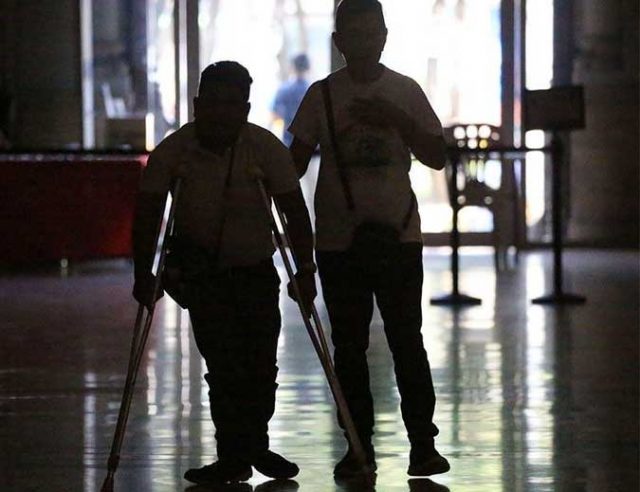
THE GOVERNMENT will soon release online discount guidelines for senior citizens and persons with disabilities (PWD), the Anti Red Tape Authority (ARTA) said.

The Department of Social Welfare and Development (DSWD) will put together comments from concerned agencies by June 15 to develop a joint memorandum order, ARTA said in a statement on Monday.

The government agencies will hold a consultation meeting with stakeholders before the end of June.

A consumer group reached out to the red tape watchdog to flag inaction on a request to issue guidelines for availing senior citizen and PWD discounts online, where shoppers buy more products amid lockdown restrictions.

Senior citizens and PWDs are entitled to a 20% discount and are exempt from value added tax on certain goods and services under Philippine laws.

“They are not able to claim their privileges granted by law because most merchants do not know what and how to grant them their discounts,” ARTA said.

Laban Konsyumer, Inc. wrote to ARTA to ask for its intervention in March, saying that no guidelines had been released even though it sent its request to the Department of Trade and Industry (DTI) and DSWD in October last year.

ARTA said DSWD will lead the drafting of the joint order because the agency primarily responds to senior citizen and PWD concerns.

DTI in August last year said senior citizen discounts are honored in online transactions and for purchases done on senior citizens’ behalf.

Discounts do not apply to delivery charges for goods bought online, the National Council on Disability Affairs said. — Jenina P. Ibañez

Senator asks gov’t to ease restrictions on vaccinated local, foreign tourists

PHILSTAR

A SENATOR called on the government to ease restrictions on fully vaccinated local and foreign tourists to boost the reopening of the industry.

“If we’re easing travel restrictions on fully vaccinated Filipinos returning from trips abroad, I don’t see any reason why we should exclude those fully vaccinated foreign and local tourists as they are similarly situated,” Senator Sherwin T. Gatchalian said in a statement on Monday.

“Besides, there’s more to gain economically speaking as it will bring back the workers in the tourism sector,” the vice chairperson of the Senate Economic Affairs Committee added.

The government on Thursday approved the rules cutting the quarantine requirement for fully vaccinated travelers to seven days, provided they received their jab in the Philippines.

Returning Filipinos who got vaccinated overseas must still undergo a 10-day quarantine at a facility and four days at home. A person is considered fully vaccinated two or more weeks after completing the required dose, Presidential Spokesman Herminio L. Roque, Jr. said.

They will only be subjected to a swab test if they show symptoms within seven days.

OTHER COUNTRIES
Mr. Gatchalian also cited a proposal by the European Union Commission to exempt vaccinated people from testing or quarantines when traveling within EU countries and ease travel measures as vaccination progress.

Mr. Gatchalian also cited the latest guidelines by the United States Centers for Disease Control and Prevention which only recommends fully vaccinated international travelers bound to US, including its citizens, to get tested three to five days after travel and isolate if the result is positive. 

The senator also said that easing travel restrictions is also a way to address vaccine hesitancy.

“Many of us already want to go out and travel, but if they think that they can only do this once they are vaccinated, for sure the number of those who will go to vaccination centers will increase,” he said in Filipino. — Vann Marlo M. Villegas

Former High Court justice presents to Duterte draft bill marking PHL’s maritime claim

PHILSTAR FILE PHOTO

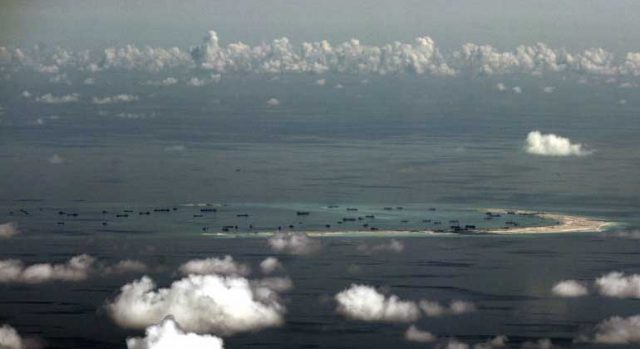
A FORMER Supreme Court justice has presented to President Rodrigo R. Duterte a draft bill that will specifically name and identify the maritime features that is claimed by the Philippines in the South China Sea.

In a statement, retired Supreme Court Justice Francis H. Jardeleza said he sent a letter to Mr. Duterte, along with the draft measure, urging him to consider the enactment of a new baselines law which will help enforce the arbitral ruling which favored the Philippines in the maritime territorial dispute.

“We respectfully submit that the best, most efficient and practical option to enforce the Award is to… legislate a new Baselines Law, consistent with the [Arbitral] Award,” he said in his letter dated June 5.

“The bill not only enforces the Award but also ensures that the Philippines is the first claimant to legislate the individual names and baselines of the claimed features,” he said in a statement.

Mr. Jardeleza said they leave it to the President as to who will possibly sponsor the bill in Congress.

“We leave it to do the good judgement of the President and his advisers to determine whether he needs to certify a bill and if he needs to certify a bill who will be the sponsor,” he said in a briefing on Monday.

The proposed measure identified at least 100 maritime features in the West Philippine Sea, 35 of which were said to be rocks or “high tide features that generate a territorial sea and a contiguous zone.”

Mr. Jardeleza, also a former solicitor general and part of the Philippine team during the arbitral proceedings, said a new baseline law “is the most inexpensive and yet most effective means of enforcing the Arbitral Award and strengthening our territorial and maritime rights in the West Philippine Sea.”

He also said that the proposal names individual features “thus, it constitutes an act of sovereignty in relation to each feature.”

The other proponents of the measure are University of Hong Kong law professor Melissa H. Loja, and Romel Regalado Bagares, a law professor at the Lyceum of the Philippines University and San Sebastian College-Recoletos.

The Arbitral Award in 2016 favored the Philippines and rejected China’s claim to more than 80% of the disputed waterway based on a 1940s map.

The Philippines has filed several diplomatic protests against China due to their continued presence in the country’s exclusive economic zone. — Vann Marlo M. Villegas

Bangsamoro gov’t allocates P47-M for renovation of halal verification lab 

THE BANGSAMORO region’s Ministry of Science and Technology (MoST) has allotted P47 million for the renovation of a halal verification laboratory, which is expected to be completed by July.

In a statement on Monday, the Bangsamoro Autonomous Region in Muslim Mindanao government said work on the facility located in Cotabato City started early this year.

The renovations will pave the way for state-of-the-art technology enabling ethanol analysis, gelatine analysis, and pesticides residue analysis, among others.

“This project fulfills one of the MoST’s mandates to strengthen the development of Halal industry through testing, analysis, and capacity building,” MoST Minister Aida M. Silongan was quoted in the statement.

The region, where majority of Filipino muslims reside, is positioning to be a major halal product exporter. Located in the country’s south, it is close to the Muslim-majority countries of Brunei and Indonesia.

In March this year, the Department of Trade and Industry said the Philippines and Indonesia are close to sealing an agreement on halal certification that would pave the way for expanded trade. — Isabel B. Celis

Dumaguete City to tap more schools as isolation facilities as COVID-19 cases increase

DUMAGUETE CITY GOV’T

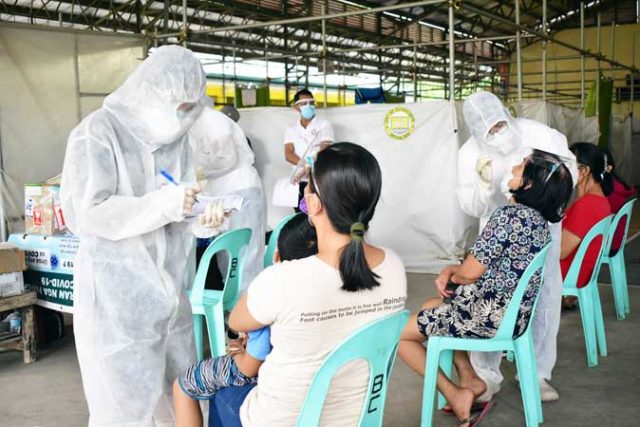
DUMAGUETE City’s local team managing the coronavirus pandemic has asked the Education department to allow more schools to be used as isolation facilities as cases continue to increase.

The local government said it has also asked the city’s coronavirus disease 2019 (COVID-19) task force to plan additional measures “to regulate the entry of non-residents… with extensive consultations of all stakeholders.”

Under existing policies, those entering the city must have a negative RT-PCR test result and prior registration with the local government.

As of June 6, the city had 357 active COVID-19 cases, more than double the 127 recorded as of May 15. Total cases since the start of the pandemic in March last year was 1,277 with 879 recoveries and 45 deaths.

Towards the end of May this year, health authorities launched a massive swabbing activity to identify and isolate close contacts of new patients.

“About 5, 000 close contacts of COVID-19 confirmed cases, at 500 a day both symptomatic and asymptomatic, are targeted for RT-PCR swab tests in the next 2 weeks by the teams from the City Health Office, Integrated Provincial Health Office and Department of Health,” the local government said on May 31.

“The massive swab testing is necessary to help authorities promptly identify, isolate and treat those who will be found positive of the virus, which is a strategy to methodically bring down the surge of COVID-19 cases,” it added.

Expedited visas proposed for foreign power workers

REUTERS

A FORMER National Renewable Energy Board (NREB) official has proposed that regulators assist power producers in obtaining visas for foreign technicians to expedite power plant repairs.

An opening up of the visa process was billed as one of the immediate solutions to ensure sufficient power for the grid in light of recent plant breakdowns, according to Pedro H. Maniego, Jr., a former NREB chairman.

“When I talked to some power producers, they say that the problem (of) very long downtimes and outages is because they don’t have the service technicians from China… (and) other countries to repair this equipment. (The power producers) need assistance to secure visas,” he said during a virtual briefing organized by the non-government organization Institute of Climate and Sustainable Cities (ICSC) Monday.

“Some of these visas have been pending for a long time due to the global health emergency,” he added.

Mr. Maniego, who is a senior policy advisor of the ICSC, said regulators can provide endorsements for the foreign service workers.

“I can see (why power producers are reluctant) to bring in these people… Even if you are vaccinated, I think you have to quarantine yourself for 40 days and that would cost money for all of these power producers that need these technicians. They also have to pay board and lodging,” Mr. Maniego said.

He added that power producers must also train their own workers so reduce the dependency on foreign service technicians.

He also proposed a system of fines for generation companies which exceeded the maximum number of allowable outages, increasing the secondary price caps during the dry season, and implementing the competitive selection process based on fixed costs for all technologies by the fourth quarter, among others.

Sara Jane Ahmed, finance advisor to the Climate Vulnerable Forum’s Vulnerable Group of Twenty (V20) Ministers of Finance, noted that the Philippines is “doubling down on imported large fossil-fuel (facilities) with the new combined cycle gas turbines for baseload power.”

“But it’s clear, considering our current situation and considering the need to build resilience, (that) we need to have distributed, low-cost sources of power. ‘Distributed’ doesn’t mean thousands of megawatts in one concentrated area, rather, a couple of hundred megawatts- distributed in certain locations and separated,” Ms. Ahmed said at the briefing.

With a distributed system, the Philippines will not be reliant on a few large plants, she said.

ICSC Energy Transition Advisor Alberto R. Dalusung III said that the Philippines needs flexible power plants which will work alongside renewable energy sources to provide power to the grid. He added that flexible power plants can “address short term supply-demand imbalances.”

“I think that the long-term solution really is to take advantage of the cheapest, quickest to deploy technology options for us. Solar, wind, other renewables, and to match this with just the right flexible power plants so that we can have a reliable least cost power generation mix,” he said during the event.

On Monday, the National Grid Corp. of the Philippines (NGCP) told BusinessWorld that the Philippines needs more capacity to meet the rising power demand.

“We need more capacity connected to the grid,” NGCP Spokesperson Cynthia P. Alabanza said, referring to always-on baseload energy.

Last week, the grid operator placed the Luzon grid on red alert for three consecutive days amid forced plant outages and higher peak demand. — Angelica Y. Yang

DepEd warned on copyright issues in teaching modules

PHILIPPINE STAR/ MICHAEL VARCAS

TEACHING MATERIALS used by the Department of Education (DepEd) should not be reproduced in violation of copyright even during emergencies like the pandemic, a licensing organization said.

“After the book is published and sold, no one should reproduce the book or substantial portions of the book without the author’s permission,” Filipinas Copyright Licensing Society, Inc. (Filcols) Executive Director Alvin J. Buenaventura said in a virtual event held by the Intellectual Property Office of the Philippines (IPOPHL).

Only small portions can be reproduced by photocopying, he said.

“Sadly, there is a culture of unfair use masquerading as fair use in our country. And DepEd unfortunately is the main proponent of this culture.”

Mr. Buenaventura said that DepEd’s Order No. 18-2020, or the rules on providing learning resources during the pandemic, hinders the book publishing industry’s development.

“We fervently hope that DepEd officials will show respect for copyright,” he said, adding that book authors deserve to be paid for their work.

Educators have turned to distance learning during the pandemic, with public schools also delivering printed learning modules to students.

According to the department order, learning modules can be downloaded online. But sharing the files outside of the intended purpose is prohibited. 

DepEd had yet to respond to a request for comment at deadline time. 

IPOPHL Bureau of Copyright and Related Rights Director Emerson G. Cuyo said that the government is not exempt from respecting author copyright.

“For massive use, it’s something that has to be settled between Filcols as the collective management and DepEd as the user of the works.”

IPOPHL can take the role of a broker to help the parties come to an agreement, he said.

“But at the end of the day, it is actually just the rights holder who will know or who can say kung ok na ‘yung arrangement (whether the arrangement is okay) with them.” — Jenina P. Ibañez

Hybrid rice areas seen yielding up to 12 tons per hectare

AREAS PLANTED to hybrid rice are expected to outperform other varieties by a wide margin, with observed yields so far of as much as 12 tons per hectare (t/ha), the Department of Agriculture (DA) said.

Agriculture Secretary William D. Dar said in a memorandum circular that the DA will focus its efforts on 15 provinces selected for hybrid rice planting, with an expected yield advantage of at least 1 ton per hectare against the traditional inbred seed varieties.

“Many areas cannot attain the desired yield advantage and optimum yield because of various technical and agro-ecological reasons. Foremost among them is the limited technical support, improper nutrient management, and insufficient irrigation during the cropping period,” Mr. Dar said.

“The report of the performance of hybrid rice indicated a clear yield advantage over the certified inbred seed varieties with farmers getting yield advantages of up to 5t/ha (hybrid yield of up to 12 t/ha) and provinces having average yields of up to 7 t/ha,” he added.   

Asked to comment, DA Hybrid Rice Program Adviser Frisco M. Malabanan said by mobile phone that the 15 provinces are Ilocos Norte, Pangasinan, Cagayan, Isabela, Tarlac, Nueva Ecija, Occidental Mindoro, Oriental Mindoro, Palawan, Camarines Sur, Iloilo, Leyte, Bukidnon, Cotabato, and Sultan Kudarat. 

“Basically, the circular provides directions on how we can still further optimize the hybrid rice yields in other provinces. As of now, there are still areas that have not attained the potential yield which is at least 6 to 7 t/ha. There are still provinces that are below that, including areas outside the selected 15 provinces such as Apayao and Rizal,” Mr. Malabanan said.

“Among these provinces, the one with the highest yield per hectare during the dry season is Nueva Ecija at an average of 7.8 t/ha followed by Isabela at 6.8t/ha,” he added.

Mr. Dar also directed that the regions be guided in selecting the hybrid rice variety best suited for their respective areas.

He added that data on the municipal and province-level performance of commercial hybrid rice seed should be distributed for the guidance of farmers.  

“In the future, the National Rice Program and Philippine Rice Research Institute should apply the Philippine Rice Information System in monitoring the performance of hybrid rice varieties for more accurate and more objective yield monitoring,” Mr. Dar said.

Mr. Dar also ordered the inclusion of technical support in the regional procurement agreements with commercial hybrid companies, together with the requirement that their hybrid variety not fall below the standard of a 1-ton yield advantage over certified inbred seed and five tons of yield overall.

He also instructed seed companies to hire personnel to undertake technical assistance, to submit monitoring reports, and to implement packaging safeguards to prevent reselling or pilfering of seed supplied to DA.

According to Mr. Malabanan, some of the hybrid companies involved include SL Agritech Corp., Bayer, Syngenta Philippines, Inc., and LongPing.

“It is expected that the hybrid rice will contribute significantly to increasing rice production if we can scale the planting of hybrid rice and use it as a means to cluster or consolidate our farms and modernize farming practices,” Mr. Dar said. — Revin Mikhael D. Ochave

ADVERTISEMENT
ADVERTISEMENT