
How PSEi member stocks performed — June 14, 2021
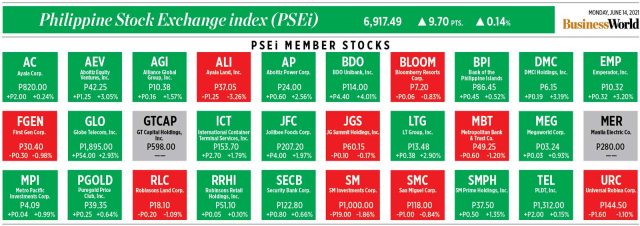
Here’s a quick glance at how PSEi stocks fared on Monday, June 14, 2021.
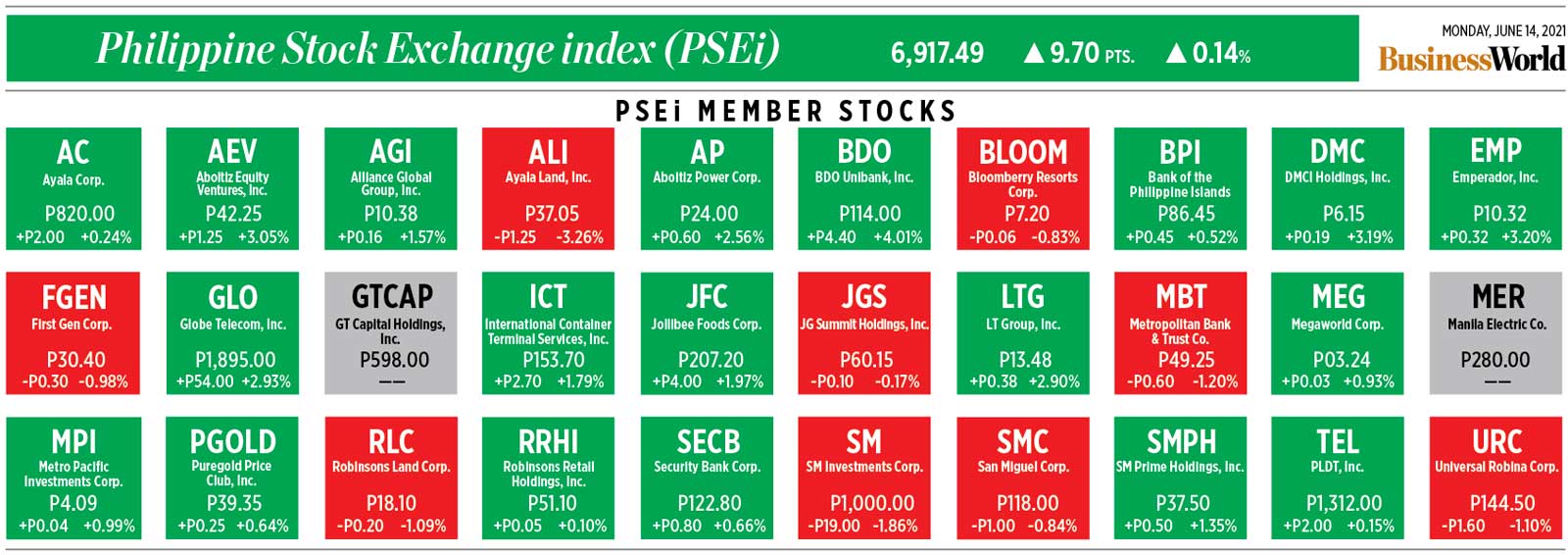

Here’s a quick glance at how PSEi stocks fared on Monday, June 14, 2021.
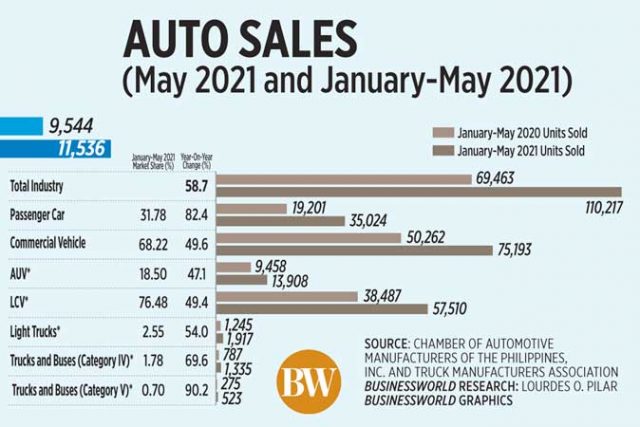
CAR SALES in May increased by more than four times from the same month last year after coming off a low base. Read the full story.

By Kyle Aristophere T. Atienza and Vann Marlo M. Villegas, Reporters
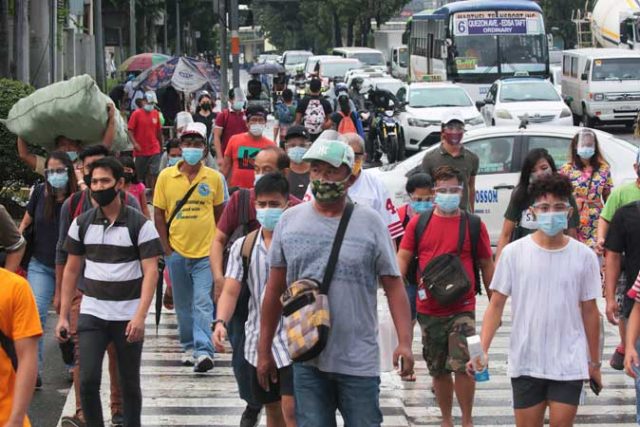
President Rodrigo R. Duterte on Monday night further relaxed the lockdown in Metro Manila and a nearby province amid easing coronavirus infections, and kept the travel ban on India and its neighbors to prevent the entry of a more contagious variant.
The National Capital Region and the province of Bulacan would be placed under a general community quarantine “with some restrictions” from June 16 to June 30, he said in a televised meeting with the Cabinet.
The President also extended the travel ban on travelers from India, Pakistan, Bangladesh, Sri Lanka, Nepal, the United Arab Emirates and Oman until the end of the month, his spokesman said in a separate statement.
Gyms and food establishments in Metro Manila and Bulacan would be allowed to operate at 30% of their capacity, presidential spokesman Herminio L. Roque, Jr. said, he said at the meeting.
Businesses with a safety seal would be given 10% additional capacity incentivized with an additional 10% venue capacity.
The President said the provinces of Rizal, Laguna, and Cavite would remain under a general quarantine “with heightened restrictions.”
Baguio City, Kalinga, Mountain Province, Abra, and Benguet in northern Philippines will be under a general quarantine, as well as Isabela, Nueva Vizcaya, Quirino, Batangas and Quezon.
Several areas in southern Philippines including Iligan City, Davao del Norte, General Santos City, Sultan Kudarat, Sarangani, Cotabato, South Cotabato, Lanao del Sur and Cotabato City will be under a general quarantine.
Mr. Duterte said all other areas would be placed under a modified lockdown.
At the same briefing, Health Secretary Francisco T. Duque III said the use rate of hospitals in La Union, Tarlac, Cavite, Rizal, Benguet and Agusan Del Sur had exceeded critical levels.
Philippine authorities earlier said the southern and central parts of the Philippines were experiencing a fresh surge in coronavirus infections.
The Department of Health (DoH) reported 6,426 coronavirus infections on Monday, bringing the total to 1.32 million.
The death toll rose by 57 to 22,845, while recoveries increased by 7,145 to 1.24 million, it said in a bulletin.
There were 59,096 active cases, 1.3% of which were critical, 91.8% were mild, 3.9% did not show symptoms, 1.8% were severe and 1.28% were moderate.
The agency said 12 duplicates had been removed from the tally, nine of which were tagged as recoveries and 10 recoveries were reclassified as deaths. Ten laboratories failed to submit data on June 12.
The coronavirus has sickened about 176.7 million and killed 3.8 million people worldwide, according to the Worldometers website, citing various sources including data from the World Health Organization.
About 160.8 million people have recovered, it said.
‘SERIOUS CONCERN’
Meanwhile, Dumaguete City in central Philippines is the “area of most serious concern” outside Metro Manila, according to the University of the Philippines OCTA Research Group.
In a report, researches said coronavirus infections there had more than the doubled in the past week, while the average daily attack rate was 69.85 for a population of 100,000 people. Dumaguete is “extremely high risk.”
OCTA also noted that the hospital bed occupancy rate in the city was at 68%, while 84% of intensive care unit beds had been used.
Other areas of concern due to increasing cases, high hospital occupancy and high average daily attack rate were the cities of Iloilo, Butuan, Tacloban and the municipality of Polomolok in South Cotabato.
Tagum City, Legazpi City and Tagbilaran City were also flagged as emerging hotspots due to rising infections.
Intensive care unit occupancy in Davao City, Iloilo City, General Santos, Tuguegarao City and Koronadal were at critical levels of more than 85%.
Earlier on Monday, Mr. Roque said the government would study the reopening of leisure establishments such as cinemas and amusement parks.
About 58% of intensive care unit beds in the country had been used as of June 13, Mr. Roque said.
About 48% of isolation beds and 47% of ward beds have been occupied, while 36% of ventilators have been used. About 46% of ICU beds in the capital region have been occupied.
The palace official said 37% of isolation beds and 32% of ward beds have been used, while 32% of ventilators have been used.
Mr. Roque said 4.6% of the 59,865 active coronavirus cases as of June 13 had been isolated. The death rate was 1.73%, while the recovery rate was 93.7%, he added.
Also on Monday, Metro Manila Development Authority Benjamin de Castro Abalos, Jr. said mayors in the capital region had voted to shorten their curfew hours.
The improving coronavirus situation in the country’s key economic hub prompted metro chiefs to adjust the curfew hours to 12 am to 4 a.m., which will take effect starting June 15.

PRESIDENT Rodrigo R. Duterte wants more time to decide whether to end a military pact with the US on the deployment of troops for war games, according to his top envoy.
The visiting forces agreement would remain hanging for six more months, Foreign Affairs Secretary Teodoro L. Locsin, Jr. said on Monday.
The President made his decision known during a meeting with him and Philippine Ambassador to the US Jose Manuel G. Romualdez, the Foreign Affairs chief said in a video message.
“The President conveyed to us his decision to extend the suspension of the abrogation of the visiting forces agreement by another six months,” he said.
Mr. Duterte in February last year said he was ending the military pact after the US Embassy canceled the visa of Senator Ronald M. de la Rosa, his former police chief who led his deadly war on drugs.
He suspended the termination for six months in June 2020, citing heightened tensions in the region and saying it was a distraction to countries’ anti-coronavirus efforts. It was suspended again in December for six more months.
Mr. Romualdez on June 4 said the two countries had spent a lot of time discussing how to improve the military agreement, which many Filipinos think favors the US. He said an improved version of the pact had been finished, but declined to provide details. — Vann Marlo M. Villegas
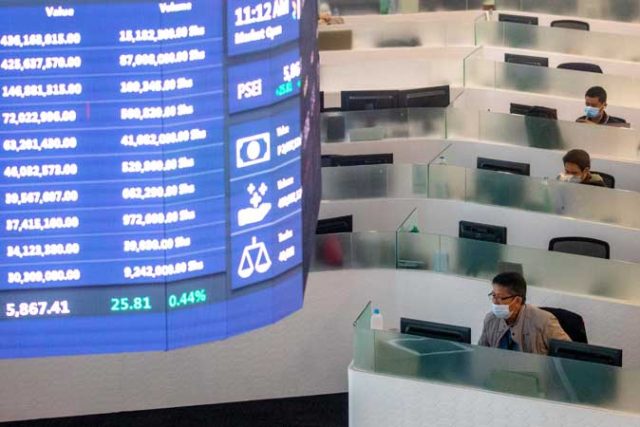
SHARES started the week in the green on last-minute buying ahead of the announcement of new quarantine restrictions, which was scheduled to happen after the market’s close on Monday.
The Philippine Stock Exchange index (PSEi) inched up by 9.70 points or 0.14% to close at 6,917.49 on Monday, while the all shares index went up by 16.71 points or 0.4% to 4,191.36.
Philstocks Financial, Inc. Senior Research Analyst Japhet Louis O. Tantiangco said last-minute buying boosted the index.
“Monday’s gains may also be reflective of the optimistic anticipation of investors with regard to the government’s decision on the quarantine classifications of the NCR (National Capital Region) Plus and MECQ (modified enhanced community quarantine) placed areas in the country after June 15,” Mr. Tantiangco said in a Viber message.
The Palace was set to announce the quarantine classification of Metro Manila and nearby provinces of Bulacan, Cavite, Laguna, and Rizal on Monday evening as current restrictions are only in effect until Tuesday, June 15.
“The PSEi ended slightly higher but mainly flat as losses on blue chip property and holding firms that were up last week were offset by gains in other issues that have not rallied as much within the same sectors,” AAA Southeast Equities, Inc. Research Head Christopher John Mangun said in an e-mail.
Sectoral indices were split on Monday. Financials gained 19.89 points or 1.35% to close at 1,488.08; services went up by 17.92 points or 1.16% to 1,560.46; and industrials improved by 69.03 points or 0.74% to finish at 9,371.43.
Meanwhile, mining and oil lost 57.47 points or 0.6% to 9,400.08; property declined by 20.15 points or 0.58% to end at 3,403.21; and holding firms shed 23.68 points or 0.34% to 6,935.32.
Value turnover increased to P6.32 billion with 3.93 billion shares switching hands on Monday, from the P5.76 billion with 4.13 billion issues traded on Friday.
Advancers outnumbered decliners, 117 versus 91, while 54 names closed unchanged.
Foreigners turned buyers anew with P20.36 million in net purchases on Monday from the P155.36 million in net outflows seen on Friday.
Philstocks Financial’s Mr. Tantiangco said he expects selling pressure to last until Tuesday.
“However, if… we’ll see easing of restrictions, primarily in the NCR Plus area, then we may see positive sentiment in [today’s] trading which could overshadow the selling pressures leading to an extension of the market’s gains,” Mr. Tantiangco said.
“The PSEi may continue higher and break above its major resistance between 6,950 and 7,000 as investors hold on to positions and gain more confidence in the economic recovery,” AAA Southeast Equities’ Mr. Mangun said.
“Hopefully, as COVID-19 (coronavirus disease 2019) is properly addressed and improved in the coming year… we will see a long-term reversal in the market later because the fundamentals will catch up,” Summit Securities, Inc. President Harry G. Liu added. — Keren Concepcion G. Valmonte
THE PESO depreciated versus the greenback on Monday ahead of the government’s decision on lockdown measures for the rest of the month.
The local unit ended at P47.89 per dollar on Monday, sinking by 19 centavos from its P47.70 close on Friday, data from the Bankers Association of the Philippines showed.
The peso opened Monday’s session at P47.75 per dollar. Its weakest showing was at P47.905 while its intraday best was at P47.74 against the greenback.
Dollars traded hit $1.001 billion yesterday, climbing from the $684.79 million seen on Friday.
The peso weakened against the dollar ahead of Malacañang’s announcement of quarantine measures for the rest of June, which was scheduled to happen after the market’s close.
“The peso was weaker ahead of the possible easing of the quarantine classification alongside with additional measures to reopen the economy that could lead to faster recovery for imports as well,” Mr. Ricafort said in a text message.
President Rodrigo R. Duterte was scheduled to address the nation on Monday night and was expected to announce quarantine measures for the country for the rest of the month. Metro Manila and its adjacent provinces are under general community quarantine with heightened restrictions until June 15.
Meanwhile, a trader attributed the local unit’s depreciation to safe-haven demand for the dollar following news on the proposed infrastructure spending plan in the United States.
“The peso depreciated after a bipartisan group in the US Senate reportedly agreed to a consensus concerning the US infrastructure spending bill,” the trader said in an email.
Reuters reported that a bipartisan group of 10 Senate moderates reached a deal for a five-year infrastructure plan that would cost $974 billion, including new spending worth $579 billion. This deal is smaller than the $1.7-trillion proposal of US President Joseph R. Biden.
For today, Mr. Ricafort gave a forecast range of P47.80 to P47.95 per dollar, while the trader expects the local unit to move within the P47.80 to P48. — LWTN with Reuters
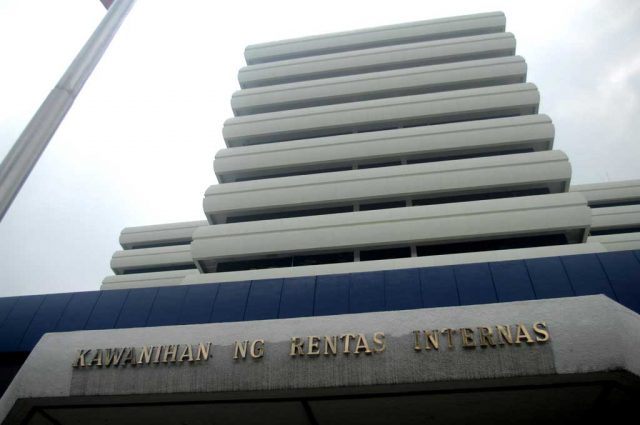
THE BUREAU of Internal Revenue (BIR) said it is waiting for President Rodrigo R. Duterte to sign a bill that will extend the validity of the estate tax amnesty program for another two years, with the original program set to end Monday.
BIR Deputy Commissioner Arnel SD. Guballa said in a message to reporters that the bill granting the extension is currently before Mr. Duterte for signature.
The House of Representatives adopted late last month Senate Bill 2208, which aims to extend the estate tax amnesty by another two years, to fast-track the process and ensure the measure’s prompt dispatch to Malacañang.
The bill will amend Republic Act 11213 or the Tax Amnesty Act of 2019, moving the deadline for amnesty applications to June 14, 2023.
The program allows taxpayers to settle their unpaid estate taxes on estates inherited as of the end of 2017.
Finance Secretary Carlos G. Dominguez III did not respond when asked to clarify the scenarios for a delayed signing.
Malacañang also did not respond to queries about the bill’s status.
Mr. Guballa said the agency is still compiling data on the results of the program and was not able to provide an updated estimate of the revenue generated from the amnesty.
The bureau had reported a take of P1.58 billion as of December.
Aside from the estate tax amnesty, the government also has an ongoing amnesty program for delinquent accounts, giving taxpayers an opportunity to settle their outstanding obligations and close their delinquency assessment cases in the years up to 2017.
The BIR had collected P3.544 billion in revenue from delinquent accounts as of December.
The two tax amnesty programs are among the revenue-generating measures authorized by the comprehensive tax reform program.
The Department of Finance (DoF) had forecast the potential for the amnesty on delinquent accounts to yield up to P21 billion in collections, with another P6 billion generated by the estate tax amnesty.
The DoF has said there were 18 tax amnesty programs implemented between 1972 and 2008, with the last round yielding P4.913 billion in collections. — Beatrice M. Laforga
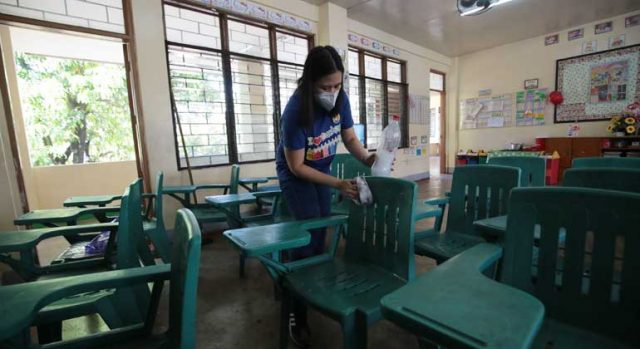
The House Committee on Ways and Means said it will seek to approve a bill clearing up the ambiguity surrounding the eligibility of private schools to a 1% tax rate before the school year begins.
“We wish to settle the matter before the school year begins in June to August,” Jose Ma. Clemente S. Salceda, the committee’s chairman, said about his House Bill 9596.
The bill amends Section 27(B) of the National Internal Revenue Code of 1997, which would preclude the Bureau of Internal Revenue (BIR) from interpreting the CREATE law in a way that rules out private schools’ entitlement to the reduced tax rate.
Educational associations, headed by the Coordinating Council of Private Educational Associations, expressed their support for the bill.
The association welcomed “the relief that we need under the CREATE Act, so that we may be empowered to perform our role… in delivering quality education,” its Managing Director Joseph Noel M. Estrada said during the hearing.
Finance Associate Secretary Dakila E. Napao and Bureau of Internal Revenue (BIR) Deputy Commissioner Marissa O. Cabreros expressed support for the bill, but requested the addition of a clause denying schools the right to a refund, which the committee approved.
Mr. Salceda said forcing private schools to pay the regular corporate tax rate of 25%, as the BIR contends, will “force… private education to shed another 21,661 jobs due to the tax rate adjustment alone.”
The BIR interprets the CREATE tax relief to apply only to non-profits, rendering many private schools ineligible.
Tax relief until 2023 “would allow these schools to save an equivalent of 3.43% of compensation expenses, which could help them rehire at least 12,996 teachers at the start of the next school year,” he added.
Speaker Lord Allan Jay Q. Velasco supports the bill, it emerged during the proceedings.
Senate Bill 2272, that chamber’s counterpart bill, was filed by Senator Juan Edgardo M. Angara on June 3.
On April 9, the BIR issued Revenue Regulation 5-2021 outlining its interpretation of the CREATE law, which would leave most private schools to pay 25%. — Bianca Angelica D. Añago
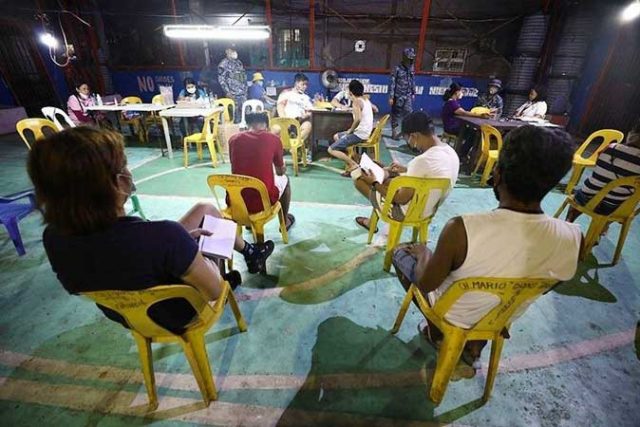
THE PHILIPPINES is among the emerging markets that have spent little on social safety nets relative to the size of its gross domestic product (GDP), Moody’s Investors Service said in a report.
Philippine spending on social safety nets accounts for 0.7% of its GDP, similar to that of Niger and Sri Lanka, Moody’s said.
Average spending of the 28 emerging markets analyzed was 1.54% of GDP.
“Among our sample, countries with broad and well-targeted programs have been able to deploy more support during the pandemic, thus mitigating the impact on consumption and growth, and reducing credit risks associated with social discontent,” Moody’s said in a note Monday.
Moody’s said Ukraine spent 4.4% on social safety nets, the highest in the group studies, while Togo spent 0.2% to bring up the rear.
Moody’s grouped countries according to their spending programs to assess their fiscal impact. The Philippines was classified in the fourth group, which has “well targeted safety net programs but relatively low spending, which limits the effects on reducing poverty and income inequality.” Other Asian countries within the category are Bangladesh, Malaysia, and Thailand.
“For governments with fiscal space and relatively moderate debt burdens, expanding the reach of social programs to reduce poverty and income inequality can support their credit profiles by decreasing social risks,” Moody’s said.
In July, Moody’s maintained its credit rating for the Philippines at “Baa2” with a stable outlook, citing the country’s strong fiscal position in recent years, which it said will help shield it from the impact of the coronavirus crisis. It noted, however, that policy reforms could take a back seat due to the pandemic. — Luz Wendy T. Noble
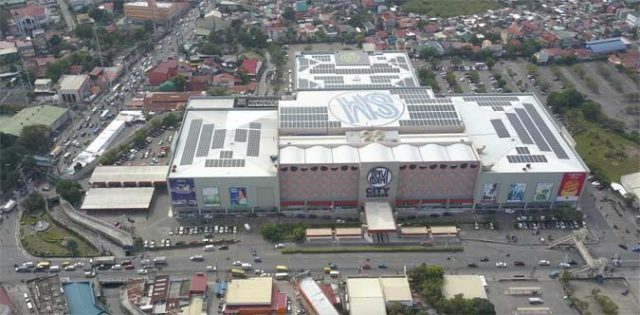
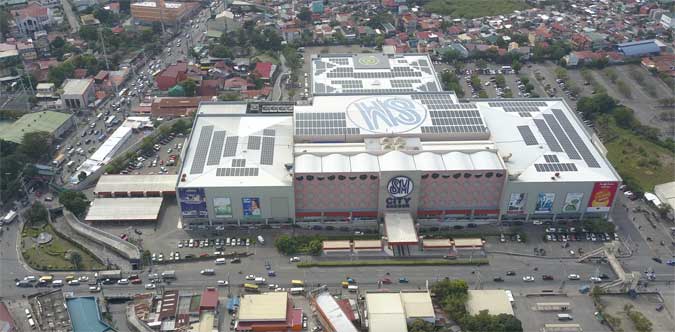
SENATOR Sherwin T. Gatchalian, who chairs the chamber’s energy committee, has filed a bill seeking to remove the 100-kilowatt (kW) ceiling on generation facilities which can participate in the net metering program, in a bid to encourage more investment in renewable energy (RE).
Net metering is authorized by the RE Act of 2008, allowing participants with their own RE facilities to feed power back onto the grid and have their contributions to the common pool of power be deducted from their consumption, such that their consumption is said to have been metered on a net basis.
Senate Bill No. 2219, which Mr. Gatchalian filed last month, said removing the cap will allow more end-users to participate in net metering.
In a separate statement Monday, Mr. Gatchalian also said more establishments, industrial buildings, and government offices will be able to join the program with caps removed, thereby encouraging investment in facilities like solar rooftops.
“Rooftops are as good as real estate because you can install panels there and generate revenue… But because of the limits of the law, this cannot be achieved,” Mr. Gatchalian said.
According to a reference guide on the RE law published in 2013, a 100-kW capacity limit was imposed because the law defined net metering as a “system appropriate for small generation entities which do not exceed 100 kW in capacity, each.”
Asked to comment, the Energy Regulatory Commission (ERC) said it backed the goal of opening up the program to more participants.
“We support the objective of the bill as it seeks to allow more end users to participate in the program,” ERC Commissioner-in-Charge Floresinda G. Baldo-Digal told BusinessWorld Monday.
Former National Renewable Energy Board Chairperson Monalisa C. Dimalanta said that she was “generally supportive” of the measure.
“(The removal of the cap) allows large customers to also explore RE to augment their own supply, self-providing in instances when the grid supply is not available. There is space on rooftops of economic zone locators that can immediately be made available not only if the cap is removed but also if permitting becomes easier to navigate,” she told BusinessWorld Monday.
“All in all, it promotes greater empowerment for our consumers,” she added. — Angelica Y. Yang
THE Independent Electricity Market Operator of the Philippines (IEMOP) said it is looking at establishing a market for ancillary services (AS) to attract investment and ensure transparency in the system.
IEMOP Spokesperson Andrea May T. Caguete said that the planned reserves market aims to encourage investors to build facilities which address AS requirements, adding that phase one of the project is scheduled to be implemented this year.
“If we implement a reserve market, our generating (companies) will be incentivized to put up facilities in order to cater to our AS requirement,” Ms. Caguete said during a virtual briefing Monday.
Once in place, the market will help encourage more competition, she added.
IEMOP Head of Corporate Strategy and Communications Isidro E. Cacho, Jr. said such a market “can provide some transparency.”
“Right now, all the reserves are contracted under firm or non-firm (arrangements). We don’t have any information on that,” he said, noting that the presence of the market can shed more light on the contracting of reserves.
Mr. Cacho said that the IEMOP is working on a price determination method covering the pricing and cost recovery aspects of the reserves market. He added that IEMOP is proposing a single-buyer mechanism, with the grid operator in charge of procuring the reserves instead of an energy market made up of buyers and sellers.
“If the reserves market is in place and if the system lacks reserves, the (electricity) spot market can augment the supply required under the Philippine Grid Code,” he added.
During the briefing, IEMOP also gave updates on its limited live dispatch operations (LLDO), the completion of which brought it closer to its goal of launching the enhanced wholesale electricity spot market design and operations (EWDO).
EWDO seeks to implement various rule changes to the WESM, which will reduce the time between scheduling and dispatch of power, among others.
“We proceeded with the execution of the LLDO on May 29 and it lasted for a week until June 4, 2021… (During the) LLDO, we asked generators to implement their five-minute dispatch schedules,” IEMOP Manager of Operations Planning and Modeling Edward I. Olmedo said.
He added that IEMOP has submitted its LLDO report to the Department of Energy and is currently waiting for the department to clear the EWDO for live operations this month. — Angelica Y. Yang


