Home Blog Page 7932

The enduring humanity of work

TIRACHARDZ-FREEPIK

(Part 3)

Hybrid work is sure to be part of the New Reality in the way knowledge workers will organize their workday. As Emma Jacobs wrote in “How the frontiers of hybrid work are taking shape” in the Financial Times (April 21, 2021), after more than a year of remote work, hybrid (a mix of office and home-based working) is here to stay. Thanks to enabling digital technology, white-collar workers have worked as productively (and some say even more productively) at home as in the office. Although I may not be a representative knowledge worker, I personally have gotten more of my eight or more hours of working time daily in giving lectures, writing newspaper columns, attending board meetings, and presenting economic briefings to corporate executives and industry associations because of the many hours of travel time I have been able to save during those lockdowns our government excelled in implementing. All over the world, the hope is that hybrid work will allow employees to do focused work at home, reduce commutes, and enable them to better balance professional and personal lives. Offices will continue to serve very important purposes: innovation, collaboration, networking, coaching, and socializing.

Emma Jacobs conducted a survey among leading business organizations around the world and discovered several approaches to hybrid work. Hongkong and Shanghai Banking Corporation (HSBC) announced that it is scrapping executive offices to make space for hot-desking (a trend in which workers take whatever desk is available, instead of having one assigned space) and communal spaces. Its CEO told the Financial Times: “I won’t be in the office five days a week… It’s the new reality of life.” Feedback from online retailers revealed that employees want to retain elements of remote working when the pandemic is put under reasonable control. Recent research by Microsoft among 30,000 employees across the world found that “70% of workers want flexible remote work options to continue (and) 66% of business decision makers are considering redesigning physical spaces to better accommodate hybrid work.” This will obviously have repercussions on the office real estate sector. As Jamie Dimon, JP Morgan Chase CEO said: “As a result, for every 200 employees, we may need seats for only 60 on average. This will significantly reduce our need for real estate.” Major banks are estimating that their office space requirements will shrink by 20 to 40%. In fact, in my own University of Asia and the Pacific, we are planning to build a new Business Education Center in which individual professors (both full time and part time) will not be assigned specific offices nor desks but will be hot-desking in a common area.

Not everything, however, will be smooth sailing for hybrid work. As Jacobs commented, the risks from hybrid working include teams and processes disintegrating as workers set their own timetables, or the creation of in-office cliques where people who work at home are left out of decision-making and informal conversations. There are going to be issues about how conducive is the home environment to productive work, especially for women who have to multi-task as company employees or executives and as mothers who are oftentimes called upon to help their young children cope with their own blended learning requirements in school. Even in the National Capital Region (what more in less developed urban areas), internet connections are often unreliable. Although the existing providers have done much to improve their facilities during the pandemic, the Philippines still lags very much behind our peers in the East Asian region, especially if we compare ourselves to countries like South Korea and Singapore. If these difficulties can be overcome, the great advantage of online meetings is that as everyone joins meetings from their own laptop, “it is much better experience for everyone in the meeting since they can see everyone’s face clearly, ensures everyone is on a level playing field… and prevents the side conversations and cross talk that make remote employees feel excluded when half the team is joining from an office video conferencing room” (quote form Adam D’Angelo, Quora’s CEO). From my own experience giving economic briefings to large audiences, the feedback I get from the chat box helps me focus my coverage on the actual information needs of the various audiences I am addressing in comparison to the face-to-face briefings I used to give during which the feedback comes only during the Open Forum.

Whatever new ways of organizing the workplace will result from the pandemic, the bottom-line is that workers must always feel that they are not just being treated as “factors of production,” that their inherent humanity is always taken into account by their employers and their colleagues at work. In the 2021 FutureWorks Conversation Series organized by Baker McKenzie, Dr. Margaret Heffernan, best-selling author and Professor of Practice at the University of Bath, commented that the greatest lesson learned from the pandemic is that “trust, in business, is an absolute driver of productivity, legitimacy and reputation — what we’ve found in the pandemic is that the more we give, the more we get back.” Whatever technical and technological difficulties have to be overcome to build a new workforce reality after the pandemic, the social nature of the workers is still at centerstage. Dr. Hefferman reminded the participants in the Conversation Series that “what many leaders around the world have found is that when they were forced to give trust to their workforce, they earned trust in return.” As businesses re-examine ways of working in the wake of the pandemic, they can reap the rewards from the increase in trust and collaboration that has resulted from it.

Dr. Hefferman highlighted the need to integrate different perspectives and approaches and to solve problems, and keep solving problems, of a kind that we’ve often not seen before. How can organizations create a culture of collaboration to deal with today’s complexities? By emphasizing the need for relationships of trust within business. The crucial thing about collaboration is how far it depends on the social capital of the people working together. The heart and soul of collaboration is a trusted relationship. It is building the social relationships of trust, generosity, and reciprocity on which truly effective collaboration depends. This jibes very well with what Msgr. Fernando Ocariz wrote, as we reported at the beginning of this series of articles: The work of the future will necessarily involve “recreating the world of human relationships.” Work offers us the opportunity to strengthen a key dimension of the human person: the capacity to welcome and be open to others, another way of defining collaboration.

In the same FutureWorks Conversation Series of Baker McKenzie, another uniquely human characteristic of workers is given importance: resilience and flexibility. Not all the digital technology of the so-called Industrial Revolution 4.0 can substitute for this human quality. A resilient workforce is able to respond to business disruption with agility, focus, and commitment to purpose and wellbeing and a renewed motivation even when navigating changing priorities. Management must foster a company culture that highlights the strength and perseverance of workers to encourage continued tenacity and to show appreciation for workers’ determination. Leveraging the diversity of the workforce in both perspective and thought will cultivate creative problem solving. Workers themselves are increasingly sophisticated and constantly looking for new contingent and flexible work models that allow time for non-work-related personal fulfilment. They must, however, be helped by management to constantly upskill and reskill themselves.

In our predominantly Christian society, it is important that we always relate this challenge of redesigning the workplace to meet the so-called age of accelerations to what we may call the Theology of Work. Here I quote St. Josemaria Escriva, who, together with St. John Paul II, can be considered a leading theologian of work during the 20th Century. In a homily on St. Joseph the Worker (let us remember that we are still celebrating the Year of St. Joseph till Dec. 8, 2021), St. Josemaria said: “Work is part and parcel of man’s life on earth. It involves effort, weariness, exhaustion: signs of the suffering and struggle which accompany human existence and which point to the reality of sin and the need for redemption. But in itself work is not a penalty or a curse or a punishment: those who speak of it that way have not understood sacred Scripture properly… It is time for us Christians to shout from the rooftops that work is a gift from God and that it makes no sense to classify men differently, according to their occupation, as if some jobs were nobler than others. Work, all work, bears witness to the dignity of man, to his dominion over creation. It is an opportunity to develop one’s personality. It is a bond of union with others, the way to support one’s family, a means to aiding in the improvement of the society in which we live and in the progress of all humanity.”

If we keep these theological truths always in mind, we will know how to adapt to the requirements of the workplace in whatever age of accelerations we may be. 


Bernardo M. Villegas has a Ph.D. in Economics from Harvard, is Professor Emeritus at the University of Asia and the Pacific, and a Visiting Professor at the IESE Business School in Barcelona, Spain. He was a  member of the 1986 Constitutional Commission.

bernardo.villegas@uap.asia

Sovereignty and economic advancement are not binary options

FREEPIK

Amending the Public Service Act (PSA) is an appropriate and timely move by our legislators. The manifest intention is very clear — open up the public service/utility industry to more competition, especially during this time of pandemic. Through this, we would be able to encourage the entry of more foreign direct investments (FDIs), which, if managed correctly, will improve the delivery of public services and lead to the creation of more jobs.

To date, there are two existing bills, namely, House Bill No. 78 (HB 78, which the Lower House has passed) and Senate Bill No. 2094 (SB 2094, which is still under interpellation in the Upper House), that aim to amend an 85-year-old piece of legislation — the Commonwealth Act No. 146, otherwise known as the Public Service Act. However, these bills, while talking about the same intention, are using “different” languages.

The Senate version recognizes that the telecommunication and common carrier industries are part and parcel of our critical infrastructure. By and of itself, it is essential and should be safeguarded against monopolistic interest by a foreign entity. Another significant difference refers to the absence of regulatory safeguards vis-à-vis FDIs. For instance, SB 2094 highlights the role of the National Security Council in reviewing foreign investments in terms of controlling any critical infrastructure in the country.

More so, the absence of a reciprocity clause in HB 78 that defines or delineates the obligations, benefits, and penalties of involved parties is another gap. Furthermore, SB 2094 provides for the compliance with international organization standards such as International Organization for Standardization or ISO. In this regard, SB 2094 provides for the aspects of Information Security and Performance Audit.

In essence, the Senate version is perceived to project a higher degree of independence and directly represents the national concerns about security and the economy.

The whole idea about the safeguard provisions behind the Senate version is captured by a calibrated or more nuanced approach toward amending the PSA. This version represents a definitive middle ground between reckless optimism and a cynical perspective in the act of opening up public services to more competition.

In this context, the 85-year-old PSA has been superseded by the rate of economic changes and developments in the country. From the post-war period through the age of nationalism and to the era of globalization, a lot of “things” have moved and changed. Much more so, economic developments and trends in the global landscape have been more extensive and intensive. By this account, the law has been rendered obsolete.

In her words, Senator Grace Poe, Chairperson of the Senate committee on Public Services, expressed that “Our economic landscape has significantly changed since the PSA was enacted 85 years ago, to the point that it is already incompatible with our progress. If we fail to adapt today, we will be left further behind.”

On this note, the relationship between sovereignty and national economic advancement has also evolved into a mutually reinforcing dynamic. It should not be presented or perceived as a binary option where a hard choice should be made. Sovereignty should not serve as a hindrance to progress but instead be a driver toward advancement. In the same way, national advancement should strengthen our sovereignty as the country effectively adapts to the global environment.

As explained by Senator Poe in a related blog post, “As we are trying to do this simultaneously — strengthen our national security and also our economy — it is incumbent upon Congress and the concerned administrative agencies to make sure that those investing in our country are above board and are not controlled by a foreign state.”

To erase or neutralize the “fears” of foreign control over our public services, SB 2094 further provides for concrete security measures to arrest any monopolistic interests threatening healthy competition. These are very particular to critical infrastructure that refers to the industries of telecommunications and common carriers.

To curb any animosity to the PSA amendment, Congress should come up with a unified version of HB 78 and SB 2094 manifesting a balanced position to consider sovereignty and economic advancement equally. As admirable as the Senate version is, the security measures or regulatory safeguards should be present in the unified version.

It is also befitting for the Members of the House of Representatives to rethink our national economic and political interests during joint Congressional sessions or debates about the PSA amendment.

Looking beyond the politics within and between the House of Representatives and the Senate, and the power separation dynamics between the legislative and judicial branches of government could offer us an alternative perspective and narrative — that the PSA amendment should be perceived as treating sovereignty and economic advancement as two mutually reinforcing components of national development, rather than being understood as two mutually exclusive factors.


Victor Andres C. Manhit is President of the Stratbase ADR Institute.

The value of a signature

MACROVECTOR-FREEPIK

On Nov. 10, 2020, the Supreme Court en banc promulgated its decision in Gomez v. People, effectively reshaping the tides of judicial policy. In Gomez, the Supreme Court discussed whether the absence of the City Prosecutor’s signature and approval in an Information constitutes a jurisdictional defect that may be raised as a ground for its quashal at any stage of the proceedings.

In the said case, an Information was filed against the accused, Gina Villa Gomez, for violation of Article 212 (Corruption of Public Officials) of the Revised Penal Code. The Information only contained the signature of the Assistant City Prosecutor (ACP) Rainald Paggao who certified that the same is “being filed with the prior authority of the City Prosecutor.” The Office of the City Prosecutor (OCP) Resolution, on the other hand, from which the Information stemmed, states, among others, that “the attached Information is recommended to be approved for filing in court” and was signed as approved by City Prosecutor Feliciano Aspi.

After more than two years, and after Gomez was arraigned, the trial court dismissed the case on the basis of the supposed absence of City Prosecutor Aspi’s approval and signature in the Information. The trial court explained that the defect in the Information amounted to ACP Paggao’s lack of authority to file the Information, a jurisdictional defect that cannot be cured.

The Supreme Court took the opportunity to explain an important concept in criminal procedure as it upheld the validity of the Information and ACP Paggao’s authority to prosecute the case. The Supreme Court recognized that the lack of authority to file an Information must be raised before arraignment, otherwise any objection on such ground is deemed waived.

The Supreme Court then overturned existing jurisprudence. In previous cases, the handling prosecutor’s lack of authority was considered a jurisdictional infirmity since it supposedly resulted to lack of jurisdiction over the offense charged and over the person of the accused. In Gomez, however, the Supreme Court explained its misgivings on how a handling prosecutor’s lack of authority will divest the trial court of its jurisdiction over the offense charged and over the person of the accused.

The Supreme Court likewise expounded on the lack of correlation between jurisdiction and a handling prosecutor’s authority to file an Information, explaining that an officer’s authority to file an Information is irrelevant in determining subject matter jurisdiction in criminal cases. Jurisdiction is conferred by law and is determined from a scrutiny of the ultimate facts alleged in the Information which would not be affected by an officer’s lack of authority to file an Information. On the other hand, jurisdiction over the person of an accused is acquired only upon his or her arrest or voluntary submission to the court’s jurisdiction.

The Supreme Court also explained that Section 4, Rule 112 which provides, among others, that “no complaint or information may be filed or dismissed by an investigating prosecutor without the prior written authority or approval of the provincial or city prosecutor or chief state prosecutor or the Ombudsman or his deputy,” must be interpreted in light of Section 1 of Republic Act (“RA”) No. 5180, otherwise known as “An Act Prescribing a Uniform System of Preliminary Investigation by Provincial and City Fiscals and their Assistants, and by State Attorneys or their Assistants,” from which it was lifted. Since RA No. 5180 merely imposed a duty to secure the prior authority or approval from the provincial, city, or chief state prosecutor before filing an Information, any defect in relation thereto would only affect the standing of the handling officer to appear for the State. The need of a prior written authority contemplated by Section 3(d) Rule 117 was perceived by the Supreme Court only as a procedural tool meant to regulate the rules on pleading, practice, and procedure, and not as determinative of conferring jurisdiction over a court.

The Supreme Court likewise mentioned in Gomez that following RA No. 5180, “whatever authority that a handling prosecutor may have pertaining to the filing of an Information, proceeds from the review and subsequent approval by the provincial, city, or chief state prosecutor of the underlying Resolution itself.” Thus, ACP Paggao’s authority proceeds from the Resolution recommending the filing of the case against Gomez (to which the Information was attached), which was signed and approved by City Prosecutor Aspi.

The Supreme Court also pointed out that the requirement for a handling prosecutor to secure the prior written authority or approval from the Provincial, City, or Chief State Prosecutor has no constitutional underpinnings. It is merely a statutory requirement. This further justifies why the same can be waived. Given the foregoing disquisitions, there is no basis to consider the requirement for a handling prosecutor to secure prior written authority or approval as a jurisdictional requirement that would affect the validity of an Information. The same would only create questions as to representation, but never as to jurisdiction.

Following Gomez, therefore, Informations need not have on its face the signature and approval of the Provincial, City, or Chief State Prosecutor. It is enough that the Resolution from which the Information stemmed contains the approval and signature of the Provincial, City, or Chief State Prosecutor. Gomez’ failure to timely raise the perceived lack of authority of ACP Paggao prior to her arraignment is deemed a waiver thereof.

This ruling acknowledges the practical difficulties of funneling all Informations to the Head of the Prosecutor’s office in the concerned area, and highlights the primacy of substance over form. Indeed, an Information, which is a recital of the charges against the accused, is but the starting point of a criminal case where the parties will be given every opportunity to thresh out the strengths and weaknesses of the evidence. It is, of course, hoped that in every litigation, decisions are rendered on the substance — i.e., whether a crime was committed and if the accused indeed stands responsible for it — rather on whether the Information was signed by the proper party. The decision is laudable as it returns our focus to what truly matters in a litigation.

This article is for informational and educational purposes only. It is not offered and does not constitute legal advice or legal opinion.


Jessica Sharla G. Bustamante is an Associate of the Litigation and Dispute Resolution Department (LDRD) of the Angara Abello Concepcion Regala & Cruz Law Offices or ACCRALAW.

(632) 8830-8000

jgbustamante@accralaw.com

The European Union and ASEAN are natural partners and have a common agenda

MY VISIT to Jakarta and ASEAN last week underlined the European Union’s (EU) commitment to the Indo-Pacific region, and it reconfirmed a clear demand in the region for more cooperation and EU presence. All my interlocutors stressed that they want to shape a broad common agenda for cooperation: from the pandemic and recovery, to connectivity and trade, from the green agenda to the key area of security.

As the EU, we are well aware that the global center of gravity is shifting towards the Indo-Pacific region. The Indo-Pacific creates 60% of global GDP and two-thirds of global growth. It is the second largest destination for EU exports and home to four out of the EU’s top 10 trading partners. Around 40% of the EU’s foreign trade passes through the South China Sea. The EU is also the top investor in and development assistance provider for the Indo-Pacific.

The EU is the Association of Southeast Asian Nations’ (ASEAN) number one development partner, and its third trade partner and investor. EU exports to ASEAN countries grew from €54 billion in 2010 to €85 billion in 2019 and our imports grew even more, from €72 billion to €125 billion.

These numbers remind us of our strong connection and the big stakes the EU has in this dynamic part of the world.

The Indo-Pacific region is the future, but the present is just as important. Insecurity and tensions are rising, threatening the order and balance of this region. Stability, development, and economic growth rests on openness, on stable and shared rules, and shared security, and the EU’s interest is precisely this: that the regional order stays rules-based and free and open for all. We can contribute to this significantly and our regional partners, who view the EU as a trusted and reliable actor, recognize this.

Last year, we upgraded EU-ASEAN relations between the two most advanced regional integration schemes of the world to a Strategic Partnership, after we had established dialogue relations in 1977. This was long overdue and important, because in a world of power politics and general uncertainty, ASEAN and the EU should pull together. Our bonds with ASEAN are founded on a joint commitment to rules-based multilateralism. Currently, ASEAN is a bit like the “swing state” in the wider Indo-Pacific, where the US and China are throwing their weight around. ASEAN countries are united by their wish not to be cajoled by US-China strategic competition. ASEAN is the nucleus around which inclusive forms of regional cooperation are built, and regional integration is a way to safeguard our respective “strategic autonomy.”

The EU launched in April 2021 an Indo-Pacific strategy, with one key message: we want to step up our engagement and work with our partners to boost trade and investment, economic openness, and a sustainable approach to connectivity in the region. Besides being an economic powerhouse, the EU is also ready to be a political and security actor in the region and to do more work on strategic and security issues, in particular maritime security. We already have a dialogue with ASEAN on maritime security cooperation, and are currently extending our Critical Maritime Routes Program, which strengthens regional maritime surveillance capacities from the Indian Ocean to South East Asia. We are also exploring options to enhance the EU’s maritime presence in the vast Indo-Pacific space.

Furthermore, we have to step up cooperation to respond to the ongoing “democratic recession” worldwide and the growing attacks on pluralism and political freedoms. Myanmar is the most dramatic case in point in this regard in South-East Asia. The EU looks to ASEAN leadership in this situation and we are ready to back more regional engagement. Given the complete refusal by the military junta to engage in negotiations and their growing repression, the EU is also working on a new sanctions package to further defend human rights. Many countries and certainly the people in this region share our view: these values and principles are universal and people should determine their own political future and have their rights protected. Often, as we see in Myanmar, the erosion of such rights and freedoms comes with severe consequences for one’s personal safety and security.

Beyond the regional angle, the EU and the Philippines are close partners bound by shared values and common interests such as the support to a rules based international order and mutual beneficial trade. I hope to engage very soon with Foreign Secretary Teodoro Locsin, Jr. to explore how to deepen our bilateral, regional, and multilateral agenda even further.

The Philippines-EU Partnership and Cooperation Agreement is being implemented with the recent holding of three subcommittee meetings in trade and investment; human rights and governance; and development cooperation. These meetings illustrated our mutual interest in constructive cooperation in a variety of areas.

The pandemic has shown us that cooperation is key to achieve a green and sustainable economic recovery.

Furthermore, the Philippines will also hold a key role as ASEAN coordinator for Dialogue Relations with the EU starting next August. The three years ahead will be crucial for the full implementation of the ASEAN-EU Strategic Partnership.

The EU’s message is clear: we want to do more with the Philippines, ASEAN, in South East Asia, and in the wider region. ASEAN, and the people of the region, can count on the European Union to be a strong and reliable partner as we jointly tackle the challenges of our time.


Josep Borrell is the EU High Representative for Foreign Affairs and Security Policy/Vice-President of the European Commission.

NATO adopts tough line on China

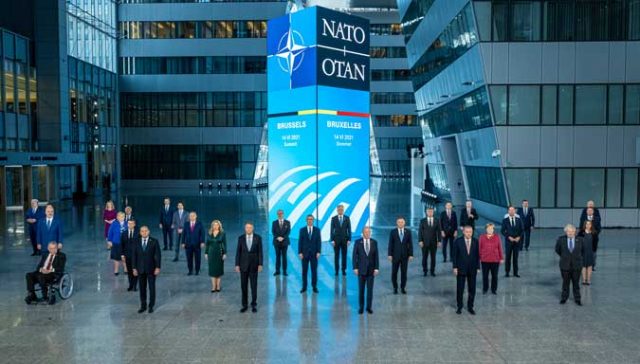
NATO leaders pose for a family photo, during a summit in Brussels, Belgium. — COURTESY OF NATO

BRUSSELS — NATO leaders warned on Monday that China presents “systemic challenges,” taking a forceful stance towards Beijing in a communique at Mr. Joseph R. Biden’s first summit with an alliance that Donald Trump openly disparaged.

The new US president has urged his fellow NATO leaders to stand up to China’s authoritarianism and growing military might, a change of focus for an alliance created to defend Europe from the Soviet Union during the Cold War.

The language in the summit’s final communique, which will set the path for alliance policy, came a day after the Group of Seven (G7) rich nations issued a statement on human rights in China and Taiwan that Beijing said slandered its reputation.

“China’s stated ambitions and assertive behavior present systemic challenges to the rules-based international order and to areas relevant to alliance security,” NATO leaders said in the communique.

Mr. Biden also told European allies that the alliance’s mutual defense pact was a “sacred obligation” for the United States — a marked shift in tone from his predecessor, Mr. Trump, who had threatened to withdraw from the alliance and accused Europeans of contributing too little to their own defense.

“I want all Europe to know that the United States is there,” said Mr. Biden. “NATO is critically important to us.”

Mr. Biden stopped at the NATO headquarters’ memorial to the Sept. 11, 2001, attacks on the United States by al Qaeda militants, when NATO triggered its article 5 for the first and only time. Under the article, the alliance treats an attack on one member state as being an attack on all.

On Tuesday, China’s mission to the European Union urged NATO to stop exaggerating the “China threat theory.”

The NATO statement “slandered” China’s peaceful development, misjudged the international situation, and indicated a “Cold War mentality,” said China’s response, posted on the mission’s website.

China is always committed to peaceful development, it said.

“We will not pose a ‘systemic challenge’ to anyone, but if anyone wants to pose a ‘systemic challenge’ to us, we will not remain indifferent.”

‘HARMFUL ACTIVITIES’
Later at a news conference, Mr. Biden, who will meet Russian President Vladimir Putin on Wednesday in Geneva, said China and Russia were trying to split the transatlantic alliance and that, while he was not seeking conflict with Russia, NATO would respond if Moscow “continued its harmful activities.”

He described Mr. Putin as tough and bright.

“Russia and China are both seeking to drive a wedge in our transatlantic solidarity,” Mr. Biden said. He also pledged to support Ukraine in its conflict with Moscow, although he was non-committal on whether Kyiv could one day join NATO.

“We are going to put Ukraine in a position that they will be able to maintain their physical security,” Mr. Biden said, without giving more details.

While there are still differences in strategies on how to deal with China across the West, Mr. Biden said NATO was united under US leadership. “America is back,” he said, seeking to reassure Europeans that a Trump-like populist would not be back in the White House in four years.

“The leadership of the (US) Republican Party is fractured and the Trump wing of the party is the bulk of the party, but it makes up a significant minority of the American people.”

German Chancellor Angela Merkel, at her last summit of the alliance before she steps down in September, described Mr. Biden’s arrival as the opening of a new chapter. She also said it was important to deal with China as a potential threat, while keeping it in perspective.

“If you look at the cyber threats and the hybrid threats, if you look at the cooperation between Russia and China, you cannot simply ignore China,” Ms. Merkel told reporters. “But one must not overrate it, either — we need to find the right balance.”

In NATO’s glass and steel headquarters on the outskirts of Brussels, Secretary-General Jens Stoltenberg said China’s growing military presence from the Baltics to Africa meant nuclear-armed NATO had to be prepared.

“China is coming closer to us. We see them in cyberspace, we see China in Africa, but we also see China investing heavily in our own critical infrastructure,” he said, a reference to ports and telecoms networks.

Mr. Stoltenberg also said the leaders had agreed to increase their contributions to the alliance’s common budget. The vast bulk of military spending in NATO is handled separately by member countries. — Reuters

Delta variant doubles risk of COVID hospitalization

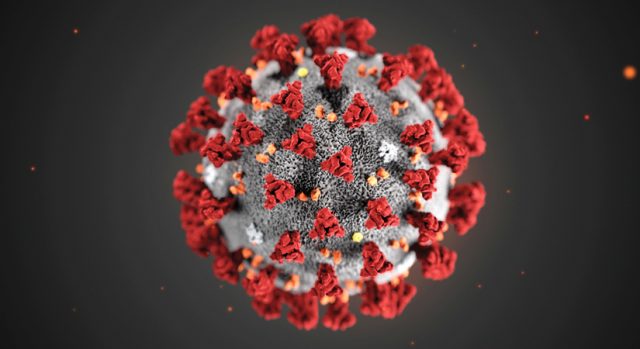
LONDON — The Delta coronavirus variant doubles the risk of hospitalization compared with the previously dominant variant in Britain, but two doses of vaccine still provide strong protection, a Scottish study found on Monday.

The study said early evidence suggested the protection from vaccines against the Delta variant, first identified in India, might be lower than the effectiveness against the Alpha variant, first identified in Kent, southeast England.

British Prime Minister Boris Johnson is expected to delay the ending of COVID-19 restrictions in England on Monday, following a rapid rise in cases of the Delta variant, which is also more transmissible than the Alpha variant.

The study, published in a research letter in the Lancet, looked at 19,543 community cases and 377 hospitalizations among 5.4 million people in Scotland, 7,723 cases and 134 hospitalizations of which were found to have the Delta variant.

Chris Robertson, Professor of Public Health Epidemiology, University of Strathclyde, said that adjusting for age and comorbidities, the Delta variant roughly doubled the risk of hospitalization, but vaccines still reduced that risk.

“If you test positive, then two doses of the vaccine or one dose for 28 days roughly reduces your risk of being admitted to hospital by 70%,” he told reporters.

Two weeks after the second dose, Pfizer BioNTech’s vaccine was found to have 79% protection against infection from the Delta variant, compared to 92% against the Alpha variant. For Oxford-AstraZeneca’s vaccine, there was 60% protection against Delta compared with 73% for Alpha.

The researchers cautioned against using the data to compare the vaccines against each other due to differences in the cohorts which received each type of shot, and differences in how quickly immunity is developed with each shot.

They said two doses of vaccine provide much better protection than one dose against the Delta variant, and a delay to easing lockdown in England would help more people get second doses and for their immune responses to build up.

“I think any sort of increase in the window of opportunity before lockdown measures are completely brought to an end will be helpful,” said Aziz Sheikh, Director of the Usher Institute at the University of Edinburgh. — Reuters

Australia touts ‘great win’ in Britain’s first post-Brexit trade deal

Britain-Flag
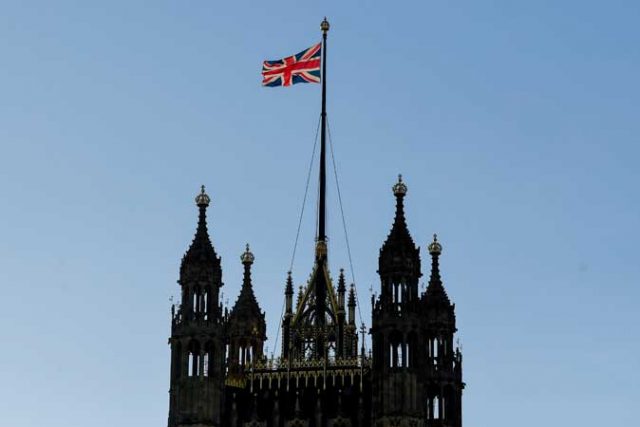
The British union flag flutters on the Victoria Tower at the Houses of Parliamen, in London, Britain Dec. 30, 2020. — REUTERS/TOBY MELVILLE

CANBERRA — Britain and Australia have agreed a trade deal after talks between their prime ministers ironed out outstanding issues, Australian Minister for Trade Dan Tehan said on Tuesday.

The agreement will be Britain’s first trade deal since Brexit, and comes as London seeks to expand commercial and diplomatic links in the Indo-Pacific region.

Australian Prime Minister Scott Morrison and his British counterpart Boris Johnson overcame sticking points during talks after the Group of Seven (G7) meeting in Britain over the weekend, which Morrison had attended as a guest.

“Both prime ministers have held a positive meeting in London overnight and have resolved outstanding issues” in relation to the trade pact, Mr. Tehan said in a statement.

Britain is Australia’s eighth-largest trading partner, with two-way trade worth A$26.9 billion ($20.7 billion). Prior to Britain joining the then European common market in 1973, Britain was Australia’s most lucrative trading market.

A formal announcement would be made later on Tuesday, Mr. Tehan said.

The deal will be keenly scrutinized by British farmers, who fear they could be forced out of business if the deal eliminates tariffs on lamb and beef imports from Australia.

Australian Minister for Trade David Littleproud declined to reveal specifics but said Australian farmers would benefit from the deal. “Overall, this is going to be a great win for Australian agriculture,” Mr. Littleproud told 4BC Radio

Though details have still to emerge, some official estimates say the agreement could add 500 million pounds ($705.7 million) to British economic output over the long term.

For Australia, however, analysts questioned the importance for an economy already focused on Asia.

“This free trade agreement is more about symbolism than immediately tangible material benefits,” said Ben Wellings, senior lecturer in politics and international relations at Monash University. — Reuters

FIBA Asia Cup Qualifier ‘bubble’ in Clark City gets under way

THE THIRD and final window of the FIBA Asia Cup Qualifiers gets under way at Clark City in Pampanga. — FIBA

By Michael Angelo S. Murillo, Senior Reporter

THE twice-delayed third and final window of the International Basketball Federation (FIBA)  Asia Cup Qualifiers finally gets under way on Wednesday in a “bubble” setup at Clark City in Angeles, Pampanga.

Happening from June 16 to 20, the competition will see seven teams playing in two groups and 11 matches in five days for spots in the continental championships later this year.

Gilas Pilipinas (3-0) leads the squads seeing action in Group A of the FIBA bubble, along with Korea (2-0), Indonesia (1-2) and Thailand (0-4). Also in the country are Chinese Taipei (2-1), Japan (1-1) and China (0-0) in Group B.

The Philippines just needs a victory in its scheduled three matches in the third window to advance to the main draw of the Asia Cup in August to be played in Indonesia.

Gilas is set to play Korea on June 16 at 6 p.m., then Indonesia on June 18 (6 p.m.). It finishes off its assignments on June 20 with a reengagement with Korea on June 20 (3 p.m.).

The final 12-man roster of the Philippine team was set for release on Tuesday but as of this writing, the squad was still deliberating on it.

The players will be drawn from an all-cadet pool of players, namely, Isaac Go, Mike Nieto, Jordan Heading, Will Navarro, Jaydee Tungcab, Dwight Ramos, Justine Baltazar, Javi Gomez De Liano, Carl Tamayo, SJ Belangel, RJ Abarrientos, Lebron Lopez, Geo Chiu, Kai Sotto and naturalized player Angelo Kouame.

Coach of the team is Gilas program director Tab Baldwin, assisted by Jong Uichico and Caloy Garcia.

Korea will be one of the busiest teams in the bubble, playing four games. It is being bannered by naturalized player Ra GunA (former Philippine Basketball Association import Ricardo Ratliffe), and Lee DaeSung and Lee JungHyun.

It will also feature highly touted prospects Lee Hyunjung and Yeo JunSeok.

While it is already qualified as the host of the Asia Cup, Indonesia is still out to get valuable wins in the competition led by naturalized player Lester Proper, also a former PBA import, and coached by ex-Gilas head coach Rajko Toroman.

Thailand has had a rough qualifier bid with no win to show for to date but is looking to go out on a high note.

In Group B, pace-setting Chinese Taipei will parade young guns such as the naturalized Senegalese point guard Mohammad al Bachir Gadiaga and 6’8” power forward Tan Jielong.

China, for its part, will feature Chinese Basketball Association (CBA) players like Zho Qi (Xinjiang Flying Tigers), Wu Qian (Zhejiang Golden Bulls), as Hu Mingxuan, Zhou Peng, Ren Junfei, and Xu Jie (CBA champions Guangdong Southern Tigers).

Japan will be without its National Basketball Association players Rui Hachimura (Washington) and Yuta Watanabe (Toronto) but the Akatsuki Five will have naturalized Japanese Gavin Edwards and Ryan Rossiter joining veterans Kosuke Takeuchi, Joji Takeuchi, Ryusei Shinoyama, Kosuke Kanamaru, Naoto Tsuji, Makoto Hiejima and Aki Chambers.

As per tournament format, the two top teams from each group will directly qualify for the FIBA Asia Cup 2021 while the third-placed teams will play against squads with the same ranking in four other groups in separate qualifying matches between Aug. 12-14 in Jakarta.

The FIBA Asia Cup third window is to be conducted under a centralized setup where movements of participants are specifically limited to guard against the spread of the coronavirus.

It is being done under the guidance of national and local governments, hosts Samahang Basketbol ng Pilipinas, Bases Conversion and Development Authority and Clark Development Corp., and FIBA.

Gilas Pilipinas matches can be seen over TV5, One Sports+, Cignal and Gigafest.Smart.

NGAP: 3 Filipino golfers to see action at Tokyo Olympic Games

THE National Golf Association of the Philippines said (from left) Filipino golfers Yuka Saso, Bianca Pagdanganan, and Juvic Pagunsan are to see action in the Tokyo Olympic Games. — KATHRYN RILEY/USGA, SEA GAMES 2019 WEBSITE, AND NGAP

THREE Filipino golfers are expected to compete in rescheduled Olympic Games in Tokyo, Japan, on the strength of their standings in the world rankings.

Newly crowned US Women’s Open champion Yuka Saso, Asian Games and Southeast Asian Games gold winner Bianca Pagdanganan, and Juvic Pagunsan are all technical qualified for the biennial Games since they are all in top 60 players in their respective divisions, shared Bones Floro, secretary-general of the National Golf Association of the Philippines (NGAP), at the online Philippine Sportswriters Association Forum on Tuesday.

Ms. Saso, 19, is currently number eight in the world, boosted by her historic win recently in the US Open in San Francisco, while Ms. Pagdanganan, 23, sits at the number 42. Forty-three-year-old Pagunsan, for his part, has made a late charge deep in the rankings, now sitting at 51st.

In the Olympics, the top 60 players for men and women earn spots.

The NGAP and the players are only waiting for the official confirmation.

Mr. Floro said at the moment they have begun working on what the players will need for their participation in the Olympics.

“It is going to be challenging since Yuka, Bianca and Juvic will be coming from different parts of the world, but we are up for it. That’s our job,” said Mr. Floro.

He went on to say that the players still have some tournaments to take part in the lead-up to the Games and that the NGAP will be coordinating with the players’ respective groups as far as preparations are concerned.

The NGAP official said that they are expecting a tough road in the country’s Olympic golf quest, but one should like the chances of the Filipino players with the way they are competing with the best in the world.

“Yuka, for one, gained a lot of confidence with her win in the US Open. The victory made her realize she can stand against the top players and have defeated them, which will be big entering the Olympics,” Mr. Floro said.

Ms. Pagdanganan has been a steady competitor in the Ladies Professional Golf Association Tour, the most recent in the LPGA Mediheal Championship in Daly City, California, from June 10 to 13.

Mr. Pagunsan, meanwhile, won the Mizuno Open in Japan on May 30.

The NGAP said for this year’s Olympics, happening from July 23 to Aug. 8, there will be no team competitions.

Golf will be played for the second straight Olympics in Japan. The Tokyo Olympics golf competitions are scheduled from July 29 to Aug. 7 at the Kasumigaseki Country Club. — Michael Angelo S. Murillo

Philippine Sports Commission taps expert for indigenous sports webinar

THE Philippine Sports Commission (PSC) tapped international expert Wolfgang Baumann, secretary-general of The Association for International Sport for All (TAFISA), as resource speaker in the 2021 Indigenous Sports and Games Webinar Series: “Preserving and Promoting the Rich Cultural Heritage of our Ancestors on June 24.

Mr. Baumann, who has contributed and developed various international and national Sports for All programs and campaigns globally, will share his expertise and overview on “Games of the Past — Sports for Today: Traditional Sports and Games as a tool to Counterbalance Globalization in Sports.”

“With an internationally distinguished speaker like Baumann on board, our participants will be able to see a different perspective on the importance of preserving the traditional sports of the Indigenous Peoples,” said PSC oversight Commissioner for Indigenous Peoples Games programs Charles Raymond Maxey.

Mr. Baumann graduated in Sports Economics, Sports Science, and English language at the Universities of Bonn and Bayreuth in Germany and the University of Stirling in Scotland, United Kingdom. His international positions include his seat in the International Olympic Committee Sport and Active Society Commission, and he is the former Vice-President of the International Council of Sports Sciences and Physical Education.

A total of 1,000 registered participants from various Indigenous Peoples (IPs) tribes and groups, government agencies, local government units (LGUs), stakeholders, and educators nationwide are expected to join the webinar via Zoom and will be streamed live on PSC Facebook pages at 1:30 p.m.

The webinar is in partnership with the National Commission on Indigenous Peoples.

Venezuelan Ramella edges Filipino Sangalang as The Apprentice winner

VENEZUELAN sales director Jessica Ramella (right) emerged as the winner on The Apprentice: ONE Championship Edition. — ONE CHAMPIONSHIP

VENEZUELAN sales director Jessica Ramella emerged as the winner on The Apprentice: ONE Championship Edition, edging out Filipino Louie Sangalang.

On the show’s season finale which last aired on Monday, Ms. Ramella, 31, was given the $250,000 job offer to become the chief of staff of Asia’s largest martial arts organization at ONE’s global headquarters in Singapore.

She bested 15 other individuals in the competition, which tested both the contestants’ business acumen and physical abilities in its 13 episodes.

The decision on who the winner would be was arrived at following the last two’s final interviews with ONE Chairman and CEO Chatri Sityodtong and Grab founder and CEO Anthony Tan.

Both executives were impressed on how the finalists conducted themselves and answered, taking note of Ms. Ramella’s fighting spirit to overcome tremendous challenges in life to be where she is now, and Mr. Sangalang’s experience as a martial artist and how he understood the very ethos of ONE Championship, which is its athletes.

In the final boardroom session, Mr. Sityodtong and advisor Niharika Singh went through what transpired during the last interview and the performance of Ms. Ramella and Mr. Sangalang throughout the competition.

Mr. Sityodtong praised Mr. Sangalang for his integrity and ability to lead with calm judgment. However, he was worried about whether or not he could earn the trust of those he would be tasked to lead.

On the other hand, he underscored Ms. Ramella’s wide range of skills, and for her grace and dignity in the face of adversity, but questioned her risk-taking ability and close-guardedness.

In the end, the ONE official chose Ms. Ramella as the winner.

In The Apprentice: ONE Championship Edition, the organization was looking to find a “warrior” to join its team who embodies what the organization is all about and can help it grow moving forward.

Sixteen contestants vied for the spot, including two Filipinos – Mr. Sangalang and Baguio-based Lara Alvarez. — Michael Angelo S. Murillo

NBA explores limiting leeway act-of-shooting

NATIONAL Basketball Association (NBA) owners may be asked to limit the motions that players can take and still be considered in the act of shooting, ESPN reported on Monday.

The proposed rule tweak is based on plays when shooters substantially varied their shots as they attempt to initiate contact with defenders and draw fouls.

In a meeting on Monday, the league’s competition committee explored how much time and how much movement a player can employ in shooting the ball, according to ESPN.

The committee includes some owners, general managers, coaches, players and referees. Teams were provided with a video that shows some of the discussed maneuvers, with players leaning to one side or far forward or backward to create contact with a defender while under the guise of trying to take a shot, ESPN reported.

A timeline would include presenting the rule change to the NBA’s Board of Governors for approval over the summer, with implementation starting with Las Vegas summer league in August and on into the start of next season. — Reuters

ADVERTISEMENT
ADVERTISEMENT