Home Blog Page 793

A Filipino brunch

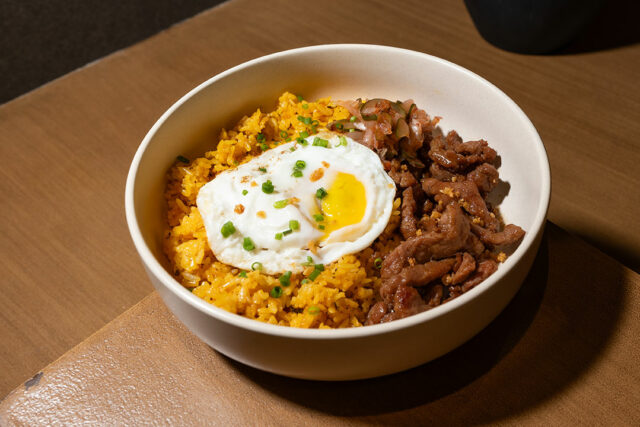
BRUNCH BUREAU’S Beef Tapa Bowl

BRUNCH BUREAU, now a chain of three, launched two things on Aug. 12: their newest location in S Maison in the SM Mall of Asia (MOA) complex, and their new Filipino dishes, designed to wake someone up at brunch.

BusinessWorld went to a tasting earlier this week, which featured the Filipino Paboritos (favorites) menu: Corned Beef Brisket Sinigang (entree platter or solo for P590 and Big Plates good for two to three, P1,150), Crispy Pork Sisig (P490/P960), Golden Squash Kare-Kare (P720/P1,400), Beef Tapa Bowl (P590/P1,350), and Haciendero Chicken (P420/P850).

While we did like the Corned Beef Brisket Sinigang (a sour soup, modified with large chunks of salted, very red beef), we’re afraid to say that someone else has done it before, and better. The Beef Tapa bowl, however, brings back the preserved beef dish into its juicier, saucier form; the Haciendero Chicken (Negros-inspired inasal — grilled chicken — but with red pepper aioli, pico de gallo, and lemon parsley rice) was a sure win — we haven’t had anything quite like this before, despite the addition of several familiar elements. We have unreserved praise for the kare-kare (peanut-based stew, but this sauce is creamier because of the hidden addition of creamed squash; we also like its use of vegetables like bok choi and French beans) as well as the Crispy Sisig: perfectly browned.

There were other dishes, of course: there was the Manila Carbonara (made with sausage crumble and a cream sauce, but which harkens back to the Italian original with a poached egg), as well as a steak and rice platter much more affordable than others in the city.

RJ Ungco, executive chef for Brunch Bureau and its parent company Brewers-Haven, Inc. (they have an affiliate called Gemini which owns Kas & Poly, a more evening-themed place), said that the Filipino menu is there for families who feast on weekends. It offers “more familiar flavors,” he said in an interview.

As for the focus on brunch, he said, “A lot of people don’t really wake up that early.” That, and Filipinos like shuffling their meals: breakfast for dinner, and the vice-versa. “Comfort food, anytime, every time, you like.”

The restaurant has three branches (if we don’t count Kas & Poly as a fourth): the new one at S Maison, one in Makati, and another in Alabang. Aside from the fact that the owners come from real estate (which should explain their ease in finding locations), their relatively fast growth from 2023 can be credited to smooth operations: “If you build a commissary, you can expand right away,” said Mr. Ungco. They still do finish everything in-store, he makes clear.

They say breakfast is the most important meal of the day, and it powers you for the rest of it. But there may be another reason why breakfast is important: someone once told us that a good breakfast meant somebody loves you, or you’ve paid someone enough to do it for you.

“That’s true. Every food that you take in and eat in Brunch Bureau, you’ll still feel that love,” he said. “Food laboriously made, elevated, seen through a creative eye… you really feel it’s made for you.”

Brunch Bureau is at S Maison, MOA Complex, and is open from 10 a.m. to 10 p.m. daily. — Joseph L. Garcia

RCBC books higher income in 2nd quarter

RIZAL COMMERCIAL Banking Corp. (RCBC) saw its net income jump 29.89% year on year to P2.92 billion in the second quarter from P2.25 billion on the back of higher net interest earnings.

This brought its net profit for the first semester to P5.35 billion, up by 20.18% from P4.45 billion in the same period last year, it said in a disclosure to the stock exchange on Wednesday.

This translated to a return on average equity and a return on average assets of 6.9% and 0.8%, respectively.

RCBC’s net interest income increased by 37.73% year on year to P14.03 billion in the second quarter from P10.19 billion in the same period last year.

This came as its interest income grew by 10.22% to P21.27 billion, driven by higher interest earnings from loans, while its interest expense decreased by 20.54% to P7.24 billion from P9.11 billion.

As a result, net interest margin rose to 4.6% at end-June from 3.9% a year ago.

Meanwhile, RCBC’s other operating income went down to P1.68 billion in the second quarter from P2.59 billion in the same period last year as its foreign exchange losses widened.

On the other hand, operating expenses rose to P8.58 billion from P7.61 billion.

This led to a cost-to-income ratio of 56.6% at end-June.

RCBC’s net loans stood at P763.93 billion as of June, up by 2.89% from P742.5 billion at end-2024. Its nonperforming loan ratio also rose to 2.7% from 2.4% in the period.

On the funding side, total deposits decreased by 3.92% to P982.67 billion at end-June from P1.02 trillion at end-2024.

This translated to a loan-to-deposit ratio of 75.6%.

RCBC’s total assets stood at P1.3 trillion as of June, while equity was at P163.02 billion.

Its capital adequacy ratio was at 16.2% and common equity Tier 1 ratio was at 13.7% at end-June, both up from 16.1% and 13.5%, respectively, at end-2024.

RCBC shares dropped by 35 centavos or 1.38% to end at P25 each on Wednesday. — A.M.C. Sy

Perplexity makes bold $34.5-billion bid for Google Chrome browser

PERPLEXITY AI made a $34.5-billion unsolicited all-cash offer for Alphabet’s Chrome browser on Tuesday, a bid far above its own valuation as the startup reaches for the browser’s billions of users pivotal to the artificial intelligence (AI) search race.

Run by Aravind Srinivas, Perplexity is no stranger to headline-grabbing offers: it made a similar one for TikTok US in January, offering to merge with the popular short-video app to resolve US concerns about TikTok’s Chinese ownership.

OpenAI, Yahoo and private-equity firm Apollo Global Management have also expressed interest in Chrome as regulatory pressure threatens Google’s grip on the industry.

Google did not immediately respond to Reuters requests for comment. The company has not offered Chrome for sale and plans to appeal a US court ruling last year that found it held an unlawful monopoly in online search. The Justice department has sought a Chrome divestiture as part of the case’s remedies.

Perplexity did not disclose on Tuesday how it plans to fund the offer. The three-year-old company has raised around $1 billion in funding so far from investors including Nvidia and Japan’s SoftBank. It was last valued at $14 billion.

Multiple funds have offered to finance the deal in full, Perplexity said, without naming the funds. Alphabet’s shares were up 1.6% in afternoon trading.

As a new generation of users turns to chatbots such as ChatGPT and Perplexity for answers, web browsers are regaining prominence as vital gateways to search traffic and prized user data, making them central to Big Tech’s AI ambitions.

Perplexity already has an AI browser, Comet, that can perform certain tasks on a user’s behalf and buying Chrome would allow it to tap the browser’s more than three billion users, giving it the heft to better compete with bigger rivals such as OpenAI. The ChatGPT parent is also working on its own AI browser.

Perplexity’s bid pledges to keep the underlying browser code called Chromium open source, invest $3 billion over two years and make no changes to Chrome’s default search engine, according to a term sheet seen by Reuters.

The company said the offer, with no equity component, would preserve user choice and ease future competition concerns.

Analysts have said Google would be unlikely to sell Chrome and would likely engage in a long legal fight to prevent that outcome, given it is crucial to the company’s AI push as it rolls out features including AI-generated search summaries, known as Overviews, to help defend its search market share.

A federal judge, Amit Mehta, is expected to issue a ruling on remedies in the Google search antitrust case sometime this month.

“Judge Mehta is a pretty orthodox guy. It’s very possible that he would hold off on requiring a sale until the appeals process is worked out and that could be a very lengthy period of time,” said Herbert Hovenkamp, professor at University of Pennsylvania Carey Law School.

“It would go to the DC Circuit, which is skeptical of forced divestitures, and it’s possible it would even go to the Supreme Court after that. So that process could run out for a couple of years.”

Perplexity’s bid is also below the at least $50-billion value that rival search engine DuckDuckGo’s CEO, Gabriel Weinberg, suggested Chrome may command if Google was forced to sell it. Reuters

The Nuclear Option

STOCK PHOTO | Image by Vwalakte from Freepik

About two years ago, I read the Philippine Nuclear Research Institute’s opinion that the country’s power mix should include nuclear energy. The emphasis was on using small modular reactor (SMR) facilities, particularly for island provinces, to complement renewable energy.

I believe the nuclear path is inevitable for the Philippines. Population and economic growth, coupled with our increasing reliance on technology, will push demand for reliable, consistent baseload electricity: the kind renewables cannot always supply.

Even the government recognizes this reality. It has commissioned feasibility studies on nuclear options, while local power companies like Meralco and Aboitiz are reportedly actively seeking foreign partners or foreign technology for SMR projects that can be done here.

Just recently, Congress also passed the proposed Philippine National Nuclear Energy Safety Act, which creates the Philippine Atomic Energy Regulatory Authority (PhilATOM). This new body will serve as an independent regulator to ensure the country meets international standards on nuclear safety, radiation protection, and emergency preparedness.

I agree with the view that SMRs are the Philippines’ most viable nuclear option. Each unit is said to produce 70-300 megawatts of electricity. SMRs’ smaller size allows deployment in areas where large plants will not fit, and capacity can be scaled up simply by adding more modules or units.

These reactors can be constructed quickly, transported as factory-built modules, and installed with shorter lead times than conventional nuclear plants. They can operate either integrated into the main grid or as standalone off-grid units. Their standardized designs and modular construction reduce both complexity and construction risk.

SMRs also feature passive cooling systems that work without pumps or external power, which can reduce accident risks. Beyond electricity generation, they can provide industrial heat or desalination. For remote or mining communities, Micro Modular Reactors (MMRs) producing 5-15 megawatts are an attractive option.

The most important advantage over renewables is that nuclear energy produces 24/7 baseload power that is carbon-free, reliable, and sustainable. It can support energy-intensive industries, reduce reliance on coal and gas, and serve as a stable backup to solar, wind, and hydroelectric generation.

Already, the global technology sector offers a glimpse into the future. In 2023, Google signed an agreement with California-based Kairos Power for nuclear supply beginning in 2030, covering six or seven SMRs to power its data centers. Google expects a massive jump in energy consumption as its artificial intelligence-driven services expand.

Amazon and Microsoft are making similar moves. Amazon purchased a data center in Pennsylvania powered by nuclear energy, while Microsoft signed a supply deal with another nuclear facility in the same state. These companies are securing energy sources well before demand peaks, knowing that energy infrastructure takes years to build.

I believe this is a preview of what’s ahead for us. As technology becomes even more integrated into daily life, information technology (IT) operations — especially data centers, cloud services, and artificial intelligence (AI) — will require dedicated, uninterrupted power. Nuclear is poised to play a central role in ensuring energy security.

Heavy industries still consume far more electricity than the IT sector. In 2022, industry accounted for about 42% of global electricity use, driven by high-temperature, energy-intensive sectors like chemicals, mining, metals, and petrochemicals.

The IT sector, which includes data centers, AI, cloud computing, and cryptocurrency, accounted for roughly 2% of global electricity use. More broadly, the entire Information and Communication Technology (ICT) sector (including telecom networks and end-user devices) consumed about 9%.

Heavy industries dominate because their processes run continuously at a massive scale. Yet, their output also supports IT indirectly through infrastructure, manufacturing, and supply chains. Power-hungry industries produce steel, aluminum, copper wires, electronics, batteries, and other components used in ICT.

What’s changing is the growth rate of ICT demand for power. Some projections suggest data centers could consume 3-4% of global electricity by 2030, with more aggressive estimates placing it as high as 20%. AI alone could account for 20-50% of data center electricity use. This surge in energy demand explains why technology giants are investing in nuclear now, not later.

While nuclear offers a dependable, low-emission energy source, it carries inherent risks. Nuclear facilities rely on water sources for cooling, making them vulnerable to climate-related threats like droughts, floods, and hurricanes. Natural disasters such as earthquakes can also trigger accidents, as history has shown with Fukushima (2011). Then there is human error such as seen in Chernobyl (1986).

In the US, the 1979 Three Mile Island accident did not cause any immediate deaths, but it crippled public confidence in nuclear energy. The facility’s Unit 2 was decommissioned as a result. Unit 1 continued operations until 2019, when it was also shut down but for economic reasons.

In 2024, Constellation Energy decided to restart Unit 1 after signing a 20-year power purchase agreement with Microsoft. This reportedly marked the first time a US nuclear reactor resumed operations after closure, and at a site with a prior accident. It underscores that economic opportunity and energy security can sometimes outweigh lingering stigma.

Our current energy mix is still heavily dependent on coal (58%), and on natural gas (19%) and renewables (23%). SMRs can help cut coal and gas’ shares while boosting renewable integration. Nuclear’s steady output can strengthen baseload capacity, making the grid more resilient against variability in solar, wind, and hydro, especially with the unpredictability of the effects of climate change.

However, SMRs come with high upfront costs. To make their output affordable, the government will likely need to offer financing guarantees or structure public-private partnerships. Just as importantly, it must demonstrate that nuclear can be operated safely, with regulators who are technically competent and politically independent.

I admit to some reservations about running nuclear plants in the Philippines. Our governance, disaster preparedness, and regulatory frameworks must be airtight before the first SMR goes online. But delaying preparation is riskier. Energy demand will rise sharply over the next 25 years, and failing to secure future baseload capacity could leave the economy vulnerable to shortages, high prices, and dependence on imported fossil fuels.

Passing the nuclear energy law this year is only the start. The government must start building regulatory capacity through PhilATOM. Also, experts should already identify pilot or priority sites in Luzon, Visayas, and Mindanao based on demand centers, grid stability, and disaster risk profiles.

This later moves to the selection of technology partners, proven SMR developers with operational track records and robust safety designs. Project proponents must then conduct transparent consultations to build community trust and address concerns early. The government must target two to three SMR pilot projects to break ground before 2028.

Obviously, policymakers must weigh nuclear’s potential benefits against its risks with clear eyes. The need to consult experts and stakeholders. The decision to embrace nuclear power cannot be made on hype alone, and limited information. The initiative requires meticulous planning, strict oversight, and sustained public engagement.

If we get the balance right, SMRs could be the cornerstone of a cleaner, more reliable, and future-ready energy mix that can power not only our industries and households but also the digital infrastructure that will define the coming decades.


Marvin Tort is a former managing editor of BusinessWorld, and a former chairman of the Philippine Press Council

matort@yahoo.com

Canopy by Hilton Makati to open in 2026 under Ayala Land deal

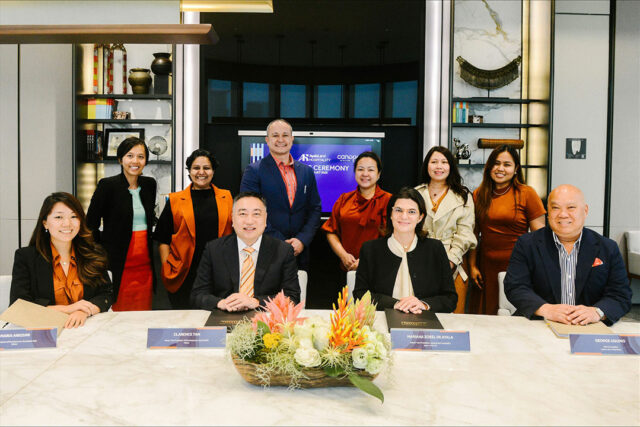
Front, left to right: Maria Ariizumi, vice-president, Development, South East Asia, Hilton; Clarence Tan, senior vice-president, Development, Asia Pacific; Mariana Zobel de Ayala, senior vice-president for leasing and hospitality at Ayala Land, Inc.; and George Aquino, president and CEO, Ayala Land Hospitality.

AYALA LAND Hospitality, Inc. (ALH), the hotel and resort arm of property developer Ayala Land, Inc., has signed an agreement with global hospitality chain Hilton Worldwide Holdings, Inc. to open the first Canopy by Hilton-branded hotel in the Philippines in 2026.

The 24-story Canopy by Hilton Makati will be located within the 2.8-hectare One Ayala development in Makati City, ALH said in a statement on Thursday.

The property will have 400 rooms and suites with designs using materials and artwork from Manila.

“It’s not just about adding rooms — it’s about creating stays that spark curiosity and celebrate Filipino creativity,” ALH President and Chief Executive Officer George I. Aquino said.

The hotel will include a destination restaurant, a rooftop bar with skyline views, and a speakeasy. It will also have meeting spaces, a pool deck, and a gym.

Canopy by Hilton, Hilton’s boutique hotel brand, has more than 40 properties across 14 countries, with over 40 more under development.

Hilton is also developing the Hilton Garden Inn Manila Quezon City, targeted for completion by 2028, and the Hilton Garden Inn Cebu Mactan, slated for 2027.

Ayala Land, Inc. shares fell by 0.18% or five centavos to P27.15 each on Wednesday. — Beatriz Marie D. Cruz

Mexico City restaurant blends zero waste and ancient agriculture

BALDIO.MX

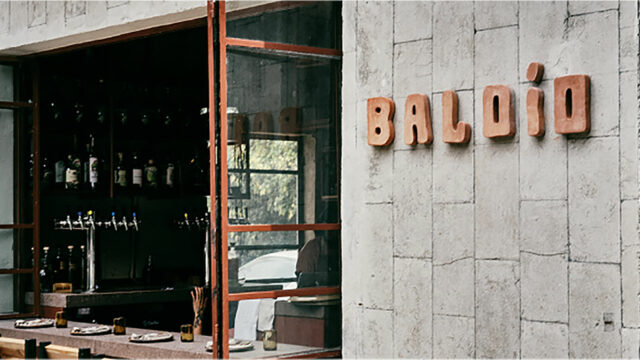
MEXICO CITY — Nestled in a quiet corner in Mexico City’s trendy Condesa neighborhood sits the vine-strewn restaurant Baldío, or barren in English. It has become a draw for its zero-waste kitchen, which means that every scrap of food and leftovers is reused for other purposes.

The restaurant, which opened in 2024 and seats 52 people, is routinely packed since it was honored in June with a Michelin Green Star for its innovative sustainability model. Baldío’s owners say it is the first zero-waste restaurant in Mexico City.

Baldío offers Mexican food with a gourmet take, such as yellow corn tamal with fermented salsa and pickles, a Mexican sweet corn salad with smoked butter sauce and cured buffalo meat, and grilled sweet onions with grasshoppers and hibiscus dressing.

Pablo Usobiaga, one of Baldío’s three co-founders, said the restaurant’s name is a rejection of the idea that “control, efficiency, and profitability” are the most important aspects of our lives. “It is a way of challenging the status quo of profitability and absolute control.”

Fish remains are crafted into a fermented fish sauce, fruit peels are turned into a traditional Mexican fermented beverage, and onion scraps are fermented until they turn into a powder-like seasoning.

All of Baldío’s ingredients are sourced within 200 kilometers of the restaurant in an effort to reduce its carbon footprint. The majority come from an assortment of floating farms that sit atop an interweaving network of canals in southern Mexico City.

The floating farms, known as chinampas, were created a thousand years ago when Aztec farmers built fields on lakes so they could grow food year-round.

Mr. Usobiaga’s brother, Lucio, started working with farmers in the area 15 years ago to help them preserve centuries-old agricultural practices, such as using special fermentation techniques and organic fertilizers.

As part of their weekly routine, Baldío’s chefs travel to Xochimilco to meet with local farmers and explore the crops. Flowers are used in negronis, warm infusions, and honey-based fermented drinks. The restaurant’s menu changes every week, guided by the season and harvest.

Lucio said the restaurant requires a creative spirit to constantly adapt to the changing harvest. “What drives us in the end is this excitement about doing things this way,” he said. — Reuters

Peso back at P56 level as soft CPI data support Fed cut bets

BW FILE PHOTO

THE PESO rebounded to the P56-per-dollar level on Wednesday as July US consumer price index (CPI) data supported bets of a September rate cut by the US Federal Reserve.

The local unit closed at P56.72 per dollar, strengthening by 35.5 centavos from its P57.075 finish on Tuesday, Bankers Association of the Philippines data showed.

This was the peso’s strongest close in almost three weeks or since its P56.65 finish on July 25, which was also the last time it closed at the P56-per-dollar level.

The peso opened Wednesday’s session stronger at P56.88 against the dollar. Its intraday best was its closing level of P56.72, while its worst showing was at P57.01 against the greenback.

Dollars exchanged went down to $1.63 billion on Wednesday from $1.83 billion on Tuesday.

The peso appreciated as “the dollar weakened following softer-than-expected US inflation data,” a trader said in a phone interview.

For Wednesday, the trader sees the peso moving between P56.50 and P56.90 per dollar.

The dollar fell to a two-week low on Wednesday after a tame reading on US inflation bolstered expectations of a Federal Reserve rate cut next month, with US President Donald J. Trump’s attempts to extend his grip over US institutions also undermining the currency, Reuters reported.

The dollar index, measuring the currency against a basket of peers, dipped to 97.76, its lowest since July 28, extending its 0.5% fall on Tuesday.

US consumer prices increased marginally in July, data showed on Tuesday, in line with forecasts and as the pass-through from Trump’s sweeping tariffs to goods prices has so far been limited.

Investors eyeing imminent Fed cuts cheered the data and moved to price in a 98% chance the central bank would ease rates next month, according to LSEG data.

“US CPI release turned out to be a dollar-negative event,” said Francesco Pesole, strategist at ING. “The September Fed cut remains firmly priced in.”

He added that core inflation accelerating is far from ideal, but not alarming enough to overshadow the deterioration in the jobs market.

Also eroding investor confidence in the dollar were Mr. Trump’s fresh attempts to undermine Fed independence, after White House spokeswoman Karoline Leavitt said on Tuesday that the US president was considering a lawsuit against Fed Chair Jerome H. Powell in relation to his management of renovations at the central bank’s Washington headquarters.

Mr. Trump has been at loggerheads with Mr. Powell and has repeatedly lambasted the Fed chair for not easing rates sooner. — AMCS with Reuters

Samsung Philippines, Lobien team up to support firms’ digitalization

THE LOGO of Samsung Electronics is seen at its office building in Seoul, South Korea, March 23, 2018. — REUTERS

SAMSUNG Electronics Philippines Corp, (SEPCO) has partnered with real estate investment strategy firm Lobien Realty Group Inc. (LRG) to help support businesses looking to digitize their operations.

“This partnership with LRG is part of our concrete commitment to support the nation-building agenda of strengthening our various business sectors to continue the country’s momentum of growth, and we are grateful to have partners like LRG that share in the same mission and vision,” SEPCO President Min Su Chu said in a statement.

Under the partnership, SEPCO aims to leverage technology and its suite of connection solutions to help in the growth and digitalization of Philippines businesses.

“Ranging from mobile security via Samsung Knox Suite and top-of-the-line display solutions for retail to energy-efficient cooling solutions for large spaces, Samsung’s offerings are designed to address various pain points hindering businesses from successfully digitizing their operations,” SEPCO said.

LRG, known for its expertise in office and commercial space leasing, capital investments optimization, and property acquisition and sales, would help make Samsung’s B2B solutions more accessible to enterprises looking to digitize their operations, it added.

“We take pride in having this partnership with Samsung Philippines. The synergy between Lobien Realty Group and Samsung Philippines holds immense opportunities, especially in the B2B (business-to-business) push of Samsung [Electronics] Philippines Corp.,” LRG Chief Executive Officer Sheila Lobien said in a separate statement.

The partnership also aligns with the Philippine government’s aim to digitalize local businesses, as part of its nation-building agenda, SEPCO added.

“Combined with LRG’s extensive reach and strong expertise in real estate and property investments, Samsung is optimistic about moving forward with its mission of making business solutions more accessible and helping create connected experiences for the businesses’ customers and stakeholders,” SEPCO said.

SEPCO is the local subsidiary of Samsung Electronics Co., Ltd, the electronics giant specializing in smartphones, digital signages, wearables, and home appliances, among others. — Beatriz Marie D. Cruz

Globalization can survive the US trade war

STOCK PHOTO | Image by Onlyyouqj from Freepik

By Chris Bryant

AS US President Donald Trump’s sweeping trade levies take effect and raise his country’s average duties to the highest since World War II, it’s easy to imagine globalization is in reverse and that a new era of protectionism, fragmentation, and reshoring has begun. Some of the gloom may be overdone.

Although the US was the chief architect of the multilateral trading system and has become the world’s most lucrative consumer market, it can’t by itself turn back the clock on global economic interdependence. Prosperity gains from comparative advantage and low-cost container shipping are too great for the rest of the world to ignore. Even as the US embraces self-sufficiency and reveals itself to be an unreliable economic partner, others are keen to keep trading.

“Despite all the talk of deglobalization, if you just look at the numbers, what we are seeing in the last two and a half years is an acceleration of globalization on the back of a huge commercial success from Chinese companies taking market share on the global stage,” Vincent Clerc, the chief executive officer of A. P. Moller-Maersk A/S, told investors last week.

This was after the container shipping giant reported surprisingly resilient demand outside the US and forecast global container volumes could increase by as much as 4% this year. “There is a new driver in container demand that is adding a lot of upside potential,” Clerc said, predicting this stronger Chinese-led growth might last “a few years.” (The US this week extended a pause of nosebleed tariffs on Chinese goods for another 90 days.)

Although China’s exports to the US have suffered a double-digit percentage hit since Trump first threatened a swathe of new duties in early April, it’s offset this by increasing exports to the rest of the world. Such robustness partly reflects stockpiling, and some economists expect a slowdown in the second-half of the year as Washington intensifies scrutiny of the transshipment of Chinese goods to the US via third countries.

Nevertheless, it’s also indicative of “a dramatic change in China’s trade orientation, away from reliance on the US and toward a broader, more diversified global footprint,” according to a report dated Aug. 8 by German asset manager DWS Group. “The competitiveness of Chinese exports as well as intensifying economic links with regions like the Middle East and Africa is a structural trend that is likely to prevail.”

German logistics giant DHL Group is seeing similar shifts in demand, with time-definite US express shipments with a guaranteed delivery date plunging 31% in the second-quarter, while its deliveries to Asia rose 2% and those to the Middle East and Africa jumped 8%.

Global trade “finds its way to keep flowing” and even in the current environment there are “still growth opportunities and growing trade lanes,” Melanie Kreis, DHL’s chief financial officer, told analysts last week. Another DHL executive, Ken Lee, who heads the Asia-Pacific express business, recently called globalization “too big to fail.”

I don’t wish to play down the impact of the world’s largest economy undermining the rules-based trading system and raising import taxes, which will impose unnecessary costs on consumers, blunt competition, dampen growth, delay investment, and cause global trade to grow more slowly than it otherwise would.

High tariffs on southeast Asian countries may undo some of the advantages of Chinese and western companies tapping new sources of cheap labor and diversifying their manufacturing footprints, a strategy known as China+1.

Furthermore, if China’s exports are diverted from the US to emerging markets, other countries may impose duties to protect domestic industries. (A reminder that China must do more to support demand by its own consumers.)

But with China accounting for more than 30% of global goods manufacturing and dominating in key decarbonization technologies, it’s hard to see the world swiftly turning its back on this highly efficient production. Much of the Global South has continued to import Chinese vehicles, which are cheap and of high quality, even as the US and Europe (to a lesser degree) raise trade barriers and warn about China’s industrial overcapacity.

One also shouldn’t forget that the majority of global trade doesn’t involve the US. Intra-Asia and Asia-Middle East trade corridors are “some of the fastest growing on the planet,” HSBC Holdings Plc CEO Georges Elhedery said during a call with analysts last month.

“Globalization is very much alive and well. It’s just taking a very, very different complexion,” Bill Winters, the boss of Standard Chartered Plc, told investors in late July, saying clients were diversifying supply chains, manufacturing, and distribution. The London-headquartered bank makes most of its money in Asia and the Middle East and has a large trade finance business.

Currently only around one-fifth of the value of all goods and services produced around the world end up in a different country, according to a DHL study in March, meaning global trade potential isn’t close to being exhausted.

“So far, global trade growth has been highly resilient, and we’ve also not seen all that much retaliation from countries hit by US tariffs. That’s partly because those countries recognize how much they benefit from trade,” Steven Altman, senior research scholar at the NYU Stern School of Business, told me. “I don’t see the US leading a global movement away from trade, and so far it appears globalization can survive Trump 2.0.”

Indeed, US protectionism and bullying are likely to convince trading partners to secure access to alternative markets and thereby draw them closer together. After being hit with some of the highest US tariff rates, Brazil and India last week reiterated plans to strengthen mutual trade ties. After striking a long-sought trade deal with the South American Mercosur bloc in December, the European Union should now get on and ratify it.

So, yes, supply chains face upheaval while the US and China are pulling apart, but that doesn’t mean globalization is dead. Rather we may be entering a new era, characterized by US retrenchment, Chinese companies investing overseas — and other countries trading more with each other.

BLOOMBERG OPINION

Apex Mining’s profit soars 67% in second quarter

APEXMINES.COM

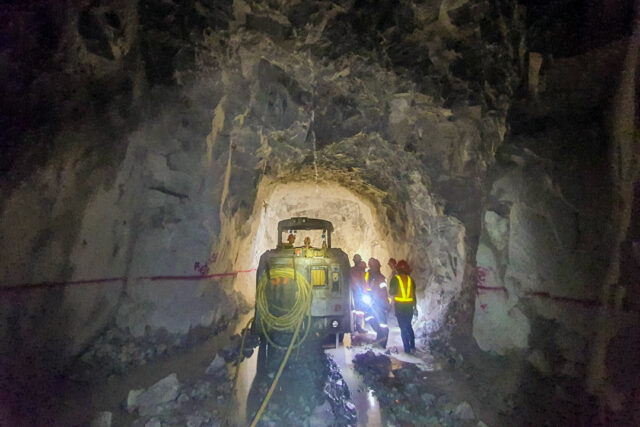
APEX MINING CO., Inc. reported a 67% increase in its attributable net income for the second quarter (Q2) to P1.71 billion, from P1.03 billion a year ago, driven by higher gold prices.

Revenue for the April-June period rose 44% to P5 billion from P3.47 billion in the same period last year, the company said in a regulatory filing on Wednesday.

Gold sales accounted for P4.82 billion, up 44.9% from P3.33 billion, while silver contributed P177.07 million, up 23.9% from P142.87 million.

Cost of production for the quarter increased 24.3% to P2.25 billion from P1.81 billion a year ago.

For the first half, attributable net income reached P3.2 billion, up 69.5% from P1.89 billion, while revenue rose 36.9% to P9.5 billion from P6.94 billion.

Cost of production for the period climbed 9.8% to P4.23 billion from P3.85 billion.

“The surge in realized gold price of $3,121 per ounce (oz) during the year versus $2,264/oz last year drove revenues up in the first half of 2025,” the company said.

Apex sold 51,436 oz of gold at a realized price of $3,132/oz, and 197,925 oz of silver at $33.18/oz, including output from its Maco Mine in Davao de Oro and the Sangilo Mine in Benguet, operated by subsidiary Itogon-Suyoc Resources, Inc.

On Tuesday, Apex Mining shares closed 22 centavos, or 3.44%, higher at P6.62 apiece. — Justine Irish D. Tabile

Cebu Pacific to increase flight frequencies on key domestic routes

BW FILE PHOTO

BUDGET CARRIER Cebu Pacific is ramping up flight frequencies on 12 domestic routes to meet expected travel demand during the holiday season.

“With the peak holiday season fast approaching, we want to ensure that our passengers have more opportunities to spend time with their loved ones and enjoy their well-deserved breaks. By adding more flights on key domestic routes, we aim to make it easier for every Juan to travel to their chosen destinations,” Cebu Pacific President and Chief Commercial Officer Alexander G. Lao said in a media release on Wednesday.

By Oct. 26, Cebu Pacific will increase weekly flights between Clark and El Nido to 18 from 14, and between Clark and Coron (Busuanga) to 17 from seven.

The airline will also boost Cebu-Calbayog services to 11 weekly flights from seven by October, the carrier said.

Additional frequency increases are planned for Manila-Butuan, Manila-Cagayan De Oro, Manila-Cebu, Manila-Dumaguete, Manila-General Santos, Manila-Iloilo, Manila-Pagadian, Manila-Puerto Princesa, and Manila-Zamboanga routes.

Currently, Cebu Pacific operates to 37 domestic and 26 international destinations across Asia, Australia, and the United Arab Emirates.

Cebu Air, Inc., the operator of Cebu Pacific, posted an attributable net income of P8.51 billion for the second quarter, nearly seven times higher than the same period last year, driven by higher passenger revenue.

Revenue for the quarter rose 25.9% to P32.91 billion from P26.14 billion a year earlier. During the period, Cebu Pacific carried seven million passengers.

For the first half of 2025, the airline reported gross revenue of P63.33 billion, up 23.11% from P51.44 billion, flying 14 million passengers, a 21% year-on-year increase.

Shares of Cebu Air closed at P37.45 on Wednesday, up 65 centavos, or 1.77%, at the Philippine Stock Exchange. — Ashley Erika O. Jose

Dining In/Out (08/14/25)


Diamond Hotel offers Japanese-style wine dinner

WINE CONNOISSEURS and enthusiasts of Japanese cuisine alike are invited to a one-night-only dinner entitled “Harmony of Flavors: A Yurakuen Wine Dinner,” hosted at the Diamond Hotel Philippines’ Japanese restaurant Yurakuen. This culinary event explores Japanese artistry through food, featuring fine ingredients paired with premium wines. The evening begins with a trio of appetizers — King Crab with egg yolk vinegar sauce, Cream Croquettes with edamame purée, and Japanese Scallop temaki with red wine sauce — paired with the sweetness of Umeshu. A second appetizer of Oyster and caviar with yuzu ponzu is complemented by Piccini Toscana Bianco. Next, a Dobin Mushi sea bream and mushroom soup is served, followed by a Hamachi Crudo with yuzu, jalapeño, and melon. From the grill, the Charcoal-grilled Chilean sea bass wrapped in sugi-ita is matched with Caliterra Reserva Chardonnay. Foie Gras tempura with blueberry sauce and almond-crusted prawn is paired with Casa Albali Garnacha Rosé. A citrusy Yuzuno Shizukku sorbet refreshes the palate before the evening’s centerpiece, A5 Kagoshima Wagyu steak with moro miso, served with a hot stone for a signature sizzle alongside Chateau La Plaige Bordeaux Supérieur. The dinner continues with Cold inaniwa udon with ikura, paired with Les Classiques Sauvignon Blanc. For the grand finale, an Anmitsu Brûlée — with sweet potato custard, adzuki paste, miso caramel, and gold-dusted chocolate — is served with Terre Forti Trebbiano. Priced at P6,980 net per person, “Harmony of Flavors: A Yurakuen Wine Dinner” will take place on Aug. 28, 7 p.m. at the Yurakuen main dining room. Guests are requested to observe smart casual attire. For reservations, call 8528-3000 or e-mail restaurant_rsvn@diamondhotel.com. Guests may also purchase vouchers at onlineshopping.diamondhotel.com. Prior reservations are encouraged.


Westin Manila opens Aire32 bar, events venue

THE WESTIN MANILA, Marriott International’s wellness-forward five-star hotel in the Ortigas business district, reaches the final stage of its completion with the opening of the al fresco bar and venue called Aire32. Situated on the top floor, this new space features a fine casual setting with views of the sunset and Ortigas cityscape, and serves a selection of drinks and specialty cocktails crafted with sustainability and guest well-being in mind. The beverage menu is built around a clear premise: a commitment to sustainability and innovation. Tapas and pica-pica complement the energy. Some of these small plates are off-the-menu specials from the hotel’s Spanish restaurant, Cantabria by Chele Gonzalez. The venue has a glass-enclosed private dining room and can accommodate exclusive bookings and private events for up to 75 persons. Book a table via 0928-550-8109 or by e-mail at cantabria.manila@westin.com. Follow @aire32 and @westinmanilahotel on Facebook and Instagram for updates and announcements.


Summit Ridge Tagaytay’s Café Summit returns

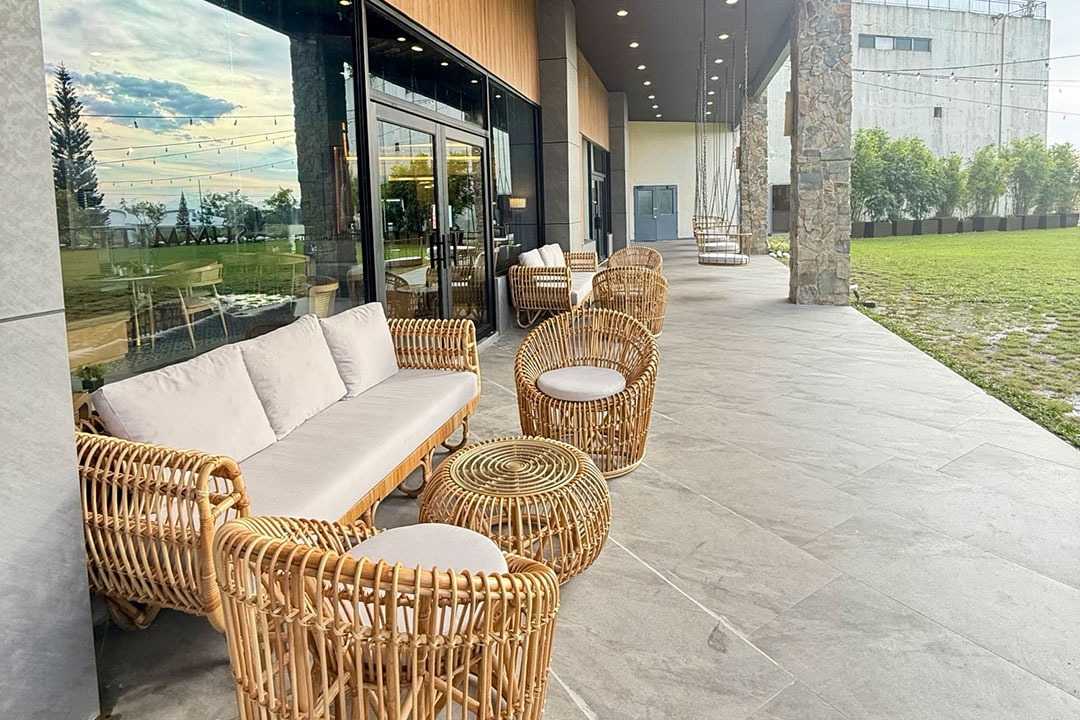
CAFÉ SUMMIT, Summit Ridge Tagaytay’s signature dining space, has reopened following an extensive redesign and culinary revamp. Café Summit is ready to offer guests a dining experience in a refreshed space that includes Filipino touches like modern furniture with solihiya accents and woven lamps. Matching the thoughtfully designed interiors is a menu that features local flavors and international favorites. Aside from Café Summit’s take on the bone marrow soup bulalo, the Tagaytay staple starts the day right with the Brunch platter (chicken adobo, tapang Taal, fried eggs, garlic rice, and pickled veggies; among others). Enjoy the Barkada platter (crispy pata, beef ribs BBQ, longganisa, fish ceviche, annatto rice, and coleslaw). Try the Sugba platter, fresh off the grill: grilled pork, chicken inasal, grilled tuna, grilled shrimp, salted egg, ensalada, and annatto rice. Those in the mood for the classics and comfort food are spoilt for choice — go for the Baked Salmon, Chicken Pesto Caesar, or Roasted Maple Pumpkin Soup. The menu also includes signature dishes from other Café Summit locations, created by different chefs at Summit Hotels across the country. The rest of the hotel, including the ballroom, has undergone renovation too: the newly upgraded swimming pool, the pool bar, and the swings in the garden.


Celebrate National Siopao Day at Chowking

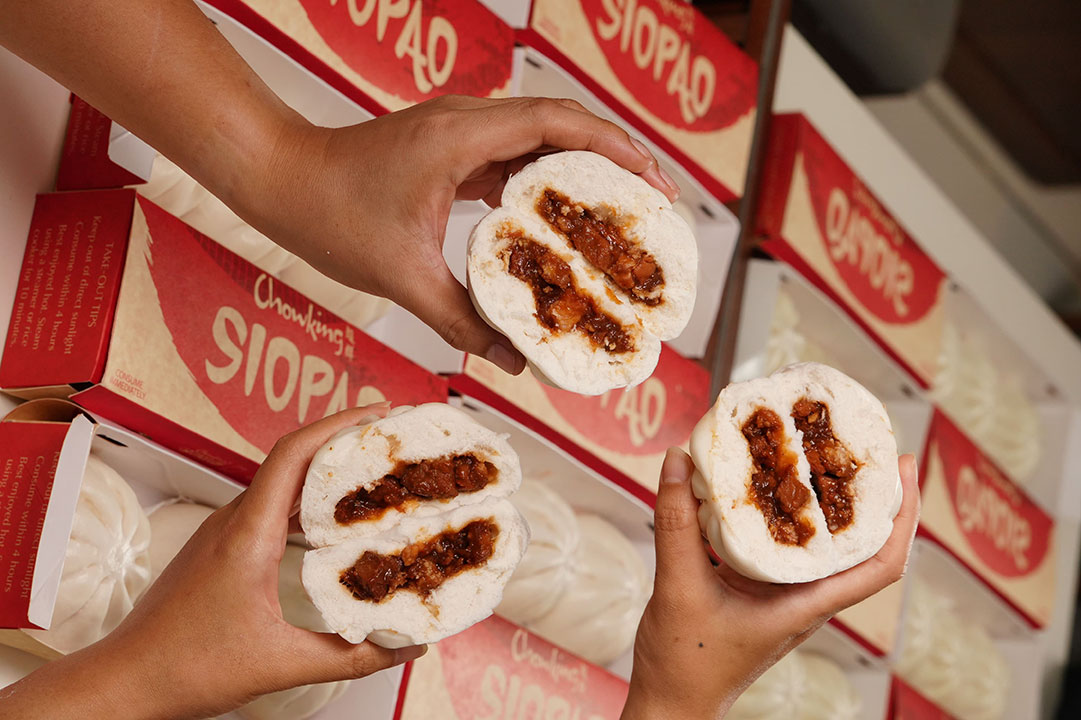
CHOWKING is bringing back a favorite promo for National Siopao Day. On Aug. 17, everyone can enjoy Chowking’s siopao with their Buy 2, Get 1 Free promo, available throughout the day. Get the Chunky Asado Siopao, made with slow-roasted, Hong Kong-style asado meat chunks freshly steamed in a bun. Try Chowking’s new Fried Siopao, a crisp and fluffy bun complementing the meaty filling (also available in Bola-bola and Asado). Enjoy the promo on solo orders or get the Paos to Go box. Available at Chowking branches and online at chowkingdelivery.com.