Home Blog Page 7903

EXPLAINER: What’s happening with Tesla’s $7 billion German ‘gigafactory’?

TRUSTPAIR.COM

GRUENHEIDE – Next Thursday, July 1, was supposed to be a day of celebration for Tesla: the opening of its self-styled “gigafactory” in the tranquil German municipality of Gruenheide, just outside Berlin.

But thanks to fierce environmental resistance, red tape and planning tweaks it is completely unclear when the first vehicles will roll off the production line of the electric carmaker’s first European factory.

Tesla has already pushed back the expected opening to late 2021. Yet the environmental agency in Brandenburg, the state where the 5.8 billion euro ($6.9 billion) plant is being built, has still not given final approval – meaning a further delay cannot be ruled out, even into 2022.


WHAT’S THE PROBLEM?

It’s complicated.

Tesla and its billionaire boss Elon Musk unveiled plans in late 2019 to build the factory.

However the site partly overlaps a drinking water protection zone and borders on a nature reserve, which has drawn heavy opposition from local residents and environmental groups.

Last year, Tesla had to suspend clearing of a forest at the site after environmentalists from local group Nabu highlighted the risk posed to a rare local snake species whose winter slumber could be disturbed by tree-cutting activity.

The snakes had to be rescued before Tesla could proceed but there have been numerous other efforts to stop work at the site on environmental grounds.

“Thousands of hectares of forest will be cleared to create the needed infrastructure and housing space,” said Manuela Hoyer, who lives about 9 km from the site and is a member of a local campaign opposed to it.

“To build such a plant in a protected drinking water area is actually a crime against the environment.”

Her comments reflects a broader trend in Germany that has also seen renewable projects, such as wind farms, coming under fire from residents that fear the impact on the local habitat.


IS THAT REALLY IT?

No.

Bureaucracy has been a headache for Tesla, too, pitting the company’s hands-on approach against Germany’s infamous red tape.

So far, Tesla is working based on preliminary construction permits, with large factory halls and structures already built on the 740 acres of land it bought for 43.4 million euros.

But only when Brandenburg’s State Environmental Agency provides the final permit can the plant be opened.

While it has previously said that it cannot say when that is every project that has obtained preliminary permits in Brandenburg eventually received the final ok.

But that’s not discouraging environmentalists from throwing spanners in the works.

Last week Gruene Liga and Nabu submitted an injunction to a German court against provisional building permits for site, in the latest attempt to ensure Tesla is adhering to environmental laws.

“I think there could be less bureaucracy, that would be better,” Musk said during his last visit to Gruenheide in May, markedly less enthusiastic than his “Deutschland rocks” verdict eight months earlier.


THE BATTERY CELL PLANT

Tesla’s construction plans had to be fully resubmitted earlier this month to reflect the addition of battery cell production to the site, costing valuable months.

The Gruenheide plant comprises several units to handle component manufacturing and final vehicle assembly, including a press shop, foundry and body production.

It also includes a water recycling facility, a local fire brigade as well as a depot to ensure more efficient transport of components and other goods. Under the plans, the site’s power needs are to be met via local renewable energy sources.

But adding battery cell production meant the company had to tweak and refile the whole application. Based on the most recent version, the plant will have the capacity to produce 500 million cells totalling 50 gigawatt hours (GWh) a year.

That’s more than the 40 GWh facility rival Volkswagen plans to set up about 300 kilometres west in Salzgitter near its home base.


DOES ANYONE SUPPORT THE FACTORY (APART FROM ELON)?

Yes.

Tesla’s move is seen as a major boost to eastern Germany, which has struggled with high unemployment rates and difficulties to attract large industrial firms.

Once fully up and running, the plant, which Tesla said will be the “most advanced high-volume electric vehicle production plant in the world”, is expected to create 12,000 jobs and have a capacity of up to 500,000 cars a year.

“We’re in favour of a shift towards emission-free mobility and the cars needed to achieve that must be built somewhere,” said Ralf Schmilewski, a member of the Greens Party in Gruenheide’s neighbouring town Erkner.

He said Tesla’s plans also address a demographical issue, which has seen younger generations to leave the structurally weak area in their desperate search for jobs.

“Now they have a perspective and don’t have to move.”


SO WHAT’S NEXT?

Until mid-July, members of the public can sift through the roughly 11,000 pages of Tesla’s application documents, including blueprints, tables and calculations, in the town hall of Gruenheide, the third time they have been put on display.

As part of the process, anyone can file objections until Aug. 16, before the Brandenburg environmental agency decides whether a public discussion should take place on Sept. 13.

When the documents were last made available publicly, in 2020, more than 400 objections were raised.

After that there is no clear timeline. At some point the agency is expected to grant final approval – but when is anyone’s guess. – Reuters
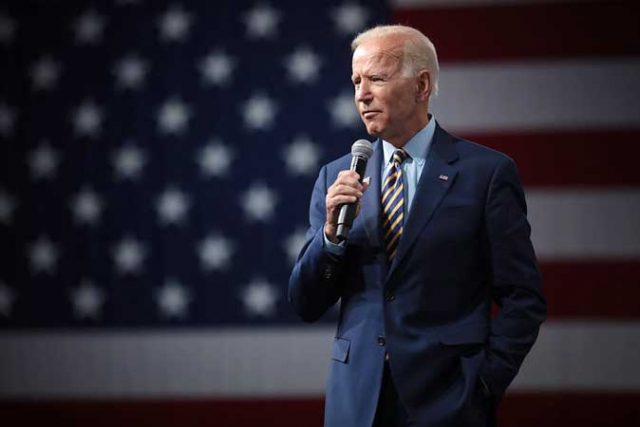

Biden says he has concerns about bipartisan infrastructure plan

US President Joseph R. Biden, Jr. — Image via Gage Skidmore/CC BY-SA 2.0/Flickr

WASHINGTON – U.S. President Joe Biden held separate talks on Monday with two key Democratic senators about a bipartisan infrastructure plan and told them he was encouraged by the proposal but still had questions about how to pay for the bill, the White House said.

A bipartisan infrastructure plan costing a little over $1 trillion, only about a fourth of what Biden initially proposed, has been gaining support in the U.S. Senate, but disputes continue over how it should be funded.

Mr. Biden met separately with Senators Joe Manchin and Kyrsten Sinema and “told them he was encouraged by what has taken shape but that he still has questions about the policy as well as the means for financing the bipartisan group’s proposal,” the White House said.

Mr. Biden also told the senators that he was “focused on budget resolution discussions in the Senate,” it said, an apparent reference to Democratic preparations to pass parts of his broader infrastructure plans opposed by Republicans using a procedure called reconciliation that requires only a simple majority.

There are 50 Republicans, 48 Democrats and two independents who caucus with Democrats in the 100-seat Senate and Vice President Kamala Harris has the tie-breaking vote for the Democrats.

Mr. Manchin and Ms. Sinema have been noncommittal when asked if they would support a reconciliation bill.

Among other measures, members of the bipartisan group have discussed indexing the gas tax to inflation to help pay for the bill, a provision that Biden has consistently rejected.

“We still have some sticking points, particularly around how we pay for this,” Brian Deese, director of the White House National Economic Council, told CNN on Monday.

Twenty-one of the 100 U.S. senators – including 11 Republicans, nine Democrats and one independent who caucuses with Democrats – are working on the framework to rebuild roads, bridges and other traditional infrastructure that sources said would cost $1.2 trillion over eight years.

One of the 21 senators, Republican Senator Lindsey Graham, said on Fox News Sunday that if Mr. Biden wanted a $1 trillion infrastructure deal, “it’s there for the taking. You just need to get involved and lead.”

White House press secretary Jen Psaki said on Monday that Mr. Biden is expected to talk to lawmakers as soon as Monday, but she added that there’s not many weeks left for negotiations before Democrats decide to move forward on a party-line vote.

Mr. Biden, seeking to fuel economic growth after the pandemic, had initially proposed about $4 trillion be spent on a broader range of infrastructure that included fighting climate change and providing care for children and the elderly.

The White House trimmed the offer to about $1.7 trillion in talks with senators in a bid to win Republican support in the closely divided U.S. Senate.

Ms. Psaki said on Monday that the White House has not ditched its plan for additional spending on items like free pre-kindergarten and paid family leave. She said the White House never saw the infrastructure negotiations as “one step.”

“There is a reconciliation process that’s ongoing, and that addresses and includes a number of the president’s priorities,” Ms Psaki said. – Reuters

U.S., S.Korea consider ending controversial North Korea coordinating group

SEOUL – The United States and South Korea have agreed to consider scrapping a working group established to coordinate North Korea policy, Seoul’s foreign ministry said on Tuesday, after it became seen as a way for Washington to block inter-Korean projects.

During talks between U.S. special representative for North Korea Sung Kim and his South Korean counterpart Noh Kyu-duk on Monday, the two agreed to “look into terminating the working group” while reinforcing coordination at other levels, the ministry said in a statement.

On Monday Kim said he was willing to meet with the North Koreans “anywhere, anytime without preconditions” and that he looks forward to a “positive response soon”. He was scheduled to meet with South Korean Unification Minister Lee In-young, who handles relations with the North, on Tuesday. The working group was set up in 2018 to help the two allies coordinate their approaches to issues such as denuclearisation talks, humanitarian aid, sanctions enforcement and inter-Korean relations amid a flurry of diplomatic engagement with North Korea at the time.

When asked last year about Seoul’s proposals such as reopening individual tourism to its northern neighbour, U.S. ambassador to South Korea at the time, Harry Harris, said that “in order to avoid a misunderstanding later that could trigger sanctions… it’s better to run this through the working group.”

Though Harris added that it was not the United States’ place to approve South Korean decisions, the remarks caused controversy in Seoul and a former aide to South Korean President Moon Jae-in later told parliament the working group was increasingly seen as an obstacle to inter-Korean relations.

The Moon administration would see ending the working group as a goodwill gesture from new U.S. President Joe Biden, said Ramon Pacheco Pardo, a Korea expert at King’s College London.

“From a South Korean perspective, this was basically a mechanism for the U.S. to block inter-Korean projects during the Trump years,” he said. “It would be a clever political move for the Biden administration to end the group, since consultation between Washington and Seoul will take place anyway.” – Reuters

More than 8,500 children used as soldiers in 2020: U.N.

NEW YORK – More than 8,500 children were used as soldiers last year in various conflicts across the world and nearly 2,700 others were killed, the United Nations said on Monday.

U.N. chief Antonio Guterres’ annual report to the Security Council on children and armed conflict covers the killing, maiming and sexual abuse of children, abduction or recruitment, denial of aid access and targeting of schools and hospitals.

The report verified that violations had been committed against 19,379 children in 21 conflicts. The most violations in 2020 were committed in Somalia, Democratic Republic of the Congo, Afghanistan, Syria and Yemen.

It verified that 8,521 children were used as soldiers last year, while another 2,674 children were killed and 5,748 injured in various conflicts.

The report also includes a blacklist intended to shame parties to conflicts in the hope of pushing them to implement measures to protect children. The list has long been controversial with diplomats saying Saudi Arabia and Israel both exerted pressure in recent years in a bid to stay off the list.

Israel has never been listed, while a Saudi-led military coalition was removed from the list in 2020 several years after it was first named and shamed for killing and injuring children in Yemen.

In an effort to dampen controversy surrounding the report, the blacklist released in 2017 by Guterres was split into two categories. One lists parties that have put in place measures to protect children and the other includes parties that have not.

There were few significant changes to the lists released on Monday. The only state parties named on the list for not putting measures in place are Myanmar’s military – for killing, maiming and sexual violence against children – and Syrian government forces – for recruitment of children, killing, maiming and sexual violence against children and attacks on schools and hospitals. – Reuters

SAP names Globe as “The Game Changer”

Globe Telecom bagged the “Most Transformational Award – The Game Changer” during the recently held SAP Best Run Awards 2021 for Southeast Asia as it continues to pursue its purpose-led digital transformation journey.

The Awards recognizes and celebrates leading organizations in the region that have harnessed innovations from across SAP’s ecosystem of products and services, turning insights into action to drive successful transformation for their businesses. SAP is a global market leader in enterprise software applications.

“Globe’s powerful story of transformation, agility and resilience will continue to inspire and influence businesses across Southeast Asia, and we can’t wait to see what other opportunities await you next year. I look forward to building on our partnership, and am confident we can innovate and excel together as a stronger Southeast Asia,” said EdlerPanlilio, Managing Director, SAP Philippines, in his letter to Ernest Cu, Globe President and CEO.

Organizations were assessed on their ability to think out of the box and how technology has been implemented to innovate and disrupt industries to drive greater business outcomes in a distributed and uncertain economic environment.

Globe migrated to SAP as its digital core to address varying systems and technical challenges that caused downtime.  It decommissioned seven legacy systems and implemented various cloud solutions and additional modules to automate manual processes to minimize infrastructure management.

SAP said Globe successfully engineered new ways of staying agile, scalable, and sustainable to achieve stable and reliable systems and uphold business continuity despite the lockdowns.

“Our migration resulted in savings of 14,200 hours and 99.99% uptime. More importantly, it allowed us to not drop the ball on our enterprise-wide financial tracking and allowed full work-from-home when the pandemic surprised the whole world,” said Globe Chief Finance Officer Rizza Maniego-Eala.

The efforts provided Globe with real-time or near real-time visibility of financial reports and important resources such as inventory, assets, and external services necessary for better decision-making. It also resulted in significant person-hour savings, reduction in full-time equivalent in operations support, and better user experience.

Other benefits include instant conversion to purchase order for catalog items, faster processing of long-running programs, and hours saved by streamlining the budget monitoring processes and manual payment classification for accurate cash flow planning.

“SAP has allowed us to enhance employee experience by enabling our employees to have better use of their time brought about by streamlined processes and work efficiencies. This has empowered our employees to be more productive and has given them more flexibility and control over their work,” added Globe Chief Human Resource Officer, Ato Jiao.

Menchit Briones, Financial Control Division Head at Globe said the S/4HANA migration paved the way for the Globe finance transformation journey. “Along with implementing quick wins and standard solutions, the business process reviews helped us identify other opportunities where we can do further automation to achieve touchless finance operations,” she said.

Due to complex business requirements, Globe faced challenges in the availability of accurate and timely data when making critical decisions.  Its operations were also hampered by inefficient and non-value-adding repetitive processing, which caused delays in the execution of important projects.

Other problems include manual processes that led to negative employee experience, business opportunity loss, and other unnecessary expenses.

Globe adapted the SDA (Simple, Digital, Agile) principle for a reduced turnaround time to address the concerns.  This is done through process streamlining and paperless transactions without sacrificing employee experiences.  Globe also enables self-service transactions for procurement, external service acquisition, invoice processing, and employee expense management.

To know more about Globe, visit www.globe.com.ph.

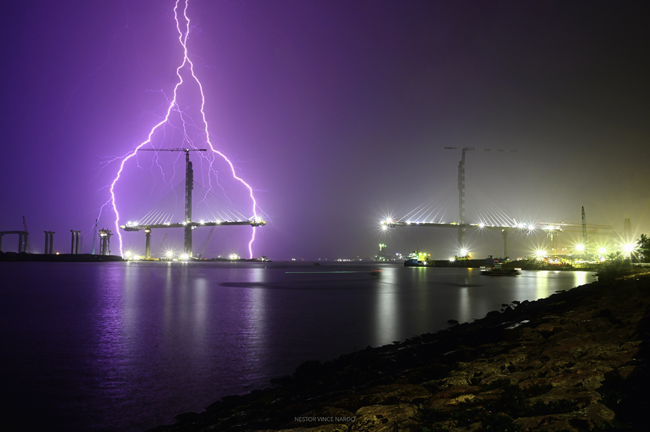
A flash of lightning, a burst of fireworks mark top CCLEX top photo tilt winners

A flash of lightning from the skies and a burst of fireworks fired from the earth marked the two top prize winners in the recently concluded CCLEX Social Media Photo Contest held recently in Cebu City.

The photographic tilt has captured various images of the Cebu-Cordova Link Expressway (CCLEX) toll bridge showing that the piece of transport infrastructure is truly an “engineering marvel,” said a top official of the builder, the Cebu-Cordova Link Expressway Corporation (CCLEC).

Top Winners.  The winning photos were among a total of 297 entries under two categories: the General Entry Category received 108 entries taken from April 15 to 30, while the Switch-On Category received 189 entries taken on April 15 and 16.

The first prize winner was chosen among 108 entries in the contest’s general entry category. The winning photographic shot gives an instant glimpse of the CCLEX lit up by a flash of lightning framing a CCLEX tower! Winning photographer Nestor Vince II A. Nardo said he just “got lucky in capturing in just a split second the lightning that flashed across the sky.”

The first prize winner in the switch on category, which had 189 entries, was  shot just when fireworks shone forth in the otherwise dark sky at just the right time when the CCLEX crosses were simultaneously lit up.  The winning shot was taken by Francis Gonzaga,

Nardo, 35, took the shot under heavy rains, positioning himself at the Plaza Independencia close, and using his Nikon Z6 24-70 mm f/4 lens. He waxed philosophical: “God has given me perfect timing: never too early or never too late. It takes a little patience, a lot of faith, but it’s always worth the wait.”

Gonzaga, 24, entered the winning photo showing two brightly lit bridge segments flanking the three bursts of fireworks in an otherwise pitch-black sky, plus the reflections of bridge and fireworks on the shimmering waters of Mactan Channel. He took the shot from the SM Seaside using his Nikon D750 with a 70200 lens.  Gonzaga later said: “The fireworks looked like they were connecting the two bridges.”

Cebu Cordova Link Expressway Corporation (CCLEC) president Allan Alfon congratulated the winners, and thanked all the 297 photographers who joined the photo competition.

 “We truly appreciate those who took photos of our toll bridge expressway project and posted them on their social media accounts. These photos inspire us as we work on the project, as they ignite the interest of those awaiting the completion of the toll bridge,” said Alfon.

CCLEX is a P30-billion toll bridge that will link mainland Cebu from the South Road Properties in Cebu City to Mactan island through the Municipality of Cordova. CCLEX is a project of the CCLEC, in partnership with the local government units of Cebu City and the Municipality of Cordova.

Set to be a new landmark in the country, the 8.5-kilometer CCLEX will have two lanes in each direction that will provide a safe, quick and scenic passage to an estimated 50,000 vehicles daily, easing the traffic in the existing Marcelo Fernan Bridge and the Mandaue-Mactan Bridge.

CCLEC is a wholly-owned subsidiary of Metro Pacific Tollways Corporation (MPTC), the toll road arm of Metro Pacific Investments Corporation (MPIC), a publicly listed infrastructure holding company and a member of the MVP Group of Companies. ]

MPTC owns or operates major expressways in the Philippines – namely the North Luzon Expressway, the Subic Clark Tarlac Expressway, Cavite Expressway, Cavite Laguna Expressway, and a number of expressways in Indonesia and Vietnam.

The finalists In the general category were  Allan Cuizon’s photo which placed second; and Mark Anthony Cosep entry which placed third.

In the switch on category, leading the finalists was Ariel Lim, followed by other winning shots that have shown very interesting angles. One photo shows a drone image of the tollway bridge, under the warm glow of sunset and beneath a beautiful cloud formation. Another drone shot was taken at night.

Philippines community raffles off bags of rice to boost vaccine drive

PHILIPPINE STAR/ MICHAEL VARCAS

MANILA – A community in the Philippines has been raffling off huge sacks of rice in exchange for getting vaccinated against COVID-19, after finding it hard to persuade people to get their shots.

Twenty weekly winners who get their shots in Sucat on the outskirts of the capital Manila have been taking home a 25 kg (55 pound) sack of rice each.

Local official Jeramel Mendoza said the initiative was targeting mainly poorer residents, who were not so keen on vaccinations.

“Initially, when we conducted our vaccination drive, there were very few people signing up. So we asked ourselves why?” he said.

“Why are those rich people or those who live in exclusive villages able to lead the vaccinations, but our poorer sectors do not to join in or participate?”

Sucat village officials said since starting the initiative at end-May, they have been administering their daily quota of vaccines of up to 2,000 doses, whereas before they were giving only about 400 doses a day.

“It’s a nice initiative and I feel safer after being vaccinated. I’m happy I got vaccinated while winning some rice,” said Almond Gregorio, a firefighter and holder of a winning raffle ticket.

Philippine President Rodrigo Duterte earlier this month appealed to the public to get vaccinated, after data showed the government was far behind on its immunisation targets as it battles one of Asia’s longest-running outbreaks.

This week, Duterte showed less patience, threatening in a televised address on Monday to jail people who refuse to be vaccinated against the coronavirus.

About 2 million of the Philippines’ population of nearly 110 million are fully inoculated against COVID-19 so far, although the country has had difficulties securing vaccine supplies.

A survey of 1,200 Filipinos in May by independent pollster Social Weather Stations showed only a third were willing to be vaccinated, while a third were hesitant over concerns about side effects or the overall efficacy of vaccines.

The Philippines has ordered 113 million vaccination doses from five manufacturers, but so far it has mostly been giving shots of China’s Sinovac vaccine.

In Sucat, housewife and another prize winner, Louilyn Tubice, said of the local initiative: “It’s delightful because you get to be vaccinated and also receive a bag of rice.” — Reuters

Duterte threatens those who refuse the COVID-19 vaccine with jail

MANILA – President Rodrigo Duterte threatened to jail people who refuse to be vaccinated against the coronavirus as the Philippines battles one of Asia’s worst outbreaks, with over 1.3 million cases and more than 23,000 deaths.

“You choose, vaccine or I will have you jailed,” Mr. Duterte said in a televised address on Monday following reports of low turnouts at several vaccination sites in the capital Manila.

Mr. Duterte’s remarks contradict those of his health officials who have said that while people are urged to receive the COVID-19 vaccine, it was voluntary.

“Don’t get me wrong, there is a crisis in this country,” he said. “I’m just exasperated by Filipinos not heeding the government.”

As of June 20, Philippine authorities had fully vaccinated 2.1 million people, making slow progress towards the government’s target to immunise up to 70 million people this year in a country of 110 million.

Mr. Duterte, who has been criticized for his tough approach to containing the virus, also stood by his decision not to let schools reopen.

In the same address, he took a swipe at the International Criminal Court, after an ICC prosecutor had sought permission from the court for a full inquiry into the drug war killings in the Philippines.

Mr. Duterte, who in March 2018 cancelled the Philippines’ membership of the ICC’s founding treaty, repeated he will not cooperate with the probe, describing the ICC as “bullshit”.

“Why would I defend or face an accusation before white people. You must be crazy,” Mr. Duterte said, who after winning the presidency in 2016 unleashed an anti-narcotics campaign that has killed thousands.

Human rights groups say authorities have summarily executed drug suspects, but Mr. Duterte maintained those who were killed violently resisted arrest.

Sought for comment, ICC court spokesperson Fadi El Abdallah said: “The Court is an independent judicial institution, and does not comment on political statements”. — Reuters

Medical Doctors, Inc. announces schedule of stockholders’ meeting

Central bank chief says Fed rate hike not a threat to PHL

REUTERS

By Beatrice M. Laforga and Luz Wendy T. Noble, Reporters

EMERGING ECONOMIES could experience capital flight once the US Federal Reserve lifts interest rates in 2023, according to Bangko Sentral ng Pilipinas (BSP) Governor Benjamin E. Diokno, who believes this is less of a threat to the Philippines compared with other economies.

“Fed rate hikes by 2023 could mean capital outflows from developed and emerging economies to the (United States). That’s problematic for countries with huge foreign debt and limited foreign exchange reserves,” he said in a Viber message.

Mr. Diokno said emerging countries are not a “homogenous group,” stressing the impact of a monetary policy tightening from the most powerful central bank may mean some developing economies could be badly affected while some will see little damage.

“The Fed rate hikes are seven quarters away. The Philippine government should continue with its game-changing ‘Build, Build, Build’ program and its structural reforms pending in Congress,” Mr. Diokno said.

Central banks slashed interest rates to record lows to keep their economies afloat during the crisis by injecting liquidity in the financial markets and encouraging banks to lend.

The Federal Reserve hinted last week that it may need to raise benchmark interest rates twice in 2023 as the US economy’s recovery picks up pace.

“We have sound fundamentals — hefty GIR (gross international reserves), low debt-to-GDP (gross domestic product) ratio, sound and resilient banking system, and we have adopted structural reforms — that a Fed rate hike in 2023 is less of a threat to the Philippine economy compared to other developing and emerging economies,” Mr. Diokno said.

The Philippines’ foreign exchange buffers stood at $106.978 billion as of end-May, dipping 0.67% from the $107.705 billion as of end-April, based on BSP data. The GIR hit record $110.117 billion as of end-December.

Ample foreign exchange buffers protect the country from market volatility and ensure the country can pay its debts in the event of an economic downturn. At its end-May level, the GIR is enough to cover 12.2 months’ worth of imports of goods and payments of services and primary income.

The country’s debt-to-GDP ratio stood at 60.4% as of end-March from 54.5% as of end-2020, based on data from the Bureau of the Treasury.

Meanwhile, ING Bank N.V. Manila Senior Economist Nicholas Antonio T. Mapa said he expects the BSP to “carefully craft its own exit strategy” to mitigate the adverse impact once it tightens monetary policy.

“As for the Philippines, it’s quite clear that Governor Diokno is attempting to do what’s best for the economy while also monitoring the situation abroad as these developments would likely have a direct impact on the Philippine financial system,” Mr. Mapa said, who is expecting the BSP to keep its policy rate at 2% until June 2022.

“This puts the pressure on the National Government to get the economic ship in order as quickly as possible as the BSP can only keep up the stimulus for so long, as a Fed rate hike will indeed need to be reciprocated by the BSP,” Mr. Mapa said.

ANZ Research analyst Rini Sen said the BSP will remain committed to keep rates unchanged until at least the first quarter of 2022, when the economy will likely be seeing more solid growth.

“We are broadly in consensus with the BSP and see the first rate hike in the Philippines not before the first quarter of 2022. By then growth would have picked up firmly and inflation also materially subsided. Beyond that, we believe the BSP would mirror the rate hike trajectory of the Fed,” Ms. Sen said in an e-mail.

The Monetary Board is scheduled to meet for a policy review on Thursday. A BusinessWorld poll last week showed 14 out of 16 analysts expect the BSP retain the key policy rate at 2%.

Mr. Diokno has said the central bank will retain a supportive policy stance “for as long as necessary, until the economic recovery gets underway,” which he earlier projected to likely happen in the second half of 2022.

NORMALIZATION OF RATES
Bringing the interest rates back to the pre-pandemic levels is normal and may happen soon to prevent investors from bloating their debt, Gil S. Beltran, chief economist at the Department of Finance (DoF), said.

“Normalization of interest rates is necessary to avoid overborrowing and overinvestment in some sectors as the economy moves to a higher growth path after the pandemic,” Mr. Beltran said on Monday via e-mail.

Since interest rates will increase soon, investors can position themselves by investing in sectors that will benefit the most under the new normal when restrictions are lifted and the coronavirus is no longer that much of a threat, DoF’s Mr. Beltran said.

“Investors should look at sectors that make money under the new normal because it’s necessary to normalize (interest rates). The pent-up demand is there, if you open up the floodgates, they will all go to the provinces, beaches and tourist areas. The economy will go back to its usual shape because the demand is still there,” he said.

VOLATILITY
For some analysts, the impending monetary policy tightening by the Fed could cause volatility in the peso’s trading. The local unit has weakened to a P48-per-dollar level after moving around the P47 level in the previous months. It closed at P48.695 on Monday, weaker by 67.5 centavos from its P48.02 per dollar finish on Dec. 29, 2020.

“This can cause exchange market pressure and lead BSP to recalibrate their policy settings ahead of median expectations,” Bank of the Philippine Islands Senior Economist Emilio S. Neri, Jr. said in a Viber message.

Aside from a rate hike, the market is also on the lookout on the timeline for the tapering the Fed’s monthly bond purchases, Mr. Neri added.

In case the BSP will retain its record low policy rate of 2% and not follow the Fed’s tightening, Mr. Neri said bonds and the foreign exchange market “could adjust substantially.”

PHL credit rating unlikely to be hurt by Mandanas ruling

PHILIPPINE STAR/EDD GUMBAN

THE PHILIPPINES’ credit rating is unlikely to be affected by the implementation of a Supreme Court (SC) ruling that expands the local government units’ (LGU) share of the National Government revenue next year, a former Budget chief said.

“The Department of Finance and Department of Budget Management have explained that the additional internal revenue allotment (IRA) grant to local government units will be accompanied by assigning additional responsibilities to LGUs, consistent with the Local Government Code,” Bangko Sentral ng Pilipinas Governor Benjamin E. Diokno said in a Viber message, but clarified that his statement is based on his experience as a former Budget secretary.

“The credit raters will look at the medium- and long-term economic prospects of the country, and its ability to service its debt, based on the country’s fiscal, monetary and structural policies, and its overall strategy moving forward,” he added.

The Supreme Court’s Mandanas ruling is named after Batangas Governor Hermilando I. Mandanas’ successful challenge of the government’s previous position that LGUs were entitled to a smaller share of National Government funds. The government responded to the ruling by devolving more functions to LGUs starting 2022 to compensate for the lost revenue, which will now go towards the LGUs’ IRA.

In June, President Rodrigo R. Duterte signed Executive Order (EO) 138 which transfers a number of basic services to LGUs by 2024. With this, the government is shifting programs and projects, worth an estimated P234.4 billion, to LGUs. 

Credit raters have cited the improvements in the country’s fiscal policies in the past years, which contributed to the improvement in the Philippine sovereign ratings.

S&P Global Ratings in May noted the country saw better quality of expenditure, manageable fiscal deficits, and low levels of general government indebtedness in the past decade. The ratings agency maintained the country’s “BBB+” long-term credit rating with a stable outlook, which means the ratings is likely to be kept for the next 18 to 24 months.

S&P sovereign analyst Andrew Wood said he does not see the implementation of the SC ruling to have a major impact on the general government balance of the Philippines. However, he warned that LGUs may take some time to spend these additional funds as they still need to boost capacity.

“However, it’s likely that local governments will run higher surpluses, against slightly higher National Government shortfalls, for a period of time following the implementation of additional revenue devolution,” Mr. Wood said in an e-mail. 

“This is because the LGUs may take some time to build the additional capacity required to more effectively allocate their new fiscal resources,” he added.

The government expects the fiscal deficit to hit 9.3% of the gross domestic product (GDP) due to pandemic response. This is expected to gradually be lowered to 7.5% and 6.3% of the GDP by 2022 and 2023.

A deficit occurs when a government spends more than the taxes it collects, forcing the state to borrow and increase debt, while a surplus happens when the government is underspending.

World Bank economist Kevin Cruz earlier this month also expressed concern that the implementation of the Mandanas ruling next year “may result to greater underspending, unless the ability of LGUs to effectively spend the additional resources improves.” This could mean “wasted opportunity” while the country is in a crisis, he said.

Meanwhile, International Labor Organization Philippines Country Director Khalid Hassan noted last week that LGUs have different data management systems, so the shift imposed by the EO 138 would require more planning and support.

In January, Fitch Ratings said continued expansion of the government’s revenue base will be a factor that could help the country secure a ratings upgrade.

On the other hand, reversal of reforms that is not in line with a prudent macroeconomic policy framework which could in turn lead to sustained higher fiscal deficits may contribute to a ratings downgrade.

For next year’s proposed P5-trillion national budget, the government is looking to allocate P1.951.3 trillion or 38.8% of the total for automatic appropriations, which includes allocations to LGUs, among others.

For Mr. Diokno, the next administration will have to deal with the implications of the Mandanas ruling.

“They [new administration] should know the new fiscal rules, the emerging national-local fiscal realities and political dynamics. But the [President Rodrigo R.] Duterte administration will reveal the Executive department’s initial response to the Mandanas ruling through its 2022 national budget proposal this coming July,” he said. — Luz Wendy T. Noble with inputs from Beatrice M. Laforga

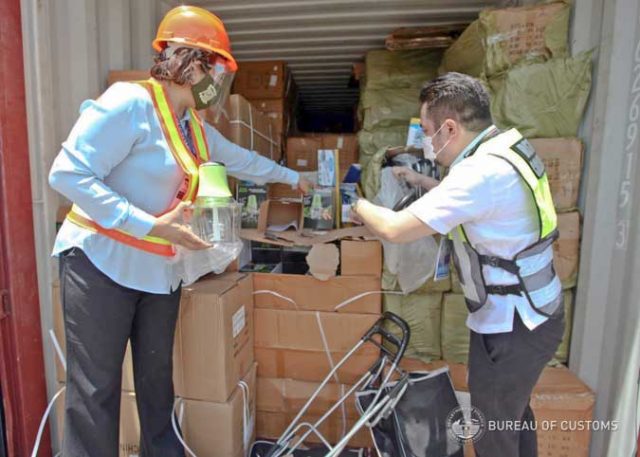
BoC sets rules for goods cleared via informal entry

COURTESY OF BUREAU OF CUSTOMS

THE BUREAU of Customs (BoC) said imported goods for personal use worth less than P50,000 will be cleared through an informal entry process to separate it from bigger commercial shipments.

Customs Administrative Order (CAO) 02-2021 sets the rules for importations that will undergo an informal entry process. This covers imported goods with “free on board” or “free carrier” value of less than P50,000, and are used for personal consumption only. Shipments with declared value exceeding the amount will have to undergo a formal entry process.

The BoC said the threshold can be raised or lowered by the commissioner and with the approval of the Finance secretary.

“[The CAO was issued] to identify and segregate the importation of personal and household effects and other qualified non-commercial goods, not intended for sale and commerce, from the mainstream of commercial importation of highly dutiable goods intended for commercial purposes,” the order read. A copy of the order was published in a newspaper on Sunday.

The informal entry process also covers conditionally taxed or duty-exempt imports such as those of returning residents and overseas Filipino workers (OFWs), and balikbayan boxes sent by OFWs. Also covered are shipments of personal effects of foreign consultants and experts, foreigners or Filipinos resettling in the Philippines, foreign diplomats and their families, and officers and employees of the Department of Foreign Affairs and other departments assigned abroad. 

Goods declaration will be lodged in the BoC’s electric-to-mobile (e2m) system for the meantime, while the bureau has yet to set up its informal entry system.

The bureau said goods declaration must be lodged within 15 days from its removal from the vessel or aircraft, but the deadline can be extended for another 15 days if the request of the importer is valid.

Grounds for extension include fraud against the owner, importer or consignee; force majeure; technical issues; or if there was an accident, mistake or negligence.

Shipments cleared through the informal entry process will be inspected through an X-ray machine or by a mandatory physical examination if there is no equipment.

Containerized cargo and all goods that will be placed for airport warehouses will also undergo mandatory X-ray inspections, except for the personal baggage of diplomats. — Beatrice M. Laforga

ADVERTISEMENT
ADVERTISEMENT