Home Blog Page 7795

First off the starting gate but fading fast
FREEPIK

In 12 days, on July 28, the 2020 Tokyo Summer Olympics get off the ground but well into 2021. The pandemic-delayed 2020 Tokyo Olympics is the first to be rescheduled to a later date since the cancellation of the 1940 and 1944 Olympics to allow the world, especially the devastated Europe, to recover from World War II.

Prior to the cancellation of the 1940 Olympics, Adolf Hitler’s totalitarian government in Germany hosted an Olympics, the Berlin Olympics, in 1936 which had a single theme. It was designed by Hitler and his propagandists led by Joseph Goebels to showcase Aryan supremacy. By dominating the Olympics, Hitler was sending a message that, “now we dominate sports, the Olympics, later we dominate the world.”

Hitler hoped to use the Olympics to demonstrate that it had recovered well from the shellacking it got from the allied powers. Of course, as history showed, he did not expect the likes of Black American Jesse Owens who topped both the sprints and the long jump in dominating fashion.

The Summer Olympics did come back in 1948 with London, damaged by the Germans’ relentless air attacks meant to weaken the British from waging a counterattack against the Nazis, serving as the host. It was clearly meant to show that Europe was back on its feet. The Brits and the rest of war-ravaged Europe benefitted from the Marshall Plan, reputed to be the most successful American aid program in history.

Japan, then an ally of Germany, benefitted too from assistance given to World War II losers, unlike so-called co-winner Philippines that sided with America in World War II, and the Korean and Vietnam wars.

The industrious and disciplined Japanese made full use of the post-war boost given by the United States. By the late 1950s, barely a dozen years after the atomic bomb attack on Nagasaki and Hiroshima and after its formal surrender in September 1945 on board the USS Missouri, the Japanese had established an industrial base that drew strength from a land-reformed agrarian sector and an affluent middle class.

Japanese industries had become internationally competitive by the mid 1960s and ’70s. Years earlier, a product tagged as “made in Japan” elicited cruel comments about its effectivity and durability. The world was, however, treated to world class Japanese products like cars, wristwatches, heavy machinery, appliances and other conveniences of modern-day living.

To top it off and to wipe away the embarrassment of a massive defeat, Tokyo won for the proud Japanese, the right to host the XXVIII Olympiad in 1964. Japan’s capital city had won the hosting right in 1940, or shortly before the outbreak of World War II in the Pacific, but the International Olympic Committee (IOC) refused to formally turn over the games to Tokyo owing to the invasion by Japan of China. The founding purposes and principles of the Olympic movement were incompatible with the acts of war of Japan.

The 1964 Olympics did proceed as planned, with more than 5,000 athletes competing in 19 sports. Among the competitors was a Filipino featherweight boxer from Far Eastern University, the 19-year-old Anthony Villanueva. Anthony’s father, Cely, who also served as his coach, captured the bronze medal as a bantamweight in the 1932 Los Angeles Olympics. Anthony did his father better by winning the silver medal after losing the gold medal fight to a Russian fighter in a close and controversial decision.

Villanueva’s medal was the first silver won by the country in, at that time, 40 years of Olympic participation since the Philippines competed in the 1924 Paris Olympics. The 2024 Paris Olympics, incidentally, marks the hundredth year since the City of Lights hosted what is regarded as planet Earth’s biggest event.

A summary of the Philippine participation in the Olympics shows that we have won 10 medals ever since we took part. Three of the 10 medals are silver medals in boxing and weightlifting: Anthony Villanueva, featherweight, 1964 Tokyo; Mansueto Velasco, light flyweight, 1996 Atlanta; and Hidilyn Diaz, women’s weightlifting, 2016, Rio De Janeiro.

The bronze medal winners were: Simeon Toribio, athletics — high jump, 1932 Los Angeles; Teofilo Yldefonso, swimming — 200-meter breaststroke, 1928 Amsterdam and 1932 Los Angeles; Jose “Cely” Villanueva, boxing — bantamweight, 1932 Los Angeles; Miguel White, athletics — 400-meter hurdles, 1936 Berlin; Roel Velasco, boxing — light flyweight, 1992 Barcelona; and, Leopoldo Serrantes, boxing — light flyweight, 1988 Seoul.

Compared with the rest of the ASEAN, the Philippines is unfortunately lagging with respect to Olympic gold medals won. Thailand, whose Olympic committee was accepted into IOC ranks only in 1948, has won a total of 33 medals. Twelve of these medals are gold, most of which were won in the 2004 Athens games.

Indonesia follows very closely with 32 medals, seven of which came from badminton. This Indonesian performance is clearly an example of leveraging on the country’s competitive advantage. Indonesia has ruled SEA Games badminton since it joined the regional games in 1977. The Indonesians closely contest the Asian games title with China. Indonesia’s main rivals in the Olympics are, aside from China, a host of European and Scandinavian countries. The country has won seven gold, 13 silver and 12 bronze medals for a total Olympics medal count of 32.

Singapore has one gold through swimmer Joseph Schooling who defeated the be-medalled Michael Phelps of the US. Vietnam, whose participation in the 1981 Manila SEA Games had to be subsidized by the Philippines and other nations, has gone ahead of the Philippines by winning one Olympics gold medal.

How are the other developing economies, especially in Africa, doing in the Olympics? Let us look at Kenya which, like us, has oscillated between autocracy and constitutional democracy. It has produced the highest class of middle-distance runners and marathoners despite prolonged instability. To date, it has won 103 Olympic medals, most of which came from athletics and boxing. Of those 103, 31 are gold medals.

Ethiopia which is, as I write this column, still embroiled in a bloody civil war marked by food blockades, has copped 22 gold medals, probably 85% of which come from athletics.

Jamaica, which has produced the likes of Usain Bolt, has won 70 Olympic medals, 22 of which are from track and field. Of these track and field medals, eight belong to Bolt.

What insights do we get from this narration of the Olympics performance of four other ASEAN nations, two African countries, and one Caribbean state? One thing sticks out like a sore thumb. We joined the Olympics way ahead of all these countries and we had organized sports long before they even had an Olympic structure, courtesy of the American collegiate sports system the Americans introduced in the early 20th century. And this is the common thread among most Philippine sports. We were No. 3 in world basketball in the 1950s. We were No. 1 in baseball in Asia. Our swimming team was second only to Japan in Asia. But with the rapid economic development of our neighbors and our lack of stability, continuity, and apolitical policies, we were left behind by the rest of the world which, because of a certain level of affluence, learned how to play these sports, leaving us to pick up the crumbs after they solved the problem of feeding their people. Communities had more time for leisure and recreation. Another discernible pattern is the conscious use by these nations of the principle of competitive advantage.

One advantage we have is our huge young population which we have failed to harness in our search for talent that can be developed to the highest international levels of success.

Winning Olympic gold medals should, however, not be the primordial concern of any country but rather the accessibility of sports and recreation to everyone as part of the principle of promoting the common good.

Giving sports the egalitarian character it deserves, and achieving international success as a solid political statement for international prestige and reputation are not exclusive of each other. Both can still be achieved by rolling out an honest-to-goodness mass-based, grassroots-oriented sports and physical fitness program starting with adding more hours to physical education in our schools and formulating a pragmatic and innovative elite athlete development program. Other countries have done an outstanding job of meeting both needs.


Philip Ella Juico’s areas of interest include the protection and promotion of democracy, free markets, sustainable development, social responsibility and sports as a tool for social development. He obtained his doctorate in business at De La Salle University. Dr. Juico served as Secretary of Agrarian Reform during the Corazon C. Aquino administration.

Just another job opening?

YANALYA-FREEPIK

IS AN elective position just another job opening?

Can campaigning with its posturing, speeches, troll attacks, and press releases be considered just a different type of job interview? The presidency? Maybe, Philippines, Inc. is just head-hunting for an appropriate executive to run a country. Who’s making the decision here? Is it the board or the union? Advisers always want the candidate to think of the rank and file. (We will have toilet paper in each stall.)

Public servants recruited from the private sector were, in the distant days of the autocracy (or kleptocracy?), called “technocrats.” The term did not have any devious connotation at that time. It was just a way for highly paid corporate types to take a salary cut and “serve the country.”

Corporate types still join government. They just try to avoid running for elections. Businessmen are used to political advocacies like education, poverty alleviation, or pandemic relief and rehabilitation.

It is tempting to view business success in dealing with large nationwide organizations as a transferable talent that can be applied to government inefficiency and lack of strategic vision. How many CEOs have been asked if they wanted to run the country? (No, thanks. Better to outsource that service.)

Singapore, with the highly regarded efficiency of its civil service, applies management principles to running government, even providing better-than-corporate paychecks to attract top-notch talent, without the need for corruption to make ends meet.

Management principles do apply to government corporations that have valid business models which follow corporate processes of setting goals with quantifiable metrics. Key Result Areas (KRAs) and objectives expressed in numbers adhere to a simple principle — “What cannot be measured cannot be managed.” Can this approach also apply to government agencies, including the one in charge of running the country?

Here are some challenges in applying management principles to political realities.

Media scrutiny goes beyond investor relations where the topics are demarcated by business issues. No financial reporter will ask about relatives involved in security contracts or why inspections are being made on imported vaccines. The political media (or circus) ascribe the basest motives to leaders. Good news in political reporting is a monopoly of government-owned media.

The corporate CEO is really an autocrat, even when espousing consensus building. These are just inputs for a decision to be made. On the other hand, a political leader sometimes has little power beyond giving speeches that the distribution of pork has been cut back due to cholesterol issues. He needs many sign-offs and approvals in aligning the political blocks towards a certain goal like streamlining the bureaucracy to promote business efficiency.

The metrics of success are vague in politics. There may be the statistical litany of schoolhouses built and kilometers of road constructed. But there are always un-built roads and un-constructed shelters after typhoons that have their loud advocates. What about the vaccine rollout? (Do you only count those with two jabs?)

Corporations take care of a few numbers like the bottom line, stock price, market cap, and dividend payout. Politics have more numbers to chase, including the misery index (total of unemployment and inflation rates).

Companies have executives with their own self-activating tasks and job descriptions. So, even in a crisis, the CEO need not be the one hosing down fires. He has subordinates to do that. In politics, an absent chief is considered derelict in his duty — why does he pop out only once a week?

Just as a politician would make a bad CEO, trying to balance interests, create dynasties (as long as they perform), and making bad trade-offs to appease warring segments, a true-blooded corporate type is likely to bulldoze his “political will” towards a certain goal to be on time and on budget, never mind the writhing bodies that get caught under the wheels. The board approves all the management decisions, afterwards.

A job applicant wanting to run the country like a business may need to hone up on other skills like bargaining, compromise, building up photo ops with quarantine sites, arm-twisting, exhorting the faithful, communicating with sound bites, and dealing with unfair accusations and failures. These are not even subjects in business school. And does one really need trolls in business?

Politics is not for people with soft voices and well-argued positions — can I show my charts? This is definitely not just a day in the office.


Tony Samson is Chairman and CEO of TOUCH xda

ar.samson@yahoo.com

Singapore’s economic rebound slows amid renewed virus limits

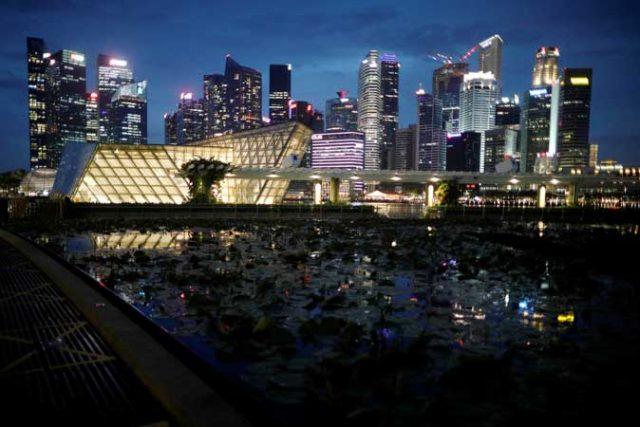
A VIEW of the city skyline in Singapore, Dec. 31, 2020 — REUTERS

SINGAPORE’S economy lost momentum in the second quarter as weeks of tightened mobility restrictions weighed on this year’s expansion.

Gross domestic product (GDP) in the three months through June contracted a seasonally adjusted 2% from the previous quarter, when it expanded 3.1%, the Ministry of Trade & Industry said Wednesday. The median estimate among 15 economists surveyed by Bloomberg was for a quarterly contraction of 1.8%, as the city-state reimposed restrictions to stem a fresh wave of coronavirus disease 2019 (COVID-19) infections.

Compared to a year earlier, when the economy nosedived amid lockdowns at the start of the pandemic, activity rebounded 14.3%. The expectation was for 14.8% growth, according to the median estimate of 16 economists.

In absolute terms, the economy in the second quarter remained 0.9% below its level from the same period in 2019, before the pandemic, according to the ministry.

“The economy will definitely be above pre-pandemic levels by the full year,” said Chua Hak Bin, senior economist at Maybank Kim Eng Research Pte. in Singapore. The city-state “is on a stronger footing compared with the rest of the neighborhood: The Covid situation is under control and vaccinations are much higher. Singapore can start strategizing on how it’s going to reopen its economy and borders.”

Policy makers expect Singapore’s economy to grow at least 4%-6% this year after it suffered its worst contraction last year since independence in 1965. The official forecast for full-year growth is due to be revised next month.

“For the full year, above 6% growth is eminently likely, so there should be an upgrade in the official growth forecast, maybe to the 6%-7% range,” said Selena Ling, head of Treasury research and strategy at Oversea-Chinese Banking Corp. in Singapore.

The city-state’s economy has been buoyed during the pandemic by robust exports and a resilient financial-services industry, while more tourism-reliant sectors such as hospitality and food and beverage continue to suffer.

The Singapore dollar was little moved by the data, trading at 1.356 to the US dollar as of 9:15 a.m.

After months of success limiting outbreaks, Singapore was forced to tighten restrictions in mid-May to curb the spread of the virus, halting dining-in at restaurants and limiting social gatherings.

The outlook will depend largely on whether Singapore is able to meet vaccination targets in the months ahead and keep the Covid caseload low, as well as the broader regional and global recoveries. The government aims to have two-thirds of the population fully vaccinated by National Day on Aug. 9.

“Even as Singapore’s GDP is on course to cruise past the 4%-6% growth target for the year, there should be no illusions about inflated headlines from the base,” said Vishnu Varathan, head of economics and strategy at Mizuho Bank Ltd. He warned of “downside risks that linger, and interruptions to the recovery that lurk as the delta variant outbreaks around Asean cast a shadow on Singapore’s small, open economy.”

Wednesday’s advance release marks the government’s first look at the economy’s performance in the second quarter, based mainly on data from April and May. More data in coming weeks will firm up the picture for final second-quarter figures in late August. — Bloomberg

Indonesia’s daily cases surge past India, becomes new COVID epicenter

REUTERS

Indonesia surpassed India’s daily coronavirus disease 2019 (COVID-19) case numbers, marking a new Asian virus epicenter as the spread of the highly-contagious delta variant drives up infections in Southeast Asia’s largest economy.

The country has seen its daily case count cross 40,000 for two straight days — including a record high of 47,899 on Tuesday — up from less than 10,000 a month ago. Officials are concerned that the more transmissible new variant is now spreading outside of the country’s main island, Java, and could exhaust hospital workers and supplies of oxygen and medication.

Indonesia’s current numbers are still far from India’s peak of 400,000 daily cases in May, and its total outbreak of 2.6 million is barely a tenth of the Asian giant’s 30.9 million. India, with a population roughly five times the size of Indonesia’s 270 million people, saw daily infections drop below 33,000 on Tuesday as its devastating outbreak wanes.

Indonesia reported 907 deaths daily on average in the past seven days — compared to just 181 a month ago — while India reported an average of 1,072 daily fatalities.

Developing countries are struggling to contain the virus — especially delta’s rapid spread — even as vaccine rollouts are allowing life to return to normal in countries like the US and UK.

The outbreak in Indonesia underscores the consequences of an unequal global distribution of vaccines that has seen richer countries gobble up more of the supply, leaving poorer places exposed to outbreaks of variants like delta. World Health Organization director-general Tedros Adhanom Ghebreyesus has called the growing divide a “catastrophic moral failure.

Indonesia has administered vaccines to cover just 10% of its population and India 14%, compared to 46% of the European Union’s population and 52% in the US, according to Bloomberg’s Vaccine Tracker. Lacking enough immunizations, the developing world is bearing the brunt of rising case counts and death tolls, with global fatalities reaching 4 million earlier this month.

Health authorities have blamed supply constraints for the sluggish pace of Indonesia’s vaccine rollout. The country has averaged just over 700,000 shots administered daily in July, well below its target of 1 million. Officials aim to raise that goal to 2 million next month with more doses set to arrive, allowing the inoculations to expand to all adults and teenagers.

Indonesia’s positive COVID test rate has reached about 27%, while India’s rate is 2%. Larger numbers indicate a government is only testing the sickest patients, and that there are high levels of undetected infection in the community. Experts say both nations are under-counting cases and deaths by a wide margin given their lack of testing infrastructure.

Curbs imposed on Java and tourism spot Bali from July 3-20 haven’t eased people’s movements as much as the government had expected.

Residents’ mobility has only eased by 6% to 16% since the restrictions were put in place, whereas authorities had expected a 20% drop, Health Minister Budi Gunadi Sadikin said in a hearing with lawmakers on Tuesday. The government had earlier said that a 50% reduction in mobility was needed to reduce COVID’s spread.

“Our hospitals can’t endure it anymore if we fail to reduce movement by at least 20%,” Mr. Sadikin said. — Bloomberg

Blinken calls on Southeast Asian nations to take action on Myanmar

FLOWERS hang during a nationwide flower campaign against the military coup in Yangon, Myanmar, April 2, 2021. — REUTERS
REUTERS

HANOI — The United States has “deep concerns” about the military coup in Myanmar and called on Southeast Asian nations to take action to end violence and restore democracy in the country, Secretary of State Antony Blinken said on Wednesday.

The Association of Southeast Nations (ASEAN) has been leading the main diplomatic effort on member country Myanmar since a Feb. 1 coup plunged it into turmoil.

During a video conference with ASEAN foreign ministers on Wednesday, Mr. Blinken urged ASEAN to take “immediate action” on a five-point consensus, agreed upon in April, to appoint a special envoy to Myanmar, State Department spokesperson Ned Price said in a statement.

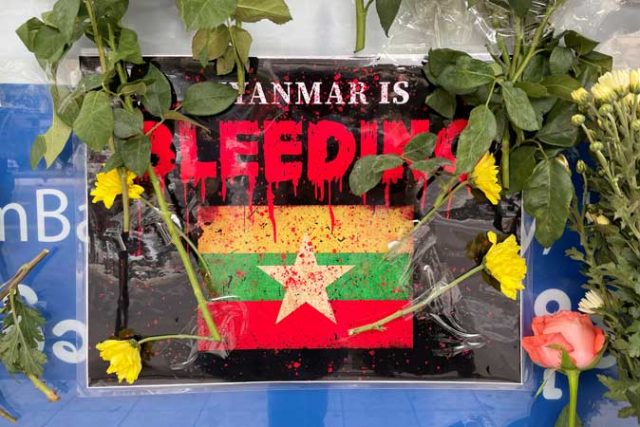
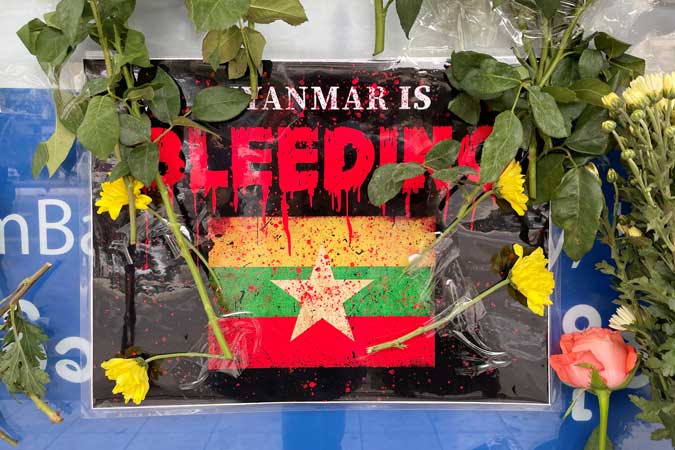
Myanmar has descended into chaos after the coup, with hundreds of protesters killed by security forces and thousands jailed amid paralyzing strikes and spreading conflict in border regions.

Mr. Blinken asked for the release of all those “unjustly detained” in the country, and the restoration of Myanmar’s democratic transition, Mr. Price said.

Mr. Blinken also emphasized the US rejection of China’s “unlawful maritime claims” in the South China Sea and said Washington “stands with Southeast Asian claimants in the face of (Chinese) coercion,” Mr. Price said. — Reuters

South Korea imposes tighter curbs as new COVID-19 cases set record

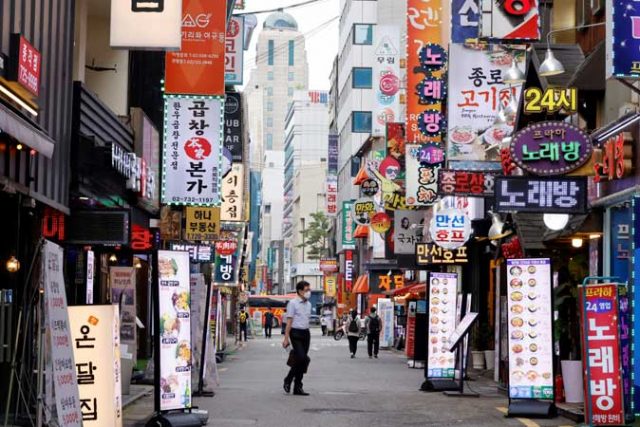
A MAN walks along a nearly empty street in Seoul, South Korea, July 12. — REUTERS

SEOUL — South Korea tightened social distancing rules across most of the country on Wednesday to tackle its worst-ever outbreak of coronavirus a day after new cases soared to a new daily peak of 1,615.

The latest daily tally easily surpassed the previous record of 1,378 set last Friday, adding to growing worries centered on the rapid spread of the more contagious Delta variant and a slowing vaccination campaign.

Clusters of infections have sprung up quickly around the capital Seoul and neighboring areas fueled by the Delta variant, the Korea Disease Control and Prevention Agency (KDCA) said.

Prime Minister Kim Boo-kyum said from Thursday the government would tighten distancing rules across most of the country, with the exception of some southern regions, to Level 2 on a four-level scale.

Under Level 2, gatherings of more than eight people are banned, and restaurants and bars must close by midnight.

“The average numbers of new cases from regions outside the Seoul metropolitan area have more than doubled from last week,” Mr. Kim told an intra-agency COVID-19 meeting, adding further curbs would be enforced in some high-risk areas.

The toughest Level 4 curbs, which include a ban on gatherings of more than two people after 6 p.m., were imposed on Monday in the greater Seoul area.

For much of the pandemic South Korea has been one of the world’s coronavirus success stories with a largely effective campaign to trace and smother clusters of infection.

The recent outbreaks have tarnished that image and shaken public confidence but nevertheless, South Korea’s case numbers are much lower than those of many other countries at 171,911 infections in all and 2,048 deaths, KDCA data showed.

The latest infections have brought fewer deaths and cases of serious sickness because many older and more vulnerable people are now vaccinated, despite recent shortages of vaccine supplies slowing the campaign.

The number of people getting a shot has slipped to some 30,000 a day from more than 850,000 a day in early June, KDCA data showed. Just 30.6% of the 52 million population have received at least one dose of vaccine.

KDCA chief Jeong Eun-kyeong apologized on Wednesday after a planned rollout of vaccines for people aged 55-59 was halted for a week after the rush of people trying to get a shot crashed a government-run reservation website.

Ms. Jeong said the government had ordered sufficient supplies of vaccines but the scheduling of some shipments over coming weeks had not been finalized.

From Thursday, all schools in the greater Seoul area will switch to online classes until July 25, and private educational institutes are required to close by 10 p.m., the education ministry said.

The Delta variant accounted for 30.7% of all new cases in South Korea reported from July 4 to July 10, the KDCA said. — Reuters

European efforts to assess Russia’s Sputnik V vaccine stymied by data gaps

BUREAU OF CUSTOMS HANDOUT

PARIS — The developers of Russia’s Sputnik V coronavirus vaccine have repeatedly failed to provide data that regulators deem to be standard requirements of the drug approval process, according to five people with knowledge of European efforts to assess the drug, providing new insight into the country’s struggle to win foreign acceptance of its product.

Reuters reported last month that the European Medicines Agency (EMA)’s review of the drug’s safety and efficacy was delayed because a June 10 deadline to submit data on the vaccine’s clinical trials was missed, according to one of those people, who is close to the agency, and another person familiar with the matter. The EMA is the European Union’s medicines watchdog.

The hitches go beyond that one deadline, the person close to the agency said. As of early June, the EMA had received hardly any manufacturing data, and the clinical data the agency had received was incomplete, the person said.

Separately, an assessment of Sputnik V by a French delegation of scientists in advance of the EMA review found that the vaccine developers were unable to document that the so-called master cell bank, the initial building block of the vaccine, complied with specific EU regulation on preventing disease contamination, according to four people with knowledge of the delegation’s findings.

The EMA, which launched its formal review of the Russian vaccine in March, had previously been expected to decide in May or June whether to approve use of the drug in the EU (European Union).

The person close to the EMA said notable missing clinical information during the EMA review included case report forms that record any adverse effects people experienced after receiving the jab in trials. It is standard practice for developers to submit such forms, this person added. It was also not clear how the scientists working on the vaccine tracked the outcomes of people given a placebo, the person said.

The watchdog rates such data shortcomings on a scale that goes from “critical” — the most serious — to “major” to “minor.” The person said nothing had met the critical threshold, “but there are several ‘majors,’” indicating issues that can be remedied but require much work. The person added they didn’t expect the review to be completed until after the summer.

Several people who have interacted with Russia’s Gamaleya Institute, which developed Sputnik V and oversaw the clinical trials, attribute the repeated failure to provide some information to lack of experience in dealing with overseas regulators. “They are not used to working with a regulatory agency like the EMA,” the person close to the agency said, referring to Gamaleya’s scientists.

Gamaleya is supervised by Russia’s health ministry. Neither Gamaleya nor the ministry responded to questions for this report. The Kremlin declined to comment.

Sputnik V is marketed overseas by Russia’s sovereign wealth fund, called the Russian Direct Investment Fund (RDIF).

RDIF said Reuters’ reporting contained “false and inaccurate statements” based on anonymous sources who are attempting to harm Sputnik V as part of a disinformation campaign. RDIF suggested the vaccine could be under attack by the “Western pharmaceutical lobby,” without offering evidence of such a campaign.

RDIF added that the vaccine is registered in more than 60 countries and that studies from places including Argentina, Mexico and Hungary that are already using the vaccine show it is safe and effective. It said there had been “no reported serious adverse events.”

On the French delegation’s findings, RDIF said “the Sputnik V cell bank is fully compliant with all EMA requirements.”

RDIF said it is working closely with the EMA, whose inspectors have visited Sputnik V production facilities. “From the inspections already completed we’ve received no major critical comments and none of the issues raised doubted the safety and efficacy of the vaccine,” said RDIF.

One of the people with knowledge of European efforts to assess the drug said they had no reason to doubt that Sputnik is a safe and effective vaccine. A study by international scientists published in the Lancet in February found Sputnik to be more than 90% effective.

The EMA, which is headquartered in Amsterdam, declined to comment on details of the review while it is ongoing. The agency said it applies the same standards to all applicants and to authorize a COVID-19 vaccine the EMA requires “detailed information on its safety, efficacy and quality.”

The delay could allow rival vaccine makers to sew up key markets. The stumble is one of several for the developers of Sputnik V in dealing with some overseas drugs watchdogs reviewing the vaccine, who have identified a lack of data, insufficient documentation of methodology and non-compliance with what they view as standard protocol.

Brazilian regulators initially rejected imports of Sputnik V after technical staff highlighted “inherent risks,” citing a lack of data guaranteeing its safety, quality and effectiveness. Slovakia’s drug agency said it had insufficient data from Moscow before the government ultimately gave a limited go-ahead for the vaccine. Hungary gave emergency approval for the jab despite what several people with knowledge of the process said were concerns raised by some specialists working on the review at Hungary’s drug regulator about insufficient documentation.

Brazilian regulator Anvisa last month gave conditional approval for imports of Sputnik V. The conditions imposed “seek to overcome the information gaps in the process and ensure minimum conditions of vaccine safety and quality,” Anvisa told Reuters. It added that Sputnik V has not been distributed to people in Brazil.

Hungary’s regulator, at the time it approved Sputnik V in January, publicly acknowledged that there can be conflicting opinions during an authorization process and that it had received reassuring answers to its questions regarding the vaccine. The Slovakian government this month said it sold most of its Sputnik V back to Russia, citing low interest.

CELL CULTURE
Sputnik V is named after the Soviet-era satellite that triggered the space race, in a nod to the project’s geopolitical importance for Russian President Vladimir Putin. EMA approval would lend legitimacy to the vaccine, which initially faced scepticism by some Western scientists and politicians, and speed up its availability in Europe.

Moscow’s efforts to obtain EU approval hit obstacles before it submitted its application.

In Nov. 2020, the French government dispatched a team of scientists to Moscow to help Paris decide if it should use Sputnik V and manufacture the drug on French soil, in the event of EMA approval.

The four people with knowledge of the delegation’s findings said that the paperwork the scientists reviewed showed that fetal bovine serum had been used in the culture to nurture the master cell bank and that the developers hadn’t documented the serum’s origin.

After this story was published, RDIF in a statement said that assertion was “false,” without going into specifics.

Fetal bovine serum is commonly used around the world in vaccine development. But since the outbreak of mad cow disease in the 1980s, European and North American regulators have required that vaccine developers document it is from a safe source.

One of the four people familiar with the delegation’s work is French scientist Cecil Czerkinsky, a member of an international advisory board set up by RDIF and who was separately briefed on the delegation’s concerns about the master cell bank. The French team felt “frustration” with the answers they received when they asked the vaccine developers about the issue, Mr. Czerkinsky told Reuters.

Mr. Czerkinsky, after this story was published, said in an email that since he last spoke to Reuters in May it had been “scientifically refuted” that the Sputnik vaccine had a potential problem with the master cell and fetal bovine serum. He did not respond to a follow up question from Reuters asking who had refuted this.

He also said in the post-publication email that “the harmlessness of the Sputnik vaccine is also difficult to dispute after it was administered to the population at large in a number of countries.”

The French delegation informally shared their conclusions — including their questions regarding the master cell — with the EMA, one of the people said.

RDIF told Reuters the Gamaleya Institute “never used ‘non-traceable bovine serum’ for cell bank preparation.” It added that the Sputnik V cell bank has been independently verified not to contain prions — the proteins associated with conditions like mad cow disease. RDIF didn’t identify who conducted the independent verification.

The EMA in early March announced the launch of a “rolling review” of Sputnik V, a faster process that checks data as it lands. But the drug’s developers did not submit the first data until a month later, delaying the process at the earliest stages, said an official in the French government briefed on the matter.

France’s ministries for health and research, which sponsored the delegation to Moscow, did not respond to a request for comment on the delegation’s findings.

BRAZILIAN CAUTION
Brazilian regulator Anvisa’s rejection in April of Sputnik V imports kicked off a testy public exchange with RDIF, which threatened to sue the Brazilian agency for defamation.

A crucial issue for Anvisa related to the adenovirus, the virus that causes the common cold and which is used in Sputnik V to carry into the body information that triggers an immune response. Anvisa publicly said there was a risk the adenovirus in Sputnik V could replicate, potentially causing a negative reaction in recipients. Anvisa’s manager for medicines and biological products called this possibility a “serious” defect. The Russians said there was no evidence of replication and Anvisa had misinterpreted the documentation.

Sergio Rezende, a former science minister advising Brazilian state governors who are looking to import the Russian vaccine, said that in discussions with Gamaleya, the Russians appeared unfamiliar with the expectations of Brazilian regulators. Mr. Rezende told Reuters he urged the Russians to rework their application, which they initially resisted but ultimately did.

Anvisa told Reuters its requirements “are aligned with the regulations of other agencies of reference around the world.”

On the possibility of the adenovirus reproducing, Anvisa said studies and documents supplied by Gamaleya indicated the “occurrence of replicating adenoviruses” and lacked adequate assessment of the relationship between that and the vaccine’s safety. Anvisa added that the conditions it imposed included demonstrating the absence of replication in all batches sent to Brazil.

RDIF, in its responses to Reuters, said Gamaleya “has confirmed that no replication-competent adenoviruses (RCA) were ever found in any of the Sputnik V vaccine batches that have been produced.” — Reuters

Pinoy golfers have a chance at Olympic gold, says NGAP

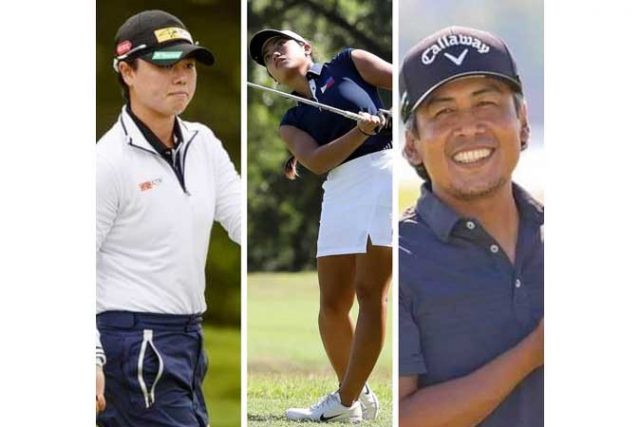
FIRST Philippine Olympic gold medal coming from golf? The NGAP said it is possible. — KATHRYN RILEY/USGA, SEA GAMES 2019 WEBSITE, AND NGAP

By Michael Angelo S. Murillo, Senior Reporter

THE country’s first-ever gold medal in the Olympic Games could come from the sport of golf, an official of the National Golf Association of the Philippines (NGAP) said.

In his recent session on the online Philippine Sportswriters Association Forum, NGAP Secretary-General Bones Floro said the three-man Philippine Olympic golf team of Yuka Saso, Bianca Pagdanganan and Juvic Pagunsan has a “realistic shot” at a podium finish, even win gold, in the Tokyo Games, owing to the form they are in and mindset they have heading into the competition.

“I’ve been vocal in saying that all three of our athletes have real, realistic chances of podium finishes, if not even gold. They have proven it, they have heart, they have determination, their work ethic is also amazing,” said Mr. Floro.

Mses. Saso and Pagdanganan and Mr. Pagunsan will be making their Olympic debut in Tokyo, where golf will be played for the second straight cycle of the quadrennial Games.

They earned qualification for being in the top 60 in their respective categories in the Olympic golf rankings. Ms. Saso sits at number 8 while Ms. Pagdanganan is at 44th. Mr. Pagunsan is 48th.

The Filipino golfers are also coming off strong showing in various tournaments in the lead-up, which bodes well for their respective Olympic bids, Mr. Floro said.

“Their confidence is at the peak. They’re doing very well regarding the mental aspect of their game.”

Ms. Saso, 19, won an historic US Women’s Open champion in June and recently tied for fifth in the Marathon Classic at the Highland Meadows Golf Club in Sylvania, Ohio.

Mr. Pagunsan, 42, won the Mizuno Open in Japan on May 30 while Ms. Pagdanganan, 23, has been a steady competitor in the Ladies Professional Golf Association Tour, the latest with Ms. Saso at the Marathon Classic.

“They have been winning titles and competing with the best in the world. They know they can stand against the top players and defeat them,” Mr. Floro said.

Playing a factor, too, the NGAP secretary-general added, is the weather in Japan by the time of the golf competition, which suits the Filipino athletes.

“It will be summer in Tokyo which I think is going to be conducive and Pinoy-friendly. There, our players do not need many layers of clothing which makes it tougher for golf swings unlike if they play in cold weather. So that in itself, is an advantage for us.”

In the event anyone of the Filipino golfers, or all three of them, wins gold, they stand to get P30 million individually as incentives from the government, under Republic Act 10699, or the Coaches and Athletes’ Cash Incentives Act; the MVP Sports Foundation of Manny V. Pangilinan, and businessman Ramon S. Ang.

In Tokyo, Mr. Pagunsan will be the first to see action with the men’s golf competition scheduled for July 29 to Aug. 1. The women then follow suit on Aug. 4 to 7.

Competition venue is the Kasumigaseki Country Club.

Latest batch of PHL sports heroes to be enshrined in Hall of Fame

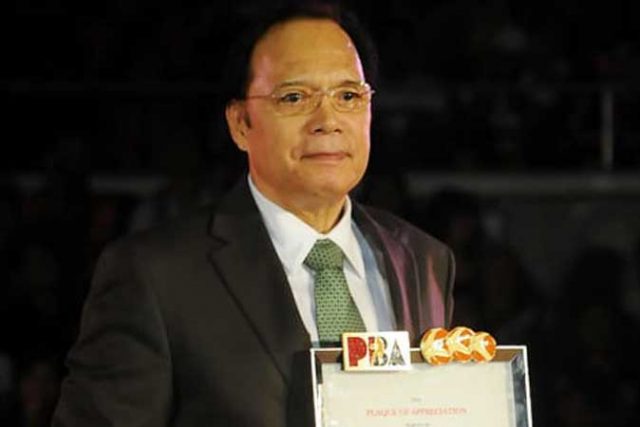
BASKETBALL legend Robert Jaworski is one of 10 sports heroes to be enshrined in this year’s Hall of Fame.

TEN sports heroes of the country will be the latest to be enshrined to the Hall of Fame.

In a virtual ceremony on Sunday, July 18, the Philippine Sports Hall of Fame (PSHOF) will formally unveil the new batch of inductees in proceedings to be aired live over PTV4 beginning at 7 p.m.

The fourth batch of enshrinees is composed of football great Paulino Alcantara, famed swimmer Eric Buhain, track and field star Elma Muros-Posadas, basketball legend Robert Jaworski, 1988 Olympic gold medalist Arianne Cerdena (bowling), Dionisio Calvo (basketball and football coach), Gertrudes Lozada (swimming), Rogelio Onofre (athletics) and Olympic bronze medalist boxers Leopoldo Serantes and Roel Velasco.

“Congratulations to all the fourth batch of enshrinees! These heroes and their achievements have become a source of pride and inspiration for us and for the future generation of Filipinos,’’ said Philippine Sports Commission and PSHOF Chairman William Ramirez.

The 10 new enshrinees will receive P200,000 each plus a PSHOF trophy.

The PSHOF was created by virtue of Republic Act 8757, or the Philippine Sports Hall of Fame Act. Mr. Ramirez is the chairman with Philippine Olympic Committee President Abraham Tolentino as vice-chairman.

The review committee for this year’s edition of the Hall of Fame is composed of media practitioners Ed Andaya (People’s Tonight), Joe Antonio (People’s Journal), Rey Bancod (Daily Tribune), Dodo Catacutan (Spin.ph), Quinito Henson (Philippine Star), Tessa Jazmines (Business Mirror, Larc&Asset PR), Jun Lomibao (Business Mirror) and Tito Talao (Manila Bulletin). — Michael Angelo S. Murillo

WNBL ready to start groundbreaking season this weekend

THE country’s first professional women’s basketball league is ready to get the action going this weekend.

The Women’s National Basketball League (WNBL) is to open shop on July 17 at the Bulacan Capitol Gym in Malolos City, ushering a new dawn in women’s sports in the Philippines.

For its debut pro season, officially referred to as the Pia Cayetano WNBL Season 2021, the league will have five competing teams, namely the Glutagence Glow Boosters, Pacific Water Queens, Paranaque Lady Aces, Taguig Lady Generals and STAN Quezon Lady Spartan.

WNBL Executive Vice-President Rhose Montreal said it has been a long time coming for the start of their maiden pro season and they are determined to see it through, putting premium, among other things, on the safety of all participants.

“We are confident and ready to start on July 17. The protocols are in place and we are constantly working in coordination with different agencies and groups to have a safe playing environment,” said Ms. Montreal in a virtual press conference on Tuesday.

“The ultimate goal for this season is to start the league with all of us negative from COVID-19, and finishing the season and crowning a champion with us still free from COVID,” she added.

The WNBL season will be played in an open circuit setup with movements of participants limited to home-game venue-home.

Teams will play in a double round-robin elimination phase for spots in the playoffs.

For Sen. Cayetano, to whom the debut season is named after, the creation of the WNBL is a welcome development in further promoting women in sports.

“I certainly welcome this as it provides opportunities for women athletes to continue pursuing their dreams. And it’s a good platform to inspire young girls and for them to feel empowered in doing what they are passionate about,” said Ms. Cayetano, who was also present at the WNBL press conference.

She went on to say that the league must make sure that all stakeholders are on the same page on what the WNBL wants to achieve and do their respective parts to ensure its success.

Opening ceremonies of the WNBL will begin at 2:30 p.m., to be broadcast over Solar Sports and the NBL/WNBL Facebook page. There will be a virtual parade of athletes.

The league will also enshrine the first members of the WNBL Hall of Fame and will award citations to individuals and groups who have helped grow women’s basketball in the country throughout the years.

Opening WNBL game will feature Glutagence versus Pacific Water at 4 p.m. — Michael Angelo S. Murillo

Suns to ‘build a wall’ to stop Antetokounmpo

MILWAUKEE Bucks forward Giannis Antetokounmpo (34) shoots a layup during the second quarter against the Phoenix Suns during game three of the 2021 NBA Finals at Fiserv Forum. — REUTERS

PHOENIX Suns point guard Chris Paul said on Tuesday his team will try to “build a wall” in front of dominant Milwaukee Bucks forward Giannis Antetokounmpo in their bid to secure the franchise’s first NBA championship.

Phoenix leads the best-of-seven NBA Finals 2-1. But the series appears far from over as Antetokounmpo has been nothing short of unstoppable since Milwaukee lost the opening game, and has proven to be too much for the Suns to contain.

Over the last two games the “Greek Freak,” as he’s been nicknamed, has become only the second player in history with back-to-back 40-point, 10-rebound games in the NBA Finals. That puts him in elite company with Basketball Hall of Famer Shaquille O’Neal.

“We’re going to keep trying to build a wall,” Paul said ahead of Wednesday’s Game Four in Milwaukee.

“He’s coming full speed every play, like a (NFL) running back coming downhill. Coach has a saying, we just say we try to get in his way. But he’s able to do that because he’s surrounded by some really good players too.”

Antetokounmpo’s interior dominance has breathed new life into an NBA Finals that initially appeared headed for a quick finish after Phoenix won the first two games of the series.

The two-times NBA Most Valuable Player’s work in the paint has led some to compare him to Lakers great O’Neal.

“Regardless of how he scores, he does it. You know what I mean? He comes down there, he dunks, he dunks some more and he shoots a layup,” said Paul.

“We have to try to figure out a way to slow him down… I don’t care what the stat sheet looks like after the game. Win the game.”

Antetokounmpo, who returned to action for the NBA Finals after missing two games of the Eastern Conference finals with a hyperextended left knee, has shown no ill effects of the injury and says he feels great.

While Milwaukee is raring to go, Antetokounmpo said the Bucks will enjoy a full two days off between Sunday’s Game Three, which they won handily, and Wednesday’s clash.

“It’s good for us mentally and physically and for me also,” said Antetokounmpo during a break in practice on Tuesday.

“I always like to have a little bit more time in between the games so I can get a little bit more rest and recover a little bit better and be able to go and play hard.” — Reuters

Bucks look to ride on recent gains in push to tie Finals series

GIANNIS ANTETOKOUNMPO and the Milwaukee Bucks seek to tie their NBA Finals series with the Phoenix Suns in Game Four on Thursday. — MILWAUKEE BUCKS FB PAGE

THE Milwaukee Bucks managed to narrow their deficit in the National Basketball Association (NBA) Finals series with the Phoenix Suns last time around and are now looking to build on the gains they have achieved in trying to pull even.

Led by their do-it-all superstar Giannis Antetokounmpo, the Bucks defeated the Suns (120-100) in Game Three of the NBA Finals on Monday (Manila time) to cut Phoenix’s series lead, 2-1. They trek back to Game Four on Thursday in Milwaukee with an eye on tying the series at two games apiece and seizing the moment.

Their recent showing has Mr. Antetokounmpo upbeat and liking their chances heading into their next game.

“We got better from Game One to Game Two. And now, we got better from Game Two to Game Three. We’ve got to keep building. Keep trusting one another. Keep trusting winning habits. Keep making winning plays. Keep competing hard and keep doing it together,” said the former back-to-back NBA most valuable player in the post-Game Three press conference, the transcript of which was shared to BusinessWorld.

“Hopefully, we can do that and keep doing that. I feel like in every series, that’s what we did as a team and hopefully, we have the opportunity to do the same this time. I don’t know if we are going to do it, but that’s our goal as a team,” he added.

Mr. Antetokounmpo had another solid performance in Game Three, which saw him tallying 41 points, 13 rebounds and six assists. It was the second straight game that he finished with 40 or more points in the series after the 42 he had in Game Two.

The Bucks used a strong push in the middle quarters to build a safe distance between them and the Suns en route to booking their first victory in the series.

Guard Jrue Holiday finished with 21 points and nine assists for Milwaukee in the win, with Khris Middleton adding 18 points, seven rebounds and six assists.

Chris Paul led Phoenix with 19 points, to go along with nine assists. DeAndre Ayton and Jae Crowder each had 18 points. All-Star Devin Booker finished with 10 points.

Game Four of the NBA Finals can be seen on television on Thursday over TV5 and NBA TV Philippines beginning at 9 a.m. — Michael Angelo S. Murillo

ADVERTISEMENT
ADVERTISEMENT