Home Blog Page 7787

FINEX backs passage of proposed financial consumer protection law

UNSPLASH

A PROPOSED LAW to protect financial consumers has received the backing of the Financial Executives Institute of the Philippines (FINEX).

FINEX said in a statement Sunday that Congress needs to pass the legislation to “strengthen the Philippine financial ecosystem for the long-term good of our country” and protect consumers as financial products and services grow more complex.

The proposed Financial Consumer Protection Act is expected to protect consumers, who are adopting more digital services during the pandemic.

It also authorizes financial regulators such as the Bangko Sentral ng Pilipinas, Securities and Exchange Commission, and Insurance Commission to draft and oversee the implementation of consumer protection rules.

The legislation passed on third reading in the House of Representatives in June 2020 and is at committee-level deliberations in the Senate. — Bianca Angelica D. Añago

The inestimable value of reliable accounting for estimation transactions

This challenging period during the COVID-19 pandemic has made demand for reliable and transparent financial reporting rise even higher. The increasing uncertainty in accounting for complex business transactions requires not only present information, but in certain cases, also requires estimation in order to be properly accounted for in the books of account and sufficiently reported in the financial statements.

This pandemic has added a layer of uncertainty to an entity’s ability to achieve its long-term goals, requiring management to implement more frequent reviews of financial budgets and forecasts in assessing the valuation of corporate assets. In many respects, management applies estimation in financial accounting and reporting, posing unique challenges. For example, in accounting for the acquisition of a business, management estimates the valuation of assets and liabilities acquired and, in the process, must determine what information will be used and where such information will be sourced. Management also has to have a robust process for ensuring that the estimation transactions are processed and accounted for consistently, including the determination and application of the appropriate methodology especially when there are various acceptable approaches in the industry. While it is true that accounting estimation is not a new concept in management and financial reporting, it has become complicated yet inestimably valuable in this period of uncertainty.

Given such challenges, management can only put its best foot forward by using its deep experience and knowledge of the industry and exercise sound judgment based on the available information to properly measure and report these transactions in the books.

A PRUDENT EXERCISE OF JUDGEMENT
Management needs to exercise sound judgment in accounting for and recording estimation transactions based on the latest available information at the time the estimate is made.

To exercise prudence of judgment when dealing with estimation transactions, management needs to use the most up-to-date information about the transaction, select the most appropriate measurement method, and gather other relevant data in supporting the assumptions to be used in arriving at the estimate.

To make the most reasonable estimate, management must also ensure that there are appropriate controls in place within the financial accounting and reporting process. The entire financial accounting and reporting process generates the financial statement amounts, making it necessary to establish the appropriate and sufficient controls to ensure that the output from processing estimation transactions is reliable. This process includes the necessary risk assessments and related activities necessary to ensure adequate financial statement disclosures. These estimated amounts largely drive what should be recorded in the books and disclosed in the financial statements.

Management also needs to identify areas in the estimation process that are prone to error, and thus increase the risks of material misstatement and unreliable information in financial reporting. It must revisit the previous bases of accounting for estimates especially when the data and assumptions used are highly dependent on macroeconomic factors and thus are subject to frequent changes and would require regular reassessment. It will also need to be conscious of potential biases to ensure that it continues to objectively evaluate all required information when arriving at the estimates. It is likewise important to remember that anything that has been proven and accepted in the past may no longer be relevant considering the changing business landscape and business outlook.

ACCOUNTABILITY FOR ESTIMATIONS
Top management and those charged with governance bear the responsibility of formalizing and approving the estimation process. At times, management may need the assistance of experts particularly for more complex estimates. However, this does not relieve it of its responsibility to carefully evaluate the work of experts. The same is true in the selection of an appropriate financial accounting and reporting policy that will be used for such transactions, assessing the need to change from previous years’ assumptions and addressing the potential impact of the changes on certain financial reporting assumptions. The process to be used will depend on the level of risk and the nature of the estimate. Any significant changes in assumptions and models from previous years must be fully supported and the basis of the change should be documented.

Management may further need to thoroughly document the rationale behind the selection of estimation models and assumptions among various alternatives. This is to respond to any questions from users of the financial statements by showing the bases and processes that led to the amounts and disclosures. The more complex the estimate is, the more structured the process and risk assessment is expected to be.

WHAT’S NEXT FOR MANAGEMENT AND THOSE CHARGED WITH GOVERNANCE
The adoption of new and complex accounting standards as well as the evolving business landscape increases the demand for sound financial reporting that maximizes the use of available external information to produce reliable estimates. At the same time, management needs to ensure that it is still able to satisfy the information needs of stakeholders and users of financial statements. It will also need a robust assessment of all inputs used and strong justification behind the selection among various models in accounting for estimation transactions.

Beyond just compliance, management must consider how the disclosures help users of financial statements better understand the relevance of the estimate and its impact on the financial statements — from having adequate to reasonable disclosures. A robust risk assessment for estimates should be part of entity-level controls as it will set the tone for how transaction level controls will be set. For more complex and significant estimates, management and those charged with governance need to revisit their processes and controls and address the related risks identified on the estimation transaction.

Management must have its own stand-back approach to revisit and assess the effectiveness of the processes that are in place. This should enable it to accordingly revise the processes based on the evaluations done.

RISING TO THE CHALLENGE
The use of reliable estimates in financial reporting has become increasingly complex because of the pandemic. It is quite likely for regulators and other users of the financial statements to scrutinize and challenge financial statement estimates, as the estimation of these values are judgmental in nature. Accordingly, this would require closer collaboration between management and those charged with governance to ensure reliable and transparent financial reporting.

This article is for general information only and is not a substitute for professional advice where the facts and circumstances warrant. The views and opinions expressed above are those of the author and do not necessarily represent the views of SGV & Co.


Benigno F. Leongson is an Assurance Partner of SGV & Co.

Government told to ban unneeded travel in metro

PHILIPPINE STAR/ MICHAEL VARCAS

By Kyle Aristophere T. Atienza, Reporter

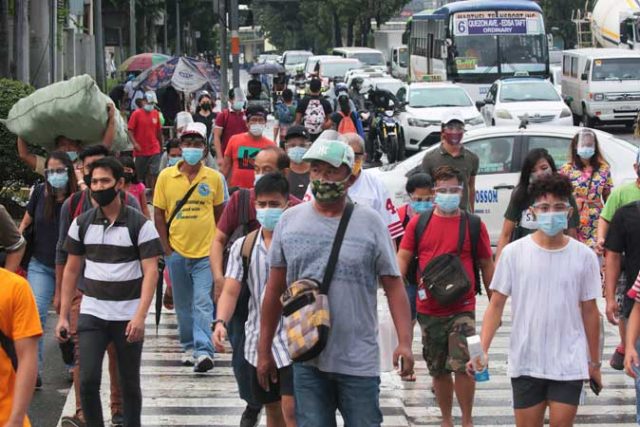
HEALTH experts asked the government on Sunday to ban nonessential travel to and from Manila, the capital and nearby cities to stop the spread of a more contagious Delta coronavirus variant.

“We recommended that we place the National Capital Region (NCR) and surrounding provinces in a bubble,” Fredegusto Guido P. David, a research fellow at the OCTA Research Group from the University of the Philippines, said in a Facebook Messenger chat.

This would let the government keep the general lockdown in Metro Manila or even relax it to a modified general quarantine as long as the Delta variant from India is kept out, he added.

“We hope to prevent Delta from coming in so we can prevent lockdowns in NCR.”

The Health department on Friday said 16 more Filipinos had been infected with the Delta coronavirus variant, bringing the total to 35. 

Five of the 16 were returning migrant Filipinos, while 11 were locals, the agency said in a statement on Friday.

One of the workers arrived in the Philippines on April 26 from the United Kingdom and has since recovered after a 14-day quarantine. Two arrived in the Philippines on June 15 from Qatar and have also recovered. Information on the other two were still being verified. 

Of the 11 local cases, six were detected in Northern Mindanao, two in the National Capital Region and two in Western Visayas. 

All of them have recovered, except for one patient from Metro Manila who died after being rushed to the hospital on June 28, DoH said.

One other patient who was initially tested in the metro but had an address in Central Luzon has also recovered.

Of the 11 cases, nine had tested positive between June 23 and 28, while two tested positive on May 27, the agency said.

Of the 35 cases, 33 have recovered.

The Department of Health (DoH) reported 5,411 coronavirus infections on Sunday, bringing the total to 1.5 million.  The death toll rose to 26,714 after 117 more patients died, while recoveries increased by 5,439 to 1.43 million, it said in a bulletin.

There were 47,190 active cases, 91.9% of which were classified as mild, 1.9% were asymptomatic, 2.7% were severe, 1.88% were moderate and 1.6% were critical.

DoH said 15 duplicates had been removed from the tally, 10 of which were tagged as recoveries and one as a death. Eighty-two recoveries were reclassified as deaths. Four laboratories failed to submit data on July 16. 

A Metro Manila bubble “would allow economic activity in the National Capital Region to remain undisrupted while protecting it from outside sources of the Delta variant,” Mr. David said. The Delta variant “poses a threat to our public health, economic recovery and growth trajectory and overall momentum to end the pandemic,” said John Paulo R. Rivera, an economist at the Asian Institute of Management.

Preventive instead of reactive health measures ensure that “the Philippines is on its way to sustain improving economic conditions,” he said.

With the expected implementation of tighter quarantine restrictions to control the spread of the Delta variant and other coronavirus strains in the country, “economic pickup would remain relatively slower, as this would also delay and prevent the additional measures to further reopen the economy,” said Michael L. Ricafort, chief economist at Rizal Commercial Banking Corp.

“The risk of additional lockdowns and travel restrictions would also be a potential drag on economic recovery projects,” he said in a Viber message.

Boosting vaccine rollout would help mitigate this risk and justify additional measures to reopen the economy, Mr. Ricafort said.

Quezon City posted 116 coronavirus cases from July 11-17, according to the latest report by OCTA. Manila had 86 cases, Makati City 63 cases and Pasig City 56 cases.

Forty-eight people got infected with the coronavirus, 44 cases in Parañaque and 42 in Las Piñas. Calamba and Santa Rosa, Laguna had 40 and 39 cases, respectively. Bacoor, Cavite had 48.

Meanwhile, the OCTA report flagged the “very high” use of intensive care unit (ICU) beds in Davao City in southern Philippines, where 96% of ICU beds had been used from July 11-17.

The city posted 225 coronavirus cases during the period.s The use rate of ICU beds in Iloilo City, which had 88 new cases, was also “very high” at 96%, according to the report.

OCTA said Laoag, Mariveles, Lapu-Lapu City and Cebu City had the highest coronavirus infection rates during the period. Laoag in northern Philippines had  a “very high” infection rate of 1.83 and “very high” 40.03 incidence rate, it said. Mariveles, Bataan in central Luzon also had an alarming infection rate of 1.83 and an incidence rate of 47.08. Lapu-Lapu City in the central part of the country also had a “very high” infection rate of 1.62 and moderate incidence rate of 9.68. Cebu City had an Infection rate of 1.4 and an incidence rate of 9.68, it said.

The Philippines on Saturday took delivery of about 1.6 million more doses of the vaccine made by Janssen Pharmaceuticals, Inc. The shipment was donated by the United States through the World Health Organization-led global initiative for equal access. The US has donated about 3.2 million vaccines to the Philippines.

Vaccine czar Carlito G. Galvez, Jr. earlier said about 16.42 million doses of vaccines were expected to arrive next month.

Critics tell Duterte: Vice president not immune from suits

PRESIDENT Rodrigo R. Duterte’s possible vice presidential win next year won’t protect him from lawsuits, according to a congressman.

A vice president “is impeachable but not immune from suit,” Party-list Rep. Carlos Isagani T. Zarate said in a statement on Sunday.

Former Vice President Jejomar C. Binay, who lost to Mr. Duterte during the 2016 elections, had to face corruption charges, said the lawmaker, who is also a lawyer.

At the tail-end of Mr. Binay’s vice presidency, the Ombudsman filed plunder charges against him at the Sandiganbayan over alleged overpricing of a parking building at the Makati City Hall.

At that time, constitutional expert and former Supreme Court Justice Vicente V. Mendoza said Mr. Binay did not have immunity since the acts were committed when he was still Makati mayor and because a sitting vice president does not have “multifarious duties and powers” like the President.

Mr. Duterte earlier said he might seek the vice presidency when his six-year term presidential term ends next year to protect himself from potential lawsuits.

“A vice president has no immunity from suit,” Edre U. Olalia, president of the National Union of People’s Lawyers, said in a separate statement. “That is rewriting the Constitution, the law and even jurisprudence.”

“Only the President is immune from suit and this is not even spelled out in the present 1987 Constitution — unlike in the 1973 Marcos Constitution — but only recognized in prevailing jurisprudence,” he said.

“His statement is a false self-assurance just to pander himself and his allies,” Mr. Zarate said of Mr. Duterte. “He knows that no such immunity is given to a vice president. He is aware of this truism just like he knew then in 2016 while campaigning for the presidency that he will not really jetski himself to the Spratlys.”

Lawyer and former Congressman Neri J. Colmenares said the President’s plan to run for vice president to escape imprisonment after his term ends is :shameless and legally insane.”

Voters should not vote for Mr. Duterte for his “self-serving personal interest,” he said in the same statement.

The International Criminal Court’s (ICC) Office of the Prosecutor earlier asked the Hague-based tribunal’s pre-trial chamber to probe alleged crimes against humanity committed in Mr. Duterte’s deadly war on drugs.

Former ICC prosecutor Fatou Bensouda has said there’s a link between the recent drug war-related killings and the killings in Davao City when Mr. Duterte was still mayor.

The presidential palace has said the government would not cooperate with the ICC on any investigations.

Mr. Duterte at the weekend accused his critics of trying to scare him with threats of legal cases. He also ranted against the ICC.

“If they insist on trying me on the basis of that wrong statute which we appended illegally because there was no publication, I would go to the Constitution which says that no person shall be deprived of life, liberty, or property without due process of law, so I will transfer that phrase in my case — I was deprived of a due process,” he said.

Meanwhile, more than 20 governors on Sunday backed the call of a PDP-Laban faction for Mr. Duterte to run for vice president next year.

Mr. Duterte, chairman of the ruling party, should seek the vice presidency so he could help his successor oversee pandemic response programs started by his administration, they said in a statement.

“For us, the strategy the administration is using to fight the pandemic is succeeding, given the fact that infections and deaths are fewer compared to some neighboring countries,” the governors said.

“However, the virus will not go away in the immediate future. The President’s successor will thus need the guiding hand of his vice president in the war against COVID-19 (coronavirus disease 2019).”

They also said Mr. Duterte should continue to have a say in the implementation of infrastructure projects.

The Philippines ranked 52nd out of 53 countries in terms of pandemic response, according to Bloomberg’s coronavirus resilience ranking, where the government scored poorly in vaccine rollout, among other things.

The country got a score of 45.3, ahead of Argentina, which ranked last on the list with a score of 37. — Kyle Aristophere T. Atienza

Flights to and from Iloilo to continue as mayor decries national gov’t order for a strict quarantine level

FLIGHTS TO and from the Iloilo International Airport will continue despite the strictest quarantine level imposed by the national government until end-July, Iloilo City Mayor Jerry P. Treñas announced over the weekend.

“Commercials flights and trips will not be stopped as far as the city is concerned,” he said in a statement.

The mayor also said it will not further restrict people’s mobility by requiring the use of quarantine passes.

Mr. Treñas, along with Iloilo Governor Arthur Defensor, Jr., have been lobbying for an easing of their areas’ lockdown level, citing the adverse impact on the economy.

However, the national task force handling the coronavirus response on Friday ordered an enhanced community quarantine (ECQ) in the province as well as in the independent city following the detection of coronavirus delta variant cases in Antique, a province that is within the same region.

Mr. Treñas, in another statement, said the order is “most unfair” considering the improved coronavirus situation in the city, but “he cannot do anything but accept the (task force’s) resolution.”

He cited that the delta variant that was detected in May 27 was in Pandan, Antique, “a good 6 hours road trip from Iloilo City”; there is no report of any variant in Iloilo City; and cases in the city are currently “20% lower” than last month.

“With all these reasons and more, I find the lockdown of Iloilo City unjustified and unfair to my people. 500,000 Ilonggos or a portion thereof will go hungry for the next two weeks,” he said.

Mr. Treñas said the city government is preparing to open community kitchens to assist those who will be most affected. — MSJ

Tropical storm Fabian not expected to bring heavy rains 

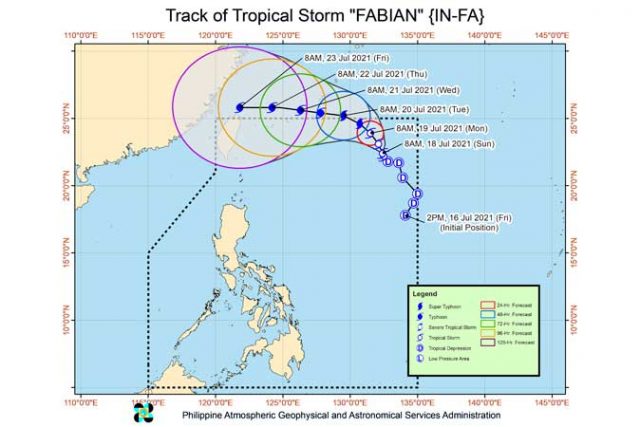
TROPICAL STORM Fabian, located northeast of Luzon in northern Philippines, is seen to strengthen into a severe tropical storm category but not expected to bring heavy rains as it stays away from the country’s landmass, weather bureau PAGASA said on Sunday.

However, Fabian and a low pressure area west of Basco, Batanes are enhancing the southwest monsoon, causing rains in some areas until Monday.   

“Palawan, Occidental Mindoro, Zambales, and Bataan will experience monsoon rains in the next 24 hours,” the Philippine Atmospheric, Geophysical and Astronomical Services Administration (PAGASA) said in its 11 a.m. bulletin on Sunday.

As of 10 a.m., the tropical storm was located 1,100 kilometers (kms) northeast of extreme northern Luzon.

It was moving in a northwest direction, with maximum sustained winds of 65 kms per hour near the center, gustiness of up to 80 kms/h, and packing winds of up to 400 kms from the center.

“Fabian will remain far from the Philippine landmass throughout the forecast period. The tropical cyclone is forecast to move north northwestward and will exit the Philippine Area of Responsibility on Monday evening or Tuesday morning,” PAGASA said.

It said the forecast scenario indicates an unlikely hoisting of typhoon signals in any part of the country.

“Further intensification is expected for the remainder of the forecast period, with Fabian reaching severe tropical storm category by tomorrow afternoon. It is likely to reach typhoon category by Tuesday,” PAGASA said.

SC upholds condonation of admin charge vs Caloocan mayor over pork barrel fund, but not the criminal complaint

PHILSTAR

THE SUPREME Court (SC) has affirmed the 2016 decision of the Court of Appeals (CA) dismissing the administrative case against Caloocan City Mayor Oscar G. Malapitan over the questionable use of P8 million of his discretionary funds when he was a congressman.

In its decision promulgated on April 28 and published on July 15, the Supreme Court agreed with the CA that “since the act constituting the administrative offense was allegedly committed in 2009, and (Mr. Malapitan) was reelected in 2010, the condonation doctrine would still apply.”

The case involved P8 million in the 2009 Priority Development Assistance Fund, also known as the pork barrel, which used to be distributed to members of the House of Representatives. Mr. Malapitan served the maximum three three-year terms as Caloocan representative from 2004 to 2013.

In 2015, the Office of the Ombudsman filed a criminal complaint for graft and corruption against Mr. Malapitan and six officials of the Department of Social Welfare and Development, including then secretary Esperanza I. Cabral for approving the use of the congressman’s pork barrel fund for the programs of the Kaloocan Assistance Council, Inc.

The Ombudsman later added the administrative charge for “grave misconduct, gross neglect of duty, and conduct prejudicial to the best interest of service” against Mr. Malapitan.

The CA dismissed the administrative charge, citing the condonation doctrine. The Ombudsman then brought the case before the high court.

The Supreme Court previously explained that the condonation doctrine provides that a public official cannot be removed from his current position “for an administrative misconduct committed during a prior term, since his re-election to office operates as a condonation of his past misconduct.”

The High Court abandoned the doctrine on April 12, 2016 when it decided that the doctrine violates the 1987 Constitution, which states that “public office is a public trust” and so elected local officials should still be administratively liable for misconduct during a prior term even if they are elected to a new term or to another elective post.

However, this applies only to administrative charges.

As such, the Supreme Court said Mr. Malapitan is “absolved only of administrative liability based on the condonation doctrine,” and that it does not make any pronouncement on the criminal complaint against him.

Mr. Malapitan became mayor in 2013 and is currently serving his third and last consecutive term allowed under the Constitution. — Bianca Angelica D. Añago 

Gov’t spreads repatriation flights to regional airports with Laoag, Davao among landing points

THE LAOAG International Airport in northern Luzon, which reopened only last month, received its second repatriation flight on July 10 as the government spreads the arrival point of overseas Filipino workers (OFWs) affected by the coronavirus pandemic.

“A month after it resumed its flight operations, Laoag International Airport   welcomed another repatriation flight via Philippine Airlines (PAL) Flight PR526 on 10 July 2021 at Gabu Norte, Laoag City, Ilocos Norte,” the Bureau of Customs reported on Sunday.

The flights carried 119 workers from Kuala Lumpur, who were “among those hundreds of thousands of Filipinos who were stranded since the start of the COVID-19 (coronavirus disease 2019) pandemic last 15 March 2020,” the bureau said.

The first repatriation flight to Laoag landed on June 12 and a third is tentatively scheduled on July 24.

The Davao International Airport in the country’s south has also been receiving repatriation flights, considered as special chartered services.

Among the passengers were seafarers from Fiji and workers from Bangladesh. Another flight was expected to arrive on July 18 with workers from Dubai in the United Arab Emirates.

The organizers of these flights — various government agencies, local government, and private airlines and hotels — have set up a bubble arrangement for passengers to ensure the implementation of quarantine protocols and avoid triggering local transmissions in case someone is carrying the coronavirus.

The number of inbound passengers at the Ninoy Aquino International Airport in Manila, the country’s main gateway, is limited to 2,000 per day as part of the government’s response measures on the pandemic.

More than half a million overseas Filipino workers have been repatriated by the government since the start of the pandemic. — MSJ

GenSan gateway

@LGU-GENSAN

THE RENOVATION and expansion of the General Santos (GenSan) City airport is almost done, the local government announced last week, and a formal launch is expected by August. “According to airport officials, the rehabilitation is 96% complete and is scheduled to be inaugurated next month,” the city government said. The airport in GenSan, known as the Tuna Capital of the Philippines, serves as the main gateway in the Soccsksargen Region, composed of the provinces of South Cotabato, Cotabato, Sultan Kudarat, Sarangani, and the city.

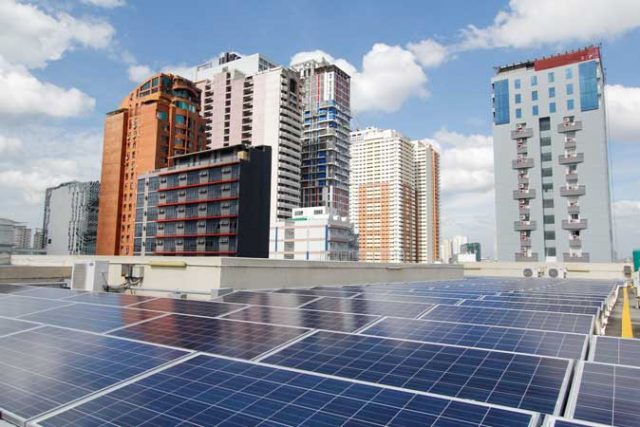
The One Grid Philippines and rooftop-mounted solar PV power

BW FILE PHOTO

One of the things one could be thankful for throughout the trying COVID-19-quarantine period (before June 1, 2021, 2 p.m., Tuesday) was that basic services — electricity and water — have flowed without interruption making working from home (WFH) and quarantining more bearable. Having also recently installed an entry level 2.3-kw rooftop solar PV installation, I was not conscience-stricken when running my air-conditioning unit during the day. My electricity use is small enough so I am actually contributing power to the grid through the net metering scheme on particularly sunny and sweltering days. One could work in relative comfort without the oppressive three-hour commutes.

Then at 2 p.m., June 1, the unexpected happened: no lights, no TV, no internet, no recharge for batteries. It turns out that rooftop solar PV panels will not supply electricity to the house under a net metering arrangement when the grid is down. You need battery storage and some extra work which would have doubled the cost of the installation and which I could not afford. When soon after the rains began to fall, I thought the power shortfall episode was over for 2021. But the National Grid Corporation of the Philippines (NGCP) raised the yellow alert again on July 13. Power alerts are now happening during the rainy season.

And so, the ritual of blame and finger pointing started again! Congress blames the Department of Energy (DoE) for promising no brownouts during an April 27, 2021 hearing; the DoE blames the grid operator NGCP for not procuring only 50% of Energy Regulatory Commission (ERC) mandate ancillary power supply resorting instead to cheaper non-firm ancillary supply (AS) contracts. The DoE also blamed some power generators for going on extended or unplanned shutdowns despite the prohibition of the same during summer months. Others blame the ERC for not coming down hard on the NGCP for the known shortfall in procurement of AS. Others blamed the general state of power generation’s dependence on aging coal power plants and why replacement facilities haven’t come on stream. Nuclear power generation has been in the planning board of Energy Secretary Alfonso Cusi’s DoE from the start, a good clean alternative, but it is taking too long for us to iron out the kinks. If we are to see the back of this repeat refrain in 2022, we will need some decisive actions on quicker remedies.

In April 2020, in the midst of a yellow alert, I wrote “Embracing the Light” (https://www.bworldonline.com) where I batted for the faster adoption of solar PV installations mounted on idle rooftops of large business establishments. Solar PV installations have now become a very attractive investment, what with technical advances and scale production. But the advantages escalate when these are mounted on idle rooftops: no NIMBY, drastically reduced license requirements, no transmission cost, and no universal and other fixed cost charges that together constitute about 50% of the monthly bill of power flowing through the grid. The cost savings per kWh can be considerable.

During the day, these installations act like the Interrupted Load Program where large establishments start firing their backup generators and stop drawing from the grid to shave off the peak of power demand upon prompting by the grid operator. The big difference is that these installations shave off peak demand permanently during daytime. Greater resilience is accorded when rooftop mounted solar PVs are twinned with battery storage to boost grid power in case of spikes in demand after sundown. Rooftop mounted solar PV installations take very little to time to put up and power could be flowing within a few months after the decision to install. Firms could also start small and scale up as needed since by its very nature solar PV technology is modular. Rooftop-mounted solar PV projects can now hold their own from the bottomline viewpoint alone, especially on levelized cost standard.

To pump prime adoption, perhaps Congress should consider a law mandating a contingent tax for idle rooftops: large idle rooftops owned by large corporations will be meted a tax which automatically goes away after, say, 15% of the idle rooftop is solarized. Let large corporations earn part of the 5% reduction in corporate tax which private corporations now enjoy under CREATE (Corporate Recovery and Tax Incentives for Enterprises Act). Meanwhile, technology-promoting government agencies such as the Department of Science and Technology, the National Economic and Development Authority, the Bangko Sentral ng Pilipinas, the University of the Philippines, the Department of Trade and Industry, state universities and colleges, and the Department of Education should lead the rooftop solarization initiative and become part of the solution to power shortage.

The Philippines is a small and fragmented power market with a patchwork of island power grids weakly connected to each other. What we should have instead is a robust “One Grid Philippines” that can comfortably conduct power from one island market to another. This will reduce the risk of a power shortfall in individual islands. The Mindanao grid is all on its own. Negros Island is a power surplus island (with a preponderance of renewables solar, geothermal, and biofuel) but its capacity to export to Cebu and Luzon is limited by the 180-megawatt capacity of the submarine cables connecting the island chain (now reduced to 90 megawatts due to damage by Department of Public Works and Highways dredging). So, while we have power alerts in Luzon, we may have excess power and even power curtailments in Negros and Mindanao.

The power forecast for June 1-7, 2021 was an operating margin of 4.5% for Luzon (danger, the alert trigger being 4%), 13.4% in the Visayas (comfortable), and 36.7% in Mindanao (very comfortable due to abundant hydropower with rains). Visayas and Mindanao, at a 10% operating margin could have exported a combined 400MW to Luzon had the submarine cables been adequate. That would have helped ease the Luzon power problem.

The One Grid Philippines is one hope that can avert power alerts in Luzon and Metro Manila in summer 2022 and beyond. The NGCP promised to deliver by November 2020 the Mindanao-Visayas Interconnection Project (MVIP), a 450-megawatt capacity fiber optic submarine cable linking Dapitan City in Zamboanga del Norte to Santander in Cebu Province. Power surplus in Mindanao can now be exported to Cebu and Luzon and vice versa. This will also reduce the temptation to game the system for higher electricity prices by the generators in one market as well as reduce curtailment cost to the system.

But the November 2020 start of operation of MVIP was delayed by reported cable damage the cause of which remains unknown. A sinister angle is whether the report was “fake news” to win a reprieve from contract deadlines. One thing is clear, if it came through as planned, the red alert and manual load interruptions in Metro Manila and environs may have been shortened or even altogether averted. Damage or no, power through MVIP and the Negros-Cebu connection should not take another year and a half to start flowing. Otherwise, suspicions of hanky-panky will resurge.


Raul V. Fabella is an Honorary Professor of the Asian Institute of Management (AIM), a member of the National Academy of Science and Technology (NAST) and a retired professor of the University of the Philippines. He gets his dopamine fix from hitting tennis balls with wife Teena and bicycling.

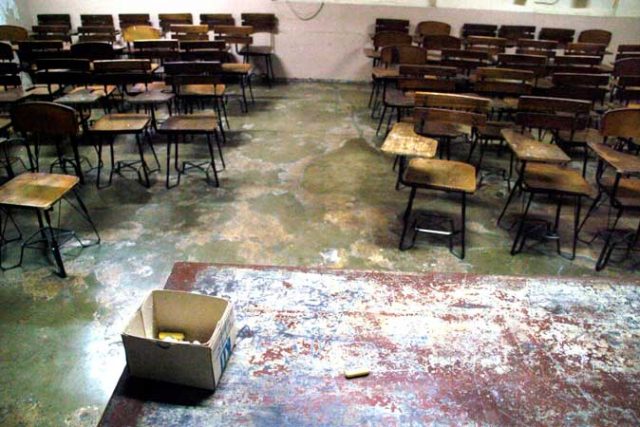
PISA, TIMSS, and quality education

BW FILE PHOTO

PISA is not the leaning tower, but rather it stands for Program for International Student Assessment. TIMSS stands for Trends in International Mathematics and Science Study. In the 1999 TIMSS involving second-year high school pupils, the Philippines landed in 36th place in both Math and Science out of the 38 countries that participated in the assessment test. In the 2003 TIMSS, we again landed among the lowest in both Math (34th of 38 countries) and Science (43rd of 46 countries). In 2008, we ventured to participate in the TIMSS and ended last among 10 countries for both Advanced Math and Science.

Being last or among the lowest in international large-scale assessments is not something new to us. These embarrassing results must have been the reason why the country opted out of TIMSS. It took a bit of time to rejoin TIMSS and other international assessments with a clear policy directive issued early on by the current Department of Education (DepEd). That was a daring move that merits recognition for having stepped forward to say that education quality is the biggest challenge, which in fact has been plaguing the system for decades.

The results came one after the other, starting with PISA, and we feasted on the outcome. While some looked beneath the surface to understand the results, others mocked the system for producing the “mythical 80% poor learners.” It is as if we suddenly discovered that alas, education is in crisis! The DepEd has remained unfazed despite all the criticisms for the dismal performance of our students.

There is value-added in participating in international large-scale assessments to complement our own national assessments and to locate our students against established global benchmarks. Surfacing the anticipated (poor) results guides us and compels us to do the reforms. Looking at TIMSS 1999 and PISA 2018, a span of two decades, we become aware that the problem of achieving quality education is chronic and cannot be addressed overnight.

Notwithstanding the good intentions and efforts of successive DepEd Secretaries since 1999, education quality must have stagnated through the years. Pointing fingers at anyone does not help. The DepEd would rather have all hands on deck to collectively work out solutions. It has, in fact, invited a broad range of stakeholders to look at its reform agenda towards enhancing teacher quality, improving the learning environment, reviewing the K-12 curriculum, and promoting stakeholders’ collaboration. These are good points to build on, or even to pound on.

When I first read the 1999 TIMSS report, I noted that the country’s per capita spending level on education was the lowest or among the lowest of the countries that took part in that exam. If I remember right, Thailand then was spending about six times our spending level; Malaysia, even more; not to mention Singapore which always topped these learning assessments.

In my simplistic mind, I argued that if we were to spend at the same level as Thailand — that was then equivalent to what we were spending for Philippine Science High School students — then easily our science students would probably land among the top raters. In one forum many years back where I empathically argued about this proposition, the well-known education economist, Dr. Edita Tan, stood up to tell me that I got that wrong. She said that it would take more than financing to address the quality issue. And henceforth, I believed her.

Identifying and addressing the barriers to access to education may be easier and more straightforward to do. But understanding the science behind quality education is much more complicated.

For one, present schooling has to compete with attractive activities that technology has made accessible to children like online gaming and virtual dating. During my time, we skipped classes to play billiards, try our luck with pinball machines, and watch movies in Cubao or in the more exciting ones along Recto and Avenida Rizal. One challenge, therefore, is how to make schooling interesting, inspiring, and encouraging, more caring and collaborative, less punitive.

Unpacking quality may not be as simple as running a multiple regression and identifying the most significant variables. Yes, a bit of data science will certainly help, plus a good feel of the ground. And touching base with learners and education stakeholders can go a long way to understand the metrics behind quality.

It will still be a long way to go, but we are not starting from scratch. Those with beautiful minds, those who have done their homework, can learn from a plethora of studies, some written as far back as the American colonial period like the 1925 Monroe Commission study on the effectiveness of Philippine education.

Perhaps what we need is less of inquiry, for we have already identified what the binding constraint is, but more bold and decisive actions to move quality of education forward.


Rene R. Raya is the lead policy analyst of the Asia South Pacific Association for Basic and Adult Education, Vice-Chairperson of the Center for Migrant Advocacy, Co-Convenor of Social Watch, and Trustee of Action for Economic Reforms. He has also served as independent consultant to various United Nations agencies and international organizations.

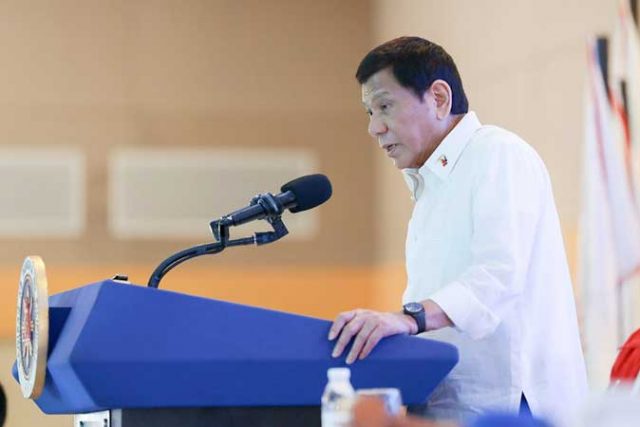
Why Dutertenomics weakened the economy

PCOO.GOV.PH

The economic story of the Philippines under the administration of President Rodrigo R. Duterte has been a tragedy. After being heralded by the international community as Asia’s most promising economy in 2015, the Philippines has become its sick man all over again. This is validated by our decline in most economic and social development indices in the last four years. Following our peak in 2015, 2016, and 2017, the Philippines dropped in economic competitiveness, economic freedom, corruption perception, justice and rule of law, gender equality, press freedom, and more.

But what is most alarming is the deterioration of the country’s finances. Note, the deterioration began even before the pandemic, only to worsen to “concerning levels” after government imposed the world’s longest, most restrictive lockdown.

Our problems start with gaping balance of trade deficits and declining foreign direct investments.

Our balance of trade, or the difference between exported goods and imported goods, was at only -$15.92 billion (deficit) in 2015. The deficit has grown to a whopping $50.02 billion in 2018, tapering slightly to $41.98 billion in 2019 and $21.84 in 2020. The decline in 2020 was due to the overall slowdown of trade following the contagion. The 2019 trade deficit represented 11.61% of GDP.

Trade deficits ballooned during the Duterte administration as imports expanded by an average of 14% from 2016 to 2019 while exports could only muster a 5% average growth rate. Although a good portion of imports were attributed to materials used for infrastructure projects, it was exacerbated by the massive importations of consumer goods.

The Duterte administration allowed the economy to become increasingly dependent on imports for practically all our needs, including basic food, consumer goods, and construction materials. This was done without giving due protection or support to local industries. This resulted in the successive demise of many of our industries including aquaculture and fisheries, leather goods, garments, jewelry, wood products, creative industries, and more.

The growth of the manufacturing sector has decelerated from a high of 8% in 2017 to only 5.10% in 2018 and 3.2% in 2019. The manufacturing sector lost its momentum due to our inhospitable business conditions and a lackluster commitment to the Manufacturing Resurgence Program initiated in 2013.

In fact, some 72.5% of the economy is now consumer driven, while the balance is attributed to production. This is a cause for concern. To be a balanced economy, consumption must comprise 60% of the economy at most.

So why can’t the growth of exports keep up with the growth of our imports? Apart from the relative failure to nurture local industries to be competitive enough to export, the Philippines has also been hard-pressed to attract foreign direct investments (FDIs). As we all know, FDI’s have a direct correlation to our capacity to export. Following our peak in 2017 when we attracted $10.26 billion worth of FDIs, foreign investments declined to $9.95 billion in 2018, $8.70 billion in 2019 and $6.4 billion in 2020. Mind you, our FDIs are about half of what Vietnam realizes.

There are many reasons why we lag in FDIs. Among the principal reasons is the negative list of industries where foreign participation is prohibited by the constitution, (un)ease in doing business, gaps in our supply chain, corruption in government, policy instability, the weak rule of law, uncompetitive fiscal incentives and the dearth of outward investment missions to woo foreign investors. Worsening matters is President Duterte’s animosity towards the west which dissuaded many American, European, Japanese, and Australian investors from setting up shop in the country.

The President’s pivot to China failed to attract Chinese FDIs as he had hoped. Neither did it yield the same official development assistance (ODA) as was given to Indonesia. In short, we got a pittance in return for being China’s obedient lap dog. The pivot was a policy disaster inflicted on us all without a cost-benefit analysis.

The economic policy of the Duterte administration relied on government spending to fuel consumption and drive the economy… not on investments, production, and exports. As a result, we have become an economy propelled by spending, not by production. This is the crux of the problem.

Government’s spending spree is reflected in the country’s budget deficit. A budget deficit occurs when government expenditures surpass its revenues in a fiscal year. Although government has been successful in raising revenues through taxes and other non-tax revenues from 15.2% of GDP in 2015 to 16.9% in 2020, its spending accelerated much faster. Hence, the budget deficit grew from only 0.9% of GDP in 2015 to 3.4% in 2019. It fell of the cliff in 2020 as the deficit reached 7.5%.

With gaping trade deficits and a dearth of FDIs, how does government stay afloat given its high level of spending?

As usual, the dollar inflows from OFW remittances and service exports (IT-BPO industry) save us from financial ruin. Between 2016 and 2020, OFW remittances pumped-in an average of $32 billion a year while our service exports contributed an average of $36.5 billion a year.

Have OFW remittances and service exports been enough to cover our deficits? No. There is a still a gap and it is funded by debt.

In 2016, the country’s debts (foreign and local) stood at some $118.35 billion, representing 42.2% of GDP. It was a manageable ratio considering the size of our economy. However, debt levels swelled to more than $177.21 billion by the end of 2020 which is about 58% of GDP (considering the economy contracted by 9.5%). By the end of the first quarter of 2021, the country’s debt to GDP ratio increased further to 60.4% of GDP. This is already above manageable levels, according to our multilateral lenders and credit-rating agencies. Making matters worse is that government is set to borrow an additional $60 billion this year to cover its budget gap. This means the country will end the year with a debt load of some $237 billion.

Come 2022, the incoming administration will face a myriad of problems that includes a widening budget deficit and bloated debt levels. If this is not resolved, government will have no choice but to cut spending across the board. This will lead to slower economic expansion, less infrastructure spending, and poorer public services. The other alternative is to sink deeper into debt or depreciate the currency.

The next administration will have to work double time to balance the budget and fix the economy. It will have to raise revenues by way of attracting FDIs, quickly. It will have to maximize export revenues by activating low hanging fruit (e.g., mining industries). It will have to recoup lost revenues from tourism.

For the medium to long term, there is no escaping the need to develop our manufacturing sector and aggressively pursue our manufacturing resurgence program. We will have to climb the value chain to produce more sophisticated goods and render more complex services. We will have to re-calibrate the economy from being inordinately consumption driven to one balanced between consumption and production. We will have to diversify the products in which the Philippines can competently produce from approximately 500 products today to 2,000 products (the Asian average). We will need to migrate the millions of low-income workers in the agricultural sector (25% of workforce), and low wage workers (23% of workforce) to higher paying jobs in the manufacturing or technical services sector.

There is a lot of work to do to fix our broken economy.


Andrew J. Masigan is an economist

andrew_rs6@yahoo.com

Facebook@AndrewJ. Masigan

Twitter @aj_masigan

ADVERTISEMENT
ADVERTISEMENT