Home Blog Page 7727

Pagunsan slows down, slips to joint 25th; Nievarez ends campaign

Filipino golfer Juvic Pagunsan slipped to joint 25th place in the second round on Friday in the Tokyo Olympic Games men’s individual stroke play event. He finished the day with a 2-over-par 73. -- National Golf Association of the Philippines Facebook page

Filipino golfer Juvic Pagunsan slipped to joint 25th place on Friday in the Tokyo Olympic Games men’s individual stroke play event which was delayed by inclement weather for the second straight day at the Kasumigaseki Country Club.

Mr. Pagunsan, 43, finished with 2-over-par 73 in the second round of play, to take his two-round total to 3-under 139.

Earlier in the day, rower Cris Nievarez officially ended his Olympic campaign in the classification phase, finishing 23rd overall out of the 32-man field.

Entering the second round of the men’s golf event, Mr. Pagunsan was on a high following a strong outing in the opening round the previous day that saw him produce a 5-under 66 that thrust him to joint fifth place.

He could not sustain it in Friday’s action in a performance that had him producing four bogeys and two birdies.

Just as Mr. Pagunsan slowed down, some of the top names in the field made their charge.

World no. 13 Rory McIlroy and Shane Lowry of Ireland were joint sixth place, climbing 14 and 25 places, respectively, with a two-round total of 7-under 135.

Mexico’s Carlos Ortiz held the lead with him still to play one hole as of this writing, carding a 10-under 65.

Mr. Pagunsan looks to regain some ground when action resumes on Saturday for the third round.

Nievarez

Meanwhile, 21-year-old rower Nievarez officially wrapped up his Tokyo Olympic bid in the men’s single sculls event, finishing fifth in the Final D classification race at the Sea Forest Waterway.
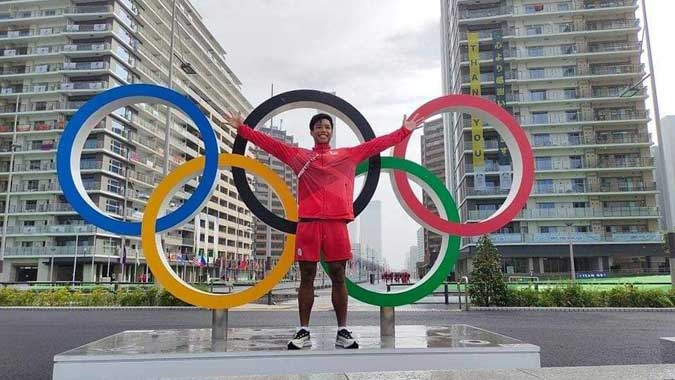
Rower Cris Nievarez officially wrapped up his Tokyo Olympic bid in the men’s single sculls event on Friday, finishing fifth in the Final D classification race at the Sea Forest Waterway. He ended 23rd overall in his event. — Cris Nievarez Faceook page

The Quezon Province native clocked in at seven minutes and 21.28 seconds, landing 23rd overall in the event.

Mr. Nievarez was the first Filipino rower to compete in the Olympics in two decades after Benjamin Tolentino in the 2000 Sydney Games.

“This Olympics made me realize na hindi lang basta pwedi na, laban lang, okay na yan. You need to have proper preparation before ka mag compete sa ganito kataas na Games,” he wrote in Facebook post after the conclusion of his bid.

“And I think I did my very best to try to make it to the final A, pero ayun nga, malaki pa ang kulang. But still, happy for the result 23rd out of 32 competitors, I’ve learned a lot from this competition and I hope this will help me to come back stronger.”

Later on Friday, swimmer Luke Gebbie was to see action in the qualifying heat in the 50m freestyle at the Tokyo Aquatics Centre.

For Saturday, competing for the Philippines are Mr. Pagunsan (third round golf), EJ Obiena (qualifying men’s pole vault), Carlo Paalam (round of 16 men’s flyweight), and Nesthy Petecio (semifinals women’s featherweight). – Michael Angelo S. Murillo

Nike is the top-scoring basketball shoe in the NBA playoffs

Image via Nike

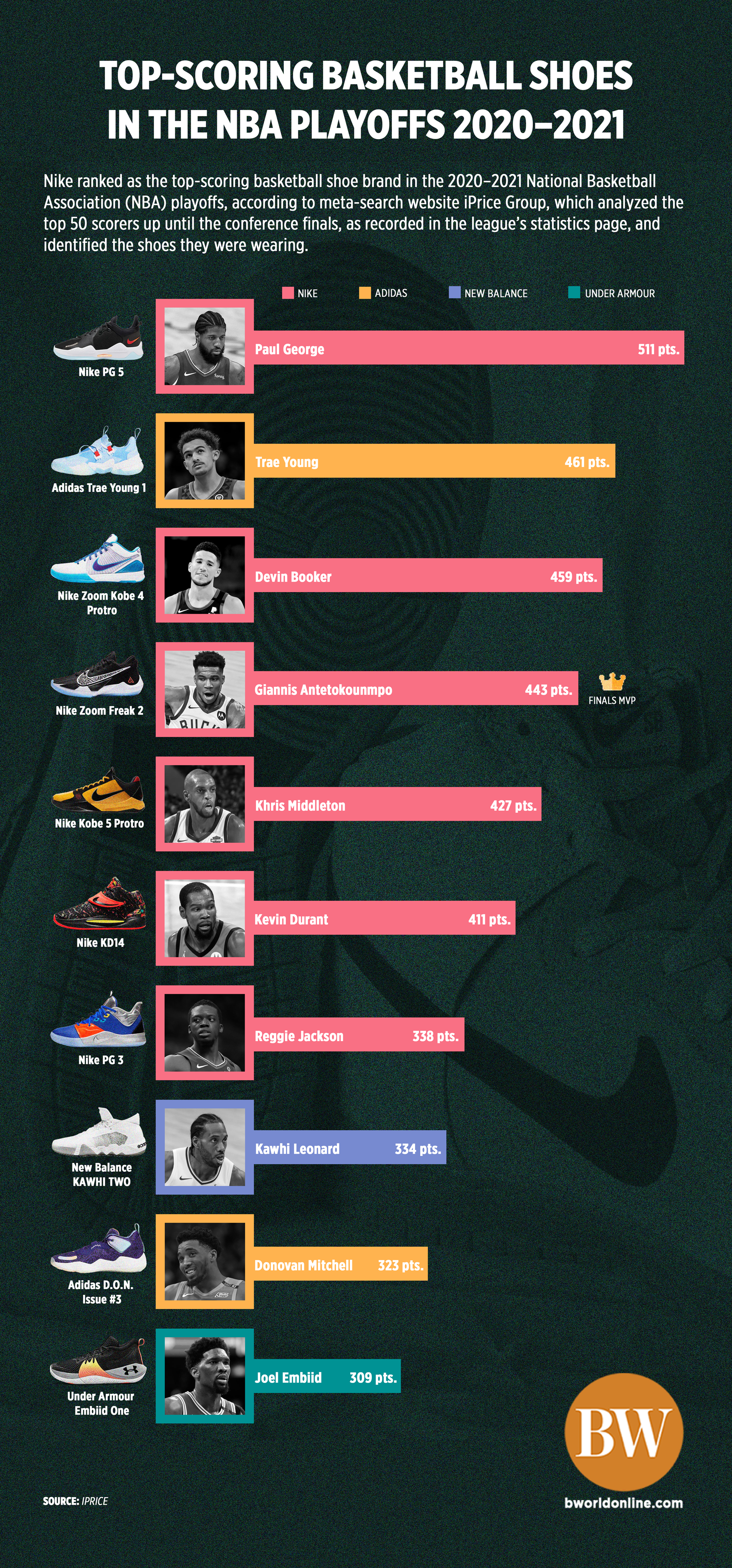
Nike ranked as the top-scoring basketball shoe brand in the 2020–2021 National Basketball Association (NBA) playoffs, according to meta-search website iPrice Group, which analyzed the top 50 basketball players who scored the most points up until the conference finals, as recorded in the league’s statistics page, and identified the shoes they were wearing 

The group’s research showed that 62% of the NBA’s top scorers wear Nike basketball shoes, with the PG 5, Zoom Kobe 4 and 5 Protro, KD 14, and Kyrie among the most worn shoes in the brand’s roster. Paul George of the Los Angeles (LA) Clippers, who wears his signature PG5, was recorded as the highest scoring player up until the end of the conference finals with a total of 511 points.   

Adidas comes second, with 14% of the ballers making it their preferred brand, including Atlanta Hawks’s Trae Young. The Atlanta Hawks all-star scored 461 points on his first appearance in the playoffs with the Adidas Trae Young 1, which also debuted this season.  

A subsidiary of Nike, Air Jordan, ranks as the third top-scoring shoe with 10% of the athletes sporting the iconic sneakers. Shoes like Air Jordan 35 are worn by athletes like Dallas Mavericks’ Luka Doncic, LA Clippers’ Nicolas Batum, and Boston Celtics’ Jayson Tatum. The Phoenix Suns’ Chris Paul was wearing his signature shoes, the Jordan CP3.12.  

Other brands that have made their appearance in the 2020–2021 playoffs include Under Armour (4%), Puma (4%), New Balance (2%), Peak (2%), and Li-Ning (2%).  

iPrice also found that 36% of all the top 50 players with the highest points were wearing signature shoes.   

Kobe Bryant’s Protro, for instance, is worn by Khris Middleton of the Milwaukee Bucks (427 pts.), Devin Booker of the Phoenix Suns (459 pts.), Jrue Holiday of the Milwaukee Bucks (309 pts.), Tobias Harris of the Philadelphia 76ers (261 pts.), among others.  

Giannis Antetokounmpo’s Zoom Freak is also gaining popularity as a signature shoe line, the meta-search website said. The Milwaukee Bucks’ forward, who was named the most valuable player of the NBA Finals, wore it this season as his team won the championship for the first time in 50 years. 

Other NBA players that used their own signature shoes include three ballers from the Brooklyn Nets: Kyrie Irving with his Kyrie line, Kevin Durant with the KD14, and James Harden with Harden Vol5. — P. B. Mirasol
 

International Space Station thrown out of control by misfire of Russian module — NASA

The International Space Station. Image via nasa.gov

The International Space Station (ISS) was thrown briefly out of control on Thursday when jet thrusters of a newly arrived Russian research module inadvertently fired a few hours after it was docked to the orbiting outpost, National Aeronautics and Space Administration (NASA) officials said.  

The seven crew members aboard — two Russian cosmonauts, three NASA astronauts, a Japanese astronaut and a European space agency astronaut from France — were never in any immediate danger, according to NASA and Russian state-owned news agency RIA.  

But the malfunction prompted NASA to postpone until at least Aug. 3 its planned launch of Boeing’s new CST-100 Starliner capsule on a highly anticipated uncrewed test flight to the space station. The Starliner had been set to blast off atop an Atlas V rocket on Friday from the Kennedy Space Center in Florida.  

Thursday’s mishap began about three hours after the multipurpose Nauka module had latched onto the space station, as mission controllers in Moscow were performing some post-docking “reconfiguration” procedures, according to NASA.  

The module’s jets inexplicably restarted, causing the entire station to pitch out of its normal flight position some 250 miles above the Earth, leading the mission’s flight director to declare a “spacecraft emergency,” US space agency officials said.  

An unexpected drift in the station’s orientation was first detected by automated ground sensors, followed 15 minutes later by a “loss of attitude control” that lasted a little over 45 minutes, according to Joel Montalbano, manager of NASA’s space station program.  

‘TUG-OF-WAR’  

Flight teams on the ground managed to restore the space station’s orientation by activating thrusters on another module of the orbiting platform, NASA officials said.  

In its broadcast coverage of the incident, RIA cited NASA specialists at the Johnson Space Center in Houston, Texas, as describing the struggle to regain control of the space station as a “tug of war” between the two modules.  

At the height of the incident, the station was pitching out of alignment at the rate of about a half a degree per second, Mr. Montalbano said during a NASA conference call with reporters.  

The Nauka engines were ultimately switched off, the space station was stabilized and its orientation was restored to where it had begun, NASA said.  

Communication with the crew was lost for several minutes twice during the disruption, but “there was no immediate danger at any time to the crew,” Mr. Montalbano said. He said “the crew really didn’t feel any movement.”  

Had the situation become so dangerous as to require evacuation of personnel, the crew could have escaped in a SpaceX crew capsule still parked at the outpost and designed to serve as a “lifeboat” if necessary, said Steve Stich, manager of NASA’s commercial crew program.  

What caused the malfunction of the thrusters on the Nauka module, delivered by the Russian space agency Roscosmos, has yet to be determined, NASA officials said.  

Mr. Montalbano said there was no immediate sign of any damage to the space station. The flight correction maneuvers used up more propellant reserves than desired, “but nothing I would worry about,” he said.  

After its launch last week from Kazakhstan’s Baikonur Cosmodrome, the module experienced a series of glitches that raised concern about whether the docking procedure would go smoothly.  

Roscosmos attributed Thursday’s post-docking issue to Nauka’s engines having to work with residual fuel in the craft, TASS news agency reported.  

“The process of transferring the Nauka module from flight mode to ‘docked with ISS’ mode is underway. Work is being carried out on the remaining fuel in the module,” Roscosmos was cited by TASS as saying.  

The Nauka module is designed to serve as a research lab, storage unit and airlock that will upgrade Russia’s capabilities aboard the ISS.  

A live broadcast showed the module, named after the Russian word for “science,” docking with the space station a few minutes later than scheduled.  

“According to telemetry data and reports from the ISS crew, the onboard systems of the station and the Nauka module are operating normally,” Roscosmos said in a statement.  

“There is contact!!!” Dmitry Rogozin, the head of Roscosmos, wrote on Twitter moments after the docking. — Steve Gorman and Polina  Ivanova/Reuters 

Biden pushes cash reward to get vaccinated, new rules for federal workers

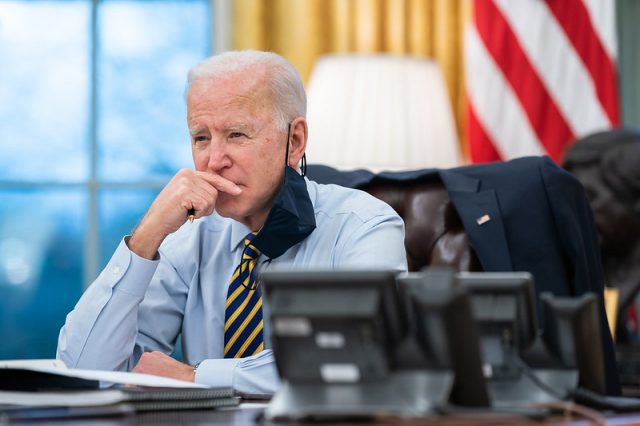
Official White House Photo by Lawrence Jackson

WASHINGTON — President Joseph R. Biden, Jr., on Thursday urged local governments to pay people to get vaccinated against coronavirus disease 2019 (COVID-19), and set new rules requiring federal workers to provide proof of vaccination or face regular testing, mask mandates, and travel restrictions.  

The measures are Mr. Biden’s latest attempt to spur reluctant Americans to get vaccinated as the Delta variant of the coronavirus surges nationwide, infecting unvaccinated people in particular.  

The United States lags other developed countries in vaccination rates, despite having plenty of free vaccines on hand. White House efforts to urge the hesitant to get vaccinated have hit a wall of anti-vaccine sentiment, misinformation, and political division.  

Mr. Biden’s decision to require millions of federal workers and contractors to show proof of vaccination is a departure from a previous opposition to so-called vaccine passports. It shows the White House taking a tougher stance towards circumstances within Biden’s control as the virus spreads.  

“Right now too many people are dying or watching someone they love die,” Mr. Biden told reporters at the White House.  

“With freedom comes responsibility. So please exercise responsible judgment. Get vaccinated for yourself, the people you love, for your country.”  

According to the Centers for Disease Control and Prevention (CDC), roughly 163.8 million people in the United States are fully vaccinated out of a population of some 330 million.  

The federal government is the largest employer in the United States and Mr. Biden’s move could serve as an example for private businesses and other institutions to follow as they assess getting workers back into offices and workplaces.  

Government employees who do not show they have been vaccinated will be subject to weekly or twice-weekly COVID-19 tests and restrictions on official travel.  

The United States has about 2.18 million civilian employees and 570,000 other U.S. Postal Service (USPS) workers, according to 2020 data. The U.S. government employed 3.7 million contract employees as of 2017, a New York University study found. Postal workers are not affected by the new rules.  

Mr. Biden also directed the Defense Department to look into “how and when” it will require members of the military to take the vaccine.  

US Defense Secretary Lloyd J. Austin III, while traveling in Southeast Asia, said he would consult with his medical advisers and other senior military leaders and come up with a plan for the way ahead.  

Mr. Austin did not give a timeline on how long it would take to look into the issue but he said the military would move as fast as possible.  

Meanwhile state, local and US territorial governments will be able to dip into $350 billion in coronavirus aid to provide $100 payments for every newly vaccinated American to boost COVID-19 inoculation rates, the US Treasury Department said.  

“I know that paying people to get vaccinated might sound unfair to folks who have gotten vaccinated already. But here’s the deal: if incentives help us beat this virus, I believe we should use them,” Mr. Biden said.  

OPENING SCHOOLS  

Mr. Biden’s pandemic strategy is coming under scrutiny as the Delta variant spreads and many Americans resist taking the vaccine.  

Growing outbreaks could have an impact on the strong economic recovery. The US economy grew at an annualized rate of 6.5 percent in the last quarter, the government said on Thursday.  

Another issue is how the surge in infections affects efforts to get children back into schools in the fall.  

“We can and we must open schools this fall, full time,” Mr. Biden said. “We can’t afford another year out of the classroom.”  

Mr. Biden pressed school districts to hold at least one “pop-up vaccination clinic” in the coming weeks to get children aged 12 and older vaccinated.  

The White House also said small- and medium-sized businesses will be reimbursed for offering their workers paid time off to get children and other family members vaccinated.  

The National Treasury Employees Union, which has 150,000 federal employees in 34 departments and agencies, said it encouraged its members to get vaccinated but had questions about how the new rules Mr. Biden laid out would be implemented.  

“We will work to ensure employees are treated fairly and this protocol does not create an undue burden on them,” the union’s president, Tony Reardon, said in a statement.  

The International Federation of Professional and Technical Engineers, which has 90,000 members including some 30,000 NASA engineers and other skilled federal workers, said it supported a COVID-19 vaccine mandate for federal workers.  

“We don’t want any more of our members dying,” the union’s president, Paul Shearon, said in a statement. — Steve Holland, Jeff Mason, and David Shepardson/Reuters 

Money rolls in for Europe Inc. as companies banish pandemic blues

LONDON — Carmaker Volkswagen, plane maker Airbus, and energy major Royal Dutch Shell all posted bumper financial earnings on Thursday reflecting a generally buoyant mood among European companies emerging from the coronavirus pandemic.  

European stocks hit record highs, taking their cue from the positive outlook and increased investor payouts offered by many companies reporting on one of the busiest days on the financial calendar.  

There were some clouds on the horizon — strong sales figures from Swiss foods group Nestle and brewer Anheuser Busch InBev were offset by concerns about the impact of higher costs on their businesses.  

Volkswagen trimmed its estimate for an increase in car deliveries to customers because of a shortage of computer chips, and Finnish telecoms equipment maker Nokia also warned that the same issue was putting the brakes on its healthy growth.  

But business is clearly picking up from the lows of 2020 when efforts to contain the coronavirus forced consumers to stay home and businesses to cut output.  

Analysts at investment house Pictet said equities in developed markets were enjoying “a positive feedback loop in 2021, with stronger economic recovery increasing sales growth, improving margins and earnings set to rebound by 40% in 2021 in the US and Europe.”  

Airbus, now the world’s largest plane maker, led the way by doubling its full-year profit forecast and raising the outlook for jet deliveries.  

Shell boosted its dividend and launched a $2 billion share buyback program after a sharp rise in oil and gas prices drove second-quarter profits to their highest in more than two years.  

It joined peers TotalEnergies and Norway’s Equinor in announcing share buybacks as companies throw off more cash than they can reinvest.  

Figures earlier in the week showed the luxury goods industry had rebounded strongly since the start of the year, fueled by robust demand in Asia and the United States for European brands such as Louis Vuitton and Gucci.  

“In Europe, having more industry than tech is good for index profits, which I expect to be revised upwards,” said Angelo Meda, head of equities at Banor SIM in Milan.  

NOT OVER YET  

Both US and European equities have been hitting record highs but some see better prospects in Europe.  

Daniel Grosvenor, director of equity strategy at Oxford Economics, said in a research note on Wednesday that the Eurozone recovery was “continuing to pick up speed at a time when growth momentum looks to have peaked in the US.”  

The “relative growth gap between the two economies will continue to close as we go into 2022, and this is an environment in which European equities have typically outperformed”, Mr. Grosvenor wrote.  

In Britain, Lloyds Banking Group swung to a first-half profit and announced an interim dividend, boosted by a house-buying frenzy and improved economic outlook.  

The positive update from the bellwether mortgage lender came after rival Barclays also posted upbeat earnings on Wednesday, and showed how banks’ profits are recovering as fears of pandemic-related bad loans ebb.  

Quarterly revenue at AB InBev, whose brands include Budweiser and Stella Artois, rose above pre-pandemic levels as bars reopened around the world and drinkers emerged to toast the end of lockdown.  

Increased costs of cans and distribution weighed on profits in its two biggest markets, the United States and Brazil, amplifying inflation warnings from consumer goods giants Unilever and Reckitt Benckiser this month.  

Monetary policy experts around the world are pondering how to respond to higher costs and debating whether the trend is temporary or more deeply rooted.  

“Inflation has been virtually absent for a number of years and then pointed up very sharply. It hit us directly,” said Nestle Chief Executive Officer (CEO) Mark Schneider, adding he believed the problem was transitory.  

Smurfit Kappa, one of the world’s biggest packaging groups, warned on Wednesday that prices would keep climbing.  

“It’s very hard to see that inflation is not here to stay. Since the end of last year I’ve been saying we’re seeing very significant increases and it’s hard to see that they’re temporary because there is still so much demand out there,” CEO Tony Smurfit told Reuters.  

There are also concerns that coronavirus could once again upset the best laid business plans, given the risk posed by the Delta variant.  

“COVID-19 is not over,” Airbus CEO Guillaume Faury told reporters on Thursday.  

“Levels of vaccinations are very diverse around the world and we cannot exclude that after the Delta variant there will be another one, so we believe we have to remain very prudent,” he said.  

“It is going to a bumpy road in terms of recovery.” — Keith Weir/Reuters 

Live well at The Residences at The Westin Manila Sonata Place

More than just a place to eat and sleep, our home should be a sanctuary where we can keep ourselves in the best shape – physically, mentally, and even emotionally. Especially during this time of the pandemic, it is essential to have a home where we can safely look after ourselves and a place for the whole family to comfortably care for each other. Being well at home is essential to carry on with our life goals.

Actual Photo of a 2-Bedroom Model Unit at The Residences at The Westin Manila Sonata Place

Many people would say having this oasis as a home is close to impossible, but not for RLC Residences. Soon to open its doors to its future unit owners is The Residences at The Westin Manila Sonata Place, a premium condominium situated at the heart of the Ortigas Center, built to give you a home attuned to your needs.

Get to know what made this property a one-of-a-kind development and how this will enable you to live well every day.

The Westin Home

Having The Residences at The Westin Manila Sonata Place as your address means experiencing a convenient and comfortable life at the heart of a vibrant city.

Location-wise, this property is in close proximity to multiple essential establishments like the different corporate headquarters, commercial centers, medical facilities, academic institutions, hotels, and government offices.

It also has a number of one to three-bedroom units and penthouse suites, all detailing expansive areas for living, dining, kitchen, and bedroom. To make these home spaces better for residents, each unit is equipped with branded and high-end deliverables, including Gaggenau kitchen appliances, Leicht kitchen cabinets, and Duravit and Hansgrohe toilet and bath fixtures.

Artist Perspective. Grand lobby for a hotel-like living experience.

To further elevate life here at The Residences at The Westin Manila Sonata Place, homeowners can also enjoy hotel-quality offerings in the form of a la carte services such as housekeeping, in-residence dining and spa, and pet services. In addition, 24-hour concierge and pool and gym attendants are part of the extended hotel services to bring ultimate pampered city-living to its residents.

The Westin Life

Westin is a brand known worldwide for its luxurious way of living. For its residences, that means empowering people to live a life in perfect balance and be at their best. The Residences at The Westin Manila Sonata Place upholds this promise.

This premier development provides all the comfort and conveniences expected of a Westin home. First off, The Residences at The Westin Manila Sonata Place features multiple luxuries found inside every unit. Completing these are the equally upscale facilities found at The Haven, the property’s four-level amenity zone. All these are anchored on the brand’s six pillars of wellness, enabling living well inside a Westin residence.

To live well, you need to experience a sound, restful sleep every day. This is the ‘Sleep Well’ pillar made possible by the signature Westin Heavenly® Bed found inside each unit, complete with plush pillows and custom-pillow top mattress.

‘Eat Well’ is another essential pillar to living a healthy lifestyle and something The Residences at The Westin Manila Sonata Place takes seriously. As a resident of this property, you are given access to the multiple hearty dishes and beverages prepared by the SuperFoodsRx Menu™ and The Westin Fresh by the Juicery. At the same time, kids can savor the medley of curated meals made by SuperChefs™.

Artist Perspective. Keep an active lifestyle with the property’s premium Fitness Center.

‘Move Well’ is the next pillar dedicated to those who want to keep an active lifestyle. The Residences at The Westin Manila Sonata Place makes this goal achievable with its Westin WORKOUT™ Fitness Studio and RunWESTIN Concierge™, along with other premium amenities such as the indoor lap pool and move studio.

Working individuals can also find comfort with The Tangent™ at Westin, a rentable workspace offered to the residents for safe and productive meetings. In addition, a business lounge and functions rooms are made available for the residents – all to bring the ‘Work Well’ brand promise to life.

For kids and kids at heart, the ‘Play Well’ pillar can be enjoyed through the property’s five-star leisure amenities such as the Game Room, Playhouse, and Private Theater, to name a few. They can also enjoy the other leisure and bonding facilities offered by the nearby hotel, The Westin Manila Sonata Place.

Lastly, the ‘Feel Well’ pillar starts from the moment you arrive at your Westin home through the mood-lifting botanicals and soothing White Tea scent. The Heavenly Spa by Westin™ service or a calming shower through the signature Heavenly Bath™ in your bathroom are also made available for a more rejuvenating experience.

Proudly Made by Experts

The Residences at The Westin Manila Sonata Place is a luxury residential project by RLC Residences in partnership with Marriott International Inc. Serving as another proof of RLC Residences’ commitment to building beautiful and well-designed homes through its tagline “Raise, Live, Connect,” RLC Residences also worked with international architectural and design consultants to bring to the Philippine landscape the signature Westin brand of residences fit for those looking for a more refined and upscale lifestyle within the city. With all these present, The Residences at The Westin Manila Sonata Place undoubtedly raises the standard of living and allows living a luxurious life while connecting to a world of unmatched opportunities.

Explore what The Residences at The Westin Manila Sonata Place has in store for you. Connect with our Property Specialist today and find out the exciting privileges that await future Westin homeowners. You may also visit our website at www.rlcresidences.com or follow our social media pages at facebook.com/RLCResidencesPH and instagram.com/rlc_residences.

Phuket restricts travel from other Thai regions as COVID-19 cases surge

TATNEWS.ORG

Thailand’s Phuket will ban travel from the rest of the country from Aug. 3 to 16 to try to stop a surge in coronavirus cases from spreading to the resort island, but overseas visitors will be largely unaffected, the foreign ministry said on Thursday.  

Phuket is at the heart of efforts to revive Thailand’s tourism industry, a major revenue earner that has been devastated by the pandemic.  

Since July 1, tourists fully vaccinated against coronavirus disease 2019 (COVID-19) have been allowed to move freely on the island, with no self-isolation on arrival, an initiative dubbed the “Phuket sandbox.”  

Thai Foreign Ministry spokesman Tanee Sangrat said the new travel rules will restrict movement to Phuket from elsewhere in Thailand, meaning foreign visitors who stay on the island will not be affected.  

Tourists who have stayed on Phuket for more than 14 days will be allowed to leave for other parts of Thailand and can re-enter Phuket only if they have international flights booked from the island’s airport, Mr. Tanee said.  

An order signed by Phuket’s provincial governor said exceptions would also be made for medical supplies and personnel and supplies of fuel, money and food.  

Operating hours have been restricted for some venues on Phuket and some have been ordered to close as authorities try to limit any impact from the rise in infections across the country.  

Thailand has in the last few months been struggling with its worst COVID-19 outbreak since the start of the pandemic, driven by the highly contagious Delta variant, first detected in India.  

The national COVID-19 task force reported 17,669 coronavirus cases and 165 deaths on Thursday, both record highs. It said 21 of the fatalities had died at home.  

Hospitals in Thailand’s capital Bangkok and the surrounding provinces are running out of capacity due to the surge in infections. More than 1,200 people are waiting for hospital beds and over 6,000 have called a hotline in the last week requesting treatment, health authorities said.  

“We don’t know where to put the sick people anymore, the ER [emergency room] units in many hospitals have to be temporarily closed because they no longer have bed spaces,” Department of Medical Services head Somsak Akksilp told a news conference.  

There are more than 37,000 hospital beds, including in makeshift field hospitals, in Bangkok and surrounding provinces, according to the Bangkok Metropolitan Administration.  

Thailand won plaudits for containing the coronavirus for most of last year, but authorities have struggled to halt the wave of cases starting in April that has taken total infections to 561,030, with 4,562 fatalities. — Reuters 

In fast-warming world, Tokyo is barometer for future Olympics

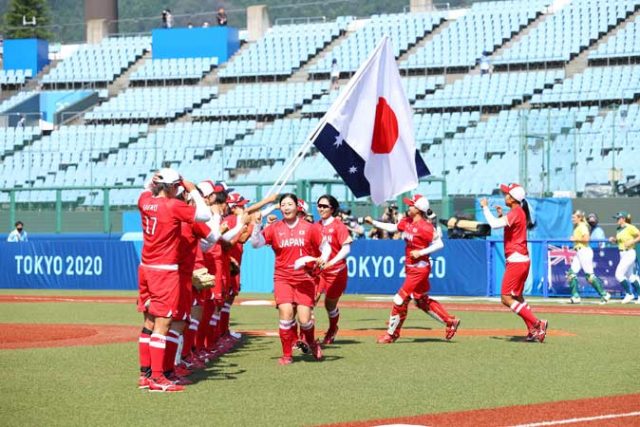
OPENING Round match between Australia 1-8 Japan during the Tokyo 2020 Olympic Games at the Fukushima Azuma Baseball Stadium in Fukushima, Japan. — REUTERS

The muggy heat-swaddling Tokyo may be a forerunner of Olympic life to come, experts say, urging a rethink to make the world’s oldest sporting spectacular fit for a fast-warming planet.  

The Olympics kicked off in the Japanese capital last week after a year-long delay due to the pandemic, with organizers banning spectators from venues and enforcing a slew of measures to keep the coronavirus at bay.  

While worries over coronavirus disease 2019 (COVID-19) have overshadowed other concerns, Japan’s heat and humidity — where temperatures can exceed 35 degrees Celsius — also show how future Games will need to grapple with extremes as climate change bites.  

“Tokyo 2020 will serve as a model for future hotter Olympics and other summer sporting competitions,” said Yuri Hosokawa, an expert on sport and heat risks at Japan’s Waseda University.  

“Leading up to the Games, many athletes around the world have trained under humid heat to acclimatize their body to the environmental stress they will experience in Tokyo,” she told the Thomson Reuters Foundation.  

Tokyo’s mean annual temperature has risen by 2.86°C since 1900, about three times as fast as the world average of 0.96°C, says the British Association for Sustainable Sport.  

Ms. Hosokawa said some new heat mitigation measures, such as on-site medical treatment for serious heat stroke, instigated for Tokyo, could help shape how best to compete in oppressive heat.  

Forget running fast or jumping high — just watching many outdoor sports is now a feat as climate change brings intense rain and heatwaves, spawning hospitalizations, and canned events.  

The Tokyo Games, from July 23 to Aug. 8, coincide with the year’s hottest temperatures in Japan.  

Just last Friday, a Russian archer fainted in the heat during a qualifying Olympic round.  

On Wednesday, tennis world No. 2 Daniil Medvedev said a player “can die” in the heat that is stifling Tokyo. The sports’ governing body later agreed to delay match start times in response to similar complaints by other players.  

‘HEAT ON THE AGENDA’  

Hoping to beat the heat, organizers have deployed a host of tools — from mist-spraying stations to cooling vests — as well as handing out salt tablets and ice cream to weary volunteers.  

The city, known as an innovation hub, has also deployed tech to help mitigate man-made change: be it roads that reflect heat or pavements that absorb water to stay cool, while moving the marathon and race-walk events to the cooler north.  

But climate researchers urged the Olympics authorities to think way further out and change the shape of future summer Games, either by shifting events to cooler seasons, building in more breaks or changing running orders for the fierce weather.  

“They have to start putting heat on the agenda. They’re going to have to start thinking about the best time of the year and the best locations to have these events,” said Mike Tipton from Britain’s University of Portsmouth.  

Mr. Tipton, a professor of human and applied physiology, said the heat was not only diminishing the elite competitors’ performance but also posed grave health risks.  

“People who follow sport should appreciate what climate change is doing to their sport, entertainment, and spectacle. You just won’t have people performing at the same level, in endurance events for example,” he added.  

Makoto Yokohari, an advisor to the Tokyo Olympics, said high-tech measures, such as the heat-blocking pavements, could only have “limited” effects and it would be better to postpone.  

“When it comes to this combination between the temperature and the humidity, I have been warning that Tokyo is the worst in Olympic history,” said Mr. Yokohari, a professor on green urban planning at the University of Tokyo.  

Mr. Yokohari, who has analyzed data back to the 1984 Olympics in Los Angeles, urged the organizers of the next summer Olympics — Paris in 2024 — to act early and address potential challenges.  

France saw record heatwaves in 2019, with temperature jumping to a high of 46°C, causing about 1,500 deaths.  

“If that happens again… then I’m sure the situation in Paris (2024) will become even worse than Tokyo,” said Mr. Yokohari.  

Possible measures: using shade for outdoor events or holding the marathon at midnight when temperatures dip, he added.  

ADAPTATION  

The International Olympic Committee said in e-mailed comments that it would take into account “flexibility and adaptation to the consequences of climate change” in planning future events.  

“A wide range of measures” are being taken by Tokyo to mitigate the heat, it added, such as moving locations for the marathon and shifting start times for others.  

Ms. Hosokawa of Waseda University cautioned that delaying the summer Games to cooler seasons may not work as events such as the triathlon and beach volleyball are made for summer.  

In future, she said, international sports federations would need to agree on what environmental conditions would lead to automatic cancellation of events or races.  

“By knowing the upper threshold, athletes, spectators and stakeholders can train and plan accordingly and share the same expectations,” she added. — Beh Lih Yi/Thomson Reuters Foundation

Duterte fully restores troop pact with United States 

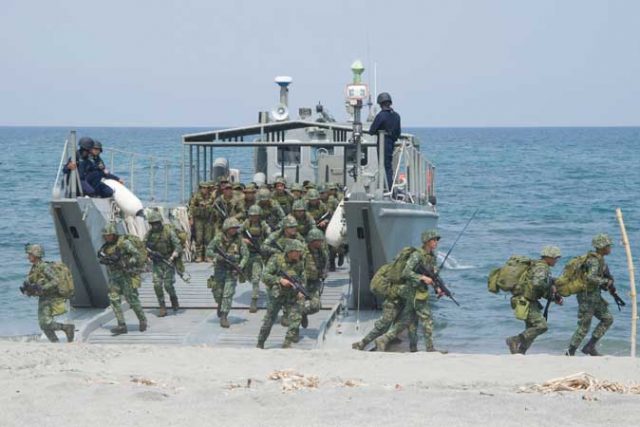
C7F.NAVY.MIL

President Rodrigo R. Duterte has restored a crucial pact governing the presence of US troops in the Philippines, the two countries’ defense ministers said on Friday, reversing a decision that had caused increasing concern in Washington and Manila.  

The Visiting Forces Agreement (VFA) provides rules for the rotation of thousands of USs troops in and out of the Philippines for war drills and exercises. It has assumed additional importance as the United States and its allies contend with an increasingly assertive China.  

Defense Secretary Delfin N. Lorenzana said he was unsure why Duterte had reversed himself but made the decision after meeting US Defense Secretary Lloyd J. Austin III in Manila on Thursday.  

Mr. Duterte’s decision won’t change much on the ground as the pact had not been terminated but it provides stability for both countries.  

“This provides certainty for us going forward, we can do long-range planning and do different types of exercises,” Mr. Austin said during a news conference with his Philippine counterpart.  

The Philippines is a US treaty ally, and several military agreements are dependent on the VFA.  

Mr. Duterte vowed to terminate the pact after the United States denied a visa to a Philippine senator who is an ally of the president. But he had repeatedly pushed back the expiration date, the last time last month, maintaining it until the end of the year.  

For the United States, having the ability to rotate in troops is important not only for the defense of the Philippines, but strategically when it comes to countering China’s assertive behavior in the region.  

“[Duterte’s decision] opens up significant possibilities for strengthening the alliance that were otherwise closed,” said Greg Poling, with the Center for Strategic and International Studies.  

There are long-standing tensions between the Philippines and China over disputed waters in the South China Sea.  

The United States this month repeated a warning to China that an attack on Philippine forces in the South China Sea would trigger a 1951 US-Philippines mutual defense treaty.  

There are, however, still questions about Mr. Duterte’s unpredictability.  

“Some of the celebration is premature… (the VFA) will continue to be under threat so long as Duterte remains president,” said Aaron Connelly, with the International Institute for Strategic Studies.  

Philippine presidential elections are set for 2022 and while Mr. Duterte is barred by the constitution from seeking re-election, his party has been encouraging him to run again for office, as vice-president. — Idrees Ali and Karen Lema/Reuters 

PLDT said to weigh $800-million telecom towers sale

PLDT Inc., the Philippines’ biggest telecommunications and digital services provider by market value, is considering selling its local towers in a deal that could be worth about $800 million, according to people with knowledge of the matter.

The Makati-based company is working with an adviser on the planned disposal, said the people, who asked not to be identified as the process is private. A transaction would involve PLDT selling the towers and then leasing them back, the people said. The company could be seeking as much as $1 billion from a sale, one of the people said.

Transactions involving digital infrastructure such as telecom towers and data centers have been on the rise recently amid global technology rollouts. DigitalBridge Group Inc. this week agreed to buy the data center business of Hong Kong’s PCCW Ltd. for $750 million, while Bloomberg News reported in May that GDS Holdings Ltd. is considering acquiring GLP Pte’s data center operations in a deal that could value the assets at as much as $10 billion.

Deliberations are still ongoing and PLDT can decide to keep the business, the people said. PLDT President and Chief Executive Officer Al Panlilio declined to comment, adding the company is still assessing its options.

PLDT, which has a market value of about P268 billion ($5.3 billion) counts Japan’s Nippon Telegraph and Telephone Corp. and Hong Kong-based investment firm First Pacific Co. among its major shareholders, according to data compiled by Bloomberg. The company’s total mobile subscribers stood at about 72 million by the end of March, while it had about 3.3 million users for its broadband services, its latest presentation shows. — Bloomberg

Philippines to place Manila area in lockdown to curb Delta spread

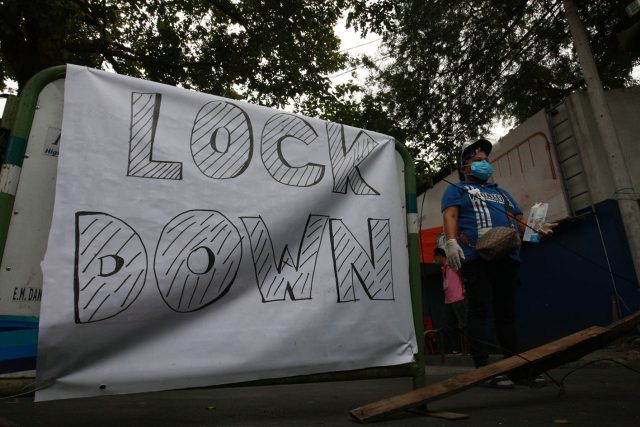
Photo by Michael Varcas, The Philippine Star

MANILA – Philippine President Rodrigo Duterte on Friday approved the imposition of lockdown measures in the capital region to prevent the spread of the more contagious Delta coronavirus variant, the presidential spokesperson said.

The Manila capital region, an urban sprawl of 16 cities home to more than 13 million people, will be placed under the tightest quarantine curbs from August 6 to 20, Presidential spokesman Harry Roque said in a televised address. “While it is a painful decision, this is for the good of all.” — Reuters

AllBank and UnionPay International collaborate to boost digital payments in the Philippines

AllBank (A Thrift Bank), Inc. announced today an exciting partnership with UnionPay International to boost financial inclusion in a digitally driven market. Through this collaboration, AllBank UnionPay cardholders now enjoy the convenience and efficiency of digital payments at popular merchants in The Philippines, and can even shop online in the comfort of their homes. As soon as international travel restrictions are gradually eased, AllBank UnionPay cardholders may simply bring and present their AllBank UnionPay debit cards, cash cards and/or prepaid cards to shop and/or withdraw cash in 180 countries and regions.

In line with its commitment to digitally modernizing banking products and services, AllBank recently launched its Electronic Know Your Customer (E-KYC) facility where customers can conveniently apply for cash cards / debit cards without physically completing bank forms in any AllBank branches. With this innovation, card application may be initiated using E-KYC via AllBank’s Mobile Banking Application that is readily available for download in both android and iOS mobile devices. AllBank commits to further enhance the features of its cards, and introduce contactless payment features through UnionPay’s QuickPass (contactless) payment facility.

Aside from modernizing traditional payments, AllBank will soon expand the features of its digital wallet powered by UnionPay, so that cardholders can conveniently utilize digital payment functions of AllBank’s Mobile Banking Application and enjoy the benefits of UnionPay QR Code Payment across 12,000 acceptance points in the Philippines and at over 30 million merchants around the world.

“We’re very much thrilled to be joining hands with UnionPay International to offer not just traditional card payments but soon to expand the innovative payment experience for our customers.” said Mr. Jesus Vicente Garcia, President of AllBank. “Our vision is to allow our customers to enjoy a seamless banking experience. Our collaboration with UnionPay International will help our expansion strategy and boost consumer adoption, especially during this pandemic,” said Mr. Garcia.

“As a global payment brand that promotes e-Payments by connecting consumers, financial institutions and businesses, UnionPay is pleased to partner with AllBank to enable more consumers in The Philippines to enjoy quick and secure cashless transactions with AllBank UnionPay Debit and Cash/Prepaid Cards. This collaboration is also in line with our vision to promote financial inclusion in the country. In addition to card payment, AllBank customers can soon enjoy the convenience of making UnionPay QR Code payment both locally and abroad when the AllBank Mobile Banking app is enhanced to read UnionPay QR Code,” said Mr. Qing Zhang, Senior Country Manager, UnionPay Philippines.

ABOUT UNIONPAY INTERNATIONAL

UnionPay International focuses on the growth and support of UnionPay’s global business. In partnership with more than 2,400 institutions worldwide, UnionPay International has enabled card acceptance in 180 countries and regions with issuance in 70 countries and regions. UnionPay International provides high quality, cost effective and secure cross-border payment services to the world’s largest cardholder base and ensures convenient local services to a growing number of global UnionPay cardholders and merchants.

ABOUT ALLBANK (A THRIFT BANK)

AllBank (A Thrift Bank), Inc. is in the business of providing specialized financing products and services to working-class Filipinos and business owners. AllBank’s fundamental goal is to play a vital role in the development, not only in the communities that its branches call home, but also the businesses that surrounds it.

AllBank offers services and highly competitive products that yield better returns compared to other banks. Banking is never a chore due to its top-notch customer service innovations.

Currently, AllBank has 17 Branches and 30 ATM Terminals operating all over Luzon servicing its more than 25,000 account holders across the country. AllBank also offers 34 different products and services to its customers and its market – the working-class individuals, as well as Entrepreneurs, Business Organizations, and Micro, Small, and Medium Enterprises (MSMEs).

Providing extended banking services for the convenience of its customers, AllBank has commenced its transformation towards Digital Banking. To date, AllBank already has 11 digital banking products and services, with over 12,000 users across the country.

ADVERTISEMENT
ADVERTISEMENT