Home Blog Page 771

Hurricane Melissa devastates Caribbean, picks up speed toward Bermuda

WIKIMEDIA COMMONS

PORT-AU-PRINCE/KINGSTON/HAVANA — Hurricane Melissa picked up speed as it churned across open ocean in the direction of Bermuda on Thursday, after wreaking destruction across much of the northern Caribbean, where local authorities have reported a total of nearly 30 deaths.

At 5 p.m. (2100 GMT), Melissa was a Category 1 storm 526 kilometers (km) south-west of the North Atlantic British island territory, where hurricane conditions were expected by nightfall even as Melissa’s eye skirts north-west.

Melissa was packing maximum sustained winds of 169 kilometers per hour.

Residents remained calm as the storm was expected to give the island a relatively wide berth. Authorities said they would close its causeway Thursday night and shut schools and ferries on Friday “out of an abundance of caution.”

In the Bahamas, which Melissa cut through overnight, authorities lifted storm warnings but did not give the “all clear”. An official said authorities expected to decide by Saturday whether it was safe for the hundreds of people who evacuated off affected islands to return to their homes.

Melissa did not directly hit Haiti, but caused at least 25 deaths there, authorities said, mostly in the southern town of Petit-Goave when a river burst its banks after days of torrential rain.

A river also caved in and carried off part of a national highway, local newspaper Le Nouvelliste reported. The road, which had been weakened by last year’s Hurricane Beryl, connected to the nearby city of Jacmel.

Melissa was the first major hurricane since 1988 to directly hit Jamaica, where authorities reported at least four deaths in the southwestern region where the hurricane struck land as a powerful Category 5 storm. Windspeeds were well above the minimum level for the strongest hurricane classification.

US forecaster AccuWeather said Melissa was the third most-intense hurricane observed in the Caribbean, as well as its slowest-moving, compounding damages for affected areas.

Scientists say hurricanes are intensifying faster with greater frequency as a result of warming ocean waters caused by greenhouse gas emissions. Many Caribbean leaders have called on wealthy, heavy-polluting nations to provide reparations in the form of aid or debt relief.

Satellite imagery showed swaths of trees and homes devastated in the hardest-hit areas of Jamaica, sparse remaining greenery defoliated and most structures destroyed.

“I know many Jamaicans are concerned about their loved ones,” Prime Minister Andrew Holness said in a video message from a helicopter as he headed to hard-hit Westmoreland parish.

Jamaica’s military called on reserve personnel to report for duty ahead of deployments for relief and rescue operations.

Over 70% of electrical customers in Jamaica remained without power as of Thursday morning, said Energy Minister Daryl Vaz, with power lines felled across the island’s roadways.

Many schools remained without power or water, officials in the capital Kingston said.

WADING BAREFOOT THROUGH MUD
The front page of Thursday’s Jamaica Observer newspaper read: “DEVASTATION.”

More than 130 roads remained blocked by trees, debris and electric lines, authorities said, forcing the military to clear roadways on foot into isolated areas, with ambulances following close behind.

One road in the hard-hit coastal town of Black River was swamped with more than four feet of sand stretching over a mile, officials said.

In a neighborhood of the island’s Montego Bay, 77-year-old Alfred Hines waded barefoot through thick mud and debris as he described his narrow escape from the rising floodwaters.

“At one stage, I see the water at my waist and (after) about 10 minutes time, I see it around my neck here and I make my escape,” he told Reuters on Wednesday.

“I just want to forget it and things come back to normal.”

Densely populated Kingston was spared the worst damage. Its main airport was set to reopen on Thursday, as was the capital’s port. Relief flights and aid had begun to flow into Jamaica’s airports, authorities said.

In western parts of the island, people crowded by supermarkets and gas stations to fill up on supplies.

“Montego Bay hasn’t got any petrol. Most of the petrol stations are down,” British tourist Chevelle Fitzgerald told Reuters, adding it took her at least six hours to cross the 174 km to Jamaica’s capital.

“The highway was closed. You had some blockage on the road and trees falling down,” she said.

US search and rescue teams were headed for Jamaica on Thursday to assist in recovery efforts, Jamaican authorities said. US Secretary of State Marco Rubio said the US. was prepared to offer “immediate humanitarian aid” to the people of Cuba, a long-time US foe.

Authorities in Cuba – which Melissa struck in the night as a Category 3 storm – said they were “awaiting clarification on how and in what way they are willing to assist.”

At least 241 Cuban communities remained isolated and without communications on Wednesday following the storm’s passage across Santiago province, according to preliminary media reports, affecting as many as 140,000 residents.

Residents of Santiago, Cuba’s second-largest city, began returning to repair their homes.

Authorities had evacuated 735,000 people to shelters outside the hurricane’s cone and relocated tourists in northern cays to inland hotels. Cuba reported substantial infrastructure and crop damage but no loss of life as of midday Thursday.— Reuters


Pakistan, Afghanistan agree to continue ceasefire, Turkey says

STOCK IMAGE | Image by Gordon Johnson from Pixabay

ISTANBUL — Pakistan and Afghanistan agreed on Thursday to extend a ceasefire during talks in Istanbul after the worst border clashes between the neighbors in years, according to Turkey which mediated the talks along with Qatar.

The ceasefire began on October 19.

The two countries faced their most serious military confrontations since the Taliban’s 2021 takeover of Kabul, with deadly clashes this month triggering Pakistani airstrikes, Afghan retaliatory fire and the closure of key crossings used for trade and transit.

“All parties have agreed to put in place a monitoring and verification mechanism that will ensure maintenance of peace and impose penalties on the violating party,” Turkey’s Foreign Ministry said of the October 25–30 talks.

It added that a follow-up meeting would be held in Istanbul on November 6 to decide how the mechanism will be implemented, and that Turkey and Qatar “stand ready to continue cooperation with both sides for lasting peace and stability.”

Taliban spokesman Zabihullah Mujahid issued a separate statement shortly before midnight in Istanbul confirming the conclusion of the talks and saying both sides had agreed to continue discussions in future meetings.

He said Afghanistan sought good relations with Pakistan “based on mutual respect and non-interference.”

Pakistan did not immediately comment.

BORDER CLASHES SPARKED AIRSTRIKES
The clashes erupted after Pakistan launched airstrikes inside Afghanistan against Pakistani Taliban militants it says are based there and responsible for attacks on its forces. Kabul condemned the strikes as a violation of its sovereignty and denies sheltering the group.

The border, which runs more than 2,600 kilometers, has long been a source of friction with frequent skirmishes and mutual accusations over militant sanctuaries.— Reuters

US delay on China export restriction could defang it, former US officials say

U.S. and Chinese flags are seen in this illustration taken, April 24, 2024. — REUTERS

Washington’s decision to delay a rule on export restrictions for Chinese companies, announced by China after Thursday’s summit meeting with US President Donald Trump, could end up making the measure ineffective, former US officials said.

The one-year suspension of the so-called affiliates rule, which had sought to prevent sanctioned Chinese companies from using subsidiaries to bypass US controls on tech exports, would give those companies the breathing room they need to create workarounds, the officials said.

The rule, unveiled on September 29, barred Chinese firms at least 50% owned by sanctioned companies from receiving US tech exports. It drew strong opposition from Beijing.

“This pause may give Chinese entities sufficient time to reorganize corporate structures and holdings to circumvent any re-imposition of the (rule),” said Nazak Nikakhtar, who served at the Commerce Department during Mr. Trump’s first term.

“Chinese companies have, over the years, become very adept at circumventing US laws,” she added.

The rule was suspended as part of the summit between Mr. Trump and Chinese leader Xi Jinping in South Korea, in exchange for China delaying its restrictions on rare earth mineral exports, Treasury Secretary Scott Bessent said on Thursday.

“Yes, we are going to be suspending that for a year in return for the suspension…on the rare earth licensing regime,” he told Fox Business Network.

The measure, which had long been sought by China hawks in Washington, hit 20,000 additional Chinese firms with US export restrictions, vastly expanding the universe of blacklisted China-linked parties from the previous 1,300, according to a recent report from WireScreen.

“(The delay) could significantly limit the national security benefits that proponents of the rule were hoping for,” said Saif Khan, who served as director of Technology and National Security at the White House National Security Council under former President Joe Biden.

Trade lawyer Dan Fisher-Owens cautioned, however, that US companies may still be wary of resuming shipments to Chinese firms affected by the affiliates rule.

“This heightened awareness, and the potential for re-imposition if negotiations sour, may prevent a return to business as usual with affected affiliates,” he said.— Reuters


Trade gap narrows to $4.35 billion

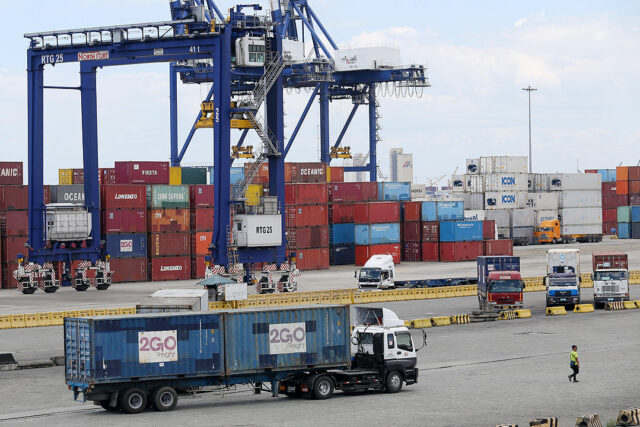
Trucks enter the port area in Manila. — PHILIPPINE STAR/EDD GUMBAN

By Isa Jane D. Acabal

THE PHILIPPINES’ trade deficit in goods narrowed in September, as exports posted double-digit growth, the Philippine Statistics Authority (PSA) reported on Thursday.

Preliminary data from the PSA showed the country’s trade-in-goods balance — the difference between exports and imports — stood at a deficit of $4.35 billion in September, 14.7% smaller than the $5.1-billion deficit a year earlier.

Month on month, the trade gap widened to a two-month high from the revised $3.99 billion in August.

Philippine Merchandise Trade Performance (September 2025)

The latest figure was the widest trade deficit since the $4.42-billion gap in July 2025.

In the January-to-September period, the trade deficit narrowed to $37.18 billion, down 5.7% from the $39.43-billion gap in the same period last year.

The country’s trade balance has been in deficit for over a decade or since the $64.95-million surplus recorded in May 2015.

Total outbound sales of Philippine-made goods climbed by 15.9% year on year in September to $7.25 billion, faster than the 5.5% increase in August and a reversal from the 7.6% drop in September 2024.

It was the quickest pace for exports in two months or since the 17.6% growth in July.

Year to date, exports increased by 13.1% to $63.02 billion.

On the other hand, merchandise imports jumped by 2.1% year on year in September, a turnaround from the revised 0.3% drop in August but slower than the 10.1% expansion a year ago.

The import bill in September reached $11.6 billion — the biggest in two months since $11.77 billion in July.

In the first nine months, imports rose by 5.3% to $100.19 billion.

The Development Budget Coordination Committee projects a 2% contraction in exports and 3.5% growth in imports this year.

“The trade deficit slimmed on a yearly basis as exports growth outpaced imports growth. Exports (were) likely buoyed as foreign businesses stocked up ahead of the (fourth-quarter) holiday rush and with more certainty regarding the US tariff situation,” Marco Antonio C. Agonia, an economist from the University of Asia and the Pacific, said in an e-mail.

The US began imposing a 19% tariff on many goods from the Philippines on Aug. 7.

“The imposition of reciprocal tariffs [by the United States] may have initially slowed exports growth in August but likely allowed supply chains to adjust with some degree of certainty in September,” Mr. Agonia said.

The peso’s weakness against the US dollar in September may have also allowed Philippine exports to be more competitive in the global market, he added.

In September, the peso averaged P57.2501 against the dollar, a tad stronger than the P57.2525 average in August, according to the latest central bank data. On an annual basis, the peso depreciated by 2.06% against the US currency, worse than the 0.1% drop in August.

By major type of goods, manufactured goods made up the largest portion of total export receipts, rising by 15.9% year on year to $5.74 billion in September.

Exports of mineral products also rose by 8.9% to $703.68 million in September, while petroleum products declined by 17% to $22.05 million.

Electronic products continued to be the country’s top export commodity, climbing by 27.9% to $4.02 billion and accounting for more than half of total exports.

Semiconductors, a subset of electronic products, jumped by 32% to $3.05 billion in September. Semiconductor exports are currently exempted from the 19% US tariff.

“Philippine exports remained resilient in September, as modest growth in US-bound goods were outpaced by stronger gains in other markets,” Chinabank Research said in a research note.

The United States was the main destination of Philippine-made goods in September, accounting for 15.3% or $1.11 billion of total export sales. This was followed by Hong Kong, which accounted for a 15.1% share or $1.1 billion, China with a 13.2% share or $959.19 million, Japan with a 12.2% share or $883.33 million and the Netherlands with a 4.5% share or $325.78 million.

“Exports remain supported by electronics shipments, possibly to areas outside the USA. So far it seems as though Philippines has been able to find alternative export destinations so far,” Nicholas Antonio T. Mapa, chief economist at the Metropolitan Bank & Trust Co., said.

REBOUND IN IMPORTS
Meanwhile, the slow imports growth in September reflects the impact of the peso depreciation.

“Importers may have downsized purchases as the price of imported goods mounted with the peso weakness,” Mr. Agonia said, adding that bad weather may have also contributed to the lackluster growth in imports.

Raw materials and intermediate goods, which made up the bulk of the country’s total imports in September, fell by 4.9% to $4.13 billion.

Imports of capital goods rose by 23.8% to $3.77 billion in September, while consumer goods fell by 7.1% to $2.38 billion.

On the other hand, imports of mineral fuels, lubricants and related materials declined by 6.2% to $1.28 billion.

“Imports on the other hand saw lower inbound shipments save for capital goods which was a welcome development to help boost productivity in the medium term. Recent rate cuts by the (Bangko Sentral ng Pilipinas) may finally be starting to help support capital spending of corporates,” Mr. Mapa said.

China remained the top source of imports, accounting for 28.4% or $3.29 billion of the total import bill in September.

It was followed by South Korea with a 9.1% share or $1.06 billion, Japan with 8.1% or $935.07 million, Indonesia with 7.1% or $821.42 million and the US with 6.3% or $728.88 million.

UNCERTAIN OUTLOOK
George T. Barcelon, chairman of the Philippine Chamber of Commerce and Industry, said in a Viber message that more imports are now coming in as companies get ready for the holiday season.

Mr. Mapa said the outlook for trade is still uncertain, “given ever changing tariff schedules, but capital formation recovery should continue.”

For Mr. Agonia, exports growth may remain healthy in the last quarter of the year, as the peso depreciation boosts the competitiveness of exports.

“However, imports will likely jump as the holiday season commences, and the National Government catches up on its spending plans. We could encounter larger trade deficits as a result,” he said.

Chinabank Research expects the narrower trade deficit in September to have a positive impact on overall gross domestic product (GDP) growth in the third quarter.

The PSA will release the third-quarter GDP on Nov. 7.

BSP sees inflation at 1.4-2.2% in October

A customer buys fresh produce at the public market in Marikina. — PHILIPPINE STAR/ WALTER BOLLOZOS

By Katherine K. Chan

HEADLINE INFLATION may have eased year on year in October despite elevated prices of selected commodities and the peso’s recent weak performance, the Bangko Sentral ng Pilipinas (BSP) said. 

Based on the central bank’s month-ahead forecast, inflation likely settled between 1.4% and 2.2% in October, slower than the 2.3% print in the same month a year ago. 

At the upper end of the forecast, inflation likely accelerated from 1.7% in September and would be the fastest clip in nine months or since the 2.9% clip in January.

At the bottom end of the forecast, inflation could have hit a three-month low or since 0.9% in July.

“Upward price pressures for the month may stem from higher prices of rice, fish, vegetables, and electricity, as well as the depreciation of the peso,” the BSP said in a statement on Thursday.

The peso breached the P59 level on Tuesday, slipping by 23 centavos to P59.13 per US dollar from its P58.90 finish on Monday. This was a new all-time low for the peso, exceeding the previous record of P59 on Dec. 19, 2024.

Data from the Department of Agriculture (DA) showed the average price of local regular milled rice slipped by 1.3% to P37.30 per kilo in the Oct. 20-25 period from P37.79 per kilo a month ago. Well-milled rice also declined by 0.9% month on month to P42.72 per kilo from P43.10, while special rice fell by 0.3% to P56.92 per kilo from P57.10.

John Paolo R. Rivera, a senior research fellow at the Philippine Institute for Development Studies, said the BSP’s forecast is based on the historical trend of rice prices, which reflected elevated wholesale prices during the first half.

“While DA and PSA (Philippine Statistics Authority) data show rice prices declined slightly in late October, BSP likely referred to the overall price elevation that persisted for most of the month, especially (in the first half), when retail and wholesale rice prices were still high due to tight domestic supply, import delays, and higher logistics costs,” he said in a Viber message.

“Thus, rice remained an upward pressure on inflation relative to its historical trend, even if it softened toward month end,” he added.

Electricity rates also jumped during the month as the Manila Electric Co. hiked the overall rate by P0.2331 per kilowatt-hour (kWh) to P13.3182 per kWh in October.

The BSP said lower prices of oil, meat and fruits could partially temper inflationary pressures during the month.

In October, pump price adjustments stood at a net increase of P1.80 a liter for gasoline, P2.10 per liter for diesel and P1.10 per liter for kerosene.

“As for fuels, the BSP may have noted lower pump prices toward the end of October, which began to offset earlier price hikes in the month,” Mr. Rivera said.

Mr. Rivera noted that pump prices rose in mid-October but later dropped amid weaker demand expectations and stable output from the Organization of the Petroleum Exporting Countries.

“Hence, while fuel prices increased on a monthly net basis, the downward correction late in the month helped temper inflation momentum going into November,” Mr. Rivera added.

Earlier this month, the central bank said its inflation expectations remain “well-anchored.”

In the nine months to September, headline inflation averaged 1.7%, matching the BSP’s target for the year.

For 2026, the central bank sees inflation accelerating to 3.1%, before slowing to 2.8% in 2027.

The PSA is set to release the October inflation data on Nov. 5.

“Going forward, the BSP will continue to monitor evolving domestic and international developments affecting the outlook for inflation and growth in line with its data-dependent approach to monetary policy formulation,” the central bank said.

On Oct. 9, the Monetary Board continued its easing cycle, cutting its policy rate by 25 basis points (bps) to a three-year low of 4.75%.

It has so far reduced borrowing costs by 175 bps since it began its easing cycle in August 2024.

BSP Governor Eli M. Remolona, Jr. has left the door open for further easing until next year as they seek to support the economy as corruption scandals clouded the growth outlook.

BSP Monetary Board member Benjamin E. Diokno likewise said on Monday that he expects another 25-bp cut to the policy rate before yearend and potentially more in 2026.

The Monetary Board will hold its last policy-setting meeting this year on Dec. 11.

Philippine government’s outstanding debt slips to P17.46 trillion

BW FILE PHOTO

THE NATIONAL GOVERNMENT’S (NG) outstanding debt slid to P17.46 trillion at the end of September, but remained above the full-year projection, data from the Bureau of the Treasury (BTr) showed.

BTr data showed the outstanding debt dipped by 0.07% or P13.09 billion in September from P17.47 trillion at end-August.

September marked the second straight month of decline in outstanding debt.

National Government outstanding debt

However, this was still 0.6% above the projected year-end debt level of P17.36 trillion.

“The continued decrease reflects the government’s sound fiscal discipline, strategic borrowing strategy, and proactive liability management, supported by steady market conditions and robust domestic investor confidence,” the Treasury said.

Year on year, NG debt rose by 9.83% from P15.89 trillion at the end of September 2024, the BTr said.

NG debt is the total amount owed by the Philippine government to creditors such as international financial institutions, development partner countries, banks, global bondholders and other investors.

“The September figures affirm the Marcos, Jr. administration’s strong fiscal discipline and proactive debt management, ensuring that government financing remains sustainable, strategic, and supportive of the country’s growth priorities,” BTr said.

In September, the bulk or 68.6% of the total debt stock came from domestic sources, while the rest came from external sources. The BTr said this was “consistent with the government’s policy of reducing foreign exchange risk while deepening domestic capital market development.”

Domestic borrowings fell by 0.9% to P11.97 trillion at end-September from P12.09 trillion at end-August. This was lower than the P12.04-trillion year-end domestic debt projection.

“(The) government paid off more borrowings than it issued new ones… Total repayments exceeded new issuances by P117.29 billion, more than offsetting the P3.16-billion upward revaluation from the peso depreciation against the retail dollar bonds,” the Treasury said.

Year on year, domestic debt jumped by 9.48% from P10.94 trillion.

On the other hand, external debt rose by 1.9% to P5.48 trillion as of end-September from P5.38 trillion at end-August, mainly due to the weaker peso.

“This movement more than offset the P1.3-billion in net loan repayments and P2.1 billion in third-currency fluctuations,” the BTr said.

BTr data used a foreign exchange rate of P58.149 per dollar at end-September, weakening from P57.042 per dollar at end-August and P56.017 at end-September 2024.

Year on year, external debt increased by 10.6% from P4.96 trillion.

The latest external debt tally also exceeded the P5.31-trillion year-end projection by 3.16%.

Foreign debt was composed mainly of P2.79 trillion in global bonds and P2.69 trillion in loans.

External debt securities were made up of P2.36 trillion in US dollar bonds, P259.37 billion in euro bonds, P59.59 billion in Japanese yen bonds, P58.15 billion in Islamic certificates and P54.77 billion in peso global bonds.

As of September, the NG-guaranteed obligations inched up by 0.05% to P346.63 billion from P346.46 billion in August.

“This was attributed to a P1.75-billion upward revaluation of guarantees due to peso depreciation, partially offset by a P1.33 billion in combined net repayments, and downward adjustment from third-currency movements amounting to P0.25 billion,” BTr said.

Year on year, obligations fell by 7%.

“The decline in debt is primarily driven by a significant decline in government spending amid the corruption scandal. This caused government expenses to go down and some halted while scrutiny and checking are being done,” Reinielle Matt M. Erece, an economist at Oikonomia Advisory and Research, Inc., said in a Viber message.

Mr. Erece said the consistent repayment of existing debt also brought debt levels lower.

Rizal Commercial Banking Corp. Chief Economist Michael L. Ricafort said in a Viber message that the lower debt level in September was also due to a large volume of maturities in government securities during the month.

Mr. Ricafort said the weaker peso during the month “effectively increased the peso equivalent of the outstanding National Government foreign debts when converted to pesos.”

The peso weakened by 1.87% or P1.066 to close at P58.196 on Sept. 30 from P57.13 on Aug. 29.

Philippine Institute for Development Studies Senior Research Fellow John Paolo R. Rivera said outstanding debt is expected to increase by yearend.

“With continued infrastructure spending, external repayments, and elevated interest costs, the National Government debt is likely to rise moderately toward yearend, staying around 60-61% of GDP (manageable but still requiring vigilance to maintain fiscal sustainability),” Mr. Rivera said in a Viber message.

“This might reverse if exchange rate breaches P60 per dollar requiring more debt management,” he added.

At the end of the second quarter, NG debt as a share of gross domestic product stood at 63.1%, the highest since 2005.

The Department of Finance expects the NG debt-to-GDP ratio to ease to 61.3% by end-2025 and eventually fall to 58% by 2030. — Aaron Michael C. Sy

PEZA expects 14 additional ecozone proclamations before end-2025

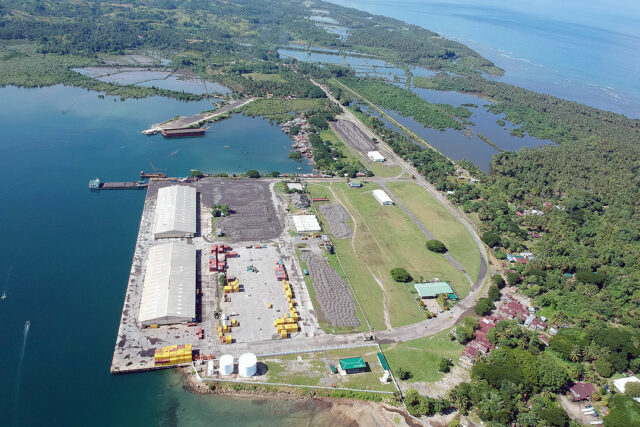
POLLOC FREEPORT AND ECOZONE — BARMM FACEBOOK PAGE

By Beatriz Marie D. Cruz, Reporter

THE PHILIPPINE Economic Zone Authority (PEZA) is expecting 14 additional economic zones (ecozone) to be approved within the year.

“We’re awaiting 14 more proclamations happening hopefully within the year,” PEZA Director-General Tereso O. Panga told reporters on the sidelines of an event on Tuesday.

“We’re still on track with the ambitious target of having 30 proclamations within the year,” he added.

The Office of the President issues the proclamation which officially designates specific parcels of land as special economic zones, upon the recommendation of PEZA.

Mr. Panga also noted that the Palawan Mega Ecozone is likely scheduled for ecozone proclamation “maybe by next year.”

“There’s an official turnover already by the Bureau of Corrections (BuCor) of an initial 4,000 hectares (ha) out of 28,000 ha. So, we will be doing the groundbreaking, and also the visit to Palawan, maybe by next month,” he said. 

The Palawan Mega Ecozone will be established within the 28,000-ha Iwahig Prison and Penal Farm in Puerto Princesa City, Palawan. It is scheduled to be operational by 2028.

According to PEZA, the ecozone is expected to attract emerging and high-value industries like electric vehicle production, advanced manufacturing, green ores processing and nano tech. It also seeks to attract knowledge-based and artificial intelligence-driven industries as well as those related to the medical field.

The initial 4,000 hectares turned over by the BuCor will cover the first phase of the development, PEZA said.

BuCor Director-General Gregorio Pio P. Catapang, Jr. also recently announced plans to develop a BuCor property in Sablayan, Mindoro Occidental into a township ecozone.

The Philippine government is banking on ecozones to attract more investments and generate jobs for the country.

In the first half of the year, President Ferdinand R. Marcos, Jr. approved four ecozones — the expansion of the Aboitiz-led Lima Technology Center in Lipa and Malvar, Batangas, as well as the IT parks in Bacolod City under Megaworld Corp., and the Tagbilaran Uptown IT Hub 2 in Bohol.

John Paolo R. Rivera, a senior research fellow at the Philippine Institute for Development Studies, said more ecozone approvals give investors predictability and confidence to invest in the country.

“Through fiscal incentives, infrastructure support, and streamlined regulation, ecozones create clusters that stimulate local supply chains and enhance productivity spillovers in surrounding communities,” he said in a Viber message.

Mr. Rivera added that stronger collaboration among PEZA, local government units, and infrastructure agencies can help expand ecozone development beyond traditional manufacturing to digital, green, and innovation-driven zones.

George N. Manzano, an economist from the University of Asia and the Pacific, said investors can rely on reliable power, roads, logistics, tax incentives and simpler rules in economic zones.

“In many developing countries like the Philippines, we often struggle with poor infrastructure, slow government processes, and even corruption. Ecozones were created partly to deal with these problems,” he said in a Viber message.

Mr. Manzano noted that having more ecozones could help boost regional development.

“They create jobs outside Metro Manila and bring in new technologies and business practices that local workers can learn from. In that sense, ecozones can be engines of both regional and national growth,” he said.

“Of course, there’s a risk too. If ecozones don’t connect with local suppliers or nearby industries, they can become isolated enclaves — productive, yes, but with limited benefits for the surrounding community. The challenge is to make sure the growth they generate actually spills over to the local economy,” Mr. Manzano added.

About 34 ecozones have been proclaimed since the beginning of the Marcos administration, accounting for P14.7 billion in capital investment, PEZA said.

AboitizPower to acquire 25% stake in Vietnam coal plant for P12.9B

VAN PHONG 1 Power Plant Project — CPCL.VN

ABOITIZ Power Corp. (AboitizPower) is set to acquire a 25% stake in Van Phong Power Company Limited (VPCL), operator of a 1,320-megawatt (MW) coal-fired power plant in Vietnam, from Japan’s Sumitomo Corp. for $220 million (around P12.9 billion).

In a regulatory filing on Thursday, AboitizPower said this marks its first significant investment outside the Philippines.

The Van Phong plant, located in Khánh Hòa Province, began commercial operations in January 2024 and delivers roughly 8.5 billion kilowatt-hours of electricity annually to Vietnam’s national grid.

It operates under a 25-year power purchase agreement with state-owned utility Vietnam Electricity and is the largest foreign-invested power plant in the Van Phong Special Economic Zone.

AboitizPower said the investment aligns with its strategy to maintain a “well-balanced portfolio of energy technologies” while pursuing renewable energy initiatives.

“This investment is in parallel with our renewable investment program and is aligned with our aspiration to ensure a balanced long-term energy transition, contributing to reliable and affordable energy systems,” the company said.

The completion of the transaction remains subject to regulatory approvals.

Sumitomo, a diversified Japanese conglomerate, is engaged in sectors including metals, automotive, infrastructure, real estate, digital media, chemicals, and energy transformation.

AboitizPower serves as the Aboitiz group’s arm for power generation, distribution, and retail electricity, as well as related energy solutions.

The company aims to expand its total attributable net sellable capacity to 9.2 gigawatts by 2030, maintaining a balance between renewable and thermal energy.

For the nine months ending September, AboitizPower reported a 15% decline in core net income, reflecting full-year depreciation and interest expenses for its 1,336-MW GNPower Dinginin Ltd. Co. coal plant in Bataan.

As of the first half of 2025, AboitizPower is the country’s leading power generator, holding a 23.86% share of the national grid, according to the Energy Regulatory Commission.

On Thursday, shares in the company fell 0.24% or 10 centavos, closing at P40.90 apiece. — Sheldeen Joy Talavera

PXP Energy eyes investments in producing oil fields as Galoc contract nears expiry

PXPENERGY.COM.PH

PANGILINAN-LED PXP Energy Corp. said it is exploring investments in new or near-ready producing oil fields that can generate earlier cash flow, as the term of the service contract (SC) governing its only producing oil field approaches expiration.

“With Galoc production approaching the end of field life, the company is also exploring opportunities to reinvest in producing or near-term development fields that could generate earlier cash flow, all while maintaining a clear focus on its upstream business,” PXP said in a regulatory filing on Thursday.

The SC covering the Galoc Oil Field in northwest Palawan, which has produced about 25 million barrels of oil since 2008, is set to expire on Dec. 17.

PXP noted that the field remains commercially viable despite natural production decline and can continue operations beyond the contract’s term.

The company said it is also ensuring sufficient financial flexibility as it advances early-stage petroleum exploration in the southwestern Sulu Sea.

PXP remains focused on “preserving liquidity and maintaining readiness while progressing early-phase technical assessments” under its recently awarded petroleum SCs, the company said.

Earlier this month, PXP and its joint venture partners secured three contracts, covering two Sulu Sea blocks — SC 80 and 81 — and SC 86, covering the Octon Block in northwest Palawan.

The Sulu Sea blocks are jointly administered by the Department of Energy and the Bangsamoro Autonomous Region in Muslim Mindanao through its Ministry of Environment, Natural Resources, and Energy.

“The Company continues to maintain prudent operations across its portfolio and is preparing to participate in technical work programs committed to the government under these newly awarded blocks,” PXP said.

The company also remains committed, together with Forum Energy Limited, to unlocking the long-term potential of assets in the West Philippine Sea amid ongoing maritime dispute suspensions, it said.

PXP awaits the final government review for two additional service contracts in the northwest Palawan basin, expected within the next few months.

For the nine months ending September, the company posted a wider attributable net loss of P39.8 million, up from P14.8 million a year ago.

Core net loss reached P32.8 million from P17.8 million, due to softer crude prices, lower Galoc production volumes, and higher interest charges.

Consolidated revenues fell 22.4% to P50.3 million, reflecting a 13.5% decline in sales volume to 414,124 barrels and a 13.8% drop in average realized crude price to $70 per barrel.

Costs and expenses rose 7.7% to P84.2 million, largely due to a one-off overhead increase from a foreign subsidiary.

On Thursday, PXP shares closed at P2.36, down six centavos or 2.48%. — Sheldeen Joy Talavera

SM Prime gets SEC approval to offer P17-B retail bonds

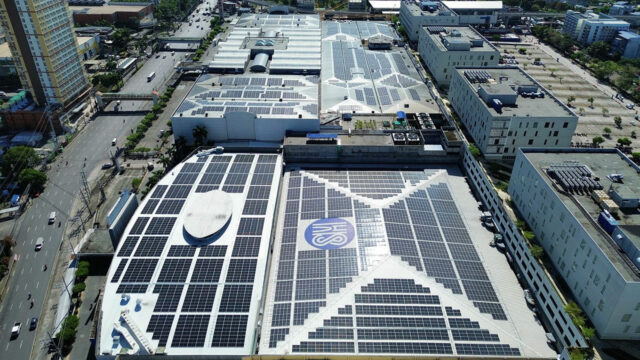
SM CITY FAIRVIEW’S ROOFTOP solar photovoltaic system. — SMPRIME.COM

SM PRIME HOLDINGS, INC. (SMPH) has secured approval from the Securities and Exchange Commission (SEC) to offer up to P17 billion in fixed-rate retail bonds, the third tranche of its P100-billion debt securities program.

In a regulatory filing on Thursday, the listed property developer said the SEC permit, dated Oct. 30, allows it to issue P12 billion in fixed-rate bonds, with an oversubscription option of up to P5 billion, under Series AB, AC, and AD.

The bonds will carry interest rates of 5.9096% for Series AB maturing in 2030, 6.0858% for Series AC due 2032, and 6.2855% for Series AD due 2035.

Proceeds from the issuance will fund 16 major redevelopment projects and 12 new lifestyle malls planned through 2030, as well as support the launch of new malls in Xiamen and Fujian, China.

Philippine Rating Services Corp. (PhilRatings) assigned the bonds its top rating of PRS Aaa with a “stable” outlook, indicating an “extremely strong” ability to meet financial commitments.

In September, SM Prime raised $350 million from its first dollar bond issuance and postponed a planned $1-billion real estate investment trust listing until after 2026 due to challenging market conditions.

On Thursday, SM Prime shares fell 1.32% or 30 centavos, closing at P22.40 apiece. — Alexandria Grace C. Magno

Hauntings, violence, and true crime: Series to binge on over Halloween

The Monster of Florence

IN TIME for the culmination of spooky season, horror and crime drama series are filling online streaming platforms. Here is a quick rundown of what you can catch this Halloween if getting shivers down your spine is your thing.

NETFLIX
From suspense-filled thrillers to natural and supernatural horror, there’s a lot to choose from on Netflix. There is True Haunting, an American docufiction series that looks into hauntings using immersive reenactments and interviews. With James Wan as one of its executive producers, the five episodes look into two tales of mysterious hauntings.

Meanwhile, the Italian true crime limited series The Monster of Florence delves into the case of a serial killer in 1960s Italy who targeted couples parked in lovers’ lanes. Based on a notorious true story, the four-episode limited series was directed by Stefano Sollima.

Other interesting titles are Nightmares of Nature, an animal documentary series that centers on the horrific beauty of nature from the perspective of prey; and Monster: The Ed Gein Story, the third in Ryan Murphy and Ian Brennan’s anthology of American serial killers, this time following the 1950s murderer Ed Gein.

HBO MAX
Another series about a real-life serial killer, this time on HBO Max, is Devil in Disguise: John Wayne Gacy. The miniseries first premiered on Peacock and dramatizes the life of Gacy who murdered young men and boys in the 1970s.

Then there’s the HBO original crime drama Task, created by Brad Ingelsby, which stars Mark Ruffalo as an FBI agent investigating violent robberies in stash houses. The seven-episode miniseries is a bleak and horrific look at the reality of crime.

For a more fun yet appropriately themed watch, check out the 11th season of Halloween Baking Championship, an entertaining battle between some of America’s top bakers who are seeking to create the spookiest treats and desserts.

DISNEY+
Disney+ has a lineup of horror and crime series fresh from Hulu. Murdaugh: Death in the Family is a five-episode miniseries that investigates a man accused of the murders of his wife and son. The platform also has the biographical miniseries The Twisted Tale of Amanda Knox, a true story that centers on an American college student studying in Italy who is wrongfully convicted of murder.

Riffing off the popularity of true crime these days, Hulu is also showing the fifth and latest season of the fictional comedy-drama Only Murders in the Building. The show is a must-watch, about a trio of neighbors (played by Steve Martin, Martin Short, and Selena Gomez) who have a shared interest in true crime podcasts and become friends while investigating a series of murders in their apartment building.

PRIME VIDEO
Over on Prime Video, the UK-set horror-thriller series Lazarus, created by Harlan Coben and Danny Brocklehurst, follows a forensic psychiatrist who looks into cold case murders after coming home for the death of his father. Meanwhile, the platform’s satirical superhero series Gen V, a spinoff of the famed and equally violent hit The Boys, has a new season.

Another fun watch is the brand-new second season of Hazbin Hotel, an adult animated musical series about Charlie Morningstar, the crown princess of Hell.

LIONSGATE PLAY
For older titles that aren’t necessarily spooky, but still horrific in their own, realistic way, Lionsgate Play has some gems worth revisiting. The 2018 UK drama miniseries A Very English Scandal has Hugh Grant play a charming and charismatic politician hiding a dangerously cruel interior.

Finally, there’s Mr. Robot, a show that ran from 2015 to 2019, starring Rami Malek as a cybersecurity engineer and vigilante hacker who exposes the scary global chaos of a world that is reliant on the internet. — Brontë H. Lacsamana

PHirst to spend P8.39B to build 13,150 more homes by yearend

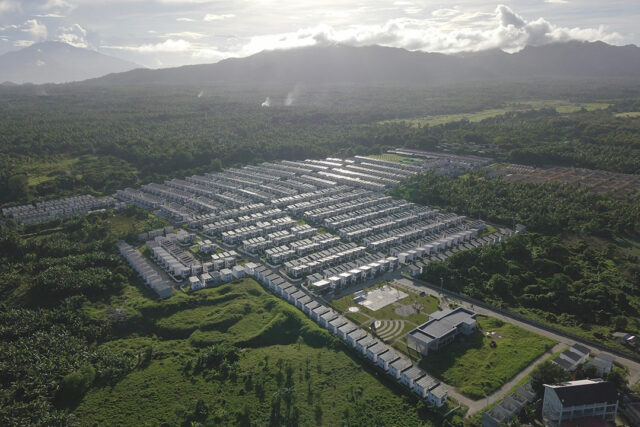
A DRONE SHOT showing a completed PHirst community.

PHIRST Park Homes, Inc. (PPHI), the first-home brand of Century Properties Group, Inc. (CPG), said it has earmarked P8.39 billion to deliver 13,150 additional housing units nationwide by end-2025.

In a disclosure to the stock exchange on Thursday, the company said it has tapped its in-house construction arm, PHirst Build, and Saavedra-led Megawide Construction Corp. for the projects.

PHirst Build will construct 6,326 units across Luzon projects, including PHirst Park Homes Sto. Tomas and PHirst Park Homes Magalang East.

Megawide, for its part, will build 5,824 precast units in Cavite, Laguna, and Batangas.

About 1,000 more houses are under the contract awarding stage and scheduled for construction this year, the company said.

PPHI said it awarded 29,306 housing units to contractors in 2024 alone, bringing its total housing portfolio to 42,456 units since its establishment in 2017.

The developer has completed 15,000 housing units in the first half, of which 10,000 have been turned over to buyers. The number of units turned over is expected to reach 14,000 by yearend.

“Our initiatives, through innovative construction methods and strategic partnerships with contractors and suppliers, represent a strong continuation of our mission to provide affordable housing solutions,” PHirst Vice-President for Technical Operations Division Roy C. Lachica said.

“These also help us to continue our expansion into more locations nationwide as the company responds to the country’s growing demand for housing,” he added.

PHirst currently has 31 active projects located in Cavite, Laguna, Batangas, Quezon Province, Bulacan, Pampanga, Bataan, Nueva Ecija, and Bacolod City.

“Through innovative construction methods and strong partnerships, PHirst strives to make homeownership accessible for all Filipinos while actively contributing to community development,” the company said.

CPG reported a 14% growth in first-half net income to P1.22 billion, supported by its affordable housing segment.

At the local bourse on Thursday, CPG shares closed flat at 65 centavos apiece. — Beatriz Marie D. Cruz

ADVERTISEMENT
ADVERTISEMENT