Home Blog Page 7701

Put your money where your heart is: Sustainable investing is (almost) here!

PCH.VECTOR-FREEPIK

I write this column with so much excitement, simply because it is the first time I am writing something current, real, and about the Philippines, instead of the research I had done in the past decade. There is good reason for this: almost 12 years since I began dipping my feet into understanding Responsible Investing and Impact investments, they are finally taking shape here in the country. Last Friday, I had the privilege of hosting a Philippine Star event entitled, “Green REIT: Investing in the Future,” which was in partnership with Filinvest Land’s upcoming REIT (real estate investment trust), FILREIT. I had expected a webinar meant to market the new product in the market but was pleasantly surprised that it had focused on where we are in the sustainability agenda.

Just to backtrack, Responsible Investment has been present in developed parts of the world, particularly in the United States and in Europe, but has had such little traction domestically. That is not that surprising considering the environmental, governance, and sustainability standards for companies here are much less developed and regulation is largely weak in comparison. Indeed, research has highlighted the “virtuous” cycle of sustainability in that, the more money a corporation has, the higher the likelihood it can use the extra cash to fund sustainable practices, which in turn contribute to — in the best case — better performance, and in a base case, to lower risks. We have relatively small firms, most of which are still in a growth phase wherein resources are being used to simply recover initial equity and attract investors with high returns. The idea of investing in the long-term, in possibly foregoing short-term profit for long-term gains, not simply economically but for our future generations, is something that ends up on the backburner in countries like ours, and more so in a pandemic situation. I mean, would you really cut out “sin” stocks from your investment portfolio, if those are the ones defensive at the moment?

And yet we had a talk with Yayu Javier, the chairperson of the UN’s Global compact network in the Philippines, which illustrates how we now have our own specific country point-person to encourage our local Asset Managers to sign up to the Principles for Responsible Investment (PRI). In another life, I had spent a decade going back and forth to the PRI offices in Shoreditch, London, as part of their Academic network; I had received grants to examine not just Responsible Investment, but the PRI Regulatory and Assessment Framework, talking to more than 80 Asset Managers in Europe. I hoped but never expected it would ever make waves in my own country, and now the possibility is imminent. Interestingly, she mentioned that 40% of high-net-worth individuals currently own or are considering using impact investments, led by 77% millennials and 46% women! Seventy percent of those who have invested are satisfied with the financial performance of their investments.

Enrique Florencio, the Secretary General of the Association of Development Financing Institutions in Asia and the Pacific, came next. From Asset Management to Development and green finance, he explained the different already existing investments in the space, funded by multilaterals and NGOs. The highlight of his presentation was that these are well-established opportunities with deep pockets of funding, and a burgeoning interest from financiers.

We then had Thomas Baudlot, CEO of Engie Southeast Asia who showed photos of their projects in the Philippines such district cooling systems. With 349MW in green power in Southeast Asia, the green revolution in everyday places like malls and townships is just beginning.

And finally, we had Maricel Brion-Lirio who discussed the upcoming REIT of Filinvest Land. I had been covering this and all the other upcoming REITs very closely on BusinessWorld Live and it was the first time that the sustainability-focused angle instead of the yield play was truly brought to the fore. With the parent company now having actual sustainability standards in place (albeit evolving), buying into the REIT is effectively owning a piece of commercial properties who are held to a higher-than-normal sustainability standard. We were excited enough to have REITs finally come into the market after decades in the making, imagine having a Green REIT: two birds with one stone.

Ultimately, we all determine our investment choices based on our risk appetite and research. But one of the best pieces of advice you will hear repeatedly from analysts and seasoned investors is this: invest in companies you love and believe in; imagine that you will effectively own a part of the company and imagine you should believe in their products and services so much that you will risk putting your hard-earned money in its growth. Some people love food and will invest in the food industry for products they love; some people believe that technology is the future and will put their money there; and yet others — like myself, will have only one dream: to put their money where their heart is, and that is in companies that commit to a sustainable future. No excuses now.


Daniela “Danie” Luz Laurel is a business journalist and anchor-producer of BusinessWorld Live on One News, formerly Bloomberg TV Philippines. Prior to this, she was a permanent professor of Finance at IÉSEG School of Management in Paris and maintains teaching affiliations at IÉSEG and the Ateneo School of Government. She has also worked as an investment banker in The Netherlands. Ms. Laurel holds a Ph.D. in Management Engineering with concentrations in Finance and Accounting from the Politecnico di Milano in Italy and an MBA from the Universidad Carlos III de Madrid.
Mandatory vaccination: Science vs law?

PHILIPPINE STAR/ MICHAEL VARCAS

I am on the fence about House Bill No. 9252, which intends to practically make compulsory the vaccination of the public as protection against COVID-19 through a process of what I deem to be selective exclusion. Authored by Cavite Rep. Elpidio Barzaga, Jr., the bill is to be tackled by the House Committee on Health in August or September, according to the lawmaker.

Under the proposed measure, to be known as the Mandatory COVID-19 Immunization Act of 2021, the COVID-19 Vaccination Program will be “mandatory for persons as may be determined by the DoH (Department of Health) and shall be given for free at any government hospital or health center, and as provided in Republic Act No. 11525, provided, that inoculation must, at all times, be science and evidence based.”

Where it gets unclear is in its provision that “no persons who are covered by this Act, as determined by the DoH, shall be allowed to enter, convene or occupy public places, whether or not government or privately owned.” This appears to imply that public places will be only for vaccinated individuals, selectively excluding the unvaccinated majority — including children — from public places.

The bill also provides for the issuance of vaccine cards, making such “as an additional mandatory requirement for educational, employment and other similar government transaction purposes.” Does this mean the proposed law will have the effect of temporarily suspending the civil rights of those unvaccinated against COVID-19? Just like those in detention or in prison?

Moreover, the Barzaga bill provides that “any person who violates any provision of this Act, or any of its rules and regulations or without permission of the quarantine officer in charge, shall be punished by a fine of not more than P50,000, or by imprisonment for not more than one year, or both.”

Mr. Barzaga perceives the need for a “drastic” measure to counter vaccine hesitancy, with urgency prompted by the 2022 polls. “In order to safely achieve herd immunity, a substantial proportion of a population would need to be vaccinated,” he was quoted in a news report. “We hope that we will be able to finish this before the end of the 18th Congress because our problem is elections is just around the corner, and we might run out of time.”

In persuading more people to get vaccinated as protection against disease, would we rather have them persuaded by science or by law? Science, or course, can make compelling arguments for or against, but the choice to act remains personal and free. Law, on the other hand, compels one to act under duress, or through some form of pressure, regardless of science.

In March, I called on legal and medical experts to chime in on whether COVID-19 vaccination should be mandatory or compulsory — an interesting case for Bioethics. This was after I noted that while pandemics were not unprecedented, COVID-19 is, and the same goes for the extraordinary havoc it continues to wreak on lives and the global economy.

With the Barzaga bill filed in late April and now seemingly under way, now is the time for the legal and medical community to be heard. The public will surely benefit from expert opinion on the matter, and I am sure lawmakers cannot claim a monopoly on ideas. Making experts’ opinions, backed by data, publicly available will benefit the public and policy makers alike.

The Barzaga bill has an unintended political dimension, and that is the possible selective exclusion of the unvaccinated majority from public places like polling precincts. If the bill passes before the end of the year, imagine the implication on the 2022 presidential, senatorial, and local elections? When in fact COVID-19 should not be an issue. The United States successfully held presidential elections in 2020 without making vaccination mandatory.

One compelling argument in favor of mandatory vaccination is that vaccine hesitancy may prevent herd immunity, and that unless a critical mass or people will get the vaccine, the infection and death toll from COVID-19 will continue to rise. If only 10 out of 100 will favor vaccination, then the overall inoculation process may be for naught.

On the other hand, experience also shows that mandatory vaccination is not a cure all. In a Feb. 16 report in The Straits Times by Indonesian Correspondent Wahyudi Soeriaatmadja, he wrote that “Indonesia has made coronavirus vaccination for citizens compulsory,” and that “people who are eligible for vaccination but refuse a jab can be penalized” with fines, delays or suspension of social aids, or delays or suspension of access to public services. That was in February. Since then, six months after, Indonesia is still struggling with the Delta variant.

In the US, which is also struggling against the Delta variant now, the 1905 US Supreme Court case of Jacobson v. Massachusetts already affirmed the authority of the state to compel vaccination, noting that “the rights of the individual may at times, under the pressure of great dangers, be subjected to such restraint to be enforced by reasonable regulations as the safety of the general public may demand.”

Even the US Equal Employment Opportunity Commission, last December, reportedly issued guidance stating that employers were legally allowed to require employees to be vaccinated before they return to offices. In a way, vaccination can also indirectly address the concern that further easing of quarantine restrictions or allowing greater capacity for businesses and transportation can lead to more deaths.

But this brings me to the point that if the state’s regulation of healthcare is intended to ensure the protection of lives and the promotion of the greatest public good, but at the same time acknowledging that COVID-19 vaccines are generally “experimental,” can we morally make inoculation compulsory for all? Can we deny people the right to vote in a public polling place? Can we suspend the civil rights of those who chose to skip vaccination? Can the Barzaga bill settle the constitutional and moral issues?


Marvin Tort is a former managing editor of BusinessWorld, and a former chairman of the Philippine Press Council

matort@yahoo.com

Transparency to strengthen consent of the governed

MACROVECTOR-FREEPIK

For the last several months, political parties and groups have been doing the rounds. Their operatives regularly exchange notes, some of which are mere red herrings to confuse and mislead.

There are self-styled political analysts, businessmen, academics, public relations and advertising agencies, potential financiers, vote security experts, IT practitioners, characters claiming inside connections within the election commission agency, pollsters of all stripes and biases, both independent and “captured,” and others who may claim to have some political insight and savvy to qualify as seasoned advisers.

The intensity of these groups’ activities mirrors the complexity of political and electoral intelligence gathering, maneuvering, and psy war. As all of these are being undertaken, another group sifts through and analyzes the data gathered. Preliminary “what if” scenarios are formulated and non-quantitative and rudimentary gaming theory is conducted with quite a number of assumptions on decisions and moves to be made by certain parties in the equation. All these are being conducted at this time of the year — in the midst of the pandemic — to achieve the sole objective of coming up with a presidential candidate. The rest of the slate, starting with the vice-president, is adjustable as some kind of wild cards and subjects of hard bargaining and negotiations that sometimes affect local slates.

As the slate talks are conducted, an unavoidable but critical subject, especially for a divided and underfunded opposition, becomes the main item on the agenda: “We may have a popular and powerful slate, but what about the conduct of the counting?”

This question was the main point of discussion in two presentations made by Namfrel National Chairman Augusto Lagman and Automated Election System Watch (AES Watch) spokesman, Dr. Nelson Celis. Both Celis and Lagman are veteran IT practitioners and academicians who have called the attention of the public and the Commission on Elections (Comelec) to various issues on the conduct of elections, including staging demonstrations in front of the Comelec office in Intramuros. Their latest crusade is for the return of the manual count at the precinct level and the use of automation going to the canvassing. In short, a hybrid election system. In addition, they point out the lack of compliance by Comelec with certain basic legal requirements.

In his paper, “Understanding the Automated Election System for Transparency,” Lagman details his proposal for a manual count, a proposal he has been advocating for many years. So far, Lagman and Celis have been ignored by all sectors, including the legislative branch and by the weary public itself.

In his presentation, Lagman points out that a number of mature democracies have abandoned e-voting. Germany did away with electronic voting on the grounds of lack of transparency — “the voter could not see what actually happened to his vote inside the computer and was required to exercise ‘blind faith’ in the technology.” In the Netherlands, e-voting was suspended after 20 years of use when activists showed that the system could, under certain circumstances, endanger the secrecy of the vote. Other countries have abandoned total e-voting for various reasons: lack of transparency; nobody witnesses the counting; any time precinct counting is automated, transparency is lost; it is very vulnerable to tampering by an insider.

The proposed manual count at the precinct level uses the same procedure employed in the past. The chairman of the Board of Election Inspectors (BEIs), reads each ballot. In the old system, the votes were read by the chairman of the BEI and were tallied on preprinted and Comelec-supplied sheets that were posted on a tally board. The votes cast for each candidate were written across the candidate’s name, while another BEI member did a separate manual tally.

In Lagman’s proposal, the second BEI types the vote received by a candidate into a laptop which is connected to a giant screen. The screen shows the public the votes recorded as they are read in each precinct. This transparent system will obviate the need of watchers crowding around the tally board and the election inspectors. Manual counting advocates stress that by displaying the votes on a screen, you solve the problem of voters and watchers crowding around the election officials without observing social distancing. No danger of the vote counting being another super spreader event. Technology therefore has a remedy for this potential problem of people not observing social distancing.

Advocates of total automated voting point out that the Precinct Count Optical Scan (PCOS) machine automated the precinct-counting thus saving five to 12 hours of counting at a cost to government of P10 billion. PC servers and laptops automated the canvassing thus saving over 40 days of work at a cost of P300 million. Lagman and his fellow IT practitioners however stress that since 2008, “the obvious approach of automating only the canvassing, transmitting the election returns (ER) electronically, while keeping precinct-counting manual has been recommended to Comelec but the recommendation has remained unheeded.”

Lagman caps his argument for a manual count at the precinct level by stating his key points: all steps of the election process are transparent; tallying is done under the watchful eyes of the voters; accuracy of the count is high since manual counts are the basis of accuracy; and cost is much less than direct recording electronic (DRE) and OMR or optical scan machine reader which will cost P4 billion. Ballots too will be more expensive under automated elections.

If Gus Lagman’s presentation was both instructive and informative, Dr. Nelson Celis’s talk was not only informative and instructive, it was also breathtaking for its insights. To begin with, Celis’s topic title said it all: “Will the automated polls deliver a clean, accurate and credible election in 2022?”

It was indeed a pointed question and Celis obliged with specific answers which he had been uttering since the introduction of automated elections.

Celis, other IT practitioners, and civil society groups have raised a number of issues and concerns: non-compliance with the Automated Election System (AES) Law or RA 8456 (1997), as amended by RA 9369 (2007), specifically, the non-promulgation of the law’s implementing rules and regulations (IRR), a standard legal requirement before a law can be enforced; unsecure communication channels; non-authentication of Board of Election Inspectors and Board of Canvassers through their digital signatures; non-generation of a voter’s receipt in the 2010 and 2013 elections; disregard of the Comelec Advisory Council; no source code reviews or limited access to the said code; no continuity plan which has resulted in no clear and legal explanation of the seven-hour glitch or delay during the counting of votes in the 2019 senatorial and local elections.

Celis has a compelling case. He cites Section 37 of the Automation Law: “The commission shall promulgate rules and regulations for the implementation and enforcement of this act.” Celis claims that the completion of this important document has been pending for 24 years, since 1997. The non-promulgation of the IRR has led to a lawyers’ delight as various misinterpretations have been made of the law, Celis claims.

After having raised these concerns for the nth time with about nine months to go before election day on May 9, 2022, what do we do now? What is government, that provides the funds for the elections, and the judiciary, supposed to do?

In 2004, the Supreme Court stopped what could have been the first automated election. The high court ordered Comelec to implement instead manual elections. Are we headed for the same direction?

To repeat: will the automated polls deliver clean, accurate and credible 2022 elections?


Philip Ella Juico’s areas of interest include the protection and promotion of democracy, free markets, sustainable development, social responsibility and sports as a tool for social development. He obtained his doctorate in business at De La Salle University. Dr. Juico served as Secretary of Agrarian Reform during the Corazon C. Aquino administration.

Ready on Day One

COMPANIES, especially those in a startup mode, say a new player in a capital-intensive industry like a public utility, want to get a CEO who is ready to take charge as soon as the appointment papers are signed. For a newly listed company, there is instant credibility in putting an experienced person on top, especially if he came from the market leader’s ranks. A non-compete provision in his early retirement? No problem.

A parachuted executive “hitting the ground running” has an instant grasp of his new job, competence in setting strategies, and can even bring along a team with the needed skills. No time is wasted with learning the ropes.

Runners don’t like to get slowed down trying to find diplomatic expressions for their difficult messages of zero-based budgeting, faster turnaround times, data-extraction (Why are customers leaving?) and longer hours. When incumbents cannot deliver the performance expected of them, there is little time for circumlocution in expressing disappointment — Hey, this is not acceptable.

Let the natives get restless, says his recruiter and number-one supporter. There’s a need to shake up the place, rattle the cage, wake up the sleepy heads and similar expressions to put the incumbents on the defensive.

Still, while there is no learning curve in terms of understanding the vocabulary and knowing how goals can be achieved, there is still a big adjustment needed for the new leader. He may not get the resources and the ecosystem of the corporate culture, tech support systems, and, most of all, resources that he was used to in his old job. (What? There’s no automated billing system?)

The unforeseen gaps in a company can slow down the hoped-for instant results expected. The recruiters start having doubts about the premium they paid for this leader who’s supposed to hit the ground running.

There are heightened expectations when bringing in the supposedly day-one-ready CEO. He is afterwards seen as making too many demands. (The technical support group needs to be upgraded.) Do these demands begin to sound like excuses for not getting the job done?

Consultants also possess skills that can be parachuted into client territory. They are hired precisely for their vast experience in the industry. They trot out “best practices” and ratios and performance standards as reference points to measure the scope of work needed. Of course, the subject company is found to be lagging in all indices, except perhaps in the “happiness index.” (Your people are too laid back.) There is a lot of work needed just to get to normal levels.

Unlike the high-level recruit, consultants are not expected to stay through the Christmas party. They have a limited engagement period. They practice the “seagull theory” of management — they fly in, drop their poop, and then fly off to other ships at sea, never to be heard from again.

Should politics too require a leader who is ready on Day One?

Unfortunately, for the top position, there is no previous experience comparable to running a country. Even the number two position in government leadership may be found inadequate when the occupant has been relegated to a fringe status, with no formal designation in the government organization. Involvement in parallel activities with zero recognition and marginal media coverage can turn even the dedicated deputy into a carping off-stage role.

Is this a good preparation for the top job? Maybe, in understanding how the political dynamics work, or don’t work, it is a big step forward.

What about the one in charge at the top sliding into the deputy position? Will he be ready on Day One? Does he really understand the role of a spare tire and the possibility of being left in the fringes? There’s not much expected anyway. And that may be the way he likes it. (Wake me when there’s a nice movie on TV.)

Evaluating readiness for the top political job can be elusive. Never mind the competence and relevant experience needed by the winner to deliver results in the first 100 days. Too late will the employer (the nation, in this case) find out what kind of work ethic, supporting cast, and values the newbie will bring to the top job.

It’s always a long wait getting the right replacement… from the available list of applicants.


Tony Samson is Chairman and CEO of TOUCH xda

ar.samson@yahoo.com

Singapore’s Lee urges China, US to stem deteriorating ties

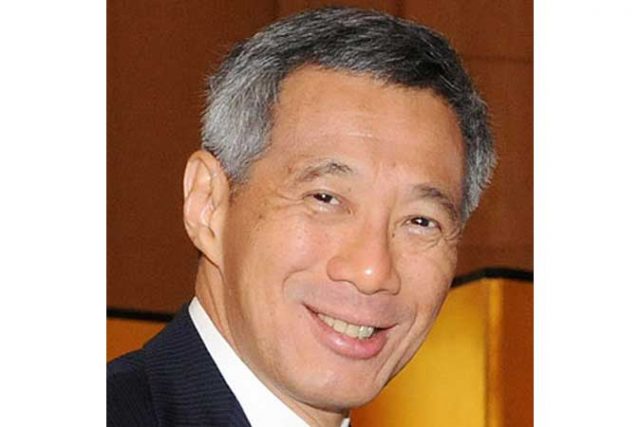
Singapore Prime Minister Lee Hsien Loong — WIKIMEDIA.ORG

SINGAPORE Prime Minister Lee Hsien Loong again warned the US and China to deescalate tensions, saying both powers presumed incorrectly they would win in any conflict.

“The reality is, neither side can put the other one down,” Mr. Lee said on Tuesday, speaking by video link to the Aspen Security Forum. “I think that is a possible misunderstanding on both sides.”

The US is not in terminal decline, as some in Beijing believe, Mr. Lee said. Equally, “China is not going to disappear. This is not the Soviet Union.”

“I don’t know whether Americans realize what a formidable adversary they would be taking on if they decide that China is an enemy.”

Over the years, Mr. Lee has been vocal in calling for the world’s biggest economies to avoid a destructive clash that could force smaller countries like Singapore — with its open, trade-reliant economy — to choose sides. After the election of President Joseph R. Biden last year, he said the US should form an “overall constructive relationship” with China under a framework that would allow the countries to develop areas of common interest and “constrain the areas of disagreement.”

Lee told the forum that views had hardened in both the US and China, and that the Biden administration was also constrained as a result, even as it brought a more “reliable and predictable” approach to foreign policy than the presidency of Donald Trump.

“I think it will be hard to reverse the present trend toward more troubled relations but many countries still hope that the deterioration in the relationship can be checked,” Mr. Lee said.

“Many US friends and allies wish to preserve their extensive ties with both powers. No good outcome can arise from a conflict. It’s vital for the US and China to strive to engage each other to head off a clash which would be disastrous for both sides and the world.”

Lee said the US under Mr. Biden wanted competition with China, but for that competition to be fair. “It is a very fine line between that to treating a competitor as the opponent or the adversary.

At the least, it means greater bifurcation on things like technology, he said. That’s as the US continues to press other countries to keep Huawei Technologies Co. out of their 5-G telecommunication networks.

The remarks come as the Biden administration seeks to bolster its presence in Asia. Last month, the White House’s top official for the region said the US’s position in Asia had “slipped,” losing ground to China as the two nations disagree on everything from the South China Sea to technology and human rights.

The US has donated millions of COVID vaccine shots to countries across Southeast Asia amid a surge in virus cases and last week sent Defense Secretary Lloyd Austin to Singapore, Vietnam and the Philippines to reassure leaders of its commitment to engagement in the region. He also vowed to challenge what he called China’s aggression. The US plans to follow up with a visit from Vice President Kamala Harris to the region later this month.

Mr. Lee told the forum that US allies were now feeling a “palpable sense of relief” and looking for long-term foreign policy consistency. “They hope for a reliable and predictable US which will provide a stable anchor for the international order.”

On Taiwan, Lee said he didn’t believe China would make a unilateral strike against the island, but warned the situation could “quite easily” become dangerous due to a miscalculation.

“I think that they are going to constrain Taiwan’s international space as much as they can, but I do not think that they will make a unilateral, unprovoked move,” he said. “It’s high risk and even if it works the victory would be Pyrrhic because what to do with 20 something million people on an island who are not willing citizens.”

Beijing views Taiwan as its territory, even though it has never controlled the island. Taiwan’s democratically elected government rejects the claim, asserting it’s a de facto separate country awaiting wider international recognition.

China has repeatedly warned the US to stay out of Taiwan affairs, even as the Biden administration criticizes its increased military assertiveness in the Taiwan Strait. Japan, for years cautious about causing friction with China, its biggest trading partner, has also recently become more vocal in public expressions of concern about pressure from Beijing on Taiwan.

“For the Chinese, Taiwan is the mother of all core interests,” Mr. Lee said. “It is the most important national subject for them and Taiwan independence is an absolute bright red line.” — Bloomberg

Delta’s spread seen pushing herd immunity threshold above 80%

THE SPREAD of the Delta coronavirus variant has pushed the threshold for herd immunity to well over 80% and potentially approaching 90%, according to an Infectious Diseases Society of America briefing on Tuesday.

That represents a “much higher” bar than previous estimates of 60% to 70%, because delta is twice as transmissible, said Richard Franco, an assistant professor at the University of Alabama at Birmingham.

“It is becoming clear that this is a very dangerous, way more dangerous virus than the original one,” Mr. Franco said.

Herd immunity is based on the idea that when a certain percentage of the population has been vaccinated against the virus or gains immunity by a previous infection, it helps protect the broader population and reduce transmission.

Nearly 60% of Americans have received at least one dose of a coronavirus vaccine, and about 50% have been fully vaccinated, representing about 165 million individuals, according to CDC data. Some 35 million people in the US, meanwhile, have tested positive for the virus over the course of the pandemic. — Bloomberg

Consumer cynicism rises, as does meaningfulness of tech brands — report

SOLEN FEYISSA-UNSPLASH

A report found that consumers around the world have become more cynical, as 70% of 395,000 respondents said that they have little faith in brands delivering on their promise. 

The Meaningful Brands report, recently released by global communications network Havas Group, recommends that brands veer away from “CSR (corporate social responsibility) washing” and understand what their consumers are going through to be meaningful to them.  

“Brands should also take note of the deeper, more meaningful question as to what their consumers hold to be important and true, that is, their values and their long-standing beliefs,” said Griffey D. De Guzman, creative director of Havas Ortega, a Manila-based media agency. 

While trends should be considered, values are more resonant when it comes to brand-building, he added. “To be a meaningful brand, therefore, is a careful balancing act of what is relevant to the consumers now and what is and will always be deeply important to them,” Mr. De Guzman said. 

GOOGLE TOPS LIST
According to the study, the most meaningful brands globally are Google, with a meaningfulness score of 75 (out of 100), PayPal (72.9), WhatsApp (72.1), YouTube (71.8), and Microsoft and Samsung (both at 71.7).  

Despite facing several lawsuits, Google found itself on top of the list because the search giant allows consumers to connect with others and access timely COVID-19 information.  

That most of the meaningful brands are from the technology is not surprising, said Phil V. Tiongson, Havas Ortega’s head of media experiences and head of data analytics, as these brands have made inroads into the minds of consumers due to the shock of the pandemic and lockdown orders.   

“What is interesting to note is that these tech brands, and other meaningful brands, are also making inroads into the hearts of consumers, which make them meaningful,” he added.  

The Meaningful Brands report found that 73% of consumers say brands must act now for the good of society and the planet. Sixty-four percent also say that they prefer to buy from companies with a reputation for purpose as well as profit — a jump of 10 percentage points since 2019.  

This past year has also brought an increase in consumer expectations in the areas of connection, care for the planet, and monetary savings and growth. 

Brands that are involved with social causes but are unable to communicate authenticity in their CSR campaigns create an expectation gap. And undelivered promises lead to a trust deficit, exacerbating cynicism among consumers.  

Consumers know when brands are inauthentic and call them out when they jump on social causes, such as Pride Month, solely for marketing purposes. “Commitments to social issues should not just be for the sake of press releases and looking good,” said Mr. Tiongson. “[They] should be done by brands because it is the right thing to do.”  

A February prosumer report by Red Havas, the public relations arm of Havas Ortega, also noted a trend towards brand authenticity and transparency among Filipino prosumers, or today’s leading influencers and market drivers. — Patricia B. Mirasol 

New York becomes first US city to order COVID vaccines for restaurants, gyms 

Image via Elvert Barnes/CC BY-SA 2.0/Flickr

NEW YORK — New York City will become the first major US city to require proof of coronavirus disease 2019 (COVID-19) vaccination at restaurants, gyms, and other businesses, Mayor Bill de Blasio said on Tuesday, as the nation grapples with the rapidly spreading Delta variant.  

With vaccines widely available, political leaders were combating the latest surge in infections with shots and masks rather than ordering businesses to close and Americans to stay home as they did last year.  

The US Centers for Disease Control and Prevention on Tuesday issued a new 60-day moratorium on residential evictions in areas with high levels of COVID-19 cases, despite a Supreme Court ruling in June suggesting that such a move would require Congress to pass new legislation.  

The US government and several states, along with some hospitals and universities, already require employees to get inoculated. Tyson Foods on Tuesday became one of the largest private employers to require workers to be immunized to combat the virus that has killed over 600,000 in the country.  

New York City’s policy requires proof of at least one dose and will be enforced starting Sept. 13. Like mask mandates and last year’s stay-at-home orders, the plan will likely meet stiff resistance.  

In France, government imposition of a nationwide health passport proving vaccination has touched off large protests, often dispersed by police using tear gas.  

Government vaccine passports are controversial among Americans as well, especially conservatives.  

“It is time for people to see vaccination as literally necessary to living a good and full and healthy life,” Mr. de Blasio, a Democrat, told a news conference.  

The US Food and Drug Administration is aiming to give full approval for the Pfizer COVID vaccine by early September, the New York Times reported on Tuesday, citing people involved in the effort.  

Roughly 60% of all New Yorkers have received at least one dose of the COVID-19 vaccine, according to city data. But certain areas, largely poor communities and communities of color, have much lower vaccination rates.  

The city’s announcement comes as cases surge nationwide. Florida and Louisiana have emerged as the latest hot spots, straining hospitals.  

Florida and Louisiana are both reporting record numbers of hospitalized COVID patients, as one doctor warned of the “darkest days” yet.  

More than 11,300 patients were hospitalized in Florida as of Tuesday, with COVID patients filling 22% of the state’s hospital beds, according to data from the US Department of Health and Human Services  

In highly vaccinated Vermont, 0.4% of its hospital beds are occupied by coronavirus patients.  

LA COUNTY SEES SURGE 
Louisiana was also dealing with one of the worst outbreaks in the nation, prompting Governor John Bel Edwards, a Democrat, to order residents to wear masks again indoors.  

COVID-19 hospitalizations in Los Angeles County have nearly quadrupled in the last four weeks to 1,096 on Monday, the department of public health said. The percentage of tests coming back positive for the virus also climbed to 6.2%, up from 1.3% a month ago, according to department data.  

To fight the spread in California, political leaders in eight San Francisco Bay Area counties this week reinstated mandatory indoor mask orders. Governor Gavin Newsom, a Democrat, late last month mandated all state employees to get vaccinated starting Aug. 2 or undergo COVID-19 testing at least once a week.  

Florida Governor Ron DeSantis, a Republican, has taken the opposite stance. He issued an executive order last week barring schools from requiring face coverings, saying parents should make that decision for their children.  

The Sunshine State claimed another grim record with the highest number of pediatric COVID-19 hospitalizations — 138 as of Tuesday, more than those recorded in Texas despite its larger population.  

Mr. DeSantis defended the state’s approach at a news conference on Tuesday.  

“We’re not shutting down. We’re going to have schools open. We’re protecting every Floridian’s job in this state. We’re protecting people’s small businesses,” Mr. DeSantis said  

In Arkansas, another state where hospitalizations for COVID-19 have spiked, Republican Governor Asa Hutchinson said he will ask state legislators on Wednesday to provide an exception to a law that prohibits state and local governments, including school boards, from mandating masks.  

The private sector, including many large US companies, have also taken some steps in response to the Delta variant threat.  

Detroit’s Big Three automakers and the United Auto Workers (UAW) union said on Tuesday they will reinstate requirements to wear masks at all US plants, offices and warehouses beginning on Wednesday but are not requiring workers to be vaccinated.  

Big Tech companies like Alphabet’s Google and Facebook have said all US employees must get vaccinated to step into offices. — Maria Caspani and Dan Whitcomb/Reuters 

Harris to push back on China’s South China Sea claims during Asia trip 

Official White House photo by Lawrence Jackson

WASHINGTON — Vice President Kamala D. Harris will focus on defending international rules in the South China Sea, strengthening US regional leadership and expanding security cooperation during her trip to Vietnam and Singapore this month, a senior White House official told Reuters.  

Ms. Harris will be the first US vice president to visit Vietnam as Washington seeks to bolster international support to counter China’s growing global influence.  

The US official said Washington saw both countries as critical partners given their locations, the size of their economies, trade ties and security partnerships on issues such as the South China Sea, which China claims almost in its entirety.  

Former US foe Vietnam has been a vocal opponent of China’s South China Sea claims. Countries in the region largely welcome the US military presence there in the face of China’s militarization of the waterway and its vast coast guard and fishing fleet.  

“We do not want to see any country dominate that region or take advantage of the power situation to compromise the sovereignty of others,” the White House official said.  

“The Vice President is going to underscore that there should be free passage for trade, throughout the South China Sea, and no single country should disrespect the right of others.”  

The US Navy has maintained a steady pattern of freedom of navigation operations in the South China Sea and near Taiwan but these appear to have done little to discourage Beijing.  

Ms. Harris’ trip will follow one by Defense Secretary Lloyd Austin last week to Hanoi, where he sought to nudge forward steadily deepening security ties.  

It will also follow high-level talks between US Deputy Secretary of State Wendy Sherman and senior Chinese diplomats last month that did little to ease deeply strained ties.  

This week, Secretary of State Antony Blinken will seek to reinforce the US message that it is serious about engaging with Southeast Asia to push back against China by joining a series of regional meetings held virtually.  

Addressing a virtual session of the Aspen Security Forum on Tuesday, Singaporean Prime Minister Lee Hsien Loong said high-level US visits were “greatly valued” as they showed Washington knew it had substantial interests to protect and advance in the region.  

However, he expressed concern about deteriorating US-China relations and said many countries hoped to see this checked “because many US friends and allies wish to preserve their extensive ties with both powers.”  

“It’s vital for the US and China to strive to engage each other to head off a clash, which would be disastrous for both sides, and the world,” he said.  

The White House official said the COVID-19 pandemic, vaccinations and quality of vaccines would also be a top priority for Harris.  

Last month, Washington shipped 3 million doses of the Moderna COVID-19 vaccine to Vietnam, bringing total donations to Hanoi to 5 million.  

Ms. Harris is due in Singapore on Aug. 22. She arrives in Vietnam on Aug. 24 and departs on Aug. 26. — Nandita Bose/Reuters 

Chilean study shows variations in success of COVID-19 vaccines

SANTIAGO — Sinovac’s coronavirus disease 2019 (COVID-19) vaccine was 58.5% effective in preventing symptomatic illness among millions of Chileans who received it between February and July, the Chilean health authorities said on Tuesday, while Pfizer’s COVID-19 shot was 87.7% effective and AstraZeneca’s was 68.7% effective. 

The data came in the latest “real world” data published by the Chilean authorities into the effectiveness among its population of a raft of COVID-19 vaccines.  

Chile began one of the world’s fastest inoculation campaigns against COVID-19 in December, having now fully vaccinated more than 60% of its population, predominantly with Sinovac’s CoronaVac. 

That vaccine was 86% effective in preventing hospitalization, 89.7% effective in preventing admission to intensive care units and 86% effective in preventing deaths within the population between February and July, health official Dr. Rafael Araos said in a press conference on Tuesday. 

In April, the same study found that CoronaVac was 67% effective in preventing symptomatic illness, 85% effective in preventing hospitalizations and 80% effective in preventing deaths, suggesting its capacity to prevent the more serious impacts of the virus has strengthened, while its capacity to stop symptomatic illness diminished. 

Dr. Araos said a reduction in protection from vaccines was inevitable over time, particularly with the arrival and growing prevalence of more virulent strains such as the Delta variant.  

“If Delta becomes more prevalent and the vaccine has a weaker response, we could observe a faster fall [in effectiveness],” he said, adding his voice to calls for a third, booster dose to be issued. 

The government also published data on the effectiveness of other vaccines administered in Chile, made by Pfizer BioNTech and AstraZeneca. 

Pfizer’s vaccine was 87.7% effective in preventing symptomatic COVID-19 in the same period, 98% effective in preventing intensive care admission and 100% effective in preventing death, Dr. Araos said. 

AstraZeneca’s was 68.7% effective in preventing symptomatic COVID-19 in the same period, 98% effective in preventing intensive care admissions and 100% effective in preventing death, Dr. Araos said. 

Chile’s study examined the vaccines’ effectiveness among different cohorts of people who either received two doses of the specified vaccine, partial doses of the vaccine or no vaccine at all. 

The CoronaVac part of the study examined a group of 8.6 million people, the Pfizer BioNTech part studied a group of 4.5 million people and the AstraZeneca part looked at a group of 2.3 million people. — Aislinn Laing and Fabian Cambero/Reuters 

US, Indonesia commit to South China Sea defense in ‘strategic dialogue’

US NAVY/HANDOUT VIA REUTERS/FILE PHOTO

WASHINGTON — US Secretary of State Antony Blinken announced on Tuesday the launch of a “strategic dialogue” with Indonesia, and Washington said the two countries committed to working together on issues that include defending freedom of navigation in the South China Sea.  

Meeting in Washington, Mr. Blinken and Indonesian Foreign Minister Retno Marsudi also committed to work together against coronavirus disease 2019 (COVID-19) and the climate crisis and to boost bilateral trade and economic ties, the State Department said.  

Indonesia is the largest country and economy in the 10-member Association of Southeast Asian Nations (ASEAN), a bloc Washington sees as key to its efforts to stand up to China’s growing influence in Asia.  

The two sides agreed to establish a “strategic partnership” in 2015, but Mr. Blinken told reporters while standing alongside Ms. Marsudi that the dialogue was only now actually being initiated.  

“Indonesia is a strong democratic partner to the United States; we are working together on so many different fronts,” he said, adding that Washington appreciated Jakarta’s strong voice within ASEAN.  

Ms. Marsudi told Mr. Blinken a strong partnership with Indonesia would be “a key asset for your increasing engagement in the region.”  

She said the United States was one of the important partners for ASEAN in implementing its Indo-Pacific outlook.  

“It is my hope, and the Indonesian government’s, to advance the bilateral relationship with the US, from health to SDGs, from education, to economy, and beyond,” she said, using the acronym for sustainable development goals.  

A State Department statement on the meeting said the two discussed steps for pandemic recovery. Mr. Blinken noted Washington had donated 8 million vaccine doses to Indonesia, and the countries were also working together on oxygen and therapeutics.  

Ms. Marsudi and Mr. Blinken also “expressed shared views on maritime security” and committed to “defending freedom of navigation in the South China Sea, and continuing collaboration in cybersecurity and preventing cybercrime,” the statement said.  

It said Mr. Blinken commended Indonesia’s efforts to support Afghanistan’s peace negotiations and stressed the importance of restoring ASEAN member Myanmar to the path to democracy.  

On climate, the two sides “discussed opportunities for Indonesia to raise its climate ambition,” it said, without elaborating.  

The talks came before Mr. Blinken was to participate in a virtual meeting with ASEAN, several members of which have competing claims in the South China Sea to those of China. Beijing sees nearly all the strategic waterway as its own and has built up its forces there.  

Mr. Blinken is joining a week of meetings with regional counterparts, part of a US effort to show it is serious about engaging with Southeast Asia to push back against China.  

Murray Hiebert, a Southeast Asia expert at Washington’s Center for Strategic and International Studies, said there had been little time to develop the strategic partnership agreement reached under the Obama administration before former President Donald J. Trump took office.  

“Agreements like this weren’t a priority for his administration,” he said of a deal stretching into multiple domains, including defense, energy and broader economic ties.  

“Hammering out details in all these areas will take some time and require considerable focus by senior foreign policy, defense and economic officials.” — Doyinsola Oladipo and David Brunnstrom/Reuters 

Southeast Asia’s factory powerhouses hit by vaccination woes, Delta

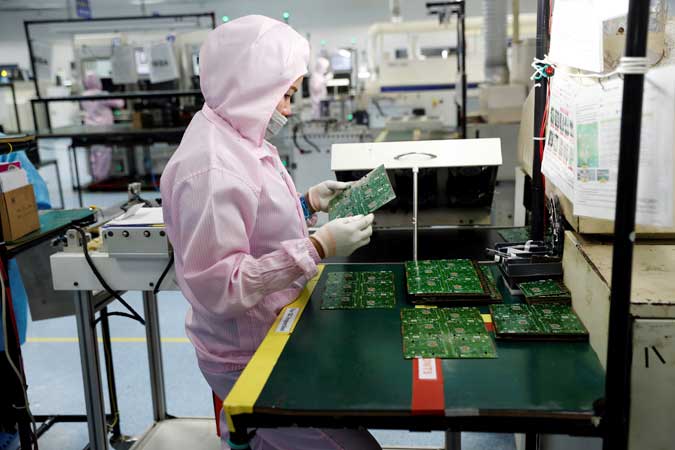
Filipinos work at an electronics factory in Malvar, Batangas, Aug. 10, 2018. — REUTERS/ERIK DE CASTRO

BANGKOK/KUALA LUMPUR — Fresh outbreaks of the Delta coronavirus variant in Southeast Asia have crippled its factory sector, disrupting global supplies of goods such as rubber gloves, semiconductors, and sport utility vehicles (SUVs) and threatening the $3 trillion region’s recovery.  

A series of factory surveys this week showed business activity across most Southeast Asian economies fell sharply in July, a contrast to more resilient manufacturing economies in Northeast Asia and the West, where business growth has slowed but remained in expansion.  

The economic disruptions in Southeast Asia caused by the virus have been made worse by slow progress in vaccinations in the region of 600 million people. Governments have struggled to secure doses and have imposed costly lockdowns that have left many factories without workers.  

The setbacks threaten the growth of one of the world’s more resilient emerging market blocs, which has withstood various global crises in recent decades thanks to broad robust economic reforms and its proximity to China.  

HSBC economists warn the low inoculation rates in Indonesia, Vietnam, the Philippines and Thailand, as well as the uncertain efficacy of their vaccines, put their economies at risk.  

“This means that populations in these countries could remain vulnerable not only to the current outbreak, but any future mutations that may develop,” HSBC said. “Touch-and-go restrictions are likely to continue, weighing on the near-term growth outlook.”  

For Southeast Asia’s manufacturers, which are competitive largely because of low-cost labor and access to raw materials, the impact of new outbreaks on labor supply has been a major production bottleneck.  

In Thailand, Asia’s fourth-largest auto exporter and a production base for major global car brands, Toyota Motor Corp. suspended production at three of its plants in July due to parts shortages caused by the pandemic.  

HIGH DEMAND, LOW PRODUCTION  

Siam Agro-Food Industry, a Thai processed fruit exporter, is heavily reliant on migrant labour and has only been able to fill 400 of the 550 roles as workers return to their countries and are unable to return due to closed borders.  

“There are 350 tonnes of fruit per day but now we can take only 250 tonnes because of not enough workers to process,” said Ghanyapad Tantipipatpong, president of Siam Agro-Food Industry.  

“There is strong demand from export markets, such as the United States, our main market. The problem now is with the production.”  

In Vietnam, which hosts facilities belonging to global companies such as Samsung, Foxconn and Nike, companies in the country’s south have been forced to keep workers isolated at their production sites at night.  

Industrial output in several southern cities and provinces where strict movement curbs were imposed from July, has fallen sharply, the government’s statistics office said last week.  

In Malaysia, which supplies about 67% of the global rubber glove market, lockdown restrictions forced many glove makers to suspend operations in June and July.  

Eased restrictions since then have allowed 60% of the work force to return after the country’s glove-making association pleaded with the government for the industry to resume, citing concerns from global buyers. The association is now calling for a full return.  

Already, disruptions in Southeast Asia are causing pain elsewhere with German chipmaker Infineon Technologies expecting a hit in the tens of millions of dollars from shutdowns at its Malaysia plant. The slowdown will in turn affect Infineon’s automotive clients.  

Daniel Bernbeck, chief executive officer of the Malaysian-German Chamber of Commerce and Industry, said Malaysia’s strict quarantine rules have also made it difficult for higher-end manufacturers such as chipmakers to bring it the technical expertise needed.  

Analysts warn the risks go beyond just the hit to production.  

Moody’s Investors Service said Asia-Pacific economies with “concentrated economic structures” and weak institutions would be hit hardest.  

“These are economies with lower-middle incomes, with deep scarring likely to increase social risks,” Moody’s said. “In some of these economies, high debt burdens are limiting governments’ fiscal space to withstand the pandemic.” — Orathai Sriring and Liz Lee/Reuters 

ADVERTISEMENT
ADVERTISEMENT