Home Blog Page 766

Philippine Startup Week 2025 returns to champion Filipino innovation, entrepreneurship

The country’s largest startup gathering, Philippine Startup Week (PHSW) 2025, will take place from Nov. 10 to 14, highlighting efforts to scale Filipino innovation and support startups aiming to expand beyond local markets.

The country’s premier startup gathering, themed “Scaling Filipino Innovation: Start Local, Go Global,” will feature insights on the world-class nature of local startups and how they can seize opportunities to broaden their impact globally.

Now in its sixth year, PHSW is jointly organized by the Department of Science and Technology (DoST), Department of Trade and Industry (DTI), and Department of Information and Communications Technology (DICT). The three agencies also lead the Innovation Startup Act (ISA) Steering Committee, which coordinates national initiatives to strengthen the country’s startup ecosystem.

This year’s edition, organized with the National Development Company (NDC) and the Strategic and Collaborative Alliance for Leveraging Ecosystems of Startups-National Capital Region (SCALE NCR), will be held at the newly opened Philippine Innovation Hub in Marikina. The five-storey venue will host conferences, startup expos, community events, and partner showcases throughout the week.

PHSW 2025 will revolve around five main tracks: Discover, which focuses on exploring technopreneurship and startup creation; Collaborate, which emphasizes partnerships among stakeholders; Develop, which provides mentorship and support for scaling; Showcase, which spotlights tech startups through pitching events; and Invest, which promotes funding for high-impact ventures.

Attendees can also hear from the ISA on upcoming initiatives to strengthen the country’s startup ecosystem, and network with prominent startup enablers, champions, venture capital (VC) firms, and top startups of the country.

Philippine Startup Week 2025 is the country’s largest startup conference, dedicated to showcasing Filipino innovators who create solutions for local and global challenges. It’s the space for collaboration, connection, and inspiration.

Founders, investors, advocates, and anyone interested in exploring the Philippine startup community are invited to come.

Visit www.phstartupweek.com for more information about the event from participant registration to exhibitor, partner, and community event opportunities.


SparkUp is BusinessWorld’s multimedia brand created to inform, inspire, and empower the Philippine startups; micro, small and medium enterprises (MSMEs); and future business leaders. This section will be published every other Monday. For pitches and releases about startups, e-mail to bmbeltran@bworldonline.com (cc: abconoza@bworldonline.com). Materials sent become BW property.
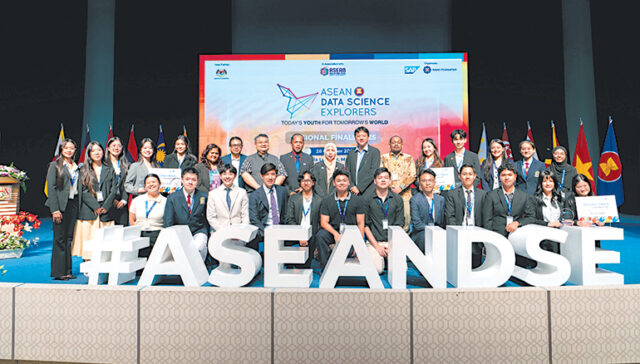
Data-driven ideas take center stage at ASEAN Data Science Explorers 2025 regional finals

The ASEAN Foundation and SAP concluded the ASEAN Data Science Explorers (ASEAN DSE) 2025 Regional Finals in Kuala Lumpur, Malaysia, gathering 22 students from secondary and tertiary institutions across the 10 ASEAN member states to present data-driven solutions to regional socioeconomic challenges.

Now in its ninth year, the program encourages youth to apply data analytics to real-world issues using SAP Analytics Cloud, with this year’s projects aligned with six key Sustainable Development Goals (SDGs): Zero Hunger, Good Health and Well-being, Clean Water and Sanitation, Sustainable Cities and Communities, Responsible Consumption and Production, and Climate Action.

Team DataMinions from Lao PDR was officially named the Regional Winner of ASEAN DSE 2025 for presenting ‘Namjai Smart Water Tank,’ a device that filters and detects harmful substances in water while alerting households, NGOs, and authorities to maintain water quality. The innovation targets clean water challenges in Lao PDR, Cambodia, and the Philippines. Team Mamamamoodeng from Thailand and Team MyKXLab from Malaysia placed first and second runner-up, respectively.

Representing the Philippines, Team Sharksfin, composed of Lizzie Annika Montemayor and Val Allen Eltagonde, presented ‘HydroLink,’ a two-pronged system addressing the water crisis in Southeast Asia. The project combines a field-deployed groundwater monitoring device with a mobile application and centralized dashboards to promote better water management.

According to a 2022 ASEAN Foundation-Google study, 72.2% of underserved youth in the region have low or no advanced digital skills. The ASEAN DSE program seeks to bridge this gap by equipping young people with data literacy and analytical capabilities essential to the future job market.

Supported by the Ministry of Education Malaysia, the regional finals formed part of the ASEAN Chairmanship 2025 events. The Ministry facilitated the participation of high-level delegates from all 10 member states and emphasized the importance of fostering digital readiness among ASEAN youth for sustainable development.

“The ASEAN DSE program is a prime example of how regional collaboration can drive innovation and build critical future skills amongst our youth. Over the past nine years, the program has played a significant role in advancing digital literacy in Malaysia, impacting students and educators,” said Ybhg. Dr. Mohd. Azam Ahmad, director-general, Ministry of Education Malaysia.

Dr. Piti Srisangnam, executive director of the ASEAN Foundation, emphasized the program’s pivotal role, “The ASEAN DSE program is a key initiative to nurture young talents across our region. By providing them with digital tools and data skills they need, we empower them to think critically and innovate solutions to real-world problems, helping both their personal growth and the development of ASEAN as a whole.”

Since its launch in 2017, the ASEAN DSE program has empowered more than 111,000 young people aged 15 to 30, including those from underserved communities, and engaged over 3,300 educators across the region, with women making up 55% of the beneficiaries.


SparkUp is BusinessWorld’s multimedia brand created to inform, inspire, and empower the Philippine startups; micro, small and medium enterprises (MSMEs); and future business leaders. This section will be published every other Monday. For pitches and releases about startups, e-mail to bmbeltran@bworldonline.com (cc: abconoza@bworldonline.com). Materials sent become BW property.

Time traveling in Türkiye

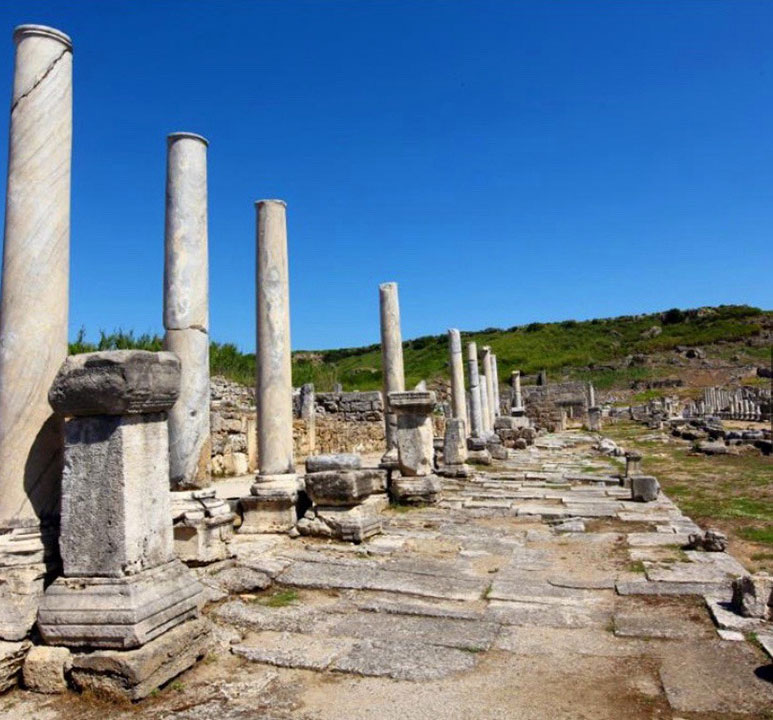
THE THEATER in the ancient city of Hierapolis, which was used for public events and ceremonies, featured columns inscribed with historical events and mythology.

By Anna Isabel C. Sobrepeña

THE WINDOW framed the blush of a new day as the plane descended into Istanbul. Returning to Türkiye for a fourth time did not diminish the enigma and romance of the only country nestled between two continents. Instead, mystery and enchantment were heightened as the itinerary covered a route through a modern skyline into an epoch intimating humanity’s shared past.

Our guide, Huseyin Demir, factored in the transcontinental landmass that contributed to the rich history and cultural heritage. About 3% of Türkiye is located in southeastern Europe while 97% is geographically part of Asia. Waterways separate the small East Thracé or European side from the peninsula of Anatolia which is located in Asia. It was access to these bodies of water as well as the Mediterranean and Aegean seas which supported the development of settlements in the fertile lands. This peninsular country linked Europe and Asia, and even Africa, thereby becoming a crossroads for trade, technologies, and an exchange of cultures.

Besides being a natural resource, the Turkish straits of the Bosporus and Dardanelles were advantageous for naval power. Empires were established and cities flourished. Ruins in Urla, Denizli, Burdur, Antalya, and Side are silent vestiges of the greatness that once was.

ROSE OILS AND TEAS
It was a little over an hour by plane from Istanbul to Izmir, one of the oldest prehistoric cities that flourished through the centuries and remains a thriving metropolis. This was apparent upon arrival at the Izmir Adnan Menderes International Airport, a modern structure with vaulted roofs, indoor gardens, and natural lighting.  The facility served 11.5 million passengers in 2024 and has direct rail transit to the urban center.

The scenery along the way was no different from other places in Europe. It was only when we were taken to Konak, a municipality in Izmir, that it felt like we were in Türkiye. The Kemeralti district where the locals go for their everyday requirements, was lined with shops selling apparel, food, jewelry, rose oils, teas, soap, and houseware. Despite the 14-hour travel time (layover not included), the adrenaline kicked in for a shopping spree. It was, however, the perfect appetite stimulant to the amazing meal that followed.

CULTURE IN A CUP
The Ayşa Boşnak Börekçisi restaurant is tucked in an alley inside the Kemeralti bazaar and offers a tantalizing spread of hot and cold food in the tradition of Bosnian and Ottoman cuisine. Cited in the Michelin guide, the cuisine is a gastronomic experience of home-cooking style. Aysa, the chef-owner, who wears the toque and traditional chef’s white jacket with the Michelin insignia sewn on, explained through an interpreter that the stew served that day was slow cooked using Ottoman ingredients. Many of the dishes stirred in a fusion of Mediterranean and Middle Eastern flavors simmered in their own juices. Turkish food draws largely from its Ottoman heritage, among others, an intertwining of cultures, rituals, and traditions.

One thing that is distinctly Türkiye is Turkish coffee. It was just a short walk to another alley lined with coffee shops. Once settled in Emel Café, the proprietor gave us an education on the art of making the after-meal beverage. Coffee is not grown in Türkiye. Instead, high quality arabica beans are sourced from Central and South America. These are blended and roasted together before being made into a fine ground. A portion is spooned into a cezve, a small metal cup with a handle, where water proportioned to the coffee is poured. This is the point where sugar is added for those who prefer a sweet drink. It is not added after the brew has been boiled. The cezve is placed over a low fire till a foam rises. Once the foam covers the top, the coffee is poured into a small cup that captures the foam. It is served with a glass of water and a Turkish delight.

ANCIENT EXPLORATION
While food is always an interesting way to get to know a country’s culture, the Izmir Culture and Arts Factory provided a deeper insight into Türkiye’s past. The museum, which was a tobacco factory since 1884, enshrines the history of a nation in archeological and ethnographic exhibitions, paintings, and sculpture in halls within the 20,000-square-meter complex. When the facility ceased tobacco production in 2004, the Ministry of Culture and Tourism repurposed the industrial heritage facility into a modern museum with libraries and venues for art workshops and events. It holds an impressive collection of artifacts, carvings, fabric, jewelry, and statues from centuries ago.

While these were impressive testaments to the early civilizations that thrived in the region, visiting the ancient cities themselves was nothing less than phenomenal and astounding.

The ancient Phrygian city of Hierapolis, now known as Pamukkale, is a UNESCO World Heritage site that dates back to 190 BCE. Greco-Roman imprints mark the ruins of what was once a sacred city. It survived until 1334 when it was destroyed by an earthquake and abandoned by the survivors. Archeological work in 1957 uncovered vestiges of temples, baths, and Greek structures, with a theater as the main monument of the site. Restoration work continues to this day with excavations and methodical studies providing evidence of past glories.

Adjacent to the ruins is a series of terraced basins known as the travertines. Mineral-rich water from hot springs created white rock formations over a thousand years as it cooled on the surface. This natural phenomenon is a popular attraction with visitors wading in the flowing water.

Perge in Antalya was another antique city on our itinerary. We walked under the arched entrance of a Roman gate into a city known as a center for trade. The main attraction was the agora where social life and mercantile activity took place. Daily life happened amidst colonnaded streets and mosaic floors, evidence of the elevated Roman sensibilities. There were baths for cleansing and socializing, and a stadium for sports and entertainment such as gladiator fights.

STORY OF THE ANCIENT STONES
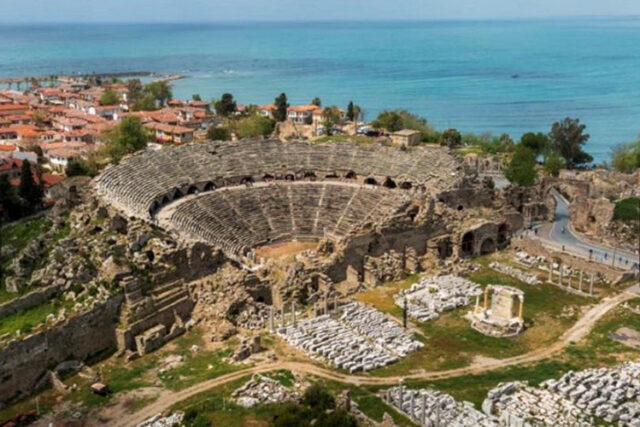
It was, however, among the ruins in Side that allowed a more reflective visit to the past. Running behind schedule and arriving past closing time, Huseyin put in a call that gained us entry at the golden hour. The outdoor museum was practically ours alone. Excavations had unearthed a cultural melting pot of a Hellenic populace living under Roman rule. The combination of Greek artistry and planning with Roman construction skills built a city with a monumental fountain, Roman aqueducts, an odeon, a great bath, streets lined with towering columns and mosaic floors that have remained intact through the centuries.

A setting sun cast an ethereal glow over the landscape of ancient stones. Inscriptions and drawings on marble and limestone told stories of life thousands of years ago. These were remnants of a past yet standing in the midst of what was once Greco-Roman splendor, I wondered if I was looking at our future. No matter how advanced the ancient civilizations had been, all that remains of them now are these stones. Could it be our fate as well?

DMAP calls for ethical data and AI practices at DigiCon 2025

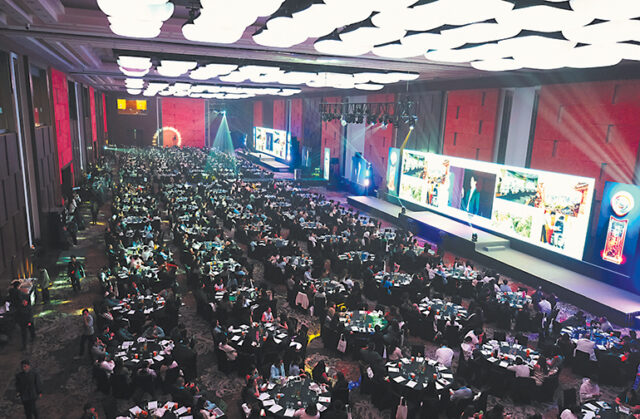
The Digital Marketing Association of the Philippines (DMAP) underscored the importance of responsible and ethical personalization in the digital marketing industry during the tenth Digital Congress (DigiCon) 2025, held on Oct. 16-17 at the Marriott Grand Ballroom in Pasay City.

With the theme “The Age of ‘i’: The Power of Personalization,” this year’s event brought together more than 2,000 delegates from the marketing, advertising, business, academic, and media sectors to discuss emerging technologies and trends shaping customer engagement.

Over two days, participants attended sessions across five tracks — Innovation (AI), Intelligence (Data Science), Immersive (Retail and Activations), Impact (Brand Building), and Integration (Business Transformation). Discussions centered on hyper-personalized customer experiences, ethical data practices, AI governance, content development, and strategies to future-proof businesses in an evolving digital landscape.

In his keynote speech, global emerging technologies expert Dex Hunter-Torricke highlighted the fast-evolving digital landscape and how it’s pushing the industry to keep up with exponentially rising customer expectations.

“The next decade is going to be the most challenging moment in history. We’re entering an era now where AI, as it gets more and more intelligent, opens up the possibilities of hyper-personalization, something that is vastly more bespoke and customized to the needs of every single one of our customers, communities, and stakeholders,” Mr. Hunter-Torricke, who served as a communications executive at Facebook and SpaceX, said.

DigiCon 2025 Chair Alan Fontanilla noted the importance of trust and consent as primary currencies in building a respectful, value-driven customer experience.

“Personalization has been democratized. Everyone, from big brands to small businesses and entrepreneurs, now has access to tools once reserved for the few. However, just because we can personalize, doesn’t mean we always should. Consent, privacy, ethics, and trust are the currencies of modern marketing. People don’t just want relevance, but they want respect. Let’s use personalization not just because we can, but because it truly adds value,” Mr. Fontanilla said.

This year, DigiCon 2025 delegates had the opportunity to earn program certifications upon completing the program tracks in partnership with the Certified Digital Marketer (CDM). This initiative aligns with DMAP’s mission to future-proof the industry by providing crucial insights and skills, empowering marketers to stay ahead of the curve in the digital age amid evolving consumer behaviors and rapid technological shifts.

“The future is connected and powered by AI, but its success hinges on our collective commitment to responsible practices. DigiCon 2025 has not only charted the course toward hyper-personalization but has equipped our industry with the ethical compass needed to navigate it. The conversations started here will ensure DMAP and the whole digital marketing ecosystem remain at the forefront of digital excellence,” DMAP President Miko David said.

DigiCon 2025 is sponsored by DoubleVerify, Hit Productions, Petal Ads by Huawei, Unilever Philippines, Dailymotion, GCash for Business: Partner Solutions, m360 and AdSpark, McDonald’s, Meltwater, Near Creative, Pancake, TikTok, UnionBank of the Philippines, Yazle, Gigil Metama, Google, Inquiro Inc., Investing in Women, Pureprofile, Senco Link Technologies Inc., and Rakuten Viber.

Esteemed media outlets AGC Power Holdings Corp., Cignal TV, GMA 7, MBC Media Group, Rappler, The New Channel, Inquirer, Outcomm, The Pod Network, The RJ Ledesma Podcast, ZBNI, adobo Magazine, BusinessMirror, BusinessWorld, CoinGeek, DiscoverMNL, DOOH, The Philippine STAR, and WhenInManila.com served as media partners.

Meanwhile, Certified Digital Marketer, Uniquecorn Strategies, Devant, Eastern Communications, Havas Ortega, IDEASXMACHINA Hakuhodo, Manila Marriott Hotel at Newport World Resorts, Meta, Plan B, Sinematika, Synergy Market Research + Strategic Consultancy, Creative Collective – Lennon Group, Tony &, and Leron Leron Sinta, a11y media, QR Tiger, Slash by Mineski, Jack ‘n Jill and Granny Goose, APC Events, Arsysmedia, Futech Innovations, Devant, Future Proof PH, Holiday Inn Express Manila Newport World Resorts, One Asia, Chivas Regal, and Enchanted Kingdom served as the event partners with support from L’Oréal Philippines.

To learn more about DigiCon 2025, you may visit https://www.digicon.com.ph or email conference@dmap.com.ph.


SparkUp is BusinessWorld’s multimedia brand created to inform, inspire, and empower the Philippine startups; micro, small and medium enterprises (MSMEs); and future business leaders. This section will be published every other Monday. For pitches and releases about startups, e-mail to bmbeltran@bworldonline.com (cc: abconoza@bworldonline.com). Materials sent become BW property.

SEC eyes higher threshold for audited financial reports to ease MSME burden

PHILIPPINE INFORMATION AGENCY

THE Securities and Exchange Commission (SEC) wants to raise the asset or liability threshold for companies required to submit audited financial statements to reduce compliance costs for micro, small and medium enterprises (MSME).

In a policy paper submitted to the Department of Finance (DoF) on Oct. 28, the corporate regulator recommended that companies with total assets or liabilities of P3 million or less be allowed to file annual financial statements certified under oath by their treasurer or chief financial officer, instead of audited reports.

“We have repeatedly said that MSMEs are the backbone of the Philippine economy, which is why the SEC remains committed to implementing measures that will foster a business environment that is easier to navigate for our budding entrepreneurs,” SEC Chairman Francis Ed. Lim said in a statement on Friday.

At present, corporations with total assets or liabilities of at least P600,000 must submit audited financial statements. Those below the threshold only need certified statements.

Under the proposed rule, the SEC said it would continue to exercise its visitorial powers to maintain oversight, assuring that the policy would not weaken supervision of entities involved in public infrastructure or other regulated sectors that typically exceed the P3-million limit.

If approved, the policy would apply to financial statements for fiscal years ending on or after Dec. 31. The SEC said the change would streamline regulatory requirements and lower operating costs for small firms.

“Our proposed policy will not only improve the ease of doing business, but also cut unnecessary compliance requirements for micro entities, in support of the government’s goal of driving inclusive economic development,” Mr. Lim said.

In October, the SEC reported granting more than P80 million in fee discounts across 40,157 transactions processed under three memorandum circulars issued from July to October, with more than half of the savings benefitting MSMEs.

MSMEs, which account for more than 99% of business establishments and 63% of the workforce in the country, contribute about 40% to the Philippine economy. — Alexandria Grace C. Magno

For Anchor Land’s Elizabeth Ventura, holistic living redefines luxury residences

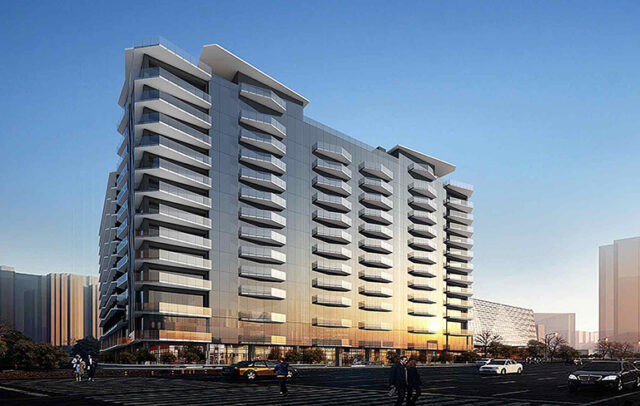
Anchor Land Property Copeton Baysuites

The next generation of real estate is starting to be defined by the idea of a residential community that engenders a holistic, sustainable lifestyle. This can be seen in wellness-oriented spaces, flexible living terms, as well as living spaces that prioritize fine design, privacy, and amenities.

This can be truly said for higher-income households, as Elizabeth Ventura, president of luxury real estate developer Anchor Land, shared in an interview with BusinessWorld.

 “Today’s high-end investors value tourism-driven developments that seamlessly integrate thoughtful design, privacy, and personalized service with lifestyle-enhancing amenities such as wellness facilities, curated leisure spaces, and tech-enabled living,” Ms. Ventura said in an email.

“For them, true luxury lies not only in the quality of life but also in long-term wealth preservation—owning a tourism-inspired property that balances exclusivity, functionality, and investment stability in a prime, strategic location.”

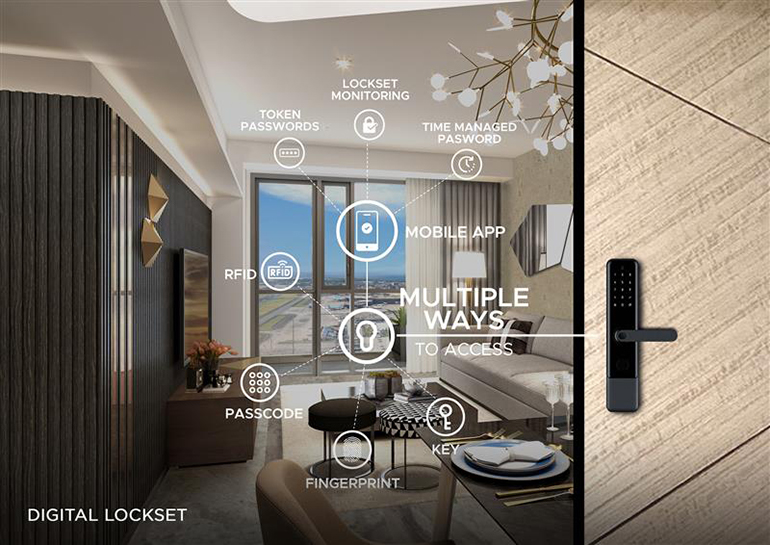
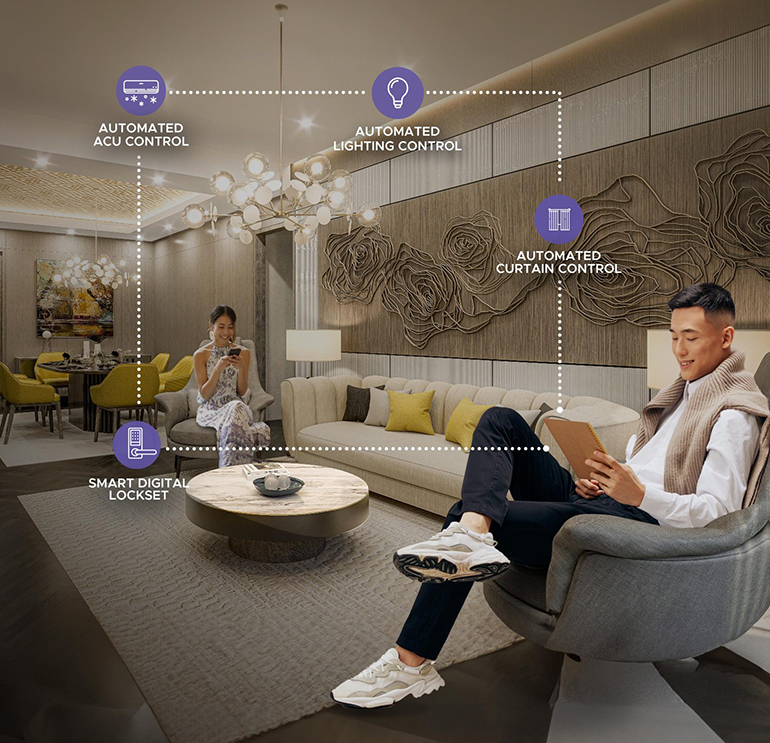
Digital Lockset

Sustainability, Ms. Ventura noted, has become a mark of true luxury as investors are increasingly drawn to properties that emphasize efficiency, sustainability, and long-term livability.

Modern developments now commonly feature green spaces, natural ventilation, energy-efficient systems, and smart home technologies, reflecting a broader shift toward wellness-oriented and environmentally conscious design.

“We’ve embraced this evolution at Anchor Land. Integrating smart technology is no longer an afterthought but a key principle embedded early in our design process. Our team actively keeps pace with the latest advancements in green architecture and collaborates with regional experts to ensure our developments meet global sustainability standards,” she said.

Aspiro-Therapy System

Fully automated units, according to the executive, are equipped with intelligent lighting and air-conditioning controls to minimize energy consumption. The Aspiro-Therapy System, meanwhile, replaces standard exhausts as a cost-efficient and self-sustaining alternative, while smart digital locksets enhance security and convenience within Anchor Land’s developments.

Complementing these is Anchor Land’s Fiber-Optic infrastructure, which ensures high-speed connectivity and uninterrupted browsing, empowering residents to work, study, and stay connected seamlessly from home.

Smart Property Technology

“We also place great importance on open, breathable spaces—seen across all our projects through offerings that range from resort-style settings to pockets of gardens thoughtfully woven into expansive outdoor amenity floors—promoting a lifestyle centered on wellness, comfort, and balance,” Ms. Ventura said.

Besides sustainability, Ms. Ventura also reiterates how luxury properties finely strike the balance between accessibility to urban essentials and perks and retreat from the urban hustle.

“A luxury property that allows its residents to retreat into a serene, well-curated environment while remaining connected to the city’s dynamic rhythm naturally commands higher demand and long-term value,” she explained. “This balance drives sustained appreciation: prime locations ensure continuous interest and liquidity, while exclusivity safeguards the property’s prestige and desirability.”

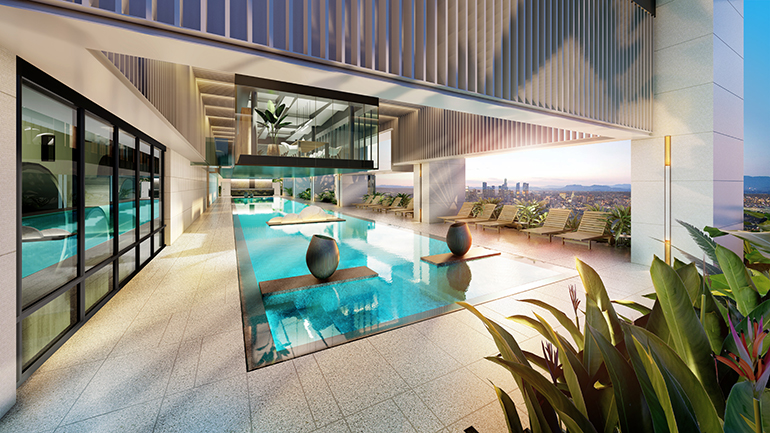
Club-in-a-Condo Concept Hanging Glass Lounge at One Legacy Grandsuites

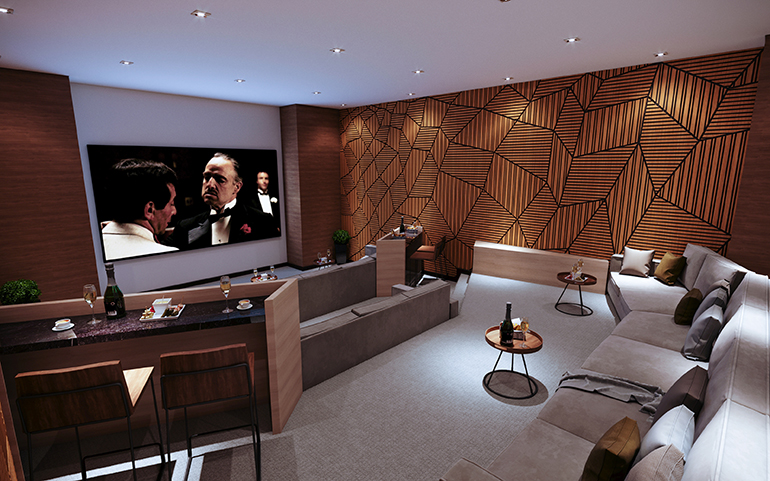
Anchor Land, for its part, further strengthens this balance with its signature Club-in-a-Condo concept, which is embodied by top-of-the-line, vacation-style amenities in its premier developments. These amenities offer residents the privilege of resort-like leisure within the privacy of their own community.

Club-in-a-Condo Concept Indoor Theater at 202 Peaklane

“Designed to be both rare and refined, such amenities are exclusive to select Anchor Land properties, ensuring that each development retains its distinction and lasting market strength,” Ms. Ventura noted. “Together, these elements create a formula for enduring investment performance and a lifestyle defined by understated luxury.”


Spotlight is BusinessWorld’s sponsored section that allows advertisers to amplify their brand and connect with BusinessWorld’s audience by publishing their stories on the BusinessWorld Web site. For more information, send an email to online@bworldonline.com.

Join us on Viber at https://bit.ly/3hv6bLA to get more updates and subscribe to BusinessWorld’s titles and get exclusive content through www.bworld-x.com.

Treasury bills, bonds may fetch mixed rates as Fed view shifts

TREASURY.GOV.PH

RATES of the Treasury bills (T-bills) and Treasury bonds (T-bonds) to be offered this week could end mixed following hawkish signals from the US Federal Reserve.

The Bureau of the Treasury (BTr) will auction off P22 billion in T-bills on Monday, or P7 billion in 91-day securities and P7.5 billion each in 182- and 364-day papers.

On Tuesday, the government will offer P35 billion in a dual-tenor T-bond offering, or P20 billion in reissued seven-year papers with a remaining life of four years and eight months, and P15 billion in reissued 10-year securities with a remaining life of nine years and five months.

T-bill and T-bond rates could follow the mixed week-on-week movements seen at the secondary market after Fed Chair Jerome H. Powell signaled that a December rate cut could be unlikely, Rizal Commercial Banking Corp. Chief Economist Michael L. Ricafort said in a Viber message.

“Yields on government securities traded flat to 2 basis points (bps) higher as players were spooked by the hawkish Fed cut. Bullish sentiment remains intact though, and players are merely playing it safe heading into [this] week’s five-year and 10-year auction,” a trader said in an e-mail.

The trader said the bond offerings will likely be “well received,” with the reissued seven-year papers expected to fetch rates of 5.635% to 5.675% and the reissued 10-year debt seen drawing bid yields of 5.9% to 5.95%.

At the secondary market on Friday, yields on the 91- and 182-day T-bills went down by 3.12 bps and 0.11 bp week on week to end at 4.8951% and 5.0966%, respectively, based on PHP Bloomberg Valuation Service Reference Rates data as of Oct. 30 published on the Philippine Dealing System’s website. On the other hand, the 364-day paper rose by 1.55 bps to close at 5.1781%.

Meanwhile, the seven-year bond increased by 1.14 bps week on week to end at 5.8366%, while the five-year debt, the benchmark tenor closest to the remaining life of the reissued papers to be offered this week, inched up by 0.23 bp to end at 5.7025%.

Lastly, the 10-year bond went down by 4.12 bps week on week to finish at 5.9382%.

On Wednesday, after the Fed’s policy-setting committee voted 10-2 to lower its benchmark interest rate to the 3.75%-4% range, Mr. Powell delivered an unusually clear warning to markets: given “strongly differing views” about how to proceed in December, he said, a rate cut was “not a foregone conclusion, far from it,” Reuters reported.

Financial markets pared what had been near-certain pricing for a December rate cut after Mr. Powell’s remarks, although bets still reflect twice as high a chance of a rate cut as none.

A clutch of Federal Reserve bank presidents on Friday aired their discomfort with the US central bank’s decision to cut interest rates, even as influential Fed Governor Christopher Waller made the case for more policy easing to shore up a weakening labor market.

This yawning divide within the Fed’s policymaking ranks poses a challenge for Mr. Powell in forging a consensus in his final six months as the chair.

While it is not unusual for Fed policymakers to differ on policy, particularly when the economic data is mixed, the frank expression of that disagreement and the explicit focus on what the Fed ought to do at its next meeting, on Dec. 9-10, was striking.

Last week, the BTr raised P25 billion from the T-bills it auctioned off, above the P22-billion plan, as the offer was nearly four times oversubscribed, with total bids reaching P85.365 billion.

Broken down, the Treasury borrowed P7 billion as planned via the 91-day T-bills as total tenders for the tenor reached P29.555 billion. The three-month paper was quoted at an average rate of 4.858%, dropping by 2.6 bps from the previous auction. Yields accepted were from 4.8% to 4.878%.

Meanwhile, the government upsized the award for the 182-day securities to P10.5 billion, above the P7.5-billion plan, as the tenor drew demand amounting to P33.45 billion. The average rate of the six-month T-bill was at 5.044%, down by 1.4 bps from the previous week, with accepted rates ranging from 5% to 5.058%.

Lastly, the Treasury sold the programmed P7.5 billion in 364-day debt as tenders for the tenor totaled P22.36 billion. The average rate of the one-year T-bill inched down by 0.4 bp to 5.093%. Bids awarded carried yields from 5.02% to 5.128%.

Meanwhile, the reissued seven-year bonds to be auctioned off this week were last offered on Sept. 9, where the government raised P30 billion as planned at an average rate of 5.772%, well below the 6.375% coupon rate.

On the other hand, the reissued 10-year bonds were last sold on Oct. 7, where the BTr awarded P20 billion as planned at an average rate of 6.043%, well below the 6.375% coupon rate.

The BTr is looking to raise P158 billion from the domestic market this month, or P88 billion via T-bills and P70 billion through T-bonds.

The government borrows from local and foreign sources to finance its budget deficit, capped at P1.56 trillion or 5.5% of gross domestic product this year. — Aaron Michael C. Sy with Reuters

Celebrating a bag

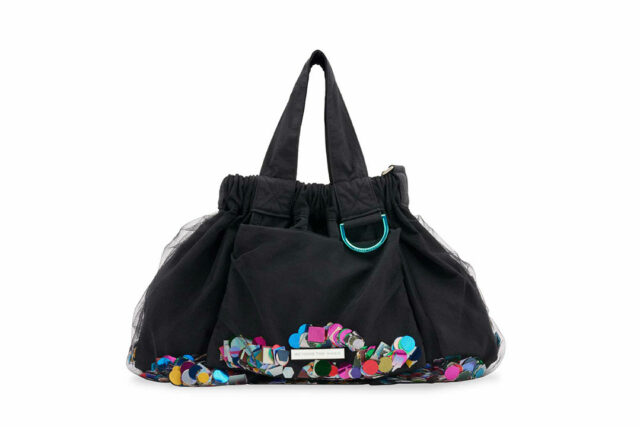
THE Confetti Dumpling Bag comes in black, ivory, and periwinkle.

WITH Singaporean brand Beyond The Vines’ celebration of their 10th year, they’re leaning into one of their hero products: the Dumpling Bag.

For their 10th anniversary, the brand is releasing a limited edition of the Dumpling Bag, with a layer of soft mesh covering it. The soft mesh carries about a handful of confetti, made of recycled store collaterals. A plus, since a chunk of the bags is made of recycled nylon.

Daniel Chew, the brand’s co-founder (the other is his wife, Rebecca), talked about the new bag: “Our community, the fans of the brand, can carry this little celebration with them everywhere they go.”

The bag was created in 2019, and since then has been a traveler’s favorite. Lightweight, foldable, and expanding, it can fit lots more than its size betrays. It had gone viral during its release, with reviews of the bag and videos of it in use numbering in the thousands. The bag’s sales go further: in an interview with BusinessWorld at the opening of the refreshed store in Shangri-La Plaza, Mr. Chew said, “For the bag alone, we have sold close to about a million bags.”

He himself has one: when traveling, he uses it to lug multiple bottles of water. “Once I don’t need them, I can fold (the bag) and put it in my hand luggage.”

While they’re known for this one particular bag, they started with clothes. In fact, when they opened in the Philippines in 2019, they were riding on the tail end of 2015’s normcore minimalist fashions. However, in the refreshed store, we saw decidedly youthful fashions in the colorful, 2000s aesthetic Gen Z favors.

Mr. Chew says that they did the rebrand five years ago. “We were not particularly happy about the direction of the brand. We thought it didn’t truly represent us,” he said. “As adults, we forget to have fun.”

The brand has nine stores in the Philippines, and is increasing its number of stores in Tokyo and Shanghai. “I do think that in this trajectory, we want to grow deep in our market in the Philippines, more than we want to expand.”

Interested parties can find the Confetti Dumpling Bag at www.beyondthevines.ph, or at its locations in the Philippines: Shangri-La Plaza mall, SM Mall of Asia, Power Plant Mall, TriNoma, Uptown Mall, One Bonifacio High Street, SM Megamall Manila, Ayala Center Cebu, and The Block SM North EDSA. — Joseph L. Garcia

Meralco sees flat energy sales this year, eyes 2026 recovery

MERALCO.COM.PH

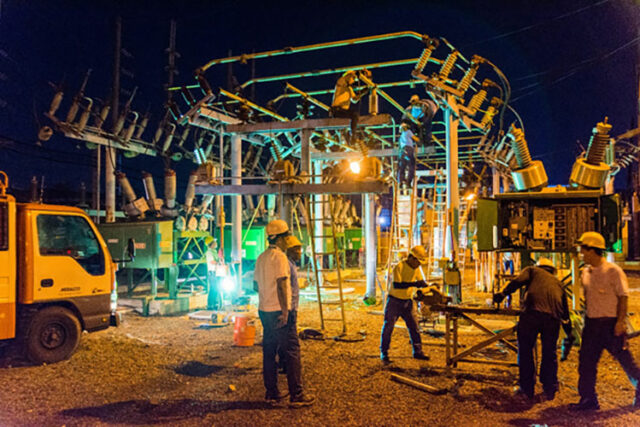
MANILA ELECTRIC CO. (Meralco) expects flat energy sales this year as milder weather curbs demand, but anticipates a rebound in 2026 on the back of aggressive energization and normalizing temperatures.

Meralco Senior Vice-President and Chief Revenue Officer Ferdinand O. Geluz told reporters last week that full-year energy sales could range from a 0.5% contraction to a 0.8% increase.

The power distributor added 194,000 customers this year, bringing its total to 8.2 million, up 2% from a year earlier. Still, overall consumption fell compared with 2024, when extreme heat from the El Niño phenomenon boosted electricity use.

For 2026, Meralco expects energy sales to rise by about 3% or 1,700 megawatt-hours, driven by higher connections and the transition from El Niño to La Niña conditions.

“We’re hopeful that as weather conditions normalize — shifting from extreme temperatures of El Niño to La Niña — we’ll be able to recover some of the organic sales lost due to normalization of temperature,” Mr. Geluz said. He added that the repurposing of spaces vacated by Philippine offshore gaming operators (POGO) into new offices could also support energy sales in 2026.

For the nine months ended September, Meralco’s energy sales slipped 0.4% to 40,719 gigawatt-hours as prolonged rains dampened residential and commercial demand. Despite the decline, its distribution business remained the largest contributor to core net income, which climbed 14% to P40 billion.

Meralco Chairman Manuel V. Pangilinan said the company is on track to meet its P50-billion profit target this year, citing steady performance from its core distribution and power generation businesses.

Meralco’s controlling stakeholder, Beacon Electric Asset Holdings, Inc., is partly owned by PLDT, Inc. Hastings Holdings, Inc., a unit of PLDT Beneficial Trust Fund subsidiary MediaQuest Holdings, Inc., has an interest in BusinessWorld through the Philippine Star Group, which it controls. — Sheldeen Joy Talavera

EastWest Bank expects 10-15% loan growth

PHILSTAR FILE PHOTO

EAST WEST Banking Corp. (EastWest Bank) expects its loan portfolio to grow between 10% and 15% this year, backed by the strength of its consumer business and despite weakening business sentiment amid domestic corruption concerns.

“A good performing bank on the consumer market needs to grow at a regular pace over time. That’s what we’re trying to achieve. Maybe 10% to 15% is what we’re targeting; in between is probably most likely. So, consumer demand in the country is still okay. My biggest fear is that, again, from a macro perspective, it’s government spending, investments, consumer, net flows, import, export,” EastWest Bank Chief Executive Officer Jerry G. Ngo told reporters on Tuesday.

“And I hope that consumption continues to be robust, because that’s really what’s going to end up driving economic growth.”

As of end-June, EastWest Bank’s loans and receivables stood at P351.41 billion, up by 4.46% from P336.41 billion at end-2024.

Its consumer loans grew by 15% year on year in the first half to P298 billion, making up 84% of its total loan portfolio, Mr. Ngo earlier said.

He said last week that they hope to post steady loan growth in the coming years.

“We continue to be hopeful. Long term, we’ve been looking at low- to mid-teens growth. Actually, right now, we’re probably looking at 10% to 15% ranges of overall growth. And what we want to do is, across the cycle, we want to keep that type of growth.”

Mr. Ngo added that the bank has a low exposure to the expected economic drag from the corruption mess involving state flood control and infrastructure projects amid its consumer-centric lending business.

However, he noted that foreign investors have been harder to attract due to the scandal.

“[Exposure] is very limited because we rely on consumption… [But] the reality is, we will be affected [because] it affects the entire economy. And it’s quite sad, particularly if I speak to foreign investors. Before you even start the conversation, that’s the first thing they ask. So, it’s a bit challenging.”

Meanwhile, Mr. Ngo said they also want to expand their lending to the small and medium enterprise (SME) segment.

“The country’s demographic age is 26 years old, median. At 26 years old, we will consume. And what I always look out for is the employment rate. One of the key things that we’re trying to do is to spur people to do your own business… And I think that’s what we should be doing to really make sure that the country expands that base,” he said.

The bank last week launched its BizAccess Visa Debit card, which caters to SMEs.

Mr. Ngo added that lending growth will be supported by lower interest rates amid the central bank’s easing cycle.

“I think additional rate cuts would boost consumption. We just need to watch the foreign exchange (FX). But the US is cutting rates also, and I know that it is not because of the rate cut that the FX is low. The currency should start appreciating because the inflows should be coming in,” he said.

The peso last week recorded a new all-time low of P59.13 against the dollar, surpassing the previous record of P59 logged on Dec. 19, 2024.

EastWest Bank booked attributable net earnings of P2.3 billion in the second quarter, bringing its first-semester profit to P4.13 billion, rising from P3.49 billion in the comparable year-ago period. — A.M.C. Sy

Thoughtful gift-giving: How to avoid wasteful generosity

STOCK PHOTO | Image by Jcomp from Freepik

By Leo Jaymar Uy

WE’VE BEEN giving gifts for as long as we can remember. Beyond a simple gesture, it’s how we say thanks, celebrate milestones, or sometimes, win someone over.

In the case of acquaintances and colleagues, the gifts tend to be low stakes and more practical. Food packs, organizers, towels, and coin purses are some of the common (and safe) choices. In contrast, gifts exchanged among loved ones invite more variety. The assumption is that we know each other well enough to tailor presents to actual needs or preferences, raising emotional stakes.

Viewed through this lens, gifts function as a “social currency” of sorts. They act as proxies for understanding, signaling attention and emotional fluency in ways that words often can’t.

And yet, how do we know if a gift truly lands?

Economist Joel Waldfogel attempted to quantify this dynamic in his 1993 paper “The Deadweight Loss of Christmas”* wherein he essentially argued that gift-giving often results in a “deadweight loss” (a loss of economic efficiency) because recipients typically value gifts less than what givers paid for them. In his paper, he surveyed students to estimate how much they would be willing to pay for gifts they received, and then compare these valuations to the actual prices paid by gift-givers, barring sentimental value.

The results appear to be intuitive and rather unsurprising. On the one hand, gifts from close friends and romantic partners tended to perform better, that is, the perceived value of the gifts approximates the actual cost of the gifts paid for. On the other hand, gifts from extended family members or distant acquaintances missed the mark, reflecting a huge gap and thus sizeable loss of perceived value. Overall, he estimated that between a tenth and a third of the value of holiday gifts is destroyed by gift-giving.

Waldfogel revisited the topic in his 2009 book Scroogenomics: Why You Shouldn’t Buy Presents for the Holidays wherein he reiterated his critique of holiday gift-giving, but also conceded thoughtful gifts can rival or even exceed the value of items that would have otherwise been bought by the recipients themselves. Thus, he proposed alternatives such as charitable donations and gift cards believing they minimize waste and better match preferences while also retaining the spirit of giving.

Over time, the way we give gifts has changed. More people now opt for digital or experience-based presents such as e-wallet credits, mobile load, store vouchers, or travel perks. These choices offer convenience and a personal touch, while avoiding the discomfort that sometimes comes with handing over cash (unless you are a five-year old waiting for that crisp P1,000 bill from your rich uncle).

Regardless of the format, the intent of giving a gift that resonates remains. Thus, even with the best intentions, the activity may still end up being wasteful. Some items end up getting re-gifted or tucked away unused, while others are used out of obligation to perform gratitude (“I haven’t seen you wear the shirt I gave you.”) or to exercise polite restraint (“These cookies are… experimental”). In these cases, the gift shifts from a gesture of care to a burden. What was meant to signal closeness or at least offer utility, ends up being a cost to the recipient (through that burden) and to the giver (through the actual expense).

So how do we give with intention? Here are some suggestions that might help:

• Think about what they actually need. Self-explanatory.

• Listen for hints. Even throwaway comments can reveal more about one’s preferences.

• Gift cards aren’t lazy if they’re thoughtful. Just make sure they match the person’s interests. If she loves books, go for a bookstore voucher. If he’s into gaming, grab credits for his favorite platform. If they’re into nothing, then go full tito mode and get a handkerchief — classic, safe, and says “I tried.”

• Food still works. A favorite snack, a nostalgic treat, or a curated basket can hit the right note. Comforting, personal, easy to enjoy.

• Just ask. A quick chat or a shared wish list can save everyone the guesswork. Sites like elfster make it easy. Even a Google Sheet does the trick.

• Show up. Visit your parents. Message that friend. As the cliché goes, presence may be the best present (an easy out for the “gift-averse,” but one that still works)

Bottomline: A well-chosen gift, whether it meets a need, strengthens a bond, or simply spreads holiday cheer, can carry more weight than its price tag suggests. In a season often marked by excess, it is intention that gives a gift its meaning. That is the real return on investment.

*Waldfogel, J. (1993). “The deadweight loss of Christmas.” The American Economic Review, 83(5), 1328–1336.


Leo Jaymar Uy was research head at BusinessWorld from 2017 to 2021 and currently works in finance. He enjoys video games, collects obscure but oddly satisfying trivia, and occasionally thinks about the Roman Empire.

Style (11/03/25)


Montblanc releases new Meisterstücks

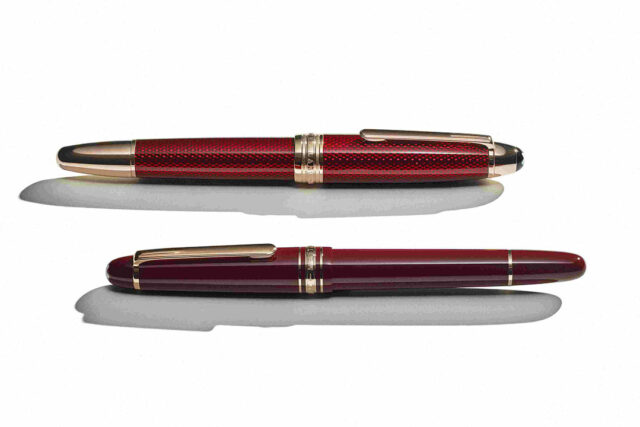
SUNSET is captured in two new iterations of Montblanc’s Meisterstück: the Meisterstück Golden Hour Solitaire and the Meisterstück Burgundy Red collection, both bringing to life the hues of the setting sun. The metal cap and barrel of the Meisterstück Golden Hour Solitaire feature an engraved hexagon pattern covered by translucent burgundy red lacquer and finished with signature gold-coated fittings. This hexagon pattern decorates the fountain pen’s handcrafted solid Au 750 gold nib, completed with a signature gold coating. On the cap top, the Montblanc emblem crowns the writing instrument. The Meisterstück Golden Hour Solitaire is available in the LeGrand size as a fountain pen, rollerball, and ballpoint. The hues of the golden hour are also captured in the Meisterstück Burgundy Red collection, which presents the Meisterstück form in a deep burgundy-colored resin. The new colorway is available as a fountain pen featuring a handcrafted, bi-color solid Au 585 gold nib, rollerball, and ballpoint in a variety of sizes. Montblanc is available at Rustan’s Makati, Rustan’s Shangri-La, Rustan’s Cebu, Greenbelt 5, and Solaire Resort Entertainment City. For more information, visit Rustans.com.


Dyson releases new Airwrap Co-anda 2x

UNLOCK next-level styling with the new Dyson Airwrap Co-anda 2x multi-styler and dryer, powered by Dyson’s fastest and most powerful hair care motor, the Hyperdymium 2 motor. The supercharged motor delivers twice the air pressure to wrap hair more easily, dries hair as fast as a full performance hair dryer, and creates sleek, straight looks. The Dyson Airwrap Co-anda 2x offers six-in-one versatility to reveal styling possibilities: dry, curl, wave, straighten, smooth, and volumize, with no heat damage. New Radio-Frequency Identification (RFID) enabled attachments automatically adjust to styling needs, and deliver results for all hair types. When connected to the MyDyson app, users can enjoy curling with one-touch i.d. curl technology, a curling sequence customized to the user. Dyson has made the Airwrap2x smaller and lighter in hand for improved maneuverability and control. Styling attachments have been engineered for the Airwrap2x multi-styler. In the Philippines, the Straight+Wavy set is available and comes with six attachments in a Dyson-designed presentation case. These are the 30mm Co-anda 2x curling barrel, 40mm Co-anda 2x curling barrel, Anti-snag loop brush 2x, Round volumizing brush 2x, AirSmooth2x attachment, Fast dryer 2x. The Dyson Airwrap Co-anda 2x multi-styler and dryer is available in the Ceramic Pink and Jasper Plum colorways this month, priced at P38,900. For more information, visit https://www.dyson.ph/.