JAKARTA — Just a few hours after using a mobile app to order some dishwashing liquid, Jakarta resident Juweriah opens the door to a motorbike courier who provides a direct refill in her kitchen.
Juweriah, who like many Indonesians goes by one name, is taking advantage of a rise in environmentally friendly businesses in a country that is the second-largest ocean plastic polluter in the world.
The 38-year-old homemaker orders products through Siklus, a startup that provides cleaning and sanitary products minus plastic packaging to homes and businesses in the Indonesian capital.
“We can refill (the bottles) and reduce the amount of detergent plastic waste,” Juweriah said. “Neighbours here have followed suit.”
Siklus, launched in 2019, aims to reduce the number of products packaged in sachets, which are particularly popular among lower-income communities. Siklus means “cycle” in Bahasa Indonesia.
Selling for around 800 rupiah (5 cents), single-use sachets give some of the poorest people in Asia access to everyday household essentials, but they also generate a significant amount of waste, clogging waterways and oceans.
Indonesia generates approximately 7.8 million tons of plastic waste annually, with 4.9 million tons of waste mismanaged, according to a World Bank report in May. Limited waste management collection infrastructure is one of the main problems, according to the report.
Siklus Chief Executive Jane von Rabenau, 28, said the response to the product had been positive, with the company increasing its customer base by around 15% each week.
“People have always told me ‘you’re never going to change the behavior, Indonesians don’t care’ and I was like, I really don’t think so,” she said. “I think Indonesians across all classes they see the plastic problem, and they care about their country, they care about making it better.”
Jakarta food stall owner Husaifah was attracted to Siklus by low prices as well as its environmental credentials. Dispensing with packaging allows the company to significantly reduce end costs.
“It’s practical,” Husaifa said. “The cost is low, and we don’t have to go out, it comes to us.” — Reuters
Amazon.com Inc. said on Tuesday it supports a proposed US legislation to legalize cannabis at the federal level, and would drop weed-testing requirements for some recruitments.
The e-commerce company’s public policy team will be actively supporting The Marijuana Opportunity Reinvestment and Expungement Act of 2021 (MORE Act), which seeks to legalize marijuana at the federal level, its consumer boss Dave Clark said in a blog post.
Amazon will also no longer screen its job applicants for marijuana use for any positions not regulated by the Department of Transportation, Mr. Clark added.
While many US states have legalized marijuana use, employers have so far largely refused to work with the industry as cannabis is still a classified substance at the federal level.
“In the past, like many employers, we’ve disqualified people from working at Amazon if they tested positive for marijuana use,” Mr. Clark said. “However, given where state laws are moving across the U.S., we’ve changed course.”
Amazon was hit with a proposed class action suit, which claimed that the company was violating a New York City law by testing applicants for jobs at local facilities for marijuana, according to a Westlaw report.
The company does not allow marijuana sales on its platform.
Amazon also said it is tweaking its worker productivity tracking tool, “Time off Task.”
“Starting today, we’re now averaging Time off Task over a longer period to ensure that there’s more signal and less noise — reinforcing the original intent of the program,” Mr. Clark said. — Reuters
WASHINGTON — The US Supreme Court on Tuesday declined to hear Johnson & Johnson’s (J&J) bid to overturn a $2.12 billion damages award to women who blamed their ovarian cancer on asbestos in the company’s baby powder and other talc products.
The justices turned away a J&J appeal and left in place a Missouri state court ruling in litigation brought by 22 women whose claims were heard together in one trial.
The Missouri Court of Appeals, an intermediate state appellate court, last year ruled against J&J’s bid to throw out the compensatory and punitive damages awarded to the plaintiffs but reduced the total to $2.12 billion from the $4.69 billion originally decided by a jury.
J&J, which will make a payment of $2.5 billion this month including accrued interest, said in a statement that there are unresolved legal issues that will continue to be litigated. It previously has said it faces more than 19,000 similar claims.
“The matters that were before the court are related to legal procedure, and not safety. Decades of independent scientific evaluations confirm Johnson’s Baby Powder is safe, does not contain asbestos, and does not cause cancer,” the company said.
J&J shares were down about 1.2% at $167.23.
J&J has argued that a decision by a Missouri circuit court judge to consolidate disparate baby powder-related claims from the plaintiffs — including 17 women from outside the state — for a trial before a single jury violated the New Brunswick, New Jersey-based company’s due process rights under the U.S. Constitution. J&J also has argued that the size of the jury’s damages award violated its due process rights.
The Missouri Supreme Court, the state’s highest court, in November declined to hear J&J’s appeal of the Missouri Court of Appeals ruling, prompting the company to appeal to the US Supreme Court.
“This was a victory not just for the amazing women and their families who we were privileged to represent, but a victory for justice,” said Mark Lanier, a lawyer for the plaintiffs.
DISPUTE OVER JURISDICTION
The plaintiffs, nine of whom have died and are now represented by their estates, have argued that Missouri courts have jurisdiction over out-of-state claims like those brought in this litigation. One of the products that the out-of-state plaintiffs said they had used was manufactured in Missouri.
Lawyers for the plaintiffs also have argued that the large punitive damages awarded by the jury in this case were justified by J&J’s conduct. Lawyers for the plaintiffs said in court papers it is common practice for courts to consolidate cases at trial when the facts in each claim are essentially the same.
The Missouri Court of Appeals concluded that it was reasonable to infer from the evidence that J&J “disregarded the safety of consumers” in its drive for profit despite knowing its talc products caused ovarian cancer. It also found “significant reprehensibility” in J&J’s conduct.
In addition to reducing the damages, the Missouri Court of Appeals dismissed two of the 17 out-of-state plaintiffs.
In court papers, J&J said the case followed a “winning formula” devised by plaintiffs’ lawyers of bringing claims in jurisdictions where they can get dozens of out-of-state plaintiffs to testify in a single trial, prejudicing the jury and resulting in “outsized” damages awards.
In the Missouri trial, the company said, the jury awarded each plaintiff an identical punitive damages award of $25 million, regardless of the facts specific to each plaintiff or whether they were alive or dead. The company also said the jury awarded punitive damages much larger than the “already staggering” compensatory damages, which J&J has called a further violation of its due process rights.
Justice Samuel Alito did not participate in the Supreme Court’s decision not to hear the appeal, likely because he owns J&J stock. Justice Brett Kavanaugh, whose father — now retired — was a longtime lobbyist for the toiletries industry, also did not take part. The justices do not explain why they step aside in certain cases.
A 2018 Reuters investigation found that J&J knew for decades that asbestos, a carcinogen, was present in its talc products. Internal company records, trial testimony, and other evidence showed that from at least 1971 to the early 2000s, J&J’s raw talc and finished powders sometimes tested positive for small amounts of asbestos.
The company said in May 2020 it would stop selling its baby powder talc in the United States and Canada, citing changes in consumer habits and what it called “misinformation” about the product’s safety amid numerous legal challenges. — Lawrence Hurley/Reuters
GENEVA – The World Health Organization (WHO) said on Tuesday it has approved a COVID-19 vaccine made by Sinovac Biotech for emergency use listing, paving the way for a second Chinese shot to be used in poor countries.
A WHO emergency listing is a signal to national regulators of a product’s safety and efficacy and will allow the Sinovac shot to be included in COVAX, the global programme providing vaccines mainly for poor countries, which faces major supply problems due to curbs on Indian exports.
The WHO’s independent panel of experts said in a statement it recommended Sinovac’s vaccine for adults over 18. There was no upper age limit as data suggested it is likely to have a protective effect in older people.
The WHO’s technical advisory group, which began meeting on May 5, made the decision after reviewing the latest clinical data on the Sinovac vaccine’s safety and efficacy as well as the company’s manufacturing practices.
WHO Director-General Tedros Adhanom Ghebreyesus welcomed the move, calling the vaccine safe and effective and noting its easy storage requirements make it suitable for low-income countries.
“It’s now crucial to get these lifesaving tools to the people that need them quickly,” he told a briefing.
Branded CoronaVac in some regions, it is the eighth vaccine to win such a WHO listing to combat COVID-19 and the second developed by a Chinese company, after the May 7 approval of a shot developed by state-backed Sinopharm.
While a third Chinese vaccine, produced by CanSino Biologics , has submitted clinical trial data, no WHO review has been scheduled.
Sinovac said that it had supplied more than 600 million doses of its vaccine at home and abroad as of end-May and over 430 million doses have been administered.
BIG BOOST
The endorsement is a big boost for Sinovac’s vaccine after data in clinical trials showed a wide range of efficacy rates.
The WHO said results showed it prevented symptomatic disease in 51% of those vaccinated and prevented severe COVID-19 and hospitalisation in 100% of the studied population.
The WHO’s separate Strategic Advisory Group of Experts (SAGE) had said previously that vaccine efficacy in multi-country Phase III clinical trials ranged from 51% to 84%.
Indonesia said on May 12 that its study of 120,000 healthcare workers who had received the vaccine found it was 94% effective at preventing symptomatic disease.
In a preliminary evaluation, the SAGE panel found that the shot was effective in preventing COVID-19 in adults under 60, but that some quality data on the risk of serious adverse effects was lacking.
It cited evidence gaps in safety in pregnancy, and on safety and clinical protection in older adults, those with underlying disease, and evaluation of rare adverse events.
SAGE experts, who issue policy recommendations to states and dosage guidelines, reviewed Sinovac clinical data last month.
Sinovac chairman and chief executive Weidong Yin said in a statement that clinical trials had provided a “solid scientific foundation” for the drugmaker’s shot to be approved by more than 40 countries and by the WHO.
China has already deployed hundreds of millions of doses of both Sinopharm and Sinovac vaccines at home and exported them to many countries, particularly in Africa, Asia and Latin America. — Reuters
The Philippines, often hailed as one the most gender-equal countries in the world, placed 17th out of 156 countries in the World Economic Forum’s Global Gender Gap Report 2021. In the Asia-Pacific region, the Philippines came in second only to New Zealand, which ranked fourth globally.
The report doesn’t paint the whole picture, said Nathalie Africa-Verceles, director of the Center for Women and Gender Studies at the University of the Philippines. In this B-Side episode, Ms. Africa-Verceles speaks with Gillian M. Cortez (who was a reporter for BusinessWorld at the time of the interview) about contradictions between Philippine culture and Philippine laws, in terms of gender equality.
TAKEAWAYS
GENDER EQUALITY INCLUDES LGBTQ+ RIGHTS.
“There are still many laws that need to be enacted and still many provisions of existing laws that need to be revised because there are provisions in existing laws that are discriminatory to women. But when we talk about gender, we don’t only refer to women,” said Ms. Africa-Verceles, emphasizing that gender equality includes the rights of the LGBTQ+ (Lesbian, Gay, Bisexual, Transgender, Queer and/or Questioning) community.
Congress, she added, should prioritize passing the SOGIE (Sexual Orientation and Gender Identity and Expression) Equality Bill. “I’m very disappointed it’s taking so long.”
THE WORKPLACE SHOULD PROMOTE DIVERSITY AND INCLUSION.
Employers have seen the necessity to include measures that encourage diversity in the workplace, said Ms. Africa-Verceles. Weaving in measures that call for inclusivity with current worker-centered practices will ensure the security of employees from experiencing discrimination at work.
“There will always be women and gender-diverse individuals in your organizations so you need to ensure that they do not experience discrimination, marginalization, or subordination… that is the mandate of any decent organization,” she said.
ENCOURAGE CRITICAL THINKING AT A YOUNG AGE.
Families and schools are crucial to the advancement of gender equality. Children who are encouraged to think critically will be able to discern unacceptable gender stereotypes and expectations that have been embedded in literary and artistic canons, pop culture, and media.
“What I would like to see us doing in our families and in our schools is raising the critical awareness of children and other individuals with respect to all these constructed notions of masculinity and femininity,” she said.
“What we want to do is to raise a generation that knows how to critique the gender norms and stereotypes … because if you think critically, no matter what happens in your society, you’re not going to accept it just like that because you’re able to analyze.”
BusinessWorld Insights, Aruga Apartments by Rockwell hold webinar on serviced apartments
Relatively few sectors of the global economy managed to remain untouched by the effects of the COVID-19 pandemic. The travel and hospitality industry, for instance, has been one of the most affected with the restrictions on mobility. Yet, one sector in the hospitality industry seemed to have been staying resilient: serviced apartments.
“The serviced apartment sector is a little different [from hotels] primarily due to its ability to answer a certain need,” Claro Cordero, Jr., director of Research, Consulting and Advisory Services at Cushman and Wakefield, said during a special session of BusinessWorld Insights in partnership with Aruga Apartments by Rockwell.
“Foreign travelers and nationals who are still working here need to be housed in professionally managed accommodation. And I think that’s where the strength of the serviced apartment sector lies. It becomes a safe haven for people who require this type of accommodation,” he added.
The special session explored the theme “Investment Prospects for Serviced Apartments” which looked at the performance of serviced apartments here in the Philippines and the promising investment opportunities offered by the sector.
Similar to Mr. Cordero’s insight, Savills data suggested that the core guest segment of serviced apartments continues to be dependent on longer length stays. It has been these longer length guests that provide the sector with higher average occupancy levels, something that has been witnessed on the entry to and during lockdown.
“The main source of demand for the sector is business travelers. There are segments and the sector of the economy that are still growing and are expected to grow after the pandemic,” Mr. Cordero said, adding that this makes serviced apartments a great alternative investment vehicle for investors.
Outdoor swimming pool
“Real estate investment in the form of serviced apartments in times of crisis, like we’re having right now, tend to offer something unique to the market. Yield rates for residential developments for both mid- and high-end developments are fairly stable, suggesting that it is a good alternative instrument compared with other investment vehicles,” he said.
Cyndy Tan Jarabata, president and chief executive officer of Tajara Hospitality, said that serviced apartments are well-aligned with the current trend among consumers to prefer flexibility with their lifestyle choices, as serviced apartments can fit in well with the remote working lifestyle that has emerged with the pandemic.
“Due to the current conditions, serviced apartments are gaining popularity due to bigger spaces, more cost-effective and self-contained accommodations. We also see serviced apartments shifting to leisure demands, primarily because people wanted to cook in the kitchen or have a bigger living space,” she said.
Moreover, the flexibility of serviced apartments is not only attractive to guests, but to the investors themselves. Many serviced apartments provide owner perks like profit-sharing with the hotel operator, fixed minimum rental deals, hassle-free management of the property, and free stays throughout the year.
Mr. Cordero pointed out that as more of the Generation Z enter the workforce, many would want the kind of accommodations serviced apartments can provide, especially for business travelers in the future.
“For people who are choosing serviced apartments as investments, the number one consideration is location. As they say, in the end it is always ‘location, location, location’. You also have to look at the track record of the developer. Things that you should consider are the previous developments they have done, or how fast they turn over the units to owners,” Ms. Jarabata advised.
“As with any investment, depending on the asset class you choose, do your homework,” she said.
Aruga Apartments by Rockwell
The living and dining area of a 2-Bedroom unit
Rockwell Land Sales Head Ysabel Rufino-de Leon presented about Aruga Apartments by Rockwell which provides over 100 units ranging from studios to two-bedroom accommodations, fully furnished in the Asian Contemporary style, infused with a sophisticated interior design and quality that is crafted to suit the needs of every kind of traveler.
Launched in 2014, Aruga Apartments, located in Rockwell Center, Makati City, has been operational for nearly seven years, proving resiliencyeven amid the pandemic. It has been a choice of residence for professionals in need of long-term stays in Makati.
In 2020, Aruga Apartments began offering its units for sale as a viable real estate investment with yields. The propertywas able to record 3.1% yield for unit owner investors, with the added slow and steady trajectory to pre-pandemic levels. For the first quarter this year, the yield grew to 4.9%, with an average earning of 955 per square meter for unit owners.
Aruga Apartments recently launched its new business model that combines health and safety with comfort and affordability. This allows for more attractive rates for guests, and in turn may boost yields for unit owners.
For further inquiries on investing in Aruga Apartments, please contact Ysabel de Leon at BelleR@rockwell.com.ph or 0917-534-4703. Visit www.aruga.com.ph/investment.
PHILEX MINING CORPORATION Notice of the 2021 Annual General Meeting of Stockholders
TO OUR STOCKHOLDERS:
Please be informed that the Annual General Meeting of the Stockholders of Philex Mining Corporation (the “Company”) will be held on Friday, 25 June 2021 at 4:00 p.m., and will be presided at TV5, LaunchPad, Reliance Street corner Sheridan Street, Mandaluyong City, Metro Manila. The meeting will be conducted virtually, and attendance at the meeting will be via remote communication only.
The order of business at the Meeting will be as follows:
Call to Order
Proof of Required Notice of the Meeting
Certification of Quorum
Reading and Approval of the Minutes of the 15 July 2020 Stockholders’ Meeting and Action Thereon
Presentation of Annual Report and Audited Financial Statements for the Year Ended 31 December 2020 and Action Thereon
Ratification and Approval of the Acts of the Board of Directors and Executive Officers During the Corporate Year 2020-2021
Appointment of Independent Auditors for Financial Year 2021
Appointment of Election Inspectors to serve until the close of the next annual meeting
Election of Directors, including the extension of the term and election of Independent Directors
Other Matters
Adjournment
For purposes of the Meeting, only stockholders of record as of the close of business on 8 April 2021 are entitled to notice of, and to vote at, the Meeting
To access the Definitive Information Statement, the Management Report, Audited Financial Statements for the period ended 31 December 2020, SEC Form 17-A for 2020 and 2021 First Quarter SEC Form 17-Q, please go to http://www.philexmining.com.ph/.
Attendance via remote communication. Stockholders should email the Corporate Secretary at bcmigallos@philexmining.com.ph not later than 14 June 2021. Certificated shareholders must indicate in the email their Stockholder ID number and submit a scanned copy of a valid current government ID. Indirect or uncertificated shareholders (shareholders who hold their shares through a PCD Nominee account), should submit a certification from their broker attesting that the stockholder is the beneficial owner of shares of stock of the Company (the number of shares must be indicated) and a valid current government ID.
Proxies. A proxy form that is compliant with the requirements of the Securities and Exchange Commission is attached to the Definitive Information Statement. Stockholders can be represented and vote at the Meeting by submitting the said proxy by email to bcmigallos@philexmining.com.ph or by sending a physical copy to the Office of the Corporate Secretary at the Company’s principal office at 2/F LaunchPad, Reliance corner Sheridan Streets, Mandaluyong City, Metro Manila. The deadline for submission of proxies is 14 June 2021. Proxy validation will be on 18 June 2021 at 10:30 a.m. at the Company’s office address indicated above.
On-line voting. Secured on-line or electronic voting will be available for stockholders. Stockholders who have pre-registered attendance via remote communication may vote on- line by logging on to http://www.philexmining.com.ph/investor-relations/vote-online to cast their votes. On-line voting will close at 12:00 noon on 21 June 2021.
Open Forum. here will be an Open Forum during the Meeting. Stockholders who will attend via remote communication should send their questions via email to bcmigallos@philexmining.com.ph on or before 12:00 noon of 21 June 2021.
The Minutes of the Annual General Stockholders’ Meeting of the Company held on 15 July 2020 are available on the Company’s website (www.philexmining.com.ph) and is available for examination during office hours at the office of the Corporate Secretary.
Security Bank Corp., in partnership with the Filipino Heritage Festival, Inc. (FHFI), celebrates the National Heritage Month with the theme “Victory and Humanity: Upholding Filipino Heritage and Identity.”
This year’s theme commemorates the 500th anniversary of two important events in Philippine history: the victory at Mactan and the first circumnavigation of the world. The celebration highlights the bravery of Filipinos in their quest for freedom, and their humanity towards others.
“Cultural heritage is steeped in a country’s history and identity. By celebrating National Heritage Month, Filipinos can uphold and promote its rich culture, especially to the younger generation,” said Security Bank President and CEO Sanjiv Vohra. “By remembering milestones in Philippine history and encouraging the youth to participate in cultural activities, we hope that more Filipinos have a newfound appreciation of their roots and take pride in their identity.”
Philippine indigenous boats: remembering a piece of navigation history
As an archipelago, cultural identity in the Philippines is intimately linked to the sea and seafaring. Filipinos’ mastery in boatbuilding and navigation was acknowledged by Spanish colonizers and documented in numerous texts and reports throughout history.
In celebration of this year’s NHM and in line with the National Quincentennial Commemorations, the Philippine Postal Corp. with FHFI recently released stamps and souvenir sheets featuring various Philippine indigenous boats.
The visual documentation of these indigenous boats is a fitting and unique homage to the commemoration of a historic event in world navigation.
Creating awareness on cultural heritage
This year’s national heritage festival boasts of online competitions, virtual presentations, webinars and performances to be hosted by various institutions. For its part, Security Bank is co-sponsoring a Youth Essay-Writing Contest and co-sponsoring an online trivia game that will run until May 31.
“As leaders and role models, we all must strive to utilize every opportunity available to us to reinforce the values and beliefs that we hold dear. Traditions are important for they remind us that we are part of a history that defines our past, and shapes who we are today. We hope that the lineup of Filipino Heritage Festival online activities prepared this May inspire us all to give more value to our culture and to have a great sense of pride for being a Filipino especially in this time of pandemic,” says Armita Rufino, president of the Filipino Heritage Festival.
The Intramuros Administration hosted a webinar on May 13 entitled “Catholic Devotions as the Church’s Intangible Heritage.” The speaker was Father Milan Ted Torralba, chair of the Diocese of Tagbilaran Commission for the Cultural Heritage of the Church.
Filipino composer Julio Nakpil’s works were featured in “Artist as Hero,” a special online concert presented on FHFI’s Facebook page on May 22. A virtual dance concert entitled “Of Balanghai and Galleons: Journey Towards Nationhood” by Floy Quintos was presented on May 28 via YouTube and FHFI’s Facebook page. It will also be presented on June 26 at the SM Cinema Drive-In, SM Mall of Asia Concert Grounds Block 16.
A virtual tour presented by the Ayala Museum on their YouTube channel is available to the public until Aug. 31, 2021. To know more about the National Heritage Month and Security Bank’s initiatives on education, you may visit www.facebook.com/Securitybank or www.securitybank.com/sustainability.
PXP ENERGY CORPORATION (formerly Philex Petroleum Corporation) Notice of Annual General Stockholders’ Meeting
TO OUR STOCKHOLDERS:
Please be informed that the Annual General Stockholders’ Meeting (“AGM” or “Meeting”) of PXP ENERGY CORPORATION (the “Company”) will be held on Friday, 25 June 2021 at 1:30 p.m.only by remote communicationand will be presided at TV5, LaunchPad, Reliance Street corner Sheridan Street, Mandaluyong City, Metro Manila.
The order of business at the Meeting will be as follows:
Call to Order;
Proof of required notice of the meeting;
Certification of quorum;
Reading and approval of the Minutes of the 15 July 2020 annual stockholders’ meeting and action thereon;
Presentation of annual report and audited financial statements for the year ended 31 December 2020 and action thereon;
Ratification and approval of the acts of the Board of Directors and Executive Officers during the corporate year 2020;
Appointment of independent auditors;
Election of directors, including the extension of the term and election of the independent directors;
Other matters;
Adjournment.
For purposes of the Meeting, only stockholders of record as of the close of business on 11 March 2021 are entitled to notice of, and to vote at, the Meeting.
The Meeting will be via remote communication only. Stockholders who will attend via remote communication should email the Corporate Secretary at bcmigallos@pxpenergy.com.ph not later than 14 June 2021. Certificated shareholders must indicate their Stockholder ID number and submit a scanned copy of a valid current ID. Uncertificated shareholders (shareholders who hold their shares through a PCD Nominee account), should submit a certification from their broker attesting that the stockholder is the beneficial owner of shares of stock of the Company (the number of shares must be indicated) and a valid current ID. Clarificatory questions regarding attendance via remote communication may be sent via email to bcmigallos@pxpenergy.com.ph.
Online voting. Secured on-line or electronic voting will be available for stockholders. Stockholders who have pre-registered attendance via remote communication may vote on-line to cast their votes. On-line voting instructions are attached to the Information Statement.On-line voting will close at 12 noon on 21 June 2021.
Proxies. A proxy form that is compliant with the requirements of the Securities and Exchange Commission is attached to the Definitive Information Statement. Stockholders can be represented and vote at the Meeting by submitting the said proxy by email to bcmigallos@pxpenergy.com.ph or by sending a physical copy to the Office of the Corporate Secretary at the Company’s principal office at 2/F LaunchPad, Reliance corner Sheridan Streets, Mandaluyong City, Metro Manila. The deadline for submission of proxies is 14 June 2021. Proxy validation will be on 18 June 2021 at 10:30 a.m. at the Company’s office address indicated above.
Open Forum. There will be an Open Forum during the Meeting. Stockholders should send their questions via email to bcmigallos@pxpenergy.com.ph on or before 12:00 noon of 21 June 2021. Officers of the Company will endeavor to answer all questions during the Meeting.
The Information Statement with the Management Report, Annual Report on SEC Form 17-A with the 2020 Audited Financial Statements, 2021 First Quarter Report on SEC Form 17-Q, and the Minutes of the Annual General Stockholders’ Meeting of the Company held 15 July 2020 are available on the Company’s website (https://www.pxpenergy.com.ph/company-disclosure/minutes-agm/2020/) and is available for examination during office hours at the office of the Corporate Secretary.
The Philippine Manufacturing Purchasing Managers’ Index stood at 49.9 in May, signaling a softer downturn in the sector. — REUTERS
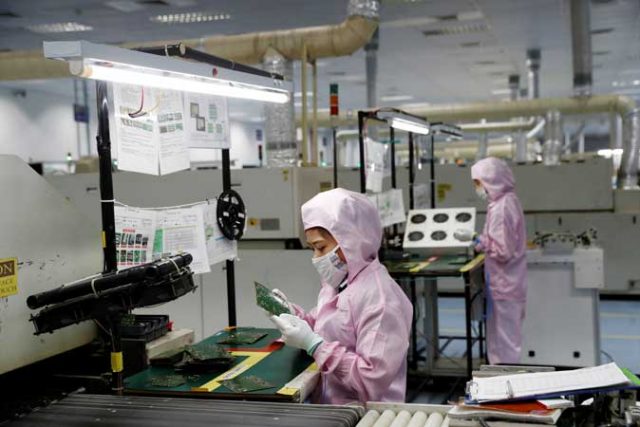
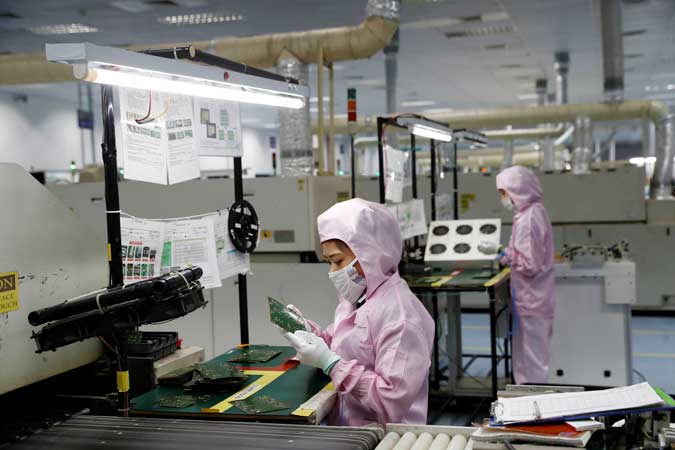
MANUFACTURING ACTIVITY in the Philippines declined at a softer pace in May, as new orders and production improved amid the easing of lockdown restrictions in the Philippine capital and nearby provinces, a survey by IHS Markit showed on Tuesday.
The Philippine Manufacturing Purchasing Managers’ Index (PMI) stood at 49.9 in May, a slight improvement from April’s 49 but still below the 50 neutral mark that separates expansion from contraction, IHS Markit said in a report.
This signaled a “softer downturn across the Philippines manufacturing sector, as operating conditions inched towards stabilization,” it said.
The May PMI reading matched that of November last year.
“A surge in COVID-19 (coronavirus disease 2019) cases and ECQ (enhanced community quarantine) measures last (April) forced the Filipino economy back into contraction territory. May PMI data will therefore be welcomed as it revealed a swift movement towards stabilization with some businesses already resuming their operations. Softer declines in output and new orders signaled a step in the right direction, whilst a renewed increase in overseas demand also supported the sector,” Shreeya Patel, economist at IHS Markit said.
Coronavirus infections surged in March, prompting the return to strict lockdowns in Metro Manila and adjacent provinces. Restrictions have been eased starting May 15 after new cases drastically declined.
The Health department reported 5,177 new coronavirus cases on Tuesday, bringing the total number of active infections in the country to 53,203.
In May, the Philippine manufacturing PMI was the third highest among five Southeast Asian economies, Malaysia’s 51.3 and Vietnam’s 53.1.
Like the Philippines, the PMI of Thailand (47.8) and Myanmar (39.7) also remained in contraction territory in May.
The headline PMI measures manufacturing conditions through the weighted average of five indices: new orders (30%), output (25%), employment (20%), suppliers’ delivery times (15%) and stocks of purchases (10%).
In the Philippines, the total volume of production continued to drop and the supply of materials remained tight in May. However, the rate of decline was slower than April as more factories were able to resume operations and reduce backlog.
New orders continued to fall in May, but only marginally compared with the previous month, buoyed by the high orders from overseas markets after more economies reopened.
Even as new orders and output improved, IHS Markit noted staffing levels dropped as companies cut costs and some workers voluntarily resigned.
“Despite this, outstanding business was reduced at a solid rate, with the latest contraction the sharpest in five months. Anecdotal evidence suggested the reopening of some businesses allowed firms to keep up with demand,” IHS Markit said.
Quarantine restrictions continued to disrupt supply chains, with longer lead times that month were seen to be one of the highest in over five years. Delivery of inputs were delayed largely due to shortage in raw materials and transportation bottlenecks according to companies surveyed by IHS Markit.
Local manufacturers also increased their inventories in May to post five straight months of expansion, as they prepared for an expected surge in demand over the coming months. Production stocks remained stable during the month.
Despite addressing these challenges, IHS Markit said short supply and disruptions still pushed input price inflation up. The rate of increase eased from April but remained above the long-run series average.
This prompted companies to pass on part of the higher raw material costs to customers by increasing prices to the greatest extent since November 2018.
IHS Markit said firms were optimistic on their output expectations in the next 12 months, as they hoped the ongoing vaccination program will help the country go back to normal by May 2022.
“Nevertheless, policy makers are working towards securing enough vaccines to inoculate a large proportion of the population. The rollout must gain momentum to prevent another tightening of measures and to encourage an economic recovery, however,” Ms. Patel said.
IHS Markit said the level of confidence among respondents remained below the series’ average since many companies are cautious over the long-term fallout from the coronavirus pandemic.
Looser lockdowns helped many factories to restart operations, as seen in higher manufacturing PMI last month, but supply chains were still disrupted, said Security Bank Corp. Chief Economist Robert Dan J. Roces.
“Much uncertainties remain in this pandemic, but with the recent shift to looser curbs and inventory buildup, expect the index to hover slightly at expansion in the months ahead, with production volume likely supported by rebounding demand especially from overseas. However, soft local demand might dampen the potential for further expansion readings,” Mr. Roces said via Viber on Tuesday.
Michael L. Ricafort, chief economist at Rizal Commercial Banking Corp., said the country’s manufacturing PMI could go back to expansionary levels starting this month as restrictions eased and as infection rates fell.
“Going forward, risk of lockdowns in an effort to help reduce new COVID-19 local cases that have been relatively higher on a daily basis recently could result to slower recovery in production, sales, net income, jobs, and other economic activities, especially for hard-hit sectors,” Mr. Ricafort said in a note.
SUPPLY SQUEEZE Meanwhile, Asia’s factory activity continued to expand in May thanks to an ongoing recovery in global demand, surveys showed on Tuesday, though rising raw material costs and supply chain constraints clouded the outlook.
A spike in COVID-19 infections in some countries could disrupt supply chains, posing a headache for manufacturers and weighing on Asia’s export-driven recovery, analysts say.
Japan and South Korea saw expansions in factory activity moderate in May, purchasing managers’ indexes showed on Tuesday, underscoring the fragile nature of their recoveries.
“A spread of new variants is already having a negative impact on supply chains. If this situation persists, it would hit Asian manufacturers that had been scrambling to diversify supply chains out of China,” said Toru Nishihama, chief economist at Dai-ichi Life Research Institute.
“Asia’s recovery has been driven more by external than domestic demand. If companies have trouble exporting enough goods, that bodes ill for the region’s economies,” he said.
China’s factory activity expanded at the fastest pace this year in May on solid demand at home and overseas, though sharp rises in input prices and strains in supply chains crimped some firms’ production, a survey showed on Tuesday.
The Caixin/Markit Manufacturing PMI, which focuses on smaller firms, rose to 52.0 last month, the highest since December and inching up from April’s 51.9.
The survey followed China’s official PMI on Monday, which showed factory activity in the world’s second-largest economy slowed slightly in May on surging raw material costs.
The effects of surging infections on manufacturing were most prominent in India where factory activity growth hit its lowest in 10 months, the PMI for the country showed.
India’s coronavirus outbreak has infected 28 million, killed more than 300,000 and forced many states to impose restrictions on economic activity.
Factories in Taiwan and Vietnam were so far holding up despite rising infections. Taiwan’s PMI stood at 62.0 in May, slowing from April but remaining well above the 50 mark that separates growth from contraction.
Vietnam’s PMI also stayed above 50 at 53.1 in May, though slowing from 54.7 in April.
Japan’s au Jibun Bank PMI dropped to a seasonally adjusted 53.0 in May from 53.6 in the previous month, but was higher than its flash reading of 52.5.
A global chip shortage and supply chain disruptions have hit car production, causing Japan’s output growth to miss expectations in April.
Japanese auto giants Toyota Motor and Honda Motor have suspended output in Malaysia due to lockdown measures imposed to combat the pandemic, Kyodo news agency reported on Tuesday.
Separate data released on Tuesday showed Japanese companies cut spending on plant and equipment for the fourth consecutive quarter in January-March, as the economy struggles to shake off the drag from the coronavirus pandemic.
South Korea’s PMI stood at 53.7 in May, slowing from April but extending growth into an eighth straight month although the pace of input price increases hit a 13-year high, the index showed.
The recovery in Asia’s fourth-largest economy remains robust with South Korean exports logging their sharpest expansion in 32 years in May, fueled by stronger consumer demand globally as many economies start to reopen. — Beatrice M. Laforgaand Reuters
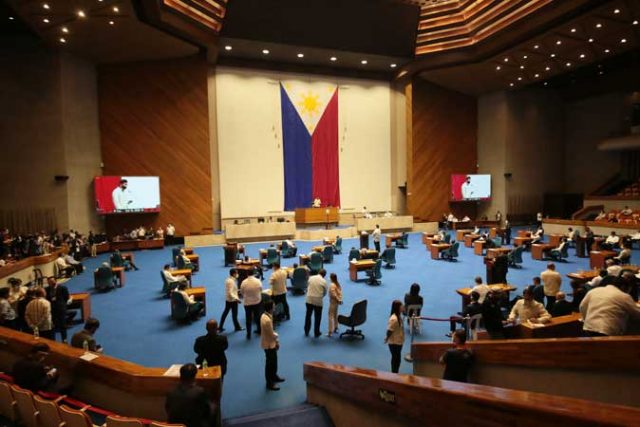
CONGRESSMEN on Tuesday approved on third and final reading a third stimulus package worth more than P400 billion to help unemployed and hungry Filipinos amid a coronavirus pandemic.
Voting 238-0 with one abstention, the House of Representatives passed House Bill 9411 or the Bayanihan to Arise as One Bill, which many consider as a lifeline to suffering Filipinos. Few lawmakers were at the congressional building in Quezon City, with most voting online.
The House also approved on final reading a resolution seeking to ease foreign ownership limits in the 1987 Constitution. Congressmen will amend the 1987 Charter by inserting the phrase “unless otherwise provided by law” in clauses that limit foreign ownership in some sectors.
This will give lawmakers the leeway to pass laws that will lift the Charter change limits.
Bayanihan III’s approval is a “historical moment in the legislative process in this chamber as this measure has been co-authored by almost all of its members,” Speaker Lord Allan Q. Velasco said in a statement posted on the House website.
“Filipinos deserve all these interventions — urgently and immediately,” he said. “Bayanihan III offers a real lifeline for our countrymen struggling to navigate the challenges of COVID-19.”
The centerpiece of the proposed legislation is a P216-billion funding for two rounds of cash aid worth P2,000 to be given to 108 million Filipinos regardless of age and economic status.
The bill also allots wage subsidies and emergency assistance to quarantine-affected households and displaced workers. It also provides funds for national nutrition, and budgets for the agri-fishery sector and cooperatives, medical assistance to indigents, local government support, free COVID-testing for seamen and other migrant Filipino workers.
The bill also provides pensions and a gratuity fund for retired military and police personnel, as well as support for basic and higher education.
As many as 293 congressmen signed the measure as co-authors.
The Presidential Palace on Monday said the bill was not an urgent matter. Presidential Spokesperson Herminio “Harry” L. Roque, Jr. said the government should allow the 2021 national budget and previous economic packages to run their course before passing another stimulus measure.
The Senate counterpart bill, which the Palace had not certified as urgent, was still pending at the committee level.
Senate President Vicente C. Sotto III earlier said he had reservations about the billions of funds allotted for military and police pensions.
But Mr. Velasco said the P401-billion lifeline measure would ensure that Filipinos get direct emergency and social amelioration, have sustainable sources of income and stable access to affordable food and quality health services during the pandemic. — Norman P. Aquino












 In celebration of this year’s NHM and in line with the National Quincentennial Commemorations, the Philippine Postal Corp. with FHFI recently released stamps and souvenir sheets featuring various Philippine indigenous boats.
 “As leaders and role models, we all must strive to utilize every opportunity available to us to reinforce the values and beliefs that we hold dear. Traditions are important for they remind us that we are part of a history that defines our past, and shapes who we are today. We hope that the lineup of Filipino Heritage Festival online activities prepared this May inspire us all to give more value to our culture and to have a great sense of pride for being a Filipino especially in this time of pandemic,” says Armita Rufino, president of the Filipino Heritage Festival.