Home Blog Page 7635

DTI estimates 8% of firms remain closed during current quarantine phase

AN ESTIMATED 8% of businesses remain closed due to the current easier quarantine settings, which represents an improvement over the level of operations seen during the strict phase of the lockdown in the capital and nearby regions, Trade Secretary Ramon M. Lopez said.

The percentage of closed businesses rose to 16% when the enhanced community quarantine (ECQ) was declared, he said at a virtual event on Wednesday.

After being placed under ECQ after a fresh surge in coronavirus disease 2019 (COVID-19) infections in March, lockdown restrictions on Metro Manila and nearby regions were gradually eased. The regions were placed under the more relaxed general community quarantine in mid-May.

Businesses were hardest hit after initial pandemic-related restrictions were rolled out last year. Several sectors were not allowed to operate on-site, while others saw their revenue decline as commercial foot traffic fell.

During the initial and strictest version of the lockdown in April and May last year, 38% of companies had shut.

The number of shuttered businesses had dropped to 4% by February 2021 as more businesses were allowed to reopen and economic activity rebounded.

Dito sa inaasahan nating patuloy na pagbubukas ay marami pa uling makakapagbukas na negosyo (Our anticipated business reopening should gain momentum) moving forward into June,” Mr. Lopez said.

He added that he is hoping that the GCQ (general community quarantine) will be extended in June, but the final decision will be announced by the Inter-Agency Task Force on Emerging Infectious Diseases. — Jenina P. Ibañez

Thailand’s Charoen Pokphand tapped for DBP hog initiative

REUTERS

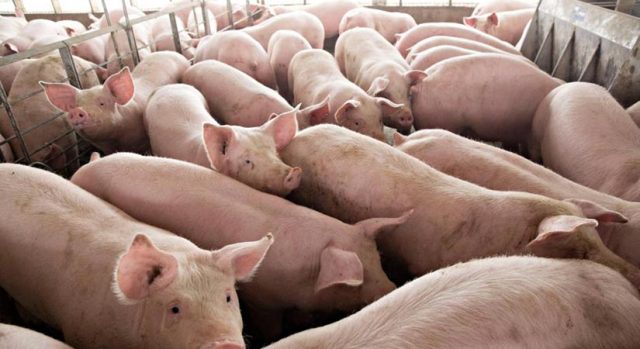
THAI-OWNED CHAROEN Pokphand Foods Philippines Corp. (CPFPC) has tied up with the Development Bank of the Philippines (DBP) in a credit program that will support farmers seeking to rebuild their depleted hog herds.  

Agriculture Secretary William D. Dar said in a statement Wednesday that the DBP signed a memorandum of agreement with CPFPC to participate in the Swine R3 credit program, which will finance bio-secured farm projects in support of the government’s hog repopulation initiative.

CPFPC is a subsidiary of Thai conglomerate Charoen Pokphand Foods Public Co., Ltd.

“This is a welcome development for us as we pursue joint efforts to control African Swine Fever (ASF) and repopulate ASF-free areas. With CPFPC’s technological expertise in modern bio-secured farms and DBP’s support in providing credit assistance to eligible public and private institutions, we will be able to level up our efforts in reviving the industry,” Mr. Dar said.  

According to the DBP, the credit program can be availed of by registered private enterprises and local government units which must use the loans to establish bio-secured swine farms and acquire related machinery and equipment.

Eligible projects under the program include swine breeder farms, swine wean-to-finish farms, and consolidated swine facility projects.  

“Through this partnership, the National Government will be able to elevate and expedite its swine repopulation and rehabilitation initiatives that will eventually allow the country to recover to its pre-ASF status,” DBP President and Chief Executive Officer Emmanuel G. Herbosa said.

Sakol Cheewakoset, CPFPC vice-chairman, said the partnership allows the company to share its knowledge in helping the country recover from ASF.

“Our state-of-the-art bio-secured farms enable us to be resilient from ASF, thus making our business a success. Moving forward, this will also open export opportunities for the Philippines. We assure and commit to you our continuous support in investing in the Philippines,” he said. — Revin Mikhael D. Ochave

IP applications rise 21% in four months to April

INTELLECTUAL PROPERTY (IP) filings rose 21% in the first four months of the year to 15,028 as businesses started to recover from the effects of the pandemic, the Intellectual Property Office of the Philippines (IPOPHL) said in a report Wednesday.

The rise was interpreted to mean a hint of recovery after filings declined by 12% in 2020, with inventors and creatives delaying applications due to subdued business activity during the lockdown declared to contain coronavirus disease 2019 (COVID-19).

The recent uptick in filings indicates “a more positive outlook among businesses and innovation players on the country’s pace of recovery from the pandemic,” IPOPHL Director General Rowel S. Barba said.

“It could also signify that businesses are rebuilding stronger by integrating IP protection in their innovation and branding strategies.”

Utility model filings surged 33% to 420, the bulk of which came from food chemistry filings. 

Trademark applications increased 26% to 13,041. Almost 4,000 of the applications came from the health and cosmetics industry, while agricultural products and scientific research also accounted for a significant portion of the filings.

Patent filings however declined 6% to 1,235, with many of the applications coming from pharmaceuticals. Industrial design filings also dropped 21% to 332.

Copyright deposits almost doubled to 444 from 233 last year.

Mr. Barba said that he is hoping that filings this year return to pre-pandemic levels.

“The office continues to double awareness and education efforts on the benefits of intellectual property to businesses and streamline our digital registration services to provide ease to registrants,” he said. — Jenina P. Ibañez

Korean aid agency to back river development program

PAMPANGA RIVER BASIN — RIVERBASIN.DENR.GOV.PH

THE NATIONAL Water Resources Board (NWRB) has entered into a partnership with the Korea International Cooperation Agency in a water project for the Pampanga River Basin.

The NWRB said in a statement that the project will involve the establishment of the Integrated Water Resources Management Information System that aims to improve water resources planning, management, and regulation in the river basin.

“With the improvement and expansion of the project covering the entire Pampanga River Basin, it is expected that we will be able to reap more benefits from this project, specifically, in terms of water allocation and distribution, irrigation and flood analysis,” NWRB Executive Director Sevillo D. David, Jr. said in the statement.

“Consequently, this also means more work from both our ends, but this is a very much welcome challenge in which the NWRB is up to,” he added.

According to the NWRB, the South Korean government will provide software, equipment, and materials for the water project.

Experts from South Korea will also be deployed to the Philippines to help in the implementation and train personnel.

“The scope of this foreign grant is spread (over) a four-year period from 2021 to 2025,” NWRB said. — Revin Mikhael D. Ochave  

PHL pandemic spending rated among world’s most transparent

PHILSTAR

THE PHILIPPINES was among four countries considered to have been the most transparent in pandemic spending last year, according to a survey conducted by the non-profit International Budget Partnership (IBP).

The Philippines, Australia, Norway and Peru were rated “adequate” in terms of spending accountability in IBP›s rapid assessment survey of 120 countries in the March-September 2020 period, covering spending items related to the pandemic.

“Comprehensive reporting, transparent procurement processes and expedited audits of crisis-related spending were promoted by the IMF (International Monetary Fund), GIFT (Global Initiative for Fiscal Transparency), IBP and others as essential to achieving adequate fiscal accountability during the crisis and beyond,” the IBP said.

Meanwhile, 29 countries were rated to have achieved «some» level of accountability, 55 others were graded as having “limited” accountability and 32 had “minimal” accountability.

“The main finding from our research is that governments are falling short of managing their fiscal policy response to the crisis in a transparent and accountable manner. More than two-thirds of the governments we looked at, across many regions and income levels, have only provided limited or minimal levels of accountability in the introduction and implementation of their early fiscal policy responses,” it added.

The study used 26 new indicators to assess the transparency, public participation and oversight of fiscal packages rolled out by governments during last year›s crisis.

For the Philippines, the IBP assessed the first relief package, known as Republic Act No. 11469 or the Bayanihan to Heal as One Act.

It cited as a best practice the requirement that the government provide weekly reports of its actions to an oversight committee composed of legislators and other officials.

It also acknowledged the effort to continue with public consultations during the crisis.

The Department of Budget and Management (DBM) welcomed the survey›s findings in a statement Wednesday.

“This is an exemplification of the National Government’s continuous efforts towards upholding fiscal transparency and accountability, despite the unexpected, unprecedented impacts of the COVID-19 pandemic,” it said.

“The DBM commits to remain a champion of open and participatory governance by delivering more concrete, felt and transformative results to the citizens especially during these challenging times,” it added. — Beatrice M. Laforga

Delay seen in Public Service Act amendments

PHILSTAR

PROPOSALS to amend the Public Service Act (PSA) could be delayed, though other priority legislative items like amendments to the Foreign Investments Act of 1991 and the Retail Trade Liberalization Act of 2020 could be approved sooner, a key legislator said.

On Wednesday, AAMBIS-OWA Party-list Rep. Sharon S. Garin said legislators recently met with the Legislative-Executive Development Advisory Council on the three measures, all certified by President Rodrigo R. Duterte as urgent.

The House versions of the amendment bills have been approved on third reading while the Senate is still deliberating its own bills seeking to amend the Public Service Act and the Foreign Investments Act.

Ms. Garin said while discussions on the Foreign Investments bill at the Senate have been promising, the PSA amendments have fallen behind in the approval process.

“The Foreign Investments Act… is going along. It has a good chance na matatapos siya (to be finished) before the break. ‘Yung Public Services Act, medyo complicated ‘yun (that is a bit more complicated). I don’t know if they can finish but they are trying,” she said.

Ms. Garin said the Senate and the House of Representatives will begin the bicameral conference for the Retail Trade amendment bill soon. The Senate approved its bill earlier this month.

Congress will go on sine die adjournment on June 2.

Ms. Garin said that the proposed Bayanihan to Arise as One Act, known informally as the Bayanihan III stimulus package, is not deemed a priority measure.

“Bayanihan III is not in their priority of the executive. It is a priority of the House and then eventually the Senate,” she said, adding that the three investment-liberalization bills are the top priority for the executive.

The House of Representatives has approved the Bayanihan III bill on second reading. — Gillian M. Cortez 

Price of regular-milled rice falls in seven key regional centers  

PHILIPPINE STAR/ MICHAEL VARCAS

THE AVERAGE price of regular-milled rice fell in seven areas subject to price monitoring during the first week of May, according to the Philippine Statistics Authority (PSA).

The PSA said, the biggest adjustment to prices was recorded in Legazpi City where the grain fetched P1.25 less at P35.20 per kilogram (/kg) compared with the previous monitoring period in mid-April.

Other areas that recorded lower prices were Tuguegarao City (P31.50/kg), Calapan City (P35/kg), Cagayan de Oro City (P39.50/kg), Digos City (P36/kg), Butuan City (P36.43/kg), and Cotabato City (P35.35/kg).

Meanwhile, the PSA said prices rose the most in Cebu City, with an increase of P2.75, to P42.45/kg.

The price of regular-milled rice in the National Capital Region (NCR) during the period rose 14 centavos to P38.24/kg.

Lean pork saw price increases in the NCR, to P363.33/kg from P361.11/kg previously; Legazpi City to P345/kg from P340/kg; Baguio City to P342/kg; and Cagayan de Oro City to P290/kg from P285/kg.

The PSA said the price of galunggong, or round scad, dropped in Baguio City (P200/kg), Tuguegarao City (P190/kg), Batangas City (P180/kg), Digos City (P180/kg); and Kidapawan City (P170/kg).

The price of galunggong rose in Cagayan de Oro City to P190/kg, Calapan City P250/kg, Tacloban City P200/kg, and NCR P216.44/kg.

“Declines in the average retail prices of a kilogram of red onion, ranging from P1.78 to P20, were registered in six regional centers during the period,” PSA said. — Revin Mikhael D. Ochave 

Philippines seen facing extended U-shaped recovery

PHILSTAR

THE RECOVERY is expected to be U-shaped, with output returning to pre-crisis levels in two years, with household spending remaining subdued and the coronavirus outbreak still uncontained, Sun Life Asset Management Co., Inc. said.

In a briefing Wednesday, Michael Gerard D. Enriquez, chief investment officer at Sun Life Asset Management, downgraded the house’s gross domestic product (GDP) growth forecast for this year to 5.5% from 8.6% previously, citing the expected slower recovery across all sectors.

The latest estimate was lower than the government’s already-reduced growth target of 6-7%.

Mr. Enriquez said the economy will likely take two years to return to trendline growth. In the worst-case scenario, the economy will grow 3.9% in 2021 following the record slump of 9.6% in 2020, with the optimistic case contemplating a GDP rise of expand 7.1%.

“We now expect an extended U-shaped type of recovery for GDP. We now think 2021 is a recovery year but not as strong as earlier predicted due to uncertainty over the fiscal stimulus and prolonged delays in vaccine rollout,” Mr. Enriquez said.

Sun Life Asset Management said high growth is possible this quarter but the rate of expansion will ease over the rest of the year. It projected a 12.5% rise in the second quarter due to base effects, a rise of 8.3% in the third quarter and growth of 5% in the fourth quarter.

He said Sun Life Asset Management tempered its expectations for all sectors this year. The house view is now 1-3.5% growth for household consumption in 2021, against the previous growth estimate of 3-4%. It also lowered its projections for government spending growth to 15-25% from 20-30% previously, as well as its estimate for private investment to 10-12% from 20-25%.

Exports are expected to rise 4-7% this year from the estimated 5-8% growth seen previously, while imports could grow by 6-10%, compared with the previous 7-12% forecast. — Beatrice M. Laforga

Vaping bill endorsed to Senate plenary

REUTERS

SENATOR Ralph G. Recto has endorsed for plenary debate Senate Bill No. 2239 or the Vaporized Nicotine Products Regulation Act.

“This bill regulates and controls the importation, manufacture, sale, packaging, distribution, use and consumption of vaporized nicotine products or VNP, such as vapor products and heated tobacco products,” Mr. Recto said in his sponsorship speech.

The committee report on the bill was approved by the committees on trade, commerce and entrepreneurship, health and demography, and finance.

The bill bans the sale of vaporized nicotine products to minors, with retailers required to verify the age of buyers, who must present a valid ID.

Retailers and distributors “whether in mortar or portal stores,” must be registered with the Department of Trade and Industry and the Securities and Exchange Commission, Mr. Recto said.

Online selling of the products will be allowed subject to restrictions on sales to those under 18.

Celebrities and social media influencers will be banned from endorsing the products.

Selling vaporized nicotine products is not allowed with 100 meters of the perimeter of a school, playground or other facility frequented by minors.

Advertisements and other forms of consumer communication cannot target minors, must not undermine quit-smoking messages and may not encourage non-tobacco or non-nicotine users to use the product. Sponsorship activity is limited to industry associations or trade events open only to adults.

The use of the products will be allowed in public places, but indoor use is prohibited in schools, hospitals, government offices and facilities for minors. In indoor places open to the public, their use is to be allowed in designated vaping areas or point-of-sale establishments.

Retail or use of nicotine shots and/or concentrates is also not allowed. The products should also carry graphic warnings and health warnings in text.

Designated vaping areas will need to be open spaces, either outdoors or in separate indoor areas with proper ventilation. — Vann Marlo M. Villegas

IAET no more

If there’s any good this pandemic has brought to our country, and to the business community in particular, I think one of them would be the passage of the Corporate Recovery and Tax Incentives  for Enterprises (CREATE) Act.  Among others, CREATE lowered the corporate income tax rates from 30% to 25% (or 20% for small and medium enterprises), rationalized fiscal incentives, and repealed certain provisions of the National Internal Revenue Code (NIRC) or Tax Code of the Philippines.  One of those repealed is the imposition of the 10% Improperly Accumulated Earnings Tax (IAET).

Prior to CREATE, the 10% IAET was imposed on the improperly accumulated taxable income of a corporation formed for the purpose of avoiding the income tax on its shareholders, by permitting the earnings and profits of the corporation to accumulate, instead of distributing them to the shareholders as dividends.  Its imposition aimed to deter or penalize corporations for the improper accumulation of earnings to avoid the payment of dividends tax that would have been due had the earnings been distributed as dividends to the shareholders. 

EXEMPTIONS FROM THE 10% IAET
If retention of the profits is justifiable, such as the use of undistributed profits for the reasonable needs of the business, such purpose would not generally make the retention improper and subject to the penalty tax.

The Bureau of Internal Revenue (BIR) considered the accumulation of earnings up to 100% of the paid-up capital of a corporation as falling within the “reasonable needs of the business.” Moreover, earnings that are reserved for a justified purpose (e.g., definite corporate expansion, compliance with any loan covenants, earnings reserve subject to the legal prohibition against its distribution) were also considered within the purview of “reasonable needs of the business.” 

The Tax Code also exempted from the imposition of the 10% IAET, certain companies, including publicly-held corporations. Publicly-held companies refer to those, where the top 20 ultimate individual shareholders hold less than 50% of the value of the outstanding capital stock or the voting power of the corporation pursuant to Revenue Regulations (RR) No. 2-2001.

In determining stock ownership, the BIR regulations allowed tracing the ownership up to the level of the individual owners. Hence, the stock owned directly or indirectly by or for a corporation, partnership, estate, or trust shall be considered as being proportionately owned by its shareholders, partners, or beneficiaries. An individual shall also be considered as owning the stock owned, directly or indirectly, by or for his family, or by his partner in a partnership.

A publicly-listed corporation or a corporation owned directly or indirectly by a publicly-listed corporation is not automatically exempt from IAET. As mentioned, the individual ownership of a corporation shall be considered in determining whether a corporation is publicly-held for IAET purposes.

Thus, in one ruling, the BIR did not consider a corporate taxpayer as publicly-held even though more than 50% of its shareholdings are indirectly owned by a publicly-listed company. The ownership of the taxpayer was traced past the corporate shareholders and up to the level of the individual shareholders. The BIR observed that although publicly listed, the ultimate parent of the taxpayer was effectively controlled by only a few individuals (i.e., less than 10), and thus cannot be considered publicly held for purposes of exemption from IAET.

Domestic corporations and subsidiaries of foreign companies, which are held by publicly-listed corporations, face these challenges or questions around their excess accumulated earnings during BIR tax audits or investigations.  Oftentimes, they end up being assessed deficiency 10% IAET for allegedly having excess undistributed earnings and/or for failure to provide adequate supporting documents to prove that they are publicly-held companies, as the case may be.

IAET REPEAL UNDER CREATE
The repeal of IAET under the CREATE Act is truly a welcome development for these corporations as they will no longer have to deal with this issue when they are audited by the BIR in the future.  Moreover, domestic corporations, in general, will not have to think about declaring dividends every so often, which in some cases would be remitted out to an offshore parent company, thereby taking money out of the Philippines.  With the funds still in the country, these could be re-invested and used by these domestic companies to grow their business in the Philippines and benefit the economy, which is sorely needed especially after the pandemic.

In Revenue Regulations No. 5-2021, the BIR provides that the repeal of IAET applies to the entire taxable year for all fiscal years/taxable years ending after the effectivity of CREATE. Note that the repeal under the Act did not specifically provide any retroactivity clause.  Therefore, the general rule on effectivity date applies, which is officially April 11, or 15 days after CREATE’s publication on 27 March 2021.

Technically speaking, any excess retained earnings in 2020 and prior years may still be at risk of being questioned or assessed for IAET if the accumulation of earnings is found to be beyond the reasonable needs of the business.

That said, will the BIR find less interest in pursuing assessments related to IAET for 2020 and prior years given the repeal under the CREATE Act?  We’ll have to see and find out in the coming tax audits.

The views or opinions expressed in this article are solely those of the author and do not necessarily represent those of Isla Lipana & Co. The content is for general information purposes only, and should not be used as a substitute for specific advice.


Nelson V. Soriano is a Tax Director at the Tax Services Department of Isla Lipana & Co., the Philippine member firm of the PwC network.

+63 (2) 8845-2728

nelson.soriano@pwc.com 

Veteran Filipino MMA fighter Edward Kelly in crossroads fight

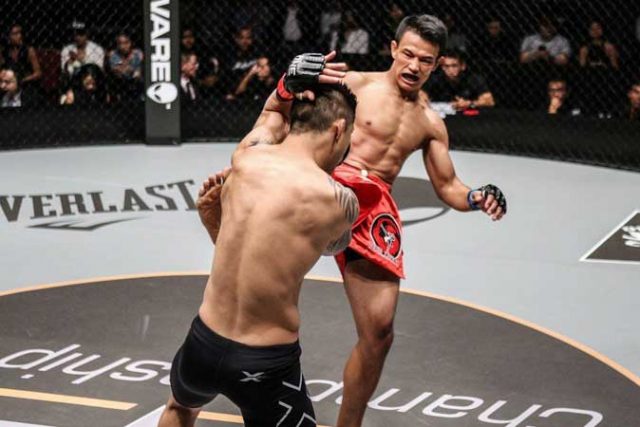
VETERAN Edward Kelly of Team Lakay returns to the ONE Championship Circle on May 28, looking to show that he still has fight in him even at this stage of his career. — ONE CHAMPIONSHIP

By Michael Angelo S. Murillo, Senior Reporter

VETERAN mixed martial arts (MMA)  fighter Edward Kelly returns to action later this week in a fight that he considers something that could decide the direction he would take moving forward.

Team Lakay’s Kelly, 37, is to face Ahmed “The Prince” Faress of Egypt in a three-round featherweight clash as part of ONE Championship’s tape-delayed “Full Blast” event at the Singapore Indoor Stadium airing on Friday, May 28.

It will mark the return of “The Ferocious” in the ONE Circle after a year-and-a-half absence.

He said a lot is riding on the outcome of his latest fight, including his future in the sport.

“I’ve thought about walking away from it all, mostly due to my age. I’m not a young fighter anymore. I know this is a young man’s game,” Mr. Kelly said. “But I want to test myself and my body.”

Mr. Kelly (12-8) admitted that his last four fights, where he went 1-3, did not produce ideal results and had him and his team sitting down and evaluating his game, and trying work to address the situation.

He hopes to showcase the result of their “recalibration” in the fight against Mr. Faress (16-3).

“I want to prove to myself that I still have it. I know I still have good fights in me. I want to show the world my fighting heart. I want to show the best Edward Kelly in the Circle,” he said.

Adding, “The time off I’ve had was great in the sense that I was able to do a lot of self-reflection. I really came to terms with where my career is at, and mentally I feel stronger than ever. I’m more motivated now to continue with my career. I want to redeem myself.”

Mr. Kelly last fought in November 2019, losing to China’s Kai Tang by unanimous decision.

He now faces Mr. Faress, a product of the ONE Warrior Series.

“[Faress is] a well-rounded fighter, from what I’ve seen. He’s great on the ground, but I’m also willing to grapple with him all night. I am confident in my grappling skills,” said Mr. Kelly of his opponent.

“I want to dominate this fight from start to finish. That’s my plan. So whatever area this fight goes, I want to dominate him. I want to showcase my hard work.”

ONE: Full Blast is headlined by the ONE Super Series Bantamweight Muay Thai showdown between #1-ranked Saemapetch Fairtex and Thai compatriot Kulabdam “Left Meteorite” Sor. Jor. Piek Uthai.

Mavericks take 2-0 series lead on LA Clippers; LA Lakers pull level with Suns

PHOENIX Suns forward Jae Crowder (top) reacts after being called for a foul against Los Angeles Lakers forward Anthony Davis during the second half in game two of the first round of the 2021 NBA Playoffs at Phoenix Suns Arena. — REUTERS

LUKA Dončić blew past Los Angeles defenders for 39 points, seven assists and seven rebounds, leading the visiting Mavericks to a 127-121 victory over the Clippers on Tuesday and a 2-0 lead in the Western Conference first-round playoff series.

Dončić’s second straight 30-plus-point game leaves the Mavericks in a commanding position as the best-of-seven series heads back to Dallas for Game 3 on Friday and Game 4 on Sunday.

Tim Hardaway, Jr. added 28 points, Kristaps Porziņģis 20 and Maxi Kleber 13 for Dallas.

Kawhi Leonard led the Clippers with 41 points. Paul George contributed 28 points, 12 rebounds and six assists, and Reggie Jackson added 15 points.

NETS 130, CELTICS 108
Kevin Durant scored 26 points and Joe Harris added 25 as Brooklyn seized control early and cruised to a 2-0 series lead over Boston in Game 2 of their Eastern Conference first-round series.

Harris hit seven of 10 3-point tries to tie the franchise record for 3-pointers in a playoff game set by Deron Williams in 2015. Durant added eight rebounds, five assists and four blocked shots and made 8 of 12 shots as the Nets shot 52.3 percent and hit 17 3-pointers.

James Harden contributed 20 points and seven of Brooklyn’s 31 assists. Former Celtic Kyrie Irving finished with 15 and Blake Griffin chipped in 11 as no Brooklyn starter played more than 29 minutes.

LAKERS 109, SUNS 102
Anthony Davis amassed 34 points, 10 rebounds and seven assists as Los Angeles held off host Phoenix to even the first-round Western Conference playoff series at one game each.

LeBron James contributed 23 points and nine assists for the Lakers, who turned back a late Suns rally to rebound from a 99-90 defeat in Game 1. Los Angeles’ Dennis Schröder added 24 points, and Andre Drummond had 15 points and 12 rebounds.

Devin Booker scored 31 points for the Suns, and Deandre Ayton had 22 points and 10 rebounds. Both players made their playoff debut in Game 1. — Reuters