Home Blog Page 7633

Half of over 650,000 overseas workers who have gone home still got work abroad 

DFA

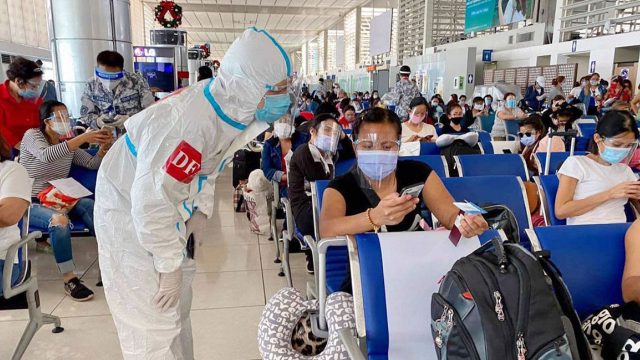
A TOTAL of 653,401 overseas Filipino workers (OFWs) have come home since the start of the coronavirus pandemic last year, about half of whom still have a job abroad to go back to.    

In a virtual briefing on Wednesday, Overseas Workers Welfare Administration (OWWA) Director Hans Leo C. Cacdac said they are expecting another 150,000 to 180,000 OFWs to return to the country within the year.   

Mr. Cacdac estimated that 50% of the returning OFWs were displaced or have decided to stop working abroad due to the pandemic, while the other half just came home to visit their families and will be leaving again.  

Returning OFWs get government assistance on in terms of food, transport, and accommodation during their quarantine period, and cash aid worth P10,000 under the Bayanihan II Act, the second law passed for the country’s pandemic response.  

The OWWA official said their agency has so far spent P5.2 billion for cash assistance to 520,093 OFWs.   

He added that the Budget department has committed to the additional P7-billion funding requested by OWWA, but a final amount has yet to be determined.   

Meanwhile, Warren M. Miclat, the Labor department’s financial management service director, said the department continues to accept applications for its COVID-19 (coronavirus disease 2019) Adjustment Measures Program while waiting for the approval of Bayanihan III.  

“We received P16.4 billion from Bayanihan II so the funds from Bayanihan III is hopefully higher,” Mr. Miclat said.   

He added that the Department of Labor and Employment (DoLE) will not request for additional funds for cash assistance if ever the strict lockdown in Metro Manila is extended beyond Aug. 20.   

DoLE has a pending request for an additional P2 billion for cash aid to workers displaced by the lockdown. — Bianca Angelica D. Añago  

Former health chief tests positive for COVID-19 

PHILSTAR

ILOILO Rep. Janette L. Garin, a former Health secretary, is among the latest government officials to test positive for coronavirus.   

She told reporters Wednesday that she is experiencing just mild symptoms but has to be under strict monitoring as she is tachycardic, a condition wherein the heart beats at over 100 beats per minute.  

“It is fortunate that I am fully vaccinated. I can sleep soundly with the hope that this will not be severe despite my pre-existing conditions: asthma, hypertension and Raynaud’s disease,” Ms. Garin said in a statement. 

She also said that she has informed those who have been exposed to her since Aug. 16 to undergo quarantine and monitor for possible symptoms. 

Ms. Garin served as secretary of Health from Dec. 2014 to June 2016 under the late former President Benigno S.C. Aquino III. — Russell Louis C. Ku 

Bohol extends ban on tourists, returning residents to Aug. 31  

JAPAN EMBASSY PHOTO

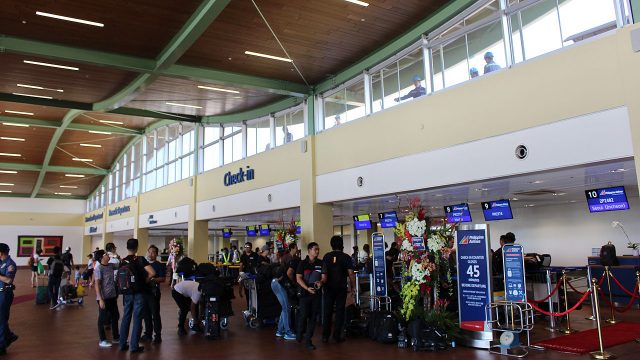
BOHOL will remain closed to tourists and other non-essential travelers until Aug. 31, based on the latest order signed by Governor Arthur C. Yap. 

Executive Order No. 40, signed Tuesday, amends an earlier directive on the ban that was supposed to be in effect until Aug. 20.  

Mr. Yap, in a post on his social media page, said the extended ban has the support of the province’s medical and tourism sectors, among others.   

“As we continue to face the threat of COVID-19 (coronavirus disease 2019), especially the dreaded Delta Variant, all Mayors, together with Provincial Tourism Council, Hotels and Restaurants owners, traders or businessmen, Doctors and other Medical Frontliners, united with their recommendation to continue our closure of our borders and temporary suspension of accepting Non-APORs (authorized persons outside residence),” he said.  

The APORs listed in the order who are allowed to enter the province are: health workers on official business, authorized government officials, travelers for medical or humanitarian reasons, returning overseas workers, and workers in basic services and utilities as well as bank personnel.   

“Let’s take the time to do fast contact tracing in our cases and transfer those who are isolated in their homes to our Municipal Temporary Treatment and Monitoring Facility so that we can monitor their situation more and avoid the virus catching up with domestic colleagues,” Mr. Yap said.   

As of Aug. 17, data from the Health department’s Central Visayas regional office show Bohol had 1,455 active cases out of 11,045 recorded since the start of the pandemic last year. There were 9,498 recoveries and 92 deaths. — MSJ 

Smart, DepEd provide internet connection to a million teachers   

SMART COMMUNICATIONS, Inc. has partnered with the Department of Education (DepEd) on a project that will bring a million public school teachers online. 

The connection will be through SIM cards with Smart Giga Study plans, which is funded under the Bayanihan to Recover as One Act or Bayanihan II.  

The SIM cards will be distributed to the teachers for use in online teaching and student interactions amid coronavirus disease 2019 (COVID-19) restrictions, the wireless arm of PLDT, Inc. said in a press release on Wednesday.  

“The Department has procured the sim cards and connectivity load from our external partner for all the teaching and non-teaching personnel to ensure ease in communication and unhampered delivery of services amid the crisis,” DepEd Undersecretary Alain Del B. Pascua said.  

The SIM cards will be linked to CuroTeknika Helpdesk, which will manage monthly load disbursement to the teachers. The data package gives users access to productivity tools such as the Google Suite and Microsoft 365.  

“We are committed to delivering solutions for the Department of Education so that they may continue supporting the faculty of government learning institutions across the country,” Smart Communications President and Chief Executive Officer Alfred S. Panlilio said.  

Hastings Holdings, Inc., a unit of PLDT Beneficial Trust Fund subsidiary MediaQuest Holdings, Inc., has a majority stake in BusinessWorld through the Philippine Star Group, which it controls. — Jenina P. Ibañez 

Remittances in the time of COVID: An act of love

PCH.VECTOR-FREEPIK

I had an interview this past week with UnionBank’s Chief Economist, Carlo Asuncion, and the main headline then was that remittances hit a six-month high in the month of June, a 7% increase year on year to $2.638 billion. My introduction to the interview was to the tune of “it’s hard to see silver linings these days, but here’s one!” Not only was the latest print positive, it also surprised economists who were expecting a mere 2.4% jump. But the sad reality is that this print brought to light how countries abroad are doing better economically, not necessarily the Philippines. Whether this amount will spill over into consumption and growth is a completely different story, with many households simply trying to survive and be prudent with their finances, wherever they are sourced.

Month-on-month figures though are promising: cash remittances sent by overseas Filipinos rose by 10.7% from the May print. This comes as economists surveyed by Bloomberg slashed their growth forecasts for the country to 4.9% this year from the 9.6% contraction of 2020, the worst ever slump on record: a welcome reprieve, albeit still a drop in the bucket overflowing with problems.

But what got me to mull over remittances was not the economic windfall we hope to gain from those Overseas Foreign Workers (OFWs), but rather, how staggering the reality is that in the midst of lockdowns and travel restrictions, Filipinos continue to remit money home. What hits me very hard is the separation of families during these times, especially mothers from their children as they work hard abroad to provide a better future for the next generation. It is especially daunting for me, myself recently thrown into the mix as a transnational mother, a situation I never imagined I would ever be in. Incidentally, I had been reading resource articles on coping with separation anxiety, taking cues from studies on Filipino domestic workers and their family relationships. This is a subject I have been very interested in and have dabbled in as a researcher, but mainly as a former OFW trying to understand my place abroad.

Apart from the usual results that are evident in terms of difficulties in family dynamics and the unnaturalness in which families must now be cross-border, as well as some proposed solutions and mediators like the use of technology to connect, there was one specific finding from Pineros-Leano, et. al entitled, “Depressive Symptoms and Emotional Distress of Transnational Mothers: A Scoping Review” wherein the authors point out that many studies have shown that sending remittances back to the country of origin sparks feelings of happiness and fulfilment. To wit, being able to send gifts and remittances to their children makes women feel empowered and it reminds them that their sacrifice has been worth the effort of separating from their children. They pointed out that recent research on remittances among Latinx immigrants suggests that sending remittances to the home country is associated with lower odds of depression and psychological distress. Specifically, these studies found a 20% reduction in the odds of depression and 19% decrease in the odds of psychological distress among Latin American immigrants who sent more remittances. This links to many recommendations from psychologists saying that care packages help maintain parental-child bonds during difficult separations.

And I thought, well wow. Is this not the epitome of Rethinking Finance? That even if there is no replacement for unification and togetherness, ultimately money can buy happiness, money can maintain love. I had known that remittances were important measurements of family planning, strategizing, and investments, particularly for those worse off in the country who would have no other means to grow their incomes. We always think of the recipient benefitting and the sacrifice of the migrant. But I never really thought of it as a means to maintain well-being for the migrant as well, as their actual motivation to earn. We always color motivation as the migrant thinking of the future of their family, but motivation can simply be taken from the actual act of giving, the act of providing.

At the core of it is the basic idea that money is empowering. Access to finance is empowering. It in itself is enough to allow a migrant to continue with the challenges, which already under normal circumstances is painful, and under the present reality is almost unbearable.

How do we make any real-world use of this poignant truth, then? The truth that those who keep our economy running are doing it to keep themselves ever sane? Imagine that the surprise of remittance jumps, could, from my anecdotal social scientist perspective, be because in these, the hardest times economically, migrants feel an even stronger psychological need to bond and illustrate their presence to their families who are themselves embroiled in threats to their health on a continuing basis. We as researchers and economists have thought of remittances as windfall income, as insurance, as returns on investment. We have given faces to the numbers by painting them as superheroes wearing nurse uniforms, holding brooms, attending to foreign children, wearing sailor hats, standing in oil fields. But while they are heroic, they are also simply human beings struggling, using finance as a means to cope with the reality they find themselves in.

Now imagine a world where technology and finance can address this gap, this pain point of making remittances more personal, of making every peso sent home, not merely a figure on an app, a scribble on a withdrawal slip in their local padala, an “ask money” function on Facebook Messenger, but a bond between sender and receiver. I have spent 15 years in the industry, have met the top bankers in the Philippines and abroad and have never found a product that could capture the hearts and desires of remitters, and transmit to their beneficiaries that this is a care package, this is a way of reaching out, this is desperate and yet fierce attempt at love and connection.


Daniela “Danie” Luz Laurel is a business journalist and anchor-producer of BusinessWorld Live on One News, formerly Bloomberg TV Philippines. Prior to this, she was a permanent professor of Finance at IÉSEG School of Management in Paris and maintains teaching affiliations at IÉSEG and the Ateneo School of Government. She has also worked as an investment banker in The Netherlands. Ms. Laurel holds a Ph.D. in Management Engineering with concentrations in Finance and Accounting from the Politecnico di Milano in Italy and an MBA from the Universidad Carlos III de Madrid.

Inevitable

PIKISUPERSTAR-FREEPIK

If you still believe that things will eventually go back to the way they were in 2019, then perhaps it is time for you to appreciate a new reality. The world has changed so much in 2020 and 2021 that going back has become practically impossible. I, for one, am not the same consumer I was in 2019. And changes that occurred in my way of doing things are here to stay.

Also, many of the workplace changes that have been initiated since last year due to lockdowns resulting from COVID-19, will likely continue into 2022 and beyond. Online retail and banking transactions, e-payments, and online-based meetings and collaborative work will also persist and become norm. These changes will all impact on real estate use and development.

Remote work and work-from-home or WFH are two different things. Remote work is sustainable long term, but WFH is probably not, and may eventually segue into “hybrid” work arrangements. People may be in offices half the time, and then spend the rest of the week working remotely — at home or somewhere else suited for work: open space, well-ventilated, natural lighting, energy efficient, minimal commuting, and environment-friendly.

Of course, medium and heavy industries will still need workers on site meantime. Factory- or production plant-based work will remain, but in not as grand a scale as before. Robotics, automation, and artificial intelligence will play bigger roles in industries in the next 10 years. This change will be at the expense of workers, making the transition a socially difficult leap.

It is the congruence of situation, environment, and technology that brings us to where we are now. And it is these same factors that fuel or accelerate the transition to remote work. The transition, for most, is not by choice but by circumstance. At least, we also now have the tools to further improve individual work processes in a way that can allow for more creative, effective, and productive collaborative work — without being co-located.

Remote work has been with us for a long time. Journalists like myself, who started out as newspaper reporters in the 1990s, are used to working remotely. About 30 years ago, we still used typewriters in some news beats, and faxed in or phoned in our stories to the News Desk. We dictated changes to stories over landlines when we were pressed for time. We spent more time outside the office than in it.

To keep in touch, pagers were handed out. Eventually, pagers lost out to mobile phones, and typewriters were replaced with laptops. At some point, before the internet and e-mails, I lugged to the beat a heavy laptop and a small dot matrix printer. I would write on the laptop, print my stories, and then fax them to the office. Only a slow dial-up connection was available, and you needed to commandeer someone’s phone line for that.

Most reporters worked remotely, camping out at news beats until their stories were edited and ready for proofing and typesetting. In my case, I went to the office only on Sundays, to work on stories for the Monday issue. There were no beats to cover on Sundays, so one had no choice but to work in the office. Most reporters came in only for a few hours on Sundays.

In the early 2000s, I tinkered with the idea of transitioning the News Room into common workstations, rather than reporters having private desks. Reporters were rarely in the News Room, anyway. People can come in, pick any available workstation, plug in and work. When done, leave the workstation like they found it, for the next person using it. The idea didn’t fly because, at the time, people still put a premium on private personal space. But I guess by now, that too has changed.

Almost 30 years as a journalist now and I am still working remotely. I have written columns and articles on laptops, tablets, and mobile phones. I don’t print any of them, and have chucked the fax machine. I e-mail as soon as I am done, and await confirmation of receipt. For any questions or clarifications, I am easily reached via e-mail or messaging on my mobile phone.

All my files are stored electronically. No more large filing cabinets. A small space at home or outside is enough for work, as long as there is an internet connection. Research is done mostly online, and interviews are now usually done through e-mail or online meetings with news sources. Even press conferences are held online. On few occasions I help out with editing, stories are e-mailed to me, and then I e-mail them back when I am done. I communicate with reporters online or via mobile messaging.

Simply put, for newspaper publishing, remote work is the past. Technology has allowed it to be an effective and efficient option for work. And it is only now that many other office-based work has been forced to follow suit. I can just imagine the birthing pains the others are going through now. But instead of resisting the idea and pining for the old days, they might as well accept the new reality and figure out quickly the best and most efficient way to get work done.

My advantage, perhaps, is that while I have little to no direct in-person contact with people at work now, these are the same people I had personally worked with in the past. The same goes for news sources who agree to e-mail and online interviews. They can already put a face to the name of the person on the other end, having met him previously or had dealt with him personally in the past.

And this, to me, is the greater challenge now as more offices transition to remote work and hybrid work arrangements. There is something unnatural with working long term, and as a team, with someone you have never met or have never seen. There should be at some point in the working relationship for co-workers to be in direct and in-person contact with each other, even briefly.

These are very challenging times, indeed, particularly for people in Human Resource. But the changes we are seeing now, I believe, are going to continue. COVID-19 may have accelerated the transition, but changes in the workplace were bound to happen, eventually. Over time, technology will continue to play a larger and perhaps a more intrusive part in determining the future of working arrangements. This unwelcome disruption is inevitable.


Marvin Tort is a former managing editor of BusinessWorld, and a former chairman of the Philippine Press Council

matort@yahoo.com

Competitiveness in a troubled world

FREEPIK

The 2020 Tokyo Olympics, the biggest event conceived by mankind, is over.

Although subdued and muted, the opposition to Tokyo’s hosting obligations was in stark contrast to the celebration that erupted in 2013 when the city was awarded by the members of the International Olympic Committee (IOC) the hosting rights for the 2020 Summer Games. The award, the city’s second since 1964, was preceded by a two-year study of the proposals of various city-bidders. Per Olympic practice, cities, not countries, bid for hosting rights. The National Olympic Committee (NOC), a private organization guaranteed autonomy and freedom from intervention by governments and states, works together with the city in preparing, submitting and defending the bid when the need arises.

It is clear, therefore, that the NOC of a country is assured of non-intervention by civilized states for basic acts like selecting the athletes to be sent to the Olympics and other international competitions under the IOC and its constituents, the international federations. These international federations have their own constituents too, the member federations or national sports associations (NSAs). All these organizations are part of the IOC structure and all are guaranteed autonomy. In practical terms and application, no government or government representative can dictate or compel an NSA to include an athlete a national team for whatever reason.

This principle highlights the fact that technically, it’s the NOC of a country that is represented in the Olympics and not the country presented by the flag that the delegation bears in the opening or closing ceremonies. The flag is used to identify the country of origin of the NOC as in the NOC of the Philippines.

The duty of the NOC is to facilitate the participation of the country in international events, help care for the athletes and officials, coordinate all administrative requirements of the delegation and, in general, to protect their interest of the NOC delegation. All these are big and complicated responsibilities, especially in the light of the restrictive Tokyo Olympics where the health of all participants was, rightfully, the primordial concern. The NOC does not interfere with the training strategies of NSAs and the actual competition strategies and tactics.

These distinctions become crucial since certain countries, particularly totalitarian and authoritarian states, view the Olympics as another propaganda tool to demonstrate the superiority of their system of government or their race, as in the case of Hitler’s 1936 Berlin Olympics. Hitler was enraged when the black American athlete, Jesse Owens handily beat his Nazi athletes.

The lack of logic in the argument, made in the name of healthy competition with the US and the West, is the fact that Hong Kong and Macau have their own NOCs and carry their own flags in international competitions. If China wanted to claim medals won by Hong Kong and Macau, it should have abolished the NOCs of those Chinese territories before the start of the games so that China can rightfully claim that the NOC of these territories is really the NOC of China. It is believed that this Chinese propaganda ploy was really beamed at its own population that expected China to beat the US in the gold medal standings. It is easy for this effort to succeed considering the Communist Party’s total control of media, schools and other institutions that help mold and condition people’s minds.

To further highlight the principles that NOCs represent a country in the Olympics, we now focus on Russia.

Russia was again banned from the Tokyo Olympics, this time for the more serious and egregious charge of manipulating doping test data. In the spirit of fair play, the IOC allowed the many other Russian athletes who did not participate in the doping skullduggery to eventually suit up for Tokyo. A handful of elite athletes even refused, at great danger to their lives and their families, to go along with Russia’s elaborate plan of using performance enhancing drugs. Intelligence reports say the plan was approved by the country’s highest authorities.

To allow Russia’s “clean” athletes to compete, the IOC allowed the Russian Olympic Committee (ROC) to field authorized neutral athletes (ANA). Some 300 such athletes competed in swimming, volleyball, and track and field, among other sports in Tokyo.

The appropriation by China of medals won by Hong Kong, Macau, and Chinese Taipei as its own and Russian doping travails, indicate that for certain parties, the joy of being competitive and winning is much, much more than the “joy of competing and the joy of effort.”

Competitiveness or being competitive is the goal of all businesses and human activity, whether it be a development social enterprise or one of hundreds of competing advocacies in a society. Simplistically, it means more sales, more members, a broader base, greater influence or more followers, in the case of movements.

In sports, it means the biggest bang for the buck one spends in preparing an athlete for the Olympics. Competition should, of course, bring out the best in people. But competition could also bring out the worst in people who are locked in deadly combat. It could lead to making false claims and putting people’s health and lives at risk for the sake of the state and sponsors.


Philip Ella Juico’s areas of interest include the protection and promotion of democracy, free markets, sustainable development, social responsibility and sports as a tool for social development. He obtained his doctorate in business at De La Salle University. Dr. Juico served as Secretary of Agrarian Reform during the Corazon C. Aquino administration.

Looking backwards

RAWPIXEL.COM-FREEPIK

LOOKING BACKWARDS, or hindsight, can be dismissed as a useless skill, probably as opposed to foresight, which is looking forward.

But is it really a choice between the two?

A good driver probably needs both windshield and rearview mirror to get to his destination. Hindsight is a way of understanding what already happened and why, and how matters can be improved for the next time around. Therefore, coaches repeatedly watch the video of the most awful blowout defeats to understand what went wrong. Insights gathered from these painful losses can spell victory in the future.

In the classic murder mystery, the story usually opens with the discovery of a corpse. From here, our trusty detective reconstructs the victim’s life and how he died. This leads him to the trail of motives and possible suspects among associates, rivals, and relatives. The question asked is — who benefits from the death? Insights are gleaned from forensic findings in the autopsy, the crime scene investigation, and the weapon used.

In business, the corpse is found at the end of the story. Failure is too seldom analyzed for lessons that can be learned. (Every failure is a teaching moment.) Often, all effort is expended on who is to blame for the mess. The focus is on finding the individual to demote or fire and eventually replace with an expensive and maybe an even more clueless replacement. Failure, the corpse in the business mystery, is more likely to start the blame game, rather than the game plan.

In the MBA course, the mystery game makes its appearance in the case method. A real company (sometimes disguised) is dissected to understand the dynamics of decision-making often in a crisis. The management theories are applied with wild abandon on the facts of a case, often sanitized to exclude back-stabbing, corporate politics, snide second-guessing, and family ties.

An opportunity is surely missed in the panic and finger-pointing which follow a failed enterprise. When disaster strikes, executives scream and head for the exits as if from a burning building: “let’s fire somebody.” There is a frantic search for a culprit. This panic often leads to frenetic action that compounds mistakes and worsens the situation. The problem does not go away after the despedida party — Thanks you, Faustus, for your service to the company.

Somebody needs to step back and play the detective with the deerstalker hat — hmm, what have we here? This meditative pause sets aside the ringing cell phones (they do have a silent mode but still vibrate for attention) and secretaries bursting through the door announcing somebody important waiting outside with fingers flexed for a pointing exercise.

Coaching is a good role for the leader. A blowout in the first quarter of a basketball game, leaving a team behind by 15 points, can be an occasion to take to task the players responsible for turnovers, weak defensive plays allowing easy points, or lack of ball movement. It is a chance to improve with a better game plan.

The adjustments in player rotation and defensive patterns are results of studying a previous failure, instead of identifying who to blame.

Good leaders are bench strategists who understand the game and how it should be played. True, a setback is not the best time to learn and adjust but a time to say one’s prayers. It is hard to admire the scenery when alligators are snapping at your heels. Maybe, it’s time to leave the swamp?

An organization’s stakeholders are not really limited to those who have a stake in the company’s success. They can refer also to those who are tied to the stake as they burn for their mistakes. The term “scapegoat,” after all, referred to the hapless animal tied to a post to attract a predator in a hunt.

Elections which are coming up are good opportunities to look back, especially for those who lost previous contests, and are aiming to rejoin the contest.

One practice that is on top of the list of excuses for previous losers is the “survey.” If one is not doing well in this, the sample polling is seen as manipulative and mind-conditioning to favor the frontrunners. Will history repeat itself?

Always looking back can be a stressful exercise. As in all lost passions, sometimes it is best to just move on… and try to avoid the same mistakes.


Tony Samson is Chairman and CEO of TOUCH xda

ar.samson@yahoo.com

China eyes wealth redistribution in push for ‘common prosperity’

REUTERS

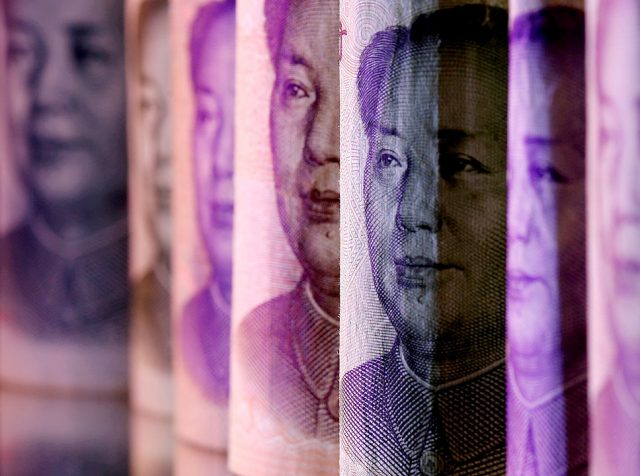
PRESIDENT XI JINPING put China’s wealthiest citizens on notice Tuesday, offering an outline for “common prosperity” that includes income regulation and redistribution, according to state media reports.

Since Mr. Xi took office in 2012, the ruling party has made it a priority to end poverty and build a moderately prosperous society, goals that the party sees as central to promoting well-being and strengthening its governance. Income inequality in the country is wide — the richest 20% earn more than 10 times poorest 20% — and hasn’t budged since 2015.

Beijing has undertaken massive efforts to reduce poverty, especially in rural areas. More recently, its taken aim at the upper end of the spectrum, with a crackdown on the technology industry, which has minted several billionaires, and criticism of the excesses of celebrity culture.

At Tuesday’s meeting of the Communist Party’s Central Committee for Financial and Economic Affairs, the government detailed new strategies to target the upper echelons. Officials vowed to “strengthen the regulation and adjustment of high income, protect legal income, reasonably adjust excessive income, and encourage high-income groups and enterprises to give back to society more,” according to a summary of the meeting published by state media Xinhua.

At the same time, officials also pledged to expand the size of the middle-income group, grow the earnings for low-income group and prohibit illicit income to promote social fairness and justice. It also reaffirmed Deng Xiaoping’s famous words, to “let some people get rich first,” adding that an environment will be created where more people have the opportunity to become wealthy. 

Officials pledged to provide conditions for people to enhance their education and move up the income ladder. They also called for promoting the equal access to public services by improving housing supply, elderly care and the medical system.

The meeting also highlighted the need to curb financial risks. Efforts should be made to strike a balance between ensuring stable economic growth and preventing financial risks, according to Xinhua.

The government identified the eastern province of Zhejiang, home to Alibaba Group Holding Ltd. and known for its robust private sector, as a pilot zone for the new initiatives.

Last month, Zhejiang released detailed plans for raising per capita disposable income to 75,000 yuan ($11,563) by 2025, which would be a 45% increase within five years. It also wants wages to account for more than half of its gross domestic product, and to lift its urbanization rate to 75%.

To achieve those goals, the provincial government will encourage workers to bargain collectively for wages; listed companies to raise cash dividends to shareholders; and farmers to pursue entrepreneurship strategies. It will also promote the development of financial products to benefit residents.

The road map also said the government will better protect the rights of those in new forms of employment, including delivery workers and drivers working for ride-hailing companies, and implement tax benefits for philanthropic donations. — Bloomberg

Yuka Saso looking to do well and learn at the British Open

FILIPINO-JAPANESE golfer Yuka Saso will compete at the 45th AIG Women’s British Open from Aug. 19 to 22 in Scotland. — NATIONAL GOLF ASSOCIATION OF THE PHILIPPINES

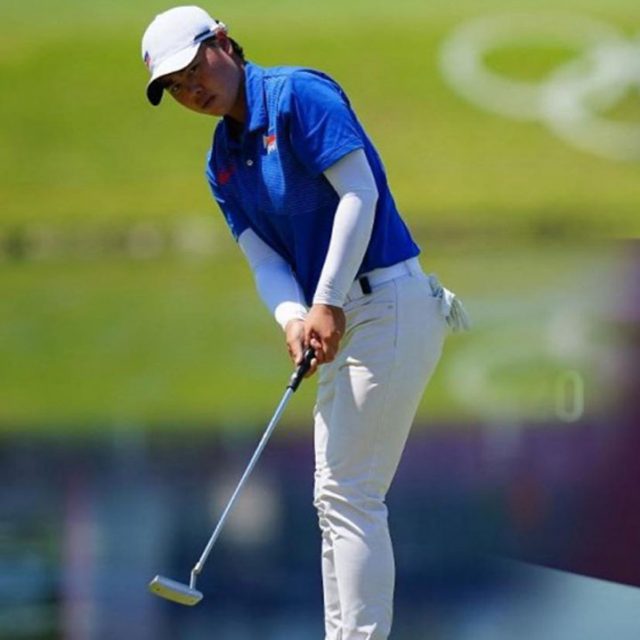
FILIPINO-JAPANESE golfer Yuka Saso takes on a new challenge as she competes at the 45th AIG Women’s British Open from Aug. 19 to 22 in Scotland where she hopes to do well and continue to learn.

Twenty-year-old Ms. Saso, the number eight-ranked player in the Ladies Professional Golf Association (LPGA), is excited to compete in her debut in the major tournament happening at the Carnoustie Championship Course.

Speaking at the pre-tournament press conference on Tuesday, Ms. Saso, who is the reigning US Women’s Open champion, said she is expecting a tough challenge in the about-to-start tournament but is looking forward to it, seeing it as an opportunity to grow as a player and have fun.

“Obviously, major tournaments are very special for me. This home of golf will be challenging, but I’m really looking forward to it. I really like the weather, it’s really nice. I have met a lot of people and they gave me good advice and I am looking to have fun,” said Ms. Saso.

“It is also a privilege to be playing here. I hope to learn new things. I don’t usually play on Links course, but I hope to grow as a player here. This is a new challenge,” she added.

Ms. Saso, who was born in Bulacan to a Filipino mother and Japanese father, is coming off a top-15 finish at the Trust Women’s Scottish Open last week.

She had a strong start and finish but struggled in the middle rounds which did not help her cause.

At the Scottish Open, Ms. Saso wound up with a 7-under 281 total, 10 strokes behind winner Ryann O’Toole of the United States.

In the final standings, Ms. Saso was joined at 15th by Whitney Hillier (Australia), A Lim Kim (Korea), Gaby Lopez (Mexico), Kelsey MacDonald (Scotland), Leona Maguire (Ireland) and Jasmine Suwannapura (Thailand).

They each got $21,266, or around P1.063 million.

Prior to competing at the Scottish Open, Ms. Saso represented the Philippines in the recent Olympic Games in Tokyo, where she finished joint ninth place.

Ms. Saso tees off for the British Open on Thursday, grouped with Brooke Henderson of Canada and Lexi Thompson of the United States.

The AIG Women’s British Open is the last major tournament in the LPGA for 2021. Defending champion is Sophia Popov of Germany. — Michael Angelo S. Murillo

Nets-Lakers game headlines NBA Christmas Day offering

THE 2021-22 NBA Christmas Day schedule will feature a showdown between the star-studded Brooklyn Nets and Los Angeles Lakers. — BROOKLYN NETS FB PAGE

THE National Basketball Association (NBA) is planning a Christmas feast for fans.

The Christmas Day schedule will feature a showdown between the star-studded Brooklyn Nets and Los Angeles Lakers.

Following a shortened offseason, the 2021-22 regular season is scheduled to begin Oct. 19 with two games, also showcasing the Nets and Lakers. The champions Milwaukee Bucks host the Nets and the Lakers will be visited by Stephen Curry and the Golden State Warriors in a TNT doubleheader.

Other games on the Dec. 25 slate include the Atlanta Hawks meeting the New York Knicks at Madison Square Garden in a rematch of the Hawks’ first-round, five-game playoff series win, as well as Luka Dončić and the Dallas Mavericks meeting Donovan Mitchell and the Utah Jazz in Salt Lake City.

The full schedule for the 82-game season will be released Aug. 20.

The first four days of the season will feature eight national television games and 12 different teams.

A matchup between the Nets and Lakers is a chance for fans to decide who has the better “big three” as the game — if all are healthy — would showcase Brooklyn’s Kevin Durant, James Harden and Kyrie Irving against the Los Angeles trio of LeBron James, Anthony Davis and the newly acquired Russell Westbrook.

The 2022 NBA All-Star Game will take place on Sunday, Feb. 20, in Cleveland and air on TNT. The regular season is scheduled to end April 10.

Following the April 12-15 play-in tournament, the NBA playoffs are scheduled to open April 16.

EMBIID EXTENSION
Meanwhile, All-Star center Joel Embiid and the Philadelphia 76ers agreed to a multi-year contract extension on Tuesday.

While the Sixers didn’t disclose the contract terms, multiple outlets reported it is a four-year supermax contract that will pay Embiid $196 million and keep him in a Philadelphia uniform through the 2026-27 season.

Embiid, 27, has two years remaining on the five-year, $147.7-million maximum contract extension he signed on Oct. 10, 2017.

“Joel is the definition of elite — a role model in our community and a true MVP-caliber superstar on the court,” said Josh Harris, the team’s managing partner, in a news release. “His rare blend of skills, charisma and leadership has transformed this franchise. We couldn’t be more grateful and excited to continue watching him in a 76ers uniform.”

The 7-footer was the No. 3 overall pick in the 2014 NBA Draft by the Sixers, but he missed his first two seasons because of surgeries on his right foot. He made the All-Rookie team in 2016-17 and was the runner-up in most valuable player (MVP) voting in 2020-21. He is a four-time All-Star and a three-time All-NBA Second Team selection.

ESPN reported that his previous deal contained language that protected the team financially in case of “catastrophic injury” to his lower back or feet, but the new contract does not.

In the 2020-21 season, Embiid averaged a career-best 28.5 points per game, good for fourth in the NBA, over 51 games. He shot 51.3% from the field, including 37.7% from 3-point range, and added 10.6 rebounds per game. — Reuters

Tokyo Olympic medal winners come together for thanksgiving

FILIPINO medal winners at the recent Tokyo Olympic Games came together for a Thanksgiving Mass on Wednesday in Tagaytay City. In photo are boxers Nesthy A. Petecio and Carlo Paalam (silver medalist) and Eumir Felix D. Marcial (bronze) along with teammate Irish Magno. Present in the thanksgiving but not in the photo was gold medalist Hidilyn F. Diaz. Also in photo are POC President Abraham N. Tolentino (left) and Tagaytay City Mayor Agnes D. Tolentino (fourth from right). — POC

FILIPINO medal winners at the recent Tokyo Olympic Games came together for a Thanksgiving Mass on Wednesday in Tagaytay City in Cavite.

Gold medal-winning weightlifter Hidilyn F. Diaz joined silver boxing medalists Nesthy A. Petecio and Carlo Paalam and bronze medalist Eumir Felix D. Marcial in the mass held at the Our Lady of Lourdes Parish, which was arranged by the Philippine Olympic Committee (POC).

The thanksgiving was for the successful campaign of Team Philippines in the Olympics where it produced its best performance in nearly a century of participation.

The four-medal haul, including a first-ever gold medal, eclipsed the three medals (all bronze) won in 1932 in Los Angeles as the best showing of the country in the Summer Games.

“We wish to thank the Almighty for our success in the Tokyo Olympics. First and foremost, we look at the medals as gifts from God,” POC President Abraham N. Tolentino said in a statement.

Ms. Diaz, who was among first to come back from Tokyo after winning gold on July 26, went to Tagaytay City to join Ms. Petecio and Messrs. Paalam and Marcial after they completed their mandatory 10-day quarantine.

Cavite Bishop Reynaldo Evangelista officiated the 11 a.m. Holy Mass.

Only the medalists and their coaches and a handful of POC and national sports association officials joined the ceremony because of travel restrictions under the ongoing enhanced community quarantine.

After the mass, the medalists were also given the rewards they were promised by Mr. Tolentino, including titles to houses and lots in Tagaytay City.

“We’re thankful for these blessings being given to us. As an athlete our goal is to bring pride to the country by winning in competitions and this is just added bonus for us and we thank God and the people who made this possible,” Ms. Diaz told reporters waiting outside the church.

Following their successful Olympic campaigns, the medalists are soon to start preparing and training for their next competitions.

Ms. Diaz, who also won a silver medal in the 2016 Rio Olympics, will go to Malaysia next month to prepare for the World Championships set for November in Lima, Peru.

Mr. Marcial, for his part, is expected to be due in the United States in September to resume his professional boxing career, his promotion, MP Promotions, said.

Ms. Petecio and Mr. Paalam, meanwhile, are soon to train for the rescheduled Southeast Asian Games next year. — Michael Angelo S. Murillo