Home Blog Page 7631

Score that smartphone upgrade with vivo’s Shopee Gadget Zone sale until August 19

vivo is offering up to P5,000 off in discounts on selected models including its best-in-class gaming smartphones

Hankering for that smartphone upgrade but holding out for the best deals? Well, the wait is over as leading smartphone brand vivo is offering up to P5,000 off plus vouchers on select products during the Gadget Zone sale on Shopee.

The sale, which runs until August 19, is giving amazing discounts to several vivo smartphone models including the Y12s, Y20i 2021, Y20s G, among many others, which makes this a deal you don’t want to miss.

vivo Y12s, originally priced at P6,499 will be on sale for P5,999 plus a 300 off voucher for a total of P800 savings. With its 5,000mAh battery alongside the enhanced performance delivered by the Multi-Turbo 3.0 and the FunTouch iOS 11, the vivo Y12s guarantees long-lasting performance suitable for any and all tasks–from simple browsing to heavy-duty gaming–at the most affordable prices.

Another smartphone being offered at a limited-time price is the vivo Y20i 2021–a phone that is perfect for those who require a little more oomph in their devices but still has that affordable price tag. The vivo Y20i 2021 that comes with a MediaTekHelio P35 processor for unstoppable performance, alongside a 4GB RAM, and 5,000mAh battery with 18W fast charging, is now being offered at P7,299 from its original price of P7,499 plus a P300 off voucher for a total of P500 in savings. A limited special offer will also be made available from August 19 to 20 as shoppers can have their own Y20i 2021 for only P6,999 plus a P300 off voucher for a total of P800 savings.

And for those looking for a gaming smartphone that can keep up with you but will not break the bank, the vivo Y20s G (4GB + 128GB) is the perfect phone for you with its 4GB RAM and 128GB internal storage, 5,000mAh battery with 18W fast charging, an 8 MP front camera, and triple rear cameras. Get this smartphone for only P7,999, a steep discount from its original P8,999 price plus a P300 off voucher for a total of P1,300 in savings.

But the discounts don’t end there as customers can get more amazing deals from other vivo smartphone models such as the V20 which will be on marked down at P15,999 from P19,999 on top of a P1,000 voucher for a total of P5,000 savings, the Y31 at P11,999 from P12,999 plus P500 off voucher for a total of P1,500 savings, the Y20s G (6GB+128GB) for P8,999 from P9,999 plus P300 off voucher for a total of P1,300 savings, and the Y1s for P4,899 from P5,499 plus P100 off voucher for a total of P700 savings.

Model Original Price (PHP) Shopee Gadget Zone Price (PHP)
V20 19,999 15,999
Y31 12,999 11,999
Y20s G (6GB+128GB) 9,999 8,999
Y20s G (4GB+128GB) 8,999 7,999
Y20i 2021 7,499 7,299
Y12s 6,499 5,999
Y1s 5,499 4,899

Get even more discounts with vouchers of up to P1,000off for a minimum spend to get even better deals and get nationwide free shipping with every purchase.

  • P50 OFF voucher (no min spend)
  • P100 OFF voucher (min spend 4000)
  • P300 OFF voucher (min spend 5000)
  • P500 OFF voucher (min spend 9000)
  • P1000 OFF voucher (for V20 only)

For more details on the Shopee Gadget Zone sale, visit vivo Philippines on Facebook, Twitter, and Instagram. Follow vivo Philippines’ official page on Shopee to get updated on promo announcements and check out www.vivoglobal.ph for more product information.


Join us on Viber to get more updates from BusinessWorld: https://bit.ly/3hv6bLA

Philippines cuts GDP growth outlook as virus surges

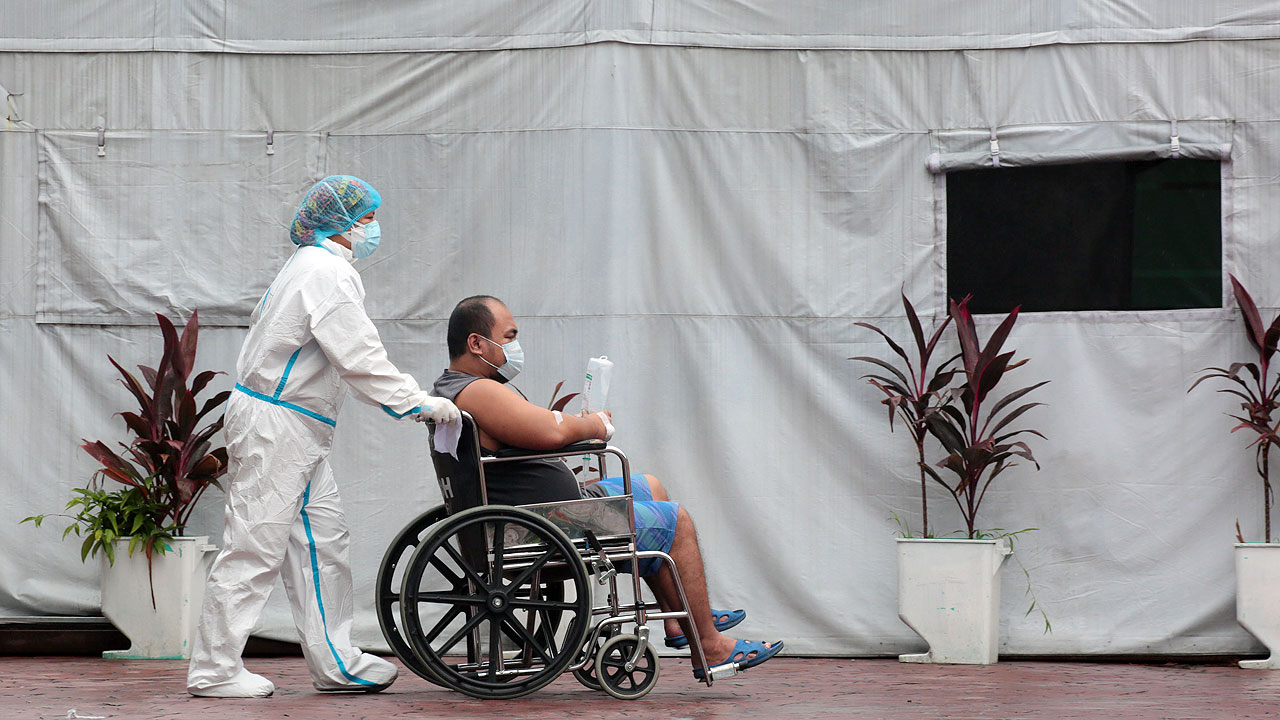
A HEALTH WORKER at the National Kidney and Transplant Institute pushes a patient in a wheelchair in this Aug. 15, 2021 photo. — PHILIPPINE STAR/ MICHAEL VARCAS
Many hospitals in Metro Manila are seeing a surge in coronavirus disease 2019 patients. — PHILIPPINE STAR/ MICHAEL VARCAS

By Beatrice M. Laforga, Reporter

THE GOVERNMENT slashed its economic growth target to 4-5% for this year, reflecting the impact of stricter lockdown measures aimed at curbing a Delta-driven surge in coronavirus disease 2019 (COVID-19) infections.

The Development Budget Coordination Committee (DBCC) on Wednesday said it lowered the gross domestic product (GDP) growth target by two percentage points from the already downgraded 6-7% goal, as the mobility restrictions in Metro Manila and other parts of the country continue to crimp economic activity.

The DBCC in May trimmed the original 6.5-7.5% growth goal for this year to 6-7%.

“Without the present spike (in COVID-19 infections), the original growth target of 6-7% would have been achievable,” the DBCC said in a statement released after a special meeting.

“However, with the global emergence of the Delta variant, the second-half growth outlook was revised downwards to reflect the additional restrictions imposed by the government, which are necessary to curb its spread,” it added.

Metro Manila is under the strictest form of lockdown until Aug. 20, while other areas seeing a spike in COVID-19 cases have also been placed under tighter restrictions.

The Health department reported 11,085 new coronavirus infections on Wednesday, bringing the total number of active cases to 105,151.

Socioeconomic Planning Secretary Karl Kendrick T. Chua said the economy now has to grow by at least 4.3% in the second half to reach the low-end of the revised target for this year, and by 6.3% to achieve a 5% full-year growth.

The economy grew by 11.8% in the second quarter, after a 3.9% decline in the first three months of 2021. For the first half, GDP rose by 3.7%.

The DBCC kept its 7-9% growth target for 2022 on expectations of a faster vaccine rollout and further easing of quarantine measures. It also left its 6-7% projected expansion for 2023-2024 unchanged.

The interagency body, which consists of Budget department, the Finance department, the National Economic and Development Authority, the Bangko Sentral ng Pilipinas and the Office of the President, said the government’s strategy in containing the pandemic involves managing the risks by imposing localized quarantines for areas with high infections, while allowing the rest of the country to function.

“We will continue to use this period to accelerate the rollout of the vaccination program… Rest assured that we will continue to work closely with the local government units and the private sector to accelerate the country’s vaccination rates,” it said.

As of Aug. 15, a total of 12.6 million Filipinos have received two doses of the COVID-19 vaccines. Based on Aug. 16 data from Our World in Data, the Philippines has fully inoculated 11.63% of its population.

If the record high of 710,482 jabs administered in Aug. 5 will be sustained and the vaccines ordered will be delivered as scheduled, the DBCC said the government may be able to hit its target to inoculate majority of the population by year’s end.

“We expect that this will significantly reduce the need for wide-scale quarantines, especially in key economic centers where the majority of Filipinos work,” it said.

Mr. Chua said the DBCC retained the rest of the macroeconomic assumptions adopted in the previous meetings in July and May.

W-SHAPED RECOVERY
Meanwhile, the economy may only go back to its pre-crisis level towards the end of 2023 as the prolonged pandemic and subsequent lockdowns hamper growth, according to Ateneo Center for Economic Research and Development (ACERD).

During its midyear economic and political briefing on Wednesday morning, Ateneo de Manila University Economist and Professor Cielito F. Habito said they are now expecting a 3-4% modest growth for the economy this year.

The former socioeconomic planning secretary said the economy will likely experience a W-shaped recovery as he sees third-quarter GDP contracting on a quarterly basis.

In the second quarter, the economy grew by an annual 11.8% but declined by 1.3% quarter on quarter.

“Assuming that the (third-quarter) contraction would actually happen, we can expect to restore 2019 quarterly GDP levels either at the end of 2022 if we are looking at the optimistic scenario, end of 2023 if we’re looking at medium scenario, and much longer than that well into 2025 if we were in the pessimistic scenario,” Mr. Habito said.

He said the middle scenario is more likely to occur since the growth path follows the same trend the economy has seen since 2018.

In nominal terms, National Statistician Claire Dennis S. Mapa had said the country’s GDP at P8.9 trillion in the first half was still 6% smaller than its pre-pandemic level of P9.4 trillion in the first half of 2019.

“Remember that it took us six years to recover from the recession of the early 1980s, and that was just a recession due to the capital flight because of supply side recession. This is a recession on both the demand and supply sides,” Mr. Habito said.

The 10.7% decline in the third quarter of 1984 was the economy’s second-deepest contraction next to the record slump in the second quarter of 2020.

Meanwhile, Mr. Habito said the country’s unemployment rate will remain elevated to hover around 7-8% this year, far from its 5.1% level in 2019 but lower than the 10.3% last year.

Headline inflation will also remain high at 4-5% in 2021 due to both supply and demand side pressures, compared with the 2.6% logged in 2020 and the 2.5% rate before the pandemic hit.

Business leaders want mandatory vaccination for employees

PHILIPPINE STAR/ MICHAEL VARCAS
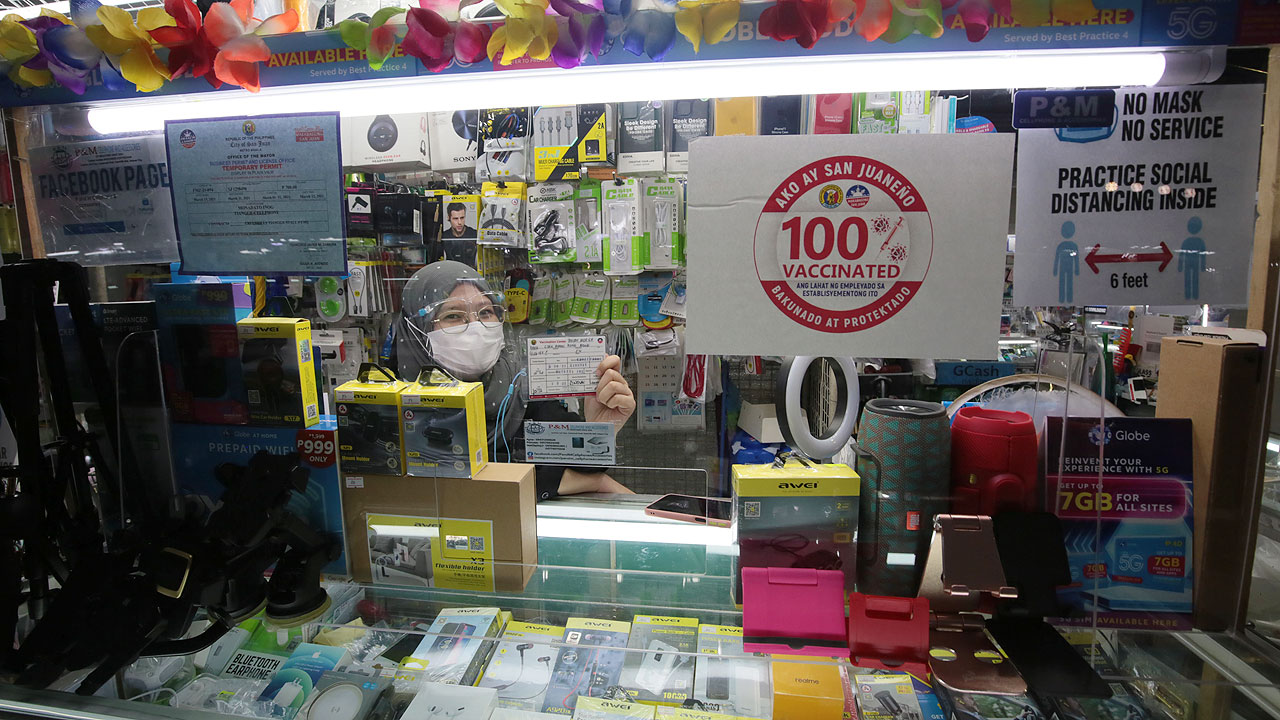
A business establishment shows off a “100% vaccinated” sticker from the San Juan City local government. The sticker is given after an establishment’s employees have been fully vaccinated against the coronavirus disease 2019. — PHILIPPINE STAR/ MICHAEL VARCAS

By Jenina P. Ibañez, Reporter

BUSINESS LEADERS are asking the government to allow the private sector to require employees to get vaccinated against the coronavirus before going back to work.

“The business sector has been wanting to mandate the vaccination (for) all employees,” Philippine Chamber of Commerce and Industry (PCCI) Acting President Edgardo G. Lacson said at the BusinessWorld Insights online forum on Wednesday.

The Department of Labor and Employment (DoLE) has issued a circular against “no vaccine, no work” policies, calling the practice discriminatory.

“I think that is important for DoLE to recognize that we have that authority — that is a management prerogative,” Mr. Lacson said. “We want to protect not only other people; we want to protect people from themselves.”

Presidential Adviser for Entrepreneurship Jose Ma. “Joey” Concepcion III said that most companies are able to persuade their employees to avail of the vaccines.

“The private sector has its own ways of persuading their employees. (There is) inconvenience, especially if you pinpoint that there will be less mobility eventually for the unvaccinated,” he said, noting that he has spoken to DoLE about this issue.

“I think it’s required — if you really want to achieve herd immunity… everybody has to be vaccinated,” he added.

Mr. Concepcion has been advocating for the creation of “bubbles” for fully vaccinated people, or areas where they can move freely.

Trade Secretary Ramon M. Lopez wants the government to relax restrictions during lockdowns for people who have been vaccinated as soon as the vaccination rate improves. Unvaccinated people would have to stay home to be protected against the virus, he said.

The Philippines’ access to the coronavirus disease 2019 (COVID-19) vaccines remains limited. Only 11.63% of the population is fully vaccinated, according to Our World in Data.

Anna Lisa T. Ong-Lim, a member of the Department of Health Technical Advisory Group, said that all minimum public health standards should be implemented efficiently.

“I think one other thing we need to keep in mind is ventilation which is something that may have been left by the wayside and it’s something that we can actually improve. We want to be able to intervene using system controls rather than behavioral interventions.”

She said that “bubbles” could help reduce contact with people who may be infected.

“But we know that it’s not totally protective. And so we continue to advise people that maybe one mindset that we can keep in mind or keep aware of is to consider that every person that they meet is possibly infected. And if that’s the case, then they will continue to be vigilant when they face different people,” Ms. Ong-Lim said. 

Mr. Concepcion also said that he is in talks with the Department of Transportation to roll out inoculation for transport workers in Metro Manila.

“The timeline for this to happen is hopefully by somewhere in September, October,” he said.

“It’s very important to support the transport group because we want to make sure that people who move from bubble to bubble have that bridge.”

As of Wednesday, the Health department reported 11,085 new COVID-19 infections, bringing the total active cases to 105,151.

IFC commits $399 million to Philippine projects

PHILIPPINE STAR/ MICHAEL VARCAS

A MEMBER of the World Bank Group has invested $399 million in private sector-led projects in the Philippines, with most of the investments aimed at helping businesses recover from the coronavirus pandemic.

The International Finance Corp. (IFC) in a statement on Wednesday said that its investments in the Philippines accounted for 10.5% of its overall commitments in the East Asia and the Pacific region worth $3.8 billion from July 1, 2020 to June 30, 2021.

“The Philippines has been deeply affected by COVID-19, which has reversed many of the development gains the country has achieved. This has created an even greater sense of urgency to foster a more inclusive recovery, and IFC is committed to remaining a steadfast partner to the Philippines through the challenges that lie ahead,” said Jean-Marc Arbogast, IFC’s country manager for the Philippines.

Among the IFC’s investments in the country included extending $15 million in debt financing to CARD Bank, Inc. and CARD SME Bank, Inc., which would benefit over 60,000 companies.

It also invested in Cebu Air, Inc.’s convertible bonds “to help maintain trade and the competitiveness required to provide affordable transportation” in the country. IFC, along with IFC Emerging Asia Fund and Indigo Partners LLC, poured in $250 million in Cebu Air in May. 

IFC also invested $150 million in seven-year social bonds issued by UnionBank of the Philippines meant to finance over 2,000 loans for micro, small and medium enterprises.

The World Bank member also invested in local startups such as Growsari to help grow their business.

Since 1962, IFC has invested over $5.5 billion to 160 local companies in the Philippines to projects that mitigate the impacts of climate change; promote financial inclusion; improve the capacity of private sector and those supporting sustainable infrastructure.

Across the region, IFC recorded an all-time high of $3.8 billion in total commitments in the past year: $2.8 billion in long-term funding from its own account and $956 million from external investors. On top of this, IFC also granted $1.5 billion worth of short-term investments in the region to boost trade.

Meanwhile, the IFC announced the appointment of Kim-See Lim as the new regional director for East Asia and the Pacific.

A Malaysian national, Ms. Lim will lead investment and advisory operations in the 18 countries in the region. She replaced Vivek Pathak, who has been named IFC director and global head for climate business.

“Given the devastating impacts of the global pandemic, IFC will continue to focus on leveraging the private sector to foster a green, resilient, and inclusive recovery in East Asia and the Pacific,” she said in a statement.

“In alignment with the World Bank Group’s new Climate Change Action Plan, a climate-smart roadmap will be critical to achieve the goals of job creation and shared prosperity in the region. Building back better is the only way to spur the region’s recovery out of this crisis while prioritizing renewable energy, energy efficiency, green and blue bonds, and smart cities,” she added. — Beatrice M. Laforga

Car sales inch up in July

PHILIPPINE STAR/ MICHAEL VARCAS

CAR SALES in July went up by 4.7% year on year, but the industry group is anticipating a slowdown in sales this month due to the tighter lockdown restrictions.

The industry sold 21,499 vehicles in July, slightly higher than the 20,542 sold in the same month last year, according to a joint report from the Chamber of Automotive Manufacturers of the Philippines, Inc. (CAMPI) and Truck Manufacturers Association (TMA) on Wednesday.

“The industry welcomed the year-on-year growth of 4.7% but anticipates a decline in sales this month with the reimposition of ECQ in NCR, among other high-risk areas,” CAMPI President Rommel R. Gutierrez said in a statement.

Auto Sales

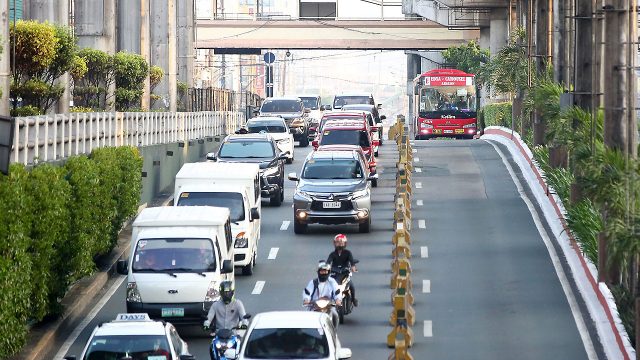
Metro Manila has been placed under a two-week enhanced community quarantine (ECQ), the strictest form of lockdown, until Aug. 20. Non-essential retail is not allowed to operate on site during this lockdown.

Commercial vehicle sales stood at 14,396 units in July, 0.1% higher than the 14,385 sold in the same month in 2020. The segment’s sales fell by 5.1% from the June figure.

Commercial vehicle sales accounted for two-thirds of total sales by CAMPI-TMA members for the month.

On the other hand, passenger car sales jumped by 15.3% year on year to 7,102 units, but slipped by 3.79% compared with the June figure.

For the first seven months, total vehicle sales surged by 46.1% to 154,265 units.

Year to date, commercial vehicle sales increased by 38.7% to 104,757 units, while passenger car sales grew by 64.6% to 49,508 units.

In July, Toyota Motors Philippines Corp. continued to have the highest sales with 10,763 units sold or 50% market share.

Mitsubishi Motors Corp. followed with 2,646 units representing 12.31% market share in July, then Suzuki Philippines, Inc., which sold 1,648 units or 7.67% market share.

The Department of Trade and Industry (DTT) recently dismissed the case on safeguard duties on imported cars after a Tariff Commission investigation found that there was no car import surge in 2014-2020, therefore imports could not seriously injure local groups.

The investigation was prompted by autoparts labor group Philippine Metalworkers Alliance petitioning for safeguard duties on car imports after claiming a decline in local employment after a surge in imports. The DTI earlier this year imposed 200-day provisional duties on car imports to protect local jobs while the Tariff Commission conducted its own investigation. — Jenina P. Ibañez

Emperador stocks surge 13% on SGX listing plan

Board of directors wants requirements ready ‘as soon as practicable’

By Keren Concepcion G. Valmonte, Reporter

EMPERADOR, Inc. will push through with a secondary listing on the main board of the Singapore Exchange (SGX), with its board of directors already signaling management to “deliver” the requirements “as soon as practicable,” the company said on Wednesday morning.

The announcement led to a nearly 13% surge in its stock price upon market close.

“We believe that SGX, one of the most developed exchanges in Asia, is the appropriate secondary exchange to raise the international profile of Emperador,” Emperador Chairman and Founder Andrew L. Tan said in a statement.

The company said the plan was approved on Tuesday, Aug. 17, and the company has already appointed financial, legal, and other advisers for the listing.

Emperador said it will continue to maintain its primary listing at the Philippine Stock Exchange (PSE). The plan is to have its stock traded simultaneously on the SGX and on the local bourse.

“The company’s announcement of its planned listing at the SGX may have improved sentiment towards the stock, as this move may come with several benefits for the company,” Timson Securities, Inc. Trader Darren Blaine T. Pangan said in a Viber message.

“For one, this will increase the company’s access to capital-raising activities, as it will now be listed in different exchanges with a different set of investors,” he added.

Emperador has earmarked P1.5 billion for its capital expenditures (capex) this year, soaring by 50% from its P1-billion capex set the previous year. The company said it invested ahead to sustain its growth plans.

“[The SGX listing] could boost confidence on the company, affirming its dominant international brand and market position. This is manifested by its local stock price at new record highs today,” Rizal Commercial Banking Corp. Chief Economist Michael L. Ricafort said in a text message.

Emperador shares at the local bourse climbed 12.83% or P1.82 on Wednesday, closing at P16.00 each.

“This is an affirmation of how good Emperador is as a global brand and company,” BDO Capital & Investment Corp. President Eduardo V. Francisco said in an e-mailed statement.

“It means that the local investors look at the potential upside following this announcement,” he added.

Mr. Tan said they are “very excited” about the possibility of being the “first ever PSE-primary listed company to conduct a secondary listing in the SGX.” The company hopes its listing will be a “catalyst” to enhance the “strategic collaboration” between both exchanges.

Emperador’s products are on the shelves of over 100 countries. The company was said to be the largest brandy producer globally in 2020, according to International Wines and Spirits Research.

It owns multi-awarded Fundador Spanish Brandy de Jerez, which was given the highest platinum award by the San Francisco World Spirits Competition for its Fundador Supremo 18.

The company also owns the world’s fifth-largest Scotch whisky producer Whyte & Mackay, also recently recognized as “Distiller of the Year” at the Icons of Whisky Scotland 2021.

“We believe that a secondary listing on the SGX will create stronger awareness of Emperador and its world-class brands, as well as increase our stock’s visibility and international investor participation reflective of our global operations and revenue,” Emperador President Winston S. Co said.

In the first half of the year, the company said its net profit to owners surged by 53% year on year to P5.1 billion, driven by the gradual easing of pandemic-related restrictions across the globe. Its revenues for the period also went up by 18% to P25.3 billion.

Villar’s AllDay Marts gears up for P6-B public offer

VILLAR-LED AllDay Marts, Inc. has filed a registration statement with the Securities and Exchange Commission (SEC) for its P6-billion initial public offering (IPO).

It will offer up to 6,857,143,000 common shares to the public for P0.80 each, with an overallotment option of up to 685,714,000 shares.

AllDay plans to use majority of net proceeds from the offer to repay debt worth P4.10 billion, which it incurred to fund past and ongoing store network expansion. The balance will be used for capital expenditures and to partly fund another wave of store expansions.

The supermarket operator has grown its network to 33 physical stores since its incorporation in December 2016. It now has a net selling space of 55,881 square meters in 25 cities and municipalities across the country.

It aims to expand its store network to 45 by next year, which will be “funded mostly from the net proceeds from the sale of primary share.”

“We intend to continue the expansion of our store network in cities and municipalities where we are currently located, as well as other Tier-1 cities across the Philippines and leverage on our competitive strengths as we identify and open stores in new sites that we see ripe for expansion,” AllDay said in its preliminary prospectus.

AllDay is targeting to have a store network of 100 by the end of 2026.

“As all of our stores are leased, we will not incur any expenses for construction. We do not have plans to acquire land,” the company said.

According to its preliminary prospectus, the company is aiming to list its shares on the main board of the Philippine Stock Exchange by Nov. 3 with ticker symbol “ALLDY.”

Diversified Securities, Inc. Equity Trader Aniceto K. Pangan said the IPO might face “lackluster” demand.

“With the current uncertainties surrounding the containment of the pandemic virus, [the] market may continue to be bearish on AllDay’s IPO as manifested by the value traded of the daily transactions indicative of investors on the sidelines,” Mr. Pangan said in a text message.

On Wednesday, value turnover at the stock exchange inched down to P6.18 billion with 1.14 billion shares traded, down from the P6.76 billion with 1.20 billion issues seen the previous trading day.

However, the timing is seen as a good opportunity for the company to help “stimulate the economy in the process.”

“This is one of the better times to raise capital while the cost of funding/financing is relatively lower and other costs of investments such as property prices and lease rates are relatively lower, so attractive for expansion/new investments to position for better times ahead,” Rizal Commercial Banking Corp. Chief Economist Michael L. Ricafort said in a separate text message.

The company assigned PNB Capital and Investment Corp. as the sole issue manager for the transaction, while it will be joined by BDO Capital & Investment Corp. and China Bank Capital Corp. as joint lead underwriters and joint bookrunners.

AllDay forms part of the Villar group of companies, alongside Vista Land and Lifescape, Inc., AllHome Corp., and Golden MV Holdings. It is also a subsidiary of AllValue Holdings Corp. — Keren Concepcion G. Valmonte

Megawide’s construction segment swings to profit

MEGAWIDE Construction Corp. said its construction segment swung to profitability as it earned P353 million in the first half, reversing its P303-million loss a year ago.

In a regulatory filing on Wednesday, Megawide reported an 18% rise in consolidated revenues to P7.6 billion carried by its construction business, which recorded a 43% increase in revenues to almost P7 billion.

Revenues from landport and airport operations in the first half accounted for P360 million and P237 million, respectively.

“The construction segment, which is a critical component in pump-priming the economy due to its significant multiplier effect, remains a bright spot in the company’s portfolio amid the ongoing pandemic, as activities were unhampered despite the re-imposition of the enhanced community quarantine (ECQ),” Megawide said.

Consolidated earnings before interest, taxes, depreciation, and amortization (EBITDA) also rose 11% to P1.6 billion.

“A lower net loss attributed to the parent company, amounting to P93 million compared with P290 million the previous year, was recorded as noncash items affected the bottom line,” Megawide said.

Megawide Chairman and Chief Executive Officer Edgar B. Saavedra said the company remains bullish on its construction segment as the primary growth driver in the coming years.

“As such, we remain focused on the opportunities in this segment, especially in the infrastructure front, which will enable us to upskill and further sharpen our competencies,” Mr. Saavedra said.

Meanwhile, Megawide said it submitted bids and is awaiting results on the Metro Manila Subway Project, where it teamed up with Tokyu Construction and Tobishima Construction from Japan for Package CP-104, and with Hong Kong-based Chun Wo Construction for Packages 1 and 7 of the North-South Commuter Rail Southline (NSCR-South).

The company is also evaluating, together with a Japanese group, to secure the electro-mechanical and track works for the Malolos-Clark and Solis-Calamba parts of the NSCR alignment.

“Megawide is also fast expanding its transport-oriented development (TOD) portfolio, anchored on a hub-and-spoke model, with the country’s first landport, Parañaque Integrated Terminal Exchange (PITX), currently at the core,” the company said.

“After successfully signing the joint-venture agreement with Cebu City for the Carbon Market Redevelopment, which has a vital integrated transport component, and advancing discussions with Baguio City for a potential landport location, the company is in initial talks for a future Bus Rapid Transit (BRT) system in the Southwest area of Luzon,” it added.

On Wednesday, shares of Megawide at the stock exchange rose 1.81% or 11 centavos to finish at P6.18 apiece. — Revin Mikhael D. Ochave


Note: The story has been updated to reflect the return to profitability of Megawide’s construction segment and not of the parent company.

Banks’ profits, asset quality to weaken amid subdued outlook

BW FILE PHOTO
BANKS will continue to face weak profitability and an increase in soured loans as the pandemic clouds the Philippines’ economic outlook. — BW FILE PHOTO

THE PHILIPPINE BANKING industry will continue to see a rise in bad loans and weaker profitability as the coronavirus pandemic affects the country’s prospects, which could likewise affect its assessment of its rated lenders, Fitch Ratings said.

“The Issuer Default Ratings (IDR) of Philippine banks are sensitive to movements in the sovereign rating… We expect the COVID-19 (coronavirus disease 2019) pandemic will continue to challenge banks’ business prospects, loan quality and profitability over the next 12 months,” Fitch said in a note on Wednesday.

The debt watcher said pressures faced by the Philippine economy and the country’s rating due to the pandemic are key risks to its assessment of the banking sector, and any rating actions for the sovereign could affect banks’ grades as well.

Fitch last month revised its ratings outlook for its covered Philippine banks to “negative” from “stable” to reflect its assessment on the sovereign’s debt.

Its rated banks are government-owned Land Bank of the Philippines (LANDBANK) and Development Bank of the Philippines (DBP) and four commercial lenders: Bank of the Philippine Islands (BPI), Philippine National Bank (PNB), BDO Unibank, Inc. (BDO), and Metropolitan Bank & Trust Co. (Metrobank).

“The pandemic has put a strain on the sovereign rating… The number of new daily COVID-19 infections in the Philippines reached record levels in mid-August, prompting the authorities to reinstate lockdowns in the capital region and in a number of other cities and provinces. Extended mobility restrictions will dampen business sentiment and hamper recovery momentum,” Fitch noted.

“We believe there will be downside risks to the country’s medium-term growth prospects as a result of potential scarring effects, as well as possible challenges to unwinding the exceptional policy response to the health crisis and restoring sound public finances as the pandemic recedes. These factors may pressure the sovereign’s rating, as reflected by Fitch’s decision to revise the Outlook on the rating to Negative from Stable in July,” the debt watcher added.

The debt watcher said the pandemic could have potential scarring effects on the country’s medium-term growth potential and the banking system.

Due to this subdued economic outlook, Fitch said loan growth will likely “remain tepid” this year.

“We believe there could be a robust rebound when the pandemic subsides, due to the low base effect and banks’ appetite for growth. However, the timeframe is uncertain, especially as many large corporates are sitting on ample liquidity,” it said. “Household lending is also likely to remain challenged by the sluggish job market and weak property sector.”

Bank lending declined for the seventh consecutive month in June, although at a softer pace of 2%. Despite record low interest rates, banks remained risk-averse while borrowers veered away from credit due to the uncertainties caused by the crisis.

Fitch said that BDO, Metrobank, and BPI, which all hold a “BBB-” rating from the debt watcher, have “more established franchises, better management and stronger financial performance over time.” It downgraded these banks’ viability ratings to “bb+” from “bbb-” in July, although this was a notch higher than those of PNB, LANDBANK and DBP.

“[A]sset quality and profitability are unlikely to recover to pre-pandemic levels over the next 12-18 months in light of the pandemic’s prolonged economic fallout… We believe these banks maintain better underwriting standards and risk controls, complemented by more proactive credit provisioning, which underpin their stronger asset quality,” it said.

Meanwhile, the debt watcher said its rated state-owned lenders, LANDBANK and DBP, are most likely to receive government support among the six banks due to their full state ownership and their roles in the country’s policies. It particularly noted that LANDBANK has a high systemic importance as the country’s second-largest bank in terms of deposits. — LWTN

DITO CME secures pre-clearance for share-swap deal

DITO CME Holdings Corp. has secured pre-clearance from the Securities and Exchange Commission (SEC) on its share-swap application.

DITO CME, a Dennis A. Uy-led holding firm, said in a stock exchange disclosure on Wednesday that it had obtained pre-clearance of its share-swap application from the SEC – Financial Analysis and Audit Division and had paid the necessary filing fees.

“The company shall further disclose an update to this application as soon as it receives the SEC’s approval,” DITO CME said in the disclosure.

The disclosure pertains to the acquisition of 100% of the shares of Udenna Communications Media and Entertainment Holdings Corp. or Udenna CME, in exchange for the issuance of 11.2 billion common shares of DITO CME in favor of Udenna Corp.

Udenna CME possesses Udenna Corp.’s shares in its telecommunications business.

During the second quarter, DITO CME posted a 70.8% decline in its attributable net income to P8.1 million due to higher expenses. The company’s expenses for the quarter rose to P18.6 million from P555,877 in the same period a year ago.

For the first half of the year, DITO CME recorded a 70.5% decline in its attributable net income to P16.3 million against P55.3 million in 2020.

Shares of DITO CME at the stock exchange rose 2.68% or 20 centavos to end at P7.65 apiece on Wednesday. — Revin Mikhael D. Ochave

Term deposit yields slip on demand for safe assets

BW FILE PHOTO
THE BANGKO SENTRAL ng Pilipinas’ term deposits fetched lower yields on strong demand for safe assets due to fears of an extended lockdown. — BW FILE PHOTO

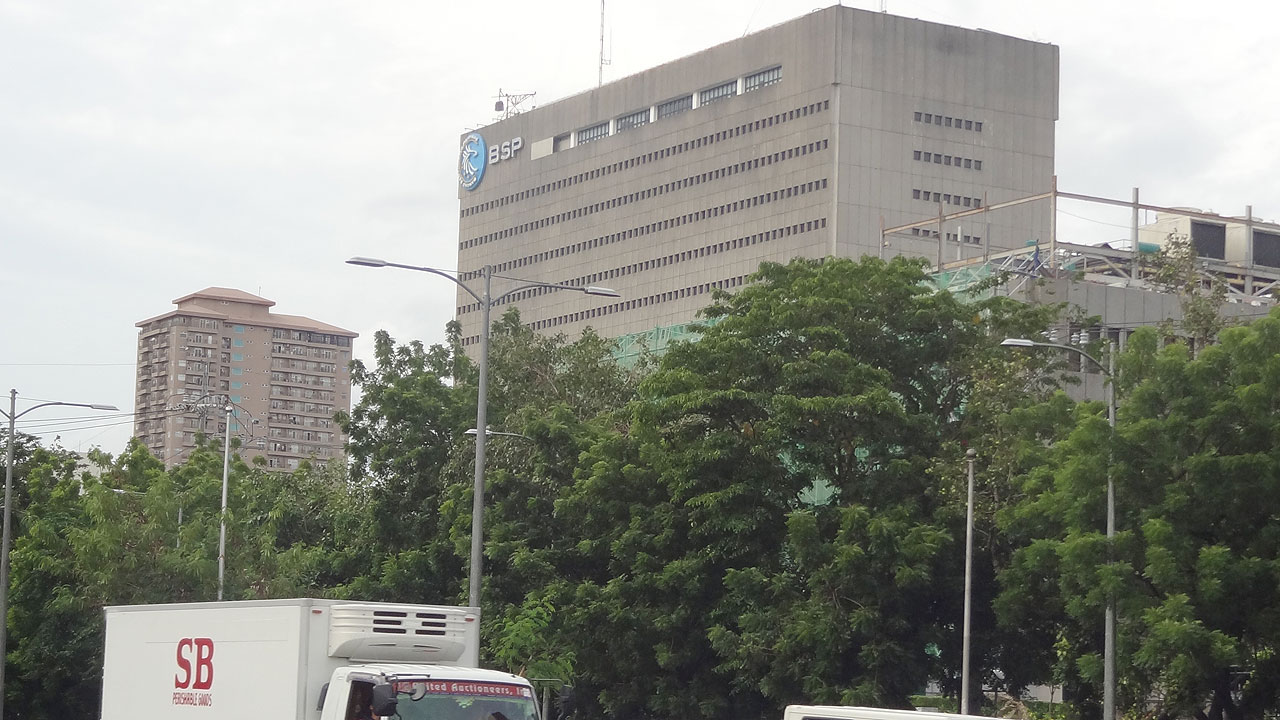
YIELDS ON THE central bank’s term deposits inched down on Wednesday on strong demand as the market flocked to safe-haven assets amid fears of an extended lockdown due to rising coronavirus infections.

Total bids for the term deposit facility (TDF) of the Bangko Sentral ng Pilipinas (BSP) amounted to P676.998 billion on Wednesday, surpassing the P550-billion offer as well as the P673.551 billion in tenders seen during last week’s auction.

Broken down, the seven-day papers attracted bids amounting to P249.888 billion, higher than the P150 billion offered by the BSP and also beating the P200.545 billion in tenders recorded last week.

Accepted rates for the tenor ranged from 1.675% to 1.7388%, a narrower band versus the 1.675% to 1.85% seen a week earlier. This caused the average rate of the one-week term deposits to slip by 2.63 basis points (bps) to 1.7113% from 1.7376% previously.

Meanwhile, demand for the 14-day papers amounted to P427.11 billion, above the P400-billion offer but lower than the P473.006 billion in bids seen during the previous week’s auction.

Lenders asked for yields ranging from 1.7% to 1.745%, slightly wider than the 1.71% to 1.7495% margin seen a week ago. With this, the average rate of the two-week term deposits decreased by 1.15 bps to 1.7274% from 1.7389% on Aug. 11.

The BSP did not offer 28-day term deposits for the 43rd straight auction to give way to its weekly offerings of bills with the same tenor.

The term deposits and the 28-day bills are used by the BSP to gather excess liquidity in the financial system and to better guide market rates.

TDF yields slipped as investors parked their funds in safe-haven assets due to the possibility of an extended lockdown as coronavirus disease 2019 (COVID-19) cases in the country continue to surge, Rizal Commercial Banking Corp. Chief Economist Michael L. Ricafort said.

Philippine vaccine czar Carlito G. Galvez, Jr., who is also the chief implementer of the National Task Force Against COVID-19, on Sunday said it was “still premature” to ease restrictions as cases continue to increase. The Palace has yet to announce new quarantine classifications, with current restrictions set to last until Aug. 20.

Business groups have opposed the idea of an extended lockdown, citing the economic losses from the restriction measures. Instead, they are hoping the government will intensify vaccination and boost its healthcare capacity.

Socioeconomic Planning Secretary Karl Kendrick T. Chua said the country is losing P150 billion in economic output for every week under strict lockdown. — L.W.T. Noble

Steaks, freshly cooked right outside your house

PORTERHOUSE steak — PHOTO FROM CURBSIDE.WOLFGANGSSTEAKHOUSE.PH

WITH restaurants still in limbo due to the reimposition of the Enhanced Community Quarantine (ECQ —  only until Friday, but who knows?), it’s still possible to have a treat from Wolfgang’s Steakhouse.

At present, Wolfgang’s branches in Bonifacio Global City (BGC), The Podium, and Resorts World are only open from 11 a.m. to 8 p.m., with operations restricted to delivery and pickup services — which brings us to their new program, Wolfgang’s Curbside.

The program allows customers to book a desired timeslot (from 10 a.m. until 8:30 p.m.), and the steaks are delivered at that time, cooked outside one’s home, and served (plated nicely too). The dinnerware will be collected either within the day or the next.

The service has a P10,000 minimum consumable on food and drink. The minimum isn’t as hard to attain when the set menu for four (grilled salmon, a one-kilo USDA prime dry-aged porterhouse steak, and a 900-gram USDA prime dry-aged ribeye steak as the star, with an appetizer, four sides, and two desserts) costs P20,988.

“We offer a similar version of our All-day Menu from appetizers to entrees to desserts. The curbside menu is more compact though since this is still a delivery service and we do not want to compromise the quality of our food,” said Paula Maravilla, Marketing Officer for Wolfgang’s in an e-mail to BusinessWorld. Other menu items available include seafood, sandwiches, and cocktails.

This follows on the tails of last year’s programs, which had steaks that you can prepare yourself, and even one where a chef comes up and cooks the steaks in your kitchen. These are still available, according to Ms. Maravilla. Another program costs P30,000 minimum, and is accompanied by table setting, dinnerware, and waitstaff (if one chooses, since no-contact, standard, and premium packages are available).

“The concept of curbside delivery comes from our ultimate desire to deliver freshly broiled steaks right at your doorstep. You don’t need a party nor an extra special occasion to have steak, our USDA prime dry-aged steaks are available anytime, any day,” said Ms. Maravilla. “We want to maintain the quality of the steaks, that they are able to have the same Wolfgang experience without having the need to go outside their homes.”

Ms. Maravilla reflects on what a year and a half has done to their restaurant — and how good steak serves as a balm during these times.

“It has been quite a challenging year and a half but we manage to keep moving forward because we believe being able to come together, to eat and share good food, is still one of the best things life has to offer,” she said. “While the pandemic continues to affect everyday life, our approach towards this is to give a sense of balance, comfort or normalcy during these trying times. And like any other Filipino family, we love and enjoy eating. We still want Filipino families to celebrate a momentous occasion, no matter big or small.”

To book a slot and for the complete menu, visit https://curbside.wolfgangssteakhouse.ph/. For same-day bookings, call the BGC branch at 0917-710-1682; the Podium branch at 0917-702-8913; and the Resorts World branch at 0999-842-7954. —  Joseph L. Garcia

ADVERTISEMENT
ADVERTISEMENT