Home Blog Page 7621

Philippines posts record daily COVID-19 cases

PHILIPPINE STAR/ MICHAEL VARCAS

THE PHILIPPINES reported 18,332 coronavirus infections on Monday, the highest daily tally since the pandemic started last year.

This brought the total to 1.86 million, 7% or 130,350 of which were active cases, the Department of Health (DoH) said in a bulletin.

The death toll rose to 31,961 after 151 more patients died, while recoveries increased by 13,794 to 1.7 million.

Of the active cases, 94.8% were mild, 2.5% did not show symptoms, 1.2% were severe, 0.92% were moderate and 0.6% were critical, the agency said.

DoH said 321 duplicates had been removed from the tally, 316 of which were recoveries. Sixty-eight recoveries were tagged as deaths. Three laboratories did not submit data on Aug. 21.

The Health department also reported 466 new cases of the Delta variant, bringing the total to 1,273. It said 442 were local cases, 14 were returning migrant Filipino workers and 10 were still being verified.

One patient was still active, eight have died, while 457 have recovered, it said.

Meanwhile 90 more people have been infected with the Alpha coronavirus variant first detected in the United Kingdom, bringing the total to 2,322.

The agency said the country now had 2,588 cases of the Beta variant after 105 more Filipinos got infected with the virus first detected in South Africa.

Health Undersecretary Maria Rosario S. Vergeire said the highly contagious Delta coronavirus variant was now roaming freely in Metro Manila and Southern Tagalog, the country’s two most populous regions.

“It seems like there is already a community transmission,” she told a virtual news briefing in Filipino, adding that they need more evidence to officially declare a community transmission.

A community transmission occurs when there is a clustering of cases and there are no links between the cases, Ms. Vergeire said, citing the World Health Organization.

Philippine Genome Center Executive Director Cynthia P. Saloma earlier said the Delta variant had become dominant.

Health workers have threatened to resign en masse as more hospitals get overwhelmed by a fresh surge in infections.

The Health department said it would get P311 million from its contingency fund to pay for the special risk allowance of more than 20,000 health workers.

SPUTNIK LIGHT
Meanwhile, the local Food and Drug Administration (FDA) has approved the emergency use of the single-dose vaccine made by Russia’s Gamaleya Research Institute of Epidemiology and Microbiology, it said.

Russia’s Sputnik Light coronavirus vaccine was approved for emergency use on Friday, FDA Director General Enrique D. Domingo said in a Viber message.

Sputnik Light, a recombinant human adenovirus vaccine, was 79.4% effective against the coronavirus when it was first used in Russia in May.

It was given as part of Russia’s mass vaccination program from Dec. 2020 to April 2021, according to the Russian Direct Investment Fund. The single-dose vaccine must be stored at temperatures of 2-8 degrees Celsius.

The vaccine is different from the two-dose Sputnik V, which was approved for emergency use in the country in March.

The coronavirus vaccine made by Johnson & Johnson’s Janssen Pharmaceuticals is the other single-dose shot being used in the Philippines. 

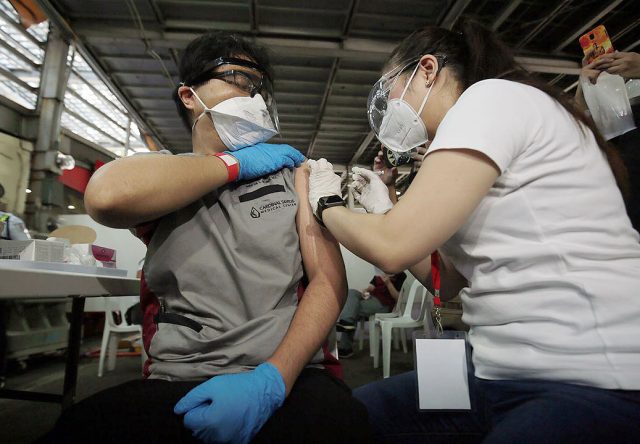
More than 30 million doses of coronavirus vaccines have been given out in the Philippines, presidential spokesman Herminio L. Roque, Jr. said.

More than 13 million people or 12% of the Philippine population have been fully vaccinated against the coronavirus, he told a televised news briefing on Monday.

Three-quarters or 7.4 million residents of the capital region’s 9.8-million population have received their first dose, while 43.5% have been fully vaccinated, Metro Manila Development Authority chairman Benjamin de Castro Abalos, Jr. told the same briefing.

“By the end of the month, we could easily reach 50% of the eligible population,” he said.

Mr. Abalos said more local governments in Metro Manila, including Mandaluyong, San Juan and Pateros have begun to open their vaccination program to nonresidents.

Of 21,765 active coronavirus cases in Metro Manila, 70% or 15,130 were unvaccinated, he said.

President Rodrigo R. Duterte last week relaxed the lockdown in Metro Manila after placing it under an enhanced community quarantine for two weeks until Aug. 20.

The increase in Metro Manila’s coronavirus cases was 48% two weeks ago and 72% three weeks ago, the OCTA Research Group from the University of the Philippines said on Sunday. The seven-day positivity rate was 22%.

Health authorities have said the effects of the strict lockdown in the capital region would not be felt immediately. — Kyle Aristophere T. Atienza

Fast-track payment of claims from hospitals, palace tells PhilHealth

THE PRESIDENTIAL palace on Monday urged the Philippine Health Insurance Corp. (PhilHealth) to fast-track the payment of claims from private hospitals, which have threatened to cut ties with the state insurer.

PhilHealth’s failure to pay the claims would deprive Filipinos’ access to healthcare services, presidential spokesman Herminio L. Roque, Jr. said at a televised briefing on Monday. “Pay what is due,” he added.

Private hospitals said they would cut ties with the state insurer after it refused to pay hospital claims under investigation worth P13.8 billion.

Mr. Roque also asked PhilHealth chief Dante A. Gierran why only one official was removed over fraudulent hospital claims. “That is unbelievable.”

Mr. Gierran, who used to head the National Bureau of Investigation, was appointed PhilHealth chief last year after the state corporation was accused of paying billions of pesos in anomalous hospital claims.

Meanwhile, Senators Mary Grace Poe-Llamanzares and Christopher Lawrence T. Go asked PhilHealth and hospital groups to reach a middle ground.

“PhilHealth must not resort to a sweeping mechanism that could further delay the settlement of legitimate obligations,” Ms. Llamanzares said in a statement.

Mr. Go said that the government insurer should work with hospital groups to resolve the issues.

Ms. Llamanzares said a number of hospitals are reeling from financial distress due to unpaid claims, putting in peril their capacity to serve Filipinos covered by the state health insurance. “The delays or nonpayment of claims are also sapping the resources of hospitals to pay their medical frontliners.”

Also on Monday, Party-list Rep. Bernadette Dy-Herrera said PhilHealth had “overstepped its powers” in suspending the payments. She said the payment suspension would have serious repercussions for the government’s COVID-19 response efforts.

Jaime A. Almora, president of the Philippine Hospital Association, told a House of Representatives hearing on Aug. 17 PhilHealth had denied P13.8 billion out of P86.08 billion worth of claims by private hospitals.

Ms. Herrera urged PhilHealth to discuss the issue with healthcare providers and consider the welfare of its members who will be affected by the suspension.  Kyle Aristophere T. Atienza, Alyssa Nicole O Tan and Russell Louis C. Ku

Former budget exec summoned to Senate probe on health funds 

PCOO

THE SENATE Blue Ribbon Committee has summoned a former Budget official to Wednesday’s hearing on the Health department’s alleged mishandling of the anti-coronavirus funds. 

Senator Richard J. Gordon, chair of the committee, issued a subpoena to Lloyd Cristopher Lao, former Department of Budget and Management (DBM) undersecretary, who was in charge of funds used to purchase allegedly overpriced face masks and face shields last year.   

Mr. Lao, who resigned in June as head of the Procurement Service under DBM, said in a Malacañang briefing last week that the bulk purchase of masks and shields, respectively costing P27.72 and P120 per piece, were the “cheapest” at that time.   

He said he will be appearing before the Senate committee. “I believe in the objectivity of the Senate Blue Ribbon Committee that is fair and just. It is a proper and appropriate avenue for me to shed light on what actually transpired.”  

Mr. Gordon said in a statement, “He will be asked to explain the circumstances of such procurement. It is important that he appears because there are so many questions that need answers.” 

The senator also noted that DBM Undersecretary Tina Rose Marie L. Canada said that Mr. Lao was previously investigated “over procurement of overpriced medical supplies and equipment.” — Alyssa Nicole O. Tan 

Proposal to improve private sector health workers’ benefits submitted to Malacañang 

PHILIPPINE STAR/EDD GUMBAN

A PROPOSAL for better pay and benefits to all healthcare workers in the private sector was set for submission to Malacañang Monday, according to Labor Secretary Silvestre H. Bello III.  

The recommendations are intended to make private sector rates “similar to that of healthcare workers in the public sector,” he said in a news briefing Monday afternoon.    

Around 200,000 nurses, doctors, medical technologists, and other workers in private medical facilities are expected to benefit from the proposal.   

“Private hospitals can shoulder these additional funds as they are generating income especially now during the coronavirus disease 2019 (COVID-19) pandemic,” he said in Filipino.    

The proposal was jointly drafted by of the Department of Labor and Employment (DoLE), Health, and Trade and Industry, Mr. Bello said.  

He added that the proposal is also intended to urge the government, upon recommendation of the national task force handling the coronavirus response, to certify as priority a measure to increase the minimum wage of nurses in private hospitals. 

The legislative measures are contained in House Bill 7569 and Senate Bill 1837.  

Mr. Bello further said that DoLE, along with the Philippine Nurses Association, Department of Health, and the Professional Regulation Commission, are still assessing calls to increase the deployment cap on nurses “to make sure that our country is not deprived of nurses.”   

He said the Philippines has already reached its current limit of 6,500 nurses allowed to be deployed to other countries. The cap does not include deployments to the United Kingdom and Germany due to government-to-government agreements with the two countries. — Bianca Angelica D. Añago  

Bill to assist vulnerable learners filed in Senate 

PHILIPPINE STAR/ MIGUEL DE GUZMAN

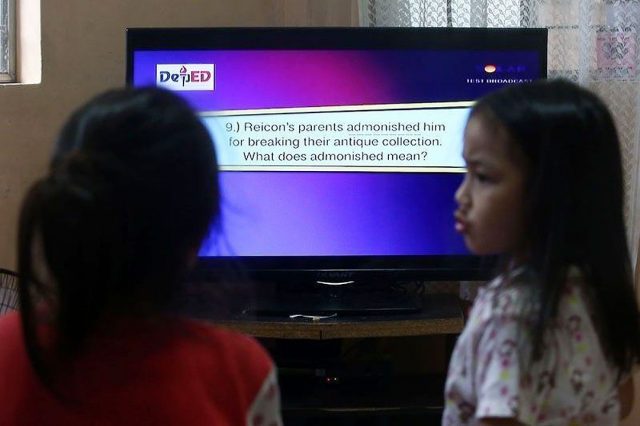
A SENATOR has filed a bill that seeks to give struggling learners access to a free remedial program that will help address the negative impact of the prolonged school closure due to the coronavirus pandemic.   

Senate Bill No. 2355 or the Academic Recovery and Accessible Learning (ARAL) Program, filed by Senator Sherwin T. Gatchalian, aims to provide nutritional, social, emotional, and mental health support to affected students in grades 1 to 10.  

The target beneficiaries are those who were unable to enroll in schoolyear 2020-2021 and those lagging academically.  

“Through the ARAL program that we are promoting, we can avoid the students’ delay in knowledge and help them catch up with their studies. This will be part of the rise of the education sector from the damage caused by the pandemic,” Mr. Gatchalian, chair of the Senate Committee on Basic Education, Arts and Culture, said in Filipino in a statement.   

The Department of Education (DepEd), in collaboration with local government units, will implement the program.   

The proposed measure will also mandate public telecommunication entities to provide learners and tutors free access to the DepEd’s online educational platforms, digital libraries, and other online knowledge hubs. — Alyssa Nicole O. Tan 

Fishers’ group lament P9.8-B unused agri funds 

A FISHERS’ group lamented the reported P9.8-billion unused fund under the Agriculture department’s 2020 budget, saying this could have been spent for production subsidies to farmers and fishers amid the coronavirus pandemic.  

Pambansang Lakas ng Kilusang Mamamalakaya ng Pilipinas (PAMALAKAYA) said in a statement on Monday that the Agriculture department could have aided at least 653,000 farmers and fishers with a P15,000 subsidy each.  

The Commission on Audit, in its 2020 report, said P9.8 billion of the Department of Agriculture’s (DA) P59-billion budget for 2020 was unspent and remitted back to the National Treasury.   

PAMALAKAYA National Chairperson Fernando L. Hicap said the subsidy could have boosted the output of the country’s food producers.     

“This also means that unstable food supply and prices in the market could have been avoided if only the government heeded the demand of the country’s food security front liners for livelihood subsidy and aid,” Mr. Hicap said.   

PAMALAKAYA and other rural-based progressive groups have been calling for a P15,000 subsidy for livelihood and production expenses.   

According to the group, the subsidy proposal was filed by the Makabayan bloc in the House of Representatives under House Bill 9192.   

“The agricultural production subsidy for fishers will be apportioned mostly for fuel expenses which eat up almost 80% of a regular fishing trip,” the group said.    

Meanwhile, PAMALAKAYA reiterated its call for the DA to explain to the public the cited “irregularities” in the budget spending.   

The group added that the Agriculture department should maximize its remaining budget for this year to improve production by distributing subsidies.  

“Apart from the explanation, the DA is morally and mandatorily compelled to strengthen local food production via support on farmers and fishers to ensure domestic food security amid the public health crisis,” Mr. Hicap said.    

Agriculture Secretary William D. Dar recently issued a statement saying that the DA did not commit any irregularities and do not tolerate corruption.   

“As per DA Undersecretary for Administration and Finance Roldan G. Gorgonio, we received the CoA report on July 2, 2021. Therefore, we still have until Sept. 2, 2021, to satisfy the CoA’s observations through our categorical replies. Since July, we have been consolidating the respective reports from our concerned DA offices and operating units, and we will submit them promptly to CoA, on or before Sept. 2,” Mr. Dar said.    

“We assure our clientele… that we, at the OneDA Family do not and will not tolerate corruption, as we try to comply with all government accounting and auditing procedures and requirements, and continuously pursue aboveboard our planned programs and initiatives to increase the productivity and incomes of farmers and fisherfolk, and attain a food-secure and resilient Philippines,” he added. — Revin Mikhael D. Ochave   

Lapid is 7th senator to contract COVID-19

SENATE.GOV.PH

SENATOR MANUEL “Lito” M. Lapid has tested positive for coronavirus, his chief-of-staff, Jericho Acedera, said on Monday.  

“As this happened when the Senate is not holding sessions, no member of our staff has been considerably exposed except for his personal and close-in employees,” said Mr. Acedera in a statement.   

Two of those who came in close contact with the senator tested negative.  

Mr. Lapid is classified as a “mild to moderate” case and is currently admitted at the Medical City Clark.  

He is the seventh senator to have been infected by the virus, after Senators Juan Miguel F. Zubiri, Juan Edgardo M. Angara, Aquilino Martin “Koko” L. Pimentel III, Ronald M. dela Rosa, Ramon B. Revilla Jr., and Richard J. Gordon, all of whom have recovered.  

The Senate resumed plenary sessions on Monday with limited employee attendance. — Alyssa Nicole O. Tan 

95% of workers in Metro Manila hotels vaccinated  

DOT

A TOTAL of 27,708 or 95% of the 29,066 workers in hotels within Metro Manila used as quarantine facilities or for leisure have been fully vaccinated, the Department of Tourism (DoT) reported on Monday.   

“The DoT hails this important milestone in vaccinating our tourism stakeholders. The inoculation of our tourism frontliners is a big step towards the recovery of the industry,” Tourism Secretary Bernadette Romulo-Puyat said in a statement.    

Majority of the hotel personnel covered at 19,350 are health service frontliners, the department said.   

“We shall continue our close collaboration with the National Task Force   against COVID-19 (coronavirus disease 2019), local government units, and relevant public and private agencies in securing vaccine doses to expedite the inoculation of more tourism workers, especially those in destinations that rely heavily on tourism,” Ms. Puyat said.     

Among the destinations that have received vaccine allocations particularly for tourism workers include Boracay, Bohol, and Palawan.   

Meanwhile, 2,778 of the 4,565 registered workers of DoT-accredited restaurants in 13 cities in the national capital region have received their coronavirus vaccines.  

Immigration posts to be automated starting Sept.  

BI FB PAGE

IMMIGRATION POSTS in air and sea ports will have an automated travel control system starting September, which will ease the processing of registered foreigners.  

The system will be pilot-tested at the Ninoy Aquino International Airport  terminal 3 before the nationwide rollout, Immigration Commissioner Jaime H. Morente said in a news release on Sunday.   

He explained that under the new system, data contained in alien certification of registration identity cards (ACR I-Card) will be integrated into the bureau’s border control information system.  

An ACR I-Card is issued by the Bureau of Immigration to all foreigners holding immigrant and non-immigrant visas whose stay in the country have exceeded 59 days.   

“With this project, the time our officers at the airports consume in processing foreign passengers will be shortened and these passengers will be assured of a hassle-free experience when traveling in and out of the country,” Mr. Morente said. — Bianca Angelica D. Añago  

Luxury yachts seized

BOC

Four luxury yachts found moored at the Manila International Container Terminal were seized by authorities on Aug. 22 after being found to have violated Customs and registration laws. The vessels, with an estimated total value of P120 million, were being used as transport services, residence, and offered as venues for events and for private use without permits.

Fiduciary duty of diligence of the highest level for corporations vested with public interest

VECTORJUICE-FREEPIK

(First of two parts)

Under the aegis of the old Corporation Code, the Supreme Court began to evolve a theory of “Corporate Social Responsibility” on corporations vested with public interests that imposed a fiduciary duty of diligence beyond their shareholders but primarily stakeholders who are most affected by the corporations’ business or economic enterprise.

In 1990, without formal statutory basis, the Supreme Court in Simex International (Manila), Inc. v. Court of Appeals, under the ponencia of Justice Isagani Cruz, began to lay down the corporate governance principle that “corporations vested with public interest” owe a fiduciary duty not just to the shareholders, but the public that they serve or interact with, particularly in the banking industry, thus:

The banking system is an indispensable institution in the modern world and plays a vital role in the economic life of every civilized nation. Whether as mere passive entities for the safe-keeping and saving of money or as active instruments of business and commerce, banks have become an ubiquitous presence among the people, who have come to regard them with respect and even gratitude, most of all, confidence … The point is that as a business affected with public interests and because of the nature of its functions, the bank is under obligation to treat the accounts of its depositors with meticulous care, always having in mind the fiduciary nature of their relationship.

Prior to Simex International, the doctrine pervading the relationship of a bank with its depositors, was that of simply being contractual in character — that of a loan or mutuum — under which the rights and obligations of the parties emanate from the principle of breach of contract between debtor and creditor. Simex International therefore evolved the relationship between the bank and its depositors into one that is fiduciary in character — a doctrine that has since then pervaded the decisions of the Supreme Court involving the dealings of the banks with their depositors.

Although there was resistance in some of the decisions to extend that “fiduciary nature of the relationship,” beyond those of the depositors, the formal recognition of banks being vested with public interests eventually covered all of their dealings with the public, thus:

• Over supervision of their officers and employees as the only way to ensure that banks will comply with their fiduciary duties;

• In extending loans and other credit accommodations;

• In accepting real estate mortgages, dealing with registered land and other properties given as security; and,

• In general, in handling all their transactions, or dealings with the public.

More importantly, the recognized fiduciary obligation of banking institutions to all such stakeholders, was characterized to be of the “highest degree,” and not just the diligence of a good father of a family. Thus, in PCI Bank v. Court of Appeals, the Supreme Court held:

“Time and again, we have stressed that banking business is so impressed with public interest where the trust and confidence of the public in general is of paramount importance such that the appropriate standard of diligence must be very high, if not the highest, degree of diligence. A bank’s liability as obligor is not merely vicarious but primary; the defense of exercise of due diligence in the selection and supervision of its employees is of no moment.

“Banks handle daily transactions involving millions of pesos. By the very nature of their work the degree of responsibility, care and trustworthiness expected of their employees and officials is far greater than those of ordinary clerks and employees. Banks are expected to exercise the highest degree of diligence in the selection and supervision of their employees.”

The theory that the nature of the banking industry is one that is vested with public interest and owes fiduciary duties to other stakeholders was formally incorporated into the General Banking Law of 2000, where Section 2 thereof expressly imposes a fiduciary duty on banks when it declared the “fiduciary nature of banking that requires high standards of integrity and performance,” which requires a bank to assume a degree of diligence higher than that of a good father of a family. In Philippine National Bank v. Pike, the Supreme Court held that even if the transaction with the bank occurred prior to the promulgation of the General Banking Law of 2000, nonetheless its Section 2 categorical declaration of the “fiduciary nature of banking that requires highest standards of integrity and performance” is only a statutory affirmation of the Supreme Court’s decisions in esse at the time of such transactions. In other words, the doctrine that the diligence of the highest degree, and high standards of integrity and performance are required of corporations impressed with public interest has common-law binding effect without the need of any statutory confirmation thereof.

Once that threshold had been breached in the banking industry, the Supreme Court began to apply the doctrine of fiduciary obligation of corporations, and their Boards of Directors and Management, to affected stakeholders (not just shareholders), when the underlying business enterprise is that which affects a large segment of the public.

In 2006, in its decision in Nogales v. Capitol Medical Center, the Court began to move away from the otherwise well-established doctrine that a malpractice on the part of an independent or visiting physician does not make the hospital vicariously liable therefor. The Court held:

“In general, a hospital is not liable for the negligence of an independent contractor-physician. There is, however, an exception to this principle. The hospital may be liable if the physician is the ‘ostensible’ agent of the hospital. This exception is also known as the ‘doctrine of apparent authority’.”

The doctrine of apparent authority is a species of the doctrine of estoppel. Article 1431 of the Civil Code provides that “through estoppel, an admission or representation is rendered conclusive upon the person making it, and cannot be denied or disproved as against the person relying thereon.” Estoppel rests on this rule: “Whenever a party has, by his own declaration, act, or omission, intentionally and deliberately led another to believe a particular thing true, and to act upon such belief, he cannot, in any litigation arising out of such declaration, act or omission, be permitted to falsify it.”

The gravamen of the Nogales decision is to the effect that when a hospital holds out a physician as a member of its medical staff, when in fact he is an independent contractor merely using the facilities of the hospital, then insofar as the patient is concerned, the hospital has clothed such a physician with authority to bind the hospital under the doctrine of apparent authority, which the hospital cannot later on repudiate to insulate itself from the malpractice assertions hurled against the physician. Among the circumstances that were found by the Court to have played into the application of the doctrine of apparent authority was that the hospital granted staff privileges to the attending physician; it made the patient’s husband sign a consent form printed on the hospital’s letterhead; and that the complications experienced during the operation were referred to the hospital’s head which gave the impression to the patient and her husband that the attending physician was a member of the hospital’s medical staff and was collaborating with other hospital-employed specialists in treating the patient.

Quoting from American jurisprudence, Nogales began to characterize the “public interest” nature of a corporation operating a hospital, thus: “The conception that the hospital does not undertake to treat the patient, does not undertake to act through its doctors and nurses, but undertakes instead simply to procure them to act upon their own responsibility, no longer reflects the fact. Present day hospital, as their manner of operation plainly demonstrates, do far more than furnish facilities for treatment. They regularly employ on a salary basis a large staff of physicians, nurses and [interns], as well as administratively and manual workers, and they charge patients for medical care and treatment, collecting for such services, if necessary, by legal action. Certainly, the person who avails himself of ‘hospital facilities’ expects that the hospital will attempt to cure him, not that its nurses or other employees will act on their own responsibility.”

Subsequently, the Court had the occasion to revisit and expand the Nogales doctrine in its original decision in Professional Services, Inc. v. Agana, where the decision went into a historical development of hospitals and the resulting theories concerning their liability for the negligence of physicians, thus: “Until the mid-19th century, hospitals were generally charitable institutions, providing medical services to the lowest classes of society, without regard for a patient’s ability to pay. Those who could afford medical treatment were usually treated at home by their doctors.

“However, the days of house calls and philanthropic health care are over. The modern health care industry continues to distance itself from its charitable past and has experienced a significant conversion from a not-for-profit health care to for-profit hospital businesses. Consequently, significant changes in health law have accompanied the business-related changes in the hospital industry. One important legal change is an increase in hospital liability for medical malpractice. Many courts now allow claims for hospital vicarious liability under the theories of respondeat superior, apparent authority, ostensible authority, or agency by estoppel.”

(To be continued)

This article reflects the personal opinion of the author and does not reflect the official stand of the Management Association of the Philippines or the MAP.


Attorney Cesar L. Villanueva is Chair of the MAP Corporate Governance Committee, is a Trustee of the Institute of Corporate Directors (ICD), was the first Chair of Governance Commission for GOCCs (2011 to 2016), was Dean of the Ateneo Law School (2004 to 2011), and is a Founding Partner of the Villanueva Gabionza & Dy Law Offices.

map@map.org.ph

cvillanueva@vgslaw.com

http://map.org.ph

This is how you win the lottery each time you play

UPKLYAK-FREEPIK

LOTTERIES are widely derided as a tax on stupidity. The odds are heavily stacked against the ticket buyers. The randomized systems that select the winning numbers eradicate any trace of skill from the competition. But none of that diminishes my enthusiasm for having a weekly flutter on an arbitrary set of digits chosen by an algorithm.

During this year’s Tokyo 2020 Olympics, British athlete after British athlete thanked the National Lottery in general and ticket buyers in particular for helping to provide the financial support that made their medal dreams come true. Team GB won 65 medals in Tokyo, including 22 golds, putting it fourth in the table after Japan. That matched the overall tally when the games were held in the UK in 2012 and was just two short of the record achieved at the 2016 competition in Rio. Britain punches above its demographic weight on the Olympic stage — and lottery funding plays a significant role in paying for coaches and allowing sportspeople to dedicate themselves to full-time training.

UK Sports, which is responsible for funding British athletes, teams, and events, was set up in 1996 after the UK won just 15 medals at the Atlanta Olympics, putting it in 36th place in the medals table. The agency had a budget of £150 million ($207 million) for the financial year ended in 2020, of which more than £80 million came from lottery ticket sales. Its annual income, topped up by central government funding, meant it was able to invest £345 million on preparing athletes for the delayed Tokyo event, up from the £275 million spent on the Rio games and £264 million for the London Olympics.

“What the funding does, it gives anyone with a bit of talent a chance to go and perform,” said Jason Kenny, a British cyclist who added two podium finishes in Tokyo to boost his lifetime Olympics winnings to seven golds and two silvers, making him the nation’s most successful Olympian ever. “It has moved us up the medal tables massively.”

The UK isn’t the only country with a lottery that grants cash for social goods. Ireland, Sweden, the Netherlands, Germany, Spain, and Denmark all have licensed lottery operators designed to benefit local organizations, according to the Association of Charity Lotteries in Europe. But with annual ticket sales worth more than £8 billion, the UK lottery is by far the biggest in the region.

Moreover, the scale of the operation means the tickets I buy pay for more than just sports and the Olympics — more than £30 million a week are disbursed to charitable causes. In Wales, for example, a project called River and Sea Sense teaches youngsters about the dangers of swimming in open water as well as skills such as resuscitation. In Somerset, 60 projects have been funded during the past four years to help preserve the wetlands and wildlife of the Avalon Marshes.

Of course, playing the lottery is not all about altruism. My weekly investment — and I do regard it as an investment — purchases a few hours of fantasy about a life of luxurious leisure, where I’m sailing a superyacht rather than driving a desk. And while the status of millionaire isn’t what it was, I’d still count myself lucky to figure as one of the six Britons per week who achieve that rank courtesy of their lottery winnings. So, by buying lottery tickets I’m simultaneously doing good and buying a cheap dream of riches — what’s so stupid about that?

BLOOMBERG OPINION

ADVERTISEMENT
ADVERTISEMENT