
How PSEi member stocks performed — August 23, 2021

Here’s a quick glance at how PSEi stocks fared on Monday, August 23, 2021.
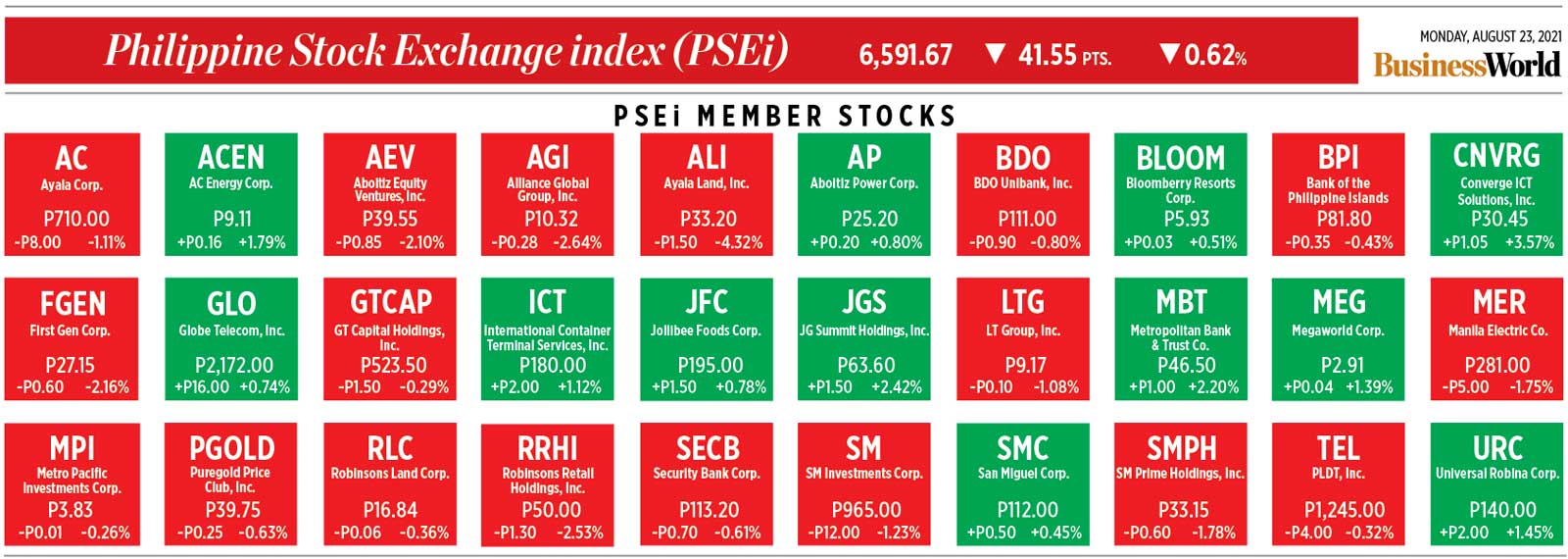

Here’s a quick glance at how PSEi stocks fared on Monday, August 23, 2021.
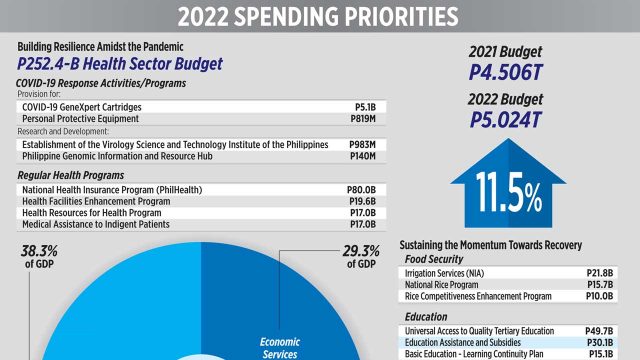
THE NATIONAL GOVERNMENT is proposing to allocate P1.18 trillion for infrastructure projects in 2022, as it expects the sector to drive the economic recovery from the coronavirus pandemic. Read the full story.


S&P GLOBAL RATINGS is expecting a “modest” increase in net general government (GG) debt next year assuming the Philippines needs to deal with further waves of coronavirus disease 2019 (COVID-19), but such deterioration in debt metrics is unlikely to impact the sovereign rating.
In a note issued Monday, the ratings agency projected net GG debt at 45.4% of the overall economic output next year, higher than its baseline forecast of 44%, under a scenario of two more COVID-19 surges.
Interest expense as a percentage of GG revenue will edge up to 12.6% from the 12.2% baseline estimate.
“We do not expect the projected impact of the simulations here to affect the sovereign ratings of the Philippines. The higher debt levels in the simulation do not materially affect country’s debt assessment… The increases in government debt in the simulations are relatively modest,” YeeFarn Phua, director at S&P Global Ratings said in an e-mail responding to BusinessWorld queries.
He said the debt increase under such a scenario will pay for additional measures needed to deal with future surges, noting that debt will remain well within the S&P forecast range for the Philippines.
Mr. Phua said the ratings agency has taken into account much of the impact of the pandemic in its outlook for Philippine budget balances in 2021-2022.
S&P last week trimmed its economic growth outlook for this year to 4.3% from the 6% estimate it issued in June as quarantine measures were tightened once more due to rising COVID-19 cases. It is expecting a 7.7% expansion in 2022.
The Philippines experienced a fresh surge in COVID-19 infections early this month as the highly contagious delta variant gained traction around the country.
The Health department reported a record 18,332 fresh cases Monday, pushing the tally of active cases to 130,350.
“Despite the recent surge in COVID infections, our ratings on the Philippines remains on a stable outlook. It reflects our expectation that the Philippine economy will recover to healthy rates of growth as the COVID-19 pandemic is better contained, and that the government’s fiscal performance will materially improve,” Mr. Phua said.
S&P affirmed in May its “BBB+” rating on the Philippines, with a “stable” outlook.
S&P said in its report that sovereign ratings of most Asia-Pacific economies will likely withstand the potential damage of two more waves of COVID-19 outbreaks.
“Our two-wave simulation shows weakened credit support for some governments, but few sovereigns are likely to see lower ratings as a result. Deterioration in the fiscal metrics are most pronounced, similar to the actual impact of the pandemic since April 2020. For this period, we have lowered our fiscal performance assessments on about 50 sovereigns,”according to the report.
“For many of these sovereigns, the longer-term impact of COVID-19, and other factors, prevent governments from returning to pre-pandemic budgetary positions. In the simulations, however, we assume that new outbreaks do not damage future fiscal performances,” it added.
However, if interest rate and revenue trends turn out worse than expectated, S&P said the additional outbreaks could affect the sovereign ratings of more economies, with Malaysia, Australia, and Vietnam, being more sensitive to heavier debt burdens. — Beatrice M. Laforga

HOUSE LEGISLATORS approved a measure on third and final reading Monday to explicitly make private schools eligible for preferential tax rates which will allow them to recover from the crisis, after their eligibility for such relief had been questioned by the Bureau of Internal Revenue (BIR).
House Bill 9913 amends Section 27 (B) of the National Internal Revenue Code of 1997 to apply the 10% preferential tax rate to all proprietary educational institutions and nonprofit hospitals from Jan. 1, 2012 to June 30, 2020.
In effect, private schools will pay a tax rate of 1% between July 1, 2020 and June 30, 2023, as authorized by Republic Act No. 11534 or the Corporate Recovery and Tax Incentives for Enterprises (CREATE) law. Once the provision expires, the tax rate will revert to 10%.
The measure was passed by the House Ways and Means committee on Aug. 2 and was passed on second reading the next day.
The BIR had suspended provisions of Revenue Regulations No. 5-2021, which granted tax relief only to private educational institutions that are “nonprofit” ineligible schools had to pay the 25% regular corporate income tax rate.
Albay Rep. Jose Ma. Clemente S. Salceda, chairman of the House Ways and Means committee, said Monday that the measure will help private schools hire at least 12,996 teachers at the start of the next school year.
“That is the largest tax cut to any sector ever in the country’s history, and I am proud that we will do it for the sector the Constitution values the most, the education sector,” he added.
He also hopes that the Senate adopts the House-approved version to ensure that the bill is transmitted to Malacañang before the year ends.
Private school groups, led by the Coordinating Council of Private Educational Associations welcomed the bill’s passage in the House, calling on the Senate to take prompt action on the measure.
“This legislative policy intervention, once enacted, will provide the needed stability to education not only in this time of pandemic but also for generations to come, as it aligns with all existing and future initiatives to revive our battered economy,” they said in a joint statement. — Russell Louis C. Ku

THE ENERGY Regulatory Commission (ERC) needs to remove the pass-through fuel cost provisions in power purchase agreements (PPAs) to ensure the least cost for consumers, according to a UK-funded report on the Philippines’ energy transition.
“It would be prudent for the ERC to implement mandatory fixed prices for PPAs by removing the automatic (fuel) pass-through,” according to the findings of the report, Analyzing Energy Transition Risks in the Philippine Power Sector.
“Eliminating the pass-through for imported fuel costs avoids the ups and downs of volatile commodity markets, providing valuable price stability,” it added.
A typical PPA between a distribution utility and coal power producer provides for fuel costs incurred by the latter to be automatically passed on to consumers, with pass-through charges based on the prevailing global coal price index.
The report cited the case of Panay Energy Development Corp. whose 167.4-megawatt coal-fired plant sold power at P2 per kilowatt-hour (kWh) more than the agreed PPA price set in 2016, which was P3.96 per kWh.
The pricing difference can be attributed to current market rules which contain a pass-through provision that allowed “fluctuations in fuel price and (foreign exchange) rates to be passed onto consumers and industry.”
Institute for Climate and Sustainable Cities (ICSC) Energy Transition Advisor Alberto R. Dalusung III said that coal power generation facilities must absorb fuel pass-through costs since they are in the “best” position to do so.
He said fuel costs from coal plants can account for more than 50% of the total price of generated power, describing pass-through as a process of transferring risk to end-users.
“The power plant itself (chose) coal as the fuel. They could have chosen natural gas or liquified natural gas. (But) they chose coal. Now that fuel has a cost. It’s imported, and you have to bring it to the Philippines. You (also) have to spend foreign exchange which means that there is a foreign exchange risk (or) currency risk,” he told BusinessWorld in an online interview last week.
He added that the fuel-pass through costs show up in power bills as generation charges.
The proposed removal of pass-through is also thought to deter further coal plant construction, avoiding the risk of having such plants become stranded assets when the energy transition gains momentum.
Other proposals include fast-tracking auctions to ensure new capacity; improving tariff setting to ensure least-cost and flexibility generation; implementing a permanent moratorium on new inflexible power; and improving clarity on who pays for stranded-asset risk.
The ICSC is one of the contributors to the report. Others include the Carbon Tracker Initiative and the Institute for Energy Economics and Financial Analysis. — Angelica Y. Yang
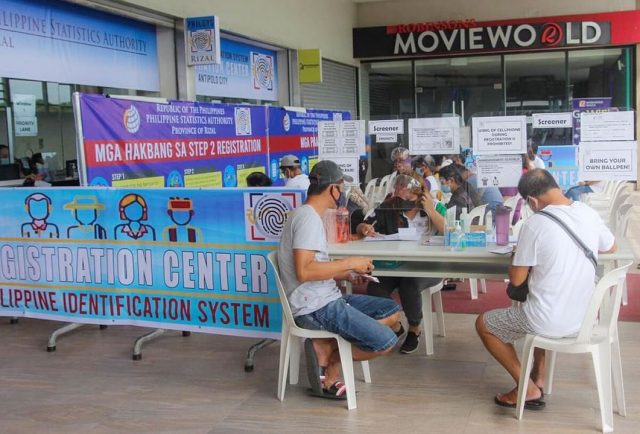
LAND BANK of the Philippines (LANDBANK) opened 4.47 million accounts for applicants who registered to receive the national ID system as of the end of June, the equivalent of 47% of the ID registration total.
The Department of Finance released the data on account openings in a statement Monday, citing a report from the bank.
Some 1.23 million had received their LANDBANK Agent Banking cards and are already using these cards for various transactions. The cards enable users to engage in branchless banking by transacting with LANDBANK partners, enabling them to withdraw money. The cards are issued for free.
The cards can also be used to transfer government subsidies electronically, and for “tap” payments in mass transport automated fare collection systems.
One of the national ID’s main goals is to expand financial inclusion by eliminating onerous ID requirements currently in place for opening bank accounts.
LANDBANK sets up booths in the registration centers of the Philippine Statistics Authority, which allow registrants to open bank accounts after their biometrics are taken for the national ID.
Meanwhile, LANDBANK said 1.67 million accounts have been opened under its Digital Onboarding System from its launch date in November 2018 until end-June.
In June, new accounts opened rose 1.43% month on month to 68,863.
LANDBANK also saw the number of transactions coursed through its mobile bank application increase by 47% from a year earlier to 47.03 million in June.
The bank’s net earnings rose 1.67% to P5.48 billion in the first quarter. — Beatrice M. Laforga
MEDICAL EQUIPMENT company Medilines Distributors, Inc. said it plans to expand its footprint in the Philippines to increase the supply of medical devices during the pandemic.
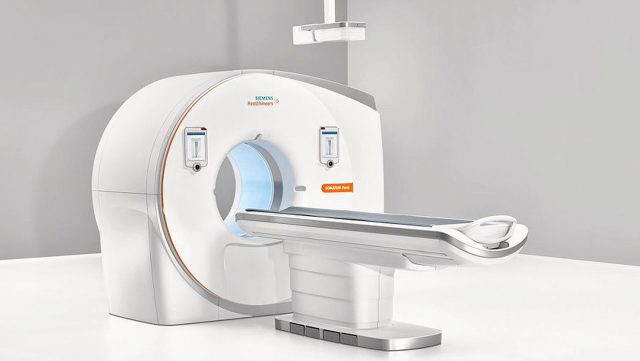
The company has been distributing equipment that helps in the detection of coronavirus disease 2019 (COVID-19) complications, including CT scanners and x-ray machines, the company said in a statement Monday.
Medilines has also installed 126 dialysis machines and 63 portable reverse osmosis machines in intensive care units. Founded in 2002, the firm distributes Siemens, B. Braun, and Varian devices in the Philippines.
“The firm continues to equip hospitals with more dialysis machines as 30-50% of hospitalized COVID-19 patients have (developed) severe kidney injury from the infection,” the company said.
It said that it plans to expand its product portfolio, but did not elaborate.
Medical device distribution was constrained during the initial lockdown last year after transport between regions was hampered. But the company said it had since been able to deploy medical equipment after travel rules were refined.
“As the pandemic drags on, we will remain steadfast in our commitment to make critical equipment available to primary providers of COVID-19 care wherever in the country they may be,” Medilines Chairman Virgilio Villar said. — Jenina P. Ibañez
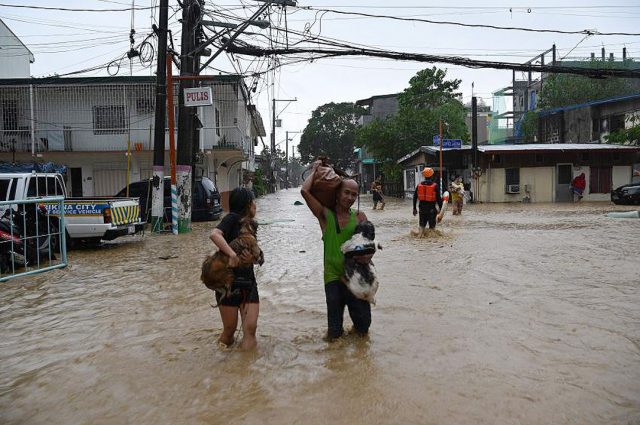
THE UN ECONOMIC and Social Commission for Asia and the Pacific (UN ESCAP) has announced the launch of an online portal to track various hazard hotspots as well as climate adaptation efforts across the Asia Pacific region, featuring up-to-date information from over 50 countries including the Philippines.
In a virtual briefing Monday, UN ESCAP Deputy Executive Secretary for Sustainable Development Kaveh Zahedi described the “Risk and Resilience Portal” (RRP) as a “one-stop shop” that supports risk-informed policymaking across the region.
“(It) enables member-countries to identify hazard hotspots; calculate losses on the various hazards and climate change scenarios; (and) estimate the specific costs of adaptation; and highlight potential priority adaptation (measures),” he said.
The portal also has a “decision support system” which provides an analysis of the disaster risk stories of five countries: Papua New Guinea, Pakistan, Myanmar, Mongolia and Armenia.
“(The portal) bridges the science and policy gaps that currently exist from the lack of translational science. Through the integration of data from multiple existing and validated sources, the portal is a one-stop shop to ensure that the vast array of scientific info on hazards, climate change, social, economic and health data can be analyzed in a way that can be used by policy makers, decision makers and development researchers to make efficient risk-informed decisions that span across multiple sectors,” said UN ESCAP Economic Affairs Officer Madhurima Sarkar-Swaisgood.
On the portal’s website, UN ESCAP said that the database “aims to strengthen the capacity of countries in Asia and the Pacific to mitigate the impacts of cascading risks on the achievement of the sustainable development goals.”
Other groups that worked on the RRP include the UN Institute for Training and Research and United Nations Satellite Centre.
The online portal can be accessed at https://rrp.unescap.org/.
The RRP’s launch took place on the first day of the UN ESCAP’s virtual Disaster Resilience Week which will run until Aug. 27. — Angelica Y. Yang

THE NATIONAL Power Corp. (Napocor) said Monday that it will extend its power supply agreement (PSA) with Occidental Mindoro Electric Cooperative, Inc. (Omeco) until the end of the year, and provide funds to the power distributor as it awaits the completion of a power procurement auction.
“We will also heed their request that our leased units with a total capacity of 4 MW (megawatts) be operational at full capacity to ease their power situation,” Napocor OIC Donato D. Marcos said.
The Napocor-Omeco PSA expired on June 25, but the decision to extend came after Omeco experienced problems in contracting power.
Napocor provided no details on how much aid it is providing Omeco.
At present, Omeco is awaiting the results of a competitive selection process for power suppliers to fill the cooperative’s additional power requirements.
Napocor added that it has connected the transmission system of Oriental and Occidental Mindoro.
“Omeco can tap Oriental Mindoro Electric Cooperative’s reserve power. (But) It is yet to be evaluated by both parties,” Napocor said.
Napocor is mandated by law to provide power to remote off-grid areas via its small power utilities group plants.
It is also in charge of effectively managing the government’s remaining power assets like the 981-MW Agus and Pulangi hydroelectric power plants in Mindanao, and managing watershed areas and dams that support power generation. — Angelica Yang

Over the past decade, we have seen exponential growth in number of social media users. Social media users are now the equivalent of 57% of the world’s population, and it is expected that this figure will continue to increase. Social media also influences consumer spending. Studies show that more than 50% of social media users use such online platforms to research products and more than 60% are likely to purchase products and services based on social media referrals.
Accordingly, more companies are now veering away from traditional advertising and moving to social media, relying on influencers to promote their products and services. Influencer marketing has become a vital part of overall marketing strategy and is considered an effective means to communicate with a brand’s target audience to improve awareness. Hence, social media influencers can earn substantial amounts from sponsorships and ad revenue, among others.
Social media influencers have built reputations for their knowledge, expertise, and/or interest in specific topics. They make regular posts on their preferred channels, such as YouTube, Instagram, Facebook, Snapchat, and TikTok, and generate a large number of followers. Influencers are not limited to celebrities. Even an average person, and even children (also known as “kidfluencers”) can be influencers on social media.
Just like any other person or corporation who earns income, influencers are also subject to tax. The Bureau of Internal Revenue (BIR), however, has noted that some of these influencers are not even registered with the BIR or are not paying the correct amount of taxes. Thus, the BIR issued Revenue Memorandum Circular (RMC) No. 97-2021 to remind these influencers of their obligations under tax law and the possible consequences of their failure to pay taxes.
As stated in RMC 97-2021, influencers, other than corporations and partnerships, are classified for tax purposes as self-employed individuals or persons engaged in trade or business as sole proprietors. They are required to register with the BIR Revenue District Office (RDO) having jurisdiction over the place where the head office is located or over the taxpayer’s place of residence. In case, however, they are already registered with the BIR but only as employees, they need to update their registration information with the RDO where they are registered, specifying therein any change in type and other taxpayer details.
Influencer incomes are generally considered business income subject to regular income tax, except those subject to final tax or exempt from tax under existing laws. Business income subject to regular income tax includes, among others, any amount received, whether in cash or in kind, from YouTube partner programs, sponsored social and blog posts, display advertising, becoming a brand representative/ambassador, affiliate marketing, co-creating project lines, promoting own products, photo and video sales, digital courses, subscriptions, e-books, podcasts, and webinars. To constitute gains or profits from the conduct of trade or business, payments must be received by influencers in consideration for services rendered or to be rendered, irrespective of the manner or form of payment.
Influencers are subject to a graduated income tax rate of 0% to 35% based on net taxable income (income less business expenses), except those considered non-resident aliens not engaged in business in the Philippines (NRANEBs) which are subject to 25% tax based on gross income. For citizens and resident alien taxpayers who are registered as non-VAT, if the total gross sales receipt does not exceed P3 million during the taxable year, they may choose to avail of the 8% tax based on gross sales or receipts, including other income, subject to compliance with the current tax regulations. Such tax is in lieu of the graduated tax and percentage tax. The option to be taxed at 8%, however, must be made in the first quarter income tax return or on the initial quarter return of the taxable year after the commencement of a new business. Such election is irrevocable and no amendment of option may be made for the taxable year. Hence, if they have filed their first quarter return and the option to avail of itemized deductions has been made, they may no longer avail of the 8% tax. Note that whether a taxpayer is using the graduated or the 8% rate, the first P250,000 is not subject to income tax under the TRAIN Law.
Resident citizens (RC) are taxable based on their worldwide income, i.e., income earned within and outside the Philippines. Non-resident citizens (NRCs), resident alien (RAs), and non-resident aliens (NRAs), on the other hand, are taxable only on their income earned within the Philippines.
In addition to income tax, an influencer is also subject to business tax of either the 3% percentage tax or the 12% value-added tax. The 3% percentage tax may apply if the total gross receipts and other non-operating income for the year does not exceed P3 million. Otherwise, the 12% VAT is applicable. The applicable percentage tax rate is 1% from July 1, 2020 until June 30, 2023. It will then revert to 3% of quarterly sales/receipts after this period.
Another option influencers may consider, if they qualify, is to register as Barangay Micro Business Enterprises (BMBEs) pursuant to Republic Act (RA) No. 9178. A duly registered BMBE is entitled to exemption from income tax for two years, which may be renewed. BMBEs’ total assets, including those arising from loans but exclusive of the land on which the particular business entity’s office, plant, and equipment are situated, cannot exceed P3 million. A BMBE may be a sole proprietor or a corporation. Services rendered in connection with the practice of a profession by a person duly licensed by the government after having passed a government licensure examination are not qualified to register as BMBEs.
As self-employed taxpayers, influencers are also considered withholding agents. Hence, they are required to withhold creditable/expanded withholding tax, final tax on compensation of employees, and other withholding taxes, if applicable.
Other than filing the required tax returns and paying taxes, influencers are also required to register and maintain their books of account and comply with other requirements imposed by the BIR, as failure to do so may result in significant penalties.
I believe many of our countrymen are willing to help the government by paying the right taxes. Some taxpayers, however, are discouraged because of the tedious process of registering and complying with requirements. Regardless of the size of business, tax compliance requirements are, in general, the same for all taxpayers. Hence, different groups have long been advocating for more simplified tax filing and reportorial requirements, particularly small to medium enterprises.
To address these concerns, the BIR is embarking on a digital transformation program to improve its services and achieve efficient collection performance. The digitalization of services has been in the pipeline even before the pandemic, after it recognized the need to adapt to and take advantage of the fast-evolving digital economy. Last year, the BIR issued Revenue Memorandum Order No. 27-2020 to outline its digital transformation roadmap for 2020-2030, streamlining tax filing and collection. As more people are now transacting digitally, there is renewed hope that the BIR will move forward with its digitalization program.
While the BIR is exerting efforts to address taxpayer questions and concerns, let us also do our share by complying with tax laws, rules, and regulations. Influencers can support our country not only by complying but also by encouraging their followers to pay much-needed taxes to fund government projects.
Let’s Talk Tax is a weekly newspaper column of P&A Grant Thornton that aims to keep the public informed of various developments in taxation. This article is not intended to be a substitute for competent professional advice.
Edward L. Roguel is a partner of Tax Advisory & Compliance division of P&A Grant Thornton, the Philippine member firm of Grant Thornton International Ltd.

THE PESO rose against the dollar on Monday on the back of lower global oil prices.
The local currency appreciated by 10 centavos to close at P50.27 versus the greenback on Monday from its P50.37 finish on Friday, data from the Bankers Association of the Philippines showed.
The local unit opened the session at P50.30 against the dollar. It peaked at P50.15, while its intraday low was at P50.33 versus the greenback.
Dollars traded dropped to $717.65 million yesterday from $977.6 million on Friday.
The peso strengthened to hit its strongest level in over two weeks on the back of lower global oil prices, Rizal Commercial Banking Corp. Chief Economist Michael L. Ricafort said via Viber.
“Lower global crude oil prices could reduce the country’s import bill and the demand for US dollar to pay for oil imports,” Mr. Ricafort said.
Brent crude inched up by 1.9% to $66.41 per barrel on Monday to recover from its $64.60 level each when it hit its lowest point since May 21, Reuters reported.
Mr. Ricafort said the peso was also supported by the progress of the country’s vaccination program.
The Philippines has administered 30.39 million doses of coronavirus disease 2019 (COVID-19) vaccines as of Aug. 22, based on the latest data compiled by Our World in Data.
Meanwhile, a bond trader said the peso climbed on weaker demand for dollars.
“The local currency might appreciate further amid likely weaker US manufacturing sector report for August 2021,” the trader said.
Both Mr. Ricafort and the trader expect the peso to range from P50.15 to P50.35 per dollar on Tuesday. — BML

SHARES declined on Monday due to profit taking as rising coronavirus disease 2019 (COVID-19) infections in the country soured market sentiment.
The benchmark Philippine Stock Exchange index (PSEi) declined by 41.55 points or 0.62% to close at 6,591.67 on Monday, while the broader all shares index went down by 12.76 points or 0.3% to end at 4,110.96.
“With infection rates running high over the weekend, deaths nearing 400, and vaccine rollout slow due to discontinued supply, [the] market will continue to experience restrictions that will continue to hamper economic activity all over the country thus profit taking prevailed today,” Diversified Securities, Inc. Equity Trader Aniceto K. Pangan said in a text message.
“Investors continued cashing in profits at the 6,600 to 6,700 PSEi resistance levels and that’s in the face of uninspiring news in the health front, [with] elevated [infections] and budget controversies,” First Metro Investment Corp. (FMIC) Head of Research Cristina S. Ulang said in a Viber message.
“But foreign investors are buying the sell-down, taking notice of the government’s infrastructure budget ramp-up next year to P1.18 trillion or 5.4% of GDP (gross domestic product) submitted to Congress for legislation,” Ms. Ulang said.
The Health department reported 16,044 new COVID-19 cases on Sunday, bringing the country’s tally to 1,839,635 with 125,900 active cases. The positivity rate stood at 25.5%.
The country also logged 398 COVID-19 fatalities on Saturday and an additional 215 on Sunday.
Meanwhile, several government agencies have been flagged by the Commission on Audit because of deficiencies, underspending, and lapses in using state funds.
On the other hand, the Budget department on Monday submitted its proposed P5.024 trillion spending plan for 2022 to the House of Representatives.
Majority of sectoral indices declined on Monday except for services, which went up by 8.74 points or 0.53% to finish at 1,644.67, and industrials, which gained 20.19 points or 0.2% to finish at 9,669.21.
Meanwhile, property declined by 76.60 points or 2.45% to 3,043.07; holding firms shed 43.65 points or 0.66% to 6,566.04; mining and oil lost 31.69 points or 0.34% to close at 9,117.97; and financials inched down by 1.43 points or 0.1% to 1,427.89.
Value turnover inched down to P6.29 billion with 1.94 billion issues switching hands on Monday, from the P6.30 billion with 2.04 billion shares traded on Friday.
Decliners outnumbered advancers, 105 versus 87, with 45 names closed unchanged.
Foreigners turned buyers anew with 105.79 million in net purchases on Monday from the P175.12 million in net outflows logged on Friday.
Diversified Securities’ Mr. Pangan expects the PSEi to continue trading between the 6,300 to 6,700 range in the coming days. — Keren Concepcion G. Valmonte
