Home Blog Page 7562

ERC says most parties to ancillary-services supply deals willing to sign firm contracts

By Angelica Y. Yang, Reporter

THE ENERGY Regulatory Commission (ERC) said 28 of 35 entities holding “non-firm” contracts with the grid operator to provide reserve power are willing to convert their agreements into firm contracts.

The commission has said before that the system operator, the National Grid Corp. of the Philippines (NGCP), is re-negotiating non-firm ancillary service (AS) procurement agreements (ASPAs) with 35 entities, and is seeking their conversion to firm contracts.

“Of the 35, 28 have already manifested their intent to be converted. (After expressing their willingness), they may file jointly with NGCP for its approval,” ERC Commissioner-in-Charge Floresinda G. Baldo-Digal told BusinessWorld on Viber last week.

However, the ERC has yet to receive a joint application requesting the commission’s approval for ASPA conversion, she added.

“Under the law, we can give provisional authority to implement the contract for a firm AS within 75 days from filing then decide a year after,” Ms. Digal said.

Five months ago, the Department of Energy (DoE) flagged the NGCP for not fully entering into firm contracts to purchase reserve power, making it non-compliant with a previous department circular.

The Luzon grid’s required capacity for regulating, contingency and dispatchable reserves is 491 megawatts (MW), 647 MW, and 647 MW, respectively.

The DoE estimates that the Luzon grid’s regulating, contingency and dispatchable reserves from non-firm contracts are at 525 MW, 395 MW and 806 MW, respectively, as of the fourth quarter of 2020.

Under non-firm ASPAs, the AS provider decides when it will provide services even if these had been previously scheduled by the NGCP, an arrangement which compromises grid reliability, the Department of Energy (DoE) said in April.

According to a DoE department circular released two years ago, the NGCP is required to procure 100% of firm-contracted reserves to guarantee the grid’s reliability.

In June, NGCP President and Chief Executive Officer Anthony L. Almeda said in a statement that procuring reserves through firm or non-firm deals will not solve the recurring power interruptions.

He said the full contracting of AS will “only lead to a change in payment terms where all the power, used or unused, will be shouldered by the public.”

Working group formed to study PICOP rehabilitation  

I LOVE BISLIG FB PAGE

THE MINDANAO Development Authority (MinDA) has formed a technical working group that will evaluate the rehabilitation of the Paper Industries Corp. (PICOP) facility in Bislig City, Surigao del Sur.

MinDA Chairman Emmanuel F. Piñol signed a memorandum order on Sept. 2 that formed the working group, directing it to conduct a study and submit recommendations on how to revive and rehabilitate PICOP’s pulp and paper mill.

The decision to form the working group resulted from a virtual conference involving the court-appointed receiver, Francisco Buencamino, and officials of Bislig City two weeks ago, Mr. Piñol said in a social media post over the weekend. 

Mr. Piñol said the initial assessment was that the idled facility can still be made operational with some modern upgrades.

He said Bislig City confirmed its support for the rehabilitation project. 

“The Supreme Court case which stemmed from the petition for foreclosure filed by the Land Bank of the Philippines (LANDBANK), which had granted the corporation over P2 billion in loans must be addressed as this is the remaining stumbling block in the move to start the rehabilitation,” Mr. Piñol said.  

PICOP shut down in 2006.

Aside from the pulp and paper mill, MinDA said in prior statements that it is also planning to revive the steel industry in Iligan City and the plywood and veneer industry in Mindanao. — Revin Mikhael D. Ochave

Changing the game with digital ecosystems

(First of two parts)

With the continuing uncertainty present in the global economy, digital transformation continues to be a business imperative for companies seeking to create long-term value, secure a competitive advantage, address more rapidly evolving consumer expectations and transform in preparation for the period of recovery. The need to physically distance for safety has deepened the need for digital interaction, online consumerism and new technology platforms. This shift in industry dynamics has blurred the boundaries between industries, leading to the emergence of digital ecosystems.

According to the new EY study, Building successful digital ecosystems in Southeast Asia, digital ecosystems are becoming a competitive game-changer. A digital ecosystem is formed through a combination of strategic partnerships and platforms in the form of omnichannel architecture that delivers value to consumers through personalized products and services. By presenting an interconnected set of offerings composed of businesses across different sectors, a digital ecosystem can fulfill consumer needs in one integrated experience.

A digital ecosystem is not just about a partnership or merger and acquisition (M&A) — it is about building a truly integrated network of enterprises that encourages and facilitates the sharing of applications, technology infrastructure and data. The shared elements of a digital ecosystem enhance and complement each other, resulting in improved innovation, trust and digital experiences.

Organizations need to map their roles in a digital ecosystem as well as monetize the digital ecosystem to drive sustainable growth. To create an effective digital ecosystem roadmap and strategy, companies must take three considerations into account before embarking on their digital ecosystem journey. This article will discuss the first two: evaluating the digital ecosystem maturity of the organization and defining the business model.

EVALUATE THE DIGITAL ECOSYSTEM MATURITY OF THE ORGANIZATION
While digital ecosystems present myriad opportunities to all value chain participants, there are also various hurdles that need to be overcome before reaping the benefits of a digital ecosystem. Companies often find it a challenge to choose the appropriate role for them and the path to achieve it. This makes a robust digital ecosystem strategy critical for every organization regardless of where it stands in its digital ecosystem journey.

As part of devising a digital ecosystem strategy, organizations need to understand the different maturity levels to be traversed in the digital ecosystem journey, and assess where they lie on the maturity curve. These are based on the digital capabilities a business has developed and the level of transformational impact it creates. There are three maturity levels to consider: digital ecosystem adaptor, digital ecosystem accelerator, and digital ecosystem attacker.

Most organizations start at the digital ecosystem adaptor level, where the transformation of an organization is at a modular level and is limited to a particular geographical market or business unit. The transformation initiative may be in the form of a pilot program, or the company leveraging partnerships and platforms to create value for its customers.

The next stage is the digital ecosystem accelerator, where the organization scales the transformation to a company and industry level, adding more digital capabilities and creating value from the platform economy. This can disrupt the respective industry of the company as it redefines how business is conducted by being a pioneer.

An organization at the level of a digital ecosystem attacker drives large-scale transformation across multiple industries, leveraging cross-sector collaboration and technology capabilities across various parts of the value chain. The transformation of the organization at this level utilizes multi-platforms, omnichannel plays and super apps, with strategic partnerships across different industries and geographies.

The impact and value brought by an organization into the digital ecosystem broadens from the company level to an ecosystem level as it moves from being an adapter to an attacker. As with any maturity model, organizations at the first stage must transform themselves before transforming their industry and ecosystem in the last stage.

DEFINE THE BUSINESS MODEL
After assessing and determining their own digital ecosystem maturity level, organizations need to identify the business model to leverage as a digital ecosystem participant based on parameters such as the nature of the ecosystem, the scale of industry partnerships and the revenue model.

Businesses that are just starting out on their digital ecosystem journey usually leverage pilot programs to develop a coherent set of digital solutions through partnerships. At the next level, platform-based businesses must look to connect multiple stakeholders across different industries through a marketplace model. One such example of this is ride-sharing apps that expanded into adjacent segments of food delivery and payments. Businesses at the digital ecosystem attacker level will utilize a multi-platform model, which can be transformed into a single source capable of offering products and services from different industries in one seamless, integrated experience.

Businesses can define their business model as a digital ecosystem participant based on three archetypes, each defined by the stages of evolution within a digital ecosystem: the digital ecosystem pilot, platform, and super app or multi-platform.

The digital ecosystem pilot archetype creates a coherent solution by digitalizing product capability with new functionalities through digital partnerships. It is orchestrated by the core firm, internal business units or its incumbents, and requires digital ecosystem adapters to launch.

The platform archetype offers a single platform that seamlessly connects users and is orchestrated by single platform companies. This archetype requires digital ecosystem accelerators to launch.

The super app archetype focuses on integrating several platforms into one service and captures user data from their integrated platform. This archetype is orchestrated by multiplatform companies with large investments or capital and requires digital ecosystem accelerators or attackers to launch.

In the second part of this article, we will discuss the considerations in implementing and mobilizing the ecosystem.

This article is for general information only and is not a substitute for professional advice where the facts and circumstances warrant. The views and opinions expressed above are those of the author and do not necessarily represent the views of SGV & Co.


Marie Stephanie C. Tan-Hamed is a Strategy and Transactions Partner of SGV & Co.

Record 30,000 daily virus cases likely this month

PHILIPPINE STAR/ MICHAEL VARCAS
AN eight-month-old pregnant woman got vaccinated with the AstraZeneca vaccine at Pinyahan Elementary School in Quezon City. — PHILIPPINE STAR/MICHAEL VARCAS

THE PHILIPPINES may post record daily coronavirus infections of more than 30,000 this month, according to researchers from the country’s premier university, as the government struggles to contain a fresh surge in cases caused by a more contagious Delta strain.

The country had yet to experience a peak in infections, and the infection rate has been declining slowly, OCTA Research Group fellow Fredegusto P. David told ABS-CBN Teleradyo on Sunday.

“It could happen maybe today or tomorrow,” he said. “It’s possible and we will exceed that by next week,” he added in Filipino.

The Department of Health (DoH) reported 20,019 coronavirus infections on Sunday, bringing the total to 2.08 million.

The death toll rose to 34,234 after 173 more patients died, while recoveries increased by 20,089 to 1.89 million, it said in a bulletin.

There were 157,438 active cases, 92% of which were mild, 3.4% did not show symptoms, 1.4% were severe, 2.51% were moderate and 0.7% were critical.

The agency said 119 duplicates had been removed from the tally, 95 of which were tagged as recoveries and one as a death, while 58 recoveries were reclassified as deaths. Five laboratories failed to submit data on Sept. 3.

Mr. David said the government’s decision to lift the travel ban on several countries could affect the numbers.

OCTA said it was unlikely that Metro Manila’s daily infections will hit 43,000, as projected by Philippine health authorities.

The number of cases in Metro Manila, which is battling a spike in cases, is expected to decline as early as next week, Mr. David said.

Laguna, Cavite, Rizal, Bulacan, Cebu, Iloilo, Davao del Sur, Cagayan, Bukidnon, Tarlac, Quezon and Pangasinan are also experiencing a spike in infections, he said. The country’s positivity rate was 28%.

“We just have to be patient to strictly implement whatever restrictions we have,” he said. “Let’s cut nonessential travel and follow health restrictions.”

The virus reproduction rate in Quezon City, the largest city in the capital region, was down to 1.3% from 1.59%, Mayor Joy Belmonte said.

“Based on projections made by experts, by now, we should have had 2,000 cases a day,” she said. “At the moment, we haven’t reached 1,000, and daily active cases are stable, which means we’re able to contain the virus.”

She traced this to continued testing and strict quarantines, adding that the city was the first to enforce a granular lockdown system last year.

“It’s a very effective way of addressing COVID in such a large city so the entire city won’t get affected,” Ms. Belmonte said in mixed English and Filipino.

The capital region will continue to implement granular lockdowns, while the government is still studying and monitoring whether to retain its quarantine classification, said Benjamin D. Abalos, Jr., who heads the Metropolitan Manila Development Authority.

He noted that while infections have been increasing, many have not shown symptoms because they have been vaccinated.

Metro Manila has given out vaccines to 12,950,718 residents, fully vaccinating half of its target population, Mr. Abalos said.

Meanwhile, a plan for localized lockdowns in Metro Manila was awaiting President Rodrigo R. Duterte’s approval, his spokesman Herminio L. Roque, Jr. said.

Trade Secretary Ramon M. Lopez on Saturday said an inter-agency task force had approved the enforcement of granular lockdowns in the capital region starting Sept. 8.

He said the localized lockdowns would have four levels, noting that two nearby streets could have two different quarantine levels. — Kyle Aristophere T. Atienza

Watchdogs needed to deter govt corruption, political analysts say

By Kyle Aristophere T. Atienza, Reporter,
and
Alyssa Nicole O. Tan

Policymakers should institutionalize public participation in government supply deals to deter corruption, according to political analysts. 

“Every stakeholder should be able to monitor the procurement process,” said Mike Kenealy, managing director at GraftMap. “Real-time government transparency is a must.” 

This is especially critical since supply deals are one of the government activities most vulnerable to corruption he said. 

Nongovernment organizations (NGO) can act as a watchdog of the state, which is driven by politics, and companies, which is driven by profit, Bryan E. Gonzales, executive director at Human Rights and Peoples Empowerment Center, said in a Facebook Messenger chat. 

The law mandates agencies entering into a supply deal to invite nongovernment observers registered with the Securities and Exchange Commission (SEC). 

“To arrive at the genuine and effective NGO participation in the procurement process, issues such as deliberate attempts to withhold procurement documents from observers, intimidation against NGOs, among others, need to be addressed,” Mr. Gonzales said. 

The government has not ensured NGO participation in public biddings, local government watchdog G-Watch said in a report this year, noting that public auctions could still proceed without a nongovernment observer as long as there’s proof of an invitation sent to them. 

It added that logistical problems caused by the pandemic have hindered NGO participation in biddings. 

While there have been attempts to promote collaboration between government agencies and NGOs, the Duterte administration’s hostility toward civil society has aggravated an already adversarial relationship between them, Mr. Gonzales said. 

“When you have a President who is capable of asking the public to ignore congressional inquiries on unused or mismanaged government funds, when you have a President who has made a habit out of threatening the media, as well as local and international watchdogs, the inevitable consequences of these are fear and distrust,” he said. 

Whistleblowing is one of the most effective ways to prevent state corruption, Mr. Kenealy said, citing global corruption cases uncovered by revelations from ordinary people. 

Whistleblowing can uncover bribery of public officials, fraud in bid screening and conflict of interests in both public and private transactions, he said. 

“Whistleblowers uncover more fraud and corruption than audits,” he said, noting that Philippine legislators should prioritize the passage of a comprehensive whistleblower protection measure. 

Medical supply orders during a pandemic usually become the target of corrupt officials, according to Transparency International. Corruption in emergency procurement reduces the amount and the quality of resources for life-saving operations, it added. 

The Senate is investigating the government’s purchase of overpriced medical goods from Pharmally Pharmaceutical Corp, a unit of Taiwan-based Pharmally International whose executives have been linked to various crimes. 

Meanwhile, Senator Franklin M. Drilon on Saturday said China-based Xuzhou Construction Co, which is not registered in the Philippines, had won the second-largest number of pandemic contracts worth P1.9 billion. 

The law allows the state to use negotiated contracts during a state of calamity. Congress last year passed a measure that allowed Mr. Duterte to undertake procurements “in the most expeditious manner.” 

“It appears that relaxing the rules have precisely enabled malevolent actors to rig the system and benefit from government contracts,” Terry L. Ridon, convenor of InfraWatchPH said in a Facebook Messenger chat. 

He said the country’s first pandemic law had allowed private parties with no track record to corner billion-peso contracts. 

“It has even done away with typical but more reliable procurement workarounds such as joint ventures in winning contracts,” he added. 

No amount of insults from Mr. Duterte could stop senators from investigating the government, Dennis C. Coronacion, who heads the University of Santo Tomas (UST) Political Science Department, said in a Viber message. 

The tough-talking leader might be trying to protect not only his loyal officials, but also his legacy and public image, he said. But state anomalies would affect administration bets in the 2022 elections, he added. 

“This is a President who just wants to impose his will, and he’s not very comfortable with the notion of checks and balances and scrutiny by the Senate, independent media and civil society,” Richard J. Heydarian, a professorial chairholder in geopolitics at the Polytechnic University of the Philippines said via WhatsApp. 

Mr. Duterte as Davao City mayor easily got his way without much pushback, which he also enjoyed during the earlier years of his presidency, he said. Independent-minded senators have begun calling him out for allegations of corruption during his last year in office, he added. 

“The President has already made it clear time and again that he will stand by his allies and friends, no matter how legitimate may be the concerns over anomalies or irregularities within his government agencies,” Mr. Heydarian said. “This is a clear violation of his promise that even a ‘whiff of corruption’ would be sufficient to fire someone in his office.” 


Erratum: A previous version of this story misspelled the name of Mike Kenealy. We regret the error. 

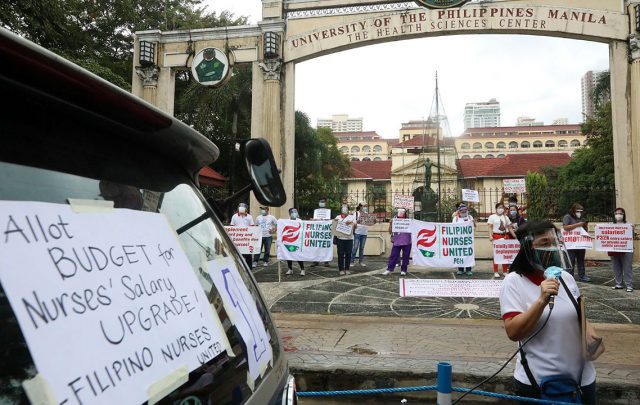
Nurses’ group frustrated over slashed funds for 2022; considers case vs Health chief 

PHILSTAR

By Russell Louis C. Ku 

A GROUP of nurses denounced the proposed 2022 budget of the Department of Health (DoH), saying it is “grossly inadequate” for pandemic response as healthcare workers continue to demand the release of their delayed benefits.   

Filipino Nurses United (FNU) Secretary-General Jocelyn S. Andamo said in a phone call Friday that they are frustrated with the DoH over the lack of funding next year for healthcare workers’s benefits such as special risk allowance and meals and transportation subsidy.    

“Amidst our clamor to give our long overdue benefits, they did not allot anything on benefits for next year. In my opinion, we need to prioritize health services as well as the welfare of health workers during the pandemic,” she said in a mix of English and Filipino.  

Health Secretary Francisco T. Duque III said in a House budget hearing on Thursday that the DoH originally proposed a P73.99 billion fund for next year to the executive department for coronavirus response, which was later slashed to P19.67 billion.  

The original proposal included P50.41 billion for the different allowances and life insurance for medical frontliners.   

“The proposed COVID response budget for 2022 is a glaring confirmation that the DOH… has no deep regard nor respect for nurses’ and other health workers’ rights,” FNU said in a separate statement.  

Healthcare workers have started protest actions last week to demand the immediate release of their delayed hazard pay and special risk allowance.   

The Health department also said in the hearing that out of the 526,727 healthcare workers eligible to receive special risk allowance, 127,332 have yet to receive their compensation.   

However, Ms. Andamo questioined the DoH’s human resource count.    

“Usec. (Maria Rosario C. Singh-) Vergeire said that the total number of healthcare workers in the Philippines is 1.8 million. So the 500,000 (who received their benefits) does not even reach half, it’s not the majority. Meanwhile, a large chunk of health workers is in the frontlines of the pandemic, so we think it’s still lacking,” she said in a mix of English and Filipino.   

Ms. Vergeire told reporters in March that there are around 1.8 million healthcare workers nationwide.   

CRIMINAL CHARGES 
Ms. Andamo said the FNU started consulting with lawyers on Friday for the possible filing of a case against Mr. Duque for criminal negligence in the handling of funds allotted for healthcare workers.  

Bayan Muna Chair and former congressman Neri J. Colmenares said on Thursday that the Health chief could face the risk of criminal charges over the delayed special risk allowance payments.    

“Criminally, he can be sued under Republic Act 3019, or the Anti-Graft and Corrupt Practices law for causing any undue injury through gross inexcusable negligence,” he said in a statement.    

Mr. Colmenares also said that Mr. Duque should also be held liable for administrative charges for violating the Code of Conduct for Public Officials along with civil cases for damages to frontliners.   

CoA flags veterans’ agency for unliquidated P10.81M aid to organizations   

STATE AUDITORS found that the Veterans Federation of the Philippines (VFP) granted P10.81 million worth of financial assistance to various veterans’ organizations that remain unliquidated or lack reporting requirements.     

In its 2020 audit report, the Commission on Audit (CoA) said that P7.8 million remain unliquidated while P2.38 million were liquidated to 50 district organizations but without submission of reports to auditors as of December 31.   

The VFP executive board approved various resolutions in 2020 to provide P10.81 million worth of financial assistance to 10 charters, 21 affiliates, and 183 district veterans organizations for pandemic relief.  

“All organizations are granted a total of P50,000 each for the purpose of providing their respective members basic needs such as canned goods, Vitamin C, alcohol, soap… to help them manage their situation during the enhanced community quarantine period,” CoA said.   

CoA said that majority of the aid were granted from April to July 2020, meaning that these should be liquidated by the end of the year.   

However, they found that the implementing rules of the fund liquidation did not provide a specific period or format of documents for submission. Neither was there a team tasked for monitoring.   

Auditors also found that the release of financial assistance to veterans’ organizations did not have any written acknowledgement receipts from authorized groups attached to the disbursement vouchers.    

“In absence of said supporting document, the Audit team could not validate whether the financial assistance… was indeed received by the authorized recipients,” they said.   

CoA recommended that the VFP’s accounting and operations teams require the recipients to immediately submit acknowledgement receipts and liquidation reports.   

They also asked that the agency review and revise its implementing guidelines to include clear provisions on liquidation reports. 

In an audit comment, VFP said that they are in the process of following up on liquidation documents and revising the rules for board approval. — Russell Louis C. Ku  

Work permit application now open for ‘essential’ foreign workers 

FOREIGN NATIONALS with a job contract in the Philippines for at least six months may now start applying for a work permit, the Department of Labor and Employment said on Sunday.  

Applications for Alien Employment Permit or COE Certificate of Exemption/Exclusion and work visas for “essential foreign workers” may be coursed through their Philippine-based employer, Labor Secretary Silvestre Bello III said in a news release.   

Mr. Bello earlier issued a circular on the issuance of permits for foreign nationals who want to stay in the country for longterm employment.    

“Under the new guidelines, issuance of the work visa may be done at the Philippine Consulate General at the foreign national’s place of origin and will no longer require an entry stamp from the Department of Foreign Affairs,” the advisory stated.  

The Philippine government has been criticized for hiring Chinese nationals for its infrastructure projects. The Department of Public Works and Highways last year admitted that Chinese workers have been employed for two China-funded projects in the country.  

Lawmakers also earlier flagged that Chinese nationals had been working illegally in online gambling firms operating in the country. — Kyle Aristophere T. Atienza  

DigiCOOP delivers cybersecurity lessons as it ramps up shift to digital transactions in rural areas 

TEAMS OF DigiCOOP, the digital platform of the biggest financial cooperative in Mindanao, has started teaching members about cybersecurity alongside the push to shift more transactions online.   

Ana Cuisia, chairman of Taxion Cooperative that provides the DigiCOOP platform to the First Community Credit Cooperative, Inc. (FICCO), said they have found out that scammers have been on the prey for people in rural areas.  

“The team soon realized that transitioning non-digital platform users to the digital space needs to go beyond merely acclimatizing them to the functionalities of an app or a browser-based platform. On the ground, we have heard horror stories about cooperative store owners who unknowingly (or knowingly but with no malicious intent) shared their computer passwords or their own user credentials with outside parties,” she said in a statement.   

The 67-year old FICCO, which has over 400,000 members mostly in Mindanao, launched the DigiCOOP for members in July. It is targeting to have at least 75% or 300,000 of members switch to digital services by the end of the year.  

Ms. Cuisia said they have been conducting orientation and trainings to cooperatives in the countryside, which now include a session on cyber security.  

“Technology and education are the great equalizers of opportunities,” she said.  

DigiCOOP, which can be used through a mobile application or an internet browser, can be used by FICCO members for financial services such as bills payment, loan availment, money transfer, and online purchase.  

Alongside the digital shift, FICCO is also launching 10 digiCOOP Business Centers in Mindanao this year to expand membership. 

Ms. Cuisia said in an email interview that the physical stores will complement the digital platform in terms of attracting more clients who may or may not be able to go online.   

“DigiCOOP would like to cater to the most underserved which may not have access to smartphones or internet connection, and that’s why we have made the services offline too, through the digiCOOP business centers,” she said. — MSJ   

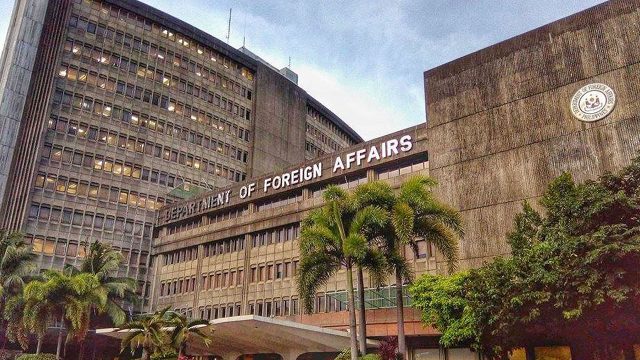
DFA office at SM Megamall closed until Sept. 10 after 11 personnel test positive for COVID-19 

DFA FB PAGE

THE DEPARTMENT of Foreign Affairs’ Consular Office (CO) in SM Megamall will be closed from Sept. 6-10 after after 11 personnel tested positive for coronavirus. 

Affected passport applicants will be accommodated at the DFA-Aseana and will be informed via email about their alternative appointment time slot. 

The department said the SM Megamall office will be thoroughly disinfected during the one-week closure. — Alyssa Nicole O. Tan 

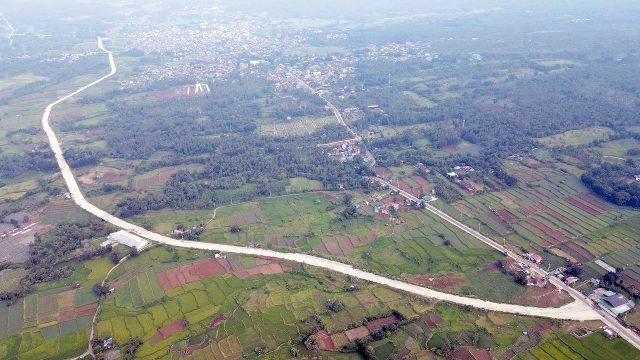
Lucban bypass road opens

DPWH

CONCRETING of the 3.8-kilometer bypass road in Lucban, Quezon has been completed and is now open to motorists, the Department of Public Works and Highways announced on Sunday. Civil works are still ongoing such as installation of street lights, drainage and sidewalks, it said. The bypass road is intended to help decongest traffic within Lucban’s town center by providing an alternate route to motorists traveling between Metro Manila and Southern Luzon up to the Bicol Region.

Terrafirma wins three in a row

TERRAFIRMA Dyip won their third straight win in the PBA Philippine Cup after beating the Blackwater Bossing, 96-84, on Sunday. — PBA IMAGES

By Michael Angelo S. Murillo, Senior Reporter

TERRAFIRMA Dyip continued to roll in the resumption of Philippine Basketball Association (PBA) Philippine Cup action, winning their third straight game with a 96-84 victory over the Blackwater Bossing at the Don Honorio Ventura State University (DHVSU) Gym in Bacolor, Pampanga, on Sunday.

Trailed for much of the contest, the Dyip hanged close and when they got their opportunity to create separation in the fourth quarter, they took it and never looked back to book the win that improved them to 3-4 in the season-opening PBA tournament.

Aldrech Ramos led six Terrafirma players who scored nine points or more with 17.

The win was in follow-up to the Dyip’s big victories previously against powerhouse teams San Miguel Beermen and Barangay Ginebra San Miguel Kings.

Prior to its ongoing win streak, Terrafirma lost four straight.

Terrafirma and Blackwater fought to a tied 65-all count at the end of the third quarter before the Dyip made their move.

They outscored the Bossing, 19-5, in the first six minutes of the final frame, on the lead of Mr. Ramos and Reden Celda, to build a 14-point cushion, 84-70.

The lead ballooned to 18 points, 91-73, by the 3:14 mark and Terrafirma went for the closeout after.

Veteran Ramos added nine rebounds and two assists to his stat line while Mr. Celda had 15 points.

Andreas Cahilig had a double-double of 12 points and 11 rebounds for the Dyip, with Juami Tiongson and Rashawn Mccarthy having 10 points apiece. Joseph Gabayni and Matt Ganuelas-Rosser each had nine.

At 3-4, Terrafirma moved to solo seventh place in the standings, in the mix for a playoff spot. It, too, is one of the hottest teams in the PBA since the Philippine Cup resumed on Sept. 1 in Pampanga after a one-month stoppage because of coronavirus disease 2019 (COVID-19) concerns.

For its part, Blackwater, winless now in seven matches, was led by Mike Tolomia with 14 and Simon Enciso with 13.

Meanwhile, the scheduled match between the Meralco Bolts and Barangay Ginebra was postponed hours before tip-off in accordance with the PBA’s health and safety protocols.

The league did not go into details, but said the game will be rescheduled to a later date.

It was the second game to be postponed in the Bacolor “semi-bubble” of the PBA after that between the San Miguel Beermen and Alaska Aces the previous day.

ADVERTISEMENT
ADVERTISEMENT