Home Blog Page 7558

Schools team up with couriers, banks to help students deal with pandemic

By Angelica Y. Yang, Reporter

SCHOOLS in the Philippines have entered tie-ups with logistics service providers and banks to help students better deal with the impact of the global health emergency.

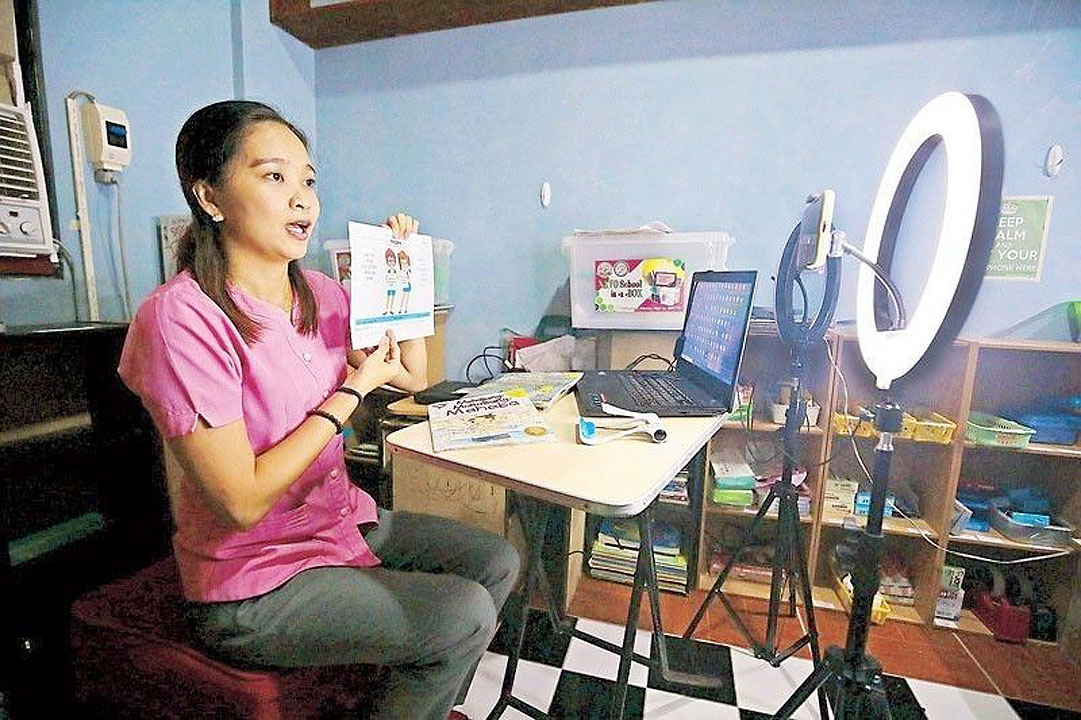
Last year, Polytechnic University of the Philippines (PUP) resorted to correspondence learning, allowing students from far-flung areas to receive hard copies or flash drives of course material from the school.

“PUP is home to students belonging to families that are economically-challenged. So many of our students do not have regular access to the internet…They do not have internet connections in their respective homes, so these students were given the opportunity to continue their studies through correspondence mode,” the university’s Executive Vice President Alberto C. Guillo said.

The school entered into an agreement with logistics firm Air21, which provided its services for free. The delivery of learning materials took up to a week for students residing in remote areas.

“We…delivered (the instructional materials) to them at their doorstep…so they can continue with their studies. We (found an) arrangement (that was) least-cost, if not zero-cost, on the part of our students,” Mr. Guillo said.

After the government imposed a hard lockdown towards the end of the first quarter last year, schools had to improvise in shifting to online learning platforms, and connectivity was foremost in the minds of many academics.

Spotty internet remained an issue in the country and elsewhere in Southeast Asia, according to University of the Philippines (UP) Assistant Vice President for Academic Affairs Alyssa M. Peleo Alampay.

The state university also decided to mail flash drives and hard copy of course materials to students with connectivity problems.

“We tried to benchmark with other higher education institutions in the ASEAN, (such as those in) Malaysia and Indonesia, and we saw that everybody was really going through more or less the same problems of connectivity and access,” she said.

“(We realized that) getting the actual, physical paper copy to the students is something we can do, so there was a very well-organized structure of sending USBs or hard copies of the material for all of the courses before the semester started,” she added.

Ms. Alampay said UP also helped out with the distribution of devices to school personnel and qualified students during the pandemic.

The global health emergency brought about the need for flexible payment schemes, which private school iACADEMY recognized when it decided to team up with financial institutions that offered such options to students.

“Due to financial challenges brought by the pandemic, a significant number of students put their studies on pause. To address this constraint, we partnered with financial institutions such as Metrobank and LANDBANK to ease payments and extend flexible options to our students,” iACADEMY said through its corporate communications department.

Metrobank offered students zero-interest installment plans while LANDBANK supported eligible applicants via its I-Study Lending Program, which charges interest rates of 5% a year.

iACADEMY added that it also partnered with companies that offered work-from-home arrangements to students taking up animation, design, and game development.

“This initiative helped our students not only to earn but also apply the skills they acquired in their courses. Through this, students were also given first-hand experience before they even graduate (by) working for these companies,” it said.

HURDLES OF ONLINE LEARNING
Former Education Secretary Armin A. Luistro, who served under the late President Benigno S.C. Aquino III, said that even those who were “most prepared” to fully shift to online learning had to undergo major adjustments.

“Teachers were not given enough time to shift. The pandemic happened at the tail end of the school year, so some schools were in their last quarter or just preparing for their final exams. The other difficulty is, in the beginning of the pandemic and even up to now, (it is) almost impossible to make any real projections or plans… when you cannot foresee when exactly the lockdowns will end,” he said.

Online learning has opened up avenues to access more information and gave teachers more opportunities to better engage students, but this was deemed only effective for those who could afford internet access and devices, according to Mr. Luistro.

During the pandemic, not all students and teachers had such access, and Alliance of Concerned Teachers (ACT) Secretary-General Raymond D. Basilio believes that this widened the gap between rich and poor.

“Our teachers were not provided the needed laptop computers and provision for internet load allowance. For our learners, not all were provided with devices and a means to save. It was left to (the family’s resources),” he said, referring to the experiences of ACT members.

As of May, the group had up to 220,000 members.

Mr. Basilio said online learning entailed additional expenses, which families struggling from the impact of the pandemic had to contend with.

“What will you prioritize? Buying rice or buying (mobile data) load for your child?” Mr. Basilio said.

Before the onset of the coronavirus disease 2019 (COVID-19), the world was already experiencing a learning crisis, but then 258 million children and youth of grade school and high school age were estimated to have dropped out, according to a World Bank Group report released in May 2020.

This time, the world is experiencing the “twin shocks” of school closures and a severe economic downturn which could have imposed long-term costs on education and development, against which governments must quickly implement countermeasures, according to the study findings.

Online learning may have hurdles, but it holds “a lot of promise” in democratizing and customizing education, according to Philippine Business for Education Executive Director Love B. Basillote.

“Not all learners are made the same way, and I think if done right and done well with adequate support, it can actually have the potential to address the learning crisis in the Philippines, making sure that our students are able to learn the competencies they need to lead productive lives,” she said.

She said the private sector can play a key role by working with the education authorities while holding them accountable for the system’s performance. She suggested that industry also look into providing discounts for students, participating in the delivery of devices for e-learning, and implementing office policies that provide “leeway” or support to parents.

INVESTMENT
According to Department of Education (DepEd) data released in May, the General Appropriations Act of 2021 earmarked P594.11 billion for the education sector, up 7.44% from a year earlier. This year’s allocation represents around 13% of the national budget.

Mr. Luistro, the former Education Secretary, said the government must channel more funds into education, citing recommendations made by the United Nations Educational, Scientific and Cultural Organization (UNESCO), which considers healthy education-spending levels to be about 15% to 20% of public expenditure.

“If you look at the Philippine economy, we are also lagging, so if the economy is not opening up…that means even if you do 20% of the national budget, that may be even less than the (education) budget of previous years, so that’s a cause for worry,” Mr. Luistro said. 

“It’s about the whole economy and you’re talking of parents who may have lost their jobs…Even if schools have all the gadgets (but) if students are hungry, learning will not happen so these are all interconnected, and the economy is critical in terms of playing catch-up with the learning crisis that has been there even before the pandemic,” he added.

The two public universities that spoke to BusinessWorld for this article are spending more on learning management systems (LMS) to meet the requirements of online learning, compared to their expenses pre-pandemic.

UP’s Ms. Alampay noted that the school has invested more in Zoom video conferencing platform subscriptions and library plans. The expenses were offset, however, by the absence of the usual daily operating costs like power and water consumption.

“(The) funds were actually put into these subscriptions which we hope we can sustain even after the pandemic, even after all this remote learning is done because, really, we want to go more into that hybrid type of delivery of our courses,” she said.

PUP’s Mr. Guillo said the school spent more on LMS subscriptions, as well as health-related items for its community members.

Data obtained by BusinessWorld indicate that PUP spent P21.26 million on office supplies, internet expenses, and video conferencing application subscriptions; and P2.90 million on items related to health and safety such as swab tests, personal protective equipment and disinfection supplies from 2020 to 2021.

Mr. Guillo said PUP will be investing more time in printing all of its instructional material for those in correspondence learning, adding that students in the program will continue to receive course packs through hard copy or flash drives in the coming semesters.

“We have received feedback that students who receive these instructional materials post on social media (to) say they are happy… We’re glad to know about it, even if it’s just a simple post,” he said.

Mass transport one of the keys to economic recovery

PHILSTAR

By Revin Mikhael D. Ochave, Reporter

OF THE many that need to happen for the economy to recover, perhaps the most overlooked is the state of the mass transport industry.

Robert Y. Siy, a development economist and city and regional planner, believes a stable public transportation system is crucial for keeping essential services running, eventually facilitating the reopening of the economy.

On the other hand, inadequate mass transport is a risk for crowding — which in turn is a risk for further outbreaks.

“If public transport is insufficient, people will be forced into long queues or crowd into limited public transport at stops, stations and terminals. Crowding increases the risk of virus transmission,” Mr. Siy said in an e-mail interview.

Mr. Siy said supply needs to increase, or at least to be kept from collapsing in the short term.

Failing this, commuters need options, like safe walking and cycling lanes. Such mobility options in turn decongest the transport system.

Bicycle and walking lanes “are also health-inducing and environment-friendly modes of travel, so it makes sense for the government to invest much more in public transport infrastructure and to allocate more road space to these modes,” Mr. Siy said.

“Apart from funding these improvements in our streets and bridges, a low-cost and high impact measure is to make selected streets in neighborhoods closed to through traffic, so these areas can be converted into parks and community public space while being safe for walking and cycling,” he added.

In July, the Department of Transportation (DoTr) opened a 313-kilometer Metro Manila bike lane network traversing Pasig, Marikina, Quezon City, Caloocan, Manila, San Juan, Mandaluyong, Makati, Pasay, Las Piñas, Parañaque, and Taguig.

The DoTr said the bike lanes are 1.5 to 3 meters wide depending on the availability of road space. The Metro Manila bike lane network is part of a broader national effort that also includes 497 kilometers in Metro Cebu and Metro Davao.

It added that the network can accommodate a total of 1,250 cyclists per hour for every meter of road space.

Mr. Siy urged the government to authorize all open-air jeepneys to operate, citing their ventilation advantage during the pandemic.

“Airconditioned buses, jeepneys and UV Express vans should be instructed to operate at all times with some windows open so there is constant air exchange,” Mr. Siy said.

He said there is also a need to review the rules on plastic barriers in vehicles and on motorcycle taxis.

“The plastic barriers within the vehicles may actually hinder the air exchange; on motorcycle taxis, there is questionable value in having the plastic barriers between the driver and passenger; it has also been reported as making the motorcycle less stable during travel,” Mr. Siy said.

John Paul C. Dungo, an architect, uses public transport to get from his home in Mandaluyong to work in Pasay.

Mr. Dungo typically rides tricycles, buses, and trains to get to work. Despite the pandemic, he said the number of commuters he encounters during his daily commute remains the same, which makes him wary.

“I usually catch three rides to get to the office. However, it is stressful especially during rush hour since there are a lot of people outside,” Mr. Dungo said in a mobile phone interview.

According to Mr. Dungo, vehicles he uses observe health protocols such as social distancing, with the exception of buses.

He said bus operators typically do not observe face shield rules and carry more passengers than the prescribed capacity.

“There are times when I ride a bus that people are standing in the middle with their face shields not worn properly. I am scared to go home during rush hour due to the volume of commuters which is why I usually let rush hour pass even if I get home later than usual, just to be safe,” Mr. Dungo said.

He said the operators are not entirely to blame, as often “it is the passengers who do not follow.”

Mr. Dungo said his company has offered a dormitory in Pasay to accommodate employees living some distance from the office. However, he opted not to live in the dormitory in an effort to limit his expenses.

“Employees in the dormitory do not pay rent. They just pay for utilities such as water and electricity and their daily needs. But I did not avail of the dormitory benefit because I want to save some money,” Mr. Dungo said.

Mr. Dungo said he has as yet remained safe and uninfected by coronavirus disease 2019 (COVID-19).

“There have also been no reported COVID-19 cases in our office since we follow protocols,” Mr. Dungo said.

Rene S. Santiago, a transport expert, said in an email interview that the government needs a more scientific approach to making transportation more resilient against the pandemic.

“In the early days, the government imposed so many requirements without science. The poster child is the plastic barrier for motorcycle riders, which are useless. More science is needed. It may involve systematic trial-and-error, as differentiated from error after error,” Mr. Santiago said.

Mr. Santiago said that economic recovery will falter if transportation does not improve.

He said more investment is needed in city sidewalks, adding that bike lanes should be more than “decorative.” He said more immediate alternatives are needed beyond long-gestation railway projects.

“Very little money is required to have mainstream mobility as a service,” Mr. Santiago said.

Land Transportation Franchising and Regulatory Board (LTFRB) Chairman Martin B. Delgra III said in a television interview in August that public transport in Metro Manila and across the country has returned to about 85% of pre-pandemic levels.

He said health protocol violations are still being reported in public transport like the absence of plastic barriers, overloading, and failure to wear face masks and shields.

During his sixth and final State of the Nation Address (SONA) in July, President Rodrigo R. Duterte touted improvements in the transport system, such as the improved Metro Rail Transit Line 3 (MRT-3), where train breakdowns have tailed off and capacity and speed have increased; the opening of the Light Rail Transit Line 2 (LRT-2) East Extension Project; and the opening of the Stage 3 of the Metro Manila Skyway.

Mr. Siy said work-from-home arrangements should continue, adding that companies that offer shuttle service to employees must do so with proper ventilation, which means open windows.

“The pandemic has demonstrated that many business and office functions in both the public and private sectors can be handled through work-from-home. As much as possible, to reduce the potential for virus transmission within an enclosed office space, such jobs should be permitted to continue done home,” Mr. Siy said.  

Ira Cruz, director of transport advocacy group AltMobility PH, said transportation should not be viewed as a medium for COVID-19 transmission, but instead as a means to move essential personnel, such as health workers and other frontliners.

Mr. Cruz said by mobile phone that the pandemic has “simply amplified” transportation issues that had not been addressed by the government.

“Mobility is a basic component in order to build livable and resilient cities — and a resilient city is conducive for economic growth. Mobility across cities plays an important role in supporting economic activity, which is why the efficient movement of people and goods should be guaranteed,” Mr. Cruz said.

“Suspending or limiting public transportation or condoning harsh conditions for pedestrians and bikers impairs the critical services that they provide — healthcare, food, and supplies,” he added.

Mr. Cruz called for the passage of the Magna Carta of Commuters to promote active forms of transportation.

According to Mr. Cruz, the bill aims to update government policy and standards to improve overall mobility, starting from better sidewalk design and implementation of bike infrastructure.

“The bill covers better pedestrian infrastructure such as sufficient and unobstructed sidewalks, favoring at-grade crossings, the availability of end-of-trip facilities such as bike parking, lockers, showers, and protected bike lanes,” Mr. Cruz said.

“The proposed bill also includes the prioritization of public transportation from road space to traffic signals, provision of decent and sufficient transit stops, availability of transit information, updated service standards, and a dedicated office for commuter welfare, among others,” he added.

George I. Royeca, co-founder of motorcycle ride-hailing firm Angkas and the organization’s chief transport advocate, said the private sector should continually invest in making public transportation more efficient via the use of technology.

Mr. Royeca said in a phone interview that such investments can include mobile applications for the scheduling of mass transit.

“If we had an app to find out exactly what the schedule is, it will make it more efficient for us to plan our day. You see this in other countries, with their trains and buses. So even something as simple as a scheduling app I think will make a huge difference,” Mr. Royeca said.

“We need to treat COVID as endemic. It is something that is going to be living with us just like traffic and we need to constantly find ways to make sure that we are protected from it. There are two things we need to think about. One is safety and protection from accidents on the road for our commuters, and number two is safety from any type of transmissible disease,” he added.

Meanwhile, Mr. Santiago, the transportation expert, said companies should draft hybrid working protocols to be able to operate even during lockdown. He said the pandemic made things especially difficult for the few commuters that needed to travel, thus increasing the risk of transmission.

“We have to learn to dance with COVID-19 and future epidemics. Business resiliency demands preparing flexible, smaller teams that can spring into action and sustain operations even if in degraded mode,” Mr. Santiago said.

Mr. Royeca of Angkas said work-from-home arrangements are going to be part of the landscape moving forward, but said face-to-face interaction is still necessary in many industries.

“You will need public transportation and you will need this kind of mobility because as we saw just before this lockdown, and as we vaccinate more and more people, we’ve had a sneak peek of the traffic we can expect all over again,” Mr. Royeca said.

The ‘workcation’ provides a lifeline to tourist destinations

PHILSTAR

By Jenina P. Ibañez, Reporter

THERE’S not much for tourism businesses to do but wait. After global travel stopped in March 2020, many shuttered completely — except for hotels offering quarantine rooms and serving the occasional demand for “workcations.”

Although recovery is not quite on the horizon yet, tourism businesses and analysts agree that the industry, when it restarts, will change. The industry must offer safer travel, which not only means an emphasis on sanitary practices, but also a move to outdoor, nature-based and disaster-resilient travel.

“We have still so many other places that we can develop and offer as new destinations where we can diffuse the overcrowding in the established destinations,” Tourism Congress of the Philippines President Jose C. Clemente III said.

He said in a phone interview that this would mean more locations, along with more activities that would allow travelers to explore nature, food, or historical sites.

Tourism Secretary Bernadette Romulo-Puyat in a mobile message said that travelers now prefer outdoor activities like going to the beach, hiking and biking. Eco-tourism sites, national parks, and wildlife sanctuaries stand to benefit.

Such a shift could require investment in infrastructure in sites outside the established destinations. And it could mean moving away from mass tourism, or large concentrations of travelers in limited areas. Some are still holding out hope that tourism will go back to how it used to be.

SURVIVAL
The tourism industry in 2019 was on the rise, accounting for 12.8% of gross domestic product (GDP). When the coronavirus disease 2019 (COVID-19) pandemic hit last year, tourism revenue plummeted 83% to P81.4 billion after the number of foreign visitors fell.

This means the sector’s direct gross value added accounted for just 5.4% of GDP last year — the lowest in at least two decades, according to preliminary data from the Philippine Statistics Authority (PSA), dating back to 2000 when the indicator was first compiled.

The Department of Tourism (DoT) could further reduce its projections for inbound tourist arrivals and receipts as pandemic-related uncertainties persist.

For now, tourism businesses — including travel agencies, tour guides, and event venues — are trying to survive until it is safe for travel to restart. Many are not operating.

“There really hasn’t been anything to adapt to. We’re still not in the post-pandemic scene. In the meantime, business essentially stopped for most of us,” Mr. Clemente said.

Smaller businesses are buoyed by lower overhead, he said, while larger companies are at a standstill and have had to temporarily lay off workers.

Government loans set aside for the industry have seen few takers while firms are still uncertain about their ability to pay them, although Mr. Clemente said such companies could use the loans to set up side businesses like food distribution as a way to survive.

Accommodation businesses have been able to pull through by chasing the “workcation” market, attracting people that want to do their remote work at tourist sites while lockdowns are declared in the major cities.

“Resorts are more flexible with the rates they’re giving out for workcations. Maybe they’re allotting more resources for that,” Mr. Clemente said.

One such company is Discovery World Corp., which runs luxury beach resorts and plans to integrate workspaces into its developments.

“We’re hopeful that as corporates come back to work, not everyone may go back to the 9-5, Monday to Friday work schedule and they may allow some flexible work to be done off site. And as a result of that, there would be more travelers who would be willing to work from resorts,” Discovery World Chief Executive Officer John Y. Tiu, Jr. said in an online video interview.

The Asian Institute of Management (AIM) Dr. Andrew L. Tan Center for Tourism expects the industry to keep plugging away with this approach, noting that Filipinos now view travel as a means to ease cabin fever and maintain good mental health.

“The ‘workcation’ model will persist as more employees become engaged in work-from-home setups. Being stuck at home for a year and more, a lot of Filipinos still yearn for a new environment to work in or to stay in for a period of time, maiba lang (just for a change of scene) as we put it,” AIM Research Manager Eylla Laire M. Gutierrez said in an e-mail.

If given the chance to go back in time, tourism business owners wish they had managed resources differently.

“The first thing I would do is take a good look at our organization and see where the excess expenses are. How can we trim the fat? How we can be more efficient in how we do our day-to-day business para ’di nasasayang ’yung pera (in order not to waste money)… be more watchful over the cash flow that you have (because) a lot of us were caught flat footed,” Mr. Clemente said.

“You’re anticipating other business to come in to cover all the payments that you need to make. A lot of us were caught in that dilemma. Since nakalabas lahat ng pera, nung nagsara lahat (Since all the money had been committed when everything shut down), our savings were not really enough to meet obligations, not only to clients for refunds, to our suppliers for payments we needed to make, but (also for) basic things like utilities, rental.”

GREAT OUTDOORS
The tourism industry will be different because demand will be different. As travelers avoid crowded areas to steer away from public health risks, AIM’s Ms. Gutierrez said that less popular areas will have a chance to attract more interest.

“When we look at the future of tourism, the promotion of mass tourism will be considered passe. Tourist perceptions/behavior/attitudes have changed because of the pandemic,” she said.

Ideally, she added, the pandemic should be treated as a time to invest in and fix tourist infrastructure found problematic or insufficient.

“On top of the usual infrastructure development projects such as roads and bridges, investments in medical facilities at tourist destinations must be made as well. Again, the new normal model integrates the value of health and safety at its core,” she said.

As the industry looks to diffuse travel, Mr. Clemente said that the country can be a choice destination for travelers if there is funding for infrastructure development in places like Dumaguete, Aurora, and La Union.

Discovery World’s Mr. Tiu said the Tourism Infrastructure and Enterprise Zone Authority (TIEZA) should be expanded to address gaps in sewer infrastructure at tourist destinations.

“Maybe they can consolidate all that permitting and zoning under a more professionally-run organization, rather than leaving it up to the LGUs (local government units) who… a lot of the time are also underfunded,” he said.

“Tourism just grew faster than expected in a lot of these areas, so it’s not the government’s fault. It’s a matter of speeding up the infrastructure and funding to the local areas.”

The Department of Tourism, according to Ms. Puyat, is preparing an infrastructure development plan for 2022 to 2028, which aims to improve destination management infrastructure, including sanitation, engineered landfill, healthcare facilities and emergency response systems.

The TIEZA, she said, is poised to “implement and oversee the construction of sustainable, resilient, and inclusive tourism-related infrastructure in our local destinations.”

Hospital recovery to hinge on staff availability, collections

PHILIPPINE STAR/ MICHAEL VARCAS

By Vann Marlo M. Villegas, Reporter

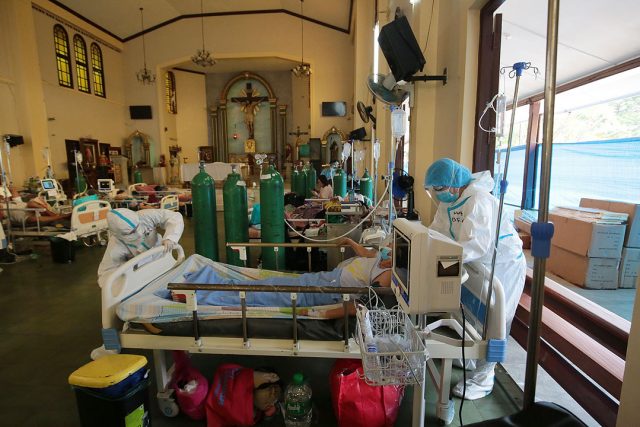
HOSPITALS are hanging on as coronavirus surges come and go, but their long-term health will ultimately depend on finding adequate numbers of staff and collecting on their receivables from the national health insurer, among others.

Just before the August wave, hospitals had a brief respite from the frantic days of the March-April surge, allowing some industry associations to reflect on bigger-picture issues ailing their member-companies instead of being preoccupied with dealing with day-to-day crises.

First, a snapshot of where things stood before the Delta surge hit last month: In Metro Manila, the majority of cases was judged to be mild, not requiring hospitalization but merely isolation. But the August surge, thought to be caused by the more easily-spread Delta variant of coronavirus disease 2019 (COVID-19), threatened to overwhelm hospital capacity once again.

Speaking at a Zoom meeting in June, before the Delta surge, Private Hospitals Association of the Philippines, Inc. (PHAPi) President Jose Rene D. de Grano said: “The moderate and severe cases are the ones that are placed in the hospital beds in Metro Manila. More or less, right now it’s around 5% or less than 5% of the total active cases so there is not much.”

At the time, cases in the Visayas and Mindanao were increasing. “They were having the problem that NCR had (in March and April).”

Despite operating under pandemic conditions for over a year, hospitals were still having a problem with manpower, according to Philippine Hospital Association (PHA) President Jaime A. Almora.

Financial problems have also been exacerbated by the nonpayment of coronavirus claims by the Philippine Health Insurance Corp. (PhilHealth), he said.

“But we are coping,” Mr. Almora said in a phone interview, noting at the time that the pause in the coronavirus surge was allowing regular patients to come in for treatment.

This category of patient had largely been shut out by the pandemic because hospitals were swamped dealing with emergency respiratory cases, which required extra care in handling as well as expenses. Staff were also rotated to minimize their exposure, and had to be taken off duty if they tested positive.

Health department epidemiology bureau director Alethea de Guzman said in an online briefing in July that before the Delta surge in August, Philippine infection rates fell by 9% in the two weeks ending on June 26 while the average daily attack rate (ADAR) — new cases divided by population — was at 5.24.

Metro Manila at the time was also classified as low-risk with coronavirus infections declining by 26% in the same period while the ADAR was at 5.01.

Coronavirus cases in Luzon had been falling except for the Cordillera Administrative Region, Ilocos and Mimaropa, the Health department said.

Cases in Eastern and Western Visayas were rising, while Central Visayas plateaued after a sharp decline, according to Ms. De Guzman. Cases in Mindanao had been falling except for the Davao region, where the trend was inconsistent.

However, the Health department flagged the Eastern Visayas, Western Visayas, Davao region and Soccsksargen as “high-risk” at the time. Davao region had a high healthcare utilization rate and critical-risk intensive care utilization rate, while Western Visayas and Cagayan Valley had high-risk ICU usage rates.

Nationally, bed occupancy was at 46.1% out of the total 35,143 beds in 1,272 facilities as of June 30. A total of 870 facilities were at safe levels or less than 60% occupied, 88 were at moderate or 60-69% occupied, 110 were classified as high-risk or 70% to 84% occupied and 148 were critical, according to the DoH’s tracker website.

A total of 55.98% of 3,421 intensive care unit beds were occupied. Around 46.15% of 19,524 isolation beds were occupied, and around 43.3% of 12,198 ward beds were used.

The National Capital Region (NCR) reported a 37.7% occupancy rate during the pause between surges. Of the 159 facilities, 132 were at safe levels, six moderate, 11 high-risk and eight critical.

PROBLEMS, RECOVERY
Mr. Almora said the number of available nursing staff is falling due to migration and a preference for working in government hospitals.

Mr. De Grano said the number of nurses in private hospitals even before the pandemic had decreased by around 30% to 40%. “There are no available nurses right now because nurses went to the government facilities because they are offering higher salaries.”

Some were afraid of contracting coronavirus and expressed a preference for work in parts of hospitals that were less exposed, he said.

“We are used to working under stress under pressure, but the situation is far from normal,” according to Mr. Almora of the PHA.

Mr. Almora said hospitals will recover as long as problems do not pile up to the point that they are overwhelmed. He added that much depends on the national insurance agency, which has “absolute and total control” over hospital claims for treating COVID patients.

“We hope to recover (with the admission of) non-COVID cases. But the hospitals that have admitted COVID cases have used a lot of resources. So hopefully, babayaran ng PhilHealth ng tama (PhilHealth needs to do right by them with prompt payments),” he said.

Mr. De Grano of the private hospitals’ association also cited the cash crunch caused by the payment delays and the drying up of non-COVID cases.

“Private hospitals do not have subsidies like government facilities. So, they rely mainly on patients coming into the hospitals, from the admission of patients and their payments and for the services that they are using in the hospital.”

He said that some hospitals have availed of a debit-credit payment method (DCPM) scheme for their PhilHealth beneficiaries, but the reimbursement rate is “not enough,” claiming a yield of only around 35-36% instead of the 60% promised.

Some preferred to go through the normal process of filing claims which he estimated takes at least 60 days. Mr. De Grano added that payments for 2021 are being released but some hospitals are still complaining that they have not received payment for coronavirus claims for 2020, saying about P20 billion has yet to be reimbursed.

Senator Maria Josefa Imelda R. Marcos in a statement in late June said her office received complaints of at least P26 billion in claims that remain unpaid to private hospitals. She added that the DCPM did not cover unpaid claims from last year and the 60% target amount was not fully settled, citing one private hospital, which received only P430 million out of P1.2 billion in claims, a recovery rate of 36%.

“Complaints reaching our office show that at least P26 billion remains unpaid to private hospitals, while government hospitals are still owed hundreds of millions. Let’s not wait for them to shut down nor leave them ill-prepared to deal with the possible spread of the dreaded Delta variant,” she said.

Ms. Marcos added that hospitals also raised concerns over an online ledger known as the Reconciliation Summary Module, to which hospitals and PhilHealth subscribe. The system allegedly shows that PhilHealth has paid even when the amounts have not yet been deposited to hospital accounts.

PhilHealth on April 8 issued a circular concerning the DCPM, in which it committed to paying 60% of healthcare facility receivables, subject to a 2% expanded withholding tax for eligible private entities.

It was to pay the remaining 40%, also subject to 2% expanded withholding tax for private facilities, “following full compliance with existing claims processing requirements and procedures and full reconciliation of the 60%” initially paid.

This followed an order from President Rodrigo R. Duterte to the state insurer to fast-track the payment of hospital claims.

Initially, the payment method only applied to hospitals in Metro Manila, Batangas, Bulacan, Cavite, Laguna, Pampanga and Rizal. This was then expanded to high and critical-risk areas.

In a Facebook post on June 9, PhilHealth said P6.2 billion had been disbursed to 203 public and private healthcare facilities under the DCPM, 114 of which were from the capital region. The payment method is applicable to claims from between March 8, 2020 and April 7, 2021.

The DCPM does not include claims that are tagged as returned to hospitals, denied, endorsed to the Legal Department for further investigation and those paid as of April 7, according to the post.

PhilHealth recognizes the importance of paying the claims to the ability of hospitals to operate, PhilHealth Vice-President for Corporate Affairs and spokesperson Shirley B. Domingo said.

“PhilHealth reimbursements are important… Malaki na ang nako-contribute ng Philhealth sa mga cash flow… ng hospitals (PhilHealth accounts for a major part of their cash flow),” she said in a phone interview.

Ms. Domingo said there are many reasons for delayed payment releases, citing issues in claims processing, which sometimes result in “returned to hospital” claims due to deficient documentation.

The lockdown has also affected operations.

Naapektuhan din kami sa pandemic on our part because marami rin nagkasakit sa amin ng pandemic, na-quarantine because of exposure and all that (We were also affected by the pandemic. Many of us got sick or were quarantined). Right now, many are still… working from home, but they continue processing the claims,” she said.

Ms. Domingo also questioned the claim that the DCPM is not yielding sufficient payments, saying that the regional offices have to reconcile the amounts with hospitals to account for claims that are returned to hospitals or denied.

“That’s why our regions are doing reconciliation with the hospitals on the actual amounts payable,” she said.

She said PhilHealth is monitoring the turnaround time of the regions and has found that some meet the 60 days’ deadline for regular processing.

Iba-iba ang turnaround time kasi per region, lalo na smaller regions, mabilis mag-process ng claims, so depende ’yun sa region (Processing times vary, especially with smaller regions, which are faster)” she said.

OVERWHELMED
Mr. De Grano said that everyone should be prepared for some kind of epidemic, but the situation with the coronavirus “went to a magnitude that we cannot really handle.”

“They (hospitals) were overwhelmed by the magnitude of this pandemic,” he said.

“Lessons learned here is for the hospitals to really save… you cannot rely on PhilHealth or the government to pay you,” he said, noting that it takes 60 to 120 days for PhilHealth to pay up in general, with further delays for coronavirus cases.

He said that a year’s delay in the release of claims is not survivable for small hospitals. Some hospitals had to downsize or reduce working hours to avoid layoffs, while others took out bank loans to survive.

Mr. De Grano said the government is trying to balance its priorities between reviving the economy and dealing with the public health emergency.

He said a sense of complacency has set in when it comes to following the minimum health protocols.

“I think if… we are able to vaccinate a majority of our people, then we will no longer get into a situation where the hospitals are overwhelmed,” Mr. De Grano said.

VACCINATION
Mr. De Grano said the speedy rollout of vaccines will be key in heading off surges.

“If are able to do that, and then if we attain what herd immunity, even for 40% of our population, I think that will be a big, big help to our healthcare system. Eventually, we will be able to overcome this pandemic,” he said.

As of Aug. 5, around 23.2 million vaccine doses had been administered, with 10.7 million fully vaccinated.

Mr. Almora also said broader vaccination will help hospitals recover.

“That is the only solution,” noting that prevention is the best approach.

Building on the momentum of success at the Tokyo Olympics

By Michael Angelo S. Murillo, Senior Reporter

The 32nd Summer Olympics in Tokyo turned out to be an edition to remember, with the multi-medal haul, including a first gold, a watershed moment for Philippine sports.

As the pandemic-hit Olympics drew to a close on Aug. 8, the Philippines held joint 50th place in total medals won — boosted by the gold won by weightlifter Hidilyn F. Diaz — a far cry from previous Olympiads in which the country hardly figured in the race.

The Philippines also won two silver medals (Nesthy A. Petecio and Carlo Paalam) and a bronze (Eumir Felix D. Marcial) from the boxing team.

It was the first multi-medal showing for the Philippines since the 1932 Olympics in Los Angeles, where the contingent brought back three bronze medals.

“Well, definitely this speaks volumes about our capacity in terms of sports performance at the elite level. The road was not easy for the Philippines but I think because of the positive things that happened in the previous years, this was the result of it,” said Francis Carlos B. Diaz, a national team coach and dean of the University of the Philippines College of Human Kinetics, in an interview with BusinessWorld.

The UP dean believes the partnership between the government and private institutions, the effort to give elite athletes access to international training and competition, and providing for the athletes’ needs helped contribute to Team Philippines’ success.

He also noted the athletes’ determination to do well in the Olympics, which almost did not happen because of the pandemic, and “extrinsic motivations,” in the form of incentives both in cash and in kind.

“Every Olympics we qualify some athletes and we’re always hopeful. But we saw (results) from Day One and it’s truly inspirational to the Filipino nation. And it’s not just the winners but everyone who competed there,” he added.

Mr. Diaz, who served as the chef de mission for the Philippine delegation to the Tokyo Paralympic Games, also in August, said the Philippines’ breakthrough showing in the Olympics should be taken a starting point for future campaigns in order for the progress made not be wasted.

He said at least two areas within his area of expertise are likely to be impacted by the recent Olympic success — academic and administrative.

“As an academic, as a PE (physical education) teacher, this gives us hope to really motivate and provide our students with the best programs possible for them,” he said.

Mr. Diaz said appreciation for physical activity must start at a young age.

He said PE in the grade school level is currently allotted 40 minutes a week, since it is lumped under MAPEH (music, arts, physical education and health), which he believes will not do.

“If you look at the countries with a lot of medals, all of them start at a young age. Physical activities take place every day as provided by their schools’ PE programs. So we have to have a new (approach to) that,” Mr. Diaz said.

Administratively, meanwhile, the country’s sports leaders are recognizing the lessons from the Tokyo campaign.

“One standout lesson from Tokyo was the importance of providing holistic support to our national athletes,” he said.

The Philippine Sports Commission (PSC), per the data it provided, has released some P2 billion since 2017 for the national team, covering, among others, the foreign exposure of the Olympians and those who vied for Olympic spots.

The gold medalist, Ms. Diaz vouched for how steady support for athletes goes a long way.

“So that we can win more gold medals, the athletes need all the support they can get. I hope our sports officials have realized that,” she said during an online forum by the Foreign Correspondents Association of the Philippines.

Ms. Diaz went on to say that support should be in tune with the times and suited for what athletes truly need, and not just an exercise in saying that “support was given.”

“They should look at what the athletes really need, what works at the present. Sports leaders should not settle for just what they know, they have to make an effort to learn and take note as well of the needs of a particular sport or an athlete,” she said.

The message has not been lost, with the PSC acknowledging that the road to Tokyo could serve as a blueprint.

“One aspect is the preparation of the athlete, not just talent or having an excellent coach. They also need extensive international exposure, and the PSC spent an enormous amount on these athletes for that,” PSC Chairman William I. Ramirez said in a media forum.

Mr. Ramirez cited Ms. Diaz’s team, collectively known as “Team HD,” as one example.

For the Tokyo Olympics, Ms. Diaz had two coaches for weightlifting and strength and conditioning, a sports nutritionist and a sports psychologist, and also practiced yoga as part of her training. She said the support helped her face the challenges she encountered along the way.

And seeing the result, Mr. Ramirez said the PSC is inclined to continue on such a tack and add to it moving forward, saying: “It gives everyone more impetus to plan and start their preparations.”

Mr. Ramirez said the PSC will soon meet with its counterparts in the Philippine Olympic Committee to discuss the direction they will take, including the need to ask for more funds from the national government and more scientific training for the athletes.

Mr. Ramirez said the blueprint for future competition includes the next Olympics in Paris in 2024 and beyond, as well as other international competitions like the Southeast Asian Games and Asian Games.

PRIVATE SECTOR
UP’s Mr. Diaz said for sustained development and success, private institutions must be continuously encouraged as the government cannot do it alone.

He believes with Olympic success, private companies have an enhanced appreciation of what Filipino athletes are capable of, given the proper support.

The partnerships that national sports associations (NSAs) struck with private companies did wonders.

“Private sector support was very critical,” Mr. Diaz said.

He said sports organizations, and even athletes themselves, must present a compelling case to entice private groups to come on board.

“The NSAs have to exert the effort for the private sector to buy into their respective programs. They have to show they are guided by the right principles, governed properly and have a well-thought-out program,” he said.

Officials of the MVP Sports Foundation, Inc. (MVPSF) agree.

“This is a collective effort —the athletes must perform better because we can only go so far in terms of support,” MVPSF Chairman Manuel V. Pangilinan said in a television interview.

“We’re enablers only but the guy who lifts the weights, the guy who goes to the boxing ring, the guys who go to the basketball court, they must perform because that’s on them, we can only do so much. So they must perform better and they must win because it generates its own virtuous cycle,” he added.

The MVPSF, established 10 years ago, has been in many ways the public face of corporate support for sports. One of its goals has always been to help the Philippines win its first Olympic gold medal.

Since its inception, the organization has poured in at least P2 billion, apart from personal investments made by its officials.

In Tokyo, MVPSF was well represented as the majority of the athletes who competed were supported by the foundation in one form or another, including Ms. Diaz and the boxing team.

Seeing its efforts make significant headway, the MVPSF is now more determined to continue what it started.

Its plans now include establishing a Center for Sports Excellence, converting a 15-hectare property where the First Pacific Leadership Academy currently stands in Antipolo City to a sports center.

“It already has the hotel facilities there, rooms, and then space to build badminton courts, boxing gyms, basketball courts. And we’ll have sports psychologists, trainers, coaches living there as well, so it will effectively be a National Sports Center,” Mr. Pangilinan said.

Mr. Pangilinan is proposing an organization, Philippine Business for Sports Development (PBSD), to further augment private sector support for Filipino athletes.

“Scale of support will likely escalate and I think we should open up,” Mr. Pangilinan said.

“We should have a Philippine Business for Sports Development, invite major companies, sponsors, that might be willing to support,” he added, taking note of its impact on the training of elite athletes and grassroots sports initiatives.

More private sector support is something Skate Pilipinas, the federation for skateboarding, would welcome.

“Aside from having more skate parks, having clinics in different parts of the country to bring the sport to more people, to certify more coaches and judges, and hold events are very important to grow the sport. To help us do that, we will need the help of the private companies and sponsors,” national team coach Dani Garcia said at a media roundtable.

Skateboarder Margielyn Didal made history after competing in skateboarding in the sport’s Olympic debut in Tokyo. She finished seventh in the finals.

To be discussing Olympic success and catch a glimpse of potential upside moving forward is a welcome change, Mr. Diaz, expressing hope that all stakeholders work together to sustain the gains.

He said challenges still lie ahead, especially with the pandemic still very much a factor, but he believes collectively the community can manage the difficulties.

“There will be difficulties, of course. But I think during this pandemic, everybody learned how to adapt to the new normal. We just have to continue finding ways to help our athletes advance and Philippine sports in general. We have raised the bar in Tokyo and it’s going to be a big letdown if we do not follow up on that,” Mr. Diaz said.

Mr. Pangilinan, for his part, said whether in life or in sports, people must forge ahead.

“The essence of sports is to face up to the challenges and proceed with it. That’s the lesson for us,” he said.

A resilient food supply starts with modernization

JCOMP-FREEPIK

Aside from farming, upgrades also needed for logistics, incentives

By Kyle Aristophere T. Atienza, Reporter

When many parts of the country, including some of the biggest markets, went into lockdown in March 2020 to contain the coronavirus outbreak, farmers, even the ones outside the quarantine zone, had to dump their crops by the roadside for lack of a way to bring the produce to where the buyers were.

Later on, the community pantry movement sprang up, primarily as a means of providing free food to those in need, and incidentally offering itself as a potential solution to food waste.

The two incidents, some months apart, one gloomy and the other heartening, both paint a picture of food insecurity, a long-running problem that has stumped those who govern, and plagued those who regularly must do without.

According to a rapid nutrition assessment survey conducted by the Department of Science and Technology-Food and Research Nutrition Institute between Nov. 3 and Dec. 3 last year, more than half of all Filipino families had experienced moderate to severe food insecurity during the crisis.

Of the 5,717 households surveyed, just under 72% were forced to borrow money to obtain food, while 66.3% asked for food from their relatives, neighbors, and friends. The survey found that 56.3% of respondents reported having problems accessing food during the community quarantine period due to a lack of money (22.1%), limited public transportation (21.6%), loss of livelihood (19.5%), and limited food stores (10.8%). It added that 5.1% of the respondents were seniors who had no other family members to buy food for them.

The pandemic disruptions affected nearly every aspect of the agro-food system, particularly the farming and fisheries industries, which employ about 30% of the workforce. Now the question is whether the disruptions may have made it more difficult for countries like the Philippines to achieve their development goals.

The fear is that the interplay of the coronavirus and other external shocks, as well as overarching issues such as climate change and population growth, may have clouded the outlook for one of the fundamental functions of an economy, which is to provide food in order for people to sustain themselves.

The Philippines has no choice but to make its food systems more resilient to future shocks, said Ayn G. Torres, an agricultural economist and a researcher at World Agroforestry – Philippines.

“A resilient food system should ensure that the supply is accessed equitably at reasonable prices, while (ensuring) fair income and livelihoods for our farmers and producers,” she said.

DIGITAL SOLUTIONS AND BIG DATA
Ms. Torres said the digitization of the value chains “can be considered one of the long-term measures” to make the food system more resilient and adaptive to the changing environment.

Bringing supply to where the demand is has become challenging during the pandemic, Ms. Torres said, noting that digital solutions have mitigated the disruption somewhat, enabling producers and consumers to interact more directly, thereby keeping markets functioning.

Online platforms that connect producers to buyers sprouted during the crisis when the ability to conduct face-to-face transactions was compromised. In March 2020, social enterprise Agrea launched an online ordering service linking consumers in the capital region with farmers.

“Our COVID-19 experience has seen a digital shift in our economic transactions,” Ms. Torres said. “Similarly, we can start rethinking our supply chain through this lens.”

“One thing we have to note is that the food chain consists of different nodes where multiple actors play a role,” she added.

Ms. Torres said emerging technologies can address bottlenecks in productivity and post-harvest handling, improve market access and management during lockdowns, ensure food security, and strengthen climate resilience.

Big data will play a major role in making the value chain more efficient and responsive, she said. When so enabled, farmers will be empowered to make risk-based decisions based on the best information available about growing methods, inputs, and markets.

The killer apps for big data in agriculture are tools for achieving unprecedented precision in where and when to farm or what to plant; and greater accuracy in prediction, facilitated by satellite imaging to give farmers the ability to make climate-sensitive decisions. Big data can tease out rainfall patterns and water cycles, making for actionable forecasts.

Drones can also be used to monitor the health of crops and the land even during rainy days. Real-time data from these tools can also lead to more informed decisions about the effective use of fertilizers, in the process improving yields while reducing their environmental impact.

The United Nations Food and Agriculture Organization (FAO) estimates that the application of fertilizer in the Philippines grew 1,000% between 1961 and 2005, which means the practice is now fairly widespread, making the main problem how fertilizer can be used to greatest effect.

Another key input, pesticide, is also likely to be put to better use with the help of big data, which can help determine “what pesticides to apply, when, and how much,” according to Talend, a French software company.

“Big data can truly revolutionize the agricultural sector only by having a cloud-based ecosystem with the right tools and software to integrate various data sources,” Talend said. “These tools should be able to consolidate data on climate, agronomy, water, farm equipment, supply chain, weeds, nutrients, and so much more to aid the farmer make decisions.”

Ms. Torres said big data can address supply chain problems by “improving the coordination systems for food logistics.” These tools can also be used by farmers to study the impact of border closures and other logistics challenges, she added.

Innovation in finance also means farmers can gain greater access to credit, while social protection mechanisms can reach them more readily, Ms. Torres said.

The digitization of the credit evaluation process now features the employment of algorithms to map crop sustainability, enabling lenders to anticipate the issues faced by small-scale farmers and “understand how risky a farmer’s production is,” Roy Parizat and Heinz-Wilhelm Strubenhoff of the World Bank said in an article published by the Brookings Institution.

The process of onboarding farmers for financial services can be streamlined into a mobile phone-based application to reduce transaction costs, they said.

“The capacity of the state’s ICT (information and communications technology) should beready to adapt to shifts in the food system,” Ms. Torres said.

The digitization of agriculture and its supporting ecosystems will require, among others, strong partnerships involving governments, businesses, and farmers, as well as a regulatory environment to ensure that technology remains affordable and accessible, Gilbert Fossound Houngbo of the International Fund for Agricultural Development said in a commentary published by the World Economic Forum.

“The private sector should be encouraged to advance, adopt, and re-engineer technologies for, and in collaboration with, small-scale farmers,” he said. “Investing in digital agriculture today offers the promise of a quadruple return.”

“Even before the pandemic, the economic opportunities that digital markets offer have been enormous,” said Arsenio M. Balisacan, chairman of the Philippine Competition Commission (PCC) and the government’s former chief economic planner.

Due to the considerable market power of some digital platforms, “monopolization and abuses of dominance are high risks, as demonstrated by some recent cases in the US, EU, and even the Philippines,” he said.

With the acceleration of the digital shift, it has become even more crucial for the PCC to be “vigilant in monitoring developments in digital markets and boost its technical capacity to safeguard competition in these markets,” Mr. Balisacan said.

Doing so will protect consumers and small businesses who depend more on these technologies and maximize the growth potential of the digital economy, he added.

“As we know it, ensuring competitive processes will build a robust foundation for sustained and inclusive growth, which is necessary for the strong recovery of our economy.”

ADDRESSING POST-HARVEST LOSSES
In properly-functioning food markets, where information flows freely and where there are no barriers to entry and to the movement of goods and services, goods will naturally flow from areas with surpluses to areas experiencing shortages, Mr. Balisacan said.

But the Philippines is still far from achieving that. Chief among the problems inherent in getting from point A to point B is ensuring that enough of the crop survives in order to be sold.

Postharvest losses of major farm commodities in the Philippines range between 10 and 50%, according to the Philippine Center for Postharvest Development and Mechanization.

“In the Philippines, postharvest losses of commodities represent a very significant loss…” it said. “This means that 10 to 50% of all the land, inputs, and labor used to produce the commodities go to waste. And it also means that all of us… have a lot of work to do.”

The global average for postharvest losses is around 14%, according to the FAO. In all production stages, about one-third of the world’s food is wasted, it said.

To address such waste, sensors can be deployed to measure properties of fruit to determine their readiness for delivery to various destinations, according to a study by Jean Frederic Isingizwe Nturambirwe and Umezuruike Linus Opara, postharvest technology experts at South Africa’s Stellenbosch University.

The data generated by the sensor data can then be reflected in packaging materials to provide indications of their state of freshness. These sensors can also send data to a command center that can be accessed by both producers and consumers.

Investment in cold-chain facilities and equipment that processes produce on-site or as near to the production areas as possible can also cut food waste and ensure that there is sufficient food dispatchable to areas experiencing food insecurity, Ms. Torres said.

“It is important to boost postharvest support while there are bottlenecks in the supply chain and there are extreme disruptions in the mobilization of supply,” she said.

Such investments will increase the likelihood that surpluses can be moved to areas suffering from shortages and to “prepare (for) seasons of the year when supplies are low,” according to Michael L. Ricafort, chief economist at Rizal Commercial Banking Corp.

“Processing facilities would enable much longer shelf life for manufactured agricultural products that could also be sold locally as well as in export markets,” he said.

The private sector and government should also collaborate in putting up common warehouses accessible to rural farms and linked to digital ledgers, giving farmers access to multiple markets while reducing marketing costs.

OVERCOMING THE DIGITAL DIVIDE
Emerging technology and digital infrastructure designed to streamline the supply chain may have unintended consequences and negative trade-offs, said Terry L. Ridon, convenor of infrastructure think tank InfraWatchPH.

Many Filipinos still cannot access internet service of sufficient quality, and may not even know how to use it. The digital divide can create information asymmetries that could do more harm than good. Meanwhile, weak data management can lead to the misuse of farmers’ business and personal information.

Mr. Ridon said the government needs to accelerate public access to digital and physical infrastructure to avoid such information asymmetries, which could further disenfranchise the already marginalized members of the agro-food system.

“Governments need to define what truly matters in reforming the agriculture sector,” he said, noting a need to determine “which technologies are most appropriate to implement in this sector.”

“It is our view that what matters the most is ensuring the best and fairest prices to both consumers and producers,” he added.

The pandemic is forcing the world

REUTERS

to reconsider its relationship with the built environment

By Patricia B. Mirasol

“Now is the time to rethink what we want city centers to be like, to repurpose prime urban real estate for mixed use, and build urban areas with a focus on community, accessibility, inclusion, and sustainability,” said Paul D. Priestman, founder and chair of PriestmanGoode, a design consultancy out of the UK that counts Airbus SE and Hong Kong’s Mass Transit Railway as its clients.

“I’m personally interested in opportunities for designers to work with local governments and cities to regenerate and repurpose spaces to be more people- and planet-focused.”

For architect and urban planner Felino A. Palafox, Jr., tactical urbanism is the way to go. “We’ve gone from green to greed to gridlock,” he told BusinessWorld in a Zoom call. “We need more open spaces, and interconnect this fragmented metropolis…with more pedestrian bridges, more waterfront promenades, more bike lanes.”

Mr. Palafox noted that Mayor Josefina “Joy” Belmonte-Alimurung of Quezon City has started practicing tactical urbanism, which is an approach to neighborhood building using short-term, low-cost, and scalable interventions for long-term change.

“Mayor Belmonte is doing tactical urbanism, just like the lady mayor in Paris is doing to make Paris a 15-minute city,” he said, referring to an urban design approach that aims to improve quality of life by creating cities where everything a resident needs can be reached within 15 minutes by foot, bike, or public transit.

The Quezon City government, according to Mr. Palafox, is collaborating with the private sector to interconnect the various parks in the city (La Mesa Ecology Park, MWSS-Balara Park, Ninoy Aquino Park, and Quezon Circle Park) with walkways and bicycle lanes. All parks were master planned by Palafox Associates.

“I really like how the LGUs (local government units)and National Government agencies put in the effort in understanding the needs of bike commuters,” said King Emmanuel C. Filart, co-founder of bike advocacy group Cycling Matters, commenting on the improved quality of bike lanes in the country. “These collaborative efforts look very promising.”

Mr. Filart noted, however, that there is still “a bit of doubt whether these wonderful changes are here to stay.” Some similar efforts in the past, he said, have been in the spirit of “masabi lang na mayroon (for the sake of compliance).”

This mindset has given rise to the broken bollards, fallen bike lane barriers, missing traffic signs, and faded road paint that we live with today, he told BusinessWorld.

ROBOTS AND UV LIGHT
The coronavirus has pushed health and wellness to the top of the priority list when it comes to design briefs. Solutions such as elevator air purifiers and self-disinfecting handrails are already available locally for companies to achieve this end.

In Laguna, sanitation robots are used in an automotive manufacturing facility to clean surfaces and the surrounding air. The Keno UV-C robot, according to its manufacturer Robotic Activation, Inc., uses ultraviolet (UV) radiation to kill pathogens.

The UK also widely uses UV cleaning in aviation and urban transit. “In London, for instance, over a quarter of the escalators on the London Underground network have already been fitted with UV light sanitizing devices, which clean the handrails continuously throughout the day,” Mr. Priestman said.

There is also a resurgence in the use of natural antimicrobial materials — like brass and copper — for their aesthetic and hygiene properties, he told BusinessWorld. PriestmanGoode is working with suppliers on self-cleaning materials with built-in anti-microbial properties, and working towards making these certifiable for transport.

A GREENER WORLD
The post-pandemic world will also be more sustainable — as consumer sentiment from surveys show that more people are paying attention to how their individual choices impact the environment.

This move toward green is reflected on a larger scale by industrialists like San Miguel Corp. President Ramon S. Ang, who is planning future airports and road networks with sustainable infrastructure in mind.

At the individual level, there’s Carvey Ehren R. Maigue, a Filipino inventor who won the first James Dyson Award for Sustainability in 2020.

Mr. Maigue, who studied electrical engineering at Mapua University, found a way to convert a plastic-like material from rotting produce to create renewable energy. He is now working with a European car manufacturer and a ship builder in the Asia-Pacific to incorporate his invention for their windows and hulls, respectively. A partner company is also looking into integrating Mr. Maigue’s technology with the power systems of a building.

LGUs that aspire to be smart cities, Mr. Palafox added, need to understand what that definition also entails.

“A smart city has smart technology, but smart technology is only a tool for good governance,” he said. Cities that convert designated open spaces into concrete structures, and cities that have corruption embedded in their business processes, he pointed out, cannot be considered smart.

FOR THE OLD AND THE POOR
The United Nations says that by 2050,one in six people in the world will be over the age of 65. “Think about designing for your grandmother or grandfather. When designing a new product, ask: can they use it? That’s what we need to constantly reference,” said Mr. Priestman in a B-Side episode.

Aside from making room for the elderly, the post-pandemic world should also make room for the marginalized. People who live in cramped, poorly ventilated living spaces are more susceptible to infectious airborne diseases bedeviling the world now, like coronavirus disease 2019 (COVID-19) and tuberculosis.

As Dr. Marve Duka-Fernandez, who is coordinating a project in Tondo for Médecins Sans Frontières(Doctors Without Borders) said: “There are no two ways about it: they need to live in better housing! People left to live in such conditions will always be at high risk for recurring infections.

Mr. Palafox, for his part, talked about long-term vision by comparing the fate of blueprints in Dubai, where he worked as a 27-year-old senior architect and planner for the government of Dubai, and Manila.

“We were already designing the largest airport, the largest man-made harbor back in the late 1970s,” he said. “That’s why I call my plans in Dubai ‘snapshots to the future,’” because I knew (the leaders) would implement them.”

Plans for Manila, on the other hand, are “postcards from the future,” because of the uncertain timeline as to when — or if — they will be implemented. “I like paraphrasing Winston Churchill: we shape our environment, then our environment shapes us,” Mr. Palafox said.

NFTs as the future of digital entertainment

REUTERS

By Brontë H. Lacsamana

PRIOR to the pandemic, barely anyone knew of non-fungible tokens (NFTs). These digital assets — like bitcoin and ether — are traded using blockchain technology. But unlike cryptocurrencies, they are unique (hence non-fungible).

NFT art and gaming items use digital certificates to authenticate rare online assets and track their movements. This concept, a novelty for most people, has seen an influx of activity from artists and gamers who have learned to utilize the technology to their advantage.

NFTs gained mainstream awareness thanks to the Beeples of the world, whose digital artworks were auctioned off for millions of dollars. Local artists, too, have capitalized on this new venue for selling their work, albeit at more modest prices.

“Having a marketplace where digital art could be traded like physical art is a crazy idea, honestly. It’s awesome to have an exchange of value for your art,” said Peter Corazo, a Cebu-based artist known online as xlvrbk (pronounced Silverback), who sells his 3D and virtual reality (VR) pieces as NFTs on the blockchain.

With guaranteed ownership and authenticity, plus a purely digital nature, NFT art attracted people like xlvrbk, who then found communities in Twitter and Discord. These digital spaces, tight-knit and constantly up to date, gave artists options outside the traditional industry path, with art collectors directly contacting artists online.

GAMING SCHOLARS
On the gaming side, the Philippines became a hotspot for blockchain-based games due to people seeking out alternative income during the pandemic. In a play-to-earn game called Axie Infinity, players purchase NFTs in the form of pets called Axies, which they use to win battles and reap items that can then be traded or sold for Ethereum.

A rise in demand in early 2021 triggered a rise in prices, making it more expensive for new players to join. Enter Yield Guild Games (YGG), a decentralized autonomous organization that invests in blockchain games and NFT assets, and loans out Axies to “scholars” who want to learn to play and eventually earn.

NFT earnings from these scholars are split three ways — among the scholar (70%), Yield Guild (10%), and the community manager who recruited and trained them (20%).

As of mid-August, YGG reported that its scholarship program had 4,600 players, coming mainly from the Philippines, Indonesia, India, Venezuela, Peru, and Brazil. Earnings rose to the equivalent of $3.26 million in July, the highest monthly earnings thus far.

INTERACTING LIKE ‘IRL’
NFT communities in the Philippines are being integrated into their “traditional” counterparts.

This May, Art Fair Philippines dedicated an entire section to NFTs, acknowledging the growth of the country’s crypto community. The online edition of the event gave crypto artists a platform to share their thoughts on the development of NFT art.

During the fair’s run, digital artist xlvrbk organized a Filipino crypto VR art show: “It’s easier to organize compared to real-life shows because the logistics are way easier. We had about a dozen artists and a really fun opening night where people showed up at the VR space and interacted with each other, sort of like an IRL (in real-life) gallery,” he said via e-mail.

Both events made up for the inability of artists and art enthusiasts to come together at physical fairs and real-life galleries due to quarantine restrictions. The digital space, with all its innovative possibilities, gave people the chance to browse rooms filled with installations, paintings, pictures, and videos.

A downside to this art scene, however, is burnout. At the fair, the conversation among crypto artists touched on the importance of self-marketing and socializing online in spaces like Narra Art Gallery, an NFT art hub co-owned by Colin Goltra and YGG’s Mr. Dizon, in order to sell their art.

“Putting yourself out there, sometimes that kind of pressure can get to you if you’re not used to things like that,” said Michelle “Shelly” Soneja, an art director for mobile and blockchain game studio Altitude Games, who got into NFT art in 2020. “There’s so much new technology every day, every hour.”

ALTERNATIVES AND OTHER APPLICATIONS
People who want to mint assets — or create NFTs — have several blockchains to choose from. Minting fees, known as gas fees, can cost P2,000, according to the crypto artists on the Art Fair panel.

While Bitcoin and Ethereum are well-known blockchain networks, alternatives like Tezos, Polygon, and Polkadot charge less for minting and have a smaller carbon footprint.

“Just by relative scale, (Tezos) consumes — some estimates put it at — two million times less energy than Ethereum to conduct the same kinds of transactions,” said Marissa Trew, marketing manager of TZ APAC, a Singapore-based blockchain consultancy firm, who explained why “Proof-of-Stake” blockchains like Tezos are more energy efficient than their “Proof-of-Work” counterparts in a B-Side episode.

Though NFTs received widespread attention for art with million-dollar price tags, it’s everyday artists and gamers who are keeping the community alive by turning to the digital space to make a living. YGG went beyond play-to-earn gaming by opening its own market, allowing members to trade digital assets.

By encouraging financial literacy, many have become entrepreneurs themselves by learning to trade assets or find the right timing to invest, said Beryl C. Li, YGG co-founder, in a B-Side episode in July.

For Ms. Trew of TZ APAC, which has invested in the Tezos ecosystem in the region, the blockchain has potential for business-to-business transactions like licensing, supply chain management, and invoicing.

“NFTs have utility far beyond being a digital asset. There’s a large enterprise use case that’s being developed,” said Ms. Trew. “There’s a lot of actual B2B use cases that NFTs are able to provide well beyond the creator economy in the digital space, in terms of music, art, and collectibles.”

Fintech’s key roles in achieving financial inclusion

FREEPIK

By Bjorn Biel M. Beltran, Chelsey Keith P. Ignacio, Special Features Writers,
and
Adrian Paul B. Conoza, Special Features Assistant Editor

ONE OF the most notable shifts seen during the coronavirus disease 2019 (COVID-19) pandemic is the growing use of digital payments. Although cash and coins are still used, electronic wallets and digital services were further appreciated for the conveniences they provide.

This shift was highly driven by a bigger one that the pandemic caused to accelerate — digitalization. In particular, financial technology or fintech has played a much bigger role in connecting consumers with banks, merchants, and other financial services providers.

From the perspectives of consultancies, as digitalization pushed further forward amid the pandemic, fintech’s growth is imminent.

V Ram, vice-president and chief technology officer at Tata Consultancy Services, noted that by enabling more companies and financial institutions to consider digital platforms, the pandemic has pushed digital transformation by several orders of magnitude.

“The pandemic has pushed customers and companies over the digital technology tipping point and transformed adoption for many businesses into a priority. In just a few months, the crisis has accomplished years of digital transformation in most banks and companies by five to seven years,” he said during the first of a three-part BusinessWorld Insights online forum series themed “Fintech for a Financially Inclusive and Resilient Economy.”

He added that new opportunities for the finance sector are opening as most companies across the world has put up at least temporary solutions to meet newly scaling demands, much more than what they thought would be possible.

“As it was, the world continues to enjoy a modicum of entertainment, even if it was not in their regular settings like in the cinema. Trade and commerce also held up pretty well from short-term impacts thanks to fintech. Now is the chance for us to accelerate and take things forward. This is where we see fintech reshape the financial ecosystem,” he said.

Moreover, Frost and Sullivan ICT and Fintech Head Shailendra Soni noted that while the financial revolution started slightly late in the Philippines compared to its neighboring countries, the country will certainly catch up.

“There will be more and more [fintech] services launched [that are] particularly putting consumers and enterprises at the center to make them pay better, save money, invest money, and insure themselves,” Mr. Soni said during the second part of the online forum.

As people are beginning to experience these digital payment services and eventually realize their benefits, Mr. Soni added, the migration to more fintech-related solutions will also start.

“I believe there is going to be infrastructure on the Internet that will become much better. There will be policies, rules, and regulations in place that will further accelerate the overall adoption of fintech. There’s no U-turn; it’s going to grow,” he said.

Alongside such foreseen growth, fintech is expected to perform significant roles in further enabling financial inclusion in the country, empowering businesses, and expanding the access of basic financial services.

Financial experts are seeing in fintech solutions new opportunities to push the country closer to the goal of full financial inclusion, as the first part of the BusinessWorld Insights series tackled.

Bangko Sentral ng Pilipinas Assistant Governor Edna C. Villa said that while enlarging the economic pie is a necessary condition to reach the vision of creating a high quality of life among all Filipinos, it is not sufficient.

“The larger economic pie must be available at least for more, if not for all,” she pointed out.

Such ideals are the foundation for the BSP’s Digital Payment Transformation Roadmap for 2020 to 2023, which seeks to develop a digital payments ecosystem that targets current consumer and business needs to boost digital payments. One of its key targets is expanding the financially included to 70% of Filipino adults.

“We all know that payments is the most basic and most used financial service. Everyone uses it. It stands to reason therefore that there ought to be greater incentive to innovate in the payments sphere,” she said.

The transformation road map includes the acceleration of EGov Pay, the digital government collection system for taxes, licenses, permits, etc., established for secure, contact-free channels for Filipinos to transact with the government.

“The pandemic undoubtedly helped accelerate the preference for digital transactions. We are convinced that the trend will continue even post-pandemic,” Ms. Villa said. “If we are to maintain the momentum, however, we need to be deliberate in innovating to pave the way for greater financial inclusion. For our part, the BSP will continue to provide what we believe is an enabling regulatory environment for fintech innovations.”

Sparky Perreras, co-founder and CEO at digital banking solutions provider PearlPay, Inc., said that fintech companies have an opportunity to position themselves as the bridge to connect rural communities with the greater financial world.

“When COVID-19 struck, the biggest problem in terms of the business challenges for community-based financial institutions is in disbursing the loan proceeds. Because they don’t have the digital channels in place to disburse the loan proceeds for their existing customers due to the lockdown, their business for loans has been badly affected, as loan customers are forced to visit physical rural branches or microfinance institutions just to receive the loan proceeds,” he said.

“That’s one problem that we are passionate to solve by enabling these rural banks and microfinance institutions to join the digital revolution and digital economy.”

Maria Lourdes Jocelyn Pineda, president of digital-only bank Tonik, further emphasized that the country should take this chance to push towards the ideal of financial inclusion.

“The need for financial inclusion has never been better understood as it is in the present. Most economies are radically transformed because of the pandemic,” she said.

Ms. Pineda further noted that as consumer needs have evolved, a pressing need arises for the financial sector to truly embrace customer centricity. “The new normal has efficiently curved the expectations of the banking customers, who now seek and choose institutions that they can entrust their money in a relationship built on mutual trust, transparency and benefits of the customers,” she said.

Furthermore, Ms. Pineda added that the Philippines is in no better position to take advantage of these opportunities, due to the unique characteristics of the Filipino population regarding digital adoption and literacy.

“As the country is the world’s leader in internet and social media usage, we believe that the Philippines is ripe for becoming a real leader in digital banking. To edge closer to a fully digitalized and cashless society, we must begin to listen and to address the customer need for a more inclusive and accessible way in banking that lets them grow their money the way they want to,” she said.

In addition, Lito Villanueva, chairman of FinTech Alliance Philippines, recognized that the fintech industry has been facing and dealing with the challenge of getting more Filipinos banked, especially as the 2019 Financial Inclusion Survey of the BSP showed that the number of unbanked Filipino adults was estimated at 51.2 million, out of a total adult population of 72 million two years ago.

“[W]e have seen this as a welcome challenge for the fintech industry to address this, especially now that going digital became the lifeline of the ordinary Filipinos to survive during the pandemic,” Mr. Villanueva said during the third leg of the online forum series.

He added that the central bank’s vision of a digitally and financially inclusive Philippines, enormous as it may seem, is nonetheless within the country’s reach, “especially with current fintech innovations and solutions being implemented nationwide.”

SUPPORTING LARGE AND SMALL BUSINESSES
Fintech is also seen to serve as a reliable partner for businesses, from big enterprises to micro, small, and medium enterprises (MSMEs), as more consumers make use of fintech through digital services.

During the second part of the BusinessWorld Insights series, Robertson Chiang, founder, chief operating officer, and chief technology officer of online payment platform Dragonpay Corp., observed from its end that the usage of fintech notably increased amid the quarantine that started last year.

“Our transaction almost tripled during this period, which is a reflection of the people changing their habits from physical retail to going online,” Mr. Chiang said.

The trend seemed to be continuing this year, he added. Assuming that their transactions in the first half of 2021 would be the same in the second, it would almost double their transaction count in 2020.

Payment methods also shifted, Mr. Chiang observed. From the 21.1% e-wallet usage in 2019, it leaped to around 64% in 2020 and then around 71% in the first half of 2021.

Similarly, GCash’s Chief Commercial Officer Frederic Levy suggested that as many people continue to use such technology, enterprises should incorporate it in their operations as well.

“It’s getting more and more obvious for any form of businesses — including the small ones up to the big, organized ones — that they need to have [a digital] form of payment proposed to the consumer,” Mr. Levy said.

Moreover, fintech would evidently make payment convenient for the consumers. “So, the question [now] is what reason that would push you not to jump fintech if you are a small business,” he stressed.

As such, Mr. Levy later shared his advice for small and medium enterprises on adopting fintech solutions. “From an MSME perspective, simplicity and onboarding clearly are a critical component because it will look for a provider who can propose you an all-in-one solution,” he said.

“Make sure that you are going after the payment solution that makes sense for your business, and also going for the widest audience possible,” he added.

Similarly, PayMaya’s Chief Product Officer Mitch Padua also suggested that enterprises should look for the widest reach in terms of various payment types since second-guessing what consumers will have is difficult.

“[Look] for a partner that can provide all types of payment, whether it’s online or offline, sometimes your business can have a mix of both. It’s very hard to reconcile if you have different terminals, payment gateways, [and] partners for each type of payment,” Mr. Padua said.

Another thing for MSMEs to look at is competitive rates. “At the end of the day, each partner or payment solution will have different rates, and someone that can help you lend all of those payment types into one simple rate will make your life a bit easier,” he added.

Mr. Padua also noted that the growing presence of these digital payment solutions will be exponential and such growth will be driven by services like theirs as merchant payment is expected to be the next trillion-peso segment.

“Accelerating business to consumer, business to business, and business to government payments is where PayMaya commits to address,” Mr. Padua shared. “Over the short term, we’re coming up with exciting innovations to make sure we can seamlessly enable businesses to send payments to other businesses and individuals by offering solutions that capture settlement, all the way down to disbursement, and to encashment.”

Another factor expected to drive growth is that everyone can now become a digital entrepreneur with the transformation of MSMEs on the ground, he said. “We’ve begun the digital migration of our Smart Padala agents to become a one-stop shop for digital financial services. Beyond remittance, they can now serve as agents for digital payments, digital lifestyle, and digital banking services,” he added.

EXPANDING REACH TO CUSTOMERS
Alongside its role in realizing full financial inclusion in the country, fintech is expected to contribute more to making financial services more accessible to consumers.

During the last leg of the online forum series, executives from industry players noted how their services have started performing these roles. JF Darre, chief data officer and head of financial services of GCash, pointed out that over a third of its users have tapped on its financial services such as credit, savings, investment, and insurance that can be availed right from the GCash app.

He also noted the steady adoption of digital in terms of partnerships with the local government units (LGUs), with over P16 billion worth of social amelioration disbursed to over two million Filipinos through partnerships with LGUs.

“Digital can be part of the solution. It’s a complementary kind of solution in helping [amid] the crisis,” Mr. Darre said, adding that GCash has always focused on making their products accessible and affordable.

Meanwhile, Mar Lazaro, managing director and head of enterprise business and sales at PayMaya, noted that PayMaya’s users doubled in 18 months, with about 62% of new registrations accounted outside Metro Manila and growth coming from the Baby Boomer and Gen X demographics. He also noted that the e-wallet provider makes sure that no one gets left behind by this shift to digital as it serves consumers without a smartphone through PayMaya’s network of over 45,000 Smart Padala agent touchpoints.

As the financial inclusion push moves forward, Mr. Lazaro sees digital hubs within the communities to take a key role.

“Beyond remittance, community hubs such as sari-sari stores serve as bridges to the digital world. Soon, they will be digital agents for banks, e-commerce, and so on, and we’ll see that happening in the next coming months,” he said.

As it aims to expand access to financial services, fintech is also seen to have kickstarted synergy among industry players and other stakeholders.

“We recognize the importance of fintech in enriching our customer experience and promoting seamless, frictionless banking for all 24/7,” Mr. Villanueva of Fintech Alliance said. “Because of this, we believe that technology can help promote synergy amongst all players in the industry.”

Such synergy was evidenced among insurers, whose representatives in the panel shared their recent initiatives in making their products more accessible through fintech partners and other channels.

Zayd Tolentino, chief technology officer of Singlife Philippines, shared that technology helps address the gap between the insured and the uninsured, who are “composed of mainly middle-income families in search of protection products that fit their financial needs and can be easily adjusted when their needs change.”

Yet, Mr. Tolentino added, insurance technology (insurtech) cannot exist without fintech. “You need both technologies working together to disrupt the life insurance industry and deliver protection products that are truly digital.”

Rogie Niño, assistant vice-president and head of business project management office at Insular Life (InLife), considers insurtech as an extension of fintech, particularly an application that heavily touches consumer convenience and experience from the creation and distribution of insurance products to the administration of the insurance business.

Mr. Niño further highlighted that InLife partnered with platforms such as Maria Health and Lazada to make their services more available to consumers. “There are upcoming fintech partnerships that InLife is currently working on — the likes of GLife, Kwik.insure, [and] City Savings, to name a few — which depicts that we’re an active player in this digital ecosystem,” he added.

Mr. Tolentino, on the other hand, pointed out its use of blockchain technology, Application Programming Interface-driven approach, and cloud to make life insurance “totally mobile-first.” He added that their firm built a plug-and-play solution that only needs to connect to the partner’s Know Your Customer (KYC) data and payment platform.

“This plug-and-play solution, or what we call our microservices portal, houses all our protection products and can be integrated into the front end of any digital platform,” he explained. “This cohabitation setup allows a seamless user flow between two platforms without having to switch screens.”

“For any incoming partner, we simply create a partner node and embed our portal within their app so they can offer our products to their customers,” he added.

MEANINGFUL FINANCIAL INCLUSION
While the country has achieved much in its quest for financial inclusion with the help of fintech, much remains to be done.

Rex Gatchalian, mayor of Valenzuela City, pointed out the importance of building an enabling environment for fintech to thrive, which the government — particularly LGUs — should initiate.

“Before we become inclusive, government and LGUs must be able to provide that platform,” he said, pointing out that this “multidimensional issue” can be addressed by ramping up the national ID system and building up the country’s digital infrastructure. The latter, he stressed, heavily depends on internet service providers (ISPs).

“ISPs really have to shape up… It’s more of a private sector initiative in fixing infrastructure,” Mr. Gatchalian said.

Kiranjit Singh, head of the Strategy3 division at market research firm Ipsos, said that financial inclusion must be meaningful.

“We should have meaningful financial inclusion [that goes] beyond just transactions [and enables] the ability of Filipinos to utilize certain several financial tools for their personal growth [and the] growth of their business,” he said.

Mr. Singh added that digital inclusion cannot be the only solution for financial conclusion in the Philippine context. “You still need to have the basic, traditional, physical means of getting more Filipinos to become more financially inclusive,” he said.

He also noted that “financial inclusiveness is one of the greatest enablers for a rising middle class,” and this fact should direct current and future policies that will enable fintech.

“Fintech is actually the best leveler in terms of getting more people to be financially inclusive,” he emphasized.

Along this quest for financial inclusion, the cultivating financial literacy among Filipinos must not be overlooked.

Mr. Villanueva notes the finding in BSP’s 2019 survey that the reasons cited by 88% of mobile phone users who don’t use their phones to perform financial transactions were the lack of awareness, lack of trust, and lack of mobile signal, as well preference in physical transactions.

“To help improve this scenario, a responsive grassroots program on financial education and digital literacy must be launched,” he said, noting that the Rural Financial Inclusion and Literacy Bill and the Use of Digital Payments Bill, both pending in Congress, will deepen roots of financial education and inclusion if they push through.

Moreover, he recommends the integration of lessons on digital finance and fintech in the basic education curriculum; effective strategic communications through the use of alternative and digital media; and the maximization of social media reach and platforms to cultivate financial awareness and literacy and so shape the behavior of Filipinos towards a positive attitude with fintech and financial services.

Mr. Singh of Ipsos, meanwhile, noted the need to educate consumers on the do’s and don’ts of managing accounts and sharing sensitive data.

“Across Southeast Asia, we’re seeing right now the rise of scams or mule accounts. The new generation of financially inclusive [people must] know what they should and should not share with strangers,” he said.


Ensuring quality education in online format

BusinessWorld entered the podcast space in a big way with a new product called B-Side, which allows our reporters to talk at length to their sources above and beyond the day-to-day requirements of spot news reporting. Here are some of the highlights of our podcast year, as well as an index of our notable pods, our own little way of adapting our journalism to the pandemic.

Angelica Y. Yang

The government has failed us — students

The Duterte administration deserves a failing grade for its preparations for the upcoming academic year, says student leader Raoul Manuel. Mr. Manuel, president of the National Union of Students of the Philippines (NUSP), lists the union’s primary demands for the safe reopening of classes amid the COVID-19 pandemic.    

The university of the future: Philippine tertiary education amid the pandemic

In this episode, Raymundo D. Rovillos, chancellor of the University of the Philippines (UP) Baguio, talks about the university’s plans for remote learning. Turns out, the UP System has to play catch up with the likes of Mapua Institute of Technology and Far Eastern University, schools that embraced remote learning long before the coronavirus hit because of Manila’s notorious traffic jams. 

Hospitals and the next coronavirus wave

Vann Marlo M. Villegas

Helping hospitals get ready for the second wave and beyond

Equilife Medical founder Abetina Valenzuela talks about the allocation and management of life-saving equipment — such as ventilators — during a pandemic. There’s a lot of room to grow and improve medical services, and make care accessible. The pandemic has only accelerated the pace at which innovation must take place.

The boost to the sports industry from a successful Olympics

Michael Angelo S. Murillo

The sports industry: down but not out

Rely San Agustin, a sports marketing professional who has been in the industry for more than 20 years, tells BusinessWorld senior reporter Michael Angelo S. Murillo how sports stakeholders are dealing with the harsh reality that getting fans back into the stands will take time. “A bubble setup makes sense,” said Mr. San Agustin. “Seclusion is needed. You really have to control movement in and out of the venues.”

Hitting the gym: how the local fitness industry is dealing with the coronavirus

Gab Pangalangan, marketing manager of UFC Gym Philippines, fitness coach and founder of combat sports website Dojo Drifter, explains how gyms are dealing with the pandemic and what lies ahead for them. He discusses why gyms see themselves as essential businesses and how even a “high-touch” industry like physical fitness is moving to digital.

How brands have learned to personalize their product offerings using data

Patricia B. Mirasol

Selling it: lessons in cross-border e-commerce

Anchanto, a Singapore-based automation and logistics platform, projects that cross-border e-commerce in the Asia-Pacific region will grow to $1.5 trillion by 2023. The Southeast Asian market — which has the highest number of young people with internet access — is expected to account for 40% of this trajectory.

Vaibhav Dabhade, founder and chief executive officer of Anchanto, explains how local micro, small, and medium enterprises or (MSMEs) can compete against established brands in the online marketplace.

How the hospitality industry pivoted after losing international tourists

No vaccine, will travel?

While the Philippines waits for vaccines, hotel operators — and other stakeholders — are finding ways to assure people that it’s safe to venture out. “We’re still hopeful that we can rely on local travel but it will take time. We need to get people back on their feet,” said Cinty R. Yniguez, director of sales and marketing at Seda Vertis North. “A lot of destinations have been successful at reeling in travelers and [helping them] surpass their anxiety and paranoia.”

The future of jobs

Patricia B. Mirasol

Looking for a job in a down market

Career coach Caroline Ceniza-Levine says that the coronavirus is not the end of your career. She gives practical advice, from tips on how to handle online interviews to the two main skills that you have to be thinking about if you’re looking for a job.

A global path yielding towards recovery

By Chelsey Keith P. Ignacio, Special Features Writer

EVEN BEFORE the coronavirus disease 2019 (COVID-19) pandemic began to plague industries from the past year, significant issues such as the financial crisis of 2008-2009 and the ongoing trade and tariff tensions had impacted manufacturing.

By early 2020, when the pandemic limited business operations and closed international borders, critical impacts were felt on the manufacturing sector. China and other East and Southeast Asia countries experienced the effects by the first quarter while the rest of the world recorded production losses in the second and third quarters.

A year over in the COVID-afflicted world, global manufacturing production is on its path to recovery in the first quarter of 2021, according to the latest United Nations Industrial Development Organization (UNIDO) quarterly manufacturing report. The speed of recovery, however, varies on country and industry groups.

After the 6.8% drop in the manufacturing output due to the early impacts of COVID-19 a year ago, UNIDO recorded an annual output growth of 12.0% in the first quarter of the current year.

In the industrialized economies, the agency reported a 1.5% growth in the said quarter compared to the same period of 2020 when viewed at a glance. But looking more closely, not all countries have seen an increase based on their manufacturing outputs.

Year over year, the Northern American region still declined by 0.6%. Yet in the previous quarter, it recorded a 2.8% drop. “This development is primarily linked to the manufacturing activity in the United States, where output fell by 0.6% and 2.6% in the last two quarters, respectively,” UNIDO’s report read.

Meanwhile, manufacturing outputs of industrialized economies in the Asia and Pacific (APAC) region have surpassed their production levels before the pandemic, recording an increase of 2.7% in the first quarter of 2021.

Although Japan, the region’s largest manufacturer, has recorded a 1.3% output reduction in the said quarter, the growth figures of Taiwan (13.6%), Singapore (9.7%), and the Republic of Korea (5.6%) have counterweighed the decline. Such a significant rise in output is attributable to the positive performance of the computer and electronics, and the pharmaceutical industries.

Industrialized countries in Europe also increased their manufacturing production by 2.6% in the first quarter of 2021. Ireland notably registered two-digit growth rates for the last two quarters. Italy, France, and Spain grew their outputs by 9.0%, 1.7%, and 1.5%, respectively. Germany, however, has a decreased output of 1.8%.

The United Kingdom, now a non-European Union (EU) industrialized economy, has an output drop of 1.6% in the same quarter, following its 2.7% decline in the previous quarter. “Uncertainties regarding Brexit and the future relationship between the United Kingdom and the EU persist and could affect the performance of the country’s manufacturing sector in the post-pandemic era,” UNIDO noted.

Somehow akin to the industrialized economies, developing and emerging industrial countries also logged indications of recovery in their manufacturing productions at varying rates in the first quarter of 2021, as shown on the group’s 3.2% increase. This figure does not include the outputs from China, the largest manufacturer globally.

UNIDO’s statistics presented China separately due to its size and specific characteristics of its economy. “Sustained high growth rates over the past several years have rapidly been transforming China into an industrialized economy,” the organization said.

In the latest seasonally adjusted figures, China’s manufacturing sector, including most of its industries, reported a year-over-year increase rate of 38.2% during the first quarter of 2021. “It remains uncertain, however, in what direction China’s export-oriented manufacturing sector will continue to develop in the context of dynamic domestic activity and subdued international demand,” UNIDO also noted.

Looking at the other developing and emerging industrial countries in the APAC region, a 2.5% year-over-year increase in manufacturing output is shown in the first quarter of this year. But a closer observation manifested the differences in the production among the countries. As examples, India, Turkey, and Vietnam saw a 5.5%, 12.7%, and 7.6% growth, respectively. In Indonesia, however, the rate decreased by 1.5%.

Likewise, the output growth in European developing and emerging industrial economies differed from country to country. The group generally accumulated a 1.9% year-over-year increase, with Greece, Romania, and Croatia experiencing output growths of 2.5%, 2.8%, and 5.0%, respectively. But decreases occurred in the Republic of Moldova by 3.0% and in Ukraine by 5.4%.

In the same period, the Latin American region also experienced a 5.4% increase when compared year over year. “It remains unclear whether this is a sign of sustainable stabilization, considering the sluggish growth trends that have been observed in this country group since 2018,” UNIDO added.

The activities in Mexico and Brazil, the two largest manufacturers of the region, made respective 0.4% and 6.6% output rates. An increase in outputs also showed in Argentina (11.7%), Colombia (6.6%), and Costa Rica (4.7%). Chile, the group’s only industrialized country, experienced a 0.5% rise in a year-over-year comparison.

Meanwhile, by the growth estimates based on the limited available data, a slight increase of 0.8% showed in the African region, compared to the first quarter of 2020. Senegal, Rwanda, Nigeria, and Tunisia increased their manufacturing productions by 12.9%, 9.9%, 2.7%, and 2.0%, respectively.

Such varying growth among country groups, UNIDO continued, showed on the industrial groups based on technological intensities.

“In addition to the COVID-19 crisis in 2020, pre-pandemic uncertainties related to rising trade restrictions had a major influence on producers, leading to a gradual slowdown since 2018, albeit with varying impacts in different industrial sectors,” the organization explained.

In 2020, UNIDO recorded output decreases of at least 5% in the first quarter and exceeding 10% in the second quarter.

By the first quarter of 2021, medium-high- and high- as well as medium-low-technology industries experienced faster recovery with output growth of at least 10%. The medium high- and high-technology industries significantly gained a 16.8% rise. The low-technology industries, meanwhile, have seen a year-over-year 5.8% growth rate.

UNIDO also reported that in all country groups, the majority of the industries such as computer and electronics, electrical equipment, rubber, and plastic, as well as chemical products seen remarkable growth in the first quarter of 2021. But in the same period, in a year-over-year comparison, textiles, wearing apparel, and coke and refined petroleum products witnessed declines in some country groups.

This 2021, UNIDO continued, global manufacturing projections would still see recovery, though the speed would also vary across the regions.

The agency forecasted that the manufacturing value added (MVA) in the industrialized economies would grow by 7.2% in 2021. United States is expected to lead the group, followed by Slovakia and France.

Whereas, for the MVA in European industrialized economies, recovery is expected with a growth rate of 5.7%. In the Eastern Asian industrialized countries, the projected growth is 6.2%.

Meanwhile, according to the Global Manufacturing Purchasing Managers Index (PMI) of J.P. Morgan and IHS Markit, outputs continued to rise in April. Growth was still visible in manufacturing outputs from May to July, though at a slower rate. PMIs during the said months also improved, but June and July saw a slow pace.

By August, however, the report showed that the upturn in global manufacturing “lost further momentum” as output growth rates decelerated in several major markets.

With the above neutral mark of 51.9 as the output rate in August, manufacturing production climbed for the fourteenth successive month. But during that sequence, last month’s growth rate of output eased to its weakest.

PMI in August fell to a six-month low of 54.1. Growth was still present in nations including the United States, the United Kingdom, Japan, Germany, France, India, South Korea, and Brazil. China, Russia, and Mexico were among the countries that registered a sub-50 reading.

In the Philippines, the respective PMIs for June and July were at 50.8 and 50.4, according to IHS Markit. While July recorded an uptick, it contrasted with the declines during April and May.

By August, the country’s PMI plunged at a 15-month low of 46.4, as the Enhanced Community Quarantine was imposed in Metro Manila earlier in August. Production volumes also fell for the fifth month in a row.

“Factories and their clients in the Metro Manila area once again paused their production lines in a bid to curb the spread of the new delta variant. Consequently, all five of the PMI components worsened, or fell deeper into contraction territory,” explained Shreeya Patel, an economist at IHS Markit, in a statement.

On a brighter note, Ms. Patel continued, the expectations of firms towards the outlook remained optimistic, hoping that the recent downturn is temporary. But some firms were still uncertain over the longer-term implications of COVID-19.

“Vaccinations remain paramount to controlling the spread of the disease and the associated variants. Policy makers have once again reiterated the importance of inoculating the population, which it endeavors to do by early next year. Firms will hope shocks to the supply of vaccines are brought under control to prevent this being pushed back again,” she said.

Mapping supply chain transformations throughout the crisis

FREEPIK

SUPPLY CHAINS have no doubt encountered considerable disruptions when the coronavirus disease 2019 (COVID-19) crisis hit almost all countries. Seeing several vulnerabilities in the supply chain, organizations have recognized the needed transformations through resilience, technology, and sustainability.

The crisis has evidently substantial impact that it came to no surprise that only 2% of the 200 senior-level supply chain executives (from organizations in the United States with over one billion US dollars in revenues) said that they were fully prepared for the pandemic, according to a survey done by multinational professional services firm Ernst & Young (EY) in late 2020. On the other hand, 57% experienced the impacts of serious disruptions, with 72% reporting a negative effect.

Moreover, the degree of the crisis varied between the sectors. Companies mostly belonging to the life sciences sector, likely because of their essential products, witnessed positive effects with the increase in customer demand (71%) and coming up with new products to market (57%). The entire automotive companies surveyed, however, said they have negative effects.

“Multiple national lockdowns continue to slow or even temporarily stop the flow of raw materials and finished goods, disrupting manufacturing as a result,” Sean Harapko, EY Americas Supply Chain Transformation and Global Supply Chain RPA leader, noted. “However, the pandemic has not necessarily created any new challenges for supply chains. In some areas, it brought to light previously unseen vulnerabilities.”

Accenture, meanwhile, looked over the issues on the supply chains in its article on supply chain disruptions at the time of COVID-19.

According to the consulting and professional services firm, supply chains lack global resilience, making them break down in the face of multi-country disruptions.

The supply chain is also becoming more costly due to the less global and e-commerce fulfillment costs. Yet, additionally, its IT system is still expensive to operate, inflexible, and excessively dependent on legacy technologies every so often. Talent gaps persist across the supply chain as well, making it highly reliant on the human workforce. There is also a need for flexibility in the supply chain to cater to the demands of consumers for personalization and customization.

Another matter needed to be addressed in the supply chain is to meet the expectations of stakeholders for sustainability, given the significant impact that supply chains have on the planet.

As vulnerabilities of the supply chain are uncovered, organizations thus stepped up to fill the gaps to survive the crisis.

With the evident disruptions caused by COVID-19 to the supply chains, there is a crucial need to invest in supply chain resilience.

“Over the past decades, the discussion around optimizing supply chains has focused primarily on cost efficiency and commercial best outcomes. However, as recent history has demonstrated, future supply chains will need to begin factoring resilience and adaptability into their calculations,” Mattias Hedwall, global head of international commerce and trade at Baker McKenzie, wrote in an article published by the World Economic Forum.

Mr. Hedwall similarly noted that the crisis exposed modern supply chain weaknesses, to the extent that many companies are in look for what to do next.

“Such decisions should of course not only focus on the supply side patterns but must also consider that demand patterns may look different going forward — the key here is to have a holistic approach and ensure that many different perspectives are considered,” he said.

Along with resilience, Mr. Hedwall continued, developments in technology and sustainability should be among the considerations in reviewing supply chains as well.

Technologies already proved themselves as an efficient solution for industries to carry on their operations. In fact, from the said EY survey, 92% did not stop their technological investments even at a time of uncertain economic environments. “This speaks to the value of a digital supply chain in helping enterprises navigate disruptive forces and respond faster to volatile supply and demand,” Mr. Harapko remarked.

“The COVID-19 pandemic has shown the many different ways business can continue to effectively communicate and manage within a remote working environment, which many companies are likely to leverage going forward,” Mr. Hedwall added. “Indeed, those operations with stronger digital infrastructure have fared better in the COVID-19 pandemic than those without.”

Hence, an expectation on the future of the supply chain is the adoption of more advanced technologies, with 64% of the EY-surveyed supply chain executives noting the acceleration of digital transformation due to the pandemic. 52% of the executives also considered that the autonomous supply chain is either here or will be by 2025.

Accordingly, as the supply chain operates with more technologies, there is a need for workforce reskilling. This is the second priority (next to increase efficiency) over the next three years of the executives surveyed by EY.

“There will be efforts to help workers use digital technologies, adapt to changing company strategies and ways of working like increased virtual collaboration, and assist people in operating equipment with health and safety in mind,” Mr. Harapko added.

Another interesting transformation seen on the supply chain is having a further emphasis on sustainability. From the EY survey, 85% are more focused on environmental and sustainability goals. And Mr. Harapko considered that these sustainable supply chain practices would surely stay as investors, employees, and customers look at the sustainability in organizations.

Supply chains are arguably a way in which organizations can make a positive impact in the world, said Mr. Hedwall of Baker McKenzie. “Those looking to change their supply chains should consider how to integrate elements and practices around human rights including labor rights, environmental protection, product sustainability, inclusive economic growth, and ethical business practices,” he said. — Chelsey Keith P. Ignacio

ADVERTISEMENT
ADVERTISEMENT