Home Blog Page 7535

Escape from freedom

September is welcomed by many as the harbinger of Christmas in presumably Christian Philippines. Not only do the shopping malls in this snow-free tropical country put up holiday lights; they also begin on day one of this month their usual 12-week assault on the ears with “White Christmas” and other US culture industry wares. Housewives have also begun to plan the family’s Christmas meals, pandemic or no pandemic. Wage earners are putting away whatever amounts they can so they could have a halfway decent Christmas celebration; and the really forward-looking have started buying whatever bargains might serve as gifts come December before the prices of various goods start rising.

The early focus on the Christmas holidays in these parts is due not only to September’s marking the onset of the “-ber” months. It is also because of the psychological need for some relief from the sorrows of life in these isles. But it is only the culmination of year-long efforts at escapism via entertainment media and other diversions that helps explain the disengagement of millions of people from such public-issue discourses as the 2022 elections, unemployment and the state of the economy, and the raging pandemic the current regime has so obviously failed to contain. The events that marked Septembers past and their consequences, while demanding that the citizenry remember and understand them to prevent their repetition, instead encourage an already widespread predisposition to distraction and civic indifference.

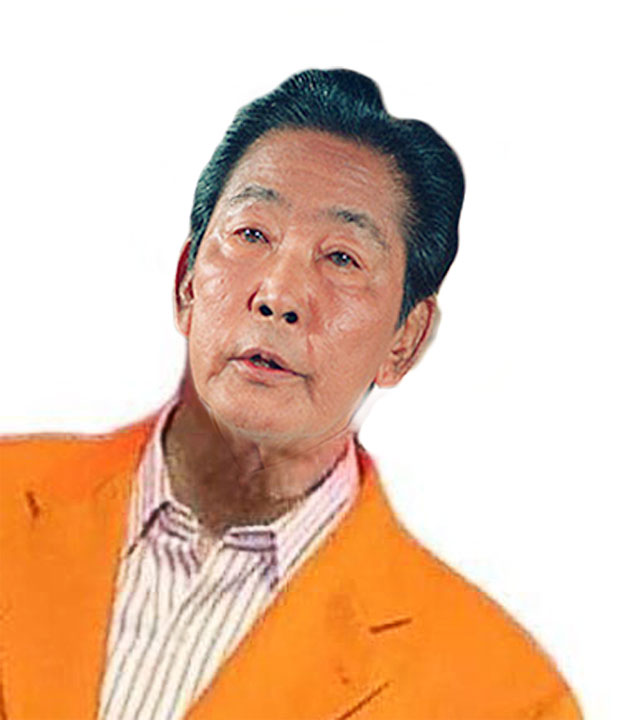
But there are constant reminders that September is not solely the onset of the year’s most anticipated holidays. It is also the birth month of Ferdinand E. Marcos, who was born on the 11th day of the month in 1917 and who placed the entire country under martial law by signing Presidential Declaration 1081 on the 21st of the same month in 1972, and implementing it two days later on the 23rd.

His daughter, Maria Josefa “Imee” Marcos, has urged everyone to “move on” from the controversies over her late father’s 21-year reign (1965-1986). But her own family and the current regime with which she is allied won’t. Among the indicators of the latter’s refusal to allow much of the citizenry to lapse into its accustomed indifference to public issues is President Rodrigo Duterte’s allowing in 2016 the burial of the late dictator’s remains in the Libingan ng mga Bayani (Heroes’ Cemetery), his issuing an executive order in 2017 making Sept. 11 a holiday in the Ilocos, and his congressional allies’ making that outrage a law in 2020.

These acts provoked protests from historians and human rights groups as well as approval by the usual Marcos partisans. But what makes “moving on” even more problematic is the Marcos family’s and its cohorts’ unrelenting efforts at reinventing the sorry record of their late patriarch’s rule and at prettifying his dark legacies to Philippine politics and governance. They dismiss the human rights violations then as either imaginary or as driven by necessity and therefore justified. They malign the resistance against the dictatorship, and even go as far as to claim that that period was a “golden age” despite the economic decline, the surge in the country’s foreign debt, the corruption and the looting of the public treasury, and the abduction, torture, enforced disappearance and extrajudicial killing of dissenters, critics and suspected “subversives.”

Their version of history naturally invites honest, fact-based reiterations of what happened during the two decades of Marcos rule and its impact on Philippine society and governance. Among the latter is the empowerment of the police and military; the militarization of the highest levels of the bureaucracy; the enshrinement of violence as the primary means of compelling obedience to government diktat and silencing critics and dissenters; the runaway corruption and gross incompetence; and the use of State terrorism against its perceived foes.

What must be universally understood is that the Marcos kleptocracy made authoritarian rule the unashamed preference not only of this country’s political class but also of millions of Filipinos who mistake the rule of the oligarchy for democracy.

But September has also made a supposed terrorist threat the excuse for curtailing such rights as the presumption of innocence and even the right to life. Not only the virus of despotism that has always been resident in the Philippine ruling elite is to blame, but also the example set by the country’s foreign overlords.

Twenty years ago on Sept. 11, 2001, a group of Saudi Arabian nationals suspected of affiliation with the Al-Qaeda terrorist network attacked targets in the US homeland. The US government responded in the name of a “war on terror” by invading Afghanistan and Iraq. The supposed reason for the US’ overthrowing the then ruling Taliban by December that year was its leaders’ asking the then George W. Bush administration, when it demanded that they surrender Osama bin Laden, for proof that he indeed masterminded the 9/11 attacks. The justification for the 2003 invasion of Iraq was its allegedly harboring Al-Qaeda zealots and its possessing weapons of mass destruction such as nuclear, chemical, and biological arms.

Bin Laden turned out to be in hiding in Pakistan, and no proof that Iraq was harboring Al-Qaeda during the rule of Saddam Hussein was ever found. The weapons of mass destruction British intelligence claimed Iraq possessed were equally non-existent. But the US example made fears of being accused of harboring terrorists — encouraged by the Western powers and their media partners — the convenient excuse for the almost world-wide assault on human rights that for over two decades has led to tolerance of, and even support for, despotism in parts of Africa, Asia, Latin America, and Europe.

In the US itself, fears of “Islamic terrorism” partly account for the election of Donald Trump to the White House in 2016. The support of Trump’s white supremacist base was partly driven by racist antipathy for his predecessor Barack Obama, whom they falsely accused of being a Muslim and a non-American.

The irony is that decades after it launched its “war on terror” that was actually a war for oil and global dominance, the US now has to contend with terrorist threats from its own ultra- rightist groups made up of Christian fundamentalists, neo-Nazis, white supremacists, and the gun-crazy hordes that stormed the US Congress during the Jan. 6 “insurrection” to stop in behalf of Trump the proclamation of Joseph Biden as President. The same groups have hailed the Taliban’s return to power in Afghanistan, with some of their leaders declaring that something similar should happen in the US itself. National security analysts fear that these groups could launch other terrorist attacks in the US homeland as part of a conspiracy to overthrow the government.

In the Philippines, the above events of September at home and abroad have added to widespread citizen fatigue and resistance in exercising the sovereign right and duty of checking government excesses, holding it accountable, and demanding and struggling for the changes the country has needed for decades.

By enabling them to take control of the circumstances that define their lives, civic and political engagement is one of the most fundamental attributes of free men and women. But for the millions caught in the bottomless pit of poverty and despair in these isles of want, September is neither a time for active involvement in public life nor for remembering the lessons of the past but for forgetting them, hence the constant threat of the tragedies of history’s repeating themselves.


Luis V. Teodoro is on Facebook and Twitter

(@luisteodoro).

www.luisteodoro.com

Waiving TRIPS for vaccines

With government COVID-19 policy exclusively focused on getting people vaccinated, masked, and locked down (as opposed to, say, encouraging early health treatment, outpatient treatment, better diet, exercise, and hygiene), focus has somewhat shifted to the possibility of acquiring cheaper priced vaccines other than through the regular channels. To do so, however, requires overriding the patent rights of the pharmaceutical companies owning the vaccines.

Hence the proposal from India and South Africa to waive certain provisions of Part 2 of the Trade-Related Aspects of Intellectual Property Rights (TRIPS) at the World Trade Organization (WTO):

“Given this present context of global emergency, it is important for WTO Members to work together to ensure that intellectual property rights xxx do not create barriers to the timely access to affordable medical products including vaccines.”

The gist of the proposal boils down to waiving the “the implementation, application and enforcement of Sections 1, 4, 5, and 7 of Part II of the TRIPS Agreement in relation to prevention, containment or treatment of COVID-19.” These provisions deal with copyright, industrial designs, patents, and protection of undisclosed information. Such a waiver is supposed to “continue until widespread vaccination is in place globally, and the majority of the world’s population has developed immunity hence we propose an initial duration of [x] years from the date of the adoption of the waiver.”

The proposal has been supported by certain sectors, particularly seeing it as paving the way of loosening the hold of multinational corporations on developing countries. The usual route of Advance Purchase Agreements, particularly between richer countries and multinational pharmaceuticals resulted effectively in an exclusivity arrangement putting poorer countries at a severe disadvantage: “some countries use these agreements to reserve a substantial amount of vaccine early on during a vaccine race. They place these orders before vaccines are fully developed, tested, and approved by the regulatory authorities. COVID-19 vaccines are still a scarce commodity, and countries with a greater purchase capacity will secure larger quantities in advance.” (“The TRIPS waiver proposal: an urgent measure to expand access to the COVID-19 vaccines,” Henrique Zeferino de Menezes, South Centre, March 2021)

Hence the ostensible need for the waivers: “Without a waiver, countries could suffer trade penalties for violating TRIPS. Dispute resolution under TRIPS does not provide for private action but, rather, action between the disputing member nations. For example, while Moderna would not have standing to sue a member nation for violating TRIPS, the WTO could impose trade penalties on that member nation if a case were brought before it by the United States. A COVID-19 vaccine TRIPS waiver would limit or eliminate the ability to pursue such penalties.” (“What is a COVID-19 Vaccine Intellectual Property Waiver?,” JD Supra, Aug. 11, 2021)

The key, of course, is the United States, where many of the large pharmaceutical companies engaged in vaccine production are incorporated. It was thus a surprise when the US actually agreed (somewhat) to the waiver proposals last May: The US “supports the waiver of those protections for COVID-19 vaccines. We will actively participate in text-based negotiations at the World Trade Organization (WTO) needed to make that happen. Those negotiations will take time given the consensus-based nature of the institution and the complexity of the issues involved.” (Katherine Tai, US Trade Representative, on the COVID-19 Trips Waiver)

The question for the Philippines (a signatory of, and thus bound to, the TRIPS Agreement) is whether to support the waiver proposal. As other commentators noted, such a waiver could necessitate significant changes made to our own intellectual property laws. But even then, assuming such is done, would a waiver be actually helpful to developing countries like the Philippines?

Some are not so sure: “The debate in favor or against patents is largely political. Some argue that insisting on patent protection during a pandemic is short-sighted, since this leaves most of the world’s citizens unprotected by vaccines, thus leaving greater room for variants to evolve. Others fear that diminishing incentives to produce new vaccines could decrease efforts in the development of vaccines for new variants in the future. In any case, the current shortage of vaccines is rooted in many causes, and — even if compulsory licenses or waivers would ‘eliminate’ patents — this would not, alone, trigger vaccine abundance for the world population.” (“Worldwide: Are Patents to Blame for Scarcity of Vaccines?,” Paola Sangiovanni, Ally Law, Aug. 31, 2021)

Are there alternatives? Manufacturing our own vaccines might be a longshot for now. Parallel importation has been brought up, particularly in light of the Universally Accessible Cheaper and Quality Medicines Act but that has its own complexities.

Or perhaps the government might take a second look at ivermectin. A recent study (“Ivermectin: a multifaceted drug of Nobel prize-honored distinction with indicated efficacy against a new global scourge, COVID-19,” Santin AD, et al, New Microbes and New Infections, August 2021) found that mass use of ivermectin treatments for COVID in Peru saw excess deaths fall by 74%.


Jemy Gatdula is a Senior Fellow of the Philippine Council for Foreign Relations and a Philippine Judicial Academy law lecturer for constitutional philosophy and jurisprudence.

https://www.facebook.com/jigatdula/

Twitter @jemygatdula

Beermen seek to barge into top 3 in game against Kings

THE San Miguel Beermen seek to barge into the top 3 of the ongoing PBA Philippine Cup when they take on defending champions Barangay Ginebra San Miguel Kings on Friday. — PBA IMAGES

By Michael Angelo S. Murillo, Senior Reporter

THE San Miguel Beermen seek to barge into the top 3 of the ongoing PBA Philippine Cup when they take on defending champions Barangay Ginebra San Miguel Kings on Friday.

San Miguel, currently at fourth place with a 4-2 record, battles Barangay Ginebra (3-3) in a match set for 6 p.m. at the Don Honorio Ventura State University (DHVSU) Gym in Bacolor, Pampanga.

The Beermen trail the TnT Tropang Giga (6-1), Magnolia Hotshots Pambansang Manok (6-2) and Meralco Bolts (5-2) in the standings and are out to solidify their place in the top half of the race of the Philippine Basketball Association (PBA) All-Filipino tournament.

Competition format has the top two teams at the end of the eliminations having a twice-to-beat advantage in the quarterfinals over the number seven and eight teams. Teams three and six and four and five, meanwhile, battle in a pair of best-of-three series.

San Miguel is coming off a huge victory over TnT, 83-67, on Wednesday.

The Beermen exploded in the opening quarter and never relinquished control from there en route to the win.

Marcio Lassiter led the way for San Miguel, finishing with 19 points, going 3-of-7 from beyond the arc. Terrence Romeo had 16 points while Mo Tautuaa and CJ Perez came off the bench to score 13 points apiece.

Six-time PBA most valuable player June Mar Fajardo, meanwhile, continued to struggle offensively as he makes his way back from a long layoff because of injury, finishing with eight points, but had 17 rebounds.

“The players are motivated. They had a lot of energy, knowing this was a huge game and we wanted to bounce back,” said San Miguel coach Leo Austria, whose wards were coming off a loss in their previous game against Terrafirma Dyip.

“Going into the game, we were worried because we did not play for one week. Good thing we kept on practicing to sustain our game,” he added.

Looking to halt the Beermen in their push is Barangay Ginebra, which is also coming off a victory in its last game.

The Kings beat the Rain or Shine Elastopainters, 83-77, banking for the most part on their defense.

It is a win they are looking to build on as they look to get out of their early struggles in the tournament.

“We let our defense do the talking… And I think we won the hustle charts,” said Barangay Ginebra coach Tim Cone after their victory.

The Kings are being led by Stanley Pringle, who is averaging 15.67 points, to go along with 5.17 rebounds and three assists a game. LA Tenorio has been good for 15 points per contest while big men Japeth Aguilar and Christian Standhardinger are scoring 14 and 13 points, respectively.

Also playing on Friday are Magnolia and Rain or Shine (4-4) at 12:30 p.m. and TnT and the NLEX Road Warriors (4-3).

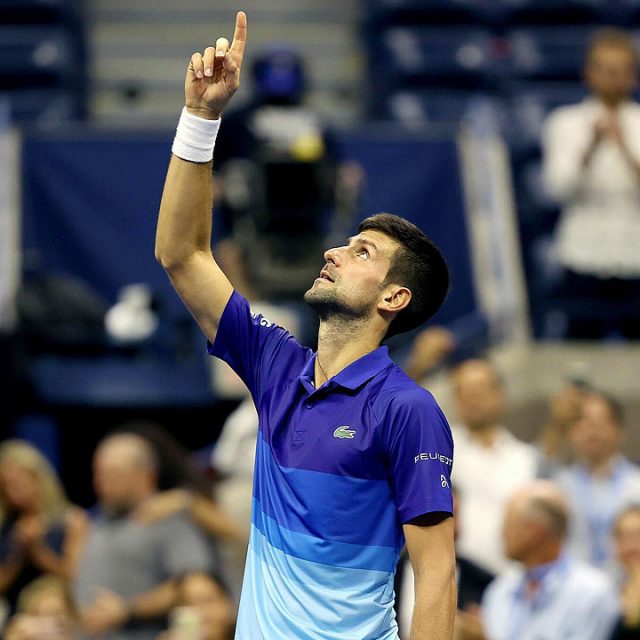
Djokovic charges back to beat Berrettini in four sets

NOVAK Djokovic again fought back from a set down to beat Matteo Berrettini (5-7, 6-2, 6-2, 6-3) and move into the US Open semifinals on Wednesday. — JEDJACOBSOHN/ELSA/NOVAK DJOKOVIC FB PAGE

NEW YORK — Novak Djokovic again fought back from a set down to beat Matteo Berrettini (5-7, 6-2, 6-2, 6-3) and move into the US Open semifinals on Wednesday, the Serb is now just two wins away from a 21st major that would complete a calendar-year Grand Slam.

Djokovic takes a step up in class in the next round, where he faces fourth seed Alexander Zverev, the player who last month ended his bid for a “Golden Slam” by beating him in the Tokyo Olympics semifinals.

Zverev arrives at the final four as the hottest player in men’s tennis, extending his winning run to 16 matches by beating South African Lloyd Harris.

“He’s in a fantastic form,” said Djokovic. “Of course, looking at his results in past few years, he’s played very well here on this court.

“I know it’s going to be battle, even harder than it was today but I’m ready for it.

“Look, these are the hurdles that I need to overcome in order to get to the desired destination.”

Djokovic and Berrettini had met only three times previously but two were this year when the stakes were at their highest — the Wimbledon final and French Open quarters — with the world number one winning both times in four sets.

The 25-year-old Italian had a third shot at derailing Djokovic’s Grand Slam plans on Wednesday but once again could not seize his chance, converting just one of five break opportunities, that coming in the first set.

“Really tough match, as always against Novak,” said Berrettini. “He has this ability — and probably that’s why he’s the best ever — just to step up his game, his level all the time.

“Doesn’t matter how well I play, he just plays better.

“He doesn’t give me any free points. I have to earn every single point.”

Berrettini’s lone break came during a grinding opening set that lasted 77 minutes, the Italian making the breakthrough to go ahead 6-5 before sealing the opener.

It marked the third straight match Djokovic had dropped the first set.

But Djokovic had seen this before, losing the opening set to the Italian in the Wimbledon final, and in a faster paced second set it was Djokovic hitting back with the early break and going on to level the match.

“When I lost the first set, I managed to forget about it, move on,” said Djokovic. “In sports, we talk about that a lot — being in the zone… very difficult to get here, very easy to go out.”

Djokovic stepped up the pressure in the third, forcing Berrettini to work for every point as he clinically wore down his opponent.

He snatched control by breaking Berrettini at the first opportunity and once again to close out the third set.

A now locked-in Djokovic secured an early break in the fourth and took a 3-0 lead, playing to a cheering crowd that suddenly seemed aware they were watching something special. — Reuters

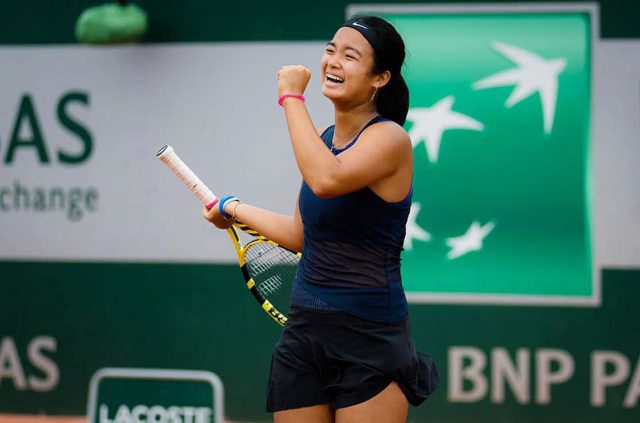
Juniors standout Eala through to US Open quarterfinals

FILIPINO juniors tennis standout Alex Eala is through to the quarterfinals of the 2021 US Open girls’ singles tournament after topping Michaela Laki of Greece in the Round of 16 on Wednesday (Manila time). — ALEX EALA FB PAGE

FILIPINO juniors tennis standout Alex M. Eala is through to the quarterfinals of the 2021 US Open girls’ singles tournament after topping Michaela Laki of Greece (4-6, 7-5, 6-4) in the Round of 16 on Wednesday (Manila time).

Struggled for much of the contest which was played at Court 12 of the Billie Jean King National Tennis Center, 16-year-old Ms. Eala held her nerves late to complete the come-from-behind win and keep her tournament hopes alive.

After dropping the opening set, Rafa Nadal Academy scholar Ms. Eala was on the verge of defeat in the second set after trailing, 4-5, but was able to break her opponent’s serve to level the count at 5-5 and then won the next two games to force the deciding set.

In the third set, second-seeded Ms. Eala raced to a 5-2 lead only to encounter some resistance in closing out the game.

Ms. Laki, the 15th seed, managed to narrow the gap to 5-4 but that was the closest she could get as a forehand winner by Ms. Eala and an error by the Greek player brought the curtain down.

In the quarterfinals, Ms. Eala will take on Switzerland’s Sebastianna Scilipoti.

DOUBLES, TOO
Later in the day, Ms. Eala also barged in the quarterfinals in doubles play with partner Hanne Vandewinkel of Belgium.

The duo defeated the tandem of Ms. Laki and Radka Zelnickova of Slovakia in a tie-break, 6-3, 3-6, 10-6.

In the quarterfinals, the Philippine-Belgian team will next face the American pair of Elizabeth Coleman and Madison Sieg. 

In the ongoing US Open, Ms. Eala, the number two juniors player in the world, is seeking another Grand Slam title after winning a couple of titles in doubles play — the 2020 Australian Open Juniors Doubles with Indonesian partner Priska Nugroho and 2021 French Open Juniors Doubles with Russian partner Oksana Selekhmeteva. — Michael Angelo S. Murillo

Bencic hopes teenagers Raducanu, Fernandez are protected from hype

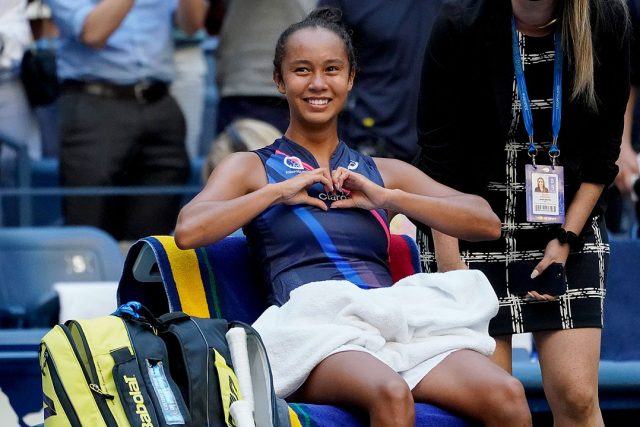
FILIPINO-CANADIAN US Open semifinalist Leylah Fernandez — US OPEN TENNIS CHAMPIONSHIPS FB PAGE

NEW YORK — US Open semifinalists Emma Raducanu and Leylah Fernandez must be protected from the hype and pressure that the teenagers are likely to encounter in the coming months after their New York heroics, Olympic champion Belinda Bencic said on Wednesday.

British 18-year-old Raducanu brushed aside Bencic (6-3 6-4) to become the first qualifier to reach the semifinals at Flushing Meadows and the third woman ranked outside the top 100 to advance into the final four, emulating Kim Clijsters and Billie Jean King.

A day earlier, 19-year-old Canadian Fernandez, who had taken out four-time major champion Naomi Osaka in the third round and three-time Grand Slam winner Angelique Kerber in the fourth, outlasted fifth seed Elina Svitolina to reach the semis.

“I honestly think it’s great… for tennis. It’s obviously great stories,” Swiss world number 12 Bencic, who claimed gold at the Tokyo Games, told reporters.

“I just really hope everyone will protect them and will hope the best for them and not try to… not destroy, but… put so much pressure and so much hype around them so it gets too much.

“I hope everyone will stay and will really hope the best for them so they can just develop in peace a little bit.”

British sports personalities from Andy Murray to Marcus Rashford had rallied to the defense of Raducanu in July after suggestions she quit her debut Wimbledon because she could not handle the pressure in her fourth-round clash.

Raducanu had been forced to retire against Ajla Tomljanović with breathing difficulties.

The 150th-ranked Raducanu suggested her ability to stay calm and her mental strength was thanks to her upbringing and added she was also not too focused on her achievements.

“It’s the first time I heard today that I was the first qualifier to make the semis,” Raducanu said.

“I’m not here to chase any records right now. I’m taking care of what I can do on the moment and on the match ahead. I haven’t even started thinking about the next one yet.” — Reuters

NBA touts solid numbers in the PHL for 2020-2021 season

THE National Basketball Association (NBA) posted solid numbers in the country during the 2020-2021 season, the league had announced.

In data shared to media, the NBA said it experienced continued growth here, including in broadcast viewership and social media consumption.

“Filipinos are among the most dedicated NBA fans in the world, and their continued engagement across TV, social media and retail has contributed to the league’s incredible growth in the Philippines,” said NBA Asia Managing Director Scott Levy in a statement.

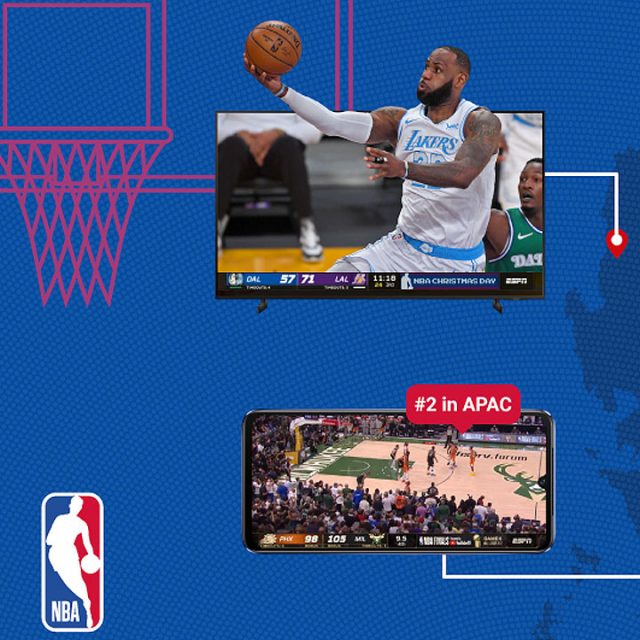
The NBA Christmas Day game on TV5 featuring the Los Angeles Lakers and the Dallas Mavericks drew the largest average audience across all measured international markets carrying 2020 Christmas Day games, the NBA said, tripling the previous year’s NBA Christmas Day average audience in the Philippines.

The 2020-2021 season’s most-watched game on TV5, meanwhile, was Game 6 of the NBA Finals between eventual champions Milwaukee Bucks and the Phoenix Suns, which registered an average audience of 4.6 million viewers.

The NBA Finals reached 8.4 million unique viewers per game in the Philippines, the most of any measured country outside of the United States while the average audience for live playoff games was up 21% year over year across TV5 and One Sports.

On NBA League Pass, through July this year, the Philippines ranked No. 2 in subscribers in the Asia-Pacific region.

Game 6 of the First Round of the Playoffs between the Lakers and the Suns, and Game 6 of the Finals featuring the Bucks and the Suns, recorded the most and second-most unique viewers in the Philippines last season, respectively, the league said.

On social media, meanwhile, the NBA’s YouTube Channel featured three locally produced shows geo-targeted to fans in the Philippines, which generated 4.4 million views. The shows, which were posted weekly throughout the playoffs, included NBA On Fire, a localized NBA recap show featuring postseason storylines, player milestones and team updates; Republika Drip, a series showcasing basketball culture, fashion and lifestyle; and Republika Huddle, a series hosting local influencers and sports personalities via Zoom discussing the latest NBA news and events. 

Through July 2021, viewers from the Philippines watched more than 37 million hours of content on the NBA’s YouTube Channel, which represents approximately one-third of the total channel viewership during the season, the most of any country outside of the US.

Followers of the NBA Philippines Facebook page, meanwhile, increased 18% year over year, making it the largest regional NBA Facebook page with more than 4.9 million fans.

Through August 2021, the NBA’s Facebook, Instagram and TikTok accounts had an estimated 24 million combined followers from the Philippines, the most of any country outside of the US.

While the pandemic prevented the NBA to do face-to-face engagements, still it managed to stage events although done virtually in collaboration with its 18 marketing partners in the Philippines that help grow the game, including adidas, AXA, EA Sports, Energen Champion, Gatorade, Moet-Hennessy, Nike, Take-Two, Tissot, Under Armour, vivo and Wilson.

One of which is the Jr. NBA Philippines, which hosted two free virtual basketball clinics for boys and girls ages 13-17 across the country on May 29 and June 12.

NBAStore.com.ph, the official online NBA Store in the Philippines, for its part, celebrated its first anniversary on Aug. 6 and was recorded to have delivered product orders to 215 of 228 cities and provinces in the Philippines through July this year.

Mr. Levy said they are excited for what next season holds for the league, which incidentally is celebrating its 75th anniversary, just as he expressed continued commitment to engaging Filipino fans with content to their liking.

“As we embark on our 75th Anniversary Season, we look forward to working with our partners to build on this momentum by providing fans in the Philippines with new and exciting ways to experience the NBA through digital innovations and customized content,” the NBA official said. — Michael Angelo S. Murillo

Phoenix tames Terrafirma; Northport wins

Northport Batang Pier defeated Blackwater Bossing, 98-73, to improve to 2-3 in the ongoing Philippine Basketball Association tournament. — PBA Images

By Michael Angelo S. Murillo, Senior Reporter

The Phoenix Super LPG Fuel Masters stopped the Terrafirma Dyip, 96-84, in PBA Philippine Cup action on Thursday at the Don Honorio Ventura State University Gym (DHVSU) in Bacolor, Pampanga.

Jason Perkins led the charge of Phoenix, which played steady in the second half to keep Terrafirma at bay on its way to the victory while snapping the three-game winning streak of the Dyip.

The contest was tight by the halftime break, with the count standing at 48-47 and the Fuel Masters narrowly leading.

In the third quarter, Phoenix created some distance, stretching its lead to 13 points, 67-54, by the 4:33 mark.

The Dyip made a charge back late in the frame but the Fuel Masters continued to hold sway, 69-64, entering the final quarter.

Phoenix, however, would raise the ante anew at the start of the fourth canto, going on a 15-3 run in the first four minutes to stretch their lead to 17 points, 84-67.

It will not look back from there, proceeding to keep a safe distance and then wrapping things up.

Mr. Perkins had a game-high 28 points for the Fuel Masters with veteran Vic Manuel coming off the bench to score 18.

Matthew Wright was the other Phoenix player in double-digit scoring with 15.

The win towed the Fuel Masters to a 3-5 record, good for joint eighth place with Terrafirma.

For the Dyip, it was Aldrech Ramos who top-scored with 13 points.

NORTHPORT WINS
Meanwhile, in the second game, Northport Batang Pier defeated Blackwater Bossing, 98-73, to improve to 2-3 in the ongoing Philippine Basketball Association tournament.

Robert Bolick had a near triple-double for the Batang Pier in the win, finishing with 17 points, 10 rebounds and seven assists.

Rookie Jamie Malonzo had a double-double of 17 points and 12 rebounds while Kevin Ferrer added 14 points. Greg Slaughter had 12 points and 11 rebounds.

For Blackwater, which is now winless in eight games, it was Frank Golla and Richard Escoto who led with 14 and 10 points, respectively.

New NFL season kicks off amid rift over COVID-19 vaccines, testing

NEW YORK — The National Football League (NFL) kicks off another season on Thursday with profound differences of opinion lingering between the league and the union over coronavirus disease 2019 (COVID-19) vaccines and testing, as both parties work to manage the risks of playing in a pandemic.

Last month, the NFL pushed back on claims from the players’ union that it did not discuss making COVID-19 vaccines a requirement to play this season, despite mandating inoculations for staff and coaches.

“We’ve been discussing with the players’ association mandatory vaccination from the start,” NFL General Counsel Lawrence Ferazani told reporters.

Brandon Parker, a spokesman for the National Football League Players Association (NFLPA), said this week that the union “didn’t believe a mandate was necessary” and that “a more reasonable approach with the players would resonate.”

“We believed that a mandate would not be in the best interest of the players because of the better approach of education,” Parker said via e-mail.

“We prefer everyone get vaccinated to protect themselves and their families, but our union respects the choice of players.”

The NFLPA is pushing for daily testing for all players — vaccinated and unvaccinated. Currently, the league plans to test unvaccinated players daily and vaccinated players weekly.

The NFL declined to comment.

The league, however, gave an enormous incentive to get the vaccine in July, when it announced that COVID-19 outbreaks among non-vaccinated players during the 2021 season could lead to forfeits and loss of pay if games cannot be rescheduled.

Two teams — the reigning Super Bowl champion Tampa Bay Buccaneers and the Atlanta Falcons — have achieved 100% vaccination rates, while 17 clubs have 95% of their players vaccinated.

Across the league, 93.5% of players have received the vaccine, at a time when distrust over the vaccination persists in the United States.

A handful of players have been reluctant to disclose their vaccine status, including free agent quarterback and 2015 league MVP Cam Newton, who was cut by the New England Patriots days ago after missing practice due to what the team called a COVID-19 protocol misunderstanding.

“It’s just a microcosm of what’s being played out in the larger society,” said NFL agent Leigh Steinberg. “It’s not like many minds are being changed in this situation.”

But Steinberg noted that the specter of a squandered postseason effort — not to mention the peer pressure borne out of time with teammates — could have an impact.

“You now have people together every single day and I do think there will be discussions between vaccinated and unvaccinated players and the issue of keeping the team together and ensuring that the only way that they lose is on the field,” said Steinberg. — Reuters

Rising to the occasion

Novak Djokovic knew he was going to be in for a tough fight. He didn’t once describe Matteo Berrettini as “The Hammer of Tennis” for nothing, and he knew he had to be at his best to prevail in his United States Open quarterfinal match yesterday. Certainly, it meant starting fast as well, a virtual necessity given his first-set losses in three of his four matches at Flushing Meadows this year. The sixth seed wasn’t merely any other opponent, and far be it for him to flirt with danger by competing from behind.

Unfortunately, Djokovic failed to translate plan to action, and he found himself playing catch-up anew. He proved unable to hold serve in his sixth time out, and Berrettini promptly consolidated the break to claim the first set. If there was any one particular statistic that stood out to underscore his relative lack of competitiveness, it was that he committed a whopping 17 unforced errors; for a master returner whose capacity to construct points is without equal in the sport, the number elicited cause for concern.

To be sure, Djokovic likewise possesses the singular ability to recover quickly. He may be three-fourths on the way to the first Grand Slam in tennis over the last half century and change, but it hasn’t exactly been smooth sailing for him. In a third of his 25 major championship outings this year prior to his meeting with Berrettini, he spotted a set to the player on the other end of the court. Every single time he had a handicap, however, he promptly course-corrected. Yesterday was no exception; he won every set thereafter, and in convincing fashion, committing just 11 unforced errors all told.

Dark clouds remain in the horizon. Up next for Djokovic is Alexander Zverev, his Tokyo Olympics tormentor and last year’s US Open runner-up. All the same, he’s favored to prevail, and not simply because of the obvious chasm that exists between him and the tournament’s fourth seed. To argue that he rises to the occasion would be an understatement. And with history at stake, it’s fair to say he himself is his biggest obstacle.


Anthony L. Cuaycong has been writing Courtside since BusinessWorld introduced a Sports section in 1994. He is a consultant on strategic planning, operations and Human Resources management, corporate communications, and business development.

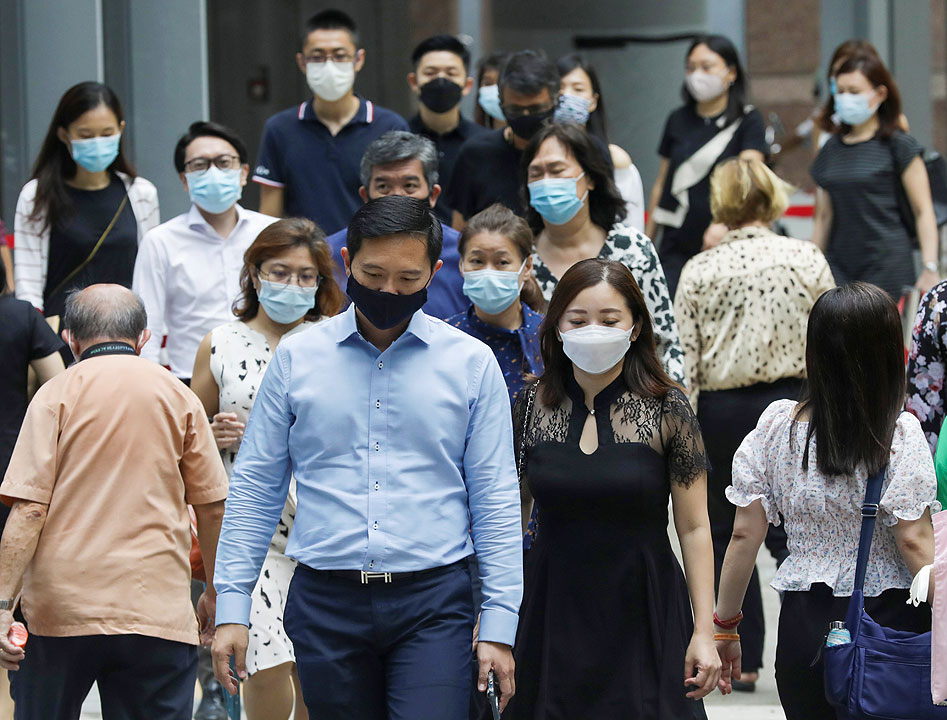
Singapore shifts virus focus to hospitalizations as cases surge

REUTERS
THE OVERALL number of daily local cases in Singapore has doubled in the past week. — REUTERS

SINGAPORE is shifting the focus of its daily reports to hospitalizations to turn attention to its medical capacity alongside plans to manage the virus as endemic, as the country’s daily count of the coronavirus disease 2019 (Covid-19) cases in the local community rose to the highest it’s ever been.

At 81%, Singapore has the best vaccination rate in the world among countries of more than one million people, according to data compiled by Bloomberg. Yet daily cases — the vast majority of which are mild or asymptomatic — are on the rise.

There are signs that Singapore’s mass vaccination is holding down serious cases. While the overall number of daily local cases has doubled in the past week to 347, the number of serious cases requiring supplemental oxygen or intensive care is about the same as last week.

Singapore is changing the way it reports the situation. The Ministry of Health is now leading its daily report with data on serious cases in a shift that focuses attention on its hospital capacity instead of the rising number of cases.

The city-state will no longer report the number of linked and unlinked cases “as this is no longer as relevant as before, given our current strategy of living with Covid-19,” the ministry said in a statement accompanying its daily update, which will also be cut to once instead of twice a day from Thursday.

“We are now in a very different stage of our battle against COVID-19,” the health ministry said. The revamped reports will “reflect the salient issues” such as whether hospital capacity is getting overwhelmed, it said.

While the daily report doesn’t list Singapore’s system-wide capacity, previous statements suggest the city-state isn’t anywhere close to its limits. For example, Health Minister Ong Ye Kung in July said as many as 1,000 ICU beds could be made available to COVID-19 patients if needed. Just six are in ICU now. At its peak, in April of 2020, there were as many as 32 people in ICU.

Singapore is also looking to expand its healthcare capacity beyond critical care. The government has space for more than 5,500 Covid-positive people with mild or no visible symptoms in community care facilities, which is about 2,000 more beds than the total number of people in Singapore who got COVID over the last month. Additionally, the government is piloting a program that would allow some mildly ill patients to recover at home. — Bloomberg

Shopee parent company eyes to raise $6.3B in 2021’s biggest equity deal

SEA LTD. aims to raise $6.3 billion in the largest equity offering of the year, a deal that will propel a global expansion and acquisitions for Southeast Asia’s largest company.

The online gaming and e-commerce firm backed by Tencent Holdings Ltd. is offering 11 million shares, a stake worth about $3.8 billion at Wednesday’s close. It also intends to issue $2.5 billion of equity-linked debt. Sea, which has risen more than 70% this year, fell in post-marketing trading in New York.

The region’s most valuable company has rapidly expanded its market share in e-commerce and gaming during the pandemic, riding hit titles like shooter game Free Fire and its Shopee online shopping app. Its founder Forrest Li became Singapore’s richest person in August after shares of his company surged.

“Sea is going for a market expansion, especially in new businesses such as e-commerce in Latin America and food delivery in Southeast Asia,” said Sachin Mittal, an analyst with DBS Group Holdings Ltd. “Competition is intensifying and gaining market share is of utmost importance.”

The 11 million shares alone that Sea is offering will be the biggest equity sale since Chinese e-commerce operator Pinduoduo, Inc. raised $4.1 billion on Nov. 18, according to data compiled by Bloomberg. Including the convertible bonds, the overall deal will be the biggest equity raise since T-Mobile US, Inc.’s in June 2020.

The deal, offered via Goldman Sachs, JPMorgan and BofA, arrives at a time of resurgence in cross-border issuance from Asia. Nio, Inc. on Tuesday announced plans to raise up to $2 billion in what would be the biggest US offering by a company based in China since Didi Global, Inc.

Sea’s latest capital-raising follows a $2.6-billion stock sale in December and a $1.35-billion deal in 2019. It will deploy the latest chunk of capital toward “business expansion and other general corporate purposes, including potential strategic investments and acquisitions,” the company said in a statement.

Sea in August raised its annual forecasts for its two main business, underscoring its confidence in an expanding international business that’s gaining momentum beyond its home region.

The stock has risen more than eightfold since the beginning of 2020 as Sea invests cash generated from popular mobile battle royale game Free Fire to establish itself as a leader in e-commerce in Southeast Asia. At the same time, it has expanded its online shopping business in Brazil as part of a strategy to become a global player, increasing competition with Latin American e-commerce giant MercadoLibre, Inc.

In its home region, Sea remains locked in a fierce battle with GoTo and Grab Holdings, Inc., all bolstering their e-commerce and fintech offerings in one of the fastest-growing internet markets on the planet. Southeast Asia’s online spending is set to triple to more than $300 billion by 2025, research from Google and its partners shows.

It’s now turning to fintech for further growth beyond gaming and e-commerce, while also expanding beyond the region. It won a digital-banking license in Singapore in December and acquired Indonesia’s PT Bank Kesejahteraan Ekonomi, better known as Bank BKE, people familiar with the matter said in January. — Bloomberg

ADVERTISEMENT
ADVERTISEMENT