Home Blog Page 7511

Revenue boost seen if VAT imposed on digital services — IMF
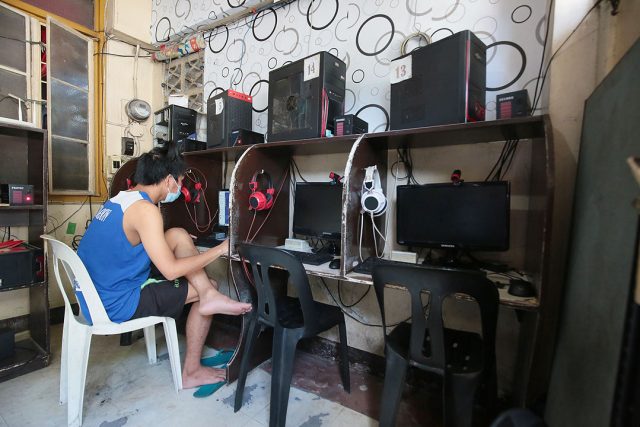
PHILIPPINE STAR/ MICHAEL VARCAS

EMERGING ECONOMIES including the Philippines could get a much-needed boost in revenues if they start collecting value-added tax (VAT) from the digital economy, a study by the International Monetary Fund (IMF) showed.

In a paper “Digitalization and Taxation in Asia” released on Tuesday, IMF economists Andrew Hodge and Dinar Prihardini said increasing digitalization has raised new tax challenges for Asian countries, especially since their existing systems have been criticized for failing to tax highly digitalized businesses.

“Extending the value-added taxes to capture e-commerce and digital services more effectively could yield significant short-term revenue and other efficiency gains. Capturing VAT on digitally provided services and e-commerce supplied from abroad will help countries increase revenue unilaterally. Applying VAT consistently on all digital imports also levels the playing field between domestic and foreign suppliers, and between goods and services — thus enhancing efficiency,” the IMF economists said.

Countries like the Philippines, Indonesia and Vietnam may see an increase in overall VAT revenue if digital services are taxed.

“Estimates based on survey data suggest that charging VAT on remotely delivered digital services and some goods to customers could directly increase overall VAT revenue by between 0.04% and 0.11% of gross domestic product (GDP) in Bangladesh, India, Indonesia, the Philippines, and Vietnam,” the IMF economists said.

The IMF economists noted that many Asian countries are exerting additional efforts in taxation to meet its revenue goals.

“Asia’s unrivalled level of internet connectivity, which has underpinned the economy’s digitalization beyond the ICT sector, creates enormous scope for future growth,” they said.

However, the IMF economists warned that unilateral digital service taxes may also have repercussions.

“Digital service taxes are simpler in design and implementation than corporate income tax initiatives, but risk introducing distortions of double taxation and trade retaliation,” they said.

The IMF economists noted that US multinational enterprises (MNEs) would be the primary taxpayers for digital service tax schemes. This as 25% of profits earned by foreign MNEs are made by those based in the United States.

In this scenario, potential retaliatory trade measures could be a possibility once digital service taxes are imposed, the IMF said.

“For countries such as Bangladesh, India, Indonesia, the Philippines, Singapore, and Vietnam, US MNEs dominate, accounting for more than 50% of profits earned by foreign MNEs,” it said.

In the Philippines, House Bill 7425 proposed a 12% VAT on digital services, particularly those offered by technology giants such as Facebook, Netflix, Inc., Alibaba’s Lazada and Alphabet’s Google. The measure has been approved by the House Ways and Means Committee in July last year.

Based on estimates from the Department of Finance, the measure could generate P10.66 billion in annual revenues for the government.

“The pandemic and associated lockdown measures are accelerating the development of digital economic activity, including transactions and sales of digital goods and services. This trend would likely have a bearing on future revenue potential,” the IMF said. — Luz Wendy T. Noble
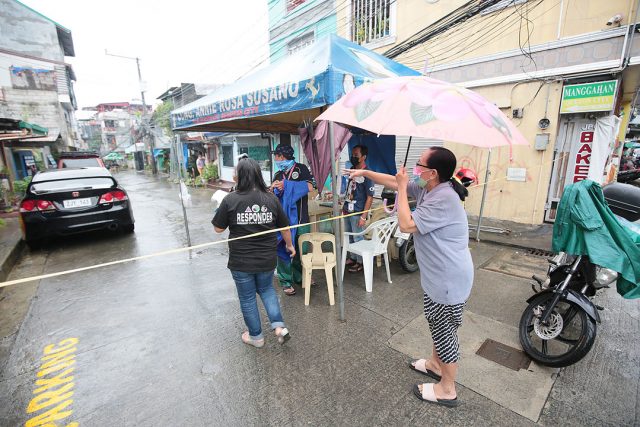
Philippine capital tests new lockdown strategy

PHILIPPINE STAR/ MICHAEL VARCAS

THE GOVERNMENT is set to begin the pilot test of granular lockdowns in Metro Manila on Thursday (Sept. 16), as it seeks a new strategy that will revive the economy and curb the spike in coronavirus disease 2019 (COVID-19) infections.

Under the new virus containment strategy, the Inter-Agency Task Force (IATF) will implement localized lockdowns with five COVID-19 alert levels in Metro Manila.

The capital region will be placed under Alert Level 4, the second strictest level, until Sept. 30, Presidential Spokesperson Herminio “Harry” L. Roque, Jr. told a televised news briefing.

Areas under Alert Level 4 are those with high or increasing coronavirus transmission and high healthcare system utilization rate. To compare, areas will be placed under Alert Level 5, equivalent to an enhanced community quarantine, only if case counts are “alarming” and hospital utilization rates are at “critical” levels.

The new quarantine classification is “good news” for workers of restaurants and other food establishments, Mr. Roque said, noting that several businesses would be allowed to operate at limited capacity.

“The Alert Level 4 that we are pilot testing right now is just like a modified enhanced community quarantine (MECQ). The only difference here is that we have a system of granular lockdowns with alert levels from one to five,” Trade Secretary Ramon M. Lopez said at the same briefing.

Mr. Lopez said some businesses, including manufacturing firms, would be permitted to operate in Metro Manila, restoring as many as 200,000 jobs.

Business groups have been pushing for a further reopening of the economy. The government earlier said economic losses averaged P73 billion for every week of the implementation of a MECQ in Metro Manila. Economic managers slashed the full-year growth target to 4-5% to reflect the impact of strict lockdowns.

Under Alert Level 4, restaurants will be allowed to offer al fresco dine-in services at 30% capacity. Restaurants can also offer indoor dine-in services but at 10% capacity and only for fully vaccinated people.

Still, local government units may decrease the allowable capacity for these food establishments.

Personal care services such as barbershops, hair spas, nail spas, and beauty salons will be allowed to operate at 30% capacity, but only if the services are rendered outdoors. They can operate indoors but only at 10% capacity and for fully vaccinated people.

Workers of these establishments must be fully inoculated against COVID-19.

Religious gatherings are also allowed but at a maximum of 30% venue capacity if conducted outdoors, regardless of vaccination status, and 10% capacity if conducted indoors but only for those fully vaccinated. Religious leaders should also be fully vaccinated against COVID-19.

All other establishments or activities, except for those located in areas covered by granular lockdowns, may be allowed to operate at 100% capacity “provided they implement the minimum public health standards,” according to the guidelines.

“However, they are encouraged to operate with a minimal on-site capacity necessary to implement full operations, while applying work-from-home and other flexible work arrangements,” it said.

“For this purpose, the movement of workers of said establishments residing in areas not covered by granular lockdowns shall remain unrestricted.”

The IATF also said government agencies should be fully operational, with at least 20% on-site capacity while allowing work-from-home and other flexible work arrangements.

Gatherings for necrological services, wakes, inurnment and funerals “for those who died of causes other than COVID-19” are allowed as long as these are limited to the immediate family members.

However, World Health Organization (WHO) Country Representative Rabindra Abeyasinghe warned that relaxing the quarantine rules in Metro Manila may worsen the coronavirus situation.

“We have significant population coverage within the National Capital Region and I believe it’s about 60% now. But this is not adequate at this point to relax quarantine positions,” he said.

“You may recraft the terminology but basically what we are advising is make sure that those restrictions are followed, that we don’t relax too much because we are not in a position where we can relax and experience further worsening of the current transmission level because our health systems are just holding up,” the WHO official added. 

The Philippines continues to struggle with its pandemic response amid a Delta-driven surge in COVID-19 cases and a sluggish vaccine rollout.

As of Tuesday, the Health department reported 18,056 new coronavirus cases, bringing active cases to 177,670.

More than 17 million people or 22.14% of the country’s adult population had been fully vaccinated against the coronavirus as of Sept. 13, Mr. Roque said. The government aims to inoculate 70% of its population against COVID-19 by end-2021.

In the next few weeks, the Philippines will get 10 million more doses of coronavirus vaccines from a global initiative for equal access, WHO’s Mr. Abeyasinghe said. — Kyle Aristophere T. Atienza

Domestic trade of goods sees slight recovery in Q2

COURTESY OF ICTSI

By Ana Olivia A. Tirona, Researcher

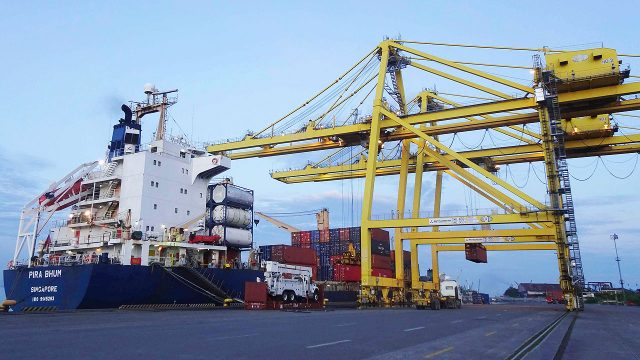
DOMESTIC TRADE ACTIVITY slightly bounced back in the second quarter from the previous year, albeit still lower compared with value of locally traded goods in 2019, data by the Philippine Statistics Authority (PSA) showed.

Preliminary results from the PSA report on “Commodity Flow in the Philippines” showed the value of goods traded in the second quarter expanded by 24.5% year on year to P141.77 billion from P113.84 billion in the same period last year when it declined by 46% year on year.

Still, this was lower than the P211.01-billion worth of domestic trade in the second quarter of 2019 prior to the coronavirus disease 2019 (COVID-19) pandemic that has constrained economic activity since the first quarter of last year.

Likewise, the volume of these traded goods went up by 30.1% to 3.74 million tons from 2.88 million tons previously. Similar to the value of trade, volume was also significantly lower compared with the 8.11 million tons logged in the second quarter of 2019.

Commodity flow, also known as domestic trade, refers to the flow of goods in the country through water, air, and rail transport systems. Almost all of the commodities were mainly facilitated through water transport systems.

Six out of the 10 commodity categories monitored by the PSA showed year-on-year growth in trade value. Machinery and transport equipment — which accounted for the biggest share of trade in terms of value at 30.9% — grew 106.3% to P43.83 billion. Its trade volume also jumped with a 92.9% growth to 429,583 tons.

The fastest annual growth rate was seen in “crude materials, inedible, except fuels” with 151.9% to P3.40 billion from last year’s P1.35 billion. Its volume went up 177% to 414,761 tons.

Other commodity groups whose value of trade grew were manufactured goods classified chiefly by material (30.8% to P32.39 billion); commodities and transactions “not elsewhere classified by the Philippine Standard Commodity Classification” (22.9% to P9 billion); beverages and tobacco (17.9% to P5.74 billion); and miscellaneous manufactured articles (7.1% to P4.63 billion).

Eastern Visayas was the top source of commodities in the second quarter, with outflows amounting to P28.87 billion. It had a domestic trade surplus of P15.65 billion, the biggest among the six regions whose exports outnumbered those of imports.

Meanwhile, Northern Mindanao was the top destination of commodities with total inflows reaching P40.35 billion. It posted the biggest trade deficit among 10 regions with P12.59 billion.   

Five regions saw their respective trade balances shift in the second quarter compared with the same period last year. Of these, three swung to a surplus from a deficit: Mimaropa (Oriental and Occidental Mindoro, Marinduque, Romblon and Palawan) Region, Western Visayas, and Eastern Visayas. Meanwhile, two of the regions — Northern Mindanao and Soccsksargen (South Cotabato, Cotabato, Sultan Kudarat, Sarangani, and General Santos City) — recorded trade deficits.

In an e-mail, UnionBank of the Philippines, Inc. Chief Economist Ruben Carlo O. Asuncion attributed the second-quarter results to the “momentum coming from the [April lockdown].”

“There was a pickup in manufacturing and construction in 2Q21. It was also obvious with import recovery during the said quarter,” he added.

To recall, Metro Manila, Cavite, Laguna and Rizal were placed under an enhanced community quarantine (ECQ) from March 29 to April 11 as the government tried to slow the surge in COVID-19 cases. This was later relaxed to a more lenient modified CQ from April 12 to 30.

The economy has been under varying degrees of quarantine since March 2020.

“We see the economy rebounding to 4.9% [GDP] in 2021 and this is an underperformance because of persistent lockdowns and difficult challenges dealing with the control of the spread of the virus,” Mr. Asuncion said when asked on what the latest domestic trade figures signify for this year’s prospects of recovery. 

Mr. Asuncion sees domestic trade “sliding to the positive side of year-on-year growth” but that the persisting threats such as the emergence of the more infectious Delta COVID-19 variant “would still be a drag” to domestic trade moving forward.

As of Tuesday, the Health department reported 18,056 new COVID-19 infections and 222 additional deaths. Active cases now stand at 177,670.

Domestic trade in the regions: Which have (un)favorable trade balances?

Senate approves amendments to foreign investments law

PHILIPPINE STAR/ MIGUEL DE GUZMAN

THE SENATE approved on Tuesday a bill that amends the country’s foreign investments law, a move that is expected to further open up the economy. 

Senate Bill (SB) No. 1156, which introduces amendments to the Foreign Investments Act (FIA) of 1991, was approved on third and final reading on Tuesday evening. It was certified as urgent by President Rodrigo R. Duterte.

Under the bill, the required number of direct hires for foreign companies will be reduced to 15 from the current 50.

The bill will also allow foreigners to invest 100% equity in domestic market enterprises except in areas included in the foreign investment negative list. 

Foreign investors will also be allowed to set up and own 100% of small and medium-sized enterprises (SMEs) under the measure. 

The Philippines’ foreign direct investment (FDI) rules have been considered more restrictive than other Southeast Asian economies, which have received more investments.  

The Philippines ranked third most restrictive out of 83 economies on the FDI Regulatory Restrictiveness Index compiled by the Organization for Economic Cooperation and Development (OECD), based on 2020 data.

Business groups have been urging Congress to pass three reform measures, namely amendments to the FIA, Retail Trade Liberalization Act (RTLA) and Public Service Act (PSA). 

The House of Representatives has passed the three measures, although the Senate has yet to approve the PSA amendments.

“All three measures will relax FDI restrictions and together could result in many billions of new investments in future years, creating more jobs, diversifying the economy, bringing new technology, and increasing competition, and providing better services to the benefit of Filipino consumers,” local and foreign business groups said in a Sept. 7 statement. — ANOT 

Robinsons Land REIT inches up on market debut 

By Keren Concepcion G. Valmonte, Reporter

RL Commercial REIT, Inc. (RCR) inched up by one centavo on its first day at the Philippine Stock Exchange (PSE), closing the day at P6.46 each from its listing price of P6.45.

RCR is the real estate investment trust (REIT) sponsored by Robinsons Land, Corp. (RLC). It is the fourth and the “largest” REIT listing at the local bourse so far, breaking records upon listing.

Its initial public offering (IPO) raised a total of P23.5 billion, which RLC plans to use to build more projects. RCR’s market capitalization stands at P64.2 billion, said to be the highest among REITs in the country.

“The success of our IPO is an affirmation of RCR as an attractive investment and of REITs as a new facet of the Philippines’ financial landscape,” RCR Chairman Frederick D. Go said during RCR’s listing ceremony.

RCR was among the most traded stocks on Tuesday at P499.7 million with 77.28 million issues traded.

On Tuesday, value turnover at the PSE surged by over six times to P31.17 billion with 4.71 billion shares switching hands from the P5 billion with 1.75 shares traded on Monday.

“Trading activity was focused on the maiden voyage of RCR, which finished slightly up to end its first trading session,” Regina Capital Development Corp. Head of Sales Luis A. Limlingan said in a Viber message.

RCR opened with a gap up from its P6.45 offer price and traded for as much as P6.55 each.

“But [it] immediately saw profit taking activity take place in the open market, causing the stock to dip to as low as P6.44, but eventually moving sideways above the P6.46 area for the most part of the day. Eventually, the stock closed at this price and ended up being one of the most actively traded issues today,” Timson Securities, Inc. Trader Darren T. Pangan said in a separate Viber message.

RCR has branded itself as the most geographically diverse REIT, with over 94% of its initial portfolio spread in the business districts of Makati, Bonifacio Global City, Ortigas as well as in Mandaluyong, Quezon City, Metro Cebu, Metro Davao, Naga, and Tarlac.

It also has the largest portfolio valuation at P73.9 billion as of end-June, according to Santos Knight Frank.

RCR’s initial portfolio spans 425,315 square meters (sq.m.) of gross leasable area (GLA), which makes its asset size the largest. Its assets also have land leases that last for as long as 99 years.

“Its leasable area is expected to grow through the full support of RLC, the majority owner and sponsor of RCR,” RCR said in a statement on Tuesday.

Robinsons Land is expected to infuse one or two assets every year into its REIT unit. Within the next 18 months, it is planning to inject 40,000 to 100,000 sq.m. into RCR.

In July, RCR and RLC entered into a memorandum of agreement for the potential acquisition of Cyberscape Gamma and/or Robinsons Cybergate Center 1. The two assets have a combined GLA of 72,100 sq.m. equal to around 17% of RCR’s initial portfolio.

RLC also has existing office assets, business process outsourcing (BPO) spaces in various commercial centers, and other projects under construction, which it may inject into the REIT subject to market conditions, regulatory approval, among others.

“Overall, RLC’s potential pipeline for infusion to RCR amounts to a total GLA of approximately 422,000 sq.m. over time,” RCR said.

Mr. Go said RLC will be “keenly observing the market,” especially the BPO industry. He also expressed confidence in the office market.

RCR Treasurer Kerwin Max S. Tan said the REIT listing “crystalizes the value of RLC” and it also allows RLC to recycle capital to develop more projects in the future.

“This RCR listing just contains 65% of our office portfolio, then what more if we include our malls, our other offices under RLC, our residential, our land, and our destination estates? It just shows how valuable RLC is,” said Mr. Tan, who is also the chief financial officer of RLC.

Robinsons Retail expects more sales via e-commerce 

ROBINSONS Retail Holdings, Inc. (RRHI) said it expects its e-commerce channels to contribute a larger part of the company’s total sales even post-pandemic.

“We pivoted to e-commerce rather fast and we see now that the percentage contribution of e-commerce to total sales is growing very fast,” Robinsons Retail President and Chief Executive Robina Gokongwei-Pe told BusinessWorld at the second episode of its Crisis Insights from Business Tycoons series.

Robinsons Retail was formerly a “pure brick-and-mortar retailer,” however, the pandemic pushed the company to quickly set up shop online as lockdown restrictions halted physical store operations.

With the national elections just around the corner, Ms. Gokongwei-Pe said Robinsons Retail is hoping for consistency in policy.


“We want to see more consistent policies so that we can prepare better,” she said without elaborating. 

Business groups last week voiced concern after the government decided at the last minute to reverse its plan to place Metro Manila under a looser general community quarantine with targeted lockdowns beginning Sept. 8.

As small business owners prepared to reopen and bought supplies, the government announced on the evening of Sept. 7 that the stricter modified enhanced community quarantine classification would be maintained until Sept. 15. Granular lockdowns will be implemented this week starting Thursday, Sept. 16.

“The slowdown in economic recovery offers challenges to RRHI’s own recovery plans. The speed of the recovery of the economy largely depends on how fast the rollout of vaccines would be,” Ms. Gokongwei-Pe said.

The company said its brick-and-mortar stores still make up for a big part of its total sales. Robinsons Retail plans to continue working on its presence both offline and online moving forward, keeping in mind the “experience factor” to ensure that customers still enjoy shopping.

“Robinsons Retail will no longer be known as a pure brick-and-mortar retailer. We want to be known as an omnichannel retailer expanding both offline stores and our online business,” said Ms. Gokongwei-Pe.

For the first half of the year, the company reported that its e-commerce sales grew fourfold. Its own e-commerce site GoRobinsons.ph saw the most significant growth. Its Southstar Drug, Robinsons Appliances, and Savers Appliances also have their own websites.

Gina R. Dipaling, Robinsons Retail vice-president for corporate planning and investor relations, said the company might reach its target e-commerce sales contribution this year.

The company will be adding more stores and brands in GoRobinsons, which currently houses Robinsons Supermarket, Robinsons Department Store, The Marketplace, Shopwise, Handyman, True Value, Toys R’ Us, and No Brand.

Higher e-commerce sales are also expected as the government continues to implement lockdown restrictions due to rising coronavirus disease 2019 (COVID-19) infections.

“[It] seems we will likely exceed the high-end of the 2-3% target range sales contribution from e-commerce and call/deliver/collect services to total retail sales for 2021,” Ms. Dipaling told BusinessWorld in an e-mail.

E-commerce sales of the company only accounted for 0.4% of total retail sales back in 2019.

On Tuesday, shares of Robinsons Retail at the stock exchange declined by 0.30% or 15 centavos to close at P49.50 each. — Keren Concepcion G. Valmonte

Malampaya gas field’s normal delivery set to go back — SPEx

By Angelica Y. Yang, Reporter

SHELL Philippines Exploration B.V. (SPEx), the operator of the Malampaya gas-to-power project, expects the offshore natural gas field to go back to normal delivery levels by Tuesday evening.

Its assurance came after an extended gas restriction following a scheduled production hold, cutting off gas supply to some power plants in Luzon, including four facilities run by Lopez-led First Gen Corp., namely: the 1,000-megawatt (MW) Santa Rita, 500-MW San Lorenzo, 97-MW Avion, and 420-MW San Gabriel.

“Normal gas delivery levels [are] expected by this evening,” SPEx through the media manager for Shell companies in the Philippines told BusinessWorld via Viber on Tuesday.

“[The offshore platform is] already ramping up gas production,” it said, adding that Santa Rita “would start receiving gas this morning, per plan. Then increase Ilijan gas supply this afternoon.”

BusinessWorld sought comments from KEPCO Ilijan Corp., the consortium that operates and maintains the 1,200-MW Ilijan natural gas plant, but it has not replied as of deadline time.

SPEx said the Malampaya gas field previously undertook a planned production hold to prepare for the scheduled Malampaya maintenance shutdown next month. But it said there was a “slight delay” in the platform’s startup, which led to the prolonged gas supply restriction starting over the weekend.

In a disclosure on Tuesday, First Gen confirmed that over the weekend, the Malampaya gas field fully halted gas supply to First Gen Clean Energy Complex, which houses its four natural gas-fed plants.

“As a result, the Santa Rita and San Lorenzo plants have been operating using condensate as fuel while Avion has been using diesel. San Gabriel does not have dual-fuel capability and had to shut down because of the absence of natural gas supply from Malampaya,” the listed power firm told the local bourse.

It said it was hopeful that its plants could return to gas-fired operations soon after receiving word from the consortium behind Service Contract (SC) 38 that the gas field will gradually supply fuel to its facilities.

In a media release on Tuesday, Energy Secretary Alfonso G. Cusi asked SPEx to explain the gas restrictions that affected fuel supply to natural gas plants.

“These restrictions affect the electricity prices that consumers pay and they will have to be informed on the causes of price increases,” Mr. Cusi said.

He also instructed the Independent Electricity Market Operator of the Philippines to simulate the impact of gas restrictions on power prices, as well as the effects of the 20-day maintenance shutdown of the Malampaya field in October.

The Department of Energy said it would call a “coordination meeting” with SPEx, natural gas plant operators, distribution utility Manila Electric Co., and the market operator to address issues as well as concerns arising from the upcoming Malampaya shutdown.

Firms holding interests in SC 38 are SPEx with 45%; Udenna Corp. subsidiary UC38 LLC with 45%, and state-led Philippine National Oil Co. Exploration Corp. with 10%.

Social impact seen as platform in building stakeholder trust

By Jenina P. Ibañez, Reporter

FIRMS should focus on equal treatment of underrepresented groups and the social impact of their business as they work to build stakeholder trust, international business leaders said.

“It’s important for a company to mirror their society. In [the] Philippines, when you look at other disadvantaged groups or underrepresented groups — disabled people, people who are indigenous — what is your goal to mirror the communities that you do business in?” PwC US Chair Tim Ryan said at a Management Association of the Philippines conference on Tuesday.

He commended progress in gender representation among Philippine firms, but he asked that companies also make sure that women in the work force are treated equally. “Are you as inclusive and equally inclusive?” he said.

Building stakeholder trust, he said, has become one of the biggest issues to define business success.

“That topic is a central focus of CEOs today because they know that if they’re not trusted, the ability to hire the right talent, the ability to drive innovation, the ability to sell your product in a hypercompetitive market, all will be challenged.”

Stephen Kehoe, Edelman Asia-Pacific chief executive officer, said that consumers expect companies to take actions beyond their product and business. These actions include supporting local communities, addressing political issues, and giving money to good causes. 

“It’s delicate, this, because the world is littered with brands who have got this wrong, whether they’ve outstepped or overstepped,” he said.

“But people are telling us that they want, for example, that the brands that they rely on to tell hard truths about society today, to fill a vacuum, to support culture and the arts.”

Younger employees representing Generation Z want to make a difference in society, OMRON Corp. Executive Officer Virendra Shelar said, adding that companies must communicate its values to employees.

“If your company’s values are not showcasing ‘we want to make a difference,’ if your company’s value is ‘we want to make money, it doesn’t matter what kind of behavior’ you display, we’re in big trouble,” he said.

Environmental issues are also a top concern. A European Union (EU) official at the same event identified plastic waste management as an area for potential cooperation with the Philippines.

“If there is one thing that I find particularly important in our cooperation with the Philippines, in our forthcoming cooperation with the Philippines, is how we address this particular issue of the plastic waste,” EU Ambassador to the Philippines Luc Veron said.

Mental health groups launch suicide prevention toolkit for schools

ADRIAN SWANCAR-UNSPLASH

Growth mindset in PHL students among lowest  

By Brontë H. Lacsamana 

A MANUAL on suicide prevention in schools — in any context, whether virtual or in-person — was launched Friday on World Suicide Prevention Day, in an online event hosted by Bayanihan for Well-Being, a mental health collective made up of psychiatric, pediatric, and counseling associations.  

“Studies show that undiagnosed, untreated, or inadequately treated mental health conditions can affect a student’s ability to learn,” said author Dr. Kenneth Ross Javate, a fellow at the Philippine Psychiatric Association. “Conversely, identification and treatment of mental illness improves academic success.”  

The Race Against Suicide toolkit contains questions and methods geared toward identifying signs of suicidal thought in any school setting. Using the manual, teachers, guidance counselors, and school administrators should be better able to recognize, classify, and manage potential at-risk situations, said Dr. Javate. 

At the manual’s launch, the Department of Education (DepEd) acknowledged the importance of initiatives that address mental health issues among students.  

“All personnel who interact with learners can play an important role in keeping them safe. The pandemic has not diminished the critical role of schools as a setting to develop a positive climate and resilience,” said Dr. Maria Corazon C. Dumlao, DepEd School Health Division chief, during the turnover ceremony.  

She added that the toolkit supports the mandate of the Republic Act 11036, or the Philippine Mental Health Law, which states that mental health programs should be readily available in schools.  

ONE IN FIVE COUNTRIES
In the Philippines, on-and-off surges of coronavirus cases and their ensuing lockdowns have exacerbated mental health issues among the youth.   

The United Nations Children’s Fund (UNICEF) noted in August that the Philippines is one of just five countries that haven’t reopened schools since 2020, affecting more than 27 million Filipino students.  

UNICEF urged government to speed up the process of reopening schools, starting with low-risk areas and with safety protocols in place, to avoid further learning loss and mental distress among the youth.  

Meanwhile, the Department of Health (DoH) is trying to address the gaps in the country’s surveillance and crisis systems in order to produce targeted interventions, according to Dr. Beverly Lorraine C. Ho, director of the Health Promotion Bureau under the DoH. 

While the Philippines has a national crisis hotline and regional helplines, there is still a need to provide continuous support in staffing and training, said Dr. Ho in her keynote speech. “We cannot address these gaps in silos. We must further strengthen multisectoral collaborations,” she added. 

IMPROVING MINDSETS
Project Ligaya, a research effort by the Asian Institute of Management (AIM) funded by Unilab Foundation, examined how factors such as socioeconomic status affect mental health and found that the growth mindset of Filipino students is among the lowest. 

“In the Philippines, 31% of students hold a growth mindset, which is one of the lowest proportions among PISA [Program for International Student Assessment]-participating countries and economies,” said Dr. Ronnel B. King, associate professor of Human Communication, Development, and Information Sciences at the University of Hong Kong, which collaborated with AIM on the project.  

A growth mindset is defined as a positive way of looking at one’s intelligence — the belief that one can still grow and improve — while a fixed mindset entails the belief that one cannot. Their study found that those with fixed mindsets tend to have poorer mental health.  

Echoing DoH’s Dr. Ho, Dr. King said that a holistic approach to improving mental well-being among the youth involves family intervention, school prevention measures, and research-based government policies.  

In Marawi, crowded shelters and lack of running water hamper disease prevention

COURTESY OF MSF (MÉDECINS SANS FRONTIÈRES OR DOCTORS WITHOUT BORDERS)

By Patricia B. Mirasol 

IN MARAWI CITY, people roam maskless despite the dangers of coronavirus disease 2019 (COVID-19). “They don’t really believe in it [COVID-19] or deny it still,” said Romain Pignard, project coordinator of MSF (Médecins Sans Frontières or Doctors Without Borders) in Lanao del Sur’s capital. “COVID is actually a big problem here especially since people live close to each other but do not want to wear a mask.”  

The vaccination drive is hitting a snag too, he added, since health-seeking behavior, in general, is an issue in the region. 

“Either they are afraid of the side effects, or they simply do not believe the vaccine works,” he told BusinessWorld in an interview before Delta cases were detected in the Bangsamoro Autonomous Region in Muslim Mindanao (BARMM).

As of Sept. 13, there are 14,666 COVID-19 cases in BARMM, which recorded five local Delta cases on Sept. 6. The region was the last in the Philippines to be hit by the highly transmissible variant. 

‘LIKE LITTLE HOUSES’ 
The people of Marawi are still dealing with the disruption of their lives and livelihood as a result of the 2017 siege of the city by Islamic State-aligned militants.  

Rehabilitation is ongoing, with around 200 permanent shelters turned over in July. A number of its 201,785 inhabitants reside in transitory shelters that are not ideal for disease prevention.  

These transitory shelters, as Mr. Pignard described, are “like little houses” where entire families reside in a space measuring five meters by five meters. Sanitation is uneven since some areas don’t have the infrastructure for running water. In these places, residents have to trek for water. 

The responsibility for sanitation has shifted to the local government and the barangays, said Mr. Pignard. For its part, MSF provides clean water for medical consultations. “This is non-negotiable,” he said. 

The organization also conducts epidemiological monitoring to mitigate the risk of outbreaks.  

You can promote health all you want, he pointed out, but “if you’re living in a transitory shelter 20 centimeters away from your neighbor, there’s not much prevention control you can have.”  

LEADING CAUSES OF MORTALITY
MSF started extending assistance to Marawi in the aftermath of the 2017 siege. The independent medical aid organization is focused on preventing non-communicable diseases (NCDs) and treating mental health conditions in the city’s health centers — with the threat of COVID-19 complicating matters. 

According to Lanao del Sur’s Integrated Public Health Office, NCDs like diabetes and hypertension are among the leading causes of mortality in the province, including Marawi.  

Based on data culled by the organization, there are 3,100 hypertension cases, 502 diabetes cases, and 696 cases with both comorbidities in Marawi. MSF manages between 600 and 800 of these cases.  

“Patients need to have a good understanding of the factors that positively and negatively impact their disease. It’s taking ownership of their health,” said Mr. Pignard. 

MSF’s Marawi project also encompasses capacity building, such as triaging, redefining protocols for prescriptions and follow-up consultations, and enabling the community to monitor diseases through medical equipment.  

“You cannot follow-up the same way you do in a normal urban setting,” Mr. Pignard said. “We hope that, by the time we exit, we will have this consolidated methodology.”   

CLAN FEUDS
Telemedicine is used in Marawi for mental health consultations. Outside the scope of obvious cases such as psychoses, individuals don’t recognize concerns — such as depression — that are under the umbrella of mental health.   

“This is not specific to Marawi,” said Mr. Pignard. “We see the same thing in Maguindanao… Mental health is a challenge everywhere.”  

MSF enlists the services of a psychiatrist from the Visayas region whose advice is then translated into the local language with the help of a nurse from the community.  

Clan feuds known as ridos — and the resulting relationship dynamics — pose another challenge for the MSF team.  

“Family feuds are highly difficult to read and require a granular understanding,” Mr. Pignard said, adding this challenge is specific to Maranao culture. “A staff at a barangay health station could be part of a [larger] feud, so you need to be careful. So far, we haven’t been accused of taking sides.” 

AboitizPower redeems P3.4-billion bonds earlier than maturity

Aboitiz Power Corp. said on Tuesday that it redeemed and fully paid P3.4 billion worth of bonds from its outstanding securities issued in 2014 earlier than their intended maturity date.

“[The company] confirms full payment of its twelve-year 2014 Series ‘B’ Bonds maturing in 2026, amounting to P3.4 billion,” the listed power company said in a regulatory filing. “The payment was made through the Philippine Depository & Trust Corp. on Sept. 10, 2021.”

The bonds will cease to be listed on the Philippine Dealing & Exchange Corp. following the early redemption.

The firm did not provide more details on why it decided to redeem the bonds before their maturity.

On July 30, AboitizPower notified the trustee of the bondholders BPI Asset Management and Trust Corp. of its intention to redeem the whole of the outstanding Series B bonds issued on Sept. 10, 2014.

In a prior trust agreement with BPI Asset Management, the firm said that as issuer, it can choose to wholly redeem any series of the outstanding Series B bonds starting on the seventh year of their issuance.

The firm is the listed holding company for the Aboitiz group’s investments in power generation, distribution, retail electricity and other related services.

Last month, AboitizPower announced that it was allocating P190 billion to develop 3,700 megawatts of new renewable energy projects in the next decade. The investment will help the firm achieve its goal of beefing up its “Cleanergy” portfolio, which is expected to comprise a bigger share or 50% of its power generation portfolio by 2030.

AboitizPower shares at the local bourse inched down by 0.17% or five centavos to finish at P28.80 each on Tuesday. — Angelica Y. Yang

Fighting obesity is a team effort — experts

PIXABAY

THE best way for overweight and obese persons to get healthier is to seek help from a doctor, a fitness coach, and a nutritionist — and not just one of these professionals — said medical and fitness experts at a webinar during Obesity Awareness Week in September.  

“There needs to be a multidisciplinary approach if obesity is the problem. We can help burn five pounds, but obesity takes a more serious approach,” said Jim Saret, fitness coach from Biggest Loser Philippines and co-founder of Fitfil Challenge. “There are other medical things happening inside the body which fitness coaches don’t know about. We have to work together in fighting obesity.”  

In 2021, the World Population Review published the obesity rates of all countries, which have been made worse by sedentary lifestyles during the pandemic. It found that 6.4% of the Philippine adult population is obese, amounting to almost 7 million Filipinos.  

Dr. Mia C. Fojas, president of the Philippine Association for the Study of Overweight and Obesity, said that a holistic approach to weight management — including diet and exercise — goes a long way in improving health, especially since obesity is considered a comorbidity.  

“More than 70% of COVID-19 cases are of patients who are obese, and their cases are usually harder to manage,” she said, citing their higher resistance to insulin complicating medication plans, and a much harder time breathing due to abdominal fat restricting the diaphragm’s movement.   

This is more alarming in Metro Manila, she added, where cases are surging and almost 40% of the population is either overweight or obese.  

A person is considered overweight or obese if they have a body mass index of 29, according to the World Health Organization and International Obesity Taskforce for Asians.   

“We also have to measure waist circumference. It’s not simply the size of your pants, but the widest area of your stomach,” said Dr. Fojas. 

Aside from cardiovascular, metabolic, and mechanical issues, obesity takes a toll on mental health as well, according to Dr. Blesilda R. Salvador, a gynecologist from De los Santos Medical Center.   

“When they lose weight, they gain self-confidence, and you see a better patient, a cheerful patient,” she shared, citing patients whose concerns and ailments were linked with obesity. 

Issues like fertility, functionality, and even cancer were made worse by personal stresses from being very large, which is why she recommends exercise and diet to lose weight, even for patients not quite yet obese, she added.  

Fitness coach Mr. Saret agreed, advising everyone to just keep moving: “Lifestyle is a big factor, and, in this pandemic, we need to be more conscious about moving because we are consuming a lot of calories but move less as we continue to stay home more.” — Brontë H. Lacsamana    


For more information, visit Body of Truth, an interactive advocacy campaign led by Mr. Saret and his wife Toni Dimaguila-Saret, in partnership with Novo Nordisk Philippines.

ADVERTISEMENT
ADVERTISEMENT