Home Blog Page 7498

When it comes to messaging apps, one is not enough 

PIXABAY

Businesses are turning to encrypted messaging apps like Signal and Telegram for internal communication as security becomes a pressing concern, even as they remain active on established platforms like Messenger and WhatsApp — both owned by Facebook — for the convenience of their clients.   

 “I learned that it [Signal] has better encryption than WhatsApp and Viber,” said Charles O. de Belen, founder of renting platform Dibi.Rent, on using Signal for communicating with his team despite its “limited functionality.”  

 According to data from market intelligence firm Sensor Tower, Telegram and Signal grew by 1200% in the first four months of 2021 after WhatsApp announced that under its revised terms of service, it would share information with Facebook. 

At a recent book launch, Mario R. Domingo, founder of machine learning shop Neural Mechanics Inc., said local businesses need to get on Facebook (despite privacy concerns), since that’s where all the Filipinos are. 

“You’ve got to find a way somehow to put your business in front of users,” he said at the event. “In the context of the pandemic, it’s just a requirement.” 

Neural Mechanics itself uses Slack for work; Viber for informal chats like birthday greetings; and Slack, Telegram, and WhatsApp for clients. 

“As far as external messaging is concerned, we go with where the clients are,” Mr. Domingo said. 

Doctors, too, are using messaging apps for consultations despite being on telemedicine platforms like SeeYouDoc and Medifi. “Viber is good because almost all doctors have it. So is Facebook Messenger,” said Dr. Janie-Vi Ismael-Gorospe, a general practitioner of Sta. Rosa Community Hospital. The issue with Messenger, she added, is the mingling of personal and professional messages (unless a doctor maintains a separate account for teleconsultations). 

SELF-DESTRUCTING MESSAGES 

WhatsApp is used by almost 90% of people in most countries, according to Internet security firm Nord VPN. There are only 25 out of 195 countries where WhatsApp isn’t the most used messaging app.  

Viber, another ubiquitous messaging app, ended 2020 with a 421% growth in its number of users and a 509% growth in sent messages. In the Philippines, it has a penetration rate of 71% 

Sought for a response to concerns about user privacy, Viber’s senior business director for APAC David Tse reaffirmed its commitment to such. The platform, he said, has a default end-to-end encryption and contains features that give users control of their data. Among these are Disappearing Messages, which enables each message with a self-destruct timer, and Community interactions, which allows for direct chats without the sharing of phone numbers.  

“Viber can’t read your personal chats, or listen in on your one-on-one calls,” Mr. Tse added. “Nothing you share is ever stored on Viber’s servers once delivered.”  

Kaspersky, a digital privacy company, noted that the key considerations for evaluating messaging app security are:  

  • End-to-end encryption – By scrambling private chat messages, only the sender and the user have the “keys” to read them.  
  • Open-source code – This opens the app to accountability and auditing by external experts.  
  • Self-destructing messages – A feature that allows messages to vanish after a set period of time.  
  • Use of data – Certain types of information called metadata, such as your phone number, can still be collected despite end-to-end encryption.  

 — Patricia B. Mirasol

BW One-on-One with Betty T. Ang

As BusinessWorld celebrates its 34th anniversary this year, the One-on-One interview series returns with timely discussions with the country’s top business leaders.

Watch Monde Nissin Corp. President Betty T. Ang discuss the food and beverage firm’s plans to expand and innovate through the current crisis, with an advocacy for sustainable products.

As cyberattacks rise in the PHL, white hat hackers come to the rescue 

PIXABAY

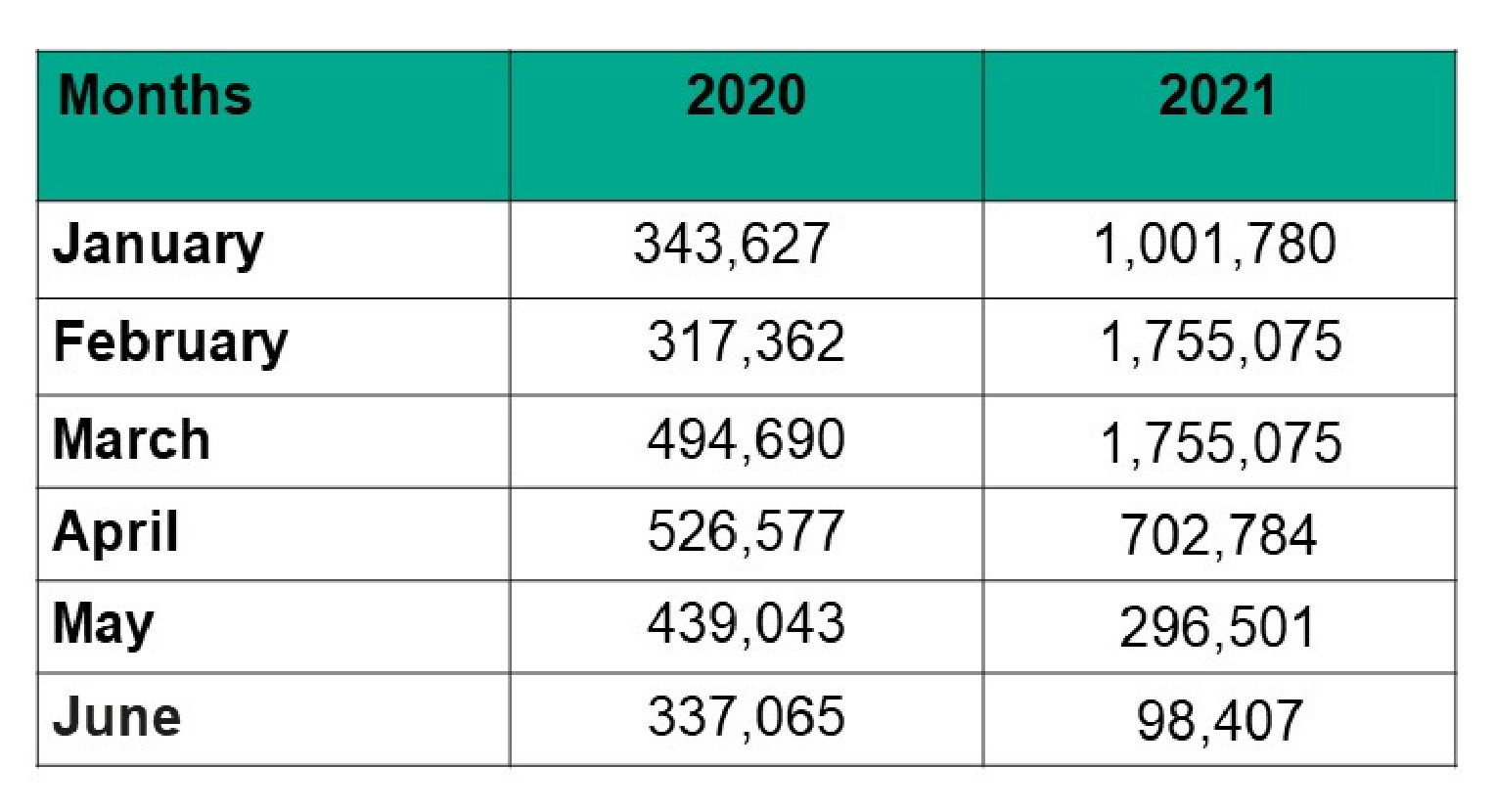
A September study by digital privacy firm Kaspersky found that cyberattacks in the Philippines almost doubled to 4.88 million cases from January to June, compared to only 2.46 million in the same period last year.  

Data showing brute-force attacks vs users of Kaspersky solutions in the Philippines from January–June 2020 and January–June 2021. Table via Kaspersky.

Cyberattacks are inevitable, said AJ Dumanhug, chief information security officer of Secuna, a cybersecurity testing platform. In a recent cybersecurity webinar co-organized with the FinTech Philippines Association, he likened such attacks as an 8 out of 10 in terms of impact — “almost the same as natural disasters.”  

Companies are vulnerable to cyberattacks because they aren’t concerned with cybersecurity, as evidenced by the absence of an information security officer dedicated to responding to such issues, he told BusinessWorld in an e-mail. 

“Most of the time companies don’t have an allotted budget for this,” Mr. Dumanhug said. “They see cybersecurity as an item in the checklist [they need] to be compliant [with].”   

The Philippines’ 2020 Global Cybersecurity Index score is 77, which places it at number 13 in the Asia Pacific region, right below Iran and a notch above Pakistan.  

White hat hackers (WHHs) or ethical hackers are being touted as a means to improve the country’s cybersecurity measures.  

In the Philippines, there exists a community of WHHs numbering almost 4000, Mr. Dumanhug told BusinessWorld.   

“WHHs offer their service during their free time to find security flaws,” he said. “Most of them are already employed full time.”   

The difference between black hat hackers and white hat hackers is their moral compass. The former finds flaws in a system to exploit these vulnerabilities, whereas the latter does the same so an organization can fix them.  

“We incentivize WHHs for finding valid security vulnerability in our clients by paying the first hacker who finds those problems,” added Mr. Dumanhug.  

There are over 3.1 million vacant positions in cybersecurity worldwide, a majority of which are in the Asia Pacific.  

According to information security magazine CISOMAG, one reason for this lack of supply is a lack of understanding about what ethical hackers do. India, for instance, produces more ethical hackers than anywhere else in the world but ranks only 10th in the 2020 Global Cybersecurity Index.  

India’s ethical hackers, CISOMAG said, earn millions protecting foreign corporations from cyberattacks, but “are largely ignored at home.” — Patricia B. Mirasol

BW One-on-One with Dennis Anthony H. Uy

As BusinessWorld celebrates its 34th anniversary this year, the One-on-One interview series returns with timely discussions with the country’s top business leaders.

Watch Dennis Anthony H. Uy discuss how industry insurgent Converge ICT Solutions Inc. plans to bring world-class broadband services to every Filipino home as the pandemic stresses the need for connectivity.

New Zealand’s economy surges in Q2, supporting rate hike call

PIXABAY

WELLINGTON — New Zealand’s economy grew at a much faster pace than expected in the second quarter, officials said on Thursday, reinforcing views that the central bank will start raising interest rates despite a recent outbreak of the coronavirus.  

Gross domestic product (GDP) surged 2.8% in the three months through June, Statistics New Zealand said, well ahead of a Reuters poll forecast of a 1.3% increase and the Reserve Bank of New Zealand’s (RBNZ) estimate of 0.7%.  

The growth surge follows a drop in unemployment in the second quarter to an 18-month low of 4.0% and a rise in annual inflation to 3.3%, above the central bank’s 1-3% target range.  

The New Zealand dollar jumped 0.3% after the data was released, settling at $0.7320.  

“We expect the RBNZ to ‘look through’ near-term volatility and reduce monetary stimulus, with a series of 25 basis point (rate) hikes starting from next month,” said Mark Smith, Senior Economist at ASB Bank.  

The central bank delayed raising rates last month after the country was put into a snap COVID-19 lockdown over an outbreak of the Delta variant of COVID-19 in Auckland, but said a hike was still on the cards.  

The market has already priced in a 100% chance of a 25 basis point hike at the next central bank meeting on Oct 6.  

Annual GDP jumped 17.4% from a very weak base as the country was in a complete COVID-19 lockdown in the second quarter last year. A Reuters poll had expected a 16.3% rise. Second-quarter growth was driven by the tourism sector, after the country opened a trans-Tasman travel bubble with Australia.  

New Zealand has rebounded strongly from a recession last year, largely due to its success in eliminating the coronavirus within its borders and reopening its domestic economy well before other advanced nations.  

The country had been virus-free for months until an outbreak of the highly infectious Delta strain in August. The biggest city Auckland remains in lockdown, but the rest of the country has opened up again. The travel bubble with Australia, however, has been suspended.  

Economists expect growth to contract in the third quarter due to the Delta-driven lockdown, but forecast a rapid recovery as vaccinations increase and the outbreak is contained.  

“Given that the economy was running hot going into the lockdown in August, the prospect of another V-shaped rebound becomes more likely,” said Michael Gordon, acting chief economist at Westpac Bank. The country recorded 13 new cases of COVID-19 on Thursday, taking the total number of cases in the latest outbreak to 979. — Reuters

BW Insights: Meeting the evolving needs of consumers in a hyperconnected world

The accelerated growth of e-commerce has given rise to new opportunities for Philippine businesses, but it has also created a new set of challenges. How can businesses use the tools at their disposal to effectively reach consumers in the growing e-commerce market?

Join BusinessWorld Insights, together with experts, in a discussion themed “Meeting the evolving needs of consumers in a hyperconnected world.”

This session of #BUSINESSWORLDINSIGHTS is presented by Globe.

Indonesia in talks with WHO to become global vaccine hub — minister

FREEPIK

JAKARTA — Indonesia is in talks with the World Health Organization (WHO) as well as six drug companies to become a global hub for manufacturing vaccines, its health minister told Reuters.  

Detailing the ambitious strategy for the first time, Budi Gunadi Sadikin said in an interview that Indonesia would kickstart the initiative by prioritizing purchases of coronavirus disease 2019 (COVID-19) vaccines from companies that shared technology and set up facilities in Indonesia.  

“We are working with the WHO to be one of the global manufacturing hubs for mRNA,” he said, adding he had directly lobbied WHO Director-General Tedros Adhanom Ghebreyesus on a trip earlier this month to Europe.  

“The WHO has pointed to South Africa as the first location, and I said that logically Indonesia should be the second.”  

The new “technology transfer hubs” are part of a WHO strategy to more widely distribute vaccine production globally and build capacity in developing countries to make new generation vaccines like Moderna and Pfizer’s nucleic acid-based mRNA jabs which can be quickly adapted to handle new virus variants.  

Efforts to develop a base for COVID-19 vaccine production in South Africa will focus on trying to replicate Moderna’s shot, but a lack of progress in talks with the US company mean the project will take time, a senior WHO official told Reuters.  

Mr. Budi said Indonesia was keen to build expertise in mRNA vaccines, as well as viral vector shots such as those produced by AstraZeneca.  

A WHO spokesperson said Indonesia was one of 25 low- and middle-income countries to express interest in hosting a vaccine hub but declined to say if it was a leading candidate.  

Mr. Budi said Indonesia was well-placed to export vaccines around the world, especially as it is the world’s most populous Muslim-majority country and could guarantee that its jabs were halal, or permissible according to Islam.  

Indonesia has grappled with one of the most severe outbreaks of COVID-19 in Asia and has recorded more than 4.1 million infections and 139,000 deaths, although public health experts say the true figures are likely several times higher.  

Indonesia’s rate of infections and deaths has declined sharply in recent weeks but, with only 25 per cent of its target population of 208 million people fully inoculated against COVID-19, it still has a major vaccination effort ahead, especially as it likely will have to provide third booster shots.  

Mr. Budi said Indonesian pharmaceutical companies are in discussions with vaccine manufacturers and developers Anhui, Walvax, Sinovac, Genexine, Arcturus Therapeutics and Novavax. The talks range from basic “fill and finish” to upstream production and research and development, he added.  

“We open the same opportunities also to AstraZeneca. We are also open to the existing partner Pfizer,” he said. “We are open to anyone.”  

Bambang Heriyanto, corporate secretary of Bio Farma, Indonesia’s largest state-owned drug company, confirmed the talks were on and the first step was to collaborate on the transfer of technology. It would take two or three years to build a fully operational production facility, he said.  

Mr. Budi said Indonesia would use its leadership of the G-20 group of countries starting in December to promote global health security and prepare for the next pandemic after the coronavirus, also known as SARS-CoV-2.  

“No one can guarantee that SARS-CoV-3 and 4 will not come.” — Tom Allard and Kate Lamb/Reuters 

Australia to get US nuclear submarine technology as China looms large

US Navy illustration

WASHINGTON/CANBERRA — The United States, Britain, and Australia said on Wednesday they would establish a security partnership for the Indo-Pacific that will involve helping Canberra acquire nuclear-powered submarines, as Chinese influence over the region grows.  

Under the partnership, announced by President Joseph R. Biden, Jr., British Prime Minister Boris Johnson and Australian Prime Minister Scott Morrison, the United States and Britain will provide Australia with the technology and capability to deploy nuclear-powered submarines.  

In a three-way virtual announcement from each of their capitals, the leaders stressed Australia will not be fielding nuclear weapons but using nuclear propulsion systems for the vessels, to guard against future threats.  

“We all recognize the imperative of ensuring peace and stability in the Indo-Pacific over the long term,” said Mr. Biden.  

“We need to be able to address both the current strategic environment in the region, and how it may evolve because the future of each of our nations and indeed the world depends on a free and open Indo-Pacific enduring and flourishing in the decades ahead,” he said.  

Mr. Morrison said the submarines would be built in Adelaide in South Australia state, in close cooperation with the United States and Britain.  

“We will continue to meet all our nuclear non-proliferation obligations,” he said.  

Mr. Johnson called it a momentous decision for Australia to acquire the technology. He said it would make the world safer.  

EYES ON CHINA 
Washington and its allies are looking for ways to push back against China’s growing power and influence, particularly its military buildup, pressure on Taiwan and deployments in the contested South China Sea.  

The three leaders did not mention China and senior Biden administration officials who briefed reporters ahead of the announcement said the move was not aimed at countering Beijing.  

China’s Washington embassy reacted, however, by saying that countries “should not build exclusionary blocs targeting or harming the interests of third parties.”  

“In particular, they should shake off their Cold-War mentality and ideological prejudice,” it said.  

James Clapper, a former director of US national intelligence, told CNN it was a bold step by Australia given its economy’s dependence on China, adding: “Clearly the Chinese will view this as provocative.”  

Republican Senator Ben Sasse said the agreement “sends a clear message of strength to Chairman Xi.”  

“I’ll always applaud concrete steps to counter Beijing and this is one of them,” he said.  

A US official briefing before the announcement said Mr. Biden had not mentioned the plans “in any specific terms” to Chinese leader Xi Jinping in a call last Thursday, but did “underscore our determination to play a strong role in the Indo-Pacific.”  

US officials said nuclear propulsion would allow the Australian navy to operate more quietly, for longer periods, and provide deterrence across the Indo-Pacific.  

The officials said the partnership, dubbed AUKUS, would also involve cooperation in areas including artificial intelligence and quantum technology.  

The partnership ends Australia’s 2016 deal French shipbuilder Naval Group to build it a new submarine fleet worth $40 billion to replace its more than two-decades-old Collins submarines, a spokesperson for Mr. Morrison told Reuters.  

The deal with France for 12 diesel submarines, then one of the world’s most lucrative defense deals, was beset by issues and delays due to Canberra’s requirement that the majority of the manufacturing and components be sourced locally.  

Australia in June said it was undertaking “contingency planning” as its fleet of Collins-class submarines approach the end of its lifespan.  

Mr. Biden said the governments would now launch an 18-month consultation period, “to determine every element of this program, from workforce, to training requirements, to production timelines” and to ensure full compliance with non-proliferation commitments.  

The pact should be a boon for the US defense industry and among the firms that could benefit are General Dynamics Corp and Huntington Ingalls Industries Inc.  

General Dynamics’ Electric Boat business does much of the design work for US submarines, but critical subsystems such as electronics and nuclear power plants are made by BWX Technologies Inc  

Britain said the 18-month program would work out details as to what countries and companies would do what, with the aim for the first submarine to be delivered as quickly as possible.  

US officials did not give a time frame for when Australia would deploy a nuclear-powered submarine, or how many would be built. They said that since Australia does not have any nuclear infrastructure, it would require a sustained effort over years.  

ONE-OFF TECHNOLOGY SWAP 
One US official said the announcement was the result of several months of engagements among respective military commands and political leaderships, during which Britain — which recently sent an aircraft carrier to Asia – had indicated it wanted to do more in the region.  

“What we’ve heard in all those conversations is a desire for Great Britain to substantially step up its game in the Indo-Pacific,” the official said, noting its historical ties to Asia.  

The US official said Washington had shared nuclear propulsion technology only once before — with Britain in 1958 — and added: “This technology is extremely sensitive. This is frankly an exception to our policy in many respects, I do not anticipate that this will be undertaken in other circumstances going forward. We view this as a one-off.”  

The move was being taken as part of “a larger constellation of steps” in the region, he said, including stronger bilateral partnerships with long-term allies Japan, South Korea, Thailand and the Philippines, and stronger engagements with new partners like India and Vietnam.  

The announcement comes just over a week before Biden is to host a first in-person meeting of leaders of the “Quad” group of countries — Australia, India, Japan and the United States — that Washington sees as a key means to stand up to China. — Trevor Hunnicutt, Nandita Bose, David Brunnstrom, and Colin Packham/Reuters 

UNICEF calls for schools to reopen in pandemic-hit nations

PHILSTAR

MANILA — The United Nations children’s agency UNICEF has urged education authorities to reopen schools as soon as possible in countries where millions of students are still not allowed to return to classrooms 18 months into the coronavirus disease 2019 (COVID-19) pandemic.  

Schools in around 17 countries remain fully closed, while those in 39 countries remain partially closed, according to a report released by UNICEF on Thursday.  

Among those “almost completely closed” are schools usually attended by nearly 77 million students in the Philippines, Bangladesh, Venezuela, Saudi Arabia, Panama, and Kuwait.  

Nearly a third of this figure is accounted for by the Philippines, which is fighting one of Asia’s worst coronavirus outbreaks and where a new school year started this week.  

Pupils from the six countries represent more than half of the 131 million students worldwide that have missed more than three-quarters of their in-person learning, UNICEF said.  

“The education crisis is still here, and with each passing day that classrooms remain dark, the devastation worsens,” said UNICEF Executive Director Henrietta Fore.  

The report said teachers should be prioritized for COVID-19 vaccines, after health workers and those most at risk, to protect them from community transmission.  

Students may be safer at home, but the availability of computers, mobile phones and internet, and the uneven quality of education, are among challenges they continue to face.  

In the Philippines, some children have been forced to climb onto roofs just to get an internet signal.  

In June, President Rodrigo R. Duterte rejected a proposal to allow face-to-face classes to resume in some areas, saying: “I cannot gamble on the health of the children.”  

In a report released in April, the Asian Development Bank estimated school closures lasting more than a year could slash future earnings among the region’s students by as much as $1.25 trillion, or equivalent to 5.4% of GDP in 2020.  

UNICEF and its partners will shut down their digital channels for 18 hours on Thursday to draw attention to the crisis and the “18 months of lost learning.”  

“This is a crisis we will not allow the world to ignore,” UNICEF’s Ms. Fore said. “Our channels are silent, but our message is loud: Every community, everywhere must reopen schools as soon as possible.” — Reuters

Moderna says COVID-19 vaccine protection wanes, makes case for booster

CHICAGO — New data from Moderna Inc.’s large coronavirus disease 2019 (COVID-19) vaccine trial shows that the protection it offers wanes over time, supporting the case for booster doses, the company said in a news release on Wednesday.  

“This is only one estimate, but we do believe this means as you look toward the fall and winter, at minimum we expect the estimated impact of waning immunity would be 600,000 additional cases of COVID-19,” Moderna President Stephen Hoge said on a conference call with investors.  

Mr. Hoge did not project how many of the cases would be severe, but said some would require hospitalization.  

The data stands in stark contrast with data from several recent studies that suggested Moderna’s vaccine protection lasts longer than a similar shot from Pfizer Inc. and German partner BioNTech SE.  

Experts said the difference is likely due to Moderna’s higher dose of messenger RNA (mRNA) and the slightly longer interval between the first and second shots.  

Both vaccines proved to be exceedingly effective at preventing illness in their large Phase III studies.  

Wednesday’s analysis, however, showed higher rates of infection among people vaccinated roughly 13 months ago compared with those vaccinated roughly eight months ago. The study period was from July–August, when Delta was the predominant strain. It has yet to undergo peer review.  

Moderna on Sept. 1 submitted its application to the US Food and Drug Administration seeking authorization for a booster shot.  

Mr. Hoge said data from its booster studies shows the vaccine could increase neutralizing antibodies to levels even higher than were seen after the second dose.  

“We believe this will reduce COVID-19 cases,” he said. “We also believe that a third dose of mRNA-1273 has a chance of significantly extending immunity throughout much of next year as we attempt to end the pandemic.”  

Briefing documents from the FDA’s analysis of Pfizer’s booster application, released earlier on Wednesday, suggest that a key issue the agency will consider is whether vaccine protection is waning.  

In its analysis, Moderna compared the vaccine’s performance in more than 14,000 volunteers vaccinated between July and October of 2020 with some 11,000 volunteers originally in the placebo group who were offered the shot between December 2020 and March 2022 following its U.S. emergency use authorization.  

In the two-month period from July–August, researchers identified 88 COVID-19 cases among those who got the two shots more recently, compared with 162 cases among those vaccinated last year. Overall, only 19 cases were considered severe, a key benchmark in assessing waning protection.  

Moderna said there was a trend toward a lower rate of severe cases among the more recently vaccinated, although the finding was not statistically significant.  

Data from a separate study presented on Wednesday conducted with Kaiser Permanente Southern California health system, meanwhile, shows that Moderna’s vaccine continued to perform well against the Delta variant.  

Researchers compared data on more than 352,000 people who got two doses of the Moderna vaccine with the same number of unvaccinated individuals and found the Moderna vaccine was 87% effective at preventing a COVID-19 diagnosis, and 96% effective at preventing hospitalization.  

Hoge said the vaccine’s initial performance is strong, but argued that protection shouldn’t be allowed to wane.  

“The first six months are great, but you can’t count on that being stable out to a year and beyond,” he said. — Julie Steenhuysen/Reuters 

Billions blown as Macau casino investors fold amid gambling review

PIXABAY

HONG KONG — Shares of Macau casino operators on Wednesday shed as much as a third of their value, losing about $18 billion, as the government kicked off a regulatory overhaul that could see its officials supervising companies in the world’s largest gambling hub.  

With Macau’s lucrative casino licenses up for rebidding next year, the plan spooked a Hong Kong market already deep in the red after Beijing’s regulatory crackdown on sectors from technology to education and property that sliced hundreds of billions of dollars off asset values.  

Wynn Macau led the plunge, falling as much as 34% to a record low, followed by a 28% tumble for Sands China. Peers MGM China, Galaxy Entertainment, SJM and Melco Entertainment all fell heavily, taking the drop to HK$143 billion ($18 billion).  

US casino companies also fell for the second straight day, losing as much as $4 billion in market capitalization on Wednesday, with Las Vegas Sands Corp slumping to more than a year low, Wynn Resorts Ltd and MGM Resorts International, dropping 8% and 5%, respectively.  

The slump came after Lei Wai Nong, Macau’s secretary for economy and finance, gave notice on Tuesday of a 45-day consultation period on the gambling industry to begin from the following day, pointing to deficiencies in industry supervision. 

Beijing, increasingly wary of Macau’s acute reliance on gambling, has not yet said how the license rebidding process will be judged.  

“Margins will be crushed at the gambling capital of the world and that will drag down all the big casinos,” said Edward Moya, senior market analyst at OANDA in New York.  

Some Hong Kong stock analysts wasted little time in downgrading their view of near-term prospects for casino operators in the Chinese special administrative region, who must all rebid for licenses when current permits expire in June 2022.  

J.P. Morgan is downgrading to neutral or underweight all Macau gaming names from overweight, because of the tougher scrutiny on capital management and daily operations ahead of license renewals, said analyst D.S. Kim.  

“We admit it’s only a ‘directional’ signal, while the level of actual regulation or execution still remains a moot point,” he said, adding the news would have already put doubt in investors’ minds.  

Brokerage CFRA downgraded Wynn Resorts to “Strong Sell” from “Buy,” citing heightened regulatory risks and said the review was a major overhang for the company as well as other operators.  

TIGHTER REGULATION  

At a news briefing on Tuesday, Mr. Lei detailed nine areas for the consultation, such as the number of licenses, better regulation and employee welfare, as well as having government representatives to supervise daily casino operations.  

The government also plans to increase voting shares in gaming concessionaires for permanent residents of Macau, as well as more rules on transfer and distribution of profits to shareholders.  

Discussions over the future of Macau’s casino licenses come amid rocky US-China relations, leaving some investors fearing an edge for domestic players over US-based casino operators.  

The government has not singled out any US players, but companies have moved to beef up the presence of Chinese or local executives as they position themselves more as Macau operators than foreign one.  

Before license expiry, operators have tried to strengthen corporate responsibility and diversify into non-gaming offerings to placate Beijing, which fears over-reliance on gambling.  

Macau has boosted scrutiny of casinos in recent years, clamping down on illicit capital flows from mainland China and targeting underground lending and illegal cash transfers.  

Beijing has also stepped up a war on cross-border flows of funds for gambling, hitting the funding of Macau’s junket operators and their VIP customers.  

In June, Macau more than doubled the number of gaming inspectors and restructured departments to boost supervision.  

George Choi, a Citigroup analyst in Hong Kong, said while the public consultation document gave few details, the suggested changes benefit long-term sustainable growth, with “positive implications on the six casino operators.”  

However, he cautioned, “We will not be surprised if the market focuses only on the potentially negative implications, given the weak investor sentiment.”  

The consultation comes as Macau has struggled with a dearth of travelers because of coronavirus curbs since the start of 2020. While gambling revenues have picked up in recent months, they remain less than half of 2019 monthly figures. — Farah Master and Donny Kwok/Reuters

Globe holds national conference on digital learning to culminate National Teachers’ Month and World Teachers’ Day

Another school year of online distance learning awaits learners and educators as the country continues to cope with the lingering impact of the pandemic.

Since the sudden shift from traditional to remote learning last year, the educational sectors are still struggling to keep up with the demands of digital learning. While some are privileged enough to have a strong support system and technology at their disposal, other students remain lacking, and this gravely affects the quality of education the students are receiving.

However, the passion and dedication of educators and institutions to provide the best learning solutions keep on burning.

In celebration of National Teachers’ Month and World Teachers’ Day, Globe will hold “Forefront: The 2021 National Conference on Digital Learning” on October 1, Friday, from 8 A.M. to 12 noon. The event will be live-streamed on the Globe Business Facebook page (facebook.com/globemybusiness).

Attendees of the conference will be grouped into breakout rooms to attend parallel sessions and listen to speakers from various academic disciplines.

Mark Arthur Abalos, Globe’s Segment Head for Education mentioned that invited speakers will discuss subjects ranging from technology integration across the curriculum such as virtual laboratories, digital libraries, e-tutoring, educational software, adaptation to new technologies, and more. Attendees will also be graced with the presence of technology leaders of different learning management systems like D2L Brightspace LMS, ClassIn, Google for Education, and Microsoft.

Thus, Globe encourages administrators, educators, policymakers, and teachers to participate in the conference, following the theme, “Transformative Online Pedagogies: Reimagining Education for Better Tomorrows”.

“Forefront aims to celebrate the ceaseless determination of educators and institutions to make learning possible for all, especially in this crisis, and to provide a venue to tackle new issues and solutions that have risen from the past year’s remote learning system,” Abalos said.

Educators and institutions from all over the country will come together to share their views regarding the current learning setup and how the continuous integration of technology in digital learning can transform the quality of Philippine education, all the while providing equal access for all Filipinos.

To register, log on to https://glbe.co/Forefront2021.

_______________________________________________________________________

Spotlight is BusinessWorld’s sponsored section that allows advertisers to amplify their brand and connect with BusinessWorld’s audience by enabling them to publish their stories directly on the BusinessWorld Web site. For more information, send an email to online@bworldonline.com.

Join us on Viber to get more updates from BusinessWorld: https://bit.ly/3hv6bLA

ADVERTISEMENT
ADVERTISEMENT