Home Blog Page 7477

Are Hong Kong property tycoons China’s next target?

FOR ANYONE who wasn’t paying attention, China is serious about its common prosperity drive. Aiming to rein in billionaires and reduce income inequality, regulators have cracked down on tech giants and mainland real estate developers alike, costing shareholders over $1 trillion along the way. Last week, officials set their eyes on the territory of Macau, the world’s biggest gambling hub. Can Hong Kong’s property tycoons remain unscathed much longer?

Investors don’t seem to think so, and Monday’s selloff was swift and brutal. The city’s big four developers, Sun Hung Kai Properties Ltd., CK Asset Holdings Ltd., Henderson Land Development Co., and New World Development Co., all tumbled to their lowest level since 2016. Having witnessed what happened to China’s education stocks, another sector in the crosshairs, and Macau’s casino shares, investors are selling first, and asking questions later.

The share moves come after reports that China asked the territory’s real estate billionaires to resolve the city’s housing crisis. Some officials in Beijing have blamed Hong Kong’s protests in 2019 on its sky-high home prices, which fueled resentment among the youth. The city was ranked the world’s least affordable housing market for the 11th year, according to a report put out by two think tanks. So, what’s next for Hong Kong?

Sell-side analysts are preparing for doomsday scenarios: What if developers have to donate all of their (rather substantial) agricultural land holdings to the government? What if they are required to sell all of their future residential land banks at cost? Hong Kong’s limited land supply is a big problem that the government has been slow to address. Only about 6.9% of its land is available for housing development, while agriculture accounted for another 6.1%.

Did investors overreact? Over the years, the territory’s real estate developers have diversified, to mainland China and beyond. New World Development and CK Asset and have just 14% and 16% of their net asset value exposed to Hong Kong residential property, estimates JPMorgan Chase & Co.

Catch the falling knife at your own risk. We knew that the rules of the game had changed as early as July, when Beijing put ride-hailing giant Didi Global, Inc. under regulatory review after it defied warnings and went ahead with its US initial public offering. China no longer sees shareholder capitalism serving the nation well; now, it’s going for stakeholder capitalism, where customers, employees, and even local governments all have a say in how companies do business and retain their earnings.

Soaring home prices are becoming a political problem around the world. In China, out of desperation, some cities with red-hot housing markets have instituted price controls. Across the border, in the Tier-1 cities of Guangzhou and Shenzhen, local governments launched price reference systems for existing home sales. If, for example, you can sell your apartment for $1 million, but your buyer can only get a bank mortgage based on the suggested sale price of $500,000, the buyer will have to shell out a much bigger down payment. This reduces demand and dampens home prices.

Amid China’s regulatory crackdowns and stock selloffs, real estate developers in the blue-chip Hang Seng Index had been fairly immune, down only 15.5% year to date, versus the Hang Seng Tech Index’s 26.7% tumble, and Macau casino operators’ 46% bloodbath. That seems too good to be true. China’s whip is coming for Hong Kong’s property billionaires, too.

BLOOMBERG OPINION

Changing measures: The dawn of a new age

No person shall be deprived of his life, liberty, or property without due process of law.1 This was guaranteed by no less than the Constitution — our fundamental law, in its mission to find a striking balance between the immense powers of the State on one hand, and an individual’s right to being on the other. Necessarily, and rightfully so, due process has been defined as the “sporting idea of fair play”2 considering as it does limit official acts within the bounds of reason.

In hopes of adding more meaning to such a guaranty, the Constitution recognized as inviolable the right of the people to be secure in their persons, houses, papers, and effects against unreasonable searches and seizures of whatever nature and for any purpose.3 Speaking through Justice Marvic Leonen, the Supreme Court, in People v. Cogaed,4 elucidated that the foregoing mantle of protection is essential to allow each and every individual to evolve their autonomy, and to avail for themselves the right to privacy.

However, notwithstanding the foregoing guarantees, these rights remain to be threatened. As it may be recalled, this country saw a proliferation of allegations involving abuses and irregularities in the execution of warrants of arrest and/or search warrants. These include, among others, allegations of extrajudicial killings — the stories of which, and the truth behind them, we are truly yet to hear and know of.

Abuses in the course of the execution of search warrants is not a novel concept in the Philippines. As a matter of fact, as early as 1930, the Philippine Legislature saw it fit to define and penalize abuses in the service of search warrants. Thus, Article 129 of the Revised Penal Code thereby imposes, among others, the penalty of imprisonment upon any public officer or employee who shall exceed his authority or use unnecessary severity in execution of a search warrant legally obtained.5 The purpose of Article 129 of the Revised Penal Code cannot be overemphasized. Unmistakably, it seeks to give life and meaning to the Constitutional protection against unreasonable searches and seizures. This view is supported by the Revised Penal Code itself, which classifies Article 129 as crime against the fundament law[s] of the State.

Notably, the Supreme Court, through its rule-making power, also gave life to the foregoing Constitutional rights and protections. As presently worded, the Rules of Court are replete with Rules to safeguard the foregoing rights, to wit: a.) the proscription against the use of violence and unnecessary force in the course of making an arrest6; b.) mandating police officers to deliver the person so arrested to the nearest police station or jail without unnecessary delay7; c.) prohibiting the search of a house, room, or any other premise unless it be done in the presence of the lawful occupant thereof, or any member of his family, or in their absence, two witnesses of sufficient age and discretion residing in the same locality8; and, d.) limiting the validity of a search warrant for 10 days from the date of its issuance.9

In hindsight, the foregoing Rules are merely part and parcel of the Supreme Court’s duty to not only interpret the Constitution, but to also act with haste in safeguarding the Constitutional rights of every individual when the need to do so arises. Nonetheless, sufficient as these Rules are in protecting such rights, it is a known fact that ours is a society of rapid change, and changing times call for responsive measures. It was on this score, coupled with the proliferation of extrajudicial killings, that the Supreme Court saw it fit to promulgate A.M. No. 21-06-08-SC or the “Rules on the Use of Body-Worn Cameras in the Execution of Warrants” (Body-cam Rules).

At a glance, the Body-cam Rules introduced in our jurisdiction the concepts of Body-worn Cameras, defined an electronic camera system designated to law enforcement units for, among others, creating, generating, sending, and processing audio-visual recordings that may be worn during law enforcement activities10, and Alternative Recording Devices (ARD), defined as an electronic camera system that it not a body-worn camera, but may be used as a substitute for the same in case of the latter’s unavailability.11 However, the ARD must comply with the minimum standard requirements set forth by the Body-cam Rules.12

The Body-cam Rules provided for Rules that were either specific for Warrants of Arrest or Search Warrants, or are common to both. One such commonality includes the mandate on judges to issue the warrant with an order requiring the use of at least one body-worn camera and one ARD, or at least a minimum of two devices.13 Further, it appears to be the duty of law enforcements officers executing the warrant to preserve at all times the chain of custody over the recordings.14 However, non-compliance with the chain of custody rule appears not to be a fatal defect as this may be cured by the mere execution by the law enforcement officer concerned of an affidavit indicating therein, among others, the reasonable grounds for his non-compliance including all acts undertaken showing genuine and sufficient efforts exerted to ensure compliance with the Body-cam Rules.15

Consent of the subjects to be recorded is not a requirement before they can be validly recorded.16 All that is required is for the law enforcement officer executing the warrant to notify, as early as practicable, the person to be arrested and the other subjects of the recording17, or, in case of search warrants, the lawful occupants of the premises to be searched, that the execution of the warrant is being recorded and that the same is being conduct pursuant to a warrant issued by a court.18 Nonetheless, the consent of the subject so record is required before the recording may be used by or against him in a court proceeding.19 Save, however, when the recording captured incidents resulting in the loss of life or an assault made on law enforcement officers during the conduct of the arrest or search.20 Finally, recordings made pursuant to the Body-cam rules are, by expression provision, not a public record subject to disclosure except, however, when the foregoing instances are also applicable.21

The Body-cam Rules made a striking distinction between Warrants of Arrests and Search Warrants insofar as the effects of non-compliance and the scope of its applicability are concerned. Failure to observe the requirement of using body-worn cameras or ARDs, justifiable or otherwise, during the execution of warrant of arrest shall not render the arrest unlawful, much less render the evidence obtained therein as inadmissible.22 Nevertheless, unjustifiable failure renders the law enforcement officer concerned liable for contempt of court, without prejudice to any other liability under the law.23 An exception, however, must be made when an arrest was made by virtue of a warrant, and a search was made incidental to such arrest.24 In this case, should the arrest be made without the use of a body-worn camera or ARD, the evidence so obtained no longer remains infallible as the person so arrested and searched may file a motion to suppress evidence.25

The Rules for Search Warrants, however, paint a different picture. Failure to use body-worn cameras or ARDs without reasonable grounds renders the evidence obtained inadmissible for the prosecution of the offense for which the search warrant was applied for.26 Necessarily, the person so searched may likewise file a motion to suppress evidence.27

Finally, and most importantly, the Body-cam Rules expanded the territorial applicability of search warrants in Special Criminal Cases28 upon proof of compelling reasons for the filling of the application for a search warrant with the Executive Judge, or in his absence, the Vice-Executive Judge of the Regional Trial Court.29 If the Executive Judge, or in his absence, the Vice-Executive Judge, finds the reasons justifiable, they shall issue the warrant, which may be served in places outside their territorial jurisdiction, but within their judicial region.30

The promulgation of the Body-cam Rules marked the dawn of a new age in our justice system. These Rules address the growing apprehensions regarding extrajudicial killings by providing verifiable proof of the actual arrest and/or search. Effectively the Body-cam Rules will place the execution of warrants beyond the realm of “he said, she said.” In doing so, the Rules will not only help rebuild the public’s trust in law enforcement, but will also prove that the inviolability of a person’s Constitutional right against unreasonable searches and seizures are not mere empty words.

The foregoing considered, one can only remain hopeful.

This article is for informational and educational purposes only. It is not offered and does not constitute legal advice or legal opinion.

1 CONSTITUTION, Article III, Sec. 1.

2 Frankfurter, Mr. Justice Holmes and the Supreme Court, pp. 32-33, cited in Tañada and Fernando, Constitution of the Philippines, 4th ed., Vol. I, p. 85.

3 CONSTITUTION, Article III, Sec. 2.

4 G.R. No. 200334, July 30, 2014.

5 REVISED PENAL CODE, Book Two, Title Two, Chapter One, Section 2, Art. 129.

6 RULES OF COURT, Rule 113, Sec. 2.

7 RULES OF COURT, Rule 113, Sec. 3.

8 RULES OF COURT, Rule 126, Sec. 8.

9 RULES OF COURT, Rule 126, Sec. 10.

10 A.M. No. 21-06-08-SC, Rule 1, Sec. 4(2).

11 A.M. No. 21-06-08-SC, Rule 1, Sec. 4(1).

12 Ibid.

13 A.M. No. 21-06-08-SC, Rule 2, Sec. 1; Rule 3, Sec. 1.

14 A.M. No. 21-06-08-SC, Rule 4, Sec. 2.

15 A.M. No. 21-06-08-SC, Rule 2, Sec. 4(9); Rule 3, Sec. 6(9).

16 A.M. No. 21-06-08-SC, Rule 4, Sec. 6.

17 A.M. No. 21-06-08-SC, Rule 2, Sec. 2.

18 A.M. No. 21-06-08-SC, Rule 3, Sec. 4.

19 A.M. No. 21-06-08-SC, Rule 4, Sec. 6.

20 Ibid.

21 Ibid.

22 A.M. No. 21-06-08-SC, Rule 2, Sec. 5.

23 Ibid.

24 A.M. No. 21-06-08-SC, Rule 3, Sec. 8.

25 Ibid.

26 A.M. No. 21-06-08-SC, Rule 3, Sec. 7.

27 A.M. No. 21-06-08-SC, Rule 3, Sec. 8.

28 A.M. No. 21-06-08-SC, Rule 3, Sec. 2.

29 Ibid.

30 Ibid.


Ramon Jose A. Dimaculangan is an Associate of the Litigation and Dispute Resolution Department (LDRD) of the Angara Abello Concepcion Regala & Cruz Law Offices or ACCRALAW.

(632) 8830-8000

radimaculangan@accralaw.com

Fostering a people-centered health agenda

MACROVECTOR -FREEPIK

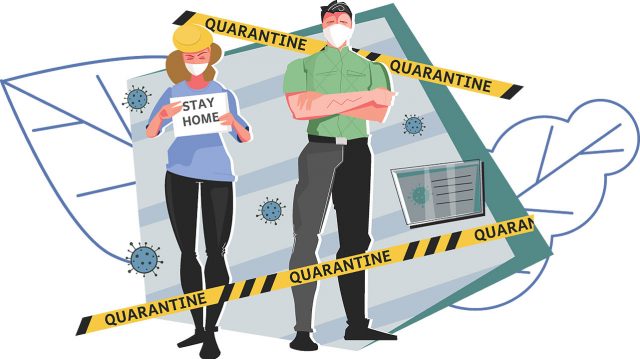
After backtracking from its initial decision, the National Government recently announced that it will push through with the implementation of granular lockdowns. This is being piloted in the National Capital Region until Sept. 30.

Since this pandemic began, the government has experimented with various types of mobility restrictions that until now bring utter confusion to Filipinos. And yet we are in the middle of another scheme, adding to the ever-expanding vocabulary of quarantine measures.

Then again, “granular lockdowns” is not an altogether new concept. It is a rehash of the “localized lockdown” being implemented by the LGUs for more than a year now. This pertains to areas with a high incidence of cases.

What we are seeing is a frazzled response to the continued rise in new COVID-19 cases and woefully inadequate efforts to control the transmission. Lockdowns of whatever name notwithstanding, this virus continues to strain our healthcare system and the economy, aside from bringing grief to the sick and their families. In the past two weeks, more than 20,000 new cases were reported daily. The current positivity rate is almost 30%, which is far greater than the less than 5% recommendation by the World Health Organization (WHO).

There is a clear disconnect between the measures used to address the pandemic and their actual results.

In its recent presentation in the Health Committee Hearing in the House of Representatives, the Department of Health (DoH) says it seeks more than P157 billion from the Congress for 2022 — around a 14% increase from the current year’s allocated budget for health. According to Health Secretary Francisco Duque III, a big portion of the proposed budget, or P78.83 billion, was earmarked for the implementation of programs under the Universal Health Care (UHC) Law, which included COVID-19 initiatives such as providing for 3.8 million COVID-19 tests and laboratory network needs.

In an earlier hearing, however, the Health Secretary admitted that under this National Expenditure Program, there is no budget allotted for the creation of more COVID-19 testing laboratories, and the funding for more vaccines was uncertain. When asked about how long the pandemic will most likely last, Mr. Duque mentioned that “based on the projections of experts and of the WHO, the pandemic could last one or two more years.” Given these pronouncements, it is unclear how the DoH will have enough capacity to curb the spread of the virus.

As the lead agency in the pandemic response, the DoH is expected to provide clear and evidence-based strategies on how to proactively address the health situation of the country. It should also properly relay and coordinate these proposed solutions with other agencies and stakeholders so that there could be a whole-of-society response.

Only this will allow the public to have trust and confidence that the government is really on top of the crisis. When the public is confident that their government is doing the right thing and living by examples, there is no reason why they will not abide by the set rules and regulations, most especially if these are for their own health, safety and/or welfare.

Unfortunately, since this crisis started last year, the efforts of the health agency have always been divided in responding to several uncertainties and controversies. These are recurring issues of negligence, transparency, and alleged corruption that erode the credibility and tarnish the image of the department.

These controversies are unfair to those who work hard, earning their honest keep, passionately serve the public and man the frontlines of the healthcare system. The DoH needs to seriously address management and leadership issues within the organization.

Better health resource utilization and outcomes do not automatically translate into higher health allocations and expenditures. Higher funding for health does not guarantee better pandemic response and progressive implementation of the UHC. A much better course of action is to have a holistic, transparent, and people-centered approach to healthcare, one that duly considers the rights and needs of different health constituents and stakeholders.

As elections draw near — the filing of certificates of candidacy for public office will be in less than a month — different stakeholders can shape a strategic health agenda with clear solutions and policy recommendations. This is to address existing gaps and build a better, more responsive healthcare system.

On Sept. 24, the Stratbase ADR Institute, in partnership with Universal Health Care (UHC) Watch, will gather experts and stakeholders from the academe, public, private, and civil society sectors to share their perspectives and solutions. By injecting a multi-sectoral synergy into the current health equation, we hope to foster a renewed healthcare agenda that is proactive, efficient, evidence-based, and, most importantly, people-centered.


Alvin Manalansan is a Non-Resident Fellow of the Stratbase ADR Institute, and a Convenor of CitizenWatch Philippines.

Trudeau wins another minority in election, claims ‘clear mandate’

PHILIPPINE STAR/KRIZ JOHN ROSALES

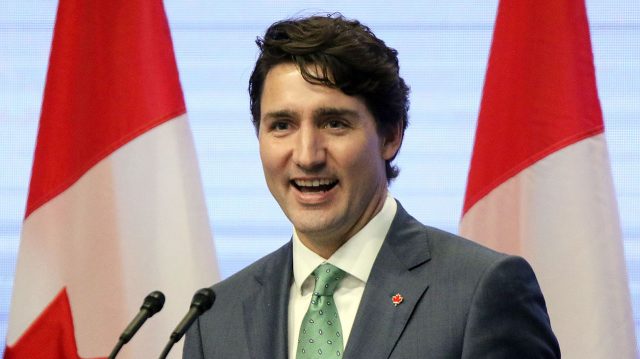
MONTREAL/OTTAWA — Canadian Prime Minister Justin Trudeau hung onto power on Monday as his main rival conceded defeat, saying he had won a clear mandate to govern although he fell short of his goal for a majority win.

Mr. Trudeau, in power since 2015 and governing with a minority of House of Commons seats since 2019, decided to gamble on an early vote and capitalize on his government’s handling of the pandemic, which included massive spending to support individuals and businesses and a push for high vaccination rates.

Instead, he will end up where he started after an unexpectedly tight election race characterized by a lackluster campaign and voter anger at an election during a pandemic.

Conservative Leader Erin O’Toole, whose party placed second, conceded defeat as results trickled in late into the night. Mr. Trudeau spoke to supporters shortly after, pledging to work with other parties for the good of all Canadians.

“You are sending us back to work with a clear mandate to get Canada through this pandemic and to the brighter days ahead,” Mr. Trudeau said to a small crowd gathered in a hotel ballroom. “What we’ve seen tonight is that millions of Canadians have chosen a progressive plan.”

CBC and CTV projected that Mr. Trudeau’s Liberal government would hold a minority of seats in the House of Commons, meaning he will need another party’s support to govern.

Elections Canada showed the Liberals leading in 156 electoral districts nationally, one more than they held before the election, including 110 in vote-rich Ontario and Quebec.

“It’s a Groundhog Day election,” said Gerald Baier, a professor of political science at University of British Columbia. “It seems that ambivalence has stayed (from the 2019 election).”

The House of Commons holds 338 seats and a party needs to win 170 to hold a majority. The Conservatives led in 122 districts.

The Conservatives looked on track to win the popular vote, attracting 34% support to the Liberals’ 32%, but Liberal support is centered around urban and suburban areas where there are more seats.

“Our support has grown, it’s grown across the country, but clearly there is more work for us to do to earn the trust of Canadians,” Mr. O’Toole told supporters, while suggesting that he planned to stay on as leader. “My family and I are resolutely committed to continuing this journey for Canada.”

Polls reported results much more slowly than usual, with some stations forced to limit occupancy due to COVID-19 restrictions. Long lines forced some electors to wait hours to vote in southern Ontario, a critical battleground.

The Canadian dollar strengthened against its US counterpart in Asian trading on Tuesday, in part as a projected election win for Mr. Trudeau’s Liberal party reassured investors that economic support would continue.

Mr. Trudeau, 49, a charismatic progressive and son of former Liberal Prime Minister Pierre Trudeau, swept to power in 2015. But the Liberals dropped to a minority in 2019 after Mr. Trudeau was damaged in part by disclosures that he had worn blackface years ago.

Amid a fourth wave of COVID-19, Mr. Trudeau backed vaccine mandates while Mr. O’Toole, 48, opposed them, preferring a combination of voluntary vaccinations and rapid testing to stop the spread of the virus.

Mr. Trudeau had said he needed a new mandate to ensure Canadians approve of his plan for getting the country past the coronavirus pandemic. The Liberals, whose fiscal policy supports for the pandemic exceed 23% of GDP, plan billions in new spending to support economic recovery if re-elected. — Reuters

COVID-19 toll in US surpasses 1918 pandemic deaths

REUTERS

THE US’s COVID-19 (coronavirus disease 2019) deaths have surpassed the toll of the 1918 influenza pandemic, a milestone many experts say was avoidable after the arrival of vaccines.

The US has reported 675,446 deaths since the start of the pandemic, according to Johns Hopkins University data — more than the 675,000 that are estimated to have died a century earlier.

The US hits that deadly mark despite the widespread availability of COVID-19 vaccines, which were developed in record time in a display of the extraordinary advances in medical science in the past century. The inoculations have been passed up by some 70 million eligible Americans, many of them encouraged by Republican politicians and conservative media.

“To have so many people who have died with modern medicine is distressing,” said Eric Topol, director of the Scripps Translational Research Institute, who noted there were no ventilators or vaccines in 1918. “The number we are at represents a number that is far worse than it should be in the US.”

The milestone also comes as the fast-spreading Delta variant has pushed the US into a dangerous new phase, upending hopes that the pandemic had passed and setting the stage for an uncertain winter.

Of course, the comparisons to the 1918 pandemic are highly imperfect. For starters, the US has about three times as many residents as it had a century ago, meaning the implied death rate is about a third as high. 

The 1918 pandemic also targeted many young people, whereas COVID has so far mostly killed those 65 and over, and the pandemics have played out at very different paces, according to John Barry, author of The Great Influenza: The Story of the Deadliest Pandemic in History. He said the 1918 pandemic did the majority of its damage during a 14- to 15-week stretch in the latter part of that year.

“That was much more intense, much more frightening,” Mr. Barry said of the earlier tragedy. But Mr. Barry said the stress from Covid has been longer-lasting, “and the economic damage is light-years greater.”

There are other reasons why the numbers may not reflect significant differences. The 675,000 estimate from 1918-19 was based on extrapolations from spotty data. While imperfect in their own ways, COVID statistics are probably better.

During extreme events such as pandemics, experts use so-called excess death studies as one way to estimate fatalities — essentially comparing the number of deaths in the outlier period with “normal” times. One excess death estimate from the US Centers for Disease Control and Prevention (CDC) suggests there have been as many as 830,443 such fatalities during the Covid pandemic, meaning the official numbers could be an undercount.

The unaccounted-for excess deaths may also reflect the price of disruptions in medical care and other indirect byproducts of the pandemic.

Vaccinations first rolled out in the US in December, and have been widely available for months. Since then, the vast majority of deaths have been among the unvaccinated.

“There is so much misinformation out there that some people cannot be convinced” of the benefits of vaccines, said Bertha Hidalgo, an epidemiologist at the University of Alabama. “Those are absolutely the deaths that can be prevented.”

A CDC study this month found that people who were not fully vaccinated this spring and summer were more than 10 times more likely to be hospitalized, and 11 times more likely to die of COVID-19, than those who were fully vaccinated. While Delta’s spread has resulted in more cases among the vaccinated than many anticipated, the vaccine still protects well against severe illness.

Mr. Topol, the Scripps director, said the US has failed in other ways. Mask use has declined significantly, and most people are still using cloth masks, which have shown to be much less effective than surgical and N95 masks. He said there needs to be widespread distribution of medical-grade masks and rapid at-home Covid tests that can help detect infections early on.

“Vaccines are a paramount part of the strategy, but we have failed on other measures as well, “ Mr. Topol said. “We’re fighting this war with two hands behind our back.”— Bloomberg

Cancer-detecting blood tests have same goal, different approaches

UNSPLASH 

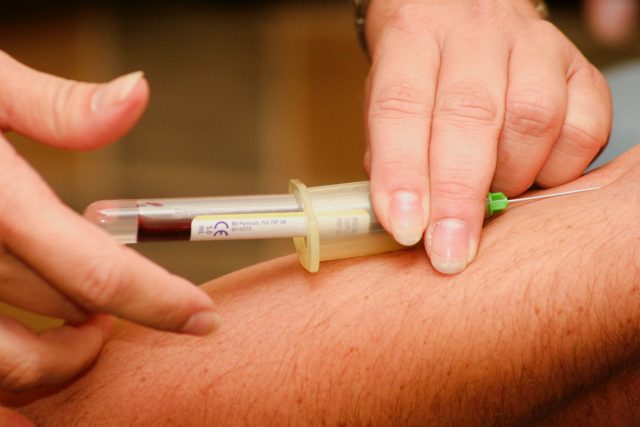
InterVenn BioSciences’ V.O.C.A.L. trial and GRAIL’s Galleri trial are underway, to see how well their respective blood tests can detect various types of cancer prior to the appearance of symptoms. Earlier diagnosis leads to a higher survival rate.   

The blood tests have fundamental differences, but neither is superior to the other. The approaches are complementary, said Aldo Carrascoso, the Filipino co-founder of InterVenn BioSciences, adding that tackling cancer is a “very hard” field that should have more attention than it is getting now.    

“The more weapons we have in the fight [against cancer], the more chances we have of winning it,” Mr. Carrascoso told BusinessWorld in a Zoom call.  

There is an attendant responsibility for companies developing screening tests, he added.  

Screening tests need to have a 99% specificity, or the ability to definitively state that an individual is not sick, to be acceptable in clinical literature.  

Tests that are less than 99% sensitive will end up overtreating patients who — “freaked out” by their results — will push for unnecessary diagnostic tests such as MRIs (magnetic resonance imaging). This overtreatment will overwhelm healthcare systems in the process.  

“There are implications to everything,” said Mr. Carrascoso. “Early detection is only as good as you can [rely on it].”  

The InterVenn founder compared GRAIL’s Galleri test with “looking for a needle in the haystack.” 

The Galleri test detects pieces of an individual’s DNA in the bloodstream that have been released from cancer cells.   

(Galleri’s genomic approach is similar to that of Guardant360 and Signatera, two cancer-detecting blood tests that received, respectively, approval and “Breakthrough Device” designation from the US Food and Drug Administration.) 

“One-tenth of 1% of cells shed tumor DNA,” said Mr. Carrascoso, said of the genomic approach.  

In contrast, InterVenn employs glycobiology (the study of glycans or carbohydrates) combined with deep machine learning and instrumentation.  

“Eighty percent of you is glycosylate [or proteins combined with sugar] surrounded by these sugar structures,” Mr. Carrascoso said. “When you measure them, you can see a very stark contrast between yung dami ng [the amount of] glycosylation and the progression of the disease.”  

In the V.O.C.A.L. trial, the more glycans a woman has, the higher the probability she has ovarian cancer. The higher the probability too that the further along she is in the disease.  

InterVenn BioSciences says it can now detect more than 50 cancers through its artificial intelligence-supported work with glycoproteins.  

This includes nasopharyngeal cancer, which it predicted with 100% accuracy in a 2020 study in Malaysia 

The company’s technology, according to Mr. Carrascoso, shows the entire movie of a disease as compared to only a snapshot of it. It can also detect COVID-19, and can predict serious cases versus cases that can be allowed home care 

“The [coronavirus’] spike protein is a glycoprotein, and we were able to see glycosylation patterns together with our multiple collaborators,” he said. More information about this development will be released in a paper with Standford University at a yet unannounced date.  

An upcoming and expanded InterVenn trial for cancer will also be announced at the American Society of Clinical Oncology conference in January 2022.  

“It’s like the Galleri test but more specific,” Mr. Carrascoso said. “We’re developing very specific signatures for very specific cases.” — Patricia B. Mirasol   

McDonald’s vaccinates 98% of crew and managers in NCR, set to hit 100% by October

Quick service restaurant giant McDonald’s Philippines has vaccinated 98% of its restaurant managers and crew in NCR with their first dose. With more than 14,000 store employees in the region, the company has fully vaccinated 68% and is on its way to hit its goal of 100% by October.

“Our top priority is to provide our people and customers a safe environment to work at and enjoy their McDo favorites. With the continuous spread of the more dangerous COVID-19 variant [Delta], we are committed to get all eligible employees nationwide fully vaccinated. We need to ensure they are better protected against the more severe effects of COVID-19, keeping their families and customers safe as well,” said McDonald’s Philippines President & CEO Kenneth S. Yang.

Under its M Safe program, McDonald’s purchased vaccines for all its employees together with other private companies under tripartite agreements. The vaccines are to be given to the employees for free. With the rampant threat of the Delta variant, the company had also encouraged their employees to get vaccinated as early as June in their respective LGUs to receive the much-needed protection against the virus. All McDonald’s employees fall under the A4 category.

With the recent government announcement on the Pilot Alert Level System in NCR, McDonald’s restaurants with fully vaccinated managers and crew members welcomed back customers for dine-in last September 16. In accordance with the IATF guidelines, fully vaccinated customers can opt to dine indoor within the 10% store capacity, while outdoor dining will be open to all customers with a store capacity limit of 30%.

Together with the constant acquisition of Safety Seal Certifications, now in over 50% of all restaurants nationwide, and active participation in boosting vaccine confidence through the Ingat Angat Bakuna Lahat program, the QSR giant assured that they will continue to offer safe, feel-good experiences for customers whether in the store, Drive-Thru or Delivery, through crew and managers who are protected/healthy and working in a safe environment.

McDonald’s Philippines master franchise holder Dr. George T. Yang一who oversees and sits as chairman for 40 years一founded and brought the first McDonald’s store to the country in 1981. Since then, McDonald’s in the Philippines has been a formidable player in the country’s quick service restaurant industry, having grown a store network of over 650 nationwide. McDonald’s Philippines continues to aspire to make a difference in communities where it operates through its charity of Choice, Ronald McDonald House Charities Philippines.


Spotlight is BusinessWorld’s sponsored section that allows advertisers to amplify their brand and connect with BusinessWorld’s audience by enabling them to publish their stories directly on the BusinessWorld Web site. For more information, send an email to online@bworldonline.com.

Join us on Viber to get more updates from BusinessWorld: https://bit.ly/3hv6bLA

Better internet pushes up Philippines in digital ranking, but e-governance still lags

BW FILE PHOTO

The Philippines ranked 48th out of 110 countries in the 2021 Digital Quality of Life (DQL) Index, due to improvements in internet quality and electronic security, based on global research by information technology firm Surfshark Ltd.  

Last year, the country ranked 66th due to poor scores in the five pillars of digital life: internet affordability, internet quality, electronic infrastructure, electronic security, and electronic government. Its main downfall was internet quality, where it ranked 84th.  

In contrast, this was where the Philippines turned in its strongest performance this year, ranking 20th and surpassing neighbors Malaysia (47th), Indonesia (79th), and Vietnam (86th). This means a faster mobile and broadband speed growth year on year.  

In terms of electronic security, the country also performed better, climbing to 30th place from 46th last year and outperforming New Zealand (42nd), Australia (36th), and South Korea (32nd).  

Surfshark’s study also found that the Philippines’ internet affordability improved by 156%, with citizens only needing to work around five hours to afford the cheapest broadband internet package — 2 hours and 18 minutes less than last year. Despite this improvement, the country landed in just 72nd place on the internet affordability index.  

The Philippines ranked 63rd in electronic infrastructure, which was measured according to the development and inclusivity of existing infrastructures based on the number of individual internet users per 100 inhabitants.  

Also lagging behind in 67th place is the Philippines’ electronic government performance, reflecting the level of advancement and digitization of a country’s government services.   

The countries with the highest digital quality of life are Denmark, South Korea, Finland, Israel, and the United States.   

South Korea has the best internet quality, while Denmark ranked first in terms of internet affordability and electronic infrastructure. Greece ranked first in the area of electronic security, while the US had the highest rating in terms of electronic government.  

The third annual edition of the DQL covers 90% of the global population. — Brontë H. Lacsamana  

PLDT named Philippines’ most outstanding telco by Asiamoney

PLDT Inc. clinched the Most Outstanding Company in the Philippines award under the Telecommunications Services Sector category of Asiamoney’s 2021 Outstanding Companies Poll.

Over 1,071 fund managers, analysts, bankers and ratings agencies took part in the voting. In total, over 5,787 votes were received for publicly listed companies across 13 markets in Asia.

The largest and fully integrated telecommunications company in the Philippines was lauded for excelling in areas such as financial performance, management team excellence, IR (investor relations) activities, and CSR (corporate social responsibility) activities.

Founded in 1989, Asiamoney is a leading financial magazine in the region, focused on investment and private banking, digitalization of banking, and fintech. The publication is an affiliate of other key capital markets publications from the Euromoney Institutional Investor Group.

Over the years, PLDT has topped Asiamoney’s annual polls in multiple categories. The company has been named as the Philippines’ Best Managed Company and recognized for being the Best in Investor Relations, Financial Management, Corporate Strategy, Stakeholder Value Focus, and Operational Efficiency


Spotlight is BusinessWorld’s sponsored section that allows advertisers to amplify their brand and connect with BusinessWorld’s audience by enabling them to publish their stories directly on the BusinessWorld Web site. For more information, send an email to online@bworldonline.com.

Join us on Viber to get more updates from BusinessWorld: https://bit.ly/3hv6bLA

Malaysia, India top Asian forecasts for faster growth in 2022

REUTERS

Economic activity next year in Malaysia and India, two of the countries most affected by COVID-19 outbreaks in recent months, is expected to recover faster than earlier forecast, latest surveys show.

Malaysia’s growth outlook was upgraded by the most in the region — 85 basis points to an expansion of 5.65% next year, according to the latest survey results compiled by Bloomberg. India was a close second, with its economy expected to grow 6.7%, 80 basis points faster than previously seen.

Economists have raised their growth projections for most Asian countries, except Thailand and New Zealand, which saw their outlooks slashed by at least 20 basis points, while Indonesia’s outlook was little changed.

Malaysia, which posted one of the world’s highest daily new infection rates over the past month and underwent a leadership change, doesn’t face any immediate economic risks. The economy’s performance was supported by improvement in domestic demand and continued robust exports, as second-quarter gross domestic product grew 16.1%.

Strong demand is keeping India on track to achieving the world’s fastest growth in the year to March, with new weekly infections dropping to the lowest in more than 6 months as of Sunday. The country’s economic losses have been limited so far, and it will be boosted by factors such as better-adapted firms, stable financial conditions and robust global growth spillovers, said Madhavi Arora, lead economist at Emkay Global Financial Services Ltd.

The survey on consumer price trends showed the biggest revision to New Zealand’s outlook, with inflation there seen accelerating by 90 basis points to 2.3% next year. Singapore and Australia are likely to follow suit with headline inflation seen rising by at least 40 basis points.

“The latest print for wages and inflation showed a strong uptick” for New Zealand, said Thomas Rudgley, economist at Oxford Economics, adding that some of these core drivers of upward pressure will re-emerge, until migration resumes and tightness in the labor market eases. — Bloomberg

Philippines supports Australia nuclear sub pact to counter China

PHILIPPINE STAR/EDD GUMBAN

MANILA – The Philippines is backing a new defense partnership between the United States, Britain and Australia, hoping it can maintain the balance of power in the Indo-Pacific region, a view that contrasts sharply with some of its neighbors.

Known as AUKUS, the alliance will see Australia get technology to deploy nuclear-powered submarines as part of the agreement intended to respond to growing Chinese power.

“The enhancement of a near-abroad ally’s ability to project power should restore and keep the balance rather than destabilize it,” Philippines foreign minister, Teodoro Locsin, said in a statement on Tuesday.

Locsin’s remarks, dated Sept. 19, differ to the stance of Indonesia and Malaysia, which sounded the alarm about the nuclear power submarines amid a burgeoning superpower rivalry in Southeast Asia.

Locsin said that without an actual presence of nuclear weapons, the AUKUS move would not violate a 1995 treaty to keep nuclear arms out of Southeast Asia.

The South China Sea continues to be a source of tension, with the United States – a defense treaty partner of the Philippines – and Western allies regularly conducting “freedom of navigation” operations that China has reacted angrily to.

China sees those as outside interference in waters it claims as its own, in conflict with other coastal states, like the Philippines and Vietnam, which have accused China of harassing fishermen and energy activities.

A brief period of rapprochement is all but over this year, with the Philippines furious about the “threatening” presence of hundreds of Chinese “maritime militia” vessels inside its exclusive economic zone.

“Proximity breeds brevity in response time; thereby enhancing an ASEAN near friend and ally’s military capacity to respond to a threat to the region or challenge the status quo,” Locsin added, without specifying the threat.

“This requires enhancing Australia’s ability, added to that of its main military ally, to achieve that calibration.”  — Reuters

Evergrande tumbles further after S&P says default is likely

China Evergrande Group slid deeper in equity and credit markets Tuesday, fueling concerns about broader contagion after S&P Global Ratings said the developer is on the brink of default.

The distressed developer’s shares in Hong Kong dropped as much as 7% after closing Monday at the lowest in about a decade. Its 8.25% dollar bond due 2022 fell 0.3 cent to 24.9 cents, leaving it down some 75% since late May, according to prices compiled by Bloomberg. The junk-rated company is the biggest issuer of high-yield notes in Asia.

“We believe Beijing would only be compelled to step in if there is a far-reaching contagion causing multiple major developers to fail and posing systemic risks to the economy,” according to an S&P report dated Sept. 20. “Evergrande failing alone would unlikely result in such a scenario.”

Still, troubles could further hit investor confidence in China’s property sector and junk-rated credit markets more broadly, the credit assessor said. Contagion has fueled a global selloff. In Asia Tuesday, even high-grade dollar bonds slumped, leaving spreads set for the worst two-day expansion since April. A drop in stocks also continued, though pockets of the market including property shares in Hong Kong bounced after plunging Monday.

Evergrande Chairman Hui Ka Yan told staff that he firmly believes the company will step out of the darkest moment soon, Securities Times reported, citing a company letter. The developer will accelerate full-on resumption of construction to ensure handing over of buildings, it said. An Evergrande spokesperson confirmed the authenticity of the letter.

Investors are weighing policy tightening in China that’s hit the property sector in the past year through the “three red lines” effort to restrain debt growth. Debate has spread about how much the government may help as markets reel, after it took months for plans to emerge for China Huarong Asset Management Co., one of the country’s major managers of distressed assets.

Evergrande’s saga is coming to a head at a time when liquidity is low amid public holidays in China and other countries in Asia. Chinese authorities previously told major lenders not to expect repayment of interest on bank loans due this week. Interest also comes due Thursday on two of the developer’s bonds. — Bloomberg

ADVERTISEMENT
ADVERTISEMENT