
How PSEi member stocks performed — June 24, 2021
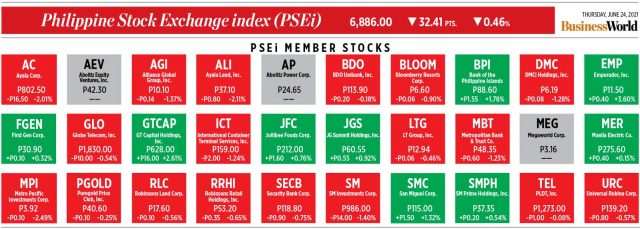
Here’s a quick glance at how PSEi stocks fared on Thursday, June 24, 2021.


Here’s a quick glance at how PSEi stocks fared on Thursday, June 24, 2021.

THE PHILIPPINES ranked 67th out of 151 economies in a political economy index that measures the contribution of the so-called “elites” in wealth creation and the development of society. Read the full story.


By Patricia B. Mirasol
The six-year term of former President Benigno S.C. Aquino III, who served from 2010 to 2016, was marked by economic growth and accusations of elitism.
“When you look at the strength of PNoy’s administration, you have to give him credit for putting good governance [at the forefront]. That was their campaign mantra,” said Victor Andres C. Manhit, founder and managing director of the Stratbase Group and president of its policy think-tank, the Albert del Rosario Institute for Strategic and International Studies. “Good governance is good economics, and that translated to a better environment for investments.”
Editing by Brontë H. Lacsamana
Where the PNoy administration had missteps was in the nagging feeling of elitism that alienated the general public. “This lack of inclusiveness became an opening for critics,” said Mr. Manhit. “There were also failures in the provision of public services like infrastructure, and this lessened his legacy.”
Among the accomplishments of the Aquino administration were the passage of the Reproductive Health bill, the implementation of the K-12 education system, and the favorable ruling of the Permanent Court of Arbitration over China’s territorial claims in the South China Sea.
“What critics focused on was how he lost Scarborough shoal. What people forgot was that we actually won it in a case. The case itself is generational. It’s legally mandated and will define maritime rights,” said Mr. Manhit in a phone call with BusinessWorld.
Prior to taking his oath of office as president of the Philippines on June 30, 2016, Mr. Aquino served as a senator of the 14th Congress from 2007 to 2010 and Tarlac Representative from 1998 to 2007.
Here is a look back at the events that shaped Mr. Aquino’s presidency:
POLITICAL
A high-profile corruption scandal rocked the Aquino administration in 2013. Whistleblower Benhur Luy revealed that his cousin Janet Lim-Napoles partnered with several government officials in illegal deals that used public funds meant for development projects. Ms. Lim-Napoles, suspected mastermind of the multibillion-peso pork barrel scam, was detained on plunder charges, together with Senators Juan Ponce Enrile, Jose “Jinggoy” P. Estrada, and Ramon Revilla, Jr., The first two senators are now out on bail, while Revilla has been cleared.
Mr. Aquino, in August 2013, suspended the release of pork barrel funds pending the results of the investigation surrounding its alleged misuse. Despite this announcement, thousands of protesters marched through Manila and called for the scrapping of the Priority Development Assistance Fund (PDAF).
Forty-four Special Action Forces (SAF) commandos died in an encounter with Muslim rebels and private armed groups in Mamasapano, Maguindanao, after neutralizing Malaysian terrorist Zulkifli bin Hir, alias Marwan, on Jan. 25, 2015.
In 2019, Mr. Aquino was cleared over the “botched” Mamasapano operation, as the Ombudsman described the incident. The Volunteers Against Crime and Corruption (VACC), claimed reckless imprudence and negligence on Mr. Aquino’s part in at least three instances: approving Oplan Exodus which was later found to have serious flaws; allowing a suspended officer to oversee the operation; and failing to send reinforcement and aid to the SAF 44 as they were besieged by anti-government forces.
In November 2013, the Philippines was hit by super typhoon Yolanda (international name: Haiyan), where around 6,300 people were killed and total damages were reported to be more than P95 billion. The PNoy administration was slammed for its lack of action and slow response to the plight of four million families and the 44 out of 81 provinces that were affected by the super typhoon.
During a March 2014 open forum at the Hope Christian High School in Manila, Mr. Aquino apologized to those affected because the government was not able to come to their aid sooner.
Mr. Aquino signed the Human Rights Victims Reparation and Recognition Act on Feb. 25, 2013, the 27th anniversary of the People Power Revolution that toppled the Marcos dictatorship in 1986. Under the legislation, P10 billion in funds from the alleged ill-gotten wealth of the Marcoses will be used to pay the victims.
The former President’s father, Senator Benigno Aquino, Jr., was himself incarcerated during Martial Law.
LEGAL
Then Chief Justice Renato C. Corona faced a 44-day impeachment trial between January to May 2012 for allegedly betraying public trust and committing culpable violation of the Constitution for failing to fully disclose his assets as required by Law. The Senate voted to remove Chief Justice Corona from office, a historic decision seen as a huge success for then Mr. Aquino’s anti-corruption campaign. Some citizens, though, remained skeptical of the motivations behind the former chief justice’s impeachment.
A last-minute award by the Arroyo administration for the Laguna Lake Rehabilitation Project (LLRP) to a Belgian company was scrapped by Mr. Aquino, as he said it was “ill-advised.” The company, Baggerwerken Decloedt En Zoon (BDC), took the case to arbitration and won. In Jan. 23, 2017, the International Center for the Settlement of Investment Disputes ordered the Philippine government to pay P800 million to BDC for the scrapping of the aforementioned P18.7-billion LLRP project.
Mr. Aquino brought China before The United Nations’ Permanent Court of Arbitration in The Hague, Netherlands, in January 2013, to challenge Beijing’s push for control of the South China Sea, portions of which the Philippines claims. A standoff between vessels from the two countries in the disputed Scarborough Shoal in April 2012 initiated this challenge. After Mr. Aquino III left office, the Permanent Court of Arbitration in 2016 ruled in favor of the Philippines, saying China’s expansive territorial claims in the South China Sea breached international law. Beijing has since rejected the permanent court’s decision.
FISCAL
“A key pillar of President Aquino’s enduring legacy is fiscal sustainability, having reduced debt as a percentage of gross domestic product (GDP) to historic lows of 44.8% by 2015 and having weaned the country off foreign debt, with external financing also at their lowest share in the portfolio at 34.8%,” said Cesar V. Purisima, former finance secretary, in a statement expressing his condolences on the passing of the former president.
The Philippines’ historic first ever investment grade in 2013 was also the direct result of Mr. Aquino’s leadership, added Mr. Purisima. The international community granted the country 24 positive credit ratings actions — the most in history — which made the Philippines the world’s most upgraded sovereign in that year.
The Sin Tax Reform Law of 2012 and the GOCC (Government-owned or -controlled corporations) Governance Act of 2011 also further expanded the country’s fiscal space, according to the former finance secretary, which has afforded the country the ability to keep investing while remaining in good fiscal standing.
EDUCATION
Republic Act No. 10533, otherwise known as the Enhanced Basic Education Act of 2013, was signed into law by Mr. Aquino on May 15, 2013. The law’s passage formalized the K to 12 basic education program from the previous 10-year basic education curriculum. The K to 12 program mandates one year of kindergarten and 12 years of basic education, comprising of six years of primary education, four years of junior high, and two years of senior high school. According to the Department of Education, the rationale for RA 10533 is to address the poor quality of basic education provided by the current curriculum, as reflected in the low achievement scores of Filipino students and the Philippine unemployment rate.
HEALTH
The Reproductive Health Bill, also known as Republic Act 10354, was signed into law by Mr. Aquino on Dec. 21, 2012. RA 10354 provides its beneficiaries with “universal access to medically safe, non-abortifacient, effective, legal, affordable and quality reproductive health care services, methods, devices, supplies which do not prevent the implantation of a fertilized ovum.”
The Dengvaxia controversy, which stemmed from a 2016 vaccine campaign to inoculate nearly 1 million schoolchildren with the said anti-dengue fever vaccine, has since accelerated public distrust even to vaccines long proven to be effective on diseases like polio and measles, which have since resurfaced. Health data show that from as high as 85.6% of the child population in 2010, full immunization rates dropped to 66.2% in 2018.
TRANSPORTATION
In early 2011, the Department of Transportation and Communications crafted a plan to integrate the operations of MRT-3 and LRT-1 in preparation for the eventual expansion of LRT-1 to Cavite. When the bidding for the plan’s contract was cancelled in July that year, however, it left both MRT-3 and LRT-1 without a maintenance plan, and MRT-3 without a maintenance contractor. This led to the eventual deterioration of the stocks, rails, and signaling systems, and to the derailments of trains and uncoupling of cars in 2015.
Public disenchantment over transportation problems spilled over into the capital’s constant traffic gridlocks during Mr. Aquino’s term, notwithstanding his efforts. The National Economic and Development Authority Board, for instance, approved in June 19, 2014 the Road map for Transport Infrastructure Development for Metro Manila and its Surrounding Areas. The study, prepared by the Japan International Cooperation Agency, showed possible ideas, technologies, and strategies that could help the Philippines address traffic congestion and air pollution in Metro Manila.
Traffic, however, remained a fixture in the lives of the capital’s residents despite the existence of the so-called Metro Manila Dream Plan. Car volume was been blamed as part of the cause: according to the Land Transportation Office, the number of cars on Manila’s roads increased from 1.7 million in 2008 to 2.1 million in 2015, indicating an increase of 26% in seven years. Manila’s traffic gridlocks compound its poverty conundrum, said the Navarra Center for International Development in March 11, 2016, as it pointed out that the country loses P3 billion a day to traffic.
INFRASTRUCTURE
Public-Private Partnership (PPP) projects were at the heart of the Aquino administration’s infrastructure development plans. Among the projects in the pipeline were the LRT Line 1 south extension and operation and maintenance, the operation and maintenance of Laguindingan Airport, and the Automatic Fare Collection System.
(The government’s Official Gazette lists 45 Aquino administration projects that are being completed under the Duterte administration.)
Based on the UN Economic and Social Commission for Asia and the Pacific’s Asia-Pacific Countries with Special Needs Development Report 2017, the Philippines scored 0.336 in the Access for Physical Infrastructure Index (APII) for 2015. The ranking placed the country 24th out of the 41 Asia and the Pacific countries, putting it in between Pakistan’s 0.311 and Samoa’s 0.350.
Within the 10-member Association of Southeast Asian Nations (ASEAN), the Philippines fared no better. Although the country’s APII score was above Indonesia’s 0.278, Lao People’s Democratic Republic’s 0.225, Myanmar’s 0.198, and Cambodia’s 0.186, it fell below Thailand (0.418), Vietnam (0.419), Malaysia (0.502), and Singapore (0.708). Brunei was not included in the ranking.
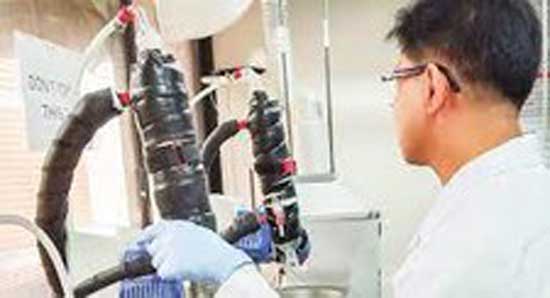
PROJECTS that improve Philippine competitiveness as an investment destination and improve the country’s ability to produce high-end products have been declared priorities for the grant of investment, according to the implementing rules of the law that rationalized incentives.
Implementing rules and regulations (IRR) released Thursday outlined the investment perks for key industries under the Corporate Recovery and Tax Incentives for Enterprises (CREATE) Act.
The IRR said industries and projects listed under the Strategic Industries Priorities Plan (SIPP) have first call on incentives eligibility, with the authorities granting perks based on their assessment of long-term growth potential and national interest.
Projects that meet any of a set of 10 criteria could be eligible, including those that provide a substantial amount of investment, job creation, considerable net exports, and the use of technology that is new to the Philippines.
“Processes and innovation, including urban planning and development methods, that will lead towards the attainment of the sustainable development goals, shall include, but not be limited to, adoption of adequate environmental protection systems and sustainability strategies,” it said.
Eligible projects could also address supply chain gaps, improve food security, and promote regional and global operations.
Projects may also “promote market competitiveness or enhance the country’s competitiveness as an investment destination” and improve the capabilities of Filipino enterprises and professionals to produce sophisticated products and services.
Only projects listed in the SIPP will be considered. The 2020 investment priorities plan is the provisional list for sectors qualified to receive such incentives from the government while the SIPP is being developed.
Industries eligible for incentives have been classified into three tiers, with tier III or projects for science and technology development receiving incentives with the longest terms.
The IRR classified import-substituting industries like crude oil refining as tier II. The tier includes activities for producing parts not locally made but needed in industrial development. Tier I activities include those that create jobs and take place in sectors that have experienced market failure, which has rendered domestic producers unable to provide basic goods and services.
The Philippine Economic Zone Authority (PEZA) recently raised possible problems its locators might encounter with new import tax rules under the new IRR. Investors usually expect the duty-free importation of raw materials, but the agency said that it expected new limitations on the scope of exemptions.
The IRR said that the duty exemption applies to the importation of capital equipment, raw materials, spare parts, and accessories directly and exclusively used in the registered projects. They must be items that are not manufactured domestically in sufficient quantity and at reasonable prices. — Jenina P. Ibañez
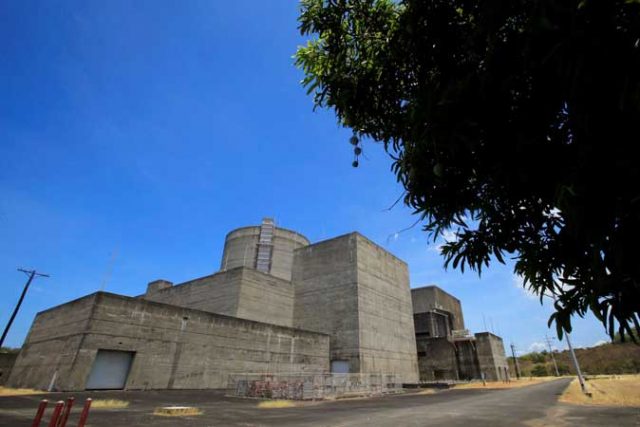
THE Department of Energy (DoE) has identified 15 sites as possible locations for nuclear power generating plants, subject to further evaluation of their potential to meet international norms for such facilities.
“We have identified 15 sites all over the country, but that’s just the first stage… they will be subjected to rigorous evaluation, in which experts, including those from the International Atomic Energy Agency and (from) all over the world will be consulted,” DoE Assistant Secretary Gerardo D. Erguiza, Jr. said during PTV4’s Laging Handa briefing Thursday.
He said the process will be “transparent and all problems will be addressed.”
“We have stated in the past that we will meticulously look at (injecting nuclear power into the energy mix),” he added.
DoE Spokesman Felix William B. Fuentebella said the department is looking at using renewable energy, nuclear, and hydrogen-based power as alternatives to conventional fuels in the event of a supply disruption affecting traditional power sources.
In July, President Rodrigo R. Duterte created an interagency body tasked with conducting a study on adopting a National Position on a Nuclear Energy Program (NEP). The committee submitted its recommendations in December.
On Thursday, Mr. Erguiza described nuclear as a “good source of stable, secure and reliable power,” which some advanced countries depend on.
Philippine Nuclear Research Institute (PNRI) Executive Director Carlo A. Arcilla has said that nuclear holds the potential to address baseload power needs. The PNRI is part of the NEP Inter-agency Committee.
Last month, the DoE and PNRI rolled out an educational campaign on nuclear science and technology to broaden public awareness and improve public perception of the power source. — Angelica Y. Yang
THE PHILIPPINES will exit a watch list maintained by developed countries next year which had flagged its preferential tax scheme for regional operating headquarters (ROHQs) of multinational companies, the Department of Finance (DoF) said.
The country will be removed from the list of “harmful tax regimes” by the Organisation for Economic Co-operation and Development (OECD) starting next year, the DoF said.
In a statement issued Thursday, Undersecretary Antonette C. Tionko said the OECD agreed to a Philippine appeal to characterize the scheme as “potentially harmful but not actually harmful” until the end of 2021.
The recently-signed Republic Act No. 11534 or the Corporate Recovery and Tax Incentives for Enterprises (CREATE) Act will effectively remove the 10% preferential tax rate next year, which persuaded the OECD to remove it from the classification, known as the Forum on Harmful Tax Practices (FHTP), beginning Jan. 1, Ms. Tionko said.
The FHTP was created in 1998 to assess preferential tax schemes and identify those that could be harmful.
The Philippines was flagged for the ROHQ preferential tax, which the OECD said gives foreign companies an advantage over domestic taxpayers. Those benefitting from the perk are not also required to provide evidence of how they are performing.
The CREATE law will require ROHQs to pay the regular 25% corporate income tax rate starting next year, in the absence of a grandfather clause.
The Bureau of Internal Revenue estimates that the number of entities availing of the ROHQ regime has been on the downtrend since 2018, with only one new applicant in 2019, she said.
Ms. Tionko said this development will contribute to the Philippines’ readiness to join the Inclusive Framework on Base Erosion and Profit Shifting (BEPS).
“(BEPS identifies) tax planning strategies that exploit gaps and mismatches in tax rules to artificially shift profits to low or no-tax locations where there is little or no economic activity,” she said.
She added that the Asian Development Bank and the World Bank have granted technical assistance to help the Philippines meet the minimum requirements to join the BEPS. — Beatrice M. Laforga
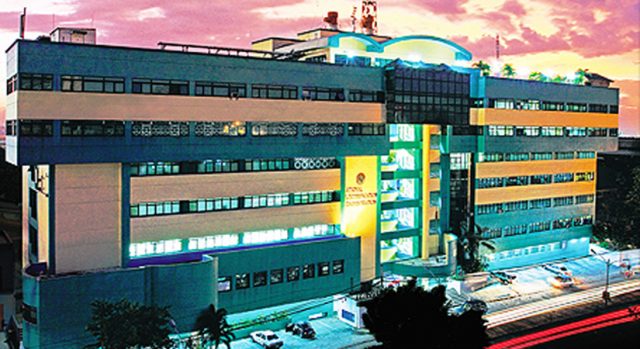
THE National Electrification Administration (NEA) said Thursday that electric cooperatives (ECs) need to develop their own emergency generation capacity to serve as standby power when needed.
“ECs should be aggressive in as far as developing, installing, and operating their own embedded power generation, not only to meet peak electricity demand but to provide standby or emergency power during calamities,” NEA Administrator Edgardo R. Masongsong said in a statement.
Such projects can also mitigate power supply shortages in the EC coverage areas, he added.
Mr. Masongsong directed the NEA’s Total Electrification and Renewable Energy Development department to help ECs launch their own embedded power generation projects.
He added that ECs should also explore options in renewable energy (RE) to meet demand in their respective franchise areas.
In the same statement, the NEA announced it has completed feasibility studies related to the hybridization of existing diesel power plants with RE and battery energy storage systems in North and West Samar.
At present, it is studying the possibility of establishing a hybrid mini-grid system powered by RE in six off-grid areas.
The NEA earlier reported that ECs connected 148,792 new power consumers in the first quarter, up 11% from a year earlier. The agency has a target of 400,000 for the year.
As of June 16, the nationwide electrification rate was 90% with 14.45 million consumers covered within the franchise areas of 121 ECs. — Angelica Y. Yang

THE BUREAU of Internal Revenue (BIR) said it retained the maximum sanction of a P10-million fine and license revocation for those found violating the fuel marking program’s rules, but introduced criminal penalties in a new issuance that was released to highlight the new regime defined by a recent tax-reform law.
The BIR issued Revenue Regulations No. 13-2021 Thursday on fuel-related tax evasion and faking of receipts.
While the fines were not revised, BIR Deputy Commissioner Marissa O. Cabreros said the issuance is intended more to remind taxpayers of the new items introduced by the Tax Reform for Acceleration and Inclusion (TRAIN) law, particularly criminal sanctions for violations of the fuel marking program.
Republic Act No. 10963 or TRAIN law of 2018, authorized a fuel marking program involving the injection of a special dye into fuel shipments on which tax has been paid, the absence of which is deemed prima facie evidence that the fuel was smuggled.
The BIR said those who sell, trade, deliver or transport unmarked fuel are subject to a fine of P2.5 million on first offense, P5 million on second and P10 million on third plus license revocation.
Businesses found to have tampered with the official fuel marking dye by either removing the agent or diluting the volume could face similar penalties.
Producing, importing, selling and using fuel markers that are either unauthorized or fake also carry penalties of P1 million to P5 million and 4-8 years’ imprisonment.
The injection of fake additive or chemical components also entails a fine of P5 million to P10 million and imprisonment of 4-8 years.
Person involved in packaging and labeling such fake dyes and those trying to conceal unpaid tax through fraud, destruction of documents and misdeclaration, will also be subject to fines of P1 million to P5 million and 4-8 years’ imprisonment.
The BIR reiterated that tax evaders violating any item of the Tax Code are liable for up to 10 years’ imprisonment and a maximum of P10 million in fines.
Businesses using unauthorized or fake receipts or those with incomplete details on their invoices can also be fined P500,000 to P10 million and face 6-10 years’ imprisonment. — Beatrice M. Laforga

THE intellectual property office said it has signed an agreement with an international trademark group to improve its counterfeit evaluation efforts.
International Trademark Association (INTA) through a memorandum of understanding signed on June 22 will help Intellectual Property Office of the Philippines (IPOPHL) examiners evaluate emerging products and designs.
The international group will help IPOPHL assess trademarks, certification marks, non-traditional marks, and popular marks to prevent confusion in evaluating similar marks.
Both groups will also work on improving counterfeit seizures and coordination between government and brand owners to intercept counterfeit sales, IPOPHL said in a statement Thursday.
They will also roll out intellectual property awareness programs directed at the youth and small businesses looking for cost-effective brand management.
“Our young people are a key audience in building a nationwide culture of respect for intellectual property (IP). We hope we can connect with the youth effectively and in a way that would capture their interest in creativity, innovation and all things IP,” IPOPHL Director General Rowel S. Barba said.
The partnership will in force until the end of 2022.
INTA is a global association of 7,200 band owners and professionals promoting wider use of trademark protection.
Intellectual property rights violations reports sent to IPOPHL spiked during the lockdown last year, with a majority of complaints related to piracy and counterfeiting. Most of the violations, the agency said, are done online. — Jenina P. Ibañez

PRODUCTION of mango, pineapple, and banana rose in the first quarter while that of calamansi declined, according to the Philippine Statistics Authority (PSA).
The PSA said in its major fruit crops quarterly bulletin that mango production during the quarter rose 4.1% year on year to 97,898.58 metric tons (MT), mainly of the carabao mango variety. The Ilocos Region was the top producer with 47.8% of the total, followed by Central Luzon with 25.9% and Western Visayas with 6.3%.
Pineapple production rose 5.7% to 662,500.29 MT, led by Northern Mindanao, which accounted for 57.7% of total production, followed by Soccsksargen (South Cotabato, Cotabato, Sultan Kudarat, Sarangani, and General Santos City) with 33%.
Banana production rose 1% to 2.08 million MT, with the Cavendish variety, the main type for export markets, accounting for 55.5%, followed by Saba, a cooking banana, at 25.6%. Davao Region was the top region with 35.6% of the harvest, followed by Northern Mindanao at 26.2%.
Calamansi production fell 1.6% to 13,103.28 MT. Calabarzon (Cavite, Laguna, Batangas, Rizal, and Quezon) accounted for 18.4% of the harvest, followed by Central Luzon with 16.3% and Davao Region 13.2%.
The PSA announced in May that the value of production of the overall Philippine agriculture sector declined 3.3% during the first quarter of 2021.
The Agriculture department has said that it is targeting 2.5% growth for the agriculture sector in 2021. — Revin Mikhael D. Ochave
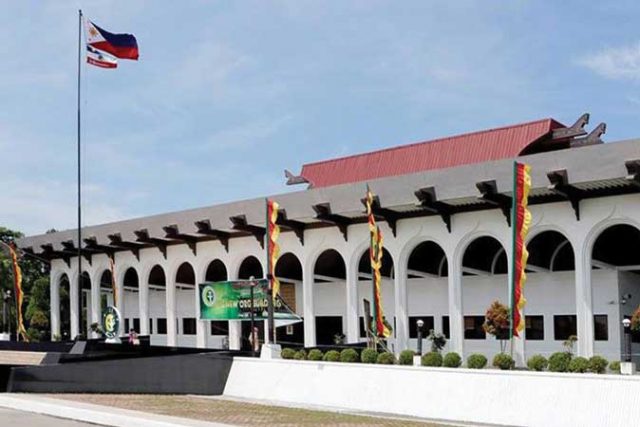
THE Bangsamoro Autonomous Region in Muslim Mindanao (BARMM) is not required to comply with the National Government’s devolution of functions to local governments to prevent disrupting the region’s transition phase, the Department of Budget and Management (DBM) said.
Local government units (LGUs) of the Bangsamoro government are not required to follow Executive Order (EO) No. 138, which will transfer some functions of the National Government to LGUs in exchange for a larger share of National Government revenue following the Supreme Court’s (SC) Mandanas ruling, according to Rowena M. Marte, supervising budget and management specialist at the DBM.
“Our stance on the application of the EO is that it is not mandatory on (BARMM’S) part to comply with EO and since the EO will not apply for the implementation of the same will not affect the BARMM government and its devolution of functions to its constituent LGUs,” Ms. Marte said at a forum organized by the Institute for Autonomy and Governance (IAG) on Thursday.
President Rodrigo R. Duterte issued EO 138 early this month to fully devolve certain functions of the National Government to LGUs by the end of 2024. Agencies and LGUs are required to prepare their own devolution transition plans within four months to clarify the division of labor between national and local entities, and set a timetable for devolution.
“We considered to not include the BARMM in the devolution efforts because of two reasons: first, the BARMM is in a period of transition, and the devolution efforts being done by the National Government might in a way disrupt its process and second, the BARMM government will be promulgating its own local government code,” Ms. Marte added.
She said the decision was also in line with the Bangsamoro government’s position that the devolution should not weaken its powers under the Bangsamoro Organic Law.
The DBM estimated that LGUs, including those in the BARMM, will receive P959 billion in Internal Revenue Allotment funds next year, with P326.1 billion going to municipalities, P220.58 billion to cities and provinces; and P191.8 billion to barangays.
LGUs are required to allot at least 20% of their national tax allotments (NTAs) for development projects.
The SC’s ruling on the petition by Batangas Governor and former Representative Hermilando I. Mandanas increased the LGU share of national taxes by including Customs collections in the pool of funds.
The government responded to the ruling by devolving more functions to LGUs starting next year, to compensate for the lost revenue.
The World Bank warned that bigger NTAs for local governments may result in greater underspending if the limited capacity of LGUs to implement projects is not improved.
Unequal fiscal allocations among LGUs will also likely persist despite the increased budgets, because the Mandanas ruling does not address the distribution formula for allocations to high- and low-income LGUs. — Beatrice M. Laforga
By Kyle Aristophere T. Atienza, Reporter
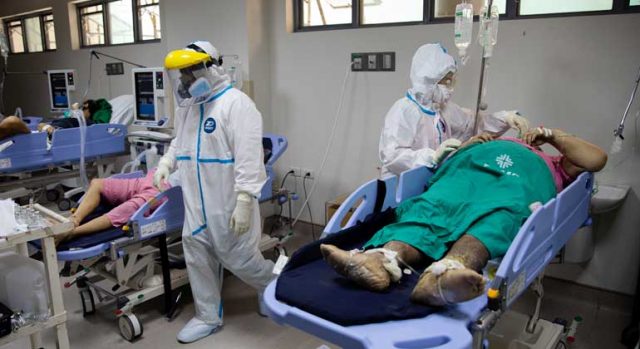
PHILIPPINE deaths from the coronavirus breached 24,000 on Thursday, as Health authorities reported 6,043 more infections to 1.38 million.
The death toll rose by 108 to 24,036, while recoveries increased by 4,486 to 1.3 million, the Department of Health (DoH) said in a bulletin.
There were 51,410 active cases, 1.4% of which were critical, 90.6% were mild, 4.5% did not show symptoms, 2% were severe and 1.44% were moderate.
Fifteen duplicates had been removed from the tally, nine of which were tagged as recoveries, the agency said.
A total of 44 recoveries were reclassified as active cases, while 61 cases previously tagged as recoveries were reclassified as deaths. One laboratory failed to submit data on June 22, it added.
About 13.7 million Filipinos have been tested for the coronavirus as of June 22, according to DoH’s tracker website.
The coronavirus has sickened about 180.4 million and killed 3.9 million people worldwide, according to the Worldometers website, citing various sources including data from the World Health Organization.
About 165.1 million people have recovered, it said.
Meanwhile, the government on Thursday took delivery of about two million more CoronaVac doses from China, according to the presidential palace.
Of the total, about 1.6 million doses were bought by the National Government, while the rest were ordered by Ip Biotech, Inc. for the local government of Manila, presidential spokesman Herminio L. Roque, Jr. told a televised news briefing
More than 8.9 million doses of coronavirus vaccines have been given out as of June 22, 6.6 million of which were first doses, he said.
More than a million health workers were already fully vaccinated, Mr. Roque said.
Mr. Roque said more than 589,000 seniors and about 565,000 seriously ill people had also been fully vaccinated. More than 8,600 essential workers have received their second dose.
Meanwhile, the cities of Bacolod, Iloilo, Cagayan de Oro, Baguio, Zamboanga, Dumaguete, Tuguegarao, General Santos, Naga and Legaspi would be prioritized for vaccines, he said.
The decision came due to rising infections there, their being highly urbanized and their contribution to economic output, he added. Mr. Roque said the government would hire more contact tracers amid the threat of a more contagious coronavirus variant first detected in India.
Mr. Roque said President Rodrigo R. Duterte might discuss the hiring at a meeting with key lawmakers regarding the country’s second stimulus law.
He earlier said contact-tracing had been the weakest point in the government’s pandemic response.
Meanwhile, the salary increase of nurses would probably be financed by the government’s second stimulus fund or by a pandemic measure that is yet to be legislated, Mr. Roque said.
A group of Filipino nurses earlier asked the government to use unspent funds under the second stimulus package for their wage increase.
Under the law the minimum base pay of nurses working in government hospitals and health institutions should start at P31,545 a month.
The government would likely heed the call of the nurses, Mr. Roque said, citing Executive Secretary Salvador C. Medialdea’s June 1 memo.
“It could be a supplemental budget under Bayanihan III or through further realignment of Bayanihan II,” he said. “It is up to Congress since they have plenary power of legislation.”
The palace official earlier said more than P18 billion from Bayanihan II had not been used, more than nine months since the second stimulus package was signed. The law expires on June 30.
Mr. Roque on June 8 said there might not be enough money to fund the salary increase of nurses.
Mr. Duterte was set to meet with key legislators on Thursday to discuss a proposal to extend the validity the second stimulus law. A proposal for a third stimulus package would also be discussed, he said.
The House of Representatives on June 1 approved the proposed P401-billion Bayanihan III law, which seeks to boost the country’s pandemic response. — with Vann Marlo M. Villegas
