Home Blog Page 7467

Ten irrelevant job interview questions

With five years of experience in hiring in the banking sector, I was pirated to become the recruitment manager of a newly-formed business process outsourcing (BPO) company. The chief executive officer (CEO) told me to start hiring more than 100 workers and listed down the qualities expected of the hires in a job description that he wrote. How do I proceed to hire the brightest prospects for us in less than 45 days? — Fire Power.

If you’re not new to recruitment, you may have already experienced what’s working or not, which could be different in the case of the BPO industry, which is experiencing employee turnover of as much as 40%, either forced or voluntary due to the stressful and toxic working environment. Comparatively, the banking industry averages in the single digits for turnover rate, for reasons that are not found in many BPO firms.

Assuming the high turnover rate comes with the territory, your best approach is to learn from your colleagues from the BPO industry. It could be difficult as you may not know people in the industry. If you don’t, talk to people from the IT and Business Process Association of the Philippines.

Unless you ask for help, no one will come to your rescue. If no one can assist you, I can only provide generic advice, mainly focused on avoiding useless job interview questions which have been around since the 1970s. Formulate all questions based on potential work situations to make your search more efficient and meet your 45-day timetable.

What are those situational questions? They are imperative questions designed to elicit intelligent answers from applicants on a particular work situation. This includes — how would you manage an irate customer? How about a toxic boss? Therefore, imagine all possible stressful work scenarios possible in your company. And take it from there.

IRRELEVANT QUESTIONS
The main purpose of a job interview is to evaluate and forecast the knowledge, attitude, skills, and habits of your prospect. You do this by being conscious of how the applicants might perform the job. Therefore, avoid the following unrelated and time-wasting questions that could elicit seemingly smart responses from intelligent applicants:

One, tell me something about yourself. Applicant’s thought balloon: “How much time do I have? Of course, I’d love to talk about my childhood and how it molded me. Are you ready to hear all of it?”

Two, strengths and weaknesses. Applicant’s thought balloon: “Oh, that’s very easy. My answer would be the same thing that I’ve told other prospective employers. I’m such an incurable workaholic that I often work overtime.”

Three, career goals. Applicant’s thought balloon: “Are you serious? Frankly, I’d like to immediately assume your job so that I can ask a much better job interview questions.”

Four, imagine yourself in 10 years. Applicant’s thought balloon: “That’s too long. The truth of the matter is — I’m planning to migrate to another country in five years, where the job opportunities are much better.”

Five, have you thought of switching careers? Applicant’s thought balloon: “Where did you get that idea? But to answer your irrelevant question, I used to be a high school teacher. After college, I took a post-graduate degree in education to pursue a teaching career.”

Six, describe the perfect job. Applicant’s thought balloon: “The perfect job would be the one that allows me to challenge the status quo and other wasteful practices, like what we’re having now with this stupid job interview.”

Seven, what type of person would you hire for this job? Applicant’s thought balloon: “I’m a maverick at heart. I don’t want to talk to people with a traditional management style. That’s the kind of person I’d like to hire.”

Eight, have you ever been fired or asked to resign? Applicant’s thought balloon: “Are you doing a background check? Would you expect me to lie? Please get that information somewhere else. That’s because my answer could be self-incriminating.”

Nine, length of job search. Applicant’s thought balloon: “I’m not. My friendly headhunter forced me to take this chance with you. But really, I’m not interested because I know some friends who hate this company.”

Ten, salary expectations. Applicant’s thought balloon: “Do you mean you’re offering me the job? Why don’t you put it in writing so I can show it to my current employer?”

LESSONS FROM APPLICANTS
Interviews count the most in screening applicants. You should spend 90% of the time asking people how they would respond to a particular work situation that’s common in a BPO environment. You don’t need to read out the contents of CVs and repeat what’s in there.

Once again, don’t waste time asking old-fashioned and irrelevant job interview questions. Most applicants know how to ace them, particularly when with internet a readily available resource for job hunters. Instead, think of the best ways to uncover the signals applicants give off that might hint at how they will do their best in their jobs.

Learn from the applicants and not the other way around.


Have a consulting chat with Rey Elbo on Facebook, LinkedIn, or Twitter or you can send anonymous questions to elbonomics@gmail.com or via https://reyelbo.consulting

National Government Fiscal Performance

National Government Fiscal Performance (Aug. 2021)

How PSEi member stocks performed — September 23, 2021

Here’s a quick glance at how PSEi stocks fared on Thursday, September 23, 2021.


Peso drops further as Fed hints at November tapering 

BW FILE PHOTO

THE PESO weakened against the greenback on Thursday after the US Federal Reserve said it could start reducing its bond-buying program as early as November. 

The local currency closed at P50.34 per dollar on Thursday, depreciating by seven centavos from its P50.27 finish on Wednesday, based on data from Bankers Association of the Philippines. 

The peso opened at P50.33 versus the dollar. It dropped to as low as P50.45, while its intraday best was at P50.27 against the greenback. 

Dollars that changed hands fell to $1.08 billion yesterday from $1.24 billion on Wednesday. 

The Fed said on Wednesday it could begin tapering its monthly bond purchases by November if jobs data will remain strong, Reuters reported. 

Interest rate hikes may also begin next year once its bond-buying program ends, as nine of 18 Fed policymakers believe borrowing costs have to increase in 2022. 

“The local currency might weaken further following BSP’s substantial upward revisions in its inflation projections despite keeping policy rates unchanged,” a trader said via e-mail. 

The Bangko Sentral ng Pilipinas (BSP) raised its inflation outlook for the year to 4.4% from 4.1% previously as supply issues continue to push food prices higher. This is beyond the 2-4% target of the central bank for 2021. 

The BSP also raised its inflation forecasts for 2022 and 2023 to 3.3% and 3.2%, respectively, from 3.1% previously. 

Despite elevated inflation expectations, the central bank kept benchmark rates unchanged on Thursday. 

Mr. Ricafort expects the peso to trade from P50.20 to P50.40 per dollar on Friday, while the trader gave a higher P50.25-P50.50 forecast. — BML with Reuters 

Shares climb with BSP seen keeping policy steady

BW FILE PHOTO

PHILIPPINE shares closed higher on expectations that the central bank would keep rates low to support the economy at its policy meeting, which was set to conclude aftermarket hours on Thursday.

The 30-member Philippine Stock Exchange index (PSEi) gained 24.55 points or 0.35% to close at 6,915.28 on Thursday, while the broader all shares index went up by 15.93 points or 0.37% to finish at 4,302.50.

“Market rose on expectations of continuing BSP (Bangko Sentral ng Pilipinas) monetary accommodation to achieve sustainable economic and corporate earnings growth,” First Metro Investment Corp. Head of Research Cristina S. Ulang said in a Viber message.

Trading closed ahead of the central bank’s policy statement on Thursday. In a BusinessWorld poll conducted last week, 17 out of 18 analysts said they expect the Monetary Board to keep the policy rate at its record low of two percent.

“The local market climbed further this Thursday… The continuous decline in our daily new COVID-19 (coronavirus disease 2019) cases and the optimistic cues from Wall Street’s overnight performance gave a boost to positive sentiment,” Philstocks Financial, Inc. Senior Research Analyst Japhet Louis O. Tantiangco said in a separate Viber message.

“Trading weakened further,” he added. “This shows that many investors are still staying out of the market due to the lingering uncertainties.”

Value turnover inched down to P6.48 billion with 1.59 billion issues switching hands on Thursday, lower than the P6.49 billion with 705.34 million issues traded on Wednesday.

On Wednesday, the Health department logged 15,592 new COVID-19 infections. The country’s tally went up to 2,417,419, while active cases stood at 162,580.

Meanwhile, the three major US stock indexes rose 1% on Wednesday as investors mostly took in stride the latest signals from the Federal Reserve, including clearing the way for the central bank to reduce its monthly bond purchases soon, Reuters reported.

The Dow Jones Industrial Average rose 338.48 points or 1% to 34,258.32; the S&P 500 gained 41.45 points or 0.95% to 4,395.64; and the Nasdaq Composite added 150.45 points or 1.02% to 14,896.85.

Back home, majority of sectoral indices closed in the green on Thursday except for holding firms, which inched down by 1.87 points or 0.02% to 6,935.57.

Meanwhile, industrials climbed 140.35 points or 1.39% to 10,236.01; property rose 28.31 points or 0.94% to 3,020.77; financials went up by 4.15 points or 0.29% to 1,412.94; mining and oil improved by 18.81 points or 0.20% to 9,359.72; and services inched up by 1.88 points or 0.09% to close at 1,907.51.

Advancers beat decliners, 105 against 79, while 58 names closed unchanged.

Foreigners turned sellers anew with P294.27 million in net outflows, a reversal of the P33.17 million in net purchases logged the previous day. — Keren Concepcion G. Valmonte with Reuters

Philippines and Korea in final stage of free trade agreement

REUTERS

FREE TRADE negotiations between the Philippines and South Korea could finally be concluded within the next few weeks, Trade Undersecretary Ceferino S. Rodolfo said.

“We are now also in the final stages towards concluding the FTA (free trade agreement) with Korea. Hopefully this can be done in time for the ASEAN-Korea summit, which will happen towards the end of October,” he said at a European-Philippine business summit Thursday.

“Our projection is that we should be able to substantially conclude the FTA with Korea within a few weeks.”

The countries failed to sign a deal at the ASEAN-Republic of Korea Commemorative Summit in 2019. Talks had stalled on items like bananas, for which Philippine producers are seeking lower tariffs, and South Korean auto exports, for which Seoul is seeking greater access.

The Trade department also missed a targeted June 2021 end date.

“I really hope this time, we can conclude it,” Mr. Rodolfo said.

Mr. Rodolfo also said that the Philippines is interested in a digital trade deal with the US.

“With the new administration in the US, we have also not given up on an FTA with the US,” he said.

“Of course, the trade policy direction of the US has somewhat not accommodated this at the moment, but we are keenly looking at what the trade policy moves of the US (are).”

Noting that a bilateral FTA with the US may be ambitious, he said the Philippines can start with a digital trade deal, noting potential convergence between the trade priorities of both economies.

Charles Freeman, senior vice-president for Asia of the US Chamber of Commerce, in June said the two economies should work on a standalone digital trade agreement that could serve as a model for the region while some issues remain unresolved for an FTA.

The Philippines is in talks with India for a preferential trade agreement and has indicated interest in joining the Comprehensive and Progressive Agreement for Trans-Pacific Partnership. — Jenina P. Ibañez

Power providers gave back almost P20 billion to consumers — ERC

BW FILE PHOTO

DISTRIBUTION UTILITIES (DUs) and electric cooperatives have refunded a total of P20.15 billion to consumers, leading to lowering electric power rates beginning in 2020, the Energy Regulatory Commission (ERC) said Thursday.

The ERC said it had ordered the refunds after noting the overcollection of pass-through and distribution charges, which comprised bulk of the P20 billion. The refunds also included market transaction fee refunds and discounts granted to customers.

“The P20 billion in refunds that the commission approved… provides some rate relief, especially to those electricity consumers that were economically disadvantaged due to the limited operation or closure of some businesses,” ERC Chairperson and Chief Executive Officer Agnes VST Devanadera said in a statement.

The refunds have helped effectively reduce power rates during 2020 and 2021.

The commission estimates that power rates in Luzon, the Visayas and Mindanao were reduced by P0.0025 per kilowatt-hour (/kWh), P0.0028/kWh, and P0.0151/kWh, respectively, in 2020.

Meanwhile, end-users in Luzon, the Visayas and Mindanao experienced rate reductions of P0.0014/kWh; P0.0088/kWh; and P0.0070/kWh, respectively, in their power bills this year.

“For Meralco (Manila Electric Co.) and Cepalco (Cagayan Electric Power and Light Co.), the refund rates are P0.1528/kWh and P0.0268/kWh, respectively, which represent over-recoveries in the distribution charges,” ERC said.

Ms. Devanadera said the ERC is urging DUs to show empathy by offering flexible payment options to consumers, including a staggered payment scheme with no penalties or interest.

“The ERC is finding ways to reduce the charges being billed by the DUs to their customers, such as the temporary suspension of some charges like the Bill Deposit Adjustment, Universal Charge and FiT (feed-in tariff) Allowance, when appropriate, to alleviate the poverty caused by this pandemic,” she added. — Angelica Y. Yang

PHL capital drops to near bottom in ranking of startup ecosystems

THE Philippine capital was among the lowest-ranked in a top 100 list of emerging global startup ecosystems, according to a report from research and policy advisory organization Startup Genome.

The Global Startup Ecosystem Report 2021 put Manila in the 91-100 rank, with scores of 1 out of 10 in performance and funding, 2 in market reach, and 6 in talent.

Manila was in the 31-40 rank in the 2020 report, with a score of 5 in performance, 3 in funding, 10 in market reach, and 7 in talent.

Trade Secretary Ramon M. Lopez in a statement said the department will work on improving the country’s performance.

“We are moving forward in finalizing the structure that will allow us to maximize the utilization and effectiveness of the Startup Venture Fund (SVF) that we are allocating for the development of startup ventures,” he said.

Manila ranked in the top 10 in Asia and top 20 in the world for affordable talent.

Total early-stage funding in Manila is $101 million over the last 2.5 years, far below the $431 million global average. Its ecosystem value is $548 million, while the global average is $10.5 billion.

Manila’s strengths are in financial technology and e-commerce.

“The fast-growing use of mobile banking, an enabling regulatory environment, and a high number of unbanked and underserved Filipinos allowed more fintech startups to prosper in the Philippines,” the report said.

The Department of Trade and Industry (DTI) said a number of fintech startups in the Philippines managed to raise substantial funding during the pandemic.

“Likewise, the ongoing community lockdown has accelerated the growth of the e-commerce industry in the country, with revenue estimated at over $5 million in 2021 and with market volume projected to reach $8.8 million by 2025,” the DTI said.

In the report’s list of top 30 global startup ecosystems, Silicon Valley, London, New York City, Beijing, and Boston topped the list

The top 100 emerging ecosystems, which are in the earlier stages of growth, are led by Mumbai, Copenhagen, Jakarta, Guangzhou, and Barcelona. — Jenina P. Ibañez

Upgraded GenSan airport rated at 150% of previous capacity

THE Civil Aviation Authority of the Philippines (CAAP) said Thursday that the upgraded General Santos (GenSan) Airport can now accommodate up to two million passengers annually from the previous ceiling of 800,000.

Transport officials inaugurated Thursday the newly developed airport in General Santos City.

The projects completed at the airport include the P434.29-million rehabilitation and expansion of a passenger terminal building, the P107.22-million procurement and installation of navigational aids, and the P23.43-million construction of a CAAP administration building.

“The newly constructed two-story CAAP administration building, with an estimated floor area of 900 square meters, now serves as new office space for all administrative personnel of the Airport. The admin building project also includes concreting of its vehicular parking area,” the agency said in a statement.

“From a previous area of 4,029 square meters, the airport’s passenger terminal building now has a total of 12,240 square meters. These development projects were able to provide job opportunities to around 380 workers during the airport’s construction phase,” it added.

The airport serves the provinces of South Cotabato, Cotabato, Sultan Kudarat, Sarangani, and the city of General Santos.

Projects to continuously develop the General Santos Airport are now ongoing, such as the P91,888,888 upgrade of Gensan Airport’s power system which is targeted to be finished by the end of this year; as well as the improvement and construction of its facilities, targeted to be completed by Nov. 18, 2021,” the CAAP said. — Arjay L. Balinbin

Energy dep’t may halt subsidies to remote areas that link to grid

THE DEPARTMENT of Energy (DoE) is proposing to halt the Universal Charge for Missionary Electrification (UC-ME) subsidy for remote areas that connect with the main power grid.

The UC-ME is collected from all on-grid electricity end-users.

According to a draft department circular posted on its website this week, the DoE said it plans to discontinue the UC-ME charge “upon the interconnection of an off-grid area to the grids of Luzon, Visayas and Mindanao” and “upon interconnection of a qualified third-party service area to the distribution utility’s grid.”

The draft rules provide for the creation of a “UC-ME rationalization and graduation plan” which requires distribution utilities (DUs) in off-grid areas receiving such subsidies to prepare a 10-year plan detailing their respective interconnection plans and optimal power supply outlook, among others.

Power providers are to receive assistance from the National Transmission Corp. and National Power Corp. in preparing such plans.

The draft guidelines also require DUs in off-grid areas to facilitate the entry of the lowest-cost and efficient technologies, which include renewables and baseload facilities, as alternatives to existing diesel and bunker fuel systems.

The department said it is holding a public consultation on its draft circular on Oct. 6 at 8:30 a.m. for Luzon participants, and Oct. 7 at 8:30 a.m. for Visayas and Mindanao attendees, but provided no further details.

The DoE is required to establish a new policy which will remove or significantly reduce the UC-ME after due consultation, according to a department circular issued two years ago. — Angelica Y. Yang

DoE endorses plan to import 20,000 electric cars to Board of Investments

REUTERS

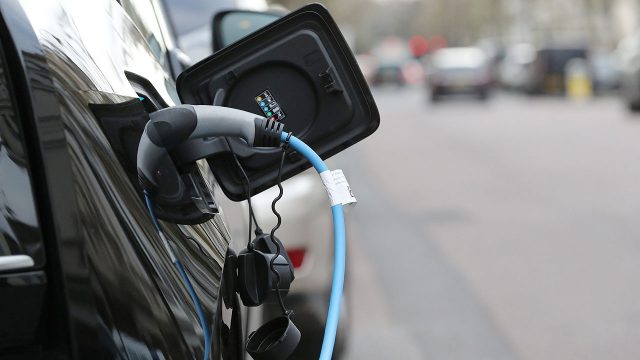
THE DEPARTMENT of Energy said it has endorsed a P2.5-billion investment project that would bring in 20,000 imported electric vehicles.

The department endorsed the project to the Board of Investments (BoI). If approved, it would increase the electric vehicle fleet in the Philippines and result in the establishment of up to 5,000 electric vehicle charging stations within five years.

“When completed, the project is expected to help contribute to the reduction of as much 145.02 million liters of fuel. This is equivalent to at most a P7.99 billion reduction from fuel costs,” Energy Secretary Alfonso G. Cusi said at an electric vehicle forum Thursday.

Patrick T. Aquino, Energy Utilization Management Bureau director, said in an e-mail that the project proponent is Century Peak Energy Corp.

The BoI has not disclosed any updated investment data beyond the P2.5 billion stated in the initial project proposal.

Mr. Cusi at the virtual event said the department is looking forward to more projects that will accelerate the shift to electric vehicles.

“Our success depends on a strong public-private collaboration, and I’m confident that together we can make this happen,” he said.

He also suggested that electric vehicles could be used to transport frontline workers.

“Not only would it be a greener transport alternative in terms of zero noise and smoke emissions, but it would also pave the way for sectoral job creation that would definitely help reenergize our economy.”

Electric vehicle registrations fell 35% to 1,015 in 2020 from 1,570 in 2019, Electric Vehicle Association of the Philippines President Edmund A. Araga said at the same event.

A Philippine Institute for Development Studies (PIDS) research specialist said in July that shortcomings in electric vehicle charging infrastructure and manufacturing technology have left the Philippines behind in the regional competition for trade and investment.

The Philippines must prepare for increased investment competition in Asia as the electric vehicle value chain grows larger, PIDS Supervising Research Specialist Maureen D. Rosellon said. — Jenina P. Ibañez

Q4 2020 agriculture PPI rises by 4.1%

PHILIPPINE STAR/ MICHAEL VARCAS

THE PRODUCER price index (PPI) for agriculture rose 4.1% in the fourth quarter of 2020, according to the Philippine Statistics Authority (PSA). 

The PSA said in a report that the fourth quarter growth rate represents a turnaround from the minus 6.8% recorded in the fourth quarter of 2019. The growth rate also exceeds the 0.7% logged in the third quarter of 2020.

“This brings the Philippines’ annual average growth rate of PPI for agriculture for the year 2020 to 0%,” the PSA said.

The agriculture PPI “measures the changes in the average prices received by farmers for their produce relative to a base period,” the PPI said. The base year used in the report was 2018.

The PSA said the highest growth rate in the fourth quarter was posted by Calabarzon (Cavite, Laguna, Batangas, Rizal, and Quezon) with 22.4% while the lowest was by Eastern Visayas with minus 20.3%.  

Crops grew 2.2% during the fourth quarter, with growth rates for fruit and commercial crops at 0.9% and 0.4%, respectively.

It added that the growth rate for cereals was 3.3%, while condiments came in at 40.5%. 

The PSA said the growth rate for livestock and poultry in the fourth quarter was 20.6%, turning around from the minus 6.1% posted a year earlier.

“The uptrend in the PPI for livestock and poultry was due to the 31.7% annual increase in the index for livestock during the quarter,” the PSA said.

The growth rate for fisheries was minus 8.1% in the fourth quarter, against the 0.8% rise a year earlier.

It added that the growth rates for aquaculture and commercial fisheries for the quarter were minus 5.9% and minus 8.4%, respectively.  

“On the other hand, annual declines further accelerated during the quarter in the indices of inland municipal fishery at minus 5.4% and marine municipal fishery at minus 11.4%,” the PSA said. — Revin Mikhael D. Ochave

ADVERTISEMENT
ADVERTISEMENT