Home Blog Page 744

PEZA expects new Batangas plant to generate $920 million in export sales

IDEAL PRO METAL and Plastic Fabrication Corp. is projected to generate $920 million worth of export sales during its incentive period from its new facility in Batangas, the Philippine Economic Zone Authority (PEZA) said.

In a Facebook post on Wednesday, PEZA said it signed a registration agreement with the company, which makes parts for gym and fitness equipment and household goods.

PEZA said the company exports to the US, Europe, and Japan. It did not disclose investment numbers for the facility, which will be located at Lima Technology Center-Special Economic Zone in Lipa City.

To date, Lima houses 118 locators, with investments in the economic zone topping P5 billion in the first 10 months of the year. — Justine Irish D. Tabile

PHL, France to implement bird flu regionalization plan

REUTERS

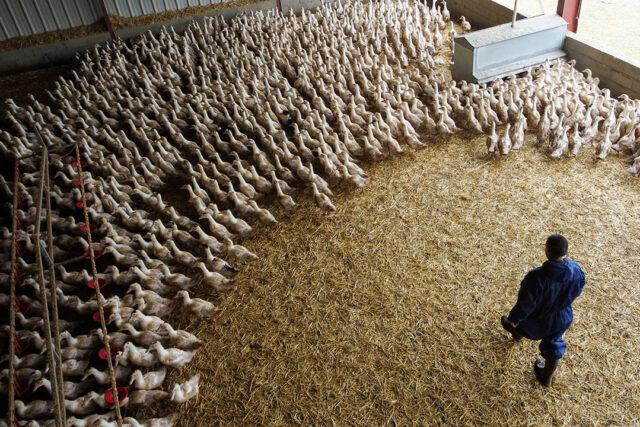
THE PHILIPPINES and France are preparing to implement an agreement that will do away with sweeping national import bans in the event of bird flu outbreaks, instead limiting the prohibitions to specific regions where the disease is present, the Department of Trade and Industry said.   

“We were able to finalize the HPAI (Highly pathogenic avian influenza) regionalization agreement, which will basically facilitate the export of poultry products from France to the Philippines,” Trade Undersecretary Allan B. Gepty told a news briefing on Tuesday evening, following a Joint Economic Committee meeting.

Under the regionalization agreement, poultry exports from unaffected zones of France will continue to be admitted to the Philippines.

In March the Department of Agriculture lifted the temporary ban on French poultry imports following clearance from the World Organisation for Animal Health, which certified that all cases of bird flu have been resolved.

“These are market access issues that we have been addressing in the course of time,” Mr. Gepty said.

“Of course, there are other market access issues that also concerns our access to the European Union market, and these are the things also that we are discussing right now,” he added.

French Economic Counsellor Alain Fontanel said consumers from Europe, especially France, are very interested in Philippine farm goods.

“European countries and French consumers are also very interested in agriculture and food products from the Philippines, he told reporters, “We are cooperating to increase and to expand geographical indications for products from the Philippines,” he said, referring to the system for designating unique products from specific regions to grant them a marketing advantage.

He added that more Philippine farm products should be recognized under international best-practice standards.

France is the Philippines’ 19th largest trading partner with trade amounting to $1.54 billion. It is also the 20th biggest export market for Philippine goods, accounting for $404.28 billion. — Adrian H. Halili

Agriculture trade deficit widens to 15.7% in Sept.

A vendor sells pork products at a market in Pasay City. — PHILIPPINE STAR/RYAN BALDEMOR

THE deficit in the agricultural goods trade widened 15.7% in September to $932.15 million, according to preliminary data from the Philippine Statistics Authority (PSA).

Agricultural exports in September rose 19.1% to $794.46 million, accounting for 11% of total exports. As a share of the $2.52 billion in two-way trade in farm products, exports accounted for 31.5%.

Imports of agricultural commodities in September dipped 2.6% year on year to $1.73 billion, accounting for 14.9% of overall imports.

Two-way agricultural trade in September was up 3.3% year on year. In August and September 2024, two-way agriculture trade grew 5.0% and 26.1%, respectively.

The PSA said animal, vegetable, or microbial fats and oils and their cleavage products; prepared edible fats; and animal or vegetable waxes were valued at $297.51 million, accounting for 37.4% of agricultural exports.

Agricultural shipments to members of the Association of Southeast Asian Nations (ASEAN) in September hit $73.92 million, with top buyer Malaysia accounting for $26.34 million or 35.6% of the total.

Exports to the Netherlands, the Philippines’ top destination for agricultural commodities in the European Union (EU), amounted to $142.82 million or 61.1% of Philippine agricultural exports to the region.

Among the major commodity groups, cereals accounted for the largest share of agricultural imports in September, totaling $361.25 million or 20.9%.

Indonesia was the leading supplier of agricultural products to the Philippines within ASEAN, accounting for $190.86 million or 28.3% of total imports from the region.

The top agricultural goods imported from ASEAN included animal, vegetable, or microbial fats and oils and their cleavage products; prepared edible fats; animal or vegetable waxes; and cereals.

Within the EU, Spain was the Philippines’ top supplier of agricultural commodities, with imports valued at $44.51 million.

Top agricultural commodities from the EU included meat and edible meat offal; dairy produce, birds’ eggs, natural honey, and other edible products of animal origin; and beverages, spirits, and vinegar. — Vonn Andrei E. Villamiel

PHL must help producers become aware of FTA benefits, Korean researcher says

JULIE BOUNSENG-UNSPLASH

By Justine Irish D. Tabile, Reporter

THE PHILIPPINES needs to promote awareness among its exporters of the benefits available from the free trade agreement (FTA) with South Korea, a Korean analyst said.

Kye Hwan Kim, senior research fellow at the Korea Institute for Industrial Economics & Trade, said an FTA doesn’t automatically translate to increased exports.

“Exports are affected by a web of multiple factors, including tariff benefits, market accessibility, supply chain readiness, quality and branding, and government support,” he said.

“The FTA should be viewed not merely as a tariff-reduction tool but as a strategic opportunity for cooperation and value chain restructuring,” he added.

Further, he said demand, competition from similarly situated countries, supply chain factors, and quality may have also affected Philippine exports to South Korea, despite the FTA being in place since the end of 2024.

The Philippine Statistics Authority reported that exports to South Korea declined 15% in the first nine months to $2.39 billion, while imports from South Korea grew 9.2% to $7.74 billion.

Mr. Kim added that the Philippines needs to diversify its product offerings, enhance the quality of its brands, and improve logistics and supply chains, apart from promoting the FTA.

Over the medium to long term, he recommended joint value chain development, broader service and technology cooperation, market and product diversification, stronger government support, and bilateral cooperation platforms.

In particular, he said that Korean and Philippine firms should work together to develop products tailored to Korean tastes.

He said technology transfer and localization in agro-processing, information and communications technology, smart farming, and food-processing technology will help broaden the Philippines’ export offerings.

The Philippines, he said, could also expand its mix of exports to South Korea to diversify risk.

Other than agricultural goods, he said that the Philippines could also export “electrical and electronic parts, optical medical instruments, processed food and health supplements, marine and aquatic products, processed seafood, and raw materials” to South Korea.

He said that he expects international trade and investment to restructure and end up looking like “the multipolar order” akin to a great-power competition scenario.

He said that amid protectionism, larger countries are relatively advantaged, as they can achieve economies of scale through their domestic markets alone.

On the other hand, emerging economies or middle powers like the Philippines need to participate in international trade to achieve such scale.

“Economies of scale can be achieved through solidarity and cooperation among middle powers, depending on which independent roles they can strengthen,” he said.

“I believe it will be crucial to achieve prosperity by pooling each country’s industrial capabilities and collaborating with one another,” he added.

From paper to portal: The SEC’s digital leap

The government continues to align its regulatory frameworks by steadily adopting technology to streamline public services and ease doing business. As such, the Securities and Exchange Commission (SEC) issued Memorandum Circular (MC) No. 3, Series of 2025, requiring the use of the Zuper Easy Registration Online (ZERO) system for registering corporations. This initiative aims to modernize corporate registration, reduce red tape, and foster a more efficient, transparent, and accessible business environment.

In 2021, the SEC launched the Electronic Simplified Processing of Application for Registration of Company (eSPARC). This system replaced the older Company Registration System (CRS)and was designed to simplify and digitize the registration of domestic stock and non-stock corporations with up to 15 incorporators. eSPARC also facilitated registration applications for partnerships and for foreign-corporation licenses to do business.

eSPARC features two main subsystems: Regular Processing and OneSEC (One-day Submission and E-registration of Companies). Under Regular Processing, applicants begin by reserving a proposed company name and entering the proposed company’s details online for the SEC’s review, which typically takes up to seven working days. Once pre-approved, they then upload the notarized and authenticated or apostilled documents to the portal, pay the registration fees via eSPAYSEC, and receive a digital Certificate of Incorporation (CoI). However, applicants must still submit hard copies of signed and notarized documents and proof of payment before they can secure the physical CoI. With the numerous back-and-forth interactions on the portal, as well as the additional time and cost required for notarization and authentication, this process can be tedious and prone to red tape, which may result in delayed registration.

In contrast, OneSEC is a fully automated system designed for domestic stock corporations, including OPCs (One Person Corporations). It uses pre-filled templates. The entire process — from name verification to issuing the Digital CoI — can be completed within just one day. Similar to Regular Processing, the original CoI is released only after submission to the SEC of the digital CoI, proof of payment of assessed fees, and the originally signed and authenticated or notarized registration documents. While OneSEC offers speed and convenience, it is limited to domestic corporations and OPCs, and only covers 81 approved industry classifications. Additionally, because the system is fully automated, applicants cannot customize their Articles of Incorporation or By-laws.

In 2024, the SEC continued its digital evolution by introducing the Electronic SEC Universal Registration Environment (eSECURE), a digital identity verification and credentialing platform that serves as a “digital passport” for accessing the SEC’s various online services (e.g., eAMEND, eSEARCH, etc.). In the same year, the Electronic Submission Authentication Portal (eSAP)was launched to enable the digital authentication of documents, effectively removing the need for physical signatures and notarization, as well as the submission of hard copies.

Building on these advancements, SEC MC No. 3, Series of 2025 now requires the use of the new SEC ZERO system, an application within the eSPARC system that integrates both the eSECURE and eSAP platforms. Through SEC ZERO, applicants can digitally authenticate registration documents via eSAP, eliminating the need for traditional wet signatures and notarization of the registration documents. This not only streamlines the process and reduces the delays caused by the notarial and authentication/apostille process, but also reduces the costs associated with notarial, authentication, and apostille services. Moreover, the submission of hard copies is no longer required, enabling a fully digital, end-to-end registration process.

To initiate the registration process through SEC ZERO, each incorporator and signatory must first create and credential their individual eSECURE accounts. This involves paying a credentialing fee (P400 for initial credentialing that is valid for two years or P250 for renewal of credentialing account) and uploading either a PhilSys ID or any two valid government-issued IDs. The incorporators and signatories will have to undergo a liveness check in order to fully verify their accounts.

After all incorporators and signatories have completed the credentialing process in eSECURE, applicants may proceed with registration by accessing the eSPARC portal and selecting either the regular option with ZERO processing or OneSEC with ZERO processing option on the eSPARC portal. These options function similarly to their standard counterparts but include an added feature: digital authentication of registration documents.

Once all required company information is entered, the system automatically generates the necessary documents (e.g., Cover Sheet, Articles of Incorporation, By-Laws, and supporting documents). These documents are then digitally authenticated by the incorporators and signatories through eSAP.

Upon successful authentication, the Payment Assessment Form is then issued and may be paid through eSPAYSEC. Once payment is confirmed, an eOR will be issued and the system generates a digital Certificate of Incorporation, which holds the same legal validity as that of a physical certificate.

In accordance with the Memorandum, ZERO processing applies to domestic stock corporations (except lending and financing companies), whether fully Filipino-owned or with foreign equity, including OPCs and corporations with two to 15 incorporators. On the other hand, OneSEC with ZERO Processing is available exclusively for fully Filipino-owned domestic stock corporations with two to 15 incorporators.

The Memorandum also provides that all other types of corporations not listed above (such as lending companies, financing companies, and foreign corporations, including branch offices and representative offices) will eventually be processed through SEC ZERO after three months from its effectivity. However, pending the SEC’s issuance of the official notice announcing their integration to the system, applications for these types of corporations will continue to be under the regular processing option.

The implementation of SEC ZERO marks a pivotal step in the Philippines’ journey toward full digitalization of government services. By centralizing and digitizing the registration process through SEC ZERO, the SEC enhances operational efficiency and reinforces its commitment to accessibility and innovation.

This digital-first approach not only simplifies compliance but also minimizes delays, making it easier for entrepreneurs, investors and corporations to start and grow their businesses in the Philippines.

By forgoing the need for notarization and authentication/apostille of documents, as well as removing the submission of hard copies of the documents, SEC ZERO significantly reduces the time, costs, and effort required to register a company, thereby accelerating business formation and improving ease of doing business.

Through these comprehensive initiatives, the SEC is championing a landscape where efficiency, growth, and digital innovation are at the forefront, heralding a new era for corporate registration in the Philippines.

The views or opinions expressed in this article are solely those of the author and do not necessarily represent those of Isla Lipana & Co. The content is for general information purposes only and should not be used as a substitute for specific advice.


Jerimae Celine Galope is an assistant manager at the Tax Services department of Isla Lipana & Co., the Philippine member firm of the PwC network.

+63 (2) 8845-2728

jerimae.celine.n.galope@pwc.com

Ateneo survives upset-minded UE to revive its Final Four hopes

FACEBOOK.COM/UAAPVARSITYCHANNEL

ATENEO DE MANILA University (ADMU) snapped out of a costly five-game funk and kept University of the East (UE) winless via comeback win, 78-74, to revive its Final Four hopes in the UAAP Season 88 men’s basketball tournament on Wednesday at the Mall of Asia Arena.

The ADMU Blue Eagles unleashed a 12-3 closeout to dodge a massive upset from the UE Red Warriors on a 15-game losing spell since last season to get back on track at 5-5 after going winless in the entire month since an 81-74 win over De La Salle University for then a 4-0 start.

Ateneo, which is eyeing for redemption this year after a cellar finish in Season 87 with a dismal 4-10 slate, tied Adamson University at fifth place to knock on the Final Four door currently occupied by National University (8-2), titleholder University of the Philippines (6-3), La Salle (6-4) and University of Santo Tomas (5-4).

Gilas Pilipinas-bound forward Kymani Ladi posted 16 points and nine rebounds while Divine Adili returned from a three-game absence due to a back injury in style with 15 points and 13 rebounds laced by two assists, two steals and a block.

Ian Espinosa (13) and Dom Escobar (11) were also instrumental while Shawn Tuano and Waki Espina chipped in nine and seven points, respectively, for the wards of coach Tab Baldwin in a must-win game that they barely secured after trailing by as many as 11 points in the second half.

“What an outstanding effort by UE. The UE coaching staff did a great job. It’s never easy but we got a win we desperately needed. And we’re gonna need more,” said Mr. Baldwin, whose charges lost steam bridging the first and second round after a perfect start owing to the injuries of Mr. Adili and floor general Jared Bahay.

“I don’t think anybody (inside the Final Four) is sitting feeling confident except maybe for NU. The pack is tight and talented. I don’t feel confident as well but we’re in it for a fight and that’s the first thing. You can punch a ticket if you’re in the fight so it’s a big win for us and now we have a puncher’s chance.”

Ateneo almost did not make it through, staring at a 52-63 deficit late in the third quarter to move on the brink of becoming UE’s first victim after its winless start in nine games.

Slowly but surely though, the Blue Eagles clawed back to trim the Red Warriors’ gap to 66-71 midway through the first period before launching a 6-0 spurt capped by Mr. Adili’s short heave to snatch the lead at 72-71 in the last three minutes.

UE managed to regain the driver’s seat in the two minutes after an and-one bucket of John Abate and that set the stage for a defensive encounter and a free throw-shooting contest. Mr. Espinosa proved to have the steadier hands by draining four of Ateneo’s last five freebies including the dagger pair in the last nine seconds.

Precious Momowei collared 19 points and 18 rebounds along with four assists and two blocks, Wello Lingolingo came back from a three-game suspension with 19 points on four triples while Mr. Abate scored 18 but to no avail for the Red Warriors (0-10).

UE still missed the services of head coach Chris Gavina in the tailend of his four-game ban for their 16th straight loss since last season.

In women’s basketball, two-time MVP Kacey dela Rosa (19) and Hannah Lopez (18) connived as the Blue Eagles (7-3) tightened hold of the third seed and eliminated the Lady Warriors (0-10), 81-57. It’s the 20th defeat in a row for UE since last season when it ended a longer 40-game spell with a 65-47 win over La Salle. — John Bryan Ulanday

The scores:

Ateneo 78 – Ladi 16, Adili 15, Espinosa 13, Escobar 11, Tuano 9, Espina 7, Lazaro 4, Bongo 3, Bahay 0, Lazo 0, Fjellvang 0.

UE 74 – Momowei 19, Lingolingo 19, Abate 18, Despi 8, Datumalim 6, Robles 2, Cruz-Dumont 2, Caoile 0, Lagat 0, Malaga 0.

Quarterscores: 18-21, 39-40, 57-64, 78-74

Panapanaan buzzer-beater lifts JRU vs Arellano, 79-77

NCAA

Games on Thursday
(Filoil EcoOil Arena)
9:30 a.m. – Mapúa vs LPU
2:30 p.m. – CSB vs San Beda

IF THERE’S A WILL, there’s a way.

And Ivan Panapanaan found one as he drilled the fastbreak lay up at the buzzer that lifted Jose Rizal University (JRU) to a 79-77 win over Arellano University (AU) on Wednesday in NCAA Season 101 at the Rizal Memorial Coliseum.

The JRU Bombers made a pair of defensive stops late including that miss by AU’s King Vinoya that led to a rebound by Allan Laurenaria, who readily passed it to the streaking Sean Salvador who then spotted a wide-open Mr. Panapanaan on the other side for that game-winning bucket.

“I was just thankful that until the last second, they believed that we can do it and there’s always a way,” said JRU coach Nani Epondulan.

The win sent the Bombers in a share of that critical No. 3 spot in Group B with the Colegio de San Juan de Letran Knights on 5-4 records.

Of course, the top three teams in the two groups will advance straight to the quarterfinals while the last two placed squads will battle it out for one of the last two seats to that round.

Shawn Argente paced the Kalentong-based dribblers with 21 points while Messrs. Salvador, Laurenaria and Stephen Garupil chipped in 19, 12 and 10 points, respectively.

But none was bigger than that massive shot by Mr. Panapanaan in the dying seconds.

While it was painful, the Chiefs could console themselves with the fact that they still remained at third in Group A with a 3-6 mark. — Joey Villar

The scores:

JRU 79 – Argente 21, Salvador 19, Laurenaria 12, Garupil 10, Panapanaan 4, Castillo 4, Herrera 3, Duque 2, Benitez 2, Peñaverde 2, Sarmiento 0

AU 77 – Hernal 17, Abiera 15, Geronimo 14, Vinoya 11, Ongotan 9, Valencia 5, Cabotaje 2, Demetria 2, Buenaventura 2, Camay 0, Langit 0, Libang 0, Borromeo 0, Miller 0

Quarterscores: 18-19; 41-37; 59-63; 79-77

Arca closes in on GM title in 6th ASEAN Individual Chess Championships-Gov. Henry Oaminal Cup

CHRISTIAN GIAN KARLO ARCA — FACEBOOK.COM/NCFPCHESS

CHRISTIAN GIAN KARLO ARCA has jumped from a FIDE Master early this year to an International Master (IM) last August and possibly, if the stars align, the country’s newest Grandmaster (GM) before the year ends.

This after the 16-year-old Mr. Arca zoomed to the top of the 6th ASEAN Individual Chess Championships-Gov. Henry Oaminal Cup after hurdling another Filipino Tyrhone James Tabernilla in the third round at the Misamis Occidental Resort and Aquamarine Park in Ozamiz.

But Mr. Arca’s early pawn sacrifice nearly cost him the game.

Good thing Mr. Tabernilla went berserk with an erroneous knight sacrifice that allowed the Panabo, Davao del Norte native to gain a piece and an attack that resulted in a 57-move triumph of a Catalan.

He can’t afford to be careless again as he was battling third seed IM V S Raahul of India, who drew with erstwhile co-leader Grandmaster Tran Tuan Minh of Vietnam, in the fourth round as of this writing.

If Mr. Arca pulls off a victory again, he, with five rounds to go, would be in prime position to rule this event that would seal him the one prize he had longed hoped to achieve — the GM title.

Sharing the top spot with Mr. Arca, Messrs. Raahul and Tran with 2.5 points each was Mongolian IM Munkhdalai Amilal.

Making a big title chase was a group of 11 woodpushers with two points each, among them Filipinos in GM John Paul Gomez and IMs Pau Bersamina, Jem Garcia, Michael Concio, Jr. and Kim Steven Yap.

WFM Ruelle Canino, for her part, found her WGM campaign crashed to a screeching halt after blowing what looked like a drawn result and into a painful 53-move defeat to WGM Hoang Thi Bao Tram of Vietnam.

It sent the reigning national titlist stumbling down into an 11-player logjam at No. 6 with two points each.

Olympiad teammates WGM Janelle Mae Frayna and WIMs Bernadette Galas and Jan Jodilyn Fronda, and World Youth bronze medalist Jemaica Yap Mendoza were part of that group. — Joey Villar

Pasig City wins back-to-back 2025 Batang Pinoy overall championship with total haul of 254 medals

FACEBOOK.COM/BATANGPINOYPSC

PASIG CITY staved off a strong resistance from former champion Baguio with only a four-gold medal gap to complete a back-to-back feat in the overall championship race of the 2025 Batang Pinoy over the weekend in General Santos City.

The emerging sports powerhouse city collected 95 gold, 72 silver and 87 bronze medals for a total haul of 254 mints, proving an enough separation from the vengeful summer capital with 91-72-74 for a 237 total.

Pasig, governed by Mayor Vico Sotto, played catch-up ball to Baguio and Manila all throughout the competition last week at the country’s tuna capital before completing a last-ditch overtake by dominating its pet events in combat sports, gymnastics and chess.

Last year, Pasig ended the four-year reign of Baguio in Palawan and was not to be denied anew by harvesting 25 in gymnastics held in Manila, 10 in chess and six gold medals in jiu-jitsu for its second straight crown in the annual multi-sport competition for kids aged 17 years and below.

Completing the podium was Davao City with a 53-53-68 for a total of 174 as Quezon City (45-51-57) and Manila City (43-37-32) rounded out the Top Five.

The Top Five finishers from a total of 188 local government units (LGUs) as the biggest edition in the Philippine youth games history will receive P5-million, P4-million, P3-million, P2-million, and P1-million incentives, respectively, from the Philippine Sports Commission (PSC) led by Chairman Pato Gregorio to fund their grassroots sports development programs.

Also in the Top 10 were Sta. Rosa City of Laguna (38-29-30), host GenSan (36-43-51), Makati City, (35-16-21), Cebu City (31-32-52) and Zamboanga City (27-18-15).

Bacolod City will host next year’s Games, becoming the only three-time host after staging the inaugural Games in 1999. The City of Smiles, which also served as home to Batang Pinoy in 2021, will be the first Visayan city in a decade to house the Games since Cebu in 2015. — John Bryan Ulanday

Chinese economy to exceed $23.8T by 2030, premier says

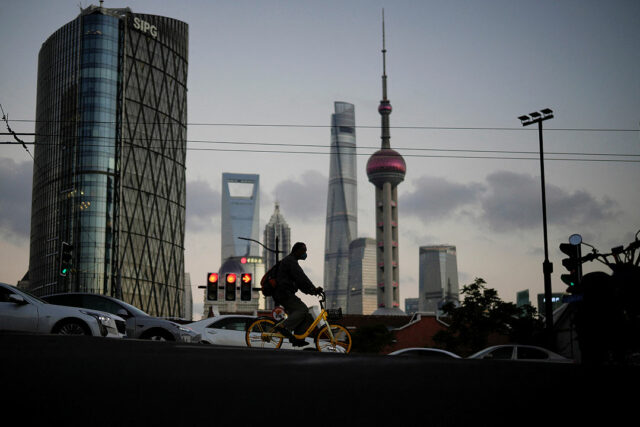
A man rides a bike on a street in Shanghai, China, Oct. 13, 2022. — REUTERS

SHANGHAI — Premier Li Qiang said on Wednesday that China’s economy will exceed 170 trillion yuan ($23.87 trillion) by 2030, presenting a big market opportunity for the world as trade restrictions rise globally.

In his speech at the opening ceremony of the China International Import Expo (CIIE) in Shanghai, Mr. Li criticized tariffs and said that China wanted to reform the global economic trading system to make it more reasonable and transparent, especially for developing countries.

Tariffs are “seriously undermining international economic and trade rules and also disrupting the normal operation of enterprises in various countries,” he said, without mentioning the United States.

“In five years, China’s economy is expected to exceed 170 trillion yuan, which will make new and important contributions to global economic growth,” Mr. Li added.

China has said its gross domestic product will top 140 trillion yuan this year, and the projection by 2030 is in line with proposals for its upcoming five-year plan that predicted annual growth of 4.17% over the next five years.

CIIE was launched under President Xi Jinping in 2018 to promote China’s free trade credentials and counter criticism of its trade surplus with many countries.

But the expo has its skeptics, as the country’s trade surpluses with other markets have only grown in the years since.

While China’s supply of manufactured goods to the world is growing, its contribution to global demand is less significant, with imports barely growing — a dynamic economists have said fuels trade tension abroad and deflationary pressure back home.

Global trade this year has been heavily disrupted by tariffs imposed by US President Donald J. Trump and have launched the US and China into a fresh trade war that has ebbed and flowed in tit-for-tat actions through this year.

Last week, Mr. Xi and Mr. Trump met in South Korea to reach a trade truce. The US agreed to reduce some tariffs on Chinese goods and pause some export controls, and China agreed to pause new export restrictions on rare earth minerals and magnets and resume purchases of American soybeans.

But analysts say it may be no more than a fragile truce in a trade war with root causes still unresolved.

Mr. Li in his speech said China wanted to increase its imports of high-quality products and repeatedly stressed that it was open to business and trade.

“Let enterprises from all over the world develop in China with more peace of mind, more comfort and more confidence,” he said.

China’s trade surplus is set to exceed last year’s record of roughly $1 trillion as exporters offset a plunge in US sales due to higher US tariffs by selling more to the rest of the world, often at a loss in pursuit of market share.

Exports to the US fell about 27% in September versus the same month a year prior, while shipments for the European Union, Southeast Asia and Africa grew 14%, 16% and 56% respectively.

More than 155 countries, regions and organizations plan to participate in this year’s CIIE, the commerce ministry said. Over 4,100 overseas enterprises will take part, with US companies maintaining the largest exhibition area for the seventh consecutive year. ($1 = 7.1230 Chinese yuan renminbi). Reuters

Democrats sweep first major elections of second Trump term

STOCK PHOTO | Image from Rawpixel

WASHINGTON — Democrats swept a trio of races on Tuesday in the first major elections since Donald J. Trump regained the presidency, giving the beleaguered party a shot of momentum as it looks ahead to the congressional midterm elections next year.

In New York City, Zohran Mamdani, a 34-year-old democratic socialist, won the mayoral race, capping a meteoric and unlikely rise from an anonymous state lawmaker to one of the country’s most visible Democratic figures. And in Virginia and New Jersey, Democrats Abigail Spanberger and Mikie Sherrill won the elections for governor with commanding leads, respectively.

Tuesday’s contests offered a barometer of how Americans are responding to Mr. Trump’s tumultuous nine months in office. The races also served as a test of differing Democratic campaign playbooks ahead of 2026, with the party locked out of power in Washington and still trying to forge a path out of the political wilderness.

That said, the midterm elections are a year away, an eternity in the Trump era. And the contests on Tuesday all unfolded in Democratic-leaning regions that did not support Mr. Trump in last year’s presidential election.

All three Democratic candidates emphasized economic issues, particularly affordability. But Ms. Spanberger and Ms. Sherrill hail from the party’s moderate wing, while Mr. Mamdani used a viral video-fueled insurgent campaign to present himself as an unabashed progressive and a new generational voice.

Mr. Mamdani, who will become the first Muslim mayor of the biggest US city, outlasted former Democratic Governor Andrew Cuomo, 67, who ran as an independent after losing the nomination to Mr. Mamdani earlier this year. Mr. Cuomo, who resigned as governor four years ago after sexual harassment allegations that he has denied, portrayed Mr. Mamdani as a radical leftist whose proposals were unworkable and dangerous.

In a sign of how Mr. Mamdani’s campaign had energized many voters, more than 2 million ballots including early voting were cast across the city, according to the board of elections, the most in a mayoral race since at least 1969.

Mr. Mamdani has called for taxing corporations and the wealthy to pay for ambitious left-wing policies such as frozen rents, free childcare and free city buses. Wall Street executives have expressed concern about putting a democratic socialist at the helm of the financial capital of the world.

Republicans have already signaled they intend to present Mr. Mamdani as the face of the Democratic Party. Mr. Trump has incorrectly labeled Mr. Mamdani a “communist” and vowed to cut funding for the city in response to Mr. Mamdani’s ascension.

In a social media post on Tuesday night, Mr. Trump blamed the losses on the fact his name was not on the ballot and on an ongoing federal government shutdown.

TRUMP LOOMS OVER RACES
Ms. Spanberger, who beat Republican Lieutenant Governor Winsome Earle-Sears, will take over from Republican Governor Glenn Youngkin in Virginia. New Jersey’s Ms. Sherrill defeated Republican Jack Ciattarelli and will succeed Democratic Governor Phil Murphy.

Both Ms. Sherrill and Ms. Spanberger had sought to tie their opponents to Mr. Trump in an effort to harness frustration among Democratic and independent voters over his chaotic tenure.

“We sent a message to the world that in 2025 Virginia chose pragmatism over partisanship,” Ms. Spanberger said in her victory speech. “We chose our Commonwealth over chaos.”

Mr. Trump gave both candidates some late-stage grist during the ongoing government shutdown.

His administration threatened to fire federal workers — a move with an outsized impact on Virginia, a state adjacent to Washington, DC, and home to many government employees. He froze billions in funding for a new Hudson River train tunnel, a critical project for New Jersey’s large commuter population.

In interviews at Virginia polling stations on Tuesday, some voters said Mr. Trump’s most contentious policies were on their minds, including his efforts to deport immigrants who entered the US illegally and to impose costly tariffs on imports of foreign goods, the legality of which is being weighed by the US Supreme Court this week.

Juan Benitez, a self-described independent, was voting for the first time. The 25-year-old restaurant manager backed all of Virginia’s Democratic candidates because of his opposition to Mr. Trump’s immigration policies and the federal government shutdown, for which he blamed Mr. Trump.

Separately on Tuesday, California voters were deciding whether to give Democratic lawmakers the power to redraw the state’s congressional map, expanding a national battle over redistricting that could determine which party controls the US House of Representatives after next year’s midterm elections.

In an echo of his false claims about the 2020 election, Mr. Trump called the California vote a scam on social media, suggesting the vote was rigged without providing evidence.

For Republicans, Tuesday’s elections served as a test of whether the voters who powered Mr. Trump’s victory in 2024 will still show up when he is not on the ballot.

But Mr. Ciattarelli and Ms. Earle-Sears, both running in Democratic-leaning states, faced a conundrum: criticizing Mr. Trump risked losing his supporters, but embracing him too closely could have alienated moderate and independent voters who disapprove of his policies.

Mr. Trump remains unpopular: 57% of Americans disapprove of his job performance, a Reuters/Ipsos poll showed. But Democrats are not gaining support as a result, with respondents evenly split on whether they would favor Democrats or Republicans in 2026. — Reuters

EU zones in on weakened climate target in final-hour deal for COP30, draft shows

REUTERS

BRUSSELS — European Union  (EU) climate ministers were close to agreeing a 2040 climate change target in the early hours of Wednesday, but watered down the goal in last-minute negotiations, a draft EU document showed, as they raced to clinch the deal before the United Nations Conference of the Parties (COP30) summit in Brazil.

After more than 16 hours of negotiations, climate ministers from EU countries were debating a compromise to cut emissions 90% by 2040, from 1990 levels, but with flexibilities to weaken this aim. The compromises included the option to buy foreign carbon credits to cover up to 5% of it, according to a draft of their negotiating document, seen by Reuters.

That would effectively weaken to 85% the emissions cuts required from European industries and pay foreign countries to cut emissions on Europe’s behalf to make up the rest.

The draft said the EU would also consider the option, in future, to let countries buy international carbon credits to meet a further 5% of their 2040 emissions reductions — potentially shaving another 5% off their domestic target.

In a further effort to win over skeptical countries, the draft compromise said the EU would weaken other politically sensitive climate policies, including delaying the launch of an upcoming EU carbon market by one year, to 2028.

Poland and the Czech Republic have opposed that policy, citing fears it could raise fuel prices.

Countries’ ministers were still discussing the draft. Diplomats said it was not immediately clear if it would win backing from the “qualified majority” of at least 15 of the 27 member states needed to pass the goal.

EU ministers planned to reconvene for formal talks later on Wednesday morning to vote on it.

Countries including France and Portugal had demanded the 5% carbon credits flexibility, while others including Poland and Italy sought 10%. Spain and the Netherlands were among those opposed to weakening the target further, EU diplomats told Reuters.

The EU is racing to agree its new climate goal to avoid going empty-handed to the COP30 climate summit, where European Commission President Ursula von der Leyen will meet other world leaders on Nov. 6.

“We have a lot at stake. We are risking our international leadership, which is fundamental in this extraordinarily complicated context,” Spanish Environment Minister Sara Aagesen told reporters on Tuesday.

OPPOSING VIEWS
The European Commission had originally proposed a 90% emissions-cutting target, with a maximum 3% share of carbon credits.

The dilution of the target reflects a backlash against Europe’s ambitious climate agenda, from industries and some governments skeptical that it can afford the measures alongside defense and industrial priorities.

“We don’t want to destroy the economy. We don’t want to destroy the climate. We want to save both at the same time,” Polish Deputy Climate Minister Krzysztof Bolesta said on Tuesday.

Poland, Italy, the Czech Republic and others opposed the original 90% target as too restrictive for domestic industries struggling with high energy costs, cheaper Chinese imports and US tariffs.

Others, including the Netherlands, Spain and Sweden, cited worsening extreme weather and the need to catch up with China in manufacturing green technologies as reasons for ambitious goals.

The EU’s independent climate science advisers have warned that buying foreign CO2 credits would divert much-needed investments away from European industries. — Reuters

ADVERTISEMENT
ADVERTISEMENT