Home Blog Page 7421

China’s energy crisis highlights weaknesses in Xi’s power plans

REUTERS

CHINA’S energy crisis has highlighted weaknesses in one of President Xi Jinping’s top priorities — energy security — that could have ramifications for the power system for years to come.

To avoid repeats of the chaos ravaging the world’s second biggest economy, the country will probably have to take major steps toward reshaping its grid and power market, building fuel reserves, and adding more renewable and flexible energy sources.

“These are all on the cards and there will be great impetus once the dust has settled on this episode,” said Michal Meidan, director of the China Energy Research Programme at the Oxford Institute for Energy Studies.

Here are some policy options that Beijing is likely to explore.

SET THEM FREE
A trigger for the current crisis was power plants shutting down because of heavy losses on buying expensive coal and selling into a highly regulated electricity market. Today’s pricing regime dates only to 2019, when fixed electricity benchmarks were replaced with a hybrid model offering some flexibility, but far short of the free-floating rates seen in parts of Europe and the US.

POWER PLAY
Hunan province is planning to trial a pricing system linked to coal costs from October. Guangdong has raised tariffs to incentivize more supply. And the country is considering raising rates on industrial users. But a major obstacle to more liberalization is the potential hit to downstream users including manufacturers.

“If China liberalizes the power market, then it may provide enough power supply, but rising power costs could also make a dent on the local economy,” said BloombergNEF’s head of China research Kou Nannan.

GET CONNECTED
More connectivity between power grids in different regions could ease localized shortages. China’s two main grid operators -— State Grid Corp. of China oversees more than 80% of the country, while China Southern Grid Corp. handles five southern provinces — have rapidly built out long-distance power lines across the country, but there’s still more work to do.

At present, there are significant disconnects — both physically and in terms of coordination — between different parts of the country, or even in some cases within the same provinces, said David Fishman, a manager at Lantau Group, an energy consultancy. And there’s very little inter-provincial power trading.

“That’s why you can have issues where one part of the country has lots of power and another place doesn’t have any,” Mr. Fishman said. “The more connectivity you have, the more you can efficiently allocate supply. So there is a case for more investment in ultra-high voltage lines and more local lines.”

GO GREEN
The global energy crunch has, for some, exposed the pitfalls of moving away from fossil fuels before renewable energy is mature. In China, the government “will probably be a bit more cautious about retiring the coal fleet,” said BloombergNEF’s Kou.

But the current situation — where China’s being forced to hunt for gas and coal in a global bidding war — highlights the security benefits of domestic wind, solar and hydropower. What’s needed in addition to the country’s plans to add massive amounts of clean energy are investments in flexible storage such as pumped hydro or large-scale batteries to manage the ups and downs of renewable flows.

“Recent months have exposed the vulnerability of China and many other economies to fossil fuel prices and strengthened the case for moving to zero-carbon energy sources,” said Lauri Myllyvirta, lead analyst at the Centre for Research on Clean Energy and Air.

STOCKING UP
Even with China’s renewables binge, coal isn’t going away any time soon, and September’s debacle has exposed serious problems in the management of the fuel’s supply and reserves, Lantau’s Mr. Fishman said. Inventories at power plants are running critically low with prices soaring even before winter arrives.

One way to cushion such shortages would be to copy the success of its strategic oil reserves by building and filling state-owned coal storage facilities throughout the country. Not only would that provide a backstop in future times of need, but buying to fill up inventories during periods of fallow demand could help miners as well.

Plans for such a program are already underway. After power shortages last winter, the country’s five-year plan through 2025 included a vow to strengthen coal reserve capacity. And in June, the government said it aimed to raise those stockpiles to 600 million tons, or about 15% of annual consumption. — Bloomberg

At 39 aircraft, China sets new high for Taiwan defense zone incursion

XANDREASWORK-UNSPLASH

TAIPEI — A total of 39 Chinese air force aircraft entered Taiwan’s air defense zone on Saturday, the defense ministry in Taipei said, setting a new high for missions which have infuriated the island’s government and further raised tensions with Beijing.

Taiwan, a democratically governed island that is claimed by China, has complained for over a year of repeated missions near it by China’s air force, often in the southwestern part of its air defense zone close to the Taiwan-controlled Pratas Islands.

Taiwanese fighters scrambled against the 39 Chinese aircraft in two waves on Saturday, the Taiwan Defense Ministry said. It said Taiwan sent combat aircraft to warn away the Chinese aircraft, while missile systems were deployed to monitor them.

That was one more aircraft than on Friday, the day China marked its national day, which was at the time more planes than the country had ever sent before to harry Taiwan’s air defense zone.

Taiwan’s Defense Ministry said that on Saturday the Chinese aircraft first came during the day — 20 aircraft — followed on Saturday night by a further 19. Most of the aircraft were J-16 and Su-30 fighters, it added.

The aircraft on both missions flew near the Pratas, the ministry said, in separate statements late Saturday and early Sunday morning.

Taiwan Premier Su Tseng-chang condemned China for its actions on Saturday, saying the country was engaging in military aggression and damaging regional peace.

China has yet to comment.

It has previously said such flights were to protect the country’s sovereignty and aimed against “collusion” between Taiwan and the United States, the island’s most important international backer.

Taiwan marks its national day next Sunday, with a major speech by President Tsai Ing-wen and military parade in central Taipei, which will include a fly-by of fighter jets.

China has stepped up military and political pressure to try to force Taiwan to accept Chinese sovereignty.

Taiwan says it is an independent country and will defend its freedom and democracy. — Reuters

Busiest summer for Asia IPOs on record 

REUTERS

Asia has had its best third quarter on record for initial public offerings, even with Hong Kong turning quiet as many firms put listing plans in the regional powerhouse on hold amid China’s sweeping regulatory clampdown.

Thanks to blockbuster deals in markets like South Korea and India, first-time share sales in the region raised $56 billion in the three months through Sept. 30, the most ever for such a period, data compiled by Bloomberg show.

“Activity will continue — 2021 remains an extraordinary year for equity capital markets volume,” said William Smiley, co-head of Asia ex-Japan equity capital markets at Goldman Sachs Group Inc. “Global investors still want access to Asian growth.”

OPPOSITE WAYS
Asia’s record third quarter came despite the slowdown in Hong Kong, one of the world’s busiest listing venues. As Beijing broadened its efforts to rein in corporates and align business models with President Xi Jinping’s “common prosperity” campaign, about $1 trillion was wiped off the value of Chinese stocks globally in July and Hong Kong’s stock benchmark sank into a bear market in August.

That saw listing volumes in the financial hub dip to $6 billion in the third quarter, trailing Korea for the first time in four years. It was also the lowest quarterly IPO haul for Hong Kong since the start of 2020, when the pandemic was taking hold and equity capital markets ground to a halt.

Share performance also suffered. Firms that listed in Hong Kong in the third quarter and raised at least $100 million saw their stocks climb just 2.8% from their offer prices on average, according to data compiled by Bloomberg. That’s versus 20% in South Korea and 25% in India, both of which saw big increases in volumes compared with the first two quarters.

“Following a very strong first half for the Street, we are still seeing good activity levels for the remainder of this year albeit at a slower pace,” said Magnus Andersson, co-head of Asia Pacific equity capital markets at Morgan Stanley. “We expect to have a healthy pipeline as we enter next year.”

KOREA, INDIA
IPOs by the likes of game developer Krafton Inc. and online-only bank KakaoBank Corp. pushed third-quarter volumes to $10.4 billion in Korea, around four times what was fetched in each of the previous two quarters.

Similarly, in India, food-delivery startup Zomato Ltd. raised $1.3 billion in July. Many more listings are lined up for the final quarter, starting with digital payments company Paytm, which has filed to raise as much as 166 billion rupees ($2.2 billion) in what would be the nation’s biggest IPO ever.

“India now has a savvy, tech-educated population with good internet penetration,” said Anvita Arora, co-head of Asia Pacific equity capital markets at Bank of America Corp. “The combination of factors for tech success is there. In general the tech pipeline is very strong.” 

While Shanghai pulled off the biggest third-quarter deal in Asia with China Telecom Corp.’s bumper offer, few bankers expect a heavy pipeline of Chinese listing candidates to come back soon. That’s owing to the continued uncertainty on the regulatory front and as issuers await new rules on overseas IPOs.

Chinese firms that had initially eyed Hong Kong or U.S. listings may now opt to raise money privately instead as they wait for the clouds to clear.

Even with the slowdown in Hong Kong, first-time share sales in Asia have raised $140.5 billion so far in 2021, more than the same period in any other year, Bloomberg-compiled data show.

And while IPOs by Chinese issuers may slow down over the next three months, listed companies are still raising funds. 

London-based insurer Prudential Plc fetched $2.4 billion in a Hong Kong share sale in September in one of the city’s biggest follow-on offerings of the year.

The complexion of transactions in Asia will differ from 2020, and a more thoughtful approach to price, size and structure may be needed, but deals will keep being done, said Goldman’s Smiley. — Bloomberg

Headwinds mounting for world economy into final stretch of 2021

REUTERS

The global economy is entering the final quarter of 2021 with a mounting number of headwinds threatening to slow the recovery from the pandemic recession and prove policy makers’ benign views on inflation wrong.

The spreading delta variant continues to disrupt schools and workplaces. U.S. lawmakers are wrangling over the debt ceiling and spending plans. China is suffering an energy crunch and pursuing a regulatory crackdown, while markets remain on edge as China Evergrande Group struggles to survive.

Fuel and food costs are soaring worldwide, combining with congested ports and strained supply chains to elevate price pressures. Labor shortages continue to plague some employers.

Although the expansion seems intact, such a backdrop is fanning fears of a mix of weaker growth and faster inflation to come, threatening to complicate nascent efforts by central banks to dial back stimulus without rattling markets.

“Expectations of a swift exit from the pandemic were always misplaced,” said Frederic Neumann, co-head of Asian economic research at HSBC Holdings Plc in Hong Kong. “Full recovery will be measured in years, not quarters.”

Here’s a breakdown of the major risks:

CHINA CRUNCHED

China’s energy travails have forced manufacturers to curb production and prompted economists to cut their growth forecasts. Bloomberg Economics expects the power shortages to have the biggest hit to expansion since a nationwide lockdown when the pandemic first erupted.

Regions impacted by the curbs represent about two-thirds of the economy and include the top five provinces in terms of gross domestic product -– Guangdong, Jiangsu, Shandong, Zhejiang and Henan. In a sign of what’s to come, factory activity contracted in September for the first time since the pandemic began.

That’s compounding a drag from the crisis engulfing Evergrande, the world’s most indebted developer, and a broader slowdown in the all-important housing sector. President Xi Jinping’s push for tighter regulations of industries including technology is also unnerving investors.

COSTLIER FOOD

China’s energy problems also risk triggering a renewed surge in world agriculture and food prices as it means the country is set for a difficult harvest season from corn to soy to peanuts and cotton. Over the past year, Beijing imported a record amount of agricultural products due to a domestic shortage, driving prices and global food costs to multiyear highs.

A United Nations index is up 33% over the past 12 months. At the same time, some gas, coal, carbon and electricity benchmarks are hitting records.

The price of oil passed $80 a barrel for the first time in three years and natural gas is the costliest in seven, helping to push the Bloomberg Commodity Spot Index to its highest level in a year. TotalEnergies SE Chief Executive Officer Patrick Pouyanne said the gas crisis that’s affecting Europe is likely to last all winter.

It could get even worse. Bank of America analysts are telling clients there is a chance of oil reaching $100, spurring an economic crisis.

SUPPLY SQUEEZED

With the northern hemisphere winter approaching, the delta variant remains another worry.

That helps explain why congestion is building at key crossroads for international commerce, from ports in Shanghai and Los Angeles, to rail yards in Chicago and warehouses in the U.K.

Retailers including Costco Wholesale Corp. in the U.S are ordering everything possible to ensure shelves are stocked, particularly for the late-year boost of holiday shopping.

Manufacturers, meanwhile, are having trouble sourcing key parts such as semiconductors, chemicals and glass.

Dubai’s DP World, one of the biggest global port operators, expects bottlenecks that have rattled global trade flows will continue at least for another two years.

There is also a shortage of labor in some industries with the coming week’s U.S. payrolls report providing an insight into how much of a problem that was for firms in September.

Wall Street/Reuters

POLICY PROBLEMS

The shine is also coming off U.S. economic policy as a locomotive for the global recovery. While President Joe Biden swerved a disruptive shutdown of the federal government for now through a stopgap funding bill, fractured talks continue on his $4 trillion economic agenda with deep divisions among his Democrats on the way forward.

Compromise on the shutdown came after Treasury Secretary Janet Yellen warned that her department will effectively run out of cash around Oct. 18 unless Congress suspends or increases the federal debt limit. Failure to do so would trigger both a recession and financial crisis, Yellen said.

Globally, fiscal policy support is set to slow into 2022 after governments ran up the biggest debts since the 1970s.

Biden and Yellen must also decide whether to hand a second term to Federal Reserve Chairman Jerome Powell, a decision which could also roil markets.

For Powell and his international counterparts, the combination of slowing growth and stubborn inflation is a challenge.

Friday alone saw news of the fastest euro-area inflation in 13 years and a U.S. gauge rose the most on an annual basis since 1991.

For now, Powell and European Central Bank President Christine Lagarde are voicing cautious optimism that inflation will ease. But economists are asking at what point transitory becomes more persistent.

And that makes plans to reduce bond purchases or raise interest rates a risky proposition. Many Latin American central banks and some in eastern Europe have already hiked borrowing costs, Norway just became the first developed nation to do so and the Fed is signaling it will pare its bond-buying program as soon as November.

Deutsche Bank AG strategist Jim Reid reckons the world economy may be facing its most hawkish period for monetary policy in a decade.

“Central banks are playing with fire by tapering to avert inflationary pressures without being fully sure of where we stand in the cycle,” said Alicia Garcia Herrero, chief economist for Asia Pacific at Natixis. – Bloomberg

Duterte says he is retiring from politics, but not everyone is convinced

FORMER PRESIDENT RODRIGO R. DUTERTE — PCOO

MANILA – Philippines President Rodrigo Duterte said on Saturday he was retiring from politics, a surprise move that fuelled speculation he was clearing the way for a presidential run by his daughter.

Sara Duterte-Carpio is currently mayor of Davao, the Philippines’ third-largest city, and filed on Saturday to contest the role again. She has previously said she would not run for national office next year.

“Today, I announce my retirement from politics,” Duterte said as he accompanied his ally Senator Christopher “Bong” Go of the ruling PDP-Laban party to register Go’s candidacy for vice president in next year’s election.

But political analysts were skeptical, noting that last-minute changes were still possible, as in 2015 when Duterte entered the presidential election race at the eleventh hour and won by a huge margin.

Duterte, 76, had been expected to run for the No. 2 job, a plan most Filipinos oppose as violating the spirit of the constitution, which sets a one-term limit for the president to stop power being abused.

“In obedience to the will of the people, who after all placed me in the presidency many years ago, I now say to my countrymen, I will follow your wish,” Duterte said as he urged the public to back his longtime aide.

Analysts say it is crucial for Duterte to have a loyal successor to insulate him from potential legal action – at home or by the International Criminal Court – over the thousands of state killings in his war on drugs since 2016.

“I would take his announcement with a lot of salt,” Carlos Conde, Philippines researcher for New York-based Human Rights Watch, told Reuters. “But assuming that he’s really going to retire, that doesn’t mean he won’t get the protection from the ICC that he craves.”

Duterte, a maverick leader famous for his embrace of China and disdain for the United States, traditionally a close ally of the Philippines, remains popular even though his opponents accuse him of being authoritarian and intolerant of dissent.

Activist and human rights lawyer Neri Colmenares also viewed Duterte’s announcement sceptically, saying “he will still dictate (to) his political machinery”.

“Unfortunately for him, he will not be spared from accountability. Retirement from politics will not save him from a prison sentence,” said Colmenares, who is also providing legal assistance to drug war victims.

Authorities have killed more than 6,100 suspected drug dealers and users since Duterte took office in June 2016. Rights groups say the police summarily executed suspects, which the police deny, saying they acted in self-defence during sting operations.

‘ANYTHING CAN HAPPEN’

More than 60 million Filipinos will vote in May for a new president, vice president and more than 18,000 lawmakers and local government officials.

Political observers had long suspected Duterte could spring a surprise, such as a presidential bid by his daughter next year.

Duterte-Carpio’s re-election filing, shortly after her father announced his retirement, did little to douse speculation she has her eye on the presidency.

Mar Masanguid, who backed Duterte’s 2016 run and has now founded a group to back Duterte-Carpio, said the signs still pointed to a run, which would mirror her father’s last minute bid in 2016.

“In politics, anything can happen,” he said.

Duterte-Carpio has topped opinion surveys on prospective candidates, but said last month she was not a candidate for higher office next year because she and her father had agreed only one of them would run for a national role in 2022.

The older Duterte’s decision not to join the race next year would clear her way.

“This allows Sara Duterte to run,” said Antonio La Vina, professor of law and politics at the Ateneo de Manila University. “She sees through the father’s scheme or it is a drama to confuse everyone.”

But La Vina said he could not rule out the possibility the firebrand leader might have a change of heart and be Go’s substitute.

Candidates have until Friday to register, but withdrawals and substitutions are allowed until Nov. 15. — Reuters

eCarga: A new digital logistics platform for shippers and truckers

Truck delivery services will be more accessible in a few taps with EEI Carga Digital Logistics Corporation, more known as eCarga, a Filipino-made digital logistics platform backed by EEI Corporation.

eCarga uses several online platforms to provide logistics solutions and make the delivery process convenient and efficient for shippers, truck owners, and drivers.

“EEI Carga was formed to address the demand from shippers, who are looking for convenient ways to reach professional truckers in the fulfillment of their cargo transport needs within Luzon,” said Sean Pestano, eCarga Commercial and Marketing Head.

For their delivery needs, shippers simply need to create a request thru an app, which will be received by the registered truck owners. The owner who will accept the delivery first will get the assignment and then task it to one of his or her drivers.

The eCarga mobile app for shipper allows booking of cashless cargo delivery service, by providing the necessary shipping details. The app also enables shippers to track their delivery requirements. eCarga adopted stringent data protection measures and made an intensive accreditation process in onboarding truck owners to ensure the security and quality of its delivery service for shippers at a competitive price.

For every successful delivery transaction, eCarga guarantees healthy returns for truck owners. The digital logistics solutions provider also makes sure that owners can easily manage their truck operations. The truck owner’s platform, accessible via the website, lets them receive requests from shippers and access Fleet and Schedule Management.

Truck owners can operate efficiently and productively with data-driven reports through eCarga’s fleet management platform, which allows them to oversee their fleet movement from eCarga shipper app bookings or offline job orders.

The drivers, meanwhile, will receive the delivery assignments from their respective truck owners through a mobile app, where they can view the assignment details.

eCarga also has an online platform for the eCarga Admin to supervise the entire platforms and its operations as well as to approve registrations, monitor deliveries, and store data about stakeholders.

Shippers can start connecting with a pool of professional truckers and avail a high-quality yet affordable cargo transport service via eCarga’s digital platform upon its soft launch on October 4.

“EEI Carga was born out of the market opportunity of matching shippers with reliable truckers in a convenient and safe way,” said eCarga President Cris Noel Torres. “The platform was developed with the users in mind and we aspire to be a trusted partner for all shippers regardless of whether it is a large corporate business or an MSME, as well as the go-to platform for truckers.”

Even just a new player, eCarga already works to extend its logistics capacities. Soon, it will launch another platform that will support backload service for a cost-effective truck delivery option for shippers. eCarga also looks into extending its platform to the business-to-business (B2B) market and increasing its capabilities to provide multi-modal digital logistics services — pursuing its vision to be a leader in digital logistics innovation.


Spotlight is BusinessWorld’s sponsored section that allows advertisers to amplify their brand and connect with BusinessWorld’s audience by enabling them to publish their stories directly on the BusinessWorld Web site. For more information, send an email to online@bworldonline.com.

Join us on Viber to get more updates from BusinessWorld: https://bit.ly/3hv6bLA

More than financial advisors

How Sun Life’s advisors commit to being lifetime partners of clients

Nowadays, Filipinos are becoming more aware of the value of finances not only for life’s celebrations but also for its various challenges. For Filipinos seeking guidance to keep up their finances throughout every life stage, they can find a financial advisor who will be a part of their lives and a partner for life.

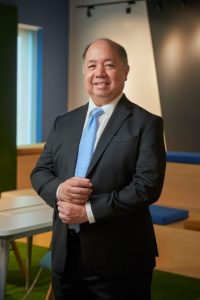
Alex Narciso, Sun Life of Canada (Philippines), Inc. President

Alex Narciso, President of Sun Life of Canada (Philippines), Inc., shares why Filipinos can find a committed and competent partner for their financial needs from the 20,000-strong advisory force of the insurance company.

Q: What makes Sun Life a special partner of Filipinos in financial matters?

A: There are many things that set us apart from the rest, but I’ll mention three for brevity. The first is our ability to overcome the odds, no matter how grim it may be. As you can see in our track record and 126 years of history, we have survived two World Wars and various economic crises and we are still able to deliver our commitments. With our stability and reliability, several generations of families placed their trust on us. The second one is because the core of our business is our clients. This means that everything we do is client-centered and we are committed to delivering our promises to our clients. Lastly, it’s because of the trust and confidence that our clients give to us, that truly inspires us to work even harder to meet their expectations as their partner for life.

Q: Why does Sun Life consider its financial advisors as “Part of Your Life, Partner for Life”?

A: Everyone needs a partner because we must constantly overcome challenges in life. By having the right partner, these challenges become easier, and we are always a step closer to succeeding and reaching our goals. When you make us a part of your life, we become your partner for life.

Here at Sun Life, we are more than just an insurance company because every client is our partner with whom we walk hand in hand as he journeys toward a brighter financial future. More than that, as our clients’ lifetime partner, we are always here by their side through thick or thin, good times or bad. We firmly believe that as their partner for life, we must consistently deliver our commitments to fulfill our role in their lives regardless of the hindrances.

One very important factor that helps us fulfill our commitments is our financial advisors. Sun Life’s financial advisors are our “frontliners” who are always there for the client, no matter the situation. They give sound financial advice as they provide regular guidance to our clients with their changing financial needs. Apart from that, they also go the extra mile by helping our clients maximize the benefit of their policies. Our latest campaign highlights this through the stories of three clients who have found in their advisors a partner for life.

Q: How does Sun Life assure that a prospective financial advisor can commit as a partner of clients?

A: We have a stringent selection process that involves several interviews and background checks. This is to make sure that their values are aligned with ours. Throughout their tenure as advisors, we not only highlight the importance of Sun Life’s advocacy but also equip them with the needed knowledge and tools to ensure that they will be able to deliver on their commitment to clients. We also have in place various programs to ensure the quality of service they deliver.

The products that we offer are long-term products that last beyond a lifetime. As such, the financial advisor must constantly assess his/her client’s needs as these needs may change over time, and this is where the partnership is exhibited the most — the lifelong connection.

Q: What happens if a financial advisor cannot uphold its commitment to the client anymore?

A: Sometimes, an advisor decides to leave Sun Life due to personal reasons (e.g. moved abroad, takes over the family business, gets seriously ill, etc.). Other times, an advisor’s contract is canceled because they did not meet company performance or ethical standards (e.g. production, market conduct guidelines). When this happens, the orphaned client has two options:

  • He/she may opt for Sun Life’s recommended advisor
  • He/she may advise Sun Life if he/she has a preferred advisor

Q: Some Filipinos, however, refuse to have a financial advisor. Can you clarify those misconceptions on financial advisors that cause hesitancy among people?

Myth: “These advisors are just good at selling the product.”

Fact: Sun Life’s Financial Advisors are trained and equipped to provide the best advice on your journey to a financially bright tomorrow. They go beyond the act of selling a policy by getting to know you to understand your financial needs and situation. With this knowledge at hand, the financial advisor suggests what our clients must do so that they can maximize or reap the benefits of their investment.

Myth: “I don’t need a financial advisor. I can handle and work on my finances myself.”

Fact: While it is true that a person can learn the ins and outs of financial management with enough determination, a financial advisor is an invaluable partner who can provide a different perspective toward your financial needs and give the proper advice on the best course of action. As they say, “Two heads are better than one.”

Myth: “I only need one insurance policy to secure my future, so there is no need for a  long-term financial advisor.”

Fact: Your needs change as you go from one life stage to another and one product isn’t likely to give you sufficient coverage. A financial advisor can guide you as you transition from one life stage to another, so you can ensure that you are well-covered no matter what happens.

Q: How can Filipinos find a financial advisor from Sun Life?

A: They can ask for referrals from family members and friends. Alternatively, they can also use the Advisor Match feature on our website (bit.ly/advisormatch) where they can either choose one from a short list we’ve prepared or allow Sun Life to recommend one for them.

Nevertheless, the best financial advisor would be someone you are confident with sharing your financial situation because they will only be able to give you appropriate advice if they clearly understand your situation.

____________________________________________________

Spotlight is BusinessWorld’s sponsored section that allows advertisers to amplify their brand and connect with BusinessWorld’s audience by enabling them to publish their stories directly on the BusinessWorld Web site. For more information, send an email to online@bworldonline.com.

Join us on Viber to get more updates from BusinessWorld: https://bit.ly/3hv6bLA

The future of work: making work better for humans and humans better at work

PIXABAY

By Patricia Mirasol

Discussions about digitalization and hybrid work focus on the “how,” according to Deloitte’s 2021 2021 Global Human Capital Trends report presented at a Sept. 30 webinar by the professional services network and Viventis Search Asia, a human capital consulting company. Focusing on the “who” (workforce), “what” (work), and “where” (workplace) enables organizations make work better for people and people better at work.

In another 2021 Deloitte report, executives from around the world said they believe the top priority needed to thrive in a world of perpetual disruption is the ability of workers to adapt, reskill, and assume new roles. The second priority, the executives said, is the ability to organize and manage work in a way that facilitates rapid decision-making.

“Notice that technology did not feature at all among what the executives said was important,” said Nicole Scoble-Williams, Deloitte’s future of work leader for the Asia Pacific. “What we’re seeing is a recognition to shift the importance of humans in the future of work.”

Humanizing the future of work, Ms. Williams told the Sept. 30 webinar audience, means reframing work, workforce, and the workplace:

  • Re-architecting the work – using technology to enable human capabilities, so humans can stand on the shoulders of technology to unlock new capabilities;
  • Unleashing workforce ecosystems – accessing talents across a broader talent system, including gig workers and contractors, and giving them the opportunity to contribute in meaningful ways;
  • Building adaptive, flexible workplaces – working across an ecosystem of virtual and physical spaces, and building a culture of trust and confidence where every worker has the agency on how and where work gets done.

The Canterbury District Health Board, Ms. Williams said, saw a 29% increase in productivity when it reframed work by applying solutions such as an artificial intelligence, voice-activated patient call system. Unilever’s Global Fast Moving Consumer Goods division, meanwhile, freed up 300,00 hours of work by redeploying 9,000 of its employees to areas where the business was still growing.

REFRAMING MINDSETS

Deloitte also reframed the mindset of a client that wanted to answer the question, “Do we still need physical offices post-pandemic?” from a purely real estate perspective.

“Through deep listening, they arrived at a vision and strategy of a hybrid workplace,” said Ms. Williams. Among other initiatives, the company came up with “day in the life” maps that showed how workers went about their day, as well as highlighted how each worker was empowered with the flexibility to work the way they did.

Yu Ming Chin, executive director of Viventis, cited figures from Deloitte that pointed to a global mass exodus — “the great resignation” — at the start of the aforementioned event.

“Forty percent of the global workforce is considering leaving their employer,” he said, highlighting a point from Ms. Williams’ keynote session. “Remote work is not the entire solution.”

Viventis, Mr. Chin said, sees thriving at work encompass three important aspects: leading and managing with empathy; focusing on both synchronous and asynchronous skills; and being intentionally flexible.

“To counteract the mass exodus, we want… leaders and the human resources community to get better perspectives on work, the workforce, and the workplace,” added Mr. Chin.

Pacquiao is first presidential aspirant to file COC

Senator Emmanuel “Manny” D. Pacquiao was the first presidential aspirant to file a certificate of candidacy (COC) for the 2022 elections on Friday at the Sofitel hotel in Pasay City..

Mr. Pacquiao, who used a certificate of nomination from the Progressive Movement for the Devolution of Initiatives (PROMDI), filed his COC along with party-list lawmaker Jose “Lito” L. Atienza Jr., who will be his running mate.

In his speech, Mr. Pacquiao said that if given the chance, he will focus on the country’s pandemic recovery. The boxer-turned-politician also recited his goals to boost internet speed and lower electricity rates in the country.

Mr. Pacquiao, the pastor of a born-again Christian group, has advocated for the revival of death penalty in the country. His running mate Mr. Atienza, who represents a religious party-list group in the 18th Congress, is against the death penalty and is known for his stance against divorce.

A PDP-Laban faction led by Senator Aquilino Pimentel earlier nominated Mr. Pacquiao as its standard bearer for the 2022 polls. The PDP-Laban faction led by Energy Secretary Alfonso G. Cusi, meanwhile, had picked Senator Christopher Lawrence T. Go and President Rodrigo R. Duterte as its presidential and vice-presidential candidates, respectively.

Mr. Pacquiao said he filed his COC with PROMDI because the ruling party PDP-Laban still “has problems.” The poll body has yet to decide on which of the two PDP-Laban factions is legitimate.

Several personalities, including a fitness coach and a medical professional, also informed the public of their intention to run for president in next year’s elections.

A former nuisance candidate also filed a COC for president.

In a press briefing, Comelec spokesman James B. Jimenez said people who had been declared as nuisance candidates in past elections may still file their COCs for the 2022 polls.

“It is possible that they are no longer nuisance candidates. We cannot automatically say that just because they were a nuisance in the past, their circumstances haven’t changed now,” he said. “We have to take each case as it comes.”

Mr. Jimenez said nuisance candidates are those who file their COCs to “put the election process in mockery; or to cause confusion among the voters by the similarity of the names of the registered candidates; or who by other acts or circumstances is clearly demonstrated to have no bona fide intention to run for public office.”

Meanwhile, after having said on Sept. 6 that he would consider a run for the presidency to ensure economic recovery amid the COVID-19 pandemic, Taguig-Pateros Representative and former House Speaker Alan Peter S. Cayetano said that he will not run for president in the upcoming 2022 elections.

“I really feel that if I run for President, it would be more divisive than (a decision) to bring (Filipinos) together,” he said in a radio interview.

Mr. Cayetano is one of the top picks for potential senatorial candidates for 2022 in a survey conducted from Sept. 6 to 11 by Pulse Asia Research, Inc. — Kyle Aristophere Atienza with Russell Louis C. Ku

14 aspiring senators file COCs on first day

https://www.facebook.com/iamlorenlegarda

FOURTEEN aspiring senators filed their certificates of candidacy (COC) on the first of eight days that the poll body will accept these on Friday at the Sofitel hotel in Pasay City.

HOUSE DEPUTY SPEAKER and Antique Rep. Lorna Regina “Loren” B. Legarda was the first to file for the Senatorial race. She will run under the National People’s Coalition (NPC) party.

Ms. Legarda had previously served in the Senate from 1998 to 2004 and again from 2007 to 2019 where she chaired the finance, foreign relations, economic affairs, environment and climate change committees.

“I believe that with my vast experience as a former majority leader and a senator for three terms, I have been able to craft laws that are helping our people right now. And there is much more I can give our people right now, especially during this pandemic,” she said in a speech after filing her COC.

“Our pandemic recovery should respond to the health needs of our people and on our economic recovery and should be attuned to the climate pathway as we are also dealing with the climate crisis,” she said during the Commission on Elections (Comelec) event. “I am confident that I can do much more to help solve the twin crisis, for the welfare of the Filipino people.”

Ms. Legarda was involved in the enactment of Republic Act (RA) 8749 or the Clean Air Act, RA 9003 or the Solid Waste Management Act, RA 10361 or the Kasambahay Law, and RA 10606 or the Universal Healthcare Act, among others.

Lutgardo “Lutz” B. Barbo, a former Senate Secretary and a former Eastern Samar governor, was the first to arrive at the hotel’s Harbour Garden Tent. He is running under the Pimentel group of the Partido Demokratiko Pilipino–Lakas ng Bayan (PDP-Laban) party. He said that he would focus his platform on the Anti-dynasty law, and the reformation of the political party system to stop the normalization of turncoatism.

In an impassioned speech, he said that running for public office should not be for self-interest, unlike, he noted, a national official currently being investigated by the International Criminal Court, who he said was “escaping the clutches of law.” “The one who should be held accountable must be held accountable.”

Sorsogon Governor Francis Joseph “Chiz” G. Escudero, through his authorized representative and lawyer, George Garcia, filed his COC in hopes of returning to the Senate after his previous term ended in 2019. Running under the NPC, he earlier said that he hopes to help with the country’s pandemic recovery and empower local governments.

Senator Ana Theresia N. Hontiveros-Baraquel, under the Akbayan Citizens’ Action party, filed the COC for her reelection bid; her campaign advocacy revolves around a healthy lifestyle and occupation. “Once more, so we can raise the quality of life of every Filipino. Once more, for a convenient, peaceful and complacent home,” she said in Filipino.

Ms. Hontiveros said sickness was prevalent during this time, not only because of coronavirus 2019 (COVID-19), but also because of the failing economy, the fall of small businesses, abuses by those in power, and corrupt practices. She hoped that even if many opposition leaders run for the elections, a united front will still emerge “to end Dutertismo for a new and better normal.”

Former Pagsanjan, Laguna Mayor Abner Afuang also threw his hat in the ring. Mr. Afuang, who ran in the 2019 midterm elections but lost, expressed deep resentment against the Chinese government during his speech and said that the Philippines had earlier been called the “Province of China.” He noted that he has burned several Chinese flags in protest.

Bay Maylanie S. Esmael, a Bangsamoro Senatorial candidate, said that she wanted to provide for those who have been neglected and to give to those who are lacking. “No senator from Mindanao has run in so long, so I’ll try my best not for myself but for my Muslim compatriots,” she said during her speech.

Norman C. Marquez, who represented animal lovers and enthusiasts, filed a COC as Senator for what he said was the “biggest sector in society.” He noted his slogan which was “animal welfare is human welfare.”

“I will be representing those who don’t have the voice, but they really have the voting power which is the heart of their owners,” he added, noting that if he won, he would harmonize human advocacy with animals and the environment.

Bertito del Mundo, an engineer, also aspires to become a Senator. He aimed to increase the oil reserves in the country to enrich and raise the economy.

Retired policeman Romeo Plasquita, who was declared a nuisance presidential candidate in 2016, filed a COC as Senator for the same advocacy as his previous run — Philippine retirees’ integration. He seeks to “unite” retired private and public workers who have yet to receive their retirement benefits, citing that he himself had to wait nine years.

Samuel S. Sanchez, a businessman who is new to politics, also filed a COC as Senator, aiming to sustain financial help for the poor, raise the economy, strengthen territorial defense, improve the pandemic response, among other goals. He added that if he wins the seat, he would donate half of his salary to charity.

Baldomero Falcone, a business consultant with experience in politics, also filed a COC as Senator under the Democratic Party of the Philippines.

Phil Delos Reyes, a security guard, said that he hoped to continue the president’s programs by fighting against drugs, poverty, corruption, and criminality. He added that he aimed to craft laws that would lower the cost of internet, electricity and water, provide social benefits, and improve prisoner livelihood.

Ziegfred Ryan C. Giron, who quickly left the location, filed a COC as Senator.

Agnes Afable also filed her COC as Senator for the 2022 national and local elections. — Alyssa Nicole O. Tan with Russell Louis C. Ku

Philippines logs 15,566 new COVID-19 cases

VISTA Mall, the Department of Health and local government partners have tied up in the joint mission to hasten the vaccine rollout. — VISTAMALLS.COM.PH/

Philippine health authorities on Thursday reported 15,566 new coronavirus cases, bringing the total number of cases since the start of the coronavirus disease (COVID-19) pandemic in 2020 to 2.57 million.

The death toll rose to 38,493 after 199 more patients were recorded as having died, while the number of recoveries increased by 23,483, the Department of Health (DoH) said in a bulletin released on Friday.

The DoH said there were 130,268 active cases, 77.9% of which were mild, 15% were asymptomatic, 2.1% were severe, 3.97% were moderate, and 0.9% were critical.

The agency said 45 duplicates were removed from the tally, 33 of which were reclassified as recoveries. It added that 102 recoveries were reclassified as deaths. Five laboratories failed to submit data on Sept. 29.

The country’s pandemic task force, in its meeting held Thursday, decided to extend the pilot implementation of the Alert Levels System in Manila, the capital, and nearby cities until Oct. 15.

On Friday, the Health department clarified that the National Capital Region will remain under Alert Level 4, which is nearly equivalent to a modified community quarantine in the quarantine levels system used throughout most of the pandemic.

The government on Sept. 16 started enforcing “granular lockdowns” with five alert levels in Metro Manila. The capital region was placed under Alert Level 4, the second highest, until Sept 30.

The Philippines is struggling to vaccinate its entire adult population amid a spike in coronavirus cases believed to be spurred on by the highly contagious Delta variant.

The country on Friday took delivery of 883,350 doses of the vaccine made by Pfizer Inc. The shipment was secured through a global initiative for equal access.

Nearly 45.15 million doses of coronavirus vaccines had been given out as of Sept. 29. More than 21.1 million people or 27.36% of all adult Filipinos had been fully vaccinated.

The country has already received more than 71 million doses of coronavirus vaccines. — Kyle Aristophere Atienza

Duterte vs Senate feud continues: President threatens to block state officials, witnesses from participating in Senate probe

President Rodrigo R. Duterte on Thursday night said he will issue a memorandum to prevent Cabinet members from participating in the ongoing Senate investigation into the government’s controversial pandemic deals.

Mr. Duterte made the announcement after Senate Blue Ribbon Committee chair Richard J. Gordon said that the probe — which focuses on the government’s procurement of overpriced medical supplies from a firm whose track record is questionable — will continue “until kingdom come.”

“I have ordered Executive Secretary Medialdea… I will issue a memorandum so that all members of the executive department will no longer obey your summons,” the tough-talking leader said in a pre-taped Cabinet meeting.

Mr. Duterte claimed that “there is an abuse of discretion already” in the Senate.

“This is not an acceptable statement in a democracy,” he said, referring to Mr. Gordon’s statement.

The President reiterated his earlier claim that the country’s pandemic response is being hampered by the Senate investigation.

The chief executive also ordered the police and military to ignore subpoenas issued by the Senate and make no arrests related to them. “As commander-in-chief of all uniformed personnel and government, I am ordering the police and the military to stay out of this trouble,” he said. “Do not join, do not follow because we have a crisis.”

Mr. Duterte also threatened to arrest Mr. Gordon should he instruct the Senate’s sergeant-at-arms to arrest those who ignore his subpoenas. “Do not ever attempt to arrest anybody because I will arrest you,” he said. — Kyle Aristophere Atienza

ADVERTISEMENT
ADVERTISEMENT