Home Blog Page 7369

Long-time national boxing coach Velasco retires

Long-time national boxing coach Nolito “Boy” Velasco is retiring effective Dec. 31, 2021. — JOHN MARVIN FACEBOOK PAGE

Long-time national boxing coach Nolito “Boy” Velasco is retiring effective Dec. 31, 2021, the Association of Boxing Alliances in the Philippines (ABAP) announced.

In a release, the ABAP said Mr. Velasco, 58, has submitted a letter to the boxing federation, expressing his intention to call it a career as a coach and that he was “looking forward to enjoy my retirement with my family, as I give them the time and effort I missed because of working.”

Mr. Velasco is the older brother of Olympic boxing medallists Roel (bronze, Barcelona ’92) and Mansueto (silver, Atlanta ’96).

The ABAP said it has accepted the coach’s request for retirement in a letter signed by president Ricky Vargas and secretary-general Ed Picson just as it wished Mr. Velasco well in his future endeavors.

Mr. Velasco has been a member of the national boxing team for four decades in various capacities, including as a athlete from 1983 to 1985.

In this year’s Tokyo Olympics, he was part of the coaching staff of the team that gave the Philippines two silver medals (Nesthy Petecio and Carlo Paalam) and one bronze (Eumir Felix Marcial).

Does sustainability please the crowd?

TUMISU - PIXABAY

A major concern in pushing the sustainability agenda is whether it will get funding. But the motivation for funding is whether sustainability “sells,” whether people are willing to pay for sustainability. A nice way to understand this problem is by observing and studying crowdfunding platforms. These are online websites wherein everything from a person struggling from an illness, to an artist looking for backing for a project, to a person looking to do a trip around the world, to students in less fortunate areas needing better school equipment, can be met by someone with a little extra to give and who is happy to support. It taps into the human instinct of altruism, giving without expecting much in return. Nowadays, sustainability projects that cater to recycling, climate change prevention, and biodiversity get a fair share of their backing of crowdfunders. However, my former thesis student, Jade Tissier, and I wondered: What makes crowdfunders select to support one project over the thousands available to them? Is a project with a sustainability orientation more attractive than others, like art related or charity related? We examined this question using a unique database of projects from KissKissBankBank, Europe’s oldest crowdfunding platform. In these next weeks, I will share some findings of this thesis, which won the IESEG Best Sustainability Thesis Award in 2016.

To kick off: what is crowdfunding? Crowdfunding pools together people with innovative ideas on the one hand and people who have some funds to contribute to back these ideas on the other via an efficient internet platform. Often, these people do not know each other yet have common interests. It is an interesting development in financing small ventures or advocacies that either will not qualify for traditional means of equity or debt financing or are in need of additional funds. The recent rise in crowdfunding came about during the 2008 US Presidential election when Barak Obama raised $750 million in funding from small donors via a website. Today, there are around 1,250 crowdfunding platforms worldwide. A recent study by Goldman Sachs mentions that 47% of millennials surveyed have backed or are likely to back a crowdfunding campaign with a growth rate of 112% each year.

Crowdfunding involves two main parties: the beneficiaries of the campaign (the project creator/s) and the individuals willing to contribute, called “funders” or “backers.” The internet is the communication intermediary that links these two parties. Typically, a financial objective is set. If this objective is met then the project goes ahead. If it is not, then either the entrepreneur can keep the funds or these are returned to the backers. The latter “all-or-nothing” model is more common.

There are two distinct investment models: one is “crowd-investing” where campaigners either issue equity to the investors or engage in peer-to-peer (P2P) lending and pay back contributors which provided them with debt. The second, called “crowd-sponsoring,” is either a donation wherein the contributor receives no monetary compensation in return or receives a simple reward, usually the product or service it set out to fund. P2P lending comprises three-fourths of all campaigns whereas rewards and donation crowdfunding account for the next biggest chunk. Given the legal limitations to equity ownership, equity crowdfunding is the least popular. North America is the leading crowdfunding geography having over 50% of all funding volume, followed by Asia (31%), and then Europe (19%).

CAMPAIGNERS’ MOTIVATIONS FOR CROWDFUNDING
Studies in entrepreneurship are clear: the startup stage of a business faces difficulties in accessing capital. These firms lack collateral and information asymmetry that poses a risk to banks and equity investors. Without a proven track record, it is challenging to convince investors of future success, yet such businesses need financing because they drive economies. We know from recent history that these innovative startup firms can end up becoming giant enterprises: the likes of Apple, Microsoft, Airbnb, Facebook, and eBay all began as small projects with their entrepreneurs fumbling for financing.

Crowdfunding is jumping on this trend of taking risks to back the next billionaire, but also to back projects that have a non-financial meaning to a person. Yet apart from a new way to access financial capital, having the intellectual input of the internet’s “crowd” is at the heart of crowdfunding success. The internet promotes openness, participation, and collaboration. In fact, the concept of crowdfunding is rooted in the broader concept of crowdsourcing, which refers to using the crowd to obtain ideas, feedback, and solutions to develop corporate activities. Crowdfunding allows for the possibility of creativity and new ideas to emerge. It also highlights the need for a strong collaboration between the parties involved and is no longer just a source of capital but a new way for “connectivity” in investing. As such, crowdfunding not only provides a platform but importantly increases anonymity of the relationship between the funder and the entrepreneur, and democratizes the financial decision by drawing upon a large number of relatively small contributions.

Finally, crowdfunding is a good and inexpensive marketing platform. Crowdfunding becomes a first contact between the entrepreneurs and the future customers. The campaigner can measure the demand for its product or service, the project’s attractiveness, and gather opinions about the price or the design during the crowdfunding campaign. In rewards-based platforms, the final product is often the reward and is thus an inexpensive way to fund and distribute a prototype. Entrepreneurs also use pre-ordering as a screening device to understand product demand.

Why, however, would random individuals back projects of people they do not even know and whose risks are very high? And the million-dollar question: What attracts funders to select to fund one project over hundreds of thousands of projects currently available to them? We know less about this and need empirical evidence.

(To be continued)

Note: This paper is based on a Masters in Finance thesis at IESEG written by Jade Tissier and supervised by the author. References are available upon request.


Daniela “Danie” Luz Laurel is a business journalist and anchor-producer of BusinessWorld Live on One News, formerly Bloomberg TV Philippines. Prior to this, she was a permanent professor of Finance at IÉSEG School of Management in Paris and maintains teaching affiliations at IÉSEG and the Ateneo School of Government. She has also worked as an investment banker in The Netherlands. Ms. Laurel holds a Ph.D. in Management Engineering with concentrations in Finance and Accounting from the Politecnico di Milano in Italy and an MBA from the Universidad Carlos III de Madrid.

Better late than never

PHILIPPINE STAR/ MIGUEL DE GUZMAN

Metro Manila is now considered at “moderate risk” with respect to the spread of the COVID-19 virus, and no longer “high risk,” as the virus’s reproduction rate in the National Capital Region continues to drop. In this line, Metro Manila mayors have already decided to shorten curfew hours in the capital. With this, further easing of restrictions may be expected in the coming days.

In Makati City, the number of active COVID cases have gone down considerably since last month. From an all-time high of 3,298 active cases on Sept. 9, the number has dropped to 733 as of Oct. 12. For the period March 1-Oct. 12, the case count was at its lowest on July 11 at 419. Perhaps by November, we can be back at this level from 733.

Given improvements in the active case count, which is down to just over 82,000 nationwide as of Oct. 12, and assuming the downtrend continues, then maybe we can also anticipate a change in the Alert Level, particularly for Metro Manila, by the end of the month. This can potentially mean a rise in economic activity going towards the Christmas season.

But while this may be good for the economy, we are also now grappling with a fuel price crisis that can dampen activity as it impacts prices. Public transportation is already limited because of COVID-19, and now the public also faces seemingly unending increases in fuel prices. The impact is going to be significant on the cost of transport of goods and people, production, and electricity.

Crude oil supply in the international market is now short relative to demand, as more economies reopen. And oil-exporting countries have decided to limit supply, meantime. Oil and fuel prices have thus gone up significantly. Oil importers like the Philippines are hit with a double whammy, especially when the peso-dollar exchange rate is high. Then, there are local fuel taxes, which have also gone up.

Cycling is an option for some, although maybe not for children, seniors, persons with disabilities, and those physically or financially challenged to buy and use a sturdy, roadworthy bicycle for moving around. Public transportation, if available, remains the most viable option for most. That is, if transport costs can remain reasonable amidst the unnerving hikes in fuel costs.

Already, there is talk of fare increases, and possibly government assistance for the transport industry. Retail fuel prices have been increasing for seven consecutive weeks, prompting senators to ask President Duterte to order a freeze on fuel prices. A bill has also been filed at the Senate to suspend the value-added tax on petroleum products.

An option is to immediately suspend all taxes and duties on oil and fuel products while world oil prices remain high. This way, fuel price hikes can be mitigated, to protect the economy from stalling and to ease the burden of consumers. When world oil prices drop and stabilize, then local taxes can be reimposed. The difficulty with this option is that the government is cash-strapped as it is, and suspending oil taxes will result in a major drop in government revenues.

Of course, these are all stop-gap measures. The long-term solution is to actually wean the country from imported oil and fuel by developing more indigenous or local sources, if any, and by shifting consumption and demand to renewable energy sources. For transportation, one of the options is providing support and incentives for the development of the electric vehicle industry.

It is in this line that I laud the Senate and the House for considering bills on establishing an Electric Vehicle (EV) industry. While a bit late, in my opinion, as we could have done this even before the pandemic hit in 2020, I still believe we are finally taking a step in the right direction. Better late than never.

Among others, the proposed law serves as the runway for an EV industry to finally take off by providing for dedicated parking slots and charging points for EVs; tax incentives for EV manufacturers, entities maintaining charging stations, and research and development centers; exemption from customs duties and value-added taxes for EVs, charging stations, and materials for their assembly; and, establishing an Electric Vehicles Advisory Board to formulate policy encouraging the development and commercialization of EVs.

To date, BusinessWorld reported that the Department of Energy has endorsed an investment project to bring in 20,000 imported vehicles, and is targeting the establishment of up to 5,000 electric vehicle charging stations within five years. Bills on establishing the EV industry are now up for discussion at the bicameral conference committee. I hope the Senate and the House, despite the coming elections, will still find time to pass a unified bill before the end of the year.

Now is the time for interest groups and technical experts to start lobbying lawmakers to immediately act on the proposed law. And to present data and research on how best to craft a law that will result in the greatest good. World oil prices will always be out of our control. The country’s transportation sector will always be at the mercy of oil-exporting countries. Shifting to public and private transport to EV, powered by electricity from renewable sources, is a feasible alternative.

But how can we develop and grow the EV market locally if we do not provide for a suitable legal and regulatory framework for the industry to prosper? Such an industry will need incentives and support to grow. Market forces are not enough to prompt the shift to EV and away from fossil fuel-run transportation. There should be a deliberate and concerted effort to develop the EV industry.


Marvin Tort is a former managing editor of BusinessWorld, and a former chairman of the Philippine Press Council

matort@yahoo.com

A well-deserved and well-timed award

WWW.NOBELPRIZE.ORG

The above title is a quote from Vergel O. Santos, veteran journalist of more than 40 years. He and the first Filipino Nobel laureate, Rappler CEO Maria Ressa, and thousands of cause-oriented journalists and Filipinos share the same beliefs on misinformation as a serious threat to democracy.

In an interview conducted shortly after Ressa was named the 2021 Nobel Peace prize winner together with equally courageous Russian journalist, Dmitry Muratov, Ressa said that acknowledging and accepting hard reality and facts and communicating these facts are essential for democracy to thrive.

Ressa, 58, and Muratov, 59, have many things in common — being courageous journalists one of them. Both are exercising their craft in the most difficult of environments that do not consider freedom of expression as a necessary ingredient for governance. In fact, for autocrats, freedom of expression hinders their total dominance and control of society.

Muratov is editor-in-chief of Novaya Gazeta, which the committee to Protect Journalists describes as “the only truly critical newspaper with national influence in Russia today,” according to Reuters.

Both Nobel laureates have been subjected to legal harassment and all sorts of pressures for simply being true to the ideals of serious journalists. Ressa’s legal issues according to various reports, include, among others: alleged Rappler ownership irregularities with the Securities and Exchange Commission (SEC), Court of Appeals (Rappler, Inc. vs. SEC) and Pasig City Regional Trial Court; alleged defamation: Manila Regional Trial court; alleged tax evasion: Pasig City RTC and Court of Tax Appeals.

Ressa spent part of her childhood in the Philippines up to grade four at St. Scholastica’s College, ironically also the alma mater of judge Rainelda Montesa who found Ressa and former researcher Reynaldo Santos guilty of cyber libel charges in June 2020. Out on bail, Ressa will not be able to travel to Norway to accept the award.

Reuters quoted Ressa as having said in a Rappler broadcast after being informed of the award, “I am in shock.” In a separate statement and echoing Santos’s statement we adopted as the column’s title, Rappler said it was “honored” and “astounded” by its CEO being awarded at “a time when journalists and the truth are being attacked and undermined.”

I first met Vergel in 1995 when I had barely warmed my seat as Chairman of the Philippine Sports Commission (PSC). I had recently suspended the then Philippine Tennis Association (PhilTA) and locked up its office at the Rizal Memorial Tennis court indefinitely for its refusal to register with the Securities and Exchange Commission, as required of all National Sports Associations (NSAs) per the law creating the PSC.

To my pleasant surprise, it turned out that a large group of tennis stakeholders disagreed with the stubborn stance of the PhilTA leadership. The group, comprised of tennis parents, weekend enthusiasts, and other parties concerned with the development of the sport of tennis, publicly expressed its support for me by staging a media-covered public protest outside the PSC offices in Vito Cruz (Pablo Ocampo) Ave. The group picketed the PSC office and asked for an audience with the head of the PCC.

As a further expression of its support, the group sent its spokesman to my third-floor office. Soon enough, a gentleman in a tennis outfit brandishing a placard and tennis gear, emerged and introduced himself as “Vergel Santos.” I then recalled the name and remembered him as sports journalist writing mainly about tennis. In his usual articulate manner.

Vergel talked about the issues against PhilTA and insisted that its leadership was remiss its duties of promoting the development of the sport by maneuvers to keep new blood out of the association. It was the usual problem of overstaying leaders refusing to let go. Vergel urged me to stay the course.

As the enlightened sectors of Philippine society reveled at the news of Ressa becoming the country’s first Nobel laureate, we sought the thoughts of Santos, founder of the Center for Media Freedom and Responsibility (CMFR). We have always regarded Santos as one of the country’s noted influential opinion makers. I sought his thoughts on the impact of the award on the forthcoming election. Santos observed, “I don’t know the impact of Maria’s award on the votes for this or that candidate. And it doesn’t really matter much to me at this time. The impact should be on the President. He has brought us to the crossroads between democracy and authoritarianism, between free speech and dissent. There are those who say she doesn’t deserve the Nobel prize. I really don’t care what they say.”

Ted Te, Ressa’s counsel in her legal battles said, “The award of Maria shines a light not only on Maria and Rappler who have been tireless in pushing back against disinformation, authoritarianism, and historical revisionism, but also on the plight of journalists and the state of the press freedom and freedom of expression in the country for the past years. There has been a culture of dissent as well as a continuing state of impunity against those who would speak or seek the truth, journalists like Maria among them. The award comes at a time when that light is much needed.”

Te’s comments echo the common refrain that the Nobel award committee showed impeccable timing in giving the award to both Muratov and Ressa at a time when the volume of misinformation has reached most likely record heights. Ressa claims that a misinformation campaign launched from offshore supported the Marcos’ historical revisionism and others in power. The campaign, instigated by a foreign power, clogged social media as early as September 2020 as part of these parties’ 2022 campaign. One is reminded of Trump’s relentless organized lying that is part of his 2024 comeback that, however, continues to undermines democracy.

In complete contrast to these blatant lies commissioned under profitable financial arrangements, sincere commendations on behalf of Ressa continue to pour in. One such heartwarming comment comes from Rappler’s Sydney-based Happy Feraren. Happy, daughter of La Salle classmate Bongo Feraren, texts in jubilation, “She is my integrity rockstar. Very inspiring to work under her.”

Truly, expressions of joy and genuine solidarity, not hate, anger and envy.


Philip Ella Juico’s areas of interest include the protection and promotion of democracy, free markets, sustainable development, social responsibility and sports as a tool for social development. He obtained his doctorate in business at De La Salle University. Dr. Juico served as Secretary of Agrarian Reform during the Corazon C. Aquino administration.


False positives

PIXABAY

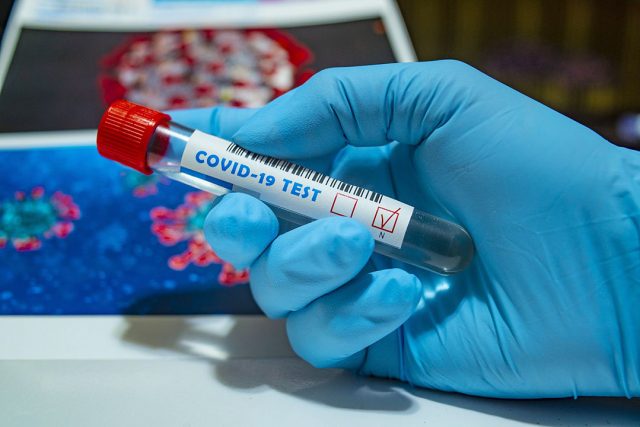
WHEN being tested for COVID-19 before a trip, even a domestic one to a resort, nothing can be worse than getting a “false positive.” You may be virus-free, but the test says you’re not. And the following day, another test may show a negative result. And yet, the prepaid vacation to the beach is scrapped and hard to untangle when you are required to go on a self-imposed quarantine because of the first test.

The reproduction rate of the virus, which is tracked daily, shows the number of positive cases for the day that have been added to the outstanding level since the start of tracking the numbers in March of 2020. The rise and fall of this daily number drive the pandemic alert levels (formerly designated as Q statuses) for specific areas. Another tracked statistic is the “positivity” rate that measures the number of positives over those being tested. How many of these positives are false?

This is not to start a medical debate or question the numbers, only a reminder that testing protocols are not as infallible as they seem. Always, the watchword is — better to be safe than sorry.

False positives can go undetected for a long time. In life too, we encounter them.

In virtual meetings, it is hard to determine support for a project, especially one that entails unexpectedly high costs that need to be shared by the participants. The search for sponsors is simply a way of shifting the funding problem. Eventually, the project drifts into a simple case study — let’s give it some more thought. The positive support gradually fades, along with the project. (We’re still looking for funding.)

Businesses like restaurants, travel agencies, hotels, office buildings, and malls that are directly affected by restricted mobility and limitations on seating capacity have had their false positives. Announcements of an easing of restrictions can quickly be rescinded even as preparations for regular service are getting readied.

Politicians already declaring as candidates for the top posts may seem to have positive traits, especially for the “Anybody-But-D” (ABD) crowd. They seem fiery, even exchanging insults and ridicule with the Chief Insulting Officer (CIO). But a review of their not-too-distant pronouncements show collaboration and support. Social media can dig up declarations of loyalty to the now-spurned leader. Their positives turn out to be false.

There are also present supporters of this administration who used to attack the top for human rights violations, and now serve as apologists and defenders of their former target. Let’s just call them hypocrites. The word is from the Greek “hypokrites” for actor or stage player.

All politicians staunchly declare that they want to discuss the issues and not engage in personal attacks. (Let’s take a positive perspective on what the country needs, and not engage in name-calling.) Our politics tend to be all personal. Scandals and anomalies are at the top of the narrative themes. So, candidates are defined by who they are against more than what they are for. The positive appeal for an exchange of ideas is simply false.

True negatives are easier to deal with.

A negative list is short. A list of foods to avoid in a diet to achieve good health or to lose weight or contraband items you are not supposed to bring in to a country, like illegal drugs, bullets, or fresh fruits.

It is not surprising that the best approach to politics is going negative. Opposition research tries to surface weaknesses and vulnerabilities of critics and opponents. This is the only option of one whose past actions are not defensible.

Squid tactics are employed by attacking the attacker or simply changing the topic to alert levels and the now no-longer-necessary facial shields. Squids employ this blurring tactic of releasing inky liquid to hide and make their getaway.

Economic recovery and the coming elections are tied together. The prospect of a new beginning for the country is hopefully a true positive.


Tony Samson is chairman and CEO of TOUCH xda

ar.samson@yahoo.com

Clean energy investments need to triple by 2030 to curb climate change — IEA

STOCK PHOTO

LONDON — Investment in renewable energy needs to triple by the end of the decade if the world hopes to effectively fight climate change and keep volatile energy markets under control, the International Energy Agency (IEA) said on Wednesday.

“The world is not investing enough to meet its future energy needs … transition-related spending is gradually picking up, but remains far short of what is required to meet rising demand for energy services in a sustainable way,” the IEA said.

“Clear signals and direction from policy makers are essential. If the road ahead is paved only with good intentions, then it will be a bumpy ride indeed,” it added.

The Paris-based watchdog released its annual World Energy Outlook early this year to guide the United Nations COP26 climate change conference, now less than a month away.

It called the Glasgow, Scotland meeting the “first test of the readiness of countries to submit new and more ambitious commitments under the 2015 Paris Agreement” and “an opportunity to provide an ‘unmistakable signal’ that accelerates the transition to clean energy worldwide.”

In recent weeks, power prices surged to record levels as oil and natural gas prices hit multi-year highs and widespread energy shortages engulfed Asia, Europe and the United States. Fossil fuel demand is also recovering as governments ease curbs to contain the spread of coronavirus disease 2019 (COVID-19).

The IEA warned that renewables like solar, wind and hydropower along with bioenergy need to form a far bigger share in the rebound in energy investment after the pandemic.

Renewables will account for more than two-thirds of investment in new power capacity this year, the IEA noted, yet a sizeable gain in coal and oil use have caused the second largest annual increase in climate change-causing CO2 emissions.

The IEA said a faster energy transition will better shield consumers in the future, because a commodity price shock would drive up costs for households 30% less in its most ambitious Net Zero Emissions by 2050 (NZE) scenario versus in its more conservative Stated Policies Scenario (STEPS).

STATUS QUO VERSUS NET ZERO
Still, the leap necessary to make good on pledges in the 2015 Paris Agreement to cap the rise in temperatures to as close as possible to 1.5 degrees Celsius above pre-industrial times remains vast.

Fossil fuels coal, natural gas and oil made up nearly 80% of world energy supply in 2020 and renewables just 12%.

To keep that rise near 1.5 degrees, the IEA’s NZE prediction envisions those fossil fuels shrinking to just under a quarter of the mid-century supply mix and renewables skyrocketing to just over two-thirds.

If the world stays on its current track outlined by STEPS scenario, temperatures will jump 2.6 degrees Celsius by 2100.

The IEA foresees a peak to oil demand in all its scenarios for the first time, in the mid 2030s in the STEPS forecast with a very gradual decline but in the NZE forecast plateauing within a decade and dropping further by nearly three-quarters by 2050.

Doubling down on the agency’s starkest warning yet on the future of fossil fuels that it made in a May report, the IEA said its NZE picture envisioned lower demand and a rise in low emissions fuels making new oil and gas fields beyond 2021 unnecessary.

However, it did say new oil fields would be required in its two most conservative scenarios and provided tips on mitigating their climate impact like reducing methane flaring.

“Every data point showing the speed of change in energy can be countered by another showing the stubbornness of the status quo,” the IEA warned.

“Today’s energy system is not capable of meeting these challenges; a low emissions revolution is long overdue.” — Reuters

Automation that combines data insights and conversational AI is improving customer experience 

By Patricia Mirasol 

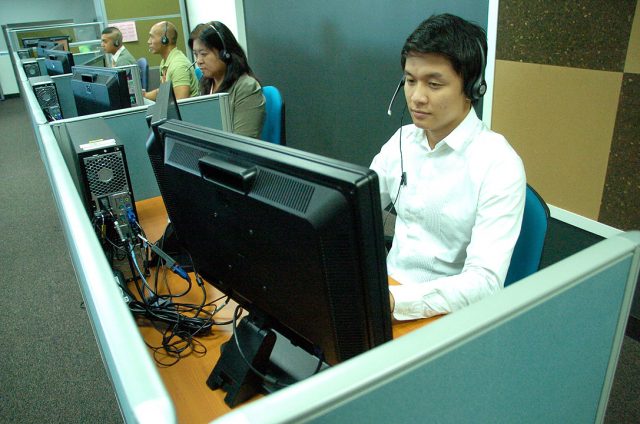
The customer experience journey is being enhanced nowadays through technologies that leverage data analytics and conversational automation, or the use of software robots as an extension of human customer service.  

Conversational automation results in higher engagement among customer agents, which in turn results in higher satisfaction among customers, said Ravi Saraogi, co-founder and president for Asia Pacific of Uniphore, a conversational AI (artificial intelligence) company.  

“Over the years, what got missed out was the focus on customer service,” he said on an Oct. 13 Zoom call with BusinessWorld. “A lot of investments were made in the backend, but hardly anything in the front end.” 

The right customer experience, Mr. Saraogi added, not only helps an enterprise retain the customer, but also propels the business forward. 

A 2018 study by multinational technology firm IBM reported that roughly 50% of first calls to call centers go unresolved. The study also reported that 56% of millennials have switched from one company to another because of underwhelming customer service.  

Uniphore’s platform uses artificial intelligence, natural language processing (which makes human language intelligible to machines), and robotic process automation (which frees employees from doing repetitive tasks) to analyze a call from beginning to end, as well as guide customer service agents on how to handle complex conversations.  

“Call centers have now transformed themselves into contact centers. It’s not a call process anymore, but a multichannel omni-present system that is contact-enabled,” Mr. Saraogi said, adding that what has not changed is “how a conversation leads to a solution for the consumer.”  

Because the company’s platform is also equipped with authentication and quality assurance features, it can be utilized remotely by clients with work-from-home staff. 

Uniphore was incubated in Madras, India, in 2008 with the aim of bridging the gap between humans and machines, and ensuring that machines understand and provide real answers to human queries. It now has offices in five countries, and counts Sitel and First Source as some of their global clients. In the Philippines, Uniphore works with companies in the telecommunications and business process outsourcing sectors.

Mr. Saraogi said that delivering the right productivity tools enables an agent to focus on the customer.  

“A happy agent leads to a happy customer. That’s the belief we have,” he added.

Social media will not replace traditional campaign methods — political analysts

By Bronte H. Lacsamana  

The use of social media during the new normal is not going to render obsolete the traditional methods of campaigning, political analysts and strategists said Wednesday.  

Experts shared their views in a forum on campaign dynamics during the pandemic, which tackled issues of mis- and dis-information and varying levels of Filipinos’ political participation amidst shifts in campaign strategies for the 2022 elections.  

“The traditional methods still exist, but in so far as national candidates are concerned, they will have to rely less on them,” said Dennis C. Coronacion, president of the Philippine Political Science Association. “As for modern campaign methods, they can reach a good number of supporters, but depth of engagement may not be as good.”  

He attributed these shifts to constraints on election campaigns, which include physical restrictions discouraging voters to turn up to events and travel restrictions limiting the number of public engagements national candidates could have.  

Angelito “Lito” T. Banayo, political campaign strategist for presidential aspirant Francisco “Isko” Moreno Domagoso, agreed with the need to adjust for the pandemic but not to the point of relying entirely on social media due to the lack of access for many. 

“While it’s true that majority of youth is on social media, for senior citizens and people from rural areas, that’s not true yet,” he explained. “When you craft a campaign strategy, you have to spread evenly across the population.” 

As for how to conduct online engagements, Mr. Coronacion added that the new normal will force candidates to “go out of their comfort zones and explore unfamiliar territory,” from getting the services of vloggers, influencers, and digital-oriented campaign staff to drawing up communication strategies that utilize the two-way nature of social media. 

A Pulse Asia survey conducted in September showed that almost half (48%) of Filipino adults get their political news from the internet.   

CHALLENGES AND OPPORTUNITIES
University of the Philippines Diliman political science professor Maria Ela L. Atienza pointed out that the media, the academe, and other interest groups have to be rigorous in terms of fact-checking and voters’ education.  

Of all the Filipino adults in the Pulse Asia survey who said they got their news from the internet, 44% specified that their source was Facebook, she reminded — where fake news and extreme polarization have drastically shifted the information landscape.  

She also warned of the challenges that the pandemic itself brings to the elections: “There’s a real threat of voting reluctance and possible low turnout due to fear of the coronavirus, plus a risk of failure of health protocols.”  

A global study by the International Institute for Democracy and Electoral Assistance (IDEA), conducted in countries that had national or subnational elections in 2020 and 2021, found that voter turnout increased in 32 countries but declined in 58 countries, with results depending on the health protocols and whether people felt safe.  

Despite this, pandemic-related issues could push people to vote, according to Ms. Atienza, particularly citizens dismayed by the management of the health crisis who are reached by creative local campaigns sympathetic to their struggles.  

Office of the Vice-President (OVP) spokesman Ibarra “Barry” M. Gutierrez III shared the approach for Maria Leonor “Leni” G. Robredo’s presidential campaign, which has found strength among the youth online: “People can be active campaigners within their own spheres. We now just have to provide them with the tools they need, like online visuals and the appropriate responses.”  

However, he also agreed with Mr. Banayo’s sentiment that age can be a misleading demographic, especially with socioeconomic status playing a major role in access to social media.  

“The challenge is identifying segments within that broader segment to whom you can target your messages,” he said. 

Russia says talks with U.S. fail to make headway on embassies dispute

MOSCOW – Russia and the United States failed to make any major progress on Tuesday in resolving a row over the size and functioning of their embassies and there is a risk that relations could worsen further, Russia‘s Deputy Foreign Minister Sergei Ryabkov said.

With ties already at post-Cold War lows, the two countries are in a dispute over the number of diplomats they can post to each other’s capitals, though Moscow said it was willing to lift restrictions imposed in recent years.

“I cannot say that we have achieved great progress,” Interfax news agency quoted Ryabkov as saying after talks in Moscow with U.S. Under Secretary of State Victoria Nuland. “There is a risk of a further sharpening of tensions.”

Nuland’s meetings with Russian officials have been “useful,” U.S. State Department spokesperson Ned Price said at a briefing for reporters, adding that U.S. stance on the staffing of U.S. missions in Russia remained “firm.”

“We expect parity on staffing numbers and we expect visa reciprocity. There must be fairness, there must be flexibility on the Russian side, if we are to achieve an equitable agreement and that’s precisely what we are after,” he said.

He said there will be another round of talks at a lower level and that Washington hoped to find a resolution to the ongoing dispute. “We need an adequately staffed embassy in Moscow,” he said.

Last week the Russian foreign ministry said a U.S. congressional proposal to expel https://www.reuters.com/world/us/us-senators-suggest-expelling-300-russian-diplomats-amid-embassy-dispute-2021-10-05 300 Russian diplomats from the United States would lead to the closure of U.S. diplomatic facilities in Russia, if implemented.

U.S. senators urged President Joe Biden to remove the Russian diplomats because they said Russian curbs on the hiring and contracting of U.S. Embassy staff had left the United States with only about 100 diplomats in Russia compared with 400 Russians in the United States.


‘HOSTILE’ ACTIONS

“It was emphasized on the Russian side that hostile anti-Russian actions would not remain unanswered, but Moscow did not seek further escalation,” Russia‘s foreign ministry said in a statement.

“We propose to remove all restrictions that have been introduced on both sides over the past few years.”

Moscow does not rule out the work of Russian and U.S. diplomatic missions being frozen, but would like to avoid such a scenario, the RIA news agency cited Ryabkov as saying.

He said the two sides would hold new consultations on resolving the issue around visas and diplomats, without specifying a date.

Nuland’s visit to Moscow this week angered some Russian nationalists who ransacked a makeshift memorial to slain Kremlin critic Boris Nemtsov in central Moscow early on Monday.

Nuland, a veteran Russia specialist, is regarded by Kremlin hawks as someone who has stirred up anti-Russian sentiment in former Soviet republics such as Ukraine that Moscow considers within its sphere of influence.

Her visit comes at a time when ties between Washington and Moscow are badly strained over a host of other issues, including cyberattacks launched from Russia against U.S. businesses and the jailing of Alexei Navalny, the most prominent domestic opponent of President Vladimir Putin.

Biden and Putin held a summit in June in Geneva, when the U.S. president said Washington would find out in the next six months to a year whether it was possible to establish a worthwhile strategic dialogue with Moscow. – Reuters

Get ready for the vivo X70, now available for pre-order

vivo X70 is now available for pre-order starting October 9 in vivo stores and kiosks nationwide

Be one of the first to get your hands on best-in-class mobile photography technology of the vivo X70 co-engineered with Zeiss

Capture life’s colourful adventures with crisp images on the vivo X70 powered by Zeiss technology and master exceptional mobile photography with the upgraded features of the vivo X70, now available through pre-order at your nearest vivo concept store or kiosk nationwide from October 9 -15.

With its Ultra-Sensing Gimbal Camera that uses the superior technology of Zeiss optics, the newest entry to the X series is designed to produce high quality images even through the toughest conditions such as low light and constant movement.

The Zeiss Superb Night Camera and AI Algorithm, meanwhile, allows you to enhance your night shots by previewing and manually adjusting exposure intensity and brightness.

Special moments can happen so fast that you also need a camera that can keep up with movement. The vivo X70 presents cinematic-level video features such as the Gimbal Reset Technology that offers stabilization angles and reduces the frame crop to prevent shaky videos. It also supports standard HDR10+ video, editing and broadcasting, and full-path support with its software algorithms. When it is time to share your video masterpiece, it stays true to its colors and your artistic vision. The Zeiss Pro Cinematic Mode lets you express your creative side with video log mode, zoom supporting SAT, focus distance, adjustable audio level, and immersive surveillance video interface.

The vivo X70 features Fluorite AG craftsmanship in Cosmic Black and Aurora Dawn with a sleek and slim 3D look and a flexible screen. With its high-ranking 6nm flagship-level chip vivo 5G platform, flash charge and super-long battery life at a 120Hz Refresh Rate, you can keep sharing your stories with vivid detail.

Pre-order details and pricing

The vivo X70 is priced at P34,999 and those who want to be the first to get their hands on The Next Imagery Master alongside a premium freebie of one (1) garment steamer starting October 9.

Customers must make sure to place their orders via vivo concept stores or kiosks nationwide and pay a P500 down payment in exchange for a voucher that ensures that an X70 is theirs to claim starting October 16, 2021.

The down payment is non-refundable for cash and card transactions while down payment is refundable for rejected customers from Financial Partners Transactions.

Customers may claim the vivo X70 including the pre-order freebie in the store where they placed the pre-order after paying the balance amount less the P500 down payment in cash or credit and present the original pre-order voucher, the official receipt of the down payment amount, and a valid, government-issued ID that matches the details on the receipt and voucher.

An authorized representative may claim the pre-ordered unit and freebie by presenting the following: valid, government-issued IDs of the original customers and their representative, a signed authorization letter, original pre-order voucher, and the official receipt of the down payment amount.

Experience The Next Imagery Master and own Xceptional living, captured in excellent quality with unparalleled camera technology and indulge in your own world with the new TWS 2e(P2,999) wireless earphones that allows you to listen to great sounds that resonate with you.

For more information about the powerful features of the vivo X70, visit https://www.vivoglobal.ph/phone/vivo-X70/, and vivo Philippines on Facebook, Twitter, and Instagram.


Spotlight is BusinessWorld’s sponsored section that allows advertisers to amplify their brand and connect with BusinessWorld’s audience by enabling them to publish their stories directly on the BusinessWorld Web site. For more information, send an email to online@bworldonline.com.

Join us on Viber to get more updates from BusinessWorld: https://bit.ly/3hv6bLA.

U.S. to lift Canada, Mexico land border restrictions in Nov for vaccinated visitors

By David Shepardson and Steve Holland

WASHINGTON – The United States will lift restrictions at its land borders with Canada and Mexico for fully vaccinated foreign nationals in early November, ending historic curbs on non-essential travelers in place since March 2020 to address the COVID-19 pandemic.

U.S. Homeland Security Secretary Alejandro Mayorkas said in a statement the administration next month “will begin allowing travelers from Mexico and Canada who are fully vaccinated for COVID-19 to enter the United States for non-essential purposes, including to visit friends and family or for tourism, via land and ferry border crossings.”

The new rules are similar but not identical to planned requirements announced last month for international air travelers, U.S. officials said in a call earlier with reporters.

Lawmakers from U.S border states praised the move to lift the unprecedented restrictions which harmed the economies of local communities and has prevented visits to friends and families for 19 months.

“Since the beginning of the pandemic, members of our shared cross-border community have felt the pain and economic hardship of the land border closures. That pain is about to end,” Senate Democratic leader Chuck Schumer said in a statement.

Unvaccinated visitors will still be barred from entering the United States from Canada or Mexico at land borders.

The officials from President Joe Biden’s administration emphasized that the White House would not lift the “Title 42” order put in place by former President Donald Trump’s administration that has essentially cut off access to asylum for hundreds of thousands of migrants seeking to enter from Mexico.

The precise date in early November when the restrictions will be lifted on both land and air travel will be announced “very soon,” one of the officials said.

Homeland Security said the administration was creating “consistent, stringent protocols for all foreign nationals traveling to the United States – whether by air, land, or ferry.”

Canada on Aug. 9 began allowing fully vaccinated U.S. visitors for non-essential travel.


‘GREAT RELIEF’

Once the U.S. curbs are lifted, non-essential foreign visitors crossing U.S. land borders, such as tourists, will be able to visit if they are vaccinated. In early January, the United States will require essential visitors, like truck drivers or healthcare workers, to be vaccinated to cross land borders, the officials said.

U.S. lawmakers have been pushing the White House to lift restrictions that have barred non-essential travel by Canadians across the northern U.S. border since March 2020, and many border communities have been hit hard by the closure. Mexico has also pressed the Biden administration to ease restrictions.

Senator Maria Cantwell said the announcement “will provide great relief to those waiting to see friends and loved ones from Canada.”

The White House announced on Sept. 20 that the United States in early November would lift travel restrictions on air travelers from 33 countries including China, India, Brazil and most of Europe who are fully vaccinated against COVID-19. It also said it would extend the vaccine requirements to foreign air travelers from all other countries.

Foreign visitors crossing into the United States by land or ferry will need to be vaccinated but will not necessarily need to show proof of vaccination unless they are referred by U.S. Customs and Border Patrol for secondary inspections.

By contrast, all non-U.S. air travelers will need to show proof of vaccination before boarding a flight, and will need to show proof of a recent negative COVID-19 test. Foreign visitors crossing a land border will not need to show proof of a recent negative COVID-19 test.

On Friday, the U.S. Centers for Disease Control and Prevention said the United States would accept the use by international visitors of COVID-19 vaccines authorized by U.S. regulators or the World Health Organization.

One question unanswered is whether the United States will accept vaccines from visitors who received doses of two different COVID-19 vaccines.

The U.S. land border restrictions have not barred U.S. citizens from returning home. – Reuters

Asian Development Bank boosts 2019-2030 climate financing goal to $100 billion

PHILSTAR FILE PHOTO

By David Lawder

WASHINGTON, Oct 12 (Reuters) – The Asian Development Bank‘s will boost its climate financing goals by $20 billion to a new target of $100 billion for the 20192030 period and aims to launch its concept for retiring coal-fired power plants at the COP26 climate conference in Scotland next month, the lender’s chief said on Tuesday.

The plans, disclosed by ADB President Masatsugu Asakawa in an interview with Reuters, increase a previous $80 billion goal for climate financing for developing countries in Asia for the decade announced in 2018.

“The fight against climate change will be won or lost in Asia and the Pacific, and we are committed to serving as a climate bank and a long term climate partner for our region,” Asakawa said.

The additional $20 billion in financing support will provide support for climate mitigation efforts including low-carbon energy sources, climate adaptation projects and private sector projects.

Asakawa said ADB now plans for $66 billion for climate mitigation financing through 2030, including for new energy storage, energy efficiency and low-carbon transportation investments. The Manila-based lender will plan for climate adaptation financing of $34 billion, including agriculture, urban and water adaptation projects.

The bank also plans to boost its private sector operations to attract more private sector capital to finance new climate technologies and innovations, using $12 billion from its balance sheet to attract up to $30 billion in new private capital, due to increased demand for such financing, Asakawa said.

The plans were presented on Tuesday to U.S. Treasury Secretary Janet Yellen, who had convened a meeting with multilateral development banks, including ADB and the World Bank, to discuss their efforts to boost climate financing in line with the 2015 Paris Agreement.


COAL PLANT RETIREMENTS

Reuters first reported in August that ADB was working with major financial firms to develop a mechanism to buy up coal-fired power plants in Asia and retire them early to shrink the biggest source of carbon emissions.

Asakawa said the group has finished an initial feasibility study and is now embarking on a longer study of the concept in three target countries — Vietnam, the Philippines and Indonesia.

The initial feasibility study provided a framework for the ADB to engage with a broad set of country, regional and global stakeholders to support the transition from coal to clean energy. Asakawa said that interest is growing among other developing countries to join the initiative at a later date.

ADB and its partners, including British insurer Prudential , lenders Citi and HSBC and BlackRock Real Assets, are aiming to complete and launch a pilot investment fund in 2022 and make its initial power plant purchase next year or early 2023.

The concept is not included in the ADB’s overall climate financing goals, because most of the money will come from private investors and donor sources, including philanthropists, Asakawa said.

A study by the Institute for Energy Economics and Financial Analysis estimated that retiring half the coal power plants in Indonesia, the Philippines and Vietnam would require as much as $55 billion in financing, requiring strong support from Southeast Asian governments to attract financing.

The ADB will announce the partnership to design and establish the Energy Transition Mechanism (ETM) at COP26.

“Even now, some philanthropists have already shown interest in investing in this new initiative. So we plan to launch the ETM at COP26 in Glasgow,” Asakawa said.

Asakawa added he hopes to be able to present the plans along with Indonesian Finance Minister Sri Mulyani Indrawati and Philippines Finance Minister Carlos Dominguez. – Reuters

ADVERTISEMENT
ADVERTISEMENT