Home Blog Page 7359

TnT secures PHL Cup finals berth

THE TnT Tropang Giga are through to the finals of the PBA Philippine Cup after defeating the San Miguel Beermen, 97-79, in their Game Seven semifinal rubber match on Sunday. — PBA IMAGES

THE TnT Tropang Giga are through to the finals of the Philippine Basketball Association (PBA) Philippine Cup after defeating the San Miguel Beermen, 97-79, in their Game Seven semifinal rubber match on Sunday at the Don Honorio Ventura State University in Bacolor, Pampanga.

TnT had strong middle quarters to establish control then finish in a flurry to close out San Miguel and book the last finals tickets in the ongoing PBA tournament.  

The contest got off to a competitive start before the Beermen made a late push in the opening quarter to build a 23-15 advantage after the first 12 minutes.

In the second quarter, the Tropang Giga came out swinging, outscoring the Beermen, 10-2, in the first three and a half minutes to level the count at 25-all.

TnT then raced to an 11-point advantage, 43-32, by the 1:13 mark, and eventually settled for a nine-point cushion, 45-36, at the break.

San Miguel played aggressively to begin the third canto but TnT was ready for it, continuously holding the Beermen at bay and ahead, 56-47, with 4:31 to go in the frame.

TnT continued to hold sway after, up, 67-55, heading into the final quarter.

With their season on the line, the Beermen tried to make their move to reclaim some ground, going to big man June Mar Fajardo.

They, however, would have little success as they continued to trail, 79-67, with 7:24 to go with rookie Mikey Williams and Roger Pogoy providing firepower to TnT.

The Tropang Giga continued to lord it over the Beermen, stretching their lead to 21 points, 92-71, with 3:27 and were never threatened from there.

Mr. Pogoy led the way for the Tropang Giga with 27 points, followed by Mr. Williams with 20.

Troy Rosario and Kelly Williams, meanwhile, had double-doubles of 12 points and 12 rebounds and 11 and 10, respectively.

For San Miguel, it was Mr. Fajardo who top-scored with 22 points to go along with 16 boards, with Chris Ross finishing with 15 points and 11 rebounds.

“The players came out with great resolve. Credit to the players for stepping up and getting the win,” said TnT coach Chot Reyes in the post-game press conference.

TnT will take on the Magnolia Pambansang Manok Hotshots in the best-of-seven PBA Philippine Cup finals beginning on Wednesday.

It will be TnT’s second straight Philippine Cup finals appearance. In last season’s finals, the Tropang Giga fell to the Barangay Ginebra San Miguel Kings in five games.

TnT is seeking its eighth PBA title in franchise history and first since winning the 2015 Commissioner’s Cup. — Michael Angelo S. Murillo

Magnolia Hotshots thrilled to be back in the PBA finals

PLAYING amid not-so-ideal conditions because of the pandemic, the Magnolia Pambansang Manok Hotshots are proud and thrilled to be competing in the finals of the PBA Philippine Cup. — PBA IMAGES

By Michael Angelo S. Murillo, Senior Reporter

THE Magnolia Pambansang Manok Hotshots are back in the Philippine Basketball Association (PBA) finals and they are thrilled about it, seeing it as a product of the sacrifices they have collectively put in amid not-so-ideal conditions the tournament is in.

Defeated the Meralco Bolts, 93-85, in Game Six of their best-of-seven PBA Philippine Cup semifinal series on Friday at the Don Honorio Ventura State University Gym in Bacolor, Pampanga, the Hotshots completed the closeout of the Bolts, 4-2.

The win thrusted them to their first final appearance since 2019, where they lost to the San Miguel Beermen in seven games in the Philippine Cup.

Magnolia is seeking their 15th PBA title in franchise history, and seventh All-Filipino crown.

“It feels really good to be back in the finals, especially how we go through a lot here,” said Game Six player of the game Ian Sangalang in Filipino, noting of being away from their families to play in the PBA semi-bubble amid uncertainties and danger brought about by the coronavirus disease 2019 (COVID-19) pandemic as among the sacrifices they have to make.

The Hotshots are one of the more consistent teams in the ongoing PBA tournament, a steady top-half team in the classification phase and go-getting in the playoffs.

“Credit to the players for bringing us here (finals). They really worked hard for this,” said Magnolia coach Chito Victolero, who is angling to give the team its second title under his watch after the 2018 PBA Governors’ Cup championship.

In barging into the finals anew, the Hotshots needed to buck another tough challenge by the Bolts in Game Six.

They played catch-up in the early goings and had to hang on tight in the end as Meralco showed no letup in its push.

Mr. Sangalang had a solid double-double of 19 points and 14 rebounds in the win. He also dished out six assists.

Mark Barroca and Rome Dela Rosa also came up big with 16 points apiece.

“Meralco put in a solid effort and they made us earn our place in the finals,” said Mr. Victolero.

Magnolia was awaiting the outcome of the other semifinal series between the TnT Tropang Giga and San Miguel Beermen in a Game Seven sudden death later on Sunday. The winner of the contest meets the Hotshots in the best-of-seven finals.

Mr. Sangalang said they have no preference on who they want to face since either way, they expect another grind of a championship series.

Landmark 75th season of the NBA tips off this week

THE 75th season of the National Basketball Association (NBA) kicks off this week with the league promising it to be eventful as it celebrates the landmark year.

Action kicks off on Oct. 20 (Manila time) with a twin-bill featuring Giannis Antetoukounmpo and the defending champions Milwaukee Bucks against Eastern Conference powerhouse team Brooklyn Nets at 7:30 a.m. and the retooled Los Angeles Lakers versus Stephen Curry and the Golden State Warriors at 10 a.m.

The opening games will see off a busy tip-off week that will also have the NBA naming its 75th Anniversary Team, featuring the 75 greatest players of all time.

From Oct. 20 to 22, 25 members of the team, representing a cross section of positions and eras from throughout the NBA’s rich history, will be announced on each of the three days. Members of the team include those already named to the 50 greatest players in 1997. The team is selected by a blue-ribbon panel of media and current and former players, coaches, general managers and team executives.

Also on tap for opening week are games that include those of Filipino-Americans Jalen Green and Jordan Clarkson.

Mr. Green and the Houston Rockets play the Minnesota Timberwolves on Oct. 21 while also playing on the same day are Mr. Clarkson and the Utah Jazz versus the Oklahoma City Thunder.

Young guns Luka Dončić and Trae Young face off in an early matchup as the Dallas Mavericks and Atlanta Hawks battle on Oct. 22.

On Oct. 23, among those playing are last year’s losing finalists Phoenix Suns against the Lakers and the Nets versus the redemption-seeking Philadelphia 76ers.

The Christmas games for this season, meanwhile, will have the Hawks against the New York Knicks, a rematch of their emotional first-round matchup last season; the Bucks against the Boston Celtics, the Suns against the Warriors, and the Lakers vs. the Nets.

Just like the previous two seasons, the Play-In Tournament will be in effect.

It is scheduled to take place from April 13 to 15, 2022 after the regular season concludes on April 11 and before the NBA Playoffs 2022 begin on April 17. It will determine the teams that will fill the seventh and eighth playoff seeds in each conference.

The Play-In Tournament will include the teams with the seventh-highest through the 10th-highest winning percentages in each conference. The teams with the seventh-highest and eighth-highest winning percentages in each conference will each have two opportunities to win one game to earn a playoff spot. The teams with the ninth-highest and 10th-highest winning percentages in each conference will each have to win two consecutive games to earn a playoff spot.

Last season, the teams that earned playoff spots by way of the play-in were the Celtics (seventh seed) and Washington Wizards (eighth seed) in the Eastern Conference and the Lakers (seventh seed) and Memphis Grizzlies (eighth seed) in the Western Conference.

The NBA 75th season, too, has some 85 players playing in new locations.

Among them are Russell Westbrook (Washington to Lakers), Kemba Walker (Boston-New York), DeMar DeRozan (San Antonio-Chicago), Jonas Valančiūnas (Memphis-New Orleans), Carmelo Anthony (Portland-Lakers), Lonzo Ball (New Orleans-Chicago), Paul Millsap (Denver-Brooklyn) and PJ Tucker (Milwaukee-Miami).

A number of teams will have new coaches, too, namely Portland (Chauncey Billups), Indiana (Rick Carlisle), New Orleans (Willie Green), Dallas (Jason Kidd), Atlanta Hawks (Nate McMillan), Orlando (Jamahl Mosley), Boston (Ime Udoka) and Washington (Wes Unseld, Jr.).

Milestones to watch out for include the Lakers’ LeBron James supplanting Utah Jazz legend Karl Malone in second place in the all-time scoring list. Mr. James has 35,367 points entering the new season while Mr. Malone ranks second with 36,928 points. Kareem Abdul-Jabbar is the career leader with 38,387 points.

Another is Golden State’s Curry (2,832) taking the all-time lead in three-pointers made over Ray Allen (2,973).

San Antonio coach Gregg Popovich, too, is in position to become the winningest coach in the NBA. He is currently at third place with 1,310 wins, behind Don Nelson (1,335) and Lenny Wilkens (1,332)

As per the NBA, the league has established a major international presence with games and programming in 215 countries and territories in more than 50 languages, and merchandise for sale in more than 100,000 stores in 100 countries on six continents.

The 2020-2021 NBA will feature 107 international players from 41 countries on opening-night rosters, including reigning league most valuable player Nikola Jokić of Serbia, marking the seventh consecutive season that opening-night rosters featured at least 100 international players.

The NBA can be seen in the country over free TV on TV5 and One Sports and pay TV through Cignal TV as well as on NBA League Pass, Cignal Play and Smart GigaPlay. League-related content is also available over NBA.com/Philippines. — Michael Angelo S. Murillo

Braves take NLCS opener over Dodgers in walk-off win

AUSTIN Riley singled home Ozzie Albies in the bottom of the ninth inning on Saturday night, giving the Atlanta Braves a 3-2, walk-off win over the visiting Los Angeles Dodgers in Game 1 of the National League Championship Series (NLCS).

In a game that had been tied since the fourth inning, Albies blooped a single off Blake Treinen (0-1) with one out in the ninth and stole second, setting the stage for Riley, who had homered earlier in the game.

Game 2 in the best-of-seven is set for Sunday night, also in Atlanta, which earned the home-field advantage by virtue of being a division winner playing against a wild card team.

Will Smith (1-0), who survived a shaky top of the ninth, was credited with the win.

The Dodgers threatened in the top of the ninth when Chris Taylor walked with two outs and Cody Bellinger followed with a single to right. Taylor headed to third on the hit, but changed his mind en route and was tagged out in a rundown to end the inning.

Each team used a solo home run to contribute to a 2-2 tie that lasted into ninth.

The teams traded early runs — Atlanta scoring on a Corey Knebel wild pitch in the first inning, Los Angeles getting even on a Taylor RBI single in the second.

The Dodgers’ Will Smith smacked the first homer of the game when he connected off Braves starter Max Fried leading off the fourth.

As Los Angeles had done earlier, Atlanta wasted no time erasing its deficit, with Riley blasting a homer off Tony Gonsolin, the Dodgers’ fourth pitcher, with two outs in the fourth.

Fried was pulled in a 2-2 tie after six innings, having allowed both Dodgers runs and eight hits. He struck out five and did not issue a walk.

In his role as opener, Knebel was charged with one run on one hit in his one inning. He struck out two without a walk.

Riley and Albies had two hits apiece for the Braves, who struck out 14 times and were held to six hits by eight Dodgers pitchers. Los Angeles didn’t have its top three starters available because of its just concluded triumph over the San Francisco Giants in the NL Division Series.

Taylor and Trea Turner collected two hits apiece for the Dodgers, who collected 10 for the game, but went 1-for-8 with runners in scoring position. — Reuters

Rickie Fowler (63) takes two-shot lead at CJ Cup

RICKIE Fowler shot a blistering 9-under 63 on Saturday to take a two-shot lead over Rory McIlroy, who carded the low round of the day with a 62 at the CJ Cup in Las Vegas.

Fowler sits at 21 under heading into Sunday’s final round at the Summit Club. McIlroy made the biggest leap on moving day, shooting up 17 spots for sole possession of second at 19-under 197.

Robert Streb (65), Australia’s Adam Scott (67) and Mexico’s Abraham Ancer (63) are tied for third at 18 under, three shots back.

Keith Mitchell, who owned a five-stroke lead after 36 holes, dropped into a tie for sixth after a 73. He sits at 17 under, tied with England’s Tyrell Hatton (67), four shots back.

Fowler followed opening 66s with a clean round, posting five birdies on the front nine and four more coming in.

“I’ve done everything I really wanted to do the first three days. It’s nice to be executing the way we are,” Fowler said. “It’s just been a long time coming. I haven’t been in this position a whole lot in the last couple years, so to feel the emotions again on the back nine being around and then in the lead, you know, kind of dealing with that again and kind of making sure that I was going through the right process and committing to what I was ultimately trying to do, it was great to see that I was still executing and hitting the shots that I wanted to.”

But as good as Fowler’s round was, McIlroy’s was even better, thanks to an eagle on the par-5 18th hole. McIlroy of Northern Ireland recorded six birdies on the front nine, including five in a row, and finished with eight.

“I played an eight-hole stretch yesterday in even par, I made eight pars in row. Then today, I played a stretch of golf, played nine holes in 6 under and all of a sudden, you feel a little better about yourself,” McIlroy said. “The big thing is I’ve played the last two days keeping it in the short stuff and I haven’t made any bogeys. That’s huge… I can’t remember the last time I played a round of golf without a bogey and now, I’ve played two rounds in a row, so that’s nice to see.” — Reuters

On brink of first title, Sky look to ‘punch’ out Mercury

THE Chicago Sky are one victory away from their first Women’s National Basketball Association (WNBA) championship.

Their record-setting 86-50 win on Friday night gave them a 2-1 lead in the best-of-five series. They will be at home again for a potential clinching win Sunday afternoon.

“I was telling my team. I’m 0-2 in Game 4 closeouts at home,” Sky forward Candace Parker said. “I don’t want that to continue. We know they are a fantastic team and they’ll come out and be ready. (We’ve got to) come back stronger.”

Game 5, if necessary, would be Tuesday in Phoenix.

The Sky’s margin of victory in Game 3 was the largest ever in a WNBA Finals game and they held the Mercury to a Finals-worst 25.8 percent shooting clip. Chicago’s 22-point half time lead was the largest in a Finals game since Phoenix’s edge against the Sky in Game 1 in 2014, the last time either team played for the title.

“(The Mercury) are a prideful team,” Sky coach James Wade said. “They’re going to come out and punch (in Game 4), but we’re going to punch, too.”

Phoenix has won three elimination games during this postseason.

“We got our butts kicked,” Mercury coach Sandy Brondello said. “We’ve got to be better.”

Phoenix’s 50 points were the second fewest in a Finals game and Brittney Griner (16 points) was the only Mercury scorer in double figures.

“We’ll be better than 50 (in Game 4), you can take that to Vegas,” joked Diana Taurasi, who had five points on 1-of-10 shooting. “Nothing worked. Inside, outside, they took us out of everything we wanted to run.”

The Sky outscored the Mercury 36-14 in the paint and forced 17 turnovers.

“All year we’ve faced adversity, and we have a veteran group,” Phoenix guard Skylar Diggins-Smith said. “We’ll look at it and see what changes we can make. We don’t have a choice. We’re going to come out with a different mindset next game, and we’re desperate. We’ve got to win.” — Reuters

Red Sox belt two grand slams, even up ALCS with Astros

THE Boston Red Sox had a grand ol’ time evening the American League Championship Series  (ALCS) against the Houston Astros at one win apiece on Saturday.

J.D. Martinez belted a grand slam in the first inning and Rafael Devers added one of his own in the second to power the visiting Red Sox to a 9-5 victory in Game 2 of the ALCS. The blasts made Boston the first team in postseason history to record two grand slams in one game.

Enrique Hernandez continued his torrid stretch by launching his third homer of the ALCS and franchise-tying fifth of the postseason.

The best-of-seven series shifts to Boston for Game 3 on Monday. The Red Sox are 3-0 at home this postseason.

Red Sox manager Alex Cora admitted he’s not ready to declare a starting pitcher for that game, however, he has no qualms about his team’s performance at the plate in the first two contests.

“We feel really good offensively. Yesterday, we played a good game (a 5-4 loss in Game 1) and tonight we did too,” Cora said. “Obviously, going home and guaranteeing three games is very important. It’s now a best out of five, and we play three games out of home.”

The offense was more than enough for Texas native Nathan Eovaldi (2-0), who picked up the win after allowing three runs on five hits in 5 1/3 innings.

Boston set the tone early by loading the bases before Martinez deposited a 1-0 fastball from rookie Luis Garcia (0-1) over the wall in right field. The grand slam was the first by a Red Sox player in the playoffs since Jackie Bradley, Jr. in Game 3 of the 2018 ALCS.

Boston kept the pressure on in the second inning after Kevin Plawecki worked a walk off Garcia, who exited with right knee discomfort.

“It came to our knowledge that this has kind of been bothering him a little bit on and off, but he hadn’t said anything about it,” Astros manager Dusty Baker said of Garcia. “It wasn’t bothering him enough not to pitch.”

Jake Odorizzi relieved Garcia and permitted singles to both Christian Arroyo and Hernandez before Devers sent a 1-1 cutter over the wall in right field.

“That’s a tremendous mountain to climb,” Baker said of the two grand slams.

Hernandez continued his sterling postseason in the fourth inning by crushing a 2-1 splitter from Odorizzi over the wall in left field. The homer was his fifth of this postseason, tying Todd Walker (2003) and David Ortiz (2004, 2013) for the franchise record.

The homer also pushed Hernandez’s total bases mark to 35, which is tied with Daniel Murphy (2015) for second in a seven-game postseason stretch in a single season. Carlos Beltran had 38 in 2004.

“I guess I’m feeling good and the importance of the game is allowing me to stay focused and stay locked in,” Hernandez told the FOX broadcast after the game. “Not thinking too much about it, I’m just glad I’m able to put up good at-bats and get on base or drive myself in to help us win and help us get to this position.”

Houston responded in the fourth inning, courtesy of Kyle Tucker’s two-out, RBI double and Yuli Gurriel’s two-run single.

Eovaldi settled down and two relievers bridged the gap to Darwinzon Hernandez, who yielded solo homers to Gurriel and Jason Castro before Ryan Brasier induced Jose Altuve to fly out to end the game. — Reuters

Preseason Lakers

Much of the talk in hoops circles heading into the weekend focused on the Lakers’ atrocious preseason record. With the start of the 2021-22 campaign just around the corner, the purple and gold had yet to come up with a single victory in six contests. And it wasn’t simply that they lost each time out. Only in their last outing were they mildly competitive, with their average margin of defeat through their slate to date at 15 points. Needless to say, the development was far from expected given their status as contenders casting moist eyes on the Larry O’Brien Trophy they were proud owners of a mere 14 months ago.

Not that the Lakers themselves seem perturbed. To the contrary, they remain confident of their chances to succeed in their ultimate objective. For one thing, they understand that finding consistency in their output will take time in the face of the massive changes they made to their roster. For another, they believe they have cause to dismiss their tuneup matches because these featured little of their vaunted Big Three on the court together. As far as they’re concerned, they’ll do just fine once LeBron James, Anthony Davis, and Russell Westbrook become more comfortable with each other and jell as projected.

There are, to be sure, a lot of ifs in the equation. As with most other crucial ingredients to achievement, repetition is key to preparation and preparedness, and the very inability of the Lakers’ three stalwarts to burn rubber together serves to underscore the uncertainty surrounding their bright prognosis. And, not coincidentally, the results have been middling at best and extremely underwhelming for newcomer Westbrook, in particular, because he has yet to settle in and comprehend his place in the pecking order.

If there’s any silver lining, it’s that the Lakers have a clear Number One, and that they’re ahead by double-digits in the plus-minus column throughout James’ time on the floor. The bottom line, however, is clear: All 15 active players need to be on the same page for them to be crowned the best of the best, and the sooner they start to realize it and work for it, the easier it will be for them to inject truth to their pronouncements.


Anthony L. Cuaycong has been writing Courtside since BusinessWorld introduced a Sports section in 1994. He is a consultant on strategic planning, operations and Human Resources management, corporate communications, and business development.

The economic mistakes of the Duterte administration

PCOO.GOV.PH

This article is not meant to denigrate the economic achievements of the Duterte administration, nor to say the administration has achieved nothing but blunders. In fact, from a structural standpoint, the previous administration committed more grievous sins: extending the monopoly of the National Food Authority (NFA) and killing the initiative to change the economic provisions of the Constitution.

The purpose of this article is to highlight the mistakes so that the succeeding administration would not repeat them. The economic scarring taking place and the depth of the recession leave the succeeding administration no room for error. The future of the young generation of Filipinos hinges on the next administration doing things right the first time.

What then are the economic mistakes of the current administration?

1. Appointing the wrong people in key Cabinet positions. I wouldn’t say “incompetent” but certainly “wrong,” because they brought an anti-development mindset to their positions.

The Leftist appointments — to the Department of Agrarian Reform (DAR) and Department of Social Welfare and Development (DSWD) — were certainly a mistake. In the case of former Department of Agrarian Reform Secretary Rafael Mariano, with his leftist oriented policies, he scared possible investors in agriculture. For example, he tried extending coverage of a clearly failed land reform program and tried to undo even successful joint venture programs (e.g., the Marsman case).

Appointing a populist politician to the key Cabinet portfolio of agriculture was also a major mistake. Agriculture Secretary and former Governor Manny Piñol had no programs in agriculture beyond free irrigation and free fertilizer. He actively opposed the dismantling of the NFA rice importation monopoly.

Another mistake was the appointment of the late Gina Lopez to the Department of Environment and Natural Resources (DENR), not because Gina was an environmentalist, but because she had an extremist ideology that was anti-development. Responsible mining has a significant role in our economy — it generates export revenue and creates jobs in the countryside — but Gina Lopez had to have none of it. She even banned open pit mining, which is an accepted practice in many parts of the world, for example, in Australia and Canada, where responsible mining is practiced.

President Duterte did make course corrections, but already halfway in his term. The damage had been done.

There may have been political reasons for President Duterte to make those appointments, and he may have had the leeway to do them — the economy was growing 6% per annum at the time — but the next administration won’t have the luxury of making wrong appointments to key Cabinet positions.

2. Shifting away from PPP (Public-Private Partnership) to ODA (Official Development Assistance) and the Government Appropriations Act to finance and execute major infrastructure projects. The problem with President Duterte is that he brought his city mayor mentality to the National Government. He was an activist mayor who thought he could make National Government work in the same way City Hall does.

The reality is that the national bureaucracy is corrupt, inefficient, and ineffective. The Department of Public Works and Highways (DPWH) and DoTr (Department of Transportation) regularly under accomplished and underspent their budgets. ODA from China suffered from long delays and the cost didn’t turn out any cheaper than if these had been done under a solicited PPP (Public-Private Partnership) arrangement. The Kaliwa Dam, which had been slated for a PPP, was scrapped in favor of Chinese ODA. President Duterte will soon be ending his term yet construction hasn’t even started.

President Duterte also had deep suspicions of the Makati-based oligarchy that seemed to corner the choice PPP projects. His tirades against the water companies are a reflection of President Duterte’s mindset. But this created an environment in which the government was viewed as not honoring its contracts, thereby chilling private sector interest in PPP.

3. Neglect of Agriculture. President Duterte, like all presidents before him, played politics with agriculture. He appointed a politician, Manny Piñol, to the DA. All that former DA Secretary Piñol did for agriculture were populist policies — free irrigation and free fertilizer — that didn’t do anything for agricultural productivity. The result is that Duterte will end his term with an agriculture growth rate way below population growth rate.

To his credit, President Duterte did make a course correction and appointed the competent Dr. William Dar to the Department of Agriculture. Unfortunately, this was another case of too little and too late. Before Secretary Dar could accomplish his programs, the department was confronted by the African Swine Fever in pork production and the COVID-19 pandemic, which disrupted the agricultural market and supply chains. The budget which should have gone to agriculture went to the health sector instead.

4. Wrong timing of reforms. The administration spent its political capital in pushing through the Corporate Recovery and Tax Incentives for Enterprises (CREATE) Act. CREATE was able to revamp the fiscal incentive system to make it more performance-based and time-bound. In a sense, CREATE was a major accomplishment for fiscal reform.

However, the supply side effects of the tax cut in CREATE will be negligible unless investment restrictions are liberalized. The administration is now trying to do this by pushing for the passage of the amendments to the Public Service Act, Retail Trade Liberalization Law, and Foreign Investments Act.

The problem is that these liberalization measures are being pushed in the last two minutes of the Duterte administration, when President Duterte is seen as a lame duck and his popularity is waning. Consequently, the vested interests, who don’t want competition to threaten their oligopolistic positions in the telecommunications and transport sectors, have been emboldened and are doing their best to dilute these bills, thanks to a few misguided senators.

Moreover, President Duterte wasted the early years of his administration touting Federalism and Revgov, political solutions that won’t solve the country’s ills. Instead, at the height of his political popularity, he should have pushed for changes to the economic provisions of the Constitution and pushed for more investment liberalization measures. He could, for example, have also pushed for bilateral free trade deals with the United States or gotten the country to apply for membership in the Comprehensive and Progressive Agreement for Trans-Pacific Partnership (CPTPP), of which Vietnam and Malaysia had long been members.

5. Mismanagement of the pandemic. The administration’s mismanagement of the pandemic qualifies as a major economic blunder. Its heavily militaristic response, especially in 2020, caused the economy to suffer its worst contraction in decades. But the heavily militaristic response, with little or no regard for its economic effects, didn’t yield any public health benefit. The Philippines remains last in resiliency and low in country rankings in managing the pandemic.

To top it off, President Duterte eroded trust in institutions with the massive graft and corruption surrounding his administration’s response.

That said, these shortcomings don’t overshadow the administration’s single biggest achievement: the Rice Tariffication Law (RTL). No President ever dared dismantle the NFA’s monopoly in rice importation before President Duterte, given the entrenched syndicates in the NFA and the milking cow it became for the NFA leadership.

RTL benefited more than 100 million rice consumers, including farmers themselves who consume rice during the lean season, and has helped stabilize rice prices.

A more modest achievement is the improvement in broadband services with the entry of a third telco (Dito) and other measures which include an executive order liberalizing satellite broadband, a law on number portability, and reducing the number of permits for putting up cellphone towers.

To sum up, if we are to learn from the economic mistakes of the Duterte administration, the next administration must appoint competent leadership in the key Cabinet positions, not just in the economic cluster. It must pay attention to agriculture and adopt the right structural reforms. It must make solicited PPP a key component of Build, Build, Build.

Most importantly, it must spend its political capital on solving the principal binding constraints to Philippine economic growth early on: land fragmentation in agriculture, rigidities in the labor market, statism and overregulation in many sectors of the economy (e.g., fishery and forestry), unfriendly laws on foreign investment, and the dominance of monopolies in key strategic industries. This is the only way for the economy to bounce back.


Calixto V. Chikiamco is a member of the board of IDEA (Institute for Development and Econometric Analysis).

totivchiki@yahoo.com

Bring vaccines to the provinces

ED US-UNSPPLASH

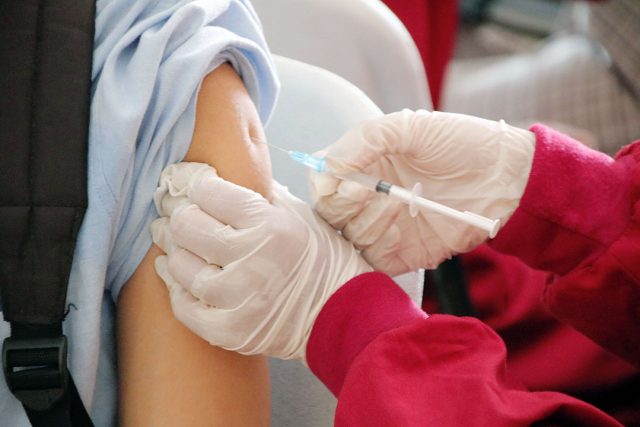
Even though national supply is lacking, the government must find a concrete plan of action that will equitably distribute the vaccines. The COVID-19 vaccine rollout and deployment in the Philippines cannot ignore the needs of those places outside the main urban centers. The current spread of the virus has affected the whole archipelago, especially the geographically isolated and disadvantaged areas.

The National Government, in close collaboration with the regional and local public health and government units, must implement a rational and equitable allocation program of prioritization. With the supply allocation concentrated at the National Capital Region (NCR), slow-moving immunization in other regions and municipalities including Zamboanga City (which serves as a case study) must be corrected.

The COVID-19 vaccination rollout began on March 1 this year. The target is to immunize 50 million Filipinos. The immunization campaign list created by the National Immunization Technical Advisory Group (NITAG) prioritized groups assessed as the most vulnerable to the virus, namely senior citizens, persons with comorbidities, and frontline workers in the health sector.

The vaccination deployment intends to follow a cost-effective immunization strategy that is anchored on implementation by local government units (LGUs). Based on the guidelines of the National Vaccine Deployment Plan for COVID-19 by NITAG, priority population groups will be selected based on geographical areas. The prioritization is based on the COVID-19 burden of disease (current active cases, attack rate per 100,000 population in the past four weeks, and population density) and vaccination site and/or LGU readiness, particularly in relation to supply chain capability.

Supplies for vaccine rollout have been primarily distributed to the National Capital Region (NCR), with over 7.6 million residents having completed two doses of the vaccines out of the eligible population of 9.8 million (78% of Metro Manila’s total population), as of Oct. 11. Calabarzon’s full vaccination rate is 29.48%.

More distant regions have a lower rollout percentage. As a case in point, only 20.72% of the Zamboanga Peninsula regional population have been completely vaccinated as of Oct. 11.

Supply shortage is the most obvious factor for vaccine rollout delays in the country. Insufficient human resources, lack of healthcare facilities in most provinces, vaccine hesitancy, and delivery delays contribute to the slow vaccination progress, particularly in the regions outside of NCR.

Delayed immunization significantly explains the high COVID-19 transmission in the whole country. The unvaccinated people are the most vulnerable to getting infected, being hospitalized, and dying. The health of medical health workers is also harmed. They suffer from mental health issues, and many of them have likewise have gotten the infection.

Zamboanga City makes an illustrative case study. The report as of Sept. 27 showed that 98% of 1,654 cases were community acquired. Between August and September, infections in Zamboanga City, mainly caused by the Delta variant, increased by almost 37%.

But vaccination sorely lags. As of Sept. 27, Zamboanga City has administered a first dose for 179,578 residents and a second dose for 107,290 of the eligible population. But with a population of 977,234 (as of 2020), the number of fully vaccinated in Zamboanga City constitutes only 11% of the total.

Thus, Dr. Norvie Jailani, an epidemiologist at the government-owned Zamboanga City Medical Center (ZCMC), has called on the Department of Health (DoH) and the local government to speed up the vaccination rollout.

The Asia Foundation and Alliance for Improving Health Outcomes, Inc. recently conducted a study through Project Converge, “Assessing the COVID-19 Vaccination Needs of Selected Municipalities and Cities in Mindanao” Zamboanga City is one of the selected municipalities for the study. Data was collected through phone or online interviews from July 15 to Aug. 2. The results show the different factors that have contributed to the slow vaccine rollout.

Shortage of staff, specifically healthcare workers to administer vaccination, has contributed to the low vaccination turnout. The vaccination sites lack capacity and are unsuitable for the online/ digital electronic nature of rollout. The capacity problems include shortage in electricity, weak connectivity, and inadequate laptops.

But the most apparent reason for the low immunization rate is vaccine supply shortage. The available vaccines for Zamboanga City are far from enough to meet the demand.

Vaccine hesitancy in Zamboanga City, according to a local government representative, is no longer a pressing issue. The representative said that most people in Zamboanga City have expressed their desire to be vaccinated. A lot of people want to be vaccinated, but they are not receiving updates regarding their vaccine registration.

The case of Zamboanga perhaps mirrors the situation in the whole country. Demand is already up, but supply is woefully lacking. Exacerbating the situation is the people’s lack of information regarding the vaccine supply and distribution and the performance of vaccines.

The government must do its job and address funding, supplies, and human resources. Transparency also matters for people to be informed about the vaccine distribution and the performance of vaccines.

We have stressed time and again that the government can generate the resources not only for vaccination, but for the whole response to the pandemic. The government, for example, has benefited from the International Monetary Fund’s Special Drawing Rights, equivalent to around P140 billion. That amount should be used to procure additional vaccines and to provide augmented funding for other health and non-pharmaceutical interventions like social relief.

The government, too, can reallocate resources from the existing budget or from the proposed 2022 budget. A review of government spending shows a skewed priority for programs that are not responsive to fighting the pandemic, like the funds for counter-insurgency, unaccountable intelligence activities, and pork barrel.

Still, we acknowledge the tight global supply. In this context, the government must ensure the equitable distribution of scarce vaccines. The data show that vaccination has favored the NCR and the main growth centers. But this has meant sacrificing the poor regions like the Zamboanga peninsula and the Bangsamoro region. (The full vaccination rate for the Bangsamoro Autonomous Region, as latest figures show, is a dismal 9.5%! Compare that to the rate of 78% for NCR.)

The greater the number of people vaccinated in the country across all regions, the higher the vaccine effectiveness rate will be. That means a sharper reduction in infections and deaths.

Our call then is for the government to: 1.) increase the budget allocation for vaccination and other related health and socio-economic interventions, 2.) reform the vaccination system that gives premium to strategic guidance, logistics, training, and planning, and, 3.) implement the vaccine rollout equitably, for the benefit of the poorer LGUs.

No one is safe until we are all safe.


Emmanuella Iellamo is the researcher for the health policy program of Action for Economic Reforms.

How Filipinos can succeed in creative industries and global markets

ALICE DIETRICH-UNSPLASH

In an environment where Filipino manufacturers are hard-pressed to compete due to high manufacturing costs, those who thrive must be celebrated and emulated.

I have known Rita Nazareno since our teenage years when she was still a high school student at St. Scholastica Manila. After graduating college at the Loyola Marymount University in California, she went on to earn a master’s degree in Communication Arts from the Academy of Arts University in California and another master’s degree in Design Management from the London College of Fashion. She is among the few Filipinas with a double master’s degree in these fields. Rita represents the best of Generation Z.

Rita comes from a family of strong women entrepreneurs. Her grandmother is the legendary Segundina Cornejo Vizcarra, the “mother” of Philippine hand embroidery and fine hand-made crafts. S.C. Vizcarra Corp. was founded in 1925 and has since become among the country’s most prolific exporters. Even before the likes of Jollibee and Bench, S.C. Vizcarra was the first Filipino entity to have a retail footprint abroad, having stores in Guam, Hawaii, and the US mainland. Under the baton of Segundina’s daughter (Rita’s mother), Vicky Vizcarra Amalingan-Sales, S.C. Vizcarra rose to even greater heights as the country’s principal exporter of high-end crafts.

After working abroad for more than a decade, Rita decided to come back to the Philippines in 2011 to play her part in nation building. She established Zacarias1925, a brand named after her paternal grandfather (the husband of Segundina) and one that leverages on S.C. Vizcarra’s 96 years of handweaving expertise. Zacarias 1925 is a vanguard in design-forward bags and home accessories that caters primarily to the export market. Rita’s products are sold in Milan, Paris, Singapore, Tokyo and other fashion capitals.

I asked Rita how she was able to penetrate the highly competitive international market considering that Filipino-made products are often out-priced by alternatives from China and other low-cost producing countries. It is all about finding one’s competitive advantage, Rita asserts. For Zacarias 1925, she purposely anchored the brand on impeccable handweaving quality, a 96-year manufacturing pedigree, and progressive designs. While competition from China churns-out predictable products, Zacarias 1925 surprises with unexpected, ingenious, functional, and highly desirable counterparts.

Given our fragmented supply chain, expensive labor, and power cost, Filipinos manufacturers can no longer compete in low-cost commoditized products. Our manufacturers must migrate to the premium market where intelligent design, immaculate craftsmanship, impeccable quality, and a well-crafted branding strategy wins the day. Rita’s success with Zacarias 1925 provides a template on how Filipino manufacturers can compete abroad.

Creative industries generated $2.25 trillion dollars in global sales last year. The premium market is the Filipino manufacturer’s niche. This has become clear not only to Rita but to a handful of successful Filipino manufacturers such as Fino Leathercrafts, Aranaz Bags and the like. Emerging entrepreneurs will do well to follow their lead.

In 2014, Rita met Gabriel “Gabby” Lichauco, a product of De La Sale College of St. Benilde and the Scuola Politecnica di Design in Milan where he earned his master’s degree in industrial design. Gabby is the man behind Openstudio, a design consultancy firm that specializes in exhibit curation, space installations and product design. Gabby is arguably the country’s best in the creative field, having been included in Asia’s 100 leading designers by Design Asia.

While both Rita and Gabby have their own business interest, the two teamed up to form Nazareno/Lichauco Designs. The joint endeavor produces everyday objects that also double as fine art. One of their products is an electric fan that serves as a centerpiece artwork. Their products can be found in high-end stores in Europe, the United States, Japan, Chile, and Turkey, among others.

Apart from manufacturing wittily designed products, the pair also does product designs and materials development for other manufacturers. For material development, emphasis is given to indigenous Filipino materials such as woven fibers, metal, wood, paper, ceramic, and volcanic ash. They also do curation for trade exhibits. The duo was responsible for curating the Philippine Pavilion in the 2019, 2020, and 2021 Maison et Objet in Paris where Filipino manufacturers bagged millions of dollars in export orders. They also curated exhibits in the Watari Museum of Contemporary Art in Tokyo among others in the UK and the US.

Again, Rita and Gabby emphasize, design is key for Filipino manufacturers to succeed in international markets. The product must speak for itself. Good design is not about being pretty, per se. It is about evoking emotions. Surprise, delight, awe, and amazement are emotions that drive product sales.

The Philippines is not lacking in creative minds. While only a handful have the opportunity to study abroad, many of our youth have an innate talent for creativity and innovation. It just needs to be fine-tuned to suit foreign markets, say Rita and Gabby. They regularly mentor aspiring and/or emerging designers.

Manufacturers of design-forward, high-end products cannot optimize their potentials without the support of government. The state must do its part in the branding effort. Just as the French government has helped France’s design houses become firmaments in luxury goods, the Philippine government must also promote Philippine-made products as vanguards of intelligent, functional design.

The Center for International Trade Expositions and Missions (CITEM), a sub-agency of the Department of Trade and Industry, has the mandate to promote Philippine creative products abroad. The problem is that CITEM is extremely underfunded. This year, CITEM was appropriated a budget of only P141 million. This amount must fund its day-to-day operations, the cost of international promotions, and the cost to mount trade shows here and abroad. With a budget so miniscule, it is no surprise that Philippine-made creative products, no matter how superior they are, have little presence on the world stage. For context, President Duterte’s contingency fund alone is an eye watering P13 billion.

Based on Rita’s and Gabby’s body of work, we know without doubt that Filipino manufacturers can be a global force in creative industries. But our artists and manufacturers need government’s help in the branding effort, in product promotions, in trade linkages, in skills development and industry development.

At this juncture, it is too late to expect a realignment of priorities from this government. Our hope lies on the next administration. This is why we must support a candidate who is cognizant of the importance and potentials of our creative industries and one who will support it.

One can only imagine the avalanche of export revenues, employment opportunities, and prestige the country can realize if Rita’s and Gabby’s success were to be replicated by the thousands.


Andrew J. Masigan is an economist

andrew_rs6@yahoo.com

Facebook@AndrewJ. Masigan

Twitter @aj_masigan

Education is a powerful enabler to mitigate the climate crisis

ORIGINAL PHOTOS BY CHRIS LEBOUTILLIER/ADRIAN SWANCAR-UNSPLASH

CLIMATE CHANGE poses the biggest existential threat to humanity. As world leaders prepare to renew their pledge to combat the crisis amid increasingly frequent natural hazards and the raging pandemic, one measure that so far remains grossly under-tapped is the transformative role that education can play in mitigating climate change.

In the lead up to COP26, more countries have been committing to achieving carbon neutrality by 2050. This includes using regulation and policy to improve energy efficiency, develop alternative energy sources, reduce overall energy consumption, and minimize wastage.

These measures require financing, public consensus, and lifestyle changes. They will also have profound impacts on countries’ industrial structures and economic policies which may lead to a short-term jolt to the global economy.

But these actions are a vital step toward ending the worldwide, indiscriminate exploitation of low-cost natural resources that is now taking its toll on the environment and fueling the climate crisis. Asia and the Pacific is responsible for nearly half of global greenhouse gas emissions and more than 60% of people in the region work in sectors that are highly susceptible to changing weather patterns. It is clear that the battle against climate change will be won or lost in Asia and the Pacific.

This is why Asia and the Pacific must promote a new paradigm of economic development that can turn climate actions into drivers of economic growth that are ecologically sustainable and climate-friendly. Pursuing this new paradigm requires a fundamental transformation of the mindset and lifestyle of future generations.

Education in the region and beyond, can and must become an active agent in catalyzing climate mitigation and adaptation in line with the global agreements. Education can be transformative in at least three ways.

First, universal values such as global citizenry and sustainable development must be incorporated into mainstream, foundational, and formative years of study. This will help students become self-directed, lifelong learners. It will also help to raise self-awareness, enable a cultural transformation, and change the mindsets and lifestyles of future global citizens — equipping them with the tools to lead and actively support sustainable development.

This is why young leaders like Greta Thunberg and Malala Yousufzai are inspiring millions of young people around the world to make societies smarter, greener, and more inclusive and resilient.

Second, more investment and better quality of expenditure in education to scale up learning — particularly for disadvantaged and marginalized groups including girls and women — is the best strategy to support sustainable development. The more well-educated people there are in a country, the better the capacity and agility of that country to prevent or mitigate future hazards.

Third, education can be more responsive in producing experts, innovators, and leaders with the skills to tackle climate change and other related development challenges. Such challenges include converting waste to energy, increasing food production and minimizing food waste to feed the growing population sustainably, transitioning to clean energy and transport, and creating and preparing for green jobs.

Education is the cornerstone on which the world needs to build a successful transition from effective short-term climate actions to sustained, structural medium- to long-term changes that are underpinned by new mindsets.

Developing this education system will require comprehensive cooperation between central and local governments, schools, universities, communities, nongovernment organizations (NGOs), and the private sector. This collaboration is critical to develop education policies that will prepare and engage students in sustainable development through science, technology, engineering, and mathematics (STEM) projects.

There are already good examples of climate change education led by some governments. Italy requires all students to take more than 33 hours of climate change classes each year in higher secondary education. The Department of Education in the Philippines has committed to intensify climate literacy and support climate action in schools. The Republic of Korea has started a project to transform schools into green campuses that will showcase education programs for environmental protection and use eco-friendly energy.

The international community, multinational corporations, and international NGOs are equally critical in harmonizing and providing this support. The Paris Agreement calls for its signatories to undertake educational and public awareness campaigns on climate change, and ensure public participation in programs to achieve its targets.

The Asian Development Bank (ADB) launched the Climate Change Fund in 2008 and has since actively pursued ways to mainstream climate change issues in education. The bank is supporting clean energy in several education projects including preparing graduates with green skills.

The Ban Ki-moon (BKM) Foundation for a Better Future is urging governments and the international community to prioritize environmental education, encourage enthusiastic young international leaders, and empower women and young people.

The ADB and BKM Foundation will collaborate closely to mobilize more partners, resources, and expertise to do more and build back better from the pandemic.

At this critical juncture in the history of humanity, we must now reimagine education. This will bring about the early-stage mindset change that will help prepare the global citizens and innovators of tomorrow with the skills to address climate change and nurture the long-term health of our planet.


This piece is co-authored by Ban Ki-moon, chairman of the Ban Ki-moon Foundation for a Better Future and 8th secretary-general of the United Nations, and Bambang Susantono, ADB vice-president for Knowledge Management and Sustainable Development.

ADVERTISEMENT
ADVERTISEMENT