Home Blog Page 7340

Peso weakens further ahead of Fed minutes

THE PESO weakened versus the greenback for the fourth straight day on Tuesday as the market expects hawkish signals from the US Federal Reserve and due to an impasse in talks among the world’s largest oil producers.

The local unit closed at P49.50 per dollar on Tuesday, retreating by 26 centavos from its P49.24 finish on Monday, based on data from the Bankers Association of the Philippines.

Tuesday’s close was the weakest in nearly a year or since July 16, 2020 when it finished trading at P49.535 per dollar, Rizal Commercial Banking Corp. Chief Economist Michael L. Ricafort said.

The peso opened Tuesday’s session at P49.23 per dollar, which was also its strongest showing for the session. Meanwhile, its weakest showing was at its close of P49.50.

Dollars traded inched down to $1.068 billion on Tuesday from $1.073 billion on Monday.

The peso weakened on risk-off sentiment as investors await clearer signals from the Fed on its monetary policy, Mr. Ricafort said.

Minutes from the Fed’s June 15-16 policy meeting are set to be released on Wednesday. The meeting saw more US central bank officials expecting the first rate hike to happen in 2023, sooner than its previous projection of 2024. Seven officials even believe increasing rates will start by 2022, Reuters reported.

Meanwhile, a trader attributed the peso’s continued decline to concerns on higher inflation after the Organization of the Petroleum Exporting Countries and its allies (OPEC+) failed to reach an agreement on oil production.

International benchmark Brent crude oil was trading above $77 a barrel on Monday, or 1.2% higher in the session, as OPEC+ ministers called off oil output talks after clashing last week when the United Arab Emirates rejected a proposed eight-month extension to output curbs, meaning no deal to boost production has been agreed, Reuters reported.

Some OPEC+ sources said there would be no oil output increase in August, while others said a new meeting would take place in the coming days and they believed there will be a boost in August.

For Wednesday, Mr. Ricafort expects the local unit to move within the P49.35 to P49.55 band versus the dollar, while the trader gave a forecast range of P49.40 to P49.60. — L.W.T. Noble with Reuters

Shares decline as trading volume remains low

COURTESY OF PHILIPPINE STOCK EXCHANGE, INC.

STOCKS snapped their three-day rally on Tuesday despite a better-than-expected June inflation print on weak trading volume and as investors booked profits from the market’s recent climb.

The Philippine Stock Exchange index (PSEi) shed 43.95 points or 0.62% to close at 6,992.43 on Tuesday. The broader all shares index lost 16.95 points or 0.39% to end at 4,298.66.

“Philippine shares slipped below the 7,000 mark as investors sold on news with the release of June CPI (consumer price index) which was an improvement from the previous reading,” Regina Capital Development Corp. Head of Sales Luis A. Limlingan said in a Viber message.

“There was very little excitement about the confirmed continuing deceleration of inflation, which means that it was already priced in by the market,” AAA Southeast Equities, Inc. Research Head Christopher John Mangun said in an e-mail.

“Trading volumes remain below the daily average and just about half of what we saw when the market rallied at the beginning of the year. This tells us that risk appetite may be peaking, which is also how the technicals are looking,” Mr. Mangun added.

Value turnover increased to P5.1 billion on Tuesday with 2.51 billion issues traded from the P4.31 billion with 1.79 billion shares switched hands the previous day.

The Philippine Statistics Authority reported that headline inflation stood at 4.1% in June, easing from the 4.5% logged in May and the slowest rate in six months or since the 3.5% recorded in December 2020. However, this was above the 2.5% recorded in June last year.

The June figure was lower than the 4.3% median in a BusinessWorld poll conducted late last week. It likewise fell within the 3.9%-4.7% estimate given by the Bangko Sentral ng Pilipinas for the month, but was still higher than the central bank’s 2-4% target for the year.

“Investors may have chosen to remain on the sidelines while the US markets were closed on Monday,” Timson Securities, Inc. Trader Darren Blaine T. Pangan added in a Viber message.

Majority of sectoral indices closed in the red on Tuesday except for services, which went up by 8.02 points or 0.49% to 1,628.06.

Meanwhile, property went down by 35.15 points or 1.03% to 3,368.25; holding firms declined by 51.78 points or 0.73% to 7,010.53; industrials lost 48.39 points or 0.49% to close at 9,738.24; financials inched down by 3.51 points or 0.23% to 1,512.42; and mining and oil shaved off 9.42 points or 0.09% to 9,867.90.

Decliners beat advancers, 112 against 96, while 52 names closed unchanged.

Net foreign selling slowed to P37.55 million on Tuesday from P82.10 million on Monday.

Timson Securities’ Mr. Pangan expects the index to trade between 6,820 and 7,080 on Wednesday.

“The lack of potentially positive catalysts in the short term will incite profit taking,” AAA Southeast Equities’ Mr. Mangun said. “The PSEi is looking toppish around the 7,000 area and may pull back towards stronger support levels.” — Keren Concepcion G. Valmonte

NGCP sees completion of repairs to island grid cable link this year

NGCP FB PAGE

By Angelica Y. Yang, Reporter

THE NATIONAL Grid Corp. of the Philippines (NGCP) said it plans to complete repairs on a crucial transmission project which will connect the separate grids of Mindanao and Visayas by the end of the year.

“We are targeting completing repairs by end of year,” NGCP Spokesperson Cynthia P. Alabanza told BusinessWorld via Viber Tuesday.

She was referring to the Mindanao-Visayas Interconnection Project (MVIP), the timeline of which was further pushed back after the NGCP discovered damage in February to portions of a submarine cable connecting Zamboanga del Norte and Cebu.

The MVIP had been delayed also by travel restrictions imposed by the pandemic.

Asked to comment on the cause of the damage to the cable, Ms. Alabanza said the company was “not yet at liberty” to make a disclosure.

The NGCP has said it received initial reports of a vessel present in the area a month after the cable was laid. It discovered the damage when it was laying the second cable for the project.

NGCP said that repairs will require another cycle of procurement, awarding, and cable laying. Weather and tides will dictate the schedule of the operation, it said.

By connecting the grids in Mindanao and Visayas, the MVIP will allow for excess power to be exported where it is needed, minimizing the instances when one grid has too little in reserve.

In 2018, the Energy department certified the MVIP as an energy project of national significance, whose proponent is entitled to an expedited permitting process.

Coconut industry roadmap to serve as guide for trust fund

PHILSTAR FILE PHOTO

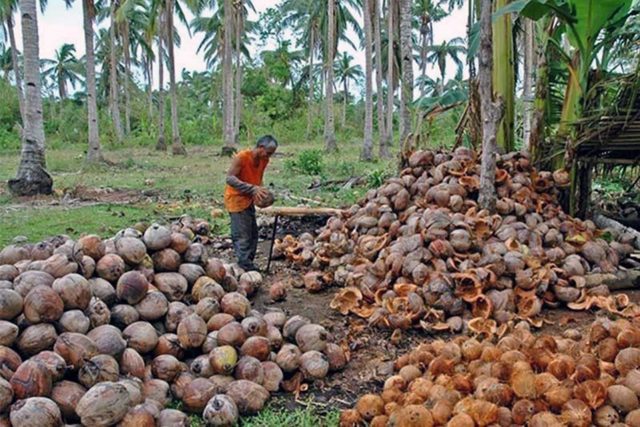
THE COCONUT Farmers and Industry Roadmap (Coco-FIRM) will serve as the basis for the development plan to be carried out under Republic Act (RA) No. 11524 or the Coconut Farmers and Industry Trust Fund Act, the Philippine Coconut Authority (PCA) said.

PCA Administrator Benjamin R. Madrigal, Jr. said in a mobile phone interview Tuesday that Coco-FIRM points to the general direction of the action needed to improve the coconut industry and improve the lives of coconut farmers.

“Coco-FIRM will serve as the backbone of the Coconut Farmers and Industry Development Plan (CFIDP). Meanwhile, the CFIDP will complete the details and the parameters for evaluation, reporting and monitoring, and allocation under the Trust Fund,” Mr. Madrigal said.

“Compared to Coco-FIRM, CFIDP will also focus on the roles of the various implementing agencies as provided in the law,” he added.

According to Mr. Madrigal, the roadmap has seven thematic areas such as the promotion of coconut farmers’ welfare and social protection; empowerment of coconut farmers’ groups; increasing and sustaining coconut production programs; and the creation of hubs for coconut products.  

He added that Coco-FIRM also aims to enhance the global competitiveness of traditional and non-traditional coconut products, expand trade and marketing, conduct innovative research and development, and improve institutional policy.  

RA 11524, signed by President Rodrigo R. Duterte on Feb. 26, provides for the drafting of the CFIDP to serve as guide in deploying investment from the trust fund, which was funded by taxes collected from coconut farmers during the Marcos administration.

Under the law, the Bureau of the Treasury will transfer P10 billion to the trust fund in the first year, followed by another P10 billion in the second year, P15 billion in the third year, P15 billion in the fourth year, and P25 billion in the fifth year.

In a separate statement Tuesday, Agriculture Secretary William D. Dar said the PCA is the first DA agency to have completed a commodity industry roadmap.

Mr. Dar added that the law allows for the modernization and improvement of the coconut industry, with assured funding of P75 billion over the next five years.

“We consider (the law) a ‘game-changer’ that will help transform the lives of 2.5 million coconut farmers and their families by turning low productivity into higher gains,” Mr. Dar said.

According to the PCA, the Philippines is the top exporter of coconut products, generating average export revenue of P91.4 billion between 2014 and 2018. — Revin Mikhael D. Ochave

Energy dep’t pitches Napocor carbon sequestration program to IPPs

THE ENERGY department is encouraging independent power producers (IPPs) to join the National Power Corp.’s (Napocor) carbon sequestration program, which is expected to benefit nine watersheds and geothermal areas managed by the company while also helping participants meet their offsetting targets.

In an advisory posted Tuesday, the Department of Energy (DoE) identified the nine areas to be protected by Napocor’s Energy Sector Carbon Sequestration Initiative: the Upper Agno river watershed in Benguet and nearby provinces; the San Roque watershed in Pangasinan; the Angat Watershed in Bulacan, Nueva Ecija, Quezon and Rizal provinces; the Caliraya-Lumot Watershed reservation in Laguna; the Buhi-Barit Watershed Reservation in Camarines Sur; portions of the Agus River basins in Lanao del Norte and Lanao del Sur; part of the Pulangi River basin in Bukidnon; the Makiling-Banahaw Geothermal reservation in Batangas and Laguna; and the Tiwi Geothermal reservation in Albay.

Energy Secretary Alfonso G. Cusi, who signed the advisory on June 18, said the Napocor program aims to improve the condition of its watersheds, contribute to climate change mitigation efforts, and give energy firms the chance to reach their carbon offsetting requirements.

He added that the program seeks to maximize the use of the universal charge-environmental charge fund for “protection and reforestation projects” under Napocor, which he described as currently having limited coverage.

No other details were given in the advisory. — Angelica Y. Yang

Citicore Power targets 6.64 MW of solar rooftop installations in Bataan freeport by this month

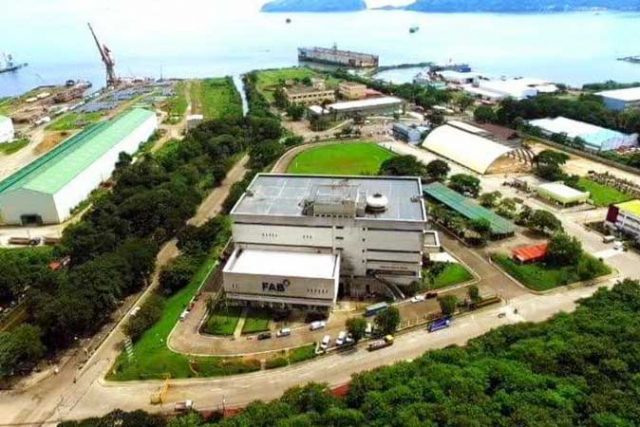
RENEWABLE ENERGY (RE) company Citicore Power, Inc. hopes to install 6.64 megawatts (MW) of solar rooftops on 14 buildings in the Authority of the Freeport Area of Bataan (AFAB) this month.

In a statement, Citicore said that the project is expected to reduce the AFAB’s carbon emissions by 5,800 metric tons annually and help it save as much as P5.3 million pesos per year.

The company added that it has completed installing 2.84 MW on eight buildings after seven months, two months ahead of its deadline.

“The early, though still partial, completion of our contract will allow the AFAB locators to harness solar energy and embed energy efficiency as an integral part of their operations,” Citicore President Oliver Y. Tan said.

AFAB Deputy Administrator for Operations Alewijn Aidan K. Ong said harnessing RE marks the start of the “greening” of its operations, reducing its impact on the environment and driving down energy costs.

“We are confident that our partnership with Citicore will help the AFAB achieve these objectives; their fast project delivery, industry expertise and collaborative approach is uniquely complementary to our plans,” he said.

Citicore operates eight solar farms with an aggregate installed capacity of 163 MW.

It plans to make an energy-focused real estate investment trust offering in September or October, with plans to reinvest the proceeds in 15 new solar projects in Luzon.

In February, Citicore reported that it is allocating P4 billion for capital expenditure for solar and hydro projects, with P2.5 billion funding solar. — Angelica Y. Yang

SEC revokes credit firm’s license over debt collection practices 

THE SECURITIES and Exchange Commission (SEC) canceled the certificate of authority held by Familyhan Credit Corp. which had allowed it to operate as a lending company after a finding of unfair debt collection practices.

In an order dated April 13, the SEC Corporate Governance and Finance Department (CGFD) found the lending firm committed three violations of SEC Memorandum Circular No. 18, Series of 2019. The circular spells out which debt collection methods are deemed unfair.

Specifically, Familyhan Credit was found to have contacted individuals in the borrower’s contact list who were not listed as guarantors or co-makers in the loan agreement.

 “Notwithstanding borrower’s consent, contacting the persons in the borrower’s contact list other than those who were named as guarantors or co-makers shall also constitutes unfair debt collection practices,” the CGFD said.

The CGFD also said it gave Familyhan Credit time to adjust its collection practices to be compliant with the memorandum.  

Familyhan Credit was also found to have committed eight violations of Republic Act No. 3765 or the Truth in Lending Act (TILA), and SEC Memorandum Circular No. 7, Series of 2011, which sets the rules for implementing TILA in matters of the transparency of loan transactions. The rules are designed to discourage the uninformed use of credit.

The CGFD found that the lending company did not disclose the true cost of the loans to its borrowers.

“It is clear that the net proceeds of the loan is one of the minimum (items of) information that needs to be disclosed by a creditor to its borrower. Thus, missing such information, respondent cannot contend that they have duly complied or substantially complied with the TILA,” the CGFD explained.  

Familyhan Credit filed a motion for reconsideration, which was denied by the CGFD for lack of merit in a resolution dated June 18.

The SEC has so far canceled the licenses of 35 financing and lending companies over various violations.

It has also revoked the certificate of registration of 2,081 lending companies for failing to secure a certificate of authority. The total number of online lending applications ordered to cease operations now stands at 58 in the absence of the authority to operate as a lending or financing company. — KCG Valmonte

256 more people infected with COVID-19 variants

PHILIPPINE STAR/ MICHAEL VARCAS

By Kyle Aristophere T. Atienza, Reporter

HEALTH authorities on Monday night said 256 more people have been infected with more contagious variants of the coronavirus, though most of them have either died or recovered.

Health Undersecretary Maria Rosario S. Vergeire did not immediately reply to a text message asking why the cases had not been immediately reported.

Two more Filipinos have been infected with the Delta variant of the coronavirus that has triggered a fresh surge in cases in India, bringing the total to 19, the Department of Health (DoH) said.

The two were returning Filipino migrant workers from Saudi Arabia and have since recovered, the agency said in a statement.

The Filipinos arrived in the Philippines on May 29 and had completed a 10-day quarantine period. They have been discharged from the quarantine facility after recovering, DoH said.

The agency said 132 more people have been infected with the Alpha variant of the coronavirus, which was first detected in the United Kingdom, bringing the total to 1,217. Of these, 125 were local cases, one was a returning migrant Filipino, and six were still being verified.

Fifteen of the patients have died and 117 have recovered, it added. 

DoH also reported 119 new cases of the Beta coronavirus variant that was first detected in South Africa, bringing the total to 1,386. Of these, 111 were locals, two were returning overseas Filipinos, and six were still being verified.

Three patients were being treated, 104 have recovered and 12 died, it said.

Three more people have been infected with the Theta coronavirus variant that was first detected in the Philippines, DoH said. All of them have recovered.

The Theta variant is not a “variant of concern” since Health authorities need more data to say whether it is a threat.

DoH reported 4,114 coronavirus infections on Tuesday, bringing the total to 1,445, 832. The death toll rose to 25,296 after 104 more patients died, while recoveries increased by 6,086 to 1.37 million, it said in a bulletin.

There were 49,613 active cases, 90.8% of which were mild, 3.9% did not show symptoms, 1.5% were critical, 2.2% were severe and 1.62% were moderate.

The agency said 28 duplicates had been removed from the tally, 22 of which were tagged as recoveries. Thirty-eight cases tagged as recoveries were reclassified as active cases, while 63 patients tagged as recoveries were reclassified as deaths. Nine laboratories failed to submit data on July 4.

CORONAVAC
Meanwhile, the government told local governments to prioritize vaccine patients due for their second dose of CoronaVac after China’s Sinovac Biotech Ltd., which makes the vaccine, has said its next delivery would get delayed.

Of 11.7 million vaccines doses given out as of July 4 — 2.8 million second doses and 8.8 million given as first shots — vaccine czar Carlito G. Galvez, Jr. said in a separate statement, citing a “disparity” in the government’s vaccination program.

“We are seeing a disparity in our national vaccination report wherein out of the 11 million jab administered, only 2.8 million were fully vaccinated,” Mr. Galvez said in a statement. “This should be addressed by our implementing units.”

In an advisory from the National Vaccination Operations Center signed by Mr. Galvez on July 4, local authorities were notified of the delays in the arrival of Sputnik V vaccines from Russia and the weekly delivery of CoronaVac vaccines.

The center ordered local governments to completely vaccinate those who have received their first CoronaVac dose until the supply stabilizes. It also asked local authorities to use other vaccines brands for first shots.

“We have to look into this matter seriously and act on it fast because based on studies, the full protection against the new variants of COVID-19 (coronavirus disease 2019), particularly the Delta variant, can only be assured when an individual is fully vaccinated with two doses,” Mr. Galvez said.

About 12 million doses of coronavirus vaccines have been given out, Vivencio B. Dizon, deputy chief enforcer of the government’s pandemic response. About one million doses had been given out in the past four days, he told a televised news briefing.

The Philippines has received about 17.4 million vaccines, presidential spokesman Herminio L. Roque, Jr. said on Monday. A million AstraZeneca vaccines donated by Japan and 170,000 Sputnik V vaccines bought from Russia are set to arrive this week.

About 1.1 million health workers, 897,719 seniors and 788,630 seriously ill people had received their second doses as of July 2. About 26,109 essential workers and 227 indigent Filipinos have also been fully vaccinated.


Watchdog: Duterte among top press freedom predators

PRESIDENTIAL PHOTO/ JOEY DALUMPINES

PHILIPPINE President Rodrigo R. Duterte is among the world’s top “press freedom predators,” according to a global media watchdog, citing his penchant for crackdowns on media critical of his policies.

Mr. Duterte was among 37 heads of state “who crack down massively on press freedom,” Paris-based Reporters Without Borders said on its website on Monday.

Due to “collusion at all levels,” Mr. Duterte has an “arsenal that he can use to wage ‘total war’ against journalists,” the Paris-based media watchdog said.

“Thanks to collusion at all levels within the state apparatus, Duterte has an arsenal that he can use to wage total war against journalists,” it said.

This arsenal “includes spurious charges of defamation, tax evasion or violation of capital legislation; rescinding broadcast licenses; getting accomplices to buy up media outlets and bring their journalists into line; and using an army of trolls to subject journalists to online harassment.”

Judges who don’t toe the line are pushed aside, the watchdog said. “Congress tamely endorses all the president’s decisions. Backed by most of the private sector, Duterte easily imposes his line on media outlets owned by businessmen that support him.”

Presidential spokesman Herminio “Harry” L. Roque, Jr. said the list was “absolutely bereft of merit,” noting that local media could still publish critical content.

“Look at the International Criminal Court (ICC), its sources are media critical of the government,” he told a televised news briefing. “This shows press freedom in the Philippines is alive and well.”

He added that Mr. Duterte had not sued any journalists for libel, and no one had been sent to jail.

Former ICC prosecutor Fatou Bensouda last month asked the Hague-based tribunal to probe the government’s deadly war on drugs. She said there was reasonable basis to believe that crimes against humanity had been committed under Mr. Duterte’s watch.

Mr. Roque, a lawyer, earlier said Ms. Bensouda’s findings would not stand in court since they were largely based on media reports.

He said the tough-talking leader should not be blamed for the closure of ABS-CBN Corp. since it was Congress which rejected the media giant’s application to extend its franchise.

The President should also not be faulted for the revocation of news website Rappler’s license to operate by the Securities and Exchange Commission, he said.

Congress last year rejected the franchise application of ABS-CBN, which has been critical of the Duterte government. Mr. Duterte said he would bar the network from using free TV and radio frequencies even if it gets a new franchise.

The President had also slammed the Philippine Daily Inquirer and Rappler for criticizing his government, particularly his anti-illegal drug campaign that has killed thousands of drug suspects.

Sweden-based digital forensics group Qurium Media Foundation earlier reported that the websites of two alternative media organizations in the Philippines had been under a series of cyber-attacks involving digital infrastructure linked to the state.

It said several internet protocol addresses linked to the military and Science and Technology department started a series of attacks in the past two months against the websites of Bulatlat.com and Altermidya.net, and human rights group Karapatan.org. — Kyle Aristophere T. Atienza

All Bayanihan II funds released, line agencies given until mid-July to report use — Palace

PHILIPPINE STAR/ MIGUEL DE GUZMAN

ALL FUNDS under the country’s second stimulus law, known as the Bayanihan II that expired on June 30, were released to line agencies, according to the presidential palace.

Presidential Spokesperson Herminio “Harry” L. Roque, Jr. on Tuesday said the agencies were given until mid-July to submit their utilization reports to the Budget department.

“First of all, all the funds under Bayanihan II, according to Budget Secretary Wendel Avisado, were released to line agencies,” he told a televised news briefing.

He said the Palace would only be able to confirm how much of the allocations from Republic Act No. 11494 or the Bayanihan To Recover As One Act  Bayanihan (Bayahihan II) would be reverted back to the national treasury on July 15.

Signed in September last year, the Bayanihan II provided a P165.5-billion fund for the pandemic response, including support to priority sectors such as healthcare and small businesses, among others.

Vice President Maria Leonor G. Robredo earlier expressed disappointment over the unspent funds under the Bayanihan II law, saying the funds could have been used to boost the country’s response to the prolonged pandemic.

“I ask the vice president, who is an economist, to please, let’s wait for data before we make conclusions,” Mr. Roque said, reacting to Ms. Robredo’s statement.

Some lawmakers also flagged the slow utilization of funds under the second pandemic response law.

House Ways and Means Chair Jose Maria Clemente S. Salceda cited that only about P1 billion of the P5.5-billion service contracting program of the Transport department under the Bayanihan II were distributed to service contractors more than nine months since the law was signed.

Mr. Roque last month said about P9 billion from the second stimulus law remained unused. President Rodrigo R. Duterte did not call for a special session to extend the law’s validity. — Kyle Aristophere T. Atienza

BI warns foreigners vs immigration services scam

BIR DAVAO DISTRICT OFFICE

THE BUREAU of Immigration (BI) has warned foreigners against a Philippine-based company allegedly offering services for assistance at airports and obtaining documentary requirements.   

In a news release on Tuesday, BI Commissioner Jaime H. Morente said he obtained a copy of a document from the company which shows a breakdown of the fees for various services.

“This company is allegedly charging P5,000 as Airport Assistance Fee, another P5,000 for processing fee, and P20,000 for a Department of Foreign Affairs (DFA) Invitation Letter,” Mr. Morente said.   

“It seems that this company is using the name of government agencies to be able to charge such high rates,” he added.

Mr. Morente clarified that the bureau does not collect any immigration assistance fees.

“It is disheartening to see reports of syndicates who are taking advantage of other people by using the name of government offices,” he said.

Mr. Morente further reminded the public to be “wary of falling prey to these scammers” and to “(i)mmediately report to the authorities if you encounter such modus.”

He added that the BI is now reviewing the case and studying possible legal actions against the said company. — Bianca Angelica D. Añago 

House launches video project highlighting achievements

PHILSTAR

MEMBERS of the House of Representatives allied with President Rodrigo R. Duterte are giving themselves a pat on the back through a video project that highlights achievements in the past five years.

“Most of our colleagues in Congress agree that we should give credit where it’s due, and the truth is that there were a lot of key legislative measures enacted during (Mr. Duterte’s) term,” House Speaker Lord Allan Jay Q. Velasco, who spearheaded the campaign, said in a post on the House’s social media account.

House lawmakers who belong to the supermajority coalition were tasked to produce 60- to 90-second videos showing the priority programs implemented in their respective districts since 2016.

“Members of Congress whole-heartedly embraced this project, as they are sincerely thankful to the President in his help with programs that greatly benefited their constituents in their respective districts,” Mr. Velasco said.

He cited that among the important legislations passed under the Duterte administration include the Universal Health Care Law, free tertiary education, expanded maternity leave, free public internet access, the Bangsamoro Organic Law, and laws relating to the coronavirus response.

Mr. Duterte’s sixth and final SONA will be held on July 26. — Bianca Angelica D. Añago