Home Blog Page 73

DOST opens PROPEL hub to link startups with industry partners
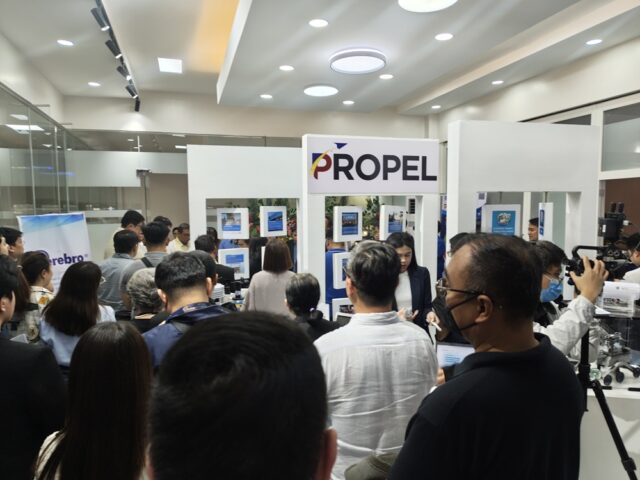
The PROPEL hub in Taguig City.— EDG EVA

The Department of Science and Technology (DOST) on Tuesday launched a business and exhibit center that will serve as a collaborative hub for startups, innovators, and industry partners.

Located at the newly renovated office space within the DOST complex in Bicutan, Taguig City.

The hub, called PROPEL (Accelerating Innovation in the Philippines, Propelling Innovation from the Philippines), will serve as a functional space where stakeholders can foster innovation and partnerships.

“For years, we have invested in research, strengthened our laboratories, and nurtured Filipino talent. Today, we affirm that our work does not end with discovery,” DOST secretary Renato U. Solidum Jr. said in his keynote speech during the launch event.

“It must continue until innovation reaches the marketplace, benefits communities, creates jobs, and improves lives,” he added.

Mr. Solidum also said that the hub is complementary to existing DOST innovation hubs across the country and will work in partnership with universities, research institutions, and regional stakeholders.

Apart from fostering partnerships, the hub is also expected to showcase programs, projects, innovations, and knowledge products supported by the PROPEL program, DOST’s commercialization arm for transforming science and technology innovations into viable enterprises.

Among the technologies featured in the PROPEL hub is Hiraya Technology Solutions Inc., a Filipino startup that uses artificial intelligence (AI) to automate water management and detect leaks in residential and commercial systems.

The PROPEL Business Hub and Exhibit Center also incorporates platforms designed to assist stakeholders at every stage of their innovation journey.

“These platforms create a dynamic, interconnected system, with PROPEL at its vibrant center,” Napoleon K. Juanillo Jr., DOST assistant secretary for technology transfer, communications, and commercialization, said in his keynote speech.

These include PHITEST, or the Philippine Technology Evaluation Standards for Testing, which serves as a rigorous validation and certification framework ensuring that Filipino innovations meet international standards.

Another platform is aiJUANAKnow, an AI-powered business development engine that provides innovators with deep market intelligence.

Also included is Piso-Piso Partnerships (PPP), a platform designed to democratize investment in science and technology, particularly for local startups, by making it accessible to everyone.

Starting at P1, anyone across the globe can contribute to startups they want to support.

“With even the smallest contribution, you become a part of building something bigger,” Mr. Juanillo said.

Moving forward, Mr. Juanillo told reporters he is optimistic that the PROPEL Business Hub and Exhibit Center will gain more attention in the coming years and help more local startups and innovators. — Edg Adrian A. Eva


Marikina-based PharmaServ specializes in cold-chain logistics for vaccines, pharmaceuticals

PHILIPPINE STAR/ MICHAEL VARCAS

PharmaServ Express Inc., a Marikina-based healthcare logistics firm, is specializing in the cold-chain management of medicines and biological products.

Founded in 2015, it was established to address one of the most overlooked challenges in Philippine healthcare, which is access to safe, reliable, and temperature-compliant handling of medicines and biological products.

Unlike general logistics providers, it focuses exclusively on cold-chain management for life science products, the firm said.

This is to ensure that temperature-sensitive items such as vaccines and pharmaceuticals are handled under strict conditions throughout the supply chain.

During the COVID-19 pandemic, PharmaServ Express handled vaccines for the national government, meeting strict cold-chain requirements for storage and delivery.

“The company is driven by a single mandate: to provide solutions not just logistically, but in terms of access to safe healthcare products through a positive patient care experience,” PharmaServ Express said in a statement.

Its logistics network includes temperature-validated vehicles such as refrigerated trucks, vans, and motorcycles, supported by real-time GPS (global positioning system) and temperature monitoring systems.

Each shipment is accompanied by data-logging devices that record temperature conditions throughout the delivery process.

PharmaServ Express also said it combines technology with human oversight, with trained specialists supervising operations from dispatch to delivery.

Customer service teams are also available 24/7 to assist clients.

Last week, the company launched a consumer mobile application that allows patients to have medicines delivered to their homes under strict temperature control.

“What we have built for healthcare institutions, we are now making available to every Filipino home,” Andrian A. Perez, president of PharmaServ Express Inc., said in a statement.

“This app is our answer to problems that have gone unaddressed for too long—long lines at the pharmacy, incomplete medicines, and drug products losing their potency before they reach the patient,” he added.

Through the PharmaServ Express app, patients can have prescriptions, medical devices, and personal care products delivered from their preferred drugstore in Metro Manila and nearby areas, with expert guidance from online pharmacists.

Each order is packed in temperature-controlled boxes with data loggers to ensure quality throughout delivery.

Looking ahead, the platform will also launch a Diagnostic Test Booking and Scheduling feature this year.

PharmaServ Expres operates two facilities, with the main operations center in Marikina City and a cold storage warehouse in Pasig City.

According to Future Market Report, an India-based commercial market research provider, the global pharmacy delivery app market was estimated to value at US$13.2 billion in 2024 and is projected to reach US$28.05 billion by 2033.

The market has compound annual growth rate (CAGR) of 9.6% starting 2025. — Edg Adrian A. Eva

Omega Healthcare ramps up US-licensed Filipino nurse hiring by 40%

PHILSTAR FILE PHOTO

Outsourced medical services provider Omega Healthcare Philippines said it will increase its workforce of United States-licensed Filipino nurses to about 40% to meet the rising demand for healthcare outsourcing services abroad.

“This reflects the increasing demand for experienced clinicians who can support overseas healthcare providers while earning competitively at global rates,” Omega Healthcare Philippines Director of Clinical Services Delivery Henriech Libay told BusinessWorld in an e-mail interview.

According to the National Institutes of Health, about 4% to 4.5% of registered nurses in the United States (US) are Filipino.

The National Council of State Boards of Nursing (NCSBN) also projects a steady demand of around 250,000 nurses annually from 2020 to 2030, largely due to the aging population and the growing technical requirements of the healthcare system.

As demand increases, the World Health Organization (WHO) revealed that a possible shortfall of 11 million health workers could occur by 2030.

With the projected shortage, Mr. Libay said that healthcare organizations, particularly in the US, have relied on internationally trained professionals and outsourcing clinical support teams to assist healthcare providers overseas.

“Instead of relying solely on overseas hiring, many providers are now working with partners that can deliver clinical and operational support remotely,” he said.

The company’s employment is also driven by the growing number of healthcare professionals who prefer staying close to home while working within the global healthcare system.

“Filipino healthcare workers remain among the most sought-after globally because of their strong clinical training, English proficiency, and ability to adapt to international standards,” he said.

“This approach helps meet global demand while also giving Filipino professionals more flexible career options without the need to migrate,” he added.

AI IN THE HEALTHCARE SECTOR
According to Mr. Libay, Filipino healthcare professionals have “adapted well” to the changes brought by artificial intelligence (AI) in healthcare operations globally.

“Many roles today require not only medical knowledge but also familiarity with digital platforms,” he said. “Rather than replacing clinicians, AI is making their roles more specialized and increasingly dependent on experience and critical thinking.”

He added that nurses with bedside experiences and who are open to learning new systems are transitioning well into “technology-enabled” roles brought by AI. “This is one of the reasons Filipino clinicians continue to be in demand even as the healthcare industry evolves.”

Among the new technology-enabled roles in the sector are those under Utilization Management, Case and Disease Management, Population Health Management, and Provider Support.

As AI slowly integrates into the healthcare system, the risk of sensitive data exposure also increases.

Data from the Healthcare Cybersecurity Report 2026 by Netskope Threat Labs revealed that the healthcare sector accounts for 89% of all data policy violations occurring in the context of genAI usage, significantly higher than the cross-industry average of 31%.

The report also added that 43% of healthcare workers globally use personal generative AI (genAI) accounts at work, which are not properly monitored by security teams.

To address this challenge, organizations have deployed “company-approved genAI applications with security controls. Healthcare workers using organization-managed genAI tools rose from 18% to 67% in the past year, outpacing cross-industry averages of 26% to 62%.

“While building defenses against external threats is essential… addressing internal risk is equally important, especially in such a highly-regulated industry and a context of fast-paced cloud and AI adoption,” Ray Canzanese, director of Netskope Threat Labs, said in a statement.

“Deploying company-approved applications… along with relevant security tools, should be a high priority for healthcare organizations to strike a balance between modernization and security,” he added. — Almira Louise S. Martinez

AI integration to drive e-commerce growth

FREEPIK

ARTIFICIAL INTELLIGENCE (AI) is expected to be a key growth driver for e-commerce platforms this year as these technologies can help improve product discovery and personalize consumers’ shopping experience, according to global mobile marketing analytics company Adjust.

April Tayson, regional vice president for INSEAU (India, Southeast Asia, Australia, and New Zealand) at Adjust, said that AI-driven discovery and personalization are the key trends in 2026, making online shopping more intuitive.

AI use cases for e-commerce include AI-powered personal shopping agents, sizing assistants, and item recommendations, Adjust said in its Mobile app trends 2026 report.

These can also include agentic commerce that helps consumers find sale items and automate purchases.

“For consumers, this means less time searching and more relevant recommendations that match their preferences or behavior, whether it is a product, deals, or content,” Ms. Tayson said in an email interview.

“For sellers, it creates an opportunity to connect with customers more effectively.”

AI in the global e-commerce market was valued at $8.37 billion in 2025 and is projected to grow to $36.23 billion by 2035, Orion Market Research said in a separate report. It is projected to have a compounded annual growth rate of 15.8% starting this year.

“As a mobile-first market with a highly engaged digital population, the Philippines reflects broader shifts seen across the industry, where there is a growing focus on personalization, convenience, and content-driven discovery to stand out and retain users,” Ms. Tayson said.

Early adopters of AI in e-commerce are likely to be more digitally mature businesses that have made major investments in data, automation, and performance marketing, she said, and these players are better positioned to integrate AI into their workflows and scale its impact across personalization and customer engagement.

Retailers of fashion, electronics, and lifestyle products are expected to benefit the most from AI-driven discovery and personalization.

As for micro, small, and medium enterprises (MSMEs), adoption is expected to be gradual but is steadily gaining momentum, Ms. Tayson said.

The National Artificial Intelligence Research and Innovation Center of the Department of Science and Technology (DoST) launched in February to unify AI adoption efforts nationwide could help accelerate integration among MSMEs, she added.

The center will assist MSMEs through upskilling and helping them adopt AI tools, DoST Secretary Renato U. Solidum Jr. told BusinessWorld during its launch.

Among the e-commerce platforms available locally that have started adopting AI is Shopee. In February, the platform introduced a suite of AI-powered tools that help brands reach potential buyers. It also rolled out AI Livestream, AI Script Generator, and AI Comment Assistant last year. — Edg Adrian A. Eva

Banks’ foreign currency loans climb to $15.6 billion at end-2025

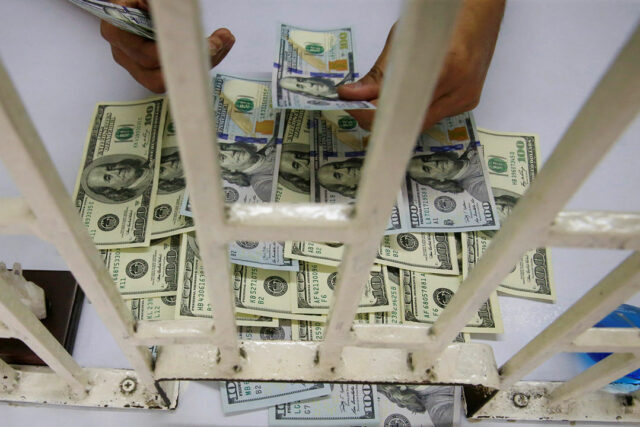
A worker counts US dollar bills inside a money changer in Metro Manila, Philippines, Feb. 7, 2018. — REUTERS

OUTSTANDING LOANS granted by banks’ foreign currency deposit units (FCDU) at end-2025 slipped year on year but edged up from the previous quarter, the Bangko Sentral ng Pilipinas (BSP) said late on Tuesday.

Central bank data showed that loans disbursed by banks’ FCDUs reached $15.561 billion as of December, down 1.64% from the $15.82 billion seen a year prior.

However, this climbed by 2.9% from $15.126 billion at end-September.

FCDUs are units of local banks or local branches of foreign banks authorized by the BSP to service transactions involving foreign currencies, including deposits and loans.

Resident and nonresident borrowers, including individuals and businesses like importers, use these loans for their foreign currency payables or needs.

The end-December tally reflected $8.32 billion in new loans disbursed and $7.87 billion in loan payments made in the fourth quarter.

According to the BSP, $10.391 billion or 66.8% of the total amount was lent to local borrowers from the private sector.

Broken down, 25.6% were extended to merchandise and service exporters; 24.1% to towing, tanker, trucking, forwarding, personal, and other industries; and 16.7% to power generation companies.

The rest or 33.2% of banks’ outstanding FCDU loans valued at $5.17 billion were extended to nonresidents.

In terms of maturity profile, $12.318 billion of the loans were medium- to long-term debt, or those payable in a year or more. This accounted for 79.2% of the total, slightly lower than the previous quarter’s 79.8% share but above the 77.1% at end-December 2024.

Meanwhile, $3.243 billion or 20.8% were short-term debt, exceeding the prior quarter’s $3.057 billion (20.2%) but below the prior year’s $3.618 billion (22.9%).

By creditor type, domestic banks granted the most loans during the period at $12.92 billion or 83% of the total. Commercial banks lent out $12.897 billion, while $23 million came from thrift banks.

Foreign currency loans extended by foreign banks stood at $2.641 billion at end-December, making up 17% of the total.

Preliminary BSP data also showed that banks’ FCDU deposit liabilities increased by 7.88% year on year to $59.828 billion at end-December from $55.46 billion in 2024. However, this was 1.49% lower than the $60.732 billion at end-September.

This brought the FCDU loans-to-deposits ratio to 26%, down from 28.5% the previous year but up from 24.9% at end-September. — Katherine K. Chan

Global trade headwinds to widen Philippines’ BoP and current account deficits until 2027

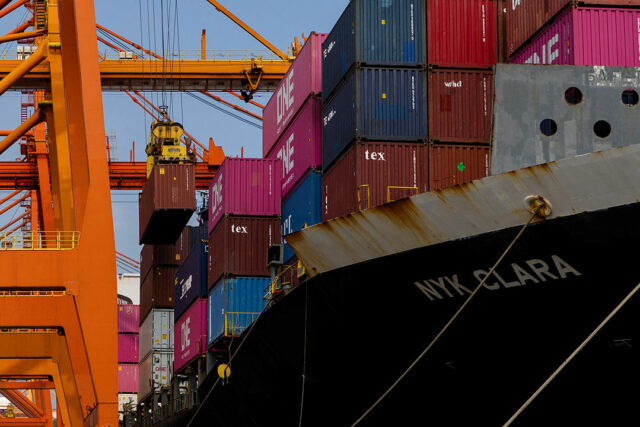
A container is loaded at the Manila International Container Terminal at the Port of Manila, Aug. 11, 2025. — REUTERS/ELOISA LOPEZ

By Katherine K. Chan, Reporter

The Philippines’ balance of payments (BoP) and current account deficits could widen this year until 2027 as weak global trade and geopolitical stresses from the Middle East war weigh on the country’s external position, the central bank said.

The Bangko Sentral ng Pilipinas (BSP) now sees the country’s BoP position standing at a $7.8 billion deficit by yearend or -1.5% of gross domestic product (GDP).

This is wider than its earlier forecast of a $5.9-billion gap or -1.2% of GDP as well as the preliminary $5.7-billion deficit or -1.2% of GDP posted in 2025.

For 2027, it expects the BoP deficit to widen to $8.5 billion or -1.6% of GDP.

In a statement released late on Tuesday, the BSP said a “challenging” global landscape and structural issues will keep the Philippines’ BoP under pressure until next year.

“Global growth remains below pre‑pandemic trends, while world trade momentum is expected to weaken as tariff‑related front‑loading unwinds,” it added. “At the same time, elevated geopolitical tensions, particularly in the Middle East, adds downside risks mainly through higher energy prices and episodic risk‑off sentiment.”

According to the BSP, the current account position may also worsen to a $20.3-billion deficit this year or -4% of GDP from its previous projection of a $15.3-billion gap or -3% of GDP.

If realized, it would be wider than the $16.3-billion deficit or -3.3% of GDP in 2025.

The central bank likewise forecasts a wider current account gap of $21.9 billion in 2027, equivalent to 4% of GDP.

Meanwhile, reduced front loading and elevated trade costs are expected to dampen goods exports growth this year at 3% to $65.3 billion and next year at 4% to $67.9 billion.

This is faster than the previous projection of 2% to $61.2 billion, but slower than the 15.2% uptick to $63.4 billion recorded in 2025.

“After expanding by about 15% in 2025, goods exports are projected to grow more moderately at 3% in 2026 and 4% in 2027, reflecting inventory normalization, weaker global trade momentum and higher trade costs,” the BSP said.

Still, exports of electronics and agricultural-food products will boost the sector’s expansion, but may be tempered by higher electricity rates, regulatory frictions and logistics bottlenecks, it added.

On the other hand, the central bank raised its forecast for goods imports growth to 6% or $137.9 billion from 2% or $130.2 billion amid costlier oil this year. For 2027, it sees goods imports climbing by 5% to $144.8 billion.

Services imports are also expected to rise by 5% to $40.2 billion in 2026, slower than the earlier estimate of 6% to $42.3 billion. Services imports are seen to grow by 6% to $42.6 billion next year.

“(S)ervices imports, particularly outbound travel, are projected to continue to expand faster than services exports, adding further pressure to the external balance,” the central bank said.

For services exports, the BSP likewise cut its growth projection for this year to 4% or $53.6 billion from 5% or $54.7 billion previously. It sees a 4% expansion to $55.7 billion in 2027.

The central bank also trimmed its growth projection for travel receipts to 1% or $8.8 billion from 3% or $9.4 billion for 2026. The central bank sees travel receipts picking up by 2% to $9 billion next year.

Business process outsourcing revenues are also projected to grow by 4% this year to $34.8 billion from 5% to $35.2 billion. For 2027, it is also expected to inch up by 4% to $36.2 billion.

REMITTANCES
Meanwhile, the BSP kept its growth estimate for cash remittances at 3% until next year. Remittances could total $36.7 billion by yearend and $37.8 billion by end-2027.

“Cash remittances remain a key source of external stability,” the central bank said. “They are projected to grow by about 3% over the next two years, despite geopolitical tensions, as there remain no signs of mass repatriation or widespread deployment bans.”

It also sees financial account outflows hitting $12.9 billion this year, up from its $11.7 billion estimate previously. It is expected to increase to $13.8 billion by 2027.

Meanwhile, the BSP maintained its projection for foreign direct investment (FDI) inflows at $7.5 billion for 2026, adding that it sees $8 billion in FDI inflows next year.

For foreign portfolio investments, net inflows could reach $3.7 billion, lower than its $5.6-billion previous projection. Net inflows are expected to jump to $4.1 billion in 2027.

On the other hand, the central bank raised its 2026 gross international reserves forecast to $111 billion from $110 billion previously. It sees foreign reserves totaling $112 billion in 2027.

“Overall, the outlook points to an orderly but gradual adjustment, with uncertainty and sentiment pressures transmitted mainly through uptick in prices rather than sharp volume contraction,” the BSP said.

“External sustainability hinges on stable financing, resilient non-trade inflows, and adequate foreign exchange buffers. The country’s gross international reserves remain sufficient in providing cushion against external shocks over the forecast horizon,” it added.

Rubio says US can see ‘finish line’ on Iran war

MARCO RUBIO — REUTERS FILE PHOTO

WASHINGTON — US Secretary of State Marco Rubio said on Tuesday Washington could see the “finish line” in the Iran war, which is now in its fifth week, and the US will have to reexamine ties with NATO after the conflict.

“We can see the finish line. It’s not today, it’s not tomorrow, but it is coming,” Mr. Rubio told Fox News Channel’s “Hannity” show.

The war began on February 28 ​when the US and Israel attacked Iran. Tehran ⁠responded by launching its own attacks on Israel and Gulf states with US bases.

Joint US-Israeli strikes in Iran and Israeli attacks ⁠in ​Lebanon have killed thousands and displaced millions. The war has ​also raised oil prices and shaken global markets.

Mr. Rubio said there were messages being exchanged between Iran and the US and there is the potential to have a “direct meeting at some point” between the two sides.

“There are messages being exchanged, there are talks going on. There is the potential for direct meeting at some point,” Mr. Rubio said.

President Donald Trump – who has offered shifting timelines and objectives for the war, ranging from toppling Iran’s government to weakening its military and regional influence – said on Tuesday the US could end its military attacks on Iran within two to three weeks.

Mr. Rubio said “that there’s nothing any government is doing, or any country in the world is doing now to help Iran that is in any way impeding our mission.”

He added Washington will have to reexamine its relations with NATO after the Iran war.

“Ultimately, that’s a decision for the president to make, and he’ll have to make it,” Mr. Rubio said.

“But I do think, unfortunately, we are going to have to reexamine whether or not this alliance that has served this country well for a while is still serving that purpose, or has it now become a one-way street where America is simply in a position to defend Europe, but when we need the help of our allies, they’re going to deny us basing rights, and they’re going to deny us overflight,” he added in reference to use of military bases.

European leaders have refused to get directly involved in military attacks against Iran. — Reuters

Why strengthening cyber resilience ahead of Holy Week’s long weekend matters

The use of cryptocurrency in money laundering is “worrying,” according to an expert. — REUTERS

By Claire Huang

As a predominantly Catholic country, the Philippines observes Holy Week as a deeply meaningful nationwide break that is anticipated every year, with long weekends starting from Maundy Thursday until Easter Sunday.

As Filipinos observe Holy Week traditions like Visita Iglesia, cyber attackers see this long break as an opportunity to target businesses operating on reduced staffing and slower response times.

In 2020, an alarming cyberattack through malware and phishing was made during a long weekend on a major Philippine government-owned commercial bank. Cyber attackers took advantage of the Independence Day long weekend and stole millions of pesos, hacking systems to get through online transfers and ATM withdrawals.

Ironically, while Philippine businesses adopt cloud and AI to scale, attackers are using the same technologies to launch automated attacks to get into these systems.

In the third quarter of 2025, data breaches surged to 49%, highlighting how AI-enabled attacks increase speed and scale of cyberattacks in general. Notable among these are phishing campaigns, credential abuse, and increasingly sophisticated ransomware attacks.

Despite the implementation of the National Cybersecurity Plan 2023-2028, the Philippines’ digital transformation might be outpacing the cyber defenses of organizations. AI-generated phishing emails are designed to appear authentic, collecting and analyzing information from the web that is publicly available. AI is also enabling more advanced forms of credential abuse, allowing attackers to analyze login patterns by replicating login times or locations, predict password variations, and mimic legitimate employee behavior. These AI-enabled attacks can dynamically adapt to bypass security filters and anomaly-based detection systems, and gain unauthorized access to corporate networks.

As Holy Week approaches, businesses must be on the lookout for ransomware attacks which are typically designed to remain dormant within systems, identifying critical infrastructure and striking at vulnerable moments, such as holidays.

Recent findings from the Synology 2025 ASEAN Digital Transformation Trend Survey of IT professionals highlight the growing scale of the problem. More than 55% of organizations reported experiencing or nearly experiencing ransomware attacks, while 22% said they had already fallen victim to such incidents.

As these threats become harder to detect and prevent, businesses can no longer rely on prevention alone. The existence and availability of data recovery solutions today could arm businesses, especially during vulnerable holiday breaks.

For businesses whose significant success is attributed to maintaining customer data security, data breach from AI-enabled cyberattacks could result in revenue loss, impact operations, and damage reputation. Once this happens, there is no turning back. Not having a clear response plan is costly. To minimize disruption, businesses must prioritize rapid data restoration and accelerated response times.

According to the same ASEAN survey, only 22% of organizations said they are very confident in their disaster recovery strategies, while 47% reported being only somewhat confident in their ability to restore operations after a cyber incident. Testing practices further highlight the preparedness gap. More than one in five organizations test their data recovery plans less than once a year, while 15% do not test them at all.

As artificial intelligence continues to reshape the cyber threat landscape, preventing every attack is no longer realistic. Cyber resilience is the new priority for organizations — maintaining secure data backups, isolating recovery environments, and ensuring systems can be restored quickly when incidents occur.

Solutions like Synology ActiveProtect are designed to support this shift by empowering businesses and organizations to reduce manual workloads, standardize backup and recovery processes, save time, and ensure continuous operations.

Strengthening cyber resilience is the key to safeguarding operations and data in these times of constant threats, not to mention providing peace of mind, so that all business leadership can focus on the long holiday break.

Claire Huang is the Country Manager of Synology Philippines.

Google helps entrepreneur mothers master AI tools

Google Philippines Country Manager Prep Palacios at the Gemini Academy for Mompreneurs Year 2. —ALMIRA MARTINEZ

Google Philippines launched its second year of artificial intelligence (AI) tools workshop for entrepreneur mothers, Gemini Academy for Mompreneurs, following the rise of AI adoption in the country.

“We have to remember that AI is a tool that enhances and honors your maternal and female intuition and diskarte [strategy] – It will never replace that,” Country Manager Prep Palacios said in her statement at an event on Monday.

“We really celebrate the synergy wherein the technology does the heavy lifting while, us, mompreneurs remains the visionary heart and creative soul of our businesses,” she added.

Data from the Philippine AI Report 2025 showed that nearly all, about 92%, of organizations in the country have used AI within their system last year.

As new technology continues to dominate globally, Google is helping women to remain competitive in their industries by mastering AI tools that can help expand their business.

“AI will give you the ‘how’, but the ‘why’ is on us; that ‘why’ pushes us to be creative and be strategic,” said Ms. Palacios. “AI just makes it easier to scale our businesses.”

One of the tools highlighted during the program is Google’s multimodal AI model and chatbot platform Gemini, which helps mothers create professional write-ups and content for their brand.

To supplement Gemini, Notebook LM, the AI-first research assistant from Google Labs, can be utilized for market research, data gathering, and smart note-taking.

For image creation and advanced photo editing, small businesses can use Nano Banana, a generative AI image tool built into Google Gemini. Meanwhile, for audio generation, Lyria, Google’s AI music model, creates professional-grade 30-second tracks for content or advertisement jingles.

Businesswomen can also upload their websites to Pomelli, the latest AI marketing experiment from Google Labs and Google DeepMind, to generate social media materials aligned with the company’s branding.

“It doesn’t look like you are the only one who made it; it looks like you actually have a marketing agency,” Ms. Palacios said.

In the Philippines, about 99.5% of businesses are micro, small, and medium enterprises (MSMEs). The Philippine Commission on Women (PCW) said 66% of these MSMEs are women-owned.

PCW added in its statement last year that 62% of newly registered businesses in the Department of Trade and Industry (DTI) are also owned by women. — Almira Louise S. Martinez

A feast of flavors awaits at SM City Zamboanga

Zamboanga, la mesa ya listo!

The table is set for something special as a feast of firsts arrives at SM City Zamboanga. Known for its rich Chavacano heritage and a culture where meals are meant to be shared, the city’s love for good food takes center stage with a lineup of dining spots making their first-ever arrival in Zamboanga, bringing exciting new flavors to the peninsula.

At your most loved SM, every visit is made to be savored. True to its reputation as the mall of firsts, SM City Zamboanga continues to grow as the city’s premier lifestyle destination, setting the stage for new culinary discoveries and creating a place where every craving, every gathering, and every bite is all for you.

Opening Bites: A Taste Of What’s To Come

The start of a feast sets the tone, and these specialty cafés set the stage for the spread with something quick, calming, and refreshing before you dive into the rest of the flavors waiting at the table.

  • The Matcha Tokyo

As an opening note to the city’s evolving palate, The Matcha Tokyo at the third level introduces authentic Japanese matcha, bringing ceremonial-grade blends and mindful cafe rituals that hint at a more refined, global taste experience ahead.

  • Nanyang

Offering a glimpse into richer regional flavors, Nanyang located at the lower ground level brings the comforting classics of Singaporean and Malaysian cuisine with its kaya toasts and kopi, marking the beginning of a broader Southeast Asian dining presence in the city.

The First Plate: For Your Starters

Once the table begins to fill, the starters follow close behind. These dishes bring the first bold bites of the feast, warming up the appetite before your main spread arrives.

  • Tonala

Kicking off the spread with vibrant Mexican flavors, Tonala located at the third level brings bold, spice-forward dishes. It introduces a lively cuisine that adds depth and variety to the city’s ever-growing food scene.

  • Bambas by Chef Mick

Bringing a bold fusion of Asian flavors, Bambas by Chef Mick located at the Second Level, Food Court–introduces thoughtfully crafted dishes shaped by global influences. With its creative approach and distinct flavor profile, it offers a refined and memorable start that hints at the evolving dining scene taking shape in the city.

  • Brique Modern Kitchen

Blending contemporary techniques with familiar favorites, Brique Modern Kitchen located at the upper ground level delivers versatile, modern dishes that bridge comfort and sophistication, setting the stage for the city’s new dynamic culinary landscape.



The Main Spread: Serving Your Mains

The feast is now in full swing as the main spread arrives with big plates and even bigger flavors. Bringing globally loved comfort dishes, these spots serve hearty mains made to be shared and enjoyed together.

  • Botejyu

Serving up authentic Japanese comfort food, Botejyu located at the lower ground level brings its Osaka roots to the city with its signature okonomiyaki, ramen, and donburi that introduce a deeper, more traditional take on Japanese cuisine to Zamboanga.

  • Ettas Cucina + Bar

Bringing a more refined yet social dining experience to the city, Ettas Cucina + Bar located at the upper ground level serves up Italian-inspired dishes alongside its curated bar offering that creates a space for elevated mains and good company to come together.

  • Palm Grill by Chef Miggy

Rooted in family recipes and Southern Mindanao heritage, soon-to-open Palm Grill located at the third level brings deeply authentic flavors shaped by the homecooked dishes of Chef Miggy’s upbringing. Led by the first Mindanaoan chef to earn Michelin recognition, it offers a meaningful and elevated take on regional cuisine, bringing Zamboanga’s rich culinary identity to the forefront of the table.

Sweet Endings: A Room For More

No feast is complete without something sweet, and at SM City Zamboanga , even the final course is just the beginning. Soon-to-open dining spots will bring even more to the table, from Maurizious Gelato’s rich, handcrafted flavors to new experiences like Yappari Steak and Tong Yang, bringing even more dishes to enjoy together.

Let your next great bite be the perfect excuse to call people up and gather, only here at your most-loved mall, SM Supermalls. Where every feast is All For You.

Don’t forget to like and follow @smsupermalls on social media or visit www.smsupermalls.com for the latest updates and events!


Spotlight is BusinessWorld’s sponsored section that allows advertisers to amplify their brand and connect with BusinessWorld’s audience by publishing their stories on the BusinessWorld Web site. For more information, send an email to online@bworldonline.com.

Join us on Viber at https://bit.ly/3hv6bLA to get more updates and subscribe to BusinessWorld’s titles and get exclusive content through www.bworld-x.com.

Oracle begins layoffs affecting thousands, CNBC reports

WIKIMEDIA COMMONS/SIDDARTH PATIL

CLOUD computing firm Oracle is laying off thousands of employees, CNBC reported on Tuesday, citing two people familiar with the matter.

Late on Tuesday, Oracle said it will lay off 491 employees working remotely in Washington state and at its Seattle offices effective June 1, according to a notice filed under the Worker Adjustment and Retraining Notification (WARN) Act.

The job cuts are part of a “reduction in force and other terminations,” Oracle said, adding that its Seattle sites will remain open. The company had about 162,000 full-time employees globally as of May 2025.

The WARN Act requires employers to provide at least 60 days’ notice ahead of layoffs.

Oracle declined to comment on the CNBC report, although several social media users on Reddit, X and anonymous workplace network Blind, shared details of the potential cuts, fueling uncertainty and confusion among employees.

The layoffs come amid Oracle steps up spending on artificial intelligence infrastructure in an effort to better compete with cloud rivals, such as Alphabet and Amazon.

In a March filing, Oracle said it expects total costs tied to its fiscal 2026 restructuring plan to reach up to $2.1 billion, largely driven by employee severance and related expenses.

Shares in the company climbed more than 5% in afternoon trade, but remained down about 29% this year so far.

Meanwhile, more than 70 tech companies have cut around 40,480 jobs so far this year, per Layoffs.fyi, as companies increasingly reallocate resources toward AI, heightening fears of AI-driven disruptions among workers.

Last week, Meta laid off a few hundred employees across multiple teams, a source told Reuters. Earlier this month, Reuters had reported that Meta was planning sweeping layoffs that could affect 20% or more of its workforce. — Reuters

Bank lending rises by 9.5% in February

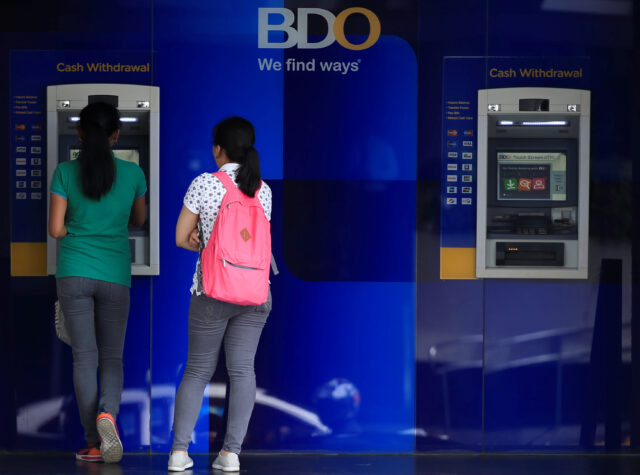
A woman withdraws money at an ATM in Makati City in this file photo. REUTERS

By Katherine K. Chan, Reporter

Philippines banks’ lending growth picked up in February as loans for business activities expanded at a faster pace, preliminary data from the Bangko Sentral ng Pilipinas (BSP) showed.

The total outstanding loans from universal and commercial banks, net of reverse repurchase agreements, rose by 9.5% annually to P14.269 trillion in February from P13.027 trillion a year ago. This was a tad faster than the near two-year low growth of 9.3% in January.

On a seasonally adjusted basis, bank lending climbed by 0.8% month on month.

Lending to residents went up by 10.1% to P13.987 trillion in January from P12.702 trillion a year earlier, slightly improving from 9.9% in January.

Banks’ loans for residents’ production activities stood at P12.031 trillion, 8.6% up year on year. This was faster than the 8.2% climb the prior month.

This as lending for waste management and remediation activities jumped 26% in February, while loans for electricity, gas, steam, and air-conditioning supply grew by 23.5%, transportation and storage by 19.3%, real estate activities by 9%, and repair of motor vehicles and motorcycles by 8.2%.

Meanwhile, big banks’ consumer loans to residents rose by 20.8% year on year to P1.956 trillion in February, easing from the 21.3% growth in January. This includes credit card, motor vehicle, and general-purpose salary loans but excludes residential real estate loans.

“Consumer loans to residents grew at a slower rate of 20.8% from 21.3% due to the modest slowdown in credit card and motor vehicle loans,” the BSP said in a statement late on Tuesday.

On the other hand, outstanding loans to nonresidents, which include those disbursed by big banks’ foreign currency deposit units, fell by 13.2% year on year to P282.077 billion. This was a steeper decline than the 10.4% drop logged in the previous month.

“The BSP monitors bank loans because they are a key transmission channel of monetary policy,” the central bank said.

“Looking ahead, the BSP will ensure that domestic liquidity and bank lending conditions remain consistent with its price and financial stability mandates,” it added.

LIQUIDITY GROWTH RISES
Meanwhile, the country’s money supply grew by an annual 10.3% to P19.838 trillion in the second month of the year, picking up from the 8.6% growth in January, the central bank reported.

Based on separate preliminary BSP data, February’s domestic liquidity (M3) increased from the P17.987 trillion recorded a year ago.

Month on month, it nudged 1.2% higher on a seasonally adjusted basis.

M3 is a measure of the amount of money in the economy that includes currencies in circulation, bank deposits, and other financial assets that are easily convertible to cash.

Domestic claims, which include claims from private and government entities, climbed by an annual 11% to P22.423 trillion. This was faster than the 10% expansion in January.

Claims on the private sector increased by an annual 10.6% to P14.487 trillion in February, amid a “continued expansion in bank lending to nonfinancial private corporations and households.”

Meanwhile, higher borrowings boosted net claims on the central government to P5.955 trillion during the month, rising by an annual 12.4%.

Claims on a sector refer to that sector’s liabilities to depository corporations such as banks and the central bank.

BSP data also showed that net foreign assets (NFA) in peso terms reached P7.455 trillion in February, up 7.4% year on year but slower than the 10.2% growth in January.

This came as the central bank’s NFAs expanded at slower pace of 4.1% to P6.521 trillion from 9.2% a month ago.

However, this was offset by the 38.4% jump in banks’ NFAs to P933.142 billion in February, faster than the 18.1% climb in January. This was mainly driven by lower foreign currency-denominated bills payable.

NFAs reflect the difference between depository corporations’ claims and liabilities to nonresidents.

ADVERTISEMENT
ADVERTISEMENT