Home Blog Page 7289

CIMB sees improved demand for loans by next year

CIMBBANK.COM.PH

MORE CONSUMERS may return to the credit market by 2022 for their nonessential needs after suppressing such activities for nearly two years due to the crisis, CIMB Bank Philippines, Inc. Chief Executive Officer Vijay Manoharan said.

“People want to start to travel, people want to start to shop, they want to start a new home renovation, buy a new car. So there’s going to be an enormous amount of new activity that’s been suppressed for so long,” Mr. Manoharan said in an online interview.

CIMB, which only started operating in the country in 2019, saw its credit portfolio increase 300% so far in 2021 compared with the same period of 2020, Mr. Manoharan said.

He said people tried to tap CIMB for credit amid tighter underwriting processes seen in other financial service providers during the pandemic.

“In 2020 and 2021, people are trying to get access to credit because they’re in a difficult position — they lost their job or they saw less income,” he said.

If restriction measures continue to be eased, Mr. Manoharan is hopeful that people will borrow not because they are negatively affected by the pandemic but because they want to spend.

“By 2022, if things continue to improve, the demand will change more to spur activity, as opposed to trying to recover,” he said.

Mr. Manoharan is optimistic that the progress made by the government’s national ID initiative alongside a more comprehensive credit bureau will also be key to boost credit growth by 2022.

Bank lending rose 2.7% in September to mark the second straight month of growth, preliminary data from the Bangko Sentral ng Pilipinas (BSP) showed.

Outstanding loans issued by big banks increased 2.7% to P9.25 trillion in September after growing 1.3% year on year in August. It had previously declined for eight straight months.

The growth in September is the fastest in 11 months, or since the 1.8% expansion in October 2020.

Including reverse repurchase agreements, outstanding loans went up 2.7% to P9.54 billion year on year in September.   

Outstanding loans went up 0.6% month on month on a seasonally adjusted basis.

Meanwhile, Mr. Manoharan said they welcome the policy of the Bangko Sentral ng Pilipinas (BSP) to limit the digital bank licenses to six, saying it was prudent to regulate the industry.

The central bank also told lenders with a different license type to avoid branding themselves as “digital banks” and instead say they offer online banking products and services.

Mr. Manoharan said they evaluated if they should apply for a license conversion but did not pursue it in the end.

“What we have (commercial bank license) is more than sufficient. Not only can we operate as fully digital, we can also do other segments that have broader services and solutions down the road with our current license,” he said.

Commercial banks have a higher minimum capitalization requirement of P2 billion for those with only a head office, compared with the P1 billion for digital banks, which are not required to have physical branches.

Mr. Manoharan said they are set to launch new products related to investments and insurance soon.

“We have two more partners that we have signed. We’ve done very well with GCash so we hope to replicate the model,” he said.

BSP data showed CIMB’s total assets stood at P17.843 billion as of end-June. — Luz Wendy T. Noble

Metro Clark Waste Management studies expansion beyond Luzon

METRO CLARK Waste Management Corp., which developed the solid waste management system of the Clark Freeport and Special Economic Zone, is looking to expand its operations beyond Luzon, a company official said.

“[The expansion] has to be economically sustainable, and we are looking into it and if this is possible,” Metro Clark Director for Technical Service Holger H. Holst told BusinessWorld in a recent online interview, when asked if the company intends to set up operations in Visayas and Mindanao.

“We’re looking at the market and what’s going on… in the LGUs (local government units). We’ll see what the future will bring, but we are looking forward to getting bigger and to serve more. There has to be a lot of things that have to be in place, and it’s not that easy,” Mr. Holst added.

Metro Clark said it operates the country’s first-ever ISO-certified engineered sanitary landfill facility in Sitio Kalangitan, Clark Special Economic Zone.

The company is also open to incorporating new technologies, such as waste-to-energy, into its operations.

“We are looking at all technologies available on the end of the chain, and waste-to-energy (WTE)… is really one way to reduce the volume of waste,” Mr. Holst said.

WTE facilities can be built anywhere in the country as long as they comply with the Environment department’s guidelines on developing such plants.

Metro Clark said six months ago that it was gearing up to build a $200-million waste-to-power “secondary fuel power plant” to help boost waste disposal capacity in Central Luzon.

The planned facility is expected to serve the waste management requirements of local government units and industrial clients in Region III while producing up to 35 megawatts of power that can be fed back into the region’s distribution grid.

The project, which will be built on the company’s 100-hectare site in the Clark Economic Zone, is the company’s joint venture project with Plambeck-Emirates Global Renewable Energy LLC, a partnership between a German technology firm and the Royal family of Abu Dhabi. — Angelica Y. Yang

The Bowtie gets the crossover feels

PHOTO FROM CHEVROLET PHILIPPINES

Recast Chevy Trailblazer underscores brand’s return to active duty

TO BE HONEST, the Bowtie brand had been relatively quiet here even before the pandemic hit.

That’s changing.

Now, in the span of two successive quarters, the Philippine distributor of the General Motors brand has released an equal number of new models. Following the unboxing of the Chevrolet Tracker (widely perceived as the successor to the Trax) in July, Chevrolet lost no time before trotting out a familiar nameplate: the Trailblazer.

But to backtrack, the uneventful interim leading up to the twin launches was expected, nay, planned. In an exclusive interview session with “Velocity,” Chevrolet Philippines-The Covenant Car Company, Inc. President and Chief Executive Officer Atty. Albert Arcilla explained, “Chevrolet is going through a transition in its product portfolio. As early as 2017, 2018, we were not coy about (announcing) the transition of our products. We knew that some products would be changed, and we would have take out some of the key models that were already familiar to the audience. In 2018, 2019, we scheduled to transition to the new products that we’ve worked for.”

The twin launches are thus not proof of life for Chevrolet in the Philippines but, rather, a part of a premeditated “sabbatical” and recalibration of strategy.

“We were already really in sync with our product portfolio plans for 2021 and 2022. We were just delayed by a few months, but our launch targets were really for (execution) halfway through 2021,” added Atty. Arcilla. “It really gave Chevrolet that time to really study how we would introduce the new models that will be again familiar for the brand.”

The period of relative inactivity (at least to many outside observers) was actually put to good use in preparing Chevrolet Philippines for the gradual evolution of its offerings. Atty. Arcilla said the company kept sight of that goal while liquidating the existing product portfolio to make room for new models, namely the Tracker and the Trailblazer (for now). “We were successful in doing that because we already brought down a lot of our inventories during the transition period,” he added.

‘SERENDIPITY’
The decision to veritably pull the plug on certain models is not to be taken lightly and, of course, might have dire consequences later. But the trigger was pulled at the General Motors (US) level, and Atty. Arcilla thinks Chevrolet Philippines has been “put in a good situation” because of it.

He averred, “Ours is not a very big market; we are only distributors of the products that are available for our market. When General Motors and Chevrolet decided to cut down on the production of some models in the region, it really affected our product portfolio. However, it also came at a time that (the Philippines was) changing our own tax environment. We had the TRAIN (Tax Reform for Acceleration and Inclusion, which had the net effect of jacking up prices of imported vehicles, with some exceptions).

“By the time we were taking out the old Trailblazer, that was when it would have been sold at a very high price. If you look at how the market reacted to the changes in the tax environment, people really did step back and look at other segments. As we were stepping out of the segment, the market was also stepping out of it. Now we’re back in the segment where the market is looking. I think it is serendipity for us at Chevrolet Philippines.”

BLAZING A TRAIL — AGAIN
The segment the company is stepping into is one that has been ripe for the picking even before the pandemic commenced — and promises to remain lucrative in the foreseeable future for the right companies with the right product.

The Chevy Traiblazer, already a familiar nameplate on account of the midsize SUV that was a hit here, now makes a comeback in a smaller compact SUV form. Crucially, Chevrolet Philippines is touting this as a premium product for a “forward-thinking, tech-savvy, and independent audience.”

Measuring 4,408mm x 2,052mm x 1,656mm (LWH), the all-new Chevy Trailblazer is longer, wider, and taller than its sibling Tracker. “The Trailblazer is a continuation of the new design language for Chevy’s crossover family and extends our momentum into one of the industry’s fastest-growing segments. It continues the SUV heritage of the revered nameplate and is now loaded with safety and convenience features that anticipate the needs of today’s most discerning customers,” Atty. Arcilla added in a release.

Meanwhile, Chevrolet Philippines Senior Vice-President and Director for Marketing Communication Services Lyn Manalansang-Buena said, “The all-new 2022 Chevy Trailblazer is a premium compact SUV, and it is catered to individuals who have achieved a certain level of success in their lives. It caters to a different target audience than the Tracker.”

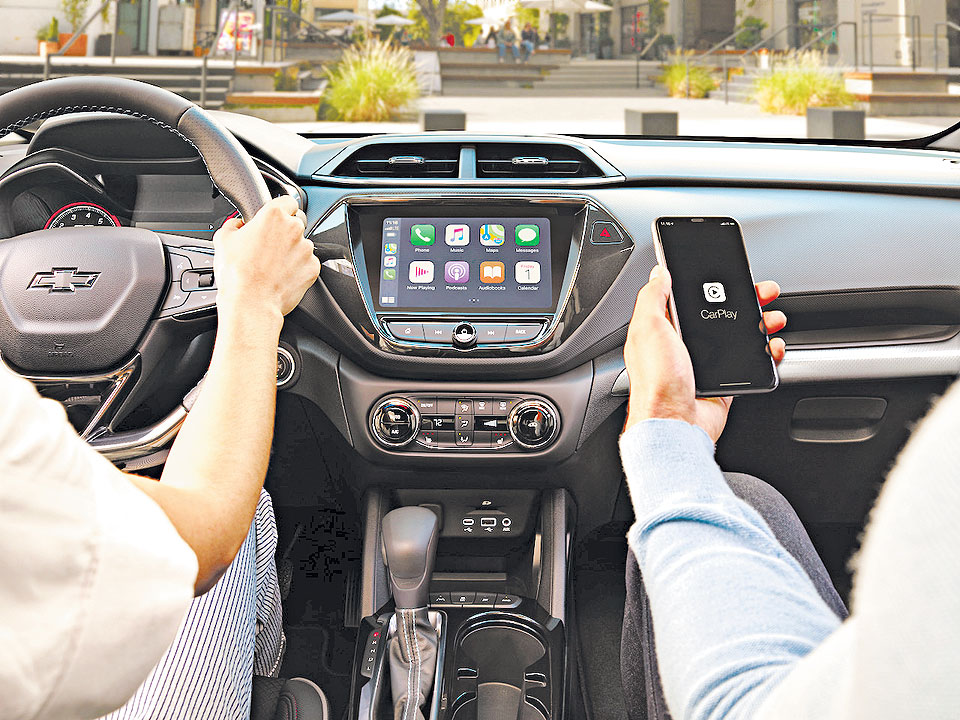
She continued, “It has a lot of creature comforts and benefits that addresses an audience with a more discerning taste. It has stuff like an automatic liftgate, valet assist, MyLink infotainment system with both Android Auto and Apple CarPlay compatibility. There’s a lot of features for individuals who’ve made it to a certain level in their lives.”

As for the Tracker, Mrs. Manalansang-Buena stated that is a vehicle which “punches above its weight (as a) crossover SUV with a lot of benefits.” It’s aimed for a younger set, and the executive imagines these motorists would probably be “managers making their way up the corporate ladder,” or young families ready for their first vehicle. “The Trailblazer could be a secondary car, and maybe belongs to a family that has a multi-car system. That’s how we see the two target audiences of the Tracker and the all-new Chevy Trailblazer.”

For Chevrolet Philippines First Vice-President and Director of Product Development and Distribution Services David Ma. Antonio Zaballero, the Tracker and Trailblazer represent “two distinct product philosophies that appeal to two sometimes overlapping segments, but are (different) enough that their preferences are distinct as well.”

He commented on the Trailblazer, “The plethora of convenience and safety features will appeal to a more mature, more established demographic looking for advanced driver assistance systems and a raft of fuel-saving technologies in the powertrain.”

REFINING, REDEFINING
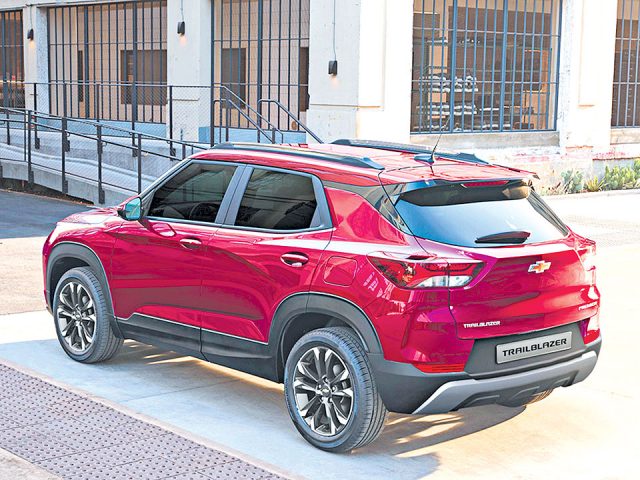
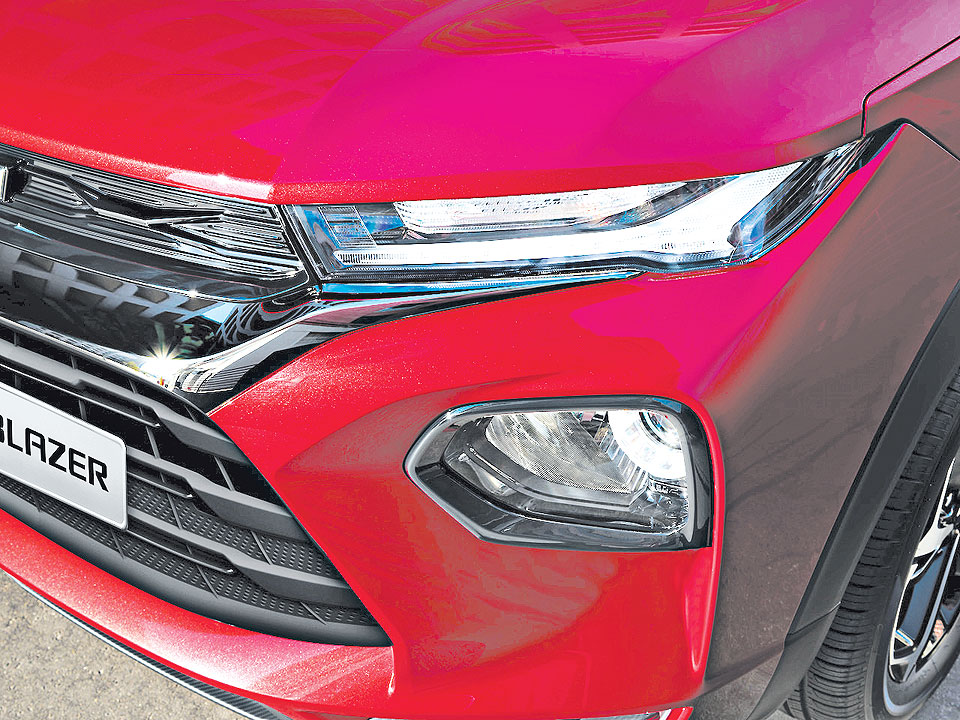
The all-new Chevy Trailblazer is available in two variants, the LT (P1,488,888) and Premier (P1,621,888). Chevrolet makes mention of the model’s front fascia and how it derives inspiration from the iconic Camaro. Speaking of its front end, the Trailblazer gets LED Intellibeam headlamps, LED daytime running lights (DRLs), and LED fog lamps. The “signature dual-port grille (also) gives its face a multilayered, dimensional appearance.”

Chevrolet designers purposively wanted the Trailblazer to have a visually wider and stronger stance, and this is helped along by an accent bar and simulated front skid plate. On the side, the crossover “includes taut character lines, a sleek roofline, and a bold hood shape to accentuate its youthful character.” LED illumination appears in the rear of the Chevy Trailblazer as well — through a high-mount stop lamp and taillights. Buyers will appreciate a hands-free power liftgate, rear camera, and sensors.

TURBOCHARGED GOODNESS
Powering the vehicle is GM’s next-generation Euro 4 E-Turbo engine. The inline three-cylinder turbocharged DOHC 1.3-liter mill delivers 155hp at 5,600rpm, while a stout 236Nm of torque arrives between 1,600rpm and 4,000rpm. Chevrolet said that the “innovative engine is characterized by advanced technology features that not only add excitement behind the wheel, but also enhance fuel efficiency.”

The system features active thermal management to keep the engine at optimum operational temperature, and a variable displacement oil pump to ensure that lubricant delivery is matched to engine load. Active grille shutters can close when engine cooling needs are reduced — also aiding in the reduction of drag while maximizing aerodynamic efficiency by pushing more air around the vehicle. Additionally, the Trailblazer’s electric water pump is independent from the engine and keeps parasitic drag low.

The Trailblazer also boasts an engine start/stop system to cut down on both fuel consumption and emissions when possible.

The vehicle translates the engine output into performance through a new-generation Hydramatic VT40 CVT. Chevrolet stated that this six-speed front-wheel-drive CVT comes equipped with a multi-drive-mode system to match road conditions. A suite of driver assist and safety systems reads like a who’s who of features more commonly seen on upmarket models: enhanced stability control, anti-lock brakes, traction control, electronic stability control, electronic brakeforce distribution, hill start assist, cornering brake control, rollover protection, engine drag control, forward collision alert, following distance indicator, automatic emergency braking, front pedestrian braking, lane change alert with side blind zone alert, lane keep assist with lane departure warning, rear camera, rear park assist and rear-cross traffic alert.

The Chevy Trailblazer also receives brake assist systems such as Brake Pre-fill, Fading Brake Assist (FBA), and Panic Brake Assist (PBA). The crossover also has the ability to detect if an emergency or spare tire is in use — and accordingly adjusts the brakeforce, torque and power applied on the spare. The parking brake is actuated electronically as well.

To provide confidence during “enthusiastic cornering,” Chevrolet’s Torque Vectoring by Brakes (TVBB) system applies the brakes on the inside wheel (the vehicle gets 17-inch alloys, by the way) when the Trailblazer makes a turn at speed. “Light brake force is applied to the front inside wheel as soon as it begins to lose grip, sending more engine torque to the outside wheel that has more grip,” said the company.

CABIN FEVER
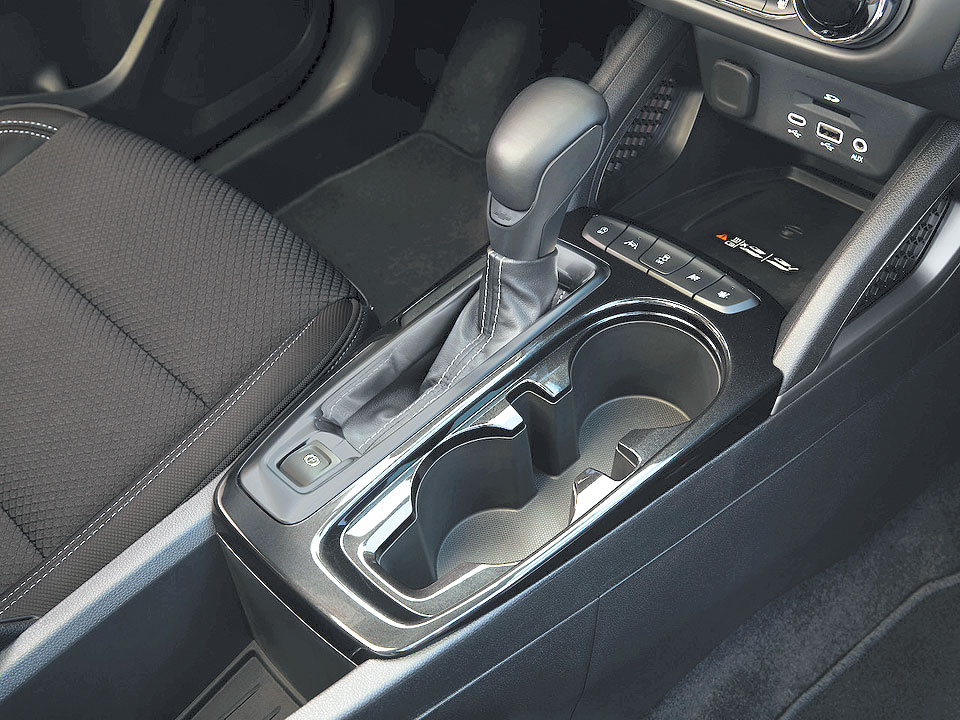
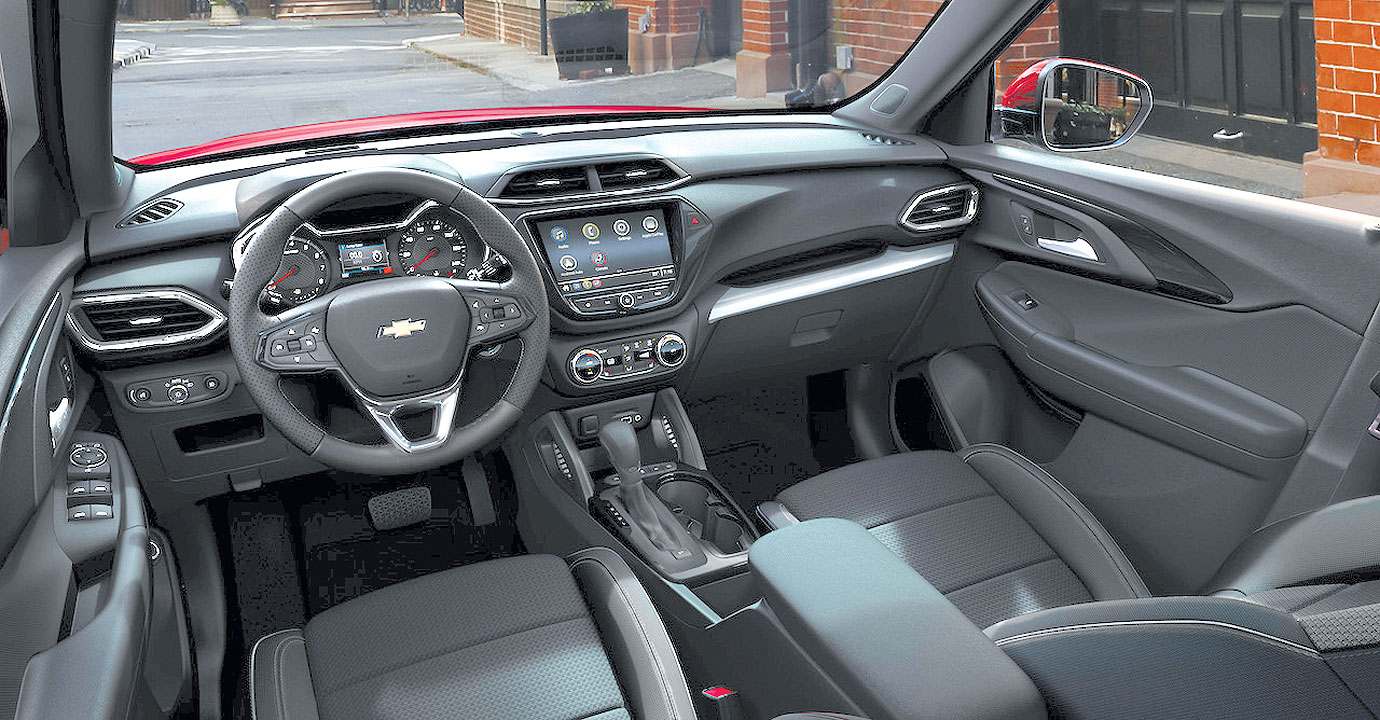
The Trailblazer’s steering wheel is leather-wrapped and bears a heating function (as with the front seats), along with cruise and audio controls. Chevrolet equips it with electronic power steering as standard. Swathed in jet-black leather, the cabin is accented by white stitching. The infotainment system is predicated on an eight-inch MyLink with Apple CarPlay and Android Auto connectivity, and its HVAC (heating, ventilation, and air-conditioning) system is equipped with an air moisture sensor and A/C cabin pollen filter.

The all-new Chevy Trailblazer is available in eight colors: Summit White, Black Meet Kettle Metallic, Crimson Metallic, Blue Glow Metallic, Vivid Metallic, Mahogany Red Metallic, Abalone White Tri-coat, and Satin Steel Grey Metallic.

Available in Chevrolet dealerships nationwide, the all-new Chevy Trailblazer comes with a five-year warranty, automatic enrollment to the 24/7 Chevrolet Roadside Assistance for three years, and access to the Chevy Hotline for convenient vehicle service and ownership needs.

Atty. Arcilla said that he sees two promising segments now — the aforementioned crossover niche and small sedans. As Chevrolet Philippines is addressing the first category, it is also looking at bringing in models for the second.

“We are already in a lot of discussions with our principals at GM and Chevrolet because we’ve seen that there are certain models available in other markets that may be introduced here in the Philippines. We’re waiting for the right timing and right pricing strategy that will give us the right volume and price level that we can offer to the market,” intimated the Chevrolet Philippines head. “By the middle of next year, when everything hopefully gets a little more normal, it will be easier for us to make that decision to again introduce a model in a very, very big segment.”


Armorer on Rust film set says producers overruled her safety requests

LOS ANGELES —  The armorer who oversaw guns used in filming of Western movie Rust said producers allowed for an “unsafe” movie set and rejected her requests for training and other measures before actor Alec Baldwin accidentally shot and killed a cinematographer.

Attorneys for Hannah Gutierrez, 24, issued the first public statement on her behalf late on Thursday, a week after the fatal shooting by Mr. Baldwin of Ms. Halyna Hutchins on the Rust set outside of Santa Fe, New Mexico.

Safety was the “number one priority” for Ms. Gutierrez, who had been hired as armorer and assistant prop master, according to the statement from attorneys Jason Bowles and Robert Gorence. Holding both positions “made it extremely difficult to focus on her job as an armorer,” the statement said, adding that Ms. Gutierrez fought for training, days to maintain weapons, and proper time to prepare for scenes with gunfire.

Ms. Gutierrez “ultimately was overruled by production and her department,” the attorneys said. “The whole production set became unsafe due to various factors, including lack of safety meetings,” they added. “This was not the fault of Hannah.”

Authorities in Santa Fe are investigating the incident and say they have not ruled out criminal charges. A key question is how live ammunition made its way into the .45-caliber Colt revolver that Mr. Baldwin was using after he was told the gun was “cold,” an industry term meaning it was safe to use.

Ms. Gutierrez “has no idea where the live rounds came from,” her attorneys said. She and the prop master “gained control over the guns and she never witnessed anyone shoot live rounds with these guns and nor would she permit that.”

Guns on the set were locked up at night and at lunch, “and there’s no way a single one of them was unaccounted for or being shot by crew members,” they added.

“Hannah is devastated and completely beside herself over the events that have transpired,” the statement said.

A spokeswoman for Rust Movie Productions had no immediate comment on Friday. The company has hired a law firm to investigate the incident and previously said it had not been made aware of safety problems on the set.

Mr. Baldwin, who has said he is heartbroken and cooperating with authorities, also served as a producer on the movie. —  Reuters

Inventory of frozen pork nearly doubles in late Oct.

PHILSTAR FILE PHOTO

THE INVENTORY of pork in cold storage rose 97.6% year on year to 83,329.39 metric tons (MT) as of Oct. 25, according to the National Meat Inspection Service (NMIS).

The NMIS said in a report that imported frozen pork accounted for 97.7% or 81,416.95 MT of the total.

Volumes in cold storage had risen 2.3% month on month and fell 0.4% week on week.

The Philippine Association of Meat Processors, Inc. (PAMPI) has said that the inventory pileup is due to the failure of the government to account for the lack of freezers in wet markets in the National Capital Region (NCR) and nearby areas, where the imports are authorized for sale.

“Stall owners in wet markets do not have freezers. They barely have enough capital to pay for daily deliveries of fresh pork. So how can they sell imported pork even if they are priced cheaper?” PAMPI said.

The Department of Agriculture (DA) recently issued Memorandum Circular No. 23, which expanded the authorized sale outlets for imported pork to areas with “relatively high prices” of pork meat outside of the so-called NCR Plus region, which includes Bulacan, Rizal, Laguna, and Cavite.  

It said the directive was issued in response to the low utilization of the new minimum access volume (MAV) quota for pork imports due to restrictions on their sale.

Previously, pork imports were only permitted for sale in wet markets, supermarkets, and Kadiwa outlets within NCR Plus.

Rolando E. Tambago, Pork Producers Federation of the Philippines, Inc. president, told BusinessWorld via mobile phone that the memorandum circular did not specify where market coverage will be expanded.

“There are still huge inventories of imported pork in cold storage especially in the National Capital Region (NCR), Central Luzon, Calabarzon, and Cebu. It is more than double the usual or even much more inventory versus the same period last year,” Mr. Tambago said.

“Our members in the Visayas and Mindanao are currently sending a lot of surplus pork to Luzon. Instead of focusing on imported pork, the DA should focus its attention on helping out hog farmers to in transporting pork to Luzon from the Visayas and Mindanao,” he added.  

The volume of imported pork allowed to enter the country was increased by President Rodrigo R. Duterte under Executive Order (EO) No. 133, which expanded the MAV quota by 200,000 MT to 254,210 MT.

Pork imports within the MAV quota are charged lower tariffs compared to imports exceeding the MAV.

Mr. Duterte also signed EO 134, which lowered the tariffs on all pork imports, within or beyond the MAV quota, for one year.

Both directives were issued to address supply and price issues after the hog inventory was depleted due to the ongoing African Swine Fever outbreak. — Revin Mikhael D. Ochave 

PayMaya speeds up full rollout of QR Ph for merchant payments

DIGITAL payments firm PayMaya Philippines, Inc. on Sunday said it is accelerating the nationwide rollout of QR Ph, the country’s Quick Response (QR) code standard for merchant payments, across its enterprise base.

“The company has rolled out the most number of QR Ph P2M (person-to-merchant) acceptance points across its enterprise base, now at over 160,000,” PayMaya said in an e-mailed statement.

“The number includes both online and on-ground touchpoints for all types of merchants, including large companies, government agencies, and MSMEs (micro, small, and medium enterprises),” it added.

The Bangko Sentral ng Pilipinas (BSP) introduced the QR code standard in April to enable P2M payments, with the goal of boosting the digitalization of small enterprises in the country.

“We are excited to be at the forefront of the full rollout of QR Ph P2M. It’s a boost, especially for our enterprise customers, as they can start accepting payments from more consumers using just their QR Ph P2M code enabled by PayMaya,” PayMaya President Shailesh Baidwan said.

“This is a major step towards building a stronger payment ecosystem across businesses, consumers, and the government,” he added.

With the QR Ph P2M, businesses can accept QR payments regardless of their customers’ bank or e-wallet accounts.

“PayMaya enterprises equipped with a QR Ph P2M code can now accept payments from consumers who have accounts with AllBank (A Thrift Bank), Inc., Asia United Bank Corp., Cebuana Lhuillier Rural Bank, China Banking Corp., Land Bank of the Philippines, Rizal Commercial Banking Corp., Starpay, UnionBank of the Philippines, and USSC Money Services, Inc.,” the digital payments firm said.

A report from the BSP and the Better than Cash Alliance showed digital merchant payments climbed 33% in 2019, backed by low value retail transactions.

The study also found remittances and merchant payments done digitally climbed 39% and 66%, respectively, in 2019 from a year earlier.

PayMaya is a subsidiary of Voyager Innovations, Inc., the digital arm of PLDT, Inc.

Hastings Holdings, Inc., a unit of PLDT Beneficial Trust Fund subsidiary MediaQuest Holdings, Inc., has a majority stake in BusinessWorld through the Philippine Star Group, which it controls. — Arjay L. Balinbin

A journey to premium

M Hybrid versions of the Mazda3 and Mazda CX-30 — PHOTO FROM MAZDA PHILIPPINES

Mazda Philippines will welcome a reworked lineup, mild hybrid powertrains, and more niceties for its discriminating clientele

IT’S BEEN PRETTY clear these past many years that Mazda has begun elevating itself into a premium car brand — even already defining its own proprietary concept of “Mazda Premium” since the launch of one of its most beautiful creations yet: the latest-gen Mazda3. It is also common knowledge that more and more consumers have begun noticing (internationally, mind you) how Mazda products have evolved into vehicles of impressively high quality and workmanship, that it is actually becoming the go-to brand for people who wish to enjoy the pleasures of refinement without having to dive straight into luxury-brand prices.

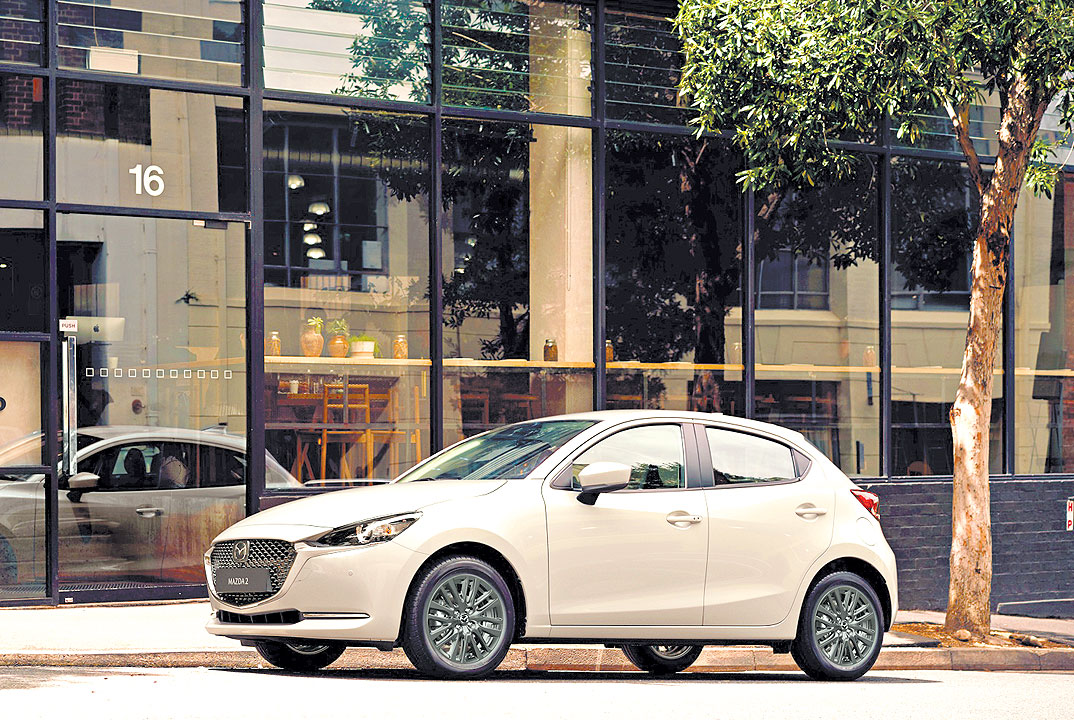
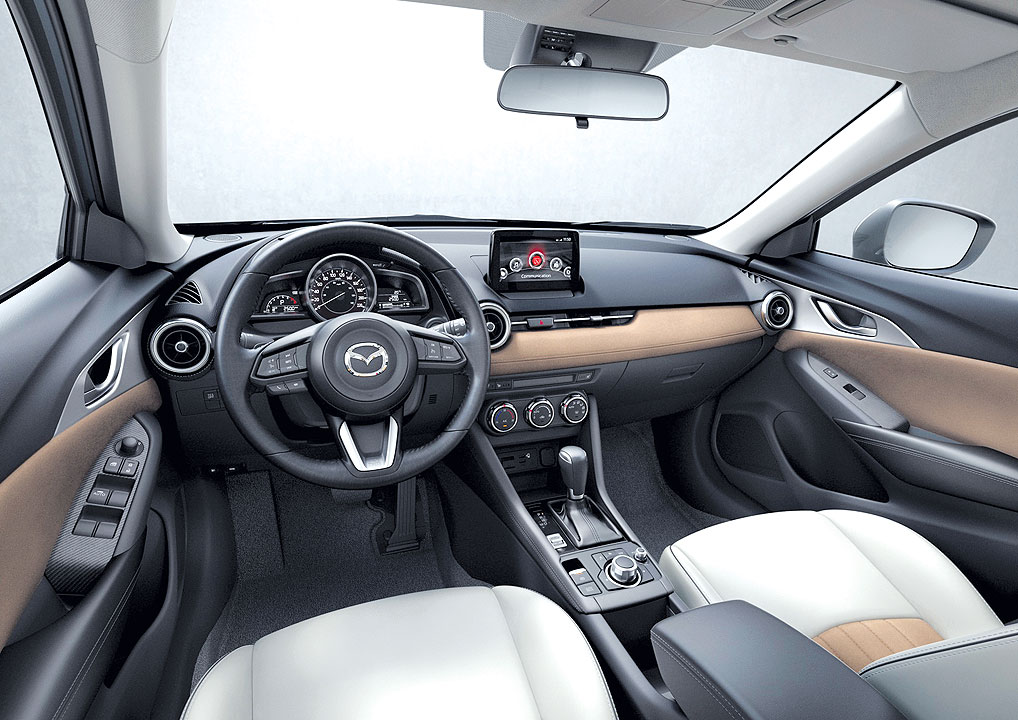
Aligned with these ideals, Mazda Philippines recently announced its upgraded product range for 2022, which it calls its “Mazda Premium Collection.” These cars are the 2022 Mazda2, the 2022 CX-3, the 2022 Mazda3 (which will now also carry mild hybrid technology), and the 2022 CX-30.

“Mazda’s journey to premium continues into 2022,” shares President and CEO of Mazda Philippines Steven Tan. “We are committed to raising the standards of design, quality, performance, environmental sustainability, and safety in every vehicle category we are present in. We owe it to our customers to give them the same luxurious, fuel-efficient, technologically advanced and astoundingly safe Mazda models that are also available in the rest of the world,” he adds.

Steven Tan also emphasized that the 2022 Mazda Premium Collection lets its exclusive clientele “create an even more lasting bond with their cars as they experience only the finest products and services they deserve.”

Also important to note is that Mazda Philippines pointed out its mother company’s (Mazda Japan’s) Sustainable Zoom Zoom 2030 Vision. This vision identifies the important elements of the brand’s long-term goal to help in reducing global carbon emissions. Mr. Tan nevertheless also points out that, alongside this, Mazda continues to invest in ICE (internal combustion engine) technologies, as it feels that there will still be a place for ICE vehicles long into the coming future.

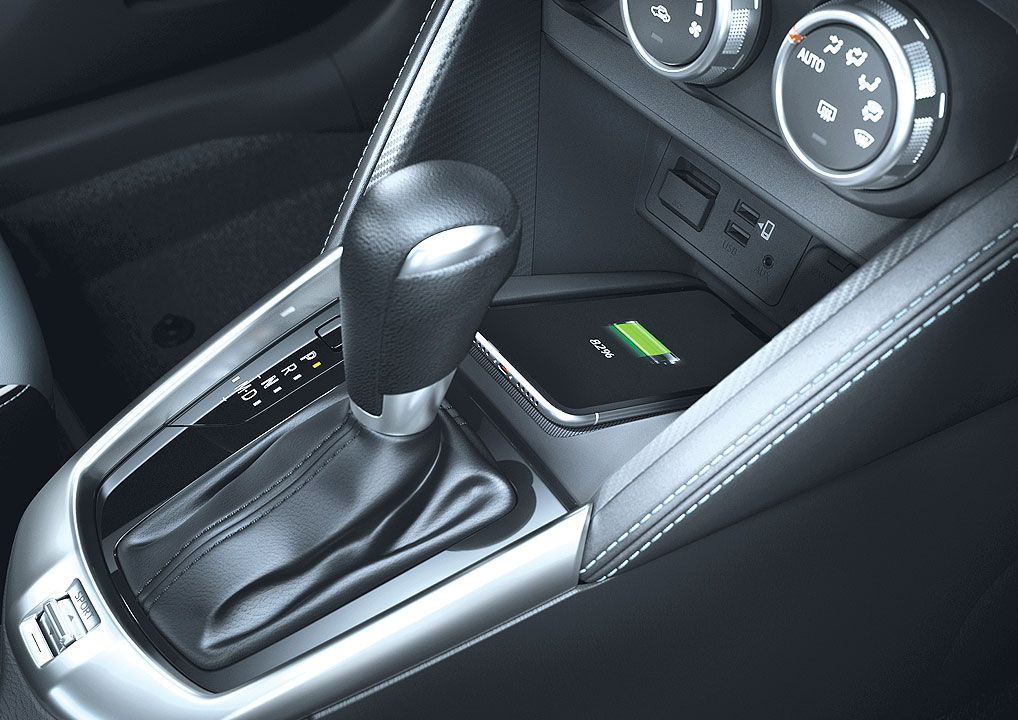
Mazda Philippines was proud to announce that the latest Mazda2 compact car will enjoy key improvements this 2022. Among them are new sports LED daytime running lights and black, 16-inch alloy wheels to enhance its sporty profile. As this is part of the Premium Collection, it will also come with handsome leather seats finished in a dark blue hue. A new wireless charging pad will be available in the vehicle, as will Smartphone Mirroring and wireless Apple CarPlay.

The 2022 Mazda2 will likewise be upgraded to carry six air bags, alongside a suite of i-Activesense safety features such as lane departure warning, rear-cross traffic alert and blind spot monitoring. Mr. Tan emphasizes that “the Mazda2 remains to be the gateway to the Mazda brand.”

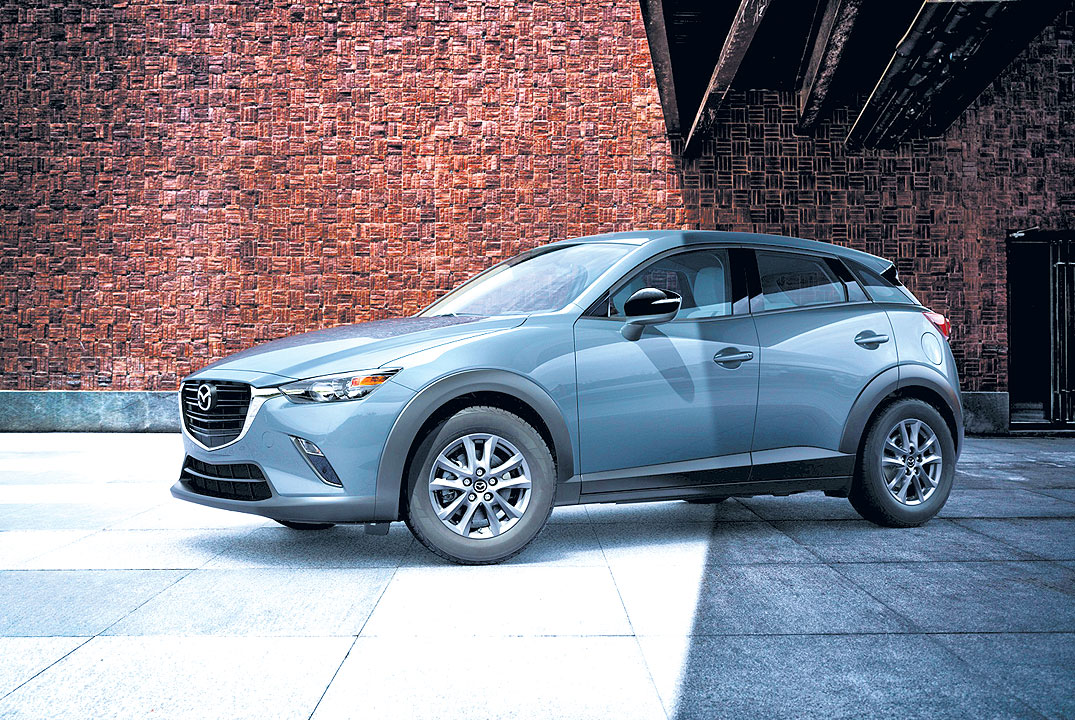
Meanwhile, the Mazda CX-3 — the brand’s hot-looking compact crossover — is bound to receive design and feature enhancements specific to each variant. Both the Sport and Elegance variants will now come with wireless Apple CarPlay as standard. Audio quality will be elevated to the next level with a seven-speaker Bose sound system. Its security and safety features will become standard for both variants.

Most impressively, the 2022 Mazda3 will now break Mazda’s e-Skyactiv-G Mild Hybrid (M Hybrid) technology into the country. It mates a DC/DC converter with an integrated starter generator (ISG) and uses a friction brake coordination system that feeds energy into a 24V lithium ion battery. This makes a huge difference in fuel economy and more especially when it comes to carbon emission reduction. Furthermore, this tech not only reduces engine load on the 2.0-L Skyactiv-G, but also improves on overall engine performance.

The 2022 Mazda3 M Hybrid will be available in both fastback and sedan body types. It’s an exciting time and also a new age for Mazda in the Philippines! Steven Tan explains that the 2022 Mazda3 “symbolizes Mazda’s aspirations to be a vehicle manufacturer that aims to create a lasting bond between driver and car, while being responsible stewards to both Earth and society.”

Finally, the 2022 Mazda CX-30 will be exclusively available in front-wheel drive M Hybrid configuration. This will reward the car with an even smoother drive than before and of course, better vehicle mileage. Its wheels will feature high-gloss black to identify itself as carrying the new powertrain.

Mr. Tan remarked that “in line with Mazda’s global initiatives, we see the introduction of the 2022 CX-30 e-Skyactiv-G M Hybrid as the first step for us to participate and be relevant partners in achieving the brand’s goals.”

Ed Sheeran releases album while isolating for COVID

EDSHEERAN.COM

LONDON —  Music star Ed Sheeran released his fourth solo album, entitled “=” (equals), on Friday while isolating for COVID-19 (coronavirus disease 2019), saying he was going to celebrate with a “solo party.”

The singer, known for chart-topping hits such as “Shape of You” and “Thinking Out Loud,” had told fans earlier last week he had tested positive for the coronavirus, and had canceled all in-person events to promote his new record.

“I’m obviously still in COVID isolation but please let me know what you think when it’s out. It’s the most proud (I’ve) ever been of a (piece) of work and I can’t wait for you all to hear it,” he said on Instagram on Thursday evening.

“Gonna be having a solo party tonight and tomorrow to celebrate, blast it loud.”

Mr. Sheeran, who has named his previous solo albums after mathematical symbols, has said that this latest one was his favorite record that he had made, with songs about his wife and daughter.

Critics said the Grammy Award winner, who has sold more than 150 million records worldwide, had stuck to his successful formula of honest lyrics in the new album.

“It’s business as usual for the Suffolk (England) singer-songwriter, who’s turned in a fourth album of undeniable hits and savvy, sickly-sweet concoctions,” music site NME said, giving the record three out of five stars.

“To some tastes, Sheeran will be corny and trite. Yet what he does well is essentially inarguable: provide songs that fulfil the emotional needs of universal moments,” Britain’s Telegraph newspaper said, giving it four stars. — Reuters

Yields on gov’t debt drop

DEBT YIELDS at the secondary market edged lower on Friday following the seven-year bond auction and external developments, but expectations of persisting price pressures kept rates elevated, analysts said.   

Yields on government securities (GS) fell 2.24 basis points (bp) on average week on week, based on PHP Bloomberg Valuation Service Reference Rates as of Oct. 29 published on the Philippine Dealing System’s website.  

At the short end of the curve, yields on the 91- and 182-day Treasury bills (T-bills) declined by 1.65 bps and 0.94 bp, respectively, to 1.2131% and 1.4488%. Meanwhile, the 364-day papers inched up by 1.24 bps to fetch 1.6228%.

At the belly, the rates of the two-, three-, four-, five-, and seven-year Treasury bonds (T-bonds) decreased by 0.36 bp (to 2.3758%), 1.66 bps (2.8815%), 2.25 bps (3.3554%), 3.17 bps (3.7771%), and 7.55 bps (4.3981%).

The 10- and 25-year T-bonds saw their yields fall by 11.8 bps to 4.8512% and 1.7 bps to 5.2138%, respectively. On the other hand, the rate of the 20-year papers climbed by 5.24 bps to 5.1552%.   

“Local bond yields moved range-bound on strong two way-interest week on week. After few weeks of heavy selling, the GS market finally found some reprieve after global oil prices and US Treasury yields showed some signs of stabilization,” a bond trader said in a Viber message.   

“Market also took cues from the government’s seven-year issuance which the BTr (Bureau of the Treasury) partially rejected,” the bond trader added.

The BTr raised just P19.315 billion via the reissued seven-year T-bonds it sold on Tuesday, less than the programmed P35 billion, even as the paper attracted P57.215-billion worth of bids.   

The notes, which have a remaining life of six years and nine months, fetched an average rate of 4.468%, 26.1 bps higher than the 4.207% quoted when the series was last offered on Oct. 5. 

Bank of the Philippine Islands Lead Economist Emilio S. Neri, Jr. said via Viber that despite the BTr’s rejection of bids during last week’s auction, yields have remained elevated as the market is “aware that domestic inflation is bound to remain high” despite the government’s efforts.

“Elevated prices in oil and other energy markets combined with enduring supply concerns have fueled expectations that high inflation could be a lot more persistent than originally expected. We also continued to see more central banks (e.g., the Bank of Canada) hinting that they could hike rates much earlier than expected as inflation remains stubbornly high,” Mr. Neri added.    

The Bangko Sentral ng Pilipinas (BSP) expects inflation to have settled between 4.5%-5.3% in October, above its 2-4% target and 4.4% forecast for the year. As of September, inflation averaged 4.5%.   

The Philippine Statistics Authority is scheduled to release October inflation data on Friday.

“Any surprises on the inflation or hawkish rhetoric from monetary authorities around the world [this] week will likely affect the long end of the curve more. We expect the BSP to continue downplaying the October inflation print as merely transitory and will unlikely affect their policy setting in either their November or December meeting,” he added.

Mr. Neri said the absence of an interest rate hike means yields at the short end of the curve “will remain artificially low, just as economic fundamentals push other parts of the curve higher.”

“An [inflation print] above 5% might exert more upward pressure on yields,” he said.

The BSP’s next monetary policy meeting is scheduled on Nov. 18.   

“All eyes are now on the FOMC (Federal Open Market Committee) meeting and the Philippine CPI (consumer price index) release for the month of October, where these risk events will set the tone of trading in the near-term,” the bond trader said.   

“Until then, yields are just expected to move sideways with slight upward bias.”

US central bank officials are set to meet on Nov. 2-3. — Bernadette Therese M. Gadon

Wilcon Depot’s upbeat Q3 earnings attract investors

By Ana Olivia A. Tirona, Researcher

INVESTORS loaded up on Wilcon Depot, Inc. last week after upbeat third quarter earnings report.

Data from the Philippine Stock Exchange (PSE) showed a total of 25.38 million Wilcon shares were traded last week worth P779.92 million, making it the 15th most actively traded stock between Oct. 25 to 29.

The home improvement and construction supplies retailer closed at P31.20 per share on Friday, 9.9% higher than its closing price of P28.4 apiece on Oct. 22. Likewise, the stock shot up by 73.5% since the first trading day of 2021.

Its stock movement was driven up last week after the release of its third-quarter earnings report, Globalinks Securities and Stocks, Inc. Head of Sales Trading Toby Allan C. Arce said in a Viber message on Friday.

“The home improvement and construction supplies retailer easily beat last year’s third quarter performance, but due to the movement restrictions applied as a result of the [coronavirus disease 2019] Delta variant, WLCON’s third quarter numbers underperformed its second quarter numbers by a small margin,” he said, referring to the stock’s ticker symbol.

“WLCON also enjoyed higher third-quarter 2021 earnings thanks to tax savings that cushioned a slump in sales and an increase in operating expenses,” he added.

Wilcon’s third quarter net sales dipped by 1.9% to P6.62 billion from P6.749 billion a year ago, weighed down by nearly two months of mobility restrictions implemented back in August of this year.

Its January to September revenues meanwhile jumped by 27% to P20.05 billion from P15.79 billion a year earlier amid “generally uninterrupted operations” in Luzon.

On the other hand, the depot’s net income for the July to September grew by 16.7% to P662.14 million from P533.21 million logged in the same period last year.

This brought the nine-month net earnings to P1.87 billion, more than double the P885.57 million it earned last year.

This “sustained recovery” in both Wilcon’s top line and bottom line prevented the stock from vulnerable market sell-off last week, China Bank Securities Corp. Research Associate Lance Gabriel U. Soledad said in a separate e-mail interview.

“[The depot] is still a viable long-term investment given that it can still further take advantage of the growing local economy/home improvements industry as it remains a market leader and it looks to expand its nationwide store network to 100 by 2025,” he added.

Wilcon operates 63 stores nationwide, 56 of which are depot formats and seven are smaller “Home Essentials.”

It plans to open a total of nine new depots this year and one Home Essentials branch. It launched seven depots and one Home Essentials to date.

“Shareholders would like to see WLCON finish off its nine-store expansion within this year and continue margin buffering through its product mix adjustments that have so far had a positive impact,” Mr. Arce said.

Mr. Arce expects Wilcon’s bottom line to finish P2.5 billion for 2021 and P3.1 billion for 2022.

For resistance and support levels this week, he forecasts P31.60 and P29.60, respectively.

Meanwhile, Mr. Soledad expects the stock to consolidate between P28.00 and P33.00 this week.

Palay production costs top P47,000 per hectare in 2020

PHILSTAR

THE average cost to produce palay, or unmilled rice, rose 1.7% in 2020 to P47,089 per hectare (/ha), according to the Philippine Statistics Authority (PSA).

The PSA said in a report that rice farmers absorbed costs during wet season cropping of P47,196/ha compared to the dry season cost of P46,650/ha.

The PSA said the average production cost of rice farmers on a per kilogram (/kg) basis was P11.52/kg in 2020, up 0.6%.

“By region, the average cost of producing palay was highest in Ilocos Region at P64,776/ha. Likewise, the region entailed the biggest cost during the dry season cropping at P66,336/ha. Cagayan Valley recorded the biggest cost at P66,580/ha during wet season cropping,” PSA said.

“Bangsamoro Autonomous Region in Muslim Mindanao (BARMM) listed the lowest cost of producing palay at an average of P37,271/ha. In both seasons, the region also registered the lowest of P38,610/ha during the dry season and P35,197/ha during the wet season,” it added.

According to the report, the average farmgate price of palay in 2020 was P16.76/kg, down 1.1%.  

The PSA said the average net return of palay farmers dropped 3.7% to P21,430/ha in 2020.

Asked to comment, Federation of Free Farmers National Manager Raul Q. Montemayor told BusinessWorld via mobile phone that the interventions under Republic Act No. 11203 or the Rice Tariffication Law have not posted significant results.

“These results indicate that the interventions of (the Department of Agriculture) … in terms of reducing costs of production and improving yields have not had any significant result. As a result, farmers ended up with significantly less income due to lower farmgate prices,” Mr. Montemayor said.

President Rodrigo R. Duterte signed the law in 2019, allowing private parties to import rice more freely in exchange for the payment of a 35% tariff on Southeast Asian grain.

The law also created the Rice Competitiveness Enhancement Fund (RCEF), which seeks to modernize the rice industry. It is to be provided P10 billion a year between 2009 and 2024 from rice tariffs.

“The results for the first two years show that we are still a long way off the targets of improving yields by and reducing costs of production, despite the billions in RCEF and other supplemental funds poured into the rice sector,” Mr. Montemayor said.

Jayson H. Cainglet, Samahang Industriya ng Agrikultura executive director, said in a mobile phone interview that the PSA report validates the data on the ground.

“From the perspective of the producers, the bottom lines are lower cost of production, increase in the farmgate price, and affordable basic food. On all three counts, the government has failed as PSA data would show,” Mr. Cainglet said. — Revin Mikhael D. Ochave 

Ford PHL, Motolite, PBSP partner for Balik Baterya Program

PHOTO FROM FORD PHILIPPINES

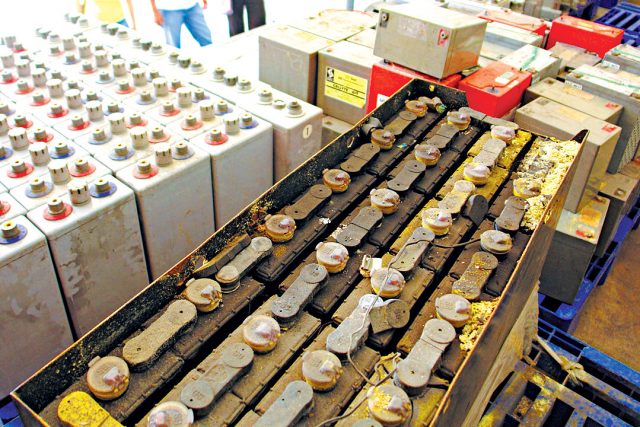
FORD PHILIPPINES said in a release that “there is no safe level of lead exposure.” It is toxic and harmful not only to the environment but to the health of people and animals. Having said that, lead is still used for select products such as batteries. Ford Philippines shared that, according to the United Nations Environment Programme, “around 86% of the total global consumption of lead is for the production of lead-acid batteries.”

In view of this, and the fact that a large number of batteries are produced each year, their proper disposal and recycling is of utmost importance. “To help address this problem, Ford Philippines, together with Ford dealers nationwide, Motolite, and the Philippine Business for Social Progress (PBSP) forged a collaboration to recycle used lead-acid batteries (ULABs) through the Balik Baterya Program,” the company said in a release.

“Through the Balik Baterya Program, we are able to bring to life Ford’s global commitment on environmental sustainability in the Philippines, and work with our Ford dealers and like-minded partners such as Motolite and PBSP to reinforce this advocacy. At the same time, the program provides an opportunity for our dealer partners to create and even expand their corporate social responsibility (CSR) programs to support more beneficiaries,” said Ford Philippines President and Managing Director Michael Allen Breen.

One of Ford’s dealer partners, the Laus Group, has taken a step forward in being the pioneer dealer group to implement the Balik Baterya Program early this year. “Being in the business of automotive dealerships, we knew that the PBSP’s Balik Baterya Program was a great way for us to create a positive impact, as we push to incorporate sustainability in the way we do business. It is our hope that through this program, we are able to affect change in our communities by pioneering sustainable business practices, geared towards promoting progressive development not just in the countryside but nationwide that is now shared by all,” said Laus Group Dealer Principal Lisset Laus-Velasco.

Started in 2006, the Balik Baterya Program is Motolite’s flagship CSR initiative advocating for the proper disposal and “legitimate recycling” of ULABs to protect the environment from hazardous wastes. The used batteries are reprocessed and recycled for commercial use. Even better: The proceeds from the used batteries are then used to fund development projects for communities in need such as provision of new classrooms, school desks, books, and supplemental feeding for children.

“Around 5,825 tons of ULABs are what the Balik Baterya Program partnership with PBSP has been able to recycle. More so, these wastes transformed to the greater goal of advancing communities through funding social development programs,” said Corporate Citizenship and CSR Manager Khairon-Niza Magundacan. The recycling program has made around P147 million — supporting and funding 169 projects nationwide for 115 public schools and communities.

ADVERTISEMENT
ADVERTISEMENT