Home Blog Page 7277

HK arrests 4 in alleged $155-M crypto scheme

REUTERS
REPRESENTATIONS of cryptocurrencies Bitcoin, Ethereum, DogeCoin, Ripple, and Litecoin are seen in this illustration taken June 29. — REUTERS

HONG KONG (HK) authorities arrested four men for a suspected money-laundering syndicate involving HK$1.2 billion ($155 million) with virtual currency.

Operation “Coin Breaker” was launched on July 8, and the men aged between 24 and 33 have been arrested, according to a statement from Hong Kong Customs. The men opened various local bank accounts and made transactions through a virtual currency exchange trading platform, the statement said. The suspicious funds were processed via bank remittances and virtual currency from Feb. 2020 through this May, according to officials.

Head of Syndicate Crimes Investigation Bureau of Customs Mark Woo confirmed the virtual currency involved was the stablecoin Tether, in a briefing with reporters. About HK$880 million of the sum involved crypto trading in around 40 e-wallets, and five premises were searched in the operation, officials said at the briefing. The four men arrested are all on bail now.

Hong Kong Customs did not name the trading platform or the banks involved.

This was the first time Hong Kong Customs detected a money laundering case with cryptocurrency, its statement said.

The former British colony has tightened its oversight on cryptocurrency trading and requires all platforms to register with a local watchdog, and be subject to anti-money laundering and counter-terrorism financing rules. They can only serve professional investors not retail traders, according to a government announcement in late May. — Bloomberg

Thailand says AstraZeneca asks to delay delivery of 61M vaccine doses

BANGKOK — AstraZeneca has asked Thailand to extend the timeline for the delivery of 61 million doses of its COVID-19 vaccine by five months, a deputy minister said on Thursday, a move likely to disrupt further the country’s sluggish vaccine rollout.

Deputy Health Minister Sathit Pitutacha said AstraZeneca currently had the capacity to produce 15 million doses of vaccine per month at its production facility in Thailand and that capacity could expand in the future.

AstraZeneca did not immediately respond to a request for comment on Mr. Sathit’s statement made during an interview on the MCOT television station.

But the company seeking to delay delivery points to a slow production ramp-up at its local manufacturing partner, which had initial production and delivery issues, even as AstraZeneca reassured it would be back on track from this month to meet its supply commitments to Thailand and other Southeast Asian nations.

AstraZeneca had promised to deliver 40% of what is produced to Thailand, Mr. Sathit said, adding that Thailand will ask the company for more doses.

“We must negotiate with them, because in this situation we need more vaccine,” Mr. Sathit said.

“We want 10 million doses because the original plan was 10 million doses,” he said referring to the previous monthly delivery target.

Thailand on Wednesday said it was considering imposing limits on exports of locally manufactured AstraZeneca COVID-19 vaccine to fight its own outbreak.

Responding to a request for comment on the proposal to restrict exports, AstraZeneca said on Wednesday its Thai-manufactured vaccine “is of critical importance” to neighboring countries where the pandemic is also accelerating.

“We are actively working with the government in Thailand and governments across Southeast Asia to continue to deliver equitable vaccine access to the region,” the statement said.

Thailand is suffering its worst COVID-19 outbreak yet and reported a record 98 coronavirus deaths on Thursday taking total fatalities to 3,032 since the pandemic began last year.

The country’s COVID-19 taskforce also reported 9,186 new coronavirus cases, bringing total infections to 372,215.

Thailand’s main vaccine rollout started last month and only about 5% of its more than 66 million people have been fully vaccinated. — Reuters

Jikyeong Kang to lead AACSB board of directors

AIM president will be the first board chair from an Asia Pacific Business School

Asian Institute of Management (AIM) president, dean, and MVP professor of Marketing, Jikyeong Kang, will serve as 2021-22 board chair of AACSB International (AACSB), world’s largest and the most prestigious business education alliance and accreditation body.

“As a long-time volunteer of AACSB, I am honored to serve as chair of the board of directors during this pivotal time for business education,” said Jikyeong Kang. “Access to high-quality business education has the potential to create meaningful, lasting impact worldwide, and I believe AACSB is well-positioned to lead this effort. I look forward to joining my colleagues on the board of directors in this exciting endeavor.”

Appointed as the first AACSB board chair from an Asia Pacific business school since it’s inception in 1916, Kang brings to the table her extensive background and expertise in the field of business education.

At present, Kang serves as the first female president of AIM, a position she assumed in 2015. Alongside venerable Ivy League business schools such as Harvard University, Yale University and Duke University, AIM is the only school in the Philippines with AACSB accreditation—one of the first 10 schools to be accredited in Asia.

Kang likewise holds key positionsin other renowned international organizations. She is a board member of European Foundation for Management Development (EFMD); a council member of the Association of Asia-Pacific Business Schools (AAPBS); and a board member of the Principles for Responsible Management Education (PRME), which was founded in 2007, supported by the United Nations Global Compact. She is also a Fellow of the International Academy of Management (IAOM).

Additionally, she serves on the international advisory boards of several premier international business schools, including Stockholm School of Economics, ESADE Business School, Hanken School of Economics, LUMS Business School, and Yonsei Business School.

Recognized for her efforts to expand global diversity and inclusion initiatives, Kang’s experience will guide her and the AACSB board of directors to further foster engagement, accelerate innovation and amplify the impact of business, regionally and globally.

“Jikyeong brings a diverse, global perspective to AACSB and a deep understanding of the connections between business education and the business community. We look forward to her inspiring and thoughtful leadership as we focus on driving positive societal impact and furthering AACSB’s diversity and inclusion efforts, worldwide,” said Caryn Beck-Dudley, president and CEO of AACSB.

Kang’s term as board chair begins July 1, 2021, and extends one year.

As a valued thought leader, Kang is steadfast in her commitment to drive positive change, and support AACSB and AIM’s goal of creating our society’s next generation of great leaders.

Join us on Viber to get more updates from BusinessWorld: https://bit.ly/3hv6bLA

Capgemini Philippines Corporation is looking for the following personnel


Join us on Viber to get more updates from BusinessWorld: https://bit.ly/3hv6bLA

Canada Day online show on view until end of July

The online 2021 Canada Day program of the Canadian Chamber of Commerce of the Philippines (CanCham) is still accessible for free on its Facebook and YouTube channels until the end of July. The highlight is a dramatic performance by the iconic Cirque du Soleil based in Canada’s Province of Quebec that will awe adults as well as children of all ages.

In confirming the continued availability of the program, CanCham’s President Julian Payne said, “Canada Day is an important day here in the Philippines to recognize the contribution of Filipino migration to Canada to help economic growth and enrich Canada’s multiculturalism. One objective of our Canada Day program is to show here in the Philippines the contribution of Filipinos to Canada’s diversity for which Canada is thankful.” He added, “We have had 10,000+ viewers to date and already exceeded the total number we had last year (that also included an acclaimed presentation by Le Cirque du Soleil).”

Canada’s federal government Minister of Diversity, Inclusion, and Youth, Hon. Bardish Chagger, MP, PC, set a special video message to be included in the 2021 program.

The 2021 program includes a visual tour of Fil-Can life in Canada’s far northern Yukon Territory contributed by the Canada Filipino Association of the Yukon where over 4,000 Filipinos have now settled to live and work. And as an outstanding example of the infusion of Filipino culture into Canadian life, the Filipino Community Association of New Brunswick, one of Canada’s four Atlantic provinces that presents an elegant interpretation of classic Filipino dance.

The program also allows viewers to see and hear (virtually) messages from the Canadian Ambassador to the Philippines, H.E. Peter MacArthur, and the recently appointed Ambassador of the Philippines to Canada, H.E. Rodolfo Robles, who is based in Canada’s Capital, Ottawa.

The 2021 program has been made possible with support from the private sector including as Title Sponsor – The Manufacturers Life Insurance Co. (Phils.), Inc., Gold sponsors –  Masbate Gold Project & Sun Life of Canada (Philippines), Inc.; Silver Sponsors – Open Text (Philippines) Inc., PhilPacific Insurance Brokers & Managers, Inc., SPDS, Inc., Techrep, Inc., and TELUS International Philippines, Inc.; Bronze Sponsors – Centennial College of Applied Arts and Technology, KCD Builders Corp., NewLuxe International, Inc., PressReaderPH, Sagrex Foods, Inc., and Taft Property Venture Development Corp.; and Media Partner – BusinessWord Publishing Corp.

Mr. Payne urged Filipinos interested in Canada to take time during the next few weeks to see how some of their compatriots are living in different parts of Canada as well as enjoy some great free entertainment. The show can be accessed until July 31 on Facebook at www.facebook.com/CANCHAMPhilippines/videos/542281173613053 or YouTube at https://youtu.be/3vmsh-34Tbs.

For further information about the show and membership in CanCham, contact Membership and Events Coordinator, Abigail Tizon at axtizon@cancham.com.ph.

Oil prices may keep inflation high

PHILIPPINE STAR/ MICHAEL VARCAS
GLOBAL OIL PRICES have surged this year, as vaccination rollouts prompted many countries to lift restrictions. — PHILIPPINE STAR/ MICHAEL VARCAS

INFLATION will likely remain elevated in the coming months, amid the looming impact of soaring global oil prices on domestic goods.

The continued rise in global oil prices puts pressure on the domestic market, since the country gets most of its oil requirements abroad, Finance Undersecretary and Chief Economist Gil S. Beltran said.

“Crude oil prices trend up as global recovery boosts oil demand. A quick pass-through of international crude oil prices on domestic prices is desirable since the country is an oil importer,” he said in an economic bulletin on Wednesday.

The price of the international benchmark Brent crude inched up further by 0.5% to $75.57 a barrel on Tuesday. Oil prices surged by more than 45% in the first six months as demand picked up with the reopening of more countries.

Market volatility also persisted after oil-producing countries failed to reach an agreement to plug the gap in production.

First Metro Investment Corp. on Wednesday projected inflation to average at 4.2% by year’s end, above the central bank’s target, mainly due to the impact of higher global oil prices.

Headline inflation rose by 4.1% in June, slowing from 4.5% in May but still higher than 2.5% a year ago. Six-month inflation averaged at 4.4%, above the central bank’s 2-4% target this year and the forecast of 4% for 2021.

The impact of rising global oil prices might only be felt toward the latter part of the year, since there is usually a three- to four-month lag before this pushes local utilities and transport costs higher, Security Bank Corp. Chief Economist Robert Dan J. Roces said.

“Upside risks to inflation are seen from oil prices; economic reopenings in the US and Europe are boosting global economic activity — and by extension, demand for oil,” Mr. Roces said via Viber on Monday.

“Production levels by the Organization of the Petroleum Exporting Countries would dictate the direction of oil prices,” he added.

Dubai crude, which is the benchmark used for oil shipped to Asia, hit $74.359 per barrel on Wednesday.

Economic managers projected Dubai oil prices at $50-70 per barrel this year.

Meanwhile, Mr. Beltran said food price inflation had likely peaked in June, as the additional pork imports helped boost supply.

“Bolstering food productivity is necessary for long-term food price stability,” he said.

The rise in food prices is the second-biggest contributor to overall inflation, which added 1.82 percentage points (ppts) to last month’s index, trailing behind nonfood inflation which had a 1.91 ppts share, according to the bulletin. — B.M.Laforga

Economy likely to grow slower than expected

PHILIPPINE STAR/ MICHAEL VARCAS
The government set a 6-7% growth target for this year. — PHILIPPINE STAR/ MICHAEL VARCAS

THE Philippine economy will likely grow slower than initially expected this year, barely hitting the low end of the government’s target amid the prolonged coronavirus pandemic, First Metro Investment Corp. (FMIC) said.

FMIC lowered its Philippine gross domestic product (GDP) growth projection to 5-6% for this year, slower than the 5.5-6.5% forecast given in January.

The forecast was lowered after GDP shrank by 4.2% in the first quarter and due to the resurgence in coronavirus disease 2019 (COVID-19) cases that prompted renewed lockdown restrictions, Victor A. Abola, an economist at University of Asia and the Pacific (UA&P) said at a briefing on Wednesday.

“But this half percent (cut) is fairly minor. It’s more aligned with the government’s projection,” he said. “I think there is a cause to be more optimistic. We can see things looking up and the economy is bouncing back.”

The government has set a 6-7% GDP growth target for this year.

Despite the outlook downgrade, FMIC President Jose Patricio A. Dumlao said the Philippine economy is expected to switch “from resilience to growth” this year.

Mr. Abola said the recovery prospects are looking brighter as domestic demand, a major driver of growth, is catching up, while household spending and investments are also improving.

The rebound in international trade, with both exports and imports surging by double digits in May, also pointed to an improving economic landscape.

“Growth forecast will be led by the industry sector, particularly in construction. Public construction has been accelerating and shows the determination of the government to make it a booster for the economy,” Mr. Abola said.

State spending on infrastructure doubled to P78.9 billion in May from P38.9 billion a year ago, bringing the five-month total to P332.2 billion.

Faster public spending is expected to provide a much needed boost to the economy in the coming months, especially as the national elections near. 

“However, the service sector will continue to lag because the ability of restaurants, hotels, transportation, air and even land transportations is still limited,” Mr. Abola added.

FMIC projected the country’s outstanding debt to rise to 62% of GDP by yearend and further rise to 66% of GDP in 2022, which Mr. Abola said is still manageable since these are lower than its peers.

As of March, the government’s debt stock stood at P10.774 trillion, equivalent to 60.4% of economic output.

Economic growth could further slow if COVID-19 cases continue to rise, the vaccination rollout is derailed and supply chain disruptions persist.

The weakening of the peso against the greenback, and bureaucratic red tape are also risks to growth.

The Bangko Sentral ng Pilipinas is also expected to keep an accommodative stance to help the economy rebound faster. — Beatrice M. Laforga

S&P says risks remain in hot spots, including Philippines

PHILIPPINE STAR/ MICHAEL VARCAS

THE OUTLOOK for the Asia-Pacific (APAC) banking industry is improving although risks remain in several coronavirus hot spots in the region, including the Philippines, S&P Global Ratings said.

The credit rater in a note on Wednesday said APAC banks were stabilizing, after the improving global trend.

“Asia-Pacific banks are, perhaps, at the end of the beginning of their COVID-19 (coronavirus disease 2019) recovery. This tracks international trends. During the worst of the outbreak, we wondered if the virus might exert strains similar to that seen during the global financial crisis. S&P Global Ratings now believes a robust global economic recovery is helping many Asia-Pacific banking systems normalize faster than we expected a few quarters ago,” it said.

However, S&P flagged the Philippines as one of the region’s hot spots, as it continues to struggle to contain the spread of COVID-19.

“Asia-Pacific has its hot spots. India, Malaysia, Thailand and the Philippines continue to struggle to contain COVID-19, while the early exiters such as China, Taiwan and Singapore have also seen a pickup in infections,” it said.

The Health department reported 3,806 new coronavirus cases on Wednesday to bring active cases to 44,408.

S&P said it was also assessing how APAC banks will be affected by inflation and potentially higher interest rates.

“While we expect central banks to keep policy rates low to support fuller recoveries, creditors could reset their risk-return expectations. Investors’ fear of rising inflation may trigger a disorderly reset, driving up risk premiums,” it added.

The US Federal Reserve has hinted it might start raising rates by 2023.

However, the Bangko Sentral ng Pilipinas (BSP) said it would continue to support the economy while COVID-19 remained a threat. Officials said they would only consider rate adjustments when recovery becomes sustainable, which BSP Governor Benjamin E. Diokno sees happening by the second half of 2022.

Earlier this month, S&P said muted economic activity as infections remained relatively high continued to be a credit risk for Philippine banks. It warned that lenders faced sluggish loan growth recovery and a continued pickup in nonperforming loans.

S&P, however, expects some mild rebound for Philippine lenders’ profitability to come alongside macroeconomic recovery.

The credit rater expects the Philippine economy to grow by 6% this year and by 7.5% in 2022. — Luz Wendy T. Noble

Bicam approves bill to regulate LPG industry

COMPANY HANDOUT

A BICAMERAL Conference Committee has approved a measure that will regulate the liquefied petroleum gas (LPG) industry, a lawmaker said on Wednesday.

The proposed “LPG Industry Regulation Act” aims to set the best practices for local industry players and establish a cylinder exchange and swapping program that allows consumers to buy any LPG brand of their choice.

“With one unified LPG bill that will ultimately govern the entire LPG industry, we can now fill in the regulatory gaps that are being experienced by our industry players and strengthen the various regulations issued by the government. Most important of all, it will provide safety standards for the protection of consumers by eliminating unsafe cylinders from circulation,” Sherwin T. Gatchalian, who heads the Senate energy committee, said in a statement. 

The Bicameral Committee met on Tuesday to reconcile the conflicting provisions of Senate Bill No. 1955 and House Bill No. 9323.

The bill sets the standards and safety protocols for LPG industry players such as importers, bulk suppliers, and distributors, haulers, refillers, trademark owners, marketers, dealers and retail outlets.

Once both Houses ratify the Bicameral Conference Committee report, the bill will be sent to Malacañang for President Rodrigo R. Duterte’s signature.

“This will be very helpful in ensuring the safety of the public. We therefore look forward to its passage into law and we will cooperate with the different regulatory agencies in ensuring its successful implementation and enforcement,” LPG Industry Association, Inc. Executive Director Mercedita G. Pastrana told BusinessWorld on Viber.

She said this measure would help eradicate the illegal trade of substandard LPG cylinders and protect consumers. — Angelica Y. Yang

Adobo under fire? Not quite: it’s diplomacy

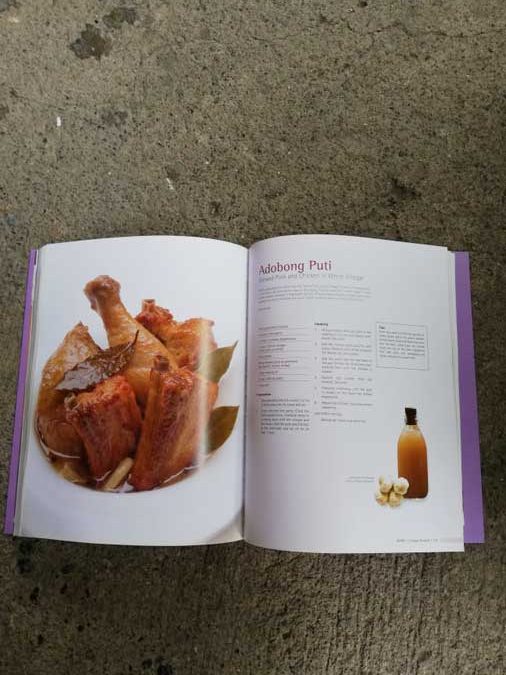
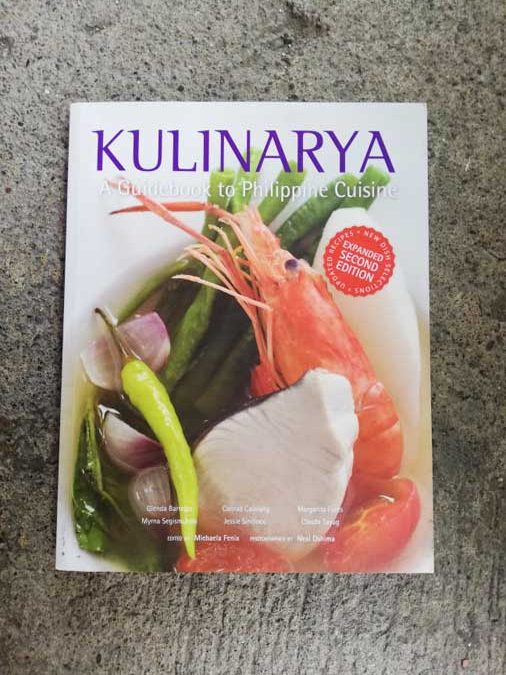
KULINARYA: A Guidebook to Philippine Cuisine has an entire section devoted to adobo recipes.

THERE has been an uproar recently over many people’s favorite dish, adobo. Apparently, the government wants to control the recipe —  or so said the wags. And as it is safe to say that every family in the country has their own version and every other person vows that their mom or lola’s version is the best, it was pretty much guaranteed that this would blow up like a defective pressure cooker. But is it all just a tempest in a teapot? Or rather, a tempest in a stewpot?

On July 9, the Department of Trade and Industry-Bureau of Philippine Standards (DTI-BPS) said in a release that they had established a Technical Committee on Filipino Dishes (BPS/TC 92) to develop Philippine National Standards (PNS) on popular Filipino dishes such as adobo, sinigang, lechon, and sisig. According to the release, the BPS/TC 92 has “started developing a PNS for Philippine Adobo on 11 May 2021 with Kulinarya: A Guidebook to Philippine Cuisine serving as their main reference in creating a comprehensive guide in preparing and cooking the Filipino favorite cuisine — adobo.”

Some people took this to mean an autocratic approach to cooking, and jokes started to be made about being sent to “adobo jail.”

In a matter of days, the DTI posted a statement on its Facebook page. “Nothing to worry on this. This is just among the many groundwork (sic) to develop more creative industry exports,” said the statement. “There was a suggestion in the industry to have consultations among chefs and what will be in a TRADITIONAL recipe especially for international promotions (example your adobo won’t become paksiw or humba or your menudo won’t become afritada) or we heard there’s also adobo from Mexico. Again, this is for promotion abroad.”

“Obviously, this is NOT A MANDATORY Standard because there are thousands or millions of different ‘lutong adobo’,” the message went (the capitalized words were in the original message). The DTI sent a statement to the press bearing the same message.

To be fair, the original July 9 statement from the DTI did quote chef Raoul Roberto Goco (representing the Hotel and Restaurant Association of the Philippines) as saying, “Adobo is not a recipe. It is a cooking technique.” Mr. Goco is a vice-chair of the BPS/TC 92 committee. His fellow vice-chair, author and chef Myrna Segismundo (representing the Food Writers Association of the Philippines), was quoted as saying in the same statement, “There will be different approaches and opinions [on cooking Philippine adobo]. As long as I have, say one to three steps, it’s this recipe. Anything else you add to it is a variation to the cooking technique.”

The two vice-chairs are joined in the committee by restaurateur, presidential caterer, and Via Mare founder Glenda Barretto, and representatives from the University of the Philippines Diliman-College of Home Economics, Philippine Chamber of Food Manufacturers, Inc., Philippine Association of Meat Processors, Inc., Department of Science and Technology-Industrial Technology Development Institute, Philippine Association of Food Technologists, Inc., the LTB Chefs Association, Asia Society Philippines, National Commission for Culture and the Arts, and the Philippine Daily Inquirer, Inc.

Some of the same names have been involved in codifying Philippine recipes in the recent past, namely, in writing the aforementioned recipe reference for the committee, Kulinarya. Ms. Barretto and Ms. Segismundo share authorship credit for the 2017 tome, along with Margarita Fores, Jessie Sincioco, Conrad Calalang, and Claude Tayag, all huge names in the Philippine culinary scene thanks to their various restaurants, books, appearances and recognitions here and abroad. The project was spearheaded by Asia Society Philippines, with the cooperation of the Department of Tourism, with grants from San Miguel Corp. and Del Monte Corp. The book was produced in cooperation with the Center for International Trade and Expositions and Missions (CITEM) and the Department of Agriculture.

Ms. Barretto already had the foresight for the issues surrounding “standardizing” Philippine cuisine: in Kulinarya’s preface, she wrote, “The principal problem in branding and defining standards for Filipino cuisine is that Filipinos are by nature highly individualistic and diverse. Standards in our culture seem to exist not so much to be followed strictly, as to serve as a basis for personalization.

“The Kulinarya project’s primary purpose, however, is not to define how a dish should look, nor is it to suppress variation in favor of a single strict interpretation. It focuses instead on defining guidelines to improve the selection of ingredients, preparation, and presentation… the goal is to establish a reproducible baseline of quality, with characteristics that persist through all variations,” continued Ms. Barretto in the cookbook’s preface.

On another point, even adobo itself, the baseline and cause of all this uproar, is the subject of several debates: is it the country’s national dish? (Or is it sinigang? Or tinola? Or is it something else?) Should one have it dried, or soupy, or fatty? Soy sauce as an adobo ingredient has been taken for granted as a matter of fact, but as late as the 1990s, the late culinary grande dame Nora Daza (herself responsible for several cookbooks that taught generations of home cooks and who brought Philippine cuisine to Paris) acknowledged that soy sauce was a recent addition (and therefore, part of a variation).

“Pork adobo is cooked in a mixture of vinegar, salt, garlic, and peppercorn. Over the years, chicken was added to the pork and so was bay leaf and soy sauce to give not only color but add flavor as well. The soy sauce was a substitute for salt although some still put salt with the sauce,” she wrote in her 1992 book A Culinary Life. In another section, she also wrote, “I consider adobo our national dish.” (Score one for adobo, then).

BusinessWorld asked stakeholders in the food industry about the efforts of the DTI. Chef Myke “Tatung” Sarthou, who has written several cookbooks about Filipino cuisine, as well as presenting them in his restaurants and his YouTube channel, said in a Facebook message, “There seems to be some merit on the move. I think there is really a need to set the basis of how to name Filipino dishes and the parameter of how it can be interpreted before it becomes something else.”

He added, “I’ve recently learned of the group of culinarians tasked with the job; I think they are very capable. Let’s see how it goes.”

THE PAD THAI MODEL
Restaurateur and activist Waya Araos Wijangco was more dubious, saying in a Facebook message, “DTI backpedaled, they are saying they are doing this for international promotion of Pinoy food. Again, why would you promote only one version? Adobo is a cooking technique, not a recipe,” she said.

“They are trying to use the Thai model of promoting food abroad. The pad Thai was invented to be the national dish by a fascist dictator PM who forced the populace to adopt the noodle dish and address a rice shortage. The adobo is much older, has evolved through the centuries, adapting through various terroirs of our archipelago and economic statuses of our populace. Even our OFWs have contributed to its expansion, using ingredients available in their adopted countries. As opposed to pad Thai’s dictatorial history, adobo is more democratic and inclusive. And that is why they should leave our adobo alone.”

On this note, the website Atlas Obscura wrote about the origins of pad Thai in an article titled The Oddly Autocratic Roots of Pad Thai. Apparently, back in the 1930s, while Japan’s Imperial Army began crunching down on its neighbors, in the spirit of nationalism, “(then Prime Minister) Plaek Phibunsongkhram’s  government took action. As part of a national campaign called ‘Noodle is Your Lunch,’ the Public Welfare Department gave Thais free noodle carts and distributed recipes for a new national dish: pad Thai.” The article goes on to mention that the Prime Minister (more known as Phibun in the West) “liked to compare himself to Napoleon, and cast himself in the mold of fascist leaders such as Mussolini and mandated fawning coverage of himself as ‘The Leader’.” He was eventually driven out of office, along with his many autocratic policies (one of them was mandating clothing styles), but pad Thai remained in the country’s dining repertoire.

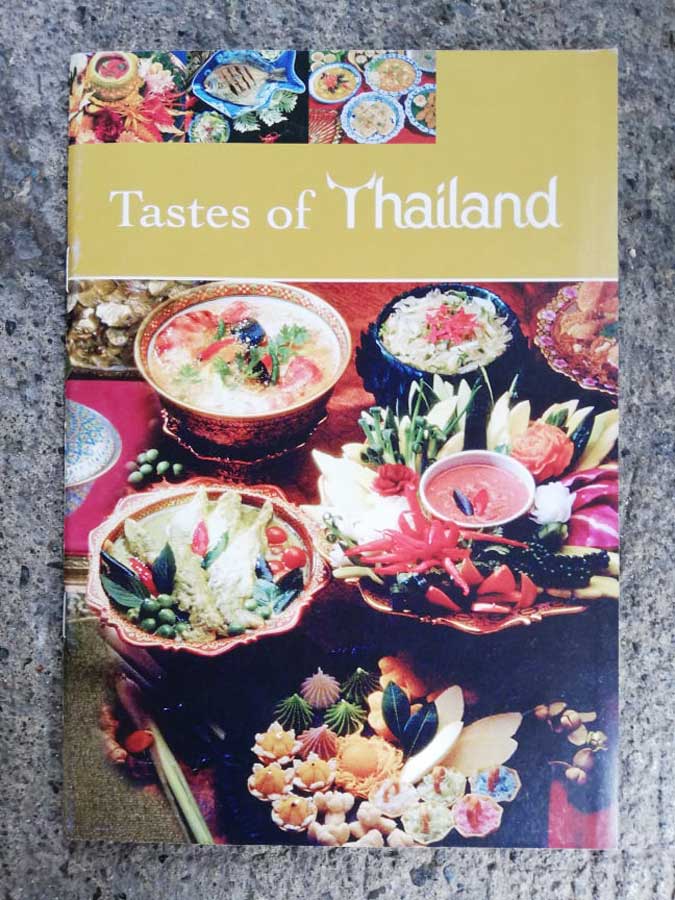
Thailand also spearheaded cultural diplomacy through food —  which is implied to be the mission of the DTI in standardizing recipes “for promotion abroad” —  through their early 2000s Global Thai program.

A 2002 story from the Economist titled Thailand’s gastro-diplomacy, it said, “The Thai government has discovered that foreigners quite like Thai food. There are about 5,500 Thai restaurants around the world. In a plan ambitiously called Global Thai, the government aims to boost the number to 8,000 by 2003. This, it is argued, will not only introduce deliciously spicy Thai food to thousands of new tummies and persuade more people to visit Thailand, but it could subtly help to deepen relations with other countries.”

It continues, “More modestly, the Thai government aims to make it easier for foreign restaurants to import Thai foods, to help them to hire Thai cooks and sometimes to benefit from soft loans.”

The Thai approach to culinary diplomacy seems to be consistent: a 2017 Bangkok Post story (“Food Institute gears up standardization of authentic Thai foods for export to the world”) says that the Thailand’s National Food Institute under the Ministry of Industry launched “The Authentic Thai Food for the World” project. “The standard embraces applied sciences in food element analysis, both physically and chemically, to develop a taste test system that offers a single standard of taste in line with original recipes.”

Food historian Guillermo “Ige” Ramos, meanwhile, said in a Facebook comment (which he allowed BusinessWorld to quote): “We learned how to cook from our lolas and mothers and other family members, but we have to understand that not all families are like ours. We have to check our privilege. Not everyone is born with a nice home with big kitchens, where [a] family can cook their heirloom family recipes and have convivial dinners and Sunday lunches. Whereas, we can still pass on our family recipes to the next generation, while others have nothing. If these basic, standard recipes are shared to those who [don’t] know the difference between adobo and humba, or mechado and afritada, if they learn the basics, eventually they can adjust the taste and invent their own.

Alalahanin mo, hindi lahat sa Pilipinas nakakakain ng tatlong beses isang araw. Hindi dahil lang sa poverty, kundi dala na rin ito ng walang kaalaman sa nutrition at food literacy. (Remember that not everybody in the Philippines can eat three times a day. Not only due to poverty, but a lack of knowledge about nutrition and food literacy.),” said Mr. Ramos.

“Remember ang keyword dito ay ‘Standard,’ o Pamantayan. Nilalagyan lang natin ng sukat o baseline. So, kung sa palagay mo, na mas masarap ang timpla ng adobo mo sa standard o pamantayan ng DTI, e di mabuti (Remember that the keyword is ‘standard.’ We’re only placing a baseline. If you think your adobo recipe is better than the DTI standard, that’s great).” — Joseph L. Garcia


Classifying types of Filipino wine drinkers 

THE WINE Snob, a.k.a. The Image Conscious Drinker, is the type of wine drinker who will splurge five-digit amounts on a bottle of Bordeaux 1st Growth, Grand Cru Burgundy, or a Super Tuscan wine.

IN my long and continuing experience with wine drinkers both locally and regionally, either as a winery representative, a wine lecturer, a wine bar owner, or a wine importer, I have come to realize that wine drinkers can actually be classified into eight types. This is my categorization of Filipino drinkers in general, though it is possibly applicable also to our fellow regional wine drinkers since wine is not an inherent part of Asian culture. Please read and see if you fall into any of the classification below.

The Eager Learner — This type of drinker is a serious student of wine, and learning is an ongoing thing. The Eager Learner will research (books, Google, Vivino, etc…) a lot on the subject before making any wine purchase, whether it be in a restaurant or a wine store. They will spend time to read the back label thoroughly and compare the different available wines. When there are chances to interact with wine experts, the Eager Learner will have the most thought-out questions. The Eager Learner is also quite adventurous. They are willing to explore and experiment with different wines, different regions, even those from unpopular regions, made from relatively unknown varietals. They let their taste buds decide what wines they like or do not like. The Eager Learner is your prototypical genuine wine enthusiast.

The Social Drinker — This type of drinker only imbibes wine when the situation calls for it. Their preferred drink may be beer or a cocktail, but they would drink wine to blend in. They can order a Chardonnay or a Cabernet Sauvignon, not because they like these varietals, but because it sounds a lot more sophisticated than saying Red or White wine instead. They would also consciously learn about some of the most popular wines and wine regions so they can engage in conversations that involve wine. The level of wine interest is purely for socializing.

The Professional Drinker — This type of drinker only takes wine because their profession calls for it. The Professional Drinker is most likely in the Food & Beverage industry. They only drink and learn of wine because to them, wine knowledge is an additional credential in their resume. They will drink to impress their superiors or their clients. But there might not be actual appreciation, and knowledge of wines may be very superficial at the onset. It however does not mean the professional drinker will not evolve into a genuine wine enthusiast. I saw this with many wine representatives I dealt with when I was working in the Asian region. During their sales calls, these representatives talked of wines with conviction and fervor, but after working hours, they’d hit the bars and order beer to unwind.

The Old-World Stickler — This type of drinker is a staunch believer that Old World wines are superior to New World wines. They find the average New World wine to be too fruity, too oaky, and too high in alcohol. The Old-World Sticklers will argue and defend their favorite Bordeaux and Hermitage wines against what they consider to be New World impostors like Napa Meritage and Barossa Shiraz to name a few. They are used to the characteristics of Old World wines like earthiness, flintiness, and complexity, as compared to the expressive fruit power and high viscosity that premium New Word wines offer.

The Image Conscious Drinker — This type of drinker only buys popular expensive brands. They are the ones who will splurge five-digit amounts on a bottle of Bordeaux 1st Growth, Grand Cru Burgundy, or a Super Tuscan wine. They know almost all the 60 Bordeaux Grand Cru wines by growths, from 1st to 5th, and even their tough pronunciations. They are also fond of the Napa cult wines, the Australian A-listers (Penfolds Grange, Henschke Hill of Grace, etc.), Louis Roederer Crystal Champagne, etc. etc. They, however, will not spend money on expensive wine brands with no proven track record. They are also your typical garden varietal Wine Snobs. They will never be caught drinking simple and unknown wines and may prefer water or abstaining from wine if there are no good brands available.

The Critic’s Pet — This type of drinker loves wine because of its sophistication and mystique. They were romanticized into loving wines because of the beautiful prose of tasting notes they read in the Wine Spectator and similar publications. While they are also genuine wine enthusiasts like the Eager Leaners, they are however, unlike the Eager Learners, not very adventurous and are not very receptive to new regions, varietals, etc., unless, of course, these regions or varietals are recommended by their trusted wine magazines and sources. They are just not very confident about their own wine judgment and rely solely on so-called expert opinions and high scores of wine critics. The Critic’s Pets are suckers for awards and 90+ points scores and are the ones who would buy wines with gold medal stickers on the labels when seen on the retail shelves.

The Wine Gulper — This type of drinker looks at wine as just another alcoholic beverage. They drink wine because it is probably the only beverage with alcohol available to them during certain circumstance. They do not appreciate wine and could not care less if it was Carlo Rossi they drink or Chateau Margaux. You will find a lot of Wine Gulpers at wedding receptions, parties, and events sponsored by wine companies. Obviously, it is the alcohol “buzz” the gulpers want, and nothing else.

The Epicurean — This type of drinker appreciates good wine because they are into gastronomy and food and wine pairing. Their appreciation of wine is part of the total pleasure of dining. They put a premium on good food with good wine and can be the most fanatical wine drinker if they found certain wines that meet their high criteria. You see a lot of Epicureans in wine events, especially Wine Dinners and “Degustation” gatherings.

If I was to be asked which type I belong to, I would say I started as a Professional Drinker because of my job with a huge Californian winery. I did not even drink beer before I joined the winery. Then I evolved into an Eager Learner, as I acquired the wine taste and started appreciating the gamut of wine flavors and layers. Soon I could not stop wanting to taste as much wine and imbibe as much wine information as I could. It is what is called “catching the wine bug” and this happened to me almost unconsciously. Eventually, I became an Epicurean, as the synergy of food and wine is simply too hard to resist.

So, which one are you at this stage of your wine drinking? Or is there another type of wine drinker I may have overlooked? Let me know.

The author is the only Filipino member of the UK-based Circle of Wine Writers. For comments, inquiries, wine event coverage, wine consultancy and other wine related concerns, e-mail the author at protegeinc@yahoo.com or via Twitter at www.twitter.com/sherwinlao.

Malampaya sale to Udenna units a ‘lost’ chance for gov’t

THE shell companies of Davao-based businessman Dennis A. Uy did not bring any value in their bid to acquire control of the Malampaya gas-to-power project, a lawmaker said, as he expressed disappointment over the government’s “lost opportunity” to take over a vital asset for the country’s energy security.

“The buyer did not shell out a single centavo in this case,” Senator Sherwin T. Gatchalian said during a virtual Senate hearing on Wednesday to probe the sale of the controlling stake in the deepwater project by its two consortium members that each own 45%.

He made the statement after Rozzano D. Briguez, president and chief executive officer of state-led PNOC Exploration Corp. (PNOC-EC), said that the approved sale of the first 45% in the Malampaya project was largely financed by loans.

UC Malampaya Philippines Pte. Ltd. has a 45% stake in Service Contract 38, which covers the Malampaya project. This was after Chevron Corp. subsidiary UC38 LLC completed the transfer of its shares to the Udenna Corp. unit. The sale was valued at $565 million.

PNOC-EC, which holds 10% in the project, waived its right to acquire the sold shares because of concerns about losing “operational flexibility” as well as its inability to secure banking support to fund the full acquisition amount.

“$375 [million] of the $565 [million] sale was done through loans from three major banks that executed their confirmed commitment to provide facility for the sale of Chevron-UC38,” Mr. Briguez said.

Of the remaining amount, $157 million was sourced through the gas field’s “net entitlements” while $33 million “probably” came from the buyer’s stock issuance, he said.

Mr. Gatchalian, who heads the Senate’s energy committee, said he understood that the $33 million “has not been issued.”

“In other words, the buyer did not issue a single centavo… What value did the buyer bring in? [The] financial [aspect] is not there. That’s why I was saying that PNOC[-EC] should have gone and purchased this because the buyer did not shell out a single centavo,” the senator said, as he asked whether the Udenna group brought in technical people.

Mr. Briguez, a retired lieutenant general who assumed his current post in February 2020, said part of the deal was to retain the technical people from the original consortium members.

Mr. Gatchalian said, “My point here is we lost opportunity.”

“You’re already there. You’re part of the operational entity so it’s a good opportunity for PNOC[-EC] to really become a true oil and gas company, not just a paper holding company,” he said.

Two months ago, Dutch oil and energy company Shell Petroleum N.V. said that another Udenna unit Malampaya Energy XP Pte. Ltd. would buy its entire interest in Shell Philippines Exploration B.V. (SPEx). SPEx, the project’s operator, holds a 45% stake.

Raouf Kizilbash, chief executive officer of Malampaya Energy XP, said during the hearing that the Udenna group had shown financial and technical capability in the Chevron deal.

“Coming in, we demonstrated the financial wherewithal to continue meeting all commitments. We came in from a technical perspective as a non-operator where we had to get involved [and] support the consortium to look at what’s next for this business, pushing ourselves to progress,” he said.

Based on an Energy department report, UC Malampaya had an available working capital of $137.16 million and bank balance of $39.17 million, as of January 2021.

“Based on this information, the Chevron share [sale] has been processed and found to be technically and legally and financially compliant,” Department of Energy Secretary Alfonso G. Cusi said in the hearing.

UDENNA UNIT’S CAPITAL
Mr. Gatchalian said that Malampaya Energy XP had a paid-up capital of $100 or around P5,000, based on figures from the Singapore Accounting and Corporate Regulatory Authority. He said that it would be impossible to run a rig with this amount.

Mr. Cusi said he would have to check the information, since an entity with only P5,000 will not be allowed to borrow billions of pesos to fund the deal.

Meanwhile, PNOC-EC’s Mr. Briguez said that his group had studied the possibility of matching buying Shell Petroleum’s Malampaya share, but decided against it.

“We learned if we buy more than half of that, the SPEx group will become a GOCC (government-owned and controlled corporation) and we know for a fact that when we buy half of that and it becomes a GOCC, part of the risk is for that to lose its operational flexibility in decision making,” he explained.

Data provided by Mr. Gatchalian’s office showed that the combined purchase price of the SPEx and UC38 share is $1.03 billion, and a net present value until 2024 of $1.36 billion.

‘WRITING ON THE WALL’
During the hearing, Mr. Gatchalian also questioned the debts incurred by Mr. Uy’s Udenna and its subsidiaries as these tripled to P120.81 billion in three years ending 2019.

“Udenna Corp. incurred a lot of debt from 2016 to 2019. [It’s] almost double the next conglomerate, which is Metro Pacific [Investments Corp.] and the other well-known conglomerates. This high debt load is creating a lot of concern in the financial markets and those concerns were echoed through the news reports,” he said.

The senator called the firm’s liabilities as “telltale signs” of its financial situation.

“It seems to me that Udenna is encountering some financial challenges and this doesn’t speak well on the purchase of a very important asset, and this asset is not only important in terms of potential but also important in terms of energy security,” he added.

Natural gas from the Malampaya project contributed 26.92% of Luzon’s power generation mix in 2020. Its supply to gas-fired power plants serves 17% of the country’s households, he said, citing figures from Manila Electric Co. — Angelica Y. Yang