Home Blog Page 727

Globe’s Q4 seen to improve on seasonal traffic, enterprise demand

BW FILE PHOTO

GLOBE TELECOM, INC. may post a stronger fourth-quarter (Q4) performance, buoyed by seasonal increases in mobile data traffic and continued momentum in its enterprise solutions segment.

The company saw its attributable net income decline 12.8% to P5.25 billion in the third quarter from P6.02 billion a year earlier, as lower revenues and higher expenses weighed on profits.

Gross revenue for the period fell 1.68% to P44.36 billion from P45.12 billion in the same period last year.

“Our third-quarter results underscore Globe’s consistent performance and our ability to create impact beyond connectivity for more Filipino families and businesses,” Globe President and Chief Executive Officer Carl Raymond R. Cruz said in a statement on Friday.

“Looking ahead, our focus remains firmly on our customers, with our key differentiator being the ability to elevate their experience and strengthen loyalty,” he added, noting that business-to-business growth would be the company’s next catalyst for expansion.

“We remain steadfast in our vision of becoming the most valuable, trusted, and admired operator in the country in the medium term, by investing in world-class connectivity and driving innovations that help build a more inclusive and digitally empowered Philippines,” Mr. Cruz said.

For the January-to-September period, Globe posted an attributable net income of P17.69 billion, down 14.04% from P20.58 billion in the same period last year. Gross revenue fell 2.34% to P131.59 billion, while gross expenses rose 1.14% to P120.08 billion.

Mobile services remained the bulk of Globe’s revenue at P95.99 billion, followed by fixed line and home broadband services at P33.81 billion.

Globe’s equity share in Globe Fintech Innovations, Inc. (Mynt), the operator of GCash, grew 52% to P5.3 billion for the nine-month period, accounting for 25% of the company’s net income before tax.

“As GCash continues to dominate the e-wallet space and moves toward IPO readiness, Globe stands to benefit both from equity earnings and potential valuation uplift, providing a meaningful non-core growth driver heading into 2025,” said Toby Allan C. Arce, head of sales trading at Globalinks Securities and Stocks, Inc., in a Viber message to BusinessWorld.

He added, “Growth could also be reinforced by continued monetization of its tower and data center assets, as well as expanding contributions from its digital ventures.”

Mr. Arce noted that Globe’s fourth-quarter performance is likely to improve modestly, supported by seasonally higher mobile data traffic, stronger demand for broadband and enterprise solutions during the holiday period, and easing inflation that could boost consumer spending.

He cautioned, however, that persistent competition among telecommunications players and elevated financing costs will continue to challenge Globe’s earnings.

“Overall, while Globe’s near-term profitability remains under pressure, its diversified portfolio and consistent push into fintech, enterprise tech, and infrastructure partnerships provide a foundation for recovery over the next few quarters — positioning it for gradual earnings rebound and more sustainable growth in 2025,” he said.

Separately, Globe said on Sunday that it is expanding testing of its satellite-powered mobile services.

The Ayala-led company has partnered with global low earth orbit (LEO) satellite providers to test direct-to-cellular technology, allowing ordinary mobile phones to connect to satellites without additional equipment.

These trials aim to extend coverage to remote and hard-to-reach areas beyond traditional cell towers. Globe has already completed a pilot with Lynk Global, Inc.

At the stock exchange, shares in Globe closed P15, or 0.14%, higher at P1,460 apiece on Friday. — A.E.O. Jose

Gen Z shoppers can’t get enough of perfumes. Coty, Estée are benefiting

STOCK PHOTO | Image by KamranAydinov from Freepik

FRAGRANCES have become a staple for Gen Z shoppers, the fastest-growing buyer category globally, and beauty heavyweights are here for the trend.

Once dismissed as a luxury indulgence, scents are now a go-to for young consumers seeking to express their style and boost their mood amid economic uncertainty. It is the new “lipstick effect,” analysts said, referring to an economic theory that suggests consumers tend to buy small luxury items instead of expensive goods when the economy falters.

Cashing in on the hype are Estée Lauder, L’Oréal, and Coty, owners of fragrance brands such as Le Labo, Tom Ford, Valentino, Yves Saint Laurent, Emporio Armani and Ambre Antique. These companies said in their earnings calls in the past few weeks that they would invest more in their perfume businesses that had become their main sales drivers.

Coty on Wednesday offered an upbeat quarterly forecast, banking on surging demand for its Calvin Klein and Hugo Boss fragrances. Chief Financial Officer Laurent Mercier said the company was going to expand the business.

“It’s a fantastic way for Gen Z to enter the category. So it’s really matching really some great consumer needs,” Mr. Mercier told Reuters.

About 38% of total spending on fragrances in the 26 weeks ending July stemmed from households with a Gen Z member, according to data firm Circana.

Jo Malone owner Estée Lauder also saw a bump from its fragrance business, which helped offset muted demand for makeup. Its fragrance business grew 14%, on a reported basis, in the quarter ended September.

In contrast, Elf Beauty — a company that has surged in popularity in the last few years with its cheap makeup and big-brand dupes — reported weaker-than-expected results, blaming tariffs and muted consumer spending. Shares of the company, which does not sell perfumes, fell more than a third on Thursday.

Big cosmetic companies are also boosting their fragrance portfolios through acquisitions, or ditching slowing business units to free up cash flow to invest in perfumes.

In October, L’Oréal made a $4.7-billion deal to buy cosmetic and fragrance brands from Kering, securing rare 50-year licenses including Gucci. Coty, on the other hand, is exploring the sale of brands such as CoverGirl and Rimmel to focus on fragrances, a category that now accounts for three quarters of its total sales.

BIG BEAUTY BETS
“Fragrance is having a cultural moment,” Kendal Ascher, a senior Estée executive, told Reuters. “Rising disposable income and middle-class expansion in China, India and the Middle East are fueling sustained category growth.”

Estée this year opened around 40 new freestanding fragrance boutiques globally, including new flagships in SoHo, New York, while also opening a global Fragrance Atelier in Paris. Mr. Ascher said the company had invested in AI-enabled tools that translated how consumers talk about scent — matching words like “bright” or “happy” to fragrance families — and was creating TikTok videos based on that to draw in Gen Z shoppers.

In the past year, global sales growth for fragrances has outpaced those of makeup and skincare, Circana data showed. Prestige fragrance sales increased by 6% to $3.9 billion in the first half of 2025, while prestige makeup sales rose 1% and prestige skincare declined 1% during the same period.

“It is a product segment that gives consumers a taste of prestige, quality, or status (or personal indulgence) without the price tag of full-blown premium/luxury goods,” said Michael Ashley Schulman, chief investment officer at Running Point. — Reuters

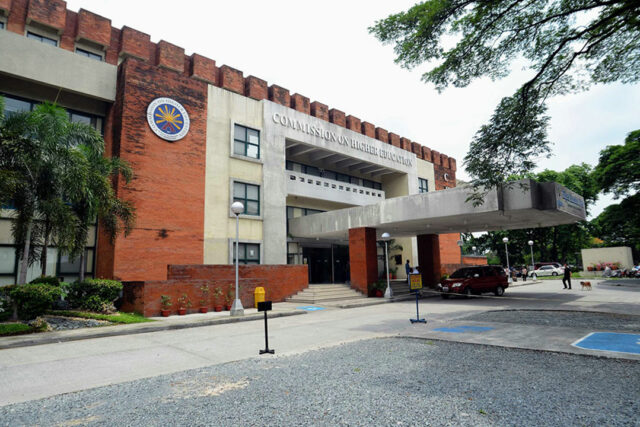
CHED: A policy of benign neglect

COMMISSION ON HIGHER EDUCATION

Dr. Patrick Moynihan, an American politician, diplomat and social scientist was known for coining the phrase, “Benign Neglect.” By that he meant that for certain public policy issues, the best policy is to do nothing and let matters take their course. This policy came to mind when the newly appointed Commission on Higher Education (CHED) Chairperson Shirley C. Agrupis described the state of Philippine higher education as having “sunk to its lowest point.”

To be more accurate, the CHED Chairperson’s description applies only to CHED and not the institutions of higher education under its authority. The institutions of higher education — such as private colleges both secular and religious, as well as the public colleges both the State Universities and Colleges (SUCs) and the Local Universities and Colleges (LUCs) or pamantasans — are doing just fine.

As background, while the Department of Education (DepEd) is responsible for basic education, CHED is responsible for higher education. Both exercise regulatory powers, DepEd over the private grade schools and high schools and CHED over the private colleges as well as the pamantasans. Both exercise supervisory powers, DepEd over the public basic education schools and CHED over the SUCs.

However the nature of their supervisory powers is quite different. DepEd directly operates the public schools while the CHED indirectly operates the SUCs through their membership in the boards of trustees of the SUCs.

This difference is reflected in their organizational structures. DepEd is the largest department in government, headed by a Cabinet Secretary who is the sole top executive similar to the CEO of a private corporation. CHED is a government agency attached to the Office of the President and is run by a Commission of five members of which one is the Chairman, similar to the chairman of the board of a private corporation.

These differences are reflected in the size of their organization. DepEd has around a million employees of which around 200,000 are administrators; CHED has only around 700 employees. The 2025 budget of the DepEd is P737 billion while that of CHED is P31 billion. For context, while there are around 28 million students in basic public education, there are about 3.4 million students in higher public education.

Furthermore, while 88% of students in basic education study in public schools, only 41% of students in higher education study in SUCs.

To conclude, in sharp contrast to DepEd with respect to basic education, CHED with respect to higher education can do little harm. We argue that this inability to intervene comprehensively has resulted in the healthy condition of the private colleges and the pamantasans.

PHINMA AND EDUCATION
In 2004, after divesting its investment in the cement business, Philippine Investment Management (PHINMA), a Filipino conglomerate controlled by the Del Rosario family, pivoted to the business of education by acquiring control of Araullo University.

Prior the 1990s, most of the private schools were run by educators such as the Laurels (Lyceum), the Fabellas (Jose Rizal University) and the Reyeses (Far Eastern University or FEU) rather than businessmen.

After this, business groups such as the Henry Sy Group (National University), the Ayala Group (National Teachers College), the Alfonso Yuchengco Group (Mapúa University), the Lucio Tan Group (University of the East or UE), the George Ty Group (Tytana Colleges) Group, and the Emilio Yap Group (Centro Escolar) began investing in education.

However, unlike these business groups, the PHINMA Group, as articulated by its Chairman Ramon R. del Rosario, was the first to formally declare that there are business opportunities in education. Moreover, in sharp contrast to those who saw business opportunities only by offering high quality education to the rich or by offering low quality education to the poor, Del Rosario saw opportunities in providing quality education to underserved youth who are often the first in their families to go to college.

Through a “bare bones, no frills, brass knuckles” strategy, Phinma was able to keep tuition fees low and affordable and focus on developing and innovating the most important elements for learning: proper classrooms and facilities, learning techniques and materials, and a great faculty. Phinma does not drive their faculty to publish; instead, they demand they teach well.

From the acquisition of Araullo University in 2004 with its 5,000 students, there are now 11 Phinma schools in the Philippines with around 163,000 students in 2025. Under the leadership of Mr. Del Rosario and President Chito B. Salazar, Phinma, by doing good, has done exceedingly well. In 2024, Phinma Education contributed P1.5 billion in profits to the Phinma Group.

CHANGING COLONIZERS
Upon the conclusion of the Spanish-American war, Spain ceded the Philippines to the United States of America. This change in colonial master had two significant consequences for Philippine education. For one, the Americans declared a policy of separation of church and state. This meant that religion could no longer be taught in public schools.

In response, the Catholic Church in the Philippines followed the example of the Catholic Church in America. Parish schools were organized, existing religious schools such as the University of Santo Tomas (UST) were expanded, and external religious orders were invited to set up schools in the Philippines. At the invitation of Manila Archbishop Jeremiah James Harty, the Christian Brothers founded De La Salle University in 1911.

This approach to setting up a religious school system in parallel to the public school system has evolved into a network of 2,300 schools with estimated enrollment of 1.8 million students. The oldest and the largest Catholic school is UST with an enrollment of around 40,000 students.

Founded in 1611 by the Dominicans (Order of Preachers), UST has expanded geographically from its initial campus in the Sampaloc district of Manila to Quezon City (UST Angelicum College), Santa Rosa, Laguna (UST-Santa Rita), Legazpi City (UST-Legazpi), and General Santos (UST-General Santos). UST-General Santos, which opened in 2024, is an 80-hectare campus in southern Philippines that offers programs in agricultural and fishery research, arts and humanities, business and accountancy, engineering and technology, and pharmaceutical sciences.

The second significant consequence of the change from a Catholic Spain to a Protestant American was the arrival of Protestant missionaries following in the footstep of their American warriors.

In 1901, Silliman University was established in Dumaguete City, the first Protestant school in the Philippines and in Asia. From this initial foothold, the number of Christian schools in the Philippines has expanded to six universities, three seminaries, 40 colleges, and 69 basic education schools.

PAMANTASANS
In 1967, the Pamantasan ng Lungsod ng Maynila (University of the City of Manila) started operation. This pamantasan was the first chartered and autonomous university funded by a city government. The pamantasan was established based on the belief there was a need for a school of higher learning specifically run to meet the needs of the citizens of Manila, something that the national government schools of higher education had failed to do. (See our column, “Motherhood and Mission Statements,” BusinessWorld, June 17, 2024).

These sentiments were shared by other local government units such that we now have 121 pamantasans. Moreover the LUCs have been growing faster than the SUCs. EdCom II reports that for AY 2011-2012 to AY 2019-2020, enrollment growth for LUCs was 168% compared to 73% for SUCs.

We once asked fellow AIM professor and University of Makati (UMak) President Tomas Lopez the secret to the success of UMak. His response, “We declared independence from CHED.” Thus, when UMak launched their Dualized University Education System (DUES), an academic partnership between UMak and the Makati businesses, they did not seek the approval of CHED, correctly judging that the value of a degree is not determined by the imprimatur of CHED but rather the employment opportunities that are opened to the graduates.

The declaration of financial independence was relatively easy; UMak merely had to refuse the trifling financial grants offered by CHED under the Unifast Law. This act of successful rebellion has not gone unnoticed by the other pamantasans.

CHOICE AND NO CHOICE
One final point is the difference in choices poor students are faced regarding basic public education and public higher education in the Philippines.

Unlike in most countries where the administration of basic education is lodged in the local government units, in the Philippines, it is lodged in a highly centralized national government agency. For example, in the United States public schools in basic education are run by the local school boards, assuring diversity in curriculum, teaching methods and materials, and teacher training. Thus, many American parents would first choose the public school where they prefer their children to study and then search for a home in that district. In contrast, Filipino parents do not have that choice when it comes to our public elementary and high schools. From any public school under the monolithic Department of Education, they are confronted with the same curriculum, the same textbooks, and the same trained teachers. No student in our DepEd schools will ever experience the Montessori method of learning.

By contrast, in higher education, students can choose among the various types of SUCs ranging from the University of the Philippines to the Technological University of the Philippines. They have the additional choice of going to the pamantasan in their city. Since both SUCs and LUCs are free, the basis of competition is quality of education and not free tuition. Not so in basic education where students have no choice unless given vouchers since only public schools are free.

To conclude, considering that the forces of reform and progress as cited above that have already been unleashed in higher education, there is no need for government to intervene. With no need to intervene, there is no need to revitalize the CHED. With respect to CHED, we merely need to adopt a policy of benign neglect.

How we wish we could adopt the policy of benign neglect with respect to our other national government agencies!


Dr. Victor S. Limlingan is a retired professor of AIM and a fellow of the Foundation for Economic Freedom. He is presently chairman of Cristina Research Foundation, a public policy adviser and Regina Capital Development Corp., a member of the Philippine Stock Exchange.

Local producers showcase products at organic agri expo

NEW AND GROWING organic enterprises showcased their products and tapped market opportunities during a three-day expo as part of the Department of Agriculture’s (DA) 11th Organic Agriculture Month celebration.

The 7th Philippine Natural and Organic Products Expo, held from Nov. 7 to 9 at Ayala Malls Manila Bay, showcased 44 booths featuring a diverse range of natural and organic products from local producers.

The expo featured a variety of fresh and processed foods, textiles, personal care products, and soil enhancers. The event also provided technical support through DA partner agencies, including the Agricultural Training Institute and the Agribusiness and Marketing Assistance Service.

Alam natin ang organic hindi lang basta masustansya, mas masarap pa, kaya napakahalaga. Merong potential talaga ng niche marketing ang organic,” Senator Francis “Kiko” N. Pangilinan, chairperson of the Senate Committee on Agriculture, Food, and Agrarian Reform, said in a keynote speech.

The DA-National Organic Agriculture Program (DA-NOAP) said 191 new organic enterprises were established this year under the Organic Agriculture Livelihood Project, each receiving grants of up to P5 million.

The project supports certified farmers, civil society organizations, Indigenous Peoples, and local governments promoting organic agriculture.

Meanwhile, the DA said its Youth Internship Program on Organic Agriculture benefited 445 participants who have successfully established their own enterprises.

This year, the DA-NOAP is piloting the Kababaihan at Kabataan para sa Kalusugan, Kalikasan, at Kabuhayan project to establish community organic gardens in barangays. — Vonn Andrei E. Villamiel

Semirara shares fall as profit declines

SEMIRARAMINING.COM

SEMIRARA MINING and Power Corp. (SMPC) shares declined last week following the company’s reported drop in nine-month net income, analysts said.

The Consunji-led company was among the most actively traded stocks from Nov. 3 to 7, with 11.53 million shares changing hands worth P348.87 million, according to Philippine Stock Exchange (PSE) data.

Semirara’s share price closed at P30 on Friday, down 9.2% from P33.05 the previous week. The decline outpaced the industrial sector’s 5.3% drop and the benchmark PSE index (PSEi), which fell 2.9% over the same period. Year to date, the stock is down 14%, compared with a 9.8% decline in the industrial sector and an 11.8% fall in the PSEi.

Juan Alfonso G. Teodoro, equity trader at Timson Securities, Inc., said in a Viber message that the decline “can be attributed to the drop in Semirara’s net earnings, which triggered a round of selling as investors priced in slower profitability and softer demand.”

He added: “The stock slid, reflecting cautious sentiment and light profit taking from recent highs. Investors adjusted positions and waited for more clarity on how commodity prices will affect future performance.”

In a stock exchange disclosure on Tuesday, Semirara reported a 37% drop in net income to P9.89 billion for the first nine months of 2025, citing lower coal and electricity prices and higher production-related costs.

Franco M. Fernandez, equity research analyst at DragonFi Securities, Inc., said in a Viber message that Semirara’s share price began to fall after the company declared a lower special cash dividend on Oct. 20.

In an exchange filing, Semirara announced a special cash dividend of P1.25 per share, bringing total dividend payments for 2025 to P13.80 billion.

Mr. Fernandez said: “The smaller payout signaled that third-quarter earnings had likely weakened again. When results were released confirming a 37% drop in net income due to softer coal prices, weaker spot prices, and higher production costs, sentiment on SCC deteriorated further.”

He added: “The outlook for 2025–2026 also turned cautious with management unable to completely adapt as coal prices remain near their lows.”

For the nine-month period, Semirara reported a 15% increase in coal production to a record 15.1 million metric tons (MMT), following improved access to coal seams at the Narra mine. Coal shipments rose 5% to 12.9 MMT, also a record high, driven by stronger exports.

Semirara’s total power sales grew 12% to a record 4,186 gigawatt-hours, citing improved plant performance. Despite this, the company’s average selling price for coal fell 19% to P2,325 per metric ton, while electricity prices dropped 10% to P4.46 per kilowatt-hour.

Mr. Fernandez said subdued overall confidence and demand in the PSE amid slower expected economic growth intensified selling pressure on companies with weaker earnings like Semirara.

He added: “Given the market’s poor year-to-date performance, I think investors are more focused on tangible returns through growing dividends.”

In the coming weeks, he said investors should watch for “potential technical rebound as Semirara trades in deeply oversold territory.”

Mr. Teodoro advised monitoring Semirara’s power generation performance, coal price movements, and any disclosures indicating improvements in demand.

Semirara’s consolidated revenue fell 8.8% to P11.93 billion in the third quarter, bringing total nine-month revenue to P43.26 billion, down 12.9% from the previous year. Its third-quarter net income was halved to P1.48 billion, resulting in the nine-month net income of P9.89 billion.

Mr. Fernandez projects full-year 2025 revenue at P56.7 billion, with net income reaching P14.2 billion. Mr. Teodoro expects full-year earnings of around P25.45 billion.

On the stock market, Mr. Fernandez placed support between P28 and P29 per share and resistance at P31, while Mr. Teodoro set support at P27.50-P28 and resistance at P30-P32 per share. — Isa Jane D. Acabal

Kendrick Lamar, Lady Gaga lead 2026 Grammy nominations

AMAZON.COM

LOS ANGELES — Rapper Kendrick Lamar topped the list of Grammy contenders for the second straight year on Friday with nine nominations, outpacing the seven nods for pop superstar Lady Gaga in the race for the music industry’s top honors.

Lamar’s GNX and Gaga’s MAYHEM will compete for the prestigious album of the year trophy at the Grammy Awards 2026 ceremony in February. Neither artist has won the honor despite multiple nominations in the category.

Others nominated in the album field include Bad Bunny for the Spanish-language Debí Tirar Más Fotos, Justin Bieber for Swag and Sabrina Carpenter for Man’s Best Friend.

Three rap albums are in contention. In addition to GNX, Tyler, the Creator’s Chromakopia and Let God Sort Em Out, from the duo Clipse, were nominated.

The Life of a Showgirl by Taylor Swift, who has claimed album of the year an unmatched four times, was not in the running because it was released after this year’s Grammy eligibility window closed.

Bad Bunny, the Puerto Rican musician who will perform at next year’s Super Bowl halftime show, received six nominations including for record, song, and album of the year. He was the first Latin artist to be nominated in the three major categories in the same year.

For the album prize, “I think it’s between Lady Gaga and Kendrick Lamar,” Billboard awards editor Paul Grein said. Grein said he gave the edge to Lamar, who would be the first solo male rap artist to land the prize. “I think he’ll do it,” Grein said, “but you can never discount Lady Gaga who is loved by everyone.”

Two K-pop songs landed in the song of the year field, an award given to songwriters. They are the chart-topping “Golden” from the soundtrack of KPop Demon Hunters, the most-watched movie in the history of Netflix, and “APT.” by Rose and Bruno Mars.

“Golden” received three total nominations.

“Never did I imagine this level of success,” said Rei Ami, one of the voices behind the fictional Demon Hunters group HUNTR/X. “It’s really hard for all of us to process still.”

“APT.” also was nominated for record of the year, a trophy given to producers and performers, and best pop duo/group performance. Others on the list included Gaga’s “Abracadabra,” “luther” by Lamar and SZA, and “DtMF” by Bad Bunny.

In the best new artist category, Olivia Dean and KATSEYE will compete with Leon Thomas, Alex Warren, and others. Thomas, an R&B and soul musician, also received an album of the year nomination for Mutt.

Grammy winners will be chosen by the roughly 15,000 voting members of the Recording Academy and announced at a red-carpet ceremony in Los Angeles on Feb. 1. — Reuters


Leading nominations for 2026 Grammy Awards

Below is a list of nominees in select categories.

RECORD OF THE YEAR: “DtMF,” Bad Bunny; “Manchild,” Sabrina Carpenter; “Anxiety,” Doechii; “Wildflower,” Billie Eilish; “Abracadabra,” Lady Gaga; “luther,” Kendrick Lamar with SZA; “The Subway,” Chappell Roan; “APT.,” Bruno Mars and ROSE

ALBUM OF THE YEAR: DeBi TiRAR MaS FOtoS, Bad Bunny; Swag, Justin Bieber; Man’s Best Friend, Sabrina Carpenter; Let God Sort Em Out, Clipse, Pusha T and Malice; MAYHEM, Lady Gaga; GNX, Kendrick Lamar; Mutt, Leon Thomas; CHROMAKOPIA, Tyler, The Creator

SONG OF THE YEAR: “Abracadabra,” Lady Gaga; “Anxiety,” Doechii; “APT.,” Bruno Mars and ROSE; “DtMF,” Bad Bunny; “Golden,” EJAE, Audrey Nuna and REI AMI; “luther,” Kendrick Lamar with SZA; “Manchild,” Sabrina Carpenter; “Wildflower,” Billie Eilish

BEST NEW ARTIST: Olivia Dean, KATSEYE, The Marias, Addison Rae, Sombr, Leon Thomas, Alex Warren, Lola Young

BEST RAP ALBUM: Let God Sort Em Out, Clipse, Pusha T and Malice; GLORIOUS, GloRilla; God Does Like Ugly, JID; GNX, Kendrick Lamar; CHROMAKOPIA, Tyler, The Creator

BEST POP VOCAL ALBUM: SWAG, Justin Bieber; Man’s Best Friend, Sabrina Carpenter; Something Beautiful, Miley Cyrus; MAYHEM, Lady Gaga; I’ve Tried Everything But Therapy (Part 1), Teddy Swims

T-bills could fetch mixed rates

BW FILE PHOTO

RATES of Treasury bills (T-bills) on offer this week could move sideways as investors amid bets on further monetary easing by the Bangko Sentral ng Pilipinas (BSP) due to slower economic growth in the third quarter.

The Bureau of the Treasury (BTr) will auction off P22 billion in T-bills on Monday, or P7 billion in 91-day securities and P7.5 billion each in 182- and 364-day papers.

Yields on the short-term securities could be mixed or little changed, tracking secondary market movements as players priced in their bets on the BSP and US Federal Reserve’s respective policy paths, Rizal Commercial Banking Corp. Chief Economist Michael L. Ricafort said in a Viber message.

Secondary market rates mostly went down week on week following the release of third-quarter Philippine gross domestic product (GDP) data. “Yields on government securities dropped by 5-8 (basis points) after a downward surprise in the third-quarter GDP data. Third-quarter growth slowed to a four-year low on corruption scandals,” a trader said.

However, at the short end, yield movements were mixed. The 91- and 364-day T-bills increased by 4.52 basis points (bps) and 0.19 bp week on week to end at 4.9403% and 5.1800%, respectively, based on PHP Bloomberg Valuation Service Reference Rates data as of Nov. 7 published on the Philippine Dealing System’s website. Meanwhile, the 182-day T-bill went down by 2.06 bps to fetch 5.0760%.

Philippine GDP growth slowed to a more than four-year low of 4% in the third quarter from 5.5% in the second quarter and the 5.2% clip in the same period in 2024, the government reported on Friday. This was well below the 5.3% median estimate in a BusinessWorld poll of 18 analysts and economists.

Officials attributed the weakness to more cautious public spending amid a corruption scandal involving state infrastructure projects, which they said also affected consumer and investor confidence.

Analysts said weak economic prospects and manageable inflation could give the BSP a reason to extend its rate cut cycle.

Last month, the BSP lowered benchmark interest rates by 25 bps for fourth straight meeting to bring the policy rate to 4.75%. It has now trimmed borrowing costs by 175 bps since its rate-cut cycle began in August 2024.

BSP Governor Eli M. Remolona, Jr. has left the door open to further reductions, possibly until next year, as they want to help provide stimulus amid softer economic prospects due to the graft scandal.

Meanwhile, the Fed last month also cut rates by 25 bps to bring its target rate to the 3.75%-4% range.

Fed officials last week continued offering competing views of where the economy stands and the risks facing it in the absence of economic data suspended due to the shutdown, Reuters reported.

Fed funds futures late on Friday were pricing in a roughly 65% chance of a rate cut in December.

Last week, the BTr raised P25 billion from the T-bills it auctioned off, above the P22-billion plan, as the offer was over four times oversubscribed, with total bids reaching P99.095 billion.

Broken down, the Treasury borrowed P7 billion as planned via the 91-day T-bills as total tenders for the tenor reached P30.58 billion. The three-month paper was quoted at an average rate of 4.874%, up by 1.6 bps week on week.

The government also sold the programmed P7.5 billion in 182-day securities as tenders for the tenor totaled P37.255 billion. The average rate of the one-year T-bill inched down by 1.8 bps to 5.026%.

Meanwhile, the Treasury upsized its award of 364-day debt to P10.5 billion from the P7.5-billion plan as the tenor drew demand amounting to P31.26 billion. The average rate of the one-year T-bill inched up by 0.6 to 5.099%.

The BTr is looking to raise P158 billion from the domestic market this month, or P88 billion via T-bills and P70 billion through Treasury bonds.

The government borrows from local and foreign sources to finance its budget deficit, capped at P1.56 trillion or 5.5% of GDP this year. — A.R.A. Inosante with Reuters

Crooks incorporated: Safeguards in the budget process

STOCK PHOTO | Image by Vectorjuice from Freepik

(Part 2 of 3)

At the Budget Execution phase when funds, programs, projects, and activities move, several built-in safeguards are designed to ensure that spending strictly follows the law, remains within approved limits, and delivers on intended outcomes.

All agencies are presumed to have a system of internal controls. Where the internal control system of the audited agencies is inadequate, the Commission on Audit (CoA) is authorized by the Constitution to adopt measures, including temporary or special pre-audit, to correct the deficiencies.

The Government Auditing Code defines internal control as the plan of organization and all the coordinate methods and measures adopted within an organization or agency to safeguard its assets, check the accuracy and reliability of its accounting data, and encourage adherence to prescribed managerial policies.

To help agencies strengthen their internal controls, the Department of Budget and Management (DBM) issued Circular Letter No. 2008-8 (Oct. 23, 2008), introducing the National Guidelines on Internal Control Systems (NGICS). These guidelines provide department and agency heads with a framework for designing, installing, implementing, and monitoring their respective Internal Control System. Under the guidelines, internal control in the public sector must conform to five general objectives: Safeguard assets; Check accuracy and reliability of accounting data; Ensure economical, efficient and effective operations; Comply with laws and regulations; and Adhere to managerial policies.

Internal controls create a structured environment of accountability where transactions are documented, approvals are tracked, and fraud is easier to detect and prevent.

In addition to internal controls within individual agencies, the DBM plays a central oversight role during budget execution through its authority over the release of funds. This oversight function ensures that government spending strictly follows the General Appropriations Act and other relevant fiscal policies. It also allows the DBM to maintain fiscal discipline, safeguard public resources, and support cash and debt management objectives throughout the year.

Fund releases are governed by the DBM’s policies, procedures, rules, and regulations, which specify how and when agencies can access appropriations. These rules are structured around two key types of budgetary authority: obligation authority and disbursement authority.

Obligation authority gives an agency permission to incur obligations or enter into contracts for goods, services, and projects. An example is a Special Allotment Release Order (SARO), which signals that a portion of an agency’s appropriation is now available for commitment. Disbursement authority, by contrast, governs the actual payment of obligations that have already been approved.

A common disbursement instrument is the Notice of Cash Allocation (NCA), which allows an agency to draw cash from the National Treasury to settle its obligations.

The distinction between these two authorities creates a layered system of safeguards. Funds are not handed over in bulk; they move through a controlled sequence of approvals. At each stage, the DBM checks for compliance with the General Appropriations Act (GAA), related fiscal rules, and required documentation. By issuing separate documents for obligations and disbursements, the DBM creates a detailed paper trail that auditors and oversight agencies may track.

LAWS, RULES AS SAFEGUARDS
The third and arguably the most consequential set of safeguards in budget execution are procurement laws, rules, and regulations.

Most of the public-works projects now under scrutiny for corruption, including many of the controversial flood-control contracts, were awarded under Republic Act No. 9184 (RA 9184), the Government Procurement Reform Act, and its Implementing Rules and Regulations (IRR). Enacted in 2003, RA 9184 was meant to establish transparency, competition, and accountability in how government agencies procure goods, services, and infrastructure.

A core safeguard under RA 9184 was the Annual Procurement Plan (APP), which required agencies to plan their procurements in advance and link them directly to authorized programs and appropriations. Each APP must detail the projects to be procured, their estimated costs, sources of funding, timelines, and the chosen mode of procurement. This aims to ensure that no procurement could proceed unless it was tied to an approved budget and reflected in the agency’s overall plan.

The general rule under RA 9184 was competitive public bidding, designed to prevent collusion while ensuring value for money. Bidders must submit two sealed envelopes: one with eligibility and technical documents, and the other with their financial proposal.

The Bids and Awards Committee (BAC) opens the first envelope to verify compliance with requirements and determines which bidders are eligible to proceed. Only those who passed this stage will have their financial proposals opened. The bid with the Lowest Calculated Bid (LCB) is identified and then subjected to a rigorous post-qualification process to verify all submissions. If it passed, it became the Lowest Calculated Responsive Bid (LCRB) and is recommended for award to the Head of the Procuring Entity (HoPE). Upon approval, a Notice of Award is issued, followed by the signing of the contract and a Notice to Proceed, marking the start of contract implementation.

For infrastructure projects, RA 9184 imposed additional safeguards because of their complexity and high costs. Contractors are required to have a valid license from the Philippine Contractors Accreditation Board (PCAB). Moreover, no project could move to procurement without detailed engineering designs and complete project specifications.

While competitive bidding is the mandatory default method, RA 9184 allowed for alternative procurement modes, such as negotiated procurement, repeat orders, or shopping, but only under narrow, clearly defined conditions. These alternatives were intended to provide flexibility without undermining safeguards.

In July 2024, Congress enacted Republic Act No. 12009, the New Government Procurement Act. While most procedural steps align with RA 9184, RA 12009 introduces new policies and tools to strengthen safeguards and improve project outcomes.

One of the most significant changes is the adoption of a “fit-for-purpose” approach to procurement. Under RA 9184, competitive bidding was the mandatory default. RA 12009 now allows agencies to choose among a wider range of procurement methods. RA 12009 also improves how bids are evaluated. Whereas the old regime relied primarily on awarding contracts to the Lowest Calculated Responsive Bid, which emphasized price above all else, the new law introduces the Most Economically Advantageous Responsive Bid (MEARB) standard. MEARB allows agencies to consider both cost and quality.

Other positive developments under RA 12009 include a requirement for disclosure of beneficial ownership information, which aims to curb the use of dummy corporations and make conflict of interest easier to detect. The law also places greater emphasis on professionalization within the procurement system, establishing clear qualification standards, competency frameworks, and a code of ethics for procurement professionals.

The Budget Accountability phase closes the loop of the budget cycle. After funds have been appropriated, released, and spent, agencies must account for how they used these funds and whether their programs and projects delivered on their promises.

While the agency internal control systems and the DBM safeguards extend all the way to the budget accountability phase, there are several external oversight systems that provide additional layers of scrutiny once funds have been obligated and spent.

OVERSIGHT AGENCIES
At the center of this external oversight is the Commission on Audit. CoA examines, audits, and settles all accounts of government revenues and expenditures. Its mandate covers both financial transactions and the actual outputs produced. A typical annual audit of agencies covers verifying the level of assurance that may be placed on the agency’s assertions on its financial statements; determining the propriety of transactions, as well as the extent of compliance with pertinent laws, rules and regulations; and recommending agency improvement opportunities. When CoA uncovers deficiencies or irregularities, it issues findings such as audit observations, notices of suspension, and notices of disallowance.

Another critical institution in accountability is the Office of the Ombudsman. The Ombudsman serves as the people’s champion against corruption and misconduct in government. It can investigate any public official or employee, prosecute criminal and administrative cases, and study systemic inefficiency, red tape, and corruption in government operations and recommend reforms. Importantly, it has primary investigatory jurisdiction over cases cognizable by the Sandiganbayan.

Congress also plays a role in accountability through oversight hearings and inquiries in aid of legislation. While its power is primarily legislative, Congress can summon officials, review the implementation of programs, and demand reports to ensure that appropriations are used properly. These hearings serve as a public forum to surface irregularities and influence future budget priorities.

Finally, media and public scrutiny are indispensable safeguards. Civil society organizations, investigative journalists, and engaged citizens help hold the government accountable by monitoring implementation and exposing issues of waste or corruption. Transparency initiatives such as full disclosure portals and open data systems enable the public to track government spending and demand corrective action.

To be continued.

(Read part 1 here: https://tinyurl.com/2b8qzbdx)


Nepomuceno Malaluan, Malou Mangahas, And Jenina Joy Chavez are co-convenors of the Right to Know, Right Now! (R2KRN) Coalition.

Fun box

Everyone wants a piece of the Land Cruiser FJ. — PHOTO BY KAP MACEDA AGUILA

The Toyota Land Cruiser FJ might just be the SUV you’re looking for

IT WAS QUITE a difficult ask to get a clean shot of one of the most popular attractions at the Toyota pavilion of the Japan Mobility Show 2025. During the two press days we were at the Tokyo Big Sight — indoors and away from the nippy cold starting to pull down the mercury in this part of the world — there always seemed to be someone waiting for his or her turn to get a selfie, or to create a video spiel, in front of the vehicle on the floor.

The vehicle in question? The so-called Toyota Land Cruiser FJ — an obvious combo of two memorable, hallowed nameplates: the Land Cruiser and FJ Cruiser.

According to Toyota, the Land Cruiser was first launched as the Toyota BJ in 1951, and promptly built up its cred as the first vehicle to “climb to the sixth station of Mount Fuji,” an obviously impressive feat. “Since then, it has fulfilled its mission of delivering safety and security to all types of people in places that only the Land Cruiser can reach. Developed and refined based on global, real-world customer usage… (it) allows people to go anywhere and everywhere, and return safely,” continued the company in a release.

The success of the Land Cruiser (or, simply, LC) cannot be denied. Per Toyota, cumulative sales of the LC (including platform siblings Lexus LX and GX) have reached about 12.15 million units in over 190 countries and regions worldwide as of the end of August this year.

With the Land Cruiser FJ, Toyota grows the LC lineup from its original “three distinct series,” the Station Wagon (currently the 300 Series); the so-called Heavy-Duty model (currently the 70 Series); and the “core” Land Cruiser model rolled out in 2024 “as a return to the car’s origins — a simple, sturdy vehicle that helps fulfill customers’ lifestyle choices and practical needs (the 250 Series).”

So, what does the Land Cruiser FJ (FJ means “freedom and joy,” by the way) bring to the table? Toyota said it’s about “enjoying the Land Cruiser (in one’s) own way — while retaining the reliability, durability, and off-road performance that support people’s lifestyles.”

The Land Cruiser FJ is about half a meter shorter than its siblings, is narrower, shorter, and has a shorter wheelbase, too. It’s a proper five-seater, compared to the three-row capacity of its brethren LCs.

The brand is planning a mid-2026 Japan launch for the new Land Cruiser FJ, and then, hopefully, Toyota Motor Philippines (TMP) will eventually get its (left-hand drive) allocation as well.

If everything goes according to plan, the Land Cruiser FJ promises to be an obvious slam dunk for Toyota. The winning formula is predicated on veritably casting a wider net: What the model is expected to do is lower the price of admission for the hallowed Land Cruiser marque and everything it stands for. The attractive, boxy styling of the model is reminiscent of the scuttled FJ Cruiser, and arrives at an opportune time when the automotive design trend appears to be leaning toward the aforementioned boxy exterior.

Toyota’s designers interpreted a “dice motif” and featured chamfered edges in the Land Cruiser FJ. Oversized bumpers in the front and back “bleed” into black plastic cladding that is most prominent on the overfenders. Running boards complete the look of toughness.

Notably, the firm said that both front and rear corner bumpers “are removable, segmented types, allowing damaged parts to be replaced to improve repairability, while also taking customizability into account to allow users to enjoy their Land Cruiser in their own unique way.”

Under the bonnet is Toyota’s 2TR-FE mill, a 2.7-liter gas engine, mated to a Six Super ECT transmission that connects to the part-time four-wheel-drive system. The Land Cruiser FJ realizes 163ps and 246Nm from the power plant.

I got a chance to briefly sit in the driver’s seat, and found surprising spaciousness in the vehicle. The octagonal shapes that define many of the exterior elements of the Land Cruiser FJ can be seen within as well — from the steering wheel’s center to even the hood of the all-digital instrument cluster. While still a prototype, I do like the rendering of the dark-gray interiors which simplify and unify a look that’s as consistent as it is engaging. Addition by subtraction, for sure. The cockpit layout, said Toyota, is deliberate, toward “instant recognition and steering across a wide range of driver conditions.”

A low beltline, meanwhile, aids visibility of road surfaces even on rough roads. Speaking of which, the LC FJ receives a suite of features in the Toyota Safety Sense, including the Pre-collision Safety System for enhanced protection. Toyota insisted that the model does not merely annex the Land Cruiser name but earns it through touches and abilities such as in the case of its wheel articulation that’s “equivalent to the (skill of the) 70 Series.”

But owing to its size, the model gets a minimum turning radius of 5.5 meters — certainly useful for more impressive maneuverability. Under-floor braces and higher body rigidity, on the other hand, leads to better handling stability.

Toyota is also promoting the customizability of the Land Cruiser FJ. An additional unit of the model on display at JMS was equipped with a snorkel, all-terrain tires, and more rugged-looking step boards. Additional options, including round headlights as a nod to past Land Cruisers, and panels for attaching outdoor equipment, are to be introduced “sequentially during the (model’s) life” and will differ by region.

For now, the most pressing questions appear to be when and how much. Only time will tell, but we hope it will be sooner than later. It’s not a stretch to say that many want their hands on the Land Cruiser FJ — stat.

Indonesia plans to invest $22 billion in agricultural processing, minister says

REUTERS

JAKARTA — Indonesia plans to invest 371 trillion rupiah ($22 billion) in agricultural processing for several commodities in a bid to create eight million jobs, Agriculture Minister Amran Sulaiman said on Friday.

Developing domestic processing is one of President Prabowo Subianto’s top priorities in a drive to achieve 8% economic growth.

“The total plan of 371 trillion rupiah will be invested in the agriculture, food, livestock, horticulture, and plantation sectors, said Amran in a statement.

Amran added that a big portion of the investment would be allocated for plantation commodities such as sugar cane, cocoa, and cashews.

“Processing of agricultural commodities has a much greater impact on job creation. Together, we want to accelerate this,” said Investment Minister Rosan Roslani after a meeting with Amran.

In addition to the processing investment, the government is planning a 20-trillion rupiah investment to boost chicken and egg supplies for its free meals program.

The program, rolled out in January, was a major election campaign promise by Prabowo, expected to reach around 70 million recipients by the end of this year.

“We will supply, so that there will be no shortage of eggs and chicken in the future. We are preparing for it now,” Amran said. — Reuters

Cebu Pacific receives first Airbus A320neo as holiday travel ramps up

CEBU PACIFIC

BUDGET CARRIER Cebu Pacific has received its first Airbus A320neo aircraft, the airline said, strengthening its capacity ahead of the expected holiday travel surge.

“This latest delivery helps ensure we have enough capacity to serve passengers looking to fly home or discover new destinations this holiday season,” Cebu Pacific President and Chief Commercial Officer Alexander G. Lao said in a media release on Saturday.

The A320neo marks Cebu Pacific’s fourth aircraft delivery this year, following three Airbus A330neo deliveries earlier in 2025, which expanded the airline’s wide-body fleet.

The new narrowbody aircraft will be deployed on regional routes and support both domestic and international operations, the airline said.

Cebu Pacific expects three more aircraft deliveries in the coming months as part of its ongoing fleet modernization program.

Last week, the airline announced the arrival of its 13th Airbus A330neo, a 459-seater aircraft that will begin serving Manila-Puerto Princesa flights on Nov. 2, operating four times weekly.

Passenger traffic for Cebu Air, Inc., the operator of Cebu Pacific, rose 2.6% to 1.83 million in the third quarter, supported by strong domestic travel demand.

The company attributed the growth in domestic passengers to higher capacity and sustained demand across its network.

The carrier’s seat load factor, which measures the percentage of occupied seats, stood at 81.1% in the third quarter, slightly lower than the 82.6% recorded a year earlier, following a 4.4% expansion in total seat capacity. — A.E.O. Jose

Wanted: an honest and transparent national budget

BW FILE PHOTO

“The past decade (2016-2025) stands as one of the most corruption-ridden periods in Philippine history, with an estimated P8.8 trillion lost to graft, ghost projects, and elite capture — an amount that eclipses the entire 2026 national budget,” said University of the Philippines professor and scientist Dr. Teodoro C. Bautista.

“This hemorrhage has not only drained public coffers but has also fueled the country’s ballooning debt, projected to reach P19.143 trillion by the end of 2025, with a debt-to-GDP ratio of 63% ” (Mendoza, 2025; Malindog-Uy, 2025).

At the Nov. 6 launch of Ateneo de Manila University School of Law’s continuing legal education series, “On the Sounding Board,” the first session was, “The Accountability Imperative — whither the Rule of Law?”

The keynote speaker was Florencio B. Abad, a former secretary of the Department of Budget and Management (DBM), who talked about the potential for corruption within the national budget process and the need for reforms.

Mr. Abad discussed how, despite safeguards, systemic weaknesses and bypassed procedures have allowed irregularities to occur. He compared the unprecedented number of fund realignments in the current administration to those of previous years, emphasizing that the issue is not merely fiscal but also ethical and institutional, as it reflects failures of public accountability.

The first three budgets of President Ferdinand Marcos, Jr.’s administration — 2023, 2024, and 2025 — defied the norms of budgeting, Mr. Abad said in his presentation at the Ateneo forum. Cuts in the General Appropriations Budget (GAB) in those budget years cumulated in P1.421 trillion (net of vetoes), Mr. Abad showed in his slides. In the 2024 GAB, the P564.5 billion in cuts were inserted into flood control projects, which already had P244.6 billion appropriated for them in the budget, which was bigger than the budgets for agriculture and education, he pointed out in his talk.

The 2025 GAB cuts of P487.5 billion transfigured into insertions for the Office of the President, the House of Representatives and Senate, and an additional P94.34 billion for the Department of Public Works and Highways (DPWH), after P288 million was vetoed, Mr. Abad showed in his presentation.

In a research paper, Philippine Institute for Development Studies (PIDS) Senior Research Fellow Adoracion M. Navarro and former research analyst Jokkaz S. Latigar pointed out that congressional insertions are replacement projects that are brought in through “political intervention” when the budget is being finalized.

“Unfortunately,” they said, “these projects have not gone through due diligence such as thorough planning and consultation with stakeholders.

“The issue regarding the ‘For Later Release’ funds is complex and has deep political economy ramifications. It seems to be a battle of wills on project implementation between two major political forces,” Messrs. Navarro and Latigar said.

“On one end are legislators who always find ways to insert new or expanded line items into the budget. On the other end is the President, who can resort to post-GAA (General Appropriations Act) procedures that enable him to approve/reject the release of funds related to every Congressional insertion,” they added.

They said these congressional insertions are composed largely of road transport projects. Since these did not go through due diligence, some become unfeasible projects that can create a bottleneck and delay project implementation (pids.gov.ph, June 2, 2025).

Edilberto C. de Jesus, former Secretary of Education (2002-2004), said in an opinion piece in Rappler last January: “As a critical governance tool to guide national development, the budget and how it is determined and deployed often serve as a political weapon. The congressional quad committee had valid reasons to scrutinize Vice-President and then-education secretary Sara Duterte’s appropriation and use of confidential funds.

“This did not deter Duterte followers from dismissing its investigation as politically motivated. The tables turned when the 2025 budget came under fire. The Dutertes quickly tried to recover lost ground by trying to take a leadership role in the cause of budget reform they had resisted,” Mr. De Jesus pointed out.

Rappler columnist J.C. Punongbayan had reported earlier about the “fill in the blanks” anomaly in the 2025 Budget, which the public was alerted to by former president Rodrigo Duterte and Representative Isidro Ungab of Davao City’s 3rd District. The bicameral conference committee report contained blanks in the agriculture sector’s budget, but in the final version of the General Appropriations Act, “as if by magic,” this specific blank was filled by the amount “P1,026,404,000.”

“Lawmakers who convened the bicam were Representative Elizaldy ‘Zaldy’ Co (Ako-Bicol Party list) and Senator Grace Poe. Maybe they should be the ones grilled for the budget magic that happened,” Mr. Punongbayan commented. Former appropriations committee chairperson Zaldy Co is facing accusations from contractors and DPWH officials that he was behind billions of budget amendments in 2025 for his alleged personal gain, GMA News noted in its Oct. 7 reportage.

“It was Senate President Pro Tempore Panfilo ‘Ping’ Lacson who disclosed that ‘almost all’ the senators of the 19th Congress inserted at least P100 billion worth of items in the 2025 GAA, noting that such were individual insertions and were held ‘For Later Release,’” the news report added. The controversial flood control projects were most likely anomalously funded from insertions in the GAB.

The House of Representatives, on Oct. 13, passed on final reading the proposed P6.793-trillion national budget for 2026, concluding 62 days of deliberations marked by heightened scrutiny over a widening corruption scandal involving flood control projects, BusinessWorld announced.

The majority (287) congressmen approved the revised budget bill that rechanneled the bulk of funding from numerous flood control projects under the DPWH to priority sectors such as education, in a move aimed at strengthening human capital development. The 2026 spending plan, which was 7.4% higher than this year’s national budget, saw a select committee of lawmakers redirecting P201.1 billion or 78.86% of the P255 billion worth of funding originally intended for flood control infrastructure, primarily towards education, food, and healthcare sectors, the news said.

“This budget cycle is unprecedented,” said Nueva Ecija Rep. Mikaela Angela B. Suansing, who heads the House Appropriations Committee. “We needed to navigate through complexities while implementing sweeping reforms in long-standing budget processes and traditions” (BusinessWorld, Oct. 14).

Lawmakers deliberated on House Bill No. 4058 or the 2026 General Appropriations Act against the backdrop of the multibillion-peso flood control controversy, drawing in closer-than-normal scrutiny amid calls to make the budget process more transparent. At the same time, the lower chamber scrapped P35 billion in unprogrammed appropriations intended for infrastructure programs, leaving only P45 billion out of the P80 billion originally allocated under the budget bill, it was reported.

“Congress has removed infrastructure from the list of allowable uses for unprogrammed appropriations… a move aimed at preventing potential misuse of these funds,” said Ms. Suansing. She said foreign-funded infrastructure projects would only be eligible for standby funding, since the government must provide counterpart funding to support them. “We cannot remove unprogrammed funding under foreign assisted projects because we cannot turn on our agreements at the international level,” she added.

The Akbayan Reform Bloc voted against the 2026 General Appropriations Bill, citing the persistence of unprogrammed funds and the lack of prioritization for social services and marginalized sectors. The bloc said the 2026 budget fails to uphold transparency, fairness, and accountability (akbayan.org.ph, Oct. 13).

Akbayan Representative Chel Diokno said, “Our decision came down to three simple questions: Does the 2026 Budget support the future of our youth? Does it uplift the lives of our people? And does it end the culture of corruption?”

Diokno emphasized that the inclusion of massive unprogrammed appropriations weakens congressional oversight. “There are still Unprogrammed Appropriations, P243 billion just given to the Executive even if it is not clear how this will be used, or where this will go. It seems that we have turned our backs on our responsibility to guard the money of the people, if with the 2026 General Appropriations Bill, the door is still open to corruption,” he said in Filipino.

The budget bill still needs the Senate’s approval before going to the bicameral conference committee where conflicting provisions of both House and Senate versions will be reconciled. Once the final budget bill is ratified by Congress, it will be transmitted to Malacañang for signing by the President.

In his fourth State of the Nation Address (SONA), President Ferdinand Marcos, Jr. made an “unprecedented” declaration that the government is prepared to operate under a reenacted budget in 2026 as he warned that he will veto a proposed budget bill that will not be in harmony with his administration’s programs and priorities.

The DBM defines a reenacted budget as “a situation where the previous year’s GAA is extended and remains in effect for a preceding year until such time Congress passes a budget bill into law.” At the Ateneo Law forum, Mr. Abad warned about reenacted budgets, noting that President Gloria Macapagal Arroyo, in her term, had reenacted budgets that gave her the freedom to decide on the allocation of funds.

Fact-checking with GMA News online confirmed that “when Congress adjourned on June 8, 2006, without passing the long-delayed General Appropriations Act, the lawmakers’ failure accorded President Gloria Macapagal Arroyo power to realign some funds in a reenacted budget, the third in as many years. The Senate and House of Representatives ended up deadlocked on what to do with P64-billion proposed cuts in the P1.05-trillion budget. At the meeting of the bicameral conference committee, the senators remained adamant in keeping the cuts, including P26 billion that they said would be Mrs. Arroyo’s ‘pork barrel’ funds, as well as funding for agencies embroiled in controversies such as the Presidential Commission on Good Government (PCGG) and the National Printing Office.”

The Filipino people deserve an honest and transparent national budget that respects and preserves their hard-earned money.

Pablo Virgilio S. Cardinal “Ambo” David, D.D., Bishop of Kalookan and President of the Catholic Bishops Conference of the Philippines (CBCP), in his CLTV36 News Post of Oct. 6, called on “all public officials to uphold the integrity of the ongoing inquiries into the flood control corruption scandal. The Independent Commission on Infrastructure (ICI’s) mandate must include: transparency in its proceedings, findings, and recommendations; access to all necessary documents and witnesses, including those protected by political privilege; public disclosure of budget insertions and project allocations, especially those tied to unprogrammed or duplicate DPWH projects; and protection for whistleblowers and technical personnel who come forward in good faith.”

“Nothing is concealed that will not be revealed, nor secret that will not be known. Therefore, whatever you have said in the dark will be heard in the light.” — Luke 12:2-3


Amelia H.C. Ylagan is a Doctor of Business Administration from the University of the Philippines.

ahcylagan@yahoo.com

ADVERTISEMENT
ADVERTISEMENT