GENEVA — Nearly 1.3 billion people globally suffer from hypertension, a silent killer often driven by obesity that increases the risk of heart disease, stroke and kidney disease, the World Health Organization (WHO) said on Wednesday.
Hypertension can be easily diagnosed by monitoring blood pressure, and treated with low-cost drugs, but half of affected people are unaware of their condition which is left untreated, the WHO and Imperial College London said in a joint study published in The Lancet.
While hypertension rates have changed little in 30 years, the caseload has shifted to lower-income countries as wealthy nations have brought it largely under control, the study said.
“It is far from being a condition of affluence, it’s very much a condition of poverty,” Majid Ezzati, professor of global environmental health at Imperial College London, told a news briefing.
“Many parts of sub-Saharan Africa, parts of South Asia, some of the Pacific island nations, they are still not getting the treatments that are needed,” he said.
Some 17.9 million people died in 2019 from cardiovascular diseases, accounting for one in three global deaths, with hypertension a major factor, according to the WHO.
“We know that the treatment is cheap, it’s low-cost medicines. But there is a need to include them in the UHC (universal health coverage) so this is not a cost for the patient, it has to be covered by the insurance system,” said Bente Mikkelsen, director of the WHO’s department of noncommunicable diseases.
Apart from genetic risk factors for hypertension, there are “modifiable risk factors” linked to lifestyle, Dr. Mikkelsen said.
These include unhealthy diets, physical inactivity, tobacco and alcohol consumption, uncontrolled diabetes, and being overweight, she said. Referring to obesity, she said: “This is really the tsunami of the risk factors.” — Stephanie Nebehay/Reuters
TransUnion finds fraudsters following the money in Travel and Leisure and other industries
As the prevalence of digital fraud attempts on businesses and consumers continues to rise, TransUnion’s (NYSE: TRU) newest quarterly analysis found that the Philippines bucked the wider global trend and had a drop of 59.4% in the rate of suspected digital fraud attempts[1] when comparing Q2 2021 to Q2 2020. Globally,the rate rose 16.5% across industries during the same time period.
The industries with the largest declines in suspected digital fraud originating from the Philippines during that timeframe were telecommunications (-98.7%), logistics (-71.1%), and financial services (-61.3%). These industries have been the most impacted in previous periods, illustrating how fraudsters shift their focus every few months, following the money where it is most profitable.
The sudden shift in focus of fraudsters is apparent in financial services. Global financial services online fraud attempt rates had risen 149% when comparing the first four months of 2021 and the last four months of 2020. But when comparing Q2 2021 and Q2 2020, the rate of suspected online financial services fraud attempts has still risen, but at a much lower rate of 18.8% globally.
TransUnion monitors digital fraud attempts reported by businesses in varied industries such as gambling, gaming, financial services, retail, and travel and leisure, among others. The conclusions are based on intelligence from billions of transactions and more than 40,000 websites and apps contained in its flagship identity proofing, risk-based authentication and fraud analytics solution suite — TransUnion TruValidate™.
“Among all the markets that our research covered, the Philippines recorded the second biggest decline in the rate of suspected digital fraud originating from that country, next only to Brazil. It is possible fraudsters have recognized the fraud controls our customers have after experiencing them first-hand and have gone elsewhere for the time being. However, constant vigilance is still warranted as we’ll likely see them again in industries where transactions are increasing,” said Pia Arellano, president and CEO at TransUnion Philippines.
Fraudsters are re-focusing their efforts
There’s simply no time for complacency as certain sectors still observe an uplift in attacks. Gaming, and travel and leisure were the two most impacted industries globally for the suspected digital fraud attempt rate, rising 393.0% and 155.9% when comparing Q2 2021 to Q2 2020, respectively. In the Philippines, this rate rose 51.4% for gaming and 198.5% for travel and leisure during those same timeframes.
Industry Year-over-Year Suspected Digital Fraud Attempt Rate
Increases and Declines in Q2 2021 Coming from the Philippines
Industry
Suspected Fraud Percentage Change
Top Type of Fraud
Largest Percentage Increases
Travel & Leisure
198.5%
Credit Card Fraud
Communities (online dating, forums, etc.)
163.8%
Profile Misrepresentation
Gaming
51.4%
Gold Farming
Largest Percentage Declines
Telecommunications
-98.7%
True Identity Theft
Logistics
-71.1%
Shipping Fraud
Financial Services
-61.3%
True Identity Theft
In the travel and leisure industry, the top type of fraud globally is credit card fraud. This happens when a customer uses a fake or stolen credit card for a purchase, resulting in a chargeback to the site. In communities, profile misrepresentation is the top fraud type, wherein a user posts inaccurate information in their profile and/or uses bogus profile photos. Meanwhile, the global gaming industry is plagued by gold farming, a practice wherein a user sells in-game assets/currency for real-world cash — an act that violates game rules.
More than one-third of consumers continue to be targeted by COVID-19-related digital fraud
As online fraud attempts against businesses continue to escalate, one in three consumers stated that they have been targeted by a digital fraud scheme related to COVID-19 during the second quarter of 2021. TransUnion’s Consumer Pulse study[2] in June 2021 found that approximately 36% of global survey respondents said they were targeted by fraudsters in COVID-19-related digital schemes. Almost half(48%) ofPhilippine respondents said they were targeted.
Phishing is the No. 1 type of COVID-19-related digital fraud impacting global consumers in Q2 2021. Among global consumers who say they were targeted with COVID-19-related digital fraud, 33% state they have been targeted by or fallen victim to such fraud. Stolen credit card or fraudulent charges was the second most cited type of COVID-19-related online fraud among those targeted, affecting global consumers at 24%. Phishing was also No. 1 in the Philippines at 40% followed by third-party seller scams on legitimate online retail websites at 29%.
“One in three people globally have been targeted by or fallen victim to digital fraud during the pandemic, placing even more pressure on businesses to ensure their customers are confident in transacting with them,” said Arellano. “As fraudsters continue to target consumers, it’s incumbent on businesses to do all that they can to ensure their customers have an appropriate level of security to trust their transaction is safe all while having a friction-right experience to avoid shopping cart abandonment.”
More information about TransUnion’s quarterly digital fraud analysis can be found here.
[1] The percent or rate of suspected or risky fraudulent digital transaction attempts are based on those that TransUnion customers receiving TruValidate services have either denied or reviewed due to fraudulent indicators compared to all transactions it assessed for fraud.
[2] TransUnion’s Consumer Pulse study is a survey of adults in the Philippines and abroad regularly conducted to better understand the financial impact of COVID-19 on consumers.
Spotlight is BusinessWorld’s sponsored section that allows advertisers to amplify their brand and connect with BusinessWorld’s audience by enabling them to publish their stories directly on the BusinessWorld Web site. For more information, send an email to online@bworldonline.com.
The Social Security System (SSS) released P732.15 million in unemployment benefit disbursements to 54,282 members from January to June 2021, higher by 407 percent from the same period of last year. Number of member beneficiaries also rose from 11,917 to 54,282 by 355 percent.
SSS President and Chief Executive Officer Aurora C. Ignacio said that the steep jump of benefit releases is associated with the increase in members’ awareness on the availability of the said benefit for those who were involuntarily separated from work mainly due to the COVID-19 pandemic.
“We’re glad that this program was able to assist our workers in the private sector especially during these times that majority were left jobless due to the pandemic. Aside from that, the safety and convenience of our online services and checkless disbursements helped our qualified members to get their benefits on time which really served their purpose,” Ignacio said.
The Unemployment Benefit is one of the landmark provisions of Republic Act No.11199 or Social Security Act of 2018 effective March 5, 2019. Qualified are covered employees, including kasambahay (household helpers) and Overseas Filipino Workers (OFWs) who were involuntarily separated from employment due to economic downturn, natural or human-induced calamities/disasters, installation of labor-saving devices; redundancy; retrenchment or downsizing; closure or cessation of operation; and disease or illness of the employee whose continued employment is prohibited by law or is prejudicial to his or her co-employees’ health.
Moreover, members must not be more than 60 years old at the time of involuntary separation. In the case of underground or surface mineworkers and racehorse jockeys, they should not be more than 50 and 55 years old, respectively. Members must have also paid at least 36 monthly contributions, 12 months of which should have been paid within the 18-month period before the involuntary separation.
Qualified members will receive a monthly cash benefit which is equivalent to 50 percent of member’s average monthly salary credit (AMSC) for a maximum of two months. For example, member-applicant with an AMSC of P16,000 will receive a two-month unemployment benefits worth P16,000 (P8,000 for each month).
Benefit claim should be filed within one year from the date of member’s involuntary separation. However, if the one-year deadline for filing falls on March 5, 2020 up until the last day of Enhanced Community Quarantine/General Community Quarantine, the involuntary separated member may still file their claims until 60 days from the declaration of the government of the end or the last day of the ECQ/GCQ.
The step-by-step guide for the online submission of the unemployment benefit claim application can be accessed through this link: https://bit.ly/31tMWsY.
The SSS Chief also reminded its members to register online at the SSS website to create their own My.SSS accounts for the enrollment of disbursement account via the Disbursement Account Enrollment Module (DAEM) before the online submission of unemployment benefit claim application.
For more details, members may follow the SSS Facebook page at the “Philippine Social Security System,” Instagram account at “mysssph,” Twitter account at “PHLSSS,” and SSS Viber Community at “MySSSPH Updates.”
Spotlight is BusinessWorld’s sponsored section that allows advertisers to amplify their brand and connect with BusinessWorld’s audience by enabling them to publish their stories directly on the BusinessWorld Web site. For more information, send an email to online@bworldonline.com.
Fashion brands such as Aldo are tapping micro-influencers because they lend a “more personal touch” to campaigns.
“We hire influencers to give real-life examples,” said Vijay GT, head of information technology and e-commerce of Singapore’s Jay Gee Group, a branded lifestyle company that carries the brands Aldo and Converse Kids, among others.
Jay Gee Group, Mr. GT said, enlists agencies that hire micro-influencers such as college students and blog writers for product launches and related campaigns.
“Marketing is all about the different touchpoints in the funnel [a term for the journey customers go through from purchasing products to becoming loyal brand advocates], and influencers are one of those touchpoints,” he said at an Aug. 24 webinar on content creation organized by Adobe, a computer software company.
Followers may not immediately buy a product used by an influencer, he said, but the image gets embedded in their minds. “You go on your way, see the product again one day, and then say, ‘Oh, I’ve seen this before. I want to buy it,’” Mr. GT told the webinar audience.
Micro-influencers, as defined by marketing software developer HubSpot, are individuals who have between 1,000 and 10,000 followers on social media, are well-known in their area of interest, and have very high rates of engagement from their audiences.
Maryel B. Price, Adobe’s manager for digital customer experience and commercial marketing in the Asia Pacific, said this category of influencers tends to be more relatable too. “People follow micro-influencers that match their profile,” she added. “Sometimes, with the other influencers, everything’s so curated.”
Influencer rates are based on their follower count, engagement rate, star power, and/or access to a niche audience. Engagement rates, for instance, are a more suitable metric for a brand that aims for conversion, according to Hootsuite, a social media management platform. Conversion, in marketing parlance, is when a visitor who visits a website completes a desired goal, such as a purchase.
“The reality is that whenever brands partner with an influencer, they are paying for access to their audience,” said Arthur Altounian, Asia Pacific client development director at INCA, a content production and media strategy firm, in a July interview with Adobo magazine. He added that an influencer’s credentials need to be vetted to combat influencer fraud and ensure brand safety.
Apart from influencer fraud, relevance is also a crucial point for when mounting campaigns.
“While micro-influence works well on Instagram with visual products, such as a bright can of sparkling water or an eye-catching outfit, this [strategy] might not be the best for promoting complicated software or other technology,” it said.
Creating a compelling customer experience boils down to choosing the right content, said Ms. Price said at the webinar. “You can build trust by having consistency across all your channels and content.” — Patricia B. Mirasol
WASHINGTON — The United States could get coronavirus disease 2019 (COVID-19) under control by early next year if vaccinations ramp up, Dr. Anthony S. Fauci said on Tuesday, one day after Pfizer won fuller Food and Drug Administration (FDA) approval for its shot, with more potential approvals coming in the weeks ahead.
Dr. Fauci, the nation’s top infectious disease expert, said in multiple television interviews and a White House press conference that full FDA approval for the Pfizer-BioNTech vaccine paves the way for more people to get inoculated, with potential approval for Moderna Inc.’s in the coming weeks and authorization for younger children by autumn.
“I would like to appeal to the people in the country who are not vaccinated to realize that we have the capability, among ourselves, to essentially cut down the time frame to getting to the end of this pandemic,” Dr. Fauci, head of the National Institutes of Allergy and Infectious Diseases, said during a Tuesday press conference.
“I think there’s a reasonable chance” that Pfizer or Moderna could get FDA clearance for children under 12 before the upcoming holiday season, he told NBC News. “Hopefully by the mid-late fall and early winter.”
US officials during the Tuesday press briefing also urged private employers and more state and local governments to require staff to get vaccinated in a bid to drive up vaccination rates.
“Now is the time” for US employers to start mandating vaccinations, White House COVID coordinator Jeffrey Zients said, echoing remarks from President Joseph R. Biden, Jr., on Monday.
Meanwhile, the White House is preparing to provide third “booster” doses starting in mid-September to Americans who received their COVID-19 inoculation more than eight months ago. The plan depends upon a thumbs up from the FDA and an advisory panel to the Centers for Disease Control and Prevention (CDC).
“We want to make sure we stay ahead of the virus,” Mr. Zients said, adding that “the plan is pending the FDA conducting an independent evaluation and outside experts… issuing a booster dose recommendation.”
Dr. Fauci added that healthcare providers should also make more use of COVID-19 antibody treatments, including those from Eli Lilly & Co, Regeneron Pharmaceuticals, and GlaxoSmithKline Plc/Vir Biotechnology Inc. Such treatments can reduce hospitalizations and deaths by as much as 85% if used early in infected people, he said.
The United States is battling another wave of cases due to the highly contagious Delta variant. Hospitalizations and deaths are also rising, particularly in Florida, Mississippi, Louisiana, Texas and other parts of the US South.
The average number of deaths from COVID-19 has risen by 23% over the previous seven-day period, Dr. Rochelle Walensky, director of the US CDC, during a Tuesday press call. The United States is now averaging 1,000 COVID deaths a day and over 150,000 new cases, according to a Reuters tally.
US health officials have also noted the number of inoculations has also risen in recent weeks and say they hope Monday’s FDA action spurs more people get their first shots.
The US military, along with several businesses and universities, including CVS Health Corp, privately held Deloitte and at least one college football team, have moved ahead with COVID vaccine mandates since the FDA’s announcement, which also buoyed Wall Street. — Susan Heavey and Carl O’Donnell/Reuters
President Rodrigo R. Duterte on Tuesday night said he would run for vice-president next year.
“I will continue the crusade,” he said at a televised news briefing, referring to his campaign against illegal drugs, criminality and insurgency.
“I may not have the power to give the direction or guidance but i can always express my views in public for whatever it may be worth in the coming days,” he added.
In the Philippines, the President and vice-president are elected separately and may come from opposing political parties.
The vice-president usually becomes powerless unless the President gives him a key post in his Cabinet.
Some congressmen have said Mr. Duterte’s vice-presidential ambition is a desperate attempt to stay in power amid possible prosecution by the International Criminal Court (ICC) for human rights violations in his war on drugs.
Legal experts earlier said Mr. Duterte could not run away from potential lawsuits since a vice-president is not immune from suits. — Kyle Aristophere T. Atienza
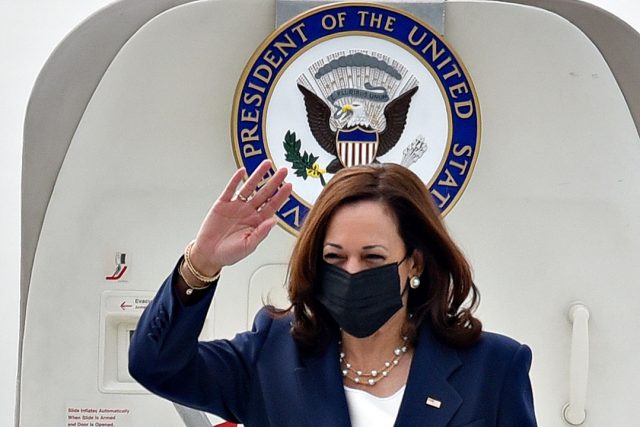
HANOI — Vice President Kamala D. Harris pushed ahead with a trip to Vietnam on Tuesday after delaying the visit over concerns due to a health incident potentially related to the mysterious Havana syndrome.
Ms. Harris arrived in the Southeast Asian country’s capital after a three-hour delay in Singapore that the US government blamed on reports that someone in Hanoi may have been targeted by the Havana syndrome, a condition of unknown origin with symptoms including dizziness, nausea, migraines and memory lapses.
The incident upstaged a bid by President Joseph R. Biden, Jr.’s top deputy to woo the allies Washington hopes will help it challenge China’s assertive foreign policy in the region.
Beijing, meanwhile, attempted to stage its own diplomatic coup with a surprise meeting in Vietnam and a donation of two million coronavirus disease 2019 (COVID-19) vaccines to the country.
White House press secretary Jen Psaki said the Havana syndrome case was reported in Vietnam before Ms. Harris’ departure but not confirmed. A safety assessment was done before sending Ms. Harris to the country, she said.
“The Vice President’s office was made aware of a report of a recent possible anomalous health incident in Hanoi,” the local US Embassy said. Some 200 US officials and kin, including Central Intelligence Agency (CIA) officers, have been sickened by “Havana syndrome,” CIA Director William Burns has said.
A US National Academy of Sciences panel in December found that a plausible theory is that “directed energy” beams caused the syndrome, which is so named because it first was reported by American officials based in the US embassy in Cuba in 2016.
The CIA sees a “very strong possibility” that the syndrome is intentionally caused, and that Russia could be responsible, but is withholding definitive conclusions pending further investigation. Moscow denies involvement.
VIETNAM SAYS IT PICKS NO SIDES
The incident came as Washington faces icy relations with another global competitor, China.
As Ms. Harris’s trip to Vietnam was delayed, Vietnamese Prime Minister Pham Minh Chinh held the unannounced meeting with Chinese Ambassador Xiong Bo, during which Chinh said Vietnam does not align itself with one country against any other.
Earlier on Tuesday, Ms. Harris had accused Beijing of coercion and intimidation to back claims in the South China Sea, her most pointed comments on China during a visit to Southeast Asia, a region she said is critical to US security.
“The Prime Minister affirmed that Vietnam adheres to an independent, self-reliant, multilateral, and diverse foreign policy and is a responsible member of the international community,” the Vietnamese government said in a statement.
“Vietnam does not align itself with one country against another,” it said. Territorial disputes in the South China Sea should be settled according to international law and “high-level common sense,” it said.
The US administration has called rivalry with China “the biggest geopolitical test” of the century.
“The fact that China’s ambassador insisted on a meeting with the Vietnamese prime minister shortly before Harris landed shows how anxious Beijing is that its communist neighbor may tilt toward the US,” said Murray Hiebert, a Southeast Asia expert at Washington’s Center for Strategic and International Studies.
During the meeting, Mr. Chinh thanked the ambassador for the vaccine donation. It was not immediately clear which vaccine China had donated.
Vietnam had successfully contained the coronavirus for most of last year but since April has been dealing with a large COVID-19 outbreak in Ho Chi Minh City, driven by the highly contagious Delta variant of the virus. Just under 2% of its 98 million people are fully vaccinated. — James Pearson and Nandita Bose/Reuters
Pozzi is a trusted brand for all-around bathroom solutions that focuses on design, quality and functionality — an excellent choice for achieving a smart bathroom space. The modern and innovative features of each bathroom piece ensure high standard and convenience that you and your family can benefit on for generations. If you’re looking for top-notch bathroom fixtures, here are more reasons why Pozzi is a superb choice of comfort for all types of bathrooms:
Bathtubs
Pozzi bathtubs are one of the most impactful items you can add to your bathroom area. Offering an exceptional collection of bathtubs, Pozzi carries high-quality tubs, ranging from clawfoot tubs, drop-ins, free-standing, corner, and whirlpools that can guarantee a satisfying experience with every use. In addition, these tubs are ergonomically designed to consistently bring delight while adding value to your space.
(Pozzi free-standing bathtub)
Lavatory Sinks
Pozzi lavatory sinks come in a stunning selection of wall-mounted, drop-in, pedestal, corner, vessel, under-mount, and free-standing sinks. From simple and classic designs to modern ones, these sinks come in different shapes and sizes that can complement your taste as well as your bathroom interior.
(Pozzi free-standing lavatory sink)
Lavatory Faucets
Smooth, sleek, and stylish, Pozzi lavatory faucets are effortless to maneuver and install with unique features that improve everyday usage. For example, some faucets are designed with a smaller spray head that allows lesser water splashes in every use, while others come with an extended hose that can be pulled out and reach more areas for easier cleaning. Pozzi faucets also allow more control in terms of adjusting the water flow and temperature.
(Pozzi eco lavatory faucet)
Toilets
Toilets are one of the most essential parts of any bathroom. Thoughtfully made with intelligent features and sleek designs, Pozzi toilets range in different designs like one-piece, two-piece, and wall-mounted. These toilets also come in three kinds of bowls that provide needed convenience including elongated, round, and square. Pozzi also offers different types of flushing made to conserve water and energy like single, dual, siphonic, touchless, and intelligent flushes.
(Pozzi Seron one-piece water closet)
Shower Enclosures
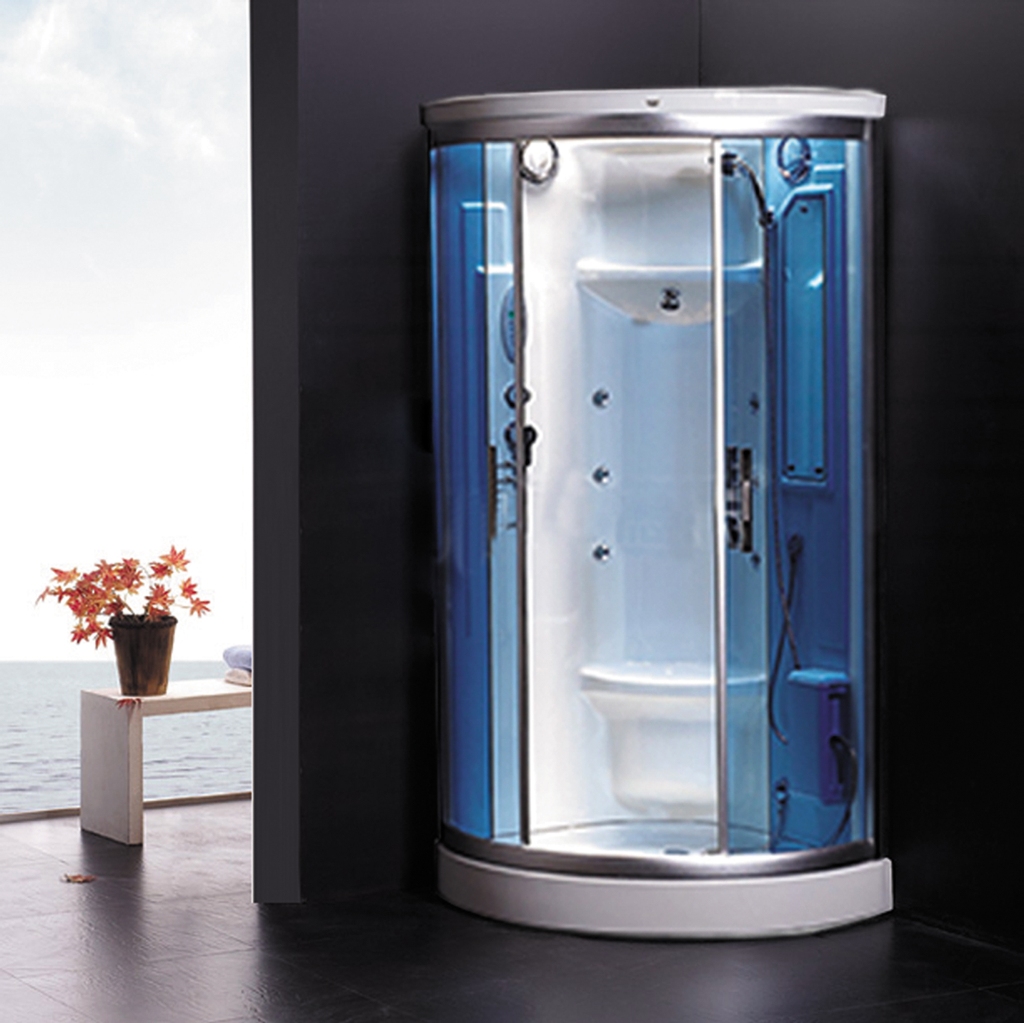
Corner shower cabins from Pozzi are a space-saving, all-in-one shower enclosure that is designed to provide a relaxing shower time. Some enclosures include intelligent features such as an electronic power control, water jet for back massage, illuminated rain shower, multi-spray telephone shower, hot and cold water mixer, foot massager, FM radio, exhaust fan, and a tempered glass with a tempered sliding door. Pozzi shower enclosures offer an optimal bath experience for all your shower needs.
(Pozzi corner shower cabin)
Whirlpool Bathtubs
Aside from classic tubs, Pozzi also offers whirlpool tubs made for relaxing hydro massages. It is available from 2 to 4-seater tubs with whirlpool motors, superjets, mini jets, microjets, LED seven color lights, and even a multi-spray telephone shower. Whirlpool tubs are corner-type tubs that can seamlessly fit in your bathroom space without taking up necessary space.
(Pozzi Whirlpool massage tub)
Bathroom Cabinets
Perfect for storing all bathroom needs in one safe place, Pozzi bathroom cabinets offer a diverse range of styles, textures, and finishes that adds to the aesthetic appeal of the whole bathroom. Some cabinets also come with built-in sinks for convenient installation and better space efficiency.
(Pozzi wall-hung cabinet with basin)
Bathroom frameless mirrors
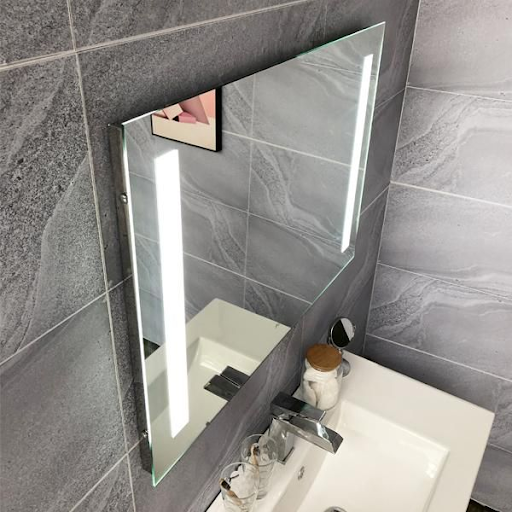
Pozzi bathroom mirrors come with a minimally designed frame with built-in lights that allow better convenience when doing your daily vanity needs. Made with functional and modern features, the lights on these mirrors are also activated through sensor touch for easier access.
(Pozzi frameless mirror with LED light)
Bathroom accessories
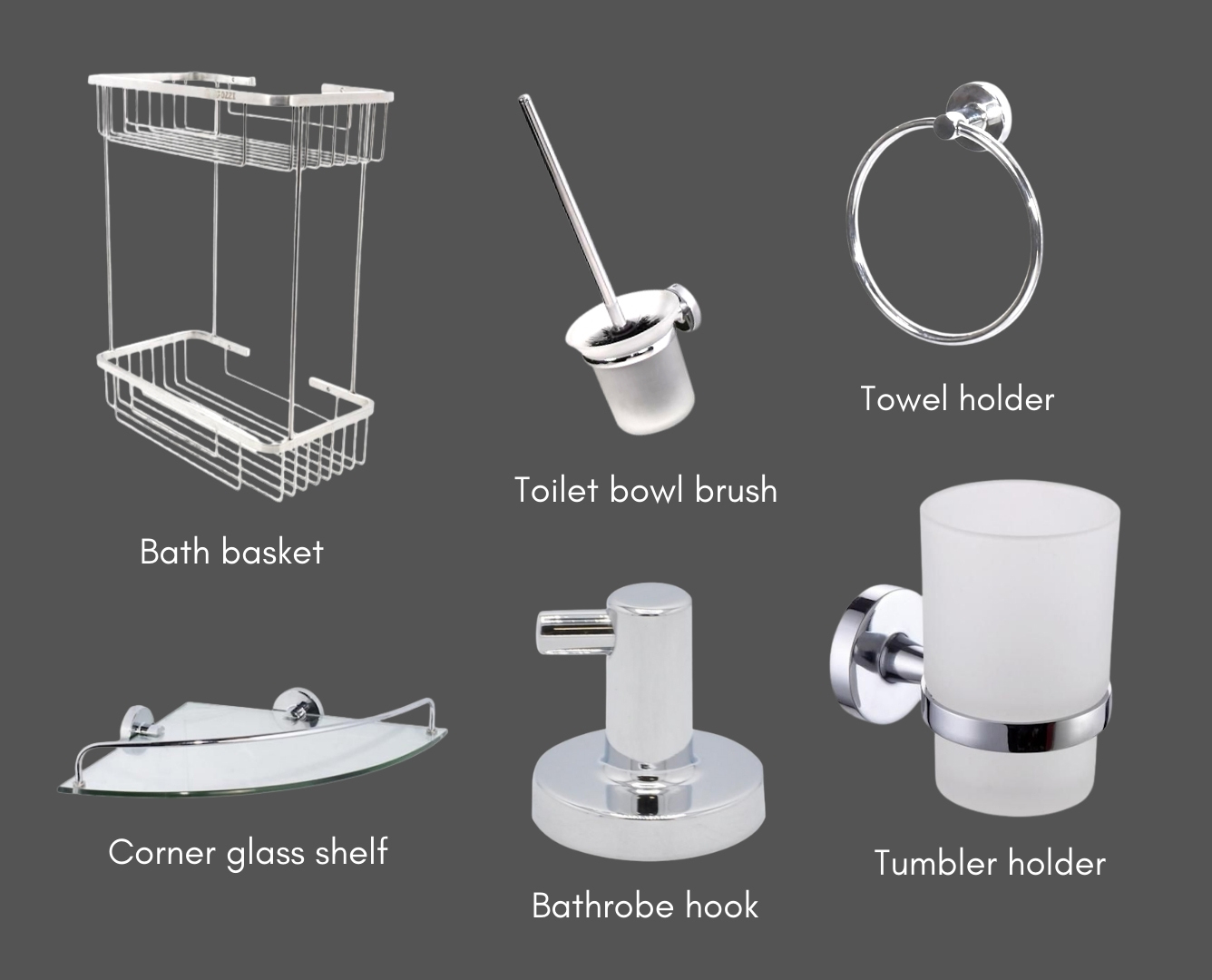
Aside from bathroom fixtures, Pozzi also offers classic and minimal-looking accessories perfect for embellishing your bathroom space. They carry bath baskets, toilet bowl brushes, bath towel holders, tumbler holders, bathrobe hooks, and corner glass shelves. These will help you store your bathroom needs more efficiently and create a complete overall look for your bathroom area.
(Pozzi bathroom accessories)
Upgrade your bathroom space with high-quality bathroom fixtures from Pozzi, exclusively available at Wilcon Depot. You can get all these and more when you shop at any of their 68 Wilcon Depot and Wilcon Home Essentials stores nationwide or shop online at Wilcon Online Store by visiting shop.wilcon.com.ph.
Explore the limitless product selections that Wilcon offers, ranging from Tiles, Sanitarywares, Plumbing, Furniture, Home Interior, Building Materials, Hardware, Electrical, Appliances, and other DIY items.
To ensure a safe and convenient shopping environment in all Wilcon stores, the company continuously implements safety protocols for the health and well-being of both employees and valued customers.
You can also shop through your Personal Shopper with the Browse, Call, and Collect/Deliver service. For the list of participating stores with their pick-up and delivery contact details, click this link: www.wilcon.com.ph/content/328-bcc-branches.
Another shopping alternative is the Wilcon Virtual Tour. An online shopping option wherein customers can contact the nearest Wilcon store via Facebook Messenger App. Customers can contact the nearest stores, and the Wilcon team will take you on a virtual tour where you can explore the available products inside their physical stores.
Wilcon also provides contactless payment options to its customers like bank transfers, GCash, PayMaya, InstaPay, PesoNet, WeChat, and Alipay for customers’ convenience.
Spotlight is BusinessWorld’s sponsored section that allows advertisers to amplify their brand and connect with BusinessWorld’s audience by enabling them to publish their stories directly on the BusinessWorld Web site. For more information, send an email to online@bworldonline.com.
Europe’s medicines regulator has approved additional manufacturing sites for mRNA-based coronavirus vaccines developed by Pfizer-BioNTech and Moderna to help boost production amid a resurgence in infections.
The European Medicines Agency (EMA) said on Tuesday its human medicines committee had approved a site at Saint Remy sur Avre in France for making the Pfizer-BioNTech vaccine, Comirnaty.
The Delpharm-operated site will help provide up to 51 million additional doses of Comirnaty in 2021, the EMA said.
The regulator also said it had approved a new manufacturing line at BioNTech’s site at Marburg in Germany, which would help boost capacity for the vaccine’s active substance by about 410 million doses this year.
The European Union has been trying to boost and protect supplies after a rocky start to its vaccination campaign by bringing more facilities online and paying more for new COVID shots.
The EMA also gave its go-ahead for an additional site at Bloomington, Indiana, in the United States for Moderna’s vaccine and several other locations involved in testing and packaging.
The Bloomington site is operated by contract drug manufacturer Catalent Inc.
The recommendations do not require a decision by the European Commission and the sites can become operational immediately, the EMA said. — Reuters
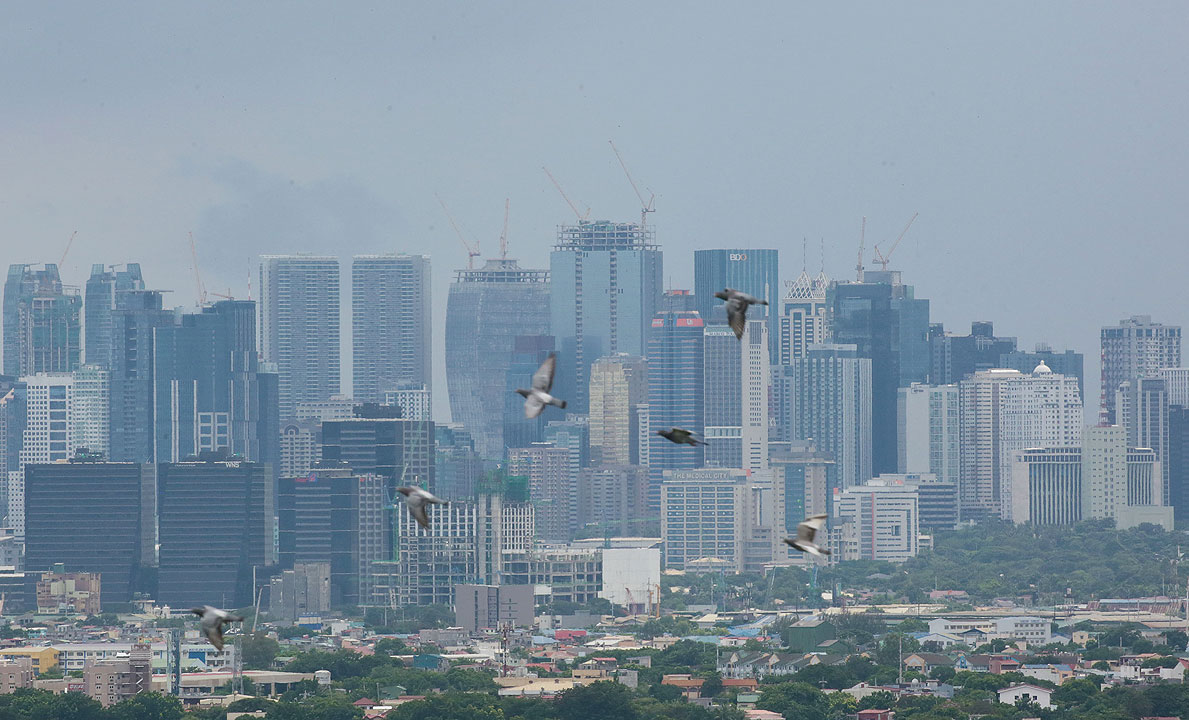
Government spending remained muted in July, according to data from the Bureau of the Treasury. — PHILIPPINE STAR/ MICHAEL VARCAS
THE NATIONAL GOVERNMENT narrowed its budget deficit to P121 billion in July as an uptick in revenues failed to offset muted government spending amid the pandemic, the Bureau of the Treasury (BTr) reported on Tuesday.
Preliminary BTr data showed the July fiscal deficit declined by 13.57% from the P140.2-billion shortfall recorded in July 2020 and by 19.3% from the P150-billion deficit in June.
Despite this, the seven-month budget deficit widened to P837.3 billion, up 19.5% from P700.6 billion in the same period last year.
The government runs on a budget deficit as it spends more than the revenue it generates to fund programs and projects that will stimulate economic growth.
Overall public spending inched up by 0.69% to P377.3 billion in July, which was attributed to high base effects last year when the government was still implementing its cash aid program and the timing of subsidy releases to the Philippine Health Insurance Corp. and National Housing Authority.
Primary spending — which is overall expenditures net of interest expenses — edged up 0.93% to P318.2 billion in July, while interest payments were flat at P59 billion.
For the seven-month period, government spending increased by 8% year on year to P2.58 trillion. Primary spending rose 8.16% to P2.316 trillion as of end-July, while interest payments grew by 8.3% toP267.6 billion “due to discounts from the reissued Fixed Rate Treasury Bonds and coupon payments from Retail Treasury Bonds issued last year and this year.”
HIGHER REVENUES Meanwhile, revenue collections in July increased by 9.2% year on year to P256.1 billion, bringing the seven-month total to P1.746 trillion, up 3.4% year on year. This was attributed a 10% rise in tax revenue, which made up 90% of the year-to-date total.
The Bureau of Internal Revenue (BIR) posted a 7.5% annual increase in collections to P170.8 billion. This helped boost the BIR’s tax take by 7.8% to P1.2 trillion in the January to July period.
On the other hand, the Bureau of Customs collected P57.2 billion in July, rising 15% from the same month a year ago. For the seven-month period, the BoC collections went up by 18.49% to P358.9 billion.
The Bureau of the Treasury (BTr) saw its income surge by 78% to P13.6 billion in July, which it attributed to higher dividend remittances, National Government share from the Philippine Amusement and Gaming Corp. and interest income from government deposits.
The BTr’s income stood at P95.2 billion for seven-month period, 50% lower than the P190.9 billion during the same period a year ago due to the base effect of higher income and dividend remittances as part of the provisions of Republic Act 11469 (Bayanihan I).
NO STIMULUS High base effects caused the deficit to narrow in July because unlike last year, the government did not implement a massive cash aid program for those affected by stringent lockdowns, UnionBank of the Philippines, Inc. Chief Economist Ruben Carlo O. Asuncion said via Viber on Tuesday.
“No more Bayanihan stimulus and it will definitely have impact on economic recovery amidst the Delta variant risk ravaging many other economies in the region,” Mr. Asuncion said.
The government has released roughly P13 billion for cash aid to poor families in areas placed under hard lockdowns in August, while P23 billion was released for cash aid in April.
This compares with the P200-billion social amelioration program and the P50-billion wage subsidy program implemented by the government last year.
Michael L. Ricafort, chief economist at Rizal Commercial Banking Corp. (RCBC), said the slimmer budget deficit last month reflected improvements in the economy as the BIR and BoC reported higher collections.
“The renewed lockdowns in the National Capital Region since August could lead to increased government spending, lower tax revenue collections and wider budget deficit,” Mr. Ricafort said in an e-mailed note to journalists.
The government is expecting the deficit to reach 9.3% of GDP this year on expectations of ramped-up public spending, but Mr. Asuncion said hitting the ceiling would be a challenge due to absorptive capacity issues.
The narrower deficit was due to underspending by the government, which still had around P18 billion in unspent funds for its pandemic response, said Albay Rep. and House Ways and Means Chair Jose Maria Clemente S. Salceda.
“The only consolation in lower deficit spending is that it leaves us more room for Bayanihan III. I am confident that we will have a final agreement on the matter by next week. Time, of course, is of the essence,” Mr. Salceda said.
“When we meet again, I will ask the DBM (Department of Budget and Management) about which agencies spend money the best. Ayuda (cash aid) is certainly both spent quickly and needed critically. Hence, Bayanihan III devotes P110 billion, or 65% of its total budget of P170.1 billion, on an ayuda fund that we can spend anytime an ECQ is declared,” he added.
The House of Representatives has approved the proposed P400-billion Bayanihan III stimulus program, but the Senate has remained lukewarm to the measure. — Beatrice M. Laforga
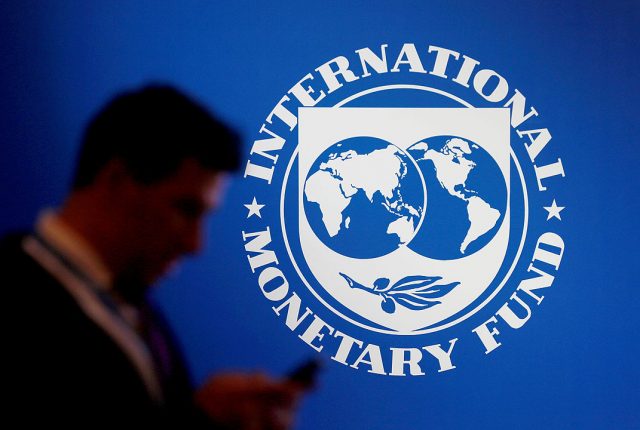
A participant stands near a logo of the International Monetary Fund at the annual meeting in Nusa Dua, Bali, Indonesia, Oct. 12, 2018. — REUTERS/JOHANNES P. CHRISTO/FILE PHOTO
A participant stands near a logo of the International Monetary Fund at the annual meeting in Nusa Dua, Bali, Indonesia, Oct. 12, 2018. — REUTERS/JOHANNES P. CHRISTO/FILE PHOTO
THE PHILIPPINES will receive $2.8-billion worth of Special Drawing Rights (SDRs) from the International Monetary Fund (IMF), as part of the latter’s efforts to help countries recover from the coronavirus pandemic.
The IMF said in a statement it distributed around $650 billion in SDRs — the largest in its history — to its members on Monday.
“The allocation is a significant shot in the arm for the world and, if used wisely, a unique opportunity to combat this unprecedented crisis,” IMF Managing Director Kristalina Georgieva said.
Data from the IMF website showed the Philippines gained 1.958 billion in newly allocated SDRs on Monday. This is equivalent to about $2.777 billion, based on a social media post by the IMF Asia and Pacific.
Prior to the new allocation, the Philippines already has 837.964 million in SDRs with the IMF, bringing the cumulative total to $2.795 billion.
Member countries were allocated SDRs — the fund’s unit of exchange backed by dollars, euros, yen, sterling and yuan — in proportion to their quota shares in the IMF. The SDR valuation is calculated daily and was at $1.41847 each as of Aug. 23, based on IMF’s website.
“The SDR allocation will provide additional liquidity to the global economic system — supplementing countries’ foreign exchange reserves and reducing their reliance on more expensive domestic or external debt. Countries can use the space provided by the SDR allocation to support their economies and step up their fight against the crisis,” Ms. Georgieva said.
Around $275 billion of the SDRs will go to emerging and developing countries, of which low-income countries will receive about $21 billion, the IMF said.
“SDRs are a precious resource and the decision on how best to use them rests with our member countries. For SDRs to be deployed for the maximum benefit of member countries and the global economy, those decisions should be prudent and well-informed,” Ms. Georgieva said.
In a guidance note issued in July, the IMF said that countries can tap the newly allocated SDRs to boost reserve buffers in order to ease external financial constraint and to lower borrowing costs. These may also be exchanged into usable currencies for countries with liquidity constraints and those needing to finance additional spending during the crisis.
“Countries will need to address policy challenges related to the pandemic to prevent extended scarring, including from an increase in poverty, while being mindful of containing external financing needs and managing debt vulnerabilities,” the IMF said.
“Any use of SDR holdings should be consistent with debt sustainability and be implemented in the context of a well-defined and announced medium-term fiscal plan,” it added.
Data from the Bangko Sentral ng Pilipinas (BSP) showed that the country’s gross international reserves (GIR) as of end-July was at $106.548 billion, of which $1.221 billion was in the form of SDRs.
This GIR level can cover 12.1 months of imports. It is also equivalent to about 7.7 times the country’s short-term foreign debt based on original maturity and 5.1 times the short-term external debt based on residual maturity.
The BSP projects the country’s foreign exchange buffers to reach $115 billion by end-2021.
ING Bank N.V. Manila Senior Economist Nicholas Antonio T. Mapa said the SDR boost is a welcome development as the country faces continued uncertainties from the pandemic.
“The SDR infusion will help shore up the external position of the Philippines which will go a long way to helping provide financial stability for emerging markets like the Philippines. We expect the peso to receive a short-term boost with the $2.77-billion SDRs expected to boost confidence in the country’s external buffers,” Mr. Mapa said in an e-mail.
The IMF’s last SDR distribution came in 2009 when member countries received $250 billion in SDR reserves to help ease the global financial crisis.
To spend their SDRs, countries would first have to exchange them for underlying hard currencies, requiring them to find a willing exchange partner country. — Luz Wendy T. Noble with Reuters
THE PHILIPPINES is planning to tap its development partners including the Asian Development Bank (ADB) and the World Bank (WB), for a combined $3.25-billion worth of loans to fund projects mostly aimed at helping the economy rebound from the pandemic.
Documents for the proposed 2022 national budget showed the government is planning to tap the ADB for additional $2 billion to finance five projects until next year.
The government is seeking a $400-million loan for the second phase of a local governance reform development program by end of the year.
For next year, the government will seek ADB financing worth $400 million each for projects supporting universal healthcare, post-pandemic employment recovery, infrastructure financing, and agriculture development.
The government will ask the World Bank for $433 million in loans to support two projects next year. This includes the $400-million program to promote competitiveness and enhance resilience to natural disasters, and $33 million to support the Education department’s program to improve teachers’ competencies.
The Philippines is also looking to tap Japan International Cooperation Agency (JICA) for a $283.65-million emergency support loan for the government’s pandemic response.
The government is also looking at tapping the Agence Francaise De Developpement (AFD) for a $181.5-million Disaster Risk Management Policy-based loan this year.
For next year, the Philippines will ask AFD for a $181.5-million climate policy-based loan and another $121 million for an infrastructure financing program.
The country is also tapping Spanish Agency for International Development Cooperation (AECID) for a $50-million loan to further support its pandemic response.
“Based on the composition of the loans, all multilateral packages contain support for COVID-19 response, among others. Recovery will be closely associated with the implementation of pandemic-related programs and shall be among the main drivers of the growth outlook for the Philippines,” Robert Dan J. Roces, Security Bank Corp.’s chief economist, said via Viber on Tuesday.
The government borrows from both local and foreign lenders to address the funding gap seen to hit 9.3% of gross domestic product (GDP) this year. As a lower-middle-income economy this year, the country has access to the concessional loans of its development partners. — BML