TONY BENNETT performing at the Blaisdell Concert Hall in Honolulu, Hawaii on Sept. 23, 2013 — EN.WIKIPEDIA.ORG/ PETER CHIAPPERINO
LOS ANGELES — American singer Tony Bennett is stepping back from concert performances at the age of 95, his son said on Friday.
Mr. Bennett, who was diagnosed with Alzheimer’s disease in 2016, canceled a run of concerts planned for later this year and won’t be returning to touring, his manager son Danny Bennett told Variety in an interview.
“There won’t be any additional concerts,” Danny Bennett said. “This was a hard decision for us to make, as he is a capable performer. This is, however, doctors’ orders… We’re not worried about him being able to sing. We are worried, from a physical stand point, about human nature. Tony’s 95,” he said.
Mr. Bennett, best known for his signature ballad “I Left My Heart in San Francisco,” made his two last live performances earlier this month at Radio City Music Hall in New York with Lady Gaga in a show called One Last Time.
The duo recorded a second album of classic duets between 2018 and 2020 that will be released in October. A video showing them recording the single “I Get a Kick Out of You” was released last week and showed the 18-time Grammy Award winner in good form.
“He has short-term memory loss. That, however, does not mean that he doesn’t still have all this stored up inside of him. He doesn’t use a Teleprompter. He never misses a line. He hits that stage, and goes,” his son said of the Radio City concerts. “Tony may not remember every part of doing that show. But, when he stepped to the side of the stage, the first thing he told me was: ‘I love being a singer.’”
Mr. Bennett started his career in the 1950s after being discovered by comedian Bob Hope. — Reuters
DMCI HOMES is considering opening more co-working spaces at its condominium developments, after it opened a shared workspace facility at its Lumiere Residences in Pasig City last month.
DMCI Homes Vice-President for Project Development Dennis Yap said the introduction of the co-working space feature at the three-tower Lumiere development is one of new services being considered by the company to help residents adapt to the “new normal.”
“Although it’s not part of the original plan, we are allotting a co-working space to make it more convenient for our residents to do their work, business, and school chores in the comfort of their community,” he said in a statement.
The co-working space, located at the condominium’s West Tower mezzanine level, can be used by residents and tenants for a “minimal” fee. It is open from Monday to Saturday, from 8 a.m. to 10 p.m.
The facility offers strong and stable internet connection and other amenities such as a virtual mailbox, a photocopying machine, and a printer.
Registered residents and tenants can make reservations at the Property Management Office on a first come, first served basis.
There will be QR codes for user login and recording of time, and plastic barriers and partitions to ensure social distancing. Users will be required to wear face masks.
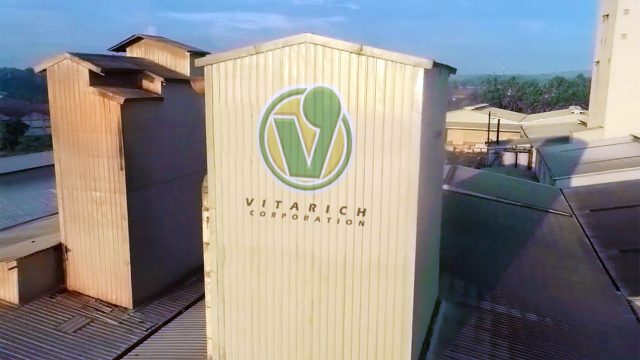
VITARICH Corp. swung to profitability as it posted a P90.42-million net income for the second quarter on the back of higher revenues and growing customer demand.
Its second-quarter net income is a reversal of the P81.54-million net loss it suffered a year ago.
Vitarich said in a stock exchange disclosure on Monday that revenue for the quarter rose 59% to P2.41 billion from P1.51 billion a year ago.
For the first half, Vitarich posted a P276.94-million net income, higher by 24 times compared with its P11.56-million profit a year earlier.
“The historic performance was fueled by growing customer demand and increased pricing along with lower costs of raw materials and more efficient production from higher plant capacity utilization,” Vitarich said in the disclosure.
The company’s revenue in the first six months amounted to P4.4 billion, up 15% as all product categories improved.
Vitarich said its feeds segment, which accounted for 48% of total revenue, posted a 3% increase to P2.1 billion due to stronger order intake from distributors driven by new entrants in large poultry farms and end-customers switching products, and new commercial clients.
Its foods segment, which contributed 44% of total revenue, posted a 26% jump to P1.9 billion on the back of volume growth after the relaxing of lockdown restrictions and higher prices.
Revenue from the farm segment, which shared the remaining 8%, rose 43% to P340.6 million due to higher volume and prices from the sale of day-old chicks.
Meanwhile, Vitarich said its operating income improved by almost nine-fold to P382 million.
“The progress reflects the company’s multi-year plan to scale up and improve efficiency, with operating expenses now at 6% of total revenues from 10% for the same period in 2016,” the company said.
Ricardo Manuel M. Sarmiento, Vitarich president and chief executive officer, said the business secured internationally recognized management systems for food safety and quality such as ISO Food Safety and Management Systems (FSMS) and Hazard Analysis Critical Control Point (HACCP) certification as part of efforts to support growth and transformation.
“In the five years since our turnaround and corporate rehabilitation exit in 2016, Vitarich has consistently restored profitability, while investing in manufacturing facilities, and research and technology development,” Mr. Sarmiento said.
“Today, our record-high performance, long-term demand expectation, and strengthened balance sheet with reduced debt give us increased confidence in our midterm outlook of progressive margin expansion. We continue to evolve our strategy towards a fully integrated business model focusing on higher value activities,” he added.
Moving forward, Mr. Sarmiento disclosed that the company expects to spend P330 million for its capital expenditures this year.
On Monday, shares of Vitarich at the stock exchange rose 1.28% or one centavo to end at 79 centavos apiece. — Revin Mikhael D. Ochave
PHILIPPINE BANK of Communications (PBCom) saw its net earnings slip by 0.38% in the second quarter due to lower trading and rent income.
PBCom’s net income in the second quarter stood at P505.293 million, inching down from the P507.23 million it booked in the same period in 2020, its financial statement filed with the local bourse on Monday showed.
This brought its first-half net profit to P764.43 million, down by 20% from the P955.9 million it posted in the same period a year ago.
This translated to a return on assets of 0.75%, down from 0.94% a year ago. Return on equity also dropped to 5.94% as of June from 8.11%.
PBCom attributed its lower income in the first semester to net trading losses and lower rent income due to vacancies of leased floors, pre-terminations and renegotiated contracts of tenants amid the prolonged coronavirus pandemic.
“Improvements in net interest income and lower operating expenses have partially offset the impact of the decline in net income,” the bank said.
“The full impact of the pandemic is still unknown and this may affect the performance of the bank should this further prolong. However, the bank has taken prudent steps to mitigate the risk through more prudent credit process, tighter credit policies and, more importantly, continue its assessment of our portfolio by regularly doing the stress test exercise,” PBCom said.
The bank’s net interest earnings jumped by 31% to P1.091 billion in the second quarter from P831.183 million.
PBCom’s net interest margin stood at 2.68% at end-June from 2.32% a year ago.
Meanwhile, earnings from trading and securities plummeted by 92% to P15.84 million from P206.033 million a year ago. Its rent income also went down by 35% year on year to P124.17 million.
Its total operating income for the second quarter was at P1.39 billion, higher than the P1.36 billion seen the prior year.
PBCom reported P778.47 million in total operating expenses last quarter, smaller by 1.5% than the P790.49 million it booked in the same period of 2020.
The bank booked P1.123 billion in loans and other receivables in the first half, up by 1.95% year on year mainly due to higher commercial loans.
Its gross nonperforming loan ratio stood at 5.71%, which it said was around the same level recorded at end-2020.
“The bank has experienced an increase in past due levels in loans due to the outbreak of COVID-19. This necessitated an increase in loan provisions, However, a gradual pickup in business activity is expected as the government gradually relaxes the quarantine measures,” PBCom said.
On the funding side, the bank’s deposit liabilities were at P80.09 billion in the first semester.
PBCom’s assets grew to P101.91 billion as of June from P101.24 billion at end-2020.
Its capital adequacy ratio improved to 18.48% at end-June from 17.29% a year ago. — B.M. Laforga
BEIJING — China’s Association of Performing Arts on Sunday called for a boycott of a Chinese actor after photos of him at Japan’s controversial Yasukuni Shrine taken in 2018 and 2019 circulated online and sparked outrage among Chinese netizens and media.
The Yasukuni Shrine is seen by Japan’s neighboring countries as a symbol of that country’s past militarism, and remains a flashpoint for tension with China. The shrine honors Japan’s war dead, including 14 World War II leaders convicted by an Allied tribunal as war criminals. China, which was occupied by the Japanese from 1937 to 1945, takes offense at visits to the shrine.
“The misbehavior of actor Zhang Zhehan severely harms national feeling and brings baneful influence to his young age-group audience. Hence, we demand members not to engage him in any employment,” said the association in a statement on Sunday.
Mr. Zhang, 30, apologized on Chinese social media on Friday saying he is “ashamed of his ignorance.” Still, state-backed People’s Daily commented that Zhang should “pay a heavy price” for the “challenge of national dignity.”
More than 25 companies in China, including US beverage maker Coca-Cola Co. and Danish jeweler Pandora A/S, have announced the termination of partnerships with Mr. Zhang. — Reuters
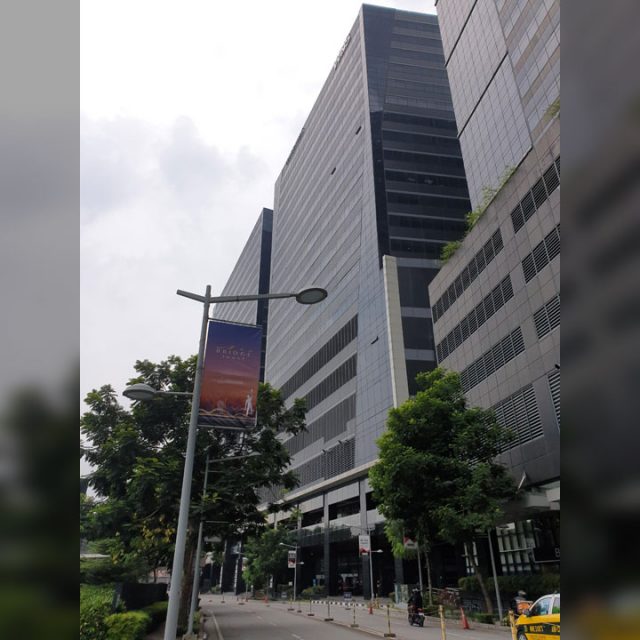
ROBINSONS LAND Corporation (RLC) is focusing on developing sustainable communities, such as its Bridgetowne Destination Estate.
Bridgetowne Destination Estate is an integrated mixed-use development located within the C5-IT corridor along Libis, Quezon City.
“Bridgetowne espouses the live-work-play-inspire lifestyle through a dynamic mix of real estate developments that empower sustainable living,” the Gokongwei-led developer said in a statement.
The estate features several premium, Grade A office buildings that have received LEED (Leadership in Energy and Environmental Design) certification by the US Green Building Council.
The office towers have been designed include sustainability features to enable the efficient consumption of water, electricity, and light. There are also bike racks and shower rooms to encourage employees to bike or walk to work. A rainwater collection system has also been put in place.
“We, at RLC, take ESG (Environmental, Social, and Governance) very seriously. We innovate and improve the design of our properties to minimize our environmental footprint. This is in line with our goal of building sustainable cities and communities,” Ma. Socorro Isabelle “Mybelle” V. Aragon-Gobio, RLC senior vice-president, said.
LIBERTY FLOUR Mills, Inc. recorded a 22.8% increase in its net income for the second quarter to P37.43 million despite lower net sales, it said in regulatory filing on Monday.
Net sales for the April-to-June period fell 4.6% to P267.91 million, while its cost of sales increased 2.4% to P234.36 million.
For the first half, Liberty Flour posted a 2% increase in its net income to P67.95 million from P66.32 million a year ago.
Net sales during the six-month period reached P507.24 million, down 3.1% from P523.48 million in 2020.
In contrast, the company’s cost of sales increased 1.9% to P427.98 million from P419.91 million a year ago due to the increase in sales volume.
“In terms of sales, basically there was an increase of 7% volume of flour bags sold in the first semester of 2021. However, a reduction in selling price of a major brand resulted to a decrease in revenue from the previous year’s same period operation,” the company said.
Based on the Philippine Stock Exchange website, shares of Liberty Flour were last traded on Aug. 13 when it closed at P28 apiece. — Revin Mikhael D. Ochave
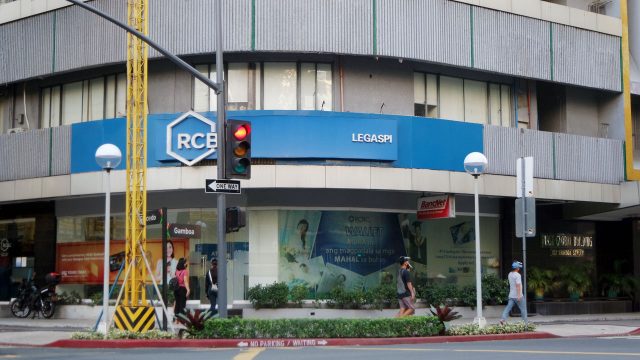
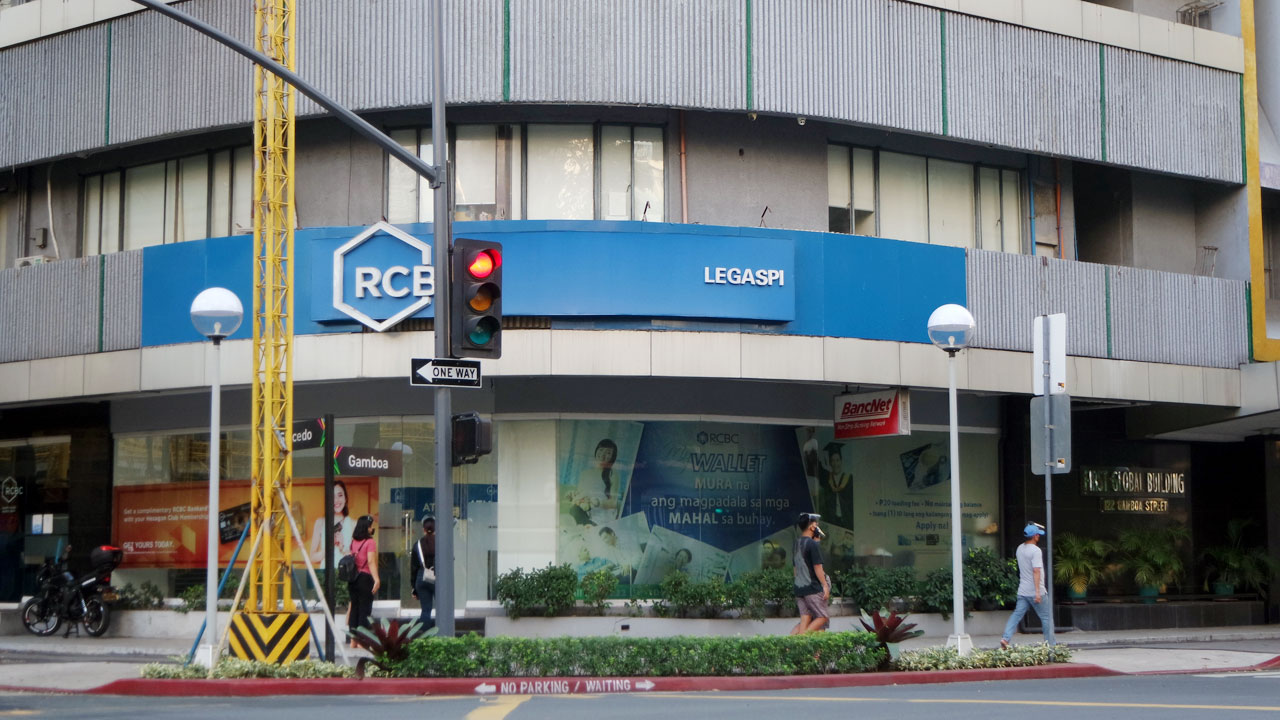
RIZAL Commercial Banking Corp. posted a higher net profit in the second quarter. — BW FILE PHOTO
RIZAL COMMERCIAL Banking Corp.’s (RCBC) net profit more than doubled in the second quarter, supported by an increase in its net interest income and lower provisions for loan losses.
The bank’s net income in the second quarter stood at P1.747 billion, surging by 117.83% from P802 million in net earnings recorded a year earlier, based on its financial report released on Monday.
This brought the bank’s net profit in the first half to P3.327 billion, up 7% from the P3.11 billion booked in the same period a year ago.
“Despite lower trading and foreign exchange gains, our core income is gaining momentum to support the bottom line,” RCBC Corporate Planning Head Ma. Christina P. Alvarez said at an online briefing.
The bank’s first-half performance translated to a return on equity of 6.55%, down from 7.43% a year ago, while return on assets also slipped to 0.84% from 0.86%.
RCBC’s net interest income in the second quarter increased by 9.6% to P7.118 billion from P6.494 billion, backed by the 30.7% decline in its interest expenses to P2.111 billion from P3.049 billion a year earlier.
Its lower expenses helped offset the 3.29% drop in its interest income to P9.229 billion from P9.543 billion, which was mainly due to a 7.8% decline in earnings from loans and receivables to P8.109 billion. Meanwhile, income from investment securities rose by 85.8% to P840 million.
RCBC’s net interest margin was at 4.08% as of June from 4.28% in the comparable year-ago period.
Meanwhile, non-interest income by fell 61.4% to P1.685 billion from P4.371 billion a year earlier, mainly dragged by trading gains which slumped by 95% to P163 million. On the other hand, services fees and commissions climbed 49.2% to P1.04 billion, while the bank recorded foreign exchange gains of P28 million, reversing the P43-million loss booked a year ago.
“Trading and foreign exchange gains were significantly higher in 2020, and we do not expect the same levels of trading gains in 2021,” Ms. Alvarez said.
On the other hand, other operating expenses inched up 0.3% to P5.473 billion in the second quarter from P5.454 billion a year ago.
Provisions for impairment losses declined by 61.24% to P1.396 billion in the second quarter from P3.602 billion.
RCBC’s loans and receivables grew 3.6% to P497.851 billion as of June from P480.282 billion in the same period of 2020.
Ms. Alvarez attributed this growth to a rise in corporate and small- and medium-sized enterprises (SME) loans. She said they will continue to target top corporations, select SMEs and select areas outside Metro Manila.
As its portfolio expanded, the bank’s nonperforming loan (NPL) ratio also inched up to 3.25% from 2.24% a year ago.
RCBC Head of Credit Management Group Benett Clarence D. Santiago said the bank’s NPL ratio has likely already peaked, as it has been declining as of July.
He added that although the fresh lockdown poses a risk to the bank’s performance, the rate of vaccination should help “to compensate in a big way.”
Meanwhile, on the funding side, RCBC’s deposit liabilities increased 19.8% to P598.145 billion as of June from P499.42 billion in the same period of 2020.
The bank’s assets rose by 18% to P845.8 billion as of June from 718.752 billion the year prior.
Its capital adequacy ratio stood at 15.07% as of end-June, up from 13.87% a year ago, while its common equity Tier 1 ratio was at 11.84%, down from 12.99% last year. Both remained above the minimum regulatory requirements.
As of June, RCBC had a total consolidated network of 434 branches, 1,272 automated teller machines, and 1,535 ATM Go terminals.
RCBC’s shares closed at P19.79 apiece on Monday, up by 18 centavos or 0.92% from its previous finish. — L.W.T. Noble
LOS ANGELES —Despite concerns the Delta variant would keep moviegoers at home, Ryan Reynolds’ sci-fi action-comedy Free Guy had a better-than-expected start at the US box office.
The movie, from Disney and 20th Century Studios, collected $26 million from 4,165 North American theaters. Given its production budget above $100 million, those ticket sales wouldn’t be much to celebrate in pre-pandemic times, but isn’t a bad result as a plague sweeps the globe.
Overseas, Free Guy amassed $22.5 million for a global tally of $51 million.
Free Guy marks an interesting test for the film exhibition industry because it’s playing exclusively in theaters, which is a rarity these days. Many high-profile films that premiered during the pandemic, such as Marvel’s Black Widow and The Suicide Squad, were available on streaming platforms on the same day as their theatrical debuts. The few films offered only in theaters, like Universal’s F9, Emily Blunt and John Krasinski’s follow-up A Quiet Place Part II and Paramount’s G.I. Joe origin story Snake Eyes, were each sequels in popular film franchises, unlike Free Guy, which is based on an original concept and isn’t part of an existing movie universe.
This weekend’s other new nationwide releases, Sony’s thriller Don’t Breathe 2 and MGM’s Aretha Franklin biopic Respect, each arrived in line with expectations, though neither did much to galvanize ticket buyers. — Reuters
A STAR Ferry boat crosses Victoria Harbour in front of a skyline of buildings during sunset. Hong Kong, China June 29, 2020. — REUTERS/TYRONE SIU
HONG KONG’S home prices jumped to a record high, joining other global real estate markets that are soaring on low mortgage rates and rising demand as the pandemic slowly recedes.
Values for resale houses rose 0.65% for the week ended Aug. 8, according to Centaline Property Agency Ltd., which started tracking prices in 1993. The last record for the firm’s price index was set in mid-2019 at the beginning of anti-government protests. Residential property values have increased 8.6% since the beginning of the year.
Outsized demand, limited supply and low borrowing costs have fueled the world’s most expensive property market even amid concerns about the city’s future after the protests and the introduction of a national security law by China last year.
The abundance of liquidity has also resulted in soaring prices in other major financial centers around the world. US residential property prices jumped the most in 30 years in April, with even more dramatic rises in many suburban and rural areas where bidding wars are common. Home prices in New Zealand, one of the world’s hottest markets, have risen for 31 straight months.
The rising prices also signal that a potential exodus of residents to the UK via a new visa program hasn’t hurt the real estate market in Hong Kong.
In addition to the strong demand from local buyers, mainland Chinese investors are helping boost the market. They made up 11.2% of purchases by value in the first four months of 2021, up from 10.5% in the same period last year, according to Midland Realty.
Prices are expected to keep rising. Cushman & Wakefield expects home values to climb another 5% in the second half of the year. — Bloomberg
LISTED oil exploration firm Oriental Petroleum and Minerals Corp. said its second-quarter net income fell by around 43% to $827,703 from a year-on-year level of $1.45 million, after registering higher costs in petroleum operations.
Costs incurred in petroleum operations reached $623,366, higher by 18% versus the $525,904 recorded in the same period last year, according to the company’s quarterly report filed with the local bourse on Monday.
Expenses in petroleum operations included petroleum production costs, and a line item on depletion, depreciation and amortization.
On the other hand, Oriental Petroleum’s revenues during the three-month period ending June reached $1.11 million, up by more than threefold compared with $333,946 in second quarter last year.
The firm is engaged in the exploration, development and production of petroleum and mineral resources. Its subsidiaries include Oriental Mahogany Woodworks, Inc., Oriental Land Corp. and Linapacan Oil Gas and Power Corp.
Shares of Oriental Petroleum decreased by 8.33% to finish at P0.011 on Monday. — Angelica Y. Yang
AGRINURTURE, Inc. (ANI) recorded a 74.8% decline in its net profit to P82 million for the second quarter despite higher revenues.
The listed firm said in a stock exchange disclosure on Monday that its net revenue during the quarter rose 14.9% to P1.11 billion. Cost of sales also increased 19.4% to P943.12 million.
For the first half, the company’s net profit dropped to P122.07 million from P356.99 million a year ago.
Net revenue for the six-month period rose 29% to P2.31 billion compared with the P1.79 billion in the previous year. Costs of sales also climbed 36% to P1.98 billion.
From the total net revenue, Philippine operations reached P1.07 billion, up 5.7%, while revenue from foreign operations improved 58.7% to P1.25 billion.
“For the first six months of 2021, Philippine operations contributed 46% while sales from foreign operations accounted for 54% of consolidated sales,” ANI said.
ANI said its export sales for the first half rose 9% to P883.1 million resulting from the stable selling prices of banana and coconut juice in the international market, continuous supply of raw materials, and higher demand especially in the Chinese market.
“Local distribution sales posted a decrease of 4.5% to P177.52 million for the six months from P185.87 million for the same period in 2020. Sales decreased significantly especially during the start of the enhanced community quarantine,” ANI said.
In effort to improve operations, the company launched its own e-commerce platform via its ANI Express website and mobile application, which allows customers to order the company’s products and delivered to them.
“The group is also launching new products such as plant-based meat, non-dairy ice cream, and big chill healthy drinks in cans for local and export distribution which are expected to start to record double digit growth for the rest of the coming quarters,” ANI said.
“Consolidated operating expenses for the first two quarters of 2021 amounted to P156.14 million down from P222.37 million for the same period last year, due to the pandemic issue where the retail and franchise and Hong Kong operations of the group were shut down since the start of implementation for a lockdown,” it added.
On Monday, shares of ANI at the stock exchange rose 0.33% or two centavos to end at P6.12 each. — Revin Mikhael D. Ochave