Home Blog Page 7218

Miles Bridges helps Hornets edge Golden State Warriors

CHARLOTTE Hornets forward Miles Bridges (0) looks to pass as he is defended by Golden Star Warriors forward Otto Porter, Jr. (32) during the second half at the Spectrum Center. — REUTERS

MILES Bridges scored 22 points and LaMelo Ball had 21 as the Charlotte Hornets edged the visiting Golden State Warriors (106-102) on Sunday night.

The big contribution came from Terry Rozier, who scored all 20 of his points in the second half as the Hornets stretched their winning streak to three games.

The Warriors, who lost for just the second time in 13 games, had a seven-game winning streak snapped. They’re 3-1 in road games.

Andrew Wiggins poured in 28 points and Stephen Curry, playing in his hometown, had 24 points for the Warriors. Jordan Poole added 13 points and Draymond Green 11. Curry was just 3-for-13 on 3-pointers.

There were 27 lead changes in the game.

Rozier’s 3-point play put the Hornets up 102-98 with 2:24 left. The Warriors scored the next two baskets, with Green’s dunk tying the game at the 44-second mark.

Bridges put Charlotte back in front on the next possession. Golden State’s Kevin Looney then missed two foul shots.

Rozier countered with two free throws for the game’s final points.

Cody Martin and Kelly Oubre, Jr. scored 12 and 10 points, respectively, off the bench for Charlotte.

It was a close game throughout. In the second half, the margin never was wider than four points — and that happened just three times (once in the third quarter and twice down the stretch in the fourth quarter).

Charlotte’s 47-41 lead marked the widest margin for either team.

The teams were tied at 63, 65, 68, 70, 74 and 77, all in the third quarter.

Then the Hornets went a stretch of more than three minutes with just one field goal, but launched into the lead at 81-80 on Bridges’ basket.

Curry’s second 3 in the final 70 seconds of the third quarter put the Warriors up 88-87 going to the fourth.

Fittingly, the score was 57-57 at half time. Ball had 19 points by the break, hitting four 3-pointers.

The Warriors shot just 6-for-21 on 3s in the first half. — Reuters

Heinicke and Gibson lead Washington to upset the Buccaneers

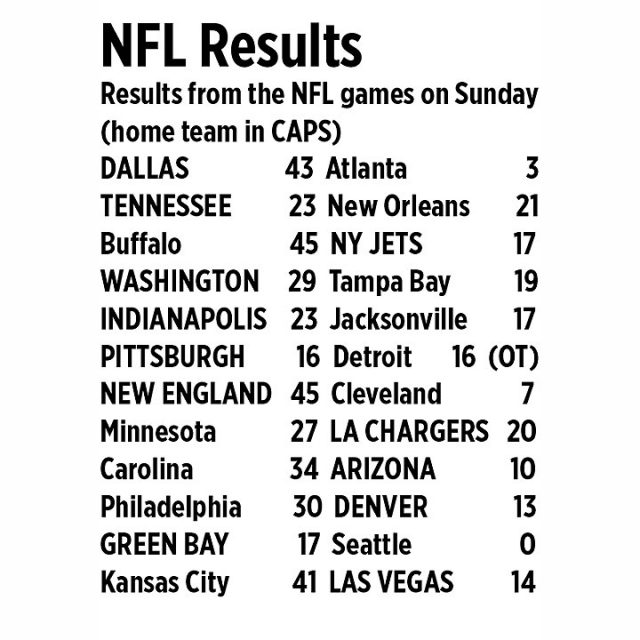
TAYLOR Heinicke passed for one score and Antonio Gibson ran for two touchdowns as the Washington Football Team upset the visiting Tampa Bay Buccaneers (29-19) on Sunday in a rematch of last season’s National Football Conference (NFC) wild card game.

After Tampa Bay (6-3) pulled to 23-19 with 10:55 remaining, Heinicke led Washington (3-6) on its longest drive of the season- 80 yards in 19 plays over 10:26 before Gibson scored from 1 yard out.

Heinicke, who nearly led Washington to the upset before losing to Tampa Bay (31-23) in the wild card matchup last season, completed the task on Sunday. He completed 26-of-32 passes for 256 yards, with no interceptions.

Buccaneers QB Tom Brady was 23-of-34 for 220 yards and two touchdowns, with two first-quarter interceptions.

Joey Slye kicked three field goals in his Washington debut.

Washington defensive end Chase Young left the game in the second quarter with a knee injury.

Tampa Bay was without tight end Rob Gronkowski (rib injury) and wide receiver Antonio Brown (ankle).

Trailing by 10 points at half time, the Buccaneers had a short field following a punt and went 43 yards on four consecutive Brady passes, the last one for 6 yards and a touchdown to Cameron Brate, cutting the Washington lead to 16-13 with 8:46 left in the third quarter.

Washington answered, driving 71 yards in eight plays, with Gibson bulling his way in from 1 yard out.

Dax Milne’s fumble set the Buccaneers up at the Washington 47, and three plays later Brady found Mike Evans alone down the left sideline for a 40-yard touchdown. Ryan Succop missed the extra point, however, and Tampa Bay trailed 23-19 with 10:55 left before Gibson’s 1-yard TD run with 29 seconds left sealed it.

Brady threw two interceptions in the first quarter for the first time since Week 16 in 2012.

Washington settled for a field goal and a 6-0 lead after the first pick, but cashed in the second time. Starting on the Tampa Bay 46, Washington drove to the 20 where, on third-and-6, Heinicke threw a perfect pass to DeAndre Carter in the end zone.

The Buccaneers sandwiched two field goals around another one by Slye and trailed 16-6 at half time. — Reuters

Phil Mickelson wins Charles Schwab; Bernhard Langer lifts sixth Cup

PHIL Mickelson fired a final round, 6-under 65 Sunday to earn a one-stroke victory at the Charles Schwab Cup Championship at Phoenix Country Club. But Germany’s Bernhard Langer was the biggest winner of the day, as he secured the sixth Charles Schwab Cup of his career.

At 64 years old, Langer eked out another win in the season-long points race as Jim Furyk, his primary challenger, faltered down the stretch. Furyk led the tournament after 54 holes and would have earned the cup with a first or second-place finish, but he shot an even-par 71 Sunday and several players passed him by.

Langer, who was fighting through back pain earlier in the tournament, followed Saturday’s crucial 63 with a 69 Sunday, which included an eagle at the par-4 fifth hole. He placed 17th for the event at 12 under.

“I mean, how exciting was it coming down the stretch? Literally came down to the last shot,” Langer said. “If he would have eagled 18, he would be standing here lifting the Charles Schwab Cup trophy and he would be the winner.

“I’m literally overwhelmed with emotion. It was an up-and-down week for me. I had back issues earlier in the week, could barely swing the club. I was this close to pulling out and ground through it and made it and started playing a little better, so that was just incredible.”

Due to the coronavirus disease 2019 (COVID-19) pandemic interrupting the 2020 season, the Schwab Cup reflects a 2020-21 combined season.

Mickelson compiled a 19-under 265 to win his fourth Champions Tour title in six starts since he began playing the circuit earlier this year.

The six-time major champion had six birdies and no bogeys and finished a shot better than New Zealand’s Steven Alker (final-round 67).

“To come out on top here was a special week,” Mickelson said. “I want to congratulate Bernhard because he really is the gold standard for work ethic, discipline as well as talent and a great golf game. At 64, to win the season-long championship, that’s pretty impressive, pretty inspiring.”

Mickelson said he would take the rest of the year off from competition but continue working on his game.

“We watch how hard Bernhard works on the course, right, but he works off the course just as hard,” Mickelson said. “That’s what I’ve got to do this offseason to make sure that I’m maintaining speed, maintaining fitness to where I can practice and work as hard as I need to to play and hopefully have another moment like I had in this year’s majors.”

Furyk only managed one birdie on his front nine but was hanging around in contention before bogeys at Nos. 10 and 13 set him back.

Furyk finished second in the points race, with Spain’s Miguel Angel Jimenez coming in third. Jimenez posted a bogey-free 64 and joined a large tie for seventh at 15 under that also included Paul Goydos, whose 63 was the round of the day. — Reuters

Muguruza seals semifinal berth; Plíšková beats Krejčíková at WTA Finals

SPAIN’S Garbiñe Muguruza reached the semifinals of the season-ending Women’s Tennis Association (WTA) Finals in Guadalajara, Mexico, after beating Anett Kontaveit, while Karolína Plíšková missed the cut despite her comeback victory over Barbora Krejčíková on Sunday.

Muguruza ended Kontaveit’s 12-match winning streak with a (6-4, 6-4) win over the Estonian, booking a spot in the knockout stage for the first time since her tournament debut in 2015.

Muguruza won a remarkable 80% of her first serve points and fired seven aces in Sunday’s victory as she finished second in the “Teotihuacan Group” behind Kontaveit, with both posting a 2-1 record.

“Today was a match that was kind of everything or nothing,” Muguruza told reporters. “Starting the round-robin with a loss, it was never good. To finally get two wins and qualify was amazing.”

Two-time Grand Slam champion Muguruza will face compatriot Paula Badosa in Tuesday’s semifinal. The winner of the contest will be the first Spanish woman to reach the final since Arantxa Sanchez Vicario finished runner-up in 1993.

“I didn’t know all of this history,” Muguruza said. “1993, I was born that year.

“It’s amazing that there are four players left and two of them are Spaniards. That just shows that Spain has a great level of tennis.”

Earlier, Plíšková came out on top in an all-Czech showdown, storming back to stun compatriot Krejčíková (0-6, 6-4, 6-4).

Despite the win, Plíšková failed to reach the semifinals as she finished third in the group, with Kontaveit and Muguruza advancing as the top two. Second-seeded Krejčíková ended bottom after losing all three matches.

The WTA Finals divides the top eight players into two groups of four, with each player competing in three matches. The top two from each group advance to the semi-finals.

“The first game was super long and I somehow lost my focus and of course I was a bit nervous to play a Czech woman,” Plíšková said after the match.

“It wasn’t easy at all, at some point I thought it is almost over in the second when she broke me to go up 4-2. I am proud that I kind of stayed there and fought for it.”

Having never taken a set off Plíšková in two career meetings, Krejčíková quickly took care of that little bit of business with the French Open champion steamrolling through the opener in just 26 minutes.

Plíšková committed 12 unforced errors in the opening set but the former world number one steadied herself in the second. She still found herself in a hole when Krejčíková grabbed an early break on her way to a 4-2 lead.

With her opponent on the ropes, Krejčíková could not deliver the knockout blow as Plíšková dug deep sweeping the next four games to level the contest.

Plíšková’s powerful serves and pinpoint forehands helped her fend off break points at 2-2 and 4-4 before she completed her comeback in a closely contested decider. — Reuters

Is our slide to the bottom irreversible?

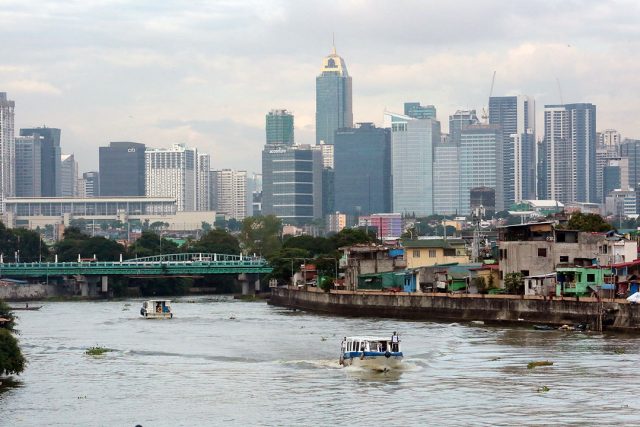
PHILIPPINE STAR/ MICHAEL VARCAS

The political season is upon us. As in all national elections, everyone’s distracted by it. Trolling, black propaganda, partisan mudslinging, backstabbing, and all the negatives of self-serving politics are overpowering the nation’s consciousness. Once again it will be about winnability at all costs. Voters will be entertained and pandered to; lots of money will flow to buy the vote and the count. Substantive intergenerational and nation-building issues will be skimmed through; no depth, no breadth, no cogent plan to deal with it. We keep electing the unworthy, yet, foolishly expecting different results.

Time and again it’s been said that we’re a society that’s long on rhetoric and posturing but short on action and performance. We go through the motions merely to gain favor. To use an overused cliché, we talk the talk but don’t walk the talk. We’re good planners but terrible implementors. We don’t mean what we say nor say what we mean. No word of honor; it’s just a word. Everyone wants to be the boss giving orders without ensuring that the work was thorough, on time, within budget, and according to specs. We want the best in life the quickest way possible by hook or by crook. Taking the short cut is endemic in the way we do things.

Self-interest continues to lord it over the national interest. It suits our short-cut mentality. Self-interest is naturally divisive, which explains our fractured state. On the other hand, protecting the national interest requires unity of common purpose despite our socio-cultural diversity. United we are not. Example: geopolitical debates almost always boil down to who’s pro-American or pro-China. Nowhere in sight is our national interest. If at all, a passing mention is made without understanding what it is and what it takes to protect and advance it.

If we were real patriots (at least a critical mass of, say, a third of the population), we won’t be tolerating the repeated inefficiency, crime, corruption, treachery, and negligence that’s defined us through decades without learning its lessons, like only an idiot nation can. But then again, patriotism is just another word to mouth just to sound good. Our national decay began with the failure of education, yet, we haven’t arrested the slide that we’ve been squawking about for decades. Which explains the loss of our moral compass; the lack of knowledge of everything, critical thought, and patriotism; and limited sense of civic duty and responsibility.

Ok, enough said. Let’s tackle a crucial matter — the absolute necessity for us to think long-term; a firm vision of what we want to be; how we’re going to go about it; and the kind of people we need to have in places of command and control beyond the term of one administration to sustain the journey to the next level. Obviously we’re not like the great powers that think in terms of decades. We love short cuts, right? They set their goals way in advance, then engage in backward planning to map out their building blocks in stages with specific strategies, measures and metrics. They strive long and hard to earn their place in the sun.

One private institution that’s helping government institutions to think and plan long-term, i.e., transforming the way they think and do things, is the Institute for Solidarity in Asia (ISA) founded by former Secretary of Finance Jesus Estanislao. The ISA uses the Performance Governance System based on the Balanced Scorecard to help them and private corporations re-invent themselves; professionalizing and modernizing for the long pull; resetting mindsets to ensure continuity of effort until the vision is attained, after which they’d start over aiming for the next level.

From where I sit, the results have been promising but not without episodes of backsliding or freezing subject to changes in leadership, degree of commitment to the program, and quality of the team or bureaucracy in each organization to sustain the effort. In the case of government, I noted through the years that while elements considered to be its vital arms, legs, and organs are participants, Malacañang’s overwatch has been perceived to be minimal at best. National and local government continue to dysfunction in many areas of statecraft, lacking direction and integration of effort to harness national power, from the bottom up, in the national interest.

Its perceived lack of involvement is unfair to those who diligently hammered out the National Security Policy for 2017-2022, and the 2018 National Security Strategy that flowed from it, that was based on the security-development nexus. They could do a better job if only the national leadership would be more attentive, purposive, and decisive in enforcing the approved policy and strategy. A thorough performance audit is in order to determine to what extent the country’s national security interests have been accorded proper planning and resource allocation, and whether our elements of national power have been enhanced in the process.

For example: Have our collective actions and recorded performance been reflective of our core national values of maka-Diyos (God-fearing), makatao (humane), makabayan (patriotic) and maka-kalikasan (pro-environment)? To what extent has the national interest — national, economic, human and ecological security — been considered in the conduct of statecraft? Have our instruments of national power — political and legal; diplomatic; informational; intelligence; economic and technological; military and law enforcement — been effectively harnessed for a whole-of-nation approach to solve endemic problems and build our nation better?

For those of us who’ve come across various metrics from authoritative sources on how we rate and rank versus other nations — i.e., education, economy, quality of life, maturity, governance, integrity, will power, defense, justice, and patriotism — I’d say that, over-all, we’re in the second quartile from the bottom. Now, to get back to where I began, I don’t hear any party or candidate for high office giving us a sense of what they’ll do about these vital issues. Maybe as the campaign revs up, I may perceive a candidate or two possessing the right stuff. They may capture my vote and yours, but will they be counted? That’s for another op-ed.

This article reflects the personal opinion of the author and does not reflect the official stand of the Management Association of the Philippines or MAP.


Rafael “Raffy” M. Alunan III is a member of the MAP, chair of the Philippine Council for Foreign Relations, vice-chair of Pepsi-Cola Products Philippines, Inc., and sits on the boards of other companies as independent director.

The world is going to need a Covax for climate

FREEPIK

WHEN he stunned the Glasgow climate conference by committing India to achieving net-zero emissions by 2070, Indian Prime Minister Narendra Modi issued a crucial caveat. Without the “transfer of climate finance and low-cost climate technologies,” he said, developing nations such as India would never be able to achieve their ambitious targets.

That’s not an idle worry. If we have learned anything during the COVID-19 pandemic, it’s that the developing world cannot count on getting access to life-saving technologies quickly and affordably. With climate change, the consequences could be even more dire: The world will never be able to reach its climate goals if large emerging economies such as Brazil and India can’t decarbonize just as fast as the US and Europe do. World leaders need to address such concerns now, before they botch yet another global crisis.

The reality is that many of the key innovations in climate-related technologies, such as battery storage and carbon capture, are likely to come from Western companies. In theory, patent holders could ramp up production in lower-cost countries, or offer licenses to local manufacturers there, to ensure that their products are affordable at scale. Alternately, rich countries could provide enough climate finance to cover the cost of adoption.

But wealthy nations aren’t even meeting their existing financing pledges — let alone the $1 trillion India has demanded by 2030. And some companies will no doubt jealously guard their innovations rather than licensing them, for fear of losing valuable intellectual property.

Suspending IP rights, as India and South Africa have fought to do with COVID-19 vaccines, will not help. Decarbonization cannot happen without the willing cooperation of the private sector. While taxpayer support will be instrumental in developing new climate technologies, just as it was for mRNA vaccines, adopting, commercializing and integrating those innovations into emerging economies — working batteries into the electric grid, for example — will rely on private enterprise. Without strong IP protections, private investment won’t be directed at the problem at the scale the world desperately needs.

Leaders should learn from the errors they’ve made during the pandemic, especially the failure of institutions such as Covax, the common vaccine pool. Covax was supposed to channel vaccines manufactured in the rich world to developing nations. Calling its performance disappointing would be an understatement: Just 5% of the vaccines administered so far across the world have come through the facility.

Other good ideas have seen even less pickup. Last year, the World Health Organization set up what it called a COVID-19 Technology Access Pool, meant for “developers of COVID-19 therapeutics, diagnostics, vaccines and other health products to share their intellectual property, knowledge and data with quality-assured manufacturers, through public health-driven, voluntary, non-exclusive and transparent licenses.” Companies have roundly ignored the pool — although, in a rare spot of good news, Merck & Co. recently agreed to license its new oral antiviral medicine, molnupiravir, to a C-TAP-aligned body.

The pandemic didn’t exactly give the world a lot of time to design institutions to encourage technology transfer. We don’t have that excuse for the climate crisis. We need to develop and put in place stronger versions of Covax or C-TAP well in advance of the relevant breakthroughs in technology.

A “climate Covax” would focus on ensuring that innovations in climate-sensitive sectors, especially those developed with the help of taxpayer money, could be licensed for use in the emerging world at scale. Covax failed in part because it became just an allocation mechanism, without any right to contest bilateral deals between manufacturers and rich-country governments.

Its successor, therefore, should partner with those governments earlier on in the process and ensure that it is involved in the initial stages of research. Being a co-developer and co-funder would give the facility leverage to push companies to license the technology they develop — similar to how the US National Institutes of Health is pushing Moderna, Inc. on its vaccine patent.

A climate Covax would also have to invest directly in manufacturing, rather than depending entirely on existing suppliers. Covax’s overdependence on the Serum Institute of India Pvt. Ltd. meant that New Delhi’s vaccine export ban following India’s devastating second wave crippled the program.

And, finally, rich-country governments supporting fundamental research into climate technology need to write better contracts. The Biden administration might want to help get mRNA vaccines to the world. But officials have complained that their hands are tied by absurdly restrictive contracts written during Operation Warp Speed.

If it passes, the administration’s Build Back Better framework will pump hundreds of billions of dollars into climate-related private-sector innovation. Now is the time to ensure that the world benefits from that investment just as much as individual companies do.

BLOOMBERG OPINION

Blackout economics, COP26 and Negros’ power prices

“Blackout economics” is the improper allocation of limited resources that leads to blackouts and power outages. I created this phrase and its definition in this column’s piece on June 14 (https://www.bworldonline.com/ten-indicators-of-blackout-economics/).

The first example of blackout economics in the Philippines was the killing of the Bataan Nuclear Power Plant in 1986, when President Cory Aquino, upon the advice of her officials, did not allow the operation of the nuclear power plant. Killing the potential source of 621 MW of power with no alternative big power plants led to large-scale blackouts in the country in 1990-1991.

Another example of blackout economics is happening in Europe with high reliance on solar-wind power and the slow ditching of huge capacities from coal and nuclear. Europe experienced calm weather this summer and wind output was very low, risking blackouts, so they scampered for more gas from Russia. The year to date (YTD) price as of Nov. 12 (€75.68) of TTF/Euro gas was 311% or four times that at end-2020 (€19.12), and UK gas was 251% — from €56.40 on Dec. 31, 2020, to €194.05 on Nov. 12, 2021.

COP26 COMPROMISE
After two weeks of meetings and negotiations at the UN COP26 in Glasgow 2021 that ended in Nov. 12, two major agreements resulted. One, the developing world wants $1.3 trillion per year of climate money from rich countries starting 2030. This is a big jump from $100 billion per year starting 2020 as agreed on in COP 20 in Paris 2015 which was not implemented anyway.

And two, that there would be a “phase down” instead of “phase out” of coal power. This is important because many developing countries aspiring to be rich — China, India, Indonesia, Vietnam, the Philippines, etc. — are now dependent on coal for at least 40% of their total power generation. Blackout economics is not part of their aspirations.
SEA ICE MELT AND GROWTH
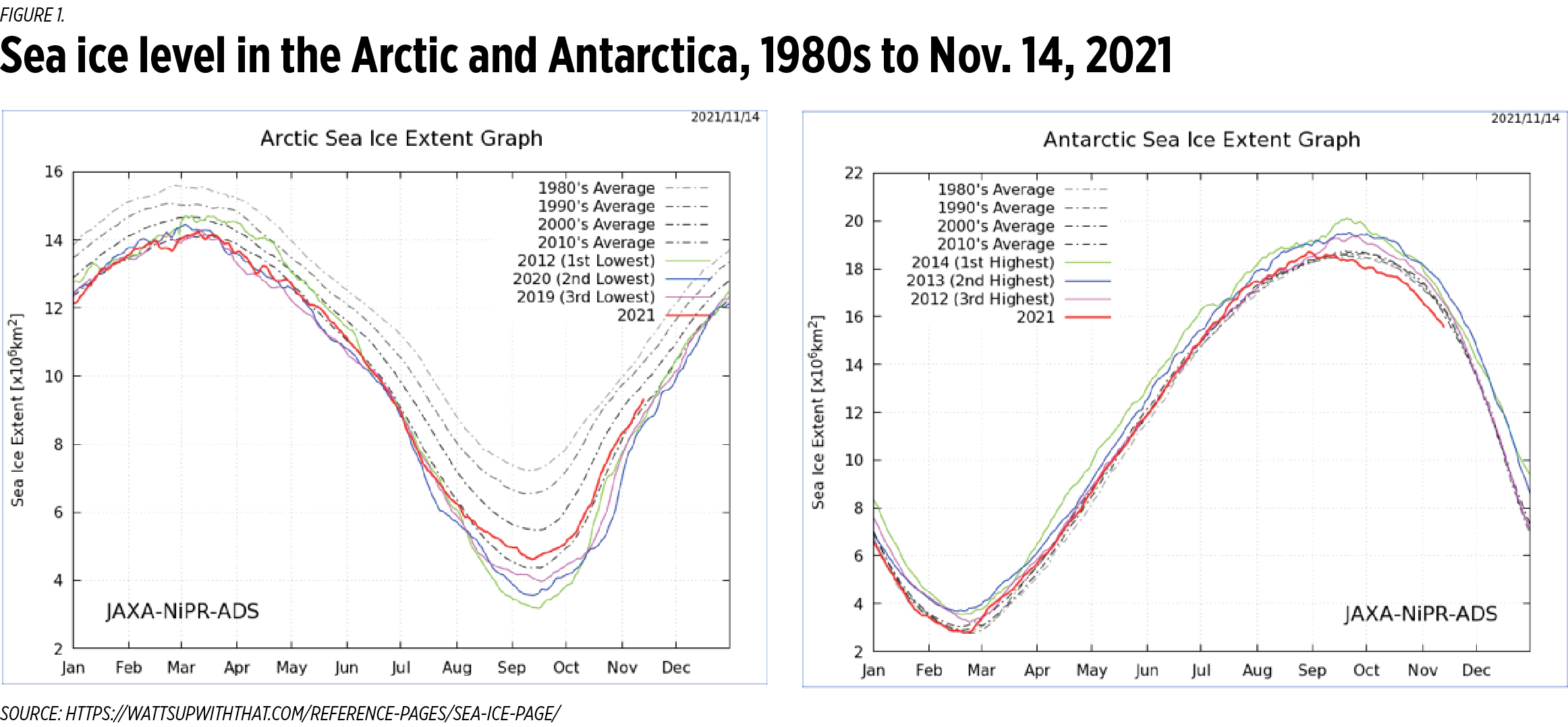
Among the major arguments for “decarbonization” is that “polar ice melts fast and results in rising sea level.”*

This statement is simply not true, is dishonest, because polar ice in both the Arctic and Antarctica, melt and grow yearly, no exception, for thousands and millions of years. There are years where the ice growth is lower than usual but followed by ice higher than usual.

The Japan Aerospace Exploration Agency (JAXA), National Institute of Polar Research (NIPR), Arctic and Antarctica Data archive System (ADS), keeps daily data of polar ice. Arctic ice in 2021 this November is higher than in the 2010s but lower than in the 2000s. In Antarctica, ice this year was above average until September then below average in October-November.

The lowest level that Arctic ice ever recorded since the 1980s was about 3.2 million sq.kms. in September 2012. Still, this is nearly ten times the Philippines’ land area of 0.3 million sq.kms. And among the highest levels of Arctic ice was in March 2012 at about 14.5 million sq.kms., which is 48 times the Philippines’ land area.

There is no “unprecedented, unequivocal melting of polar ice**,” no alarming rise in sea level due to melted polar ice, no climate crisis.

I pointed this out during the Albert Del Rosario Institute (ADRi)-Citizenwatch virtual townhall discussion last week, on Nov. 11, “Ensuring Power Supply Security for a Sustainable Economic Recovery.” The main speaker was Senator Sherwin Gatchalian, Chairman of the Senate Committee on Energy. There were eight other speakers: Jose Alejandro of Philippine Chamber of Commerce and Industry, Meneleo Carlos of the Federation of Philippine Industries, Romy Bernardo of the Foundation for Economic Freedom, Ernie Pantangco of Management Association of the Philippines, Vic Dimagiba of Laban Konsyumers, Inc., Terry Ridon of InfraWatch, Louie Montemar of Bantay Konsyumer, Kalsada, Kuryente, and myself.

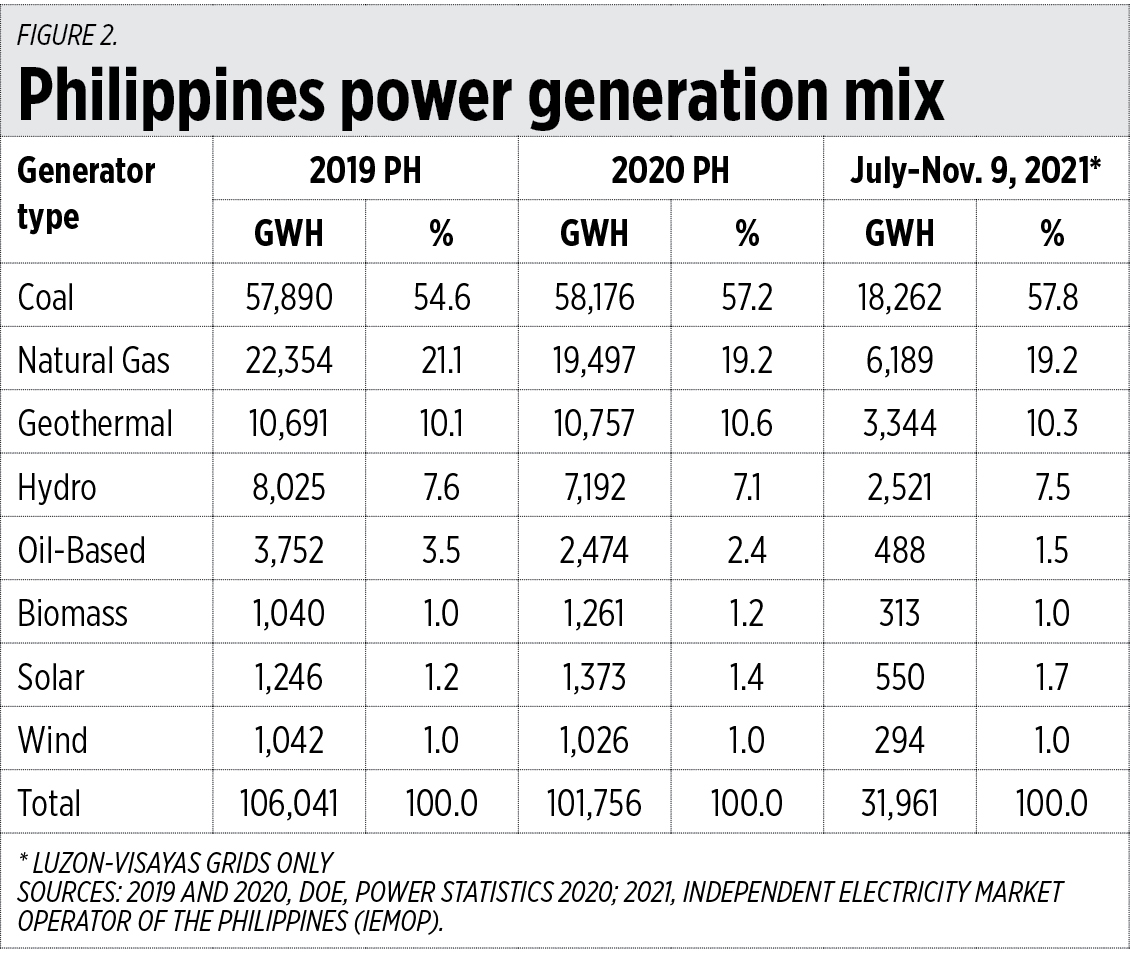
I also mentioned during the forum that hastening decarbonization will lead to blackout economics part 2 in the Philippines because coal generates 57% of total electricity production while solar-wind only generates 2.7% (see Figure 2).
NEGROS POWER PRICES
In the Philippines, the most “green” place is the Negros sub-grid. As of 2020, its power generation was 2,358 GWH, 99.8% came from renewables — geothermal 65.5%, solar 20.6%, biomass 13.6%, hydro 0.2%, oil-based 0.2%, and coal or gas zero.

And Negros has among the most expensive electricity prices in the country. For instance, in the October and November 2021 billing of the Northern Negros Electric Cooperative (NONECO), the generation charge is P6.269/kwh compared with Meralco’s P5.044/kwh in October and P5.335/kwh in November (Meralco’s November rise was largely because of Malampaya temporary gas outage maintenance work).

The transmission charge in Negros is also high P0.858/kwh in October and P0.753 in November compared with Meralco’s P0.708 in October and P0.668 in November. One reason is that Negros is power-deficient overall and solar-surplus at certain hours. At night or on cloudy days, Negros imports coal power from the Cebu and Panay sub-grids, while on hot cloudless days it can export surplus solar power. It makes frequent use of the National Grid Corp. of the Philippines’ (NGCP) transmission system.

ERC FAVORITISM OF NGCP
Last June, the NGCP’s Negros-Cebu submarine cable, with a capacity of 180 MW, was damaged by Department of Public Works and Highways (DPWH) dredging and re-channeling activities in Amlan, Negros Oriental. Transmission was cut by half to only 90 MW, resulting in higher electricity prices in Negros.

This brings up at least three issues.

One, the NGCP and DPWH have no liability, all congestion costs are passed on to consumers and generation companies (gencos). The DPWH or its contractor should have liability insurance to handle these cases but the NGCP has no incentive to go after the DPWH if it can pass on all the costs to the consumers and gencos.

Two, the Energy Regulatory Commission (ERC) ordered the Philippine Electricity Market Corp. (PEMC) to remove “congestion costs” in the price determination of the Wholesale Electricity Spot Market (WESM). This was a unilateral order, with no consultation with players. This has a distortionary impact on WESM pricing.

And, three, the ERC imposes reliability standards with penalties on the competitive generation sector but has lax reliability standards on the monopoly transmission sector.

When it comes to generation and distribution, the ERC is strict and hard. When it comes to transmission and the NGCP, the ERC is a softie. This is lousy and anti-consumer. n

*Paraphrased from statements like: “Rapid glacial melt in Antarctica and Greenland also influences ocean currents, as massive amounts of very cold glacial-melt water entering warmer ocean waters is slowing ocean currents. And as ice on land melts, sea levels will continue to rise.” from https://www.worldwildlife.org/pages/why-are-glaciers-and-sea-ice-melting

**Paraphrased from statements like: “Climate change is unequivocal and has caused unprecedented changes to the world’s atmosphere. It affects the polar ice caps…” from https://www.downtoearth.org.in/blog/climate-change/cop-26-greening-of-polar-ice-should-top-agenda-here-s-why-79839


Bienvenido S. Oplas, Jr. is the president of Minimal Government Thinkers.

inimalgovernment@gmail.com

COP26 deal: How rich countries failed to meet their obligations to the rest of the world

COP26, the recently concluded UN climate change conference in Glasgow, marked a critical turning point in global politics. From now on, the issue of climate justice will be unavoidable for rich countries.

The Glasgow Climate Pact “urges” rich countries like the US (referred to as “developed countries” in the text) to increase funding for poor countries like Bangladesh (“developing countries”) to around $40 billion annually by 2025, to help them adapt to mounting floods, droughts and other effects of climate change.

This is pretty strong language in UN speak and is welcome support. But the rich world has a history of failing to meet its financial promises. Only 80% of the $100 billion promised annually by 2020 to help developing countries mitigate their emissions and adapt to climate change has been delivered.

The failure to meet the amount developing countries need to adapt to climate change means the world faces a life sentence of escalating climate impacts. Those impacts that we won’t be able to prevent or adapt to are referred to as “loss and damage” in the lingo of international climate policy and they are already beginning to bite in the most vulnerable countries. The failure of COP26 to commit to keeping warming below 1.5°C will mean more such loss and damage in future.

Some consider work on loss and damage to be a form of compensation for the harm rich countries have indirectly caused poor ones by disproportionately contributing to climate change with their greenhouse gas emissions. Others prefer the term “climate reparations,” and yet others talk about “solidarity funds.”

However you describe it, the fine print of the previous UN climate treaty, the 2015 Paris agreement, sought to squash any notion of developed countries being liable. But the outcome of COP26 shows that the issue of who is responsible and who should pay for the consequences of climate change can no longer be ignored. However, even the annual climate funding that has been pledged doesn’t include any money allocated for loss and damage.

The idea of paying for loss and damage was introduced with the first UN climate treaty negotiations in 1991 as something owed to small island states. But over the years, other groups, including the poorest countries and others across Africa, have begun to champion the issue.

Thanks to major advances in the field of attribution science, there is growing understanding of the precise link between human-caused emissions and specific severe weather events. This relationship will intensify with every ton of emissions, and for many of these climate-consequences, there is no turning back.

Heading into the Glasgow summit, delegates were mindful of the growing adaptation needs of developing countries. Adapting to climate change isn’t straightforward: even the UK, for all its wealth and its relative lack of exposure, isn’t getting it right.

In the lead up to COP26, all countries were expected to update their climate action plans, known as NDCs. Recent analysis showed an increasing number were talking about loss and damage in their plans. This makes sense: as countries increasingly have to divert resources towards preparing for and responding to disasters like cyclones, or sea-level rise, and melting glaciers, there will be less public financing available for them to cut their emissions and contribute to meeting the 1.5°C goal.

There was important progress in Glasgow. But much of this came from outside the negotiating rooms.

The negotiators working on loss and damage conducted their talks late into the night to flesh out what the Santiago Network — a new way of offering technical assistance to developing countries — should be doing to support countries in a practical way. But progress was slow and calls to set up a “Glasgow Loss and Damage Facility” which would have provided financial support for vulnerable countries went unheeded.

Agreed instead was the establishment of a “Glasgow Dialogue” to discuss funding arrangements over the coming years. This could be an important step to real, material support for vulnerable countries. But in some ways, this feels like deja vu.

COP23 in 2017 established a “Suva Expert Dialogue” — a two-day workshop which produced a technical paper — to explore information on finance for loss and damage. COP24 the following year and COP25 in 2019 pushed for the establishment of an expert group on loss and damage which was finally launched in early 2021.

Progress is incremental, but with all these dialogues it’s no wonder that young protesters decry this “blah, blah, blah” approach to climate action.

One surprise in Glasgow was the symbolic and material support for loss and damage which came from those outside the negotiating room. Scotland’s first minister, Nicola Sturgeon, promised £2 million of funding to alleviate the impacts of climate change. This was augmented by a $3-million pledge from philanthropists. Since then, a Belgian provincial climate minister has also committed €1 million.

This is a drop in the ocean. It nonetheless represents an interesting twist in terms of who is stepping up to take responsibility for the harm that climate change is already causing and looks set to cause in the future.


Lisa Vanhala Is a professor of Political Science in the University College London. She has received funding from the European Research Council, the Economic and Social Research Council and the British Academy. She has consulted for the Baring Foundation, the Kankelly Chase Foundation, the Legal Education Foundation, and the Local Trust. She has also consulted for the Public Law Project, Access Social Care, Impact Social Justice, the Central England Law Center, Practical Action, Greenpeace International, Independent Age and the Equality and Human Rights Commission. She sits on the Sustainable Future grand-making committee of the Joseph Rowntree Charitable Trust.

Was Glasgow pact a win for climate? Time will tell

PHILIPPINE STAR/ MICHAEL VARCAS

GLASGOW — Its ambition was clear: the U.N. climate summit was meant to secure a deal to give the world a chance to avert the worst impacts of climate change by capping global warming at 1.5 degrees Celsius (2.7 Fahrenheit) above pre-industrial levels.

The accord met that bar, but barely, and its ultimate success will be determined by the future actions of the governments that thrashed it out, according to the summit’s UK hosts, participants, and observers.

“I think today we can say with credibility that we’ve kept 1.5C within reach. But its pulse is weak, and we will only survive if we keep our promises,” the summit’s president Alok Sharma said late on Saturday after the pact was adopted.

The deal, backed by nearly 200 countries, for the first time explicitly targeted fossil fuels, the biggest driver of manmade global warming, asked governments to accelerate emissions cuts, and promised more money for poor countries struggling with climate change.

It also ushered in voluntary pledges and pacts from countries, companies and investors to clean up emissions from cars and planes, curb the powerful greenhouse gas methane, protect forests and bolster green finance.

But the agreement was packed with compromises, leaving all sides — from wealthy nations seeking faster action, to resource-rich developing countries and low-lying island states — dissatisfied.

“The approved texts are a compromise,” said U.N. Secretary-General Antonio Guterres. “They reflect the interests, the conditions, the contradictions and the state of political will in the world today.”

That leaves the world highly vulnerable. “We are still knocking on the door of climate catastrophe. It is time to go into emergency mode,” he said.

The summit did not deliver enough emissions-cutting pledges from countries to set a clear path to limiting warming to 1.5C. Instead, it struck a deal for the nearly 200 countries represented at the event to increase their pledges next year to close the gap.

The gap is huge. Governments’ current pledges to cut emissions this decade would lead to 2.4C of warming.

To align with the 1.5C target, countries need to cut carbon dioxide emissions by 45% by 2030 from 2010 levels. Under current pledges, emissions would rise by nearly 14% by 2030.

“While compromises at COP26 keep the 1.5C target within reach, it is hanging by a thread,” said Bert Wander, the acting CEO of environmental group Avaaz.

China, the world’s biggest carbon dioxide emitter, announced in a joint declaration with the United States last week that it would accelerate efforts to reduce emissions by curbing coal use, tackling methane, and preserving forests. It provided few details, however.

China was also among a group of resource-rich developing nations that watered down language targeting fossil fuels in the text of the Glasgow deal.

The draft called on countries to phase out coal use and fossil fuel subsidies. But as the negotiations played out, words were changed: coal became “unabated coal,” leaving scope for continued use of coal that uses emissions-capturing technology.

Subsidies became “inefficient subsidies,” without a definition of which types of subsidies counted as inefficient, providing wriggle room for governments to continue funding oil, gas and coal.

A last-minute intervention by India and China just before the pact was adopted also changed the requested coal “phase out” to a “phase down.”

FAIRNESS
The Glasgow agreement delivered a mixed bag on finance, a contentious issue between poor countries and their rich and powerful counterparts.

Finance boils down to the issue of fairness, and whether rich nations whose historical emissions are largely responsible for causing climate change will pay the costs it is imposing on the world’s poorest countries.

The deal made some headway. It asked developed countries to “at least double their collective provision of climate finance for adaptation to developing country Parties from 2019 levels by 2025.”

It also, for the first time, made mention of “loss and damage” in the cover section of the agreement. Loss and damage refer to the costs that countries are already facing from climate-driven disasters, for which those countries have for years sought compensation.

But after resistance from the United States, the European Union and other rich nations, the accord failed to secure funds for that compensation.

The world’s most vulnerable countries backed the final deal grudgingly. Antigua and Barbuda negotiator Lia Nicholson said her country and other small island states at the talks “will express our grievances in due course.”

Rich countries broke a 2009 promise to deliver $100 billion annually by 2020 in climate finance, making poor countries wary that promised cash will not arrive. They now expect to deliver the $100 billion by 2023. — Reuters

China blames cold-chain foods for coronavirus flareup in major port city Dalian

REUTERS

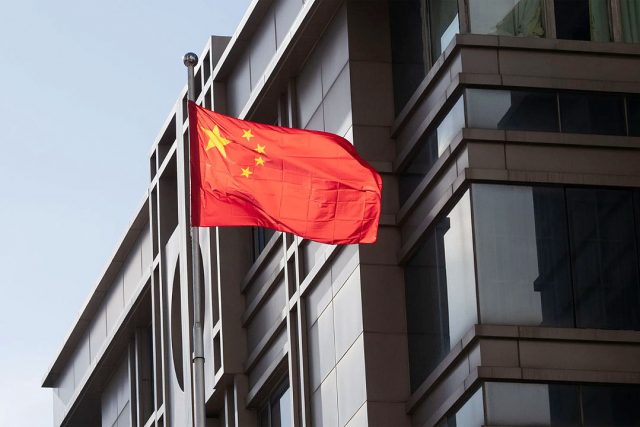
CHINA has linked the coronavirus outbreak in Dalian, a major port city that has become the country’s latest hotspot, to cold-chain foods and authorities are stepping up scrutiny of imported products.

The northeastern city is battling the biggest flareup in the country’s current virus wave, placing tens of thousands of university students under lockdown. The first identified case was linked to a cold-storage facility and several other infections were reported among employees in the cold-chain industry, local media said, adding that this is the third cold-chain related outbreak in the city.

Dalian is an important cold-chain storage and transportation base, handling about 70% of China’s total imported cold-chain products. Cities across the country have stepped up investigation of cold-chain foods from Dalian in recent days. Shopping centers and food companies were asked to suspend sales and conduct nucleic acid tests on these products immediately, Global Times said.

China claims that the virus can persist in conditions found in cold-chain food and packaging, and authorities have been testing imported meat and seafood for traces of the virus. International health authorities have downplayed the likelihood of such transmission, with the World Health Organization and the US Centers for Disease Control and Prevention saying the chance of getting coronavirus disease 2019 (COVID-19) from frozen foods is very low.

“There is still controversy about the scientific merits of the coronavirus being transmitted in cold-chain products, but from a practical perspective, it doesn’t matter,” said Darin Friedrichs, senior Asian commodity analyst at StoneX in Shanghai. “Chinese officials and scientists believe it is possible and poses a real threat, and they are going to take action.”

The cold-chain scrutiny in Dalian could hit European and US seafood markets ahead of the holiday, given that China is a major processing and re-export hub, Mr. Friedrichs said. It could also have logistics implications outside of cold chain, spurring issues at ports that handle bulk cargo and further disrupting global freight markets, he added. — Bloomberg

Japan’s economy shrinks more than expected as supply shortages hit 

REUTERS

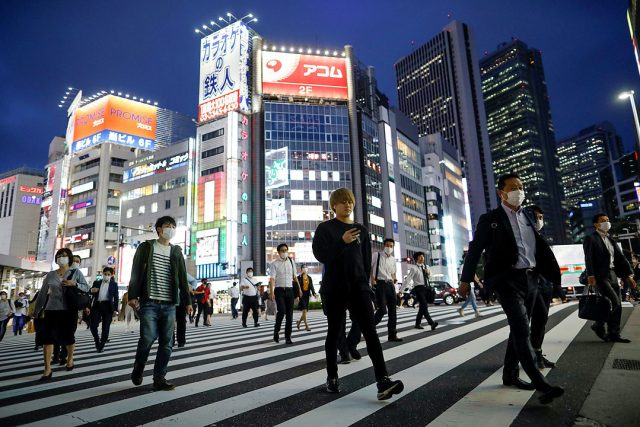
TOKYO — Japan’s economy contracted much faster than expected in the third quarter as global supply disruptions hit exports and business spending plans and fresh coronavirus disease 2019 (COVID-19) cases soured the consumer mood.  

While many analysts expect the world’s third-largest economy to rebound in the current quarter as virus curbs ease, worsening global production bottlenecks pose increasing risks to export-reliant Japan.  

“The contraction was far bigger than expected due to supply-chain constraints, which hit car output and capital spending hard,” said Takeshi Minami, chief economist at Norinchukin Research Institute.  

“We expect the economy to stage a rebound this quarter but the pace of recovery will be slow as consumption did not get off to a good start even after COVID-19 curbs were eased late in September.”  

The economy shrank an annualized 3.0% in July–September after a revised 1.5% gain in the first quarter, preliminary gross domestic product (GDP) data showed on Monday, much worse than a median market forecast for a 0.8% contraction.  

The weak GDP contrasts with more promising readings from other advanced nations such as the United States, where the economy expanded 2.0% in the third quarter on strong pent-up demand.  

In China, factory output and retail sales unexpectedly rose in October, data of Monday showed, despite supply shortages and fresh COVID-19 curbs.  

On a quarter-on-quarter basis, GDP fell 0.8% compared with market forecasts for a 0.2% decline.  

Some analysts said Japan’s heavy dependency on the auto industry meant the economy was more vulnerable to trade disruptions than other countries.  

Shinichiro Kobayashi, principal economist at Mitsubishi UFJ Research and Consulting, said automakers make up a large part of Japan’s manufacturing sector with a wide range of subcontractors directly affected.  

STIMULUS PLAN 
Prime Minister Fumio Kishida plans to compile a large-scale economic stimulus package worth “several tens of trillion yen” on Friday, but some economists were sceptical about its impact on growth near-term.  

“The package will likely be a mixed bag of near-term and long-term growth measures, and the focus may be blurred, so it won’t have much impact near-term,” Norinchukin’s Minami said.  

Consumption fell 1.1% in July-September from the previous quarter after a 0.9% gain in April-June.  

Capital expenditure also decreased 3.8% after rising a revised 2.2% in the previous quarter.  

Domestic demand shaved off 0.9% point to GDP growth.  

Exports lost 2.1% in July–September from the previous quarter as trade was hurt by chip shortages and supply-chain constraints.  

Analysts polled by Reuters expect Japan’s economy to expand an annualized 5.1% in the current quarter, as consumer activity and auto output pick up.  

However, Japanese firms still face risks from higher commodity costs and supply bottlenecks, which threaten to undermine the economic outlook over the short- to mid-term.  

Real GDP, which factors in the effects of inflation, won’t return to pre-pandemic levels until the second half of 2023, said Takahide Kiuchi, a former Bank of Japan board member who now serves as chief economist at Nomura Research Institute.  

“China’s slowdown, supply constraints, rising energy prices and a slowdown in inflation-hit western countries will reduce the pace of growth towards mid-2022,” Mr. Kiuchi said.  

“As exports remain severe, Japan’s economy will likely undergo moderate growth of around 1%-2% annualized in the second quarter onwards, even taking effects of stimulus into account.” — Reuters 

Biden advisers say pandemic, not policies, fueling inflation

WASHINGTON — US President Joseph R. Biden, Jr.’s economic advisers defended his policies on Sunday amid rising inflation that they said was a global issue related to the coronavirus disease 2019 (COVID-19) pandemic, not a result of the administration’s programs.  

US consumer prices last week posted their biggest annual gain in 31 years, driven by surges in the cost of gasoline and other goods. Republicans have pounced on inflation worries, claiming that the increase reflects Biden’s sweeping spending agenda.  

“There’s no doubt inflation is high right now. It’s affecting Americans’ pocketbooks. It’s affecting their outlook,” Brian Deese, director of the White House National Economic Council, said on NBC’s Meet the Press. “But it’s important that we put this in context. When the president took office, we were facing an all-out economic crisis.”  

The United States is hardly alone in enduring a bout of stiff inflation, with the Organization for Economic Cooperation and Development showing inflation running high across its 38 member countries and oil prices quadrupling in the last 18 months as economies reopened from COVID-19 shutdowns.  

On Monday, Mr. Biden is scheduled to sign a $1 trillion bipartisan infrastructure bill that is expected to create jobs across the country by dispersing billions of dollars to state and local governments to fix crumbling bridges and roads, and expanding broadband internet access to millions of Americans.  

Treasury Secretary Janet Yellen and Mr. Deese in separate television appearances said they expect that measure, as well as the $1.75 trillion “Build Back Better” domestic spending and climate investment bill to help bring down inflation.  

“There’s an urgency to act,” Mr. Deese said on CNN.  

Mr. Deese said he was confident that House of Representatives Speaker Nancy Pelosi would bring the “Build Back Better” bill to a vote this week. That, however, will only be a first step as the Senate has not yet taken up the bill, and Democratic divisions could threaten its chances in that chamber.  

Senate Majority Leader Chuck Schumer in an open letter to fellow Democrats on Sunday said his chamber will not take up the bill until the House passes it. Congress faces an extremely crowded agenda in the month ahead as it also needs to avert an economically catastrophic debt default by the federal government and a partial government shutdown that would be politically embarrassing for Democrats.  

SLIDING APPROVAL 
High inflation is eroding wage gains, adding to political risk for Mr. Biden, whose approval rating has been falling as Americans grow more anxious about the economy. Broadening inflationary pressures could also complicate the Federal Reserve’s communication. The Fed this month restated that high inflation is “expected to be transitory.”  

“The problem is the Democrats are now saying we want to go all in with this massive tax and spending bill,” Republican Senator John Barrasso said on ABC’s This Week. “People are going to pay higher prices.”  

The White House regularly cites support for the Build Back Better plan from 17 Nobel laureates who say it will ease longer-term inflation.  

Mr. Biden’s $1.9 trillion American Rescue Plan stimulus package in March helped Americans weather the pandemic and today spending is strong and demand is strong, Ms. Yellen said on CBS’ Face the Nation. 

However, the supply of goods and of workers remains low, she noted, and the federal government is scrambling to unblock global supply chains affected by the pandemic.  

Ms. Yellen has said she expects prices to go back to normal by the second half of next year if the pandemic continues to wane.  

“The pandemic has been calling the shots for the economy and for inflation,” Ms. Yellen said. “And if we want to get inflation down, I think continuing to make progress against the pandemic is the most important thing we can do.”  

Mr. Biden and his top economic advisers have for months predicted that inflation would be a short-term problem.  

Asked on CNN’s State of the Union if they were wrong, Mr. Deese said, “No, I don’t think so” and pointed to the strength of the US economic recovery.  

Former Treasury Secretary Larry Summers, a Democrat who warned in February the American Rescue Plan could fuel inflation, said on Sunday he supported both the infrastructure and Build Back Better bills because they make long-term investments.  

“We will sacrifice our country’s future … and we won’t make any meaningful contribution to reducing inflation, if we vote down this bill,” Mr. Summers said on CNN’s Fareed Zakaria GPS. — Doina Chiacu/Reuters  

ADVERTISEMENT
ADVERTISEMENT