Home Blog Page 7187

Olympics: Anti-China forces are stirring trouble ahead of Beijing Olympics

SHANGHAI — The Winter Olympics in Beijing next year will be a “rite of passage” for China to become a mature major power, the state-backed Global Times said in an editorial on Tuesday, alleging that anti-Chinese forces were trying to make trouble.

Referring to comments made by the United States that it might consider a diplomatic boycott of the games in February to protest China’s human rights practices, the Global Times said it was “not worthy” for China to expend energy on the matter, or “even attempt to reverse their negative thoughts towards China.”

“The ideological conflicts between China and the West will escalate before the Beijing Winter Olympics in 2022 as anti-Chinese forces will converge to make trouble for China,” said the Global Times which is published by the People’s Daily, the official newspaper of China’s ruling Communist Party.

“This event will not only be a comprehensive stress test for China’s ability to respond to various crises, but also a catalyst for China’s growth in mentality as a major power.”

Human rights groups have called for a boycott of the Games in February over China’s record on human rights. Last week, US President Joseph R. Biden, Jr. said he was considering a diplomatic boycott which would mean that US officials would not attend the opening of the Games.

A spokesman for British Prime Minister Boris Johnson said on Monday that no decision has yet been made on who will represent the government at the Beijing Winter Olympics, though he did not support the idea of sporting boycotts.

Governments typically send a high-ranking delegation of diplomats to opening ceremonies in a show of international support. The 2022 Winter Olympics run from Feb. 4-20.

The case of Chinese tennis star Peng Shuai, whose whereabouts became a matter international concern over the past few weeks after she posted a message on social media alleging that China’s former Vice-Premier Zhang Gaoli had sexually assaulted her, has also cast a shadow over the approaching games.

Peng reappeared in Beijing over the weekend and held a video call with International Olympic Committee President Thomas Bach, but the Women’s Tennis Association and French government officials said that they still had concerns over her well-being. — Reuters


Lakers identity

LeBron James most definitely deserved to be ejected for making contact with the face of the Pistons’ Isaiah Stewart as they tussled for a rebound early in the third quarter of the Lakers’ visit to the Little Caesars Arena the other day. It wasn’t that he deliberately aimed for the 2020 first round pick’s mug; it was that prevailing rules heavily penalizes hits above the neck. In any case, he immediately turned to his victim to apologize, and cooler heads seemed to prevail early on. Unfortunately, the immediate effect of the contact was plain for all to see, and the ensuing action evoked memories of the Malice at the Palace.

Not that things were going to escalate to the level of the infamous brawl 17 years ago; back then, even spectators got involved. In this particular case, only Stewart seemed to be so worked up, with even his coaches and teammates trying their level best to prevent him from charging at James. He saw red, figuratively and literally, and to the point where he repeatedly moved in the direction of the 17-time All-Star. And he would have succeeded, too, had Piston after Piston, separately and together, not intervened.

At the time of the incident, the Lakers were down 12 points, again playing listless hoops and in danger of suffering a fourth straight setback and fifth in six outings. But, as Pistons head coach Dwayne Casey noted, “it got them going.” It also bears noting that, apart from Stewart (who subsequently bore insult added to injury by being suspended two games), everybody concedes the future Hall of Famer to be far from dirty. Who knows what he was thinking in the heat of the moment? He knew his misstep as soon as it happened, though, and promptly made amends — or, at least, tried to.

Stewart will, no doubt, learn from the experience. After all, there’s no better teacher. Meanwhile, James will miss yet another contest in the Lakers’ young campaign. The season may be long, but his absence is a blow in the face of their continued inability to find their identity — and, at this point, any identity is better than none. They’ve gone small, they’ve gone big, and they’ve gone any which way in between, and nothing seems to have stuck to their satisfaction. And after the overhaul they did, arguing that .500 ball is unacceptable would be a gross understatement.


Anthony L. Cuaycong has been writing Courtside since BusinessWorld introduced a Sports section in 1994. He is a consultant on strategic planning, operations and Human Resources management, corporate communications, and business development.

Peso rises vs dollar following decline in oil prices

BW FILE PHOTO

THE PESO strengthened versus the greenback on Tuesday as fuel prices fell and with US Federal Reserve Chairman Jerome H. Powell getting an endorsement from President Joseph R. Biden for a second term.

The local unit closed at P50.59 against the dollar on Tuesday, gaining six centavos from its P50.65 finish on Monday, based on data from the Bankers Association of the Philippines.

The peso opened Tuesday’s session at P50.70 per dollar, weaker than its previous close. Its worst showing was at P50.765, while its intraday best was at P50.58 versus the greenback.

Dollars exchanged dropped to $1.24 billion on Tuesday from $1.402 billion on Monday.

The decline in oil prices supported the peso on Tuesday, a trader said in an e-mail.

Oil prices dropped as major economies including the US, Japan, and India are reportedly releasing their reserves to help stem the increase in pump prices, according to Reuters.

Brent crude futures decreased by 67 cents or 0.8% to $79.03 a barrel at 0721 GMT Tuesday, while US West Texas Intermediate crude futures slipped by 88 cents or 1.2% to $75.87 a barrel.

Meanwhile, Rizal Commercial Banking Corp. Chief Economist Michael L. Ricafort said the market took Mr. Powell’s renomination as good news, boosting the local unit.

Mr. Biden on Monday endorsed Mr. Powell for another four-year term as Fed chair, saying the US central bank had taken a “decisive action” to respond to the crisis under his leadership.

For Wednesday, the trader gave a forecast range of P50.50 to P50.75 per dollar, while Mr. Ricafort expects the local unit to move within P50.50 to P50.70. — L.W.T. Noble with Reuters

Stocks rise on bargain hunting, reopening hopes

BW FILE PHOTO

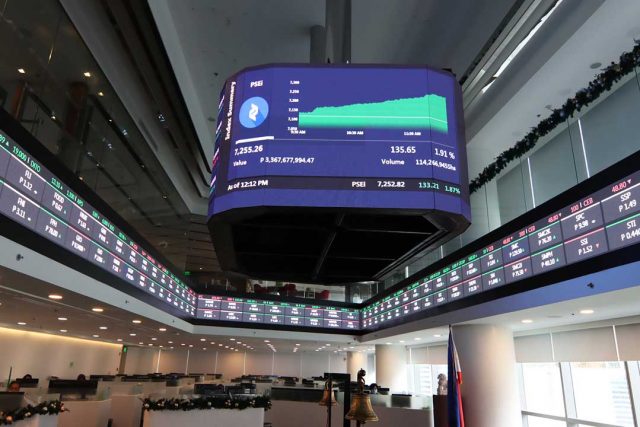
PHILIPPINE STOCKS rose on Tuesday on the back of continued bargain hunting and hopes of a further economic reopening as coronavirus cases drop further.

The Philippine Stock Exchange index (PSEi) soared 118.49 points or 1.62% to end at 7,401.16, while all shares index jumped 58.69 points or 1.51% to 3,937.64.

“The local bourse jumped… as bargain hunting continues… Net foreign buying of P775.75 million lifted the market as well,” Philstocks Financial, Inc. Senior Research and Engagement Officer Claire T. Alviar said in a Viber message.

“Moreover, the approval of the House of Representatives on the second reading to extend the validity of the P4.5-trillion 2021 national budget until next year also spurred optimism in the market. Extending the budget is favorable to the economy as it is expected to boost the country’s spending,” Ms. Alviar said.

Lawmakers on Monday extended all allocations under the 2021 General Appropriations Act until Dec. 31, 2022.

“A lot of reopening plays are being bought as both local and foreign funds bargain hunt with [favorites] like property, aviation, consumer and conglomerates with exposure in the same, all in anticipation of the next year’s stronger GDP (gross domestic product) growth,” First Metro Investment Corp. Head of Research Cristina S. Ulang said in a Viber message.

Regina Capital Development Corp. Head of Sales Luis A. Limlingan said in a Viber message that there was bargain hunting after US President Joseph R. Biden, Jr. said he will appoint current Federal Reserve Chair Jerome H. Powell for a second four-year term.

Mr. Biden on Monday tapped Mr. Powell to continue as Fed chair, and Lael Brainard, the other top candidate for the job, as vice-chair, Reuters reported.

All sectoral indices closed higher on Tuesday. Services climbed 45.93 points or 2.32% to 2,022.92; financials rose 36.14 points or 2.27% to 1,625.30; mining and oil gained 197.10 points or 2.10% to 9,550.86; holding firms increased by 132.87 points or 1.89% to 7,138.65; property added 32.47 points or 0.97% to 3,361.91; and industrials went up 88.01 points or 0.82% to 10,763.19.

Value turnover on Tuesday reached P9.28 billion with 1.55 billion switching hands, versus Monday’s P8.47 billion with 1.06 billion issues.

Advancers outnumbered decliners, 133 to 56, with 53 closed unchanged.

Net foreign buying reached P775.75 million on Tuesday, a reversal of the P461.9 million in net selling recorded the previous day.

“We do hope that this rally can be a little more sustainable and hope that the US (or other markets for that matter) can service to keep itself steady or up through its Thanksgiving holidays and strong discount retail days, as these would help a lot in keeping the buoyant mood open,” COL Financial Group Chief Technical Analyst Juanis G. Barredo said in a Viber message. — MCL with Reuters

‘Stand your ground,’ ‘be your best friend’: Filipina founders offer advice to aspiring entrepreneurs

PIXABAY

Focus on your values, make people the core of your strategy, and be a catalyst of change, said Filipina founders to fellow entrepreneurs at the Startup Pinay Summit held during a startup conference organized by QBO Philippines, government agencies, and the local startup ecosystem. 

When she was starting her career in telecommunications, it was a very male-dominated field, said Crystal L. Gonzalez, co-founder and chief executive officer of Pick.A.Roo, a grocery, food, and shops delivery app.      

“I just ignored it completely and focused on the few females that were leading it,” she said. “I said, I want to be that. You have to challenge the culture. Who else would do it?”  

Ms. Gonzalez had pregnancy-induced nausea when she launched an Independence Day event for Viber, an instant messaging platform, as its country manager. She also carried a breast pump to an all-male board meeting while her baby was still in the breastfeeding stage.  

“To me, it was non-negotiable. I was going to breastfeed my kids,” Ms. Gonzalez said. “It wasn’t easy…but you have to stand your ground.”   

A 2020 study on gender diversity and company performance found that the more gender diversity is culturally accepted, the more this factor benefits a company’s market valuation and revenue.  

There’s always the impression that you could have a career but to have to be a perfect mom as well, added Rebecca Kersch, founder and chief executive officer of Tang App, an international peer-to-peer payment app.   

“Instead of being hard on yourself, be your best friend,” she said at the summit.   

FOCUS ON YOUR TEAM  

Your staff needs to be included in your company’s growth trajectory, according to Melissa G. Nava, co-founder and chief executive officer of 1Export, an end-to-end exporting platform. A strong team is key to a strong business.  

When the pandemic started disrupting supply chains the world over, 1Export made sure it had the technology to comply with the required regulations online. It likewise ensured it had a good network of logistics partners and buyers to be able to pull through the “impossible” task of cross-border trade. The company’s team was also taken care of.  

“We tested them [for COVID-19] every month,” Ms. Nava said. “Now that the whole team is vaccinated, we provide them vitamins and food to ensure they won’t be exposed.”   

1Export’s cash flow wasn’t healthy when the first quarantine restrictions were announced.   

“I told our team, you need to work your hardest in the next three months so we can all survive,” she said at the Nov. 19 summit. Goals were set, and regular town halls were organized to get a feel of how much progress was achieved.  

The end-to-end exporting platform’s actions paid off, Ms. Nava added, as they now sell to more than 30 markets — a contrast to the four markets they served pre-pandemic.  

FOCUS ON YOUR VISION  

What COVID-19 did was galvanize corporations and startups to reflect on their purpose, said Ambe C. Tierro, senior managing director of Accenture Technology, a technology consulting group.  

“Startups are built around this. Their driving force is purpose,” she said. “A lot of corporations also reflected on this because of COVID-19.”  

The Great Resignation besetting other countries is the Great Reassessment, added Minette B. Navarrete, president and co-founder of Kickstart Ventures, the venture capital arm of telecommunications company Globe Telecom.  

“A lot of our team are Millennials and Gen Zs,” Ms. Navarette said. “They are very good at reminding us what are the things that matter.”  

According to the Gobi-Core Philippine Startup Ecosystem Report of 2021, the country is a hospitable environment for startups. Among the factors contributing to this environment are consumption figures that contribute to 90% of the Gross Domestic Product (GDP), as well as government initiatives that support startups 

Women are made of stern stuff, reminded Rowena Cristina L. Guevara, Department of Science and Technology’s undersecretary for research and development.  

“When I was a college freshman, there were 70 of us in Electrical Engineering — six of whom were women. When I graduated, there were 27 of us left — six of whom were women,” Ms. Guevara said. “Women are survivors. That’s how we operate.” — Patricia B. Mirasol

U.S. warship again transits sensitive Taiwan Strait

TAIPEI – A U.S. warship again sailed through the sensitive Taiwan Strait on Tuesday, part of what the U.S. military calls routine activity but which always riles China whose government believes Washington is trying to stir regional tensions.

The U.S. Navy said the Arleigh Burke-class guided-missile destroyer Milius conducted a “routine Taiwan Strait transit” through international waters in accordance with international law.

“The ship’s transit through the Taiwan Strait demonstrates the U.S. commitment to a free and open Indo-Pacific. The United States military flies, sails, and operates anywhere international law allows,” it added.

There was no immediate response from China.

Last month, the Chinese military condemned the United States and Canada for each sending a warship through the Taiwan Strait, saying they were threatening peace and stability in the region.

China claims democratically ruled Taiwan as its own territory, and has mounted repeated air force missions into Taiwan‘s air defence identification zone (ADIZ) over the past year or so, provoking anger in Taipei.

The United States like most countries has no formal diplomatic ties with Taiwan but is its most important international backer and arms supplier.

Beijing calls Taiwan the most sensitive and important issue in its relations with Washington.

U.S. Navy ships have been transiting the strait roughly monthly, to the anger of Beijing. U.S. allies occasionally also send ships through the strait, including Britain in September. – Reuters

EXPLAINER | What we know so far about El Salvador’s volcano-powered bitcoin bond

PIXABAY

MIZATA, El Salvador/LONDON – El Salvador plans to build the world’s first “Bitcoin City” with money from a $1 billion bitcoin-backed bond the country’s President Nayib Bukele said on Saturday.

Here is what we know about the proposed bond and some of the details that still need to be filled in.


WHAT WE KNOW

Bukele said El Salvador planned to issue the bond in 2022, suggesting it could be as soon as in 60 days time.

Half of the $1 billion sum would be converted to bitcoin and the other half used for infrastructure and bitcoin mining.

Samson Mow, chief strategy officer of blockchain technology company Blockstream who was on stage with Bukele said that the ‘volcano bonds’ – the new city will be powered with geothermal energy from a nearby volcano – will be U.S. dollar-denominated 10-year bonds and carry a coupon of 6.5%.

That is well below the 13.5% interest rate yield El Salvador’s 10-year bonds are currently trading at. The premium investors demand to hold El Salvador bonds rather than ultra-safe U.S. government bonds has also more than doubled since June when Bukele’s push to make bitcoin legal tender started.

More bitcoin-back bonds are also planned and Mow said he expected other countries to do the same. He also speculated that the moves would absorb enough bitcoin to push up the value of cryptocurrency. That would allow El Salvador to then pay off the bond with profits made from selling the bitcoin again.

After a five year ‘lock-up’, El Salvador could also start selling some of the bitcoin to give investors an “additional coupon” every year, Mow said.

Crypto exchange Bitfinex was listed as the book runner for the bond on a presentation shown on a large screen on the stage. The bonds will be sold in $100 tranches to “democratize access” to them.

The bonds will be able to be traded 24/7 with other assets like stablecoins, according to a blogpost from Blockstream, Mow’s company which plans to issue the bonds.


WHAT WE DON’T KNOW

It is not known when exactly next year the bond would be launched or when El Salvador would buy the $500 million worth of bitcoin it sees as crucial to the plan.

The legal rights of would-be buyers have also not yet been detailed. Most government bonds are strict legal contracts that mean the government is accountable if the debt is not repaid in full and on time. Those that are sold on international bond markets in dollars are often issued under widely-trusted U.S. or British laws.

It is also not known what would happen to the new bonds if the country defaulted on its existing traditional bonds. The government’s next bond deadline is an $800 million repayment due in January 2023. That bond is currently trading at a near 20% discount from its face value due to El Salvador’s debt problems.

The International Monetary Fund, whose help El Salvador is expected to need to ease its problems, has not yet commented on the volcano bond plan. Earlier in the year it said it had both economic and legal concerns about El Salvador making bitcoin legal tender. – Reuters

U.S. issues ‘Do Not Travel’ COVID-19 warning for Germany, Denmark

WASHINGTON – The U.S. Centers for Disease Control and Prevention (CDC) and the State Department on Monday advised against travel to Germany and Denmark because of a rising number of COVID19 cases in those countries.

The CDC elevated its travel recommendation to “Level Four: Very High” for the two European countries, telling Americans they should avoid travel there, while the State Department issued parallel “Do Not Travel” advisories for both countries.

The CDC currently lists about 75 destinations worldwide at Level Four, with many European countries on the list including Austria, Britain, Belgium, Greece, Norway, Switzerland, Romania, Ireland and the Czech Republic.

Germany‘s Chancellor Angela Merkel told leaders of her conservative party that measures being taken to stop the spread of the coronavirus in Europe’s biggest economy were insufficient and that stronger action needed to be taken, Reuters reported on Monday.

Case numbers in Germany have been soaring, especially among the elderly whose first two shots of COVID19 vaccine were at the start of the year, and among children who are not eligible for inoculation.

Earlier this month, the World Health Organization (WHO) said European countries must work harder to prevent the coronavirus spreading further as deaths and new cases surge.

Current transmission rates in 53 European countries are of “grave concern” and new cases are nearing record levels, exacerbated by the more transmissible Delta variant of the virus, the WHO’s Hans Kluge warned. “We must change our tactics, from reacting to surges of COVID19, to preventing them from happening in the first place,” he said.

Germany has already decided to limit large parts of public life in areas where hospitals are filling with COVID19 patients.

Neighboring Austria on Monday imposed a full COVID19 lockdown after announcing some renewed restrictions last week. German acting Health Minister Jens Spahn warned on Friday that Germany may follow.

The CDC separately lowered its COVID19 travel advisory from Level Four to “Level Three: Low” for Israel, Aruba, the U.S. Virgin Islands, Curacao and Guadeloupe. – Reuters

BoC beats 10-month collection goal

BW FILE PHOTO

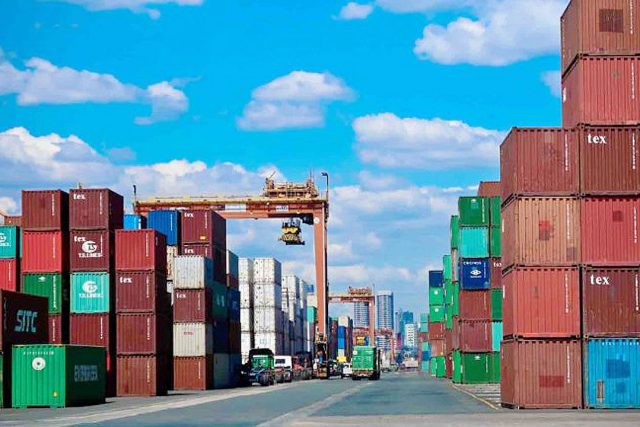
THE BUREAU of Customs (BoC) on Monday said it surpassed its 10-month collection target by 2.4%, putting the agency on track to meet its full-year goal.

In a House Public Accounts Committee hearing, Customs Commissioner Rey Leonardo B. Guerrero said the BoC collections reached P525.37 billion as of end-October, exceeding the P513.19-billion target. He said the figure is also 17.1% higher than the P448.95-billion collection during the same period in 2020.

The BoC has consistently beat its monthly collection targets since January.

Mr. Guerrero said the latest tally gives him confidence the agency will hit the P616.7-billion full-year collection goal set by the Development Budget Coordination Committee. In 2020, the BoC collections fell by 14% to P537 billion due to the slowdown in international trade.

“To address smuggling… we have established our Customs Operations Center to profile shipments and take out high-risk shipments and possibly (those) containing contraband. We also intensified our scanning capabilities… (by) acquiring additional X-ray (machines),” Mr. Guerrero said in a mix of English and Filipino.

The BoC has confiscated P23-billion worth of smuggled items during the period ending October, more than double the P10.6-billion worth of smuggled items seized in 2020. Customs confiscated P20.6-billion worth of smuggled items in 2019.

The agency collected P133.58 billion in excise taxes on imported oil products so far this year.

Mr. Guerrero also said that the BoC intensified its post-clearance audit of importers which generated P1.41-billion worth of revenues this year.

REVENUES FROM PORK IMPORTS
Meanwhile, the BoC collected P3 billion from swine meat imports as of mid-November, and estimated P3.4 billion in foregone revenue after the government cut tariffs to stabilize pork prices.

A total of 197 million kilograms (kgs) of pork have entered the country from April 7 to Nov. 12 this year, or since President Rodrigo R. Duterte’s orders to lower pork import tariffs took effect, the Department of Finance said on Monday.

The government cut pork tariffs to improve inventory and ease prices amid an African Swine Fever outbreak that depleted pork supply.

Mr. Guerrero said pork imports started going up in March and steadily grew until May.

The volume of pork imports went up by more than six times to 24.45 million kgs in April compared with the same month a year earlier.

“This dramatic increase in pork import volumes continued in May, when a total of 36.5 million kgs entered the country, representing a 506% hike from the 6.02 million kgs imported during the same period in 2020,” DoF said.

Pork imports of 33.62 million kgs in June was more than six times than a year earlier, then dropped to 31.18 million kgs in July, which was still more than four times than the year before.

In August, pork imports reached 23.82 million kgs, or less than four times the previous year. Pork imports reached 25.73 million kgs in September and 19.36 million kgs in October. — Jenina P. Ibañez and Russell Louis C. Ku 

Philippines creates its own pandemic response scorecard

PHILIPPINE STAR/ MICHAEL VARCAS

By Jenina P. Ibañez, Senior Reporter

THE PHILIPPINE government has created its own scorecard to assess its pandemic response as it extends the fourth phase of its national action plan against the coronavirus disease 2019 (COVID-19).

The National Economic and Development Authority (NEDA) introduced the scorecard on Monday as it criticized global indices showing the Philippines scored poorly in handling the COVID-19 outbreak.

“We are being compared against the other countries and there’s no consideration for country-specific COVID context,” NEDA Undersecretary Rosemarie G. Edillon said at a briefing.

As vaccinations lagged, the Philippines remained at the bottom of Bloomberg’s COVID Resilience Ranking last month, which ranked the best and worst places to be during the pandemic. The country improved to 103rd out of 121 countries in the Nikkei Asia COVID-19 Recovery Index after ranking last a month earlier.

Ms. Edillon said these indices are useful because the Philippines can learn from how other countries reopened their economies.

But she noted that under the international rankings, indicators like the reopening of the economy or COVID-19 case count are equally weighted, which means that one indicator is used as if it could be substituted for another.

“The goal of the National Action Plan (NAP) Phase 4 is to manage COVID-19 towards a healthier and resilient Philippines,” she said. “The goal really is to balance these health and economic objectives.”

The fourth phase of the national action plan started in July and will be enforced until 2023. The phase focuses on sustaining a “new normal,” enforcing the updated Philippine Development Plan, and implementing the national vaccine roadmap.

Earlier phases focused on mitigating economic impacts, planning for vaccination, and managing health risks.

The phase 4 action plan aims to monitor COVID-19 case recurrences and outbreaks, standardize border control, reach COVID-19 immunization of 70 million Filipinos by the end of this year, and create a sustainable nationwide immunization program by 2023.

The plan also aims to promote aggressive contact tracing and enforce a plan to catch up on long-term COVID-19 impacts on learning and the supply chain.

The government’s scorecard assesses the country’s infection management, vaccine rollout, and socioeconomic recovery under this NAP Phase 4.

Under this scorecard, the government gave itself a score of 4.42 in September and 4.83 in October out of a total possible score of 9.

Infection management and vaccine scores improved as the number of critical COVID-19 cases declined and as more people received the jab. But the socioeconomic score fell as flight activities worsened.

“We had many flight activities that were allowed in September, but because of the surge in (COVID-19) cases then we brought that down in October,” Ms. Edillon said.

She expects the score in November to improve, but did not offer targets.

Metro Manila is currently under a more relaxed Alert Level 2, as new COVID-19 cases continued to drop. As of Monday, the Health department reported 984 new COVID-19 infections, bringing the active caseload to 19,798.

According to the Johns Hopkins University Coronavirus Resource Center, the Philippines has now fully vaccinated 30.52% of the population.

The Nikkei index assessed how much closer a country is to recover in terms of infection management, vaccine rollouts, and social mobility, while the Bloomberg index measures the effectiveness of COVID-19 handling with the least social and economic upheaval.

DoF eyes foreign government buyout of shares in coal-fired power plants

PHILSTAR FILE PHOTO

THE DEPARTMENT of Finance (DoF) is considering the possibility of getting foreign governments to buy out their citizens’ shareholdings in corporations that run coal-fired power plants in the Philippines.

Finance Secretary Carlos G. Dominguez III in a press release on Monday said the proceeds from the buyouts can be donated to fund a Philippine initiative to transition to clean energy.

These buyout proceeds could go into an Asian Development Bank (ADB) partnership that aims to fund the early retirement of coal-run power plants and replace them with renewable energy alternatives.

“If we can get the foreign governments to buy out those shareholders and donate the shares of that company to a government — to our government — or to a group, including ADB and other agencies, we can actually shut down that plant,” Mr. Dominguez said at the recently concluded 26th United Nations Climate Change Conference of the Parties (COP26) held in Glasgow.

“And that foreign government would actually be making a contribution to reducing a coal-fired power plant.”

Some overseas companies, DoF said, have significant stake in the continued operation of the coal plants.

The ADB energy transition mechanism is a public-private finance program that plans to reduce coal-fired power generation by retiring coal plants and supporting renewable energy use.

The Philippines will pilot the project to buy and repurpose the coal-fired power plants in Mindanao while the capacity of the Agus-Pulangi hydropower plant is being upgraded.

“(The mechanism) will bring together concessional resources from donor governments and philanthropies, in close coordination with global climate change-focused funds, to leverage large amounts of commercial capital to trigger a decisive shift towards decarbonization,” DoF said.

The energy transition mechanism is made up of two multibillion-dollar funds, with one focused on quicker early plant retirement, while the other one is devoted to new clean energy investments in power generation, storage, and grid upgrades.

Multilateral banks, private institutional investors, philanthropic contributions, and long-term investors will provide capital for the project, ADB said.

A two- to three-year pilot phase would raise funds needed to speed up the retirement of five to seven coal plants and invest in clean energy in the Philippines and Indonesia.

Mr. Dominguez said employees working at a Mindanao coal-fired plant set for closure will be retrained to work in other energy projects.

“There are not a lot of people actually working in that particular coal-fired power plant, or in any coal-fired power plant. So it’s very easy to retrain them to do other projects,” he said.

He has been pushing for climate financing from wealthier economies that have not offered enough to help developing nations reduce their carbon footprints. Such countries bear the most responsibility for their historic emissions, he said.

The Philippines has committed to reduce greenhouse gas emissions by 75% from 2020 to 2030. Of the 75% target, just 2.71% can be achieved with internal resources, while the remaining 72.29% would rely on international assistance. — Jenina P. Ibañez

More Filipinos opening bank deposit, e-money accounts

PHILSTAR

AN INCREASING number of Filipinos are opening bank deposit and e-money accounts, but improved financial literacy is needed to ensure they will not fall prey to investment scams and risky lending schemes, Bangko Sentral ng Pilipinas (BSP) Governor Benjamin E. Diokno said.

“The number of Basic Deposit Accounts opened in 2019 was only 4 million. As of the second quarter of 2021, we now have 7.4 million accounts with an aggregate amount of P 4.9 billion,” Mr. Diokno said during the opening of the Financial Education Stakeholders Expo on Monday.

Active e-money accounts surged by 93% to 34.7 million in 2020 from 17.9 million a year earlier, he added.

By 2023, the central bank hopes 70% of Filipino adults will have a formal transaction account.

“The volume of digital payments increased dramatically, from the 14% pre-pandemic level, to a little above 20% in 2020,” Mr. Diokno said. The BSP hopes to make the Philippines a cash-lite society by 2023 where 50% of payments are done online.

Filipinos’ financial behavior has changed during the pandemic.

“They are prioritizing saving, availing health and life insurance, and preparing for retirement to provide better financial opportunities for themselves and their families during and beyond the pandemic,” Mr. Diokno said.

However, Filipinos’ financial literacy lags behind other countries. Mr. Diokno cited a World Bank survey which showed Filipino adults could only answer three out of seven questions on financial literacy. He noted Filipinos scored low in inflation, interest computation, and simple division. 

A BSP study in the fourth quarter last year showed one in 100 Filipinos have been a victim of investment scams, he said. Five in 10 Filipinos obtain loans from informal money lenders, while five in 10 still keep their savings at home.

“Many Filipinos are still delaying saving, mismanaging credit, bypassing legitimate investment opportunities, or falling victim to investment scams,” he said.

Against this backdrop, Mr. Diokno said financial education is crucial, which is why the BSP partnered with various stakeholders to reach out to more Filipinos.

The BSP’s financial education partners include the Armed Forces of the Philippines, Bureau of Fire Protection, Civil Service Commission, Commission on Higher Education, Department of Agriculture, Department of Education, Department of Social Welfare and Development, Department of Trade and Industry, Overseas Workers Welfare Administration, and the Philippine National Police.

One of the BSP’s strategies is to craft targeted financial education content for priority sectors including learners, teachers, civil servants, overseas Filipino workers, farmers, etc.

“Our key objectives include protecting financial consumers from various online threats and cyber risks, building trust in the digital finance ecosystem, and increasing uptake of digital financial services,” he said. — Luz Wendy T. Noble

ADVERTISEMENT
ADVERTISEMENT