Home Blog Page 7138

Consultancy firm helps PHL businesses set up shop in Dubai

REUTERS

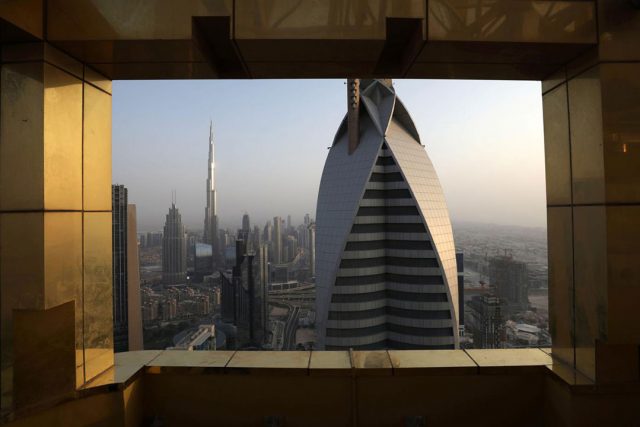
Enter PH, a local consultancy firm that helps foreign companies expand to the Philippines, has partnered with Dubai-based business setup firm Creative Zone to help Filipino businesses enter Dubai and other Gulf Cooperation Council markets (Saudi Arabia, the United Arab Emirates or UAE, Kuwait, Bahrain, Qatar, and Oman).  

The partnership provides coaching and business support services to small and medium enterprises (SMEs) and investor-seeking startups from the Philippines.   

“The Filipino community is the third-largest expatriate community in the UAE and is an important demographic,” said Lorenzo Jooris, Creative Zone chief executive officer, to BusinessWorld.   

“Filipinos in the UAE have a thriving business community, with a diverse range of businesses, including food and beverage, fashion, and various types of professional services,” he said. “Aligning with this is Dubai’s vibrant consumer base that constitutes tech-savvy, high-income, and young professionals.”  

Mr. Jooris cited the Philippines’ young and English-speaking workforce, its strategic location in the Southeast Asian market, and its strong industrial sector as among the factors for the company’s decision to extend its services to the country.  

“The Philippines has introduced various incentives to create an investor-friendly climate and attract foreign business ventures,” he added. “The creation of Special Economic Zones (SEZs), tax benefits, and entrepreneur-friendly commercial laws make it relatively easy for foreign companies to set up in the Philippines”  

In a press statement, Rene “RJ” A. Ledesma, Jr., founding partner of Enter PH, said that his firm’s partnership with Creative Zone encourages the spirit of entrepreneurship.  

“Dubai has always been close to my heart, and educating my fellow entrepreneurs on the overlying opportunities and business potential that can be leveraged whilst within the country is a novel approach,” Mr. Ledesma said.   

The economy of the UAE, of which Dubai is a part, is rebounding faster than expected, according to a chief economist for Oxford Economics Middle East in Dubai. The economy has been open for months, and is buoyed by a well-equipped health system as well as a population that is about 90% fully vaccinated. Bloomberg reported in September that Dubai’s job market was at its strongest in two years 

The UAE’s latest foreign direct investment laws, which took effect on June 1, allow foreign investors and entrepreneurs full ownership of onshore companies. — Patricia B. Mirasol  

Inside a luxury unit at the heart of the city

Here’s how you can experience the ultimate comfort and convenience only a Westin home can provide.

If you’re on the lookout for a home that houses all the best things in life – and we mean best in the form of high-end home features, accessibility, convenience, and wellness-centered amenities, we got you! You can find all these in one place at The Residences at The Westin Manila Sonata Place.

There are two ways on how you can see and experience what this upscale development has in store for you. If you wish to view this luxurious home that you can soon live in while at the comforts of your home, a virtual showroom is made available for you. But if you want to see for yourself the Westin brand of living and find out the world-renowned luxurious lifestyle services it offers, an actual show unit is the perfect route to go.

A Tour Inside a Westin Home

The Show Floor of The Residences at The Westin Manila Sonata Place features a one-bedroom show suite. This houses all the premium deliverables that future residents will get to enjoy once they move into their new home. 

One of the signature home features you’ll find inside this deluxe unit is the Westin Heavenly® Bed, complete with a soft mattress and pillows for a comfortable and restful sleep every single night. 

In the kitchen area, you’ll get to see the branded home appliances that will help you craft delicious meals for yourself and your loved ones. A cooktop, ref, and range hood from world-famous luxury brand Gaggenau are what you can find inside every Westin unit, complemented by equally-classy kitchen cabinets made by premium global brand Leicht to complete the modern and high-class kitchen that you deserve.

Going to the toilet and bath area, you can be assured of a refreshing bath every day with Westin’s Heavenly Bath™ experience, made possible by Hansgrohe’s premier shower fittings plus the signature Heavenly Bath™ Set in the form of plush robes and soft towels. It also comes with a toilet and sink from another luxury name in the toilet and bath industry – Duravit, all to complete the branded way of living inside your Westin unit. 


Your Luxurious City Home

Apart from all these exclusive home deliverables, The Residences at The Westin Manila Sonata Place offers ultimate convenience with close proximity to essential establishments such as commercial centers, corporate headquarters, hospitals, medical centers, schools, hotels, and government offices. So there’s no need to worry about traveling too far to get to where you need to be!

The property also offers top-notch leisure and wellness amenities that residents can exclusively use when they need to. Housed inside The Haven, a four-floor amenity zone where you can find the fitness center, move studio, and indoor lap pool, among others. Also found here is the Golf Simulation Room, where residents can enjoy a round or two. In addition, kids, both by age and heart, can spend time having fun at the Playhouse, Game Room, and the Private Theater, where they can safely enjoy and bond without leaving the development or traveling too far.

With all these and more, you can be assured of only the best when you choose to live in a Westin home. To set a private tour of this show suite, simply connect with an RLC Residences Property Specialist through this link. Learn more about the luxurious life that awaits you by visiting www.rlcresidences.com or by following RLC Residences on Facebook and Instagram.


Spotlight is BusinessWorld’s sponsored section that allows advertisers to amplify their brand and connect with BusinessWorld’s audience by enabling them to publish their stories directly on the BusinessWorld Web site. For more information, send an email to online@bworldonline.com.

Join us on Viber to get more updates from BusinessWorld: https://bit.ly/3hv6bLA.

PHL tops NFT ownership out of 20 countries — Finder

Image via Axie Infinity

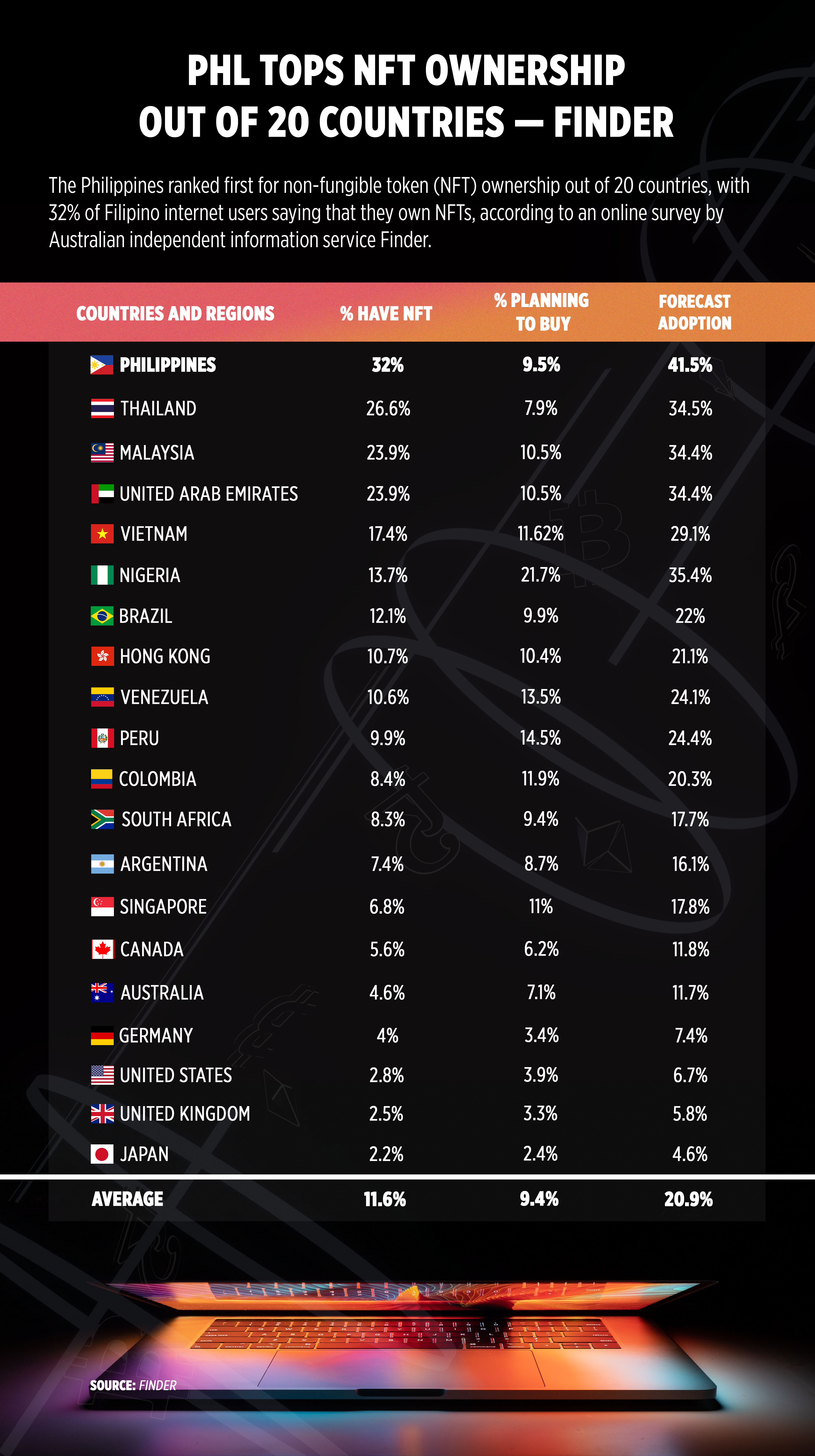
The Philippines ranked first for non-fungible token (NFT) ownership out of 20 countries, with 32% of Filipino internet users saying that they own NFTs, according to an online survey released this November by Australian independent information service Finder.  

Globally, just 1.7% of internet users owned NFTs. Meanwhile, of the 1,507 Filipinos surveyed, nearly three times of the global average were NFT owners, the platform said, adding that NFT adoption in the Philippines could soon hit 41.5%. 

NFTs are non-interchangeable digital tokens that contain data proving ownership of items, mostly related to art, audio, video, and the like.  

The popularity of NFTs in the country is mainly from in-game assets gained in play-to-earn games like Axie Infinity 

“It’s still very early days for NFTs in the Philippines,” Finder said in an official statement. “Fifty-one percent of Filipino internet users currently know what NFTs are and we expect adoption to grow with awareness.”  

Jeffrey Zirlin, co-founder of Vietnam-based company Sky Mavis, which operates the crypto game Axie Infinity, said in the a16z podcast in November that Filipinos’ love for mobile games and their knowledge of cryptocurrency is what keeps the country ahead.  

“There’s relatively high crypto literacy. It’s a very communal culture where information and trends can spread very quickly,” he explained. “Filipinos have traditionally been early adopters to many social networks and platforms like Facebook.”  

The Philippines has the highest number of Axie players in the world. Groups like Yield Guild Games (YGG) cultivate this by onboarding Filipinos to their scholarship programs, where the play-to-earn lifestyle can be sponsored to generate income.  

Finder said they expect further NFT adoption in the Philippines, with 9.5% of Filipinos surveyed saying they plan to own NFTs in the future.  

Gabriel “Gabby” Dizon, founder of YGG, shared in the same podcast that the growth of play-to-earn and NFT ownership was due to unemployed Filipinos’ need to escape economic hardship during lockdowns.  

“These were people who weren’t crypto enthusiasts. These were regular people that were stuck at home that had no jobs,” he said.  

Finder also spoke of the potential for play-to-earn gamers to dive into other types of NFTs as well, saying they can be “a great gateway to cryptocurrency ownership.”  

After the Philippines, Thailand came in second place with 27% of users owning NFTs, followed by Malaysia at 24%, United Arab Emirates at 23%, and Vietnam at 17%.   

Countries like Nigeria and Peru are projected to see an increase of NFT adoption by 22% and 15% respectively, but Finder said that they will likely not come close to the Philippines’ rate. — Brontë H. Lacsamana 

Omicron rapidly dominating in South Africa; US reports first case

JOHANNESBURG/WASHINGTON — Heavily mutated Omicron is rapidly becoming the dominant variant of the coronavirus in South Africa less than four weeks after it was first detected there, and the United States on Wednesday became the latest country to identify an Omicron case within its borders.  

The first known US case was a fully vaccinated person in California who returned to the United States from South Africa on Nov. 22 and tested positive seven days later.  

The person had mild symptoms and was in self-quarantine, Dr. Anthony Fauci, the top US infectious disease official, told reporters at the White House.  

Late on Tuesday, airlines in the United States were told to hand over the names of passengers arriving from parts of southern Africa hit by Omicron, according to a US Centers for Disease Control and Prevention letter seen by Reuters.  

Key questions remain about the new variant, which has been found in two dozen countries, including Spain, Canada, Britain, Austria and Portugal. The UAE reported its first case on Wednesday, the second Gulf country after Saudi Arabia.  

Early indications suggesting Omicron may be markedly more contagious than previous variants have rattled financial markets, fearful that new restrictions could choke off a tentative recovery from the economic ravages of the pandemic.  

South Africa’s National Institute for Communicable Diseases (NICD) said early epidemiological data suggested Omicron was able to evade some immunity, but existing vaccines should still protect against severe disease and death.  

It said 74% of all the virus genomes it had sequenced last month had been of the new variant, which was first found in a sample taken on Nov. 8 in Gauteng, South Africa’s most populous province.  

The number of new cases reported in South Africa doubled from Tuesday to Wednesday.  

World Health Organization (WHO) epidemiologist Maria van Kerkhove told a briefing that data on how contagious Omicron was should be available “within days.”  

BioNTech’s CEO said the vaccine it makes in a partnership with Pfizer was likely to offer strong protection against severe disease from Omicron.  

‘PREPARE FOR THE WORST’  

The president of the European Union’s executive body said there was a “race against time” to stave off the new variant while scientists establish how dangerous it is. The EU brought forward the start of its vaccine rollout for 5-to-11-year-olds by a week to Dec. 13.  

“Prepare for the worst, hope for the best,” Ursula von der Leyen, president of the European Commission, told a news conference.  

She said that full vaccination and a booster shot provided the strongest possible protection, according to scientists — a view echoed by Dr. Fauci.  

But WHO emergencies director Mike Ryan criticized developed countries pushing booster shots for large parts of their fully vaccinated populations when vulnerable people in many poorer regions have had no vaccination at all.  

“There is no evidence that I’m aware of that will suggest that boosting the entire population is going to necessarily provide any greater protection for otherwise healthy individuals against hospitalization or death,” he said.  

Britain and the United States have both expanded their booster programs in response to the new variant.  

The WHO has noted many times that the coronavirus will keep producing new variants for as long as it is allowed to circulate freely in large unvaccinated populations.  

TRAVEL RESTRICTIONS  

Some 56 countries were reportedly implementing travel measures to guard against Omicron as of Nov. 28, the WHO said.  

UN Secretary-General Antonio Guterres slammed what he called “travel apartheid.”  

“Blanket travel bans will not prevent the international spread and they place a heavy burden on lives and livelihoods,” the WHO said, while advising those who were unwell, at risk, or 60 years and over and unvaccinated to postpone travel.  

The United States has barred nearly all foreigners who have been in one of eight southern African countries.  

Hong Kong added Japan, Portugal and Sweden to its travel restrictions. Malaysia temporarily barred travelers from eight African countries and said Britain and the Netherlands could join the list.  

Fitch Ratings said it lowered its global air passenger traffic forecasts for 2021 and 2022.  

“It feels a little bit like we are back to where we were a year ago,” said Deidre Fulton, a partner at consultancy MIDAS Aviation, at an industry webinar. “And that’s not a great prospect for the industry and beyond.”  

Wall Street’s major averages fell more than 1% on Wednesday, erasing morning gains, on investor angst over the first US case, along with concerns about inflation. Crude oil prices also fell.  

Dr. Fauci said it could take two weeks or more to gain insight into how easily the variant spreads from person to person, how severe the disease is that it causes, and whether it can bypass the protections provided by the vaccines currently available.  

“We don’t have enough information right now,” said Dr. Fauci, adding that the variant’s molecular profile “suggests that it might be more transmissible, and that it might elude some of the protection of vaccines. … We have to be prepared that there’s going to be a diminution in protection.” — Promit Mukherjee and Trevor Hunnicutt/Reuters 

Apple tells suppliers demand for iPhone 13 lineup has weakened — Bloomberg News

Apple Inc. has told its parts suppliers that demand for the iPhone 13 lineup has slowed, Bloomberg News reported on Wednesday, citing people familiar with the matter, signaling that some consumers have decided against trying to get the hard-to-find item.  

The company had earlier cut production of iPhone 13 by as many as 10 million units due to a global chip shortage, but now it has informed vendors that those orders may not materialize, the report said.  

Apple and some of its suppliers 3M Co., Broadcom Inc. and Advanced Micro Devices Inc did not immediately respond to requests for comments from Reuters.  

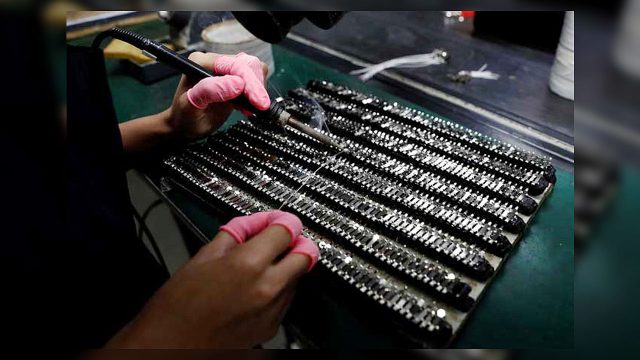
A global chip crunch, initially due to high demand for smartphones and personal gadgets during the coronavirus pandemic, has affected the auto industry and disrupted production at companies ranging from Apple to GM.  

In October, Apple’s Chief Executive Tim Cook warned that the impact of supply constraints, which cost the company $6 billion in sales in the fiscal fourth quarter, will be worse during the holiday quarter and that chip shortage was affecting most of the company’s products.  

Nikkei reported last month that Apple even cut back production of iPad tablets to allocate more components to the iPhone 13. — Reuters 

Grab’s Nasdaq debut to set tone for Southeast Asian tech listings

REUTERS

SINGAPORE — Grab, Southeast Asia’s biggest ride-hailing and delivery firm, makes its market debut on Thursday after a record $40 billion merger with a special purpose acquisition company (SPAC), in a listing that will set the tone for other regional offerings.  

The backdoor listing on Nasdaq marks the high point for the nine-year-old Singapore company that began as a ride-hailing app and now operates across 465 cities in eight countries, offering food deliveries, payments, insurance and investment products.  

Grab’s rivals, including regional internet firm Sea and Indonesia’s GoTo Group, are also bulking up, with the region’s internet economy forecast to double to $360 billion in gross merchandise volume by 2025.  

Grab was founded by Anthony Tan, its chief executive, and Tan Hooi Ling, who developed the firm from an idea for a Harvard Business School venture competition in 2011.  

CEO Tan, 39, expanded Grab into a regional operation with a range of services, after launching as a taxi app in Malaysia in 2012. It later moved its headquarters to Singapore.  

“What we have shown to the world is that homegrown tech companies can develop great technology that can compete globally, even when international players are in town … we can compete and win,” Mr. Tan told Reuters.  

He said Grab’s listing would help showcase the opportunity available to investors in Southeast Asia, a region with a population of about 650 million.  

Grab’s listing brings a payday bonanza to early backers such as SoftBank Group Corp and Chinese ride-hailing giant Didi Chuxing, which invested as early as 2014.  

They were later joined by others, such as Toyota Motor, Microsoft and Japanese bank MUFG. Uber became a Grab shareholder in 2018 after selling its Southeast Asian business to Grab following a five-year battle.  

Analysts see scope for many players in Southeast Asia’s fragmented food delivery and financial services markets, but the road to profitability can be a long one.  

In September, Grab cut its full-year adjusted net sales forecasts, citing renewed uncertainty over pandemic curbs on movement.  

Third-quarter revenue fell 9% and its adjusted loss before interest, taxes, depreciation, and amortization (EBITDA) widened 66% to $212 million. Grab said GMV jumped 32% in the quarter to a record $4 billion.  

It aims to turn profitable on an EBITDA basis in 2023.  

Grab said it completed its business combination with the SPAC, Altimeter Growth Corp. Grab will begin trading on Nasdaq under the ticker symbol “GRAB.”  

Grab raised $4.5 billion alongside the SPAC transaction, including $750 million from Silicon Valley tech investor Altimeter Capital Management in a deal in April. — Anshuman Daga and Aradhana Aravindan/Reuters  

FACTBOX | Grab debuts on Nasdaq, marking biggest Southeast Asia listing

Grab, Southeast Asia’s biggest ride-hailing and food delivery firm, lists on Nasdaq on Thursday following its $40 billion merger with special-purpose acquisition company (SPAC) Altimeter Growth Corp.  The deal is the world’s biggest ever by a blank-check company and the biggest US listing by a Southeast Asian firm.  

WHAT IS GRAB?  

Founded in 2012, Grab is Southeast Asia’s largest startup, valued at just over $16 billion last year. It launched as a Malaysian taxi-hailing service and now calls itself a “superapp” after expanding into food, grocery and parcel delivery and to digital payments, lending and other financial services.  

Singapore-headquartered Grab operates across 465 cities in eight countries in the region, counting Indonesia as its biggest. Its venture with Singapore Telecommunications Ltd was awarded a digital bank license in Singapore last year.  

Grab gained the global spotlight in 2018 when it bought the Southeast Asian business of Uber Technologies Inc in return for the US ride-hailing company taking a stake in Grab.  

With some 8,000 employees, Grab has tech centers in Singapore, Beijing, Seattle, Bengaluru and other places.  

WHO’S BACKING GRAB?  

Early investors include Japan’s SoftBank, China’s Didi Chuxing and venture capital firms Vertex Ventures Holdings and GGV Capital.  

Grab raised about $12 billion ahead of the listing. Investors range from venture and hedge funds to automobile companies and other ride-hailing firms, and include:  

Uber, Booking Holdings Inc, China Investment Corp, Coatue Management, Hillhouse Capital, Hyundai Motor Co., Invesco Ltd, Microsoft Corp, Ping An Capital Co, Toyota Motor Corp, and Yamaha Motor Co. 

In the SPAC deal, about three dozen investors came on board including Temasek Holdings, BlackRock, Fidelity International, Abu Dhabi’s Mubadala and Malaysia’s Permodalan Nasional Bhd and Altimeter Capital.  

WHO’S THE COMPETITION?  

GoTo Group, formed by the merger of Indonesian ride-hailing and deliveries firm Gojek and local e-commerce leader Tokopedia is Grab’s biggest competitor.  

Singapore-based Sea Ltd, which has e-commerce, gaming and a digital payments business, and is also muscling into food delivery and financial services in Indonesia. Sea has also won a digital bank license in Singapore.  

Grab is likely to increasingly start competing with banks as it expands its financial services.  

It also competes with such delivery companies as Foodpanda and Deliveroo PLC.  

WHAT ARE GRAB’S FINANCIALS?  

Grab’s third-quarter revenue fell 9% from a year earlier to $157 million. Its adjusted loss before interest, taxes, depreciation and amortization (EBITDA) widened 66% to $212 million. Gross merchandise value hit a quarterly record of $4 billion.  

The delivery business has emerged as the biggest segment as more consumers shifted to online food delivery during the pandemic.  

Grab forecasts it will turn profitable on an EBITDA basis in 2023.  

WHO ARE ITS KEY EXECUTIVES?  

Anthony Tan, 39, is the company’s CEO and co-founder.  

Fellow co-founder Tan Hooi Ling, 38, runs Grab’s operations, including corporate strategy and technology.  

Both Tans, unrelated, met at Harvard Business School, where they conceived the idea of the ride-hailing company.  

Grab’s president, Ming Maa, is a prominent dealmaker from SoftBank, who joined the company in 2016. — Reuters

Facebook says it removes accounts which targeted Vietnamese activists 

Facebook has removed a network of accounts from its platform which it said targeted Vietnamese activists who were critical of the country’s government, an official at Facebook’s parent company Meta said on Wednesday.  

In July, the company removed a Vietnamese Facebook group called “E47” which mobilized its members to report posts they did not like to Facebook, in an effort to have them taken down.  

The latest action was taken against a separate group, according to David Agranovich, Facebook’s head of global threat disruption.  

“What we saw was a network of accounts in Vietnam that was engaged in this kind of coordinated targeting of activists, and other people who publicly criticized the Vietnamese government,” Mr. Agranovich told Reuters.  

The attackers used Facebook accounts to submit “hundreds or thousands of reports” against their targets using Facebook’s built-in reporting tools, Mr. Agranovich said of the network, which was also detailed in a report released by Facebook on Wednesday.  

“Many of the operators would use fake accounts, which they would use to pose as their targets, and then they would report the target’s real account as an impersonating account,” he added.  

Some of the accounts were openly offering the taking down of other Facebook accounts as a commercial service, according to Agranovich.  

“They essentially advertise this kind of abusive reporting service in their actual bios,” he said.  

Unlike in neighboring China, Facebook is not blocked in Vietnam, where it has around 70 million users and is the country’s main platform for e-commerce.  

It has also become the main platform for political dissent, however, putting Facebook and the government in a constant tussle over the removal of content deemed to be “anti-state.”  

Vietnam’s foreign ministry, which handles enquiries to the government from foreign media, did not immediately respond to a request for comment. — James Pearson/Reuters

US Army keen to expand Southeast Asia access amid China worries

C7F.NAVY.MIL

WASHINGTON — The US Army is keen to expand its access and basing arrangements in Southeast Asia as part of a strategy to deter China, the secretary of the army said on Wednesday.  

Christine Wormuth told a Washington think tank such a posture shift was in the interests of both the United States and its allies and partners in the region, but there was a need to be “realistic about what is possible”  

She said positioning US military equipment in Asia had been heavily oriented towards Northeast Asia.  

“There is very much a desire to be able to expand our access and basing arrangements more into Southeast Asia, because if we were able to do that, we would have a more dispersed posture that would give us much more flexibility,” she told the Center for Strategic and International Studies.  

“It is very much in our interests and in the interest of our allies and partners, to explore how we can shift that posture over time,” she said, while adding:  

“But my own view is that we need to be realistic about what is possible and as we look at the operational challenges we need to have realistic assumptions about the locations from where we might be able to operate.”  

Ms. Wormuth spoke at a time when the Biden administration has been stepping up engagement with Southeast Asia, a region it sees as central to its strategy of competition with an ever more assertive and militarily expanding China.  

The top US diplomat for East Asia, Assistant Secretary of State Daniel Kritenbrink, is currently in Southeast Asia in the latest visit by a senior US official.  

Ms. Wormuth did not say where the army is interested in expanding its access, but said progress with the Philippines in renewing an agreement allowing the rotational presence of US troops had been very important.  

She said a key part of an ongoing Pentagon force posture review was looking for more opportunities to pre-position equipment.  

She said it was important to work collectively to avoid war in Asia and the best strategy was strong deterrence to ensure that Chinese leader Xi Jinping “to the extent that he might think about trying to forcibly reunify with Taiwan will decide that … today is not the day to do that.”  

Among the roles for the army was in “long-range fires,” including hypersonic weapons it plans to start fielding, Ms. Wormuth said.  

She stressed concerns about possible misunderstandings that could lead to conflict and the need to avoid “second Cold War framing” and to maintain lines of communication with Beijing.  

“We really need to have channels where we can have dialogue with the Chinese government … That’s something I worry about,” she said. — Idrees Ali and David Brunnstrom/Reuters

Philippines says COVID variants highlight need for local vaccine development

REUTERS

MANILA – New coronavirus variants highlight the need for countries to do their own research and development on COVID-19 vaccines, said a senior Philippines trade official, adding that people will only be safe once the whole world is vaccinated.

The Philippines is looking to work with its trading partners on this as vaccine demand is unlikely to wane anytime soon, said Allan Gepty, assistant secretary at the Department of Trade and Industry in an interview at the Reuters Next conference.

The new COVID-19 variants highlight that “we have to continue doing our respective research and development in this area because there is a truism that Öno one is safe unless everyone is safe,” said Gepty.

“The Philippines is more than willing to work with other trading partners on research and development.”

His comments come as the world is battling the new Omicron variant, which has underscored the danger of low vaccination rates in some emerging countries as their affluent counterparts move to give boosters to their population.

Gepty said the demand for vaccines will “always be there”, which is why “we have to be concerned with the manufacturing aspect”.

While the Philippines struggled to secure vaccine supplies at the start of the pandemic, it has since build up its inventory through imports and donations, with a massive three-day vaccination drive taking place this week. The Philippines does not currently manufacture any COVID-19 vaccines.

The Philippines suffered among the worst COVID-19 outbreaks in Asia. With only close to 33% of the country’s population fully inoculated so far, its vaccination rate is lagging those of its regional peers.

The Southeast Asian nation also wants the World Trade Organization (WTO) to come up with “concrete actions” on both trade and public health issues, Gepty said, without elaborating.

A trade response to the pandemic is on the radar of the WTO, which had to postpone its first ministerial meeting in four years due to the global alarm over Omicron.

Gepty said the Philippines has the capability to become involved in vaccine manufacturing but there are issues that need to be addressed, such as enforcing trade rules and ensuring the smooth flow of raw materials for vaccines.

“We have to take into account the supply chain and also the access to various raw materials,” he said. “That’s why on the trade aspect it is very important that the flow of these essential goods, the raw materials, among others, must not be hampered.” — Reuters

November PMI jumps to 8-month high

REUTERS

By Jenina P. Ibañez, Senior Reporter

PHILIPPINE MANUFACTURING activity rose to an eight-month high in November, as new orders increased for the first time since March, IHS Markit said on Wednesday.

The Philippines Manufacturing Purchasing Managers’ Index (PMI) rose to 51.7 last month from 51 in October, the highest since the 52.2 in March.

A reading above 50 indicates improving conditions for the manufacturing sector versus the previous month, and below the threshold means deterioration.

Manufacturing Purchasing Managers’ Index of Select ASEAN Economies, Nov. 2021

“Latest PMI data continued to signal a recovery in operating conditions in the Philippines with the headline figure at an eight-month high. Supporting this was an expansion in new orders, which was the first uptick since the end of the opening quarter of the year,” Shreeya Patel, economist at IHS Markit, said.

This also signaled the third straight month of growth after the PMI slid to 46.4 in August as factories and businesses shut due to the two-week strict pandemic lockdown in the capital.

PMI is the weighted average of five sub-indices: new orders (30%), output (25%), employment (20%), suppliers’ delivery times (15%) and stocks of purchases (10%).

IHS Markit said Philippine manufacturers saw new orders jump for the first time since March, thanks to higher client numbers, rising footfall, and improved customer demand.

“The rate of growth was subdued in the context of the series history, however,” IHS Markit said.

Output declined for an eighth straight month, but IHS Markit said it was only “fractional.” However, businesses flagged delays in receiving inputs, while material and staff shortages hampered capacity.

“Traffic issues, port congestions and difficulties sourcing materials influenced another deterioration in vendor performance during November. The extent to which lead times lengthened was marked, but eased during the month,” IHS Markit said.

The workforce headcount also fell at the softest pace in four months, as businesses found it hard to find skilled replacements after voluntary resignations.

As new orders went up, companies increased buying activity on expectations that demand will continue to improve.

“Stockpiling and efforts to boost production were a key theme in the latest release, but supply-side issues and the lack of availability of raw materials weighed on production,” Ms. Patel said.

Philippine manufacturers are confident that output will continue to improve, with optimism rising to a 21-month high.

“That said, although sentiment was higher than the average for 2021 so far, it was below the long-run series average suggesting concerns regarding the pandemic still persist,” IHS Markit said.

Ms. Patel also flagged the “low” vaccination rate as one of the sector’s “largest threats.”

Rizal Commercial Banking Corp. Chief Economist Michael L. Ricafort said easing lockdown restrictions have allowed for the reopening of more sectors.

“Manufacturing also got a boost in view of the preparations in terms of high production for the Christmas holiday season, which accounts for a significant share of yearly sales for many businesses/industries, including those in the manufacturing sector,” he said in a Viber message.

“Further measures to reopen the economy into the Christmas holiday season and in preparations for the May 2022 elections in terms of election-related spending and increased infrastructure spending would also benefit the local manufacturing sector, going forward.”

ASEAN PMI SLIPS
In a separate report, IHS Markit said the Association of Southeast Asian Nations (ASEAN) PMI slipped to 52.3 in November from 53.6 a month earlier, but was still in expansion territory.

“The PMI remained above the 50.0 mark to signal another improvement in manufacturing conditions, buoyed by further increase in factory production, with the rate of output growth easing only slightly from October’s survey record,” IHS Markit economist Lewis Cooper said.

Indonesia recorded the highest growth in the region with 53.9, followed by Malaysia (52.3), and Vietnam (52.2).

The Philippine PMI reading was the fourth highest in the region, while Thailand’s PMI stood at 50.6. Only Myanmar stayed below the 50 mark at 46.7, but the rate of contraction was the slowest since January.

“Overall, the latest data provide some promising signs, with the ASEAN manufacturing sector continuing to recover, and rates of growth in output and new work sticking close to their recent peaks,” Mr. Cooper said.

Nat’l Government debt swells to P11.97 trillion

REUTERS

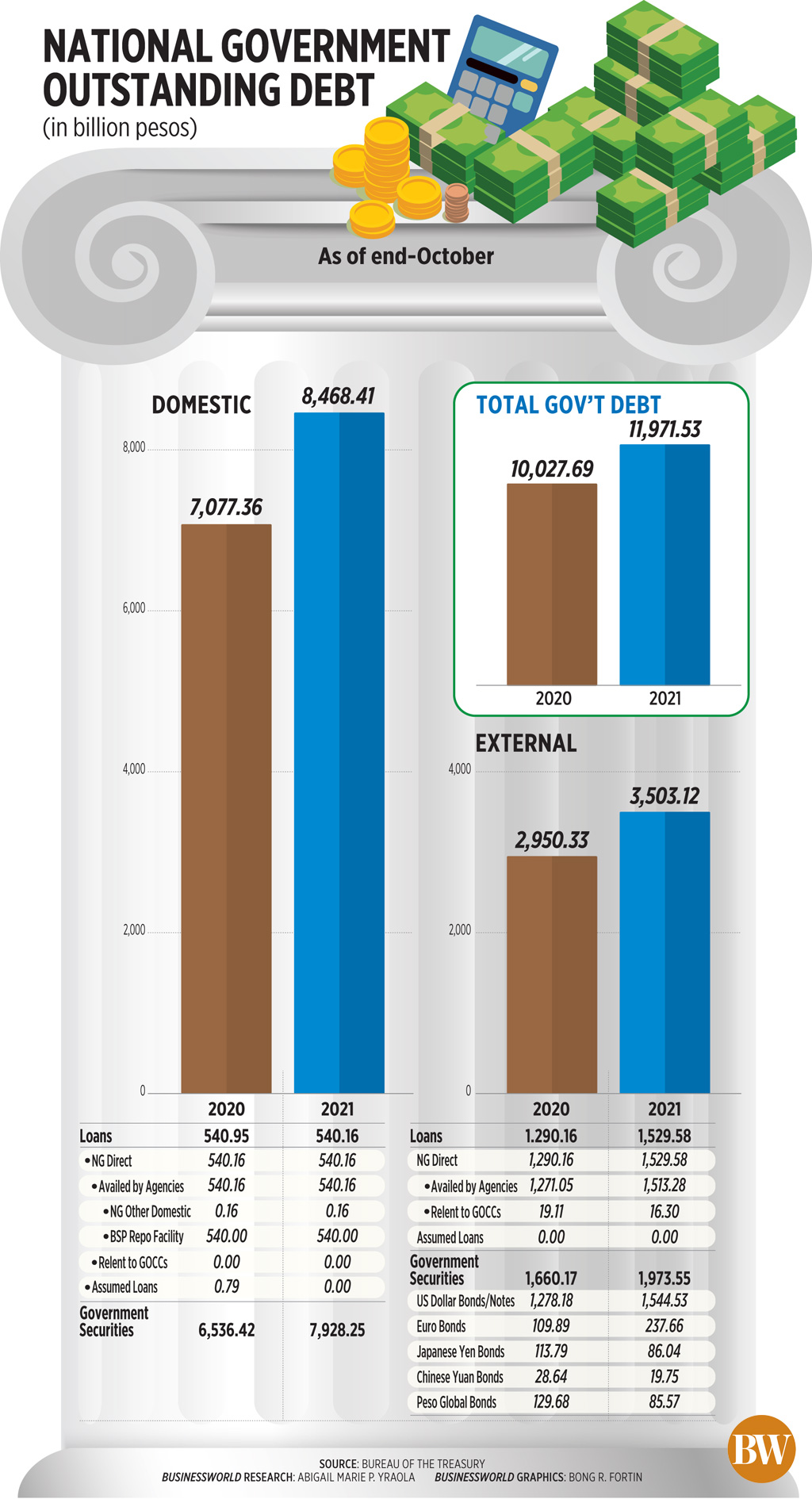
THE NATIONAL Government’s outstanding debt swelled to P11.97 trillion as of the end of October as it offered more domestic securities, preliminary data from the Bureau of the Treasury (BTr) showed.

The end-October debt level was 19.38% higher year on year and edged up by 0.46% from September.   

BTr in a statement on Wednesday said the debt increase was “primarily due to the net issuance of domestic securities.”

Government debt rose by 22.2% since the start of the year, or the equivalent of P2.18 trillion over the 10-month period.

The 10-month debt figure is also higher than the P11.73-trillion government target for the year.

Domestic borrowing accounted for 70.7% of the total, while the rest was sourced from foreign creditors.

Broken down, domestic debt at the end of October went up by 0.96% to P8.47 trillion from September. Domestic debt stock grew by 19.65% year on year.

Outstanding government securities jumped by 1.03% to P7.93 trillion from the end-September level. This also surged by 21.3% from the same period last year.

The government still owes the P540 billion it borrowed from the central bank to continue funding the country’s pandemic response.

Meanwhile, external debt declined by 0.74% to P3.5 trillion month on month, but jumped by 18.74% from October 2020.

“For October, the lower figure for external debt was attributed to the impact of local and foreign currency exchange rate adjustments amounting to P22.68 billion and P8.45 billion respectively,” BTr said.

“This more than offset the net availment of external obligations amounting to P4.96 billion.”

Broken down, foreign debt consisted of P1.53 trillion in loans, declining by 0.82% since end-September.

Government securities also slipped by 0.68% to P1.97 trillion in October.

This included P1.54 trillion in dollar notes, P237 billion in euro bonds, P86 billion in yen paper, P19.75 billion in yuan notes and P85.6 billion in peso global bonds.

The National Government’s total guaranteed debt slipped by 1.48% to P426.46 billion in end-October from a month earlier, and 4.77% from a year ago.

“The lower level of guaranteed debt was due to the net redemption of domestic and external guarantees amounting to P1.24 billion and P0.08 billion, respectively,” the Treasury said.

“Currency adjustment on both local- and third-currency denominated guarantees also trimmed P1.28 billion and P2.25 billion, respectively.”

Rizal Commercial Banking Corp. Chief Economist Michael L. Ricafort said foreign debts declined month on month as the stronger peso exchange rate in the latter part of October reduced the level of foreign borrowings when converted to pesos.

He said in a Viber message that a narrower budget deficit could have led to a reduced need for additional borrowings, which would improve fiscal performance and debt management.

“As a result, the growth in outstanding debt slowed both on a month-on-month and year-on-year basis, as the economy further reopened from lockdowns and towards greater normalcy, which increases government tax revenue collections and reduces government expenditures.” — Jenina P. Ibañez

National government outstanding debt

New coronavirus variants may cloud PHL recovery outlook, BSP chief says

PHILIPPINE STAR/ MICHAEL VARCAS
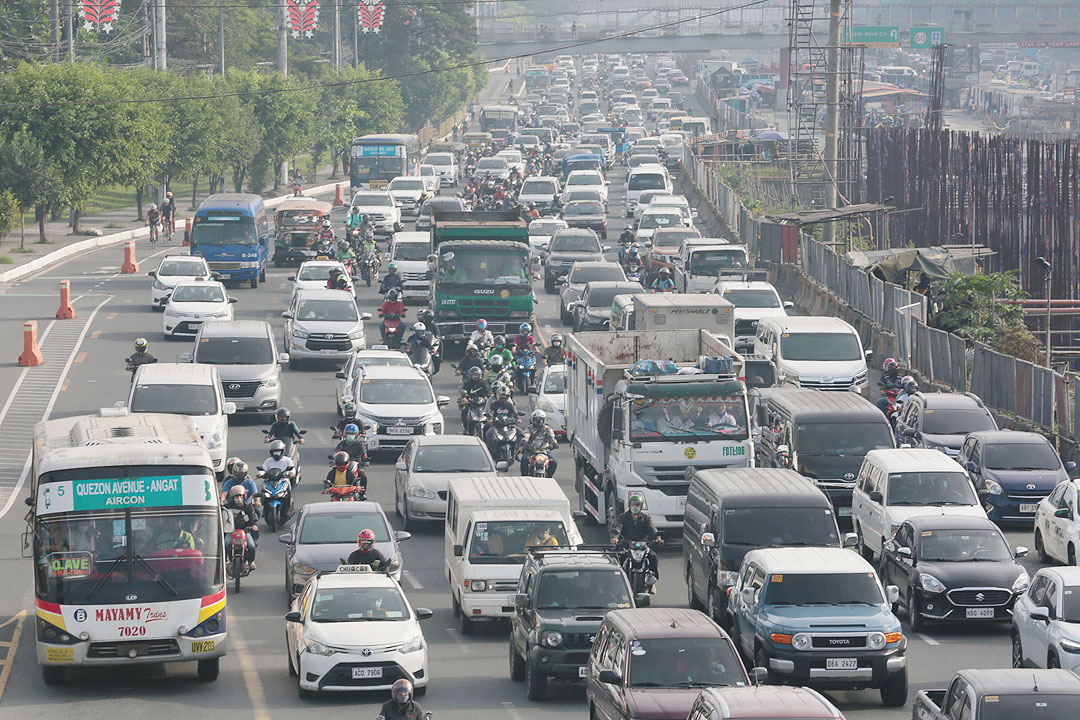
MOTORISTS experience heavy traffic along Commonwealth in Quezon City on Wednesday. — PHILIPPINE STAR/ MICHAEL VARCAS

BANGKO SENTRAL ng Pilipinas (BSP) Governor Benjamin E. Diokno on Wednesday said economic activity is improving but the emergence of new coronavirus disease 2019 (COVID-19) variants may cloud the pace of recovery.

“Economic activity is vastly improving. Yet, the overall momentum of the economic recovery remains foggy as long as a big part of the population remains unvaccinated and there is still a possible emergence of more virulent variants,” Mr. Diokno said in a speech at a virtual forum organized by the Joint Foreign Chambers of the Philippines on Wednesday.

According to the Department of Health, 36.4 million Filipinos have been fully vaccinated against COVID-19 as of Nov. 30. The Philippines aims to fully vaccinate 54 million people by the end of the year.  While 96% or 9.4 million of Metro Manila’s target population is now fully vaccinated, the vaccination rates in poorer regions remain very low.

Third-quarter gross domestic product (GDP) went up by an annual 7.1%, slower than the revised 12% growth in the second quarter after the government placed strict restrictions in Metro Manila to curb the Delta-driven surge in COVID-19 cases. Year to date, GDP grew by 4.9%, the upper end of the government’s 4-5% target.

“The BSP is committed to an accommodative monetary policy stance supportive of infusing liquidity in the financial system and recovery of the economy, Mr. Diokno said.

McKinsey & Co. Philippines Acting Managing Partner Jon Canto said in the same forum that the Philippine economy could return to pre-pandemic levels by late next year or early 2023, depending on the level of vaccination against COVID-19 and the spread of new variants.

“The fearless forecast at the moment, looking at where we stand today in the third quarter is that if on the positive side we get to a muted recovery, we could go back — from a GDP (gross domestic product) perspective — to pre-COVID levels by the third quarter of next year,” he said.

“If the virus and the new variants then take longer hold, that could extend to probably the first quarter of 2023.”

The consumer goods segment is growing in terms of essentials like food and health products, which is mostly driven by the higher end of the market, Mr. Canto said.

Industrial manufacturing could rebound due to a global demand in exports, but supply chain bottlenecks will likely hamper this growth.

Mr. Canto said retail trade initially benefited from consumer stockpiling, but “tingi” retail — or selling products in smaller portions than the usual retail — is coming back.

Pent-up construction demand will continue, with real estate growth likely driven by the residential sector catering to wealthy and overseas Filipino worker segments.

Business process outsourcing and remittances could continue to drive growth, the McKinsey executive said, while the energy sector will continue to expand as demand from residential and industrial customers improve.

“We need to find a way to develop the baseload capacity,” Mr. Canto said.

McKinsey identified five trends that could support Philippine economic growth in the next few years, including manufacturing hub advancement and green infrastructure investments.

Preparing companies for digital technologies, reskilling employees, and building high-value food industries will also boost growth, Mr. Canto said.

Socioeconomic Planning Secretary Karl Kendrick T. Chua earlier said pre-pandemic nominal GDP level would be achieved by 2022, “even as early as the first quarter.”

However, Citigroup Hong Kong Chief Economist for Asia Johanna Chua said at the same forum that it is not enough for the Philippines to go back to pre-COVID levels of output.

“If you go back to pre-COVID levels of output in 2022, India and Indonesia are already going to get back to that this year. China already got back to that last year,” she said.

“Can we even get back to pre-COVID levels of trend growth? The last five years prior to COVID, Philippines was going on average about 6.6%, can we get back there?”

Meanwhile, Albay Representative Jose Ma. Clemente S. Salceda, who chairs the House Ways and Means Committee, said he expects the Philippines to be the fastest-growing ASEAN economy in 2022.

He said the young median age of the country’s labor force support economic recovery.

“This is the single biggest strength of the Philippines that has always been missed out in most of the forecasts of any outlook about the Philippines,” he said. — Jenina P. Ibañez with L.W.T.Noble