Home Blog Page 7122

BFAR issues red tide warnings for parts of Leyte, Surigao

PHILSTAR

THE Bureau of Fisheries and Aquatic Resources (BFAR) issued red tide warnings for Carigara Bay, Leyte and Litalit Bay, San Benito, Surigao del Norte after the waters tested positive for paralytic shellfish poison.

The BFAR said in its 33rd shellfish bulletin dated Dec. 2 that other areas still positive for red tide include Mariveles, Limay, Orion, Pilar, Balanga, Hermosa, Orani, Abucay, and Samal, Bataan; Dauis and Tagbilaran City, Bohol; Guiuan and Matarinao Bay, Eastern Samar; Dumanquillas Bay, Zamboanga del Sur; Baroy, Lanao del Norte; and Lianga Bay, Surigao del Sur.

All types of shellfish and Acetes sp. or alamang harvested from areas affected by red tide are unfit for human consumption. Other marine species from the same waters can still be consumed with proper handling.

Red tide occurs due to high concentrations of algae in the water. Human consumption of contaminated shellfish may cause paralytic shellfish poisoning, which affects the nervous system.

Typical symptoms of paralytic shellfish poisoning include headache, dizziness, and nausea. Severe cases may result in muscular paralysis and respiratory problems. — Revin Mikhael D. Ochave

Tax reminders on your inventories

As we near the end of the calendar year, many companies will be busy preparing for their year-end inventory tally. In certain industries, such assets make up a significant portion of a company’s balance sheet. Needless to say, it is important for taxpayers to know or review the tax rules and compliance requirements relevant to their inventories. Some of these rules and requirements are described below.

INCOME TAX
Since inventory is a major component in determining the cost of goods sold, any inaccurate reporting of inventory will distort taxable income. Thus, it is important to take note that the rules provide two basic tests on inventories: (1) they must conform as nearly as possible to the best accounting practice in the trade or business, and (2) they must clearly reflect income.

With regard to inventory accounting, taxpayers should also consider that there are instances wherein the volume of inventory for annual income tax returns may be different from that on the financial statements due to the difference in the governing rules, i.e., tax rules vs. accounting rules. Hence, taxpayers should maintain the reconciliations to account for such difference.

Further, any change in the inventory method to be used by taxpayers must be authorized by the Bureau of Internal Revenue (BIR).

On another note, if inventory is to be destroyed, taxpayers should also remember that there is a BIR issuance, Revenue Memorandum Order (RMO) No. 21-2020, which prescribes a “Certificate of Deductibility of Goods/Assets Destructed/Disposed.” On whether the certificate is required for deductibility of the loss on destroyed inventory or not, this could be contentious in the light of conflicting views on the matter considering that the BIR issuance vis-a-vis court decisions on the matter. Thus, if taxpayers would like to avoid disputes, they may consider the procedures in RMO No. 21-2020.

VALUE-ADDED TAX (VAT)
Aside from the actual sale of goods/inventory that are subject to VAT, there are also transactions, which, although not actual sales, are also subject to output VAT. These transactions pertain to “deemed sales” transactions, such as the following:

a. Withdrawal of goods from the business by a VAT-registered person for his personal use;

b. Distribution or transfer to shareholders and creditors;

c. Consignment of goods if actual sale is not made within sixty (60) days following the date such goods were consigned; and

d. Retirement from or cessation of business, with respect to all goods on hand, whether capital goods, stock-in-trade, supplies or materials as of the date of such retirement or cessation, whether the business is continued by a new owner or successor.

Thus, it is not only the actual sale of goods/inventory that will give rise to output VAT.

On the other hand, when taxpayers purchase goods/inventories from local suppliers, the purchases from such suppliers should be supported with a VAT invoice that is compliant with the invoicing requirements. Although the seller should issue the invoice, the taxpayer-buyer should be prepared to check whether all the information required to be indicated in the invoice is properly filled out, to ensure that the input VAT on such purchases can be validly claimed by the taxpayer-buyer.

For goods/inventory sourced overseas, the corresponding duties and taxes, including VAT, should be paid, if applicable, before the release of goods from customs. Taxpayer-importers should ensure that all import documents are maintained, as these will be used to support claims for input VAT.

EXCISE TAX
For goods, products, and articles subject to excise tax (e.g., alcohol products and tobacco products, among others), taxpayers must ensure that the corresponding excise taxes are properly remitted. Otherwise, there are penalties and fines for violations. These penalties could be a hefty sum which can significantly affect the financials and the operations of the business.

Hence, taxpayers should be diligent in paying the prescribed excise taxes due.

INVENTORY LIST
The BIR requires the submission of schedules/list of inventory pursuant to Revenue Memorandum Circular (RMC) No. 57-2015. Taxpayers should conform to the prescribed formats of the additional schedules as shown in Annexes “A”, “B”, “B-1” and “C” of the RMC, whichever is applicable depending on the industry of the taxpayer. Taxpayers are also required to execute a sworn declaration, as shown in Annex “D” of the RMC.

The inventory list, together with the schedules and notarized sworn declaration, is due for submission to the BIR every 30th day following the close of the taxable year. Failure to file or failure to use the prescribed format in the RMC will be tantamount to non-filing, and the taxpayer will be subject to penalties.

As the deadline to submit the inventory list comes earlier than the deadline for the submission of the annual income tax return with the audited financial statements, the amounts reflected in the inventory list may not have undergone a complete checking or financial audit. Thus, there could be instances wherein, after annual income tax return is drafted, differences could arise in the inventory list as against the inventory tally per income tax return.

If there are discrepancies, the taxpayer may consider reconciling and amending the initially filed inventory list due to the information that was only verified/made available during the drafting of the income tax return and during the completion of the related financial audit. Failure to reconcile the discrepancies could be a source of tax finding in a future BIR assessment.

With the many various tax rules, it can be said that taxpayers’ compliance is really not easy. Nonetheless, there are no shortcuts available to the taxpayer except to keep in mind and be updated on the tax rules related to the business, including those relating to inventory.

Let’s Talk Tax is a weekly newspaper column of P&A Grant Thornton that aims to keep the public informed of various developments in taxation. This article is not intended to be a substitute for competent professional advice.


Christian Derick D. Villafranca is a manager of the Tax Advisory & Compliance division of P&A Grant Thornton, the Philippine member firm of Grant Thornton International Ltd.

pagrantthornton@ph.gt.com

Manila scrambles to test travelers for Omicron

PHILIPPINE STAR/ MICHAEL VARCAS

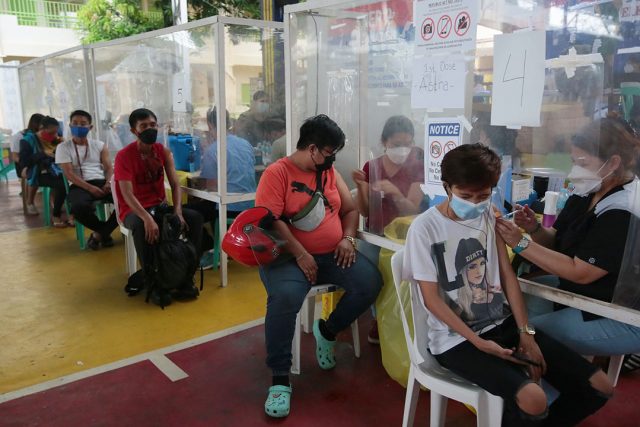
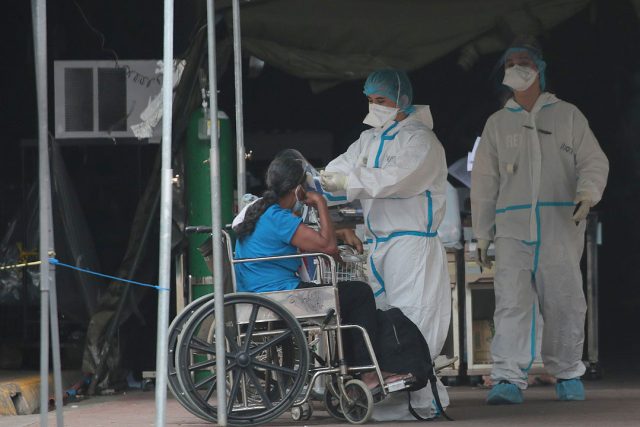
THE PHILIPPINES is now at minimal risk classification from the coronavirus, health authorities said on Monday, as the country tests more inbound travelers to prevent an outbreak of a new variant first detected in South Africa.

The number of new coronavirus cases nationwide has declined significantly in the recent week, Health Undersecretary Maria Rosario S. Vergeire told a televised news briefing.

The country had an average of 544 cases daily from Nov. 29 to Dec. 5, which was 42% lower than the 941 daily cases recorded a week earlier, she said. 

“Looking at the epidemic curve of our major island groups and the NCR (National Capital Region) Plus areas, majority of areas have been on a plateau since the start of November while the rest of Luzon showed signs of plateauing in the case trend in the recent week,” she said.

Ms. Vergeire said the country recorded a -57% two-week growth rate and a low-risk average daily attack rate of .67 per 100,000 people.

“Nationally, we remain at minimal risk case classification.”

The national health system’s capacity is at low risk and all regions are now at minimal to low risk classification, she said.

The Department of Health reported 543 new coronavirus infections on Monday, bringing the total to 2.84 million.

The death toll hit 49,499 after 113 more patients died, while recoveries increased by 830 to 2.77 million, it said.

There were 13,548 active cases, 1,063 of which did not show symptoms, 5,545 were mild, 3,898 were moderate, 2,366 were severe, and 676 were critical.

It said 26% of intensive care units in the Philippines were occupied, while the rate for Metro Manila was 29%.

Twenty-one percent of the 113 reported deaths occurred in November, the agency said.

The Health department said 12 duplicates were removed from the tally, 10 of which were reclassified as recoveries, while 102 recoveries were relisted as deaths. It added that 152 patients had tested negative and were from the tally.

Two laboratories did not operate on Dec. 4, while five laboratories failed to submit data.

CORONAVIRUS VARIANTS
The Philippines has already tightened border controls to prevent an outbreak of the Omicron variant, which has a large number of mutations. More than 40 countries have already reported cases of the new variant first detected in South Africa.

Ms. Vergeire said the Omicron variant, which experts said could pose a greater threat than the Delta strain, was not found in the 629 samples recently checked by the Philippine Genome Center.

The highly contagious Delta variant is still the dominant coronavirus strain in the Philippines, she said.

The country now has 7,848 cases of the Delta variant after 571 more people got infected with the virus first detected in India based on the recent sequencing of 629 samples, she said.

Ms. Vergeire said one more Filipino had been infected with the Alpha variant first detected in the United Kingdom, bringing the total to 3,168.

The country now has 3,630 cases of the Beta variant after one more person got infected with the virus, also first detected in South Africa, she added. Of the 629 samples sequenced, 55 had no lineages.

The latest sequencing brought the total of sequenced samples with assigned lineages to 19,305.

Ms. Vergeire said samples from a COVID19-positive traveler from South Africa and 11 returning Filipinos were undergoing genomic sequencing. The results are expected by Wednesday.

Meanwhile, the country’s capacity for biosurveillance and genome sequencing needs improvement, a senator said.

“The faster our health authorities will be able to detect, identify and track these cases with the new variants of COVID, including Omicron, the higher our chances of preventing its transmission in our shores and in sustaining our efforts to revive the economy,” Senator Juan Edgardo M. Angara said in a statement on Monday.

“What is more critical now is our ability to detect these new variants and to come up with the necessary precautions with haste,” he added, citing the Health department’s earlier reports that some areas were having difficulty in submitting samples for genome sequencing due to transportation issues and  lack of laboratories. — Kyle Kristophere T. Atienza and Alyssa Nicole O. Tan

Mapping agency says law on PHL maritime zones long overdue

PHILIPPINE COAST GUARD PHOTO

A PROPOSED law defining the Philippines’ maritime zones in line with an international agreement providing a legal framework on sea borders and activities received unanimous support from officials in the executive branch, as tensions rise after the Chinese Coast Guard’s recent attack and harassment of Philippine supply boats.

A Senate panel on Monday discussed proposed Bills 2333 and 2289, or the Philippine Maritime Zones Act, which seek to mark out the country’s maritime zones anchored on the United Nations Convention on the Law of the Sea (UNCLOS).

Efren P. Caranding, deputy administrator of the National Mapping and Resource Information Authority (NAMRIA), told the Senate committee on foreign affairs that the proposed legislation has long been overdue.

He said the Philippines committed to the United Nations in 1988 to harmonize its domestic legislation with the provisions of the convention.

More than three decades later, the country has yet to fully realize this, he said.

“As the central mapping agency, NAMRIA needs a definitive legal basis to be able to draw the outer limits of our maritime zones,” he said.

Justice Senior State Counsel Fretti G. Ganchoon said there are existing laws that need to be revised or updated since “we have an obligation under international law to make necessary modifications in our laws to make sure they are aligned with UNCLOS.”

Senate President Vicente C. Sotto III, who authored one of the bills, said the approval of the proposed measure would “preclude any unwarranted and undesirable disputes with other nations involving our maritime areas.”

Mr. Sotto also said it will provide flexibility in the passage of subsequent laws pertinent to the rights and obligations of the country in the disputed South China Sea.

Former Ambassador Gilberto G.B. Asuque, meanwhile, cautioned lawmakers about addressing the issue of territorial claims, which is a matter that must be ironed out in another spectrum of international law.

The proposed measure, he said, must be limited to the borders of sovereign rights.

Diplomacy will enable us to challenge China in its position and narrative, Mr. Asuque said during the hearing.

“If we have this legislation incorporating the entire position of the arbitral award, we are empowering and giving our diplomats the necessary tool to sit down with the other claimants in the South China Sea and resolve this issue by peaceful means.”

He was referring to the 2016 ruling by a United Nations-backed arbitral court in favor of the Philippines and invalidated China’s claim to more than 80% of the South China Sea.

In the most recent incident, China’s Coast Guard blocked and discharged water cannons at Philippine-flagged boats that were carrying supplies for marine troops stationed at the Second Thomas Shoal, which the country calls Ayungin.

Beijing did not apologize and asserted that the Philippine boats were in Chinese territory.

The Philippines eventually completed the supply delivery mission and denied China’s demand to remove the ramshackle Navy ship grounded on Ayungin, which serves as troop base.

Defense Secretary Delfin N. Lorenzana has asserted that the arbitral award and the 1982 UNCLOS, in which China is a signatory of, recognize the Philippines’ exclusive economic zone that extends 200 nautical miles from the country’s shore. Ayungin Shoal is 104 nautical miles from the baseline of Palawan.

Foreign Deputy Assistant Secretary Myca Magnolia M. Fischer, who is also executive Director of the Office of Asian and Pacific Affairs, said that since 2016, the Foreign Affairs department has filed 241 protests to date, with China responding to 152.

Of the total, 183 were filed this year, including daily protests against the presence of Chinese militia vessels in Philippine maritime zones. — Alyssa Nicole O. Tan

Manila mayor changes tune on Duterte admin

PRESIDENTIAL candidate Francisco “Isko” M. Domagoso, currently mayor of Manila City, on Monday said he wants to include President Rodrigo R. Duterte in his senatorial slate for the 2022 elections, months after he criticized the tough-talking leader’s governance style.   

The chief of the Philippine capital, who has vowed to create the “broadest form” of government, said he will personally back the senatorial candidacy of Mr. Duterte.  

“I’m going to vote for him personally. I’m going to endorse him,” he told reporters in Cebu City, based on a report published by the state-run television’s Facebook page. “If he’ll accept it, I’ll be honored.”  

Mr. Domagoso said he wants Mr. Duterte to be included in his Senate slate as a guest candidate “simply because he no longer has a presidential candidate.”  

The Manila mayor, who had criticized the administration’s pandemic response, made the pronouncement days after the President’s preferred successor, Senator Christopher Lawrence T. Go, decided to quit the presidential race.  

Mr. Domagoso said he would have no problem adding Mr. Duterte to his current three-man slate as long as the President would not be a guest candidate for other presidential candidates.   

The local leader is running for president under Aksyon Demokratiko, the political party founded by the late Senator Raul S. Roco in 1997 and became his vehicle for his presidential bid in the 1998 elections. Mr. Roco lost to Joseph E. Estrada.  

“We standby with the pronouncement of our Party President and standard bearer,” party chairman Ernesto “Ernest” M. Ramel, Jr. said in a Viber message.   

“Aksyon has taken a centrist and objective stand on many issues and is not an opposition party per se,” the party chair said. “We believe that there are current administration policies and programs worth continuing while there are some that can be improved, discontinued, or rectified.” 

Mr. Domagoso in September said that he would avoid senseless speeches late at night if he becomes president, in an apparent allusion to Mr. Duterte’s televised addresses in which he has attacked political opponents, including the Manila mayor.  

The President earlier said Mr. Domagoso does not deserve to become president given his past as a sexy actor.  

The Manila chief, who ran and lost in the 2016 senatorial race, had said leaders who flip-flop on their political ambitions could not be trusted.   

Months before the filing of electoral candidacies, Mr. Duterte said he would retire from politics once his six-year term ends next year, only to change his mind by filing his candidacy papers for senator at the last minute.   

Mr. Domagoso used to be a scavenger and pedicab driver in a Manila slum before he was discovered by a show business talent scout.  

Political analyst Cleve V. Arguelles earlier told BusinessWorld that Mr. Domagoso’s campaign narrative could be easily discredited “because it’s personality — rather than platform-oriented.”   

Vice-President Maria Leonor “Leni” G. Robredo, who has considered herself as part of the opposition camp, had been in talks with Mr. Domagoso and other politicians to unite all presidential candidates critical of the Duterte government.   

ROBREDO CAMPAIGN
Also on Monday, a public official who has been part of the national pandemic response team led by Mr. Duterte welcomed Ms. Robredo in his home city. 

Baguio City Mayor Benjamin “Benjie” B. Magalong, who was designated contact tracing czar, said he and the opposition leader are “completely aligned” in their political views. “I admire her.”  

In her speech at a flag raising ceremony, Ms. Robredo said Baguio and her hometown Naga City “share a lot of similarities” in terms of rejecting vote-buying and violence in politics.  

Ferdinand “Bongbong” Marcos, Jr., who lost to Ms. Robredo by a hair in the vice-presidential race in 2016, received 75,275 votes from Baguio, higher than the latter’s 21,108 votes.  

Mr. Marcos filed his candidacy papers for president in October, angering activists and victims of his father’s two–decade rule.  

The late dictator’s son is now facing more than five petitions seeking to block his presidential candidacy.  

In a related development, the Philippine elections body’s spokesperson urged candidates who are facing electoral cases to respect the litigation process and refrain from discussing them publicly.  

“It is easier for everyone involved if there is some sobriety in this process,” Commission on Elections spokesman James B. Jimenez told a virtual news briefing. — Kyle Aristophere T. Atienza

Business, political groups call for action vs disinformation, hate speech  

BUSINESS GROUPS on Monday called for action from the private sector and other players involved in the 2022 presidential race to help address online disinformation and hate speech, as Philippine politics become more polarized.  

In a statement, the groups said the business community has “watched with concern” how social media and other platforms have been used by different parties to spread disinformation and hate speech in recent years, “resulting in erroneous beliefs, confusion, and division.”   

“We watch with alarm how this abuse has spiked during this election season,” they said in a statement, noting that the abuses comprise lies, personal attacks, trolling, misogyny, communist-tagging, among other acts that put people at risk of physical harm.    

“We fear the damage may be long-lasting.”  

The groups urged businesses to evaluate the platforms they use for advertising “in terms of whether and how much disinformation and hate speech they allow.” 

They also appealed to various media platforms to fully disclose how they are addressing disinformation and hate speech.   

“We support ongoing efforts to create tools that businesses and advertisers can use to assist them in this evaluation in the near future, but commit to taking first steps now.” 

The groups also urged politicians to not to engage in such abuses and exhort their supporters to remain civil.  

“We call on operators of social media and other platforms to consider what they are allowing to happen, and declare to their users and the public the steps they are taking to stop or curtail this,” they said.   

They also asked the public to evaluate politicians as well as media and communications platforms “and use their votes and clicks to promote truth and civility in the coming elections.”  

The signatories of the statement include the Management Association of the Philippines, Bankers Association of the Philippines, Philippine Business for Education, Philippine Chamber of Commerce and Industry, Philippine Retailers Association, Chamber of Thrift Banks, Energy Lawyers Association of the Phils., Federation of Filipino-Chinese Chambers of Commerce and Industry, Filipina CEO Circle, Financial Executives Institute of the Philippines, Investment Houses Association of the Philippines, Judicial Reform Initiative, Subdivision and Housing Developers Association, Cebu Business Council, Integrity Initiative Inc., Makati Business Club, Mindanao Business Council, and Subdivision and Housing Developers Association. — Kyle Aristophere T. Atienza 

House approves SIM card registration bill on third and final reading 

STOCK PHOTO | Image by terimakasih0 from Pixabay

THE HOUSE of Representatives has approved a bill that would require the registration of SIM cards for mobile phones to prevent use for fraud.  

In a vote of 181-6 with no abstentions, the House passed House Bill 5793 or the SIM (subscriber identity module) Card Registration Act on third and final reading.  

The bill requires public telecommunication companies or direct sellers of SIM cards to require the buyer to present a valid identification with photo and accomplish a control-numbered registration form.  

Failure to comply with these requirements is ground for refusal of sale.   

All existing subscribers should also register their SIM cards within six months from the effectivity of the proposed law, which can be extended by no longer than four months upon a valid written request to the Department of Information and Communications.  

Direct sellers should submit accomplished control-numbered registration forms to the mobile service providers within 15 days from the date of the SIM card sale.  

Telecommunication companies are also required to maintain a SIM Card registry of their subscribers.  

In case of loss or change of information of a registered SIM card, subscribers should inform their service provider within 48 hours.  

Information used for the registration of the SIM card will be kept confidential unless there is written consent of the subscriber to access such information, or upon an issuance of a subpoena, order of a court, or written request from a law enforcement agency that a particular number has been used for a crime. 

Telecommunications firms are also required to submit to the National Telecommunications Commissions a verified list of their current authorized dealers nationwide and update the agency every quarter. 

The measure was approved by the House Committee on Information and Communications Technology on Dec. 11, 2019. It was approved on second reading on Dec. 2, 2021.  

A counterpart bill is pending on second reading at the Senate.   

Roy Cecil D. Ibay, vice president of the Philippine Chamber of Telecommunications Operators, said the approval of the bill will lessen smishing cases and boost e-commerce adoption and growth.  

“But this should ensure safeguards that will not unduly displace prepaid subscribers by giving a sufficient SIM registration period and ensuring that the wide adoption or use of the national ID is already in place,” he said.  

The measure has also been supported by the Bangko Sentral ng Pilipinas.  

The House approval of the proposed law comes amid the proliferation of various text scams.  

The National Privacy Commission has said among the groups behind at least one of the text scams might belong to an international crime syndicate and called data privacy officers from telecommunication companies to a meeting to address the growing problem. — Russell Louis C. Ku 

Congress eyes P90-B fund for healthcare workers’ benefits in 2022 budget 

PHILIPPINE STAR/ MICHAEL VARCAS

LAWMAKERS from both chambers of Congress are aiming to allocate at least P90 billion for healthcare workers’ allowances and benefits in next year’s budget, according to the chair of the House appropriations committee.  

“We placed some unprogrammed (funds in the House’s version), but we hope that we will reach P90 billion in programmed funds (for next year’s budget). That’s our target,” ACT-CIS Rep. Eric G. Yap told reporters.  

This comes as the bicameral conference committee started its meetings on Monday to reconcile disagreeing provisions in their version of the proposed P5.024-trillion 2022 national budget.  

Mr. Yap said that he hopes to allot a bigger budget for special risk allowance (SRA) of health workers as many of them expect to be given these benefits amid the coronavirus pandemic.  

“We will (realign) a huge portion of this budget to the SRAs because it seems that the Department of Health did not include the SRAs in the National Expenditure Program,” he said in Filipino. 

The Department of Health earlier said in a House budget hearing that they initially proposed P50.4 billion for healthcare workers’ benefits but this was later slashed by the Department of Budget and Management. 

Within the P65 billion in realignments to the House’s version of the budget bill, P4.5 billion was allotted for SRA for private and public health workers. 

Healthcare workers have staged protest actions to demand the immediate release of their delayed benefits such as hazard pay, SRA, and meals and transportation allowance.    

Meanwhile, Mr. Yap along with House Majority Leader Ferdinand Martin G. Romualdez target to finalize the reconciled budget bill by the end of this week and have it ratified by Congress next week before they adjourn for the holidays.  

“It is to the best interest of our people that the 2022 General Appropriations Act be signed by President Duterte before the end of the year so as to avoid a reenacted budget in 2022,” Mr. Romualdez said in a statement. — Russell Louis C. Ku 

MARINA, IMO, World Bank team up to enhance domestic ferry safety, energy efficiency

MARINA

THE PHILIPPINE Maritime Industry Authority (Marina) announced on Monday that it is working with the International Maritime Organization (IMO) and the World Bank Group on a project aimed at improving domestic ferry safety while also incorporating energy efficiency.  

The three organizations started on Dec. 1 a nationwide study on passenger ship safety and energy efficiency in the Philippines.  

“With the maritime transport landscape continuously evolving, the implementation of the ‘Study on the Safety and Energy Efficiency of Domestic Passenger Ships in the Philippines’ is timely and relevant,” Shipyards Regulation Service Director Ramon C. Hernandez said in a statement.  

The study also aims to identify “the most practical and cost-effective options” for reducing the carbon footprint of the domestic shipping sector.  

Marina has previously issued policies aimed at mitigating the environmental damage caused by the shipping industry, including a memorandum circular requiring Philippine-registered ships plying domestic routes to adhere to the Global Sulphur Cap.   

“The regulation requires ships to use fuels with only 0.5% m/m Sulphur content,” Marina said. — Arjay L. Balinbin 

CoA flags Philheath’s release of P321-M interim fund relating to Taal eruption

PHILIPPINE STAR/ MIGUEL DE GUZMAN

STATE AUDITORS have called out the Philippine Health Insurance Corp. (PhilhHealth) for the release of P321.71 million to healthcare facilities in areas affected by last year’s Taal Volcano eruption without proper resolution from its board of directors. 

In its 2020 audit report, the Commission on Audit (CoA) said these funds were released to 131 healthcare institutions in Batangas under the Interim Reimbursement Mechanism (IRM) program.  

“The absence of a board resolution authorizing the release of funds under the IRM renders the same as legally infirm,” CoA said. 

The IRM program is meant for PhilHealth to extend assistance to its members affected by natural disasters, health emergencies, or other unexpected situations.  

The PhilHeath management replied in an audit comment that the release of the IRM was “right and just” as the agency had to act urgently following the calamity. 

The IRM funds were released to the concerned healthcare institutions in Batangas from Jan. 24 to Jan. 28, 2020, accounting for 50% of all pending claims in these facilities.  

However, PhilHealth’s board officially authorized the release of these funds through Resolution No. 2496 that was issued on Jan. 30.   

CoA said the early release of funds was contrary to Republic Act (RA) 7875, or the National Health Insurance Act, as amended by RA 10606, which requires the use of health insurance funds to be subject to laws and existing resolutions.  

Auditors also questioned why 37 out of the 131 medical facilities were granted IRM funding when these were not directly affected by the volcanic eruption, such as those located in municipalities in Batangas’ 4th district and Batangas City.  

These areas were given P116.44 million.    

PhilHealth explained that the 4th and 5th districts of Batangas were covered by the funding as they hosted displaced persons affected by the natural disaster.  

CoA recommended that the PhilHealth management submit necessary documents that authorized their regional office in CALABARZON to release IRM funds, along with a written explanation on why 37 HCIs received funding, and strictly comply with the National Health Insurance Act.  

CoA also flagged the state insurer in its report for making payments worth P14.97 billion under the IRM program to 711 HCIs without any legal basis. — Russell Louis C. Ku 

House probe sought on text scam offering fake jobs 

HOUSE LAWMAKERS from the progressive Makabayan bloc are seeking an investigation of text message scams offering high-paying jobs.  

The group filed House Resolution 2393 asking the House Committee on Information and Communications Technology to probe the matter. 

“It is unfortunate that some quarters take advantage of the (coronavirus) situation by promoting various type of scams,” according to a copy of the resolution.  

Bayan Muna Party-list Rep. Carlos Isagani T. Zarate said in a separate statement that some subscribers claimed that a spike in number of text scams was observed after submitting their phone numbers for contract tracing.  

Senators earlier said that the spam messages could hinder the government’s pandemic response by encouraging a reluctance to share personal information for contact tracing.  

The National Privacy Commission (NPC) has said the groups behind the text scams might belong to an international crime syndicate and called data privacy officers from telecommunication companies to a meeting to address the growing problem. 

The Makabayan bloc said that the NPC along with the National Telecommunications Commission and Department of Information and Communications Technology should “immediately further strengthen their monitoring, safeguard, and regulatory mechanisms” to prevent these messages from harming Filipinos during the pandemic.  

Quezon City Rep. Alfred D. Vargas has filed a similar resolution urging the three government agencies to conduct their own investigations and take legal actions against those involved in the fraudulent activity. — Russell Louis C. Ku 

Basilan Gov. Saliman seeks probe in shooting that killed 1 mayor, another injured 

BASILAN Governor Hadjiman Hataman Saliman asked authorities to create a special investigation team to ensure the speedy resolution of Monday’s drive-by shooting that killed one town mayor of the province and injured another mayor along with his bodyguard.   

In a statement posted on Mr. Saliman’s Facebook page, he condemned the attack “in strongest terms possible” and called on “authorities concerned to thoroughly investigate the incident and bring the perpetrators to justice the soonest time possible.”  

Al-Barka Mayor Darus S. Lajid died on the spot after being shot at by still unidentified men as the group disembarked from a speed boat that ferried them from Basilan to Zamboanga City’s Baliwasan Seaside at around 8 a.m., according to initial reports received by the governor.    

Akbar Mayor Alih A. Sali and one of his bodyguards, meanwhile, were injured and immediately brought to a hospital.   

Both mayors were running in the May 2022 elections.   

Mr. Lajid filed a certificate of candidacy for vice mayor under the national party Lakas Christian Muslim Democrats.  

Mr. Salih was running for reelection under the United Bangsamoro Justice Party, which is affiliated with the Moro Islamic Liberation Front that is currently holding leadership of the Bangsamoro region’s transition.   

The towns of Al-Barka and Akbar are both small municipalities in Basilan, each with a population of over 23,000.  

Basilan is an island province that is part of the Bangsamoro Autonomous Region in Muslim Mindanao. It’s closest point of entry to mainland Mindanao is through Zamboanga City. — MSJ  

ADVERTISEMENT
ADVERTISEMENT