Home Blog Page 707

Gov’t must regulate critical information infrastructure, AI as cyberthreats grow

REUTERS

By Beatriz Marie D. Cruz, Reporter

THE PHILIPPINE government must prioritize measures that would regulate the country’s critical information infrastructure and artificial intelligence (AI) use amid the growing sophistication of cyberattacks, industry experts said.

“Our critical information infrastructure needs more stringent control,” Mark Anthony P. Almodovar, risk services – cybersecurity and privacy executive director at PwC Philippines, said on the sidelines of the BusinessWorld Insights Forum on Aug. 22.

Mr. Almodovar, a former president at the Information Systems Audit and Control Association Manila chapter, noted that critical information infrastructure, such as dams, power generators, and telecommunication systems, need “more stringent and the strictest control” to avoid cyberattacks that could inconvenience the public.

Since the beginning of the 20th Congress, several proposals have been filed mandating critical information infrastructure institutions to adopt adequate measures against cyberthreats.

These measures include Senate Bill No. 662, filed by Senator Juan Miguel F. Zubiri; House Bill (HB) No. 620, authored by Camiguin Rep. Jurdin Jesus M. Romualdo; HB 2826, authored by Camarines Sur Representatives Miguel Luis R. Villafuerte, Vincenzo Renato Luigi R. Villafuerte and Tsuyoshi Anthony G. Horibata, and Party-list Rep. Terry L. Ridon; and HB 3822, filed by Negros Occidental Rep. Javier Miguel L. Benitez.

Julian Louie Singson, executive director and co-founder at the Cybersecurity Council of the Philippines, said cybersecurity policies must be embedded in institutions using AI technologies.

“Cybersecurity stands as the guard that will stop whatever criminal threats or criminal actors that take advantage of the usage of AI,” he said in a chance interview.   

Lawmakers have also filed bills seeking to regulate and create an AI body, but these have yet to be deliberated by their respective committees.

According to Mr. Singson, cybersecurity is no longer a mere IT issue, but an organization-wide concern across government and private sector institutions. 

“If you provide your team, your staff, even your C-level management with the right education and information, they will protect themselves and in return, they’re already protecting the organization,” he said. 

Only 6% of Philippine organizations have “mature” cybersecurity systems, while 52% remain in the “formative” level, according to Cisco’s 2025 Cybersecurity Readiness Index, which measures cybersecurity preparedness based on five pillars: identity intelligence, machine trustworthiness, network resilience, cloud reinforcement, and AI fortification.

Mr. Almodovar also noted that heavily regulated industries like banking and finance, insurance and telecommunications have more advanced cybersecurity policies. However, many traditional industries like manufacturing, and micro, small, and medium enterprises, do not even have a chief information security officer.   

“If there would be new technology, regardless of digital transformation that will come our way, cybersecurity should be embedded in that transformation change,” Alexis Bernardino, field chief information security officer and head of cybersecurity product at PLDT Enterprise/ePLDT, said on the sidelines of the forum.

Mr. Singson also noted that the lack of cybersecurity experts remains a major industry issue, with many being lured to join companies abroad because of higher salaries and better working conditions.   

“One of the biggest problems that we are facing here in the Philippines is not really the lack of cybersecurity expertise. The way they are being paid is not the same as how much people are getting paid in Singapore or the United States,” he said. 

Eight out of 10 Filipino cyber-experts work overseas, and there are only 200 of them remaining in the country, former Information and Communications Technology Secretary Ivan John E. Uy said earlier.

Alipato at Muog wins top prizes at 73rd FAMAS Awards

A DOCUMENTARY that follows the family of Jonas Burgos, a kidnapped activist, was the big winner at the 73rd Filipino Academy of Movie Arts and Sciences (FAMAS) Awards ceremony on Aug. 22 at the Manila Hotel.

The documentary directed by JL Burgos won two awards from its five nominations: Best Picture and Best Director for Mr. Burgos.

Alipato at Muog centers on the Burgos family’s search for Jonas in the years following his enforced disappearance. It premiered in the Cinemalaya Independent Film Festival last year, where it was awarded the Special Jury Prize.

Not even a month later, the film was given an X rating by the Movie and Television Review and Classification Board (MTRCB) for “undermining the faith and confidence of the people in their government and/or duly constituted authorities.” X-rated films are deemed as not being suitable for public exhibition. The film was re-rated R-16 (viewers under 16 cannot see the film) after a formal appeal by Mr. Burgos condemned the X rating as censorship.

Meanwhile, the biopic Mamay won four awards from its 10 nominations: Best Cinematography, Best Musical Score, Best Production Design, Best Original Song for “Hamon,” and Best Supporting Actor for Jeric Raval.

Premiered in cinemas in August last year, the film, directed by Neal “Buboy” Tan, follows the life of Nunungan, Lanao Del Norte mayor Marcos Mamay, who produced the film himself. It portrays the local politics of the region as well as Muslim culture and traditions.

The other acting awards went to Nadine Lustre (Best Supporting Actress for Uninvited), Marian Rivera (Best Actress for Balota), Vice Ganda (Best Actor for And the Breadwinner Is…), and Arjo Atayde (Best Actor for Topakk).

FAMAS is the oldest existing film industry award-giving body in the Philippines, having been established in 1952. Members of FAMAS are writers and movie columnists. — Brontë H. Lacsamana


Below is the complete list of winners:

Best PictureAlipato at Muog

Best Director — JL Burgos for Alipato at Muog

Best Actress — Marian Rivera for Balota

Best Actor — Vice Ganda for And the Breadwinner Is… and Arjo Atayde for Topakk

Best Supporting Actor — Jeric Raval for Mamay

Best Supporting Actress — Nadine Lustre for Uninvited

Best ScreenplayGreen Bones

Best CinematographyMamay

Best Production DesignMamay

Best EditingThe Hearing

Best Musical ScoreMamay

Best Original Song — “Hamon” from Mamay

Best SoundTopakk

Best Visual EffectsEspantaho

SEC issues cease-and-desist orders vs 7 lending platforms

SEC.GOV.PH

THE Securities and Exchange Commission (SEC) has issued cease-and-desist orders against seven entities accused of operating online lending platforms (OLPs) without the required registration.

In a statement on Monday, the SEC said its Financing and Lending Companies Division (FinLend) issued separate orders dated Aug. 15 against Cash Konek, Pesosuki, Yescom Lending-Quick Cash Loan, Peso101-Fast Loans PH, Peso Cow-Mabilis Pera Loan, Swiftloan: Loan App Philippines, and Pera Loan: Fast Cash PH.

The regulator directed the entities, including their owners, operators, promoters, representatives, agents, and others acting on their behalf, to stop offering, promoting, or facilitating lending-related transactions until they secure the necessary registration and approval.

“In light of the [companies’] continued unauthorized operation of [their OLPs], the commission finds it necessary to issue [these cease-and-desist orders] in order to prevent further harm or prejudice to the public, and to safeguard the integrity of the regulatory framework governing lending companies,” the orders read.

The commission said the operation of unrecorded OLPs violates SEC Memorandum Circular (MC) No. 19 issued in September 2019 that requires financing and lending firms to disclose their OLPs, as well as the moratorium on the registration of new OLPs imposed under MC No. 10 issued in November 2021.

Under Republic Act No. 11765 or the Financial Products and Services Consumer Protection Act, the SEC is authorized to impose enforcement actions, such as a cease-and-desist order, against financial service providers for noncompliance.

“The companies’ operations of unregistered and undisclosed OLPs circumvent the commission’s regulatory and supervisory authority, thereby exposing the general public to potential risks, such as abusive and unfair debt collection practices, unjust interest rates, and violation of data privacy rights,” the SEC said.

The SEC has been intensifying its monitoring and enforcement efforts on both registered and illegal online lending platforms.

In June, the SEC FinLend issued an order directing companies operating online platforms and mobile applications to provide landline numbers for both their principal offices and branches to strengthen the commission’s monitoring of financing and lending companies.

The company’s name and address must match those declared in its articles of incorporation, the order said.

“The SEC is mandated to carry out the state’s policy under the Financing Company Act (FCA) and Lending Company Regulation Act (LCRA) to, among others, regulate the establishment of financing and lending companies to place their operation on a sound, efficient, and stable condition to derive the optimum advantages from them as an additional source of credits, and to prevent and mitigate, as far as practicable, practices prejudicial to the public interest,” the order said.

BusinessWorld was unable to reach Cash Konek, Pesosuki, Swiftloan, Pera Loan, Peso101, and Peso Cow, as their websites and Facebook pages could not be found.

Yescom Lending-Quick Cash Loan had yet to respond to BusinessWorld’s e-mailed request for comment as of press time. — Revin Mikhael D. Ochave

R&B icons Babyface and Patti Austin to share a stage in Manila

TWO GRAMMY-WINNING soulful artists will be coming together in Manila in October. Recording artist and producer Babyface and R&B singer-songwriter Patti Austin are set to perform on Oct. 27, at the SM Mall of Asia Arena, Pasay City.

Babyface (whose full name is Kenneth Edmonds) has won a Grammy 13 times, bagging Producer of the Year four times, three of which were in consecutive years (1995-1997).

He has written and produced hits for artists like Bobby Brown, Boyz II Men, Eric Clapton, Madonna, Beyoncé, Bruno Mars, Ariana Grande, Mary J Blige, Celine Dion, Aretha Franklin, George Michael, Michael Jackson, Justin Bieber, Phil Collins, Janet Jackson, NSYNC, Chaka Khan, Faith Evans, Stevie Wonder, John Mayer, Lionel Richie, Michael Bolton, Kenny G, Lil Wayne, Luther Vandross, Barba Streisand, and countless others.

Meanwhile, Ms. Austin is an R&B, pop, and jazz singer and songwriter who has worked with artists such as Paul Simon, Billy Joel, and Michael Jackson. Her 1982 duet with James Ingram, “Baby, Come To Me,” became a No. 1 hit on the Billboard magazine pop chart. A second duet with Ingram, “How Do You Keep the Music Playing,” appeared on soundtrack to the 1982 film Best Friends. She is also known for her song “Say You Love Me.”

In the 2000s she recorded albums with the Germany-based ensemble WDR Big Band, which led to two of her six Grammy nominations. For Ella (2002) was a tribute to Ella Fitzgerald, while the 2008 album Avant Gershwin, earned her the trophy for Best Jazz Vocal Album.  

NOSTALGIA AND ROMANCE
For Babyface, the concert will be enjoyed by Filipinos, who are big on nostalgia and romance.

“I’ve been doing a lot of the songs from my catalog. Along with that we do a lot of high-energy stuff and it will be a whole lot of fun,” he said during an online press conference on Aug. 21.

“It’s going to be a night of time travel and going down memory lane,” he added.

The American hitmaker last performed in the Philippines in 2007. He recalled that the crowd was “very memorable.”

“Right now I’m excited about coming back because I got a really good band and the show’s going to be really good,” he explained. “What I’m finding hard to remember is how I was like 18 years ago. It’s hard to imagine that that much time has passed.”

His concerts are an opportunity to sing songs that he had written for other artists, said Babyface.

“When I’m doing a show, I enjoy performing my songs but I also enjoy performing the songs I wrote for everyone else. In my world, the whole thing kind of blends together, being a singer and being a writer, because it’s all part of my artistry,” he said.

As for what songs he looks forward to singing, Babyface told BusinessWorld that he never really knows until the audience makes him realize it.

“It depends on the audience you’re in front of and how it affects them. It makes me look at the songs differently. Some people will call out songs I haven’t thought of in a while!” he explained.

A few underrated ones he learned to appreciate include his 2005 track “The Loneliness,” and his 1996 duet with Stevie Wonder, “How Come, How Long.” The latter was popular overseas in countries like in the Philippines, but not in the United States.

“I don’t think of those songs all the time,” said Babyface. “It’s really the people who make me think of them.”

The concert is presented by Ovation Productions. Tickets for Babyface and Patti Austin in Manila are available at SM Tickets online and outlets nationwide, with prices ranging from P2,580 to P8,880. — Brontë H. Lacsamana

The MAP Health Agenda: Removing the stigma of cancer in the workplace

STOCK PHOTO | Image by Pikisuperstar from Freepik

The stigma of cancer in the workplace in the Philippines is a significant issue, impacting cancer patients and survivors in various ways. Despite increasing awareness and legal protections, challenges persist. This is why the leading business organization in the country, the Management Association of the Philippines (MAP), launched the MAP Cancer Awareness Program, asking every member to pledge in this advocacy. However, it is important to consider some key aspects of the campaign, including points to include in communication to the employee body.

PREVALENCE OF STIGMA AND DISCRIMINATION
A notable percentage of cancer survivors in the Philippines report experiencing discrimination at work and even job loss after their diagnosis. Studies indicate that survivors with stigma related to the “impossibility of recovery” and other stereotypes are significantly more likely to lose their jobs. The perception that cancer is a terminal disease with no possibility of recovery is a pervasive dimension of stigma. This often leads to a “spoiled identity” where cancer patients are seen as unable to participate in work or social life.

Physical manifestations of cancer treatment, such as hair loss, weight loss, or mastectomy, can also contribute to stigmatization, setting individuals apart and identifying them as having cancer.

Doubts about cancer survivors’ capability to perform their roles, lack of emotional support from peers, and an absence of organizational support systems can make it difficult for them to reintegrate into the workplace.

ECONOMIC IMPACT
The economic burden of cancer extends to the workplace, with patients and caregivers facing substantial wage losses due to foregone work productivity. Lingering health issues after treatment can complicate a patient’s return to work, further affecting household income.

LEGAL AND POLICY FRAMEWORKS
The Philippines has made strides in addressing cancer in the workplace through legislation, like the National Integrated Cancer Control Act (RA No. 11215). This Act mandates the establishment of a Cancer Control Policy (CCP) in the workplace.

The Department of Labor and Employment (DoLE) Labor Advisory No. 20, Series of 2023, provides guidelines for implementing workplace policies and programs on cancer prevention and control in the private sector. These guidelines aim to prevent stigma and discrimination against employees with cancer. These policies encourage employers to:

1. Implement awareness campaigns and health education on cancer;

2. Provide support groups for employees with cancer and their families;

3. Ensure confidentiality of employees’ health status;

4. Offer reasonable work accommodations and arrangements, such as paid leave benefits (beyond existing ones), flexible work arrangements, and telecommuting.

Cancer diagnoses leading to permanent disabilities may entitle employees to partial or total disability benefits through SSS.

While there isn’t a single, cancer-specific “cancer leave” statute, employees with cancer can generally access various leave and benefit programs by combining statutory entitlements (e.g., SSS sickness/disability benefits, PhilHealth support) with employer-granted leaves.

The Magna Carta for Disabled Persons (RA No. 7277, as amended by RA No. 10524) also provides rights to equal employment opportunities for persons with disabilities, which can include cancer patients whose condition results in a disability.

SUPPORT SYSTEMS AND INITIATIVES
Various government agencies and non-profit organizations offer medical and financial assistance to cancer patients. These include the Philippine Charity Sweepstakes Office (PCSO), PhilHealth, and the Cancer Assistance Fund (CAF) under the National Integrated Cancer Control Act. And many are not even aware of the availability of the assistance.

The Civil Service Commission (CSC) and the Department of Health (DoH) actively promote cancer support under CSC Resolution No. 2400721 for government employees, including free cancer risk assessment, prevention, early detection, treatment, rehabilitation, and palliative care.

Some private companies are also taking proactive steps. For example, Asticom and AC Health have partnered to support the “Working with Cancer” initiative, aiming to combat workplace stigma and promote inclusivity and care for employees facing cancer.

CULTURAL AND SOCIAL PERCEPTIONS
Filipino culture, with its strong emphasis on close family ties and religion, plays a significant role in how individuals cope with cancer. Despite increasing awareness of cancer, there can still be a “lukewarm” attitude towards the effectiveness of available government treatments, with many Filipinos holding high expectations for curative outcomes.

While there’s growing legal and institutional support for cancer patients in the Philippine workplace, the ingrained stigma and misconceptions surrounding the disease remain a significant hurdle. Continued efforts in education, policy implementation, and fostering a supportive work environment are crucial to ensuring that cancer patients and survivors can maintain their employment and well-being.

THE MAP HEALTH AGENDA
This MAP Cancer Awareness Program is so timely with the announcement of the new cancer screening as part of the PhilHealth YAKAP (YAman ng KAlusugan Program), which not only helps on the prevention of cancer, but also drumming the beat to remove the stigma of cancer in the workplace by having more people aware that there is help, from the government and from the community. The MAP Board of Governors and the MAP Health Committee are proactive and aggressive about this campaign, with MAP leading, once again, such a relevant endeavor.


Racquel “Rac” R. Cagurangan is chair of the MAP Health Committee and managing director of CareTech Health.

map@map.org.ph

racquel.cagurangan@caretech.asia

Converge seeks tighter regulatory, cybersecurity focus in Konektadong Pinoy IRR

Converge Co-Founder and Chief Executive Officer Dennis Anthony Uy addressed guests and media present during the launch of his ICT company’s latest hospitality business solution.

LISTED fiber internet provider Converge ICT Solutions, Inc. said it wants stronger regulatory authority included in the implementing rules and regulations (IRR) of the Konektadong Pinoy Act to prevent potential abuse of relaxed provisions.

“Two particular areas we need to focus on are regulatory standards and cybersecurity. Too often, commitments are made but services are not delivered. This shows that standardization is very important,” Converge ICT Chief Executive Officer Dennis Anthony H. Uy said in a Viber message on Monday.

The Konektadong Pinoy bill, which seeks to improve internet access by relaxing regulations and allowing more entrants into the data transmission industry, lapsed into law on Sunday.

The Department of Information and Communications Technology (DICT) said it is now drafting the IRR of the Konektadong Pinoy Act, also known as the Open Access in Data Transmission Act.

The agency said it will convene stakeholders for the drafting of the IRR, which it targets to finalize within 60 to 90 days.

DICT Secretary Henry Rhoel R. Aguda said the agency has invited major telecommunications and ICT companies to provide input on the IRR.

Converge expressed support for the Konektadong Pinoy Act, saying it is anticipated to encourage more industry participants and enhance connectivity and services nationwide.

“Competition gives people real choice. It’s not just ‘take it or leave it.’ That said, it’s very important to ensure that the right regulatory framework is in place, in this case the implementing rules and regulations. The last thing we want is for consumers to suffer from substandard offers. We need strong, clear, and enforceable rules that guarantee an equal playing field,” Mr. Uy said.

He said stronger regulation is needed to ensure accountability and protect consumers from fly-by-night operators.

The Konektadong Pinoy Act streamlines the licensing process in the industry. It also adopts an open-access policy to create a more accessible and competitive environment for all qualified participants across the data transmission network, while encouraging investments in digital infrastructure to support reliable and affordable data services.

Under the law, new data transmission entrants are no longer required to secure a legislative franchise or a certificate of public convenience and necessity.

Earlier, the Philippine Chamber of Telecommunications Operators (PCTO) said this provision undermines regulatory oversight and threatens fair competition, as the law only requires entrants to secure cybersecurity certification after two years of operations.

“Cybersecurity is so important. Every operator must have the capability to protect their network. Networks must have systems in place to protect against spam, scams, and other cyber threats. These are just some examples, but there is a lot we need to do. We at Converge are willing to work closely with the government and with other players in the industry to ensure that this law truly works,” Mr. Uy said.

Aside from telecommunication companies, the crafting of the Konektadong Pinoy IRR will also be led by the Department of Economy, Planning, and Development (DEPDev), the DICT said.

“Reliable and affordable internet means more students, especially those in remote areas of the country, can gain access to online learning resources. Micro, small, and medium enterprises can reach broader markets, while clinics can deliver telehealth to those who are unable to travel to regional centers,” DEPDev Secretary Arsenio M. Balisacan said in a statement on Monday.

DEPDev said it is committed to working with its partners to ensure that the law’s implementation would be faithful to the Konektadong Pinoy Act’s objectives while also addressing the concerns of the stakeholders.

“The agency will continue providing evidence-based guidance and pursue an inclusive process in crafting the law’s implementing rules and regulations, ensuring that the promise of this reform brings real, equitably shared, and lasting gains for the country,” it said. — Ashley Erika O. Jose

Helen Mirren says it’s great to see older people’s life experiences in The Thursday Murder Club

THE STARS of 2025’s The Thursday Murder Club (L-R): Celia Imrie, Ben Kingsley, Helen Mirren, and Pierce Brosnan in a scene from the movie.

LONDON — Actor Helen Mirren, one of the stars of The Thursday Murder Club, a movie about a group of retirees who enjoy cracking unresolved murder cases, said it’s great to see older people’s life experiences celebrated on screen.

Eighty-year-old Ms. Mirren plays former spy Elizabeth Best in the new Netflix mystery, who along with her other impressive retired friends — played by Pierce Brosnan, Ben Kingsley, and Celia Imrie — find themselves with a real murder to solve.

“We underestimate older people. I did it when I was 25,” Ms. Mirren said at the film’s premiere in London on Thursday.

“It’s absolutely right that young people feel as if the world is theirs and nobody’s ever done what they’re doing before, you know, but the reality is, of course, every generation has done everything that they’re doing.”

Directed by Chris Columbus, the film is based on Richard Osman’s 2020 best-selling novel of the same name.

“I don’t plot at all,” Mr. Osman said of his writing process. “I literally have a rough idea of what might happen. I have a little twist somewhere, but I literally write a chapter at a time and see what happens,” he said.

Describing the movie, one of the screenplay writers, Katy Brand, said it mixes “serious, heartfelt warmth” and moments of silliness, humor, and satire.

“This whole sort of genre that we have in this country of the sort of Sunday night crime drama… where amateur sleuthing goes on but it’s also got mischief to it.”

As for the future, with three more novels in the series already out and a fifth installment from Mr. Osman planned for autumn, he hopes there will be more films.

“Certainly if it does well,” he said. “I think the cast had such an amazing time last summer filming this. So I think they’d like to spend next summer filming another one as well. Fingers crossed,” Mr. Osman said.

Netflix began streaming The Thursday Murder Club on Aug. 28. — Reuters

Universal healthcare is zero balance billing

X.COM/WHOPHILIPPINES

During his fourth State of the Nation Address on July 28, President Ferdinand Marcos, Jr. announced the implementation of the zero balance billing policy or what he calls the “Bayad Na Bill Mo” program (“Your bill has been paid” program).” According to Health Secretary Teodoro Herbosa, the program requires no additional documents or interviews, and all costs, including medicines and professional fees, are fully covered.

However, The “Bayad Na Bill Mo” program only applies to basic or ward accommodation in the 87 Department of Health (DoH) hospitals nationwide. A patient who opts to be transferred to a private room in a DoH hospital is not entitled to zero balance billing. Neither is a patient confined in the ward of a private hospital.

That is what universal healthcare is supposed to be: zero balance billing. To me, a clearer description of universal healthcare is “no medical billing program.” That is what universal healthcare is in the United Kingdom, and in many European countries. Healthcare is provided by government-owned hospitals and by doctors and other healthcare professionals employed by the government.

But as I had written here before, universal healthcare in the Philippines is still years away. That is because there are only about 27,019 beds in the 87 DoH hospitals. And that number includes beds in semi-private and private rooms, although they account for a fraction of the total.

Per World Health Organization (WHO) recommendation, there should be 20 hospital beds per 10,000 population. The country’s population in 2019 when universal healthcare was implemented was 110 million. That means there should have been 220,000 hospital beds in 2019. The DoH’s Philippine Health Facility Development Plan places the number of beds in 2020 at approximately 105,000, half of what the WHO says is the ideal ratio.

The WHO had advised our legislators to institute universal healthcare fully in 2030 when the country’s health delivery system — hospitals and primary care clinics — would be capable of servicing it. But the members of the 17th Congress, many of whom were running for re-election, rushed the enactment of a law adopting universal healthcare, RA 11223, so that they could present it in the elections of 2019 as their gift to the Filipino people.

The law mandated that all Filipino citizens be enrolled in the Philippine Health Insurance Corp., better known as PhilHealth. That was the monumental flaw of the law. PhilHealth is not a healthcare provider. It is a health financing agency. And it is not managed and staffed by health financing professionals. Ironically, Senator JV Ejercito, the principal author of the law, failed to be re-elected.

As the WHO feared, the country’s health system was far from being capable of servicing universal healthcare in 2019. The United Kingdom owns the hospitals and employs the healthcare workers that service all its citizens. While the Philippine government also owns hospitals and employs healthcare workers, their number falls way short of those required to provide the health services needed by the 110 million Filipinos.

The insufficiency of public hospital beds is unspeakable. In many parts of the country, farm workers, market vendors, food stall operators, tricycle/jeepney drivers, and retail store attendants who fall ill do not get the proper medical attention due mainly to the inaccessibility of a healthcare facility, not even a primary care clinic.

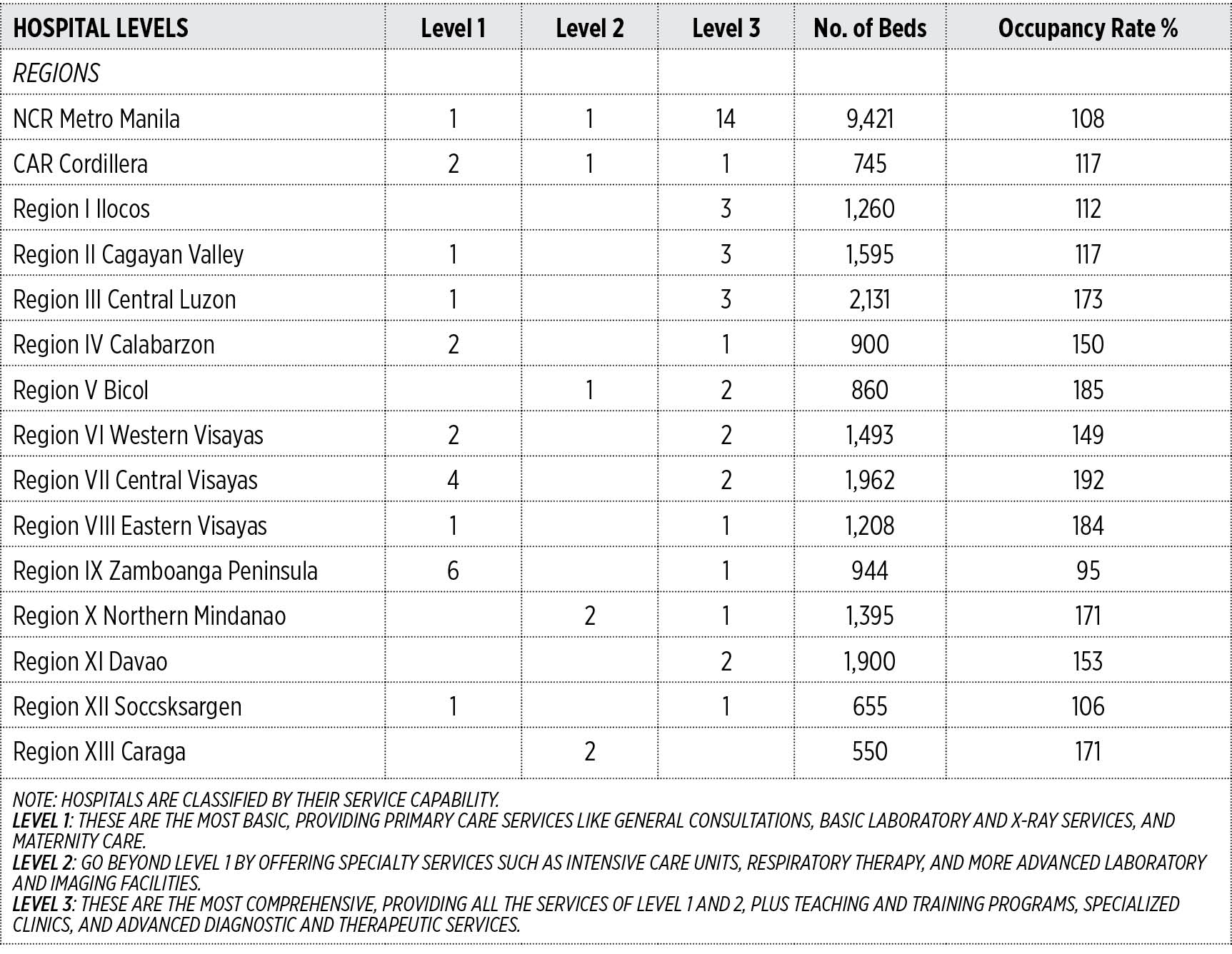
The problem with our universal healthcare or zero balance billing program is the acute shortage of beds in wards of DoH hospitals. The accompanying table shows the pathetic situation with regard to DoH managed hospitals.

A 108% occupancy rate means there are more inpatients in the hospital than there are beds available. That is in the National Capital Region or Metro Manila where there are several DoH-administered hospitals. In the Bicol, Central Visayas, Eastern Visayas, and Northern Mindanao regions, the occupancy rates are almost double. That means two inpatients share a bed or many inpatients are made to lie on benches in waiting areas, some are treated on visitors’ chairs.

While the President announced the zero balance billing policy will eventually be implemented in the four specialty hospitals — the National Kidney and Transplant Institute, the Philippine Heart Center, the Lung Center of the Philippines, and the Philippine Children’s Medical Center — and the Philippine General Hospital (PGH), which is administered and operated by the University of the Philippines (UP) as the training hospital for the students of its College of Medicine, it is high time the government provided the folks in the countryside healthcare by building more hospitals that provide a range of medical services, from basic to specialized, in underserved regions.

JV Ejercito, who was elected to the Senate again in 2022, recently called for the passage of a measure seeking to provide an additional P74.4-billion subsidy for PhilHealth in order to sustain the zero-balance billing program of the Universal Health Care (UHC) law. He just doesn’t get what universal healthcare means.

President Marcos did say that five DoH hospitals will soon be operational. He did not indicate where the five new hospitals are. Other than the University of the Philippines, two state universities with medical schools have their own teaching hospitals — the West Visayas State University and Bicol University. As in UP’s PGH, the zero balance billing policy should also be implemented in these two teaching hospitals in acutely underserved regions.

There are four other state universities offering a doctor of medicine program — Mariano Marcos State University, Cagayan State University, the University of Northern Philippines, and the Mindanao State University. They do not have their own dedicated teaching hospitals but have plans to build their own. The President should press for the erection of those hospitals so that they can be venues for the zero balance billing program or universal healthcare.

There are about 630 hospitals owned and administered by local government units. President Marcos should recommend or mandate the implementation of the zero balance billing program in these hospitals.

Last week the President said the program is “proceeding well.” At least 14,000 patients in two DoH hospitals have benefited so far from the program since its launch on May 14. Among the beneficiaries of the program was a 48-year-old who was admitted at the Eastern Visayas Medical Center after his lungs, diaphragm, and colon were punctured in a stabbing incident. His hospital bill, professional fees, and cost of medicines, and supplies reached P447,923.93, PhilHealth paid the bill. There was no balance because he stayed in the ward of the hospital.

What the total bill was for each of the 14,000 patients who benefited from the “Bayad Na Bill Mo” program should be the basis of PhilHealth’s packages of benefits for similar diagnoses and treatment of patients confined in private hospitals.

At present, PhilHealth’s packages of benefits are expanded without regard to inflation by the executive vice-president and chief operating officer, a lawyer. In January this year, PhilHealth implemented arbitrarily a 50% increase in case rates for nearly 9,000 medical and surgical cases, effectively doubling older rates that had been stagnant since 2014


Oscar P. Lagman, Jr. is a retired corporate executive, management professor, and business consultant. He had extensive exposure to the healthcare field in each of those three capacities.

ERC directs Meralco, First Gen to justify proposed supply deal extension

A Meralco worker examines a transformer in Navotas City. — PHILIPPINE STAR/RYAN BALDEMOR

THE Energy Regulatory Commission (ERC) has asked First Gen Corp. and Manila Electric Co. (Meralco) to justify their proposed extension of a power purchase agreement (PPA) for supply from a Batangas gas-fired power plant.

In an order dated Aug. 22, the ERC directed the companies to submit an explanation on “whether the extension of contract will not result in an excess contracted capacity as well as a simulation on the impact thereof on the generation charge.”

The order was issued in response to the joint motion filed by First Gas Power Corp. (FGPC), a subsidiary of First Gen, and Meralco on Aug. 22 seeking approval of an interim PPA extension.

The companies are also asking the regulator to allow the recovery from customers and Meralco’s payment to FGPC of “attendant costs during implementation of the interim extension.”

The ERC further directed FGPC and Meralco to explain how they intend to utilize or dispatch their existing contracted plants.

Previously, FGPC submitted a letter to the ERC seeking a PPA extension to continue supplying electricity to Meralco from the 1,100-megawatt (MW) Sta. Rita gas plant in Batangas for up to 15 years.

The contract for the facility is set to expire at the end of the month. The plant, which began full commercial operations on Aug. 17, 2000, has been supplying electricity to Meralco under a 25-year PPA.

First Gen President and Chief Operating Officer Francis Giles B. Puno said the company might need to consider ways to reduce operational costs, including “potentially temporary mothballing or shutting down the facility for a prolonged period,” if the contract is not extended.

“Can the grid live without 1,100 MW of reliable, efficient gas-fired capacity in the future? My position is it cannot,” Mr. Puno said in an earlier interview.

First Gen owns and operates four gas-fired power plants with a combined capacity of 2,017 MW.

At present, its total capacity across geothermal, wind, hydro, solar, and natural gas-fired plants stands at 3,668 MW. — Sheldeen Joy Talavera

Hollywood’s biggest AI debut? Las Vegas Sphere’s Wizard of Oz

THESPHERE.COM

LAS VEGAS — When The Wizard of Oz at Sphere opens off the Las Vegas Strip on Aug. 28, audiences will experience the 1939 film classic in a way its creators probably never thought possible.

Thousands of people will find themselves in the eye of the swirling tornado that rips Dorothy’s Kansas farmhouse off its moorings and hurtles it onto Munchkinland. The film has been enhanced to fill a 160,000-square-foot wall of LED panels that spans three football fields, encircling the audience and reaching 22 stories high, as 750-horsepower fans kick up wind and debris to simulate the twister.

The $104 or more per seat spectacle is more than meets the eye. The Wizard of Oz marks one of the most significant partnerships between a studio and technology company to use artificial intelligence (AI) to forge a new media experience.

Reuters spoke with nine people, including principals directly involved in the project and senior entertainment industry experts, who told the story behind a project that some industry veterans see as a potential watershed moment in Hollywood’s use of AI tools.

“It definitely represents a really meaningful milestone in AI-human creative collaboration,” said Thao Nguyen, immersive arts and emerging technologies agent at CAA. “I think it will set a precedent on how we reimagine culturally significant media.”

Bringing Dorothy and the Wicked Witch to the massive Sphere, a globe-shaped entertainment venue featuring advanced technology, took two years and brought together its creative team, Warner Bros. Discovery executives, Google’s DeepMind researchers, academics, visual effects artists — more than 2,000 people, in all.

The development occurred during intense apprehension over AI’s impact on jobs in Hollywood and the desire to preserve human creativity. Some visual effects companies initially contacted to work on the project declined because they were not permitted to work with AI at the time.

‘YOU’RE TOAST!’
Getting here took the blessing of Warner Bros. Discovery Chief Executive Officer (CEO) David Zaslav, his studio chiefs and lawyers who established guidelines for using AI. The Wizard of Oz at Sphere drew upon archival materials from the film — including set blueprints, shot lists, publicity stills, and film artifacts — as well as some 60 research papers to help deliver the movie in resolution representing a ten-fold improvement over previous work.

“We had to reimagine the cinematography, we had to reimagine the editing, and we had to do all of this without changing the experience,” said Oscar-winner Ben Grossmann, who oversaw the project’s visual effects. “Because if you touch anything about this sacred piece of cinema, you’re toast!”

Rather than exploiting AI to cut jobs, they sought to use it to breathe fresh life into a classic story and create new experiences with existing intellectual property.

“Hollywood embraces new technology, and everyone can’t wait to be the second one to use it,” said Buzz Hays, a veteran film producer who leads Google Cloud’s entertainment industry solutions group. “What The Wizard of Oz is doing for us is giving that first opportunity where people go, ‘Oh my god, this is not at all what I thought AI was going to be.’”

The project began in 2023 with Sphere executives discussing which project would push the technological boundaries of the venue that had already hosted U2 and Darren Aronofsky’s Postcard from Earth.

The Wizard of Oz quickly topped the list as a familiar, beloved film well-suited for the Sphere’s enormous canvas, said Carolyn Blackwood, head of Sphere Studios. It presented an opportunity to re-introduce the classic to a new generation in a way that would place them inside L. Frank Baum’s world.

Symbolically, the team chose a classic film that was a technical marvel of its time. While not the first movie to use Technicolor, The Wizard of Oz’s dramatic transition from sepia tones to hyper-saturated color marked a cinematic milestone.

Sphere Entertainment’s CEO James Dolan and creative collaborator Jane Rosenthal, Tribeca Film Festival co-founder and noted film producer, envisioned a more ambitious project than a mere digital remastering of a classic. Ms. Rosenthal tapped Mr. Hays to bring in Google as a technical partner.

AI ‘QUARANTINE ZONE’
Mr. Dolan approached Warner Bros. Discovery CEO Zaslav, a friend and business partner from the early days of cable TV, to propose bringing Oz to the Sphere. “I had just been to the Sphere with a friend and was really blown away,” said Mr. Zaslav, adding that Mr. Dolan and Ms. Rosenthal also won over his studio chiefs, “who loved the idea. It’s an example of the great IP we own at Warner Bros.”

Before turning over one of the world’s most important entertainment properties, Warner Bros. set strict ground rules. Google could train its generative AI models on each major actor to reproduce their performances, but the data would remain the studio’s property. None of the Oz training data would be incorporated into Google’s public AI models.

“One of the things critical to getting this project started was creating a safe place for experimentation,” said Mr. Grossmann. “Warner Brothers and Google and the Sphere created an environment where they said, ‘We don’t necessarily know how it’s going to end, but we’re going to create a little quarantine zone here.’”

The visual effects team initially tried enlarging images using CGI, which would have created photorealistic animated versions of the characters. That approach was rejected because it would violate the integrity of the original performances.

“AI was effectively a last resort, because we couldn’t really do it any other way,” said Mr. Grossmann, whose Los Angeles studio, Magnopus, worked on such photo-realistic computer animated films as Disney’s The Lion King.

AI enhanced the resolution of tiny celluloid frames from 1939 to ultra-high-definition images. It restored details — like freckles on Dorothy’s face or burlap texture on Scarecrow’s face — obscured by Technicolor’s process. AI also helped “outpaint” on-screen images to fill gaps created by camera cuts or framing, as when it took a close-up of the Tin Man chopping a door of the Witch’s castle with an axe to free Dorothy and completed the image of the woodman.

It took months of repeated fine-tuning and Google’s DeepMind braintrust to elevate consumer-grade AI tools to deliver crisp images with the Sphere’s 16K “super” resolution.

Musicians re-recorded the entire film score on the original sound stage to take advantage of the venue’s 167,000 speakers. The vocal performances of Judy Garland and other actors remain unaltered.

FLYING MONKEYS
Despite attention to authenticity, the project has attracted criticism from some cinephiles who object to altering the cherished film. Entertainment writer Joshua Rivera called it “an affront to art and nature.”

“None of these people criticizing this have seen the film or understand what we are doing,” said Ms. Rosenthal.

In a private midnight screening for Reuters, Mr. Grossmann offered a glimpse of what’s to come.

Some changes are subtle, as when Uncle Henry stands by the front door while neighbor Almira Gulch demands Toto. AI places the performer, who spends much of his time out of view, back into frame, stitching together a wider view to fill the Sphere’s expansive viewing plane.

Other changes aim to realize the filmmakers’ vision in ways that weren’t technically feasible 86 years ago. As Dorothy and friends encounter the Wizard in the Emerald Throne Room, a 200-foot-high green head looms over the audience, eyes bulging and voice booming, creating a more imposing depiction than the original image of an actor in green makeup projected on smoke.

“Whenever we made a change, it was because we wanted the audience to experience what Dorothy was experiencing directly,” said Mr. Grossmann. “We completed something filmmakers were intending to do but were limited by 1939’s tools.”

Coordinated physical effects add another dimension. Flying monkeys will swoop into the Sphere as 16-foot-long helium-filled simians steered by drone operators, one of many Four-D effects.

The result is an amalgam of cinema, live production, and experiential VR. “I think that’s going to change the way people think about entertainment and experience,” Mr. Grossmann said. — Reuters


Luxury hospitality seen as growth niche for Philippine developers

STOCK PHOTO | Image by Brian Zajac from Unsplash

By Beatriz Marie D. Cruz, Reporter

PROPERTY CONSULTANTS said residential oversupply could push more Philippine developers to pursue luxury hospitality projects.

“With over 7,000 islands, it has all the ingredients, but it seems that Philippine hotel developers are conservative,” Bill Barnett, founder and managing director of Thailand-based hospitality consulting group C9 Hotelworks, said in an interview with BusinessWorld.

Mr. Barnett, who has served as a consultant for various hotel and residential developments across the Asia-Pacific, said many of the Philippines’ hotels and resorts are “family-run, so they tend to look at the industry and do what their friends do.”

“If somebody does one thing, they all do it,” he added.

Mr. Barnett also noted that some hospitality developers tend to be “commodity minded.”

“Meaning, they think more is better. More rooms, more things… You can’t commoditize luxury because somebody else can come in and lower their prices,” he added.

He also noted the oversupply of condominium units in Metro Manila would prompt developers to shift to the luxury segment.

“I think, now with real estate being overbuilt, Philippine developers will have to find a niche,” he said. “The real estate situation in the country triggers more luxury…because of the oversupply.”

For a luxury hospitality development to be attractive, Mr. Barnett said it is important to have easy access to its location.

“You can’t stay there if you can’t get there,” he said. “There should be enough flights which make it attractive, not only for guests, but to transport staff, and even goods and services.”

He also noted that luxury hospitality properties must have a unique selling point, with many travelers seeking localized experiences. Mr. Barnett also cited the importance of unique food & beverage concepts, strong internet connectivity, and exclusivity of location.

Alfred Lay, director for hotels, tourism, and leisure at Leechiu Property Consultants, said there are over 35 luxury hotel projects ongoing in the Philippines, accounting for over 7,500 hotel rooms over the next four years.

“If you include projects which have yet to be announced, then the number climbs to 50 luxury hotels and adding over 10,000 high end room keys,” he said in a Viber message.

However, air access remains a key roadblock in making the Philippines a fully realized luxury destination, Mr. Lay said.

“If you’re a high-spend international traveler, you don’t want connecting flights just to get to your resort — you want to land straight into places like El Nido or Siargao. Where we’ve got international airports near tourist hubs, you’ll notice the luxury hotels follow, such as Mactan, Panglao Island, Boracay,” he added.

Joey Roi H. Bondoc, director and head of research at Colliers Philippines, said luxury hotels are expected to perform well amid high occupancy rates and the entry of foreign hospitality brands into the country.

“Even if foreign arrivals to the Philippines dropped marginally in the first five months of 2025, there’s still a healthy level of occupancy, especially in Metro Manila hotels,” he said via telephone.

In the first half of the year, five-star hotel occupancies remained steady at 67% from the same period in 2024. This comes as foreign arrivals in the Philippines remain below pre-pandemic levels at 2.54 million as of end-May.

However, Colliers noted that the Philippines has a 4% penetration rate of branded hotels, way behind Singapore (45%), Indonesia (10%), and Thailand (8%).

“I think it will take a few more years for the Philippines to be at par with Thailand, Singapore, of course, Indonesia, especially if you look at our recovery rate pre-pandemic,” he said.

Energy transition leading to higher inflation and lower growth

The other week, on Aug. 14, I attended the AmCham 8th Energy Forum held at Marriott Hotel Manila and energy transition dominated the discussion. Last week, on Aug. 21, I was one of session speakers in the Philippine Chamber of Commerce and Industry-Indonesian Chamber of Commerce and Industry (PCCI-KADIN) Business Forum, held at the PCCI HQ in Taguig City, I and my co-speaker, Iman Arif, talked about the beauty of coal energy.

These terms — energy transition (from fossil fuels to intermittent renewables), net zero, and decarbonization — are for me economically irrational. The real energy transition we should work for is from unstable, blackout-friendly, and expensive energy to abundant, stable, cheap energy in order to achieve lower inflation and higher growth. Below are the numbers.

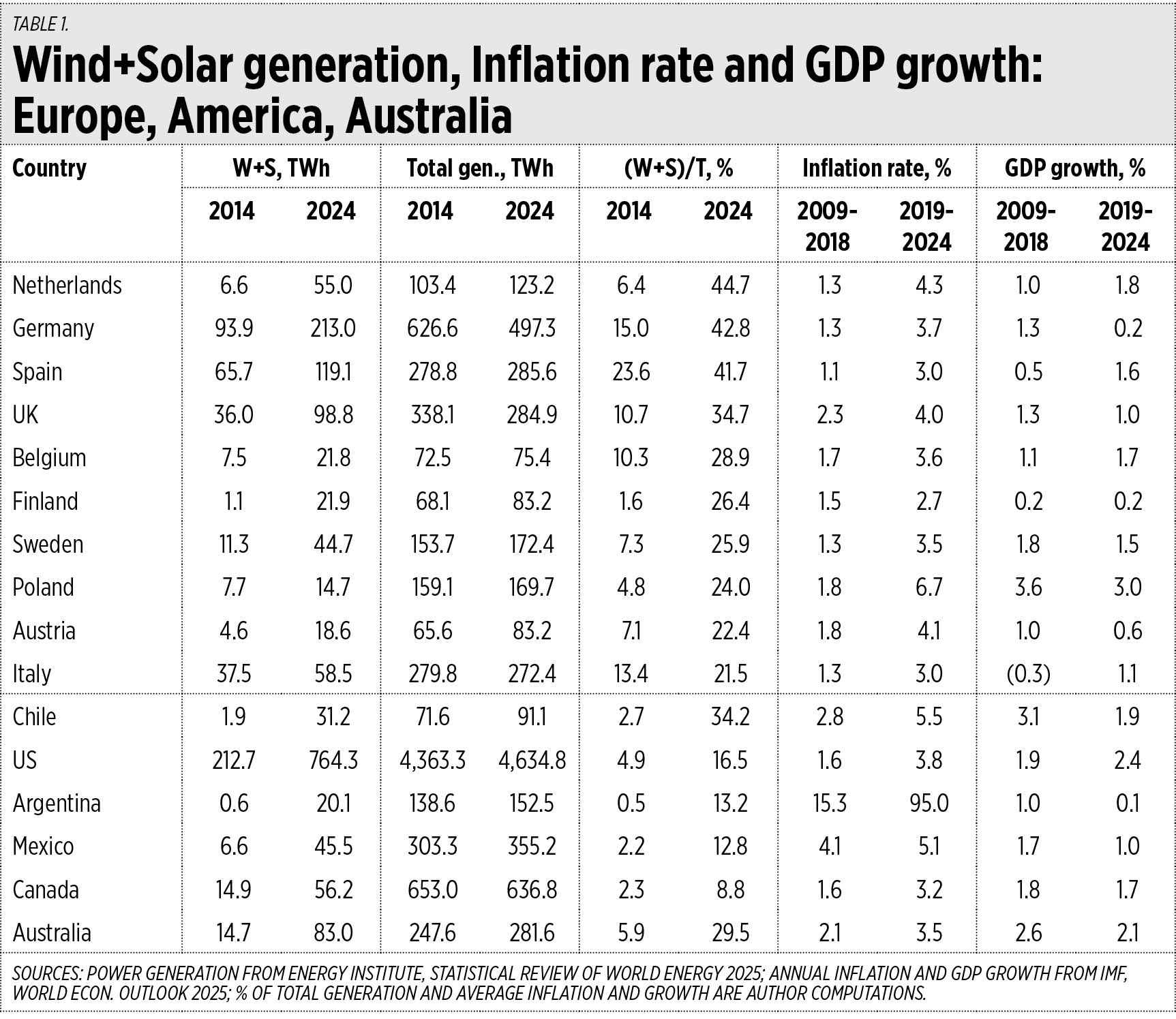
First, I added the total generation of wind plus solar (W+S) in 2014 and 2024, then computed the share of W+S over total generation, the (W+S)/T ratio. Then I got the average inflation rate and average GDP growth that touched those periods, 2009-2018 and 2019-2024.

The results are clear: countries with a (W+S)/T ratio of 20% and up have all seen rising inflation over those two periods, especially the Netherlands, Germany, the United Kingdom, Belgium, Poland, Sweden, Austria, Australia, and Chile. Even countries with medium (W+S)/T ratio of 9-16% also experienced rising inflation, like Canada and the USA.

Many of these countries also experienced low or declining GDP growth, especially Germany, the UK, Austria, Argentina, and Mexico. And two countries have had an ugly trend of declining total power generation as they add more W+S in their grid — Germany and the UK (see Table 1).

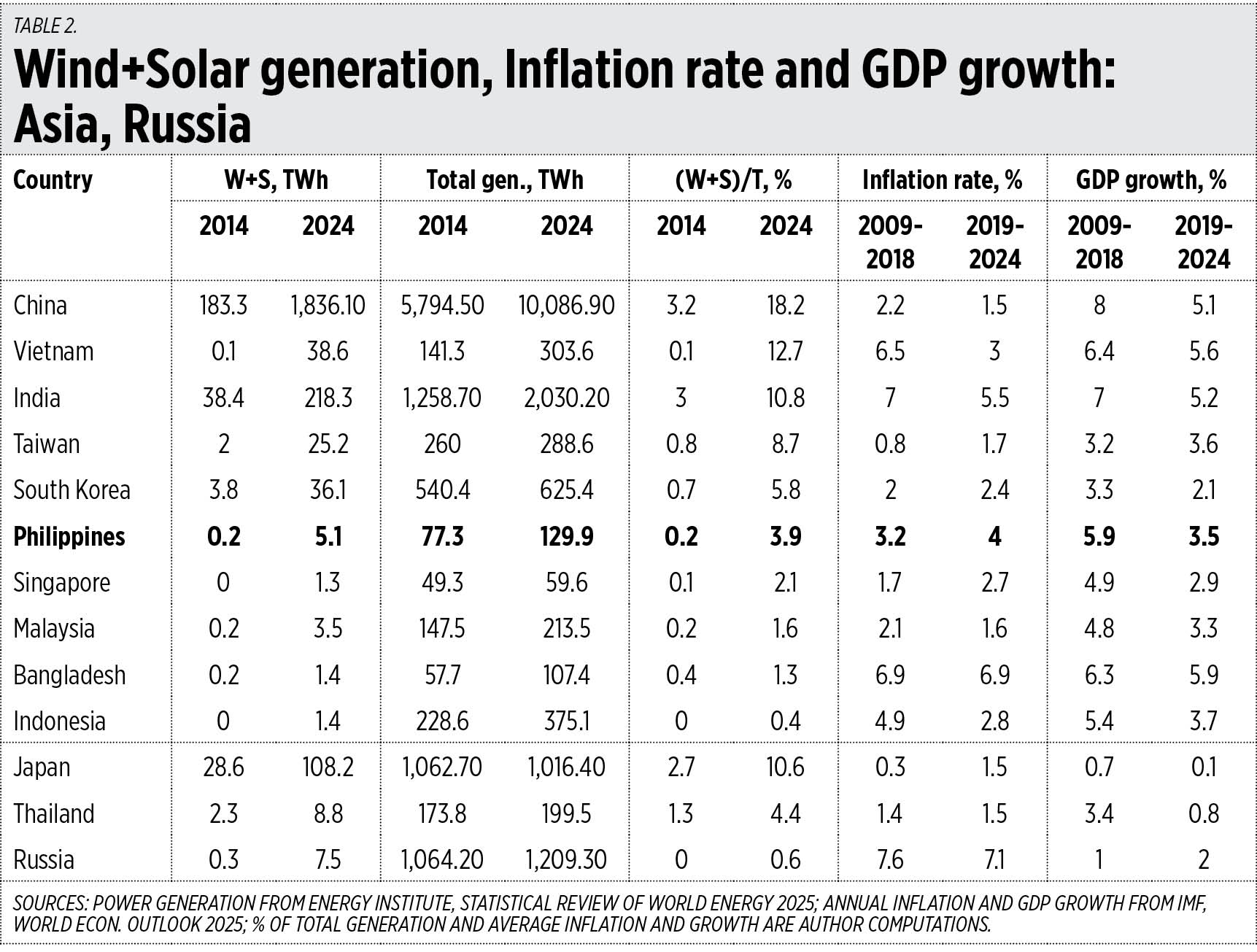
In contrast, in many Asian nations that have low (W+S)/T ratios of between 0.4% to 18%, their inflation rate is declining, especially China, India, Vietnam, Malaysia, and Indonesia. And their average GDP growth is high, 3% and above, except Japan and Thailand.

Even Russia, with its continuing war in Ukraine, has experienced declining inflation and rising growth (see Table 2).

The Philippines is lucky to have a (W+S)/T ratio of only 3.9% and we should not aspire to raise it to 5% or higher. Rather, we should aspire to expand our total power generation. We generated only 130 terawatt-hours (TWh) in 2024, less than Malaysia and Thailand, less than half of Vietnam and Indonesia. Many big manufacturing companies will be scared to come and invest here because of the perennial yellow-red alerts and insufficient power supply.

Our electricity prices are higher than those of many of our ASEAN neighbors because they subsidize their energy while the Philippines taxes energy; and their power supply per capita is higher than ours, especially Malaysia, Singapore, Thailand, and Vietnam.

Currently, on-grid customers subsidize the customers in off-grid islands and provinces via a universal charge for missionary electrification (UC-ME) of P0.195 per kilowatt-hour (kWh). Then, all consumers subsidize intermittent renewables like W+S via the Feed-in Tariff Allowance (FIT-All) at P0.119/kWh.

At the AmCham energy forum, many speakers from the energy players talked about energy transition, net zero, and Green Energy Auction (GEA). As shown in the tables above, the actual and non-hypothetical numbers show that inflation rises as more renewables are added. It seems that some private energy players are praying for expensive electricity and higher inflation, so long as their businesses have assured high profits.

This will come in the form of a future GEA Allowance (GEA-All) tacked onto our monthly electricity bill, on top of FIT-All and UC-ME. This future GEA-All will be large — twice or four times the FIT-All — because of the huge solar and wind capacities that have been granted or will soon be granted with assured high prices.

The economic team, concerned with high inflation and its dampening effect on consumer spending and overall GDP growth, should warn the energy sector of the future economic sabotage of these ongoing moves.

We should have an agnostic energy policy that focuses on developing an abundant energy supply. I applaud the three energy players which have a large number of thermal plants that balance their renewables portfolio — Aboitiz Power, Meralco Power Gen (MGEN), and San Miguel Global Power. As MGEN President and CEO Manny Rubio often argued in various energy fora that I attended: “Energy Transition means people should benefit from the energy shift, reliability must remain the foundation — power has to be consistent and affordable.”


Bienvenido S. Oplas, Jr. is the president of Bienvenido S. Oplas, Jr. Research Consultancy Services, and Minimal Government Thinkers. He is an international fellow of the Tholos Foundation.

minimalgovernment@gmail.com