Home Blog Page 7058

In 2021, governments blew hot on 1.5°C goal, colder on climate action
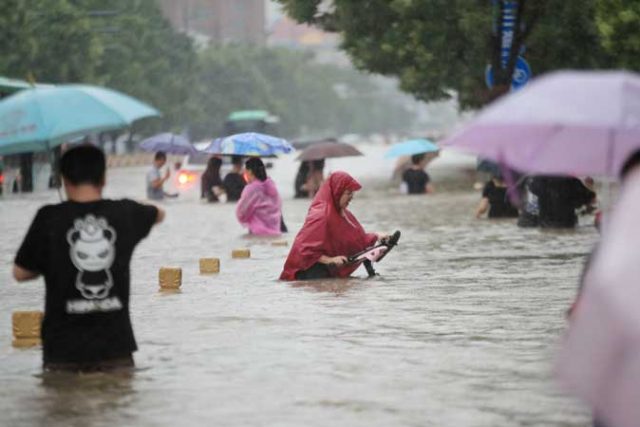
Residents wade through floodwaters amid heavy rainfall in Zhengzhou, Henan province, China July 20, 2021. — CHINA DAILY VIA REUTERS

KUALA LUMPUR — Around the world, 2021 was a year shaped by weather extremes. Germany and China saw devastating floods, while parts of Europe and the United States were ravaged by wildfires. Drought in East Africa led to crop losses and hunger, from Kenya to Madagascar. 

Worsening disasters — in many cases made more likely and severe by climate change — have at last pushed governments to grasp the importance of meeting an international goal to rein in global warming to 1.5 degrees Celsius (2.7°F), experts say. 

In 2015, when the landmark Paris Agreement was struck, about 195 nations formally committed to limit warming to “well below” 2°C (3.6F) above preindustrial times, while “pursuing efforts” for a more ambitious ceiling of 1.5°C. 

The potentially devastating effects of letting the Earth’s climate heat up beyond that lower limit became more evident this year, according to government officials and climate scientists. 

“[We] did witness a clear shift from other countries to support keeping 1.5°C alive,” said UN ambassador Aubrey Webson of Antigua and Barbuda, who chairs the Alliance of Small Island States, uniting 39 nations from the Pacific to the Caribbean. 

Those island states have long led the push for the 1.5°C goal to prevent further catastrophic losses, with many of them at risk of being swallowed up by rising seas as the planet warms. 

The problem now is that while support for the 1.5°C limit won fresh political backing in 2021, it remains out of reach. 

Countries are still wrangling over how to get on track to meet the goal, with pledges to cut climate-heating emissions not yet on the scale or time-frame needed. 

The planet has already heated up by 1.1°C since the industrial revolution unleashed widespread use of fossil fuels. 

Mr. Webson said the new high-level momentum behind 1.5°C — as seen among leaders this year, from the G7 and G20 summits to the COP26 UN climate talks — must be matched by rapid action. 

“Rhetoric and pledges without implementation are fool’s gold for small islands,” he told the Thomson Reuters Foundation. 

EMISSIONS GAP 

The Intergovernmental Panel on Climate Change (IPCC) has said man-made carbon dioxide emissions need to fall by about 45% by 2030 from 2010 levels, and reach “net zero” by mid-century to give the world a good chance of limiting warming to 1.5°C and avoiding the worst impacts of climate change. 

The good news is that 90% of the global economy is now covered by national net-zero emissions targets, up from 68% in 2020, according to the Net Zero Tracker compiled by a coalition of four research groups. 

Frank Rijsberman, director-general of the Seoul-based Global Green Growth Institute, which works with governments to achieve a green transition, said the surge in net-zero pledges showed growing commitment to the 1.5°C goal. 

“We now have almost universal acceptance of the 1.5°C target — that’s a big step forward,” he said. 

A flurry of net-zero pledges were made before and at November’s COP26 climate conference in Glasgow, Scotland, with host Britain claiming success for keeping the 1.5°C goal alive, even while admitting “its pulse is weak.” 

The two-week meeting ended with a pact that included a pledge to double funding to help vulnerable nations adapt to climate impacts, as well as commitments to “phase down” coal power and end “inefficient” fossil fuel subsidies. 

UN environment chief Inger Andersen said COP26 “did not get as far as we had hoped” — but had kept 1.5°C within reach. She called for climate ambition and action to be ramped up “urgently and meaningfully” to put the world on a safe path. 

Efforts need to be redoubled because emissions-cutting pledges for 2030 made so far would still leave the world facing an average temperature rise of 2.4°C, estimates Climate Action Tracker, a non-profit research group. 

Jennifer Morgan, executive director of Greenpeace International, noted COP26 was meant to close the gap in emissions reductions needed to limit warming to 1.5°C. 

“While that didn’t happen, it is now clear that 1.5°C is the only temperature goal that is reasonable for society to aim for,” she said. 

At the same time, it is harder to achieve, as leaders did not step up “fully” at COP26, she added. 

Climate policy expert Niklas Hohne of the Germany-based NewClimate Institute said that while more leaders had spoken out in favor of a 1.5°C limit than 2°C, the “discrepancy between the firmness and the reality of the 1.5°C goal has widened in 2021.” 

Recognizing this, the Glasgow summit agreed countries should come back with more ambitious plans to curb emissions next year. 

‘WAY OFF TRACK’ 

Differences over which countries should shoulder more responsibility to cut emissions faster and further — and how to pay for measures to do that, such as adopting clean energy — have complicated efforts to keep the 1.5°C goal within reach. 

The United States and China top the emissions chart — both historically and in terms of today’s greenhouse gases — although on a per-person basis, China drops down the ranking. 

Malaysian environmentalist Meena Raman, who has attended UN climate talks since 2007, said the main question had never been over opting for the 1.5°C goal but rather how to ensure it is achieved in a fair way — something COP26 failed on again.  

“Net zero by 2050 is what we call ‘The Great Escape.’ We need to get to real zero (emissions) within this decade,” said Ms. Raman, president of Friends of the Earth Malaysia.  

The World Meteorological Organization warned in October that greenhouse gas concentrations hit a record last year and the world is “way off track” to cap rising temperatures.  

In August, an IPCC report said average global temperatures would likely cross the 1.5C threshold within the next 20 years — bringing stronger droughts, heatwaves, floods and storms.  

Former IPCC chair Robert Watson told the Thomson Reuters Foundation that goal is “now harder to reach than ever before.”  

“The rhetoric is consistent with 1.5°C, but the pledges are not,” said the British chemist, warning that the less ambitious global target of staying below 2C is also in doubt.  

For example, since COP26, China and India have told their mining firms to boost coal production to plug energy shortages, while President Joseph R. Biden, Jr., asked US oil and gas companies to raise production to ease high prices, Mr. Watson pointed out.  

In addition, Britain’s trail-blazing pledge to slash its emissions 78% by 2035 from 1990 levels is not supported by — or consistent with — current national policies, he noted.  

“2021 can be summed up as the year of rhetoric not action,” said Mr. Watson. — Beh Lih Yi/Thomson Reuters Foundation 
Pro-Beijing candidates sweep ‘patriots’-only Hong Kong vote amid low turnout 

REUTERS

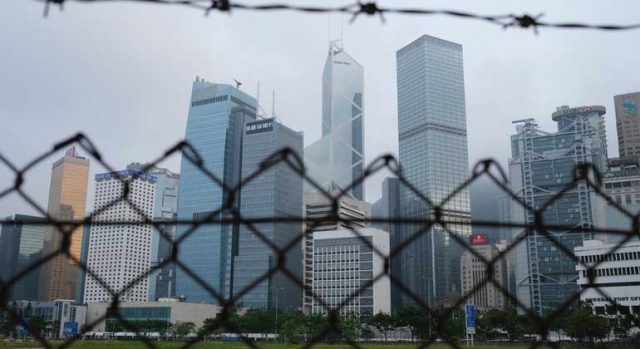
HONG KONG — Pro-Beijing candidates swept to victory in an overhauled “patriots”-only legislative election in Hong Kong that was deemed regressive by critics, with turnout hitting a record low amid a crackdown on the city’s freedoms by China.  

The turnout of 30.2% was almost half that of the previous legislative poll in 2016, with the latest results showing almost all of the seats being taken by pro-Beijing and pro-establishment candidates.  

Some of these candidates cheered on stage at the central vote counting center and chanted “guaranteed win.”  

When asked if her political party lacked a public mandate given the low turnout, Starry Lee, the head of the pro-Beijing Democratic Alliance for the Betterment and Progress of Hong Kong (DAB) that won half of the directly elected seats, said the electoral revamp would improve governance.  

“I do not believe this [the low turnout] is directly related to citizens not agreeing with this electoral system. I believe it needs some time for people to get adapted to this system,” she told reporters at the vote counting center.  

The election — in which only candidates screened by the government as “patriots” could run — has been criticized by some activists, foreign governments and rights groups as undemocratic. Mainstream pro-democracy parties did not participate, saying they could not endorse any candidates for a poll that was undemocratic.  

Most of the dozen or so candidates who called themselves moderates, including former democratic lawmaker Frederick Fung, failed to gain a seat, succumbing to pro-Beijing rivals.  

“It’s not easy to push people [to vote]. I think they are feeling indifferent in the present situation,” Mr. Fung told Reuters.  

Some overseas democrats, like Sunny Cheung, who moved to the United States to escape prosecution under the national security law, said most of Hong Kong had “consciously boycotted the election to express their discontent to the world.”  

The previous record low for a legislative election held after the city’s 1997 return from British to Chinese rule was 43.6% in 2000.  

China’s Liaison Office in Hong Kong, the Beijing government’s representative in the territory, gave no immediate response to Reuters questions on the result and the low turnout.  

Turnout is a central issue, as observers consider it a barometer of legitimacy in an election where pro-democracy candidates are largely absent, and a crackdown under a China-imposed national security law has jailed scores of democrats who had originally wanted to run, and forced others into exile.  

Under the electoral shake-up, the proportion of directly elected seats was reduced from around half to less than a quarter, or 20 seats.  

Forty seats were selected by a committee stacked with Beijing loyalists, while the remaining 30 were filled by professional and business sectors such as finance and engineering, known as functional constituencies.  

The turnout rate for these professional groups also fell from 74% in 2016, to 32.2%. Some sectors whose voters have traditionally been relatively pro-democracy, including education, social welfare, and law, had sharply lower turnout rates.  

In 2019, the last major citywide election in Hong Kong for district councils seats, the turnout rate was 71% with around 90% of the 452 seats won by democrats.  

While some observers say the low turnout could undermine the new legislature’s legitimacy, Hong Kong leader Carrie Lam said in a statement that the 1.3 million or so ballots cast were a “show of support for the improved electoral system.” — James Pomfret and Edmond Ng/Reuters

Domestic violence against women ‘almost satanic,’ Pope Francis says

ROME — Pope Francis has said that men who commit violence against women engage in something that is “almost satanic.”  

He made the comment, some of the strongest language he has used to condemn such violence, during a program broadcast on Sunday night on Italy’s TG5 network in which he conversed with three women and a man, all with difficult backgrounds.  

“The number of women who are beaten and abused in their homes, even by their husbands, is very, very high,” Francis said in answer to a question by a woman named Giovanna, a victim of domestic violence.  

“The problem is that, for me, it is almost satanic because it is taking advantage of a person who cannot defend herself, who can only [try to] block the blows,” he said. “It is humiliating. Very humiliating.”  

Giovanna said that she had four children to care for after they escaped from a violent home.  

Since the coronavirus disease 2019 (COVID-19) pandemic began nearly two years ago, Francis has several times spoken out against domestic violence, which has increased in many countries since lockdowns left many women trapped with their abusers.  

Police figures released last month showed that there are about 90 episodes of violence against women in Italy every day and that 62% were cases of domestic violence.  

Francis said women who were beaten and abused had not lost their dignity. “I see dignity in you because if you didn’t have dignity, you wouldn’t be here,” he told Giovanna.  

Turning to other examples of human misery, he listened to a homeless woman speak of life on the street and a man trying to get back on his feet after 25 years in jail.  

Francis has set up services in the area around the Vatican to give Rome’s homeless healthcare, bathing, and hair-cutting facilities.  

In 2020, when a palazzo just off St. Peter’s Square that was once a convent became vacant he ordered it to be turned into a homeless shelter, overruling suggestions that it be converted into a luxury hotel. — Philip Pullella/Reuters  

[B-SIDE Podcast] Spotting online fraud, stopping it in its tracks

Follow us on Spotify BusinessWorld B-Side

With the holiday season in full swing, there’s going to be a lot of opportunity for online fraud during e-commerce transactions. 

“Merchants are so focused on growing as quickly as possible, that they forget to put the right fraud tool,” said James L. Melon, country manager of fraud prevention services company Vesta. “The need is [only] realized when they get exposed from fraud attacks. Merchants make up for this by selling more volume, but it’s like pouring more water into a leaky bucket.” 

In this B-Side episode, Mr. Melon tells BusinessWorld reporter Patricia B. Mirasol about reputational risks and red flags that online merchants should watch out for. 

TAKEAWAYS 

Fraudsters are targeting digital wallets.  

The two main types of fraud are account fraud, where a fraudster steals account information such as bank details through links laced with viruses; and transaction fraud, where account information stolen from the dark web is used for online purchases.  

Card testing, Mr. Melon said, is particularly tricky, as it can be done in one or more cards and can fly under the radar of merchants.   

A card testing attack occurs when fraudsters — having acquired partial or full card credentials — employ digital tools to submit authorization requests on e-commerce sites. JP Morgan Chase, a financial services holding company, says the main objective for such attacks is to reveal the card’s missing security elements.  

“Increasingly, fraudsters are targeting digital wallets more now,” said Mr. Melon.  

Vesta’s 2021 data show that 2 in 3 Filipino shoppers (69%) prefer to use e-wallets when purchasing online  

Merchants risk their reputation as well as their revenue.  

Sophisticated or not, businesses lose revenue on several fronts from payment frauds, including:   

  • The acceptance of bad transactions – This results in high fraud rates, high bank charge fees, as well as “the unquantifiable but very important” reputational risk 
  • The rejection of good transactions – Caused by rule-based engines, this mistaken treatment — also known as false declines — results in low approval rates. “If there is a P50,000 limit on daily transactions, then what happens to the legitimate customer who wants to purchase more?” asked Mr. Melon. “Customers, including myself, will not hesitate to go other stores with better checkout experiences.”   
  • Customer friction – If the rejection of good transactions is from international cards, then Filipino merchants miss out on revenue opportunities. Mr. Melon pointed out that 10%–20% of transactions in the country are done through international cards.   
  • Operational inefficiencies – A company’s resources are better spent growing the business rather than putting out cyber fraud-related fires.  

Don’t sacrifice security for speed. 

The rate of attempted cyber fraud in Southeast Asia is 12 times greater than the global average, according to research by Vesta. The reason for this, Mr. Melon said, is because e-commerce in the region is growing at a much faster rate than mature markets.   

He offered three tips for merchants who wish to combine speed and security in their operations: understand fraud and acceptance rates; integrate machine learning to have more data points that improves the speed of decision-making; and do away with static rules.   

“Don’t measure fraud and acceptance rates in isolation,” he said. “Work with technology partners that can calibrate in real-time the difference between good and bad transactions.”   

This, he added, can strike the balance between maximizing the approvals of legitimate sales, while blocking the bad ones.   

Recorded remotely on Nov. 9. Produced by Paolo L. Lopez and Sam L. Marcelo.

Follow us on Spotify BusinessWorld B-Side

Transforming lives through clean, efficient, and sustainable energy

The energy sector is inextricably tied to the growth of a country. The more a country develops — that is, build more buildings, create more jobs, and have more people move away from poverty  — the more energy is needed.

Yet with the looming threat of climate change and increasing pressure to reduce greenhouse gas emissions, which the energy sector contributes the lion’s share of, the industry is in for a revolution. The Philippines’ energy sector must be prepared to adapt and overcome future challenges, or else be left behind as the rest of the world moves into a cleaner, more sustainable energy future.

This highlights the role that the Department of Energy (DoE) will play in the years to come. Now more than ever, as the department celebrates 29 years of service to the Filipino people, it faces the crucial task of fulfilling its vision of becoming “a globally-competitive agency that powers up Filipino communities through clean, efficient, robust and sustainable energy systems that will create wealth, propel industries and transform the lives of men and women and the generations to come.”

Last November, Energy Secretary Alfonso G. Cusi reaffirmed the country’s commitment to support the global effort to transition gradually from coal to clean power, one of the key issues tackled in the historic COP26 climate summit in Glasgow, UK.

“We cannot behave like developed economies since we are a developing country. Nonetheless, we remain committed to a gradual transition to renewable energy. Immediate transition will entail additional cost so we must strike a healthy balance in protecting our consumers and our economy and our quest for a cleaner environment,” Mr. Cusi said.

The Philippines joined more than 40 countries at COP26 that have committed to shift away from fossil fuels. Mr. Cusi further affirmed their support of intergovernmental and interagency collaboration to make clean power affordable and accessible globally as an effort to build back better from the COVID pandemic, and encourage others to make similar commitments.

Mr. Cusi also stated the agency’s continuing commitment to rapidly scale up deployment of clean power generation and energy efficiency measures in the economy, and to support other countries doing the same, recognizing the leadership shown by countries making ambitious commitments, including through the Energy Transition Council, as well as scale up technologies and policies aimed at supporting this development within the decade.

There are also plans to strengthen domestic and international efforts to provide a robust framework of financial, technical, and social support to workers affected by such changes.

“We recognize that while significant progress has been made to realize our shared vision, our task is not yet complete, and we call on others to join us as we redouble our effort to accelerate the global energy transition over the coming years,” Mr. Cusi said.

“We wish to emphasize that energy security is foremost because our energy transition comes as a means to improve the lives of our people and our country’s economic development,” he added.

Signatories of the COP26 agreement made a commitment to phase out coal-fueled power generation in the 2030s for richer countries, and the 2040s for poorer nations. Last year, the Philippines declared a moratorium on new coal-fired power plants. In its updated Energy Plan 2020-2040, the DoE seeks to make renewable energy account for 35% of the Philippine energy mix by 2030 and 50% by 2040.

Powering through the challenges

The journey towards the future of Philippine energy will not be easy. Even as the world slowly comes to grips with the climate problem and the health crisis brought about by the COVID-19 pandemic, there are still other significant issues that need to be addressed and other goals that the DoE is committed to pursue.

One such goal is achieving full electrification of unserved and underserved areas across the country by 2022. With the steady progress on expanding access to electricity, the country is on track to meet this target, as the household electrification level stood at 93.5% in June 2020, boosting an additional 292,491 energized households from only 23,229,866 in December 2019 up to 23,522,357 in June 2020. In particular, as of the publication of the 2019-2020 Energy Sector Accomplishment Report, the household electrification is already at almost 98% in Luzon, 94.6% in Visayas and 81.3% in Mindanao.

Meanwhile, pursuant to the goal of building a resilient energy infrastructure and securing such facilities in times of emergencies and disasters, the DoE institutionalized the Energy Resiliency Policy (ERP) which aims to strengthen existing infrastructure facilities, incorporate mitigation improvements into the reconstruction and rehabilitation, improve operational and maintenance standards and practices, and develop resiliency standards.

In 2019, the passage of Republic Act 11285 or the Energy Efficiency Act and its Implementing Rules and Regulations answered the sector’s call for a mandatory law that addressed issues on increasing energy demand and rising cost of imported fuels, allowing for creation of the Government Energy Management Program, and the Philippine Energy Labeling Program (PELP) and Minimum Energy Performance (MEP).

“The period 2019-2020 goes down in history as one of the most challenging periods of the 21st century. Our world is plagued with uncertainties and dangers brought about by climate change and the health pandemic. The challenge for the government is to do more and to do better,” Mr. Cusi said in the report.

“The DoE remains steadfast with its mission of improving the quality of life of the Filipinos by formulating and implementing policies and programs to ensure sustainable, stable, secure, sufficient, and accessible energy. In achieving such a mission, the DoE endeavors to balance between the provision of reliable and reasonably priced energy services to support the country’s inclusive growth, and the protection of the environment. Energy resiliency remains at the core of the DoE’s initiatives to mitigate the impact of any disaster with its adoption in the planning and programming of energy programs and projects,” he said. — Bjorn Biel M. Beltran

‘Odette’ may dampen PHL recovery

PHILIPPINE COAST GUARD FACEBOOK PAGE
Typhoon Odette left a trail of destruction in Surigao del Norte, as seen in this photo taken by the Philippine Coast Guard Civil Relations Service, Dec. 18. — PHILIPPINE COAST GUARD FACEBOOK PAGE

AGRICULTURE and productivity losses caused by Typhoon Odette could significantly impact fourth-quarter economic expansion, economists said.

Socioeconomic Planning Secretary Karl Kendrick T. Chua said the government is currently prioritizing immediate relief operations to mitigate the impact of the typhoon on affected communities.

“We will await a full impact/damage report and if needed do a post disaster needs assessment,” he said when asked how the devastation caused by Typhoon Odette could impact the fourth-quarter gross domestic product.

Typhoon Odette (international name: Rai) brought heavy rains and destructive winds over central and southern Philippines. It first made landfall in Siargao Island, Surigao del Norte on Thursday. Surigao del Norte may have suffered around P20 billion in damage, according to provincial officials.

The Agriculture department on Sunday said an initial assessment showed damage to crops in Western Visayas and the Caraga region is estimated at P127 million. Agriculture typically makes up around 10% of overall economic output, and a fourth of the country’s jobs.

“Typhoon Odette’s drag on gross domestic product (GDP) would be on the tangible damage on agriculture and the productivity losses brought about by the disruptions in business and other economic activities,” Rizal Commercial Banking Corp. Chief Economist Michael L. Ricafort said in a Viber message on Sunday.

Disruptions would be especially seen in areas of Visayas and Mindanao without electricity, water, and telecommunications, he said.

The typhoon had 195 kilometers per hour (kph) in maximum sustained winds and gusts of up to 240 kph, cutting power and water supply and damaging parts of Visayas and Mindanao.

The Department of Public Works and Highways on Sunday said that damage to public infrastructure is now estimated at P309 million. It is still clearing 11 impassable roads in the five regions affected by Typhoon Odette.

The extent of the infrastructure damage is affecting the transport of goods, creating a shortage of fuel, drinking water, and basic commodities in the typhoon-hit areas.

“There may also be temporary loss of jobs and other economic activities until some reparation/restoration already in place to allow resumption of business and other economic activities,” Mr. Ricafort said.

Price hikes in areas hit hard by the typhoon could also impact fourth-quarter growth, he added.

UnionBank of the Philippines, Inc. Chief Economist Ruben Carlo O. Asuncion said the typhoon’s effects on major economic hubs in Visayas and Mindanao, such as Cebu, Bohol, and Cagayan de Oro, could translate into significant economic impact.

“We may see a slowdown through about 30% of national output,” he said in a Viber message, noting that Luzon accounts for 70% of the country’s GDP.

“Hopefully, it will not be too much of an economic impact and people can celebrate the holidays especially we are still in a pandemic,” he said.

Third-quarter GDP grew 7.1%, slowing from the 12% expansion in the preceding three months, after the government reintroduced lockdowns to curb a Delta-driven coronavirus disease 2019 (COVID-19) surge.

Last week, economic managers raised the government GDP growth projection to 5-5.5% for this year from the downgraded 4-5% goal issued in August.

Department of Finance Chief Economist Gil S. Beltran had said the 7% fourth-quarter GDP growth needed to hit the revised target is “doable” and “within range.”

Meanwhile, reconstruction activities after the typhoon could support some economic recovery.

“Rehabilitation of areas hit by storm damage would ironically add to economic activities, just like in large storm damage in the past,” Mr. Ricafort said.

Repairs on damaged homes and businesses would require additional spending from both the private sector and the government, increasing economic activities, he said.

The Department of Finance previously said that extreme weather events have caused P506.1 billion in losses and damage to the Philippines over the past decade, emphasizing the country’s vulnerability to the climate crisis. — Jenina P. Ibañez

Government urged to be transparent over funds in ‘Odette’ aftermath

PHILIPPINE COAST GUARD FACEBOOK PAGE
HOUSES were destroyed by Typhoon Rai (Odette) are seen in Surigao del Norte in this photo taken by the Philippine Coast Guard Civil Relations Service, Dec. 18. — PHILIPPINE COAST GUARD FACEBOOK PAGE

By Kyle Aristophere T. Atienza, Reporter

ANALYSTS and development workers urged the Philippine government to disclose the status of its three special purpose funds that could be used for calamity response programs, as one of the world’s strongest storms of the year left many parts of the country devastated.

They made the call after President Rodrigo R. Duterte said the government is trying to raise money for relief measures since the public coffers were depleted due to pandemic spending.

“At the peak of COVID, the government really pooled all its resources, there’s hardly no spending limit. But we didn’t expect that this (typhoon) would happen now,” he said in a public briefing in Maasin, Leyte on Saturday. A transcript was made available by his office on Sunday.

“So this is what I said last night: We’re trying to scrape whatever we can from the savings of the government. There’s a little money left so I can help you. Help will arrive here,” he added.

Mr. Duterte’s statement reflects “a lack of understanding of his government’s national budget and failure to consult the Budget department before speaking about it,” said Zy-za Nadine Suzara, executive director of the public finance think-tank, Institute for Leadership, Empowerment, and Democracy (I-LEAD).

In a Viber message, Ms. Suzara said it is “irresponsible” to say the budget was depleted by pandemic spending and to suggest that nothing can be immediately tapped in the aftermath of Typhoon Rai, locally known as Odette, because “every national budget contains funds for disaster relief and rehabilitation.”

Ms. Suzara said “knowing which parts of the budget can immediately be tapped is necessary in dealing with the large-scale devastation wrought by Typhoon Odette.”

She noted as of end-November, there is a total available balance of P6.5 billion from the government’s 2020 and 2021 national disaster risk reduction and management funds, which can be released upon the approval of the President.

Ms. Suzara said there are also quick response funds under the budget of frontline agencies such as the Department of Social Welfare and Development, Department of Health, Department of Agriculture, among others.

“A third option is the President’s Contingent Fund — another special purpose fund that can be used, as its name suggests, for contingencies,” she added. “Those are programmed appropriations that the Treasury will have to finance.”

While local governments have disaster funds that can also be immediately tapped, the National Government needs to step in considering the extent of the destruction, Ms. Suzara said.

“President Duterte’s statement was insensitive at the very least and ill-informed at worst, especially for an office which has so much resources and from which so much is expected,” Sonny A. Africa, executive director of think tank Ibon Foundation, said in a Facebook Messenger chat.

Mr. Africa said the National Government’s calamity fund has averaged just P18.6 billion annually over the 2017-2022 period, nearly half of the P38.9 billion budget in 2016 or the last budget of the Aquino administration.

“The budget was not even wholly used up in 2020 and some P5.1 billion carried over for a total of P25.1 billion at the start of 2021… We suspect that much still remains because of the economic managers’ proven stinginess on relief measures,” he said.

Mr. Africa said the government “does not seem cash-strapped at all” because in the first 10 months of the year, it has had P2.5 trillion in revenues and borrowed P2.8 trillion. “It has only spent P4 trillion so far and so still has some P1.3 trillion in cash.”

“If the president chose to, he can use balances from his P4.5 billion in confidential and intelligence funds or P13 billion contingent fund, both directly under his control,” he said.

IBON estimated the destruction brought by Typhoon Odette would likely take its toll on the national economy, which is still recovering from the pandemic.

Government reports showed that more than 70 people died as of Dec. 19 from the recent typhoon, which destroyed thousands of homes in southern and central parts of the country.

“It is the government’s mandate to make sure enough funds are allocated should emergencies like Typhoon Odette happen,” a representative from the Citizens’ Disaster Response Center (CDRC) said in a Facebook Messenger chat, noting that the country should have the budget to mitigate Typhoon Odette’s impacts even while managing the pandemic because it is a fact that the country is visited by an average of 20 typhoons yearly.

“The government should be quick to carry out activities to arrest further deterioration of life and property, and remove affected families from life threatening situations,” it said. “This is why it is necessary for the government to immediately release funds and aid to people affected by Typhoon Odette.”

A community-based disaster response organization in Leyte said at least 300 houses were totally destroyed in four towns in the southern part of the province. “These were the horrors that awaited us: 24 deaths and many more missing. The count continues to rise.”

The Leyte Center for Development, Inc., which is part of CDRC’s network of disaster response groups nationwide, said several villages in the province experienced storm surges as high as 12 feet, resulting in a “gargantuan devastation to livelihoods and properties.”

“The people told us no regional nor provincial government agency has checked on them,” Executive Director Minet Aguisanda said in a Facebook Messenger chat. “They need food, shelter materials and livelihood support.”

The CDRC urged presidential candidates to prioritize disaster risk reduction and management in their electoral agenda. “We challenge them to come up with platforms not only to effectively respond to disasters, but most importantly, to build the capacities of communities to prevent or prepare for calamities, and address the root causes of people’s vulnerability to disasters.”

Mr. Africa of IBON said the government should “embrace civil society and mass media as partners in governance rather than, as present, enemies to be shut down.”

“There is no doubt that the development sector and civic groups will mobilize to provide aid as swiftly as they could, but the National Government has to take the lead and coordinate those emergency relief efforts done by different groups,” Ms. Suzara of I-LEAD said. “That means the National Government should have a clear recovery plan and strategy.”

She said the administration must be transparent about which funds are available for relief and recovery programs. “They should also be transparent about the amounts and status of foreign aid and donations coursed through National Government agencies.”

“Later on, the National Government also needs to come up and present a concrete plan for recovery and rehabilitation later on. Malacañang also needs to show how exactly those programs will be funded,” Ms. Suzara said.

Coronavirus pandemic slams revenues of Philippines’ top 1000 firms

REUTERS
Operations of many businesses were affected by the strict lockdown implemented to curb the coronavirus disease 2019 (COVID-19) outbreak last year. A woman walks in an almost empty shopping mall amid a lockdown in Quezon City, Metro Manila in this photo taken on May 17, 2020. — REUTERS/ELOISA LOPEZ

By Ana Olivia A. Tirona, Researcher

THE COUNTRY’S TOP 1,000 corporations saw their combined gross revenue decline for the first time in 2020 as the economy grappled with the effects of the coronavirus disease 2019 (COVID-19) pandemic.

The aggregate gross revenue of the top 1000 firms amounted to P10.796 trillion, 13.2% lower than the P12.439 trillion earned by the same roster of firms in 2019. Meanwhile, their combined net income declined by 39.5% to P889.346 billion from P1.469 trillion recorded in the year prior.

Now on its 35th year, BusinessWorld Top 1000 Corporations in the Philippines ranks private and public stock entities based on gross revenue using the latest available full-year audited financial statements.

Comparison of sectoral performance in 2020

The contraction in gross revenue reflected the decline in economic output amid the onset of the COVID-19 pandemic last year that prompted companies to close shop, suspend operations or operate at below full capacity. The Philippine economy contracted by a record 9.6% in 2020 in real terms (-8.1% in current prices), its worst performance since the 1940s.

The latest edition of the Top 1000 had a gross revenue cutoff of P1.563 billion, 16% lower than the previous edition’s P1.870 billion, considering the financial statements that were collected.

Manila Electric Co. (Meralco) grabbed the no. 1 spot in this year’s edition with P266.055 billion in gross revenue in 2020. However, this was down 13.9% from the previous year’s gross earnings of P309.090 billion. Likewise, its net income fell by 29.1% to P14.628 billion from P20.644 billion.

Second on the list is BDO Unibank, Inc., which saw its gross revenue contract by 4.7% to P186.951 billion last year from P196.226 billion. The lender’s net profit stood at P28.606 billion, dropping by 35.3% from P44.233 billion the year before.

Petron Corp. ranked third with a gross revenue of P179.452 billion, 44.5% down from the P323.273 billion posted in 2019. The oil refiner and distributor saw net losses of P11.202 billion, a reversal of its net profit of P114.923 million the previous year.

Rounding out the top 10 are PMFTC, Inc. with P176.939 billion in revenues; Mercury Drug Corp., P161.928 billion; Pilipinas Shell Petroleum Corp., P158.002 billion; Nestlé Philippines, Inc., P135.735 billion; Globe Telecom, Inc., P135.519 billion; Puregold Price Club, Inc., P125.888 billion; and Metropolitan Bank & Trust Co., P113.849 billion.

The Top 1000 publication also includes a separate table ranking of these firms that include their respective subsidiaries. This is different from the main top 1,000 list wherein parent-only financial statements are used to account only for parent firms’ equitized earnings of their subsidiaries and associates.

In this year’s top 200 “consolidated” corporations, Top Frontier Investment Holdings, Inc. and subsidiaries topped the list with P774.294 billion in gross revenue in 2020, falling 27.5% from the year prior.

The combined business units of San Miguel Corp. and SM Investments Corp. placed second and third with gross earnings of P773.569 billion (-27.6%) and P396.751 billion (-21.7%), respectively.

The rest of the top 10 included Petron Corp. and subsidiaries with P290.369 billion in revenues; San Miguel Food and Beverage, Inc. and subsidiaries, P281.643 billion; Meralco and subsidiaries, P279.161 billion; Ayala Corp. and subsidiaries, P239.031 billion; JG Summit Holdings, Inc. and subsidiaries, P226.395 billion; BDO and subsidiaries, P212.241 billion; and Aboitiz Equity Ventures, Inc. and subsidiaries, P201.645 billion.

Of the 18 sectors represented by the top 1,000 corporations, 14 saw their combined gross revenue fall with 11 showing double-digit declines. Gross earnings of manufacturers, which made up 36.2% of the 2020 total, slipped by 13.2%. Likewise, those in the wholesale and retail trade (19.2% share) and financial and insurance activities (16.9% share), contracted by 9.8% and 7.0%, respectively.

The list included 370 multinational companies, accounted for 37.1% of the top 1000’s total gross revenue this year. Its gross revenues stood at P4.010 trillion, 8.9% less than in 2019.

Exporting firms included in the top 1000 recorded P2.046 trillion in revenues, down 6.9% from the previous year. They made up 19% of total gross revenues in 2020.

BusinessWorld Top 1000 Corporations in the Philippines can be purchased at select branches of National Book Store, Powerbooks, Fully Booked, Office Warehouse and Rustan’s Supermarket. These can also be purchased directly through BusinessWorld’s Circulation Department at (+632) 8535-9901 loc. 256-257 or (+63) 917 658 4564. You may also e-mail at circ@bworldonline.com or contact the Research Department at research@bworldonline.com for further inquiries. The portable document format (PDF) version will be available in January 2022.

Firms participating in an ACH told to manage liquidity risks

BW FILE PHOTO
A DRAFT circular from the central bank said financial institutions must manage the liquidity risks that could come from settlement activities.

FINANCIAL INSTITUTIONS participating in an automated clearing house (ACH) for electronic payments could soon be mandated to have liquidity risk management measures to avoid damages from rejected client transactions, a draft circular from the Bangko Sentral ng Pilipinas (BSP) said.

The central bank said financial firms must manage potential risks from the “prescribed settlement mechanism for electronic payments, including the possibility that a rejected payment transaction of a client due to pre-funding issues may give rise to serious reputational damages to the concerned clearing participant.”

Clearing participants for electronic payments must assure certainty of settlement of the multilateral clearing obligations of clearing participants.

To do so, either the clearing participant or its settlement sponsor must maintain a BSP demand deposit account to be used for clearing obligations from electronic payments.

Meanwhile, distinct deposit accounts must be used for instant retail payments and batch settlement of electronic payments.

The BSP draft circular said clearing participants must make sure their demand deposit accounts can sufficiently settle obligations at each cycle, pre-funding the settlement of their net clearing obligations.

The draft circular also listed rules for service contracts between clearing participants and the clearing switch operator, including creating a record of the demand deposit account balances.

“Should the clearing participants determine that the funds in their demand deposit accounts for instant retail electronic payments are excessive after taking into account their highest potential clearing obligations, the clearing participants shall be allowed to withdraw from their demand deposit accounts to enable them to make optimal use of their funds,” the draft circular said.

The demand deposit accounts will form the financial institution’s reserves against deposit and deposit substitute liabilities, the central bank said. — J.P. Ibañez

ECB must follow peers with tough inflation message, Wunsch says

BW FILE PHOTO

THE European Central Bank (ECB) risks underestimating the threat posed by inflation and falling too far behind global peers in confronting soaring prices, Governing Council member Pierre Wunsch said.

The Belgian central bank chief said new projections showing euro-area inflation at 1.8% in 2023 and 2024 mean the 2% goal has basically been reached — allowing for a faster withdrawal of stimulus. He spoke a day after the ECB confirmed it would wind down its pandemic bond-buying program but temporarily expand an older one to ease the transition.

“There’s a lot of uncertainty about 2023 and 2024, but my take is that we’re essentially at target,” Wunsch said Friday in an interview. “Whether you’re at target or just a little bit below or a little bit above doesn’t matter so much. What I’m a bit concerned about is the fact that we’d insist so much on still being below target.”

Wunsch said he probably would have preferred a faster reduction in regular bond buying, while adding “that’s to me not the big issue.”

“The big issue for me is the narrative that doesn’t recognize enough that there seems to be an inflation issue in the world and we seem to see it very differently,” he said.

Thursday’s decision by the Frankfurt-based institution was an acknowledgment that emergency stimulus enacted to stem the economic damage from Covid-19 must be wound down now that output is near pre-crisis levels and inflation at its fastest since the euro was created.

But the steps it took were far less aggressive than elsewhere. The US Federal Reserve doubled the pace of its own stimulus exit, while the Bank of England delivered a surprise increase in interest rates — the first since the pandemic struck.

Speaking after Thursday’s announcement, ECB President Christine Lagarde said loose monetary policy remains necessary “for inflation to stabilize at our 2% inflation target over the medium term” from 4.9% in November.

Wunsch argued that the ECB no longer faces the dangerously slow price growth seen before the pandemic.

“We used to have low inflation rates and we were expecting to converge to the target,” he said. “But today is very different. Now we’re clearly above target. We have an average inflation over four years that’s clearly above 2%.”

Wunsch, who’s been in his role since 2019, has become increasingly hawkish in recent months. Other Governing Council members, while not as forceful, have said the inflation landscape may be changing.

Portugal’s Mario Centeno, who’s traditionally more dovish, warned that “the risk that inflation is higher than the forecasts exists.” France’s Francois Villeroy de Galhau, who objects to hawk or dove labels, said Friday “in some ways there is a new inflation regime around the 2% target that looks more like what we had before the financial crisis.”

So far, Lagarde appears to have convinced investors that a rate hike next year is unlikely — particularly as the developing threat from the omicron coronavirus variant triggers restrictions across Europe. Money markets are only betting on a 10 basis-point rate hike in early 2023.

For Wunsch, however, there’s a clear case to act — especially with the future inclusion of owner-occupied housing in the inflation calculations likely to push the rate up a little more.

“If we don’t believe that we’re going to have any kind of second-round effects, if we don’t believe our monetary policy is effective, at some point, we’re going to have a problem,” he said. “Because otherwise we’re in a situation where we’re never going to exit.” — Bloomberg

Colombia central bank raises rate to 3% on rising inflation

BOGOTA — Colombia’s central bank board raised the benchmark interest rate by 50 basis points to 3% on Friday, as policymakers look to tamp down rising inflation amid a recent increase in the minimum wage for next year.

The seven-member board was once again divided on how sharply to increase the rate, with four policymakers backing a half-point uptick and the remainder backing a 75 basis-point increase.

Central banks around Latin America are sharply hiking rates. Mexico raised its rate by a surprise 50 basis points on Thursday, also on inflation concerns, while Chile raised its borrowing costs by a 20-year high of 125 points and Brazil increased its by 150.

Colombia’s bank revised its inflation projections for this year and next, raising the 2021 estimate to 5.3% from a previous 4.9% and the 2022 projection to 3.7% from 3.6%.

Inflation reached 5.26% in the 12 months to November, well above the bank’s long-term 3% target, and may increase further after the government approved a minimum wage increase of 10.07% for 2022.

“The central bank reiterates its commitment to the inflation target of 3% per year, and will continue to take the decisions required to ensure inflation moves towards that target,” the board said in a statement.

The uptick in the minimum wage, nearly three times the raise implemented for this year, is a great challenge board chief Leonardo Villar said.

“The increase in the minimum wage creates a particularly strong challenge for the central bank and for the fulfillment of its constitutional mandate to maintain a stable and low inflation,” he said.

The rate decision was in line with predictions by analysts in a Reuters survey last week and takes rate rises to a total of 125 basis points since September. The government raised its growth projection for 2021 to 9.7% this week, though it remains below the central bank’s prediction of 9.8%. — Reuters

IPO stability fund requirement seen as encouraging for investors

By Keren Concepcion G. Valmonte, Reporter

REQUIRING a stability fund for companies planning to go public with a secondary share component may help ease investor worry and it may also “provide better cushion” against volatility, analysts said.

“This will somehow be a positive step for investors so as to make them confident to place their investments on IPO (initial public offering) with secondary share offering within the near term,” Diversified Securities, Inc. Equity Trader Aniceto K. Pangan said in a text message on Friday. 

In a televised interview last week, Philippine Stock Exchange President and Chief Executive Officer Ramon S. Monzon said the local bourse is looking into requiring a stabilization fund for companies with a secondary share component in their offering.

This came after shares of Medilines Distributors, Inc. plunged 30% on its first day at the stock exchange on the first week of December. The company’s public offer comprised 550 primary shares and 275 million secondary shares. 

“We’re looking at anywhere from 10% to 15% of the base offer,” Mr. Monzon told the ABS-CBN News Channel’s Market Edge on Dec. 16.

A stabilization fund is deployed by issuers through their underwriters to support the company’s stock price at the secondary market for a limited time. 

COL Financial Group, Inc. Chief Technical Analyst Juanis G. Barredo said requiring a stability fund is “a reasonable idea to study.”

“It may provide [a] better cushion for extra-ordinary volatility on listing day. The size of it may need to be examined though to see if it would be viable for the company to provide such as an anchor,” Mr. Barredo said in a Viber message on Friday.

He added that firms going public may “think twice” about being overly priced “as such contributes to the possible stretch back that may be encountered, thus reducing volatility.”

Rizal Commercial Banking Corp. Chief Economist Michael L. Ricafort said that an issue’s price valuations would “fundamentally matter.”

“The underlying price valuations would fundamentally matter,” Mr. Ricafort said in a separate Viber message on Sunday. “If the IPO price is seen as either priced at a premium, fair value, or at a discount based on estimated earnings, future cash flows/income, and book value.”

A stabilization fund may also be “an added feature” for the public offering. 

“Having a stability fund would also be part of the branding or value-added offered by the issuer, together with the issue managers, an important signaling for the market,” Mr. Ricafort said.

ADVERTISEMENT
ADVERTISEMENT