Home Blog Page 7024

Roxas Blvd’s partial closure opposed
By Arjay L. Balinbin, Senior Reporter

A TRUCKERS’ GROUP on Monday expressed alarm over the plan to close a portion of Roxas Boulevard, as the Department of Public Works and Highways (DPWH) rehabilitates a damaged drainage structure that could take two to three months, saying this would badly affect business.

At the same time, the Philippine Exporters Confederation, Inc. (Philexport) urged the authorities to consider other ways to repair the damaged structure without implementing full closure of the southbound lane of Roxas Boulevard.

Metropolitan Manila Development Authority (MMDA) Chairman Benjamin “Benhur” de Castro Abalos, Jr. said in a statement that among the possible solutions being eyed is “for the container vans to be carried on the barge and will be transported from MICT (Manila International Container Terminal) going to the Cavite Gateway Terminal in Tanza, Cavite.”

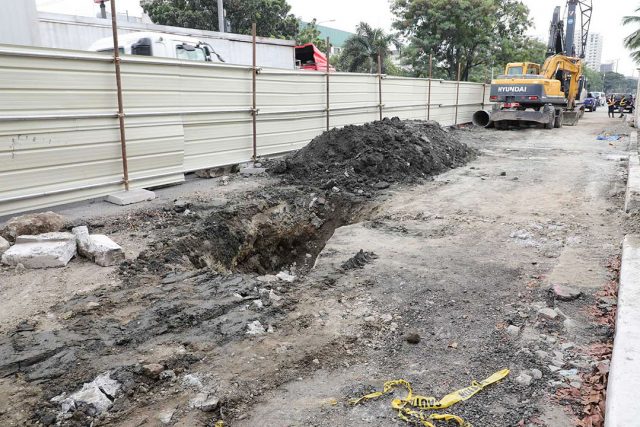
The MMDA said the rehabilitation of the damaged Libertad Drainage Main Box Culvert in front of Libertad Pumping Station in Pasay City requires the immediate closure of the southbound portion of Roxas Boulevard.

“Approximately 1,000 cargo trucks and trailers per day are traversing the Roxas Boulevard southbound direction alone,” it said in a statement.

In a phone interview, Confederation of Truckers Association of the Philippines President Maria B. Zapata said this is worrisome, as some operators using the road, with 10,000 units of trucks, could be affected.

Kung ang lahat ng kargamento going to Cavite is via a barge na, nasan na ’yung negosyo ng trucking? Eh di wala na, hindi ba? Pinapatay nila ’yung hanapbuhay ng truckers (If all the cargo going to Cavite will be done via barge, what will happen to the trucking business? It will be gone, right? They are killing the livelihood of truckers),” she said.

She said the DPWH and the MMDA informed them about the planned road closure before Christmas.

Instead of full closure, Ms. Zapata said the group is urging the DPWH and MMDA to allow the use of part of the northbound lanes.

“Our suggestion is ’yung northbound na apat na lanes ay baka naman pwedeng gawing two lanes ’yung papuntang south, at dalawa papuntang north para at least may outlet para naman hindi ma-congest ’yung papuntang South Superhighway (Our suggestion is for two out of the four northbound lanes to be used as southbound lanes, so there would be no congestion going to South Superhighway),” she added.

For its part, the MMDA said Mr. Abalos has “yet to determine if a portion of the southbound direction of Roxas Boulevard fronting HK Sun Plaza will be totally or partially closed.”

“The structural integrity is at stake. Hence, we are appealing for the public’s understanding of the inconvenience the road closure would cause. This is temporary. The construction is only for three months,” Mr. Abalos said.

Ms. Zapata said the truckers’ group wants to further discuss the matter with the Metro Manila Council of the MMDA. The council is composed of Metro Manila mayors and representatives from government agencies, including the Department of Transportation (DoTr) and DPWH.

In a separate phone interview, Philexport President Sergio R. Ortiz-Luis, Jr. said: “There must be a better way than closing it… Can you imagine we are trying to recover, andami-daming problema at isasara mo (we have so many problems and then you close it)… There must be other ways of doing it without having to close it.”

“They should present a narrative of what has to be done, what are the pros and cons, and what are the other options,” he added.

DPWH South Manila district engineer Mikunug D. Macud said in a phone interview that the project should really be implemented as soon as possible.

“The project is P67 million, pero kung meron pang (but if there’s) additional request na  another P40 million, so more or less nasa P100 million,” he said, referring to the project cost.

Mr. Macud also expressed doubt that the total closure would be implemented considering the current situation of transporting goods during the pandemic. However, total closure would mean the rehabilitation of the structure would be done by first week of March, he added.

He said the DPWH is hoping to start work by the first week of January.

He also stressed that the concerns of truckers will be taken into consideration.

Palace postpones signing of 2022 budget — Sotto

COURTESY OF JILSON TIU/GREENPEACE PHILIPPINES
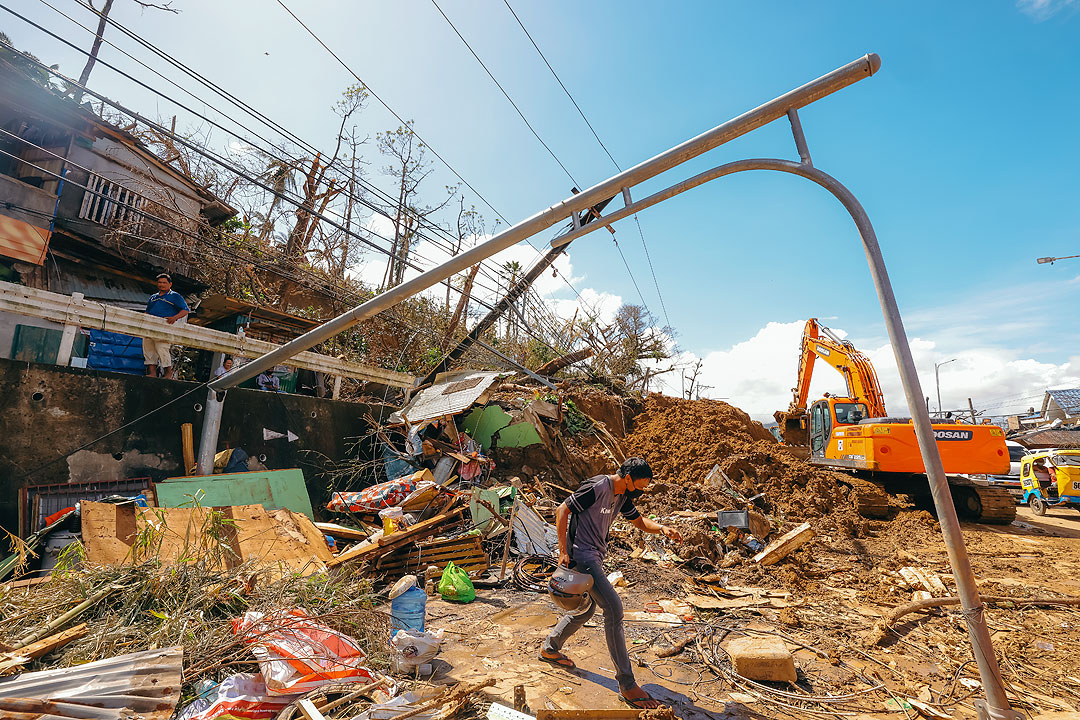
The Budget department is set to release another P1 billion from the President’s contingent fund to assist local government units (LGUs) affected by typhoon Odette. A landslide caused by Typhoon Odette in Surigao City in this photo provided by Greenpeace Philippines. COURTESY OF JILSON TIU/GREENPEACE PHILIPPINES

SENATE PRESIDENT Vicente C. Sotto III said the expected Tuesday signing of the proposed P5.024-trillion national budget for 2022 will be postponed, a delay that could affect financial markets looking for a spending plan that would support economic recovery.

“I just received word now of the postponement. No reason given,” Mr. Sotto told reporters in a Viber group on Monday.

Budget Officer-in-Charge Tina Rose Marie L. Canda said at a public briefing on Monday that President Rodrigo R. Duterte was expected to sign the proposed budget by Tuesday afternoon, with some provisions up for veto.

Items that will be vetoed are “very few,” she said. “I don’t think I’m in a position to discuss it at this point.”

Congress on Dec. 15 ratified the Bicameral Conference Committee report on the national budget.

Mr. Duterte must sign the General Appropriations Bill before Dec. 31 to ensure that the government will not operate on a reenacted budget.

Rizal Commercial Banking Corp. Chief Economist Michael L. Ricafort said the timely enactment of the national budget would have a positive impact on the economy and financial markets.

“The national budget, alongside the extension of the validity of unused funds into the following year, would support increased government spending, especially on infrastructure as a major pillar of the country’s economic recovery,” he said in a Viber message.

Delays to signing of the national budget could slow down economic recovery due to lower spending on infrastructure, as well as weigh on sentiment in local financial markets, Mr. Ricafort added.

Meanwhile, Ms. Canda said another P1 billion is set for release from the president’s contingent fund on Monday to assist local government units (LGUs) affected by typhoon Odette. The government released P1 billion from the same fund on Friday.

The money will assist affected LGUs in Western, Central and Eastern Visayas, Mimaropa (consisting of the provinces of Mindoro, Marinduque, Romblon, and Palawan), Northern Mindanao and the Caraga Administrative Region.

Mr. Duterte last week declared a state of calamity in these six regions affected by the typhoon to speed up aid delivery and relief efforts, setting a P10-billion spending plan for typhoon recovery efforts.

Another P4 billion in aid will be released to local governments to assist their constituents before the end of the year, Ms. Canda said. This fund will come from excess revenues charged against unprogrammed appropriations, she said in a Viber message.

In total, government funds for release before yearend will reach P6 billion, while another P4 billion will be released next year.

If Mr. Duterte signs the national budget soon, the funding for Odette recovery efforts next year could be released as soon as Jan. 3. — Jenina P. Ibañez with inputs from Alyssa Nicole O. Tan

Foreign investments in financial services sought

By Jenina P. Ibañez, Senior Reporter

THE BANGKO SENTRAL ng Pilipinas (BSP) wants foreign investors to invest in financial services in the Philippines by bringing in new technology and technical expertise.

“As we build our digital finance ecosystem, we encourage foreign investors who may bring advanced technologies and technical expertise to take advantage of untapped potential in the financial services space and be our partners in achieving our economic growth and financial inclusion objectives,” BSP Governor Benjamin E. Diokno said.

The Philippine central bank in a press release on Monday said technology and expertise will support the competitiveness of local banks.

Technology would also allow banks to expand access to new markets through partnerships, BSP added. This market expansion is expected to benefit financial consumers.

Under its digital payments transformation roadmap, the BSP plans to convert half of the volume of retail payments into digital transactions and onboard 70% of Filipino adults into the formal financial system by 2023.

Its financial inclusion survey in 2019 found that 71% of Filipino adults have no bank accounts, while more than 30% of cities and municipalities had no banking offices as of the third quarter of last year.

“By catering to the unserved and underserved, financial technology service providers may tap into a wide client base, diversify revenue sources, and secure new growth opportunities in the country, thereby improving efficiency in banking operation,” BSP said.

A Philippine Institute for Development Studies (PIDS) discussion paper released earlier this month said the government needs to support the financial technology (fintech) industry in meeting its funding and talent development needs for the sector to grow.

The availability of venture capital, it said, would support the growth of fintech startups.

‘MASSIVE COMPETITION’
Meanwhile, the fintech industry is anticipating a highly competitive business environment in 2022 as more services and products are set to be launched, an industry group official said.

“The Fintech Alliance.PH sees 2022 as an era of massive competition for the fintech and digital banking industry. As more and more digital unicorns enter the playing field, we expect to have an even more competitive market,” Fintech Alliance.ph Angelito M. Villanueva said in a Viber message last week.

“New services, features and products will be on the development pipeline which we expect to be launched this coming year.”

Fintech business activities have increased during the pandemic as lockdown restrictions limit face-to-face transactions.

The Fintech Philippines Report 2022 found that the country now has 222 financial technology companies. Launched by the alliance and Fintech News Philippines, the report said that 27% of the companies work on lending while 20% offer payments services. Another 13% offer e-wallet products and 12% are cryptocurrency or blockchain firms.

Mr. Villanueva said more Filipinos are using digital payments and cryptocurrency transactions.

“This scenario is a good indication that the industry will experience more revenue growth in the coming year especially with recent developments in the industry,” he said.

These developments include the Philippine central bank’s new regulatory framework for digital banks, he said. Mr. Villanueva noted the BSP’s open finance framework would support more financial inclusion.

But cybersecurity threats are also growing, prompting companies to ramp up security and fraud management systems.

“We have seen more sophisticated means by which hackers and other fraud infiltrate the processes and systems even of leading, digitized universal and legacy banks,” Mr. Villanueva said. “Cyberattacks such as scams and cyber fraud will always be a constant threat to the health of the digital finance ecosystem.”

Meanwhile, government agencies have also said that they plan to tighten taxation and regulation of fintech companies amid efforts to broaden the tax base. The Bureau of Internal Revenue plans to gather information that would help the agency identify fintech firms not explicitly covered by existing rules.

This year’s 10 worst climate disasters cost $170 billion

A HERDSMAN from the Rendille ethnic group stands next to the carcass of his donkey who died due to an ongoing drought, near the town of Kargi, Marsabit county, Kenya, Oct. 9. — REUTERS

TEN of this year’s most destructive weather events cost a combined $170 billion in damages, according to a new study.

Hurricane Ida, a tropical storm that pummeled much of the eastern US with lashing rain in August, killed at least 95 people and cost the economy $65 billion. A month earlier, floods in Europe caused 240 deaths and an economic loss of $43 billion, according to research published by UK charity Christian Aid. Floods in China’s Henan province in July killed more than 300 and cost in excess of $17 billion.

“The costs of climate change have been grave this year,” said Kat Kramer, Christian Aid’s climate policy lead and author of the report. “It is clear that the world is not on track to ensure a safe and prosperous world.”

This year is expected to be the sixth time global natural disasters have cost more than $100 billion, the report stated, citing insurer Aon Plc.  All six of those years have happened since 2011.

The report’s authors estimated the damage based on insured losses, meaning the true costs of these disasters are likely to be even higher. Calculations are usually costlier in richer countries due to higher property values and insurance, while some of this year’s deadliest weather events hit poorer counties that contributed little to global warming.

South Sudan has been struck by floods that forced almost a million people to leave their homes, while East Africa has been ravaged by drought. That highlights the injustice of the climate crisis, said Christian Aid, which warned that such events will continue in the absence of concrete action to slash emissions.

Mohamed Adow, director of Kenya-based think tank Power Shift Africa, said the continent has “borne the brunt” of some of the deadliest, most expensive climate impacts. Severe droughts in East Africa, which are expected to last until mid-2022, are “pushing communities to the brink,” Mr. Adow warned.

The Paris Agreement on global warming, which aims to hold the increase in global temperatures to below 1.5 degrees Celsius, will not achieve its goals unless more urgent action is taken, according to the report. More needs to be done in 2022 to provide financial help to vulnerable nations, including a fund to deal with the damage caused by climate change — something that was not delivered at this year’s global climate talks in Glasgow, according to the study.

“It was bitterly disappointing to leave COP26 without a fund set up to help people who are suffering from permanent losses from climate change,” said Nushrat Chowdhury, Christian Aid’s climate justice advisor in Bangladesh. “Bringing that fund to life needs to be a global priority in 2022.” — Bloomberg

CTS Global plans P1.38-B initial public offering

CTS GLOBAL Equity Group, Inc. is planning a P1.375-billion initial public offering (IPO) by February next year, mainly to use proceeds for the growth of its trading operations.

“The main reason for the company’s IPO is to scale its global trading,” CTS Global said in its preliminary prospectus dated Dec. 3.

“For the past few years, the company has consistently generated profits from its assets under management but was not able to maximize its bottomline profit due to overhead expenses,” it added.

The Philippine-based global trading firm is planning to offer up to 1.375 billion primary common shares for up to P1 each.

CTS Global, formerly Citisecurities, Inc., engages in trading in the local bourse as well as in the stock markets of the United States, Hong Kong, and Japan. Its current 30 individual traders manage a total capital of P550 million.

“For the past decade, the Company maintained its capital stock at P200 million, only raising it to P500 million in the last quarter of 2019 and an additional P50 million in 2020,” CTS Global said.

Its traders’ technique falls under the rules of the FTSR Trading Framework, which comprises Fundamentals Analysis, Technical Analysis, Sentiment, and Risk Management.

The company will continue to employ its existing strategy to scale traders’ accounts, however, expenses will remain the same. It said this will lead to a “promising opportunity for its operating leverage.”

“A further increase in capital to be deployed in the global markets is the key to CTS Global taking it to the next level,” the company said.

Apart from using P1.235 billion to scale global trading operations, the company plans to use net proceeds from the IPO to expand its client accounts management segment and for general corporate purposes.

CTS Global will be using P20 million to hire more talent as it builds its client accounts management segment. Meanwhile, P100 million “will be used for any adjustments needed going forward, depending on the country’s pandemic recovery.”

“This may be in the form of developing the company-owned office space to the extent necessary or further improvements in the digital systems for the work-from-home arrangement,” CTS Global said.

It is looking to conduct its offer period from Feb. 21 to 28.

CTS Global plans to list on the small, medium, and emerging  board of the Philippine Stock Exchange by March 9 under the trading symbol “CTS.”

The company tapped SB Capital Investment Corp. as the issue manager, underwriter, and bookrunner of the offer. — Keren Concepcion G. Valmonte

Fruitas Holdings eyes P309-M IPO for Balai subsidiary

FRUITAS HOLDINGS, Inc.’s wholly owned subsidiary Balai ni Fruitas, Inc. is looking to tap the stock market with a P309-million initial public offering (IPO), subject to regulatory approvals and market conditions.

In a statement on Monday, Fruitas Holdings said Balai ni Fruitas’ IPO aims to raise funds for the subsidiary’s store network expansion, commissary setup, and for future acquisitions.

“We evaluated several capital-raising options to fund the next phase of growth of [Balai ni Fruitas],” Fruitas Holdings President and Chief Executive Officer Lester C. Yu said.

He said the group decided to undertake an IPO for Balai ni Fruitas given “the significant growth prospects of the bakery sector, distinct from the kiosks within Fruitas Holdings.”

Mr. Yu said the move would provide the unit with its own resources “to take advantage of the opportunities presented to it.”

The offer is subject to the regulatory approval of the Securities and Exchange Commission and the Philippine Stock Exchange (PSE).

Balai ni Fruitas currently has three brands under its belt, namely: Balai Pandesal, Buko ni Fruitas, and Fruitas House of Desserts.

“The primary proceeds will be used to expand [Balai ni Fruitas’] store network in major Philippine cities and establish its own commissary to serve more customers,” Mr. Yu said.

The company has a combined 46 Buko ni Fruitas and Fruitas House of Desserts stores. Both brands sell fruit-based desserts in malls and commercial centers.

Meanwhile, Balai ni Fruitas acquired some of Balai Pandesal Corp.’s assets in June this year and has since increased Balai Pandesal outlets to 23 as of end-September from only having five stores. Balai Pandesal sells baked goods via community stores in neighborhoods and central business districts.

Balai ni Fruitas is planning to grow the number of Balai Pandesal outlets to 100 stores across the country by the end of next year and to 150 by end-2023.

“Part of the new capital will also be utilized to explore the possibility of acquiring other baked goods firms to broaden the company’s current product offerings,” Mr. Yu said.

Balai ni Fruitas plans to offer up to 325 million primary common shares to the public for up to 75 centavos per share. 

In a separate disclosure, Fruitas Holdings’ board of directors also approved to sell up to 50 million secondary common shares of Balai ni Fruitas to increase the IPO size and its public float. It is also allotting 37.5 million secondary shares as an overallotment option.

Should the overallotment option be exercised, Balai ni Fruitas’ public float may reach 27.6%.

The company is planning to run the offer period in March next year and aims to list on the PSE’s small, medium, and emerging board before the end of the first quarter.

Balai ni Fruitas mandated First Metro Investment Corp. as the issue manager, bookrunner, and underwriter for its IPO.

Mr. Yu said the Balai ni Fruitas IPO “will also be beneficial for Fruitas Holdings shareholders as it unlocks the value” of the subsidiary. He added that Fruitas Holdings will remain the controlling shareholder of Balai ni Fruitas and will continue to benefit from its profits.

On Monday, shares in Fruitas Holdings at the stock market declined 1.63% or two centavos to close at P1.21 apiece. — Keren Concepcion G. Valmonte

Peso weakens as surge in virus cases poses risks to recovery

THE PESO weakened against the dollar on Monday as an Omicron variant surge in various countries weigh on economic recovery.

The local currency closed at P50.23 per dollar on Monday, slipping from its P50.04 finish on Friday, data from the Bankers Association of the Philippines showed.

The peso opened at P50.05 versus the dollar. Its weakest showing was at P50.26, while its intraday best was at P50.05 against the greenback.

Dollars exchanged rose to $1.01 billion on Monday from $933.05 million on Friday.

The local currency weakened against the dollar on the increase of new Omicron variant cases of the coronavirus disease 2019 (COVID-19), which have prompted governments to set new restrictions, Rizal Commercial Banking Corp. Chief Economist Michael L. Ricafort said in a Viber message.

“Peso [was] also weaker after the peak in Christmas holiday spending may have already been seen already, together with the conversion of OFW (overseas Filipino workers) remittances to pesos to finance the said holiday spending,” he said.

“But there may still be another round of spending towards the New Year holiday weekend, as an offsetting positive factor for the peso.”

Thousands of flights globally were canceled over the weekend due to the Omicron variant. The surge in cases has pushed countries like the Netherlands to impose new lockdowns.

The Philippines has detected its fourth Omicron case.

Mr. Ricafort added that the peso was also weaker as sentiment is still weighed by the damage from Typhoon Odette, which could slow economic growth and temporarily increase prices.

“Furthermore, reconstruction activities in hard-hit areas by Typhoon Odette could entail increased importation activities such as construction materials among others,” he said.

Economists have said that agriculture and productivity losses from the typhoon could significantly impact fourth-quarter expansion.

“The peso weakened amid growing rate hike expectations after the Fed’s preferred inflation gauge continued to increase in November,” a trader said in an e-mail.

“The local currency might depreciate further on domestic concerns over the increasing new COVID-19 cases in the past few days.”

Mr. Ricafort said the peso exchange rate could range between P50.1 to P50.3 on Tuesday, while the trader said exchange rates might move between P50.15 and P50.35. — Jenina P. Ibañez

ERC clears commercial run of GNPower Dinginin’s first unit

THE Energy Regulatory Commission (ERC) has issued a certificate of compliance to GNPower Dinginin Ltd. Co., allowing the company to commercially operate the first unit of its power plant.

In a statement on Monday, ERC Chairperson and Chief Executive Agnes VST Devanadera said with the issuance of the certificate, the company can now inject power to the Luzon grid and “provide the much-needed additional power supply to meet the increasing demand for power this holiday season and up to the election period.”

GNPower Dinginin is a joint venture of the Ayalas’ energy arm, Aboitiz Power Corp.’s subsidiary Therma Power, Inc., and Power Partners Ltd. Co.

The supercritical coal-fired power plant has two units, each with a net capacity of 668 megawatts. It is located at the coastal area of Sitio Dinginin, Brgy. Alas-Asin, Mariveles, Bataan.

The five-year certificate covers only the plant’s unit 1. The second unit is under construction and is still subject to complete test and commissioning.

GNPower Dinginin was allowed by grid operator National Grid Corp. of the Philippines and the Department of Energy to move its internal test for the first unit earlier to Nov. 30 to support the grid during the Malampaya gas field’s outage.

The grant of certificate to will augment the country’s generation capacity, Ms. Devanadera said, describing the move as a proactive effort by the commission, particularly in cases where power demand outweighs supply.

She added that the ERC sees to it that compliance certificate applications are approved “as soon as all legal, technical and financial requirements have been satisfied in order to ensure that supply matches the demand and to promote a sustainable power supply.” 

Meanwhile, AboitizPower announced on Monday the retirement of Jaime Jose Y. Aboitiz as the company’s executive vice-president and chief operating officer effective on Jan. 1, 2022.

Shares in AboitizPower inched down 1.29% or 40 centavos to close at P30.50 apiece on Monday. — Marielle C. Lucenio

Metro Manila Film Festival 2021: An ode to the Filipino spirit

A SCENE from the film Kun Maupay Man It Panahon — YOUTUBE/BLACKSHEEPPH

By Bronte H. Lacsamana

MMFF Movie Review
Kun Maupay Man It Panahon
Directed by Carlo Francisco Manatad

THERE’S much to be said about how notions of joy, faith, and resilience are a central part of the Filipino psyche, especially in how we deal with hardship — whether it’s overseas workers and medical frontliners hailed as heroes for making immeasurable sacrifices for family and country, or, as seen in this film, children boisterously playing and women fervently praying to cope with the aftermath of a life-shattering typhoon.

Much of it is beautiful and admirable, yes, but much of it also paints a strange, sad picture of the Philippines. Kun Maupay Man It Panahon (Waray for Whether the Weather Is Fine) manages to show both sides in full, absurdist fashion.

The film, starring Daniel Padilla, Rans Rifol, and Charo Santos, takes place in Tacloban, Leyte, in 2013, which many Filipinos may recognize was the setting of the devastating Super Typhoon Yolanda (international name: Haiyan) that wiped out entire coastal communities in Eastern Visayas and claimed the lives of around 6,300 people.

Though we do see the trauma and destruction that followed the wake of the disaster, thanks to chaotic yet picturesque production design by Whammy Alcazaren and stunning roaming cinematography by Lim Teck Siang, the story is more about a search for hope, represented by a rumored ship that will carry survivors to Manila. However, this idea of Manila means something different to each character.

For Miguel (played by popular heartthrob Daniel Padilla at what may be his career-best), it’s an escape from the hell he finds himself in and a place where he and his two loved ones can live together happily. His girlfriend Andrea (the scene-stealing newcomer Rifol) has a survivalist mindset, seeing Manila as a land of opportunity where she can achieve her dream of becoming a singer at a club. Miguel’s mother Norma (played with vulnerability by veteran actress Santos) shuns the idea of leaving Tacloban to chase an ex-lover whom she’s obsessed with meeting once again.

The twists and turns the three navigate as the film plods on are reminiscent of a never-ending rat race, a commentary on how seeking aid tends to be an uncertain and seemingly fruitless journey. At some point, a government official makes an announcement at the relief center, but what comes out of his mouth is gibberish, with even the subtitles showing nothing but a keyboard smash of random letters. At another point, Norma leaves the makeshift medical center at the Tacloban Astrodome and finds herself in a crowd of survivors who all start dancing to Zumba music as a lion looks on.

Those who know director Carlo Francisco Manatad from his short films won’t be surprised to see magical realism providing texture to the very Filipino tale that unfolds onscreen. The unprepared may find this treatment meandering and inaccessible, with jarring tonal shifts between metaphorical dark comedy and absurdist yet grim melodrama, complemented by Andrew Florentino’s hypnotizing score.

In that sense, it sets itself apart from predecessors that have sought to portray the aftermath of typhoons on film. It isn’t all smooth-sailing, with the story faltering as the characters endlessly weave through their unpredictable and surreal arcs, running the risk of alienating the very people whose stories it aims to honor onscreen.

Still, there are key moments that stick the landing and provide an odd sense of hope in a Christmas season marked by the continued pandemic and yet another typhoon. There’s much to be said about how notions of joy, faith, and resilience are a central part of the Filipino psyche, and it may take some time to marinate to understand all the ways they’re depicted in this visual and sonic feast.

MTRCB Rating: PG

Sun Life leads insurance industry in premium income — IC report

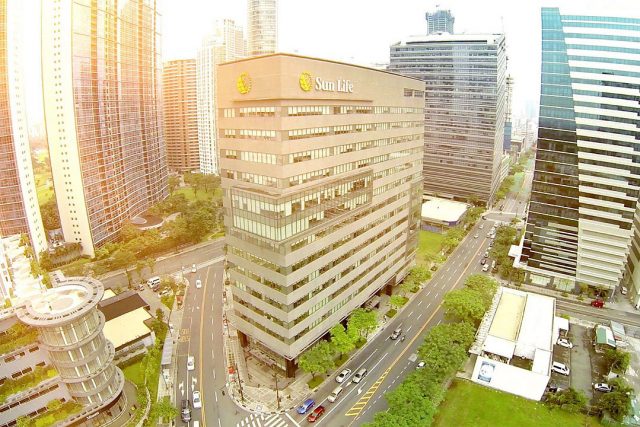
SUN LIFE of Canada (Philippines), Inc. led the industry in premium income for 2020, the Insurance Commission (IC) said in its assessment of the firms’ annual statements.

The commission said that Sun Life reached P39.23 billion in premium income that year, followed by Philippine AXA Life Insurance Corp., which posted P31.25 billion and Pru Life Insurance Corp. with P30.98 billion.

In the new business annual premium segment, Pru Life led with P7.95 billion, while Sun Life closed in with P7.8 billion.

“A life insurer’s (new business annual premium equivalent) is computed by obtaining the sum of the value of first year premiums from products newly sold in a specific year (or the initialized annualized premium) and 10% of single premiums written,” Insurance Commissioner Dennis B. Funa said in a press release on Monday.

“It is an international standard that this commission adopted to more accurately measure the life insurance industry’s sales performance,” he said.

Meanwhile, the Philippine American Life and General Insurance Co. (Philam Life) led in terms of total assets in 2020 with P293.19 billion.

Sun Life followed with P274.32 billion, while Philippine Axa Life’s total assets were at P141.57 billion.

In terms of net worth, Philam Life topped the list at P79.8 billion, while Sun Life recorded P31.05 billion and the Insular Life Assurance Co., Ltd. posted P27.74 billion.

Sun Life had the highest net income at P8.11 billion, followed by Philam Life with P4.78 billion. When it comes to invested assets, Philam Life was ranked first at P264.97 billion in 2020, while Sun Life recorded P261.02 billion and Pru Life saw P150.35 billion.

As of the second quarter of 2021, insurance premiums reached a total of P187.13 billion, up more than 37% from P136 billion a year earlier, the commission reported.

The industry has 135 licensed life and nonlife insurance companies as well as mutual benefit associations. — Jenina P. Ibañez

Meralco-managed streetlights along EDSA shifting to LED

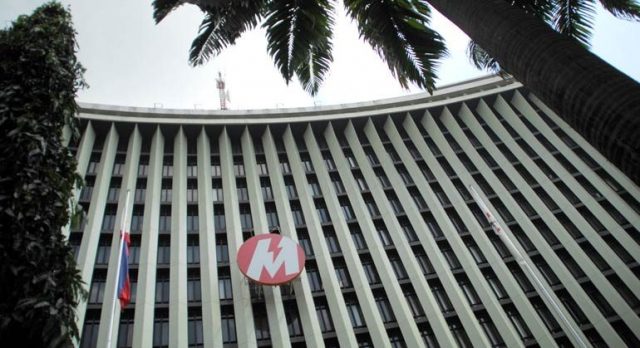
MANILA ELECTRIC Co. (Meralco) on Monday said it is converting company-managed streetlights along EDSA into light-emitting diode (LED) lights as part of its commitment to make the highway greener and more people mobility-friendly.

In a press release, Meralco gave its support to the Green EDSA Movement (GEM) and to the initiative’s vision of an iconic green highway, along which it manages and  maintains multiple electric distribution facilities.

LED lights are energy-efficient lighting technology that usually uses 75% less energy compared to incandescent light.

GEM was launched in April during the Earth Day celebration. Since then, several groups have pledged their support for the movement to transform the highway, known for its chaos and traffic, into a greener avenue.

Meralco President and Chief Executive Ray C. Espinosa said, “I am convinced that [GEM] is an excellent initiative and distinctive opportunity for us to work with like-minded individuals and organizations as we further Meralco’s sustainability agenda, which is anchored on promoting the well-being of communities, creating better lives for our stakeholders, and powering the good life for all.”

The power distributor announced earlier that 100% of its operations and business centers’ service vehicles in Metro Manila are now electric. It also said One Meralco, its corporate social responsibility arm, is ready to help plant trees to make EDSA a tree-lined greenway.

Meralco said its sustainability agenda is anchored on four pillars — power, planet, people, prosperity — and supports the United Nations’ sustainable development goals.

Several companies and organizations, including the Aboitiz group, Makati Business Club, and the Philippine Chamber of Commerce and Industry, have already expressed their support to GEM.

An average of 367,728 vehicles drive through EDSA daily, a 2017 study found, making the avenue the most congested road in the Philippine capital. — Marielle C. Lucenio

Metro Manila Film Festival 2021: A mixed bag

A SCENE from the film Huling Ulan sa Tag-Araw — YOUTUBE/SOLARPICTURESPH

MMFF Movie Review
Huling Ulan Sa Tag-Araw
Directed by Louie Ignacio

AN unlikely pairing, a getaway to the province, secrets and revelations, and a turn of events make up the formula of this romantic comedy.

In Huling Ulan Sa Tag-Araw, Ken Chan plays a modest, shy seminarian named Luis who takes a leave to visit his parents in the province after seeking advice from his spiritual counselor (Soliman Cruz) on his frustrations about his true mission. Things take a turn when he inadvertently interrupts entertainer/sex worker Luisa (played by Rita Daniela) in the middle of “business.” Thinking that Luisa is being attacked, he opens a car door in an attempt to rescue her — and her client drives away with Luisa’s bag (which has all her money). Luis offers to make up for it by paying her in exchange for her joining him on a one-week trip to Pagsanjan. (Ms. Daniela’s portrayal of the cheerful and chatty character is fun to watch.)

Inasmuch as the film shows that love does not discriminate, the characters keep secrets from each other Luis never mentions that he is a seminarian on leave (Luisa only finds out at dinner with the parents, played by Richard Yap and Lotlot de Leon), while Luisa is mum about coping with a severe illness.

A romantic comedy with an unlikely pairing is not at all a new concept. Written by Irish Precious Mangubat and Acy Ramos, the film has elements similar to 1990’s Pretty Woman  the unlikely pairing between an entertainer/sex worker and guy with a very well-off background, and their relationship buildup from being together for a week. The drama escalates in the second half of the film and reminded me of A Walk to Remember (2002).

The first half establishes the film as a romantic comedy. However, the mood becomes melodramatic from the climax until the ending. The storytelling in the second half drags. — Michelle Anne P. Soliman

MTRCB Rating: PG

ADVERTISEMENT
ADVERTISEMENT