Home Blog Page 6992

Increased vaccinations to boost economic recovery
PHILIPPINE STAR/ MICHAEL VARCAS

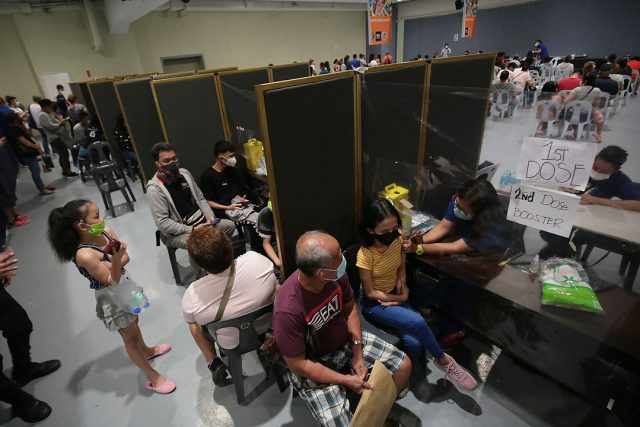
PROGRESS in the country’s vaccination program could help spur economic activity and boost recovery prospects, which would lead to the normalization of monetary policy, Bangko Sentral ng Pilipinas (BSP) Governor Benjamin E. Diokno said on Tuesday.

“Considering recent economic developments and significant progress in vaccine rollout, we are optimistic that there is sufficient support for the country’s recovery this year,” Mr. Diokno said in a Tuesday Club virtual press event on Wednesday.

“The management of risks, the expected revitalization of key industries from government policy support and structural reforms, as well as the resumption of global economic activities, should help the Philippine economy move toward a steady recovery path,” he added.

Mr. Diokno said the central bank will start unwinding its pandemic-driven easy policy once the economy’s rebound firms up.

“Once full recovery of the economy is underway, the BSP will implement a pre-planned exit strategy,” he said.

The BSP has not adjusted borrowing costs after it slashed interest rates by a total of 200 basis points in 2020 to support the economy during the crisis.

About 50.1 million Filipinos have been fully vaccinated as of Jan. 3, based on latest data from the Department of Health. The government missed its target to fully vaccinate 54 million Filipinos by the end of 2021.

Based on data from the Johns Hopkins University, 45.9% of the Philippine population has been fully vaccinated.

Before the recent uptick in infections, restrictions were eased, which allowed for the gradual reopening of the economy.

The country’s gross domestic product expanded by 7.1% year on year in the third quarter, bringing the nine-month average to 4.9%.

Economic managers upwardly revised their growth target for 2021 to 5.5% last month.

Meanwhile, Nomura Global Research Chief ASEAN economist Euben Paracuelles and analysts Rangga Cipta, Craig Chan, and Wee Choon Teo in a report said they remain cautious on the economic outlook of the Philippines amid the increase in infections in the past days.

“This would hamper further economic reopening and could even lead to a reimposition of lockdown measures, disrupting economic activity and hurting consumer and business confidence, as we saw during the onset of the Delta variant,” they said in a report on Tuesday.

Active infections rose by 5,434 to 29,809 on Tuesday, based on data from the Health Department. The positivity rate picked up to 26.5% from 20.7% on Monday.

It said that while the reimposition of Alert Level 3 in Metro Manila is far from a lockdown, it is “still fairly restrictive” for business establishments’ capacity.

Nomura expects the economy to expand by 6.5% this year. It has a 4.8% GDP growth estimate for 2021.

Economic managers expect GDP to grow by 7-9% this year. — L.W.T. Noble
Stock exchange trading halted due to technical glitch

By Keren Concepcion G. Valmonte, Reporter

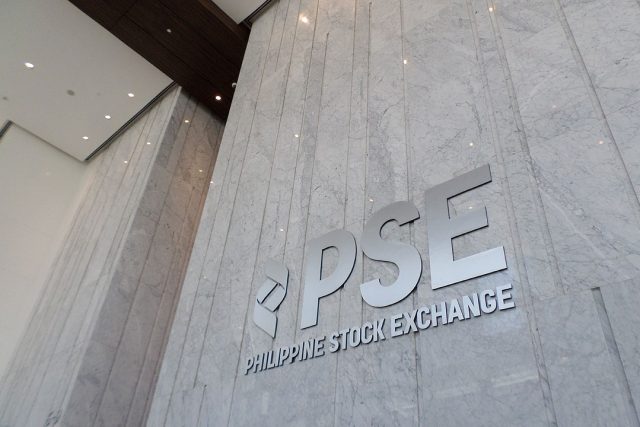
THE PHILIPPINE Stock Exchange, Inc. (PSE) canceled trading on Tuesday due to technical problems in the local bourse’s trading engine.

“We are sorry about this unfortunate incident and we are exerting all efforts to resolve the problem,” PSE President Ramon S. Monzon said in a statement on Tuesday. 

The exchange said a third of the participants encountered issues in establishing a connection between the trading engine and the Flextrade front-end system.

“Among the 125 trading participants of the PSE, 43 are unable to connect to the Exchange’s trading engine,” Mr. Monzon said in an advisory.

The PSE’s Revised Trading Rules provide that the exchange may halt trading if at least a third of its users cannot access the trading system.

Trading participants were informed of a delayed pre-open period Tuesday morning. All queued orders from 3:01 p.m. on Monday to those posted until 9:05 a.m. on Tuesday were said to be canceled by the PSE.

As of Tuesday afternoon, the PSE had not announced when trading at the local bourse would resume.

However, it said it is working to address the “technical problems.”

“[The] PSE continues to work and coordinate closely with representatives of NASDAQ and Flextrade to identify the underlying cause of the above-described production issue and come up with the appropriate solution,” Mr. Monzon said.

“It might affect potential traders looking to participate in the local bourse, but prefer markets (overseas) that experience less issues,” Timson Securities, Inc. Trader Darren Blaine T. Pangan said in a Viber message.

Meanwhile, Regina Capital Development Corp. Head of Sales Luis A. Limlingan said the PSE’s technical glitch would have little impact on market sentiment.

“The performance of companies and their profitability are mutually exclusive from the trading platform so expect minimal impact in investor confidence,” Mr. Limlingan said in a separate Viber message.

On Monday, the benchmark Philippine Stock Exchange index declined by 81.36 points or 1.14% to close at 7,041.27. Meanwhile, the broader all shares index went down 40.22 points or 1.05% to end at 3,777.90.

REITs raise P76 billion in fresh capital since 2020

PIXABAY

By Jenina P. Ibañez, Senior Reporter

REAL ESTATE investment trusts (REITs) in the Philippines have raised P76.42 billion in new capital in almost two years since new rules took effect, the Department of Finance (DoF) said.

The total market capitalization of REITs in the Philippines reached $3.46 billion as of the third quarter, the European Public Real Estate Association (EPRA) said in a report.

This accounts for 0.96% of the country’s end-2020 gross domestic product, the DoF said in a press release on Tuesday.

“This places the country’s less than two-year-old REIT sector in the middle of the pack among 12 selected economies in the South and East Asian regions in the EPRA Index, ahead of Taiwan, South Korea, India, Indonesia, and China,” the DoF said, citing the Securities and Exchange Commission (SEC).

The implementing rules of the REIT Act of 2009, which took effect in February 2020, lowered the minimum public ownership requirement for REITs.

It also required all income generated from REITs to be invested back into real estate and infrastructure projects in the country within a year.

Since then, the five REITs were listed on the local stock exchange.

Data from the SEC as of Nov. 15 said Robinsons Land Commercial REIT (RCR) raised the biggest amount with P21.56 billion in fresh capital from its initial public offering (IPO).

Megaworld REIT (MREIT) followed with P15.29 billion, while DD Meridian Park REIT (DDMP REIT) posted P14.71 billion in new capital.

Filinvest REIT Corp. (FilREIT) has raised P12.58 billion, followed by Ayala Land, Inc.’s AREIT, Inc. with P12.28 billion.

Citicor Energy REIT Corp., which plans an IPO in the first quarter, expects to raise P10.1 billion.

“The capital raised by REIT sponsors/promoters should be reinvested in the country to develop and deepen the domestic capital markets, broaden the participation of small investors in real estate investments, and help finance infrastructure projects in the country,” DoF said.

The five REITs plan to reinvest funds into malls, office towers, hotels, warehouses, residential buildings, mixed-used developments, industrial lots and land acquisitions, retail centers, and industrial developments.

As of Nov. 15, a total of P22 billion has been reinvested by AREIT, DDMP, FilREIT, and RCR out of the total P79.87 billion required.

Broken down, AREIT has made the largest reinvestment so far of P13.76 billion out of its P19.31-billion requirement.

AREIT made its debut in the local stock exchange in August 2020, while the other four were listed last year.

DDMP has reinvested P6.1 billion out of P12.87 billion needed, while FilREIT reinvested P1.57 billion out of P12.13 billion.

RCR, which was listed in September last year, has reinvested P583.15 million out of the P20.86 billion required.

Data is not yet available for MREIT reinvestments, which was listed in October 2021.

Finance Secretary Carlos G. Dominguez III has said REITs would help support property development in the country and attract investment opportunities for Filipinos.

Typhoon survivors left vulnerable to COVID-19

PCG
MEMBERS of the Philippine Coast Guard evacuate residents of a flood-risk area in Cagayan de Oro City in the southern island of Mindanao on Dec. 16 as Typhoon Odette dumped heavy rains across several regions in the Philippines. — PCG

Damaged health facilities, inadequate medicine and medical equipment, and overstretched health workers are the main challenges in typhoon-affected communities, according to relief operations in Odette-devastated Visayas and Mindanao.  

Frequently reported health issues include injuries, diarrhea, and upper respiratory tract infections, with the risk for communicable diseases like coronavirus disease 2019 (COVID-19) also increasing in cramped and poorly maintained evacuation centers.  

The United Nations children’s agency UNICEF, which has humanitarian efforts geared toward affected children in Surigao del Norte, Siargao Island, Dinagat Island, Southern Leyte, Cebu, and Bohol, shared via e-mail that families are unable to practice physical distancing in crowded shelters and have no masks to keep them safe against the virus.  

Power outages, too, are hampering health facilities, local governments, and responders such as healthcare practitioners and social workers from extending assistance. 

With these conditions, the 631,000 displaced as of a week after the typhoon made landfall suffer not only from lack of food, potable water, shelter, electricity, and hygiene items, but are also at risk for COVID-19, especially given the recent Omicron surge.  

“To address these multiple risks, we need to empower local communities and authorities to respond. Local health systems need to be supported to continue to prevent, detect and treat cases of COVID-19. Affected communities must be provided with adequate resources to practice public health standards,” UNICEF said.  

These include clean water and soap for hand washing, masks, evacuation centers with adequate space for physical distancing, and the continuation of COVID-19 vaccination.  

LESSONS FROM YOLANDA
For Typhoon Yolanda survivors living in resettlement sites in Tacloban City, the situation remains dire eight years after the disaster struck, with issues like lack of livelihood and vaccine hesitancy, according to researchers at Leyte Normal University (LNU).  

“As they have been resettled and are isolated on the outskirts of Tacloban City, disaster-affected households are facing significant health, economic, and social challenges in the pandemic,” said Ara Joy U. Pacoma, a lecturer from LNU, at the Harvard Humanitarian Initiative’s symposium in November about COVID-19 in the margins.  

Citing her study co-authored with fellow researchers Yvonne Su and Ginbert P. Cuaton in 2021, Ms. Pacoma shared that of the 352 households in resettlement sites they surveyed, 42% earned less since the pandemic and 19% lost jobs.  

The resulting decrease in amount and quality of food, with many reporting reducing their meals to just two a day, puts them at risk for all sorts of illnesses.  

Over 75,000 people live in Tacloban’s resettlement sites, built to house those displaced by Typhoon Yolanda in 2013. However, poor living conditions that include the lack of running water, electricity, and open spaces, along with insufficient livelihood opportunities and financial assistance, place these people at risk for COVID-19, she added.  

VACCINE HESITANCY
The study also found that 95.8% of respondents in the Tacloban settlements were unvaccinated as of June, with 73.11% saying they had read fake news on social media.  

Vaccine hesitancy, declared by the World Health Organization, the Philippine government, and various health and medical experts as a major challenge in this pandemic, remains strong in the peripheries of society, as seen in Tacloban.  

Top concerns of the participants included lack of trust in the vaccine, its possible side effects, and its unknown future effects,” said Ms. Su of the equity studies department at York University, in an online article in December. “These answers reveal low vaccine literacy and encounters with misinformation.”  

A lack of government public health campaigns targeting the marginalized areas creates an opportunity for fake news about COVID-19 and the effectiveness of vaccines to become rampant, according to Ms. Pacoma.  

To improve the quality of life of disaster survivors in resettlement, she suggested co-production of programs that will benefit them, done through inclusive and participatory community consultations. — Brontë H. Lacsamana

SEC: Submit corporate governance reports by June 

THE Securities and Exchange Commission (SEC) has set the deadline for the filing of annual corporate governance reports (ACGR) to June 30.

In a memorandum circular (MC) dated Dec. 31, the regulator said public companies (PC) and registered issuers (RI) must submit their ACGR covering January to December 2021.

The deadline applies to all firms that qualify as a PC or RI, regardless of their registration date.

However, firms that are listed on the Philippine Stock Exchange are exempted from the submission of ACGRs. Publicly listed PCs and RIs are required to submit an integrated annual corporate governance report.

Qualified firms should submit two copies of a fully accomplished ACGR, one of which should be notarized and signed manually by the company’s chairperson of the board, the chief executive officer or president, all of its independent directors, its compliance officer, and its corporate secretary.

PCs and RIs are no longer required to submit a certificate of compliance with the manual of corporate governance, certificates of attendance of directors in meetings of the board of directors, and a compliance officer’s certifications.

Meanwhile, registered issuers and public companies that qualified or registered as such from July to December are allowed to indicate that they are “newly registered” in the ACGR’s explanation part for their first submission.

Public companies must indicate the date of their registration or the date when it went public to be qualified, while registered issuers must also put the effectivity date of their registration statement.

Newly registered firms must also submit a copy of their manual on corporate governance in accordance with the SEC’s MC Number (No.) 24, series of 2019 or the Code of Corporate Governance for Public Companies and Registered Issuers and with the SEC MC No. 19, series of 2020 or the Signatories of the Manual on Corporate Governance and Penalty for Noncompliance With the Requirement.

The basic penalty for misrepresentation or misinformation will cost a company P50,000, with a monthly penalty worth P5,000.

“The monthly penalty shall continue to accrue until the company has complied with the requirement,” the regulator said.

Meanwhile, the SEC will also impose a basic penalty worth P20,000 to noncompliant firms or for those that submit late. The company will face a monthly penalty of P2,000.

Those with incomplete disclosures, including those who do not provide explanations or those who do not have alternative governance practices, will be fined P10,000 and will have a monthly fee of P1,000 for noncompliance.

Companies with documents that have incomplete or incorrect signatories will be fined P5,000 and a monthly penalty of P500 until proper compliance. — Keren Concepcion G. Valmonte

US FDA authorizes Pfizer’s COVID-19 booster for 12- to 15-year-olds

Image via US Secretary of Defense/CC BY 2.0/Wikimedia Commons

WASHINGTON — The US Food and Drug Administration (FDA) on Monday authorized the use of a third dose of the Pfizer and BioNTech coronavirus disease 2019 (COVID-19) vaccine for children ages 12 to 15, and narrowed the interval for booster shot eligibility to five months from six.  

The agency also authorized a third shot for children aged 5 through 11 years who are immunocompromised.  

The regulatory decisions come with COVID-19 cases surging due to the Omicron variant of the virus and just as many workers and school children return from holiday vacations, raising the prospect of overwhelming health systems. Some businesses and schools closed Monday as staff called in sick.  

“Based on the FDA’s assessment of currently available data, a booster dose of the currently authorized vaccines may help provide better protection against both the Delta and Omicron variants,” said Peter Marks, director of the FDA’s Center for Biologics Evaluation and Research.  

The US government has been urging vaccinated Americans to get boosters and for the unvaccinated, who are at much higher risk of severe COVID-19 and death, to be inoculated.  

An advisory panel to the US Centers for Disease Control and Prevention (CDC) is due to meet on Wednesday to discuss the changes, according to the agency’s website.  

New US COVID-19 infections have doubled in the last seven days to an average of 418,000 a day, according to a Reuters tally.  

So far, 62% of the eligible US population is considered fully vaccinated with a third of them also having received a booster dose.  

In making its decision, the FDA said it reviewed real-world evidence from Israel, including safety data from more than 6,300 individuals aged 12 through 15 years who received a booster dose of the Pfizer-BioNTech vaccine at least 5 months following completion of the primary two-dose vaccination series.  

Two shots of the mRNA vaccine are about 35% effective against infection from the Omicron variant, but a booster dose restores effectiveness to 75%, according to the CDC, based on data from South Africa and the United Kingdom.  

The FDA will weigh boosters for 5- to 11-year-olds after more children receive two doses, Marks said.  

“Last I looked, only about 25% of eligible 5- to 11-year-olds have been vaccinated. So it would be great to get a larger percentage of those vaccinated and then we’ll see how many months afterwards we need to get them boosted,” he said during a call with media.  

The FDA said giving the shot at 5 months instead of 6 may provide better protection sooner against Omicron. The agency said the interval between Moderna’s second dose and a booster remains unchanged at six months.  

Dr. Eric Topol, director of the Scripps Research Translational Institute in La Jolla, California, said a third shot is essential to protect against Omicron for severe disease.  

“A good thing here is also the change on the timing of the booster to five months instead of six. That’s a big step for this country, which has been resistant to the data,” he added.  

Countries including the United Kingdom and Israel have narrowed their window for boosters from six months to three or four following the second shot.  

Amesh Adalja, a senior scholar at the Johns Hopkins Institute for Health Security, said he does not believe a booster is necessary for most people since two doses of the vaccine have been effective at preventing hospitalizations and severe disease in all but older people.  

“When I work at the hospital, I don’t see patients there because they lack a booster. I see patients because they lack first and second doses,” Mr. Adalja said. — Reuters 

DMW’s Aseana City to host grocery mart Landers 

D.M. Wencleslao & Associates, Inc. (DMW) said it recently signed a contract of lease with membership shopping mart Landers for space at the listed property developer’s Aseana City Project.

In a statement on Tuesday, DMW said Landers booked a 15,064-square meter parcel of land in its 107.5-hectare project along the coastal area of Manila Bay. The lease term is good for 25 years.

“We are excited to host Landers in Aseana City; not only will this land lease be recurring income-accretive to DMW but will also advance our efforts to further increasing the diversity of major brands and essential locators in Aseana City,” said Delfin Angelo C. Wenceslao, chief executive officer of DMW.

According to its website, Landers currently has six branches. This includes stores in Bonifacio Global City, one along EDSA Balintawak, Landers Otis in Paco, Manila, Landers Alabang, Cebu, and Landers Arcovia in Pasig.

Landers houses local and international brands, along with in-house dining options.

“Landers has amassed significant following over the years,” Mr. Wenceslao said. “We look forward to the additional draw and the critical mass that Landers will bring to Aseana.”

DMW shares at the stock exchange closed at P6.76 apiece on Monday. Trading was canceled on Tuesday due to a technical glitch with the local bourse operator’s trading engine. — Keren Concepcion G. Valmonte

COVID Science

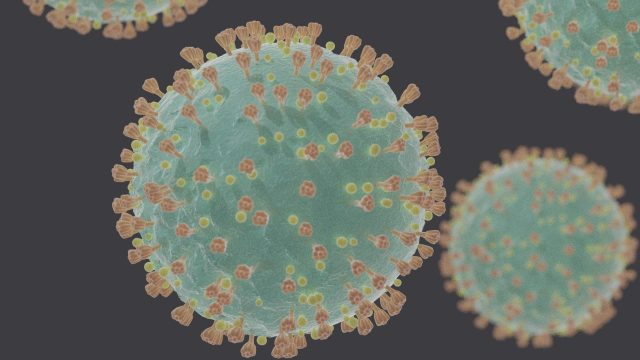
COMPUTER-GENERATED representation of COVID-19 virions via Felipe Esquivel Reed / CC BY-SA
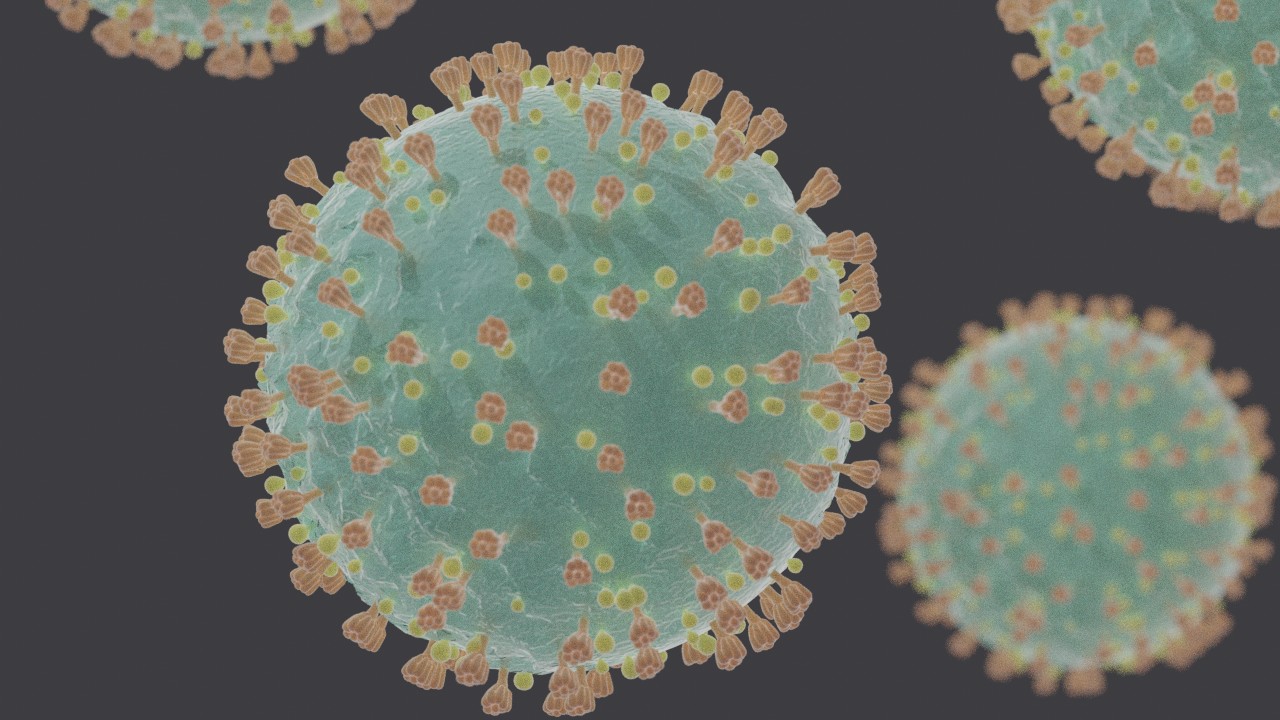
COMPUTER-GENERATED representation of COVID-19 virions via Felipe Esquivel Reed / CC BY-SA 

THE following is a summary of some recent studies on coronavirus disease 2019 (COVID-19). They include research that warrants further study to corroborate the findings and that has yet to be certified by peer review.  

CORONAVIRUS LEAVES SURVIVORS WITH SELF-ATTACKING ANTIBODIES 
Months after recovering from SARS-CoV-2 infection, survivors have elevated levels of antibodies that can mistakenly attack their own organs and tissues, even if they had not been severely ill, according to new findings.  

Among 177 healthcare workers who had recovered from confirmed coronavirus infections contracted before the availability of vaccines, all had persistent autoantibodies, including ones that can cause chronic inflammation and injury of the joints, skin and nervous system.  

“We would not normally expect to see such a diverse array of autoantibodies elevated in these individuals or stay elevated for as long six months after full clinical recovery,” said Susan Cheng of the Cedars-Sinai Smidt Heart Institute in Los Angeles. Patterns of elevated autoantibodies varied between men and women, the researchers reported on Thursday in the Journal of Translational Medicine.  

“We don’t yet know how much longer, beyond six months, the antibodies will stay elevated and/or lead to any important clinical symptoms,” Ms. Cheng said. “It will be essential to monitor individuals moving forward.” Her team is investigating whether autoantibody elevations are linked with persistent symptoms in people with long COVID and planning to study autoantibody levels after infections with newer variants of the virus.  

B CELLS’ EFFECTS WEAKENED BUT NOT DEFEATED BY OMICRON 
The effects of antibodies produced by the immune system’s “memory B cells” against the Omicron variant of the coronavirus, while weakened, could still be significant, researchers believe.  

Once the body learns to recognize SARS-CoV-2, either after infection or vaccination, B cells generate fresh antibodies against the virus if there are not already enough antibodies circulating in the blood that can neutralize it.  

In a study reported on bioRxiv ahead of peer review, researchers analyzed the strength of more than 300 antibodies produced by memory B cells obtained from vaccinated volunteers, including some who had a prior SARS-CoV-2 infection.  

“Omicron seemed to evade a very large share of the memory B cells pool,” researchers said, adding that it “seems to still be efficiently recognized by 30% of total antibodies and close to 10% of all potent neutralizing antibodies,” said Matthieu Mahevas and Pascal Chappert of Universite de Paris in a joint e-mail.  

Memory B cells’ robust ability to proliferate and produce antibodies might compensate “in less than two days” for those antibodies’ reduced effectiveness, they speculate. In combination with other immune system components, particularly T cells, the effects of B cells likely help to explain why most vaccinated individuals who become infected do not become sick enough to require hospitalization, they said.  

VIRUS VARIANTS’ ACTIVITY IN CELLS MAKES THEM MORE EFFECTIVE 
Along with spike mutations that help the coronavirus break into cells, mutations that change how the virus behaves inside the cells are a big factor in why some variants have been more transmissible, researchers have discovered.  

The findings, published in Nature, show that scientists “have to start looking at mutations outside the spike,” which has so far been the main focus of vaccines and antibody drugs, said Nevan Krogan of the University of California, San Francisco.  

Studying the Alpha variant, his team found a mutation at a non-spike site that causes infected cells to ramp up their production of a protein called Orf9B. Orf9b in turn disables a protein called TOM70 that cells use to send signals to the immune system. With higher levels of Orf9B disabling TOM70, the immune system does not respond as well and the virus can better evade detection, the researchers said.  

Referring to the increase in Orf9B, Mr. Krogan said, “It’s rare that mutations ‘turn up’ a protein. It’s a very sneaky thing for this virus to do.” The same mutation was identified on Delta, “and sure enough, almost the same mutation is on Omicron,” he said, which suggests they may have similar effects on the immune system. The new information could spur development of drugs that target the interaction of Orf9b and TOM70. — Reuters 

Gov’t rejects bids for reissued 7-year T-bonds on rising rates

BW FILE PHOTO

THE government rejected all bids for reissued seven-year Treasury bonds (T-bonds) on Tuesday as rates exceeded market expectations despite easing inflation.

The Bureau of the Treasury did not accept any tenders for the reissued securities, which have a remaining life of six years and seven months.

Bids reached P41.42 billion, lower than P52.267 billion when the bond series was last offered on Dec. 14. All tenders also got rejected at that time. The series attracted P57.215 billion in bids the last time the bond series was sold on Oct. 26.

Had the Treasury fully awarded the bonds, the average yield would have jumped by 34.6 basis points to 4.814% from 4.468% at the previous auction.

This was higher than 4.6729% quoted at the secondary market before the auction, based on PHP Bloomberg Valuation Reference Rates posted on the Philippine Dealing System’s website.

Tenders were rejected as rates were “unreasonably high,” National Treasurer Rosalia V. de Leon told reporters in a Viber message.

Inflation would likely ease, while the Bangko Sentral ng Pilipinas tries to support economic recovery, she said. Inflation eased to a four-month low of 4.2% in November.

Inflation likely eased to 3.9% — the midpoint of the central bank’s forecast of 3.5% to 4.3% — in December, according to a BusinessWorld poll of 13 analysts last week.

If realized, inflation will settle within the central bank’s 2-4% target for 2021.

Ms. De Leon said the government had strong revenue collections and official development assistance disbursements even after bids at the last two bond auctions got rejected.

“Even with the rejection, the cash balance remains comfortable to meet requirements,” she said.

A trader said submitted bids had exceeded market expectations. “With the government’s view that the consumer price index will ease to its 2%-4% range, it was fitting to reject all bids,” he said in a Viber message.

Otherwise, secondary rates could surge as well, the trader said.

The government plans to borrow P200 billion from the domestic market this month — P60 billion via Treasury bills and P140 billion from Treasury bonds. — Jenina P. Ibañez

Tokyo Olympian Obiena faces expulsion from national team

PATAFA to file criminal case against Obiena — Juico

By Joey Villar

FILIPINO Tokyo Olympian pole-vaulter Ernest John “EJ” Obiena could be walking on troubled waters.

The Philippine Athletics Track and Field Association (PATAFA) on Tuesday has thrown the book on the beleaguered Mr. Obiena with threats of filing a criminal case and dropping him from the national team for allegedly falsifying liquidations relating to payments to his Ukrainian coach Vitaly Petrov.

“The recommendations had just been made public today (Tuesday), so we will have to sit down and work out the mechanics and the procedures,” said PATAFA President Philip Ella Juico during Tuesday’s online briefer. “People will have to be notified, arrangements have to be made, so it is not an instant thing that we can do.

“Filing of cases will require documentation and all sorts of things, so we have to abide by all of this. It will soon be implemented,” he added.

The administrative committee PATAFA has assigned to probe into the issue recommended to file a complaint for estafa against Mr. Obiena “insofar as the funds in the amount of €6,000 (P360,000) are concerned representing the coaches fees for months of May 2018 to August 2018.”

It also suggested that Mr. Petrov be “immediately terminated” as national team coach and be charged by World Athletics for violating the Integrity Code of Conduct.

In documents shown by PATAFA, Mr. Petrov had a signed statement that he allegedly wasn’t paid that he later retracted saying Mr. Obiena had settled it in November last year.

The same fact-finding body wanted James Michael Lafferty, Mr. Obiena’s adviser, be declared persona non grata.

The report, copies of which would be furnished to the Philippine Sports Commission (PSC) and the Commission on Audit (CoA), also included findings that Mr. Obiena allegedly “misappropriated the amount or €61,026.80 (P3,661,608.00 more or less) which were released to him by the PATAFA/PSC as payment for coaching fee of Mr. Petrov but which were not paid as of August 2021.”

Mr. Obiena’s mother, former PATAFA auditor Jeanette Obiena, was also implicated and was being accused of having allegedly “misappropriated the amount of P624,116.76 she claimed from the PSC under pretext that it is a reimbursement of the coaching fee paid to Mr. Petrov for the months of January 2019 to March 2019.”

Mr. Obiena sought the help of the Philippine Olympic Committee (POC) executive board, which acted by withdrawing recognition from Mr. Juico as PATAFA chief saying world-class athletes should be treated better.

PSC chairman William Ramirez tried to intervene and find a solution by suggesting a mediation but Mr. Obiena refused.

With the recent developments, it seems like there is no turning back for both Mr. Obiena and PATAFA.

A house of creativity

PHOTO FROM PABLOSANTONIOHOME.COM/GALLERY

A WOODEN door with studded details was about to be thrown away after the church that it was a part of was dismantled. That same evening, architect Pablo S. Antonio and his wife Marina Reyes Antonio acquired the door for their family home in Zamora Street in Pasay City.

“My great grandparents were going to a party. And on the way there, they saw this nearby church being dismantled. They saw the door; it was about to be thrown away. And they purchased it. That door became the door of their house,” the late architect’s great-grandson Joshua Carlos Barrera said.

The origin story of the door was told to him by his grandmother and her siblings, and later on, by other architects.

“There are a lot of stories like that regarding furniture in certain areas in the house,” Mr. Barrera said.

Had Mr. Barrera not focused on the Pablo S. Antonio residence as the topic for his college thesis, other stories about the house would have remained unknown.

THE NATIONAL ARTIST AND HIS RESIDENCE
Pablo Severo Antonio (1901-1975) pioneered Philippine Art Deco and Modernism. Responding to the country’s tropical climate, Mr. Antonio’s works embraced the streamline moderne concept of Art Deco which was inspired by aerodynamic designs. Some of his notable works include the Far Eastern University Manila, the Manila Polo Club, and the White Cross-Quezon Preventorium. Mr. Antonio was posthumously awarded the order of National Artist for Architecture in 1976.

His family home on Zamora St. was built in 1949 following the second World War. In 2019, the National Museum of the Philippines declared the residence an Important Cultural Property. Today, the house functions as a fashion atelier, events venue, and art gallery.

Distinct features of the house include its stonework, spacious rooms, and slanted windows — a signature trait of Mr. Antonio’s designs.

“Certain rooms are designed in a certain way because it tries to meet the values of the person,” Mr. Barrera said of each room taking on multiple roles.  “Some bedrooms used to be a kitchen, now it’s a showroom. My lolo designed the place to meet that need [so] that there’s a place for everyone.”

PAYING TRIBUTE TO HIS GREAT GRANDFATHER
“I actually spent my earliest childhood in Pasay City,” Mr. Barrera told BusinessWorld in a Zoom interview, adding that the house was where his relatives would gather for family events and reunions. “So, ever since I was a child, I will always visit this place.”

As a student finishing arts management at De La Salle-College of Saint Benilde, Mr. Barrera focused his study on preserving the narrative aspect of architectural heritage, which led him to appreciate his great grandfather’s residence beyond its structure.

Mr. Barrera explained that when it comes to heritage, “a value is being passed through generations,” which goes beyond the structure and its functions.

“I wanted to really look at the intangible value of this house because the stories within it also contribute to how we see the house,” he said.

Mr. Barrera’s research began in Dec. 2020. Due to limited reference material, he rummaged through archived materials at his home since his mother — designer, author, and chef Vicky Veloso Barrera — is also the chief archivist of Mr. Antonio’s works. Other reference materials such as blueprints, sketches, and photographs were borrowed from his relatives.

“Most of my interviews I had to conduct via Zoom or via telephone call. Some relatives who contributed photographs, sent scans via e-mail, or other sent them via shipping,” he said.

“Through this research I was able to connect the dots that the people who lived in this house were architects, fashion designers, and artists.”

Since the study required project implementation, Mr. Barrera built a website so that materials about the residence and his great-grandfather’s work are now accessible online.

“Originally, my idea was to host face to face exhibition in the house showcasing the old sketches, the floor plans, and old photographs of the house. But of course, that could not happen because of COVID-19,” he said. “So instead, I thought, since everything’s online, why not we bring the house online after all?”

With his basic knowledge of web design, Mr. Barrera put up the website, which was launched in Oct. 2021.

It features a short biography of Mr. Antonio, videos and photographs of the current house, and essays and blog entries about the events held there.

“[Mr. Antonio] is a National Artist and the knowledge people can learn from his work deserves to be made accessible to many Filipinos,” he added.

The website will be publishing more of the literature about the house and will also feature archival material from the whole body of work of Pablo Antonio. Other plans for the website include announcements for future events, a booking system for visits, and an online store.

Mr. Barrera noted that heritage structures are built legacies. Unlike moveable objects like paintings, sculptures, and relics, heritage sites lose their story if it’s detached from their place.

“Being immovable, these heritage assets in particular are directly connected to the land that they are in,” he said. “These places hold stories within the space, multiple stories, personal stories, historical events, and many more. If we destroy the structures, all of those stories are lost.”

Visit https://pablosantoniohome.com/ for details on the Pablo S. Antonio residence and the virtual tour. — Michelle Anne P. Soliman

AirAsia Philippines sees better performance in 2022

NEWSROOM.AIRASIA.COM

AIRASIA PHILIPPINES is optimistic that it will have better performance in 2022 amid the ongoing coronavirus disease 2019 (COVID-19) pandemic.

The low-cost airline said in a statement on Tuesday that its multi-layered safety protocols, 100% vaccination of its crew, the presence of High Efficiency Particulate Air (HEPA) filters in its aircraft, and the shared culture of safety and vigilance provides for “optimum performance” in 2022.

AirAsia added that it is highly optimistic that more Filipinos will be enticed to travel again following the country’s stronger vaccination program and improved synergies between the national and local governments.

“There is strong pent-up demand for travel and Filipinos are ready to get back in the air. And compared to the previous two years, all stakeholders — airlines, government units and customers — are now much more conscious of the key strategies and measures needed to properly approach traveling amid the pandemic,” AirAsia said.

According to the airline, it has three main priorities for 2022, which include cash availability and cash management to support recovery strategies towards profitability; sustainable cost management and rationalization to operate commercial flights; and expansion of its domestic presence and exploring regional opportunities in the Middle East, United States, and Australia.

Meanwhile, AirAsia said it had grown its domestic market share to 19% in 2021 from 15.5% in 2019.

“The low-cost airline has also peaked at 95% load factor over the course of the recent holiday period, while ending December at 88% — both record high figures over the past 1.5 years. AirAsia Philippines ranked third most popular airline in terms of flight bookings among AirAsia territories, following Malaysia and Thailand,” the airline said.

“AirAsia Philippines has also recorded a 15 to 20% increase in bookings for near-term travel within 30-60 days over recent times. AirAsia has also resumed its flight operations to Hong Kong, Singapore and Kuala Lumpur, Malaysia, servicing overseas Filipino workers and business travelers in these countries,” it added. — Revin Mikhael D. Ochave

ADVERTISEMENT
ADVERTISEMENT