Home Blog Page 6991

Peso strengthens as inflation eases in December

BW FILE PHOTO
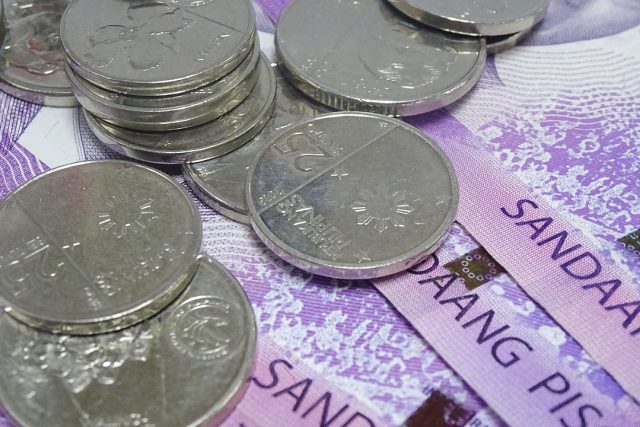
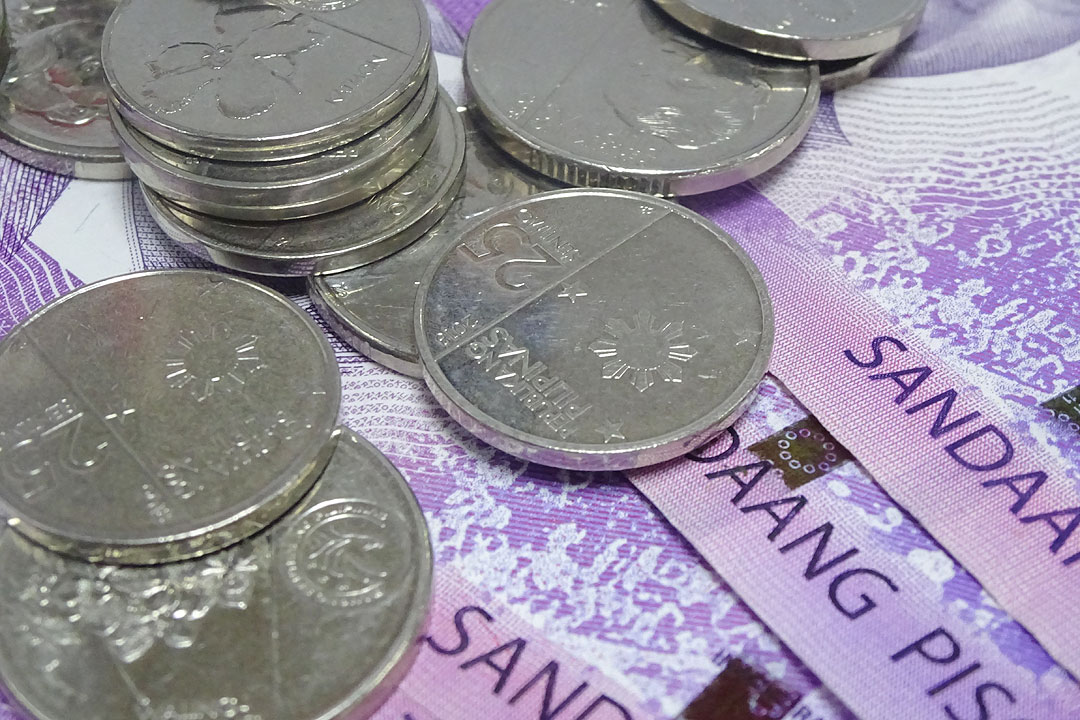
THE PESO climbed against the dollar on Wednesday following the release of data showing slower inflation in December 2021. — BW FILE PHOTO

THE PESO rebounded versus the greenback on Wednesday as inflation was slower than expected in December.

The local unit ended trading at P50.96 per dollar on Wednesday, appreciating by 34 centavos from its Tuesday close of P51.30.

The peso opened Wednesday’s session stronger at P51.20 against the dollar. Its weakest showing was at P51.33, while its intraday best was at P50.89 versus the greenback.

Dollars exchanged slipped to $1.209 billion on Wednesday from $1.223 billion on Tuesday.

The peso strengthened as inflation was slower than market expectations in December, a trader said in an e-mail.

Inflation slowed to its lowest level in a year in December 2021 as food and transport prices eased, bringing the full-year average above the government’s target, data released by the Philippine Statistics Authority (PSA) on Wednesday showed.

Preliminary data from the PSA showed headline inflation eased to 3.6% last month from 4.2% in November. December’s inflation print was the slowest reading in 12 months or since the 3.5% recorded in December 2020.

Inflation averaged 4.5% for 2021, higher than the 2.6% recorded in 2020. This breached the central bank’s 2-4% target band as well as the revised 4.4% forecast for the year.

The renewal of the bilateral currency swap agreement between Japan and the Philippines also boosted investor sentiment, Rizal Commercial Banking Corp. Chief Economist Michael L. Ricafort said in a Viber message.

Under the agreement which took effect on Jan. 1, both parties will be allowed to swap their local currencies in exchange for the dollar. It also allows the Philippines to swap pesos for the yen.

The limit for the swap agreement was kept at $12 billion or its equivalent amount in yen for the Philippines. Japan can swap up to as much as $500 million.

For Thursday, Mr. Ricafort gave a forecast range of P50.80 to P51.05, while the trader expects the local unit to move within P50.90 to P51.15 per dollar. — LWTN

Stocks up on slower-than-expected Dec. inflation

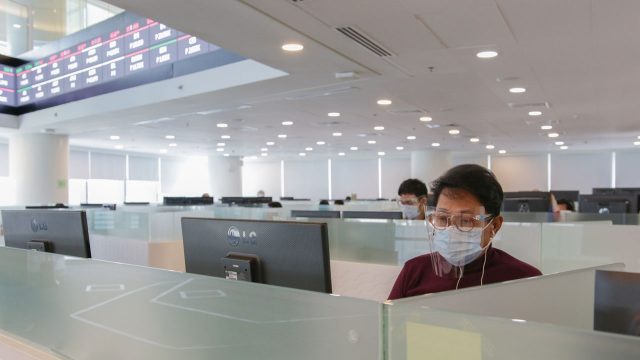
PHILIPPINE STOCKS climbed on Wednesday on improved market sentiment following a slower-than-expected inflation print in December.

The benchmark Philippine Stocks Exchange index (PSEi) inched up by 50.13 points or 0.71% to close at 7,091.40 on Wednesday, while the broader all shares index advanced 16.27 points or 0.43% to 3,794.17.

The local bourse was closed on Tuesday due to technical issues.

“Though market was volatile today. It was up on bargain hunting after an unexpected lower inflation reading December together with a slight uptick in manufacturing output on the previous month,” Diversified Securities, Inc. Equity Trader Aniceto K. Pangan said in a text message on Wednesday.

Inflation slowed to its lowest level in a year in December 2021 as food and transport prices eased, bringing the full-year average above the government’s target, data released by the Philippine Statistics Authority (PSA) on Wednesday showed.

Preliminary data from the PSA showed headline inflation eased to 3.6% last month from 4.2% in November. December’s inflation print was the slowest reading in 12 months or since the 3.5% recorded in December 2020.

Inflation averaged 4.5% for 2021, higher than the 2.6% recorded in 2020. This breached the central bank’s 2-4% target band as well as the revised 4.4% forecast for the year.

Meanwhile, the Philippines Manufacturing Purchasing Managers’ Index climbed to 51.8 last month from 51.7 in November, the highest since 52.2 in March 2021.

First Metro Investment Corp. Head of Research Cristina S. Ulang noted that slow inflation gives the central bank room to maintain its accommodative policy to support the economy’s recovery.

“The market recovery shows all the more that the glitch was ignored and bargain hunting prevailed on the view that even with the high positivity rate of the new coronavirus disease 2019 virus, the mild symptoms based on hospital ER (emergency room) cases suggest that tough lockdown could be a thing of the past,” Ms. Ulang added.

Most sectoral indices ended in the green except for property, which slipped by 1.44 points or 0.04% to 3,124.94, and industrials, which dropped 4.34 points or 0.04% to 10,313.45.

On the other hand, services gained 24.65 points or 1.25% to 1,982.85; financials improved by 19 points or 1.20% to 1,599.85; mining and oil increased 73.79 points or 0.75% to 9,789.47; and holding firms added 44.14 points or 0.64% to 6,847.63.

Value turnover was at P6.94 billion with 973.94 million shares switching hands on Wednesday, higher than the P4.26 billion with 722.25 million issues on Monday.

Decliners beat advancers, 108 against 86, while 50 names closed unchanged. Foreigners turned buyers with P276.15 million in net purchases, a reversal of the P233.82-million net outflow seen on Monday.

Regina Capital Development Corp. Head of Sales Luis A. Limlingan put the PSEi’s support at 7,020 and resistance at 7,250. — M.C. Lucenio

Omicron is the beginning of the end, but people still need to be responsible for their health 

PIXABAY

By Patricia Mirasol 

Data suggests that most Omicron cases will be mild, thus eliminating the need for stringent lockdowns, a science expert said. However, the country will still need to brace for the next month as the Omicron wave passes, and individuals will still need to be responsible for their personal health.

“If you are vaccinated and boosted, you should not be terrified. You should be prudent,” said Fr. Nicanor R. Austriaco, Jr., a Catholic priest, molecular biologist, and research fellow of OCTA Research, a private polling, research, and consultation firm. He added that the fear surrounding Omicron — though understandable — is unjustified, given the mildness of the latest COVID-19 variant of concern.

It causes milder disease because, although it is able to infect the nose and throat of patients more efficiently, it struggles to infect their lungs, Fr. Austriaco said in a Jan. 5 town hall discussion by GoNegosyo, a non-profit that advocates for entrepreneurship in the Philippines. Severe disease occurs in the lungs.

“Also, more people are vaccinated and boosted now as compared to the past,” added Fr. Austriaco. “It’s milder — but if you’re unvaccinated, it’s still harder for you.”

Omicron was first identified by a team of Botswanan scientists in November. According to the Johns Hopkins Bloomberg School of Public Health, Omicron “has not put the kind of pressure on the South African healthcare system” as did the Delta variant in South Africa, India, and other countries. There are more cases than hospital admissions observed in South Africa’s Omicron surge.

A study published by The University of Edinburgh on Dec. 22, moreover, suggests that Omicron is associated with a two-thirds reduction in the risk of COVID-19 hospitalization as compared to Delta.

“Omicron is the beginning of the end of the pandemic,” Fr. Austriaco told the participants of the town hall discussion. “We [need to] live our full lives,” he said, even as he emphasized the necessity to take responsibility for one’s own health and to be careful still.

THE TWO POST-PANDEMIC GOALS
As the country moves from a COVID pandemic to endemic disease, the two main goals are: 1.) not to breach the red zone (or going past the 70% mark) of healthcare capacity, and, 2.) to protect the vulnerable (including the elderly and the unvaccinated), said Health Secretary Francisco T. Duque III.

“I would like to remind everyone of our shared responsibilities this pandemic,” he said at the same event. “For those vaccinated, remember that vaccination is not complete without adherence to the minimum public health standards. Mag-asawa ’yan (They go together).”

Dr. Duque said the decrease in the number of cases during last year’s Delta surge was due to the tandem of mass inoculation drives and public adherence to the aforementioned standards.

“The virus mutates in an unvaccinated population,” he added.

The World Health Organization reports that COVID-19 vaccines are still an effective protection against severe disease from the current virus variants.

In the town hall discussion, Metro Manila Development Authority (MMDA) chairman Benjamin de Castro Abalos, Jr. shared the latest Omicron statistics.

“The occupancy rate in isolation facilities managed by local government units is 34.15% as of Jan. 1, up from 4.73% on Dec. 1,” he said. The growth of cases also increased from -51% from Nov. 21 to Dec. 18, to +501% from Dec. 5 to Jan. 1.

The MMDA, through Resolution No. 22-01, series of 2022, restricts the movement of unvaccinated individuals in the National Capital Region, after the region was placed under the Alert Level 3 because of the post-holiday resurgence of cases.

“It’s as if the unvaccinated are on ECQ [the strictest lockdown classification from last year],” said Mr. Abalos.

He added that the temporary restrictions are for the benefit of the unprotected.

“Imagine all these variants coming in and you’re still not vaccinated,” he said. “That’s where we’re coming from right now.”

Australia’s health system under pressure as COVID-19 cases hit fresh records

SYDNEY – Pressure grew on Australia’s health system on Wednesday as new COVID19 case numbers hit a record for the third consecutive day, straining hospitals and overrun testing facilities.

Nearly 53,000 new cases were reported across New South Wales and Victoria, Australia’s most populous states, with both clocking fresh one-day highs and exceeding Tuesday’s national tally of around 47,800.

People admitted to hospital in both states rose 10% over the previous day, as authorities warned those numbers would rise further over the next several weeks.

“We have got some challenging weeks ahead of us,” New South Wales Deputy Health Secretary Susan Pearce told reporters.

Prime Minister Scott Morrison, under mounting pressure over testing delays and stock shortages, will look to take measures to diffuse the crisis when he meets state and territory leaders later in the day.

The rapid surge in cases in recent weeks, fuelled by the Omicron variant, has led to long lines at publicly-funded PCR testing facilities.

That prompted authorities to ask people to only seek public testing if showing symptoms, which in turn led to a shortage of rapid antigen tests, which can be used at home but must be purchased privately.

Morrison, who must call a federal election before May, has ruled out subsidising the majority of the at-home testing kits, citing a heightened role for “personal responsibility”.

New South Wales officials said they had procured millions of the rapid antigen tests and were pressing the federal government for an agreement to subsidise them. Victoria has ordered an additional 10 million tests, with the first batch due to arrive in the next few days.

Elsewhere in Australia, Tasmania reported 867 new cases, while other states are due to report their numbers later in the day.

The country has recorded more than 600,000 cases and 2,290 deaths since the pandemic began, with more than half of those infections reported over the past two weeks. – Reuters

Filinvest provides free potable water to Typhoon Odette victims in Cebu

Filinvest Land, through its Pusong Filinvest disaster relief program, distributed free potable water to families affected by Typhoon Odette in Cebu. The distribution was done in coordination with the local Disaster Risk Reduction and Management offices of Lapu Lapu City, Talisay City, and Cebu City.

The heavy rainfall and strong winds carried by Typhoon Odette brought severe devastation to Cebu cutting off access to water and power. Filinvest Land, one of the country’s leading real estate developers and a primary business player in Cebu, heeded the call for aid, particularly the need for clean and drinkable water. Filinvest Land partnered with its sister company, FDC Water Utilities, to source potable water from its Water Desalination and Treatment Plants in Mactan and provided this for free to affected families in Cebu.

“We are grateful to Filinvest for helping Lapu Lapu City during these challenging times. Water is essential, and we are relieved that our people were given potable water for free. Daghang Salamat Pusong FIlinvest,” said Lapu-Lapu City Mayor Ahong Chan.

Talisay City Mayor Gerald Gullas adds, “Filinvest has always been a good partner of Talisay City. Time and again, they have shown that they care and are ready to help, especially during crisis. Filinvest gave us free vaccines early this year, and now they are back to help us with free water. Thank you, Pusong Filinvest, for being there in our time of need.”

Over 5,000 families are estimated to benefit from the distribution of a total of 200,000 liters of clean and drinkable water that began Dec. 23.

“Filinvest is Cebuano, and our hearts go out to our fellow Cebuanos who were affected by Typhoon Odette. As soon as we found out that the typhoon damaged water distribution lines, we knew we had to quickly help with the clean water supply. We have water desalination plants in Mactan servicing our resorts and subdivisions, and once reports were in that these plants were operational, we immediately mobilized our Pusong Filinvest relief teams to distribute clean and drinkable water to as many Cebuano families as we can reach, free of charge. We are just happy to help,” said Filinvest Land Executive Vice-President and Chief Strategy Officer Tristan Las Marias.


Spotlight is BusinessWorld’s sponsored section that allows advertisers to amplify their brand and connect with BusinessWorld’s audience by enabling them to publish their stories directly on the BusinessWorld Web site. For more information, send an email to online@bworldonline.com.

Join us on Viber to get more updates from BusinessWorld: https://bit.ly/3hv6bLA.

WHO sees more evidence that Omicron causes milder symptoms

IMAGE VIA WHO/P. VIROT

GENEVA – More evidence is emerging that the Omicron coronavirus variant is affecting the upper respiratory tract, causing milder symptoms than previous variants and resulting in a “decoupling” in some places between soaring case numbers and low death rates, a World Health Organization official said on Tuesday.

“We are seeing more and more studies pointing out that Omicron is infecting the upper part of the body. Unlike other ones, the lungs who would be causing severe pneumonia,” WHO Incident Manager Abdi Mahamud told Geneva-based journalists.

“It can be a good news, but we really require more studies to prove that.”

Since the heavily mutated variant was first detected in November, WHO data shows it has spread quickly and emerged in at least 128 countries, presenting dilemmas for many nations and people seeking to reboot their economies and lives after nearly two years of COVID-related disruptions.

However, while case numbers have surged to all-time records, the hospitalisation and death rates are often lower than at other phases in the pandemic.

“What we are seeing now is….the decoupling between the cases and the deaths,” he said.

His remarks on the reduced risks of severe disease chime with other data, including a study from South Africa, which was one of the first countries where Omicron was detected.

However, Mahamud also sounded a note of caution, calling South Africa an “outlier” since it has a young population, among other factors.

And he warned that Omicron‘s high transmissibility meant it would become dominant within weeks in many places, posing a threat to medical systems in countries where a high proportion of the population remains unvaccinated.


VACCINATION, NOT VACCINES, ARE THE CHALLENGE

While Omicron seemed to be slipping past antibodies, evidence was emerging that COVID-19 vaccines still provided some protection, by eliciting a second pillar of the immune response from T-cells, Mahamud said.

“Our prediction is protection against severe hospitalization and death (from Omicron) will be maintained,” he said, saying this also applied to vaccines developed by Sinopharm and Sinovac that are used in China, where Omicron cases remain very low.

“The challenge has not been the vaccine but the vaccination and reaching those vulnerable populations.”

Asked about whether an Omicron-specific vaccine was needed, Mahamud said it was too early to say but voiced doubts and stressed that the decision required global coordination and should not be left to manufacturers to decide alone.

“You may go ahead with Omicron and put all your eggs in that basket and a new variant that is more transmissible or more immune-evasive may appear,” he said, adding that a WHO technical group had held recent meetings on vaccine composition.

The best way to reduce the impact of the variant would be to meet the WHO‘s goal of vaccinating 70% of the population in each country by July, rather than offer third and fourth doses in some countries, he said.

As case numbers due to Omicron have soared, some countries, including the United States, have cut down isolation or quarantine periods in a bid to allow asymptomatic people to return to work or school.

Mahamud said that leaders should decide based on the strength of the local epidemic, saying Western countries with very high case numbers might consider trimming isolation periods to keep basic services functioning.

However, places that have largely shut it out would do better to maintain the full 14-day quarantine period.

“If your numbers are very small, you better be invested in keeping that number very, very low.” – Reuters

WHO Official Downplays Coronavirus Variant Found in France

COMPUTER-GENERATED representation of COVID-19 virions via Felipe Esquivel Reed / CC BY-SA

The World Health Organization (WHO) said a coronavirus variant found in France hasn’t become much of a threat since it was first identified in November.

The variant “has been on our radar,” Abdi Mahamud, a WHO incident manager on COVID, said at a press briefing in Geneva on Tuesday. “That virus had a lot of chances to pick up.”

The variant was identified in 12 people in the southern Alps around the same time that omicron was discovered in South Africa last year. The latter mutation has since traveled the globe and kindled record levels of contagion, unlike the French one that researchers at the IHU Mediterranee Infection — helmed by scientist Didier Raoult –nicknamed IHU.

The first patient identified with the variant was vaccinated and had just returned from Cameroon, IHU researchers wrote in a paper published on the medRxiv server in late December where they first drew attention to the atypical mutations.

It’s “too early to speculate on virological, epidemiological or clinical features of this IHU variant based on these 12 cases,” they wrote in the article, which hasn’t been peer reviewed.

Mr. Raoult stirred controversy in the early stages of the pandemic by recommending treatment with hydroxychloroquine.

The WHO monitors multiple variants, and when it finds one may pose a significant risk, it declares it a “variant of concern.” This one is only under investigation. – Bloomberg

Indonesia secures more coal supplies ahead of export ban review

JAKARTA – Indonesia‘s state utility secured an extra 7.5 million tonnes of coal supplies on Tuesday, helping to avert power outages, boost stocks and increase the chances of the government lifting its export ban soon.

Indonesia, the world’s top exporter of the coal used in power plants and China’s largest overseas supplier, on Saturday announced a ban on exports during January to avoid outages at domestic generators.

The move has driven up coal prices in China, though Indonesian authorities are set to reexamine the ban on Wednesday.

State utility Perusahaan Listrik Negara (PLN) said that while it had secured the additional supply, it aimed to continue raise stockpiles to a minimum usage level of 20 days.

Coal power plants that have been in crisis are starting to see their supply issue being resolved,” Darmawan Prasodjo, PLN chief executive said in a statement.

A PLN spokesperson could not immediately comment on how much more supply PLN needed for the intended stock level. PLN had previously said it needed 5.1 million tonnes of additional supply for January to avoid widespread outages.

Pandu Sjahrir, chairman of the Indonesian Coal Miners Association (ICMA), said the group’s ten biggest members would help PLN close the supply gap as a “very short-term solution.”

A full month ban could be averted by such coordination, said Rory Simington, principal analyst for Asia Pacific coal research at Wood Mackenzie.

“A halt in Indonesia‘s exports would have a major impact on thermal coal markets but a total ban for January is unnecessary and unlikely to be implemented in our view,” Simington said.

“We are expecting 40 million tonnes of Indonesian exports in January and total domestic demand is in the region of 12 million tonnes; addressing any shortfall would require only a fraction of total capacity,” he added.

ICMA said in a statement on Tuesday that the group was in discussion with the government to resolve the problem and working with members to fulfil domestic obligations.

“We are optimistic that the supply shortage in some power plants can be resolved soon and we hope that exports can be gradually reopened,” it said.

The group said distribution was affected by difficulties in securing vessels to transport coal to the state utility.

“The main obstacle in the field that hinders the acceleration of supply distribution is barges availability,” it said.


CHINA PRICES RALLY

Coal futures in China, the world’s biggest consumer of the fuel, surged on Tuesday in a sign of concerns the export ban could threaten energy security in some of the world’s biggest economies.

China’s benchmark thermal coal futures rose by as much as 7.8% in the first day of trading since the policy was announced. The futures closed at 713.80 yuan ($112) a tonne, up 6.4%.

It was the biggest daily increase since Oct. 19, when prices climbed to a record 1,848 yuan a tonne amid a supply deficit in China caused by shortages from domestic mines.

If sustained beyond the Wednesday review, Indonesia‘s ban could pressure China to rethink unofficial import restrictions it has placed on Australian coal.

“If Indonesia‘s coal export ban were to be extended, China would need to resort to Australian coal once again, with the latter being a major beneficiary of Indonesia’s coal export ban,” said Sabrin Chowdhury, an analyst at Fitch Solutions, part of Fitch Group.

Some smaller miners in Indonesia have declared force majeure on their shipments, the legal term for when a supplier cannot meet a contract because of forces beyond their control, coal traders based in Singapore and India said on Tuesday.

The firms that declared the force majeure were mostly those that had not fulfilled the so-called domestic market obligation (DMO), a coal mining executive in Jakarta said.

Under the rule, miners are required to sell 25% of their output to local power plants at a maximum price of $70 per tonne.

Indonesian President Joko Widodo threatened on Monday to revoke the business permits of miners that failed to meet their DMO requirements.

Asia’s economic powerhouses China, India, Japan, and South Korea, together received 73% of Indonesian coal exports in 2021, ship tracking data from Kpler showed. – Reuters


Macron says he wants to ‘piss off’ the non-vaccinated

French President Emmanuel Macron - Photo source: https://bit.ly/3zr2zkV --- CC BY 2.0

PARIS – French President Emmanuel Macron said on Tuesday he wanted to “piss off” the nonvaccinated, in a slangy, cutting remark that prompted howls of condemnation from opposition rivals less than 4 months before the next presidential election.

“The unvaccinated, I really want to piss them off. And so, we’re going to continue doing so, until the end. That’s the strategy,” Macron told Le Parisien newspaper in an interview published late on Tuesday.

France last year put in place a health pass that prevents people without a PCR test or proof of vaccination to enter restaurants, cafes and other venues. The government wants to turn it into a vaccine passport that means only the vaccinated can have a health pass.

“I won’t send (the unvaccinated) to prison, I won’t vaccinate by force. So we need to tell them, from Jan. 15, you won’t be able to go to the restaurant anymore, you won’t be able to down one, won’t be able to have a coffee, go to the theatre, the cinema…”

The expression “emmerder”, from “merde” (shit), that can also be translated as “to get on their nerves”, is considered “very informal” by French dictionary Larousse and prompted immediate criticism by rivals on social media.

Macron has been criticised in the past for off-the-cuff remarks which many French people said came across as arrogant, cutting or scornful. He has later expressed contrition on several occasions.

“A president shouldn’t say that,” far right leader Marine Le Pen said on Twitter. “Emmanuel Macron is unworthy of his office.”

In the detailed interview, Macron‘s first in the new year, the president also said he had a good mind to run for re-election in April, but did not explicitly announce his intention to run.

“I would like to do it,” Macron said.

As the clear favourite in the polls, Macron has not yet officially said he was running, although his lieutenants are already preparing a campaign. – Reuters

Japan to declare quasi-emergency in COVID-hit Okinawa -paper

TOKYO – Japan is preparing to declare a quasi-state of emergency in the southern island prefecture of Okinawa due to a spike in coronavirus cases, perhaps as early as this week, the Mainichi daily said on Wednesday.

It would be the first such declaration since Sept. 30, when Japan lifted all states of emergency and quasiemergency that had been in effect for a good part of 2021.

The number of new daily coronavirus cases in Japan rose past 1,000 on Tuesday for the first time in three months, with 225 cases in Okinawa, making it one of the worst-hit parts of the nation.

New cases surged to about 600 on Wednesday, Okinawa Television reported, citing the prefectural government. That would be the highest daily count since Aug. 28, when Japan was in the midst of its fifth, and biggest to date, wave of COVID-19.

The Mainichi said Okinawa governor Denny Tamaki told Chief Cabinet Secretary Hirokazu Matsuno on Tuesday that he was considering requesting a quasiemergency state, which would include measures such as limiting the opening hours of restaurants and bars.

Matsuno had said the government would respond promptly, the newspaper reported. No further details were given.

Okinawa has entered the “sixth wave” of the coronavirus, Tamaki told reporters on Tuesday, noting the highly transmissible Omicron variant’s role in the spread of infections.

Infections inside U.S. military bases in the prefecture continued to increase, he added. – Reuters

December inflation eases to 1-year low

THE OVERALL year-on-year increase in prices of widely used goods and services slowed to its lowest level in a year in December as food and transport prices eased, bringing the full-year average above the government’s target.

Preliminary data from the PSA showed headline inflation eased to 3.6% in December from 4.2% in November.

December’s inflation print was the slowest reading in 12 months or since the 3.5% reading in December 2020.

The latest headline figure is lower than the 3.9% median in a BusinessWorld poll conducted late last week, but falls within the 3.5%-4.3% estimate given by the Bangko Sentral ng Pilipinas (BSP) for December.

Inflation averaged 4.5% for 2021, higher than the 2.6% recorded in 2020. This breached the BSP’s 2-4% target band as well as the revised 4.4% forecast for the year.

Core inflation, which discounted volatile prices of food and fuel, stood at 3.6% percent in December — slower than the previous month’s 4.2% but higher than 3.5% a year earlier. It averaged 3.3% in 2021.

“The main source of the downward trend of the December 2021 overall inflation was primarily brought about by the slower annual increase in food and non-alcoholic beverages at 3.1% in December 2021, from 3.9%in November 2021,” the PSA said in a statement.

The food-alone index decelerated to 3.2% in December, from 3.9% in November and 4.9% in December 2020.

The PSA also noted easing annual rates in the following indices: transport (to 6.1% in December from 8.8% in November); alcoholic beverages and tobacco (6.5% from 7.5%); health (3% from 3.2%); restaurant and miscellaneous goods and services (3.5% and 3.7%); furnishing, household equipment and routine maintenance of the house (2.3% from 2.4%); recreation and culture (0.9% from 1%); and clothing and footwear (1.8% from 1.9%).

Housing, water, electricity, gas, and other fuels picked up to 5% in December from 4.6% in November as well as communication, which inched up to 0.3% from 0.2%.

Similarly, the December inflation rate for the bottom 30% of households further slowed to 3.3% from 4.2% in November and 4.2% in December 2020. The inflation rate for this segment was the slowest in 14 months or since the 2.9% in October.

In 2020, the bottom 30% inflation averaged 4.8%.

CPI REBASED TO 2018
Separately, the PSA announced the rebasing of its consumer price index (CPI) — used to calculate the inflation rate — to a 2018 base from 2012 currently starting next month for the reporting of January 2021 inflation print onwards.

“The rebasing of the CPI is done periodically by the PSA due to the following: (1) to ensure that the CPI market basket continues to capture goods and services commonly purchased by households over time; (2) to update expenditure patterns of households; and (3) to synchronize its base year with the 2018 base year of the Gross Domestic Product and other indices produced by the PSA…,” the agency said.

Aside from the base year, the rebasing will also change the market basket, the weights, and index computation.

The 2018 rebasing is the 12th base period and 11th rebasing for the CPI, the PSA said. — Bernadette Therese M. Gadon

Robredo win ‘more market-friendly’

VICE-PRESIDENT MARIA LEONOR G. ROBREDO — OVP

AN ADMINISTRATION led by incumbent Vice-President Maria Leonor G. Robredo will be more “market-friendly” than that by Ferdinand R. Marcos, Jr., Nomura Global Research said on Tuesday.

“[Mr.] Marcos Jr., in our view, will likely be regarded as less market-friendly than [Ms. Robredo], particularly when it comes to experience at the national level and in articulating a strategy for the country to recover from the pandemic,” a report titled “Philippines: No holiday cheer” by Nomura’s chief ASEAN economist Euben Paracuelles and analysts Rangga Cipta, Craig Chan, and Wee Choon Teo said.

“[Ms.] Robredo is likely seen as more qualified to oversee a post-pandemic recovery as the incumbent vice-president, as well as her platform of implementing a strategic roadmap that focuses on key sectors such as healthcare and education,” it added.

Nomura gave Ms. Robredo’s tandem with Senator Francis N. Pangilinan a perfect score of five for national experience and business friendliness. Meanwhile, it scored them four for continuity/good governance, infrastructure progress, and fiscal discipline.

Ms. Robredo, a human rights lawyer prior to being an elected official, has vowed to promote transparency and accountability in government and to help the country emerge from the coronavirus pandemic through health-based measures that respect human rights.

The Vice-President, who has promised to prioritize the welfare of marginalized groups, also said that if she is elected to lead the country, her administration would review and double the budget of the Agriculture department.

Meanwhile, for Mr. Marcos and his running mate Sara Z. Duterte-Carpio, Nomura gave a score of four out of five for infrastructure progress. The tandem got a score of three for fiscal discipline and continuity/good governance, while national experience and business friendliness were rated two and one, respectively.

Mr. Marcos, who lost the vice-presidential race to Ms. Robredo in 2016, has promised to continue the President Rodrigo R. Duterte administration’s infrastructure projects and other key programs and to modernize Philippine ports and make the country the next logistics hub in Asia.

“A Marcos victory will likely be viewed negatively owing to perceptions against him, in part because his candidacy is facing some petitions for disqualification on grounds of making false statements and a previous conviction of failing to file income tax returns,” Nomura said.

Mr. Marcos is facing several disqualification complaints. The Commission on Elections last month rejected a petition that sought his disqualification on the basis of being a nuisance candidate.

In its report, Nomura cited survey results from pollsters Pulse Asia and the Social Weather Stations, which showed Mr. Marcos is still the preferred presidential candidate over Ms. Robredo.

“Political uncertainty will likely grow, considering [Mr.] Marcos’s large poll lead over [Ms.] Robredo. This will likely weigh on local market sentiment and presents a challenging environment for Philippines’ net portfolio investment flows,” it said.

Short-term portfolio investments or “hot money” yielded a net inflow of $109.56 million in November 2021, lower by 52% from a year earlier, based on central bank data.

Net hot money outflows in the first 11 months of 2021 declined by 85% to $570 million. — Luz Wendy T. Noble with Kyle Aristophere T. Atienza

ADVERTISEMENT
ADVERTISEMENT